Book Description: Browsing antiques shops in Wiltshire, Alison Bannister stumbles across a delicate old portrait – supposedly of Anne Boleyn. Except Alison knows better… The woman is Mary Seymour, the daughter of Katherine Parr who was taken to Wolf Hall in 1557 as an unwanted orphan and presumed dead after going missing as a child.
The painting is more than just a beautiful object from Alison’s past – it holds the key to her future, unlocking the mystery surrounding Mary’s disappearance, and the enigma of Alison’s son.
But Alison’s quest soon takes a dark and foreboding turn, as a meeting place called the Phantom Tree harbours secrets in its shadows…
Review: This is probably one of the first historical fiction novels that is NOT a mystery that I’ve read in quite a while! As such, I was quite excited to return to the genre, especially when comparisons to Phillipa Gregory’s books were being routinely listed (though I’ve had a fairly hit and miss experience with Gregory, I will always love “The Other Boleyn Girl.”) The book had a bit of a slow start and didn’t grab me as much as some of Gregory’s better books, but over all, I still enjoyed “The Phantom Tree,” especially its take on a lesser known and minor character in Tudor history.
Allison is a woman out of her own time, and while she’s managed to scramble a life together for herself, calling upon her vast stores of sheer determination and stubbornness, she still longs to return to her original time back in the 16th century where she was forced to leave behind her infant son. Her only clues are connections to Mary Seymour, a fellow orphan left to be raised at Wolf Hall, and a young woman with a mysterious ability of her own. But Mary has been lost to time, with many scholars believing she died in infancy. When Allison discovers a painting of an adult Mary, she finally is able to begin picking up the clues that may finally lead her home.
This story is pieced together through the perspectives of both Allison and Mary. Allison’s portions consist of her life in the present and her search to return to the past. And through Mary’s eyes, we see the events that lead to Allison’s journey to the future and the events that have unfolded after she’s gone missing, and which Allison herself is now piecing back together centuries later.
Both Allison and Mary were compelling characters, however the nature of the story and the way their stories unfolded did lead to the book feeling as if it had a slow start. Further, both of them were initially a bit unlikeable, with Allison coming off as a bit of a ignorant brat (mostly her past self) and Mary as too wilting and unwilling to take action in her own life. However, from these weaker beginnings, both characters ultimately grew into women I found myself greatly rooting for.
I didn’t know much about Mary Seymour before going into this book, so I did end up doing a bit of background reading to try and figure out how much if this story is based on history. Mary disappeared from history when she was around 2 years old and is presumed to have died in young childhood. That leaves the majority of this story as operating in a fictional setting. However, what made it stand out was the creative way the author managed to tell Mary’s story in a way that made it believable that she may have lived longer but still been absent from history. The fantastical elements come in early, especially with regards to Mary, so there’s never any real question about the authenticity of the tale, but it still added a nice layer that the book never strayed too far into the unbelievable as far as her actual life.
Allison is, of course, a completely fictional character. What I most appreciated about her story was the build-up for her character back in the 16th century that helped establish her as a person capable of adapting to a completely different life in modern times. Think about it: that’s a huge ask of a character and the book explores a few other characters who also time traveled and were less successful with it. The same brashness and stubborn refusal to bend that made her rather dislikable as a teenager in the past were also the traits that let her survive on her own in a completely new world.
The time travel and fantastical elements did end up playing a larger role in the story than I initially anticipated, and there were a few twists and turns towards the end that were especially surprising. At the same time, I never felt like these aspects of the book overran the historical setting of the past sequences or the modern version of the story that focused on Allison’s search for family, her discovery of self and what she wants from her life, and the burgeoning romance with a historical researcher.
By the end of the story, I was actively rooting for both of these main characters, made all the more tense by the knowledge that something dark had to be looming to explain Mary’s sudden disappearance in history. This particular element of the book did wrap up rather suddenly, and while it helped build the believablity of the mystery, it was also a bit traumatic to experience with one of your main characters.
I very much enjoyed “The Phantom Tree.” It was a strange mix of fantasy/time travel, historical fiction, and even modern romance. Both Mary and Allison were compelling heroines, though I never quite escaped a certain sense of distance from the story which prevented me from becoming fully enthralled. For fans of time travel stories, however, and especially those interested in the Tudors, I would definitely recommend this book!
Rating 7: A solid new entry into the subgenre of historical/time travel fiction, though I didn’t connect with it as fully as I may have wished.
Book: “The Perfect Date” (Fear Street #37) by R.L. Stine
Publishing Info: Simon Pulse, 1996
Where Did I Get This Book: The library!
Book Description:Brady Karlin is getting on with his life. The memory of his girlfriend — killed in a gruesome sledding accident last year — is beginning to fade. Now he’s met Rosha Nelson, the girl of his dreams. And he’s never been happier. Until Brady starts to see a strange figure — with a terribly scarred face — following him everywhere. Until the horrible accidents start happening — every time Rosha’s around. Has dating Rosha made Brady’s dreams come true? Or brought his worst nightmares back to life?
Had I Read This Before: Yes (and after re-reading it I’m thinking this was when I gave up on “Fear Street” as a whole)
The Plot: We start with another prologue, but this one isn’t vague at all. Brady and his girlfriend Sharon Noles are going sledding on a snow day. Brady, after commenting on Sharon’s cute button nose, says they should go sledding down a huge, ice covered, ski slope of a hill. Sharon is skeptical and suggests the smaller kiddie hill, but Brady, speaking like a true Kennedy, says he’s more interested in the dangerous one. So Sharon agrees, and he promises they’ll go down it together and that nothing will happen. Since we as women have been conditioned to be polite, Sharon agrees, and they climb the hill and start the slide down. And, surprising no one, it’s a terrible idea. Brady bails out, but then watches Sharon hit a tree and go flying into some thorn bushes. When he runs to her, he turns her lifeless body over. Not only is she dead, but her face has been totally torn up by the thorns.
FLASH FORWARD to a year later. Brady and his friend Jon are having a pizza lunch, and Brady is telling Jon that he DID ask Lisa if Lisa was interested in Jon, but she’s actually interested in HIM. Apparently Brady has all the girls fawning over him, and revels in the attention in spite of the fact he has a new girlfriend named Allie. Not only is the cashier flirting with him, he also has caught the attention of a pretty girl sitting a few tables over. Brady decides that she’s SO pretty that he HAS to go talk to her, and brushes off Jon’s protests about the fact that he has a girlfriend. What a catch this Brady is. He goes over and introduces himself to the pretty girl, and she says her name is Rosha Nelson. He asks her about her name, and she says that her Mom is obsessed with romance novels and named her after some obscure protagonist. He then asks her out, and she suggests Saturday. He offers to pick her up, but she says that they can just meet at the mall at 6 since she’s going to be there to do some shopping for her Mom. She then accidentally spills hot coffee on his hand. She apologizes profusely, and they part ways. Jon suggests that Brady do something about his hand, but Brady doesn’t care.
At school the next day, Allie asks Brady what happened to his hand and he deflects. She asks if he wants to go out for pizza that night, but he says he has to study. She then asks him what time he’s picking her up for the game the next night, but OH NO, that’s the night that Brady has a date with Rosha! So Brady says he has to babysit some random made up cousin who is VERY sick, and Allie falls for it, poor thing. They agree that they’ll meet each other for a study date on Sunday, and part ways. Brady feels a little weird lying to his GIRLFRIEND, but is SO entranced with Rosha he doesn’t really care. He then thinks about Sharon (yes, it took this long to even acknowledge the girl he had been dating who died horrifically), and all he really thinks about is how awful her face was when he found her.
Brady goes to the mall and worries that Rosha isn’t going to show, but she is there and she seems as happy to see him as he is to see her. She suggests that they go to Waynesbridge to go see the new Brad Pitt movie, and he thinks that’s a good idea because that means their chances of running into Allie’s friends are low. He then asks where her shopping bags are, since she’s supposedly shopping for her Mom, and she claims she didn’t find anything her Mom would like.
They go to the movie (it’s described as some kind of horror film so I GUESS these guys are seeing “Se7en”?), and Rosha cuddles up to Brady the whole time. WHen the movie is done they walk to his car, and he talks about how he feels like he knows her so well already. She says it must be fate, and they continue walking. As they do, however, Brady sees a strange girl watching them. A girl with ugly scars all over her face, and she is staring at them. Brady is a little freaked out, but forgets about it when Rosha asks if she can drive his car. But it’s his Dad’s precious Oldsmobile Cutlass, a car that Brady had to PROMISE to be extra careful with because it’s SO important (BUY AMERICAN, FOLKS!). Rosha sulks, and her petulance convinces Brady that yes, she should absolutely drive his car back to Shadyside. Rosha, of course, drives like a lunatic, and after pulling some kind of Evil Knieval bullshit she crashes the car and sends Brady smacking into the windshield. He’s a bit dizzy, and Rosha freaks out saying that they HAVE to switch places because she doesn’t have her license yet. Brady agrees, and they switch seats. When the police come, Brady turns to reference his date, but Rosha has disappeared.
The next day Brady and Jon are walking up to Allie’s house. The car is totaled and Brady took the fall, and has a huge lump on his head. Jon thinks that Rosha is bad news, but Brady defends her behavior. At this point I decide that this must have a supernatural element to it because unless she has some kind of thrall on him, there’s NO WAY THAT HE WOULD WANT TO SEE HER AGAIN AFTER THAT. He also reminds Jon that Allie think he was babysitting the night before, and Jon agrees to cover. Allie asks him why he was taking such a FANCY car to go babysitting, but Brady says he thought the tires would be better. Brady is also sad because, even though he has a lovely and kind girlfriend, he doesn’t have the phone number of the girl who berated him into handing the keys over, crashed the car, and then ditched out. But he DOES have her last name! While Allie goes to check on Jon, Brady skims the names, finding a whole lot of Nelsons. He says he isn’t feeling well and leaves, determined to find Rosha.
When Brady gets home, he finds a cop car parked outside his house. He panics, thinking that maybe they found out he wasn’t driving, but the cop instead shows him that they found a purse underneath the front seat of the car. It’s Rosha’s! Brady, wanting to explain away her fleeing of the scene of an accident, says that she must have left it in his car after he dropped her off on a separate occasion. Plus, now he can look at her ID (not a driver’s license though, brainiac) and get her address that way. But when he takes the purse up to his room, he finds that it’s completely empty. Which makes little sense, because wasn’t she shopping for her Mom??? The phone rings, and it’s Allie, not only checking in on him, but also telling him that she copied all the notes that she and Jon took and that she will give them to him tomorrow. But Brady is still thinking only about Rosha.
She then brings up the fact that they’re going to Mei Kamata’s ice skating party the next Saturday, and he says sure before making an excuse to hang up so he can start calling all the Nelsons in the phone book. He doesn’t get far before his phone rings again. He thinks it’s Allie, but no. It’s a strange voice telling him to stay away from Rosha. Perhaps it’s his common sense giving him a ring.
The next day at school Brady gives Allie the brush off again and tells Jon that they’re going to St. Ann’s, the school that Rosha said she goes to. Jon says that he has work, but Brady tells him that he has PLENTY OF TIME and should totally risk his job for his would be girlfriend, were Allie out of the picture. Jon declines, expressing his disapproval again. Brady goes to St. Ann’s, but no one has heard of Rosha, by name or description. One guy Brady is convinced is lying and he starts to wail on him, but then thinks he sees Rosha and runs for her. But it’s the scarred girl! Disgusted and disturbed, Brady rushes off, and then DOES see Rosha across the field. He asks her about the scarred girl, but Rosha says she doesn’t know anyone like that. He says that no one at St. Ann’s knows who she is, and she blows up at him, saying that she’s a brand new student, so of COURSE they don’t, and also is he spying on her?! She tells him to go, but he begs her to stay, apologizing for checking around the school about her. She then apologizes for ditching, and says she’d love to help pay for the damages but if she tells her Dad he’ll be angry and won’t let her see him again. And since they can’t have THAT, Brady agrees to keep quiet. He gives her her purse back, and asks why it was empty, and Rosha says that she was SO excited to hang out with him she grabbed the wrong one. She then asks if he’ll go out with her again that Saturday, and even though he has Mei Kamata’s party with Allie, he agrees. That night when he gets home he gets another mysterious phone call from a strange girl saying that she saw him with Rosha. He figures out it’s the girl with the scarred face. She tells him to stay away from Rosha, and he tells her to leave him alone.
At school the next day while they are lifting weights, Jon asks Brady about the party, and Brady says he broke his date with Allie in favor of dancing with Rosha, claiming that he’s grounded until he can get a job to pay for the car repairs. Jon says that he should really just dump Allie if he’s going to keep doing this, but Brady is dragging his dumb ugly feet, and then tells Jon about the scarred girl and the phone calls. Jon thinks it’s weird too, and as Brady keeps lifting weights above his head he glances out the window and sees the scarred girl! He’s so startled he drops the weights on himself, and as Jon helps him he tells Jon what he saw. Jon looks out the window, but says no one is there, and suggests if there IS a scarred girl Brady is probably upset because she reminds him of Sharon. Brady says he has to go find Rosha and see if she can remember anything, and Jon says that he doesn’t really KNOW anything about her, but Brady isn’t concerned. He grabs the phone number and address she wrote down for him, and finds a pay telephone to call her. But the phone number doesn’t work! So he looks at the address, 7142 Fear Street, and decides to go to her house. But when he gets to Fear Street, there are no more houses above 7136!!
The next day Brady is at home OBSESSING over Rosha, when she arrives at his door! He’s SO happy to see her, and invites her inside. They trip over the rug (gee is THAT going to be important later?), and he leads her into the living room. She picks up a letter opener (and is THAT going to be important later?!), and asks her about her house. She says that she does so live on Fear Street, and when she looks at the napkin she says that it’s CLEARLY a 1, not a 7, and he must have driven right past. He’s not sure, and asks about the phone, and she says that it was working that morning, and what is this, a ‘court-trial’!? She asks why he’s so suspicious, but before they can really hash out her lies, they hear a car door slam! Brady looks out the window, and it’s ALLIE!! He asks her to make herself scarce, but as he’s shooing her away she trips on the rug and impales Brady with the letter opener! Allie rushes inside and demands to know who Rosha is, and Brady passes out as they are trying to take him to the hospital.
Brady wakes up in the hospital, and his parents tell him that he’s going to be fine. When they go to the cafeteria to get some coffee, Brady tries to sleep. But he opens his eyes and sees THE SCARRED GIRL! She tells him that she didn’t come to hurt him, but the warn him about Rosha. But before she can, a doctor comes in and tells her that she has to leave. So she does before she can tell Brady what’s going on.
Brady gets home from the hospital on Saturday, and Allie comes to visit him. Allie, who had come to visit him, and cared about him, and worried about him. But he wants ROSHA, who…. hasn’t been seen since. As he and Allie talk, she reveals that Rosha told her EVERYTHING, and she dumps him. GOOD. FOR. YOU. GIRL. That night, Jon calls Brady, and says that the girl with the scars is at his house and has told him stuff about Rosha, so can he please come over? I think that maybe Jon should go to Brady, since Brady just got discharged from the hospital, but what do I know? Brady gets another call, but no one is on the line, so he switches back to Jon, who is no longer answering. So Brady decides to go over there to see what’s up. But when he arrives, there are emergency vehicles!! And Jon is DEAD! His throat has been crushed with a marble candlestick! Brady is questioned by the police who are on the scene, and after they’re done he wonders if the girl with the scars killed Jon, since she was supposedly there. But then, what did he want to tell Brady about Rosha??? When Brady gets home, he finds a message from Rosha on the answering machine, seeing if they’re still going dancing that night, and suggesting that he meet her at the park. Brady, now wanting answers, tells himself that he will be there.
He gets to the park and doesn’t see Rosha anywhere. Also, it’s super cold and windy, because of course it is. Thinking that Rosha may be at the top of it, Brady climbs up Miller Hill, and then sees Rosha approaching him. He meets her, so totally happy to see her, and she is happy to see him too. She says that it reminds her of the day that they went sledding together. Brady, confused, says ‘huh?’ and she tells him that he couldn’t have forgotten, becaus after all, that was the day that he KILLED HER!!
And this, my friends, is where it all. Falls. Apart.
She says that she isn’t Rosha, she’s Sharon! When Brady expresses his confusion at this, she says that DUH, ROSHA NELSON IS AN ANAGRAM OF SHARON NOLES. And as if a goddamn ANAGRAM is going to explain how Rosha is Sharon in spite of the fact 1) Sharon is VERY dead, and 2) Rosha looks NOTHING like Sharon, we get a lesson in what an anagram is. She says that she blames him for her death (valid, kinda), and she’s still so incensed that she came BACK FROM THE DEAD to get her revenge. How, you ask? WHY, BY ‘BORROWING’ A BODY! And how did she ‘borrow’ this body?
We aren’t told how. We’re just told that she did. And then she starts to strangle him. And Brady is convinced that he’s dead. But NEVER FEAR!! Because Scarred Girl shows up, and she’s ready to throw down!! Apparently, it is HER body that Sharon ‘borrowed’, and she wants it back! But Sharon says that she’s keeping this body and too bad, because now Scarred Girl is dead and just a shell, and Scarred Girl says that no, she has been gathering strength and she is now strong enough to fight her for it!
We are NOT given any explanation as to how any of this would work. Not even given some kind of magic spell, curse, hex, or whatever. Instead, Scarred Girl and Sharon start fighting each other over Sharon’s stolen and ‘beautiful’ body (yes, Scarred Girl, who is NEVER actually named, refers to it as her ‘beautiful body’), and they wrestles each other. Scarred Girl rips Sharon’s arm off, Sharon rips Scarred Girls legs off, more limbs are torn away, and then they rip each other’s HEADS off and tumble down the hill, disappearing when they hit the bottom. SO WAIT, I’M SORRY, was Scarred Girl’s body Sharon’s old body?! Wouldn’t Brady have recognized SOME PART of that, even if her face was horribly scarred? Was her body decomposed and THAT was the problem, not a bunch of scars?!? WHAT THE HELL JUST HAPPENED HERE?!?!!?
Brady drags his sorry ass to Allie’s house. He surprises her on the back stoop, and says that he came to apologize and ask her to take him back. She says yes, and they go to embrace, and she remarks how cold he is. He tells her that he has to talk to her about that. See, he’s dead. Sharon killed him on Miller Hill. But he still wants her back, and moves his dead ass corpse in on her as she starts to scream. The End.
Romance Rating: 1. Brady’s a cheater and he’s also a prick who pressured his girlfriend into performing a feat that killed her.
Bonkers Rating: It gets a 9, but not in a good way!
Fear Street Relevance: 3. Rosha sends Brady to Fear Street and we got a new rundown of the mythology. But none of the real action really happens there.
Silliest End of Chapter Cliffhanger:
“Then the pain hit him. A searing, sizzling pain. His hand. His hand was on fire!”
…. IT’S JUST COFFEE, ASSHOLE.
That’s So Dated! Moments: This was an updated version of this book so nothing was really glaring, though Brady does use a printed White Pages phone book. OH, there’s also the Oldsmobile CUTLASS, the pinnacle of modern American engineering.
Best Quote:
“‘Whoa!’ Jon’s voice cried. ‘Major disaster with the nacho chips in here!'”
That, to me, is one of the most dire of disasters.
Conclusion:THIS. MADE. NO. SENSE. “The Perfect Date” was lazy and shocking for the sake of being shocking without having any reason to it. I know I read it and remembered not liking it, but I must have blocked all the nonsense out. PASS. Next up is “The Confession”.
This week, one of Minnesota’s grandest traditions starts: the Minnesota State Fair. To born and raised Minnesotans this is one of our most important moments of the year. To outsiders, it may seem a little overblown. But regardless how you feel, it’s going to be a really fun time. In honor of the Fair (one of the biggest in the country), we’ve put together a list of books that take place at fairs, circuses, and carnivals!
Book: “Something Wicked This Way Comes
Author: Ray Bradbury
Usually a traveling carnival can bring joy and wonder to a community, but Cooger and Dark’s Pandemonium Shadow Show is a bit more sinister than that. Best friends Will and Jim find themselves targets of the malevolent Mr. Dark, Mr. Cooger, and their evil carnival, a carnival that includes arrives once a generation and leaves chaos and tragedy in it’s wake. Attractions at this carnival include a carousel that can manipulate your age, and the Dust Witch, a being who is filled with magic but also incredibly dangerous. While this book does have it’s scary moments that have become legendary in horror literature, it also addresses friendship, coming of age, the power of kindness, and how to face your fears.
Book: “Geek Love”
Author: Katherine Dunn
Though ‘freak shows’ are not the entities that they once were (and are more about showcasing talents and feats of illusion than gawking at those different from you), “Geek Love” takes us back to a crueler time, and gives us the story of one of the ‘freak’ families. The Binewskis are a family of carnival workers that travel around showcasing their various ‘oddities’: Arturo the Aquaboy has flipper-like limbs; Iphy and Elly are the conjoined twins who are seen as seductive sexpots; Oly is the hunchbacked Albino. Then there is Chick, who seems ‘normal’ on the outside but inside contains multitudes of dangerous gifts. All of these people came to be because their parents hoped to create a family of human oddities they could profit upon, and used various means (such as arsenic, drugs, and radioactive materials) to do it. This is a story about family, a story about ambition, and a story about what actually makes a person ‘normal’.
Book: “The Night Circus”
Author: Erin Morgenstern
The circus arrives at night and is open only during those dusky hours. It leaves as mysteriously as it game. This is the story of not only a strange, magical circus, but of the two magicians who are using the circus as a platform in their ongoing competition to best the other with new and wondrous displays of magical prowess. But it is a game that has been chosen for them, and as they find themselves growing closer and closer to one another, the ultimate conclusion of this competition becomes more perilous. Equal parts fantasy, romance, and historical fiction, this story has a circus that is not only a setting for the plot to unfold but feels like a living, breathing entity itself.
Book: “Water for Elephants”
Author: Sara Gruen
You can’t have a fair/circus book list and not include “Water for Elephants.” This massively popular book from several years ago, however, earns the hype it has gathered. It follows the story of a young veterinarian who suddenly find himself adrift and alone in the world. Of course, he joins the circus! But there he finds not only the wonders and spectacle that come with the greatest show on earth, but a seedy underbelly full of intrigue and danger. When he begins falling in love with the wife of the animal trainer, he quickly realizes that danger has arrived at his door. This is another historical drama and features not only a nice romance, but, of course, a lovely relationship between Jacob and an elephant.
Book: “Modoc”
Author: Ralph Helfer
You may have noticed that the title of this book is truncated in our version and that’s for the simple reason that the biggest complaint filed against the book is the highly questionable “true story” that it claims to be telling. But I don’t think this should detract from what is still a beautiful story about the love between an elephant and a boy. While there was an elephant named Modoc (maybe even three!), there is very little evidence to support much of this book, but I still felt it was an excellent and heart-breaking story on its own. Just approach it as a fictional story rather than nonfiction, and you’ll probably be happier with it!
Book: “The Devil in the White City: Murder, Magic, and Madness at the Fair that Changed America”
Author: Erik Larson
This may be considered one of the very best books about a fair, though it is also considered one of the best true crime books all time. Erik Larson tells two stories: that of the creation and execution of the World’s Fair in Chicago in 1893, and that of H.H. Holmes, a serial killer who preyed upon women who came to Chicago looking for a new life. Larson is the master of drawing parallels between his various narratives, and in “The Devil in the White City” he shows the extent of American progress within an urban setting, and how a growing and bustling city can lead to the kind of anonymity that a serial killer can thrive in. History buffs and true crime buffs will both find a lot to love in this book, as the grandiosity of the Columbian Exposition will enthrall you as much as Holmes’s ‘Murder Castle’ will horrify you.
What about you? What fair, circus, and carnival books have you enjoyed? Let us know in the comments. And to our Minnesotan readers who are going, enjoy the Great Minnesota Get Together!
Publishing Info: Scholastic Paperbacks, December 1999
Where Did I Get this Book: own it!
Book Description:In an hour or so, once I was out of sight of land, I would lower my sails and wait for a Bug fighter to come lift me off the deck. The engine backwash of the Bug fighter would capsize the boat. Or I might put the Taxxon pilot to the test and see if he could ram the low-slung boat. That would puzzle the humans.
Either way, my body would never be found…
My time of lying low was over…
I would spearhead the invasion of Earth. I would take charge of our greatest conquest. I would stand alone atop the Yeerk military hierarchy.
I was to become Visser One.
Narrator: Edriss 562
Plot: It’s pretty well-established that most fans love “Visser.” Not only is it such a unique story, but it’s a great insight into the Yeerk mindset, culture and history. All told from the perspective of one of the few Yeerks that, even while still terrible, it’s hard to not kind of like and root for. Though this might also just be a side effect of rooting against Visser Three.
Oh Edriss, you’re so terrible, but also so cool.
Edriss 563, or Visser One, is on trial for treason. Leading the prosecution is none other than her nemesis, Visser Three. Hosted on earth, the Council of Thirteen, the leading Yeerks of the Empire are holographed in to oversee and rule over the case. Unknown to the Council, Visser Three has beaten and starved Edriss for the last several days and she is already close to Kandrona starvation. However, not one to be cowed by a Yeerk she sees as so beneath her as Visser Three, Edriss begins relating her tale, beginning all the way back to before Earth was discovered and she was a lowly subvisser. While she begins spinning this tale, she neatly implicated Visser Three in some suspicious behavior regarding Elfangor, the Taxxon home world, and two humans. All too soon, she has successfully raised enough suspicion to make it clear that now this trial is not only evaluating her own actions but the amazing lack of progress that Visser Three has made in the effort to conquer Earth.
In her early years as a subvisser, Edriss participated in the ongoing main objective of the Yeerk Empire: locating a Class 5 species. This would be a species that would serve as good Controllers, be easy to conquer, and, most importantly, exist in large numbers. While on duty, she hears a report come in of a new species that was seen on the Taxxon home world. This report was filed by none other than Visser Three (then a subvisser himself). Using these early interactions with Elfangor and Alloran, Visser One neatly ties Visser Three into the trial as a potential traitor himself.
Without the exact location, Edriss searches for an entire year to find the homeworld of this new species. But when she learns she is to be transferred to a new host, this time a Taxxon, she knows she must do more. She and a subordinate Yeerk, Essam, steal a ship and set out for the solar system that Edriss has narrowed her search down to. Visser Three tries to use this example of stealing a ship to end the trial, but the Council is unimpressed, knowing they have all committed some crimes in their quest to rise to power.
Throughout this all, Edriss’s host, Eva, Marco’s mom, fights back against Edriss. She mocks the Yeerk, saying that she will be killed for treason here and that her son Marco will defeat Visser Three. Edriss pushes Eva’s thoughts aside, but reflects that she has to get through this, to protect…them.
At this point in the trial, the Council requests to use a live memory file to relieve Edriss’s experience first hand. Through this medium, they see the next chunk of time. Edriss and Essam finally discover Earth. They make their way to Earth and disembark only to find themselves in the midst of a battle. They are shocked to find the humans attacking each other and worry that the humans have a level of weapons that would put them as a Class Four instead of Five, being too dangerous to overtake. Edriss, however, is determined. They locate a lost solider and Edriss infests him. Through his mind, she begins to start piecing together what makes up humanity. She discovers that the soldier she is in is on the losing side of this war and that he sees his enemies, the Americans, as the most powerful beings on Earth. Edriss decides that the way to conquer Earth will be to conquer its most powerful first, so she and Essam set off for America.
The Council calls a break in the trial. While alone, Visser Three very unsutbly tries to trick Visser One into ganging together to take out the Council. Visser One sees through this plot quickly and mocks Visser Three for his idiocy.
“The real wonder, Visser, is that you ever rose to your present rank.”
The memory transfer continues. Essam and Edriss make their way to Hollywood. There, they each take on a human host. Edriss ends up in a young woman who has a drug problem and isn’t the brightest bulb. Essam takes on a male host as well, and through these two, the Yeerks continue to expand their knowledge of humans. Edriss is disappointed with her host, finding her silly and ignorant. But after digging further, she discovers what may be a weakness in humanity: people are sad and lonely, looking to belong and needing validation from others. She begins to think that humans can be made to come to the Yeerks willingly.
The memory transfer ends, and Visser One accuses Visser Three of squandering the opportunity she had left him, to conquer Earth. Visser Three claims that she left before the Andalite bandits showed up. Visser One ponders telling Visser Three the truth, that some of the “Andalite bandits” are human children. But Eva mocks her and warns her that by doing so, all Edriss will succeed in doing is handing over an easy victory to Visser Three that he can then claim as his own. Visser One goes on to explain that this understanding of human weakness is what lead to her idea of forming The Sharing. Visser Three calls for all-out war, saying Visser One’s strategy has been failing. Visser One can’t let this happen, she fears for the lives of two humans.
As the debate continues, two Hork Bajir suddenly attack Visser Three. Following them comes a tiger and a bear. As the battle wages, Visser One quickly becomes suspicious. There are only four attacking, not the usual six. What’s more, in all of the past attacks, there was always an Andalite fighting in his true form. He is notably absent. The tiger also seems unaware the its being fired at and the bear looks confused. It all becomes clear when the tiger suddenly turns and swipes at the bear itself: these are not the “Andalite bandits” at all. Visser Three has set the whole thing up. Visser Three takes out the tiger and incinerates the poor, confused bear.
After all four are killed, Visser One acknowledges that this round goes to Visser Three. He can now claim to have dealt with the Andalite bandits, and the flaws that Visser One saw would not be apparent to the Council who witnessed it. Visser One’s claim that Visser Three is incompetent is severely damaged. Eva is pleased, she would gladly die and be free to see Edriss herself defeated. Garouff, one of the Council members and a past mentor of Visser One, does seem skeptical of the convenience of the bandits attacking just now, but calls for the trial to continue.
There is a gap in Edriss’s memory dump of about a year, but Visser Three claims to have a witness for this time period: the host body of the deceased Essam. A human man is brought in raving and clearly mentally unhinged. But when asked, he clearly remembers Essam and Edriss and his time as a Controller. He claims that he, Hildy, and Essam were married to Edriss/Allison, and that Essam was in love with Edriss and was sure she felt the same way. That’s why he agreed to having the twins with her.
Edriss is shocked, as is the Council. She struggles to continue her story in calm, rational voice, all the while thinking that her only possible saving grace would be being able to contact Marco and the other “bandits.” Eva appreciates this irony. As her tale unfolds, she discusses her switch from her original, drug addict host to the much more clever and conniving, Allison Kim. Allison showed her the greater depths of humanity, especially their ability to patiently plan and work against a foe.
Visser Three is not satisfied with Visser One simply recounting this tale and calls for a live memory recall, a process in which others can enter the consciousness of the target and relive their memories. Visser One is horrified at this violation. Eva smugly points out that this is how it feels to be Controlled. After protesting, Edriss has to finally agree to letting Garouff perform the memory recall.
Through Edriss’s memory, Garouff witnesses her grow closer and closer to humanity. Not only does being disconnected from her own people have a great effect, but Allison Kim is a clever host and finds ways to draw Edriss and Essam further into the sway of the pleasures of living life as a human. Garouff is surprised and put off to find Edriss and Allison merging in a way and developing feelings for Essam/his human host. Through a series of flash forwards, Garouff sees what he thought to be impossible: two Yeerks falling in love along with their hosts. He witnesses the announcement that Edriss and Essam are expecting twins and finally concludes that Edriss, too, had become an addict, but to humanity itself. He says that while he believes Edriss may not be a traitor in the present, this is proof that she was in the past.
After the birth of the twins, the situation becomes more dire for Edriss and Essam as they realize that their portable Kandrona is running low and will soon expire. Not knowing what to do, the four of them, Edriss, Essam, Allison and Hildy all agree that if nothing else, the children must survive. Garouff ends the memory recall and calls for the trial to continue.
Edriss is shocked. What was revealed in the memory dump was more than enough to convict her, but Eva realizes what is going on: Visser One was not supposed to be convicted and the Council is still looking for a way to avoid it. They need to discredit Visser Three. To delay, Edriss claims that her host body needs food, and the Council agrees to adjourn for an hour.
Visser Three and One make their way out and we discover that the trial is being held in a room off of the Yeerk Pool. In the cafeteria, Visser One notices that another human Controller has a cell phone on her that seems to be working. After bumping into said Controller, she manages to snag the phone and make her way to the bathroom where she calls Marco.
Marco is wary, but impresses Visser One with his clear thinking and, to her surprise, cold-blooded approach to helping. It’s only after Visser One comes up with a clear plan on how to get the “bandits” into the Yeerk pool through a Taxxon feeding station that he tepidly agrees, speaking directly to his mother and saying that he’s not sure he can save her, but that he’ll do what is right.
Back in the trial, Edriss continues her story, explaining how she finally contacted the Yeerk Empire and delivered the news of a Class 5 species and her idea for The Sharing. Back home, she described Essam as behaving emotionally and becoming upset. Edriss continued work building The Sharing, but one day came home to the announcement that Essam was taking the children and leaving. He had decided that he couldn’t go through with it and would let himself die after the three day period of time, after which Hildy could take the children and care for them. He partially starved Edriss until she was forced to retreat to the pool, though he left her alternative host attached so she could Control him. After she regained a host body, Edriss set off after Essam/Hildy, Allison and the children.
Visser Three is lived at the story being told and the clear bias that Garouff shows towards Visser One. But Visser One scoffs at him and rattles off a long list of foolish plans of his that would have been avoided had he, like her, spent the time to more fully understand the humans. Visser Three continues pushing until Visser One finally bursts, ignoring warnins from Eva, that she doesn’t care for the human children. Visser Three uses this moment to walk in her son, now Controlled and tells her to prove her loyalty and shoot him. Visser One struggles, but it is clear that she still values her own life over love and prepares to fire the gun. Luckily, she is interrupted at the last minute by an attack by the Animorphs.
The Animorphs are fierce in their battle, quickly taking out large numbers of the Hork Bajir. Edriss observes that now the Council will see what fighting this group really looks like, unlike the silly pantomime that Visser Three put on earlier. In the midst of the battle, gorilla!Marco shows up and knocks Visser One out.
When she wakes up, the Animorphs have her retrained within a hologram while still in the Yeerk pool. Visser One tries to threaten them and tell them that their job is done, but Marco notes that if any of them are ever captured now, then her treason will be known to Yeerk who has access to their memories and Visser One’s little plea for help. Marco tells Visser One to leave his mother, that he knows his mother would rather die than continue living like this. Eva tells her to go, that Eva herself is like her son and can see the clear line from point to point. Visser One wonders if this means Eva knows what she must do, but finally gives in and leave Eva’s mind.
After a long period in darkness, she is surprised to find that once again she is being given entrance into Eva’s mind. Accessing her memories, Edriss witnesses the converation between Eva, Marco and the Animorphs. She see Eva convince them that she has to remain with Visser One, that is Visser One dies or is seen as disloyal, than Visser Three will win and will get his way with open warfare. In the memory, Marco address Visser One directly, telling her that if they hear that she has retaken control of attacking Earth they’ll send a recording of this meeting to the Council of Thirteen, whom they very much can contact because not all Yeerks are as loyal as Visser One may think.
The Animorphs then stun Visser One and retreat. As she lays waiting to be discovered, she thinks over some of the parts of her tale that she didn’t share. How Essam had been in on the plan of creating The Sharing originally, how it had always been Edriss’s ambition that drove them still. She reflects on her success of the first human to willing agree to be Controlled. The real break with Essam came weeks later when Edriss decided that she no longer needed Allison’s body, but would instead switch permanently to the body of the leader of The Sharing. Essam is horrified by her plans to kill Allison, the mother of their children. She thinks back on how part of the reason she may have chosen Eva as her next host body is the fact that Eva had a husband and child, something that part of her still missed.
The trial finally starts again, and Edriss concludes her story by explaining how she finally caught up with Essam, Allison and the children in a hospital. Essam is almost dead from starvation, and when he starts coming out of Hildy’s ear he dies and Edriss tries to pull him the rest of the way out. But he was still fairly attached, so part of his body remained in Hildy’s head, leading to his insanity. She kills Allison as well and leaves the children in the hospital, knowing that they will be adopted out from there.
As the Council leaves to discuss things, Eva vents that she regrets helping Edriss, that only a monster would kill Essam, Hildy, and Allison and then leave her children to be adopted away. The Council returns and says that both Vissers have been convicted, but that their sentences have been suspended. Visser Three is excited to start open warfare on Earth, but Garouff says no, that a large Andalite fleet is finally starting to gather and that open warfare would draw them out even more quickly. As for Visser One, she remains their most successful military office, so they are sending her to another system where she is to begin taking over yet another race.
Visser One is thrilled, and as they leave, she taunts Visser Three that she has information on the Andalite bandits. But she’d rather not share it just now.
Edriss 563: Edriss is a fascinating character. It’s clear that she is much more clever that Visser Three, but it is also this same cleverness that likely got her in all of this trouble to begin with. It seems in many ways that she began to understand humans too well and this is what lead to her feelings for her children. Throughout her story, Edriss continuously reflects on the strangeness of her attachment to the children, but we also see throughout the narrative that her ambition always came first, even in her moments of weakness. Not only ambition, but self-interest and survival. Had the Animorphs not attacked when they did, she would have shot her own son. And, towards the end of the story, she reflects on how it may be ok if her kids end up Controlled anyways; that way at least they will be forced to love her. Even her concept of love is corrupted, ultimately.
Eva: Eva is also an excellent character. It’s easy to see the connection between her and Marco. She herself draws comparisons between them with their ability to “see a clear line,” and some of her sarcastic and biting retorts are right there with what we would expect to hear from Marco. She’s also incredibly strategic, repeatedly anticipating what the Council will need to hear and predicting the fact that Visser Three might have something up his sleeve with regards to the children.
<Hey, what is that sound?> Eva laughed. <Oh, I know. It’s the jaws of a trap snapping shut.>
Our Fearless Leader: At one point when Edriss is reviewing Eva’s memory of the discussion between herself and the Animorphs, the “tiger” make a particularly strong strategic point which leads Edriss to conclude that he, too, must be an Andalite to have that type of logic and clarity. When Jake later leaves it up to Marco to decide what to do with regards to killing Edriss or letting her re-infest Eva, Edriss finally realizes that Jake is also a human and is even more shocked at the capability of the group.
Xena, Warrior Princess: Both Tobias and Rachel are in Hork Bajir morph and are never really identified between them. They only get a line or two of dialogue, and it’s not too distinguishable which one said what.
A Hawk’s Life: [see Rachel section]
Peace, Love, and Animals: Cassie strangely chooses to use her polar bear morph in the attack on the pool, so other than Jake, Marco, and Ax, the group isn’t in their usual formation. It’s an interesting choice. I’m guessing that they knew having two Hork Bajir morphs would be useful in adding to the confusion and that Cassie’s wolf morph wouldn’t have enough fire power with out the usual backup of Rachel’s grizzly, so she went polar bear. At one point, Marco turns to Cassie to confirm the truth of what is being said and she also, in bear morph, tries to hug him at one point.
The Comic Relief: Obviously Marco has the most of all the Animorphs in this book. And from the very beginning, Edriss is impressed not only by his quick thinking and ability to strategize, but by his cold-heartedness with regards to his mother. When he’s talking Edriss in the end, threatening to kill her/Eva if she doesn’t come out of his mother’s head, he references a license plate that said “Live Free or Die,” knowing that his mother (and Edriss through her) will recognize this discussion from his childhood and know that Marco knows that Eva will agree with his decision to approach things like this. Marco is really at his best in books like this when he’s dealing with Visser One/Eva. His ruthlessness is at its peak, but is balanced by his unique ability to quickly think through all of the options and anticipate the moves of other ones, like Visser One.
E.T./Ax Phone Home: Edriss witnesses a bit of Ax’s particular vendetta against Visser Three as Ax goes straight for him in the initial fight at the Council meeting.
Best (?) Body Horror Moment: Poor Hildy! What a horrifying concept, to have half a dead Yeerk still stuck in your head. Not only is the idea disgusting, but the results he has to live with, the insanity, sound pretty terrible as well.
Couples Watch!: Edriss and Essam’s “love affair” is the real “romance” of the story. But throughout it all, while Edriss does develop some sort of feelings for Essam and the children, we see her again and again chooser herself and her own future above others. Essam is the only one to truly understand and succumb to human emotion. In the end, he chooses to die rather than live in the world that Edriss is working towards, and what pushes him to it is a threat to Edriss’s host body, Allison, and his fear for the future of teh children. If he had lived, we can be sure he would have been part of the Yeerk Peace Movement.
If Only Visser Three had Mustache to Twirl: Some of the best parts of this book are the pieces of dialogue between Visser Three and Visser One. Not only is there no love lost between these two, but Visser One is on point with her put-downs. At one point, she reflects out loud that Visser Three is less likely to be working with the Andalites, but instead sounds as insane as the Helmacrons. We also get to see just how frustrated Visser Three has become with the war effort on Earth. While it is clear that he wants to get rid of Visser One, it seems he’s equally interested in gaining permission to start an all-out war on Earth, having had such little success following Visser One’s initial plan. Visser One also at one point notes how strange it is that Visser Three is this bad at understanding humans, as his claim to fame was the fact that he took such care to truly understand Andilites. You also have to wonder that if he knows Andilites all that well, the he’d start to pick up on some of the stranger behaviors of the Animorphs that aren’t inline with how a group of true Andalite bandits would attack.
“You’ve never understood anything but brute force and crude manipulation, Visser Three. Your plans are grandiose and absurd. You wasted how much time and how many resources inventing a clever potion to destroy human free will? A failure! As anyone who knows humans could have told you. You try and seize control of the head of state of the most powerful nations and end up alarming them, making half of them suspect our presence on Earth! You spend a fortune in pursuit of an Anti-Morphing Ray that doesn’t work! Why? Because you cannot even manage to wipe out a handful of Andalite refugees!”
Adult Ugly Crying at a Middle Grade Book: Obviously, as always Marco and his mom’s situation is one of the most tragic in this story. You have to feel particularly bad for Eva at the end of this book. After essentially coaching Edriss through the last half of her trial and then choosing to return to be Controlled to try to spare Earth, she ends up having to confront the true horror that is Edriss’s mind: no remorse for what’s she done and now simple glee at the fact that she has an entirely new space system to begin conquering.
What a Terrible Plan, Guys!: We have to give some credit to Visser Three for coming up with the plan to stage an attack by the “Andalite bandits.” It’s a pretty clever ruse and one that really had no immediate downside. There no way he could have suspected that Visser One would not only know where the bandits really were but would have a way of quickly contacting them and convincing them to, essentially, do her a massive, and dangerous, favor.
Favorite Quote: Here’s one of the great Marco moments, when he’s on the phone with Edriss and deciding whether or not he and the others will attempt to attack the Yeerk pool:
My mind was racing. Incredible! The little monster was cold-bloodedly writing off his own mother!
He didn’t answer. Instead he said, “Mom, I know you can hear me. I don’t know if I can save you. You understand that, right? I’ll do what’s right. I’ll do what I have to do.”
And one of the many great moments between Visser One and Three:
<Aaaarrrgghhh!> Visser Three screamed and slammed his tail blade into the wall.
“You really should learn some self-control, Visser.”
Scorecard: Yeerks 8, Animorphs 15
I’m going to give the Animorphs a point here. We don’t see it on page, but any attack on the Yeerk pool is a huge undertaking, and they pull it off seamlessly. What’s more, they did all of the right mental equations in this situation. Yes, it was worth the risk to save Visser One in order to prevent all out war. And they planned ahead using Chee technology to stay in the Yeerk pool longer and recorded the entire thing to use as blackmail against Visser One.
Rating: All of the Chronicles books are so strong, and they’re all so different. The “Andalite Chronicles” is an adventure/romance, essentially. The “Hork Bajir Chronicles” is a tragedy. And this is strange, villain’s perspective type story. I do wish that there hadn’t been the pointless cliffhanger at the end of the last Marco book. Not only did it not improve that book one bit, but it spoiled some of the bigger moments of this book. Reading it this way, we all know that at some point she’s going to contact them, so readers are just waiting for it to happen. But if we didn’t know that was coming, how much more surprising and powerful would it have been when it did?! It would have been a huge moment in the series. But alas. Either way, “Visser” is an excellent book and adds a lot of background on the initial days of Earth’s invasion, especially with how and why The Sharing was created.
Note: I’m not going to rate these books since I can’t be objective at all! But I’ll give a one sentence conclusion and you can take from that what you will!
Book Description:An unspeakable crime. A confounding investigation. At a time when the King brand has never been stronger, he has delivered one of his most unsettling and compulsively readable stories.
An eleven-year-old boy’s violated corpse is found in a town park. Eyewitnesses and fingerprints point unmistakably to one of Flint City’s most popular citizens. He is Terry Maitland, Little League coach, English teacher, husband, and father of two girls. Detective Ralph Anderson, whose son Maitland once coached, orders a quick and very public arrest. Maitland has an alibi, but Anderson and the district attorney soon add DNA evidence to go with the fingerprints and witnesses. Their case seems ironclad.
As the investigation expands and horrifying answers begin to emerge, King’s propulsive story kicks into high gear, generating strong tension and almost unbearable suspense. Terry Maitland seems like a nice guy, but is he wearing another face? When the answer comes, it will shock you as only Stephen King can.
Review:Goodness gracious, I seriously love Stephen King so much. He’s been one of my favorites since I was in middle school, and twenty years later I’m still always anxious and excited to read books by him that are new (or new to me, as his catalog is extensive and I haven’t read a good portion of it). I camped outside my old library the day that “The Outsider” came out because I knew that it was going to be on the new wall and up for grabs, as opposed to out on request. I finally started it a couple weeks later, when the due date was starting to loom on the horizon, and devoured most of it while in bed with the stomach flu. But honestly, even if I hadn’t been bedridden, I would have devoted most of my day to sitting inside reading “The Outsider” because it is that good. It is THAT good.
“The Outsider” is a combination of writing genres that we have come to know King for: there’s one part of it that is straight up horror, but then there is another that I would classify as a crime procedural not unlike his “Bill Hodges” Trilogy (more on that later, though). While it starts out as a tense crime drama, with our main character Detective Ralph Anderson trying to solve a horrific murder in his small Oklahoma town, it slowly and methodically evolves into a scary story that gave me an unshakable case of the willies. It goes slow, but it builds up the dread in a way that feels as effortless as it does suffocating. As we get to see the perspectives of a number of the players in this story, from the frustrating (a prosecutor who is more interested in his re-election than trying to solve inconsistencies) to the devastating (the family of the boy who was found raped and murdered), we get the full feel for the town and many of its inhabitants and become attached to a number of them as well. With all of the plot reveals with these characters and the case that has torn the town apart, I was almost always taken for a ride and surprised by the various reveals, outcomes, and twists that come to pass. And then the game completely changed, and while I knew it was going to change, it was still a gut punch. And a moment where I had to set the book down and decompress before going forward.
Then there are the horror elements. I feel like we’re kind of getting back to some old school King in this book, as his more recent forays have been more on the gritty crime drama (with a sprinkling of the supernatural) and fantasy sides. This one has some scary imagery and scary moments that go beyond the strange, and the monster of the book, or ‘the outsider’, as the characters start referring to it, jumps off the page in both quiet and violent moments. As the characters grapple with a supernatural threat that many of them don’t even believe in, we see ‘the outsider’ hoping to keep ahead of them, through any means necessary. The inspirations for this new monster are derived from a couple sources, specifically El Cuca, a monster that eats children that is derived from Portuguese, Latin American, and Spanish folklore, and “Dracula”. King, of course, adds his own twists, of course, and the final product is frightful and spooky. And don’t think that I didn’t see what parallels King was drawing back to “Dracula” with this rag tag group of individuals going out to hunt down ‘the outsider’ for a final showdown. It was grinning the entire time. Just when I thought that this delicious mix of horror and crime couldn’t get any better, something amazing happened….. Holly Gibney from the “Bill Hodges” Trilogy showed up.
And in that moment, overwhelmed by sickness and terrible world events, I was overcome by emotion and burst into tears. (source)
As you might remember from previous reviews on this site, I love Holly Gibney with all my heart. She is determined and strange and anxious and loyal, and when it became obvious that this wasn’t a mere cameo, but a full on lead role in this book, “The Outsider” transcended everything I had expected of it. Holly is the perfect addition to Ralph and his group, as she adds a bit of her general quirkiness and social awkwardness to their no nonsense skepticism, and it makes for a fun combination. It was also a bittersweet tidbit of getting a glimpse into her life post Bill Hodges, and how much she misses him as well as how much he has influenced her. She is still the amazing Holly from the “Bill Hodges” books, but now she gets to stand on her own two feet and step into the spotlight.
I will say, though, that the ending did feel a little rushed once we got to the climax, and while I know that stuck landings are not a guarantee with King, I was hoping that this one would really knock it out of the park. The good news is that the journey getting there was still fabulous, but it was still disappointing that it didn’t quite go the distance that it could have gone given the fabulous lead up. King’s greatest foes are his endings, and we can consider “The Outsider” another casualty in this ongoing battle of stuck vs not stuck.
Overall, “The Outsider” was a great read and another excellent tale of horror from the horror master. King is in the middle of a new golden age of his writing, and I am sure that “The Outsider” is going to endure just as some of his other classics have.
Rating 9: Another triumph from my favorite horror writer of all time.
Book Description: London, 1888. As colorful and unfettered as the butterflies she collects, Victorian adventuress Veronica Speedwell can’t resist the allure of an exotic mystery—particularly one involving her enigmatic colleague, Stoker.
His former expedition partner has vanished from an archaeological dig with a priceless diadem unearthed from the newly discovered tomb of an Egyptian princess. This disappearance is just the latest in a string of unfortunate events that have plagued the controversial expedition, and rumors abound that the curse of the vengeful princess has been unleashed as the shadowy figure of Anubis himself stalks the streets of London.
But the perils of an ancient curse are not the only challenges Veronica must face as sordid details and malevolent enemies emerge from Stoker’s past.Caught in a tangle of conspiracies and threats—and thrust into the public eye by an enterprising new foe—Veronica must separate facts from fantasy to unravel a web of duplicity that threatens to cost Stoker everything. . . .
Review: I am now completely caught up on the Veronica Speedwell novels! Yay!! There are now no more Vernoica Speedwell novels to read until MARCH 2019! Boo!! But, as always, it is best to focus on the present instead of dreading the long, cold dreary months until next spring when the next book is finally released. And, surprising no one, this book was delight, and I blazed through it much more quickly than I would have liked!
Veronica and Stoker are minding their own business, busily cataloging the items that have been gathering dust in their patron’s expansive properties for generations. All seems well until a sensationalist story of a cursed expedition to Egypt begins making a splash across the local newspapers. But what should have remained a simple curiosity, becomes much more dire when the pair realize that the linchpin for the mystery is a man who was formerly Stoker’s partner. What’s worse, this partner was the one to run off with Stoker’s ex-wife. So when this man disappears, Stoker finds himself squarely in the cross-hairs of an investigation that is only too likely to recast him, once again, as a villain of society. Veronica, of course, has something to say about this, and so with her leading the charge, the pair set out to unravel the mystery and secure Stoker’s reputation and future.
I’ve made comparisons to the Amelia Peabody series from the start, but the subject matter of this one really hits that nail squarely on the head. I’ve always been interested in Egyptology (I blame my unrepentant love of 90s “The Mummy!”), so I was excited to see it as a focal point of this book. There are the requisite references to ancient gods, a few curses running around, and ancient jewelry that’s gone missing. And what would a good Egyptian mystery be without a mummy? So of course there is one of those as well. I enjoyed the sprawling cast of characters that made up the suspect pool of the story, all having an extensive history together working on digs in that area of the world. The tangled relationships and roles left me constantly guessing as to the motives of each player and how they could be involved with the disappearance of Stoker’s former friend. It was even more fun reading these bits than usual, as references to famous hotels and locations in Eygpt were familiar from my reading of the Amelia Peabody books.
While I did like these elements of the mystery and my general appreciation for the topic remained, I was a bit put off by the constant comparisons to the other series that was going on in my mind. The line was just a bit too close between the two. Not Stoker and Veronica themselves, since as characters they have enough established to differentiate themselves from Amelia and Emerson. But the way the mystery unfolded and the roles the characters involved played did start to feel a bit predictable having come off reading so many historical mysteries featuring similar topics.
Veronica and Stoker were excellent as always. Veronica, especially, seems to really come into her own in this book. Stoker, understandably, struggles with the entire situation and is thrown into numerous scenes that shake him quite badly, most notably a confrontation with his ex-wife. I particularly liked Veronica’s tongue-lashing of Stoker when he too often fell into bouts of self-pity. Stoker’s arc and past have been slowly unrolling for the past several books, but I do hope that this confrontation with his past as forced upon him by this story will put an end to some of the more mopey and melodramatic moments he could be prone to. Veronica always plays nicely off this aspect of him, but at a certain point, there needs to be a bit more growth on Stoker’s side. So while I liked the situations that arose here, I’m hopeful that this will be the end of this particular plot point.
A complaint I’ve had in the past has had to do with the endings often feeling rushed and too convenient. This book mostly avoids that same pitfall. Mostly. Instead, there are various reveals scattered throughout the story. This allows what is really a very complicated mystery with a ton of moving pieces to come together in a more natural and less info-dumpy manner. However, again, the ending did fall prone to the convenience factor with the villains neatly doing away with themselves. It seems to be a common trait.
The romance between Veronica and Stoker was understandably muted in this story, given the nature of the mystery and the involvement of Stoker’s ex, whom he still struggles to move on from. Similarly to his tendency towards the morose, I’m hopeful that this book marks a turning point in their relationship as well. No need to rush to the alter or anything, but a bit more progress in this area would be nice.
I very much enjoyed “A Treacherous Curse.” It remained true to all the aspects that I’ve enjoyed previously, most notably the strength of its two leads and the inclusion of a legitimately puzzling mystery. The topic of the mystery was a bit dampened by comparisons to the Amelia Peabody books, because let’s be honest, there’s no beating those stories as far as historical mysteries in Egypt go. But this goes down as another solid entry in this series, and if you haven’t already, definitely check it out. Or save it up a bit until March is closer so you’re not waiting forever like me.
Rating 8: While Egypt remains Amelia Peabody’s stronghold, Veronica and Stoker are setting up camp as a strong second.
Where Did I Get This Book: I received an eARC from NetGalley.
Book Description:WELCOME TO THE NEAR FUTURE, where good and honest 8/18 citizens can enjoy watching the executions of society’s most infamous convicted felons, streaming live on The Postman app from the suburbanized prison island Alcatraz 2.0.
When eighteen-year-old Dee Guerrera wakes up in a haze, lying on the ground of a dimly lit warehouse, she realizes she’s about to be the next victim of the app. Knowing hardened criminals are getting a taste of their own medicine in this place is one thing, but Dee refuses to roll over and die for a heinous crime she didn’t commit. Can Dee and her newly formed posse, the Death Row Breakfast Club, prove she’s innocent before she ends up wrongfully murdered for the world to see? Or will The Postman’s cast of executioners kill them off one by one?
Review: Special thanks to NetGalley for providing me with an eARC of this book!
One of my cinematic weaknesses is Arnold Schwarzenegger movies from the 1980s. The best way to give me a great day is a glass of champagne and a marathon of movies like “The Terminator”, “Predator”, and “Commando” (and maybe toss in “Kindergarten Cop” just to lighten things up a bit). But if I had to pick the one that I like the most just based on cheese factor, it’s going to be “The Running Man”. For the uninitiated, the plot is that Arnold is a fugitive who gets roped into a reality show in which convicts are hunted down and killed by flamboyant ‘stalkers’, all in the name of entertainment. Richard “Family Feud” Dawson plays the nefarious TV show host Killian, and Minnesota’s own former Governor Jesse Ventura plays retired stalker turned Aerobics Coach Captain Freedom.
“#Murdertrending” wants to be “The Running Man” with sprinkles of “The Breakfast Club” thrown in, and while it had the ambition to combine the two, it falls a little short.
But first I will start with the good. Given that I am a huge sucker for these deadly dystopian stories involving death as entertainment, “#Murdertrending” was going to always have the advantage right out of the gate. Honestly, if you have a story where people are being killed on a reality show and it stands in as a critique of society, I am going to be here for it. And McNeil has created a world that feels familiar enough so the reader can relate to it, but removed enough that it can definitely be considered future dystopia. Dee Guerrera is thrust into Alcatraz 2.0 at the beginning of the book, and it’s the perfect way to slowly reveal the world building in an organic way. One of my favorite aspects of this book was the social media bookends to each chapter, with viewers and ‘fans’ of the show chatting on message boards and Twitter-like sites. It was a good way to show how the world reacts to and perceives the show they are watching, and also shows how their perceptions start to change as Dee and her allies on Alcatraz 2.0 try to survive the island. The tech on the island was fun too, with cameras and drones being used in creepy and interesting ways. The stakes did feel fairly high, as McNeil did a good job of showing consequences and how deadly they could be if you made a wrong move on the island. In terms of plot and world building, “#Murdertrending” was an addictive and fun book.
But when it comes to the characters in this book, aka the Death Row Breakfast Club, I was left a bit underwhelmed overall. Dee was fine for the most part, but a lot of the time (given that it’s first person) she slips into the ‘I’m snarky and sarcastic, isn’t that cool?’ attitude that we see far too often in YA thrillers and horror. I wasn’t all that invested in her story, be it surviving the island or clearing her name in the murder of her stepsister, and while I liked how she interacted with some of her fellow prisoners (specifically Nyles, a British teen who is geeky as heck) I wasn’t worried about her well being. I also felt that some of her backstory involving a kidnapping didn’t quite mesh well with other parts of her character, and I wish that it had been integrated a bit better. The group mostly fit a bunch of familiar tropes: the jock, the bad girl, the nerdy boy, the weirdo, etc, and none of them felt like they were much more beyond their tropes. If I was pressed to pick a favorite character, I’d probably go for Griselda, the snarky and mean bad girl who is clearly the Bender of this Breakfast Club. But even that was more because I LOVE that character trope of ‘damaged bad boy/girl who is actually hurting’ and less because of who she was as a full person. Even when a big reveal came near the end of the book, while I didn’t necessarily see it coming I didn’t really have an “OH MY GOSH WHAT?!” moment from it either. And oh man, the ending. I hate endings like this one. I won’t spoil it, but just know that it was frustrating to get to the last page and have that tossed out there.
“#Murdertrending” had a lot of positives going for it and a couple negatives as well, but I did find it to be an entertaining read that kept me going. If you aren’t so worried about characterization and are just here for straight up thrills, it’s a good book to end the summer with!
Rating 6: An entertaining thriller that doesn’t rock any boats, “#Murdertrending” is a solid story that feels part “Running Man”, part “Breakfast Club”. I just wish that the characters had been a little more well rounded outside the usual tropes.
We are part of a group of librarian friends who have had an ongoing bookclub running for the last several years. Each “season” (we’re nerds) we pick a theme and each of us chooses a book within that theme for us all to read. Our current theme is “B-Sides,” where we pick different books from previous authors that we read in the club.
For this blog, we will post a joint review of each book we read for book club. We’ll also post the next book coming up in book club. So feel free to read along with us or use our book selections and questions in your own book club!
Book: “Deathless” by Catherynne M. Valente
Publishing Info: Tor Books, March 2011
Where Did We Get This Book: Kate from the library, Serena owns it.
A-Side Book: “The Girl Who Circumnavigated Fairyland in a Ship of Her Own Making”
Book Description:Koschei the Deathless is to Russian folklore what devils or wicked witches are to European culture: a menacing, evil figure; the villain of countless stories which have been passed on through story and text for generations. But Koschei has never before been seen through the eyes of Catherynne Valente, whose modernized and transformed take on the legend brings the action to modern times, spanning many of the great developments of Russian history in the twentieth century.
Deathless, however, is no dry, historical tome: it lights up like fire as the young Marya Morevna transforms from a clever child of the revolution, to Koschei’s beautiful bride, to his eventual undoing. Along the way there are Stalinist house elves, magical quests, secrecy and bureaucracy, and games of lust and power. All told, Deathless is a collision of magical history and actual history, of revolution and mythology, of love and death, which will bring Russian myth back to life in a stunning new incarnation.
Serena’s Thoughts
This was my bookclub book choice. After reading and loving the entire “Fairyland” series, I was eager to see what Valente had to offered with a new fantasy setting and topic. How would her lyrical writing style and witty twists of nonsense translate to the seemingly much more dark and serious tone of a Russian fairytale?
As a young girl growing up, Marya sees more than most. She sees the bird-forms that her sisters’ husbands wore before changing into men and asking for their hands. She’s visited the small beings who run her house via committee. She knows there is magic in the world, and she is ready and waiting for her turn. But what she gets is Koschei, a dark being who has served as the nightmare in Russina folklore. However, Marya is no wilting flower herself, and over the years proves to be the challenging equal of even a being so great as Koschei.
This is the story of Marya, but it is also the story of Russia. And with that dual focus and the time period during which this is set, there is a darkness that permeates the story. There are some incredibly rough scenes that draw from historical events and Valente doesn’t back down from the tragedy of it all. It was quite the change from the up-beat and fuzzy tone of her other books, but not a change for the worse. I don’t have a strong foundation in Russian history, so there were various points where I had to put the book down out of curiosity about the real-life events that were being referred to. However, the book and fairytale aspects are also strong enough on their own that this type of extra research was by no means necessary.
I very much enjoyed Marya herself and the way she moved through her own fairytale. I also wasn’t familiar with the original folktale, so I read up on that as I went along, too. The story was slow to start, but once it gets into the truly fantastical elements and onto Marya’s own adventures and quests, I was able to zip along.
I did struggle a bit more with Valente’s flowery way of writing in this story. While she still had several very beautiful lines and highly quoatable sections, there were also portions that felt like they just dragged on just for the sake of lyrical lines. But those lines were actually adding anything to the story. It felt like an editor could have been used to really pair these sections down. This would have not only helped the pacing, which, like I said, could be slow at times, especially in the beginning. But it also would have left the remaining beautiful bits as stronger for being more rare.
Kate’s Thoughts
I was the person in book club who didn’t really care for “The Girl Who Circumnavigated Fairyland in a Ship of Her Own Making”, but when I heard the plot of “Deathless” I was game to give Valente another try. I don’t know much about Russian folklore outside of Baba Yaga, and my knowledge of Russian history is admittedly limited, but I thought that this could be a fun break from the usual fairy tale retellings that usually have a huge focus on Western European stories. And these aspects were the things that I liked best about this book.
I had never heard of the Marya and Koschei story, but found myself completely taken in by their admittedly problematic relationship. Yes, he kidnapped her as a child and there was certainly a fair amount of manipulation to begin with (very “V for Vendetta”, as we agreed in book club). But ultimately, like in “V for Vendetta”, Marya became more than Koschei, became an incredibly tough and strong protagonist who takes back her agency, and has a new kind of connection to Koschei. Sure, in real life this isn’t a good thing, but HEY GUESS WHAT I DON’T EVEN CARE!! I was one hundred percent invested in them and was rooting for them, even when Ivan showed up (as he does in the original story), because Ivan can’t POSSIBLY get Marya like Koschei does. I went back and looked up the original Marya and Koschei the Deathless fairy tale, and I liked how Valente subverted it to fit along with important, and sometimes dark as night, moments in Russian history.
But ultimately, I still have a very hard time with Valente’s writing style. While I liked the plot, I found myself slogging through this book because of how detailed and flowery her writing is, and also found myself having to skip back and re-read sections just to figure out what was going on. I don’t like having to do that repeatedly in a book, and I was doing that a fair amount in “Deathless”. I think that her writing style and the way that she likes to make her fantasy worlds (another thing I am not keen on) are just not conducive to how I like my stories.
I’m glad that we read “Deathless” if only because we stretched our reading muscles a bit and covered unknown folk tales from a not as familiar culture and history.
Serena’s Rating 7: I enjoyed this book, especially the darker fairytale aspects and the tie-ins to Russian history, however I felt that Valente’s writing style too often distracted from the story itself or needlessly dragged out sections of the plot.
Kate’s Rating 6: I’m still not really into fantasy and think that Valente’s style is a bit too flowery for me, but I liked the Russian fairy tale aspect, and I was deeply invested in the messed up romance between Marya and Koshchei.
Book Club Questions:
This is a fairytale re-telling. How does it compare to other fairytales you’ve read? Were you familiar with the original fairytale this was based on? Or Russian fairytales in general?
The story blends fairytales with historical fiction. How did this work for you? Were there parts you particularly intriguing or you felt could have been expanded upon more?
There was also some subtle or not too subtle commentaries on politics and the Communist regime, like the committees of house imps and references to Party slogans. How did these work for you?
Mixed with the topics of war and fear, the story explores love and marriage. Marya and Koschei have a tumultuous (to say the least) relationship. What did you think of the arc of their story? How did you feel about the character Ivan and his role in the story?
Valente has a very unique writing style. Did this add or detract from the story in your opinion?
Book Description: A weaver’s genius ignites the jealousy of her peers, the possessiveness of her mill’s proprietress and the hopes of an unborn nation.
Furi knows she was born to create, but the fabric of her life otherwise weaves mysteries. These things are more than they appear:
Shin, the gardener, with his unlikely power over life and death;
A mysterious illness with a selective death route;
Kitsuke artist Madame Sato, who would fashion Furi into a reincarnation of her own dead daughter;
The princess of a puppet emperor, who has strange loyalties to a humble gardener; and
The vaporous rumor of a war with no apparent aggressor.
“Spinning Silk” is inspired by Japanese folklore including the love story of Orihime and Hikoboshi as well as a radical reimagining of the terrible tsuchigumo (spider spirits) and jorogumo demons.
Review: I was sent an excerpt of this book several months ago, and while reviewing it the strength of the author’s writing and the intriguing plot nabbed my attention. After receiving my copy, I blew through this story quickly. While it’s not without faults, “Spinning Silk” was a unique story, almost a fairytale-retelling but inspired by Japanese folklore instead of the Western-based fairytales that are all too common.
Furi is an orphan who has been raised as a slave. However, she has an incredible talent for weaving, a talent so great that it draws the eyes of some very important people. Her path soon crosses with several other unique characters, most importantly, perhaps, a gardener who has power of his own. Her journey is one filled with death and darkness, a mysterious illness that strikes in an unknowable way. But Furi persists through it all, discovering her own strengths within.
We all know how I feel about fairytale-retellings. That said, is is more and more difficulty to find truly intriguing stories. The basic fairytales have been told over and over in almost every way. So I’m always incredibly excited when I see a story like this that is not only drawing from folktales that I am not familiar with, but that is set in a place and culture that is A.) not my own and B.) one that is rarely called upon as a setting and foundation for a story such as this. All cultures have stories at their heart, and yet we’re only familiar with a very few.
I know very little about Japanese culture and folklore. I was not familiar at all with the story that serves as the basis for this book. But what made it so excellent was that this didn’t matter! While I can’t speak to the authenticity of these things (again, given my lack of prior knowledge of the subject), I will say that coming from a fairly ignorant standpoint, I felt that the world that Cook drew and the tale itself felt truly authentic. She avoided several of the pitfalls common to stories set in places/cultures that are not one’s own. Notably, her use of Japanese language. The book does has a helpful list of terms in the back for those of us who are not familiar, but the story itself is blessedly free of any in-text explanation for terms and words. Because, of course, why Furi explain words that are common to her?
I also liked the way the story wove together the fantastical elements and the historical parts. While I do wish there there had been a bit more lead up to the fantasy aspects (they come into play much more strongly towards the end), the historical portions of the story were spot on. I felt immediately immersed in this setting and became quickly invested in Furi’s story. The writing is excellent (again, this was one of the things that immediately drew me to the book), and while the story does unfold slowly, I felt that it was worth the payoff in the end.
However, this book definitely falls into the “dark” category, as far as fantasy fiction goes. The tone is often somber and bad things happen to good people. I like dark fantasies as a whole, so I was mostly fine with this. I did struggle a bit with the end, but I understood the point the author was making and, while a valid one, it simply isn’t my preferred reading experience. But that should in no way take away from the reading experience of others. This is just a very subjective preference of mine.
I also very much like Furi herself. The story is told from her perspective, but even being in her mind, all is not revealed. Not only do readers need to piece together the motivations and histories of other characters, but Furi herself doesn’t come out and tell you everything about herself. This also contributed to the slow-moving factor of the book, but I didn’t mind it. Instead, I felt like I was slowly learning who Furi truly was and this increased knowledge built alongside the stakes of the story as a whole.
Overall, I very much enjoyed this book. And I don’t think enough people have read it! To help with that, I’m offering a giveaway of my copy of “Spinning Silk.” The giveaway is open to US entrants only and runs until August 16.
Rating 7: An exciting new fantasy fairytale set in a culture that is often not seen in these types of stories. A bit on the darker side, but worth the slower reading experience in the end.
Book Description:Five women go on a hike. Only four return. Jane Harper, the New York Times bestselling author of The Dry, asks: How well do you really know the people you work with?
When five colleagues are forced to go on a corporate retreat in the wilderness, they reluctantly pick up their backpacks and start walking down the muddy path.
But one of the women doesn’t come out of the woods. And each of her companions tells a slightly different story about what happened.
Federal Police Agent Aaron Falk has a keen interest in the whereabouts of the missing hiker. In an investigation that takes him deep into isolated forest, Falk discovers secrets lurking in the mountains, and a tangled web of personal and professional friendship, suspicion, and betrayal among the hikers. But did that lead to murder?
Review:Remember when I read “The Dry”,, and while I wasn’t fully into it I was excited about the potential of Jane Harper’s character Aaron Falk and where we could go with him? Shortly after that review was posted, I got my hands on “Force of Nature”, the second book in the Aaron Falk Series. My ambivalence towards “The Dry” meant that “Force of Nature” sat on my really too high book pile for far too long, and that by the time I got to it I only had a couple of days to read it before it was due. But almost immediately after I started it, my interest was piqued by the reference to an off page character whom I knew right away was based on Ivan Milat, the Backpacker Killer. That little tidbit, combined with a mystery about a group of women who go into the mountains on a team building hike that leads to wilderness survival and the disappearance of one of them?
Okay, I’m intrigued. (source)
The mystery of “Force of Nature” is what happened to Alice, a cold and ambitious corporate worker, while she and four others went on a hike. Alice has connections to Falk and his partner Carmen, as she was giving them information of a nature that we are not necessarily privy to when our story begins. We switch off between two perspectives: the first is of Aaron and Carmen as they get tied into the investigation after Bree, Beth, Jill, and Lauren leave the woods without Alice. The second is what exactly did happen in the woods between the five women, and how the tensions that were already present between them could have erupted into something more than arguments and spats. Like most thrillers, we get to see the two narratives give us different insights, and we get to see the statements given to Falk unravel and transform into different realities as we go back into the disastrous hike itself. I knew that the four remaining women were going to be unreliable to Falk, but it was fun seeing it all unfold. I liked how it all slowly came together, and while I figured out a majority of the solution pretty early on, I still really enjoyed traipsing along the way as Falk and Carmen sleuthed. For me, the most fun of this story were in two things: the survival story of the five women (and how they quickly descended into paranoia and belligerence), and the hints and clues to Ivan Milat (known as Martin Kovac in this book) and the horrific serial murders he committed. For those who don’t know, Milat found backpackers and campers in the Belangelo State forest in New South Wales, Australia, and killed them in awful, violent ways. He’d then leave their bodies off trail in the forest. He’s officially responsible for seven murders, but in reality it was probably many more. The possibility that these characters might not only have the elements and each other to fear, but ALSO a crazed murderer, is really my kind of cup of tea, and it gave this book the oomph that REALLY made it a fun read.
But Harper has also given us a bit more to chew on with the characters this time. I don’t know if it’s because this time it’s not as personal for Falk, or because it isn’t seen mostly through his eyes, but I found myself more taken in by this group than I was by those in “The Dry”. I loved his partner Carmen, with whom he has some undefinable heat that neither of them are willing or able to explore, because she is very sensible and a good foil for Falk. She has his back, but also can read people in her own right. And plus, I like the heat that they share, even if nothing very well may come of it. And I also liked seeing the awfulness of Alice, and how the other women in her group have had problems with her in one way or another. Harper does a very good job of creating a ruthless person who very well may have a target on her back, while still giving her enough humanity (mostly through her daughter) that she doesn’t feel like a caricature who doesn’t deserve to be found in one piece. And if the Aaron Falk stories are going to be like this, where Falk is there as a grounding force of good, but with most of the focus on a different cast of characters for each book, I would be totally here for that. It clicked so well this time that I will almost be more frustrated if we go back to the structure of “The Dry”, because I felt like the groove I wanted from that book was more present here.
“Force of Nature” was a thrilling and solid mystery, and now that I have finally fully climbed aboard the Aaron Falk train I am very excited to see where it goes next. Fans of survival thrillers with a side of catty drama should absolutely pick this one up, and you may not even need to start with “The Dry” to fully enjoy this one.
Rating 8: A strong second helping of a new series, “Force of Nature” brings some focus off of Aaron Falk and centers it on complex and interesting characters.

 Book: “The Phantom Tree” by Nicola Cornick
 Book: “The Perfect Date” (Fear Street #37) by R.L. Stine



 Book: “Something Wicked This Way Comes
 Book: “Geek Love”
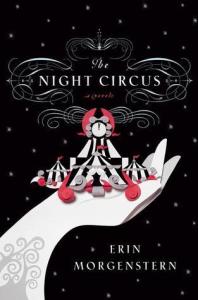 Book: “The Night Circus”
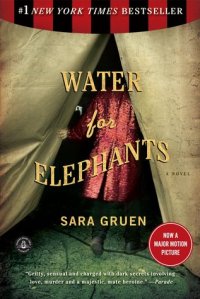 Book: “Water for Elephants”
 Book: “Modoc”
 Book: “The Devil in the White City: Murder, Magic, and Madness at the Fair that Changed America”
 Animorphs #35.5: “Visser”
 Book: “The Outsider” by Stephen King
 Book: “A Treacherous Curse” by Deanna Raybourn
 Book: “#Murdertrending” by Gretchen McNeil
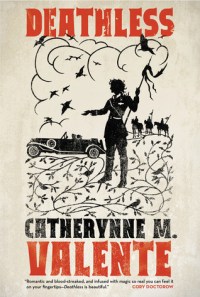 We are part of a group of librarian friends who have had an ongoing bookclub running for the last several years. Each “season” (we’re nerds) we pick a theme and each of us chooses a book within that theme for us all to read. Our current theme is “B-Sides,” where we pick different books from previous authors that we read in the club.
 Book: “Spinning Silk” by T. Cook
 Book: “Force of Nature” by Jane Harper
 The Library Ladies