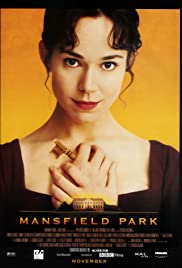
My Year with Jane Austen: “Mansfield Park” [1999]

mv5bnjuyndg5owutyjzmmc00mmq4lthjzjytzme4mzbhmzi2mzq1xkeyxkfqcgdeqxvymja0mzywmdy40._v1_uy268_cr70182268_al_

Movie: “Mansfield Park”

Release Year: 1999

Actors: Fanny – Frances O’Connor

Edmund – Jonny Lee Miller

Mary Crawford – Embeth Davidtz

Henry Crawford – Alessandro Nivola

Comparison – “Indulge your imagination in every possible flight.”

This is probably the most interesting Jane Austen adaptation we’ve seen so far in this review series. For the most part (other than the modern re-imaginings, of course), the other movies have stuck pretty closely to their book counterparts. There are small changes here and there, extra lines added/removed, and various actors bringing their own flare to the characters, to varying levels of success. But while this movie does keep the main plot points included, it also makes some significant character changes and also heavily focuses on themes only briefly touched upon in the book, most notably, the role of the slave trade on British life during this time period.

I’ll dive more deeply into the character changes later, but both Fanny and Sir Thomas have some striking dissimilarities to their book versions. But the other big change is the focus on slavery and the growing abolitionist movement at the time. Right in the beginning of the movie as Fanny travels to Mansfield, she sees a slave ship docked on the coastline and is struck by it. Later, as an adult, she and Edmund discuss the abolitionist movement, with Edmund noting that while progress in that area is a moral good, their livelihoods are currently funded by the wealth provided by the Bertram family’s plantations in Antigua. For his part, Sir Thomas espouses some very racist and incorrect points of view at a family gathering, starting off a minor family scuffle when Edmund and Fanny attempt to correct him. And, of course, we later see the horrific actions that Sir Thomas has taken against his slaves depicted in Tom’s artwork. I’ll get more into Sir Thomas and these violent acts later, but I have a similar problem with that depiction as I do with some of this theme.

Mainly, the movie seems to be wanting to have it both ways: it wants to bring up this topic as one that would be relevant to the times and add a more meaningful weight to Edmund and Fanny’s discussion (the book largely focuses on nature and religion here), but the movie also doesn’t want to change anything significant about the story in this light. Meaning, there’s all of this discussion about the slave trade, but no characters actually make any meaningful steps or really change anything about their lives in response to this. This is likely realistic, it’s not like many nobles of the time were probably giving up their fortune in the work of moving towards freedom from the African people enslaved. But it also makes the movie end on a very awkward, unresolved note. It’s rather uncomfortable. Perhaps that was the point? But if so, even that fails to really settle with any weight.

Heroines – “I hate to hear you talk about all women as if they were fine ladies instead of rational creatures.”

I have mixed feelings on this portrayal of Fanny Price. On one hand, I really like Frances O’Connor’s acting overall and think she fits the mental image I had of Fanny pretty perfectly. On the other hand, I think the character is really all over the place throughout the movie, sometimes being presented as a strong-willed, verging on rebellious young woman, and at others reverting back to the more meek and mild version of the character that we’re familiar with from the book.

One of the big challenges of adapting this book is Fanny herself. She’s an even more quiet and reserved character than Eleanor who also has Marianne to balance her out. So, I get that adjustments had to be made here. Edmund’s “grooming” of Fanny definitely doesn’t work for modern audiences. Nor does the fact that most of Fanny’s longer speeches (that she makes out loud at least) have to do with the wonders of nature, poetry, and the clergy. As I’ve mentioned in my review of the books, there are even times when Fanny seems to be suffering from some mild form of Stockholm Syndrome, especially with how thankful she is for Mrs. Norris’s constant reminders of how very, very lucky Fanny is to be in a family where she is largely ignored and otherwise put to work as a glorified maid service for the ladies of the house.

So, all of that acknowledged, I generally am ok with the changes they’ve made to Fanny here, especially when they emphasize her more wild moments (running around with Edmund, horse back riding, being more firm when she stands up to Sir Thomas about refusing Mr. Crawford). There is a bit of whiplash when she switches back to being meek/mild all of a sudden, but I get it.

The only real problem I have with her portrayal is the decision the movie makes to have her briefly accept Henry Crawford. Again, on one hand, I get the point the movie is trying to make about the very real, very scary situation facing women of the time. We see Fanny witness the life her mother has had after marrying the wrong man, essentially. She married for love, but it is clear that that love is gone and all that remains is a life marred with poverty and too many children. This could easily be Fanny’s future, and I like that they acknowledge these hard choices, especially in a Jane Austen film that, naturally, usually tells the much more romantic, lovely version of young women finding love and wealth (or at least good comfort) together.

I also think that this change can add a good balance point between Edmund and Fanny, which I’ll talk more about later. But strictly looking at it as a character adaptation from what we’re given in the book, this is the biggest change to Fanny’s character we see and one that undermines one of the most prevalent aspects of her entire character. Through the book, Fanny is largely a silent observer. But through access to her inner thoughts and the more revealing conversations we see between her and Edmund, it becomes very clear that Fanny is the only character who is truly clear-eyed about the people and events going on around her. She also is the only one to hold true to the principles she expresses. Edmund talks a good game, but he ultimately joins in the play (after very little prompting really) and is willfully blind to Mary Crawford’s true character. Most of the rest don’t even come close to his levels. By the end of the book, Austen devotes a decent amount of time to Sir Thomas reflecting on the failures of parenting that lead to his children being raised to look the part of well-bred individuals but who ultimately lacked the firm foundation that is required beneath it all to be truly moral or proper.

Fanny, alone, stands true to her beliefs. Even in Portsmouth where we see her struggling to get by in her family’s household (her health actually suffers), Fanny’s focus shifts to what she can bring to this family and she devotes much of her time to improving Susan. When Crawford visits, she sees his improvements as nothing more than a hopeful sign that he will soon recognize the pain he causes her by continuing to pursue her. She knows she doesn’t love him. Knows that a future with a character such as he is (one who she has witnessed toying with women) is questionable at best. If anything, for the book character at least, seeing the situation her mother is in also reinforces the idea that marrying the wrong man can have dire consequences, making Henry Crawford’s fortune not necessarily the assurance of comfort that it originally seems, from a purely practical sense.

The story is almost built around this essential trait of Fanny’s, and one that is presented as unique and rare to her, so to give that up in the movie is strange to say the least. And, given that she changes her mind the very next day, adding weight to Crawford’s accusations of her own inconstancy and lack of trustworthiness, I’m not quite sure what it really adds to the movie. Does it really give us any greater insights into Fanny herself? Into the situation women faced? All of that could have still been accomplished without undermining the steadiness that Fanny is later praised for. Edmund even calls it her “infallible guide”…but the movie itself just worked against such strong language or terms. I think I just wish the movie had done more with this moment. If they were really going to play around with such a key part of Fanny’s character (perhaps the key part of her character), I feel like more needed to be done to justify the change, either leading up to her making this decision or in the fallout. As it is, it feels unnecessary and both undermines Fanny herself and lends some extra motivation for Henry Crawford’s rash actions later on (though not much, and I’ll touch on that in the Villains section).

Heroes – “What are men to rocks and mountains?”

Edmund is so much more likable in this movie than he is in the book. My love for Jonny Lee Miller has been well-established at this point, so of course, I credit his natural charisma as helping bring the character more forward as a hero. But we also simply see more heroic deeds from him. Or, at the very least, more romantic hero deeds from him. Unlike in the book, this version presents Edmund as half-aware of his interest in Fanny the entire time. The audience is never left to question whether Edmund has feelings for Fanny, it’s there from the beginning. It’s there when he mistakes his father’s praising of his choice in women, thinking of Mary Crawford, for Fanny herself. It’s there when, after Mary Crawford disheartens him about her views on the clergy, he demands the first two dances with Fanny instead of Mary. It’s there when we watch Edmund and Henry Crawford gaze after Fanny as she leaves the ball, clearly paralleling them both as interested parties. It’s there in strained words of missing her when he fetches her back home and then when we falls asleep on her shoulder. And it’s most especially there when he initiates their almost kiss in the middle of their middle-of-the-night encounter in Tom’s room (this, still, before Edmund had even heard Mary Crawford finally truly expose herself).

Miller’s version strikes a good balance between Edmund’s own moral sense while also making him believably young and naïve enough to fall for a woman like Miss Crawford. His take on the character is very fresh-faced and wide-eyed. So while we see him giving good speeches on the quality of literature and concerns about the slave trade, it’s also easy enough to see him swayed over to being in a tawdry play and pursue Mary past the point of reason. In the end, it’s much easier to forgive him his nonsense for all the more good we’re given to continue liking him throughout this version.

Villains – “I do not want people to be very agreeable, as it saves me the trouble of liking them a great deal.” 

For a book that is already largely made up of villains, somehow the movie went and made more?? I’ll get into the Crawfords, of course, but one of the most major changes to this adaptation of the book is the striking character revision of Sir Thomas. In the book, he could be gruff at times, but was largely a benevolent character, often coming in second to Edmund as actually caring about Fanny’s needs. We see him arrange the ball for her largely out of genuine care for her and her brother. And even after she refuses Mr. Crawford and he speaks harshly to her, he follows this up directly with the action of making sure there is a fire in her room. From there, he does nothing but quietly discuss the situation with Edmund and resolve to let things play out as they will. The worst that can be said about him is that he becomes a bit neglectful when caught up in the family drama at the end, leaving Fanny to linger in Portsmouth.

Here, not the case. It’s actually a very uncomfortable change, overall. I’m not necessarily opposed to re-writing the character this way, but I’m not sure what purpose it ultimately served with how it’s done here. We don’t really need a reason to dislike this character as, like I’ve said, there are plenty of unlikable characters in this story. And even if they had left the character completely as is in this movie, harsher threats to Fanny and colder/creepier disposition overall, he would have been plenty unlikable. But then they add in the graphic nature of his treatment of the slaves at the plantation. The images Tom draws depict every sort of violence, up to and including sexual violence. And then…the movie never touches the topic again.

We’re left with a family who essentially goes on as is, with Fanny and Edmund interacting with everyone in the same manner as always, even going so far as to bring Fanny’s younger sister, Susan, into the household. In the book, this makes sense. With this type of character portrayal for Sir Thomas? There are some serious eyebrow raises about introducing a young woman into that situation, ones that you have to think the very moral and upright Fanny and Edmund (one has to assume she would tell him about this) would have serious concerns about. And then, beyond that, the movie fails completely to make any actual statement or rebuke of this character. It just…sits there. If you’re going to touch on this very real part of history, you have to actually do something with it. As it is, it’s almost worse than not acknowledging these harsh realities at all, since the movie introduces the topic but then does so little with it that it begins to feel exploitative and used for graphic thrills rather than adding any meaningful commentary. I have a big problem with it, ultimately.

For their part, the Crawford siblings are pretty similar to what we see in the book. I do like that we actually get to see the scene where Mary Crawford so thoroughly exposes herself as a terrible person. In the book, it’s kind of anticlimactic to just hear about it second hand through Edmund’s recounting to Fanny.

As for Henry Crawford, the casting here was perfect as I think he immediately sets of spidey-senses for most women as not a trustworthy guy. Too charming by half! His arc is influenced a bit, I think, by the changes they make to Fanny’s decision to briefly accept him only to promptly drop him again the very next day. Not that this disappointment in any ways justifies his or Maria’s actions. But it does paint the entire thing in a bit of a different light, since he’s clearly still reeling from this quick about-face. It also does add weight to his comment that Fanny is somehow the perfect example of trustworthiness. He’s right! She’s not, really, after this! It’s a very human thing she does, but he also has a point. In the book, there is really nothing pushing him towards Maria other than sheer boredom and ego. Here he does have a recently broken heart to somewhat explain his poor decision making. As far as his character arc goes, I’m fine with either option. I have more problems with what it does to Fanny’s character than his, really.

Romance – “A lady’s imagination is very rapid: it jumps from admiration to love, from love to matrimony in a moment.”

As I discussed in the “Heroes” section, the romance is greatly increased in this version of “Mansfield Park.” The entire movie gives us ample evidence that Fanny’s love is requited but that Edmund is just too much of a dunderhead to really put it all together. Really, there’s almost more on the screen highlighting Edmund’s love of Fanny than the other way around. We know it to be true since Fanny pretty much confesses as much, but he has many more actions and lingering looks to his side of things (probably a testament to the director/writers knowing who the main audience will likely be composed of…).

In some ways, Edmund and Fanny are more balanced together in this version as well. I know it’s been some fan’s complaints that it seems that Fanny is essentially Edmund’s reward at the end of the book for getting through the trial that was Mary Crawford. In my review of the book, I argued that it is the opposite: that Edmund is Fanny’s reward for staying true to her principles in the face of everything. Here, we see them both stumble. Edmund, of course, still pursues Mary Crawford (though the near kiss with Fanny does introduce a question into whether he’d have gone through with that relationship even if Mary hadn’t sabotaged herself). He still even has the line about not being able to picture anyone as his wife but for Mary (harder to buy that line in a movie like this that only shortly before had him confusing his father’s compliments on his choice of a potential bride for Fanny instead of Mary…tell me again how he couldn’t picture anyone else as a bride??) But here, we also see Fanny stumble, briefly giving in to the fear of a future of poverty and accepting Henry Crawford’s proposal, if only for one night. I talked more about that in the Heroines section, but I think the decision itself plays best when viewed through the romance angle, as one that makes equals, equally flawed at least, out of our main couple.

Comedy – “For what do we live, but to make sport for our neighbors, and laugh at them in our turn?”

The movie definitely adds in more comedy to the proceedings, making it, in some ways, feel more like a Jane Austen story that the original book did itself. There’s a great little montage right after the family party meets the Crawfords where we go through each individual primping and prepping themselves, all clearly besotted in one way or another with the two new comers. Some of Mrs. Norris’s nastiness is hedged a bit more for laughs, though she’s still generally just an awful person. And Fanny and Edmund’s interactions are often tinged with a lighter note as well than they were in the books. Wisely, the director and writers steered well-clear of giving too many impressions of Edmund’s “molding” Fanny as she grew, something that is often referenced in the book but that means something very different to modern audiences than it would have at the time.

Mr. Rushworth is definitely the primary humorous character. He’s great from start to finish. He doesn’t have a ton of screen time, but the actor really makes the most of even the brief appearances we do see. He bumbles about, seemingly only half aware of his surroundings at any given moment, clearly ignorant of his fiancé’s contempt. His bragging about his number of speeches and costume changes to the baffled Sir Thomas (this, on their first meeting!) is pure gold. And, of course, we get to actually see the morning where Maria and Crawford are discovered to be missing. In some ways, seeing the reality of the situation settle on poor Mr. Rushworth does more to really highlight the wrongness of the situation than what we got in the book. Silly he may be, but here we get to actually see the human cost of two selfish individuals and their thoughtless actions.

And, of course, the movie kept in my favorite comedic moment from the book: when Lady Bertram is clearly sleeping through all of the action and startles awake only to quickly protest that she was not, in fact sleeping.

Fun facts – “Life seems but a quick succession of busy nothings.”

Not only does Jonny Lee Miller play two Jane Austen heroes (something that I believe is unique to him?), he also had already played a character in a “Mansfield Park” adaptation before being cast as Edmund here. He played one of Fanny’s younger brothers in the 1983 mini-series version of the story.

This Fanny Price is partially modeled after Jane Austen herself, with Fanny working as an aspiring author. Some of the bits of writing she reads in the movie come from Austen’s own early work as a teenager.

The actresses who play young Fanny and young Susan are sisters in real life.

Best Movie Gif/Meme: “I dearly love a laugh.”

Thought this one was pretty good:

In two weeks, I’ll the 2007 version of “Mansfield Park.”

Kate’s Review: “Basketful of Heads”

50490087._sy475_Book: “Basketful of Heads” by Joe Hill and Leomacs (Ill.)
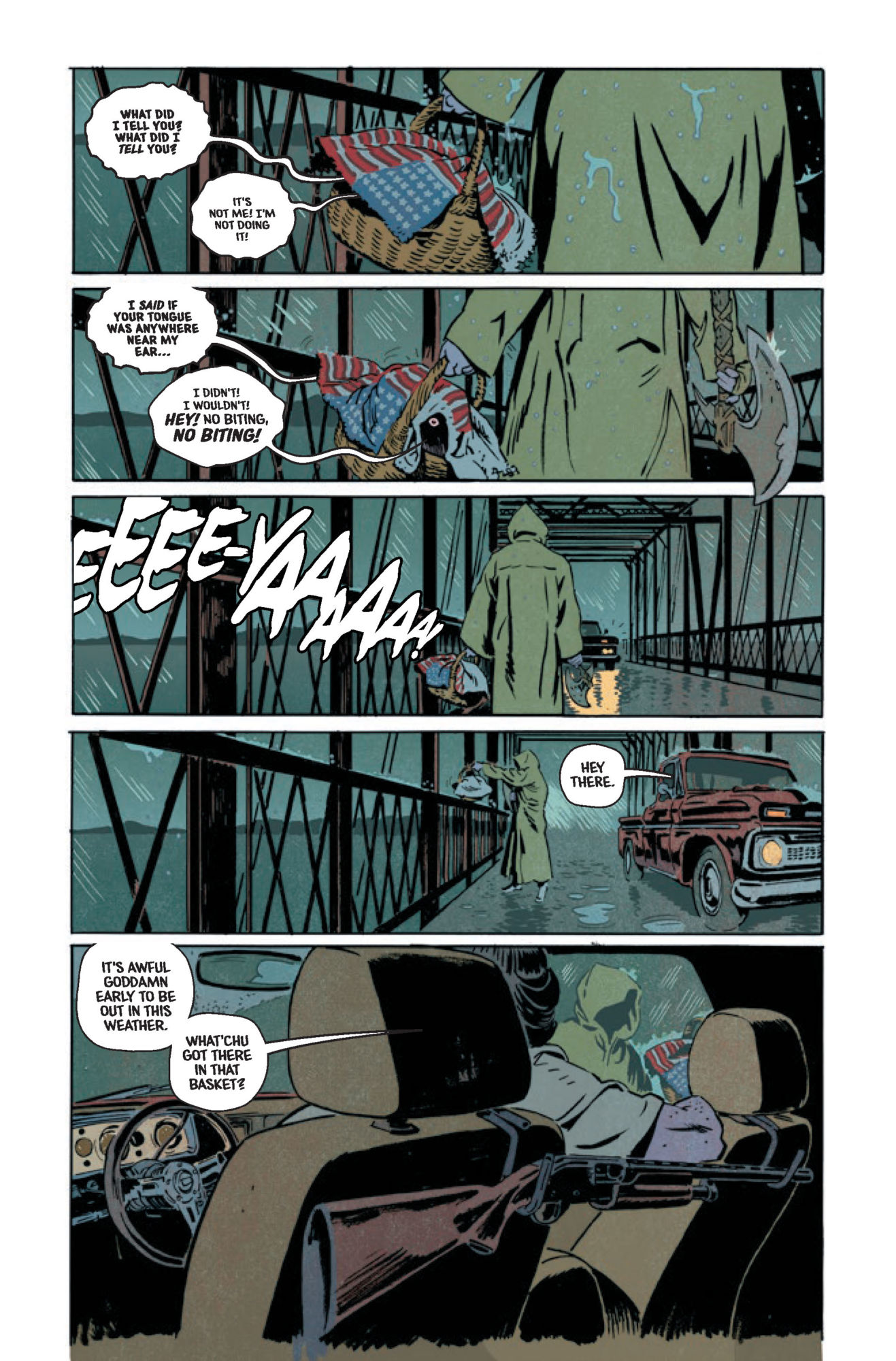
Publishing Info: DC Comics, September 2020

Where Did I Get This Book: I received an eARC from NetGalley.

Book Description: June Branch visits her boyfriend, Liam, on Brody Island for a relaxing last weekend of summer. After an escaped group of criminals breaks into the house that June and Liam are watching, Liam is taken by them. June grabs a strange Viking axe and flees from the intruders. When one of the attackers finds her, she swings the axe and takes off his head, which rolls away and begins to babble in terror. For June to uncover the truth, she’ll need to hear the facts straight from the mouths of her attackers, with…or without their bodies attached. Collects issues #1-7.

Review: Thank you to NetGalley for sending me an eARC of this graphic novel!

While it’s true that we aren’t getting a new Joe Hill novel this year, never fear fellow Hill lovers! He has made his triumphant return into the comics world with DC’s imprint Hill House Comics! Given how intricate and awesome “Locke and Key” is, when I heard that he was coming up with his own comic imprint I was very happy. When his premiere contribution “Basketful of Heads” became available in its full form on NetGalley I downloaded it almost immediately after I saw it. I had high hopes, and like most Hill content that comes my way, it met my expectations.

First thing is first, Hill has created some fun characters and a fun setting for this story. Brody Island feels exactly like the kind of beach town you would see in 1970s and 80s lore, with heavy nods to “Jaws” in particular (as this is one of Joe Hill’s favorite movies I wasn’t surprised; Brody Island named for the police chief in that movie, as well as a character saying someone should be hung up by their ‘buster browns’, a la the mayor). In this limited scope of a story you get a sense of the town and the people who live there, and the nostalgia factor was on point. Our protagonist June is the kind of lady character I’ve come to expect from Hill. She’s tough, she’s no nonsense, but she isn’t forced into a stereotypical ‘badass woman’ box we sometimes see when these kinds of characters are on the page. While it’s true that she’s lopping people’s heads off in hopes of saving herself and her boyfriend Liam, which is incredibly badass, she retains her personality and her core being. June also has some well done complexity, as she loves her boyfriend but has aspirations of her own through her education and focus on psychology. While others disparage her aspirations, she values them and holds true to them. I loved June. Add her to the list of excellent Hill heroines.

And then there’s the horror and mystery aspects of this story. As June takes off the heads of violent men who want to do her and Liam harm, we see a lot of gore and splatterpunk-esque violence that is very entertaining. We don’t really know what it is about the axe that June is carrying that makes people’s heads stay alive after being removed from the body, but ultimately it doesn’t matter. The bigger question is why were June and Liam targeted by their attackers. And as that mystery slowly unfolds, we get a well plotted and full of twists ride that I really enjoyed. Hill has a number of tricks up his sleeves, and I found all of them entertaining as hell. I sped through this story wanting to know how it was all going to turn out, and with every reveal I was excited to learn more. Throw in some really fun Easter egg references to Stephen King and his work (prisoners from Shawshank on the run, the location of “Derry County”) and I could barely contain the smiles on my face that kept breaking out.

On top of all that, I liked the art style quite a bit. It is splatterpunk and gory when it needs to be, but also has some moments of cartoony camp and intimate expressions on our characters faces.

basketfulofheads11
(source)

“Basketful of Heads” was a really fun story, and I couldn’t be happier now that Joe Hill is back to doing some work in comics. I will definitely be looking into his imprint more to see what other stories come out of it. Summer may be over, but if you want to cling to it a little while longer and you like this kinda thing, pick it up!

Rating 8: Super fun, super gory, super twisty, “Basketful of Heads” is a hoot and a half and a hell of a ride.

Reader’s Advisory:

“Basketful of Heads” is new and isn’t included on any Goodreads lists, but I think that it would fit in on “Best Horror Comics/ Graphic Novels”.

Find “Basketful of Heads” at your library using WorldCat, or at a local independent bookstore using IndieBound!

Serena’s Review: “A Dance with Fate”

36253130._sy475_Book: “A Dance with Fate” by Juliet Marillier

Publishing Info: Ace Books, September 2020

Where Did I Get this Book: Edelweiss+

Book Description: The young warrior and bard Liobhan has lost her brother to the Otherworld. Even more determined to gain a place as an elite fighter, she returns to Swan Island to continue her training. But Liobhan is devastated when her comrade Dau is injured and loses his sight in their final display bout. Blamed by Dau’s family for the accident, she agrees to go to Dau’s home as a bond servant for the span of one year.

There, she soon learns that Oakhill is a place of dark secrets. The vicious Crow Folk still threaten both worlds. And Dau, battling the demon of despair, is not an easy man to help.

When Liobhan and Dau start to expose the rot at the center of Oakhill, they place themselves in deadly danger. For their enemy wields great power and will stop at nothing to get his way. It will take all the skills of a Swan Island warrior and a touch of the uncanny to give them a hope of survival. . . .

Previously Reviewed: “The Harp of Kings”

Review: As always, I’m excited whenever I see a new Juliet Marillier book coming out. The first book in this trilogy (?), “The Harp of Kings” definitely set the stage for this second book, leaving a few threads dangling and a mysterious enemy in the form of the Crow People. While it wasn’t my favorite of Marillier’s work, I thought it was a good start to a new series and introduced a compelling set of new characters. This second one was…odd. I still enjoyed it, but not as much as I had hoped, even though, on the surface, it seemed to have most of what I look for in these types of books.

Liobhan and Dau are on the cusp of achieving that which they both have worked so hard and so long to accomplish: to become full members of the Swan Island crew. But, in an unfortunate accident while the two spar, Dau suffers a debilitating injury that costs him his sight, perhaps forever. With his family now demanding justice, Liobhan finds herself alongside Dau back where neither wish to be and a place that caused only harm and suffering to Dau during his childhood. There, they must both confront the evils at the heart of Dau’s family, and maybe some mysteries, too.

My description of the book, following the example of the published one, fails to mention that Brocc, too, is a part of this story. After his decision to marry a half-Fae queen and join her in her realm at the end of the last book, I wasn’t sure what we would see from him here on out. But low and behold, he ends up with a decent number of chapters and his own arc in this story. It’s also made clear by the end of this book that there will be more to hear from him in the third. Not sure why the publisher failed to include the fact that he is still a main character, but I suspect it’s because they realize that most readers are probably here for Liobhan and Dau. I know I was.

Brocc’s not a bad character, but it’s hard to be as compelling as two leads that each have quite a number of chapters devoted to their POVs making them both more compelling together and apart. Brocc’s own story here was…strange. It’s clear that he is still struggling to find his own role in the Fae world. And, due to the fact that he grew up in the human world, it’s also clear that he has very different views and ideas about the threat the Crow People pose to the Fae. He ends up with his own mini quest, which I found compelling enough. But I really struggled with the romance between Brocc and his wife. I’m not sure if we’re supposed to like her or not? By the end, I really didn’t like her at all, but was still unsure whether the author had been meaning for a few late reveals to materially change the negative impression that had been built up. For me, the reveal was definitely not enough to change my mind and, by its nature, kind of made me more mad to think that we might have been supposed to forgive her decisions and treatment of Brocc due to it. I don’t want to spoil it, but if you read this book, you’ll see what I mean. Maybe other readers will have a different impression. But all of this together left me really struggling to enjoy Brocc’s section of the story.

As for Dau and Liobhan, I enjoyed their story more. I think partly they are simply more compelling characters on their own, but they also had more to do in this book in particular. That said, they still didn’t seem to have enough to do. The mystery at the heart of their story is pretty obvious from the get-to, so it’s more a journey of reaching the obvious endpoint than in unraveling any real clues. Dau’s recovery and his attempts to come to grips with his new situation are interesting enough, but, again, there wasn’t any real tension here as it seemed like the conclusion of his arc was also well-telegraphed. And, again, the romance left something wanting.

This is a particularly frustrating thing to find in a Marillier book, as I’ve always thought that one of her best strengths is her ability to write compelling, swoon-worthy romances. But here, it just felt off. There really was no obvious progression of Dau and Liobhan’s feelings. Instead, we were simply told that they each began to have feelings for the other. It was incredibly disappointing  and said, especially knowing what the author is capable of. There could have been a really great romance here, but for some reason, it just felt deflated and underdeveloped from the start. There’s another book coming and some challenges still ahead of these two, so I’ll hold out hope that this ship can be righted.

I still love Marillier’s writing style and the overall tone of her take on fantasy stories. There are some good pieces in these books, but for some reason they just don’t seem to be coming together the same way several of her other stories have in the past. Obviously, I’ll still be here for the next one, but I’m a bit more nervous about it than I remember ever being in the past for one of this author’s books.

Rating 7: A surprisingly lackluster romance on two counts left this book feeling a bit limp at times.

Reader’s Advisory:

“A Dance with Fate” isn’t on any Goodreads lists yet, but it should be on “Strong Fighter Heroines.”

Find “A Dance with Fate” at your library using WorldCat!

Kate’s Review: “One by One”

50892433._sy475_Book: “One by One” by Ruth Ware

Publishing Info: Scott Press, September 2020

Where Did I Get This Book: I received an eARC from NetGalley.

Book Description: The #1 New York Times bestselling author of The Turn of the Key and In a Dark Dark Wood returns with another suspenseful thriller set on a snow-covered mountain.

Getting snowed in at a beautiful, rustic mountain chalet doesn’t sound like the worst problem in the world, especially when there’s a breathtaking vista, a cozy fire, and company to keep you warm. But what happens when that company is eight of your coworkers…and you can’t trust any of them?

When an off-site company retreat meant to promote mindfulness and collaboration goes utterly wrong when an avalanche hits, the corporate food chain becomes irrelevant and survival trumps togetherness. Come Monday morning, how many members short will the team be?

Review: Thanks to NetGalley for providing me with an eARC of this novel!

We are leaving the summer months here in Minnesota and I, for one, am actually actively dreading winter this time around. That isn’t my usual M.O., as someone who likes cold better than heat, but given that heat is the only way we can in person socialize with people right now, weather wise, this Minnesota Winter is going to be even more isolating than usual.

giphy
Yes, I’ve been a Debbie Downer during the pandemic. Look for a more cheerful Kate in 2021 (hopefully). (source)

But all that said, I do try to remind myself that it can always be worse, so at least I’m not going to be stuck in an avalanche ravaged chalet with a potential murderer on the loose, right? That brings us to “One by One”, the new mystery thriller from Ruth Ware! I have mostly enjoyed Ware’s takes on the whodunnit murder mystery, so I was eager to read her newest foray into the genre.

Like what we can usually expect from Ware, “One by One” is an Agatha Christie-esque murder mystery where isolation is the name of the game, someone ends up dead, and almost everyone is a suspect because they all have motive, means, and opportunity. This time we dive into the world of Start Ups, when the team behind music app Snoop go on a mountain retreat to get some skiing in while discussing the future of the company. We have two narrative perspectives we follow. The first is of Erin, one of the employees at the Chalet whose job is to make everyone’s stay a happy one. The other is Liz, a former employee who doesn’t seem to fit in with the posh and entitled rest. Both women have their secrets, their traumas, and their parts to play. I feel like we mostly got a sense of what both women were about, though that said Erin definitely felt a little more well characterized than Liz at times. But for the most part by the time I was done with the book and the characters, I felt like both Erin and Liz played their parts well. Heck, most of the characters, even the ones that we didn’t get into the minds of, were drawn well enough that they felt believable in their actions and attitudes. Topher, the co-founder and one of the heads of Snoop, was especially intriguing to follow from out outsider perspective, as his smarm and ambition would occasionally give way to a complex person, depending on whether it was Liz or Erin that was perceiving him in that moment, and therefore shaping the reader’s perceptions of him. We got to see that for a few of the characters, actually, and it was a fun device to show that people have multiple sides to themselves.

The mystery itself was fairly standard, but that’s not necessarily a bad thing. I sort of figured it out before it all came together, but that didn’t make the journey any less enjoyable. I thought that the setting of a mountain retreat was a fun isolation tactic, and seeing the characters start to unravel as their situation became more dire and murdery was suspenseful, with questions as to who would be next on the chopping block always in the back of the mind. Throw in a unique and pulse pounding climax and I was kept on the edge of my seat, wondering if the characters I liked were going to be safe and the ones who were doing wrong were going to get their comeuppance. My one complaint was that the book felt a need to wrap up a number of ends after the fact, which just made for the ending to feel a little too long and drawn out long after the high tension of the climax was gone. On top of that, a few reveals were left for afterwards as well, when they probably should have been addressed earlier. I feel that had Ware put some of those solutions into other parts of the book it would have worked out a little better, as it threw off the tone as the story was wrapping up. It didn’t ruin the story as a whole, but it did give me a little bit of pause when I should have just been riding out the final pages.

“One by One” is going to be a fun mystery for the autumn and winter as we isolate in our homes and ride out our own storms. Ruth Ware is a reliable distraction during times when reliability is something we need more of.

Rating 8: Suspenseful, twist filled, and appropriately isolated, “One by One” is another fun mystery from Ruth Ware!

Reader’s Advisory:

“One by One” is included on the Goodreads lists “Can’t Wait Crime, Mystery, and Thrillers 2020”, and “Upcoming Books That Sound Cool” (seems subjective but that title just tickles me).

Find “One by One” at your library using WorldCat, or a local independent bookstore using IndieBound!

Highlights: September 2020

The summer heat and humidity is slowly fading away, and the days are starting to get a little shorter. It was a very strange, somewhat lost summer that we experienced here in Minnesota, though we’re trying to get some final summer-y outdoor activities in before the cold and the pandemic sends us back inside. But along with those last summer activities, we also have books that we are looking forward to this month!

Serena’s Picks

36253130._sy475_

Book: “A Dance with Fate” by Juliet Marillier

Publication Date: September 1, 2020

Why I’m Interested: I really enjoyed the first book in Marillier’s new trilogy, “The Harp of Kings.” While I didn’t find the mystery itself super compelling, I was very intrigued by the new set of characters it introduced, mainly Liobhan and Dau. Judging by the book description, it seems that most of this story will be devoted to these two as well, which is fine by me. I’m curious whether we’ll see anymore of Brocc after the events of the last book, as it did seem that there were some mysteries left open-ended on his side. Either way, I’m always down for a new Marillier title, so I can’t wait to dive into this one!

45044785

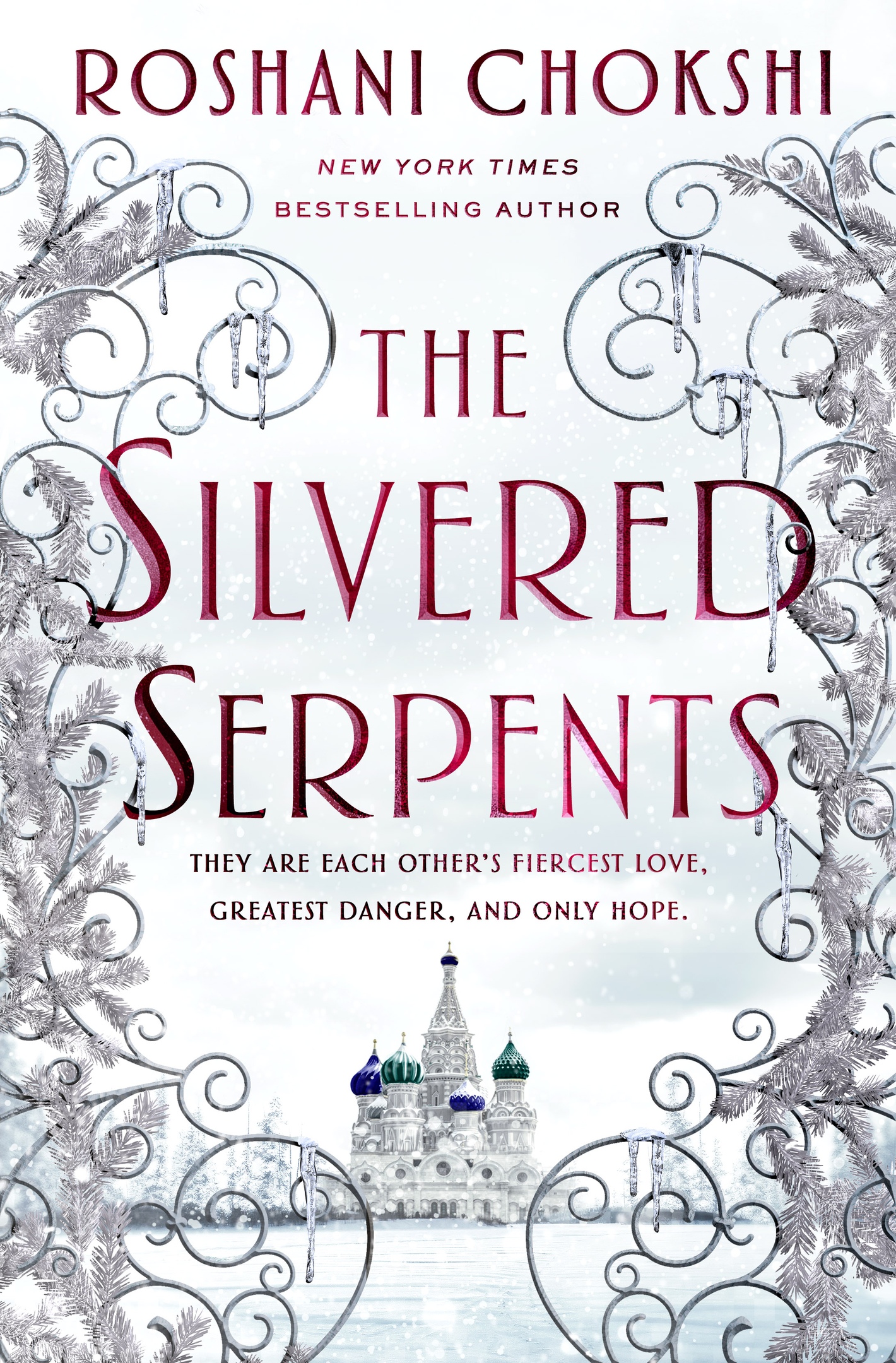
Book: “The Silvered Serpents” by Roshani Chokshi

Publication Date: September 22, 2020

Why I’m Interested: On the other end of the spectrum, I was not overly thrilled with the first book in Chokshi’s series, “The Guilded Wolves.” I’m definitely in the minority with this author as I’ve struggled in some way or another with all of the books by her I’ve read. But, again, the characters that were introduced were more compelling than the ones I’d found in her other stories, so I thought it was worth continuing on. Plus, the events at the end of the last book were pretty dramatic. Maybe too dramatic… *side-eyes this book for unnecessary angst potential*

50548197._sy475_

Book: “A Deadly Education” by Naomi Novik

Publication Date: September 29, 2020

Why I’m Interested: I’ve loved everything I’ve read by Naomi Novik. Unequivocally. Completely. Utterly. So I was over the moon when I spotted this book on Edelweiss and instantly put out a request for it. The book description is somewhat vague…something about a dangerous, magical school and a main character who has some type of destructive abilities and a talent for not making friends? It’s also been hyped as a darker “Harry Potter,” which, could either be totally awesome or…worrying. But Novik hasn’t lead me wrong so far, so I’m going to place my bets on totally awesome. Can’t wait to find out!

Kate’s Picks

49127515

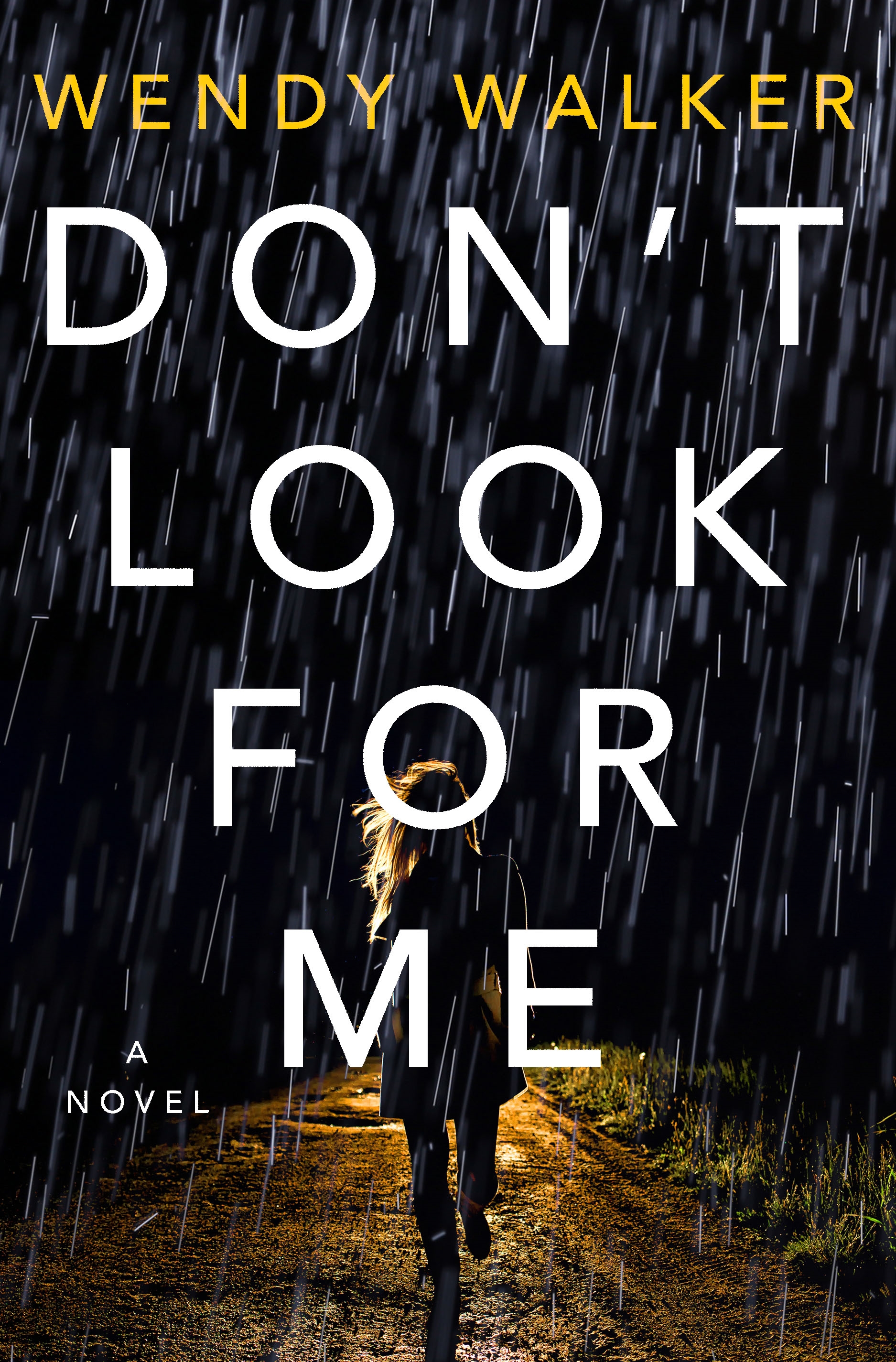
Book: “Don’t Look For Me” by Wendy Walker

Publication Date: September 15, 2020

Why I’m Interested: I greatly enjoyed Wendy Walker’s previous novel “The Night Before”, and because of that I was very interested to see what she would come up with next. A missing woman, a daughter who is on the case, and the possibility that the wife and mother just walked away from her life due to guilt? I’m in! There isn’t much in terms of plot description, which no doubt means that Walker wants to keep things close to the vest as she has twists and turns in store. Regardless, Molly Clarke is a wife and mother who stopped in a small down on the way home, and never returned. While a note was found saying that she was running away from her guilt, her daughter isn’t so sure. And when a tip comes through that places her mother getting into a stranger’s car, she goes to investigate. Walker has delivered some intriguing thrills before, so “Don’t Look For Me” has some promise to do so again.

49246963

Book: “Night of the Mannequins” by Stephen Graham Jones

Publication Date: September 1, 2020

Why I’m Interested: Given that I slept on this creepy and talented horror author Stephen Graham Jones until the book “The Only Good Indians”, I feel like I have some catching up to do. So I am excited to dive into a new horror novella that involves a potentially killer mannequin! Who doesn’t like the idea of a haunted doll story, especially ones that promise to have some tweaks upon the subgenre? Sawyer and his friends love playing practical jokes, and decide to pull one on their friend Shana, involving the use of an old mannequin named Manny they found when they were younger. But Sawyer soon realizes that Manny isn’t any old mannequin, and begins to believe that Manny wants them all dead once one of his friends is killed in a strange way. It’s up to Sawyer to save the people around him… But at what cost? This sounds like it will be a quick horror read just in time for the Halloween season!

49397758

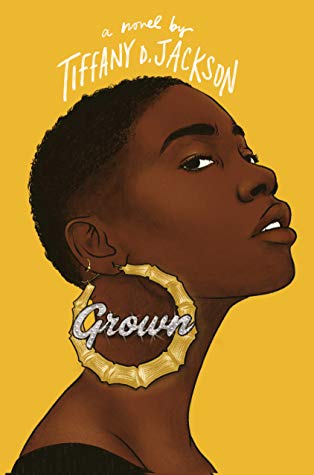
Book: “Grown” by Tiffany D. Jackson

Publication Date: September 15, 2020

Why I’m Interested: Given that Tiffany D. Jackson is one of my favorite YA authors writing right now, I of course was supremely excited to hear that she had a new book coming out. And “Grown” sounds like it’s going to be a dark and difficult thriller that talks about some very relevant social issues regarding race, sexual assault, gender, and misogynoir. Enchanted is a teenager who has dreams of becoming a singer, and at an audition she meets the famous R and B star Korey Fields. Korey tells her that she has supreme talent, and that he wants to make her a star. Enchanted jumps at the chance, and when he starts to romance the underage girl she believes that they are falling in love… until Korey’s abusive and controlling side comes out, and he starts to control her every move. There are clear real life inspirations here, and while it’s almost assuredly going to be a hard read, I know that Jackson is going to bring lots of illumination to these difficult subjects.

What books are you looking forward to this month? Let us know in the comments!

Serena’s Review: “The Wendy”

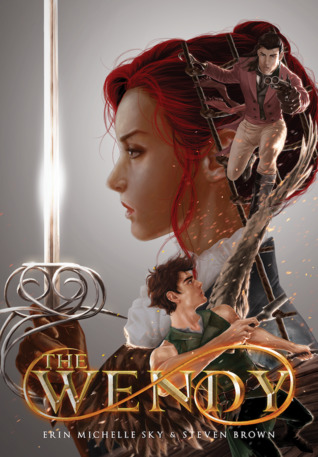
35510314._sx318_Book: “The Wendy” by Erin Michelle Sky and Steven Brown
Publishing Info: Trash Dogs Media, January 2018

Where Did I Get this Book: NetGalley

Book Description: London. 1789. More than anything in the world, Wendy Darling wants to be the captain of a ship, but women aren’t allowed in the Royal Navy. When she learns the Home Office is accepting a handful of women into its ranks, she jumps at the chance, joining the fight against the most formidable threat England has ever faced. Magic.

But the secret service isn’t exactly what she hoped. Accompanied by a reimagined cast of the original Peter Pan, Wendy soon discovers that her dreams are as far away as ever, that choosing sides isn’t as simple as she thought, and that the only man who isn’t blinded by her gender might be the worst friend anyone could ask for.

Anyone, that is, except Wendy Darling.

Review: I’m never one to turn down a re-telling. And while I haven’t had super good luck with “Peter Pan” retellings in the past, this one seemed far enough from the original story to have a better chance of success. For one thing, the focus is on Wendy’s own story, not Peter’s. And for another, she wants to become a ship’s captain?? So some strange mixture of Peter’s, Wendy’s, and, somehow, Hook’s story? Count me in!

Wending Darling does want to grow up. But she wants to grow up to be a very specific thing: a ship’s captain. And, luckily enough, once she is older, it turns out that a limited number of women are being accepted into the service. Seems perfect! But once there, Wendy quickly discovers that being accepted on paper is not the same thing as being accepted by the men around her, especially not in her dreamed-of leadership role as the captain. Struggling to find her own place, Wendy quickly finds herself caught up in new challenges and adventures, surrounded by a familiar sounding cast of characters, including a certain Captain Hook and a man-child named Peter.

This was a really fun read. One of the reasons I think it’s a success compared to other “Peter Pan” retellings I’ve read is the fact that, while it does a familiar cast of characters, it’s not trying to retell the original story really at all. For one thing, this is Wendy’s story through and through. Sure, Peter plays an important role, but she is front and center the entire time. It is her dreams and adventures the story follows, and her challenges the story prioritizes.

Part of this, of course, is a focus on the gender inequality of the time. The fact that she’s allowed to sign on to the secret service at all is a huge departure from history, but the authors don’t make it any easier for her other than that. She’s constantly having to challenge the perceptions and dismissals of those around her. And, when she does find someone who can see past her gender, it’s not necessarily the best advocate one could ask for. There were a few moments where the “messaging,” for lack of a better word, around this theme came across as a little heavy handed. But luckily the story had enough going for it that the action could quickly take over again and right the ship, so to say.

I also really liked the various takes on familiar characters. John and Michael, for example, are transformed from Wendy’s literal brothers to her brothers-in-arms. Michael, however, could be a bit much at times and too often came across in a pretty annoying manner. He improved as the story went a long and was given opportunities to make up for some of his shortcomings, but he was probably, overall, my least favorite character in the story.

Probably my biggest complaint for the story was the overabundance of love interests presented for Wendy. Sigh. Love triangles are not my thing (pretty well established), and I’m even less excited when we move past triangles to squares and pentagons. I want to settle into my romance and see it slowly develop. Not feel tossed here and there wondering what direction the main character go. Beyond that, multiple love interests is really hard to sell, simply on the believability spectrum, and this one wasn’t any different.

This was a pretty fun romp of a book. It’s not blowing away any literary awards or anything, but if you like fairytale retellings and “Peter Pan” especially, it’s definitely one worth checking out. A sequel came out fairly recently, so I’ll probably get around to reading that one, too, sooner or later.

Rating 8: A bit preachy at times and with too many love interests, but other than that, a jolly good time.

Reader’s Advisory: 

“The Wendy” is on these Goodreads lists: “Peter Pan Retellings” and “Retellings of Classic Tales.”

Find “The Wendy” at your library using WorldCat!

Kate’s Review: “Race Against Time”

52754197._sx318_sy475_Book: “Race Against Time: A Reporter Reopens the Unsolved Murder Cases of the Civil Rights Era” by Jerry Mitchell
Publishing Info: Simon & Schuster, February 2020

Where Did I Get This Book: I own it.

Book Description: On June 21, 1964, more than twenty Klansmen murdered three civil rights workers. The killings would become known as the “Mississippi Burning” case and even though the killers’ identities, including the sheriff’s deputy, were an open secret, no one was charged with murder in the months and years that followed.

It took forty-one years before the mastermind was brought to trial and finally convicted for the three innocent lives he took. If there is one man who helped pave the way for justice, it is investigative reporter Jerry Mitchell.

In Race Against Time, Mitchell takes readers on the twisting, pulse-racing road that led to the reopening of four of the most infamous killings from the days of the civil rights movement, decades after the fact. His work played a central role in bringing killers to justice for the assassination of Medgar Evers, the firebombing of Vernon Dahmer, the 16th Street Church bombing in Birmingham and the Mississippi Burning case. His efforts have put four leading Klansmen behind bars, years after they thought they had gotten away with murder.

Review: Something that the United States hasn’t quite come to terms with is that our country is still a very deeply racist place. Our country was built on the backs of slaves, and the reverberations of that system are still being felt today, even though we don’t want to admit it. In the 1960s during the first Civil Rights Movement in this country, a number of people who were fighting for justice and rights for Black people were murdered for their values and actions, and for many years many of these cases went unsolved. Jerry Mitchell, a investigative journalist, was struck by the cold case of the Mississippi Burning Murders, in which three civil rights workers were murdered by upwards of twenty Klansmen, and were never given justice. That was the start of his career in investigating cold cases around murders during The Civil Rights Era. “Race Against Time” is his memoir about his work around said cases. And frankly, it’s necessary reading for any true crime fans, or anyone interested in justice for those who died for Civil Rights.

As one can imagine, “Race Against Time” is intense, dark, and harrowing. Mitchell pursues leads in a few notorious, recently solved cases of murders of people that Klan members killed to intimidate and silence those who were fighting for racial justice. Mitchell made deep connections to the family members left behind, and as he devotes each section of the book to these cases, you see how he earned the trust of those people, as well as doggedly pursued the probably perpetrators. His writing style is what you’d expect for a seasoned and well respected reporter, and his narrative flows in a very consumable way. Along with that, he really knows how to convey the pain and hope of the family members, and the fear and tension he was feeling when he did meet with suspects and Klansmen, having to keep his cool as they not only say horrifically racist things, but also brag about violence. I really appreciated seeing all of the work that he did, as well as his takes on how the court cases went once they did eventually get to court, decades after the fact. The cases he covers I mostly knew, but seeing this perspective he lays out as opposed to the ones in American History books I had encountered in my past was fresh and insightful. He doesn’t mince words about the evil of white supremacy and how it drives The Klan, and it made for a difficult, but important read.

What struck me the most as I was reading this book is that while this is arguably Jerry Mitchell’s memoir on his work in investigative journalism regarding the murders of Civil Rights figures, it is decidedly centered on the victims and their families as opposed to him. Sure, he talks about the various things he had to do, like putting himself in harms way by interviewing Klansmen and then exposing them. Or talking about the fears that his family had during some of this time. But it always reads as him putting the victims and those they left behind first, and delving into their backgrounds, their stories, and their truths. While I definitely worried about Mitchell on some of his assignments, I was mostly hoping for the best outcomes possible for people like Medgar Evers, Vernon Dahmer, and the Four Little Girls of the 16th Street Church bombing. Mitchell devotes time and pages to all of their stories, and really peels back the way that bigotry and racism hindered justice for so long, as well as exposing the violent racists who almost got away with murder. But it never feels like he’s patting himself on the back or tooting his own horn, and is also quick to point out that there are SO MANY cases that have gone without justice over the years. Mitchell is here to remind us that justice is far from done, and that as a country we still have a long way to go when it comes to righting the wrongs of our racist past and present.

“Race Against Time” is necessary reading when it comes to The Civil Rights Movement, and also a great case study in the importance of investigation journalism. There is still work to do, folks, and people like Mitchell can show us effective ways to do it.

Rating 8: A fascinating and harrowing memoir that centers the victims instead of the author, “Race Against Time” is a must read for those who seek justice against white supremacy.

Reader’s Advisory:

“Race Against Time” is included on the Goodreads lists “True Crime on Tap”, and “White Power, Terrorism, White Supremacy, and White Nationalist Movements in the United States (nonfiction)”.

Find “Race Against Time” at your library using WorldCat, or a local independent bookstore using IndieBound!

Serena’s Review: “The Princess Will Save You”

43603825._sy475_Book: “The Princess Will Save You” by Sarah Henning
Publishing Info: Tor Teen, July 2020

Where Did I Get this Book: NetGalley!

Book Description: When her warrior father, King Sendoa, mysteriously dies, Princess Amarande of Ardenia is given what would hardly be considered a choice: Marry a stranger at sixteen or lose control of her family’s crown.

But Amarande was raised to be a warrior—not a sacrifice.

In an attempt to force her choice, a neighboring kingdom kidnaps her true love, stable boy Luca. With her kingdom on the brink of civil war and no one to trust, she’ll need all her skill to save him, her future, and her kingdom.

Review: I’ll be honest, I first requested this book based purely on how much I love this cover. Even now, looking at it above, I’m swayed to feel more positive about this book just by the lovely depiction of its main characters on the cover. But, when I dug deeper, I realized that it is also being promoted as a gender-swapped retelling of “The Princess Bride,” so, of course, I was even more excited to check it out! While I did enjoy it overall, it sadly didn’t quite live up to the promise of the gorgeous cover or the intrigue of the unique concept.

After the sudden and unexpected death of her father, the king, Princess Amarande quickly discovers how few options she has. Seemingly, no one else is concerned about potential assassination, and instead, her entire council is moving full steam ahead to marry her off to the most politically advantageous match they can find, regardless of Amarande’s own wishes. When her best friend, Luca, is kidnapped by one such potential match in an attempt to force her hand, Amarande takes matters into her own hands. Her quest is simple: save her true love, save her kingdom.

This is a tough one for me to rate and review. On one hand, it was enjoyable enough, and I was able to blaze through it in only a few days. The writing was solid. The characters were interesting. And the world-building did enough to paint a picture that I felt grouned. And yet…it was lacking something.

For one thing, I don’t think it did this book any favors to have it marketed as a gender-swapped “Princess Bride.” Sure, I can see how it follows similar plot points and winks and nods at some of the key phrases used in that book. But, on one hand, if I had not had that put in my head and thus wasn’t looking for these elements specifically, I’m not sure I would have made these connections. And, conversely, when I was looking and did spot them, they often detracted more from the story than they added. For one thing, the first half of the story doesn’t feel like a re-telling at all, whereas the last half really goes all in. It’s an uncomfortable balance.

Beyond that, I think I was also set up to expect more of a humorous fantasy story. Obviously, “The Prinicess Bride” is comedy through and through. Here, not so much. Not only is it clearly not going for the same parody tone that its inspiration had, it also just seemed to lack much humor at all? I think this, truly, is where my main contention point came for the story. It checks all the marks for a good fantasy adventure, but there is something decidedly dry in the tone and its telling. It didn’t have to be back-to-back laughs, but as I was reading through, I realized more and more that there simply were no laughs whatsoever. So, while the characters, romance, and adventure were compelling enough, they also felt strangely two dimensional and flat. It was too bad.

It looks like a sequel is planned, so I’ll most likely check it out. There were some interesting developments towards the end of the story. And perhaps the second will be served better by being more thoroughly detached from the “Princess Bride” read-alike label. Just add some humor to the story, and it could be great!

Rating 7: Sadly a bit flat in its telling, but a fast enough fantasy adventure.

Reader’s Advisory:

“The Princess Will Save You” is on these Goodreads lists: “Damsels in Shining Armor & Dudes in Distress” and “Royalty.”

Find “The Princess Will Save You” at your library using WorldCat!

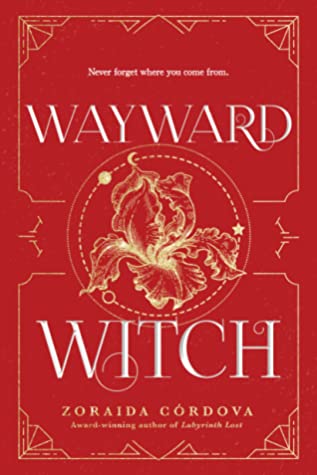
Kate’s Review: “Wayward Witch”

53038638._sx318_sy475_Book: “Wayward Witch” by Zoraida Córdova
Publishing Info: Sourcebooks Fire, September 2020

Where Did I Get This Book: I received an eARC from NetGalley.

Book Description: Rose Mortiz has always been a fixer, but lately she’s been feeling lost. She has brand-new powers she doesn’t understand, and her family is still trying to figure out how to function in the wake of her amnesiac father’s return home. Then, on the night of her Deathday party, Rose discovers her father’s memory loss has been a lie.
 
As she rushes to his side, the two are ambushed and pulled through a portal to the land of Adas, a fairy realm hidden in the Caribbean Sea. There, Rose is forced to work with a group of others to save Adas. Soon, she begins to discover the scope of her powers, the troubling truth about her father’s past, and the sacrifices he made to save her sisters.
 
But if Rose wants to return home so she can repair her broken family, she must figure out how to heal Adas first.

Review: Thank you to NetGalley for providing me with an eARC of this novel!

It’s been a four year journey with the Mortiz Sisters in the “Brooklyn Brujas” Trilogy by Zoraida Córdova, and what a genre bending, empowering, and unique (to me) journey it’s been. Given that books one (“Labyrinth Lost”) and two (“Bruja Born”) followed the oldest and middle sisters, Alex and Lula, I knew that “Wayward Witch”, the last in the trilogy, was destined to be Rose’s story. Rose has always been the sister that has intrigued me the most, as she has always been quiet, reserved, and a little bit mysterious because of it. I was eager to get into her head for the last story, hoping that Córdova would give her a lot to do and work with, and perhaps explore a new genre like she did with Lula. The fulfillment of those hopes was a mixed bag.

Since I want to focus on the positives, I will get my negatives out of the way, particularly as they are no fault of the book. We have gone back to a fantasy focused story in “Wayward Witch”. I had been hoping that after the genre shift in “Bruja Born” we might be experimenting with a whole other genre again, but that was not the case. As much as I can appreciate the care and detail that Córdova put into the world of Adas, and as much as it definitely was unique and steeped in cultural influence that you don’t see as much in fantasy, it’s still a world building fantasy story. And outside of very specific examples that I love, it’s a genre that doesn’t really click with me. Along with that, I had hoped to see more sister interaction like we had in “Bruja Born”, but given that Rose was on her own for a majority of the story, that didn’t happen.

But, that said, I am so happy that we finally got to Rose’s story, and that she got to have this kind of adventure that is so different from the ones that her sisters had. Rose has been dealing with magical changes in her life, as her power has shifted to being a person who can take on the powers of those around her. You enter that in with the dramatic changes in her family life (her father returning from his long absence, her family having to move to Queens after their home was destroyed, her Deathday celebration), and she is feeling stressed and unheard. Not to mention her relationship with her father is a bit strained, as she has few memories of him before he disappeared. I liked that his reappearance in her life specifically is a bit messier and more complicated. But her journey to Adas with her father allows her to see her powers in a new way, as to the fae there she is a savior and a warrior who is there to stop The Rot that is destroying their world. Seeing her function in this totally different realm could have been similar to Alex’s journey in “Labyrinth Lost”, but Rose is so different from Alex that it feels pretty new and fresh. Her magical powers are also neat to see in focus, as the upsides, and the downsides, of being a ‘magic hacker’ as she likes to refer to it are shown in different ways. Be they amusing, or potentially dangerous. And even though the fantasy themes didn’t really connect with me, I did like the characters that Córdova created in Adas, especially Princess Iris. Iris has a lot to prove to both her father, the King, and to herself as well. It was refreshing to see usual fantasy gender norms being bent between her and her twin brother Arco. While Iris is the more ferocious and determine warrior type, Arco is a bit more sensitive and reserved, and Rose’s interactions with both of them helped round out her character, and perhaps made up for the fact we didn’t see her interacting with Alex and Lula in similar ways.

So while the fantasy elements as a whole weren’t as interesting as the horror elements from the previous books, I thought that “Wayward Witch” gave Rose the attention that she deserved, and wrapped up the series in a mostly satisfying way. I’m so happy that Zoraida Córdova got to tell her story about these bruja sisters, and that YA audiences have been given a great example of how witches don’t have to be white.

Rating 7: A return to otherworldly fantasy means that this conclusion didn’t connect as much as the previous book, but “Wayward Witch” gives Rosie Mortiz a strong tale that shows off her abilities, and wraps up a fun and dreamy fantasy series.

Reader’s Advisory:

“Wayward Witch” is included on the Goodreads lists “Latina Leads in YA and Middle Grade Fiction”, and “2020 YA Books with LGBT Themes”.

Find “Wayward Witch” at your library using WorldCat, or a local independent bookstore using IndieBound!

Previously Reviewed:

Not Just Books: August 2020

While we do love us some books, believe it not, we do have a life outside of reading. So to highlight our other pop culture interests, on the last Monday of each month, we each will highlight three other “happenings” from the last month. Big events on favorite TV shows, new movies we’ve watched, old movies we’ve “discovered,” etc. Pretty much whatever we found of particular interest outside of the book world during the last month. Share your own favorite things in the comments!

Serena’s Picks

mv5byjk0mtgzmmqtzmy2my00nme5lwexngutyjzknta3zdkymtjixkeyxkfqcgdeqxvymtkxnjuynq4040._v1_uy268_cr00182268_al_Movie: “Palm Springs”

I’m a sucker for “Groundhogs Day” type stories, so this was movie was sure to appeal with its premise of two people caught up in a time loop at a wedding. The fact that it’s at a wedding makes it all the better, for, other than a few exceptions, weddings are often really crazy things. Some people are at their best, sure, but many others are often at their worst. So add in two messed up individuals who have literally nothing to lose and some pretty funny stuff is on hand. The movie also introduced a few different concepts that I hadn’t seen before in time loop stories, so that made it fun. There were moments where it erred a bit too far into the “stupid comedy” that I don’t usually like, but for the most part, it was a really funny, enjoyable time.

mv5bnza5mjkwyzmtngy2ms00ywrjlthkntktotnmmzdlzje3y2ixxkeyxkfqcgdeqxvymjkwmzmxodg40._v1_uy268_cr00182268_al_Netflix Show: “The Umbrella Academy” Season 2

This is one of those rare beasts where I think I ended up liking the second season even better than the first! I mean, the first was so wackadoo that it took a bit to really settle into what it was trying to be. This time, you’re prepared for all the ridiculousness and great soundtrack. Add in a new time period of the 1960s, a new set of Swedish assassins, and all of the usual family drama in a family made up of superheroes with serious daddy issues, and you’re in for a romp! I still think Ellen Page is probably the weakest link in this show, which is too bad because she also gets top billing. But overall, the cast is really great and all have excellent chemistry. Like the first season, though, it does end on a cliffhanger and as of now, there’s no word on whether Netflix has renewed it for a third season. Don’t you dare, Netflix…

mv5bntc1ytexn2ytzwq2ms00mwqzltkwmwqtmdy3odexndm2mgqwxkeyxkfqcgdeqxvymzu3mtc5ote40._v1_uy268_cr40182268_al_TV Show: “Alone”

During a daze of post-long-day-with-a-toddler TV browsing, my husband and I found the 6th season of this survival reality show on TV. I think we both went into it fully expecting to mock the crap out of it for an episode or two and then turn it off never to be thought of again. Several days later…we’ve pretty much gone through the entire season and are on the lookout for ways to get our hands on the earlier seasons (side note: it’s so weird how Netflix randomly gets late seasons of shows like this instead of the first one, ugh). Both my husband and I love camping and consider ourselves fairly knowledgeable about the outdoors, but what makes this show fun is how clearly well-versed the contestants are in survival tactics. Unlike “Survivor,” this show really is only about people alone in the wilderness having to get by. You absolutely HAVE to know how to hunt/snare/fish and build a really good shelter. Plus, film yourself while doing it, since there are no camera people out there. If you like survival shows, this is definitely a fun one. Warning: there’s lots of hunting, so be prepared for that.

Kate’s Picks

mv5bmdllmwrjnwmtm2u3ny00yjawltlhntgtothjztc2ymi2zmrmxkeyxkfqcgdeqxvyodkzntgxmdg40._v1_TV Show: “Perry Mason”

Am I familiar with the original “Perry Mason” stories of yesteryear with Raymond Burr as the relentless and successful lawyer? Nope! Am I familiar with the fact that Matthew Rhys is a hottie and I also like courtroom dramas? Hell yes! My parents were the ones who told me to give the new “Perry Mason” on HBO a look, and boy am I glad I did. While some people think that the idea of giving Mason a gritty reboot was a bit silly, given that I have no reference point for the mythos it worked out just fine for me. Mason is working as a Private Detective in 1930s Los Angeles, and his friend, lawyer E.B. Jonathan (played by John Lithgow) hires him to help on the case of a kidnapped baby who ended up dead. As Mason investigates, he also has to deal with his own personal demons that have been brought on because of his time in WWI. As Mason digs, he finds connections to the local police, the wealthy grandfather, and an Evangelical Church, headed by a woman preacher named Alice who swears she can work miracles. To sweeten the deal of this show, Tatiana Maslany plays Alice, and boy oh boy is she excellent. This is a dark take on the classic character, but I, for one, was hooked.

220px-eurovision_song_contest-_the_story_of_fire_saga_posterNetflix Film: “Eurovision Song Contest: The Story of Fire Saga”

Sometimes you just need a fun, goofy, lighthearted movie to lift your spirits. And when my husband and I decided to give “Eurovision Song Contest: The Story of Fire Saga” a shot, we were very happy to realize that it was just what we needed. This earnest and cute comedy follows Lars (Will Ferrell) and Sigrit (Rachel McAdams), two Icelandic musicians who have dreams of performing in Eurovision. When a twist of fate gets them a spot in the competition, their dreams are just within reach… but Lars’s desperate need to win makes him blind to Sigrit’s feelings for him. Ferrell is back to his classic comedic act, but it’s McAdams who really shines by bringing goofy charm, and some genuine pathos, to Sigrit. Plus, the music is awesome, AND look for Dan Stevens as a flamboyant Russian contestant who may be getting between Lars and Sigrit. If you want fluff with great music, check this one out!mv5bm2jiyzq0otatzjzhmy00mjixltgzmmitmdaxn2jhnzbmmjzmxkeyxkfqcgdeqxvymdm2ndm2mq4040._v1_uy1200_cr9006301200_al_

TV Show: “Why Women Kill”

Some of my fondest memories from college were when my friends Tom and Prerna would come over on Sundays to watch “Desperate Housewives” so we could get our trashy TV on. While the show eventually fell out of my favor (the time jump is where I can pinpoint it all going wrong), I did miss guilty pleasure TV. Well lucky for me, Marc Cherry has a new trashy show on CBS All Access called “Why Women Kill”! It follows three couples, all who live in the same house in different decades, and the secrets they keep, the lies they tell, and the eventual murders that one of the members of each couple may commit. While all of them have interesting storylines, it is Lucy Liu’s Simone whose story I love the most. In the 1980s she is the spoiled and sarcastic wife of a wealthy man…. and it turns out that he’s gay. Seeing her maneuver the secret along with trying to feel desirable again is quite fun… especially since she and Jack Davenport, who plays husband Karl, have delightfully bitchy banter. Soapy sudsy dialogue and an addictive mystery, it’s at the level “Desperate Housewives” was when it was at its best.