My Year with Jane Austen: “Emma” Part I

6969Book: “Emma”

Publication Year: 1815

Book Description: Emma Woodhouse is one of Austen’s most captivating and vivid characters. Beautiful, spoilt, vain and irrepressibly witty, Emma organizes the lives of the inhabitants of her sleepy little village and plays matchmaker with devastating effect.

Note: Yes, this is out of order. I blame the quarantine and general craziness of watching over a one-year-old, but I finished reading “Emma” about a week or two ago, and only then realized that I had skipped “Mansfield Park.” I probably could have banged “Mansfield Park” out in this last week, but I didn’t want to rush my read of that rather hefty book. And then when I would finally get to “Emma,” around July, I’d be several months removed from my actual read through. So, I think this is better than doggedly sticking to my original order. It is what it is!

History – “I read it a little as duty, but it tells me nothing that does not either vex or weary me.”

Jane Austen wrote “Emma” between early 1814 and the spring of 1815. Once she was ready to publish, she decided to switch publishers and went with the well-known London publisher, John Murray. It is thought that she hoped to get a better copyright deal with this publisher and had been put off her previous editor after he refused to publish a second run of “Mansfield Park.” After originally being offered a fixed copyright price for “Emma, “Mansfield Park,” and “Sense and Sensibility,” Austen opted to go with a commission option instead for both, taking on printing and advertising prices. “Emma” had an original first-run of 2,000 copies, Austen’s largest first-run to date.

The book also included dedicated to the Prince of Wales. A fan of her previous books, her identity had been made know to the Prince Regent and his librarian dropped the not-so-subtle comment that she was free to dedicate any future books to him, a hint Austen didn’t feel she could ignore even though she didn’t personally care for Prince Regent

The book was met with middling success at the time, but has grown to be one of her most popular titles with modern audiences. And, despite the author’s fear that readers would not like Emma herself, many fans have connected strongly with the character, faults and all.  (source)

“I am going to take a heroine whom no one but myself will much like.” – Jane Austen

Part I – Volume 1, Chapter 1 – Volume 2, Chapters 11

Story – “The person, be it gentleman or lady, who has not pleasure in a good novel, must be intolerably stupid.”

Emma Woodhouse is the wealthy second daughter of the eccentric Mr. Woodhouse. Her family and their good family friend, Mr. Knightley, share the role as the most prominent families in their small community. A new family group is about to come on the scene, however, with the marriage of Emma’s good friend and former governess to Mr. Weston. Though sad to see her friend go, Emma takes credit for the match herself. Mr. Knightley scoffs at this idea, but Emma is sure of her own abilities.

The marriage also brings up a new topic of gossip, that Mr. Weston’s son, a young man who grew up with his aunt after the death of Mr. Weston’s first wife when the son was young, will likely have to come to visit finally. Mr. Frank Churchill has been long looked for, but due to the sickly and ill-spirited nature of his guardian aunt, he’s never actually visited his original home. But it comes to nothing, and he doesn’t come. Mr. Knightly is the only one to raise an eyebrow at what he sees as poor behavior of an independent man who must know what is due his father on the occasion of a wedding.

To make up for the loss of Mrs. Weston’s daily presence, Emma makes a friend of Harriet Smith, a young boarder at a nearby school. Her parentage is not known, but Emma sees her as a great project. She is dismayed, however, to find that Harriet has already formed a connection with a local farmer family, the Martins, and in particular with the son, Mr. Martin. To ward off the evil of Harriet marrying below what Emma has in mind for her, Emma sets her eyes on Mr. Eldon, the local parson as a better marriage option for Harriet.

Soon enough, however, it comes to a head when Harriet shows Emma a letter from Mr. Martin in which he asks her to marry him. Emma deftly maneuvers Harriet to what she deems the appropriate response: a resounding no. When Mr. Knightly hears of this, he is appalled and he and Emma fight. He says that she is playing with people like they are dolls and that Harriet had a happy future ahead of her with Mr. Martin. Now, Mr. Knightley worries she will look too high and be disappointed by the lack of men who will want to risk a marriage with a girl whose family is unknown. Emma counters that Harriet is beautiful and pleasant, two qualities that are the most important to men, seemingly. And that since Harriet associates with gentleman’s daughters, it is only right to assume that Harriet is a gentleman’s daughter as well. Mr. Knightley also warns that if Emma is thinking of Mr. Elton instead, he’s not all that and it will come to nothing. The two part in unhappy spirits.

Over the next several months, Emma makes great work to throw Mr. Elton and Harriet together, thinking she sees many signs of attachment. He praises, almost to a ridiculous degree, a painting that Emma does of Harriet. And later contributes a riddle to Harriet and Emma’s collection of romantic ditties. The riddle itself makes out the word “courtship,” and though Emma is confused by his references to Harriet’s “ready wit,” she still sees this as a good sign.

Around Christmas, Emma’s older sister and her family, who is married to Mr. Knightley’s younger brother and lives in London, come to visit. They entire group is invited to a party at the Weston’s; Mr. Elton and Harriet are invited, as well. Harriet, however, comes down with a bad cold and has to miss the party. On delivering the news to Mr. Elton, Emma is confused by his seeming lack of real concern for her friend. John Knightley, on seeing the exchange, warns Emma that Mr. Elton seems particularly interested in her. Emma scoffs at the idea. But at the party itself, where Mr. Elton makes a nuisance of himself trying to ingratiate himself with her, Emma is forced to begin to worry about her plans for him and Harriet.

She ends up in a carriage alone with him on the ride home, and her entire plan crashes down around her when he proposes to her. She is appalled, but soon learns that all of the signs she had thought were directed to Harriet were instead meant for her. Worse, Elton reveals himself as an arrogant, rather scheming man who looks down on Harriet for being too much below him but doesn’t seem to equate the situation with himself and Emma, an equally un-equal match. Emma sees it for what it is: he’s only in love enough to see the his gains in a marriage with her. She turns in down soundly. The next day she learns that he has left Highbury, and Emma has to break the terrible news to Harriet.

Around this time, Highbury gains a new person in the form of Jane Fairfax, the niece of Mrs. and Miss Bates. While Miss Bates is rather silly and prone to talking excessively, Emma knows it is her duty to call on Jane. She finds Jane to be too reserved to appeal as a potential close friend and is content not putting much effort into the relationship. Shortly after, Mr. Churchill finally arrives on the scene and Emma is much more struck by his charming, open disposition. The two quickly form a friendship, and it is clear the Westons would like nothing more than an even greater attachment in the future.

As they all circulate within each others’ circles and through various dinners and parties, Emma and Mr. Churchill find great amusement in coming up with scandalous histories for Jane Fairfax that would explain her shutting herself up with her less appealing relatives. Jane receives a piano as gift from an anonymous giver and this only adds to Emma and Mr. Churchill’s fun, trying to guess who would have given her such a great gift. Mrs. Weston suspects Mr. Knightley, but Emma laughs at this and says Mr. Knightley would never do anything in secret.

Heroines – “I hate to hear you talk about all women as if they were fine ladies instead of rational creatures.”

It is easy for readers to understand why Austen was worried fans might not connect with her character. For one thing, Emma is anything but an underdog, very unlike previous Austen heroines. She is wealthy, charming, beautiful, and has no material concerns before her, with a future secured by an independent income and a beloved place in a loving family and happy neighborhood where she is highly esteemed. What she says to Harriet, that a lack of income is all that makes spinsterhood so abhorrent, isn’t quite true in that she is underselling many of the other privileges that make up her existence. On top of that income, she has friends in Mr. Knightley and Mrs. Weston. She is highly valued as a connection to the general public of Highbury. And, of course, she is loved above anything by her father. Compared to Austen’s other heroines so far who have all been held back by finances to some extent, and by family members in other ways, Emma is sitting pretty.

But it’s also easy to see how this very distinction is one of the things that makes Emma such a popular character to modern audiences. Marriage is by no means the goal and, in many ways, Emma herself sees it as more a hindrance than anything. Instead, she’s fully independent and takes joy in the various roles she plays in her community. Her love story is purely based on the joys of a long friendship discovered to be more with no aspects of gratitude, luck, or necessity sprinkled on top to lessen the romance for modern readers who like their love stories to be “pure” like this. Even “Pride and Prejudice,” the most romantic of the previous three books, has a few pretty straightforward lines about Elizabeth feeling a lot of gratitude towards Darcy for taking any interest in her. Joined with the rest of the romance, this is fine. But to modern audiences, again, there is something appealing about Emma’s story having zero strings attached to it other than mutual affection and love. Neither Knightly or Emma need the other, and it is easy enough to see them living out the rest of their lives single and happy.

The other obvious turn-off is Emma’s meddling, the main focus of the entire story. But I think Austen under-estimated how many good qualities Emma has and how much they balance out much of her nonsense. Beyond which, I think many readers like their main characters to have flaws that they overcome throughout the story. Elizabeth Bennet, the other most beloved Austen heroine, definitely has a story arc that involves her overcoming a personal shortcoming. Emma’s flaw hurts more people than Elizabeth’s, however. But like I said, we see important moments that help counterbalance this. Particularly in the way she truly loves and cares for her father, putting forth a lot of effort to fill his days with activities and people he enjoys and attempting to keep family gatherings cordial and not upsetting for him. We also see enough of Mr. Knightley and Mrs. Weston to know they are sensible, kind people and that if they can vouch for Emma’s worth as a friend, there is more to her than the blatant meddling we also see.

This first half, of course, sees Emma commit probably her biggest sin: persuading Harriet to turn down Robert Martin. Beyond that, we see the pain that is caused by her major error with Mr. Elton and the lasting hurt it inflicts on Harriet who falls into a fairly deep depression for several months over his “loss.” But we also spend a lot of time in Emma’s head and do see that she is genuinely distressed over the way this situation unfolds. If still not distressed enough not continue in her ways to some extent throughout the rest of the book.

Heroes – “What are men to rocks and mountains?”

I love Mr. Knightley; he’s one of my favorite Austen heroes. But, I’ll be honest and say that after watching the 2009 “Emma” with Johnny Lee Miller as Mr. Knightley, I have a very hard time not simply picturing him and his performance for all of the Knightley portions. But beyond that, I do always like romantic heroes like his character, those who are stable, reliable, and always there for the heroine, even when she doesn’t know she needs him.

There are none of the dramatics of Mr. Darcy, and none of the indecisive weirdness of feelings for other women, like Edward Ferrars or Edmund. (Technically, I should have read “Mansfield Park” before this, so Edmund gets thrown in the list of Austen heroes who came before Knightley, even if we haven’t covered him in this reread, yet.) No, Mr. Knightley is that long friend of Emma’s who has always been there. He clearly cares about her welfare, worrying to Mrs. Weston about Emma’s friendships and future. And he understands her family, seeming to be pleased to spend quiet evenings at her home with her and her father.

He also is completely spot-on with his views on people. Unlike Emma, we’ll see in the second half that Mr. Knightley is the true match-spotter in the neighborhood when he catches on to the Jane/Frank thing before anyone. But in this half, we see that he values hard-workers like Mr. Martin and sees him as a good match for Harriet. Unlike Emma, Knightley is aware of the precarious situation that Harriet is in and sees all the good in her marrying Mr. Martin. He also is spot-on with his estimation of Mr. Elton, a fact that Emma herself will have to admit to later on in the book.

We also see Mr. Knightley make an effort to befriend and care for Jane, understanding the strains that must be on her living 24/7 in the Bates’ house. He is empathetic and kind, sending his carriage to bring that household to local parties when he knows they’d have to walk anyways. Emma sees all of this and appreciates it in the sense that “of course, that’s what he’d do!” but doesn’t really stop to think how rare of qualities all of these are and how much they should not be taken for granted.

Villains – “I do not want people to be very agreeable, as it saves me the trouble of liking them a great deal.” 

In many ways, Emma herself is the biggest villain in this first half. We see the entire arc of Harriet’s tragic love story play out, all at the hands of Emma. And while we do believe that she was honestly confused by Mr. Elton’s behavior, truly thought she was doing right by Harriet, and felt terribly once the truth came out, there’s no denying the real harm done here. We know how it turns out for Harriet in the end, but things could have went a very different way and followed the dark path Mr. Knightley laid out in which Harriet ends up at the boarding house forever, a spinster living her days at the mercy of others. Turning down the genuinely nice-sound Mr. Martin could have had lasting consequences, and it is clear that, coming form her own privileged position, Emma has not thought about these dangers to her friend whatsoever.

Further, Harriet suffers for quite some time after the loss of Mr. Elton. We know enough about her character to see that she doesn’t have the same resources of self that Emma has, and therefore it is very difficult for her to move past the depression of finding herself not preferred by Mr. Elton. Emma had her fully convinced of a happy future with him, and its loss is felt wholly by poor Harriet.

The other main villain would be Mr. Elton himself at this point. Villain is probably too strong of a word for him, but he still fits best in this category. As readers, we take more heed of Mr. Knightley’s warning about Mr. Elton and his search for a wealthy wife, so it’s less of a surprise when he fully exposes himself. It’s also easier to see how ridiculous and over-the-top Mr. Elton is from the very start. To her credit, Emma sees much of this too, but figures that he’s just so in love with Harriet that his senses aren’t quite right. She’s even more horrified when she realizes that these obnoxious flirtations had been meant to attract her, not Harriet. And, of course, Mr. Elton doesn’t make himself look very good in proposal scene itself. He’s cruel to Harriet and clearly not really in love with Emma at all. Again, knowing how it turns out, and with future Mr. Knightley’s words in our heads, that “Emma chose better for [Elton] than he did for himself,” we know that Mr. Elton will create a punishment of his own by marrying the obnoxious Mrs. Elton.

Romance – “A lady’s imagination is very rapid: it jumps from admiration to love, from love to matrimony in a moment.

Other than poor Harriet’s tragedies, there is really no romance in this first half. Knowing the outcome and knowing the secret hearts of characters who aren’t even aware of themselves, it’s easy enough to see romantic tension between Emma and Mr. Knightley, but there really isn’t anything on the page itself to justify it. There fight is the sort that could be had between any good friends, and the compliments that Mr. Knightley pays Emma when speaking to Mrs. Weston about his concerns about Emma and Harriet’s friendship are, again, of the sort that don’t really raise eyebrows. Mrs. Weston herself doesn’t bat an eyelash at it.

There are other small indicators here and there for Mr. Knightley’s attachment. His dislike of Frank Churchill from the very start is a pretty clear sign, before Frank is even on the scene in person. But, at the same time, Mr. Knightley seems to also be the only one objectively seeing some of the fairly questionable missteps in Frank’s behavior, all the way from the start when Frank failed to visit the new Mrs. Weston. So, it’s kind of half and half to see his dislike as motivated by the knowledge that many people are matchmaking Emma and Frank in their heads or to see it as just another example of Mr. Knightley’s good sense about people and their behavior.

One small moment that stood out was when many of the main characters are gathered at the Bates’ to view Jane’s new piano. Miss Bates sees Knightley riding by and asks him up. Once he hears that Emma is there, he seems to be about to come up, but makes a quick about-face when he hears that Frank is also there. Emma is the temptation, but Frank is the deterrent, especially when Frank is around Emma herself.

Comedy – “For what do we live, but to make sport for our neighbors, and laugh at them in our turn?”

Mr. Woodhouse is just the kind of lovable fool that Austen does best. His concerns and worries about health add the perfect levity needed to some of Emma’s more serious failings. Not to mention, he’s a main source of good in showing Emma’s loving side. There are bunch of small lines thrown in here and there about some of his worries: his concern about the cake at the wedding and dismay at the doctor’s children eating much of it, his worry about the hassle of his driver having to get a carriage ready for this and that small trip, endless frets about the temperature. As a reader, it’s very amusing. But we also see how it could be trying for family members, especially in-laws. During their visit, we see that Emma’s brother-in-law, John Knightley often struggles to deal with Mr. Woodhouse’s eccentricities. Mr. Woodhouse is clearly not aware of how intrusive some of his “concerns” can be into the choices of another person’s family. But we also get to see a lovely example of Emma and Mr. Knightley working in tandem to keep their respective family members polite and to avoid familial conflict.

The other main source of comedy comes from Miss Bates. Austen doesn’t hesitate to devote paragraphs and paragraphs to the dialogue for this character so that readers can truly understand what it would be like to be the listening party, trapped in a one-sided “conversation” with Miss Bates. She’s clearly well-meaning, but man, it can be exhausting just reading her unfiltered, scattered speeches. While Emma clearly over-steps later in the book and could do better in general with regards to Miss Bates, it’s also easy enough to sympathize with her desire to avoid getting trapped in long visits with Miss Bates.

Favorite quotes – “What did she say? Just what she ought, of course. A lady always does.”

Mrs. Goddard was the mistress of a School – not of a seminary, or an establishment, or anything which professed, in long sentences of refined nonsense, to combine liberal acquirements with elegant morality, upon new principles and new systems.

This quote stood out to me as yet another example of Austen’s wit striking on aspects of life that still hold true today. Having worked for many years in academia, the line about “refined nonsense” in the way that colleges and universities try to sell themselves is spot on.

“And till it appears that men are much more philosophic on the subject of beauty than they are generally supposed; till they do fall in love with well informed minds instead of handsome faces, a girl, with such loveliness as Harriet, has a certainty of being admired and sought after…”

While wrong overall, Emma does makes some good points in her argument with Mr. Knightley about Harriet’s future prospects. This then leads, of course, to a general favorite quote when Mr. Knightley comments that it might be better to be without wits than misapply them as Emma does here.

“I lay it down as a general rule, Harriet, that if a woman doubts as to whether she should accept a man or not, she certainly ought to refuse him.”

Again, this is a rather wise line being used in service of a poor scheme overall on Emma’s part. And I think there is a bunch of wiggle room to be made with the word “doubt.” But, in general, if there are doubts, that at least is a sign that more thought needs to be given before the “yes.”

In two weeks, I’ll review the last half of “Emma” and share my final thoughts on the book as a whole.

Kate’s Review: “The Herd”

51015832._sx318_sy475_Book: “The Herd” by Andrea Bartz

Publishing Info: Ballantine Books, March 2020

Where Did I Get This Book: I own it.

Book Description: The name of the elite, women-only coworking space stretches across the wall behind the check-in desk: THE HERD, the H-E-R always in purple. In-the-know New Yorkers crawl over each other to apply for membership to this community that prides itself on mentorship and empowerment. Among the hopefuls is Katie Bradley, who’s just returned from the Midwest after a stint of book research blew up in her face. Luckily, Katie has an in, thanks to her sister Hana, an original Herder and the best friend of Eleanor Walsh, its charismatic founder.

As head of PR, Hana is working around the clock in preparation for a huge announcement from Eleanor—one that would change the trajectory of The Herd forever.

Then, on the night of the glitzy Herd news conference, Eleanor vanishes without a trace. Everybody has a theory about what made Eleanor run, but when the police suggest foul play, everyone is a suspect.

Review: I really do like the idea of intersectional feminist spaces in which any person identifying as female can be a part of it, and therein have a support system at work that may feel less intimidating. But at the same time, that concept is rich for conflict, at least in the mind of someone who likes to read soapy thrillers. So it’s a logical conclusion that I would be drawn to “The Herd” by Andrea Bartz, a book about a pro-feminist work space whose founder goes missing right before a huge publicity move, and the women around her who may have secrets. I went in hoping for a fun and easy read, and I am pleased to announce that “The Herd” delivers.

This book is told through two perspectives. The first is of Katie, a journalist and burgeoning author who has just returned from an exhausting and disastrous assignment in her home state of Michigan. She connects with her sister Hana, who is the publicist for Eleanor Walsh the founder of a pro-feminist and woman identified only work space called The Herd. The other perspective is Hana’s, who has worked hard to get where she is and wants The Herd to succeed for her own benefit as well as Eleanor’s. Both women have their own secrets and baggage that are weighing them down, secrets that they are keeping from each other. Katie wants to join The Herd, but has ulterior motives in doing so. Hana is trying to keep the big reveal of the big publicity reveal together. Meanwhile, someone has been vandalizing the inside of the offices with misogynistic language, and then when Eleanor disappears things just get murkier. Katie and Hana, along with other founder Mikki, come together to try to find their fearless leader, but it turns out that Eleanor has secrets of her own. The mystery of what happened to Eleanor slowly unfolds through Katie and Hana’s eyes, and overall I thought that it was a well plotted out puzzle. I was taken along by the twists and turns, and as the list of potential outcomes and potential suspects grew the more muddled, in a good way, it became. And by the time we were getting to the climax, I had a hard time putting it down, staying up far too late to finish it.

But it was the relationship between Katie and Hana that made this story stand out from other thriller mysteries that have similar themes. You slowly learn that their sisterly relationship is filled with tension and angst, as Katie was a biological miracle child and Hana was the adopted, and then neglected, one. Hana resents that Katie has an effortless and non-dramatic relationship with their mother, who is dying of cancer, while Katie resents that Hana has well connected and close friends like Eleanor and Mikki. Their resentments felt real and relatable, and Bartz brings in the complications that trans-racial adoptees can sometimes feel towards their adopted families. Bartz probably didn’t examine this as deeply as she could have, but there were other mentions of how Hana always felt like an outsider or an Other, not only at home but even in her tight knit group of friends while at Harvard and while they were in charge of an intersectional and feminist company. There are also closer looks taken at whether or not capitalistic interests and actual social justice, be it through gendered or racial lenses, can actually coexist in a company like The Herd. After all, Eleanor might have taken some steps to get to the position of a feminist leader that would go against various things that she supposedly stood for, all in pursuit of a corporate dream. And while it’s pointed out that women may be more scrutinized than men for such things, ultimately the question of whether that justifies anything is raised.

“The Herd” is a fun thriller that will be a great way to pass the time this summer. It has a little bit more bite than I was expecting, and it should be on the lists of fans of women-centric thrillers.

Rating 8: An addictive and soapy thriller mystery, “The Herd” has claws and they hooked right into me.

Reader’s Advisory:

“The Herd” is included on the Goodreads list “Mystery & Thriller 2020”.

Find “The Herd” at your library using WorldCat, or at a local independent bookstore using IndieBound!

Kate’s Review: “This Is How I Lied”

52000813Book: “This Is How I Lied” by Heather Gudenkauf

Publishing Info: Park Row, May 2020

Where Did I Get This Book: I received an eARC from NetGalley.

Book Description: Everyone has a secret they’ll do anything to hide…

Twenty-five years ago, the body of sixteen-year-old Eve Knox was found in the caves near her home in small-town Grotto, Iowa—discovered by her best friend, Maggie, and her sister, Nola. There were a handful of suspects, including her boyfriend, Nick, but without sufficient evidence the case ultimately went cold.

For decades Maggie was haunted by Eve’s death and that horrible night. Now a detective in Grotto, and seven months pregnant, she is thrust back into the past when a new piece of evidence surfaces and the case is reopened. As Maggie investigates and reexamines the clues, secrets about what really happened begin to emerge. But someone in town knows more than they’re letting on, and they’ll stop at nothing to keep the truth buried deep.

Review: Thanks to NetGalley for providing me with an eARC of this novel!

Both of my parents grew up in Iowa, so I have many childhood memories of going to various parts of that state and having a lot of fun. Because of this, Iowa has a special place in my heart, even if my parents considered their move to Minnesota something of an escape. So when I saw that Heather Gudenkauf’s new book “This Is How I Lied” took place in a fictional small Iowa town, that was what pulled me in. I was immediately thinking of cornfields, Bozwellz Pub and Eaterie, and Prairie Lights Bookstore, and I will admit that nostalgia is what got me here. And nostalgia was what kept me going, mostly, because unfortunately “This Is How I Lied” didn’t connect with me.

As always, I will start with what I did like. And that can be summed up as such:

giphy
(source)

For the most part, Grotto did feel like an Iowan small town. I liked that there is absolutely a center of commerce and businesses, but it’s just as accessible to farms, ranches, and the rural life of the community. One of our characters who gets perspective chapters is Nola, the potentially psychopathic younger sister of murder victim Eve, who has grown up to become a large animal vet. I liked the moments that we had with her doing her vet work, visiting patients on ranches and farms. I was also tickled by the idea of underground caves in this town, though I didn’t find it too unbelievable, as there are definitely interesting geological formations in this state. Fossil pits, cave systems, cliffs, I’ve been to a few and Gudenkauf really nailed the geology of the state, and how complex it can be. And as I mentioned above, nostalgia played a big factor into my enjoyment of this. I haven’t been to Iowa since my aunt died in Iowa City in 2017, and honestly, I miss it.

But the story itself and the characters within really didn’t connect with me. We had three characters whose perspectives we worked with. The first is Maggie, the pregnant cop who was the best friend of Eve the murder victim back when they were teens. The second is Nola, Eve’s disturbed younger sister who wants revenge. The third is that of Eve herself, and her last days leading up to her murder. None of them really moved past two dimensional tropes. Maggie is the haunted cop with potential secrets, Nola is the violent psychopath, and Eve was the tragic victim who was too good for the world she lived in. The closest we come to interesting is Nola, as seeing psychopathic women characters isn’t nearly as common within the genre as men. But she was too stereotypical psychopathic to make me feel like due diligence was being done to make her interesting. Did she have a dead animal fascination as a kid? Check. Violent tendencies? Check. Menacing presence and sometimes supervillain-like soliloquies? Check and mate. And on top of all that, the mystery itself was never terribly engrossing to me. I had a feeling that I knew who it was early on, and any red herring curveballs thrown to the reader were far too obvious as being red herrings because of how they were placed and where. Once it all shook out to it’s conclusion, due to lack of investment I didn’t really care one way or another. This book doesn’t push any boundaries or reinvent the wheel, and while it’s true that I am perfectly okay with that in a lot of books, that is only if I feel like the journey itself was worthwhile enough to make up for it. In this book, that simply wasn’t the case.

I was disappointed that this book didn’t connect for me. That doesn’t mean it won’t connect for you, though. Remember.

ranganathan3derrygields

Give it a go if you are so intrigued. Be like a stubborn Iowan that way. As someone who comes from a long line of them, I can tell you that isn’t a bad thing.

Rating 4: The description held promise but it never really took off. Flat characters, predictable plot points, just all around disappointing.

Reader’s Advisory:

“This Is How I Lied” is included on the Goodreads list “Psychological Suspense for 2020 (U.S. Publications Jan-July 2020)”.

Find “This Is How I Lied” at your library using WorldCat, or a local independent bookstore using IndieBound!

Book Club Review: “Gods of Jade and Shadow”

36510722We are part of a group of librarian friends who have had an ongoing bookclub running for the last several years. Each “season” (we’re nerds) we pick a theme and each of us chooses a book within that theme for us all to read. Our current theme is “American Girl Readalikes”, in which we each pick an American Girl book and a book that can be connected to it, however tenuous as it may be.
For this blog, we will post a joint review of each book we read for book club. We’ll also post the next book coming up in book club. So feel free to read along with us or use our book selections and questions in your own book club!

Book: “Gods of Jade and Shadow” by Silvia Moreno-Garcia

Publishing Info: Del Rey, July 2019

Where Did We Get This Book: We both bought it!

American Girl Book: “Josefina Saves the Day” by Valerie Tripp

Book Description: The Jazz Age is in full swing, but Casiopea Tun is too busy cleaning the floors of her wealthy grandfather’s house to listen to any fast tunes. Nevertheless, she dreams of a life far from her dusty small town in southern Mexico. A life she can call her own.

Yet this new life seems as distant as the stars, until the day she finds a curious wooden box in her grandfather’s room. She opens it—and accidentally frees the spirit of the Mayan god of death, who requests her help in recovering his throne from his treacherous brother. Failure will mean Casiopea’s demise, but success could make her dreams come true.

In the company of the strangely alluring god and armed with her wits, Casiopea begins an adventure that will take her on a cross-country odyssey from the jungles of Yucatán to the bright lights of Mexico City—and deep into the darkness of the Mayan underworld.

Serena’s Thoughts

I read this book for the first time last summer and raved all about it. But when it came time for me to pick my book for bookclub, I was having a hard time finding one that I felt matched up at all with the “American Girl” I had. I tossed out this book’s title and as no one else had read it, that was all the excuse I needed! Not only to pick it as my bookclub book, but to order a copy for myself for this re-read.

This second time around, I enjoyed the story just as much as the first time. I was reminded just how unique of a story this is. I haven’t read any other book about this time period and place, and I’ve especially never read anything combining it with traditional Mayan folklore and all of the fantasy elements the author threw in. While the beginning of the story definitely has a “Cinderella” vibe, it deviates from that traditional tale so quickly and so completely that it wasn’t even until this re-read that I made that connection at all.

Like my first read through, what really stood out was the writing itself and the way the use of the unique narration style was able to really draw complete, full-bodied pictures for the reader. The images of these locations and cities, both real and fairytale, all feel so vivid and colorful that it’s impossible not to be drawn in, even if one has no familiarity to base any of these visuals on. The writing is strong enough to get you there on its own.

I obviously still really enjoyed Casiopea herself. She’s a very strong protagonist and her journey of self-discovery was compelling. She learns many of the same lessons anyone who travels from home the first time does: that the world is both much larger and grand than you ever could have imagined, but it’s also still just people, going about their lives, no matter the change of scenery. This time around, I was able to focus more Hun-Kame’s story and his slow transition from godhood to humanity. I really appreciate the way the author went about this, as all of his changes were subtle and believable, something that can be hard to pull of with this type of story arc.

Overall, I still really enjoyed this book. I’ve loved everything I’ve read by her, and she has a new book, “Mexican Gothic,” that’s coming out this June that I can’t wait to check out! If you want to read my full review from last summer, you can find it here.

Kate’s Thoughts

I have been interested in digging into Silvia Moreno-Garcia for a bit now. I have “Mexican Gothic” waiting for me in eARC form at the moment, so when Serena suggested that she pick “Gods of Jade and Sorrow” for book club I was wholeheartedly in favor. True, while fantasy isn’t necessarily my cup of tea, mythology is an exception to that general rule. Especially mythologies that I’m not as familiar with (though when I was in grade school we had a unit on the Mayans and the mythology associated with it. Of course, it was by no means expansive).

I quite enjoyed “Gods of Jade and Shadow”, for a few reasons. The first, like Serena mentioned, was the time and place. 1920s Mexico isn’t a setting I’ve encountered much in the books I’ve read, and while I have a working knowledge of some aspects of it thanks to reading about Frida Kahlo and Diego Rivera in the past, it’s still fairly novel. The road trip and journey that Casiopea and Hun-Kamé take together all over Mexico and into the U.S. is engaging and entertaining, and the other magical beings they encounter were fascinating and well crafted. I thought that their very important journey aligned with Casiopea’s own journey of self-actualization against a backdrop of a burgeoning freedom of society was stark and powerful.

And, like Serena, I also enjoyed Casiopea herself. She grows and changes, but always remains true to herself and her characterization. She has a lot to learn, but she also has a lot that various characters, be it Hume-Kamé or her cruel cousin Martín, could learn from her. Some of the choices that she makes when it comes to how to deal with the cruelty and viciousness of others are refreshing in that they are steeped in more empathy and compassion as opposed to revenge or evening the score.

And of course, the Mayan Mythology was great. I have vague recollections of Xibalba and the various Death Gods from my early experiences of reading up on them in grade school, and seeing them put into this story and really dug into was awesome. It also gives the feel of this story a distinctly Indigenous one, which I greatly appreciated, especially since an Own Voices author was taking on the subject matter.

Overall, I really liked “Gods of Jade and Shadow”, and I’m even more stoked to dig into Moreno-Garcia’s next works!

Kate’s Rating 8: A fun and unique coming of age story with a distinctly Indigenous voice, “Gods of Jade and Sorrow” really entertains.

Serena’s Rating 10: I loved this book just as much the second time around and highly recommend it for fantasy-lovers looking for a story set in a time and place not typically found in the genre.

Book Club Questions

  1. Casiopea’s story starts out as a sort of “Cinderella” tale that involves into one of self-discovery and independence gained. What stood out to about her story arc or characterization?
  2. In many ways, Casiopea and Hun-Kame’s relationship evolves from city to city as they travel. What did you make of this progression? Did you enjoy the romance in this story? What did you think of the larger balance being struct between humanity and godliness?
  3. The story takes place during the Jazz Age in Mexico and covers a lot of ground. Was there a particular location or aspect of this time/place that stood out to you?
  4. The author combined traditional Mayan words and stories with her own unique tale. Were there any aspects of the fantasy elements that stood out to you? Were you familiar with any of these terms or Mayan tales previously?
  5. The narration for this story is omniscient, allowing the author to provide a lot of detail and context for her tale as it meanders across Mexico. It also provides insights into the villain’s perspectives. What did you make of this narrative style and the balance between characters that we’re given?

Reader’s Advisory

“Gods of Jade and Shadow” can be found on these Goodreads lists: “Aztec, Maya & Inca – Fiction” and “2019 Adult SFF by Authors of Color.”

Find “Gods of Jade and Shadow” at your library using Worldcat!

Serena’s Review: “The Ranger of Marzanna”

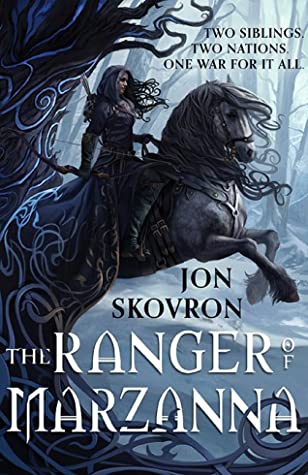
51113661._sx318_sy475_Book: “The Ranger of Marzanna” by Jon Skovron

Publishing Info: Orbit, April 2020

Where Did I Get this Book: ARC from the publisher

Book Description: When their father is murdered by imperial soldiers, two siblings set out on opposite paths—one will destroy the Empire forever and the other will save it—in this thrilling new Russian inspired epic fantasy from Jon Skovron.

Sonya is training to be a Ranger of Marzanna, an ancient sect of warriors who have protected the land for generations. But the old ways are dying, and the rangers have all been forced into hiding or killed off by the invading Empire.

When her father is murdered by imperial soldiers, she decides to finally take action. Using her skills as a ranger she will travel across the bitter cold tundra and gain the allegiance of the only other force strong enough to take down the invaders.

But nothing about her quest will be easy. Because not everyone is on her side. Her brother, Sebastian, is the most powerful sorcerer the world has ever seen. And he’s fighting for the empire.

Review: Between the beautiful cover art and the intriguing book description, this was a no brainer for me to request. I always love stories about warrior women, and the fact that it was based on Russian folklore is just the cream on top. I was definitely getting some “The Bear and the Nightingale” vibes off this, which couldn’t have been more of an inducement since I’m still in mourning that that trilogy ended…like more than a year ago now. Get over it! Sadly, however, this book wasn’t quite that. There were some strengths to it, but not quite what I was looking for, in the end.

Sonya is in training to be a Ranger, a member of an elite fighting force. In pursuit of this goal, she travels around the countryside attempting to help her people against the doings of the invading imperial soldiers. While away, however, her family is attacked and her father killed. Her brother, however, a powerful sorcerer-in-training, survives and begins to make a new life for himself, one that sides with the very people who murdered their father. Now these two siblings find themselves on very different paths, paths that will eventually intersect to devastating effect.

So, to start with a few things I liked. I did like the Russian/Ukranian influences on the culture, location, and folklore of the story. The elemental magic system was also interesting enough. It’s not a super new concept, but I felt like the author put enough new twists into how it all works to keep it from feeling flat. I particularly liked the cult-like religion that followed Marzanna and the sacrifices that were required of those who committed themselves to her path (as we see through Sonya’s story.) But, sadly, I had a really hard time connecting to either of the two main characters, and I felt like the pacing and writing of the story weren’t helping matters out.

First, Sonya. I did end up liking her half of the story better than her brother’s, but again this was mostly due to the intriguing concept of having to give up parts of oneself to become a full follower of Marzanna. However, even in this part of the story, I didn’t feel like the author truly explored this concept completely. In many ways, it mostly just made Sonya less likable. She starts out incredibly bad-ass and so some of her struggles then appear out of character. But at the same time, growth for the character comes out of these moments, but never felt like it was really being applied completely. It’s hard to get at exactly what my problem was. I think maybe it was just that the actual character herself felt too flimsy to hold up the more grand adventure she was supposed to be having. And by the time we got to some of the darker portions of her tale, the part where readers have to begin questioning her actions and motives, it’s too late to really feel invested enough in it all.

As for Sebastian, I didn’t like him from the start, and it didn’t get any better as we went along. In the very first chapter we meet him, his father his killed and he and his mother are shipped back to the capitol city. His entire inner thought process of these events was summed up with an actual line saying that he didn’t really get along with his father that much so that must be why he’s not really grieving. From there, it just got worse as he literally teams up with the very people who killed his father and pretty much goes “meh” about the idea that his powers are now going to be used against his own people. There simply wasn’t enough (or any!) real conflict shown between Sebastian and his father to justify to bewildering turn for his character. Sebastian is either a sociopath who can’t care about others or an outright villain. Neither are likable. It’s especially confusing as he’s presented in a way that makes it clear that the author expects you to sympathize with him and read him as an equal protagonist. I just didn’t get it, and what I did get, I didn’t like.

I also felt like the writing and pacing of story were just a bit off. The characters spoke in a very YA manner, but this didn’t mesh well with the super violent descriptions that came with the action scenes. What’s more, the author had an unfortunate habit of info-dumping in his dialogue making it read as unnatural and stiff. Overall, I was pretty disappointed by this book. I know that the author has a fairly popular series already published, so I’m not sure if this was an aberration or whether this story just didn’t mesh with me specifically. If you are a fan of his other work and want to give this one a shot, don’t forget to enter the giveaway for an ARC copy of this book!

Rating 6: The two unlikable protagonists were too much for me to get past.

Reader’s Advisory: 

“The Ranger of Marzanna” is a newer title, so it isn’t on any Goodreads lists. But it should be on “Warrior Women.”

Find “The Ragner of Marzanna” at your library using WorldCat!

Kate’s Review: “The Mountains Sing”

49631287._sy475_Book: “The Mountains Sing” by Nguyễn Phan Quế Mai
Publishing Info: Algonquin Books, March 2020

Where Did I Get This Book: I own it.

Book Description: With the epic sweep of Min Jin Lee’s Pachinko or Yaa Gyasi’s Homegoing and the lyrical beauty of Vaddey Ratner’s In the Shadow of the Banyan, The Mountains Sing tells an enveloping, multigenerational tale of the Tran family, set against the backdrop of the Viet Nam War. Tran Dieu Lan, who was born in 1920, was forced to flee her family farm with her six children during the Land Reform as the Communist government rose in the North. Years later in Hà Noi, her young granddaughter, Hương, comes of age as her parents and uncles head off down the Ho Chí Minh Trail to fight in a conflict that will tear not just her beloved country but her family apart.

Vivid, gripping, and steeped in the language and traditions of Viet Nam, The Mountains Sing brings to life the human costs of this conflict from the point of view of the Vietnamese people themselves, while showing us the true power of kindness and hope. This is celebrated Vietnamese poet Nguyen Phan Que Mai’s first novel in English.

Review: I’ve decided that every once in awhile I’m going to branch out from my usual genres that I review on here and dive into something different. Don’t worry, reviews of all that’s scary, thrilling, or picture heavy will still be dominant when it comes to what I talk about on here! But when I come across a book like “The Mountains Sing” by Nguyễn Phan Quế Mai, I really want to share it with anyone who will listen! Because while I love me horror and thrillers, I also really love family sagas in my fiction. And “The Mountains Sing” is the best family saga I’ve encountered since “Homegoing” by Yaa Gyasi.

“The Mountains Sing” is a lyrical and bittersweet family saga that follows the Tran Family in North Vietnam. There are two main perspectives. The first is that of Hương, a young girl who is living with her grandmother during the last days of the Viet Nam War as her parents are fighting on the Ho Chi Min Trail. The second is the story of her grandmother, Dieu Lan, who had to escape her farm during the Land Reform Movement lest she and her children be murdered as landowners. These two stories follow significant moments in North Vietnamese/Vietnamese history, and the repercussions for the people who were living there during those times. Nguyễn Phan Quế Mai paints a beautiful picture of the setting, and draws complex and engrossing characterizations. Both Dieu Lan and Hương have to confront difficult decisions for themselves, and the difficult decisions of others. As someone who grew up in the United States, Vietnamese history isn’t something that was covered in the classes I took in high school. Hell, even though I went to a pretty progressive private school with better and more honest history texts than others, we still didn’t take a deep look into the Vietnamese side of the Viet Nam War. So reading this book from the perspective of a Vietnamese author whose characters had to live the consequences of the war as civilians on the Northern side, it was eye opening and very worthwhile. It should also be noted that the deep complexities living under the North Vietnamese Communist Party’s rule aren’t ignored or swept away. I had never heard of the Land Reform, and it is absolutely horrific. That said, the horrors of being attacked by the United States with imperialist motivations isn’t dismissed as nothing. If anything, this story shows how those seeking power will exploit those below them to do their dirty work, be it French colonists trying to take over and using locals to inflict rule, or farmers murdering landowners to take land for the movement, or soldiers from America being sent to fight a war for the upper classes and killing civilians on the ground.

I also greatly liked the characters and the various journeys that each one took, and the emphasis on family. Hương learns the truth about her family history, just as she learns the truth about the things that her family members have had to do to survive during times of great violence and tragedy, and you see her grow in empathy and character. But it was Dieu Lan’s story that really hit me in the heart, as she tries to keep her children safe as they escape their village and go on the road to Ha Noi. The horrible choices that she had to make, and the repercussions of those choices, were heartbreaking and left me in tears many times, and seeing her become more resilient and tough was a character journey that had the most effect on me. I enjoyed the contrast between these two women and their experiences, and how each of them had ripple effects upon the other. Their strengths manifest in different ways, but it’s a great way to show that strength comes in many forms.

“The Mountains Sing” is a heart rendering and hopeful story from a gifted voice. I eagerly await any other novels that Nguyễn Phan Quế Mai may write in the future.

Rating 9: A beautifully written family saga set in Viet Nam, “The Mountains Sing” gives the perspective of the Vietnamese people during times of conflict and shows how hope and family can get people through difficult times.

Reader’s Advisory:

“The Mountains Sing” is included on the Goodreads lists “Family Saga Novels”, and “Books by Vietnamese/Vietnamese-Diaspora Writers”.

Find “The Mountains Sing” at your library using WorldCat, or at your local independent bookstore using IndieBound!

Giveaway: “The Ranger of Marzanna”

51113661._sx318_sy475_Book: “The Ranger of Marzanna” by Jon Skovron

Publishing Info: Orbit, April 2020

Where Did I Get this Book: ARC from the publisher!

Book Description: When their father is murdered by imperial soldiers, two siblings set out on opposite paths—one will destroy the Empire forever and the other will save it—in this thrilling new Russian inspired epic fantasy from Jon Skovron.

Sonya is training to be a Ranger of Marzanna, an ancient sect of warriors who have protected the land for generations. But the old ways are dying, and the rangers have all been forced into hiding or killed off by the invading Empire.

When her father is murdered by imperial soldiers, she decides to finally take action. Using her skills as a ranger she will travel across the bitter cold tundra and gain the allegiance of the only other force strong enough to take down the invaders.

But nothing about her quest will be easy. Because not everyone is on her side. Her brother, Sebastian, is the most powerful sorcerer the world has ever seen. And he’s fighting for the empire.

I was excited to receive an ARC copy of this book from Orbit. For one thing, the cover is absolutely stunning and the exact sort of thing that would draw me in when browsing the shelves at a bookstore (oh, how I long to return to browsing shelves…). I was also really interested in the idea of two siblings coming towards some sort of conflict. The book description definitely focuses on the sister more, so I’m curious to see if this book will be a duel narrator situation or what. Her side alone, however, sounds pretty badass!

My full review for the book will go up this Friday. But get a head start on things and enter to win an ARC copy of this book. The giveaway is open to U.S. residents only and ends on May 20.

Enter to win!

Kate’s Review: “Catherine House”

51934838Book: “Catherine House” by Elisabeth Thomas
Publishing Info: Custom House, May 2020

Where Did I Get This Book: I received an eARC from NetGalley.

Book Description: You are in the house and the house is in the woods. You are in the house and the house is in you . . .

Catherine House is a school of higher learning like no other. Hidden deep in the woods of rural Pennsylvania, this crucible of reformist liberal arts study with its experimental curriculum, wildly selective admissions policy, and formidable endowment, has produced some of the world’s best minds: prize-winning authors, artists, inventors, Supreme Court justices, presidents. For those lucky few selected, tuition, room, and board are free. But acceptance comes with a price. Students are required to give the House three years—summers included—completely removed from the outside world. Family, friends, television, music, even their clothing must be left behind. In return, the school promises its graduates a future of sublime power and prestige, and that they can become anything or anyone they desire.

Among this year’s incoming class is Ines, who expects to trade blurry nights of parties, pills, cruel friends, and dangerous men for rigorous intellectual discipline—only to discover an environment of sanctioned revelry. The school’s enigmatic director, Viktória, encourages the students to explore, to expand their minds, to find themselves and their place within the formidable black iron gates of Catherine.

For Ines, Catherine is the closest thing to a home she’s ever had, and her serious, timid roommate, Baby, soon becomes an unlikely friend. Yet the House’s strange protocols make this refuge, with its worn velvet and weathered leather, feel increasingly like a gilded prison. And when Baby’s obsessive desire for acceptance ends in tragedy, Ines begins to suspect that the school—in all its shabby splendor, hallowed history, advanced theories, and controlled decadence—might be hiding a dangerous agenda that is connected to a secretive, tightly knit group of students selected to study its most promising and mysterious curriculum.

Combining the haunting sophistication and dusky, atmospheric style of Sarah Waters with the unsettling isolation of Kazuo Ishiguro’s Never Let Me Go, Catherine House is a devious, deliciously steamy, and suspenseful page-turner with shocking twists and sharp edges that is sure to leave readers breathless.

Review: Thank you to NetGalley for sending me an eARC of this novel!

If you are going to market a book as a Gothic novel, I am most likely going to be interested based on that alone. The isolated creepiness of the average Gothic novel gets me amped, and I’m glad that more and more authors, both adult and YA, are paying more attention to this genre. And when you throw in a mysterious boarding school/university setting, that’s practically catnip for me! “Catherine House” by Elisabeth Thomas, therefore, caught my eye. I downloaded it from NetGalley, eager to dive into a Gothic boarding school thriller with twists, turns, and nefarious misdeeds. Unfortunately, “Catherine House” missed the mark for me, by quite a bit.

Starting with the positive, this book has a LOT of potential. As I said, it both aspires to be a Gothic read set in a mysterious school that serves as alternative to university, and it promises to give its graduates all sorts of power and keys to mysterious opportunities. It can make powerful politicians, business people, power players of all stripes, and all you have to do is master it’s odd and super secretive curriculum and devote your entire life to Catherine House for three years, with no contact to the outside world. Ines, our protagonist, is fleeing a checkered past in hopes of starting on the right foot and with huge advantages to a new life. It’s pretty standard fare for this kind of book, and that’s not to say that that’s a bad thing. I liked seeing the odd quirks to Catherine House, the little shifts from what one might consider a ‘normal’ college experience, from food to decor to class types. There is also the fact that students at Catherine, Ines included, are involved in strange rituals involving something called plasm, and pins that you can insert into your body that can help harness the potential of this so called plasm…..

I mean, I think. Honestly, this wasn’t very clear to me. While it’s very possible I may have missed something, it seemed to me that the sticking point of the mystery of this book was at the plasm storyline and what it does, and why Catherine House wants to mess with it. So the fact that I could have missed the big conflict resolution doesn’t really imply that there was much detail or due diligence paid to said conflict. There is also the plot line where Ines’s roommate Baby has tragedy befall her all in hopes of fitting into the strict and high standard mold that Catherine House has, but I didn’t really get the sense that Ines was terribly concerned with it. Sure, I was TOLD that Ines was concerned, it’s even in the plot description. But there is very little actual time devoted to Ines feeling guilty, or suspicious, or vengeful over Baby’s fate. When that is touted as a main plot point in the description, I expect it to be more at the forefront. It just felt like more time was put into describing the quirks and strangeness of this place than there was devoted to the actual main plot. Because of this, I was mostly confused and uninvested throughout the narrative. Which is a shame, because there were so many good ideas here that had a lot of potential.

Suffice to say, I was quite disappointed with “Catherine House”. Hopefully the next time I find my literary catnip I will have a better experience.

Rating 4: While this book had a lot of promise, ultimately I didn’t feel like it committed to any of the themes it set out to explore.

Reader’s Advisory:

“Catherine House” is included on the Goodreads lists “Dark Academia”, and “Black Heroines 2020”.

Find “Catherine House” at your library using WorldCat, or at your local independent bookstore using IndieBound!

Books with Memorable Moms

Yesterday was Mother’s Day in the U.S., and we were celebrating with our families (or perhaps celebrating by ourselves, as one of the joys of Mother’s Day is being given a break from our kids in our honor!). Today we’ve created a list of books with memorable mother figures, some good, some…. not. 

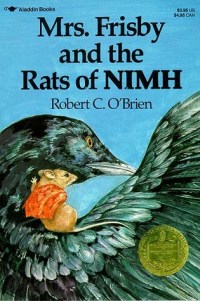
9822Book: “Mrs. Frisby and the Rats of NIMH” by Robert C. O’Brien

In this classic children’s book, our mom is a mouse named Mrs. Frisbee. Having been recently widowed thanks to the farmer’s cat, Mrs. Frisby is left to care for her four children. Unfortunately, her home needs to be relocated due to the upcoming harvest, and it’s exactly when her youngest son, Timothy, gets sick with pneumonia and can’t be moved. So she has to turn to rats who have become hyper intelligent thanks to medical experiments performed on them, in hopes that they can help her family move safely. Mrs. Frisby will go to any lengths to protect her kids, including tangling with a cat, meeting with an owl, and putting her faith in rats she doesn’t personally know. Perhaps an unconventional mother for this list, but a wonderful one nonetheless!

89551Book: “Ramona and Her Mother” by Beverly Cleary
Ramona Quimby is well loved in the children’s literature world because of her precocious nature and her relatable and funny adventures. As she tangles with usual childhood issues, she perseveres due to her spunky nature and her family. In “Ramona and Her Mother”, Ramona (and the rest of the Quimby Family) has to adjust to both of her parents working full time, which leads to a bit of strife. Along with that, Ramona finds herself jealous of the relationship her mother has with older sister Beezus, but it’s clear that Dorothy loves both her daughters, even if they are very different people. Ramona and Dorothy have a sweet relationship between a patient mom and her free spirited child, and their realistic and fun interactions are very lovely.

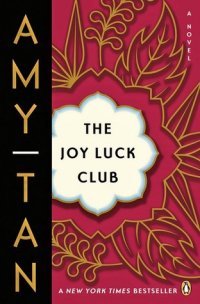
7763._sy475_Book: “The Joy Luck Club” by Amy Tan

This generational family saga is filled with the stories of mothers and daughters and the complications that can come with that relationship. Especially when culture clash and the different experiences between first and second generation immigrants can cause even more strife. But it’s the heartbreaking sacrifices and choices that some of the mothers make in this book that really show the pain and uncertainty that motherhood can have, and how these choices can reverberate and have consequences for everyone. As a daughter tries to reconcile the mother who had to make unthinkable decisions, with the mother she knew, who never seemed to be understanding, the stories of all her mother’s friends come out and show the ups and downs of being a mom in difficult situations. Bring a box of tissues to this one.

233661._sy475_Book: “Carrie” by Stephen King

Mrs. White is the textbook definition of a  not good mother. She’s abusive, a religious zealot, violent, and unrelenting, and she makes her teenage daughter Carrie’s life even more a hell than the awful kids as school do. She locks her daughter in a closet when she deems her as misbehaving, she psychologically torments her, and even goes so far as to trying to kill her when Carrie’s powers become impossible to hide. Flat out, she’s one of the worst mothers in literature! But she makes this list because she is the kind of fictional mother who makes those of us with imperfect but good mothers thankful that we have them.

1885Book: “Pride and Prejudice” by Jane Austen

While nowhere near Mrs. White’s levels of bad mothering, Mrs. Bennett is another famous fictional mother who is best known for her…unique parenting tactics. Dead set on marrying off her daughters to the richest gentleman she can find, she’s the heart of most of the comedy in this story. Sadly for her, her high ambitions are met equally with her obnoxious tendencies which often work in direct opposition to her goals. Full of nerves, gossip, and the will to shove her daughters at any eligible gentleman, she’s just lucky that her two eldest girls are charming enough to attract attention in spite of her. She’s definitely one of the more memorable mothers in classic literature and the go-to example for my own mother whenever she wanted an easy out whenever my sister and I complained or were embarrassed: “At least I’m not Mrs. Bennett!”

3._sy475_Book: “Harry Potter and the Sorcerer’s Stone” etc.

Molly Weasley is the quintessential mother figure in the Harry Potter series. Lily Potter, obviously, deserves a shout-out as well for her series-making decision to sacrifice her life to save her son. If she hadn’t done that, we wouldn’t even have a book. But in every meaningful way, Molly Weasley is the true mother figure in Harry’s life. And she’s everything cozy, loving, and fierce that one would expect and want from a woman who has 7 children and adopted the friends of many of those children. Throughout the series, we see many sides of this character, from her fears for her family when evil is at their door, to the smaller, domestic moments when she banishes her sons outside to take care of pesky garden gnomes that are continuously invading. And, of course, her shining moment in the last book with her rebel yell “Not my daughter, you bitch!”

Who are some of your favorite mothers from literature? Let us know in the comments!

My Year with Jane Austen: “The Lizzie Bennet Diaries” [2012]

mv5bmtg1otk0mzg4nf5bml5banbnxkftztcwotm3mtm5oq4040._v1_ux182_cr00182268_al_Web Series: “The Lizzie Bennet Diaries”

Release Year: 2012

Actors: Lizzie Bennet – Ashley Clements

William Darcy – Daniel Vincent Gordh

Jane Bennet – Laura Spencer

Lydia Bennet – Mary Kate Wiles

Comparison – “Indulge your imagination in every possible flight.”

I watched this for the first time a few years ago. It had been out for a while as “Emma Approved” was also up and concluded. I remember flying through both series pretty quickly and enjoying the heck out of them (and, for the first time, being really annoyed by all the YouTube ads that were breaking up my experience). So, to get a wide range of examples of Jane Austen adaptations, I wanted to include both of these web series in this year’s project.

Sadly, it doesn’t quite hold up as much a second time around. This isn’t a mark against it overall, just that I think it’s the kind of thing that is more of an “experience” watching the first time and less enjoyable the second go around where the limitations of the format begin to glare more when the novelty has worn off. But I’ll start with a few of the positive things that stood out this go-around.

First, I think the series is very creative, especially with the way it changed certain aspects of the original story to fit a modern setting. Woes about family finances become more grounded in talks about second mortgages. Different approaches to marriage become different approaches to career paths. Pemberley becomes Darcy’s media company and Catherine DeBourgh becomes a venture capitalist who is funding Mr. Collins’s own media enterprise. Lydia is a party girl and Wickham is a dumb jock. Even small things like changing Mr. Bingley’s name to Bing Lee are creative as heck. I have to imagine it was really fun writing this series.

Also, for the most part, all of the actors are well-cast and, while clearly distinctive from their book counterparts, they all fit well with the same basic personalities and storylines from the original. I’ll obviously talk about some of the big players later, but I’ll just add here that I particularly liked this version of Charlotte (the hilarious and practical behind-the-scenes counterpart in the production of Lizzie’s videos) and of Georgiana/Gigi (a fresh faced and bubbly presence who gets much more involved in the matchmaking side of things with regards to her brother and Lizzie than the original would ever have dreamed of).

However, this go-around, the story felt unnecessarily drawn out and was rather tedious during the middle portion. It takes a long time to even get to the first “proposal,” let alone everything that came later. I think a good number of episodes probably could have been cut and the series would have ultimately kept up its pace and rhythm better. I have to imagine that this was a lesson learned for “Emma Approved” which has a shorter run time even though it is based off the longer book of the two.

The series also struggled with some of its more serious moments. The actors all felt more at ease with the comedy than the drama and there were times where some of it seemed to slip in quality from the rest. It’s just the kind of thing that is going to play more naturally with a comedic topic. Once we get into the drama with Lydia, I was not only beginning to feel the length of the show again but started to become more uncomfortable watching it. Like the romance, it was hard not to feel voyeuristic about these more serious portions. Yes, my brain knew it was all acted out anyways, but the other part of me cringed for seeing these intimate moments of seemingly “regular” people.

Overall,  I think it’s well worth checking out by all Austen fans. Though I will say that for me, at least, it was an experience that didn’t hold up to a repeat. Which is totally fine! I still remember loving it the first time and anyone who hasn’t seen it and loves these stories will probably feel the same. I do remember liking “Emma Approved” better, so we’ll see how that does the second go-around.

Heroines – “I hate to hear you talk about all women as if they were fine ladies instead of rational creatures.”

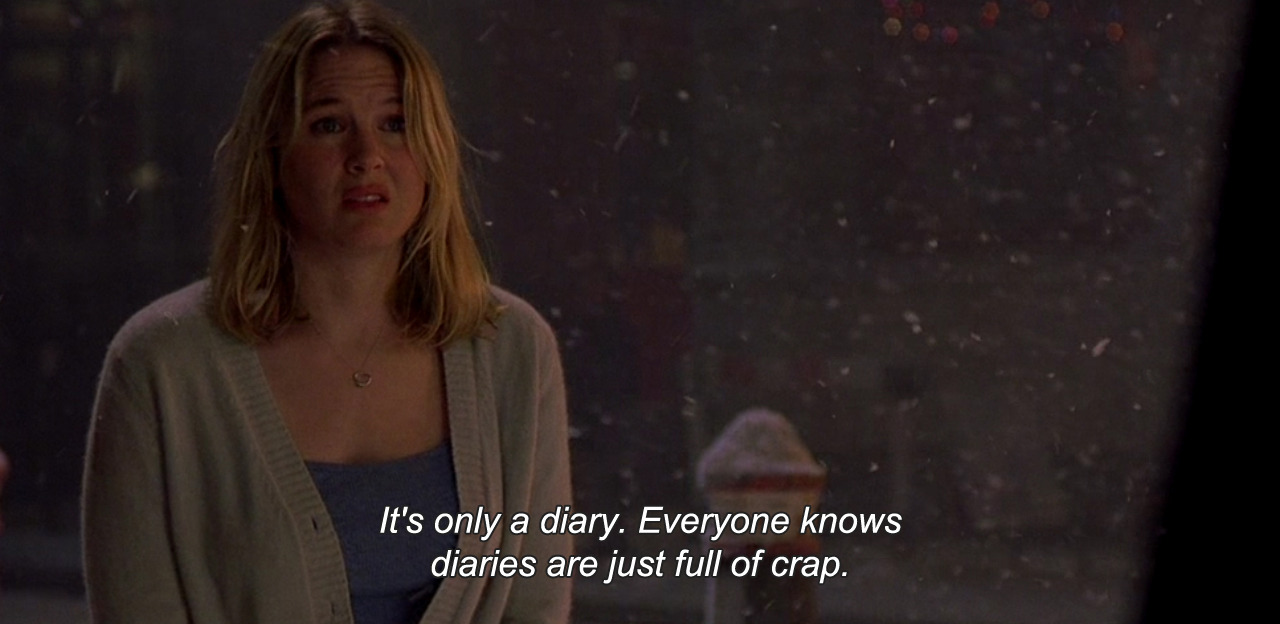
While the show is definitely bringing new twists to this story, I’m not quite sure how I feel about this Lizzie herself. Due to the nature of this story, her prejudice against Darcy does seem extreme to the point of rather obsessive. I mean, we’ve all met rude guys, but she takes it pretty far. And, overall, this Lizzie is much more cynical and judgmental of almost everyone around her than the version in the book. Elizabeth Bennett definitely jumped to conclusions, but she also seemed to generally treat people with a bit more kindness than this Lizzie. Again, the nature of this series, being a video diary for Lizzie, kind of sets her up for failure here. Most all of it is her talking about other people. And what are diaries made up of?

Yep, diaries = talking crap about a bunch of people behind their back. But when it’s a web series and that’s all you have…your heroine kind of comes off like a bit of a jerk to those around her. True, by the end of the series she does come around on all of this, but it’s still a bit much at times.

The worst was her fall-out with Charlotte. The idea is good, to exchange practicality about marriage with practicality about careers, with Charlotte not subscribing to Lizzie’s “go for the dream” job approach. But, like the problem I had with the 2008 version of “Pride and Prejudice,” this Mr. Collins isn’t that bad (at least not for a first boss, and we’ve all had bad bosses, so c’mon) and Lizzie’s reaction seems completely overblown. Even more so here than in other versions of this story.

Charlotte lays out her reasoning pretty clearly: her family is poor, she thinks much of career success is based on luck, and often a job is a job, something that you make a living doing. I mean…this speaks so much truth to my generation, a bunch of people who graduated from college with massive debts right into a recession where jobs were scarce and those that did exist barely paid.  It’s the RIGHT outlook! And, unlike marriage, a job isn’t meant to be forever. This is the exact sort of golden opportunity that you’d be stupid, and Lizzie is stupid for turning down! You start out with a company in a great position, and after a few years, leverage it into your dream job. This is just reality, and it has all the luck that Charlotte mentioned written all over it: just handed to Lizzie, and then Charlotte, on a gold platter for really no good reason other than a past connection and them being in the right place at the right time. And then Lizzie just tears into Charlotte over it. It’s pretty obnoxious, really. Granted, she does come around pretty quickly. But it’s a tough thing to recover from so early in the show. Not a good look for Lizzie.

I also had a few qualms with the acting itself. I think the actress was best in her comedy moments, especially the dramatizations of past scenes with her parodies of other people. But when the script called for more serious moments, be it the angry confrontation with Darcy, the sister squabble with Lydia and eventual reunion, and even the more serious parts of the romance…I just didn’t feel like the actress was really cut out for it. She tended to overact and her expressions and reactions felt a bit forced.

On the other hand, I really liked the actresses who played Jane and Lydia. I’ll talk more about Lydia in the comedy section. Jane, however, was pretty solid. She’s sweet, kind of quiet, and a great interpretation of the book character into a modern woman. We only see her on and off, but she’s a nice balance to both Lizzie and Lydia.

Heroes – “What are men to rocks and mountains?”

We don’t really see much of our heroes in this version. Bing shows up early enough, thinking the videos are just messages to Charlotte. I really like this interpretation of Bing. He’s charming, funny, and easy going. But! Importantly, he’s NOT an idiot. Yes, he does get lead around by his friends, but the series makes great efforts at the end for him to experience his own personal reflection and start making choices for himself. He drops out of med school, admitting he had only been doing it because that’s what his family wanted. And instead he was spending his time working with charities. Jane at first turns down his offer to follower her to NYC where she gets a new job. But after hearing about these moments of clarity on his part and his efforts to begin to make his own choices, she relents and the two are together at least. It’s a nice mini arc for the character, and it ties up some questions about his character quite nicely by allowing him to experience his own personal growth.

I mention this a bit more in the romance section below, but it’s really too bad that we don’t see more of Darcy until at least halfway through the series. Even Bing, we have a face to connect to the stories much earlier which goes a long way for how much we care about his and Jane’s storyline. But I do like the character a lot when we do meet him. His mannerisms are of the sort that it’s easy to see how Lizzie’s interpretations of his rudeness and coldness came to be. And it’s fun to see him loosen up gradually. I particularly liked the last few episodes after they’re together. There’s some fun nods to the book with a mention of his learning to be teased and dealing with Lizzie’s mother and father.

I also liked the way the show used career opportunities instead of proposals as the big kicks for each of the ladies. And through these moments, the heroes also had their moments to shine, with Bing prioritizing Jane’s work and going with her to NYC rather than asking her to stay, and Darcy, perhaps foolishly, originally asking Lizzie to work at his company. She is quick to point out the problems with this, but we also see how he plans to use his network connections to help her with her start-up.

Villains – “I do not want people to be very agreeable, as it saves me the trouble of liking them a great deal.” 

I really liked this take on Wickham. He’s only on a few episodes, but it’s enough to see how charming he can be. It’s also enough for the viewers, at least, to see what a complete idiot he is. He’s full on “dumb jock” through and through. Even Lizzie seems embarrassed by him at a few points. The adjustments to his storyline also work very neatly, switching out an estate for a full ride to Harvard, money that Wickham blows through in one year before asking for more.

His affair with Gigi is also a nice twist, with them forming a relationship and living together until Darcy shows up unexpectedly and proves that Wickham was only in it for the money by offering him a check to leave, which he takes and does. It’s nearly as traumatic as the elopement would have been in the book, but it serves well enough. The only thing that is a bit of a sticking point is that, given the current culture, while it may be embarrassing for Gigi, it’s definitely not the kind of secret that should affect her at all if widely known. It could be easily told and sink Wickham, and I sincerely doubt anyone would think anything bad about the poor girl caught up in it all.

The sex tape with Lydia is far more effective as a stand-in for the life-long horror he intends to bring down on her. The internet is forever, and that kind of thing, once published is almost impossible to put back in a box. It would have followed Lydia forever. It’s a pretty basic practice for most employers to run Google searches on their prospective candidates, so it’s easy to see how this would have had real, tangible effects on her ability to lead a normal life. And, in the end, she gets off way easier than the Lydia in the book. Doesn’t have to have anything to do with Wickham ever again rather than ending up married to the guy.

Lastly, Caroline is the other main villain. I really liked this depiction of Caroline. She’s much more cool and calculated in her manipulation, even hoodwinking Lizzie about her true character. Some of the early videos of her are particularly interesting as the viewer can see Caroline actively fanning the flames of Lizzie’s dislike for Darcy while Lizzie is completely clueless to this manipulation. And then, ultimately, Caroline is the one behind much of the Bing/Jane drama. She arranges a situation at one of her parties to have some drunk guy kiss and unsuspecting Jane right when Darcy is watching. With this in mind, it’s easier to defend Darcy’s interference: he legitimately thought Jane was pulling his friend’s chain. Caroline, however, is the true evil mastermind behind it all.

Romance – “A lady’s imagination is very rapid: it jumps from admiration to love, from love to matrimony in a moment.”

Yikes, the actual romance in this story is by far the most awkward thing in existence. The format of the show is never more working against itself than in these parts. I just felt super uncomfortable and voyeuristic watching the final kiss and conclusion to Lizzie and Darcy’s story. The build-up to this moment is fine, but the actual kiss itself…oof.

I wish there had been a way of introducing Darcy earlier in the series. The way the story is presented, this isn’t really possible, but once we can actually see the interactions between Lizzie and Darcy’s, it’s much easier to feel invested in their relationship. Really, if this wasn’t a retelling of “Pride and Prejudice” which conditions viewers to put importance on the Lizzie/Darcy drama, much of the first half of the series would seem oddly focused on a character we never seem to meet. It makes Lizzie’s fixation and extreme dislike feel all the more strange. Sure, the enactments give us an idea of Darcy’s personality and the social interactions that put Lizzie off in the first place. But all of Lizzie’s enactments are clearly extremes of characters, so when you only have those to rely on for such an important character…It’s just hard to feel invested in any of it, without seeing their awkwardness together. But once he shows up, it’s much better. And it’s even better as we see them develop a tentative friendship with him even participating in some of her mini dramas.

Comedy – “For what do we live, but to make sport for our neighbors, and laugh at them in our turn?”

Lydia is by far the funniest character in this series, especially in the first half of the show when she’s mostly just freely being herself , extremes and all. Once Lizzie starts pushing her to be more grown up and the Wickham drama comes in to play, it all gets a bit too serious almost. In the books what you loved about Lydia was also what you couldn’t stand about Lydia: nothing fazed her. Even in the face of social shaming and shunning, she never seemed to bat an eyelash about it and behaved the same way. Here, the story gets more much serious with how Lydia reacts to Lizzie’s perceptions of her, and even more so, the near miss she has with the sex tape.

But! In the beginning, she’s just hilarious. The actress brought a bunch of fun ticks to the character, with all of the hair flipping and camera poses. She also has a bunch of fun catchphrases, and it’s easy to see why she, of all the characters, ended up with some side videos in her own little series. I didn’t watch any of these for this re-watch, so I can’t speak to what those have to offer. But in a lot of ways her character is a breath of fresh air to the earnest and sweet Jane and the cynical Lizzie. She’s bouncy, bright, and ridiculous and brings new levity to all of her scenes.

I also really liked this version of Mr. Collins. While he is pretty ridiculous, he’s not nearly has intolerable as the character in the books. I really liked how he was always name dropping his VC (venture capitalist) Catherine DeBourgh. It was one example of the many perfect substitutions this series made for aspects of the book that wouldn’t work in a modern setting. Lizzie’s impressions of Catherine DeBourgh were also excellent, but only made me wish we could have actually seen the character on screen somehow!

Fun facts – “Life seems but a quick succession of busy nothings.”

Kitty becomes Lydia’s cat, “Kitty” who follows her everywhere. Mary is a cousin whom most of them seem to regular forget exists.

The movie “Bridget Jones’s Diary” exists in this world as one of the sisters mentions that Darcy’s name is the same as “that character Colin Firth plays.” So, Colin Firth makes it into even this adaptation, if only in name. It seems that the book “Pride and Prejudice” does not exist, however.

Mrs. Bennet has several plans to get Jane stuck over at Netherfield. One includes sending her over with a jello that, due to the rain, is sure to ruin her dress and force her to stay. Mrs. Bennet also arranges for home improvements which force Jane and Lizzie to stay there for several weeks.

Pemberley is the name of William Darcy’s media business, and he mentions it is named after the part of England that his family is originally from.

Caroline Bingley will make a reappearance in “Emma Approved.”

Best Movie Gif/Meme: “I dearly love a laugh.”

The Mrs. Bennet impersonations were by far the best.

In two weeks, I’ll review the first half of “Emma.” Yes, I know this is out of order, but my quarantine brain read this one first and I didn’t want to do either it or “Mansfield Park” a disservice by speed reading the latter and then trying to review the former months after I actually read it. So, it is what it is!