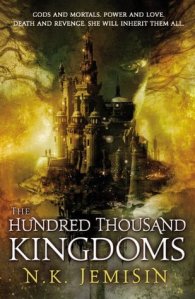
Serena’s Review: “The Hundred Thousand Kingdoms”

Book: “The Hundred Thousand Kingdoms” by N.K. Jemisin

Publishing Info: Orbit, February 2010

Where Did I Get this Book: audiobook from the library

Book Description: Yeine Darr is an outcast from the barbarian north. But when her mother dies under mysterious circumstances, she is summoned to the majestic city of Sky. There, to her shock, Yeine is named an heiress to the king. But the throne of the Hundred Thousand Kingdoms is not easily won, and Yeine is thrust into a vicious power struggle.

Review: Technically, this was a re-read for me. I picked it up originally right when it came out, so about ten years ago now. I really enjoyed it then, but for some reason didn’t continue on with the series. Well, I decided that now was a good time to revisit Jemisin’s first trilogy, so I picked up the second book from the library and started out. Whelp, turns out I remembered basically nothing from this first book and was super confused right out of the gate, so a re-read was definitely in order before continuing on. And I’m very glad I did! I had a few vague ideas about what this book was about, but I really had forgotten just how detailed and rich this story is.

Yeine Darr had only recently come into her role as the leader of her small sub-nation. Challenging as this new role is, it is nothing to the sudden upheavel to her life when she is summoned to the grand city of Sky and finds herself thrust into the middle of a political battle. From small provincial leader, she’s now one of three potential heirs to the ruler of the entire land. But there is much more going on than a simple political struggle: Gods are involved. As Yeine works to uncover the mysteries of her own past, she begins to unravel a complicated history of her own world that has been hidden for centuries. But what can a country nobody such as herself do in this grand opera of gods and magic?

What I remembered about this book could mostly be summed up as “girl goes to palace and falls in love with some sort of dark, magical being.” Which…is somewhat accurate but also so, so much less than what this book is really about! For one thing, I forgot just how skilled Jemisin’s writing and world-building was in this book. Having now read more of her work, this isn’t as surprising, I guess, but when I first read it, it’s a wonder I didn’t just immediately continue on!

In the midst of an action-packed story centered around a complicated mystery, Jemisin still somehow manages to introduce a large cast of characters, build up an intricate world full of an entire pantheon of gods and various nationalities, and create a magic system within which it all operates. And on top of all that, the story never falls into any “info dump” traps. Instead, our narrator casually introduces various aspects of this world and drops hints here and there that slowly begin to paint an intricate picture in the reader’s mind. Indeed, the image is almost fully complete before you even realize that one was being built in the first place!

I’ve also talked before about the challenges of writing first person narratives and how rare it is to find this style of writing in adult fiction. As challenging as it is to build a new fantasy world and magic system on its own without resorting to long, info-dumping paragraphs, it’s even harder to do it in a natural-seeming way coming directly from the mouth of a character who would already be familiar with all of these things and have no natural reason to be speaking it out loud. To tackle this challenge, Jemisin relies on a nice little trick where her narrator is recounting her own story to some unknown audience. While Yeine’s story largely plays out chronologically, it’s clear that the narrator herself is speaking after the fact in the recounting of this story. In this way, little tidbits of information and sneak peaks into events coming up are dropped throughout the narrative, building suspense in the story itself and building curiosity as to how the past Yeine whom we are following along with comes to be the one who is narrating and clearly has a different perspective on her entire world. It’s a really clever technique, and one that we see Jemisin utilize to great effect in many of her works.

I also really liked the cast of character Jemisin builds up around Yeine. The gods themselves are all very complicated, neatly balancing extreme charisma and appeal alongside an ever-present, trigger-haired sense of impending violence. And the humans aren’t much better. Indeed, in many ways, this book emphasizes just how much worse the humans are than the gods who are thought to not possess any sense of humanity themselves. Alongside the perils of power and the quest to retain it, the story explores the darker themes of love and the choices it will lead the unwary towards.

I really enjoyed revisiting this story. I really had forgotten most of it, and it was a joy to rediscover some of Jemisin’s earlier work. This is a fantasy novel that is fully reveling in being a fantasy novel. It checks all the boxes I look for in this sort of story. If you’re a fan of Jemisin’s work and haven’t gotten around to reading some of her earlier stuff, I definitely recommend checking this out!

Rating 9: Complicated and rich, Jemisin proves why she was a force to be reckoned with right from the very start!

Reader’s Advisory:

“The Hundred Thousand Kingdoms” is on these Goodreads lists: Best “Strong Female” Fantasy Novels and Diversity in Fantasy and Science Fiction.

Find “The Hundred Thousand Kingdoms” at your library using WorldCat!
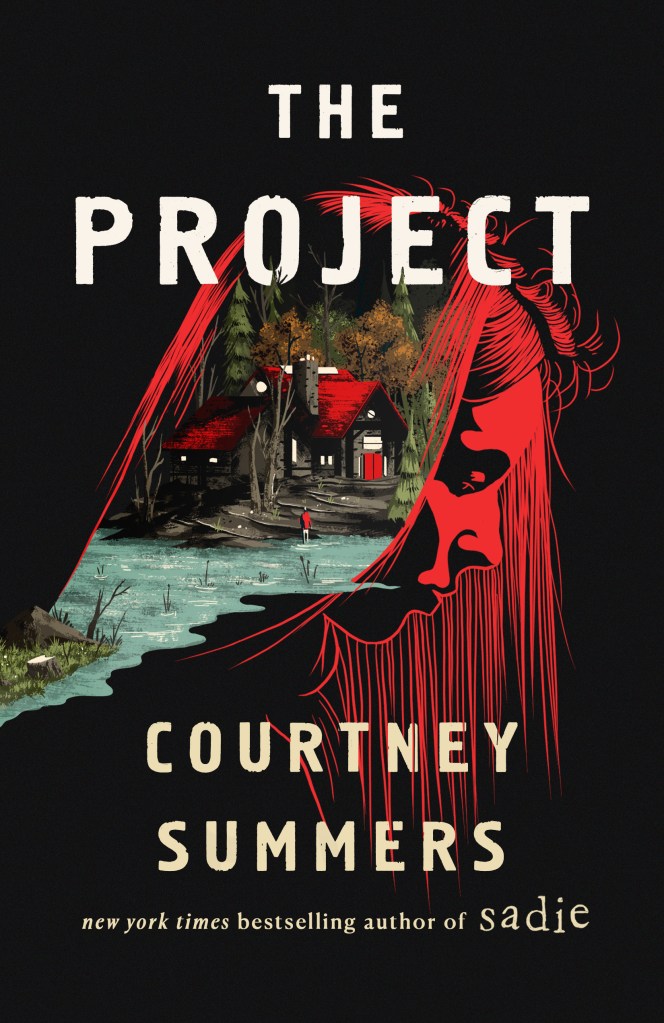
Kate’s Review: “The Project”

Book: “The Project” by Courtney Summers

Publishing Info: Wednesday Books, February 2021

Where Did I Get This Book: I received an eARC from NetGalley.

Book Description: Lo Denham is used to being on her own. After her parents died, Lo’s sister, Bea, joined The Unity Project, leaving Lo in the care of their great aunt. Thanks to its extensive charitable work and community outreach, The Unity Project has won the hearts and minds of most in the Upstate New York region, but Lo knows there’s more to the group than meets the eye. She’s spent the last six years of her life trying—and failing—to prove it.

“The Unity Project murdered my son.”

When a man shows up at the magazine Lo works for claiming The Unity Project killed his son, Lo sees the perfect opportunity to expose the group and reunite with Bea once and for all. When her investigation puts her in the direct path of its charismatic and mysterious leader, Lev Warren, he proposes a deal: if she can prove the worst of her suspicions about The Unity Project, she may expose them. If she can’t, she must finally leave them alone.

But as Lo delves deeper into The Project, the lives of its members, and spends more time with Lev, it upends everything she thought she knew about her sister, herself, cults, and the world around her—to the point she can no longer tell what’s real or true. Lo never thought she could afford to believe in Lev Warren . . . but now she doesn’t know if she can afford not to.

Welcome to The Unity Project.

Review: Thank you to NetGalley for providing me with an eARC of this novel!

Given how much I loved Courtney Summers’s previous novel “Sadie”, when I saw that her next book was going to be about a cult I was freakin’ stoked. The dark grittiness of “Sadie” kept me unsettled and on edge for a long while after finishing that book, and I figured that “The Project” would be almost darker, if only because of the root of the conflict (and because it sounded like it took a lot of inspiration from NXIVM from the summary, which is all kinds of yikes as more and more details come out about that group).

Once again we have a sister relationship that serves as the beating heart of this novel, a theme that Summers has used before and done very well. I had been a bit worried we’d get a bit more of the same because of it, but the relationship between Lo and Bea is very different from what I had imagined. I thought that Summers did a fantastic job of capturing the trauma and regret of both women, be it of Bea, who left her younger sister in a time of need, or Lo, who has resented the hole that Bea left behind but is also obsessed with finding her. You get both sisters perspectives, it it Lo’s journey as she goes deeper and deeper into The Unity Project, or Bea as she too finds herself drawn in more and more in a different time than Lo. The complexities of their relationship are there, and while we don’t see much interaction between them be it in the present or in flashbacks, you do get a good solid sense for the love and pain they share through their memories and feelings towards each other. It is also interesting seeing them take similar journeys when it comes to the mysterious, and perhaps deeply malevolent, Unity Project, and how they both parallel and yet invert each other. The suspense builds as Lo learns more and more about Bea’s time with Lev and other members, and by the time Lo is making some pretty drastic decisions (some of which I don’t think were QUITE built up to enough, but that’s all I will say because we’re keeping this generally spoiler free), you have been turned about and messed with as a reader about as much as she has as a character because she’s so easy to connect to. And while Bea is more mysterious, you still get a pretty good sense about other aspects of her personality, and how she could get caught up in something like The Project. While you know that things won’t be happily ever after for these sisters by the time the book is done, Summers still makes you ache for both of them on the journeys they are taking in trying to find, or trying to run from, each other.

Now let’s talk about The Project itself. As touched upon above, we are given so much information about them from inside sources, outside sources, and reliable and unreliable threads, that Summers effectively binds a reader up in becoming disoriented. I will say that given that I could see the NXIVM influences (the upstate New York setting, the beverage heiress who is a high ranking member, some of the more violent aspects of the group), there wasn’t really much question in my mind about what this group was ultimately going to be like, but had I not had that context I do think that Summers throws in a lot of things that could question that. She does a good job of showing how predatory cult leaders slowly lull their members into a sense of security, love, and faith, and then twist them and meld them into doing some really disturbing things. Lev is one of the more unsettling antagonists that I’ve encountered in YA literature in awhile, as his charisma and visage of kindness is rarely cracked as the book goes on, unless you know what to look for, just like psychopathic cult leaders in real life. There are Raniere influences here, but also shades of David Koresh and Charles Dederich, though Lev still stands on his own without being too much of a stand in for any one cult leader.

“The Project” is definitely a tragic and unsettling book, but it’s another strong narrative from an author who isn’t afraid to go dark. And it also has little bright spots of potential hope that are much appreciated in tales like this. Summers has a knack for balancing all of this out, and I think this will be another hit for her.

Rating 8: Intense, tragic, and unsettling as heck, “The Project” gets into the cult mentality and shows the power a charismatic leader can have.

Reader’s Advisory:

“The Project” is included on the Goodreads lists “Cults and Communes in Fiction”, and “Cults, Mind Control, and Spiritual Abuse”.

Find “The Project” at your library using WorldCat, or a local independent bookstore using IndieBound!

Highlights: February 2021

The long winter continues, but at least in February we have an excuse for fancy chocolates and self-care thanks to Valentine’s Day and Galentines Day! And while we may not be feeling overly romantic this year, with quarantine meaning a nice dinner at home and children meaning a little less relaxation, our everlasting love for books continues to beat from our hearts. Here are some of the titles we’re looking forward to this month!

Serena’s Picks

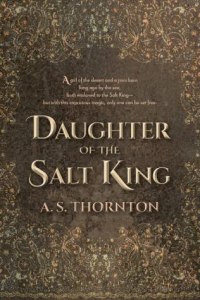
Book: “Daughter of the Salt King” by A.S. Thornton

Publication Date: February 2, 2021

Why I’m Interested: After the “City of Brass” trilogy ended last summer, I’ve been having withdrawals from my djinn fantasy stories. So it didn’t take much more me to scoop up this book once I saw that it was set in a similar type world. Emel is the daughter of the Salt King. But unlike other princesses in other lands, this role brings her and her many sisters nothing but suffering. Instead of any freedom, they are used as lures by their father in his attempts to trap visiting dignitaries into advantageous marriages with his nation. Emel longs for nothing more than her freedom, and she might just gain it when she discovers a dark secret hidden by father, a wish-granting jinni who might be an ally to her cause.

Book: “Fireheart Tiger” by Aliette de Bodard

Publication Date: February 9, 2021

Why I’m Interested: I’m always on the lookout for a good short story or novella, so I was definitely interested when this book popped upon my radar. Plus, romantic fantasy and comparisons to “Howl’s Moving Castle” are sure to be wins in my book. The story follows Thanh, a princess who has grown up away from home as a political hostage. When she returns, however, things are very different than they were when she first left. She sees the wrongs taking place in her country and crosses paths again with her first love. Now Thanh has to decide for herself what role she wants to take in forming the future of her home and her own life.

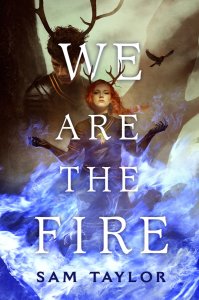
Book: “We Are the Fire” by Sam Taylor

Publication Date: February 16, 2021

Why I’m Interested: I’m not going to lie, I initially clicked on this one only because of the cool cover and the fact that I think the cover models look bizarrely like Clarke and Bellamy from the show “The 100.” Look it up, tell me I’m wrong! But I was definitely pulled in by the description of fire warriors who have grown up together in an army they were unwillingly enlisted into. From what I can tell, this book also starts out with an established romance between the two, something you don’t often see in books with romance plots that are heavily featured. I’m excited to see what this book has in store!

Kate’s Picks

Book: “The Project” by Courtney Summers

Publication Date: February 2, 2021

Why I’m Interested: I loved Summers’s previous book “Sadie” so much that I knew that I was going to need to read whatever she came up with next. And just for good measure, this time it’s about a cult! BE STILL MY HEART. Lo is a young woman working for a magazine, whose sister Bea left her life and joined a group called The Unity Project, an organization that is as mysterious as it is powerful. When a man claims that The Project was responsible for his son’s death, Lo sees an opportunity to investigate and perhaps find out what happened to her sister. But as she gets closer to the leader, Lev, she starts to wonder if the rumors about the group are true. The premise alone sounds creepy and tantalizing, and given Summers’s grit you know that there will be lots of darkness to behold.

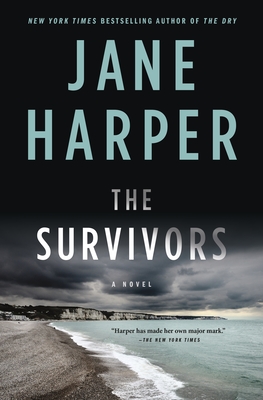
Book: “The Survivors” by Jane Harper

Publication Date: February 2, 2021

Why I’m Interested: Though we still aren’t revisiting the Aaron Falk series as of yet, I liked Jane Harper’s previous standalone mystery “The Lost Man”. Therefore, it was a no brainer that I read her newest standalone, “The Survivors”. Kieran has returned to his coastal Australian small town with his girlfriend and baby, this visit being the first after a long time away. Kieran and his family suffered a terrible trauma when he was younger, an accident that changed not only them but also the town, which then also had to deal with the fallout of a missing girl who never came home. Now, a body is found on the beach, and the paranoia and pain of the small town comes back to the surface. And long forgotten or pushed down secrets start to bubble up. Harper has shown that she knows how to craft a solid mystery that has a lot of very human elements to it, so “The Survivors” will no doubt have heart as well as suspense.

Book: “The Initial Insult” by Mindy McGinnis

Publication Date: February 23, 2021

Why I’m Interested: We have ourselves another reinterpretation of a story by Edgar Allan Poe, guys!! So of COURSE I’m interested! And while Mindy McGinnis has been a little hit or miss with me, an update of “The Cask of Amontillado” starring two teenage girls just reeks of awesome! Tress Montor and Felicity Turnado used to be best friends…. Until Tress’s parents disappeared while driving Felicity home, and Felicity claims to not remember what happened. Now Tress lives with her strange and mean grandfather on his exotic animal ranch, and Felicity is popular and powerful. So during a party, Tress decides to try and get her to tell the truth, by slowly bricking her into a coal shaft. But when their truths start to come to light, and a panther from the ranch escapes, the stakes go higher and higher. I mean, come on, this sounds SO cool

What new books are you looking forward to this month? Let us know in the comments!

My Year with Jane Austen: “Death Comes to Pemberley”

I could probably continue on an entire extra year reviewing various adaptations and interpretations of Jane Austen’s works. There are plays, spin-off books, modern adaptations, the list goes on and on. Every year it seems there is a new version coming out in some form or another and this last year was no exception. Not only did we get a new feature film of “Emma” but the BBC also released an 8-part mini series of Austen’s unfinished work “Sanditon.” So I wanted to briefly touch on my thoughts of both those and to add in one other adaptation that has been a favorite of mine for quite a while, “Death Comes to Pemberley,” both the book and the 3-part mini series.

Mini Series: “Death Comes to Pemberley”

I’ve read the book this was based on as well (same title and written by P.D. James), but I wanted to focus on the mini series adaptation here as, ultimately, I enjoyed it the most of the two. The book was a solid “Pride and Prejudice” sequel; frankly, it’s probably the best, and only, sequel I’d recommend to people. So the fact that I liked the mini series more is in no way a ding against the book itself. I only read it the one time, so I also wouldn’t bet against my not remembering it well enough to give it the credit it deserves. But on to the mini series itself!

As I mentioned above, this story is a sequel to “Pride and Prejudice.” It takes place mostly at Pemberley and occurs 5 or so years after the book (Darcy and Elizabeth have a 4-ish son, so I’m just guessing, if they mentioned it in the movie/book, I don’t remember). The story is a murder mystery at its heart, revolving around Wickham (who else!) who has been accused of killing his dear friend Denny while in Pemberley woods. The show is a three part mini series that slowly follows Elizabeth and Darcy as they try to put together the clues as to what really happened and whether or not Wickham is innocent or guilty. Along the way, we meet a cast a familiar faces and are given extra information about their histories that wasn’t provided in the original story. We also meet a few new characters, but it’s mostly a returning cast, though the focus is more on characters who played only small roles in the original book, like Georgiana and Colonel Fitzwilliam.

This mini series succeeds at both of its main goals: It is a worthy (and believable!) sequel to a beloved story that ended in such a way that a sequel would typically feel completely unnecessary; and it holds up as a compelling murder mystery in its own right. Had this story been almost exactly the same but with original characters, it would likely be almost just as good (though more fleshing out for characters would obviously be necessary since you couldn’t count on general familiarity and previous knowledge). That is a truly extraordinary feat.

Obviously, much of this comes down to James’ heavy lifting with her book. But I’d wager that of all of the Jane Austen adaptations, “Pride and Prejudice” is the only one with a film/mini series that is almost as beloved and the book itself. Just like James’ had an uphill battle in writing a sequel to the book, this mini series was attempting to re-cast and continue the stories of characters whom many thought couldn’t be improved upon from Colin Firth and Jennifer Ehle’s version. Both Matthew Rhys and Anna Maxwell Martin perfectly balance carrying forward characters who have already been seen on screen several times while keeping them familiar as well as bringing their own twists and mannerisms.

I really liked the mystery itself, too. There are plenty of red herrings and possible scenarios that can lead viewers down false trails. Even better, every aspect reveals new layers to Pemberley, its family, and the people that have lived on the estate for generations. I particularly liked the exploration of Darcy and Georgiana’s feelings towards stewardship and Pemberley. It’s an interesting topic, especially when contrasted with Elizabeth’s experience of life, that while they generally see eye to eye on many things, this is simply something that she can’t really understand. This feeling of responsibility to a place, its people, and one’s own history.

I also really liked the brief moments that showed us some of the challenges that Elizabeth faced (faces) as the new lady of Pemberley. It’s obvious that she’s not the lady of the house that anyone would have expected and with that would come its own set of trials. We also get a look into the insecurities and doubts that both Darcy and Elizabeth still struggle with. Yes, the ending of “Pride and Prejudice” was happily ever after, but marriage has its own set of challenges and one’s personal demons don’t simply disappear when one’s true love shows up.

The only ding I have against this adaptation is its depiction of Colonel Fitzwilliam (again, this was following the book’s lead so it’s not unique to the mini series itself). Personally, I really like what they do with the character here. So my quibble is more about continuality and what feels like a pretty thorough character re-write from what we’re given in the original novel. True, the novel really doesn’t show us much, but we have Darcy’s own esteem for the Colonel and his dual role in bringing up Georgiana to speak to his general good character. But unless you’re a die-hard Fitzwilliam fan, the changes shouldn’t be that distracting.

I really enjoy this mini series, and it’s my regular rotation of Jane Austen re-watches. Like I said, it’s the only worthy sequel to “Pride and Prejudice” I’ve come across, and it also checks all the boxes as a good historical mystery, another favorite of mine. If you haven’t read the book or watched this adaptation, I definitely recommend it for all Jane Austen fans!

Kate’s Review: “Burn Our Bodies Down”

Book: “Burn Our Bodies Down” by Rory Power

Publishing Info: Delacorte Press, July 2020

Where Did I Get This Book: I own it.

Book Description: From the author of the New York Times bestseller Wilder Girls comes a new twisty thriller about a girl whose past has always been a mystery—until she decides to return to her mother’s hometown . . . where history has a tendency to repeat itself.

Ever since Margot was born, it’s been just her and her mother. No answers to Margot’s questions about what came before. No history to hold on to. No relative to speak of. Just the two of them, stuck in their run-down apartment, struggling to get along.

But that’s not enough for Margot. She wants family. She wants a past. And she just found the key she needs to get it: A photograph, pointing her to a town called Phalene. Pointing her home. Only, when Margot gets there, it’s not what she bargained for.

Margot’s mother left for a reason. But was it to hide her past? Or was it to protect Margot from what’s still there? The only thing Margot knows for sure is there’s poison in their family tree, and their roots are dug so deeply into Phalene that now that she’s there, she might never escape.

Review: After I read “Wilder Girls” I was left a little cold. Which was odd, because Rory Power’s debut novel had all the elements of something I thought I’d love: a boarding school, a post-apocalyptic event, sapphic characters, a mystery, the list goes on. I was thinking that maybe it was just me, and given that I liked her writing style a lot (the atmosphere! The world building!), I wanted to give her another go. Enter “Burn Our Bodies Down”, a YA horror story with a gorgeous cover, a strange small town setting, and family secrets. Again, things that I love in a story, whatever the genre. I gave it a go, hoping that it would click. But, once again, I was left a bit cold.

I wil start with what I did like, however. Power really has a skill at creating atmosphere and setting, and once again I was sucked into the world building of Phalene, the small town our protagonist Margot runs to in hopes of connecting with her estranged grandmother. Phalene feels like the kind of rural town that I remember passing through in my childhood, with familiar characters and places, as well as familiar hardships and hurdles. I could practically see the cornfields, and the town area, as well as the vast farmscapes and openness. Phalene itself felt like its own character that Margot was getting to know. I also will be the first to say that, without giving too much away, the big mystery that Margot’s grandmother is trying to hide, and that has affected Margot’s mother so profoundly that it has damaged her relationship with her daughter, is pretty unique and an interesting concept. I had a feeling that I knew what it was (once it became clear that this was, indeed, a horror story with fantastical elements, but I will talk about that in a bit), but it was still an angle that felt fresh and not like many others that I’ve seen before. Power had some of that going for her story in “Wilder Girls” as well, there is no denying that she has some really cool ideas!

But there were too many things that didn’t work for me. My biggest gripe was that it took a long time for the actual horror elements to arrive within the plot. I honestly went into this with very little knowledge as to what the general tropes and themes were, and while I was reading I was wondering if Power had decided to forgo her past horror genre foray and go into more of a family secrets thriller. And I guess that this could kind of be considered that as well, but by the time the actual can’t be argued as anything else horror elements popped up it was about half way through the book. That seems a little long to me. I understand that we had to have some set up of Margot’s family dysfunction before we could really explore the other issues, given that the dysfunction and the issues tie in together very tightly. But the dragging of feet didn’t really build up suspense, it just felt like it took too long. Along with that, I didn’t feel like we got to really know Margot as the story progressed, at least not past a kind of superficial level. There was so much potential for us to peel back layers of her, and hints to who she was outside of a teen who has a fraught relationship with her mom, but none of that really gets explored. Which, in turn, made it harder for me to care about her and what the deal was with her and her weird family.

I gave Rory Power another shot, but I think that this may be the end of the road for me and her books. “Burn Our Bodies Down” shines bright in the ideas department, but the execution was lacking.

Rating 5: Lots of solid ideas, but none of them fully execute in time for the big reveal for me to have investment in them.

Reader’s Advisory:

“Burn Our Bodies Down” is included on the Goodreads lists “Corn Books”, and “2020 Horror to Scream For”.

Find “Burn Our Bodies Down” at your library using WorldCat, or a local independent bookstore using IndieBound!

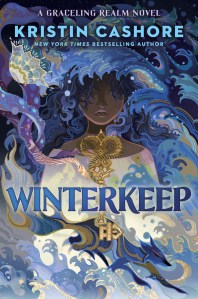
Serena’s Review: “Winterkeep”

Book: “Winterkeep” by Kristin Cashore

Publishing Info: Dial Books For Young Readers, January 2021

Where Did I Get this Book: Edelweiss+

Book Description: Four years after “Bitterblue” left off, a new land has been discovered to the east: Torla; and the closest nation to Monsea is Winterkeep. Winterkeep is a land of miracles, a democratic republic run by people who like each other, where people speak to telepathic sea creatures, adopt telepathic foxes as pets, and fly across the sky in ships attached to balloons.

But when Bitterblue’s envoys to Winterkeep drown under suspicious circumstances, she and Giddon and her half sister, Hava, set off to discover the truth–putting both Bitterblue’s life and Giddon’s heart to the test when Bitterbue is kidnapped. Giddon believes she has drowned, leaving him and Hava to solve the mystery of what’s wrong in Winterkeep.

Lovisa Cavenda is the teenage daughter of a powerful Scholar and Industrialist (the opposing governing parties) with a fire inside her that is always hungry, always just nearly about to make something happen. She is the key to everything, but only if she can figure out what’s going on before anyone else, and only if she’s willing to transcend the person she’s been all her life.

Review: Well, we’ve finally arrived at the long-awaited (really, was anyone actually waiting on this? I think it took most fans by surprise!) fourth book in the “Gracely Realm” series. I’ve enjoyed my re-read so far, though the high of the first two has definitely been dampened by what I felt was a lackluster showing in “Bitterblue”. But given that it has been almost a decade since that book was published, I was curious to see which version of the author’s writing we’d get here: the fast-action, heartstring- pulling story that we saw in the first two, or the more slow, somewhat bloated story that was last one?

It’s been four years since the events of “Bitterblue” and the world has once again expanded. Winterkeep is a distant land whose society is largely focused on politics and industry. With fantastical airships and the knowledge of powerful resources, Winterkeep’s society is at an impasse over the progression of its industry over the environmental effects of some of the resources needed to power those advancements. When two of her envoys die under mysterious circumstances, Bitterblue takes it upon herself to visit this distant land. Things quickly go wrong, and she and her party are left to unravel the mystery at the heart of Winterkeep alongside a local teenage girl, Lovisa, whose parents are somehow connected to it all.

So, I’ll just get it out of the way early: this, sadly, fell much more into the “Bitterblue” school of book than the “Graceling” type which in turn means it was a bit of a disappointment for me. But I’ll start with what I did like. In many ways, I feel like the writing was stronger in this book than in “Bitterblue.” That book was almost oppressively gloomy and serious, whereas here, while the story still tackled serious topics and had darker moments, there were also several funny lines and observations throw in. Bitterblue herself was a much more likable character for having some of these funnier lines/thoughts early in the book which immediately endeared her to me.

I also liked Giddon’s chapters. He was a strong point in “Bitterblue,” so it was great to see Cashore recognize his potential and make him a POV character here. His relationship with Bitterblue was also much more interesting in that book than her romance with Saf, so I was happy to see their friendship/romance take precedence. We also get chapters from a telepathic fox, a special type of animal that is common in Winterkeep and bonds with humans, as well as chapters from a mysterious ocean monster.

But I struggled to connect to Lovisa, and that proved to be a fairly large failing for my enjoyment of the story. As the only native human character we have for Winterkeep, much of the world-building and deeper insight into this world comes through this character. I think there are a few problems here. For one thing, Lovisa simply didn’t have a strong inner voice or particularly compelling character. Those funny lines I mentioned with Bitterblue? None to be found with Lovisa. I’m not asking for a joke a minute, but her voice simply didn’t have any particular aspect to it that made it stand out, which leads to my second problem.

Much of Lovisa’s chapters and inner thoughts are devoted to long reflections on Winterkeep’s political situation and the challenges of balancing industry and environmentalism. Fairly early in the book, I read one of her chapters that devoted almost half of her page count to long paragraphs on these topics. And there simply wasn’t much there! The entire “debate” about environmentalism is a very thinly veiled depiction of our own struggles in this world. And the politics involved are just the same, a very watered down version of the U.S. two party system with entrenched viewpoints on both sides. There are plenty of good ways of using a fantasy novel to get out modern debates, but these were so washed out and thin that they didn’t actually get at any new ideas or add anything of value to the overall conversation. Plus it’s a fantasy novel which usually gives authors a lot of creative leeway to present these ideas in unique and interesting ways. Not so here, unfortunately. The two parties are called the Scholars and Industrialists, for heaven’s sake! And poor Lovisa’s chapters are just full of this stuff, going on and on.

Which gets to my final complaint: this book is way too long. Just like “Bitterblue,” the story begins to feel like a slog fairly early into the first third of the book. The action dies down, the mystery drags on and on, and then finally we get to the resolution, only to find that there’s a significant page count left to get through. In which, again, nothing much happens and the whole thing could have been wrapped up in half the time. This book seriously needed the firm hand of an editor who wasn’t afraid to make great big slashes through some of this.

By this point, it’s clear that Cashore is the type of author who likes to write about issues. Unfortunately, I feel like the books in which she focuses on this the most are her weakest. “Graceling” and “Fire” both touched on some pretty important topics about self-acceptance and the responsibility and dangers of great power. But when the stories delved into more broad topics like they did in “Bitterbue” and here, these issues seemed to consume the book, its characters, and any attempts to build up tension. Fans who enjoyed “Bitterblue” will probably be more pleased with this entry than those who struggled with that book.

Rating 6: Overall, pretty disappointing and bogged down by uninteresting takes on social and political statement pieces.

Reader’s Advisory:

“Winterkeep” is a newer book so it isn’t on many Goodreads lists, but it is on YA Novels of 2021.

Find “Winterkeep” at your library using WorldCat!

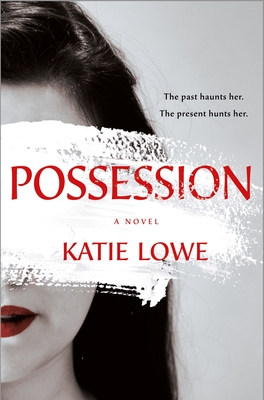
Kate’s Review: “Possession”

Book: “Possession” by Katie Lowe

Publishing Info: St. Martin’s Press, January 2021

Where Did I Get This Book: I received an eAR from NetGalley.

Book Description: Ten years ago, Hannah’s husband was brutally murdered in their home, and she (conveniently) doesn’t remember a thing about that night. But the police charged someone else—a stranger—and put him away for life. And Hannah packed up her six-year-old daughter and left London behind.

But now her hard-won countryside peace is threatened. Conviction, a viral true crime podcast known for getting cases reopened and old verdicts overturned, has turned its attention to Hannah’s husband’s murder for its new season. They say police framed the man who was found guilty, and that Hannah has more suspicious secrets than just her memory loss: a history of volatility; citations at the clinic where she worked as a psychiatrist; dependencies on alcohol and pills; and a familicidal grandmother, locked away in a Gothic insane asylum until her death. As Hannah loses the trust of everyone she loves, the only person she feels she can confide in is a former colleague, Darcy, who’s come back into her life—but who may have motives of her own. But Hannah can’t tell even Darcy her deepest secret: that she’s still tormented by the memory of her husband and the crater he carved through her life.

Review: Thank you to NetGalley for providing me with an eARC of this novel!

Do you know the feeling you get when you’re reading a book or watching a movie or TV show that has you totally enraptured and interested, and you are barreling towards the end excited to see how it wraps itself up for better or for worse….. And then the ending totally throws a wrench into any previous enjoyment you had of said book or movie or TV show? It’s a feeling that I luckily don’t run into often, but when it does happen I am usually left seething and grumpy. That’s kind of what happened with “Possession” by Katie Lowe. Oh the frustration!

But let me back up a bit before I go into the rant. “Possession” does have a lot of promising elements, which is why I was speeding through and entertained as I was reading. We have Hannah, an unreliable narrator either because she doesn’t remember the circumstances of her husband’s death, or is hiding the circumstances of her husband’s death. We have the device of a podcast that, while thinking it is searching for truth, is stirring up harassment and stalking of a woman victim, therein weaponizing misogyny under guise of justice. We have a lot of twists and turns, and a lot of great moments of self destruction as the reader looks helplessly on, unsure of whether they SHOULD be feeling bad for Hannah, but feeling bad for her nonetheless, as her life starts to unravel because of this spotlight. All of this works wonders, and Lowe does a really good job of pulling the strings to make the reader feel a certain way.

But the ending. THE ENDING. I’m not going to go into spoilers here, just because if people do want to read it and judge for themselves, I’m not about to make that any less fun or fulfilling. But if you want to go in completely blind, read further at your own risk, as I’m going to disseminate what didn’t work about it. In vague terms, but still, you will have some spoilage just because of this. So “Possession” has the kind of ending that feels like a cheat. We have two moments in the climax. The first feels like one ending, but then we get a huge left turn that completely negates the first moment. It felt like an unnecessary twist, and one that already left a poor taste in my mouth. But at least it would be an ending that, while I may not have liked it much, would have been an ending and a definitive ‘this is how this kind of story ends’ statement. But then, THEN, instead of letting that be the end, we get an epilogue! An epilogue that goes back to elements of the first fake out ending and sets up things to work out in that fashion after all, in spite of the fact that a lot of changes that were made with fake ending two are VERY permanent and it doesn’t quite make the reader (or at least me) feel better about anything that may be being reversed. I just didn’t quite understand why there was a need to do a second fake out ending if that was going to be hinted at being reversed in a hastily thrown together epilogue. Why not just have that first fake out ending be there, and if you want to have some of the consequences of fake out ending two, toss them in BEFORE fake out ending one?

But as you all know, I’ve never liked endings that have giant out of nowhere twists if I feel like they haven’t been earned, so this is very much a ‘your mileage may vary’ situation when it comes to how you may or may not enjoy this book. But for me, “Possession” was a last minute wash.

Rating 5: A tense and well paced thriller that had me totally invested… until the ending derailed a lot my affection.

Reader’s Advisory:

“Possession” is new and not on many Goodreads lists yet, but it would fit in on “Books for Serial Podcast Lovers”.

Find “Possession” at your library using WorldCat, or a local independent bookstore using IndieBound!

Not Just Books: January 2021

While we do love us some books, believe it not, we do have a life outside of reading. So to highlight our other pop culture interests, on the last Monday of each month, we each will highlight three other “happenings” from the last month. Big events on favorite TV shows, new movies we’ve watched, old movies we’ve “discovered,” etc. Pretty much whatever we found of particular interest outside of the book world during the last month. Share your own favorite things in the comments!

Serena’s Picks

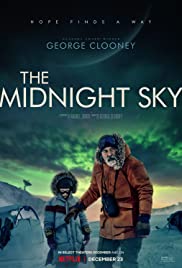
Netflix Movie: “The Midnight Sky”

Yes, another space-related movie/show for me! But who can resist when you open up Netflix and there is George Clooney staring at you soulfully from the preview panel! Perhaps a bit hard to watch right now, the story focuses on Clooney, one of the last men alive on a world struck by some catastrophe. Alone (or is he?) in the Artic, Clooney’s character desperately tries to get a hold of a crew of a space expedition that is returning home after years away, unaware of what has happened on Earth. The movie alternates swiftly between quiet, reflective moments to heart-stopping action that has you on the edge of your seat. There are several twists and turns that the savvy viewer will pick up on. And the ending definitely sparks conversation if you watch it with another person!

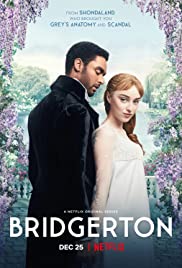
Netflix Show: “Bridgerton”

So those who read my three mini reviews for the first book in this series will know that I had some feelings about the first book in the Bridgerton’s story. And knowing that this first season was focused on this same book, I went in with some definite questions about how certain aspects of the story. And…well, it wasn’t perfect in that area, but definitely much improved. And the sheer joy that is the rest of the show ultimately made up for it with me! This was probably always going to be a win for me, though, as I love historical romances of this sort. The witty, elegant way of talking. The beautiful dresses and balls. And here, the diverse casting and the way the show itself engaged with these topics rather than just throwing a diverse cast together and thinking that was enough. If you’re a fan of the book series, you’re sure to like this. And if you’re a general fan of historical romance shows like “Outlander,” “Poldark,” or any of the Jane Austen adaptations out there, this is probably also for you!

Movie: “Moneyball”

While I don’t get around to watching much baseball myself anymore, I’ve always loved the sport (though the Mariners have always been the team that just loves to hurt you!). But I never got around to watching this movie until now. It was all the better to watch now, though, as I was able to watch it with my husband who has an encyclopedic memory for all things sports related and could rattle off all kinds of extra details about the players and coaches depicted as we watched. And, of course, Brad Pitt is excellent in almost everything he does. The movie was also surprisingly funny, something I wasn’t expecting going in.

Kate’s Picks

Netflix Show: “Cobra Kai”

It’s BACK!! After my husband and I binged Seasons 1 and 2 of the “Karate Kid” continuation, we were on pins and needles waiting for Season 3. Season 2 finished with huge cliffhangers: the kids from Cobra Kai and Miyagi-Do had a showdown at school that led to Miguel being thrown over a balcony by Robby and sent into a coma! Johnny was forced out of Cobra Kai by Kreese, who was making moves behind his back like the evil bastard he is! ALI HAD CONTACTED JOHNNY RIGHT AFTER HE THREW HIS PHONE INTO THE OCEAN! Season 3 picks up a couple weeks later, with Johnny in a pit of depression, Daniel dealing with his business being affected because of the fight making media headlines, Samantha suffering from PTSD, and Miguel in physical and emotional recovery. And it only gets better from there. I love how this show continues to explore baggage, trauma, and the relationships between parents and their kids. Plus, Johnny is still so crabby and bitchy yet filled with all the pathos, which you can just hook up to my veins because I LIVE for that kinda thing. And once again there’s an epic cliffhanger, so we CANNOT WAIT for Season 4!!

TV Show: “RuPaul’s Drag Race”

Back when COVID first sent us all into a new normal that has continued far longer than any of us anticipated, I figured that there would be a hold on new TV content indefinitely. Well, “RuPaul’s Drag Race” instead brought their contestants out early, quarantined them, tested them over and over, and then shot a season of the show. Given that no one got sick, I guess they were careful? Regardless, we now have Season 13 of “Drag Race” and it’s…. different. We’re only a few episodes in as of now, but the format has changed, with the queens separated into two groups (COVID safety protocols? They didn’t say.) right off the bat with a marathon of six lip syncs. Combine change with a really good previous season and I’m still trying to discern what I think overall, BUT ALL THAT SAID there have been some great runway looks and some stand out queens already (Gottmik, Tamisha Iman). And this may just be another example of a new normal…. Or maybe just a stunt. Regardless, I’m happy we do have new “Drag Race”!

Netflix Show: “Lucifer”

Like Serena before me, I have started watching “Lucifer”, the Fox turned Netflix show that tells a very loose adaptation of DC’s interpretation of Lucifer Morningstar. Given that I’m doing a “Sandman” re-read right now, I thought I ought to check out this show and boy am I mad that I didn’t check it out earlier. Because I LOVE “Lucifer” and all of the characters in it. I also love the idea of Lucifer Morningstar hanging out on Los Angeles and lending his sarcastic and bitchy hand to a no nonsense detective (and also getting some much needed therapy), which is basically the premise of the show. So we get a police procedural with angels, demons, and fun dialogue, as well as a cast that has great chemistry with each other. Like it’s hard to pick a favorite character because they are all so good. It has really filled the void for me since I was so disappointed with the last season of my other Hell centric show, “Chilling Adventures of Sabrina”.

Serena’s Rev-Up Review: “Bitterblue”

Book: “Bitterblue” by Kristin Cashore

Publishing Info: Dial, May 2012

Where Did I Get this Book: own it!

Book Description: Eight years have passed since the young Princess Bitterblue, and her country, were saved from the vicious King Leck. Now Bitterblue is the queen of Monsea, and her land is at peace.

But the influence of her father, a violent psychopath with mind-altering abilities, lives on. Her advisers, who have run the country on her behalf since Leck’s death, believe in a forward-thinking plan: to pardon all of those who committed terrible acts during Leck’s reign; and to forget every dark event that ever happened. Monsea’s past has become shrouded in mystery, and it’s only when Bitterblue begins sneaking out of her castle – curious, disguised and alone – to walk the streets of her own city, that she begins to realise the truth. Her kingdom has been under the thirty-five-year long spell of a madman, and now their only chance to move forward is to revisit the past.

Whatever that past holds.

Two thieves, who have sworn only to steal what has already been stolen, change her life forever. They hold a key to the truth of Leck’s reign. And one of them, who possesses an unidentified Grace, may also hold a key to her heart . . .

Previously Reviewed: “Graceling” and “Fire”

Review: So this re-read has been one of discoveries so far. I discovered first that “Graceling” held up really well in the ten plus years since it was first published, even given the boom of similar YA fantasies novels that have come out since. I discovered that while I still prefer “Graceling” overall, I actually liked the romance in “Fire” better. And with “Bitterblue” I discovered…I actually hadn’t read this one before?? I own a copy, and I think I must have skimmed through it at some point, but a full, cover-to-cover read? Nope! Given my takeaway at the end of this read, I suspect I may have skimmed some Goodreads reviews when this came out and put it on the back-burner, being a bit wary. Because, yes, for me, this was quite the step down from the highs of “Graceling” and “Fire.”

Bitterblue has been queen of Monsea since she was ten and her sociopathic father was killed at the hands of Bitterblue’s strongest protector, Katsa. In the years since, Bitterblue has struggled to put her broken country back together. But with endless paperwork and little contact with her actual people, Bitterblue begins to suspect that her efforts aren’t accomplishing much. She takes matters into her own hands and sneaks out to wander the streets of her city and see the state of things for herself. What she discovers opens the floodgates and she is suddenly overwhelmed with all of the mysteries and secrets that have lurked from the time of her cruel father’s reign.

So, overall, I really didn’t love this book. It was so surprising and disappointing to have a reaction like this after just loving both books that came before! But, unfortunately, I think there were several things that worked against it. Not least of which is the fact that I think that even its strengths ultimately work against it when compared to the books that came before. Namely that Cashore’s strengths for creating interesting new worlds and great fantastical elements weren’t allowed any room to grow here. We’ve already been introduced to Monsea, and while the story does show us around the city itself and has some new things to add here, the world itself is largely familiar. The magic, too, is familiar. We may meet a few new Gracelings, but their abilities and their place in the world are already understood. So, too, we already know about the Seven Realms and, largely, how they differ from one another and interact with each other. All of this works to undercut much of what made the first two books so great: Cashore’s deeply imaginative new worlds and magic systems.

And while both of the first two books were slower reads overall, this one really seemed to drag on. It’s much longer than the first two, and nothing in the story really justifies this length. Bitterblue is constantly beset with new mysteries and new roadblocks on any progress she’s making on the ones that came before. More than once she simply gives up and returns to her paperwork in her tower. This is just as boring and anti-climatic for the reader as it’s said to be for her. What’s more, many of the mysteries are built around the seemingly crazy actions of many of the characters around her. But they are so random and so off-the-wall that with the lack of understanding around them comes also the lack of caring. Unlike the books before where it felt like clues were being laid down that reader’s could begin to piece together for themselves (part of what kept the pacing better in those books), here, it all feels too disconnected to any logic or overall plan to really engage the reader.

I also really, really disliked the romance in this book. This was truly shocking as the other books in this series had two of my favorite romances ever. But here, nothing really works about it. Saf is a terrible romantic hero. When he’s not annoyingly immature (it’s never a good sign when you’re heroine herself calls the hero this and she’s completely right!), he’s outright rude and mean to Bitterblue. And all of this is when he’s even on the page at all, for there are large chunks of the story where he’s nowhere to be seen. From a personal reading perspective, his absence isn’t missed as when he was around I was mostly frustrated by him. But from the perspective of trying to build a compelling romance, it’s hard to do when you’re romantic hero is nowhere to be found for the last half of the book. And the end was only satisfying because it was ultimately unsatisfying, essentially!

I did like Bitterblue as a character, but I think the romance and the plodding storyline both did her a massive disserve. It was also confusing trying to understand why Bitterblue was suddenly noticing all of these things around her. Presumably she’s been acting as queen for the last 8 years, and while she was too young initially to take notice, it’s hard to understand what was distracting her from it all for the last few years. There’s no obvious impetus for any of it, really. “Winterkeep” will also feature Bitterblue, so I’m excited to see how the character fares when put in a different (hopefully better!) story. We’ll find out next week when we finally get to “Winterkeep” itself!

Rating 6: Very disappointing. It has some serious weaknesses on its own, but it’s definitely not helped by the fact that the two before it were such hits for me.

Reader’s Advisory:

“Bitterblue” is on these Goodreads lists: YA Second World Fantasy and Best Kick-Ass Female Characters From YA and Children’s Fantasy and Science Fiction.

Find “Bitterblue” at your library using WorldCat!

Kate’s Review: “The Sandman (Vol.6): Fables and Reflections”

Book: “The Sandman (Vol.6): Fables and Reflections” by Neil Gaiman, Bryan Talbot (Ill.), Stan Woch (Ill.), P. Craig Russell (Ill.), Shawn McManus (Ill.), John Watkiss (Ill.), Jill Thompson (Ill.), Duncan Eagleson (Ill.), & Kent Williams (Ill.)

Publishing Info: Vertigo, 1993

Where Did I Get This Book: I own it.

Book Description: FABLES & REFLECTIONS follows the Lord of Dreams through nine remarkable tales as he touches lives from the mists of the past to the nightmares of the present. In these episodes, kings and spies, emperors and actors, ravens and werewolves all share their stories and their dreams–dreams of life and love, and of power and darkness.

Review: When I picked up “The Sandman (Vol.6): Fables and Reflections”, I sighed in disappointment. We were once again going to be focusing on stories that exist within the universe and within Morpheus’s world and realities (or unrealities). While I do appreciate how expansive Gaiman is when it comes to his various mythologies, I admit that coming on the heels of “Game of You” I really just wanted to jump back in with Dream, Death, and the like. But as I started getting back into “Fables and Reflections”, I realized that even though we are still off the main storyline track, there are a lot of really excellent moments in these side stories.

The main thematics of “Fables and Reflections” is various dreamers and leaders throughout history, and how dreams and their dreaming natures affected their lives for better or for worse (worse probably being the story “Thermidor”, which focuses on Robsepierre during the Reign of Terror, the time that no one likes to think about when it comes to revolution fantasies). I had a couple of stories that I especially liked, the first being “Three Septembers and a January”. In this tale, we focus on the obscure but real story of Emperor Norton, a man who just kind of declared himself the Emperor of the United States back in the 1800s. Yes, he was real, and a bit of a local celebrity in San Francisco. In this tale, we get to see snippets of his life as the Endless siblings engage in a wager as to which will claim him before Death does so permanently (with Dream being the least nefarious in his intentions, though Delirium can’t know what she’s doing, she’s Delirium dammit!). We get to see Norton live his life under the delusion of his ‘power’, but also see that while he may be ‘mad’, he’s also just a harmless and pretty good guy. There is a lovely moment between him and Death at the end, which emphasizes the overarching point of the “Emperor” in this collection who had the least amount of power is the one who was the best and kindest ‘ruler’ (see Robespierre above, though Augustus also shows up in this collection). It’s a sweet story that really resonated with me.

The other story that stood out has the most connection to Dream and the Endless, and that is “The Song of Orpheus”. As mentioned in earlier collections, in this universe Orpheus is the son of Calliope and Morpheus, and this is basically a retelling of the Orpheus and Euridyce myth with that twist. It’s a story of fathers and sons, lost love, fate, and how parents can fail their children. It is a gut punch seeing Dream have to reconcile with the fact that Orpheus went against his warnings, and in turn refuses to put Orpheus out of his misery after his dismemberment by the Maenads, dooming his son to live eternity as a disembodied head, all because Orpheus didn’t listen to him about saving Eurydice (well, and because of a ‘rule’ The Endless have about killing family, but that feels second to his own wounded ego). It really emphasizes that while Dream is a great character in a lot of ways, he is horrifically pig headed when it comes to those that he loves, to the point where he treads away from morally grey and into villain territory. But, all the more complexity and depth that will no doubt be explored later!

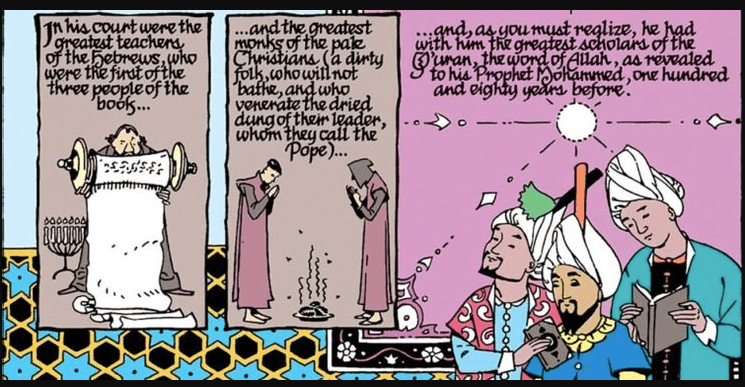
The artwork shifts between the stories (did you SEE the list of artists at the top?!), and the strongest style for me was in “Ramadan”, a story of Harun al-Rashid ruling in historical Baghdad (I will also say that this story has a lovely grace to it, as it was written during the first Gulf War and Gaiman isn’t afraid to make comment of that). P. Craig Russell is the main artist for this story, and WOW. The style appears to be influenced by art from the time and place, as well as illuminated religious texts, and my goodness it’s just beautiful and vibrant.

(source: Vertigo)

All in all, I ended up enjoying “The Sandman: Fables and Reflections” more than I thought I would on this re-read. It’s wistful and dreamy, and it adds a lot of depth to this amazing world.

Rating 8: A ponderous collection of stories about power, empires, love, and death, “The Sandman: Fables and Reflections” doesn’t really advance the plot, but adds flourish to the universe it exists within.

Reader’s Advisory:

“The Sandman (Vol.6): Fables and Reflections” is included on the Goodreads lists “Mythic Fiction Comics”, and “Graphic Novels With The Best Artwork”.

Find “The Sandman (Vol.6): Fables and Reflections” at your library using WorldCat, or a local independent bookstore using IndieBound!

Previously Reviewed: