Book Description: Vampire hunter Elena Deveraux knows she’s the best—but she doesn’t know if she’s good enough for this job. Hired by the dangerously beautiful Archangel Raphael, a being so lethal that no mortal wants his attention, only one thing is clear—failure is not an option…even if the task is impossible.
Because this time, it’s not a wayward vamp she has to track. It’s an archangel gone bad.
The job will put Elena in the midst of a killing spree like no other…and pull her to the razor’s edge of passion. Even if the hunt doesn’t destroy her, succumbing to Raphael’s seductive touch just may. For when archangels play, mortals break…
Review: A new book, a new chance to find a decent urban fantasy series to follow, as many of my previous go-to’s have ended. Also per the usual, what a terrible, terrible cover. I don’t get it. Do the publishers want to produce books that have the sorts of covers that make readers embarrassed to be seen reading the book in public? Honestly, it just seems like a losing strategy all around. If it’s a money thing, I can’t imagine that a simple, plain cover with a basic decal (say angel wings, for a book like this) would cost much more. And voila! A book that you can read in the airport without getting side-eyed (not that I approve of judging of others’ books, but in all honesty, we know it happens). Anyways, on with the review.
Elena has created for herself a straight-forward life. While tragedy and horror lie in her past, she’s determined that her future should be one where her skills as a vampire hunter are put to good use and she can return to the quiet, comfortable, solitary apartment that is her home. But when her most recent job comes down from one of the most powerful beings in the city, perhaps even the world, the archangel Raphael, she sees only disorder and danger ahead. Now, she’s not only working for an archangel, but she’s been put on the path of tracking down another rogue archangel, one so powerful that he could level entire cities.
First off, I want to warn any potential readers who may pick up this book after reading this review, this is definitely one of those urban fantasies that falls solidly within the “paranormal romance” genre as well. This may be right up some readers’ alleys, but for others who are looking for a strict urban fantasy, this one definitely contains some pretty graphic romantic scenes and such. So, if that’s your thing, great! But if you want a more traditional urban fantasy, this might not be it.
That said, as an urban fantasy story, I do think it’s pretty good! One of the things I always look for in urban fantasy is a unique take on the paranormal elements. Often these types of book include similar fantasy elements and beings. You see a lot of vampires, werewolves, shape-shifters, angels (more recently), witches, etc. That being the case, it can be a challenge for an author to make their take on these classic creatures stand out. And I think Singh really excels at this. Here, she’s created a very interesting mythos that ties the angels and vampires together in a unique way. Not only does this differentiate these two paranormal species from others of the same sort seen on the page, but it creates a unique dynamic and internal society between the two.
Likewise, Elena’s hunter abilities are unique from other characters like her. She’s both very powerful in certain ways, but very human and limited in others. Of course, the make it or break it element of books like this often comes down to the main character, and I really liked what Elena had to offer. She was determined and brave, but she was also realistic about the impossible situations she often found herself in. Her bravery was not foolish, but more of the sort where she understands that putting on a tough face will likely not change the outcome, but it’s the only thing to be done to maintain her sense of self and self-respect. It was a very interesting internal dynamic, and an important one in the face of a romantic interest who was a very slow learner when it came to respecting his partner’s abilities.
Like many paranormal romances, I do think the romance faltered at times. I understand the supposed appeal of the supremely powerful, alpha hero. But Raphael did have scenes where I felt like this aspect of his character went too far and left me with a bad taste in my mouth. We do see him express regret for some of these choices later, so I was able to finish the book without entirely writing him off. But, again, this is an important thing to note for readers who are picking up this book and may have different levels of tolerance for some of this “dominance” stuff.
Overall, I think the world-building was incredibly interesting, and Elena was a very sympathetic leading lady. The author also chose an interesting path where she hinted at a lot of events that occurred in Elena and Raphael’s pasts, but didn’t reveal that much in this first book. All of that together, and I thin I’ll continue reading the series. My interest has definitely been piqued!
Rating 8: A solid urban fantasy/paranormal romance with a unique take on angels and vampires.
Book Description: There is no magic on Prospect Hill—or anywhere else, for that matter. But just on the other side of the veil is the world of the Fae. Generations ago, the first farmers on Prospect Hill learned to bargain small trades to make their lives a little easier—a bit of glass to find something lost, a cup of milk for better layers in the chicken coop.
Much of that old wisdom was lost as the riverboats gave way to the rail lines and the farmers took work at mills and factories. Alaine Fairborn’s family, however, was always superstitious, and she still hums the rhymes to find a lost shoe and to ensure dry weather on her sister’s wedding day.
When Delphine confides her new husband is not the man she thought he was, Alaine will stop at nothing to help her sister escape him. Small bargains buy them time, but a major one is needed. Yet, the price for true freedom may be more than they’re willing to pay.
Review: While I still haven’t gotten around to reading the second two books in the trilogy, I really enjoyed Rowenna Miller’s fantasy novel “Torn” when I read it several years ago. This is definitely one of those situations where my failure to complete the trilogy is completely due to my own lack of self-control in managing my TBR list and nothing to say about the series itself. That being the case, I was excited to see that the author was releasing a stand-alone fantasy novel this spring. Phew! Can’t drop the ball on a stand-alone!
While the world continues its steady march forward into modernity and industry, the family who owns the orchard on Prospect Hill still understand and honor the old, magical ways. A woven hay wreath for prosperity. A twist of nickel and ribbon for a good harvest. And while these time-tested bargains are reliable and sure, it is understood that the Fae are never to be trusted. But when two sisters find themselves confronting the limitations of a world that sees only limited roles for women, they must chance a new bargain to create a way forward for themselves and their family.
It’s no surprise that this book was a hit with me. There are so many things I like, right there in the description! A story with a historical setting that tackles the culture and challenges of that period of time. A plot that focuses on the softer, wilder side of magic. And two characters who are sisters and must navigate the beauties and pitfalls of that relationship. And Miller came through on all three points!
I really enjoyed the way this book navigated the historical time period during which it is set. Throughout the book, we see Alaine and Delphine come up against the limitations placed on them by a society that doesn’t yet recognize women’s value. But change is also in the air, with many references to the suffragettes who are hard at work fighting for women’s rights. Alaine and Delphine represent the everyday women in this period of time. Neither would label themselves as a suffragettes; indeed, Delphine’s politically-minded husband wants her to have nothing to do with the “radical” movement. However, they are still fully realized characters and women and thus quickly come up against the limitations placed on them. Delphine is interested in art and learning, forming a friendship with another female scholar. And for her part, while Alaine operates a farm and is active in local agriculture decisions, we see her again and again come up against those who would wish to see her fail. I especially liked a conversation and theme that came up towards the end of the book about how if something is a challenge for one person, there’s a good chance it’s a challenge for others. And that’s why it’s important to work towards changes that will benefit society as a whole, rather than just oneself.
I also really liked Alaine and Delphine as characters in their own right. They both felt like complete, fully-fleshed out women, complete with their own unique strengths and their own personal failings. But I particularly appreciated the way they were portrayed as sisters. The story alternates between the two of them, so we very quickly learn to see how each sister is misinterpreting and misunderstanding the other. Here are two women who are as close as you can be, but their relationship is constantly strained by their inability to clearly see the other one for who she truly is without viewing it through their own lens. It was such an honest and relatable portrayal, and I think the most successful depiction of adult sisterhood that I’ve seen in some time.
This is definitely a slower, quieter story. It takes a while for all of the pieces to come into place, so readers must be prepared to spend a good portion of the beginning of the book setting up our characters and their relationships with each other and the world around them. But then about two thirds through the book, the story takes a massive shift in what it’s doing. I wouldn’t say that it ever becomes action-packed, but it definitely went in a direction that I wasn’t expecting, but that I enjoyed the heck out of. Looking back on the read as a whole, this left me feeling as if the pacing of the book felt a bit choppy. But as I enjoyed both halves of the book so much, I’d hardly hold this against it.
Rating 8: Fairy circles and whimsical magic weave in and out of a thoughtful, quiet fantasy story that tackles important themes of sisterhood and feminism.
Reader’s Advisory:
“The Fairy Bargains of Prospect Hill” isn’t on any Goodreads lists yet, but it should be on Everything Fae.
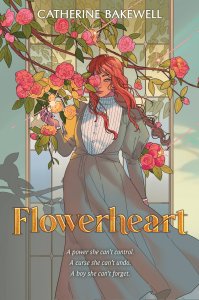
Book Description: Clara’s magic has always been wild. But it’s never been dangerous. Then a simple touch causes poisonous flowers to bloom in her father’s chest.
The only way to heal him is to cast an extremely difficult spell that requires perfect control. And the only person willing to help is her former best friend, Xavier, who’s grown from a sweet, shy child into a mysterious and distant young man.
Xavier names a terrible price in return, knowing Clara will give anything to save her father. As she struggles to reconcile the new Xavier with the boy she once loved, she discovers their bargain is only one of the heavy secrets he’s hiding. And as she hunts for the truth, she instead finds the root of a terrible darkness that’s taken hold in the queendom—a darkness only Clara’s magic is powerful enough to stop.
Review: This is definitely one of those books that I first looked at because of the cover. It immediately stood out when I was scrolling through Edelweiss+ planning out my spring reading schedule. Tons of books with daggers and swords on the covers, lots of duo characters drawn in that cartoonish style that is so popular right now (not that I dislike this style per se, just there’s a lot of it). This cover’s unique art immediately stood out and had me clicking through to the description. So well done there!
Clara has always struggled to control her magic, so much so that the local leaders have presented her with a terrible ultimatum to prevent her from injuring others. But before she can go through with it, the worst happens and an innocent touch causes her magic to sprout poisonous plants in her father’s chest, dooming him to a painful and slow death. When an old friend offers to help her tame her magic in an attempt to save her father’s life, she doesn’t even hesitate in the face of the steep price he requests. But when it becomes clear that Xavier is caught up in much darker forces than she had previously known, Clara begins to wonder with just whom did she strike her perilous bargain?
One thing that I found interesting when I was looking into this book was that it was marketed as a “cottage core” fantasy novel. What does that even mean? As far as I’m aware “cottage core” is a style of interior decoration. I’m not sure how that translates to a genre of book? Digging deeper, I discovered that there seems to be a recent trend of labeling some books “cozy fantasy,” which I imagine is just a spin-off from the more popular “cozy mystery” subcategory. Based on the latter, I’d guess that a cozy fantasy novel would be a story that avoids darker themes or graphic descriptions. Like cozy mysteries, they would focus on lighter topics and have happy endings, essentially. All of this to say, while I could see how cozy fantasy would apply to this story, I still have no clue about “cottage core.” And honestly, I’m not a fan of that description; interior decoration styles and genres of books are just not the same thing. Sorry, not sorry.
Anyways, that rant aside, I can definitely see how this book could fall into the “cozy” category. Overall, it does stay on the lighter side of things and the plot wraps up with a nice bow at the end. But this book also highlights why a lot of cozy mysteries don’t work for me either. Look, I don’t need tragedy around every corner and tons of graphic violence, but if you paint in only bright colors, without any shades of grey, the entire thing starts to just lose focus and interest. Clara is fine. Xavier is fine. This world and magic are fine. But I didn’t care about any of them.
I also found the magic system and world to be barely fleshed out at all. Towards the second third of the book, we begin to learn about a magical illness that is going around that leaves its victims comatose. This was the first thing to trigger my interest, but even that quickly sank into the quagmire of dullness that I found this read. Nothing was objectively bad, but it all was just so flat feeling that even small points of interest quickly faded away.
There was also an attempt by the author to deal with mental illness, particularly depression and anxiety. And while I applaud the effort, I don’t think it quite hit the mark. At points, it felt incredibly over-simplified and the metaphors heavy-handed. And then Clara has this weird relationship to her own magic where she speaks to it as a living, thinking being using this strange internal dialogue, which I wasn’t a fan of. It turns out that this particular choice plays a larger role later in the story, but that was still too late to save my reading experience through which I had been perpetually annoyed by this.
Overall, this book wasn’t for me. I do think that readers looking for something in the cozy category may enjoy this one more, but I’ve started coming to the conclusion that “cozy” any genre is just not my cup of tea.
Rating 6: Perhaps other readers looking for just a quick, cozy read will enjoy this, but I found everything from the world-building to characterization to be a bit too watered down to enjoy.
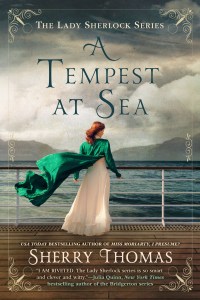
Book Description: After feigning her own death in Cornwall to escape from Moriarty’s perilous attention, Charlotte Holmes goes into hiding. But then she receives a tempting offer: Find a dossier the crown is desperately seeking to recover, and she might be able to go back to a normal life.
Her search leads her aboard the RMS Provence, sailing from Southampton for the eastern hemisphere. But on the night Charlotte makes her move to retrieve the dossier, in the midst of a terrifying storm in the Bay of Biscay, a brutal murder also takes place on the ship.
Instead of solving the crime, as she is accustomed to doing, Charlotte must take care not to be embroiled in this investigation, lest it become known to those who harbor ill intentions that Sherlock Holmes is abroad and still very much alive.
Review: I’m always so excited when I see another book coming out in Sherry Thomas’s “Charlotte Holmes” series. While I’ve had favorites throughout the series so far, I’ve never disliked any books in this series. They’ve all been smart, and Charlotte Holmes always comes through with the insightful goods. But I was especially looking forward to this book given the way the previous one ended with Charlotte faking her own death to escape Moriarty. Where would this next book go if Charlotte has to be in hiding?
Life in hiding is not the life for her, Charlotte Holmes as quickly decided. So when she’s offered protection from Moriarty if she helps locate a missing piece of information, she jumps at the opportunity. Soon enough, her mission finds her book passage on a ship alongside several friends and foes alike. What seems like a simple enough mission to search a few cabins and locate the dossier quickly becomes overshadowed when a murder takes place on the ship. Now the investigation into the murder could expose Charlotte to the minions of Moriarty unless she can solve the case first.
I always really enjoy closed circle mysteries, that is, those where a murder takes place and all of the suspects are contained within a location that they cannot leave. Not only does it quickly reduce the number of suspects to a small-ish number, but these types of mysteries often involve a lot of complicated relationships between all of these characters as well as the victim. So this book, with its setting of a small, luxury ship is a perfect example of this sort of mystery and Thomas takes full advantage.
I also really liked that this book contains a mystery within a mystery. It starts with what should be a straight-forward search for a missing dossier. But that quickly gets subsumed by the murder mystery that threatens to ruin all of Charlotte and co.’s good work and expose Charlotte to the eyes of the Moriarty minion they are sure is tracing their footsteps. Both mysteries were incredibly clever on their own, but the way that they wove in and out of one another was truly impressive. Because so many people are working different angles with their own very distinct agendas, it’s a constant puzzle trying to piece together who knows what and whose team (or any team!) they are on.
This book also adds an interesting layer by jumping back and forth in time from the ongoing investigation to events that transpired during the night of the murder itself. This tactic worked so well! There were only three or so of these jumps back to the past, but each one, in only a small number of pages, manages to take the entire mystery so far and then turn it at a new angle, making everything suddenly look different with new suspects all around. It was very effective and always added an extra little zing of interest to the story.
I also really liked the small bits that we got from Charlotte and Lord Ingram. Their relationship has always been solidly a second tier plotline to the main mystery, which I think is probably for the best given the complexity of the murder mysteries and the types of characters that Charlotte and Lord Ingram are. However, while we still don’t get a lot of time with them here, there were some very sweet moments between the two. Slowly, slowly, we see this relationship continue to develop as both Charlotte and Lord Ingram grow into this new romance and must grapple with their own emotions.
I really enjoyed this latest installment in this series. I thought all of the side characters were excellent, with a good mixture of “villains” that were fun to hate on and new sympathetic characters you wanted to root for. On top of that, there was a good balance of important moments for our regular cast of characters. This is a solid entry all around, and I think fans of the series will likely be pleased.
Rating: Thomas takes the closed-circle mystery concept and brings in Charlotte Holmes to crack the case wide open!
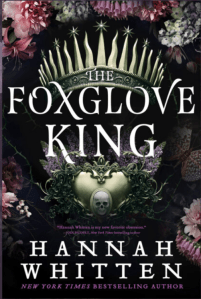
Book Description: When Lore was thirteen, she escaped a cult in the catacombs beneath the city of Dellaire. And in the ten years since, she’s lived by one rule: don’t let them find you. Easier said than done, when her death magic ties her to the city.
Mortem, the magic born from death, is a high-priced and illicit commodity in Dellaire, and Lore’s job running poisons keeps her in food, shelter, and relative security. But when a run goes wrong and Lore’s power is revealed, she’s taken by the Presque Mort, a group of warrior-monks sanctioned to use Mortem working for the Sainted King. Lore fully expects a pyre, but King August has a different plan. Entire villages on the outskirts of the country have been dying overnight, seemingly at random. Lore can either use her magic to find out what’s happening and who in the King’s court is responsible, or die.
Lore is thrust into the Sainted King’s glittering court, where no one can be believed and even fewer can be trusted. Guarded by Gabriel, a duke-turned-monk, and continually running up against Bastian, August’s ne’er-do-well heir, Lore tangles in politics, religion, and forbidden romance as she attempts to navigate a debauched and opulent society.
But the life she left behind in the catacombs is catching up with her. And even as Lore makes her way through the Sainted court above, they might be drawing closer than she thinks.
Review: I really enjoyed Hannah Whitten’s “For the Wolf” duology. The first book came out back in the “summer of ‘Red Riding Hood’ retellings,” as I fondly dubbed it, and I think Whitten’s version was my favorite of the three I read over those months. “For the Throne” was also an excellent sequel, taking the characters and the world in directions that I hadn’t expected. All of this to say, I am fully on board Whitten’s train, and I was super excited when I saw that she was releasing a new book this spring that would be the first in a new series. Let’s dive in!
I’m going to forego my usual summary chapter, and instead talk a bit about the fact that I think the official book’s summary is a bit misleading. It’s not truly important, but I think Lore’s connection to the catacombs is much more complex than “she escaped a cult and is in hiding.” I also think there are simply bits of the few sentences about this aspect of the book in the summary that are just factually wrong. I’m always mildly fascinated when there are discrepancies like these in book summaries. Was there some purpose behind this choice? Did the summary writer only skim the book and this was an accident? Who knows? Beyond this, the rest of the summary seems clear enough.
First, let’s talk about worldbuilding, particularly with regards to the magic and gods of this world. I think it’s interesting that this is now the second series that Whitten has written where her magic system involves magical forces directly interacting with the body, often resulting in mildly horrifying temporary changes to one’s physical self. I mean, I guess if you know what you like in a magic system, just go for it? I just found that interesting.
I will say, however, that it took me a bit to truly understand how this magic works, not only Lore’s abilities but also Mortem itself as used by others in the form of consuming poisonous substances. At a certain point early in the book, I had to consciously choose to stop trying to understand this and just go with it. As I continued reading, some of these details did become more clear, but honestly, I’d still struggle to write down a concise explanation of how it all worked. I’m not sure if this was a failing of the system itself or how it was described, but readers should be prepared to devote some thought and reading time into absorbing this aspect. I do think it is worth it, however, since as the book continued and I felt more comfortable with the concepts, this magical conceit opened up a lot of interesting story lines and theories.
As for the gods, I thought this part of the book was a bit familiar. There are a lot of fantasy books that deal with a religion that has been built up around one god after the destruction of a larger pantheon that came before. So, too, the relationship between a god of life/light and a goddess of darkness/death. The book played its cards pretty close to the chest with these themes, however, leaving a lot of questions still to be answered in this area. But I also feel fairly confident that I know where this is going, and it might read familiar to other readers as well. Who knows though? As I said, we don’t get any clear answers here, so Whitten could still surprise me!
Lastly, the characters and, most importantly, the love triangle between them. Yes, a love triangle and if you skip to the end of the review, you’ll see that I gave this book a good rating, so what’s going on here? Well, I’ll say that the success of this particular love triangle comes down to one key thing: all three of these characters are fully realized individuals with their own arcs and struggles within this book. Yes, it’s mostly Lore’s book. But the story does an excellent job of also setting up Gabriel, a young man who has been shaped by a great tragedy in his past, and now must struggle with dueling loyalties to Lore and to the religion and its leader who gave him refuge during that tragic event. Bastian, too, is a fully realized character, and his story explores themes of responsibility, power, and trust. Truly, the “romance,” such that it is, between all three characters is very much in the background to the growth that they experience as individuals, as various pairs, and as a group of three together.
I’ll also say that the romance plays out in a very non-traditional manner, in some ways. Part of my problem with love triangles is that I always feel as if the true love interest is telegraphed so clearly and so early that the second romantic storyline just feels like rather boring subterfuge. Here, I almost had the opposite problem. At various points in the story, both characters feel as if they are being set up as the end game couple. But then at different points in the story, each does something that I would typically say points to them being ruled them out as the end game partner. I found myself not only confused but intrigued, and I’m now half-wondering if Whitten is pulling a fast one on me and neither character will be a true love interest by the end of the series.
Overall, I really enjoyed this book. I think some aspects of the world-building were a bit confusing, on one hand, and overly familiar, on another. But it’s also clearly the start to a series, so both of these questions could be resolved in follow-up books. I do think the story lives and dies on the strength of its central three characters, and I, for one, was completely sold on them all. If you enjoy character-centric stories and want a more complex look at a love triangle, this is the fantasy novel for you!
Rating 8: Like the book’s own magic, Whitten perfectly balances darkness and light to create a new fantasy world and leading lady that feels both dangerous and opulent, ferocious and soft. An intriguing start!
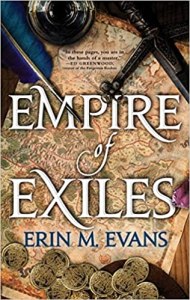
Book Description:Twenty-seven years ago, a Duke with a grudge led a ruthless coup against the empire of Semilla, killing thousands. He failed. The Duke was executed, a terrifyingly powerful sorcerer was imprisoned, and an unwilling princess disappeared.
The empire moved on.
Now, when Quill, an apprentice scribe, arrives in the capital city, he believes he’s on a simple errand for another pompous noble: fetch ancient artifacts from the magical Imperial Archives. He’s always found his apprenticeship to a lawman to be dull work. But these aren’t just any artifacts — these are the instruments of revolution, the banners under which the Duke lead his coup.
Just as the artifacts are unearthed, the city is shaken by a brutal murder that seems to have been caused by a weapon not seen since the days of rebellion. With Quill being the main witness to the murder, and no one in power believing his story, he must join the Archivists — a young mage, a seasoned archivist, and a disillusioned detective — to solve the truth of the attack. And what they uncover will be the key to saving the empire – or destroying it again.
Review: I always love some good, old-fashioned political intrigue in my fantasy novels. On top of that, a “seasoned archivist” sounds like a fancy name for a fantasy librarian, so you know I’m going to be all over anything that references librarians. What can I say, we’re easy to please. It’s kind of like how the Oscar nominations always favor movies about Hollywood. Publishers and authors know what us librarians like to read about. Ourselves! But in all seriousness, this sounded like an intriguing book, so I was happy to receive a copy to review from Orbit.
It has been decades since the Duke lead his failed coup, attempting to set up a young princess as the next ruler. He was executed and the world seemed to move on, life going about as usual behind the wall of Salt that surrounds the land to protect those within from the powerful Changelings that linger, ever present beyond. But now, the artifacts of the Duke’s rebellion are being brought out of storage. What possible use could they serve but to reignite that old spark? On top of that, a shocking murder takes place and a group of seemingly disconnected individuals all work to uncover the many secrets that are slowly, slowly creeping back into the light.
This is definitely a book made for true fantasy lovers. By that I mean that it can be intimidating as heck to those who might just pick it up on a whim. You open the book and there you see detailed and complex maps. Then you see a huge cast of characters. And then you start reading and it becomes very apparent that not only do these main characters not understand the full scope of their world, but that the author isn’t about to clue you, the reader, in any time soon either. But this is not a critique! Indeed, all of these things are exactly the kind of meaty aspects that I think many fantasy readers are looking for in a book. We want to be thrown into the deep end and feel as if we’re truly in a new world, one that would in fact be filled with huge casts of characters, need a detailed map to understand, and contain a magic system that goes beyond wand-waving. And this book delivers on all of these things!
Some of it will also be familiar to fantasy fans, which can be a plus and a minus. I didn’t think there was anything truly shocking here, though I may make an exception for the Changelings themselves, as I thought they were a particularly interesting threat. But the magic system, while interesting, will read as familiar to many fantasy readers. Basically, practitioners will have an affinity to certain things (wood, bone, stone) etc. which will influence they way they can perform magic. Hence, the salt wall that surrounds the city gains a certain mystique as it could only be created by a very unique sort of person.
The characters were all good as well, though I can’t say that I was overly attached to any one of them over another. This is probably a good and a bad thing, ultimately. I wasn’t dreading any particular character’s chapter, but I also wasn’t incredibly invested in one of them either. All told, I think the characters themselves served more as aspects of the world and story that were being created than as the driving force of the story itself.
The writing was quite effective right from the start. It felt sure-handed and well-practiced at balancing the myriad of aspects that must go into creating a complicated world and story such as this one. Indeed, on top of setting up an epic-feeling fantasy world, the author adds in a murder mystery. For me, as a fan of mysteries as well, I really enjoyed this combination of genres, and I think it added an extra zest to the overall story.
It did take me a bit to really get into the book. Because we’re thrown in right away, it takes a bit to orient oneself with the players and world at large. This might also be where my lack of immediate attachment to the characters put me at a bit of a disadvantage. Even now, though, I can’t point to exactly why I struggled with this. I have very clear memories of some of the first scenes with certain characters and laughing internally at some of the great dialogue right off the bat. Either way, I think this book will definitely appeal to epic fantasy fans looking for a new world to explore, and I will definitely be keeping an eye out for the next one!
Rating 8: The pinnacle of what one looks for in epic fantasy: a sprawling world, a rich history, a detailed magic system, and an intriguing cast of characters to travel alongside.
Animorphs Graphix #2: “The Visitor” by K.A. Applegate & Michael Grant, Adapted by Chris Grine
Publishing Info: Graphix, October 2021
Where Did I Get this Book: own it!
Book Description: Rachel is still reeling from the news that Earth is secretly under attack by parasitic aliens, the Yeerks. Now she and her friends are the planet’s only defense — kids who, purely by chance, stumbled onto a downed spacecraft and were given the power to morph into any animals they touch.
The team’s best lead is their assistant principal, Mr. Chapman, who is the human host to a high-ranking Yeerk official. It’s not much, but Rachel’s always been a daredevil, and she volunteers to infiltrate Chapman’s home.
Rachel is tough. She’s fearless. But what she finds inside may be more than even she can handle.
I’m baaaaaaack! Yes, yes, it’s been forever. So long in fact that not only is the second Animorphs graphic novel out, but the third was released last fall as well! What’s my excuse?
Anyways, I was very excited to jump back into the world of the Animorphs and check out what these graphic novels have in mind for the long run. I remember really liking the first one, but having some concerns about the longevity of the series. I was also curious to see how this particular story was handled. “The Invasion” has tons of material to work with, not only in the chock-full plot but also with a lot of important character work introducing all of the teens. But “The Visitor” is a much slower, simpler story. In fact, I’d say it’s probably the weakest story in the introductory first five books. I mean, I still love it, because I love Rachel and Applegate is at the helm in these early books and that’s clear in the general quality of a more “filler” story as compared to the same sorts of stories that we see later in the series that don’t land as well. All of that to say, I was curious to see what the graphic novel had in store for us.
Best Change: I really liked the way the Chapmans were portrayed in this version of the story. There’s a really cool couple of pages that are drawn when Rachel first enters the house. We see Mrs. Chapman in the kitchen, staring straight ahead and chopping up vegetables. We then shift to the living room and see Mr. Chapman sitting on the couch staring at a television set that’s turned off. Creepy enough on its own. But then when Rachel comes back in the second go around, we see the exact same thing: Mrs. Chapman in the kitchen, chopping; Mr. Chapman in the living room, staring. It really hits home how absolutely off and cold this house is and what a horrible hell Melissa is living through. Beyond that, I liked how the way Chapman’s face is drawn changes from scene to scene as his power dynamic shifts. When he’s driving Rachel home, he’s shadowy and threatening. But when he’s talking with Visser Three, he’s depicted as small and cowering. And then, lastly, we see the human side of him when the real Chapman gets control briefly to plead his case to Visser Three. It was all very effective, and I think it does a good job of setting up just how witnessing this horrible home situation would influence and motivate Rachel.
Worst Change: I’m not sure I really have a worst change for this book. Other than a few things here and there which I’ll get to later, this is a pretty faithful adaptation of the original book. I’ll go on (and on and onnnn) about my feelings about the art throughout the book, but I think that’s probably not going to be a specific-to-this-book thing so not really a “change” at all. Speaking of art…
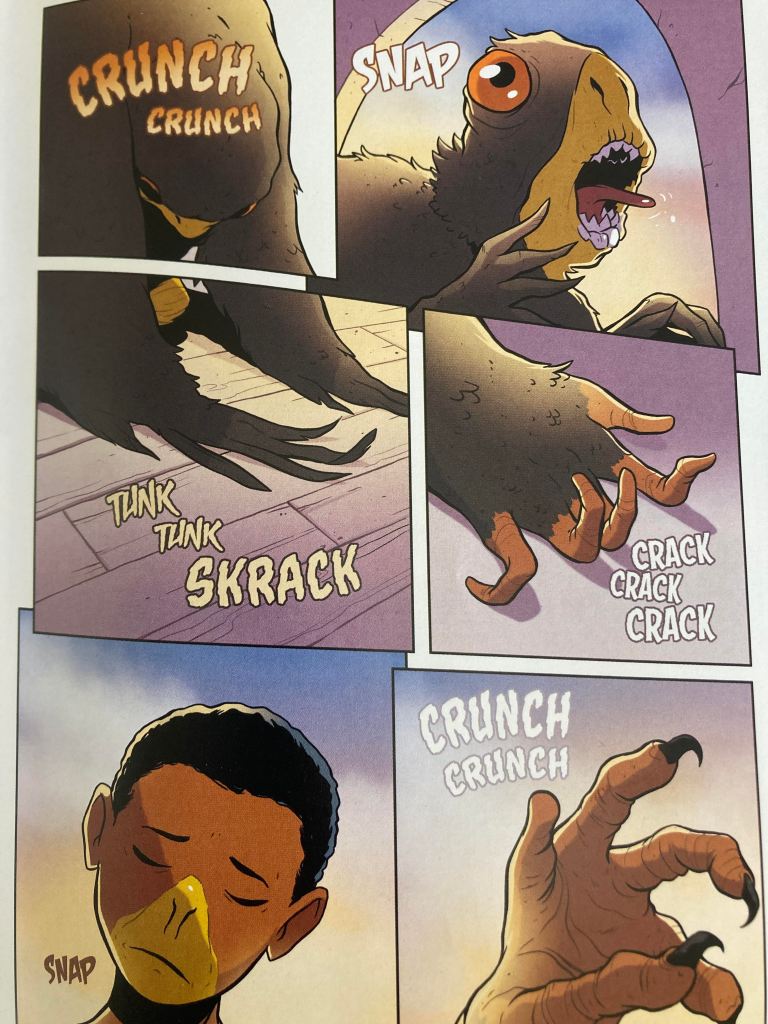
Pretty, Pretty Pictures: I have to say, I’m not coming around on the art style of these books. It’s not a complete loss, but I think there’s a stark difference in quality between the two styles. On one hand, I think the graphics are excellent when done in the more realistic style used for the animals. I also think the larger spreads across two pages and the horror aspects are well done. The descriptions of morphing in the books were always horrific, but when you see it depicted on the page…man, it really captures how truly disgusting this stuff looks. I mean, look at this!
But, I have to say, I’m really not loving the cartoon images of the kids themselves. I wanted to give it more of chance than just the first book, where I didn’t love the fact that Tobias and Rachel looked so similar or the strange choice with the red noses. But this book just confirmed some of my worst fears. If you look at these characters, they all just look exactly the same in the most generic of senses. You wouldn’t even be able to tell who is a boy or who is a girl based on images of just their faces in some of the panels (a picture of Cassie really highlights this at one point where I honestly had to do a double take to remind myself that there wasn’t a random Black boy in this story). This fact is really highlighted early in the story when we first meet Melissa. Here’s the first panel we see her in:
Without the speech bubble, which of these characters is which?? Ultimately, Melissa is given the silly freckles purely to identify and differentiate her later in the book. And that just seems to me to be a failure of the art itself. I mean, I’m still glad these graphic novels are being made so I have a hard time being this critical, but it honestly feels as if the artist either can’t be bothered to draw interesting and unique characters or simply isn’t capable of it while using this cartoonish style. Given the quality of the realistic stuff, I know he’s talented. So it feels like it must be a choice. But it’s the kind of choice that feels as if it’s talking down to its readers: hey, these are just kids and kids are the target audience, why bother making them look like anything other than bobble head cartoons? I don’t know. I’m not a fan.
Our Fearless Leader: Jake is one of the few characters that I think is drawn with a distinct face. His chin is a bit more pointed than the rest, and that difference stood out more and more as I became increasingly frustrated by the other characters. As for the story, there was a nice section in the middle devoted to a conversation between Rachel and Jake about their experiences (nightmares) after morphing frantic-minded prey animals. I like that this much page time was devoted to what can be seen as a pretty small character moment. There’s also an interesting line where Rachel gets a bit defensive saying that Jake is talking down to her because she’s his younger cousin. I can’t remember whether or not we knew that she was the younger of the two from the books? If so, I had forgotten and found it to be an interesting little tidbit here that she’s only a few weeks younger than Jake.
Xena, Warrior Princess: This book is pretty faithful to the original, so there isn’t a lot of new stuff to discuss with regards to Rachel’s experiences in the story. I will say, I really liked seeing Rachel’s mom and sister portrayed on the page. These were nice little moments to get to see one version of what these characters could look like. We get a lot of descriptions of what the main characters looked like in the original text, but we really have basically nothing to go on for any/all side characters. It was also nice to see these moments between Rachel and her mom and Rachel and Jordon to highlight the difference between her own warm, caring family and the cold, prison-like existence that Melissa is suffering through. I really like these sorts of subtle contrasts that the graphic novel can deploy. The book doesn’t come right out and say it, but it’s there all the same.
One thing I didn’t really like was the way the scene was drawn when Rachel is running away from the thugs to morph an elephant in the alley. Granted, again, it’s now been a few years from when I read this book for the original re-read series, but I guess I had it in my mind that Rachel was more annoyed from the very start and never frightened. Whereas here she’s drawn as being legitimately afraid at first, which I think is totally out of character. Rachel wants to take the fight to Visser Three himself, no way is she going to be wincing away from two jerks on the street.
A Hawk’s Life: Not a lot from Tobias. I did like all of the bird action in the very first scene and the way that was all drawn out. Rachel’s outrage about the guys shooting at a bald eagle “a national symbol!!!” is excellent. There were also some lovely images later on of Tobias flying, especially one when he flies away with shrew!Rachel to help give her time to get control of her morph. The way the sky and the silhouettes were drawn was striking.
Peace, Love, and Animals: Given how horrifying the images of the morphing is, I was glad we got to see a panel of Cassie with her raptor wings and Marco’s comment that they all look like freak show contestants while Cassie gets to look like an angel. It was a really nice juxtaposition and a moment that really worked well with the graphic elements. Other than that, Cassie has a pretty subdued go of it. We get some good animal facts from her about the prey mindset and the abilities of cats (there’s a good joke from Marco when Cassie comments that a cat’s eyesight is 8 times better than a humans), but that’s about it.
The Comic Relief: Marco is pretty much the same here as he is in the book. We get more groundwork laid about his home life and why he’s reluctant to fight. His dialogue is by far the funniest and best, per the book’s standard as well. There was one throwaway bit that I thought was odd, however. At one point, a character, I think it was Cassie, compliments Marco on his haircut. From the books, we know this does happen and is commented on but it doesn’t happen until Marco’s second go around as a narrator, all the way through to book number 10. But then the really strange thing is that Marco was depicted with short hair in the first graphic novel, too. Which, honestly, given my comments already about the cartoon style proving challenging to differentiate between male or female characters, I can see the choice to not have him with long hair from the very start. But looking back at the art from the first book, it’s clear that the styling for his hair is slightly different, but if anything, it’s drawn as longer and more shaggy here in the second book, not cut shorter at all. It’s very strange. I don’t think this small of a change really warranted any dialogue at all, but then to write it in as a notable haircut rather than a style change, which is the most that can be said, is strangely incongruent.
E.T./Ax Phone Home: No Ax yet, but boy am I excited to get to him!
Best (?) Body Horror Moment: Beyond what I said above about the disgustingly graphic images of morphing, there was a full page spread devoted to Rachel’s nightmare about being a shrew. Again, this is where the artist’s talents are really on display. I’ve only included half of the spread, but the other side is also covered in maggots swarming in and over an animal skull. I mean, the depiction of the nightmare is going to cause nightmares itself.
Couples Watch!: Sadly, I feel like we got even less from Tobias and Rachel here than we do in the books. We do get the line from Tobias that he doesn’t want anything to happen to her, so there are hints here and there, but for whatever reason, this relationship in particular just felt off. This probably is just due to the nature of the graphic novel format. Since the story relies only on dialogue and images, it’s pretty hard to depict true feelings between a girl and a hawk!boy when you can’t draw them interacting. On the other hand, to highlight this point, we do get this sweet panel coming fairly early in the book for Cassie and Jake:
If Only Visser Three had Mustache to Twirl: Again, since the horror aspects of the art are what work so well, the depictions of Visser Three and the terror he inspires are truly great. Even his Andalite form, which shouldn’t be terrifying in and of itself, is depicted in such a way as to be clearly intimidating. And then the panels showing him morphing the Vanarx and sucking out the Yeerk from a Controller are incredibly creepy and effective. I mean, Visser Three is essentially a cannibal at this point, and that is made pretty clear. And of course, the final battle with Visser Three morphing yet another big bad and chasing after the Animorphs is very well done. More on that below.
Adult Ugly Crying at a Middle Grade Book: Man, the Melissa stuff isn’t any easier when drawn out on the page rather than just described in a book. Plus, now I’m reading these books as a parent myself and boy, rough stuff. Especially the part where she follows Chapman out when he’s carrying cat!Rachel away in the crate. “Oh, I didn’t see you there.” “But daddy…I was crying.” Oooof! Not to sound like a broken record or anything, but again, AGAIN, I think the cartoon style let some of these heart-breaking moments down a bit. The reason this scene hits hard, and the same with the one where Melissa is crying in her bed, is because the writing and dialogue are so strong. The way the characters are drawn, there’s just so little that can be done to express these deep emotions, so it all falls to the writing. I’m having a hard time picturing some of the truly devastating moments that are coming up landing the way they should as shown on the faces of characters with red bubble noses.
What a Terrible Plan, Guys!: I’d say the terrible plan is still the obvious one: where Rachel decides to morph a shrew to lure a tomcat out of a tree. Like Cassie points out, while cats often play with their food, sometimes they just go straight for the kill, too, and there’s really no way of predicting it one way or another. But also, specific to this version of the story, I’ll say that the use of the machinery in the construction site didn’t quite translate here. I can’t remember exactly how it was described in the books, but I felt like there I had a better sense of just how these machines were disrupting Visser Three’s plans. Here, we only see a few small shots of a solitary bulldozer, and it kind of fails to land as to why this would pose any sort of threat or disruption to what the Yeerks are doing.
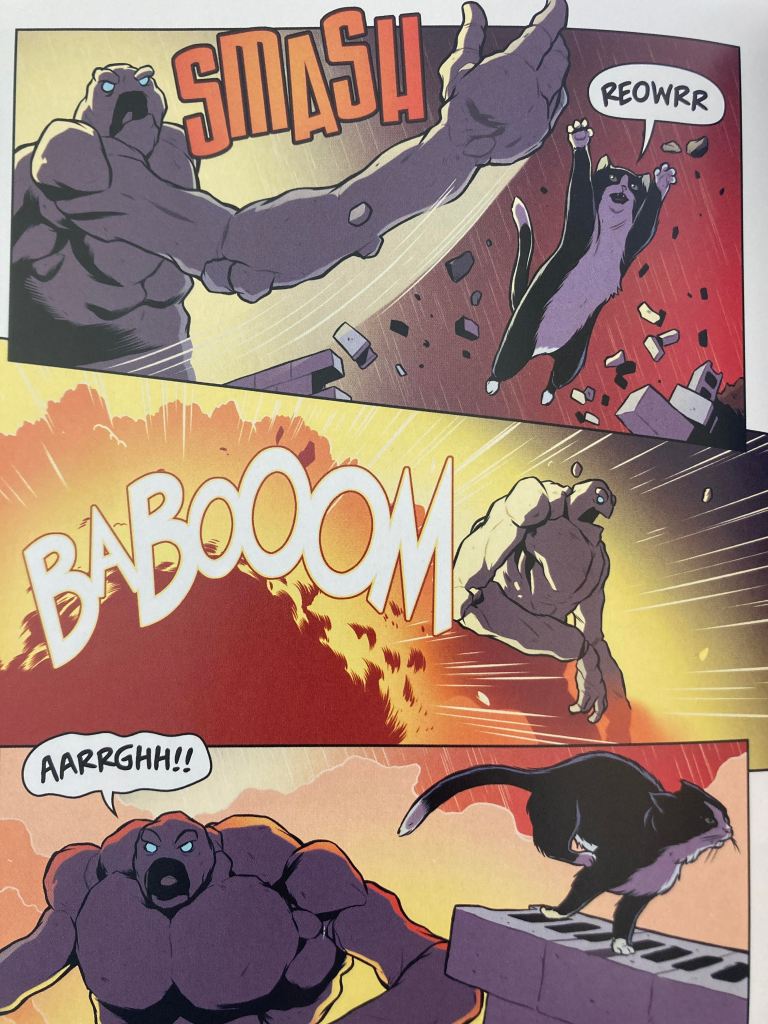
Favorite Page/Panel:
I really liked all of the pages that made up the final conflict between the Animorphs and Visser Three in his alien morph. But this one stood out for the sheer joy of the absurdity of it all. I mean, take that picture out of context. Just look at it. The crazy rock monster. The speech bubbles of the cat growling and alien roaring. The cat’s crazy Superman jump featured prominently in the top right corner. It’s all so whacky and fun, and I think it’s a perfect visual representation of the sheer joy that these books are to read, especially to younger audiences. In no other series of books are you going to get anything remotely like what Animophs has to offer.
Final Thoughts: Overall, I’m still continuing to enjoy reading these graphic novels. I won’t repeat myself about the art, but like I said, too, for all my complaining about that, I’d rather have the graphic novels as they are now than nothing at all. I do hope they continue to make them, but I think there’s room to combine some things going forward. These first six or so books are important enough to have their own adaptations independently, but I think this book specifically also highlights how some future stories could be combined or skipped. Mostly, I just want some adaptation, ANY ADAPTATION, to get to the David trilogy.
Note: I’m not going to rate these books since I can’t be objective at all!
“Year of Sanderson” is an on-going, monthly series that will post on the last Friday of each month in which I will cover various Brandon Sanderson-related things. This will largely be comprised of book reviews (some from his back catalog and some from the books being released this year), as well asassorted other topics like reviews of the items in the swag boxes that will be coming out as part of Sanderson’s Kickstarted campaign. Frankly, we’ll just have to see what we get from this series, very much like the Kickstarter itself!
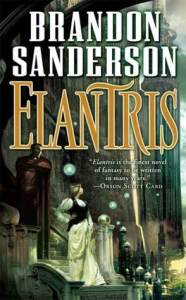
Book Description: Elantris was the capital of Arelon: gigantic, beautiful, literally radiant, filled with benevolent beings who used their powerful magical abilities for the benefit of all. Yet each of these demigods was once an ordinary person until touched by the mysterious transforming power of the Shaod. Ten years ago, without warning, the magic failed. Elantrians became wizened, leper-like, powerless creatures, and Elantris itself dark, filthy, and crumbling.
Arelon’s new capital, Kae, crouches in the shadow of Elantris. Princess Sarene of Teod arrives for a marriage of state with Crown Prince Raoden, hoping—based on their correspondence—to also find love. She finds instead that Raoden has died and she is considered his widow. Both Teod and Arelon are under threat as the last remaining holdouts against the imperial ambitions of the ruthless religious fanatics of Fjordell. So Sarene decides to use her new status to counter the machinations of Hrathen, a Fjordell high priest who has come to Kae to convert Arelon and claim it for his emperor and his god.
But neither Sarene nor Hrathen suspect the truth about Prince Raoden. Stricken by the same curse that ruined Elantris, Raoden was secretly exiled by his father to the dark city. His struggle to help the wretches trapped there begins a series of events that will bring hope to Arelon, and perhaps reveal the secret of Elantris itself.
Review: It is only fitting to start out this year’s series on Brandon Sanderson by reviewing his first book, “Elantris.” Like many people, “Elantris” wasn’t the first book I read by Sanderson. Instead, I got on the Sanderson train after reading his “Mistorborn” trilogy as it was released. Then I finished it and, feeling suddenly bereft, I checked out his writing history and low and behold, there was this little stand-alone novel that had been quietly waiting in the background. After reading it, I knew that Sanderson was going to be a “go-to” author for me going forward: not only did I like it as much as the “Mistborn” trilogy, I might have even liked it more!
Elantris was once the golden light of Arelon, not only a beautiful city in and of itself, but populated by the Elantrians, a powerful group of magical individuals who grace those around them with the benefits of their abilities. But then disaster strikes: the city, and its people, crumbles and in the city’s ruined shadow clings the remnants of this once great people. Into this outskirts city, Princess Sarene arrives to marry a prince, only to find he has died, and she has been left a widow. But as she tries to navigate her new existence, she never suspects the truth: the prince is not dead, but banished having become cursed with the same cruel plague that struck down the Elantrians.
While this wasn’t my first experience with Sanderson, I do think that had I read this one first, I would have been even more on-board with his writing than I was after reading the “Mistborn” trilogy. There, Sanderson had three entire books to lay out a complex world, construct multi-layered characters, and depict all the intricate ins and outs of a very complicated magic system. But in “Elantris,” he shows all of these same skills but contained within one novel. Yes, it’s a very long novel, but it’s still one book as compared to three.
As compared to some of his later works, this one has been dinged by other reviewers for lacking the polish of his more recent books. However, in re-reading it for this series, and looking at it purely on its own merits, I don’t think there’s much I can say to that. To me, this book is a pretty perfect example of a solid, stand-alone epic fantasy. It checks off so many boxes without stumbling in any of the three major areas: world-building, characterization, and magic system. Instead, all three come through with flying colors.
In this book, the world-building and the magic system are very closely intertwined. Much of the story surrounds the mystery behind the sudden downfall of the Elantrians and the remaining curse that still randomly strikes individuals in the present day. The curse itself is quite unique, and we explore the lives of those living with it through the eyes of the Crown Prince, Raoden. We learn alongside him of the strange society that now exists within the crumbling city of Elantris where those who are cursed cannot die, but any injury they sustain will never heal, leaving them fragile and susceptible to a never-ending pain that will, eventually, drive them mad.
Outside Elantris’s walls, readers can begin to piece together more of this world-gone-wrong through the eyes of Sarene, a princess who has just arrived in this land only to find her one source of contact, the prince she had been writing, has “died” and she is now widowed and alone. Sarene is exactly the sort of heroic female character I love reading. She’s set up into a situation that is as disempowering as it can get, but she rises against these limitations and plays an integral role in the ultimate solution.
Readers who picked up this book when it was first released probably didn’t realize that they were getting a sneak peak into a toolkit that Sanderson would go on to perfect over the years. Other than his unworldly writing speed, the author is probably best known for his creative magic systems. And here we get a small peak into the beginnings of his abilities in this regard. Not only is the curse that struck the Elantrians incredibly interesting and unique, but the ultimate explanation and solution are as surprising as they are creative. It’s fantasy at its best: fun, exciting, and pushing the boundaries of our expectations.
Overall, “Elantris” is a magnificent novel. And regardless of how others may compare it to Sanderson’s incredible catalog of works, I believe it stands on its own as a near-perfect epic fantasy.
Rating 10: If an alien species came to earth and wanted an example of what “epic fantasy” is all about, “Elantris” would be the go-to pick.
Book Description: It is 1912, and for the last seventy years magic has all but disappeared from the world. Yet magic is all Biddy has ever known.
Orphaned in a shipwreck as a baby, Biddy grew up on Hy-Brasil, a legendary island off the coast of Ireland hidden by magic and glimpsed by rare travelers who return with stories of wild black rabbits and a lone magician in a castle. To Biddy, the island is her home, a place of ancient trees and sea-salt air and mysteries, and the magician, Rowan, is her guardian. She loves both, but as her seventeenth birthday approaches, she is stifled by her solitude and frustrated by Rowan’s refusal to let her leave. He himself leaves almost every night, transforming into a raven and flying to the mainland, and never tells her where or why he goes.
One night, Rowan fails to come home from his mysterious travels. When Biddy ventures into his nightmares to rescue him, she learns not only where he goes every night, but the terrible things that happened in the last days of magic that caused Rowan to flee to Hy-Brasil. Rowan has powerful enemies who threaten the safety of the island. Biddy’s determination to protect her home and her guardian takes her away from the safety of Hy-Brasil, to the poorhouses of Whitechapel, a secret castle beneath London streets, the ruins of an ancient civilization, and finally to a desperate chance to restore lost magic. But the closer she comes to answers, the more she comes to question everything she has ever believed about Rowan, her origins, and the cost of bringing magic back into the world.
Review: First things first, I absolutely love this book’s cover! It’s so unique and eye-catching. I’m on the record as disliking books using cover-models, and I’m even starting to burn out a little on the cartoonish characters (though there are still versions of this theme I can get behind.) But I think this cover does exactly what a good cover is meant to do: it communicates exactly what kind of book you’re going to get. And here, that would be a book taking place in a historical setting and featuring a fairytale-like tone of fantasy. So, well done cover artist! Let’s get to the book itself, though.
While Biddy understands that a world exists beyond the boundaries of the smile island that she shares with her magician guardian, Rowan, and his rabbit familiar, but all that she knows of it comes from books. Not only has she never seen a city, but while she knows that magic disappeared from the larger world decades ago, for her, growing up, she has been surrounded by it. But soon she sees that there are darker shadows growing in Rowans eyes every time he returns from the mysterious ventures to the outer world he goes on each night. As she finally begins to demand answers to her growing questions, she learns that there is much more going on in the world outside her home than she had ever suspected. And soon she may be needed to play a much larger role in shaping the future than she ever could have imagined.
I absolutely adored this book, as I knew I would almost from the first page of the novel. Of course, things could have always taken a turn for the dire, but the tone and style of the writing was exactly the sort that always appeals to me. The author was direct, and yet whimsical, deftly exploring the world and characters she had created while never falling into the trap of exposition or strange, narrated infodumps. On top of this, the dialogue was witty and had me laughing right from the start, particularly the interactions between Rowan and his familiar, Hutchingson.
But a book cannot live on funny dialogue alone. Indeed, for me, it really comes down to the characters themselves, and as Biddy is the protagonist with whom we travel this story alongside, the book lived and died based on her characterization. She, too, was exactly the sort of leading teenage character I enjoy. It’s a coming of age story where the character is doing exactly that…coming of age. She doesn’t start out as some “best assassin/thief/princess/etc.” and, indeed, the stories she paints about herself are challenged throughout the book. As she comes to understand the world and her own place in it, she must grow into understand the complexities of all the moving pieces and people in it. Rarely is anyone a true hero or true villain. Biddy must come to understand the adults in her life and the stories they, too, have built up around themselves and how they behave in the world and the choices they make. There were strong themes of family, choice, and the duties we have to those around us, both those with whom we are familiar and care for and those stranger who we will never meet but who we understand as humans too who deserve care and kindness as much as the next person.
I also really liked the way that the magic system was used to explore these themes. For what starts as a simple fantasy premise, that magic is leaving/has left the world, the author leverages this topic into deeper conversations about how society responds to emergencies. From what can be well-intentioned decisions going wrong to how those who seek power can take advantage to consolidate wealth into their own pockets at the expense of the many. It was really well done, and the story definitely took some twists and turns towards the last half that really surprised me and left me on the edge of my seat.
Indeed, I really have nothing to criticize about this book! I think it perfectly accomplished everything it set out to do, and it will surely appeal to all fantasy fans who are looking for a great fairytale-esque stand-alone fantasy. I can’t wait to see what the author does next! I’ll definitely be first in line to find out.
Rating 10: Heart-wrenching in all the right ways, this fairytale fantasy deftly explores important themes of individual choice and the responsibilities we have towards the least of those in society.
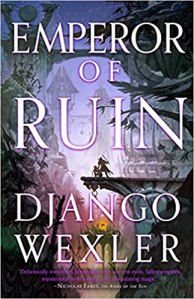
Book Description: The last surviving Chosen, Ashok has finally risen up and taken control of The Twilight Order. He promises equality and prosperity, but Gyre and Maya know the truth. Only death follows in Ashok’s wake. To take him down, Gyre will have to unite old allies—from all across The Splinter Kingdoms and the depths of Deepfire. And Maya will have to seek out a legendary weapon hidden in the mountains that could turn the tide in their battle for freedom.
Review: I’ve really been enjoying this trilogy so far. It’s not really a surprise, however, as I’ve been on record as a fan of Wexler’s work for quite some time. But there has also been a lot to like specifically about this series. It’s been a wild romp of a ride with two characters who are both sympathetic and wonderfully flawed individuals. I’ve gone back and forth between loving them both and then wanting to smack them each upside the head. But here we are at last with the final book in the trilogy. Will my beloved, broken, estranged siblings finally get their acts together in time to save the world? Let’s find out!
A Chosen has finally returned to the world and with him comes great change. While many see the return of a fabled god-like being, Gyre and Maya know first-hand that Ashok is no one’s savior. Indeed, his monstrous exterior barely hints at the darkness within. Now, not knowing what horrors Ashok has cooked up over his centuries’ long exile, Maya and Gyre must race to not only piece together the mysteries of the past, but cobble together a resistance that can save their world. But even if they succeed, each most grapple with the fact that the world that emerges will look nothing like the one that will now be left behind. And will there be a place for a mythical thief and revolutionary? Or for a powerful, near-Chosen herself?
So, I’ll just get right to it. I think this was my favorite book of the trilogy! In hindsight, maybe I shouldn’t be surprised by this fact. Thinking back on my reactions to the first books, I realize that many of my minor frustrations dealt with the growing pains through which our two main characters were constantly struggling. They’d each keep coming out with these perspectives that were either incredibly naive or supremely narrow-minded, and, at times, it drove me bonkers! So, is it really any wonder then that when we get to the final book, presumably where our two main characters do in fact get their acts in order and temper their instincts, I’m suddenly all in? And don’t let this say anything about the quality of the first two books. Indeed, without those character moments where Maya and Gyre were frustrating and short-sited, we’d never get the true payoff that we see here when each has to come fully into the roles they have chosen for themselves. Roles that are much more nuanced and full of compromise than their former selves could have ever imagined.
But while my sudden increase in appreciation for these two characters may come as no shock, this trilogy also had a lot of surprises in store that I truly wasn’t suspecting. The end of the second book sets up Ashok as your rather typical “big bad” who will come and lay waste to the world unless the ragtag group of resistance fighters come together and dramatically hold him off. And yes, that all did happen, too. But what surprised me was the addition of a third character perspective that layered on an entire new story on top of the one that I thought we had been developing. When I started this book, I’d have said I had a pretty clear understanding of the history and world that had been developed. All that was left was for the grand confrontation. But nope! There was almost more world-building and history in this book alone than in the first books together, and I gobbled it all up! Truly, there were some excellent surprises and twists that I think will please all fans of this series so far.
I also really liked the use of the ever-growing cast of characters. I particularly liked the role that Kit played. Not only do we see her abilities with her constructs used to their full creative powers, but the character was once again allowed to be a fully-fledged character, instead of only the quippy, raunchy, side-kick she’d kind of become in the second book. There were also a few twists towards the end with her that I was particularly happy about, especially with regards to her complicated relationship with Gyre.
There were, however, a few hiccups in pacing that came in the beginning of the story, I felt. There were a few quests and and extra missions that began to feel…well…extra. Not that they weren’t necessary for getting crucial pieces of information or crucial characters all together, but I did struggle a bit with the pacing in the first half of the book due to these various side stories. But once I got to the halfway mark, things picked up and never stopped until the end.
Overall, I really loved this conclusion to the book. Not only did it follow through on the grand confrontations that had been set-up in the first two books, but it added so many new layers to the world and extra twists to the story that it ended up being the best book in the trilogy. I highly recommend this book to fans of the first two books. And now that the trilogy is done, complete with a stellar conclusion, I can universally recommend the series as a whole to practically all science fiction/fantasy fans, especially those who enjoy lots of action in their stories.
Rating 9: Not content to rest on any laurels, this book rose above and beyond the numerous promises made in the first two books to deliver a conclusion that is as epic and enjoyable as the best SFF out there today!








 The Library Ladies