Kate’s Review: “Under the Moon: A Catwoman Tale”

38452822._sx318_Book: “Under the Moon: A Catwoman Tale” by Lauren Myracle and Isaac Goodhart (Ill.)

Publishing Info: DC Ink, May 2019

Where Did I Get This Book: The library!

Book Description: Selina Kyle is fiercer than she knows. For 15 years, she’s put up with her mother’s string of bad boyfriends, but when Dernell, her mom’s current beau, proves crueler than the others, Selina reevaluates her place in her home. There’s no way Selina and Dernell can live under the same roof, and since Dernell won’t leave, Selina must.

From New York Times bestselling author Lauren Myracle (ttyl) and artist Isaac Goodhart comes a story about learning how to survive the world when you’ve been forced to abandon your home and finding allies in the most unexpected moments.

Review: If I’ve said it once, I’ve said it many a time: I love Catwoman. I have always loved Catwoman. And because of my deep and unabiding love for Catwoman, I am VERY picky about how Catwoman is portrayed. Some portrayals I’ve loved, other’s I’ve despised, but at the end of the day while it’s a gamble, I am always up for giving any version a chance. So when I discovered “Catwoman: Under the Moon” by Lauren Myracle, I absolutely had to take the bet and roll the dice.

giphy-1
It will probably never live up to this, but a good effort can do a lot. (source)

I always find it a little risky to try and give Selina Kyle/Catwoman an origin story, for a couple of reasons. The first is that Selina is such a mysterious character at her heart that learning too much can sometimes take away some of the allure. While I like getting into her head and seeing vulnerability, I think that part of the appeal of her is that she has secrets to hide, and don’t you wish you knew them. The other is that some origins have become so iconic over the years (“Batman Returns” really nailed it), I’m always going to be comparing new origins to well done old ones. I think that, for the most part, Myracle is able to fight back both of these pitfalls, as her backstory for Selina is filled with pathos and empathy while still feeling very believable in a lot of ways (I’ll get to the problems I had with it in a bit). And I also think that it feels different enough from other origins I’ve read and unique enough that I wasn’t constantly being like ‘well that’s not how I see it’. Selina’s story in this balances a good line between too unbelievable tragic, and not dark enough. And given some of the darker themes that Myracle brings in, like domestic abuse, animal cruelty, mental illness, and homelessness, she also has a large list of resources in the back of the book so that any readers that may see themselves in Selina’s story may have a place to turn to. I really liked that. 

But then there were the issues I had with it. The first was that, for whatever reason, Bruce Wayne had to be brought in as a childhood friend of Selina. Look, I love Selina and Bruce, no question, they are definitely a top ship for me in the DC universe. But I had really hoped that Selina could have just stood on her own two feet without him being around. It also just didn’t make sense that he had to tell her that his parents had been murdered and what was why they grew apart, and she seemed to not know that. I mean, I feel like the murders of two of the most powerful people in Gotham would have been news that most people would have heard of. And given that Selina was in a middle school setting with Bruce, that teenage gossip mill would have CERTAINLY clued her in, right?! On top of that, there were a good number of plot ideas and strings that were introduced in this book, but I didn’t feel like many of them were fully explored. The biggest one for me was when Selina started running with other homeless kids, and met a girl named Briar Rose who doesn’t speak and has a tragic backstory. There was a lot of potential in the friendship between Selina and Briar Rose (or Rosie as Selina starts calling her!), especially since Myracle left Selina’s younger sister out of this backstory. But we didn’t really get to see their friendship grow, as there was a time jump with small flashbacks to show that they were now thick as thieves so that the plot could progress as such. I never really care for that kind of storytelling.

“Under the Moon” was an alright backstory for one of my favorite DC ladies, but it had the promise to be so much more. That said, if Myracle continued this story, I’d probably pick it up!

Rating 6: A pretty okay origin story for Selina Kyle/Catwoman, but there were a few too many ideas that didn’t get explored enough.

Reader’s Advisory:

“Under the Moon: A Catwoman Tale” is included on the Goodreads lists “Ladies of DC”, and “DC Comics by Women”.

Find “Under the Moon: A Catwoman Tale” at your library using WorldCat!
Kate’s Review: “Transmetropolitan (Vol.10): One More Time”

9968822Book: “Transmetropolitan (Vol.10): One More Time” by Warren Ellis, Darick Robertson (Ill.), & Rodney Ramos (Ill.)
Publishing Info: Vertigo, June 2004

Where Did I Get This Book: I own it.

Book Description: The final volume in the saga of outlaw journalist Spider Jerusalem written by comics superstar Warren Ellis. At last, it’s the final showdown between Spider and the absolutely corrupt President of the United States in this new printing of the finale to the classic dystopian saga from Vertigo.

Review: It was a re-read almost four years in the making. Ten volumes, two awful presidents, two awesome lady assistants, one literally two faced cat, and numerous bowel disruptor guns later, and I have finally reached the end of Spider Jerusalem’s return to Gonzo reporting in a dystopian cyberpunk future. My re-read of “Transmetropolitan” has been wild to say the least. And if you remember from the end of my last review, I was a little worried that it had ended in a way that feels a little dated given recent political shenanigans. But let’s jump on into “One More Time” and begin our fond farewell.

The good news is that “One More Time” immediately assuaged the fears I had at the end of “The Cure”. It wasn’t going to be so easy as a sex scandal to bring down The Smiler, much as it didn’t do much of anything in our own present reality. But Spider, Yelena, and Channon weren’t going to give up so easily, and the beginning of the final confrontation between Spider and The Smiler is underway. What that means for Spider and his assistants is a bit murkier. Warren Ellis is known for brash and over the top themes as well as a dark cynicism, and we find both of those things in abundance. But there is also a whole lot of hope in this last volume, and that hope is something that I myself am clinging to. Again, you don’t know how things are going to completely shake out, but as Ellis unfolds everything and makes it all come together, reaching far far back in the series to do so, we go back to other storylines and other characters from the past who all have their parts to play, and it makes you wonder if Ellis had known from early on where they were going to end up. It works that well. In terms of the final confrontation, I was of two minds when it came to how impactful I found it. On one hand, it felt a little rushed and neat and underwhelming. I don’t want to spoil anything, so I’ll be vague, but it just kind of ended with less of a bang and more of a pop. I certainly wouldn’t call it a whimper. But it wasn’t the big to do that perhaps one would expect. But on the other hand, maybe that’s how this kind of thing would have to end. Maybe it does have to be more muted, because that shows that the monster who causes so much grief and havoc is really just pathetic and fallible. So while I had wanted more, less may be more appropriate.

It’s the ultimate message of this story that truly resonated with me and made “One More Time” a satisfying end to a series that I still love. And that is that the truth is the most important thing above all else, and that the true heroes are the ones that sacrifice and give their all to make sure that it comes out. Spider Jerusalem is violent, grumpy, antagonistic, and a bit of a jerk. But he is devoted to making sure that the world knows the truth of how things are, and he will fight tooth and nail and to his own detriment to make sure that it all gets out. And along with him we get Channon and Yelena, two ladies who have tenacity, brashness, brains, and the drive to help him get that truth out as well as pursue their own goals. This trio is by far one of the best in comics, even if they aren’t exactly the most likable, because they are entertaining and chaotic and filled with hope. “Transmetropolitan” is teeming with hope. And as someone who has at times felt hopeless in our own political and social climate, this was a true antidote to that hopelessness. At least for now. But if there’s one thing you should take from “Transmetropolitan”, it’s to keep fighting that good fight. I don’t know what the next election will hold. I don’t know if we’re stuck with our own Beast/Smiler for another four years or not. But I know that we can learn something from Spider, Yelena, and Channon. 

I am going to miss The City. I’m going to miss The Filthy Assistants. I’m going to miss Spider. At least until I decide to re-read again. Until that time, “One More Time” was a fabulous end to a fabulous series.

Rating 9: A great end to a great series, “Transmetropolitan (Vol.10): One More Time” perfectly wraps up Spider’s story and gives this reader hope.

Reader’s Advisory:

“Transmetropolitan (Vol.10): One More Time” is included on the Goodreads lists “Bibles for the Revolution”, and “Best of Cyberpunk”.

Find “Transmetropolitan (Vol.10): One More Time” at your library using WorldCat!

Previously Reviewed:

Kate’s Review: “The Return”

46354144Book: “The Return” by Rachel Harrison

Publishing Info: Berkley, March 2020

Where Did I Get This Book: I received an eARC from the publisher through NetGalley.

Book Description: A group of friends reunite after one of them has returned from a mysterious two-year disappearance in this edgy and haunting debut.

Julie is missing, and the missing don’t often return. But Elise knows Julie better than anyone, and she feels in her bones that her best friend is out there, and that one day she’ll come back. She’s right. Two years to the day that Julie went missing, she reappears with no memory of where she’s been or what happened to her.

Along with Molly and Mae, their two close friends from college, the women decide to reunite at a remote inn. But the second Elise sees Julie, she knows something is wrong—she’s emaciated, with sallow skin and odd appetites. And as the weekend unfurls, it becomes impossible to deny that the Julie who vanished two years ago is not the same Julie who came back. But then who—or what—is she?

Review: Thank you very much to Berkley and NetGalley for providing me with an eARC of this novel!

I cannot tell you how excited I was when Berkley emailed me a link to the eARC of “The Return” by Rachel Harrison. I had been waiting and searching NetGalley to see if a request for this book would go up, eager to read a book that was being called a mash up of “The Shining” and “Girls”.

giphy-5
So… like this???? (source)

In my mind this meant super disturbing horror AND soapy catty girl fights (though a serious lack of Adam Driver, the only redeeming feature of that dreadful show in my mind). It took a fair amount of willpower to save it for a later date, and honestly I dove in a lot earlier than I normally do with eARCs that I get. I clearly had high hopes. And they were met. And HOW.

From the get go “The Return” sucks you in and lets you know the kind of story and people you’re going to be dealing with.  Julie has disappeared, and her best friend Elise doesn’t want to believe that this is anything more than a histrionic call for attention. Julie has a history of this, after all, so when mutual friends Molly and Mae are concerned Elise refuses to be. Until Julie doesn’t come back and is declared dead, with a funeral and everything. So when she returns two years later claiming no memory, the reader knows that something is amiss, both in Julie’s story AND the relationship she has with her best friend. Therefore, isolating the four friends in a strange hotel and letting them slowly realize that Julie isn’t ‘the same’ is the perfect slow burn horror that especially resonates with anyone who has had a friendship that has potentially run its course. The horror elements are on point, from the descriptions of Julie’s emaciated look to the quirks and strange changes at the hotel that may or may not be Elise’s imagination to the imagery of dark beings in the corners of vision. There were numerous moments where I found myself incredibly unsettled, or had to set the book down for a bit and regroup. There is one especially suspenseful scene near the end the effectively lets the scene build up from everything being okay, to minor unease, to outright terror, so the reader experiences everything that the character is going through within the moment as you read it. I loved it, even if it deeply upset me and really put me off going exploring in our nation’s national parks by myself… And some of the descriptions of Julie’s physical transformation were absolutely disgusting, really amping the body horror aspect up to sit alongside the Gothic themes of an isolated location, as bad weather rolls in and people start disappearing…

But the other theme that struck me about this book is how well it captures the last dying gasps of a friendship on the skids. Elise, Julie, Molly, and Mae were all close back in the day, but now have drifted apart geographically and emotionally. With the four of them scattered across the country, some of them settling down, others making poor romantic choices, and others are stagnating and refusing the see it. Seeing the four of them try to force a reunion in the wake of Julie’s remarkable reappearance is something you could see in a tawdry drama, and the story would work even if you pulled the horror elements out. You especially see the tumultuous friendship between Elise and Julie, told through references to the past and seen in interactions in the present, as Julie has come back very much not herself. But then, I couldn’t help but think that it’s all a very well done metaphor for when you don’t know a person anymore, even without the strange body horror aspects, or the rotting teeth, or the fact that bodies may be piling up. Elise and Julie are codependent on each other’s friendship, no matter how damaging it could be for both of them.

“The Return” blends an effective Gothic and body horror tale with the deterioration of a long standing friendship. It’s a horror story that was worth the wait and the anticipation, and one that may be more relatable than you would think.

Rating 9: A sudsy and creepy horror story that not only brings the scares, but examines tough realities about friendships that start to fade away.

Reader’s Advisory:

“The Return” is included on the Goodreads list “2020 Horror to Scream For”.

Find “The Return” at your library using WorldCat!


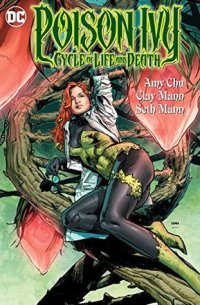
Kate’s Review: “Poison Ivy: Cycle of Life and Death”

29429567._sy475_Book: “Poison Ivy: Cycle of Life and Death” by Amy Chu, Clay Mann (Ill.), & Seth Mann (Ill.)
Publishing Info: DC Comics, September 2016

Where Did I Get This Book: The library!

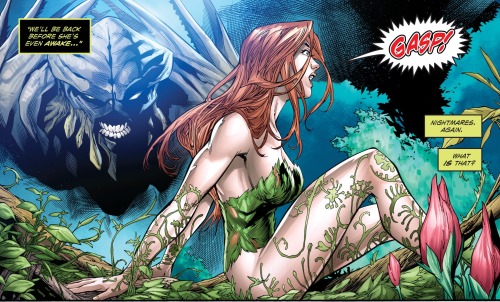
Book Description: Poison Ivy blossoms into her first solo adventure! There are animals. There are vegetables. And there is somewhere in between. That’s where Dr. Pamela Isley, a.k.a. Poison Ivy, finds herself. Instead of battling the Dark Knight, she is now a researcher at the Gotham Botanical Gardens, studying the possibility of creating plant-human hybrids. But when her fellow scientists start turning up dead, she’s both the natural leading suspect and the only person (or plant) who can crack the case. To solve the mystery, Poison Ivy must team up or throw down with her oldest friends and closest frenemies, from Harley Quinn to Catwoman to the Swamp Thing. Can she keep things under control, or will she be responsible for a deadly new harvest? Sprouting from the brains of the up-and-coming creative team of writer Amy Chu and artist Clay Mann, it s a mean, green murder mystery starring one of Batman’s greatest rogues!

Review: I will admit that my love for Poison Ivy was late blooming (HAHAHA) in all my years of Batman worship. I don’t know if it was because “Batman and Robin” (though Uma Thurman is a goddess and I now appreciate her characterization in spite of everything), or my disinterest in plants in general, but it took far too long for me to love Dr. Pamela Isley. It didn’t happen until I was looking for a cosplay outfit that wouldn’t require a wig, and I dove heart and soul into making a Poison Ivy costume. And it turned out AWESOME, if I do say so myself.

poisonivy
And to hide my prematurely white hair I dyed my roots green, because ROOTS!

So now that my love for Ivy is here to stay and all encompassing, I was totally tickled when I saw “Poison Ivy: Cycle of Life and Death” during a weeding project at work. I wanted to give this book a stay of execution and wanted to see what author Amy Chu had done with my girl.

There were two, maybe three, really strong aspects to this book. The first is that we get to see Pamela back in her research role, and we get to see how awesome she is at it. While we are used to seeing her as an eco-terrorist or just a general baddie that Batman has to take on, it’s sometimes easy to forget that she is a brilliant scientist, and seeing her passionate and stupendous at her work was heartening as hell. Chu shows that Pamela is in her element, and even throws in some really satisfying moments of fighting back against sexism and misogyny in STEM. True, it’s with violence, but it’s a power fantasy so that’s just fine. The second aspect I enjoyed (a mild spoiler alert here) was the exploration of Poison Ivy as not only a scientific creator, but as a mother as well. She creates human plant hybrids that she raises as her daughters, and I thought that showing motherhood and nurturing sides of Poison Ivy while still letting her maintain her strength and power. Too often these more feminine themes are thrown aside as if they aren’t strengths in superhero stories, so to see it here was great. And the third aspect was seeing some other DC lady favorites like Harley Quinn and Selina Kyle show up and help Ivy when needed, as well as a cameo from another DC character that I’m going to keep under wraps.

Those aspects aside, “Poison Ivy: Cycle of Life and Death” didn’t have the oomph that I wanted from it. While I liked Ivy as a mother figure, her relationship with her three ‘daughters’ Rose, Hazel, and Thorn didn’t get enough deep dive attention. The affection was there, sure, but we didn’t really get to see it build and transform, as a time jump to speed up the plot deprived us of the actual character and relationship development. Another quibble I had was that the relationship between Ivy and Harley Quinn wasn’t nearly sapphic enough. There was something of a hint towards them perhaps being an item if you knew to look for it, but there was a bit more attention towards Ivy’s scientist colleague Darshan and the sexual tension there. To Chu’s credit, while Darshan is a nice addition to the story, his relationship with Ivy doesn’t really go anywhere. But the fact that even the hint of her being with a guy got more attention than the long standing undertones of the Ivy/Harley relationship made me even more frustrated.

And finally, I didn’t really care for the artwork. The reason for this is that while this story really is great in that it puts Ivy at the front and gives her agency and a lot of cool things to do, the character design was definitely still through the male gaze.

tumblr_o8b3y5wt6i1r7hjkqo1_500
What is going on with these proportions?! (source)
pivybnner
And what is the point of this may I ask? (source)

It just doesn’t fit with the tone of the story.

I’m glad that Poison Ivy got her own story where she could show off her strengths, and there were certainly good things about “Poison Ivy: Cycle of Life and Death”. I just wish that we had gotten more. But if you like Poison Ivy, you will find things to like here.

Rating 6: A perfectly fine adventure starring one of my favorite anti-heroines, but I really wanted more from it.

Reader’s Advisory:

“Poison Ivy: Cycle of Life and Death” is included on the Goodreads lists “Biologically Interesting Sci-Fi”, and “Ladies of DC”.

Find “Poison Ivy: Cycle of Life and Death” at your library using WorldCat!

Kate’s Review: “Darling Rose Gold”

49223060._sy475_Book: “Darling Rose Gold” by Stephanie Wrobel

Publishing Info: Berkley, March 2020

Where Did I Get This Book: I received a print ARC from the publisher.

Book Description: Sharp Objects meets My Lovely Wife in this tightly drawn debut that peels back the layers of the most complicated of mother-daughter relationships…

For the first eighteen years of her life, Rose Gold Watts believed she was seriously ill. She was allergic to everything, used a wheelchair and practically lived at the hospital. Neighbors did all they could, holding fundraisers and offering shoulders to cry on, but no matter how many doctors, tests, or surgeries, no one could figure out what was wrong with Rose Gold.

Turns out her mom, Patty Watts, was just a really good liar.

After serving five years in prison, Patty gets out with nowhere to go and begs her daughter to take her in. The entire community is shocked when Rose Gold says yes.

Patty insists all she wants is to reconcile their differences. She says she’s forgiven Rose Gold for turning her in and testifying against her. But Rose Gold knows her mother. Patty Watts always settles a score.

Unfortunately for Patty, Rose Gold is no longer her weak little darling…

And she’s waited such a long time for her mother to come home.

Review: Thanks to Berkley for sending me a print ARC of this novel!

In college my undergrad was a Psychology BA with a focus in Abnormal Psychology. Because of this, I have a vague (if not probably outdated) working knowledge of various mental disorders, so when I first heard about the case of Gypsy Rose and Dee Dee Blanchard, the mother daughter duo that ended with Gypsy Rose murdering her mother Dee Dee, my mind immediately went to Munchausen By Proxy. For the unaware, Munchausen By Proxy is when a caregiver deliberately makes their charge (usually their child) ill, or hurts them in other ways. Given that Dee Dee had convinced many people that Gypsy Rose was sick in hopes of getting money and attention, and also poisoned Gypsy Rose and broke her down, making her completely dependent on her, she fits the bill to a T. When “Darling Rose Gold” by Stephanie Wrobel both ended up in my hands in print form, and in my email box as well, I was very interested to read what I assumed was going to basically be a novelization of the Dee Dee and Gypsy Rose storym, which felt a little salacious, though honestly kinda fun too. But Wrobel has managed to create a thriller novel that definitely takes elements from that case, as well as other Munchausen By Proxy cases, without making it feel exploitative.

“Darling Rose Gold” has two differing perspectives. The first is of Patty Watts, a woman who is just getting out of prison for abusing her daughter Rose Gold. Patty convinced Rose Gold that she had a number of health issues and that she needed to be confined to a wheelchair, when it reality she was making her sick by dosing her with ipecac and only feeding her half the calories her body needed. Rose Gold testified against her, and Patty is simultaneously holding a grudge, but also desperate to be near her daughter again. Rose Gold, on the other hand, has far murkier motivations. When you have Patty who is constantly twisting the truth, and Rose Gold hiding it, it makes for two unreliable narrators and an unknown path that we are taking with them. We know that Rose Gold is up to something, but we don’t really know what. I thought that Wrobel was excellent at capturing the voice of Patty, a narcissistic sociopath, and thought that her thought processes were spot on in terms of constantly victimizing herself and incapable of believing that she could be at fault for anything. She is very much a stand in for Dee Dee Blanchard, whose toxic and abusive personality came out after her death and the facade of perfect caring mother was shattered. I was far more worried about how Rose Gold would be portrayed, as to me the ultimate victim in the case this is taking inspiration from was Gypsy Rose. If Patty is an obvious stand in for Dee Dee, Rose Gold is far different from Gypsy Rose. Which is probably a good thing. As I mentioned before, you don’t know what her plan is. But as her side of the story and motivations slowly come to light, you get a complex character who is damaged, and a little twisted. Just how twisted is the question that remains to be seen when we dive in.

The mystery is definitely about what Rose Gold is planning. You get pieces from Patty’s POV, but you also kind of have to wonder if what she is experiencing is ACTUALLY something she’s experiencing, or if her own guilt and paranoia is messing with her head. The pieces that Rose Gold gives us are built up over time, as we look at her life directly after her mother was convicted, up until her mother’s release. Wrobel, as I mentioned before, carefully shows just what kind of person this abuse has turned her into. She never paints with broad strokes when it comes to Rose Gold. She can both be a victim and also an abuser, and she can be both sympathetic and quite unsettling. I really didn’t know what she was up to for a long while, and even when I started to piece it together on my own I wasn’t completely on point with the big reveal. It’s well plotted, it’s addicting to read, and it sticks the landing for a satisfactory end without stepping into arguably controversial territory when measuring it against the real life crime that occurred. While it didn’t really blow me away, I can safely say that I was happy with how everything sussed out, and Wrobel makes a notorious story very original and new feeling.

“Darling Rose Gold” is a creepy and addictive thriller. I really enjoyed my time with it, and think that anyone who was captivated by the Dee Dee Blanchard Murder, or Munchausen By Proxy in general, would find it to be a scintilating read.

Rating 8: A frothy and unsettling thriller with inspiration from real life horrors, “Darling Rose Gold” was perhaps a little predictable, but the journey to the end was VERY fun.

Reader’s Advisory:

“Darling Rose Gold” is included on the Goodreads lists “Psychological Suspense for 2020 (U.S. Publications Jan-July 2020)”, and would fit in on “Munchausens and Munchausens By Proxy”.

Find “Darling Rose Gold” at your library using WorldCat!

Kate’s Review: “My Dark Vanessa”

44890081Book: “My Dark Vanessa” by Kate Elizabeth Russell
Publishing Info: William Morrow, March 2020

Where Did I Get This Book: I received a print ARC from the publisher.

Book Description: Exploring the psychological dynamics of the relationship between a precocious yet naïve teenage girl and her magnetic and manipulative teacher, a brilliant, all-consuming read that marks the explosive debut of an extraordinary new writer.

2000. Bright, ambitious, and yearning for adulthood, fifteen-year-old Vanessa Wye becomes entangled in an affair with Jacob Strane, her magnetic and guileful forty-two-year-old English teacher.

2017. Amid the rising wave of allegations against powerful men, a reckoning is coming due. Strane has been accused of sexual abuse by a former student, who reaches out to Vanessa, and now Vanessa suddenly finds herself facing an impossible choice: remain silent, firm in the belief that her teenage self willingly engaged in this relationship, or redefine herself and the events of her past. But how can Vanessa reject her first love, the man who fundamentally transformed her and has been a persistent presence in her life? Is it possible that the man she loved as a teenager—and who professed to worship only her—may be far different from what she has always believed?

Alternating between Vanessa’s present and her past, My Dark Vanessa juxtaposes memory and trauma with the breathless excitement of a teenage girl discovering the power her own body can wield. Thought-provoking and impossible to put down, this is a masterful portrayal of troubled adolescence and its repercussions that raises vital questions about agency, consent, complicity, and victimhood. Written with the haunting intimacy of The Girls and the creeping intensity of Room, My Dark Vanessa is an era-defining novel that brilliantly captures and reflects the shifting cultural mores transforming our relationships and society itself.

Review: Thank you to William Morrow for sending me a print ARC of this novel!

I will admit that when Serena handed me the print ARC of “My Dark Vanessa” by Kate Elizabeth Russell and said it arrived for the blog and that it sounded more in my genres, at first glance I agreed. I mean, Stephen King’s blurb was on the cover, so clearly it had to be, right? But then when I read the description of the book, I was suddenly nervous. For one, it sounded more literary than horror or thriller. But hey, I can go outside my usual genres if a book really interests me, right? The bigger issue was what the plot sounded like: a woman has to contend with the fact that her illicit affair with her English teacher when she was fifteen was, in fact, abusive. Heavy stuff to be sure. But I was still very interested, especially as time went on and more buzz began to build around the novel. So I steeled myself, and finally dove in. It’s definitely not a book I’d say is within my usual genres. But I’m still glad that I read it.

“My Dark Vanessa” is a complex and very uncomfortable and upsetting novel about abuse, grooming, rape culture, and coming of age in very hard ways. It’s told through two timelines, both from the perspective of a woman named Vanessa. In 2017 she’s a woman who works at a hotel in hospitality, and is seeing her former teacher, Strane, being swept up in accusations of sexual misconduct with his female students. Vanessa, who was in an illicit relationship (I hate using that term here but am at a loss as to how else to describe it) with him that started at age fifteen, has to contend with the fallout of his downfall, and how that trauma of their ‘relationship’ has affected her after all these years. The other timeline is seeing Vanessa during the time that Strane began grooming her, and seeing how their relationship progressed. Russell is frank and unflinching in how she shows the realities of the sexual abuse that Vanessa experienced at the hands of her teacher, but is also very honest about how Vanessa herself cannot seem to view it as abuse as time goes on, even as other women are coming forward with their experiences with him. I greatly appreciated that Russell was also inclined to explore the very complex feelings that a survivor like Vanessa could feel, being groomed and manipulated for so long and therein not comfortable with seeing herself as a victim, and not wanting to expose herself in such a way. A subplot within the story is that a journalist starts pressuring Vanessa to tell her her story so that it can be put in an article, and heavily implies that Vanessa has an obligation to do so for victims everywhere. I think that it’s VERY important to make that point that victims of sexual abuse have NO obligation to open up about their experiences, and they are allowed to unpack and deal with said experiences in the way that they are most comfortable with.

(This kind of segues into some of the controversy that surrounded “My Dark Vanessa” for a hot minute before its release. HERE is a good article that sums it up. My two cents: I think that there are absolutely important questions to be asked about the publishing industry, and what stories get huge cash advances while other ones get left aside and not as promoted. But I think that it’s really gross that the discourse rose to the point where a survivor felt that the only way to move forward was to out herself as a victim of sexual abuse when she really didn’t want to. And unfortunately, abuse like this is probably more prevalent than we think, and the MOs of the abusers are probably pretty similar. Can we say that it must be plagiarism if it’s an experience that is, unfortunately, more commonplace than we’re comfortable admitting? I really don’t think so.)

I did find this book a little bit bogged down by the narrative as it went on, however, and more just in the sense that it felt longer than it probably needed to be and had some repetitive moments that could have been shaved, or at least tightened. I read it in a timely manner, but it did lag a bit at times, and I would put it down less because of the really hard content but more because of how it kind of felt like it was dragging.

And finally, content warnings abound for this book. There are scenes of rape, scenes of grooming and sexual harassment, and some really heavy and hard themes. This is not a book I would say that I ‘enjoyed’, as it’s greatly upsetting and unsettling, but I do think that Russell has crafted a story that is well done and filled with things that we should be thinking about as a society that has issues with misogyny and rape culture.

“My Dark Vanessa” was a hard read. But it’s one that I think has a lot of important points to make.

Rating 7: A deeply unsettling but engrossing novel, “My Dark Vanessa” tackles some seriously difficult themes but sometimes gets a bit bogged down within the narrative.

Reader’s Advisory:

“My Dark Vanessa” isn’t on any Goodreads lists that I feel really do it justice (“Hot For Teacher”? Seriously?), but I think that it would fit in on “#MeToo”, and “Sexual Assault Awareness Month”.

Find “My Dark Vanessa” at your library using WorldCat!

Kate’s Review: “The Deep”

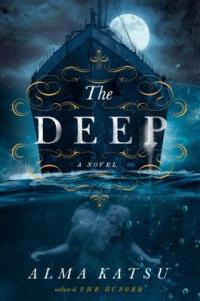
46371247Book: “The Deep” by Alma Katsu

Publishing Info: G.P. Putnam’s Sons, March 2020

Where Did I Get This Book: I received an eARC from NetGalley

Book Description: From the acclaimed and award-winning author of The Hunger comes an eerie, psychological twist on one of the world’s most renowned tragedies, the sinking of the Titanic and the ill-fated sail of its sister ship, the Britannic.

Someone, or something, is haunting the ship. That is the only way to explain the series of misfortunes that have plagued the passengers of the Titanic from the moment they set sail. The Titanic’s passengers expected to enjoy an experience befitting the much-heralded ship’s maiden voyage, but instead, amid mysterious disappearances and sudden deaths, find themselves in an eerie, unsettling twilight zone. While some of the guests and crew shrug off strange occurrences, several–including maid Annie Hebbley, guest Mark Fletcher, and millionaires Madeleine Astor and Benjamin Guggenheim–are convinced there’s something more sinister going on. And then disaster strikes.

Years later, Annie, having survived that fateful night, has attempted to put her life back together by going to work as a nurse on the sixth sailing of the Britannic, newly refitted as a hospital ship to support British forces fighting World War I. When she happens across an unconscious Mark, now a soldier, she is at first thrilled and relieved to learn that he too survived the tragic night four years earlier. But soon his presence awakens deep-buried feelings and secrets, forcing her to reckon with the demons of her past–as they both discover that the terror may not yet be over.

Featuring an ensemble cast of characters and effortlessly combining the supernatural with the height of historical disaster, The Deep is an exploration of love and destiny, desire and innocence, and, above all, a quest to understand how our choices can lead us inexorably toward our doom.

Review: Thank you to NetGalley for providing me with an eARC of this novel!

It’s been ten years since I was working at our local Science Museum and had shifts in the Special Exhibit about the Titanic, and while I am intrigued by the story still, I’m also a tiny bit burnt out on it. This doesn’t necessarily discourage me from reading stories that are related to or based upon the maritime disaster, however, because if I love the author or the premise sounds promising I’ll happily give it a whirl. Because of this, when I heard that Alma Katsu’s newest horror novel, “The Deep”, took place on the Titanic (and also on the similarly doomed sister liner The Britannic), I immediately requested an eARC from NetGalley. Lucky for me, I was given access. Given how much I LOVED Katsu’s take on the Donner Party in “The Hunger” (as reviewed HERE), I was all in for what she could do with the Titanic.

giphy-2
And I hoped it would leave out a hokey romance. (source)

Katsu has once again brought beautiful prose and an eerie supernatural twist to a well known tragedy, and I think that I liked “The Deep” even more than I did “The Hunger”. She utilizes both actual historical figures such as Madeleine Astor, Lady Duff Gordon, and W.T. Stead, as well as original characters to give an all encompassing view of what happened during the ill fated voyage, and what roles everyone played in each other’s experiences both before and after the iceberg. It is the characterizations of all these characters that “The Deep” found it’s greatest strength, and given how much I loved the other parts that says something. Katsu mostly uses the real life characters to examine the social roles that they all played at the time, to great effect. My favorite to follow was Madeleine Astor, the VERY young, pregnant wife of mogul J.J. Astor. Her age is definitely alluded to through her immaturity compared to other characters, but we also get to see how the position she was in couldn’t have been easy. She was always seen as a trophy wife and her legitimacy was questioned by Astor’s family after his death, and Katsu gets into her head and really explores the insecurities that a young wife at this time in her situation almost certainly would have had. I really looked forward to her chapters, because they always left me with such bittersweet feelings. Our original characters mostly focus on stewardess Annie, whose story is told in flashbacks on the Titanic and in the present on the Britannic, where she has become a nurse thanks to her friend Violet Jessup (an actual woman who survived BOTH sinkings). We slowly find out that something strange is afoot on the Titanic, a ghostly presence of some sort, and see through the flashbacks and the present just how it has affected Annie, and how she has affected others. Annie is clearly traumatized by the time she gets on the Britannic, but there are hints that even before she was on the Titanic that something is afoot with her. Along with her we get Mark and Caroline, a young married couple with a small child in tow. Annie is drawn to Mark, and her interest begins to feel like downright obsession over him and his daughter. There, too, is the mystery, as it seems like Mark reciprocates, but then perhaps he doesn’t. The unreliable narration that comes from multiple characters really helped the mystery at hand. I was kept guessing pretty much the entire time as to what kind of supernatural hijinks were afoot, and how it connected to our cast of characters.

And speaking of the supernatural, like in “The Hunger” Katsu perfectly balances the eerie and unsettling along with more subtle and underlying horrors of the real world. It isn’t completely clear from the get go just what we are dealing with in terms of supernatural themes, but as it’s slowly revealed we get to explore the ideas of spiritualism that were popular at the time, as well as lesser known mythologies that line up with some of our characters backgrounds and culture. This easily could have gone in a predictable fashion, as a ghostly presence on a ship like this is no doubt filled with possibilities, no matter how obvious. But instead we got a suspenseful story that combines things that go bump in the night with the horrors of gender, class, and obsession. I really, really loved how she tied it all together and how well she pulled it off.

“The Deep” is another triumph from Alma Katsu. She brings historical fiction horror to new heights, and if The Donner Party was a little too gruesome, The Titanic will be a good way to experience what she can do with the genre.

Rating 9: Haunting and chilling, “The Deep” brings new spooky life to the Titanic story, and paints a supernatural picture that is effortlessly as emotional as it is suspenseful.

Reader’s Advisory:

“The Deep” is new and not yet on many Goodreads lists, but I think that it would fit in on “Fiction Books About The Titanic”.

Find “The Deep” at your library using WorldCat!

Kate’s Review: “Transmetropolitan (Vol.9): The Cure”

8733231Book: “Transmetropolitan (Vol. 9): The Cure” by Warren Ellis & Darick Robertson (Ill.)
Publishing Info: Vertigo, November 2003

Where Did I Get This Book: I own it.

Book Description: The forces of darkness are closing in on outlaw journalist Spider Jerusalem and his merry, filthy band, but now they’ve got their own rope around the neck of corrupt President Callahan, and it’s time to start tightening the noose. TRANSMETROPOLITAN: THE CURE is the ninth volume reprinting the acclaimed series written by Warren Ellis (PLANETARY, RED) with art by Darick Robertson (The Boys). Jerusalem and his cohorts step up their investigation into Callahan’s misdeeds and turn up some startling evidence…not to mention a sole surviving witness to the President’s depravity. The problem, as always, will be getting the word out before the massive forces of the Executive Branch black out everything, and everyone, involved.

Review: I can’t believe that my re-read of “Transmetropolitan” took me this long, but I also can’t believe that it’s almost over. I’ve been reminded during my revisit that Spider Jerusalem is one of the best comic characters of the past twenty years, and that while this story is outlandish and crude it still has so much to say about the world we live in. I opened up “The Cure”, the penultimate volume, ready to be blown away by how it all turned out and totally ready to move on to the last volume, hyped and pumped up. And that didn’t QUITE happen. I am definitely ready to move on to the last and to enjoy wrapping up this series for a second time. But it didn’t hit me the way that I’d hoped it would, but honestly, that isn’t any fault of this story. It’s more the fault of the world we live in now. Somehow, “Transmetropolitan” feels, dare I say, naive.

giphy-5
I don’t understand how we ended up here. (source)

Overall I am still totally loving this story, though, so we’re definitely going to start with The Good and save the spoilery Not So Good for a bit. I like how Ellis is pulling the final threads all together as the starts to wrap up his story. Spider, Yelena, and Channon are outlaw journalists now, and as they are starting to finish up their final gambit in an effort to take down The Smiler, we’re revisiting old characters and seeing how they still have roles to play in this story. We get to see Fred Christ, the despicable and wormy leader of the Transient movement, and how this character from way back when is connected to our final storyline (and boy, was it really cathartic seeing how Spider finally got to take him down). I loved seeing Royce again, the somewhat cowardly but ultimately loyal former Editor that Spider used to work for. And what I really loved about this volume is that we once again got to see Spider at his very best, trying to protect a source, trying to make her feel comfortable, and showing the empathy that he has deep down, as any good journalist should have when it comes to some of the more complicated and sensitive stories. Channon and Yelena didn’t shine as much in this one, but since Spider’s health is really deteriorating and therefore his downfall is inevitable I am okay with letting the spotlight be on him this time around as he tries to pull out all the stops to bring down The Smiler.

So here is that part that didn’t work for me as much, and since I need to talk about nitty gritty plot points to really address it, consider this your

tenor
(source)

We end this volume with the first strike of the final battle between Spider and The Smiler, in which Spider gets the goods on The Smiler and brings out information that will start the snowball that will theoretically lead to his downfall. I’ve talked about how “Transmetropolitan” has managed to stay relevant in spite of the fact that it’s been out for almost twenty years, and that Ellis has been able to make it feel timeless in regards to our political climate. But what was that first blow of the final takedown? Spider reveals that The Smiler has been having sex with Transient sex workers. It’s used as a HUGE moment and for the first time you see The Smiler’s facade crack, and that he looks genuinely scared that this is going to be the scandal that will take his power away. There are two problems with this for me. The first is that in a world where we are to believe that society has become so degenerative and scummy, I have a hard time believing that a sex scandal like this, even if it involves people who have purposely hybrided (that’s not a word but I can’t think of better way to describe it) themselves with Alien DNA, would actually affect the greater opinion of this culture. I think it would have been more effective if the Big Reveal was somehow getting evidence that The Smiler had set up the murder of martyred Vita Severn, or even that of his own immediate family. And the next thing is that, as we now know, in our CURRENT society the President being revealed to have an affair with a sex worker DIDN’T MEAN JACK SHIT. It kind of takes away the timelessness. That isn’t “Transmetropolitan”‘s fault, and shame on me for projecting my frustrations in this regard to this book, but it did take me out of it.

That aside, I’m very excited to go on to the next and final volume of “Transmetropolitan”. I kind of remember how it ends, but the details are fuzzy. No matter how it susses out, Warren Ellis has created a fantastic world that is still relatable when you look past the very outlandish aspects of it.

Rating 7: We start to wrap up the story of Spider Jerusalem, his filthy assistants, and The City, and while the pieces of the puzzle are seamlessly coming together, it doesn’t hold up as well anymore.

Reader’s Advisory:

“Transmetropolitan (Vol.9): The Cure” is included on the Goodreads lists “Best of Cyberpunk”, and “Best of Vertigo Comics”.

Find “Transmetropolitan (Vol.9): The Cure” at your library using WorldCat!

Previously Reviewed:

Kate’s Review: “You Are Not Alone”

45046742Book: “You Are Not Alone” by Greer Hendricks & Sarah Pekkanen
Publishing Info: St. Martin’s Press, March 2020

Where Did I Get This Book: I received an eARC from NetGalley.

Book Description: You probably know someone like Shay Miller. She wants to find love, but it eludes her. She wants to be fulfilled, but her job is a dead end. She wants to belong, but her life is so isolated.

You probably don’t know anyone like the Moore sisters. They have an unbreakable circle of friends. They live the most glamorous life. They always get what they desire.

Shay thinks she wants their life. But what they really want is hers.

Review: Thank you to NetGalley for providing me with an eARC of this novel!

Greer Hendricks and Sarah Pekkanen are a dynamic duo in the thriller writing world, as their previous novels “The Wife Between Us” and “Anonymous Girl” were both buzzworthy books that got a fair amount of attention. I enjoyed both of those books, enough so that I figure that any time they come out with another novel I’m going to be interested in picking it up. Hence, I requested “You Are Not Alone”, their newest thriller/mystery, from NetGalley. I expected an entertaining and very readable thriller, as that has what has been delivered in the past. I am happy to report that not only did it live up to those expectations, it is also their best work yet.

Like their other two novels, “You Are Not Alone” is told through multiple perspectives and multiple time periods. Our main focus is on Shay Miller, an insecure and high strung, lonely woman who witnesses another woman commit suicide by jumping in front of a moving subway. The other perspectives are generally from that of the Moore sisters, Cassandra and Jane, as well as the occasional chapter from the POVs of their friend group. The wide breadth of POVs gave us a very large and detailed picture of the story, and also of the various motivations that each character had that added to the mystery over all. We know that Cassandra and Jane want something from Shay, but we aren’t certain as to what that may be. I thought that all of the women had well done characterization, and that I got a good sense for all of them and why they were doing what they were doing. Shay is the kind of protagonist that we see in thrillers like this in that she’s incredibly flawed and neurotic, but she’s written in such a way that I really liked her and was genuinely concerned for what she was slowly being pulled into. And then there are the Moore Sisters, and how they are both incredibly engaging and gregarious, as well as being terrifying in how they know how to manipulate and insert themselves into Shay’s life without her knowing it.

The mystery was also very enticing, and it kept me guessing and completely enthralled the entire time. As I said, you know that the Moore Sisters want Shay for something, and Hendricks and Pekkanen slowly peel back all the layers, leaving breadcrumbs of clues within all of the perspective chapters. It was laid out and woven together intricately enough that I was genuinely surprised by almost every twist, and all of the twists were well earned by how they were set up sometimes hundreds of pages before. I found myself slowly building up in anxiety, my heart beginning to beat as I got closer to the end and the tension just kept building with little sign of release. By the time it had all come to a head, I felt the deep paranoia that Shay was feeling and completely believed it. I bought in to just about everything, and while I did feel like it wrapped up a little neater than it probably should have (as well as quickly; the ending felt hasty even if it came together well), overall I was definitely satisfied.

“You Are Not Alone” is the best story that Hendricks and Pekkanen have come up with yet, and they will remain a high reading priority for me in the future. If you haven’t read anything by them yet, this is where you should start.

Rating 8: An anxiety inducing and twisty thriller that barely lets up on the tension. “You Are Not Alone” will make you more than a little nervous about who may be keeping their eyes on you.

Reader’s Advisory:

“You Are Not Alone” is included on the Goodreads lists “Female Writing Teams”, and “Can’t Wait Crime, Mystery, & Thrillers 2020”.

Find “You Are Not Alone” at your library using WorldCat!

Kate’s Review: “Deathless Divide”

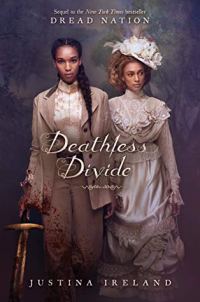
38124119._sy475_Book: “Deathless Divide” by Justina Ireland

Publishing Info: Balzer + Bray, February 2020

Where Did I Get This Book: The library!

Book Description: The sequel to Dread Nation is a journey of revenge and salvation across a divided America.

After the fall of Summerland, Jane McKeene hoped her life would get simpler: Get out of town, stay alive, and head west to California to find her mother.

But nothing is easy when you’re a girl trained in putting down the restless dead, and a devastating loss on the road to a protected village called Nicodermus has Jane questioning everything she thought she knew about surviving in 1880’s America.

What’s more, this safe haven is not what it appears – as Jane discovers when she sees familiar faces from Summerland amid this new society. Caught between mysteries and lies, the undead, and her own inner demons, Jane soon finds herself on a dark path of blood and violence that threatens to consume her.

But she won’t be in it alone.

Katherine Deveraux never expected to be allied with Jane McKeene. But after the hell she has endured, she knows friends are hard to come by – and that Jane needs her, too, whether Jane wants to admit it or not.

Watching Jane’s back, however, is more than she bargained for, and when they both reach a breaking point, it’s up to Katherine to keep hope alive – even as she begins to fear that there is no happily-ever-after for girls like her.

Review: A couple years ago, Justina Ireland wrote the YA horror/historical fiction book “Dread Nation”, a novel about the zombie uprising during Reconstruction in the U.S. Her main character, Jane, was a black teenage girl being trained to be a personal bodyguard for upper class white people, as after the zombies came Black and Indigenous people were recruited to protect the white people of society. It ended with an overrun town and Jane, her frenemy and fellow attendant Katherine, her old flame Jackson, and a group of refugees deciding to head West to California, as Jane was hoping to find her mother. When I heard about “Deathless Divide”, the sequel to “Dread Nation”, I was anticipating another zombie horror novel with the usual apocalypse themes. What I got was something completely different. This time, we get a horror historical fiction novel with distinct themes of a Western, and the lonesome redemptive attempts that come with that genre.

giphy-4
Spoiler Alert: It does. (source)

“Deathless Divide” picks up right after the end of “Dread Nation”, and almost immediately it gets turned on it’s head as to what I had expected from the narrative. For one thing, we are not only getting Jane’s POV, we also get the POV of Katherine, the high strung, prim, and incredibly talented classmate and sometimes friend of Jane. I wanted to know more about Katherine in “Dread Nation”, so when we got to get inside her head in “Deathless Divide” I was overjoyed. Katherine always intrigued me the most from the first book because I loved that she is unabashedly feminine, and is still an incredible fighter, perhaps the best in the book. Too often we see women characters who are made ‘strong’ at the expense of having their femininity stripped away. This is fine, of course, as there are lots of ways to write female characters, but women can fight and kick butt in a corset if they want to, dammit! I also liked getting a deeper exploration of Katherine and the issues that she has to contend with as a very attractive woman who is constantly underestimated, and who, as a woman who passes for white, doesn’t always feel like she has her identity all figured out. Getting to see more of Katherine was delightful. 

The other unexpected shift in the narrative was, as I mentioned before, the fact that it has a distinctly Western theme about it. Usually as a rule I am not a fan of Westerns, as the themes usually don’t grab me AND so many of the Westerns that I think of feel imperialistic. But in “Deathless Divide” Ireland does a really good job of taking the theme of the lone gunslinger and applying it to Jane as her journey progresses, especially since the usual trope of that is a white man. I loved the role for Jane, as she has endured so much trauma and loss and violence because of her race and the fact that Black and Native people have been used as protectors and bodies to protect the White people in a zombie ravaged society. It’s no wonder she would become morally ambiguous as she travels the west looking for revenge. It makes the idea incredibly tragic. And it’s just another of many ways that Ireland once again explores themes and issues of race and racism in America, and like in “Dread Nation” it works very well. From POC being used as guinea pigs to further scientific research to race and class relations in urban settings and capitalism to colorism, “Deathless Divide” shows that some times don’t really change much, and that we still have a long way to go. 

As for the zombies, not much has changed from the first book, and they aren’t as centered this time around. But that said, we do get to delve into the ideas of potential cures, and how different science experiments can bring different outcomes when it comes to the zombies and how they interact with their potential prey. I don’t want to spoil anything here, but just know that Ireland still manages to make the zombies feel fresh and interesting even when they aren’t at the forefront. After all, like in all good zombie stories, it’s the humans that are the bigger threat.

(note: As I mentioned in my review for “Dread Nation”, there had been criticism of the Native characters in that book. I’ve not seen anything in that regard about this book, and I don’t think that I as a white woman can say if Ireland has been more responsible this time around. We do get a more complex and deeper dive into the character of Daniel Redfern, however. If anything changes on this front I will update this post.)

“Deathless Divide” is the end of the road for this world and characters (at least for now; Ireland has said that it COULD happen that more gets written, maybe), and I think that it’s a great follow up and completion. I’ll miss Jane and Katherine.

Rating 8: A satisfying ending with a bold new genre take, “Deathless Divide” wraps up a world of zombies, racism, and empowerment for Black women.

Reader’s Advisory:

“Deathless Divide” is included on the Goodreads Lists “Black Heroines 2020”, and “LGBT SciFi and Fantasy 2015-2020”.

Find “Deathless Divide” at your library using WorldCat!