Kate’s Review: “White Tears”

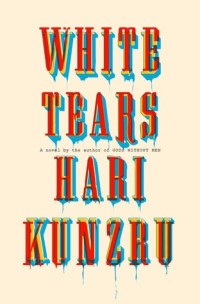
30780283Book: “White Tears” by Hari Kunzru

Publishing Info: Knopf Publishing Group, May 2017

Where Did I Get This Book: The library!

Book Description: From one of the most talented fiction writers at work today: two ambitious young musicians are drawn into the dark underworld of blues record collecting, haunted by the ghosts of a repressive past.

Two twenty-something New Yorkers. Seth is awkward and shy. Carter is glamorous and the heir to one of America’s great fortunes. They have one thing in common: an obsession with music. Seth is desperate to reach for the future. Carter is slipping back into the past. When Seth accidentally records an unknown singer in a park, Carter sends it out over the Internet, claiming it’s a long lost 1920s blues recording by a musician called Charlie Shaw. When an old collector contacts them to say that their fake record and their fake bluesman are actually real, the two young white men, accompanied by Carter’s troubled sister Leonie, spiral down into the heart of the nation’s darkness, encountering a suppressed history of greed, envy, revenge, and exploitation.

White Tears is a ghost story, a terrifying murder mystery, a timely meditation on race, and a love letter to all the forgotten geniuses of American music.

Review: There has been a strange narrative that has come out lately that I’ve had a hard time swallowing when it comes to the horror genre, and that is the idea of ‘elevating’ horror. While I think that there has been a healthy respect from creators of newer horror movies that manage to gather more from the story than just jump scares or cliches (Jordan Peele, for example), there are others that seem to think that they can ‘improve’ the genre by being more artistic or surrealistic. For example, while I liked aspects of the new “Suspiria”, I definitely felt like it had a very high opinion of itself, and I didn’t enjoy it as much as I had hoped I would because it took itself almost too seriously. It’s not really something you see as much in literature, so I don’t go into horror stories with these worries. But I will say that I was a LITTLE worried about “White Tears” by Hari Kunzru, if only because a few people who I know who really liked it seemed to be saying that this was superior to genre horror specifically because of the literary style. That said, I was definitely interested in the themes of social justice and cultural appropriation and violence, and decided that it was finally time to pick it up. I will admit that the horror elements weren’t very horror based, at least for this fan. But everything else was executed wonderfully.

I will actually start with the weaker points in this review, just to get them out of the way. This is advertised as a horror novel, and while it absolutely has horror themes that involve possession, ghosts, and slow descents into instability, none of these themes or moments really made me feel scared, nor did they instill much dread in me. I think that part of this was the writing style choices that Kunzru made, be it the way the dialog was written or the way that sometimes things would jump around. This made it so that the scares couldn’t build up as much as they might have were the beats written in other ways. I tend to have a harder time with literary horror because of these kinds of things, and while I can appreciate authors experimenting and doing their own thing, it didn’t make the action as exciting or ‘unputdownable’ as I wanted. Even moments that could have felt merely unsettling as opposed to outright scary didn’t quite get to that level.

But honestly, the strengths of this book outweigh those issues, specifically the commentary about cultural appropriation, violence, and racism in American culture and society. Our protagonists are Seth and Carter, two white college students who think that because they study and have a fascination with American Blues that they have ownership over it. Seth isn’t nearly as entitled as Carter, whose wealth and status has really inflated his ego, but Seth definitely shares similar views when it comes to music. It’s an entitlement that is seen in American culture as white audiences consume and repackage facets from Black culture and market it to wider audiences and profit off of it. The idea that these two men think that they create a unique song and performer, only to find out that this person and his music was real, is very reminiscent of this view (even if there is something a bit supernatural about this specific instance within the story). I liked the contrast between Carter and Seth, as while Carter is clearly toxic from the get go, Seth is almost more damaging because he thinks that he is immune to these critiques because he doesn’t think he has the privileges that Carter has. Which is, of course, flagrantly ignoring his White privilege. You see a lot of White entitlement in this story, and when we finally start to see the voices of African American characters, specifically Charlie Shaw, the hypocrisy and scumbaggery of Seth, Carter, and others is highlighted and really punctuates the overall violence that artists like Shaw had to endure. I liked how Kunzru did a good job of applying the ideas of possession and haunting to the idea of cultural appropriation and the damages and injustices that it can foster. This is the kind of ‘horror elevation’ that I greatly enjoy, specifically because horror fiction, be it movies or literature, has always had some political and social commentary elements to it. “White Tears” knows how to weave those messages into this story seamlessly.

While I wish that “White Tears” had done a little bit more to scare me, I really enjoyed it for everything else that it had to offer! I should be more adventurous when it comes to literary horror, because this had some serious chops.

Rating 8: While the story wasn’t as horror centric as I had hoped, the social commentary more than made up for that.

Reader’s Advisory:

“White Tears” is included on the Goodreads lists “Books White People Need To Read”, and “Diversity in Fantasy and Science Fiction”.

Find “White Tears” at your library using WorldCat!

Kate’s Review: “The Turn of the Screw”

12948._sy475_Book: “The Turn of the Screw” by Henry James
Publishing Info: The Macmillan Company, October 1898

Where Did I Get This Book: I own it.

Book Description: A very young woman’s first job: governess for two weirdly beautiful, strangely distant, oddly silent children, Miles and Flora, at a forlorn estate…An estate haunted by a beckoning evil.

Half-seen figures who glare from dark towers and dusty windows- silent, foul phantoms who, day by day, night by night, come closer, ever closer. With growing horror, the helpless governess realizes the fiendish creatures want the children, seeking to corrupt their bodies, possess their minds, own their souls…

But worse-much worse- the governess discovers that Miles and Flora have no terror of the lurking evil.

For they want the walking dead as badly as the dead want them.

Review: I’ve mentioned in the past that I have a huge gap in my literature experience when it come to ‘the classics’. I took a rather unconventional load of English and Lit courses in high school and college, and because of that a number of stories have been left behind. The horror genre is no exception, surprisingly enough. I have had “The Turn of the Screw” in the back of my mind since I was a teenager, and it sat on my Kindle for a few years after I purchased a few old school horror reads that then just sat there. My motivation to finally read this book came from two places; I read “The Turn of the Key” by Ruth Ware and knew I was probably missing less known references, and the next Mike Flanagan “Haunting” series is going to be based on this Henry James ghost story. It was obviously time to dive in and read the tale of terror that has influenced so much of the genre.

“The Turn of the Screw” was one of those game changing tales that pushed the ideas of horror and what you could do within the genre itself. There is no denying that Henry James paved the way for modern haunted house tales like “The Haunting of Hill House” and movies like “The Others” when he took ideas of unreliable narrators and unsettling ghosts vs over the top ghosts and put them on the page. Some of the things that I really liked about this book were because of these tweaks and experimentations. “The Turn of the Screw” takes great Gothic elements and completely acknowledges the influence from Gothic stories, be it references to “Jane Eyre” or “The Mysteries of Udolpho”. Bly is isolated and distant, and the unnamed Governess is left there with two strange children, another servant, and no head of house for guidance or direction. As she falls more and more into physical isolation, so too does her mind fall into mental isolation, which is really what you need for a Gothic theme to really have a punch. I also really appreciate how James wrote this story in a way that makes the Governess a completely unreliable narrator, and that we can’t quite figure out whether or not there are actual ghosts and Bly that want to take the children, or if she is slowly descending into madness and she is the actual threat the whole time. It’s left up to interpretation, and arguments can be made for either scenario. I honestly don’t know where I fall on the ‘was it ghosts or insanity’ argument, James was so convincing of both. And frankly, I don’t know which would be the worse answer, given how the story ends. Along with that, in my mild bit of research into the background of this story, James was one of the first people to write ghosts in an unsettling way as opposed to over the top and melodramatic. And that really stands out in this story, as the ghosts of Quint and Miss Jessel are more inclined to move through the grounds or appear in dark hallways and merely stand there as opposed to rattling chains and wailing. And for me, that’s far more creepy and disturbing. There were moments of imagery in this book that sent chills up my spine.

giphy-2
Was it a mistake to read this book after dark while my husband was out of town? Almost assuredly. (source)

However, the reason that I am giving “The Turn of the Screw” a lower rating than one might expect from my praise is because of the writing style of the time period. This almost always knocks me off my game and distracts me when it comes to ‘classic’ stories, and “The Turn of the Screw” definitely fell into the trap of a lot of flowery language and slogging scenes with not as much action as I would have liked. When comparing it to another classic haunted house story like “The Haunting of Hill House”, I felt like it didn’t have the kind of pacing where the stakes were being repeatedly raised and the dread was building after every incident. I appreciate how this would have been groundbreaking for the time and how much it has done for the ghost stories that came after it. But for me, it was more of a slog to get through than I would have liked.

I think that reading “The Turn of the Screw” was ultimately a good choice, as I see how it works as a foundation for so many stories that I love. But it’s not one that I see myself revisiting as time goes on, as I might with “The Haunting of Hill House” or other classics like “The Legend of Sleepy Hollow”.

Rating 6: A classic horror story that paved the way for many themes within a genre, “The Turn of the Screw” has moments of dread, but sometimes is held back by the style it was written in.

Reader’s Advisory:

“The Turn of the Screw” is included on the Goodreads lists “Books With Unreliable Narrators”, and “Quick Books”.

Find “The Turn of the Screw” at your library using WorldCat!

Kate’s Review: “Season of the Witch”

43261389Book: “Season of the Witch” by Sarah Rees Brennan
Publishing Info: Scholastic Inc, July 2019

Where Did I Get This Book: The library!

Book Description: It’s the summer before her sixteenth birthday, and Sabrina Spellman knows her world is about to change. She’s always studied magic and spells with her aunts, Hilda and Zelda. But she’s also lived a normal mortal life – attending Baxter High, hanging out with her friends Susie and Roz, and going to the movies with her boyfriend, Harvey Kinkle.

Now time is running out on her every day, normal world, and leaving behind Roz and Susie and Harvey is a lot harder than she thought it would be. Especially because Sabrina isn’t sure how Harvey feels about her. Her cousin Ambrose suggests performing a spell to discover Harvey’s true feelings. But when a mysterious wood spirit interferes, the spell backfires in a big way.

Sabrina has always been attracted to the power of being a witch. But now she can’t help wondering if that power is leading her down the wrong path. Will she choose to forsake the path of light and follow the path of night?

Review: It’s Halloween season, and I had initially thought that that meant that we would be getting the next installment of “Chilling Adventures of Sabrina” in the coming weeks. Unfortunately, that didn’t come to pass. I am always going to be waiting on pins and needles for new content for this show and anything related to it (STILL WAITING ON VOLUME 2 OF THE COMICS!!), so thank goodness we have “Season of the Witch” by Sarah Rees Brennan to tide us over until it comes back!

giphy-1
Couldn’t have said it better myself! (source)

This novel is part of the TV show canon, and serves as a prequel to the series set a few months before the first season. Sabrina Spellman, the teenage half mortal/half witch, is still struggling with her identity as she prepares for her dark baptism. She loves her mortal friends, but knows that if she takes the path of darkness she may have to say goodbye. It’s a conflict that has kind of been left behind on the show, and I’m not sure that I felt the need to revisit it at this point. I totally get why a book would function better as a prequel than occurring at the same time as the show since we don’t know what that canon is going to look like. I did like the overall plot for the most part, however, even if it did feel a little bit regressive, thematically. I liked seeing Sabrina take risks, risks that didn’t always pay off, and I liked how she and her cousin Ambrose interacted within the plot as he helps her with a potential ‘love spell’. Ambrose and Sabrina’s relationship is one that we see bits of on the show, but Brennan puts it at the forefront of the plot, and really lets us see the ups and downs of it and how they perceive each other in positive and negative ways. Ambrose envies Sabrina because of her freedom (which at this point he still does not have, as he’s still under house arrest), while Sabrina is resentful of the fact that he is more favored by Aunts Hilda and Zelda than she is, in her mind. They care about each other, but the tension definitely starts to bubble over, and it made for the most emotional part of the story. The rest of the plot was pretty okay too, though I will say that it doesn’t really add much to the show mythology. But on the other hand, it relies on it enough that I think you really do have to watch the show first in order to fully understand a number of the plot points and implications, even as a prequel. This isn’t necessarily a bad thing, but I was hoping it would stand on it’s own a little bit more.

However, I really liked the characterizations of this book. The majority of the perspective is, of course, Sabrina’s, but interspersed throughout are vignette chapters that give you insight into the other characters within the series. From Aunt Hilda to Roz to Theo (still Susie at this point) to Harvey, everyone gets a chance to shine. Aunt Hilda is especially well done, as Brennan captures her kindness and quirkiness with ease. But the best ones were the ones I wasn’t expecting as much. The first is the chapter revolving around Prudence, the head of the Weird Sisters and Sabrina’s frenemy. Prudence is complex on the show, but what I liked best about her chapter was that we got to see a deep look into her insecurities about feeling like she doesn’t really belong anywhere, and how Sabrina’s loving family makes Prudence envious, and therefore leads to her lashing out. Prudence is a top three character for me on the show, and I liked seeing her vulnerability really explored. The other chapter was even less expected, and that focused on Harvey’s brother Tommy. All we really know about Tommy on the show is that he is the most supportive person in Harvey’s life, and that he is a great person and a golden boy around town. But in his chapter we really got into his mind and his heart when it comes to Harvey, and why he stayed behind in Greendale when he had other opportunities. This chapter was endearing and rather bittersweet, as we know how things change and shift within the Kinkle family as the show goes on.

Fans of “Chilling Adventures of Sabrina” will find a fun and entertaining story in “Season of the Witch”. It may not add much to the universe as a whole, but it gives the reader some really good material for the characters that we know and love. It’s a witchy read for this witchy time of year!

Rating 7: A cute and fun side story/prequel to the “Chilling Adventures of Sabrina” Netflix show. It doesn’t add much to the mythology and even reverts a little too much sometimes, but it does explore character motivations of characters who don’t get as much attention on the show.

Reader’s Advisory:

“Season of the Witch” is on some pretty broad Goodreads lists, but I think it would also fit in on “Young Adult Novels with Witches”, and “All Hallows Reads”.

Find “Season of the Witch” at your library using WorldCat!

Kate’s Review: “Full Throttle”

43801817Book: “Full Throttle” by Joe Hill

Publishing Info: William Morrow, October 2019

Where Did I Get This Book: I received an eARC from NetGalley.

Book Description: In this masterful collection of short fiction, Joe Hill dissects timeless human struggles in thirteen relentless tales of supernatural suspense, including “In The Tall Grass,” one of two stories co-written with Stephen King, basis for the terrifying feature film from Netflix.

A little door that opens to a world of fairy tale wonders becomes the blood-drenched stomping ground for a gang of hunters in “Faun.” A grief-stricken librarian climbs behind the wheel of an antique Bookmobile to deliver fresh reads to the dead in “Late Returns.” In “By the Silver Water of Lake Champlain,” two young friends stumble on the corpse of a plesiosaur at the water’s edge, a discovery that forces them to confront the inescapable truth of their own mortality . . . and other horrors that lurk in the water’s shivery depths. And tension shimmers in the sweltering heat of the Nevada desert as a faceless trucker finds himself caught in a sinister dance with a tribe of motorcycle outlaws in “Throttle,” co-written with Stephen King.

Featuring two previously unpublished stories, and a brace of shocking chillers, Full Throttle is a darkly imagined odyssey through the complexities of the human psyche. Hypnotic and disquieting, it mines our tormented secrets, hidden vulnerabilities, and basest fears, and demonstrates this exceptional talent at his very best.

Review: Thank you to NetGalley for sending my an eARC of this book!

Happy Horrorpalooza 2019 everyone! As you may know, in October I try to stick to books that have horror based or Halloween-y themes, as this is absolutely my favorite time of the year and I like to inundate myself with all things scary and spooky. So how lucky are we that we get to kick off the month with a book from one of my favorite horror authors, Joe Hill. Hill is one of those authors that I will always swear my devotion to, and so when I found out that he had a new short stories collection coming out I was stoked as heck. Granted, I had already read a few of the tales in “Full Throttle”, his new collection, as they had been published previously with other collections or in collaboration with his father, Stephen King. But a majority of the tales were new to me, and I couldn’t wait to tackle them all. As per usual with short stories collections, I’ll talk about my favorites, and then give an overall review of the series as a whole. And I have lots to say about my favorites.

“Dark Carousel”

This story is one of the most blatantly horror-centric tales in the collection, and it has a good amount of winking and nudging towards well loved tropes and stories in the genre. With nods towards “Something Wicked This Way Comes”, I took great delight in this creepy tale. Four friends attend a carnival and take a ride on the carousel. After they accuse the carousel operator of wrongdoing, they decide to have some fun and take their revenge on him. But little do they know that they are being watched by non-human eyes, and that their misdeeds will have dire consequences. I really, really loved this story, from the characterizations of our protagonists to the slow build of dread at the carnival and afterwards, and the come down that has ambiguity and a sense of inevitability. The loving references to “Something Wicked This Way Comes” were fun to spot, and the overall wrongness of the carnival and the carousel made for an eerie and unsettling, yet never over the top, scary story. The story isn’t terribly complicated, but it is very effective in what it is trying to achieve. The best horror story in the collection for me, hands down.

“By The Silver Waters of Lake Champlain”

This was one of the stories I had read previously before picking up this book, but given how much I loved it the first time I was excited (and apprehensive) to read it again. But on a second go through, my love for the story only grew, and it is probably my favorite story in the collection. Friends Gail and Joel are visiting Lake Champlain on vacation, and one lazy Sunday morning the two of them find the body of what looks to be a plesiosaur-like reptile. Convinced it’s the famed lake monster Champ, they have dreams that their discovery will make them rich and famous. But instead of fame and glory, they have to confront the hard truths of growing up, loss, and mortality. I first read this story a few years ago, and it blew me away and left me crying. Reading it this time and knowing how it all ends made the experience all the more bittersweet. Hill has the ability to capture tween and teenage voices in authentic ways, and he also knows how to give hints to his characters realities without being explicit. We can surmise that Gail and Joel are both a bit lonely at home, and that their parents, at least during this story, are more focused on nursing vacation hangovers than on their children and what they are getting up to on a foggy morning by the lake. Gail and Joel are probably friends more based on circumstance than anything else, but that doesn’t make their friendship any less valid, nor does it cheapen the ultimate ending this story has. They are connected by interest in the Lake Champlain Monster as well, and honestly anything that shows weird and funny friendship obsessions with cryptids is going to resonate with me, given my past (and present) fascinations with similar topics. But on top of that, for me this is one of the most emotionally charged stories in the bunch (one of the others will be addressed in a moment). Hill is so good at writing grief and trauma, and the last paragraphs are still haunting and incredibly emotional. This is a story that I would LOVE to see expanded into a novel, where Gail goes back to the lake to try to get answers and closure. And even on the second read through I was left a bit emotionally compromised. Nay, extremely emotionally compromised.

tenor
Actual footage of my emotions at the end. (source)

“Late Returns”

I will wholeheartedly own up to the fact that as a librarian I was no doubt going to be biased towards this story. A new librarian, trying to escape his own grief and loss, takes over the Bookmobile job in hopes of spreading the love of reading to people who can’t necessarily make it into the actual library. As he makes the rounds, he starts to encounter people from other times, who may need to read books that were published after their deaths in order to feel complete. This is one of the less creepy or scary stories from the collection, and the unabashed love of reading and the testament to the power of a book is so sublime and wholesome. Hill also tinkers and plays with the idea of time and space continuums in this story in really unique ways. For example, should one of these ‘late returns’ (the name given to the out of time patrons) pick up a book that was published after their death, it may be indecipherable to them if they shouldn’t be reading it. But it will also morph it’s design to fit the design of the era the person was from. It’s little details like these that feel original and incredibly clever. On top of that, we get more emotional moments for some of the characters, from our protagonist processing his own grief to one late return whose son is fighting in Vietnam, and she doesn’t know if she will ever see him again. Again, while I love the scares and thrills that Hill creates, it’s how he taps into the human condition and all its complexities that makes him stand out.

As for the rest of the collection, most if the stories are strong in their own ways. The two collaborations with his Dad show how well they work together, though I will say that “In The Tall Grass” (another I’d read previously) sort of makes me feel like they were trying to one up each other in the shocks department (and I ultimately didn’t really care for it when all was said and done). It is a good balance of a number of genres, and they all fit together even if they aren’t explicitly connected. At the end he has little background notes about how each came to be written, and I thought that gave them even more context which enhanced the reading experience.

“Full Throttle” is a perfectly compiled collection of Hill’s various offerings, and if you want a taste of what he can do, you have a smorgasbord to choose from.

Rating 8: A solid collection of horror, thriller, and dark fantasy, “Full Throttle” has scares and heart and confirms Joe Hill’s prowess as an author of many genres.

Reader’s Advisory:

“Full Throttle” is included on the Goodreads list “Horror to Look Forward To in 2019”.

Find “Full Throttle” at your library using WorldCat!

Kate’s Review: “The Tea Dragon Festival”

42369064Book: “The Tea Dragon Festival” by Katie O’Neill
Publishing Info: Oni Press, September 2019

Where Did I Get This Book: I received an eARC from NetGalley.

Book Description: Rinn has grown up with the Tea Dragons that inhabit their village, but stumbling across a real dragon turns out to be a different matter entirely! Aedhan is a young dragon who was appointed to protect the village but fell asleep in the forest eighty years ago. With the aid of Rinn’s adventuring uncle Erik and his partner Hesekiel, they investigate the mystery of his enchanted sleep, but Rinn’s real challenge is to help Aedhan come to terms with feeling that he cannot get back the time he has lost.

Review: Thanks to NetGalley for providing me with an eARC of this book!

A couple years ago I stumbled upon a sweet and unique graphic novel called “The Tea Dragon Society”, a charming story about a group of people who raise and care for Tea Dragons. After reading that book I became and instant fan of author Katie O’Neill’s fantasy tales, and when I saw that she had a follow up called “The Tea Dragon Festival”, I immediately requested to read it via NetGalley. I’m still in need of all the dragon positivity I can get in my stories, as dragons are my favorite mythical creatures and any and all positive depictions are going to bring me all kinds of joy. Especially if it means characters get to coexist with dragons peacefully and everything ends happily.

giphy-7
Happier times. (source)

“The Tea Dragon Festival” is something of a peripheral prequel to “The Tea Dragon Society”, but it is able to exist on its own. But this time around, our dragon lore moves beyond the Tea Dragons, and expands it to include wild Dragons. While a mountain town prepares for the annual Tea Dragon Festival, a girl named Rinn discovers a sleeping Dragon named Aedhan. Aedhan was supposed to be the protector of the town, but some kind of forest magic put him to sleep for eighty years. The focus of the story has two aspects. The first is trying to figure out what kind of being put Aedhan to sleep, which brings in the familiar faces of Erik and Hesekiel! In “The Tea Dragon Society”, Erik and Hesekiel have retired and opened a tea shop where they care for Tea Dragons, but in “The Tea Dragon Festival” they are still young and adventuring throughout the lands together. Erik is Rinn’s uncle, and his connection to the town is deftly placed and he and Hesekiel feel right at home in the pages of this story. But the larger focus of the tale is about Aedhan trying to readjust to life after being asleep for so long. Perhaps not as long for a Dragon, but still long enough that he feels like he’s missed out and failed the people he was supposed to look over. I really liked that this was the narrative with the most attention, as it let the characters grow and unfold organically. That isn’t to say that the Erik and Hesekiel storyline was neglected; on the contrary, I also enjoyed the mystery of the magic of the forest, and it was awesome getting a glimpse into their adventuring days while still being overall positive and not succumbing to tropes of wandering adventurers and bounty hunters. They were still true to their characters even in a completely different circumstance.

The new characters were also lovely and endearing. Not only was Rinn a kind and unique protagonist, as she too is trying to find her place in town and what role she has to play, Aedhan and his own background is rewarding and fascinating. He has the ability to shapeshift to look more ‘human’, which is explained as a defense against people who still may want to slay Dragons out of a toxic need to prove themselves as brave and fearless. The friendship that develops between Rinn and Aedhan really reminded me of Chihiro and Haku in “Spirited Away”, as their deep friendship is touching and isn’t really defined by platonic, romantic, or anything else. But they aren’t the only characterizations that were strong and well thought out. From Rinn’s Gramman, who is her mentor in all of her cooking endeavors, to Lesa, one of Rinn’s friends who is Deaf (note on this: I LOVED that not only did O’Neill incorporate a Deaf character into her story, she created a way to denote sign language within her illustrations), to a little girl named Aya who looks up to Rinn, a number of the characters all have their parts to play and feel complex and interesting. And just like in “The Tea Dragon Society”, O’Neill brings in a lot of diverse characters, be they different skin tones, or different sexual orientations, or having different abilities. Both overt diversity and more everyday diversity are very important for kids to see in their stories, and these stories handle both kinds beautifully.

And finally, THE TEA DRAGONS ARE BACK AND THEY ARE ADORABLE! Not only do we see Tea Dragons again, we get new kinds of Tea Dragons because of the different region within the world of the story. That said, O’Neill brings in other fantasy creatures that are just as breathtaking as the Tea Dragons, such as Aedhan’s full Dragon form and some of the forest creatures. The designs are both adorable and gorgeous.

the-tea-dragon-festival-9781620106556.in05
Cuteness overload. (source)

I am so glad that Katie O’Neill decided to revisit her Tea Dragons and their friends with “The Tea Dragon Festival”. It’s a dragon story that stands out from the rest, and while I don’t want to be greedy, I am going to once again hope that she makes more stories within this world!!

Rating 9: Katie O’Neill has once again brought a gentle and calm fantasy story to vibrant life. “The Tea Dragon Festival” lets us revisit the Tea Dragons and other familiar faces, and brings in more delightful characters with rich mythologies.

Reader’s Advisory:

“The Tea Dragon Festival” is included on the Goodreads lists “Dragons”, and “Graphic Novels Featuring LGBTQ Themes”.

Find “The Tea Dragon Festival” at your library using WorldCat!

Previously Reviewed: “The Tea Dragon Society”.

Kate’s Review: “Bonfire”

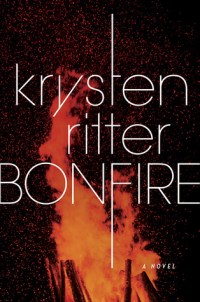
33876540Book: “Bonfire” by Krysten Ritter

Publishing Info: Hutchinson, November 2017

Where Did I Get This Book: eAudiobook from the library!

Book Description: Should you ever go back?

It has been ten years since Abby Williams left home and scrubbed away all visible evidence of her small town roots. Now working as an environmental lawyer in Chicago, she has a thriving career, a modern apartment, and her pick of meaningless one-night stands.

But when a new case takes her back home to Barrens, Indiana, the life Abby painstakingly created begins to crack. Tasked with investigating Optimal Plastics, the town’s most high-profile company and economic heart, Abby begins to find strange connections to Barrens’ biggest scandal from more than a decade ago involving the popular Kaycee Mitchell and her closest friends—just before Kaycee disappeared for good.

Abby knows the key to solving any case lies in the weak spots, the unanswered questions. But as Abby tries to find out what really happened to Kaycee, she unearths an even more disturbing secret—a ritual called “The Game,” which will threaten the reputations, and lives, of the community and risk exposing a darkness that may consume her.

With tantalizing twists, slow-burning suspense, and a remote, rural town of just five claustrophobic miles, Bonfire is a dark exploration of the question: can you ever outrun your past?

Review: Many people associate Krysten Ritter with her version of Jessica Jones, but for me she’s always going to be the tragic, manipulative, and doomed drug addict Jane Margolis from “Breaking Bad”. These are two heavy characters, and Ritter has the chops to deliver their stories with a lot of complexity, humanity, and darkness. And now you can add ‘author of a heavy and dark thriller novel’ to her list of accomplishments.

giphy-4
Keep it up, queen! (source)

I knew that she wrote a book called “Bonfire”, but for whatever reason never got around to picking it up. I’m kind of kicking myself now, given that it has a few elements that I really like, such as small town conspiracy, mean girls, and the potential ill doings of the corporate world. That sure sounds like a healthy mix of ‘things that appeal to Kate’. When I saw that it was checked in in eAudiobook form, I downloaded it and dove right in.

“Bonfire” has some set ups that we’ve seen before in these gritty woman-centered thrillers. Our protagonist, Abby Williams, is returning to her small town of Barrens, Indiana that has only given her bad memories. She was tormented by the resident mean girls, her father was a zealous and abusive drunk, and her mother died when she was a kid. You probably won’t be surprised to find out that she’s still fixated on the past, especially on the disappearance of her ex-best friend turn tormenter Casey. Casey made Abby’s life a living hell, but then vanished off the face of the Earth after graduation, leaving everyone to assume she needed to get out of the small town scene but quick.The longer Abby spends in Barrens, the more unhinged and emotionally compromised she gets, a mix of bad memories, trauma, and her assignment being perhaps more than she anticipated. Throw in a vague love triangle with the former high school golden boy and the former high school outcast, and you have pretty standard fare. I liked Abby quite a bit, as while she was a train wreck (the trope that I’ve long grown tired of in these books), she is also relatable and just enough put together that she didn’t feel flat or two dimensional. I also found her to be a more realistic train wreck than I’ve seen in other books that are similar, as I completely believed her emotional regression when she returns to the town that has left her with so much trauma. She was by far the most complex character of the book, and while I would have liked to have seen a little more oomph from the others, ultimately this is her story. I think that Ritter tried to make a couple of the antagonistic side characters more nuanced, but she didn’t achieve it for me. Perhaps that’s just because they were both so reprehensible based in my own ethical and moral standards that I couldn’t cut them slack, and others would be able to. Not I.

What made “Bonfire” stand out from other books like it is that while the main conflict is, certainly, on a missing person, there is also the theme of corporate wrongdoing and conspiracy. Abby has been sent as a lawyer to investigate Optimum, a large plastics corporation that has brought a lot of money and jobs into Barrens. They have also potentially been illegally dumping waste into the town reservoir, and therein poisoning the citizens. Ritter brings up the fact that a lot of people in town don’t want the investigation, and while it seems like that would be unimaginable she does a really good job of showing how much Barrens, and many small towns, rely on large corporate interests, even if there are terrible costs. Since Barrens was on the brink of collapse before Optimum came in, the question of its future would be up in the air if a huge scandal would drive the corporation into destitution. I really liked how that upped the stakes for all the characters in different ways, and how it shows that some things are bigger than just personal issues between individuals. 

“Bonfire” was a mostly satisfying debut novel from Krysten Ritter. Should she continue to write books, I will almost certainly make sure to pick up whatever she comes out with next. You’ve come a long way from your “Gilmore Girls” stint, baby!

Rating 7: While some of the broader themes and tropes we’ve seen before, “Bonfire” had some stand out plot points and a pretty enjoyable protagonist.

Reader’s Advisory:

“Bonfire” is included on the Goodreads lists “If You Liked Gone Girl, Try…”, and “Best Female Driven Mysteries”.

Find “Bonfire” at your library using WorldCat!

Kate’s Review: “They Called Us Enemy”

42527866Book: “They Called Us Enemy” by George Takei, Justin Eisigner, Steven Scott, and Harmony Becker (Ill.)
Publishing Info: Top Shelf Productions, July 2019

Where Did I Get This Book: The library!

Book Description: A stunning graphic memoir recounting actor/author/activist George Takei’s childhood imprisoned within American concentration camps during World War II. Experience the forces that shaped an American icon — and America itself — in this gripping tale of courage, country, loyalty, and love.

George Takei has captured hearts and minds worldwide with his captivating stage presence and outspoken commitment to equal rights. But long before he braved new frontiers in Star Trek, he woke up as a four-year-old boy to find his own birth country at war with his father’s — and their entire family forced from their home into an uncertain future.

In 1942, at the order of President Franklin D. Roosevelt, every person of Japanese descent on the west coast was rounded up and shipped to one of ten “relocation centers,” hundreds or thousands of miles from home, where they would be held for years under armed guard.

They Called Us Enemy is Takei’s firsthand account of those years behind barbed wire, the joys and terrors of growing up under legalized racism, his mother’s hard choices, his father’s faith in democracy, and the way those experiences planted the seeds for his astonishing future.

What is American? Who gets to decide? When the world is against you, what can one person do? To answer these questions, George Takei joins co-writers Justin Eisinger & Steven Scott and artist Harmony Becker for the journey of a lifetime.

Review: When I was in grad school, one of our professors asked us how old we all were when we first learned about the Japanese American Internment during World War II. I was in sixth grade, but I remember that was on the early side of things in that straw poll. It is a shameful part of American History when our Government targeted innocent people based on their race, and shipped them off to internment camps based on bigotry and fear. I knew that actor and political activist George Takei and his family were sent to one of these camps when he was a little boy, but didn’t know his full story. “They Called Us Enemy” is him telling that story, but not only is it that, it’s connecting that experience and horrible government policy with more recent policies that are playing out in our country today.

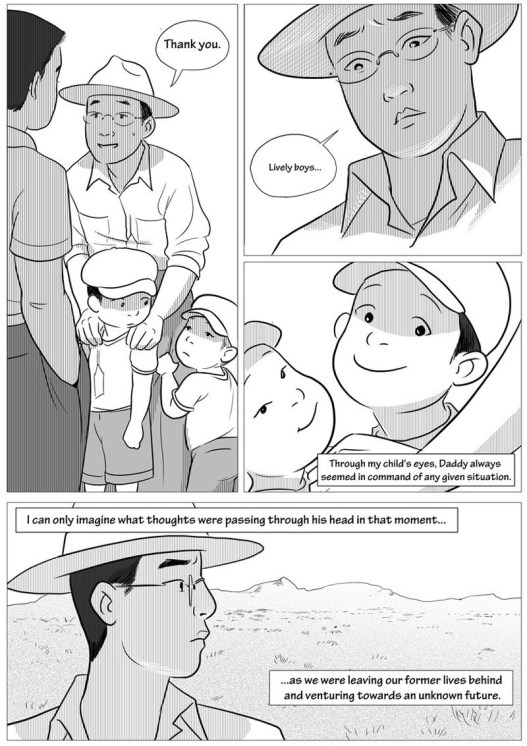
Takei weaves his own personal story together with the broader political climate and maneuvers that ultimately led to Executive Order 9066, which relocated over 100,000 Japanese Americans to internment camps during World War II. Takei was a little boy when this happened, and his memories are shaped by his age and perceptions at that time. I thought that it was especially effective to tell the stories of how he as a little boy perceived what was going on around him, and how looking back at how his parents were acting during that time now shows him the broader pain and injustice of what happened to their family. Moments like him and his little brother Henry playing on the train that was taking them to Camp Rohwer, where their natural curiosity made their mother nervous that they would get the negative attention of the guards, were especially chilling. He remembers having a fun time with Henry, but then also looks back and sees the unease his mother had regarding their safety, and it hits the point home that their innocence was being slowly chipped away at, even if they didn’t know it. I also liked that he would show other moments of childhood joy and innocence, like seeing their first snow or experiencing a visit from Santa at Christmas, but then would still reiterate that moments of happiness do not outweigh or negate the fact that he and his family were being imprisoned because of their heritage and race and not their actions.

Takei is also really good at presenting the political events and policies that surrounded the Japanese Internment, from putting forth the major players like FDR and Warren Berger in the spotlight to showing how the racism and fear meant more policies and more rules, and more distrust of those who were imprisoned. We see such policies play out on the larger scale, and then see how they impact the Takei family. His parents Takekuma and Fumiko are doing their best to keep their children safe, but as the policies become more restrictive their refusal to declare ‘loyalty’ to America, as to do so would be pledging loyalty to a country that had imprisoned them AND supposed that they were loyal to the Japanese Empire even though they did not live there and hadn’t for most of their lives. This, of course, led to consequences and the Takei family was sent to an even more restrictive camp called Tule Lake. We also see George Takei reflecting upon the conflict between older prisoners and younger prisoners, with older prisoners more likely to try to bow their heads and stay safe, and younger ones more willing to question and openly rebel. This is all seen through hindsight, as Takei has memories of, after the fact when he was a young adult, pushing against and deriding his father for not fighting back, and his father clearly still feeling caught between what was right and what would keep his family safe. It’s clear this still hurts Takei as he looks back on it.

Finally, Takei isn’t afraid to compare the Japanese Internment Camps and Policy to what we are seeing at the border with asylum seekers and the Muslim Travel Ban. The comparison has made some people uncomfortable and indignant, but Takei is more than game to show that the inhumanity of these policies is very reminiscent of what happened to Japanese Americans during World War II, and that they’re based similar fears and racism that Executive Order 9066 sprung from. It’s a wrenching comparison, and a hard reality to face that we’re falling into the same mistakes and injustices of our past.

The artwork by Harmony Becker is lovely to look at and fits the story well. It strikes a balance between realism, especially when talking about policy and world events, but also has cartoony moments that reflect childhood and childrens’ reactions to various events in their day to day lives.

4
(source)

“They Called Us Enemy” is a story that is upsetting and personal, and it is a familiar situation that many had hoped we had left in the past. George Takei opens up and shares this story with power and grace, and if you want to know more about the Japanese American Internment, this is a good place to start. Learn our history. We’re repeating it now and it’s atrocious.

Rating 9: A powerful, heartbreaking story that shows injustices of America’s past (and present), “They Called Us Enemy” is a stunning and personal graphic memoir by George Takei.

Reader’s Advisory:

“They Called Us Enemy” is included on the Goodreads lists “Japanese American Internment”, and “History Through Graphic Novels”.

Find “They Called Us Enemy” at your library using WorldCat!

Kate’s Review: “The Babysitters Coven”

38856385Book: “The Babysitters Coven” by Kate Williams
Publishing Info: Delacourte Press, September 2019

Where Did I Get This Book: I received an eARC from NetGalley.

Book Description: Adventures in Babysitting meets Buffy the Vampire Slayer in this funny, action-packed novel about a coven of witchy babysitters who realize their calling to protect the innocent and save the world from an onslaught of evil.

Seventeen-year-old Esme Pearl has a babysitters club. She knows it’s kinda lame, but what else is she supposed to do? Get a job? Gross. Besides, Esme likes babysitting, and she’s good at it.

And lately Esme needs all the cash she can get, because it seems like destruction follows her wherever she goes. Let’s just say she owes some people a new tree.

Enter Cassandra Heaven. She’s Instagram-model hot, dresses like she found her clothes in a dumpster, and has a rebellious streak as gnarly as the cafeteria food. So why is Cassandra willing to do anything, even take on a potty-training two-year-old, to join Esme’s babysitters club?

The answer lies in a mysterious note Cassandra’s mother left her: “Find the babysitters. Love, Mom.”

Turns out, Esme and Cassandra have more in common than they think, and they’re about to discover what being a babysitter really means: a heroic lineage of superpowers, magic rituals, and saving the innocent from seriously terrifying evil. And all before the parents get home.

Review: Thanks to NetGalley for sending me an eARC of this book!

Once the weather turns from summer heat and sunshine to chilly breezes and longer nights, I immediately get into a full on Halloween mindset. True, Horrorpalooza 2019 is still a few weeks away, but we’re going to get into the spirit with a new YA book about witches! When I read the description of “The Babysitters Coven” by Kate Williams, I was totally on board. Teen girl babysitters with magical powers being snarky and protecting the world from evil? Now where have I seen this before?

giphy-6
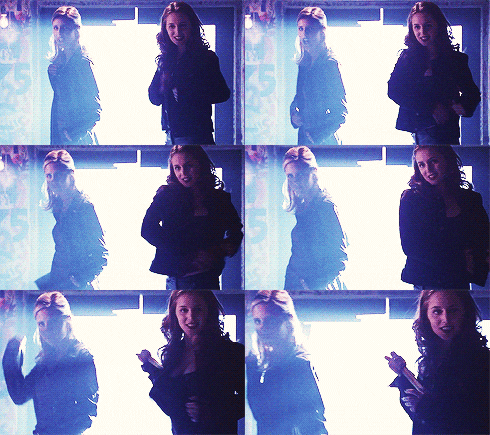
I love them both but Faith was the goddamn best! (source)

I may have gone in with too high of hopes, because while I did mostly enjoy “The Babysitters Coven”, it fell into familiar traps that I’ve seen in YA paranormal fiction.

But, like always, we start with the positive. It’s hard to deny that “The Babysitters Coven” is an original and cheeky concept. For any other late 80s, early 90s kids like me, the homage to “The Baby-sitters Club” is charming as hell and really taps into a children’s literature nostalgia. As someone who wanted to be a part of the BSC, I was smiling whenever the implicit (and sometimes explicit) references to that series were made (though how dare Esme imply that Mary Anne was the lame person to be? MARY ANNE SPIER IS THE BEST!). On top of that, I did really like our protagonist Esme and her best friend Janis. Their friendship felt like a realistic and fun teen girl relationship, and I enjoyed that they were both kind of geeky and always up for making references to things that I enjoy. It made them all the more relatable when they would talk about the original “Halloween” or “Buffy the Vampire Slayer”, amongst other things from fandoms that I like. The backstory to Esme, her surprising supernatural abilities, and the abilities of the new girl Cassandra were well thought out and I liked how they were slowly revealed. I don’t want to give too much away, but what I will say is that there is a mythos here that has a lot of meat to it with more exploration to go.

But a few of these strengths do have flip sides to weaknesses. The first is that while there is a lot of exposition here, and mythology and magical system building, I felt like too much time was spent on the set up and not enough on the actual main conflict. Because of this, the big bad and final showdown felt like it jumped from zero to one hundred, with not enough build up in between. I know that this is the first in a planned series, so perhaps Williams wanted to spend most of this book setting up for future things. But the problem with that is that a balance needs to be struck between set up and conflict, and it definitely felt uneven. There was also the issue I had with the character of Cassandra, who never really grew from mysterious cool girl, even after she officially joined Esme and Janis’s group. I wish that we had more insight into who she was and more complexity, but as of right now I don’t really have a good sense of who she is, unlike Esme and Janis. And finally, “The Babysitters Coven” tends fall far too close to the dreaded ‘aggressively quirky’ tone that I really cannot abide in any kind of story. I’m sure that a lot of this has to do with trying to create a self insertion fantasy for the target reading demographic, which is admittedly not a woman in her mid thirties. And hey, that’s fine! Escapist power fantasies are all well and good and who am I to begrudge a teen girl from getting to enjoy such things? But for me, entertaining writing it does not make all by itself.

“The Babysitters Coven” has the potential to be a really fun new paranormal fantasy series, and its first book has its ups and downs. I think that while I may not move on to the next installation, there will be a lot of geeky, supernatural obsessed readers out there who will find it to be a joy to read!

Rating 6: A cute idea with some admittedly fun moments tends to get bogged down in exposition over plot, and edges towards the aggressively quirky.

Reader’s Advisory:

“The Babysitters Coven” is new and not on many specific Goodreads lists as of yet, but I think it would fit in on “Books With Supernatural Females”.

Find “The Babysitters Coven” at your library using WorldCat!

Kate’s Review: “The Night Before”

40867676Book: “The Night Before” by Wendy Walker

Publishing Info: St. Martin’s Press, May 2019

Where Did I Get This Book: The library!

Book Description: First dates can be murder. 

Riveting and compulsive, national bestselling author Wendy Walker’s The Night Before “takes you to deep, dark places few thrillers dare to go” as two sisters uncover long-buried secrets when an internet date spirals out of control. 

Laura Lochner has never been lucky in love. She falls too hard and too fast, always choosing the wrong men. Devastated by the end of her last relationship, she fled her Wall Street job and New York City apartment for her sister’s home in the Connecticut suburb where they both grew up. Though still haunted by the tragedy that’s defined her entire life, Laura is determined to take one more chance on love with a man she’s met on an Internet dating site.

Rosie Ferro has spent most of her life worrying about her troubled sister. Fearless but fragile, Laura has always walked an emotional tightrope, and Rosie has always been there to catch her. Laura’s return, under mysterious circumstances, has cast a shadow over Rosie’s peaceful life with her husband and young son – a shadow that grows darker as Laura leaves the house for her blind date. 

When Laura does not return home the following morning, Rosie fears the worst. She’s not responding to calls or texts, and she’s left no information about the man she planned to meet. As Rosie begins a desperate search to find her sister, she is not just worried about what this man might have done to Laura. She’s worried about what Laura may have done to him…

Review: This summer has come and gone, and while I didn’t have a trip where you could find me by the pool with a stack of books, there were a few books I did read that would have been the perfect pool reads. You know the kind, the ones that will suck you in and that you can’t put down. “The Night Before” was one such book. And while I read it in bed as opposed to pool side, all of the elements that I love were there. Wendy Walker has impressed me again.

“The Night Before” is told through two perspectives, the sisters Laura and Rosie. Laura is freshly out of an intense romantic relationship, and her rocky love life has started to take an emotional toll on her. Her arc is first person, and starts the night of the first date she’s had since her last relationship. She’s about to meet a man named Jonathan she met online. She’s nervous but excited to get back in it. The second narrative is Rosie’s which is third person and starts the morning after, when Laura hasn’t come home, and Rosie is worried. While this could be a pretty standard set up for a pretty standard thriller, Rosie’s fear, as it turns out, seems to be more about what Laura is capable of as opposed to the mystery man she was going on a date with. Therefore, our story is about not only finding out what happened to Laura, but if she is less the vulnerable victim and more a dangerous predator. The two perspectives slowly start to unravel Laura’s past, the reasons Rosie may be both worried and perhaps scared of her, and how Laura’s past relationships may influence her actions on the night she goes missing. Walker did a really good job of slowly revealing her cards, and while I had a lot of theories about what was going on, I usually found myself in the wrong, which was great! It goes to show that the mystery was strong and that Walker had complete control of what she wanted to reader to take away from it. I was so invested in finding out what happened that I found myself tearing through this book in a couple of sittings. The suspense builds at a satisfying pace, and by the end it has risen to a breaking point that makes the reader unable to put it down.

I liked Laura and Rosie enough as characters, thought I do wish that we got a little bit more interaction between them in the moment so we weren’t relying as much on telling as opposed to showing. I also felt like that while we got a really good sense of who Laura was as a person when all was said and done, Rosie was relegated to worried older sister, and I wanted more from her. I also felt like one of the big reveals was a little farfetched, or if not farfetched it felt like the weight of it didn’t carry in the way I think it should have. The hints at the set up were there, so that wasn’t a problem, but ultimately it was clear it was just there to aid a red herring as opposed to be a meaningful moment of plot and character development. All that said, the plot and mystery was so strong that I didn’t really mind.

“The Night Before” was a fast paced and fun read with a solid mystery and a lot of good twists. Pool side reading may be over, but if you want a book that you could get lost in, this would be a pick that I recommend!

Rating 8: A gripping and fast paced thriller that kept me guessing, “The Night Before” is a fun read with many twists and turns. While the characters could have been more developed, the plot and mystery made up for it and then some.

Reader’s Advisory:

“The Night Before” is included on the Goodreads lists “Psychological Chillers by Women Authors”, and “The Girl on the Train Readalikes”.

Find “The Night Before” at your library using WorldCat!

Kate’s Review: “Five Midnights”

41555950Book: “Five Midnights” by Ann Dávila Cardinal

Publishing Info: Tor Teen, June 2019

Where Did I Get This Book: The library!

Book Description: Five friends cursed. Five deadly fates. Five nights of retribución.

If Lupe Dávila and Javier Utierre can survive each other’s company, together they can solve a series of grisly murders sweeping though Puerto Rico. But the clues lead them out of the real world and into the realm of myths and legends. And if they want to catch the killer, they’ll have to step into the shadows to see what’s lurking there—murderer, or monster?

Five Midnights is a “wickedly thrilling” (William Alexander) novel based on the el Cuco myth set against the backdrop of modern day Puerto Rico.

Review: The first time I encountered the el Cuco folktale was in Stephen King’s book “The Outsider”. While I really liked what he did with it and REALLY liked “The Outsider”, I did see how it could be a little problematic that a white guy was taking a Latinix/Portuguese mythology and twisting it to his own needs. Because of this, when I heard about “Five Midnights” by Ann Dávila Cardinal, I definitely wanted to give it a whirl, given that she is of Puerto Rican descent and sets her story about el Cuco in modern day Puerto Rico. Luckily my local library system had some copies checked in despite its new status, and it didn’t take long to arrive.

“Five Midnights” has a lot of strong points and a lot of potential for YA horror fans. The story is both unique but also timely. You have an old school ‘boogeyman’ story that blends with social themes that are affecting Puerto Rico of the 21st century, such as poverty, the drug trade, and wealthy (read: white) developers coming in and creating further divides between the haves and have nots. You have two perspectives you are seeing within this story: there is Lupe, a Vermont based teenager whose father is Puerto Rican who is visiting her policeman uncle, and Javier, a local who has fought against poverty and drug addiction and is now in recovery. It is mostly Javier and those in his group that reflect the struggles that his community is facing, as he and his friends have fallen into dangerous behaviors due to desperation and circumstance. It is also Javier’s friend group that has started to end up dead, one by one, the targets of a potential murderer, or perhaps supernatural being based in the folklore they grew up with (el Cuco!). Along with Javier is a girl named Marisol, the sister of one of Javier’s dead friends, whose rage and resentment towards their circumstances is channeled towards Lupe, an outsider from America who is also white passing. I really liked that Cardinal took these social issues and not only put them into the narrative, but was able to show how the story of el Cuco could be tied to them, given that it is said el Cuco targets misbehaving children. And honestly, I really like the el Cuco myth, and since it’s still kind of new to me I liked seeing a new interpretation that is based more on what the original folklore is as opposed to Stephen King’s version of it. It makes me want to go out and learn more about the mythology as a whole.

That said, there were definitely some weaker aspects of this book as well. The mystery itself wasn’t REALLY a mystery, as it’s clear from the get go that this isn’t a serial killer or human antagonist, but el Cuco committing the murders. The reasons are sound, and I liked the reveal of the origins, but I never really got completely invested in whether or not Javier and his friends were going to make it out alive or not. I think this is in part because the characterizations weren’t as strong as I would have liked. Javier was fine, but he wasn’t very fleshed out. And Lupe, while the other protagonist, was a bit harder to like, if only because she never really tried to understand nor was totally called out on her privileges, be it that she is an American citizen or that she is white passing. For me the most interesting character was Marisol, but even she never really got past being a two dimensional quasi-antagonist, especially since her antagonism is based in a very understandable anger about her disenfranchised circumstances. On top of that, she and Lupe could have very easily had an interesting relationship where they could have learned a lot from each other. Instead, it was merely two strong willed girls butting heads, which was disappointing. 

The negatives aside, I definitely appreciated “Five Midnights” and the story that it told from perspectives we don’t see as much in YA literature. It has some well done scary moments, and some relevant themes interwoven with the scares.

Rating 6: A compelling and original horror story with some well done social commentary. While the characters weren’t as fascinating as I had hoped, the el Cuco myth was a true strength of this novel.

Reader’s Advisory:

“Five Midnights” isn’t included on any Goodreads lists as of now, but I think that it would fit in on “Books Set in Puerto Rico”.

Find “Five Midnights” at your library using WorldCat!