Book Club Review: “Girly Drinks”

This post may contain affiliate links for books we recommend.  Read the full disclosure here.

We are part of a group of librarian friends who have had an ongoing book club running for the last several years. Each “season” (we’re nerds) we pick a theme and each of us chooses a book within that theme for us all to read. Our current theme is song inspirations, where we were given a random song from a random genre and had to pick a book based on the song.  For this blog, we will post a joint review of each book we read for book club. We’ll also post the next book coming up in book club. So feel free to read along with us or use our book selections and questions in your own book club!
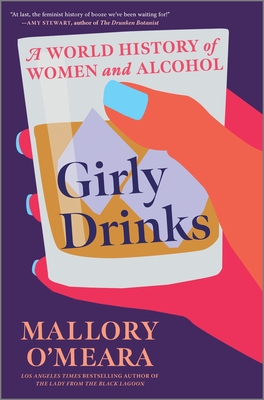
Book: “Girly Drinks: A World History of Women and Alcohol” by Mallory O’Meara

Publishing Info: Hanover Square Press, October 2021

Where Did I Get This Book: Kate owns it.

Where You Can Get This Book: WorldCat.org | Amazon | Indiebound

Song Inspiration: “Oh! Whiskey” by Jimi Goodwin

Book Description: Strawberry daiquiris. Skinny martinis. Vodka sodas with lime. These are the cocktails that come in sleek-stemmed glasses, bright colors and fruity flavors—these are the Girly Drinks.

From the earliest days of civilization, alcohol has been at the center of social rituals and cultures worldwide. But when exactly did drinking become a gendered act? And why have bars long been considered “places for men” when, without women, they might not even exist?

With whip-smart insight and boundless curiosity, Girly Drinks unveils an entire untold history of the female distillers, drinkers and brewers who have played a vital role in the creation and consumption of alcohol, from ancient Sumerian beer goddess Ninkasi to iconic 1920s bartender Ada Coleman. Filling a crucial gap in culinary history, O’Meara dismantles the long-standing patriarchal traditions at the heart of these very drinking cultures, in the hope that readers everywhere can look to each celebrated woman in this book—and proudly have what she’s having.

Kate’s Thoughts

This wasn’t the first time I have read “Girly Drinks” by Mallory O’Meara. As someone who loved “The Lady from the Black Lagoon”, and who does enjoy alcoholic beverages in moderation, I received this book for my birthday shortly after it came out and then read it shortly after that. So when our book club compatriot was having a hard time trying to think of a title that would go along with the song “Oh! Whiskey” and was talking about that at our monthly meeting, I suggested this book because I thought it would be a good fit. And I was right! Not only did it fit the theme, it provided us with lively discussion about patriarchy, misogyny, and women fighting against both (as well as provided us with a fun night of sampling some out of the book beverages we don’t usually indulge in at book club!).

Mallory O’Meara does a great job of laying out the history of women and the alcohol industry, the contributions that many have made since ancient times, and the way that misogynistic and sexists societies have tried to stifle women from partaking, creating, and making a living off of alcohol, deriding their industrious or just recreational indulgences as sinful, improper, and dangerous. Moving from ancient Egypt and Babylon through the Middle Ages all the way up through the 21st Century, she has great research, a well done narrative, and a creative hook that ties women’s parts in alcohol all together (and how men have tried to keep women out through shame and sometimes violence). Chapters are framed around individuals or groups who had influence that is still seen today, whether it’s alewives who revolutionized beer (but whose power in the industry led to persecution with their symbols of pointed hats, brooms, and cats to ward off mice from the grains becoming those of a stereotypical witch), the Widow Cliquot who basically created champagne as we know it, or even Cora Irene “Sunny” Sund, who made the tiki bar The Beachcomber an empire that influenced cocktail culture post WWII. She also explores less known stories of non-Western women, like Japanese women who worked in sake, or South African women who fought literal decades for official recognition as brewers. It’s deeply fascinating, at times rage inducing, but always empowering as O’Meara bolsters women to recognize and acknowledge their power and influence.

“Girly Drinks: A World History of Women and Alcohol” is a very entertaining and insightful read. We had a really fun time with this one! Order that cosmopolitan, ladies. And don’t let anyone shame you for it.

Kate’s Rating 8: An informative, cheeky, and interesting history about women, the alcohol industry, and fighting against misogyny and the patriarchy.

Book Club Questions

  1. If you enjoy drinking alcoholic beverages, what kinds of drinks do you like? Did this book give you any insight into your favorites? If not, do you like any mocktails as they have become more popular?
  2. O’Meara talks about women being shut out of drinking and socializing in taverns and bars and therefore having to make their own drinks and trying to socialize at home. Do you find yourself enjoying going out to bars more, or do you like spending time with friends and family at home? Again, this does not have to include alcohol.
  3. This book has many women in history who have interesting lives and backgrounds. Were there any that you owuld like to learn more about, or who you could see yourself hanging out with in a fantasy situation?
  4. What were your thoughts on the structure of the book and the different highlights in each chapter? Did any stand out to you?
  5. Were there any surprises in this book as it traces the influences of women on the history of alcohol?

Reader’s Advisory

“Girly Drinks: A World History of Women and Alcohol” is included on the Goodreads lists “Feminist Interest 2021”, and “[ATY 2022]: Food and Drink”.

Next Book Club Book: “The Wee Free Men” by Terry Pratchett
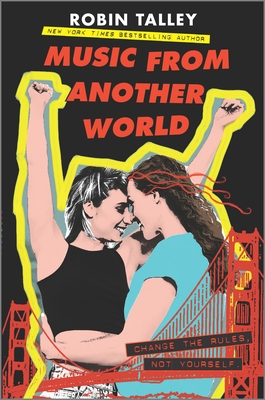
Book Club Review: “Music From Another World”

This post may contain affiliate links for books we recommend.  Read the full disclosure here.

We are part of a group of librarian friends who have had an ongoing book club running for the last several years. Each “season” (we’re nerds) we pick a theme and each of us chooses a book within that theme for us all to read. Our current theme is song inspirations, where we were given a random song from a random genre and had to pick a book based on the song.  For this blog, we will post a joint review of each book we read for book club. We’ll also post the next book coming up in book club. So feel free to read along with us or use our book selections and questions in your own book club!

Book: “Music From Another World” by Robin Talley

Publishing Info: Inkyard Press, March 2020

Where Did We Get This Book: Kate owns it; Serena got it from the library!

Where You Can Get This Book: WorldCat.org | Amazon | Indiebound

Song Inspiration: “Alternative Ulster” by Stiff Little Fingers

Book Description: A master of award-winning queer historical fiction, New York Times bestselling author Robin Talley brings to life an emotionally captivating story about the lives of two teen girls living in an age when just being yourself was an incredible act of bravery.

It’s summer 1977 and closeted lesbian Tammy Larson can’t be herself anywhere. Not at her strict Christian high school, not at her conservative Orange County church and certainly not at home, where her ultrareligious aunt relentlessly organizes antigay political campaigns. Tammy’s only outlet is writing secret letters in her diary to gay civil rights activist Harvey Milk…until she’s matched with a real-life pen pal who changes everything.

Sharon Hawkins bonds with Tammy over punk music and carefully shared secrets, and soon their letters become the one place she can be honest. The rest of her life in San Francisco is full of lies. The kind she tells for others—like helping her gay brother hide the truth from their mom—and the kind she tells herself. But as antigay fervor in America reaches a frightening new pitch, Sharon and Tammy must rely on their long-distance friendship to discover their deeply personal truths, what they’ll stand for…and who they’ll rise against.

Kate’s Thoughts

Our newest Book Club theme is pretty unique, I think, in which we picked music genres out of a hat and then picking a random song from said genre. I was lucky in that I got punk, which is one of my favorite music genres, and then I got “Alternative Ulster” by Stiff Little Fingers, a Northern Irish band I had very limited knowledge of. But when I looked into the lyrics and it was about people dreaming of a better life and a better place where everyone can just live freely, my mind went to “Music From Another World” by Robin Talley, a book I bought in the early days of COVID but never read. It just seemed perfect given that it’s a book about two queer girls who are pen pals in the 1970s, who are contending with various laws that are threatening to make queer people targets of discrimination, hate, and violence. Sounds familiar, right? That’s the other reason I chose this book. And it just so happened punk music was also a theme!

(source)

Overall I really enjoyed “Music from Another World”, for a number of reasons. The first is that I liked the setting of late 1970s California, as this was a time that was pivotal in the gay rights movements of the 20th century, with Harvey Milk making history and making waves and LGBTQIA+ people pushing back against hateful legislation like Proposition 6 and other bills like it (all while said bills were being embraced and promoted by right wing bigots like Anita Bryant). Talley did a pretty good job of setting the scene, and showing protagonists Sharon and Tammy as they lean on punk music and each other through pen pal letters. The historical details were well presented and felt pretty easy to understand, and it breaks down this moment in ways that make it easy to connect to the current moment as LGBTQIA+ are being targeted again. I also liked the epistolary style of this book, told by letters and diary entries, but I know that such a style isn’t for everyone, as it can be a bit clunky at times (and is in this novel). I was able to forgive it because I like these kinds of found media/transcript plot devices, but also because I liked Tammy and Sharon slowly start to trust each other and develop a bond that neither were expecting. I also, as you can probably tell, really liked how this felt like a hopeful and earnest cry out to readers to not let discrimination and hate towards LGBTQIA+ people fester and take hold, and to push back. It’s hard to find hope in that regard these days. But like Harvey Milk said, ‘ya gotta give ’em hope’. And I fell like this book does that.

I enjoyed “Music from Another World”. It’s just the start of a new Book Club theme, and I have a feeling it’s going to be an interesting one!

Serena’s Thoughts

Overall, I liked this book, too, and agree with everything Kate said. I think the historical elements were particularly interesting and relevant to younger readers who may not be as familiar with this period in history, especially in the LGBT community. As Kate mentioned, there were some clearly intentional choices to focus on hope rather than despair, and I think that’s just always a really great message, regardless. This was especially noteworthy with the decisions made with regards to when and how to end the story.

I did struggle a bit with the style of the story. I’m a really hard sell the epistolary style in novels in general. I’m one of those annoying people who get fixated on details like “no one would EVER write out this much dialogue in a diary!!” So I did struggle to connect to the characters a bit. While I did like them, I think I felt so removed from their story due to the format of the story, that I never felt like I was really sucked into the story. I was too aware that I was reading the entire time to really enjoy this one, if that makes sense.

But I do think this book will appeal to a lot of readers and is a really unique way of telling this sort of story. It is very informative, while also reading as a sweet, teenage love story.

Kate’s Rating 8: A hopeful and far too relevant story about daring to be yourself and striving for a better reality, “Music From Another World” was enjoyable and inspiring.

Serena’s Rating 7: While I struggled with the format, I think this book will greatly appeal to a large swath of readers looking for a hopeful take on history and the present.

Book Club Questions

  1. What were your thoughts on the epistolary narrative device in this book? Did you feel like it worked?
  2. When Sharon visits the Castro with Peter, she notes that there are not many women at the protests, and that she feels like she doesn’t really belong. What do you think Talley was trying to say with this feeling of isolation?
  3. Talley opted to end the book with the failure of Prop 6, and didn’t go into the assassination of Harvey Milk by Dan White or the White Light Riots that happened after. With Milk being such a huge part of Tammy’s narrative, did you think ending before his death was a good narrative choice? Why or why not?
  4. Tammy and Sharon connected to each other at first because of their love of punk music. Have you ever connected with someone and bonded over a love of music?
  5. By the end of the book it’s a bit up in the air about Sharon and Peter’s relationship with their mother? Do you think that she will eventually accept her children as they are?
  6. This book came out in early 2020. What parallels do you see between this story and what is happening with American policy today?

Reader’s Advisory

“Music From Another World” is included on the Goodreads lists “Alex’s Sapphic Masterlist”, and “YA Set in the 1970s”.

Next Book Club Pick: “Girly Drinks: A World History of Women and Alcohol” by Mallory O’Meara

Book Club Review: “The Raven and the Reindeer”

This post may contain affiliate links for books we recommend.  Read the full disclosure here.

We are part of a group of librarian friends who have had an ongoing book club running for the last several years. Each “season” (we’re nerds) we pick a theme and each of us chooses a book within that theme for us all to read. Our current theme is retellings and re-imaginings.  For this blog, we will post a joint review of each book we read for book club. We’ll also post the next book coming up in book club. So feel free to read along with us or use our book selections and questions in your own book club!

Book: “The Raven and the Reindeer” by T. Kingfisher

Publishing Info: Argyll Productions, July 2017

Where Did We Get This Book: The library!

Where You Can Get This Book: WorldCat.org | Amazon | Indiebound

Retelling/Re-imagining: “The Snow Queen”

Book Description: When Gerta’s friend Kay is stolen away by the mysterious Snow Queen, it’s up to Gerta to find him. Her journey will take her through a dangerous land of snow and witchcraft, accompanied only by a bandit and a talking raven. Can she win her friend’s release, or will following her heart take her to unexpected places?

A strange, sly retelling of Hans Christian Andersen’s “Snow Queen,” by T. Kingfisher, author of “Bryony and Roses” and “The Seventh Bride.”

Kate’s Thoughts

I have very little familiarity with fairy tales that go beyond The Brothers Grimm, and while I know the basics of “The Snow Queen”, I never read it as a kid and I don’t know a lot of the details (if we’re being vulnerable on the blog today, my information mostly came from Tumblr posts when “Frozen” came out). But I did know that I like T. Kingfisher, and I liked the past reimagining she did, “What Moves the Dead”. So when Serena picked “The Raven and the Reindeer” I was on board. No questions asked.

I thought that “The Raven and the Reindeer” was not only a creative and unique reimagining of “The Snow Queen” based on my knowledge, I also thought that it was heartfelt and at times very funny. Which is something that I expect from Kingfisher these days. I really liked Gerta’s character arc, as she starts out as a starry eyed and somewhat naïve teenager who thinks she is in love with her life long friend Kay, who is very noncommittal to her as, really, any sort of significant person in his life. After he’s kidnapped by the Snow Queen and Gerta goes on a quest to save him, she starts her own personal journey of self discovery, with the help of a snarky raven named Mousebones with whom she can communicate, as well as that of Janna, a bandit girl with a heart of gold. I loved seeing Gerta start to realize that she may not necessarily need Kay to love her to feel whole and complete, and also starting to realize that perhaps her attractions are towards someone else. Kingfisher also makes such a fun character out of Mousebones, whose snarky attitude adds most of the humor and had me chuckling over and over again.

I really enjoyed “The Raven and the Reindeer”! T. Kingfisher has such a knack for charming stories that feel very original, and this would be a great place to start with her catalog if you haven’t already!

Serena’s Thoughts

This was a pretty easy book club pick for me. I knew I wanted to do a fairytale re-telling, and then, obviously, I’ve loved everything I’ve ever read by T. Kingfisher. Beyond that, “The Snow Queen” is a tough nut to crack as far as re-tellings go and I haven’t read too many of them (unlike the endless versions of “Beauty and the Beast” and “Cinderella” stories to be found!)

As predicted, I really liked Kingfisher’s take on this story. I’m pretty familiar with the original, so it was easy to recognize the many similarities as well as the points of divergence. In particular, I really liked the switch made to Gerta and Kay’s relationship, with Gerta slowly beginning to understand that while she still wanted to save her friend, Kay might not be where it’s at as far as love interests go. Instead, Kingfisher also reimagines the bandit girl who in this story serves as not only the true love interest, but also as a companion for Gerta on the second half of her journey.

I also really enjoyed the quirky animals found throughout the story. This is another staple of Kingfisher’s work, and it melded perfectly with this fairytale that already has a number of animals featured within it. The raven, of course, was hilarious and excellent, as well as the exuberant, magical otters that pull the Snow Queen’s sleigh. But, I have to say, the reindeer, for all that he’s only around for a very short bit, really hit me in the feels. I’ll admit that there were tears.

Overall, this was a fun re-imaging of the classic tale, and I think it will appeal to all fairytale re-telling fans!

Kate’s Rating 8: This is a charming and funny re-imagining of a fairy tale that I wasn’t super familiar with.

Serena’s Rating 8: Sweet and heartfelt, this is an excellent re-telling of “The Snow Queen.”

Book Club Questions

  1. How familiar are you with the original story? Was there a change that stood-out to you?
  2. Kingfisher re-imagines the relationships at the heart of this story. What do you think of her portrayal of Gerta and Kay’s frienship?
  3. There were a number of mini adventures throughout this story, which one did you enjoy the most and why?
  4. Which animal companion was your favorite and why?
  5. This story focuses on themes of courage and self-esteem. In what ways did the author tackle these topics and was it effective?

Reader’s Advisory

“The Raven and the Reindeer” isn’t on any Goodreads lists, but it should be on Popular The Snow Queen Retellings Books.

Next Book Club Pick: “Music from Another World”

Book Club Review: “Spear”

This post may contain affiliate links for books we recommend.  Read the full disclosure here.

We are part of a group of librarian friends who have had an ongoing book club running for the last several years. Each “season” (we’re nerds) we pick a theme and each of us chooses a book within that theme for us all to read. Our current theme is retellings and re-imaginings.  For this blog, we will post a joint review of each book we read for book club. We’ll also post the next book coming up in book club. So feel free to read along with us or use our book selections and questions in your own book club!

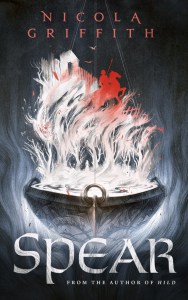
Book: “Spear” by Nicola Griffin

Publishing Info: Tordotcom, April 2022

Where Did We Get This Book: The library!

Where You Can Get This Book: WorldCat | Amazon | Indiebound

Retelling/Re-imagining: “Legends of King Arthur”

Book Description: The girl knows she has a destiny before she even knows her name. She grows up in the wild, in a cave with her mother, but visions of a faraway lake come to her on the spring breeze, and when she hears a traveler speak of Artos, king of Caer Leon, she knows that her future lies at his court.

And so, brimming with magic and eager to test her strength, she breaks her covenant with her mother and, with a broken hunting spear and mended armour, rides on a bony gelding to Caer Leon. On her adventures she will meet great knights and steal the hearts of beautiful women. She will fight warriors and sorcerers. And she will find her love, and the lake, and her fate.

Kate’s Thoughts

I’ve mentioned a number of times on here that I am not super versed in some of the more classic European literature tales, and that extends to Arthurian legends. I think that the adaptations I have seen all the way through are Disney’s “The Sword in the Stone”, which is more about Arthur getting the sword and not much else, and “Monty Python and the Holy Grail”, which is, of course, near perfection. But it’s not like an absurdist comedy with holy hand grenades and killer rabbits is going to reflect Arthur in all his significance. So going into “Spear” I didn’t really know what to expect, as I have a vague working knowledge of some aspects of the source material, but not much. And I’m sorry to say that while I went in trying to be open minded, “Spear” wasn’t my jam. I just kept thinking about coconuts and John Cleese slaughtering people in ridiculous ways and wishing I was watching that again.

(source)

So there were some things I liked about “Spear” and that was mostly in the ways that Nicola Griffin tinkered with the characters and the canon. Whether it was having main character Peretur be a gender bent version of Parzival during his quest with the other knights for the Holy Grail. I liked Peretur’s queer relationship with Nimuë, I liked that Arturus (Arthur), Gwenhwyfar (Guinevere) and Llanza (Lancelot) were in a loving thrupple as opposed to being in a dramatic love triangle, and I liked some of the ways that Griffin explores themes of the Grail and the magical bits of it. But there was so much I struggled with. The biggest issue I had was the writing. It is VERY lyrical, and very detailed, and I had initially picked this book up in print form but threw in the towel VERY quickly and opted for audio. My thought process was that I would be on a couple road trips to Duluth before book club and could use that time to listen, as I’ve had success in the past with that if I find the writing tricky. But it didn’t really help this time. And I think that had I had more investment in the Arthurian source material I would have been more vested in engaging, but since I don’t know it very well I found this book to be a tricky read, bordering on a chore. I am inclined to believe that this is probably a ‘your mileage may vary’ situation, but it just didn’t click with me.

Fans of King Arthur and very purple prose writing styles would probably connect with this, but it wasn’t for me.

Serena’s Thoughts

This was an interesting read for me. On paper, it has a lot of things I really enjoy. I’m fairly familiar with King Arthur legends, but mostly through a strange smattering of exposure to various retellings and adaptations and my own internet rabbit holes of research. I’ve only looked at a few of the “original” legends, themselves. All of this to say, when I picked up “Spear,” I was able to tell right away that this was going to appeal to the big fans of these stories. And that comes to the second thing I typically enjoy: lyrical writing. From the very first page, this is what stands out the most about this book for me. The writing is dense and poetic. There were many times that I found myself having to re-read long sentences to piece together exactly what was being said. As a fan of lyrical writing, I’m used to this experience to some extent, but even for me, I found this one a bit more challenging that I would have liked. That said, I can’t emphasize enough how impressed I am with Griffin’s ability to match the tone of the “original” King Arthur legends. For the big fans, this book will feel as if it can be neatly slotted right in alongside those, as the style of writing and storytelling found here match so well to those.

It’s also clear that Griffin has done her research. For such a short novel, it’s truly impressive just how many details and references she manages to pack in there. As a fan of Juliet Marillier’s, an author who largely relies on Irish folklore and legends, I enjoyed seeing some of these tales and beings woven in throughout this story.

I also really liked our main character and her story. I had a few concerns early on when she showed hints of being a bit too unbelievably good at certain skills with no explanation, but luckily there did turn out to be good reasons for this. I also enjoyed the gender-swapping of her character from male to female and the various changes and additions that Griffith brought to the story. Overall, I did find myself struggling to read this one more than I had hoped (the writing is hard), but I do think that it will greatly appeal to hardcore King Arthur fans.

Kate’s Rating 5: This was a bit of a slog for me, as I couldn’t connect to the writing style and I know very little about King Arthur lore and legend.

Serena’s Rating 8: For me, personally, this was probably a 7. But I rounded up to an 8 for the true Arthur aficionados who will appreciate the meticulous and detailed work that went into creating this story.

Book Club Questions

  1. How familiar are you with the legends of King Arthur? Specifically, how much did you know about the various iterations of Percival?
  2. Did you like the gender-swapped approach to this story? How do you think this changed or impacted the tale as a whole?
  3. The writing in this book is very in line with the style found in many of the more traditional Arthur stories. How did this impact your reading?
  4. How familiar were you with the various Irish legends and folklore that wove in and out of this story?
  5. This is a novella, so it has a reduced page count from a typical novel. Did this seem to fit the story we have here? Would you have liked it to be longer or shorter? And if so, why? Were there parts you wanted to know more about or could have done without?

Reader’s Advisory

“Spear” is on these Goodreads lists: Amazons, Valkyries, and Warrior Women and Sapphic Retellings.

Next Book Club Pick: “The Raven and the Reindeer” by T. Kingfisher

Book Club Review: “Great or Nothing”

This post may contain affiliate links for books we recommend.  Read the full disclosure here.

We are part of a group of librarian friends who have had an ongoing book club running for the last several years. Each “season” (we’re nerds) we pick a theme and each of us chooses a book within that theme for us all to read. Our current theme is retellings and re-imaginings.  For this blog, we will post a joint review of each book we read for book club. We’ll also post the next book coming up in book club. So feel free to read along with us or use our book selections and questions in your own book club!

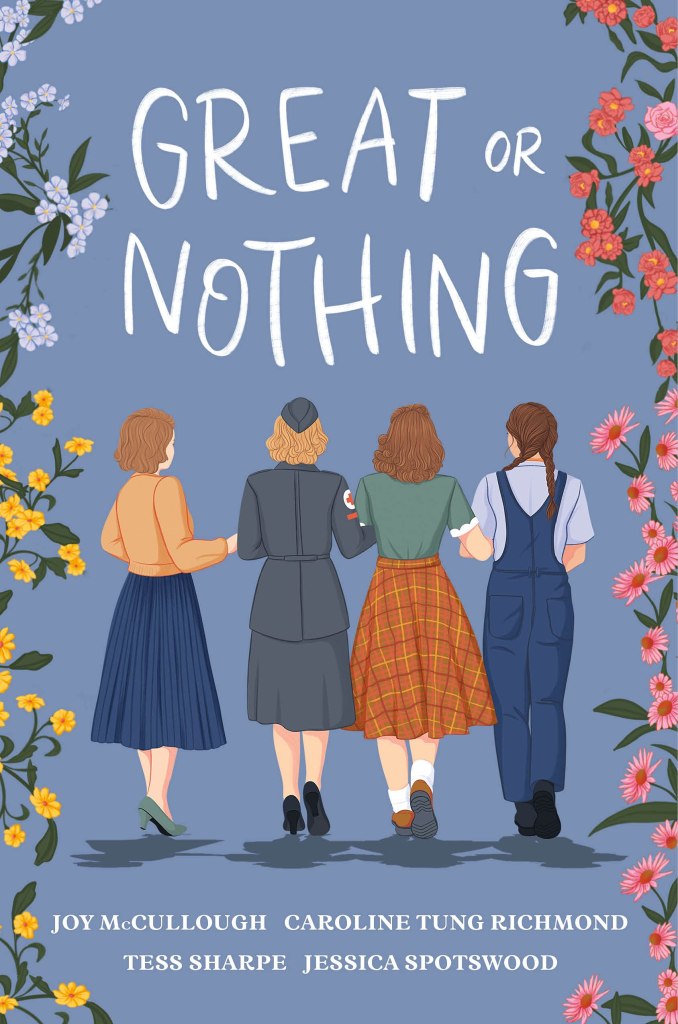
Book: “Great or Nothing” by Joy McCullough, Caroline Tung Richmond, Tess Sharpe, & Jessica Spotswood

Publishing Info: Delacorte, March 2022

Where Did We Get This Book: The library!

Where You Can Get This Book: WorldCat | Amazon | Indiebound

Retelling/Re-imagining: “Little Women”

Book Description: A reimagining of Little Women set in the spring of 1942, when the United States is suddenly embroiled in the second World War, this story, told from each March sister’s point of view, is one of grief, love, and self-discovery.

In the spring of 1942, the United States is reeling from the attack on Pearl Harbor. While the US starts sending troops to the front, the March family of Concord, Massachusetts grieves their own enormous loss: the death of their daughter, Beth.

Under the strain of their grief, Beth’s remaining sisters fracture, each going their own way with Jo nursing her wounds and building planes in Boston, Meg holding down the home front with Marmee, and Amy living a secret life as a Red Cross volunteer in London–the same city where one Mr. Theodore Laurence is stationed as an army pilot.

Each March sister’s point of view is written by a separate author, three in prose and Beth’s in verse, still holding the family together from beyond the grave. Woven together, these threads tell a story of finding one’s way in a world undergoing catastrophic change.

Kate’s Thoughts

I’m someone who has what is probably an average relationship with the book “Little Women”. I read it once a long time ago, I really like the 1994 film with Winona Ryder, and when I was working at a historic Victorian house I was one of the people who would lead a “Little Women” themed Christmas tour. I’m not super wedded to the book like I am “Anne of Green Gables”, but I like it enough. When I saw that Book Club was going to take on a “Little Women” re-imagining that takes place during World War II, it struck me as a perfect time period to revisit this story of sisters growing up during war time and learning hard life lessons while also finding their places in the world. And I was happy to see that I was right.

“Great or Nothing” is written in four different perspectives from four different authors, one for each March sister. The story plunks us midway through the original tale, with Beth already dead and Jo, Meg, and Amy separated and feeling the distance (especially since they all left on a sour note between the three of them). The surviving sisters take on roles that women could have during WWII that perfectly fit each of them. We have Meg at the home front doing fundraising, planting victory gardens, and teaching children. We have Jo working in a plane factory, doing a whole Rosie the Riveter thing. And we have Amy in London volunteering for the Red Cross, and meeting up with Laurie who is fighting in Europe. Beth also has a perspective, with poetry being used because she’s dead, I guess? Regardless, I really felt like all of these settings were perfect for the various sisters, and I mostly liked how all of the sisters felt like their core characters set in a new time. I think that my favorite was Meg’s, as the home front has always fascinated me with war bonds, fund raising, and advocacy, but I did like Jo’s story of working in a factory and finding romance with a lady war reporter named Charlie (as a true Professor Bhaer fan, I loved how they brought this relationship into this story with a queer twist). That said, I did find it a little bit of a bummer that we were at a point in the story where Meg, Jo, and Amy weren’t really interacting with each other, as that is part of the charm of the original story for me. It seemed like an odd choice, but at the same time since it was four different authors writing each sister, I suppose that makes some sense so as not to step on each other’s toes.

“Great or Nothing” is a really well thought out re-imagining of a classic tale, with a nice blending of voices from different authors to give Meg, Jo, Beth, and Amy March interesting stories in the 20th century.

Serena’s Thoughts

I’m probably similar to Kate in my devotion levels to the original “Little Women.” Enjoyed the book, liked the 90s version of the movie well enough, really liked the recent one that was released a few years ago. But, like Kate, I don’t have any strong emotions attached to it, which in many ways makes it the perfect book for a retelling! If you’re not a devoted fan, you won’t get as mad at changes!

Anyways, the first thing that stood out to me was how much I liked the change in time period. There are a million and one WWII books out there, but this story really took a unique angle at exploring all of the very different ways that women contributed to the war front, both at home and abroad. Not only did this give the reader a wide range of angles on this particular time of history, but all of these choices also worked perfectly with the characters themselves. I was also very impressed with how well the different writing styles of all of the authors worked together. Perhaps….too impressed? If I hadn’t know that this was authored by four different people, I’m not sure I would have guessed, and I’m not sure that’s really for the best. Obviously, cohesion on this sort of project is key, but I also think you lose something from the original goal if every author’s voice is paired down to the point that they’re indistinguishable from each other.

As for the story, I thought it did a good job of hitting the major plot points that fans will look for. That said, I didn’t necessarily enjoy many of these chapters. While I liked the look at the types of work that Meg and Jo were doing, their personal arcs I found more frustrating. Honestly, if I had to hear one more time about the big fight they all got into, I think I would have screamed. In this way, I felt like this book really missed the mark on the overall theme of “Little Women.” Yes, the sisters have their quarrels, but the primary heart of the story is built around the deep bonds they all share. So for this book to spend the vast majority of its time with each sister endlessly reflecting on their broken ties…it just felt like a bummer and a let down of the original premise. This being the case, Amy’s story rose to the top for me as the only one that felt as it had any real action or stakes involved. I enjoyed getting to see her and Teddy’s romance play out more in real-time as well, rather than the off-page romance we get in the original.

Overall, I felt like this book was ok. I didn’t love anything it was doing, but I also didn’t hate any of it. I think Meg and Jo both could have been done better by, but I really enjoyed Beth’s poetry sections and Amy’s plot line. Fans of the original looking for a unique take will likely enjoy this, however.

Kate’s Rating 8: A great new setting for a classic tale of sisters growing up and finding themselves, “Great or Nothing” is a successful “Little Women” retelling.

Serena’s Rating 7: An interesting reimaging with an excellent use of shifting the historical setting, but it still somehow feels as if it misses the mark on the heart of the original story.

Book Club Questions

  1. What did you think of the time period in this retelling? Do you think that World War II fit in with the “Little Women” story?
  2. Each of the March sisters was written by a different author. Did you like any sister more than the others?
  3. Did the Beth sections with the poetry work for you as you were reading? Would you have preferred to see another character’s perspective over Beth’s, like Laurie, or Marmee?
  4. Which of the sister’s plots would you like to be in? The homefront? A factory? Acting as a Red Cross volunteer overseas? Something else?
  5. What is your experience with the original “Little Women” story?

Reader’s Advisory

“Great or Nothing” is included on the Goodreads lists “Book Riot 2022 #21: Read a Queer Retelling of a Classic of the Canon, Fairytale, Folklore, or Myth”, and “YA & Middle Grade Retellings of “Little Women””.

Next Book Club Pick: “The Raven and the Reindeer” by T. Kingfisher

Book Club Review: “The Witch’s Heart”

This post may contain affiliate links for books we recommend.  Read the full disclosure here.

We are part of a group of librarian friends who have had an ongoing book club running for the last several years. Each “season” (we’re nerds) we pick a theme and each of us chooses a book within that theme for us all to read. Our current theme is retellings and re-imaginings.  For this blog, we will post a joint review of each book we read for book club. We’ll also post the next book coming up in book club. So feel free to read along with us or use our book selections and questions in your own book club!

Book: “The Witch’s Heart” by Genevieve Gornichec

Publishing Info: Ace Books, February 2021

Where Did We Get This Book: The library!

Where You Can Get This Book: WorldCat | Amazon | Indiebound

Retelling/Re-imagining: Norse Mythology

Book Description: Angrboda’s story begins where most witches’ tales end: with a burning. A punishment from Odin for refusing to provide him with knowledge of the future, the fire leaves Angrboda injured and powerless, and she flees into the farthest reaches of a remote forest. There she is found by a man who reveals himself to be Loki, and her initial distrust of him transforms into a deep and abiding love.

Their union produces three unusual children, each with a secret destiny, who Angrboda is keen to raise at the edge of the world, safely hidden from Odin’s all-seeing eye. But as Angrboda slowly recovers her prophetic powers, she learns that her blissful life—and possibly all of existence—is in danger.

With help from the fierce huntress Skadi, with whom she shares a growing bond, Angrboda must choose whether she’ll accept the fate that she’s foreseen for her beloved family…or rise to remake their future. From the most ancient of tales this novel forges a story of love, loss, and hope for the modern age.

Kate’s Thoughts

While I have a pretty extensive knowledge of Greek Mythology thanks to an obsession with it in grade school, Norse Mythology is pretty outside of my wheelhouse. I know some of the basic things, and have a general working knowledge of the various Gods and the whole concept of Ragnorak, but it’s sparse when compared to other people I’d imagine. So I was going into “The Witch’s Heart” without much idea of what to expect when it came to our protagonist Angrboda, the witch who eventually gave birth to Loki’s monster children who help usher in the apocalypse myth. But that just made me game to give it a shot, especially since it was getting the “Circe” treatment and retelling a story with a character who doesn’t have as much to do in the original myths. And for the most part, I enjoyed “The Witch’s Heart”, but that may be because I had few expetations.

For one thing, I really liked the emotional exploration of Angrboda as a woman used by powerful men, as well as the emotional exploration of her as a mother to her children, as atypical as they may be. And by atypical I mean a half corpse daughter, a wolf, and a serpent. But I really got a sense of her love for all of them and the way that she was desperate to protect them, while also falling for Loki no matter how dysfunctional that relationship was. The way she was written to me made me believe it, even though sometimes I wanted to shake her and be like ‘SERIOUSLY, THIS GUY?’ (so does her huntress friend Skadi, a character that I also found intriguing though I think I needed more of her. Also, damn you Tom Hiddleston for making Loki so damn likable, because this version, while more true to the myth, was a punk). The relatable emotional bits were what really kept me engaged, as I was deeply invested in her relationship with her kids event though I did know that it would all end in tears because of the myths they are based upon. That being said, I also thought that there were bits where it kind of dragged after abrupt tone shifts that didn’t work as well for me. I was far more interested in her being a mother in the forest as opposed to the end of world action that was inevitably going to take place.

Ultimately I was entertained by “The Witch’s Heart”. I’m still into these outside the box retellings of mythological women, and would love to see more that push beyond the obvious Greek stories, so that made this one all the more enjoyable.

Serena’s Thoughts

I’m fairly familiar with Norse mythology. Not an expert, by any means, but I already knew the story being retold here fairly well, as well as the major players involved. That was both a plus and a minus as far as my reading experience goes. Like Kate, I’m really enjoying this current surge of books being published that reimagine or create stories for lesser known characters, often women, from mythology. I also really like the fact that we are venturing beyond the much more popular Greek pantheon.

Angrboda was almost a perfect character for this sort of retelling. She doesn’t have much as far as the original lore, so there was a lot of room to portray her story. And somehow I think the author both did too much and too little. On one hand, the story was very faithful to the major plot points of the Norse story from which it is derived. But almost too much? I would have liked a few more creative interpretations brought in. Also, like Kate said, I think Angrboda’s character was given some interesting themes to cover, especially with regards to her relationship to her children and to her unhealthy relationship with her husband, Loki. But on the other hand, I felt like she was a bit more passive of a character than I would have expected or hoped for from a woman who has birthed literal monsters!

I also agree with Kate that the pacing of this book felt a bit off. The first half is fairly slow with a lot of time spent with Angrboda hanging out in a cave in the woods. The storytelling was also interrupted by lots of banter from Loki. Which, on one hand, I liked a lot of the dialogue, but I also felt like there were times where the author got rather self-indulgent with it. And then there’s a massive tonal shift in the second half where we’re fulling into the world-shifting dramatics.

Overall, I felt like this book was a bit all over the place. Are my expectations unreasonably high from “Circe?” Probably. But was this the best that could have been done with this story or these characters? I don’t think so.

Kate’s Rating 7: A retelling of a source material I have not so much knowledge of that kept my attention and had some emotional moments, though also some dragging ones.

Serena’s Rating 7: A bit uneven in pacing as well as characterization, but something that will likely appeal to readers who are looking for a different pantheon to explore in their mythological retellings.

Book Club Questions

  1. How familiar are you with Norse Mythology? Could you predict how things were going to go based how much you knew about it?
  2. What did you think of Angrboda as a protagonist? What did you like or dislike about her?
  3. What did you think about Angrboda’s relationships in this story, whether it was Loki, Skadi, or her children?
  4. Did you have any thoughts on how Loki was presented and interpreted in this novel?
  5. There have been a lot of marketing comparisons between this book and Madeline Miller’s “Circe”. What did you think of this marketing choice?
  6. The parts of this book were separated out in very deliberate chunks of time and very deliberate themes. Did you have a part you liked the best?

Reader’s Advisory

“The Witch’s Heart” is included on the Goodreads lists “Hot Girl Mythology Books”, and “Loki: God of Mischief”.

Next Book Club Pick: “Great or Nothing” by Joy McCullough, Caroline Tung Richmond, Tess Sharpe, and Jessica Spotswood

Book Club Review: “This Poison Heart”

This post may contain affiliate links for books we recommend.  Read the full disclosure here.

We are part of a group of librarian friends who have had an ongoing book club running for the last several years. Each “season” (we’re nerds) we pick a theme and each of us chooses a book within that theme for us all to read. Our current theme is retellings and reimagings.  For this blog, we will post a joint review of each book we read for book club. We’ll also post the next book coming up in book club. So feel free to read along with us or use our book selections and questions in your own book club!

Book: “This Poison Heart” by Kalynn Bayron

Publishing Info: Bloomsbury YA, June 2021

Where Did We Get This Book: The library!

Where You Can Get This Book: WorldCat | Amazon | Indiebound

Retelling/Reimagining: “The Secret Garden”

Book Description: Briseis has a gift: she can grow plants from tiny seeds to rich blooms with a single touch.

When Briseis’s aunt dies and wills her a dilapidated estate in rural New York, Bri and her parents decide to leave Brooklyn behind for the summer. Hopefully there, surrounded by plants and flowers, Bri will finally learn to control her gift. But their new home is sinister in ways they could never have imagined–it comes with a specific set of instructions, an old-school apothecary, and a walled garden filled with the deadliest botanicals in the world that can only be entered by those who share Bri’s unique family lineage.

When strangers begin to arrive on their doorstep, asking for tinctures and elixirs, Bri learns she has a surprising talent for creating them. One of the visitors is Marie, a mysterious young woman who Bri befriends, only to find that Marie is keeping dark secrets about the history of the estate and its surrounding community. There is more to Bri’s sudden inheritance than she could have imagined, and she is determined to uncover it . . . until a nefarious group comes after her in search of a rare and dangerous immortality elixir. Up against a centuries-old curse and the deadliest plant on earth, Bri must harness her gift to protect herself and her family.

From the bestselling author of Cinderella Is Dead comes another inspiring and deeply compelling story about a young woman with the power to conquer the dark forces descending around her.

Kate’s Thoughts

When we decided on reimaginings/retellings for our Book Club theme for this new cycle, I jumped into a number of lists trying to figure out what I was going to choose. I wanted to avoid titles that people may have already read, and I wanted to try and find one that would be a more modern take on a classic that was steeped in Western literature. So when I stumbled upon “This Poison Heart” by Kalynn Bayron and that it involved a Black teenage girl with Poison Ivy-esque powers that was based on “The Secret Garden” I was very intrigued. I hadn’t read the book in its entirety, but I was obsessed with the early 90s movie and thought that this was a fun choice. And while it absolutely has some good moments and fun aspects to it, I think that I was let down a bit by this retelling.

First I will talk about the good! I love the concept of a teenage girl who has magical powers that make plants drawn to her, and make her immune to poisonous plants while she can make plants thrive. I really enjoyed the ways that Briseis has to grapple with these powers, and how this kind of magical reality could cause serious problems (what with trees uprooting around you trying to get closer to her and how these issues could affect relationships). I also enjoyed that, when Greek mythology connections start to come through, that Bayron wants to re-examine the character of Medea, the villainous witch that killed her children to get back at her husband Jason. I really love it when there are new takes on old myths like that, especially ones that deconstruct evil women and give them more depth, complexity, and tragedy in their own right. But that kind of leads up to my big issue with this book being called a “Secret Garden” retelling. It doesn’t really feel like that, outside of a mysterious garden on a newly inherited estate. The other themes didn’t feel present, and it did shift a bit more towards Greek Mythology as the story went on. I just think that it takes more than a mysterious garden to be a retelling of the story (that said, I LOVE poison gardens so that was pretty cool).

So while I did like certain parts of “This Poison Heart”, as a retelling it wasn’t as successful as I would have liked it to be. As a fantasy YA novel without that connection it works just fine.

Serena’s Thoughts

I second all of Kate’s thoughts! I, too, really loved the 90s version of “The Secret Garden” and very much enjoyed the book, as well. So I definitely went in to this re-telling with a lot expectations, not only about the themes that would be covered (loneliness, found family, etc.) but also which characters would show up and how they would be reinterpreted. I’ve got to say, by the time I realized there was no Colin equivalent, I was getting pretty bummed.

As Kate said, about halfway through the book the story takes a massive swerve into Greek mythology. I’m on the record as loving “Circe,” so I definitely don’t have anything against this theme. It was more the fact that I had been sold on one story (one I really hadn’t seen before, a retelling of “The Secret Garden”) and ended up reading a very different one (a Greek mythology story, which, frankly, is getting a bit played out recently.)

The characters were also a mixed bag for me. I really liked Briseis herself, and I thought the ways that her plant powers affected her life were interesting and creative. I also really liked that her moms played very active roles in the story, rather than just mysteriously disappearing as is so often the case in YA fiction. But other than that, I struggled. For one thing, I didn’t like the love interest. The romance ticked off two of my pet peeves: one for instalove and two for semi-creepy age discrepancies. Look, we can’t sit here on a high horse and give Edward Cullen all of this flack for being so much older than Bella and then let this romance off the hook just because is f/f. At least, I can’t.

Overall, I didn’t love this book. The first half of it I thought was pretty intriguing and was setting up an interesting story. But halfway through it takes a massive swerve, and I spent the rest of the book dreaming of what could have been.

Kate’s Rating 6: I liked Briseis’s powers and I liked the reinterpretation of a Greek mythology villainess, but this didn’t really feel like a “Secret Garden” retelling.

Serena’s Rating 6: While it had a few redeeming qualities, especially in the first half, I could never get beyond the fact that I’d been sold one thing and was reading something completely different.

Book Club Questions:

  1. How familiar are you with “The Secret Garden”? Did you feel like this was a successful reimagining?
  2. What were your thoughts on the Greek Mythology elements of the story?
  3. Did you like the magical aspects of the story? Did you feel like the magical systems were well thought out?
  4. What did you think of Rhinebeck as a small town setting?
  5. Did any characters stand out to you in particular?
  6. Do you think you will continue on in the series?

Reader’s Advisory

“This Poison Heart” is included on the Goodreads lists “Popsugar 2023 #14: A Modern Retelling of a Classic”, and “Alex’s Sapphic Masterlist”.

Next Book Club Pick: “The Witch’s Heart” by Genevieve Gornichec

Book Club Review: “Travelers Along the Way: A Robin Hood Remix”

This post may contain affiliate links for books we recommend.  Read the full disclosure here.

We are part of a group of librarian friends who have had an ongoing book club running for the last several years. Each “season” (we’re nerds) we pick a theme and each of us chooses a book within that theme for us all to read. Our current theme is retellings and reimagings.  For this blog, we will post a joint review of each book we read for book club. We’ll also post the next book coming up in book club. So feel free to read along with us or use our book selections and questions in your own book club!

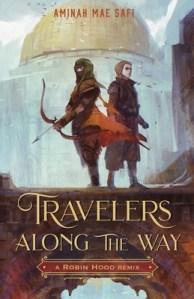
Book: “Travelers Along the Way: A Robin Hood Remix” by Aminah Mae Safi

Publishing Info: Feiwel Friends, March 2022

Where Did I Get This Book: The library!

Where You Can Get This Book: WorldCat | Amazon | Indiebound

Retelling/Reimagining: Robin Hood

Book Description: Jerusalem, 1192. The Third Crusade rages on. Rahma al-Hud loyally followed her elder sister Zeena into the war over the Holy Land, but now that the Faranji invaders have gotten reinforcements from Richard the Lionheart, all she wants to do is get herself and her sister home alive.

But Zeena, a soldier of honor at heart, refuses to give up the fight while Jerusalem remains in danger of falling back into the hands of the false Queen Isabella. And so, Rahma has no choice but to take on one final mission with her sister.

On their journey to Jerusalem, Rahma and Zeena come across a motley collection of fellow travelers—including a kind-hearted Mongolian warrior, an eccentric Andalusian scientist, a frustratingly handsome spy with a connection to Rahma’s childhood, and an unfortunate English chaplain abandoned behind enemy lines. The teens all find solace, purpose and camaraderie—as well as a healthy bit of mischief—in each other’s company.

But their travels soon bring them into the orbit of Queen Isabella herself, whose plans to re-seize power in Jerusalem would only guarantee further war and strife in the Holy Land for years to come. And so it falls to the merry band of misfits to use every scrap of cunning and wit (and not a small amount of thievery) to foil the usurper queen and perhaps finally restore peace to the land.

Kate’s Thoughts

I was very happy that book club decided to do a Re-imaginings and Remixes theme for this new session, as I like seeing the way that authors will recreate classic characters and settings with new twists and turns. But, because of course this had to happen, we started with a story whose source material I am patently unfamiliar with. Yeah, I never got much into Robin Hood, outside of the Disney version, Mel Brooks’s film “Robin Hood: Men in Tights”, and one viewing of “Robin Hood: Prince of Thieves” with two college friends who were as obsessed with Alan Rickman as I was. So I went into “Travelers Along the Way” knowing full well I was going to be potentially adrift without knowledge of source material. Which meant that author Aminah Mae Safi had a heftier job to do due to my unfamiliarity.

I’m happy to report that even without a foundational knowledge beyond a sexy fox, a spoof, and Bryan Adams, I was very into “Travelers Along the Way”. I really enjoyed all of the characters as we gathered them up and got to know them, and I enjoyed trying to figure out who was supposed to be whom (though I did have to ask more knowing people in book club, i.e. Serena, who a few of the counterparts were). I think that my favorite aspect of this was how both Rahma and Zeena have such different personalities and opinions on how they should be proceeding, and how they butt heads but still care deeply for each other, even if there is undercurrents of tension between them. I especially liked how by gender bending the characters AND giving it the POV of the OTHER side of the Crusades that Robin Hood wasn’t really dealing with in a tangible way that we got a glimpse into just how fucked everything was for the common people in the Holy Land, especially women. And finally, I enjoyed how Safi gave us not only insights into the main group of characters who were the Robin Hoo equivalents, but also into the minds and motivations of the warring figureheads, be it King Richard, Queen Isabella, or Salah al-Din Yusuf ibn Ayyub. I didn’t feel like we waded into any problematic areas by getting into their minds a little bit, but it did show the deep, deep complexities that came with this truly awful and violent conflict.

Overall, I enjoyed this one! I don’t have much to compare it to, source content wise, but it was a fun listen and it was a well done re-imagining!

Serena’s Thoughts

I’ve read and watched a lot of versions of “Robin Hood.” My sister and I, predictably, loved “Robin Hood: Men in Tights” when we were younger, mostly because we had a crush on Carey Elwes, of course. My devotion to the tale even extended to watching the horrendous Russell Crowe adaptation that came out in 2010. Thank goodness this version is way, way better than that one!

There was a lot to like about this version of the classic tale. For one thing, I think it was really interesting to change the setting from England to the Middle East. I have to say, I’m not overly familiar with this period of time or the actual strategy and political mechanizations at work in the Middle East during the Crusades. This is a fairly short book with a lot to pack in, but I was impressed by what we got as far as the dynamics all swirling around at once during this period of time. Particularly, I thought it was interesting how the author delved into the three major religions that all hold Jerusalem as a sacred city and how this causes constant tension for all involved.

I also really liked the gender-swapping of all the characters. And boy, there were a lot of characters. But, again, especially for a rather short story, I was impressed by how well I felt like I knew every one of the “merry men/women” that made of the band of thieves. They were slowly introduced over the course of the story, but even with some of the later characters that came onto the scene, I felt like I cared about them all. Of course, I had favorites, like our main character and her fiery sister Zeena. I really liked the exploration of their sibling dynamic, and much of the love and frustration all felt very real and sympathetic.

I do wish we had seen a bit more of Rahma’s famed abilities with a bow and arrow. We hear a lot about it, but we don’t really see it much on the page until pretty close to the end of the novel. That said, I liked how the author worked in the green hood and other classic aspects of the Robin Hood tale. Overall, I definitely recommend this book to all Robin Hood fans!

Kate’s Rating 8: An intriguing re-imagining of “Robin Hood” that looks to a very different situation regarding the conflict at the heart of the original tale.

Serena’s Rating 8: A really clever reimaging of the classic tale with enough to make it familiar but a lot of new takes on characters and setting.

Book Club Questions

  1. How familiar were you with other versions of the Robin Hood story before reading this one? How does this stack up to any others you’ve read/seen?
  2. As a reimaging of the original story, many of the characters appear very different here then they do in their traditional form. Were you able to identify most of the characters with their counterparts? Were there any that you felt were particularly successful/unsuccessful reimagings?
  3. The version of Robin Hood is still set during the Crusades, however it changes the location from England to the Middle East, particularly the cities around Jerusalem. How much did you know about this period of time before reading this? Was there anything that stood out to you about how it was portrayed here?
  4. There are a few interludes in this story told from other characters’ perspectives. What did you think of these chapters? What did they add to the story or did they distract you from the primary plot?
  5. Our bookclub had a lot of fun going over the chapter titles. Did you notice these? Did you have any favorites?

Reader’s Advisory

“Travelers Along the Way: A Robin Hood Remix” is included on the Goodreads lists Gender Flip and Books That Are Perfect for Assassin’s Creed Fans.

Next Book Club Pick: “The Poison Heart” by Kalynn Bayron

Book Club Review: “Interpreter of Maladies”

This post may contain affiliate links for books we recommend.  Read the full disclosure here.

We are part of a group of librarian friends who have had an ongoing book club running for the last several years. Each “season” (we’re nerds) we pick a theme and each of us chooses a book within that theme for us all to read. Our current theme is “Book Bingo” where we drew reading challenges commonly found on book bingo cards from a hat and chose a book based on that.  For this blog, we will post a joint review of each book we read for book club. We’ll also post the next book coming up in book club. So feel free to read along with us or use our book selections and questions in your own book club!

Book: “Interpreter of Maladies” by Jhumpa Lahiri

Publishing Info: Houghton Mifflin Harcourt, April 1999

Where Did I Get This Book: The library!

Where You Can Get This Book: WorldCat | Amazon | Indiebound

Book Bingo Prompt: A book with AAPI main characters.

Book Description: Navigating between the Indian traditions they’ve inherited and the baffling new world, the characters in Jhumpa Lahiri’s elegant, touching stories seek love beyond the barriers of culture and generations. In “A Temporary Matter,” published in The New Yorker, a young Indian-American couple faces the heartbreak of a stillborn birth while their Boston neighborhood copes with a nightly blackout. In the title story, an interpreter guides an American family through the India of their ancestors and hears an astonishing confession. Lahiri writes with deft cultural insight reminiscent of Anita Desai and a nuanced depth that recalls Mavis Gallant.

Kate’s Thoughts

It’s not often that book club takes on a literary tale, so this time around we were stretching our limits with Jhumpa Lahiri’s well beloved short story collection “Interpreter of Maladies”. I’m someone who does try to tackle literary fiction every once in awhile, and this had been on my list, so I was excited to finally check it out, short stories aside. As we all know, short stories and I don’t always get along, but I like to think that I am game when it comes to book club! And overall I definitely appreciated the acclaim this book has, and how important it was when it first came out.

As always, I will focus on the stories I liked best. The first one that really stood out to me was “When Mr. Pizada Came to Dine”. This one is told from the perspective of a little girl whose family opens up their dinner table to a man named Mr. Pirzada, who is in the U.S. for research and away from his wife and daughters who are still in Pakistan. As our narrator gets closer to Mr. Pirzada, she learns about the conflict he left at home, as well the divides between India and Pakistan, and the Civil War and ongoing conflict going on between Pakistan and India that leaves Mr. Pirzada wondering how his family is doing. This one is through the eyes of a child, but definitely conveys the emotional conflict that the family friend is going through, as well as conveying a coming of age understanding about a life that she has never known, but is happening across the world. I was very invested in Mr. Pirzada and his family, and thought that the emotional beats were well achieved. The other story that really stood out was “This Blessed House”, which is the story of Sanjeev and Twinkle, newlyweds who are settling into their new home in Connecticut. As they look through the house they keep finding Catholic symbols and objects, and while Twinkle is tickled, Sanjeev is more and more frustrated with her fixation. I thought this one had some very funny moments, but I also liked the examination of a newly married couple who are still getting to know each other, and perhaps realizing each other’s foibles.

There were other well done stories in this collection, and I found Lahiri’s writing style and gifts for imagery to be stark and very engaging. It has a lot of difficult themes, from family strife to racism to trauma and loss, but they all come together in the end to make a well realized and melancholy collection of experiences of Indian Americans from all backgrounds and back stories. While I still have a hard time with short story collections based on my own personal biases wtih the format, I thought that “Interpreter of Maladies” did a really good job of stringing them together even without making direction connections. I’m glad that we tackled it, because it gave me the push to actually check it out!

Rating 8: A well written and melancholy collection of stories about love, loss, culture, and identity, “Interpreter of Maladies” is lyrical and powerful.

Book Club Questions

  1. Do you have a favorite story in this collection? What was it about that story you liked?
  2. This book has a lot of themes involving love and marriage. What were your thoughts on the different romantic relationships in the various stories?
  3. The immigration theme in this book has a focus on struggle and difficulties to adjust to a new culture and home. Do you think that a lens of struggle is seen as much in stories about the immigrant experience these days as opposed to twenty years ago?
  4. What did you think of the writing style in this book? Did you feel that it connected the stories together well?
  5. Who would you recommend this book to?

Reader’s Advisory

“Interpreter of Maladies” is included on the Goodreads lists “South Asian Fiction by Women”, and “Immigrant Voices (Fiction)”.

Next Book Club Pick: “Travellers Along the Way” by Aminah Mae Safi

Book Club Review: “In a Midnight Wood”


This post may contain affiliate links for books we recommend.  
Read the full disclosure here.

We are part of a group of librarian friends who have had an ongoing book club running for the last several years. Each “season” (we’re nerds) we pick a theme and each of us chooses a book within that theme for us all to read. Our current theme is “Book Bingo” where we drew reading challenges commonly found on book bingo cards from a hat and chose a book based on that.  For this blog, we will post a joint review of each book we read for book club. We’ll also post the next book coming up in book club. So feel free to read along with us or use our book selections and questions in your own book club!

Book: “In a Midnight Wood” by Ellen Hart

Publishing Info: Minotaur Books, September 2020

Where Did I Get This Book: The library!

Where You Can Get This Book: WorldCat | Amazon | Indiebound

Book Bingo Prompt: A cozy mystery.

Book Description: Beloved heroine Jane Lawless finds that some secrets don’t stay buried forever in Mystery Writers of America Grandmaster Ellen Hart’s In a Midnight Wood, the 27th mystery in this cultishly popular series.

Minnesota private investigator Jane Lawless is headed to the small town of Castle Lake for a little getaway. She and Cordelia plan to visit an old friend, participate in an arts festival, and look into a cold case that has recently come on Jane’s radar–thanks to a podcast Jane is now involved in which looks into Minnesota cold cases.

In Castle Lake, a high school senior named Sam went missing in 1999. Everyone thought he ran away, though the town rumor mill has always claimed the father killed him. In present day, within a week of his 20th high school reunion, Sam’s remains are found. People who knew Sam, and those around him, will be in town for the much anticipated reunion. It’s up to Jane to sort friend from foe, before it’s too late.

Kate’s Thoughts

Outside of the “Tita Rosie Kitchen Mysteries”, I don’t really do many ‘cozy mysteries’ when it comes to the litany of mystery sub genres. I’ve dabbled here and there, but it’s not really my thing. But Book Club is always making me challenge myself, and when it was a cozy mystery prompt, I went in with an open mind. Oddly enough, even though I’ve worked for multiple public library systems in Minnesota, I had never heard of local author Ellen Hart or her character Jane Lawless, so “In a Midnight Wood” was completely new to me as a title and series. I had no idea what to expect in terms of specifics, but had some preconceived notions based on the sub genre, and I was, mostly correct.

“In a Midnight Wood” has a lot of really charming elements to it. The most obvious are our main character Jane and her ride or die best friend Cordelia. I really enjoyed their friendship and they way they interacted with each other, and I liked that we were getting a story about two aging lesbian best friends who have each other’s backs, but also call each other out on their nonsense. While I was jumping into a series 20+ books in, I still felt like I got to know Jane and Cordelia and who they were as people in spite of the fact I have missed OODLES of backstory. I also, being a Minnesotan, really liked the Minnesota setting in the fictional town of Castle Lake. It just felt like an outstate Minnesota town, with the insular community, the main street area with beloved local businesses, and the descriptions of chain of lakes food specialties, from burger joints to mentions of some favorite local beers (Grain Belt forever!)

On the flip side, the mystery and plot itself was fairly generic and run of the mill. I had a pretty good idea of what was going on, and the beats of twists and red herrings and reveals were fairly easy to spot. It also felt a little out of time in some ways, as the mystery at hand involves people who graduated in 1999, but as adults sound less like elder millennials and a bit older than that. And finally, and this is purely reflective of the choice we as a book club made and not on the book itself, jumping into a long running series twenty plus books in may have been a bit of a mistake. Not one that derailed the experience or anything! But there were definitely references to past characters long gone that seemed meaningful, but were meaningless to me as a reader with no context.

Overall, “In a Midnight Wood” was an entertaining choice for Book Club. I don’t think I’m going to tackle the series as a whole, but it made for a good discussion.

Kate’s Rating 6: I liked Jane and her friend Cordelia, and I loved the Minnesota references and location, but the mystery itself was pretty run of the mill. And jumping into a series 20+ books in was probably a mistake.

Book Club Questions

  1. Have you read any cozy mysteries before this book? If so, how does this one fit the genre and what did you think of it within said genre? If not, do you think you’d read others?
  2. What did you think of the setting that Hart created? Did the town and the people there engage your interest?
  3. This series started in the late 1980s and has been going on ever since. If you haven’t read this series, how do you imagine it has changed as time has gone on, and if you have, what have you noticed about the changes in the characters and their journeys?
  4. Do you think you will continue on in this series, be it going back to the beginning, or picking and choosing plots that sound interesting to you?
  5. Jane has her own true crime podcast. Do you listen to any podcasts, true crime or otherwise?
  6. There are a lot of awesome bits about food in this book. Did any of the foods stand out to you as something you’d want to eat?

Reader’s Advisory

“In a Midnight Wood” isn’t included on any Goodreads lists that I could find, but it would probably fit in on “Small Towns With Secrets”.