Book Club Review: “Superman Smashes the Klan”

This post may contain affiliate links for books we recommend.  Read the full disclosure here.

We are part of a group of librarian friends who have had an ongoing book club running for the last several years. Each “season” (we’re nerds) we pick a theme and each of us chooses a book within that theme for us all to read. This June we celebrated our 10 year anniversary of book club. So in celebration of that milestone, we are re-visiting authors we read way back in those first few years of our book club. For this blog, we will post a joint review of each book we read for book club. We’ll also post the next book coming up in book club. So feel free to read along with us or use our book selections and questions in your own book club!

Book: “Superman Smashes the Klan” by Gene Luen Yang & Gurihiru (Ill.)

Publishing Info: DC Zoom, May 2020

Where Did We Get This Book: Kate owns it; Serena got it from the library!

Where You Can Get This Book: WorldCat.org | Amazon | Indiebound

Repeat Author: Gene Luen Yang

Book Description: The year is 1946, and the Lee family has moved from Chinatown to Downtown Metropolis. While Dr. Lee is eager to begin his new position at the Metropolis Health Department, his two kids, Roberta and Tommy, are more excited about being closer to the famous superhero Superman!

Tommy adjusts quickly to the fast pace of their new neighborhood, befriending Jimmy Olsen and joining the club baseball team, while his younger sister Roberta feels out of place when she fails to fit in with the neighborhood kids. She’s awkward, quiet, and self-conscious of how she looks different from the kids around her, so she sticks to watching people instead of talking to them.

While the Lees try to adjust to their new lives, an evil is stirring in Metropolis: the Ku Klux Klan. The Klan targets the Lee family, beginning a string of terrorist attacks. They kidnap Tommy, attack the Daily Planet, and even threaten the local YMCA. But with the help of Roberta’s keen skills of observation, Superman is able to fight the Klan’s terror, while exposing those in power who support them–and Roberta and Superman learn to embrace their own unique features that set them apart.

Kate’s Thoughts

This isn’t the first time I’ve read this book, as I’m sure some of you will remember that I reviewed it a couple years ago (and it even ended up on my Best Of list that year). But I knew that when I was going to select an author to revisit I was going to to Gene Luen Yang, and “Superman Smashes the Klan” just seemed like the correct choice. And my opinion hasn’t changed too much since I first read it. I still really love this graphic novel.

Yang takes a very heavy (but still all too relevant) story about racism and prejudice in America, f0llowing the Lees, a Chinese American who have just moved to a predominantly white neighborhood in Metropolis after living in Chinatown, in the 1940s. As they all have their own strategies (and struggles) in adjusting, it doesn’t help that the Klan of the Fiery Cross (a clear analog to the KKK) has started targeting them. Meanwhile, Superman befriends the Lees, and his still coming to terms with his own identity, as an alien who has tried to pass as human when he is Clark Kent, and who is revered in his Superman identity, though he knows that people could shift on him at the drop of a hat. I loved the comparing and contrasting of the Lees and Superman and their inner conflicts about how to assimilate and how to be ‘ideal’ without being threatening. Yang actually took a previous story from the Superman radio show and expanded it in this story, and he makes it so easily accessible to his target audience, making it very digestable and very relatable and readable. And as I said, the themes in this book of racism and bigotry and Othering are still far too relevant, which makes it all the more necessary reading for kids, and packaged so well with such a fantastic interpretation of a beloved comic character who always symbolizes the very best of us.

“Superman Smashes the Klan” is still a fantastic read. I enjoyed it just as much this time as the first time, and it fostered from great conversations in our book club.

Serena’s Thoughts:

Unlike Kate, I hadn’t read this one before. But like Kate, I am a massive Superman fan, so was excited to check it out! And I can definitely see what all the fuss was about! This was an excellent graphic novel in pretty much every way.

The story manages to take on some very heavy themes (pretty easy to guess which based on the title alone) but does so in a manner that is both approachable to kids and useful to adults. Even more impressive, for covering some difficult topics, the reading experience is still an expression of joy and hope. I think this is incredibly important for any Superman story and was pleased to see how well the overall tone of Superman was captured. This probably shouldn’t be a surprise as I know that the author has written other Superman stories as well.

I particularly enjoyed the exploration of the immigrant experience and how Superman’s own alien origins played into this. As most Superman fans know, the character was originally presented without the ability to fly, only the ability to “jump over tall buildings.” Here, that idea is taken on and presented as Superman’s concerns of expressing his full abilities due to an incident when he was younger in which the people of Smallville reacted with fear to the full range of his “otherness.” It was such an interesting way of tackling not only an interesting fact about the character but of the many challenges of the immigrant experience.

I also very much appreciated the historical aspects of the story, especially author’s note at the end that went into more details about the origins of the story itself. This is a great read for any Superman fan and well worth a read!

Kate’s Rating 9: Still a great read and still all too relevant, “Superman Smashes the Klan” is a fantastic piece of historical fiction and a wonderful look at the immigrant experience in the face of prejudice, whether you are from Earth or Krypton.

Serena’s Rating 8: Tackling tough topics while maintaining the sense of hope in humankind that is so crucial to the Superman mythos.

Book Club Questions

  1. What did you think of the story of the Lee Family and how it brings together a story of culture, assimilation, racism, and identity?
  2. Were you familiar with some of the timelines described in this book in regards to the KKK in this country’s history? Did any of these revelations surprise you?
  3. What were your thoughts on the comparison and contrast between Superman’s experience as an Other and that of the Lee family?
  4. Did you enjoy how Yang incorporated Superman’s original leaping powers into this story, as well as other powers that evolved over time?
  5. What were your thoughts on the reveal of the identity behind the Grand Mogul? What do you think Yang was trying to say with that twist?
  6. Let’s talk about the different kinds of racism and bigotry in this book, from out and out Klansmen to more ‘acceptable’ and covert forms of racism (i.e. Chuck’s mom, even Mr. Lee’s prejudice against Black people). Thoughts on that?
  7. Who would you recommend this book to? How would you use it as a connector to today’s social issues?

Reader’s Advisory

“Superman Smashes the Klan” is included on the Goodreads lists “Superheroes, Comics, and Social Justice”, and “Best of Superman”.

Next Book Club Pick: “Summer Days and Summer Nights” by Stephanie Perkins (Ed.)

Book Club Review: “A Study in Emerald” & “Snow, Glass, Apples”

This post may contain affiliate links for books we recommend.  Read the full disclosure here.

We are part of a group of librarian friends who have had an ongoing book club running for the last several years. Each “season” (we’re nerds) we pick a theme and each of us chooses a book within that theme for us all to read. This June we celebrated our 10 year anniversary of book club. So in celebration of that milestone, we are re-visiting authors we read way back in those first few years of our book club. For this blog, we will post a joint review of each book we read for book club. We’ll also post the next book coming up in book club. So feel free to read along with us or use our book selections and questions in your own book club!

NOTE: At the beginning of July, accusations of abuse and sexual assault were made against Neil Gaiman by two women. When our book club selected, met and read “A Study in Emerald” and “Snow, Glass, Apples” and we wrote our reviews, this information had not yet come to light. These accusations are deeply concerning and upsetting. Since we had committed to review these books on the blog before these accusations came to light, we’ve decided to post our reviews of these books to fulfill that commitment. That said, if you or someone you know needs help or wants to find someone to speak with confidentially, HERE is a link to RAINN’s resource page, which also links to more information about the organization in general and how to support victims of sexual violence.

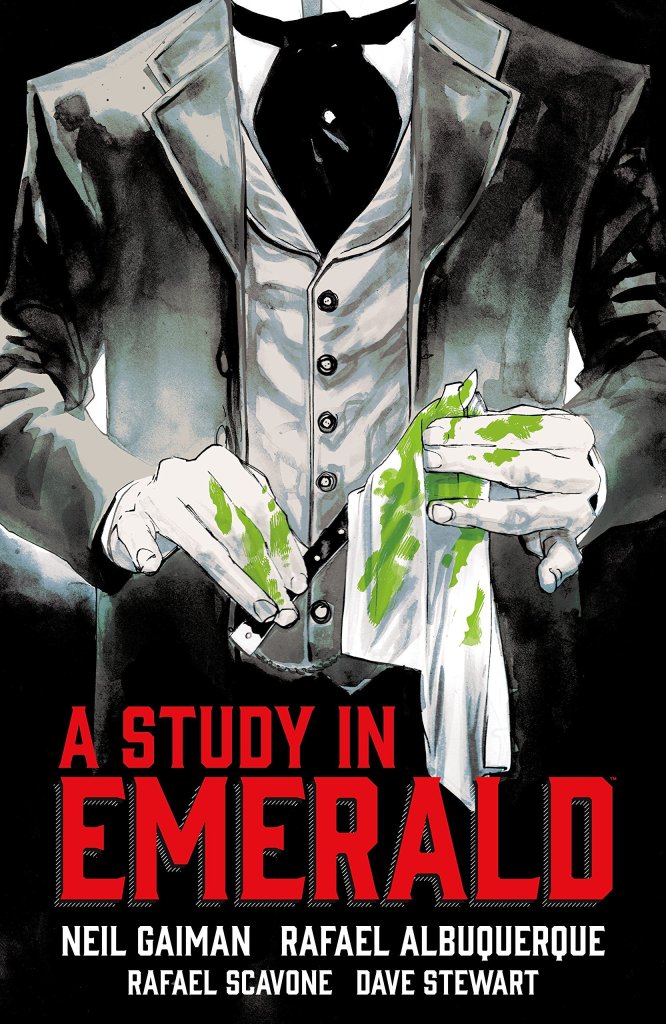
Book: “A Study in Emerald” by Neil Gaiman and Rafael Albuquerque (Illustrator), Rafael Scavone, Dave Stewart (Illustrator)

Publishing Info: Dark Horse Books, June 2018

Where Did We Get This Book: The library!

Where You Can Get This Book: WorldCat.org | Amazon | Indiebound

Repeat Author: Neil Gaiman

Book Description: The complex investigation takes the Baker Street investigators from the slums of Whitechapel all the way to the Queen’s Palace as they attempt to find the answers to this bizarre murder of cosmic horror!

From the Hugo, Bram Stoker, Locus, World Fantasy, Nebula award-winning, and New York Times bestselling writer Neil Gaiman comes this graphic novel adaptation with art by Eisner award winning artist Rafael Albuquerque!

Kate’s Thoughts

It’s interesting. As someone who loves a good mystery and thriller, I haven’t read TOO much Sherlock Holmes (outside of the stories I read in middle school for English class, and “The Hound of the Baskervilles” for book club way back when). And as someone who loves horror, I haven’t read ANY H.P. Lovecraft. But I know enough about Holmes, Watson, Baker Street, and Cthulhu thanks to the pop culture and literary zeitgeist. So I could absolutely appreciate a LOT about “A Study In Emerald”, which brings the mythos of Lovecraft’s cosmic horrors to Baker Street and Victorian London. It’s a creative mashup, and I found the story up to the task.

I really enjoyed the creeping horror of this tale, and how it does harken back to the classic Holmes cases, and not just through the characters that we see on the page. There are fun references to other mysteries, there is definitely a Sir Arthur Conan Doyle air to the way that the story unfolds, and the way that Gaiman weaves in the Old Ones and Cthulhu into the story and makes it just seamlessly fit in is really fun. It also works as an interesting comment upon the Colonialist impact that England was having across the world, as the Old Ones are coming in and ruling over everyone with a malicious intent towards power and conquest. And I always enjoy the artwork of Raphael Albuquerque, and his style works really well in this story. It’s compelling and fun, and while it’s a stand alone short story it feels very established. It’s a lot of fun, and I enjoyed it very much.

Serena’s Thoughts

I loved this book! There were so many clever ideas all mixed together in a way that felt totally fresh and unique. And given how many adaptations and variations there have been on Sherlock Holmes and Watson, producing something that feels truly original is quite the accomplishment! Of course, the primary factor there comes down to the inclusion and use of Lovecraft’s classic horror creatures. But there is definitely a way that this could have gone very wrong. Instead, Gaiman never over-played his hand. And while the alternate timeline/history of this world and the role the Old Ones play in it was very interesting, at its heart, the story is still very much a classic Sherlock Holmes mystery. From the framing of the story from the companion’s perspective to the use of verbose language with only limited dialogue, it all felt perfectly in line with the tone of the original. Despite the fact that there are tentacled royalty ruling the world!

I also enjoyed the big twist at the end. As a big Sherlock fan, I was suspicious that this was where we were headed fairly early, but that still didn’t diminish how effective it was. I also think that it was subtle enough that it could still play as a pretty big twist for the majority of readers. It was a clever case of “look at this hand and not the other,” using the Lovecraft elements to great effect. The art also worked perfectly with the overall tone. The sepia color palette worked well to create a sense of the time period, and the inclusion of the little advertisements between chapters was excellent.

Really, my only criticism is that in some ways it felt like the prequel to a series. I immediately went on Goodreads hoping to line up the sequel. But alas. I’d definitely read more in this world if given the chance, and I think this is a great read for all Holmes fans out there!

Kate’s Rating 8: A creative mash up of two literary icons makes for an interesting adaptation that works incredibly well.

Serena’s Rating 9: Clever and unique, which is truly an accomplishment considering the plethora of adaptations out there for both Holmes and Lovecraft’s creatures!

Book Club Questions

  1. What were your thoughts on the surprise reveal at the end of the book? Did you see it coming? Did you think it fit well?
  2. Did you like the theme as the monarchs of Europe actually being Old Ones from Lovecraft’s stories?
  3. Did you enjoy the throw back advertisements that separated the sections of the story?
  4. This is a graphic novel that was told purely in captions and with little to no actual speech bubbles. Did you like this creative choice?
  5. What did you think of the art style of this story? Did you feel like it fit the tone of the narrative?

Reader’s Advisory

“A Study in Emerald” is included on the Goodreads lists A Study in Sherlock Holmes and Lovecraft in Victorian Era.

Book: “Snow, Glass, Apples” by Neil Gaiman and Colleen Dorman (Illustrator)

Publishing Info: Headline, August 2019

Where Did We Get This Book: The library!

Where You Can Get This Book: WorldCat.org | Amazon | Indiebound

Repeat Author: Neil Gaiman

Book Description: A chilling fantasy retelling of the Snow White fairy tale by bestselling creators Neil Gaiman and Colleen Doran.

A not-so-evil queen is terrified of her monstrous stepdaughter and determined to repel this creature and save her kingdom from a world where happy endings aren’t so happily ever after.

From the Hugo, Bram Stoker, Locus, World Fantasy, Nebula Award-winning and Sunday Times-bestselling writer Neil Gaiman (American Gods) comes this graphic novel adaptation by Colleen Doran (Troll Bridge).

Kate’s Thoughts

I already love a fairytale retelling, especially if it is a bit dark and twisted. And I have come to enjoy “Snow White” more as of late because my daughter got a Snow White dress during our Spring Break trip to Disney, which has made me all the fonder of the story. But then you add in not only a version that is told from the perspective of the Evil Queen AND it has a vampire Snow White?? OH HELL YES. Gaiman knows how to do dark in his stories, and this one is SO creepy and twisted, telling a story about a young queen who finds herself a stepmother to a monstrous vampiric child, and wants to keep her kingdom safe from the predatory nature of the girl whose skin is white as snow and lips are red as blood. Snow White’s Evil Queen is so two dimensional in the original tale and many tales that came after it, so for Gaiman to not only make her the protagonist but to also make her flawed but generally a good hearted woman who is trying to use magic to help her subjects is so excellent and such a breath of fresh air. I loved the subversions in the magical elements, and how it harkens to the source material but tweaks it into something new. And something REALLY disturbing.

And I absolutely loved the art style in this book. It feels like a combination of medieval tapestries and art deco aesthetic, and there are so many gorgeous details that leap off the page. It’s truly breathtaking, with few actual panels but free form mural-esque spilling into each other. But it still remains linear and easy to follow along with the very detailed and complex designs. Our book club host asked us what our favorite image was, and I had such a hard time picking because there are so many amazing images.

I loved “Snow, Glass, Apples”. What a compelling reimagining of “Snow White”.

Serena’s Thoughts

I also really enjoyed this one! Probably no great shocker as I love fairytale re-tellings, especially twisted versions of the story. This one, told from the perspective of the “evil” step-mother succeeded on a lot of fronts. First of all, I absolutely adored this art style! I found myself reading this one much more slowly than the first, simply because I wanted to look at all the intricate details on every singled panel. There are several pages that I would buy and frame and put up in my home library, they were that beautiful. I also really enjoyed the “stream of consciousness” style the art used, with several spreads effectively moving the reader through the page without the use of panels or blocks.

I also enjoyed the twist on the “Snow White” tale. I wasn’t prepared for just how dark it was going to get! Fairly early in the story, the reader is introduced to the major “twist” to the tale and you think “Ok, I get where the darkness is going to go.” And then you get about two-thirds of the way and and it’s like “Oh! Nope, this went way darker and in a way more disturbing direction than I had expected!” For the most part, I think this darkness all worked. That said, there were a few brief moments and details that did feel like they were there purely for shock value and not any real narrative purpose.

Overall, I thought this was a very interesting re-imaging of the classic tale. I think the art really stole the show for me. And while I think many fans of dark fantasy will enjoy this one, it’s definitely NSFW, so keep that in mind if you’re reading it in public!

Kate’s Rating 9: A disturbing but horrifically gorgeous reimagining of Snow White.

Serena’s Rating 8: Horrifying in the best way, but the gorgeous art was really the win as far as I’m concerned!

Book Club Questions

  1. What did you think of following the Queen’s POV in this story? Are you used to seeing her side of the “Snow White” story?
  2. Did you buy into the idea of a vampire Snow White? Why or why not?
  3. What are your thoughts on how Gaiman subverted the witchcraft in this versus the original?
  4. What did you think of the aspect of the Spring Faire in this tale and how it related to the Queen’s motivation in the story?
  5. Did you like the art style in this? Did it fit the tone of the tale?

Reader’s Advisory

“Snow, Glass, Apples” is included on the Goodreads lists Snow White Retellings and Graphic Novels with Fairytale or Mythical elements

Next Book Club Pick: “Superman Smashes the Klan” by by Gene Luen Yang

Book Club Review: “What the Wind Knows”

This post may contain affiliate links for books we recommend.  Read the full disclosure here.

We are part of a group of librarian friends who have had an ongoing book club running for the last several years. Each “season” (we’re nerds) we pick a theme and each of us chooses a book within that theme for us all to read. Our current theme is Centuries, where we were given a random century and had to pick a book based during that time period.  For this blog, we will post a joint review of each book we read for book club. We’ll also post the next book coming up in book club. So feel free to read along with us or use our book selections and questions in your own book club!

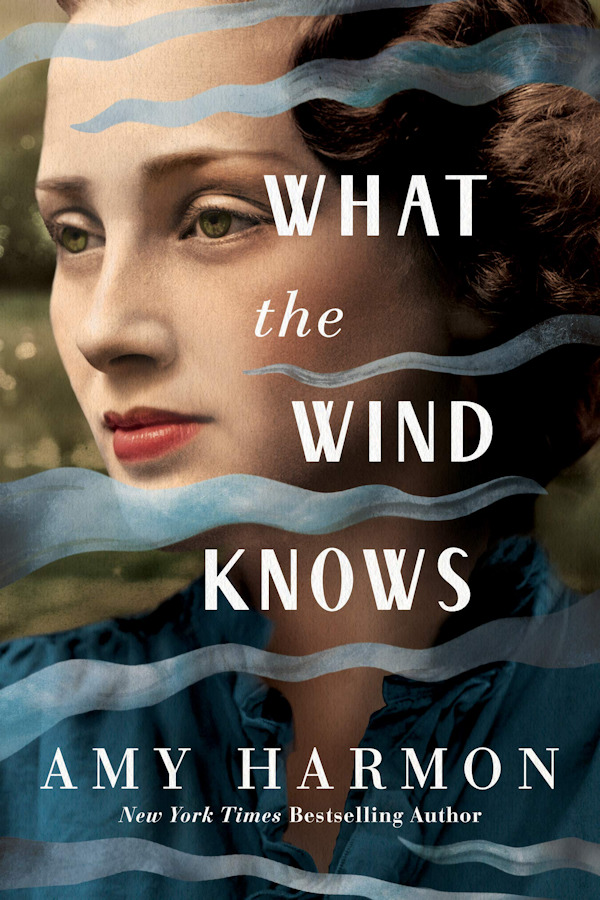
Book: “What the Wind Knows” by Amy Harmon

Publishing Info: Lake Union Publishing, March 2019

Where Did We Get This Book: The library!

Where You Can Get This Book: WorldCat.org | Amazon | Indiebound

Century: 20th

Book Description: Anne Gallagher grew up enchanted by her grandfather’s stories of Ireland. Heartbroken at his death, she travels to his childhood home to spread his ashes. There, overcome with memories of the man she adored and consumed by a history she never knew, she is pulled into another time.

The Ireland of 1921, teetering on the edge of war, is a dangerous place in which to awaken. But there Anne finds herself, hurt, disoriented, and under the care of Dr. Thomas Smith, guardian to a young boy who is oddly familiar. Mistaken for the boy’s long-missing mother, Anne adopts her identity, convinced the woman’s disappearance is connected to her own.

As tensions rise, Thomas joins the struggle for Ireland’s independence and Anne is drawn into the conflict beside him. Caught between history and her heart, she must decide whether she’s willing to let go of the life she knew for a love she never thought she’d find. But in the end, is the choice actually hers to make?

Kate’s Thoughts

I will be honest, when I read the description of this book my initial thought was ‘so….. “Outlander” but Ireland?’ Which isn’t quite right (though don’t ask me to elaborate as I haven’t READ “Outlander” nor have I watched the show, but I just know it’s different, okay?). But I was still a little hesitant because it just didn’t really seem like my jam. But I pride myself on being a good sport, and I’m always game to give a book club book a try. And it was, as predicted, a bit of a mixed bag, but probably not because of the book itself and because of my own personal tastes.

So I will focus on what I did like, and that was the setting of “What The Wind Knows”. I know a pretty minimal amount about the history of Ireland, or perhaps it’s more fair to say a broad stroked history. I have some working knowledge of The Troubles, but had very little knowledge of the things that led up to it in the 20th Century, so seeing this story take place at what was in part the start of the domino effect was really enlightening, and I really, really liked how Harmon took this time period and brought it to life. I also liked the way that the time travel aspect of Anne’s presence in this time knowing how all of this was going to play out over the decades, and having to be VERY careful in how she approached the people she has come to care for with this knowledge in the back of her mind was a really fascinating angle. It also led to some serious tension as some dangerous people start to think that she may be a spy for British interests, and man was THAT nerve wracking. All that said, I wasn’t as invested in the romance between Anne and Thomas, and the fantasy elements didn’t really do much for me as a whole, but I want to reiterate that I am not, in general, a person who likes the genre. So it’s not really shocking that the historical elements clicked more for me.

Overall “What the Wind Knows” was fine. Fans of time travel fantasies will probably connect more than I did!

Serena’s Thoughts

Readers of the blog may already be somewhat familiar with Amy Harmon’s books, as I’ve reviewed a few of them over the years. One was a YA fantasy novel which I loved and the other was a historical fiction piece that was rough with its darker themes at times, but good. So i went into this book expecting to like it. Not only was it combining two of my favorite genres (historical and fantasy) but I enjoy Harmon’s lyrical, low key style of writing. And, for the most part, this all panned out!

I often struggle with time travel stories. There are just too many ways for this sort of plot to go wrong, often leaving me bogged down in ultimately unimportant details that take me out of the story. Even authors I’ve enjoyed in the past have struggled in this area (see Adrienne Young’s latest book!). But I was pleased by the way that Harmon handled it here. In that, she really didn’t go into any of the details of how this all worked much at all. Our main character travels through time in some magical manner, and other than that, very little thought goes into the actual mechanics of how this all worked. Further, while the time travel element comes into to the plot in many of the ways you’d expect, it also wasn’t overly fixated on in a way that would be distracting.

Instead, much of the focus was on the historical aspects of the story itself. I wasn’t overly familiar with this point in history, but I think Harmon did a great job of presenting it for readers who are both knowledgeable and less so. Further, I was impressed by her ability to bring in real-life characters and write them in a way that felt believable and true to character. Mostly this came down to judicious use of these characters, only having them on-page during a few select scenes.

I also enjoyed the slow burn romance. This is a bit of a staple as far as Harmon’s writing goes, but I always enjoy the fairly straight-forward, sweet nature of her love stories. I could quibble about the timing of Anne’s sharing her true nature with Thomas, but that’s really neither here nor there as far as the actual story goes. I also enjoyed the mystery at the heart of Anne’s story, which I think added a nice point of balance to the romantic plotline, adding some tension and stakes to what could have otherwise been an overly sentimental tale. Readers who enjoy romantic historical fiction will likely enjoy this one, though it is definitely on the slower side!

Kate’s Rating 6: I loved the setting and the time period, but the fantasy and romance didn’t click as well for me (though this is very much a case of ‘your mileage may vary’).

Serena’s Rating 8: Harmon delivers again with a sweet, romantic tale that also dives deeply into the tensions of a specific point and place in history.

Book Club Questions

  1. How much did you know about this particular point in history? Were you familiar with any of the real life individuals? How well do you think they were portrayed?
  2. Time travel can be a tricky element in fiction. How does this book’s use of time travel compare to others?
  3. The story explores themes of patriotism, trust, and the lengths to which people will go in pursuit of what they believe is right. What stood out to you with these themes?
  4. There are two primary relationships that drive this story: the romance and the relationship between Anne and Eoin. How well did you connect to these relationships?
  5. There are numerous moments where Anne’s decisions in the past connected to the future. Which of these stood out to you?
  6. What do you think would be the most challenging part of travelling through time like Anne did here?

Reader’s Advisory

“What the Wind Knows” is included on the Goodreads lists Best for Book Clubs (ha!) and The Best Time-Travel Romance Novels.

Next Book Club Pick: “A Study in Emerald” and “Snow, Glass, Apples” by Neil Gaiman

Book Club Review: “The Witch of Blackbird Pond”

This post may contain affiliate links for books we recommend.  Read the full disclosure here.

We are part of a group of librarian friends who have had an ongoing book club running for the last several years. Each “season” (we’re nerds) we pick a theme and each of us chooses a book within that theme for us all to read. Our current theme is Centuries, where we were given a random century and had to pick a book based during that time period.  For this blog, we will post a joint review of each book we read for book club. We’ll also post the next book coming up in book club. So feel free to read along with us or use our book selections and questions in your own book club!

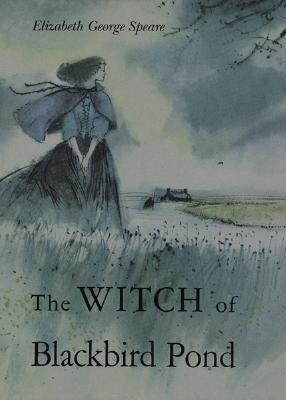
Book: “The Witch of Blackbird Pond” by Elizabeth George Speare

Publishing Info: Houghton Mifflin, 1958

Where Did We Get This Book: The library!

Where You Can Get This Book: WorldCat.org | Amazon | Indiebound

Century: 17th

Book Description: Orphaned Kit Tyler knows, as she gazes for the first time at the cold, bleak shores of Connecticut Colony, that her new home will never be like the shimmering Caribbean island she left behind. In her relatives’ stern Puritan community, she feels like a tropical bird that has flown to the wrong part of the world, a bird that is now caged and lonely. The only place where Kit feels completely free is in the meadows, where she enjoys the company of the old Quaker woman known as the Witch of Blackbird Pond, and on occasion, her young sailor friend Nat. But when Kit’s friendship with the “witch” is discovered, Kit is faced with suspicion, fear, and anger. She herself is accused of witchcraft!

Kate’s Thoughts

I read “The Witch of Blackbird Pond” in grade school, but I hadn’t ever revisited it and I can’t even tell you why, because I remember that I enjoyed it. I think that it was always in the back of my mind when it comes to children’s literature, but as time went on it just kind of fell further and further back. So when it was the choice for the 17th Century for our book club theme, I was eager to go back and re-read a book that I read as a ten year old through the eyes of an almost forty year old. And I’m happy to report that it holds up pretty well! But then, that’s probably because some things haven’t really changed, either from the McCarthy Era, when the book was written, or the times of witchcraft panic, when the book takes place.

I think that Speare did a really good job of laying out some pretty heavy topics, like prejudice, Othering, religious panic, and misogyny, in a way that is easily digestible for a middle grade audience. I found Kit to be an interesting heroine that is easy for a young reader to relate to, and her story of befriending a Quaker in a Puritan community who is rumored to be a witch (because OH NO SHE’S A QUAKER) is engaging, and at times quite suspenseful, given that the town starts to think that both Kit and Hannah (the so called witch) are up to no good and devilry, all because they are different and therein seen as untrustworthy outsiders. As mentioned above, this was initially written as a metaphor for McCarthyism and the Red Scare, where people were turning on and accusing others of being Communists and blacklisting them. But it’s so typical that we see this over and over in American history, and are seeing a form of it play out again right now with LGBTQIA+ people, and immigrants, and other marginalized groups. Some things never change, and hate towards the Other is one of those things. But that just makes the book relevant still, and it’s written with a keen eye that makes it all the stronger.

“The Witch of Blackbird Pond” is another classic children’s lit book that is still timely and interesting, and I am happy that book club gave me the push to give it another go!

Serena’s Thoughts

Like Kate, I read this one as a upper grade schooler/middle schooler. But I’ve also read it several times since. I believe I read it again during high school at some point. And then in my mid-twenties when I was building up my book collection, I stumbled upon a copy of this book on the “free” shelf at my local library, so I grabbed it and, of course, read it again right away! So, while it’s probably been a decade since my last re-read, I’m fairly familiar with the overall story. And given that I’ve somehow managed to read it across every decade of my life so far, I think it’s safe to say that both A.) I like it, and B.) it’s the kind of book that has a lot of cross-over appeal, no matter the age of the reader!

A few things stood out to me in this re-read. Like Kate mentioned, there’s a universal appeal to this story. Not only is Kit the sort of protagonist who will always speak to teens and younger readers (her combination of spunk as well as frustration with the rules around her), but the story talks on perennial struggles of humanity and society. Kate already talked about the Other-ing of those who are different, and the ways in which groups of people can spiral out of control into fear and desperation quite quickly and completely irrationally. But one aspect that I had focused less on in the past were the book’s secondary themes of capital “A” acceptance. In that, while the story is very much focused on the “witches” and the typical sorts of “others” that we know have been feared and hated throughout history (and whose counterparts are easy to spot today as well), it also subtly draws attentions to the sorts of judgements that we make at everyday moments, judgements that often reduce people to their worst characteristics without touching on the rest of their being, their context, or their priorities in life.

First of all, we see this in Kit herself, the heroine and “good guy” of our story, but also a character who grew up with slaves and very much has not thought about the realities of this horror until it is bluntly pointed out to her. This is, of course, very much of the time. And while the story doesn’t excuse Kit, it also presents this flaw of hers alongside all of the elements that still make her the heroine. She learns, and to learn, it requires others to see her flaws and, instead of shunning and shaming, to help her grow.

Further, we also see this in Kit’s uncle, a character who can be incredibly unlikable for much of the story. But as the plot progresses, we see Kit’s estimation of him slowly adjust as she’s exposed to more and more of his core personality, seeing what he cares about most and how that shapes his views. By the end, she recognizes him as the flawed individual he is, but also someone who loves his family and is doing what he thinks is best, even if there are choices that Kit doesn’t agree with or understand. So, while I think the core theme around witches and Other-ing is just as important as ever, in this re-read, I appreciated the time and care the book took to look as these lesser versions of similar judgements and how important it is to humanize those we don’t understand.

Kate’s Rating 8: A classic in children’s literature that feels as timely as ever, “The Witch of Blackbird Pond” is a powerful book about being Othered and ostracized by those who fear things that are different.

Serena’s Rating 8: For a short-ish, young adult book, this story still packs a powerful punch regarding themes of acceptance, Other-ing, and the ways in which people can let fear drive their life.

Book Club Questions

  1. There are several different women characters in this book. If you were living in this time period, which of these characters would you like to trade places with if only for a moment?
  2. What are your thoughts on Puritan Society as portrayed in this book?
  3. There are a few mentions of the slave trade and slavery in this book, as Kit comes from a plantation on Barbados. What were your thoughts on how it was addressed? Do you think it reflects the time that it was written?
  4. There were multiple romantic relationships in this story. Did you have a favorite couple?
  5. Are there any more modern books with similar settings or themes to this book that you have enjoyed? What were they? What made them different from this one? How are they similar?
  6. What did you think about the conclusion of the story? Did it feel realistic to you?

Reader’s Advisory

“The Witch of Blackbird Pond” is included on the Goodreads lists “Teen Historical Fiction”, and “Wise Women, Witches, Midwives, Healers, and Strong Girls!”.

Next Book Club Pick: “What The Wind Knows” by Amy Harmon

Book Club Review: “The Cabinets of Barnaby Mayne”

This post may contain affiliate links for books we recommend.  Read the full disclosure here.

We are part of a group of librarian friends who have had an ongoing book club running for the last several years. Each “season” (we’re nerds) we pick a theme and each of us chooses a book within that theme for us all to read. Our current theme is Centuries, where we were given a random century and had to pick a book based during that time period.  For this blog, we will post a joint review of each book we read for book club. We’ll also post the next book coming up in book club. So feel free to read along with us or use our book selections and questions in your own book club!

Book: “The Cabinets of Barnaby Mayne” by Elsa Hart

Publishing Info: Minotaur Books, August 2020

Where Did We Get This Book: The library!

Where You Can Get This Book: WorldCat.org | Amazon | Indiebound

Century: 18th

Book Description: London, 1703. In a time when the old approaches to science coexist with the new, one elite community attempts to understand the world by collecting its wonders. Sir Barnaby Mayne, the most formidable of these collectors, has devoted his life to filling his cabinets. While the curious-minded vie for invitations to study the rare stones, bones, books, and artifacts he has amassed, some visitors come with a darker purpose.

For Cecily Kay, it is a passion for plants that brings her to the Mayne house. The only puzzle she expects to encounter is how to locate the specimens she needs within Sir Barnaby’s crowded cabinets. But when her host is stabbed to death, Cecily finds the confession of the supposed killer unconvincing. She pays attention to details—years of practice have taught her that the smallest particulars can distinguish a harmless herb from a deadly one—and in the case of Sir Barnaby’s murder, there are too many inconsistencies for her to ignore.

To discover the truth, Cecily must enter the world of the collectors, a realm where intellect is distorted by obsession and greed. As her pursuit of answers brings her closer to a killer, she risks being given a final resting place amid the bones that wait, silent and still, in ‘THE CABINETS OF BARNABY MAYNE’.

Kate’s Thoughts

When I worked at the Science Museum of Minnesota, my main gallery was known as the Collections Gallery, which was kind of a mish mash of items on display that didn’t really fit in anywhere else in the museum. We had artifacts from around the world, a few taxidermied animals, some rocks and minerals and sands on display, some items from quack medical practices, and a literal mummy. I loved working in this gallery and a few of my best friends were people who worked there with me. So with my affection for this kind of collection oddity made me very interested in reading “The Cabinets of Barnaby Mayne”, as the idea of a weird collector with a bunch of cabinets filled with random stuff is very much my wheelhouse.

Well, sadly this book didn’t really gel with me. I am not sure what went wrong, as the collection of oddities is great, I love a historical mystery, and I am always game to read a story in a time period I’m not as familiar with (early 1700s? I can’t think of any other books off the top of my head that I have read that are set during that time frame). I am pretty certain that it is just a matter of Your Mileage May Vary, or just not being in the right mind space, but combining some of the more ‘in time period’ language and the cast of suspects all being pretty similar and not very interesting to me, I wasn’t as enthralled with this book. I did like the banter between Cecily and her friend Meacan, and having two women being the main investigators was also enjoyable. But I think that the mystery itself just didn’t catch my attention too well.

If you like cozy mysteries and you like period pieces that perhaps aren’t as covered as much in the genre, this could be a good fit for you! It just didn’t do much for me.

Serena’s Thoughts

I’m much more the sort of reader who would go for this sort of book than Kate, so it’s probably not a surprise that I enjoyed it a bit more. That said, I also didn’t enjoy it as much as I wanted to, so we have a bit of a mixed bag review headed your way. On one hand, I’m very into historical mysteries like this and there were a lot of aspects of this novel that felt fresh when compared to other entries in this subgenre. For example, while I’ve read a million and one Victorian or Regency period historical mysteries, I haven’t read one set in the early 1700s before. That being the case, I enjoyed the exploration of this tenuous point in history in which much of natural science was still very recent and felt almost as mystical as magic itself. I also enjoyed the two main characters, and this was another point in this book’s favor. Not only have the previous books I’ve read that are similar to this all feature a man/woman duo (often with romantic tension of some sort), but here we had two women who were simply friends and nothing more. It was nice to see a different kind of relationship put at the forefront, and like Kate, I enjoyed the interactions between these two the most of anything during my reading experience.

That said, I also agree with some of her criticisms. Like any good mystery, there were a whole host of potential suspects. The problem was that many of them began to run together in my mind, feeling indistinct from each other and each struggling to capture my attention. I also felt that the pacing of the mystery itself was a bit off. More than once, the plot seemed to offer up convenient answers right away to whatever questions our heroines were currently struggling to answer. It felt less like they were solving a mystery and more like they were simply following a very clear breadcrumb trail to its inevitable conclusion.

Overall, I thought this book was ok. It delivers on the core concepts that readers of this subgenre are often looking for, and even brings in a few new areas of interest. However, nothing really rose to the top for me as I read. The heroines, the villains, the mystery itself: serviceable, but not necessarily very memorable.

Kate’s Rating 5: I liked the concept of an oddity collection and I liked exploring this time period, but for whatever reason this one didn’t really click with me.

Serena’s Rating 7: With some interesting new concepts, this will likely appeal to historical mystery readers, though I do think their is room for growth with regards to characterization and the pacing of the mystery itself.

Book Club Questions

  1. This book takes place in the English countryside in the early 1700s. Did the setting feel authentic to you?
  2. What were your thoughts on the portrayals of a society that is just starting to delve into the scientific process?
  3. Did Cecily’s motivation to solve the murder of Barnaby Maybe seem plausible?
  4. Did you like Meacan as a foil to Cecily?
  5. What were your thoughts on the motivations revealed by various players for their various actions throughout the story? How about the motivations of the murderer?
  6. What did you think of Alice’s character?
  7. Do you buy into the Agatha Christie comparisons to this novel? Do you agree or disagree?

Reader’s Advisory

“The Cabinets of Barnaby Mayne” is included on the Goodreads list “Historical Mystery 2020”.

Next Book Club Pick: “The Witch of Blackbird Pond” by Elizabeth George Speare

Book Club Review: “Much Ado About Nada”

This post may contain affiliate links for books we recommend.  Read the full disclosure here.

We are part of a group of librarian friends who have had an ongoing book club running for the last several years. Each “season” (we’re nerds) we pick a theme and each of us chooses a book within that theme for us all to read. Our current theme is Centuries, where we were given a random century and had to pick a book based during that time period.  For this blog, we will post a joint review of each book we read for book club. We’ll also post the next book coming up in book club. So feel free to read along with us or use our book selections and questions in your own book club!

Book: “Much Ado About Nada” by Uzma Jalaluddin

Publishing Info: Berkley, June 2023

Where Did We Get This Book: The library!

Where You Can Get This Book: WorldCat.org | Amazon | Indiebound

Century: 21st

Book Description: Nada Syed is stuck. On the cusp of thirty, she’s still living at home with her brothers and parents in the Golden Crescent neighbourhood of Toronto, resolutely ignoring her mother’s unsubtle pleas to get married already. While Nada has a good job as an engineer, it’s a far cry from realizing her start-up dreams for her tech baby, Ask Apa, the app that launched with a whimper instead of a bang because of a double-crossing business partner. Nothing in her life has turned out the way it was supposed to, and Nada feels like a failure. Something needs to change, but the past is holding on too tightly to let her move forward.

Nada’s best friend Haleema is determined to pry her from her shell…and what better place than at the giant annual Muslim conference held downtown, where Nada can finally meet Haleema’s fiancé, Zayn. And did Haleema mention Zayn’s brother Baz will be there?

What Haleema doesn’t know is that Nada and Baz have a past–some of it good, some of it bad and all of it secret. At the conference, that past all comes hurtling at Nada, bringing new complications and a moment of reckoning. Can Nada truly say goodbye to once was or should she hold tight to her dreams and find their new beginnings?

Kate’s Thoughts

We all know that I am probably the least Jane Austen knowledgable person in our book club, as I always mention it whenever we tackle something Austen related because I can almost guarantee that I won’t have the context of the story in my mind. And this is very much the case in terms of “Persuasion”, as unlike the likes of “Pride and Prejudice”, “Emma”, “Sense and Sensibility”, and “Northanger Abbey”, not only have I not read it (or a zombie iteration of it), I haven’t seen ANY adaptations of it. So I was going in pretty much clueless with “Much Ado About Nada”, with no knowledge and only a Wikipedia summary to guide me. And that was just the first in a series of things that didn’t really click for me with this book.

First the good. I am always looking to expand my romance knowledge, especially when it is from more diverse perspectives which can lead to themes that may not be seen in other romances I’ve read before. And in this case, I really enjoyed following Nada, our modern Muslim protagonist who is trying to navigate a few pretty substantial setbacks in her life, such as a career defining idea being stolen from her, as well as running into an old flame named Baz at a Muslim convention. I think I’ve only read one other romance novel that has a modern Muslim couple, and which explores the dynamics of their romance through their cultural values and expectations, and I love having more at the ready for when I do find myself recommending books to others or to colleagues who are looking for certain stories for their community. This is all great.

But the downside is that 1) having no knowledge of “Persuasion” made it hard to find the comparisons and analogs, which is half the fun of these kinds of adaptations, and 2) the romance between Nada and Baz was a bit hard to buy. I think that Jalaluddin was fairly successful and translating the main romantic conflict in “Persuasion” to this more modern story (no spoilers from me here), and I generally liked the inner conflict of Nada and her somewhat prickly personality, but the chemistry wasn’t really there for me. And on top of that, this is a more chaste romance, and while that isn’t inherently a bad thing when it comes to romances for me, as while I do like a slow burn with a sexy pay off I also enjoy PG rated cuteness from time to time, if there’s no chemistry for said cuteness it just isn’t going to click for me.

I wholly get who the target audience is for “Much Ado About Nada”, but it isn’t me. This is a classic ‘Your Mileage May Vary” situation.

Serena’s Thoughts

Hi, it’s me! The resident “Jane Austen” expert! Not only have read all of the Jane Austen novels, but I devoted an entire year of the blog to reviewing the books and various adaptations. So, to say I’m familiar with “Persuasion” is an understatement. But in this case, I’ll say that Kate really didn’t miss out on much being unfamiliar with the story! Other than a few character names that are pulled from the original story and the broadest definition of “loose” references to the story, this book wasn’t served at all by being marketed as a “Persuasion” adaptation. Not to mention the wild decision to give it this title, clearly implying that this should be an adaptation of “Much Ado About Nothing,” not “Persuasion. Seriously, it’s crazy to me that anyone thought this was a good idea!

I’ll agree with Kate about the book being a useful lens through which to learn more about modern Muslim culture and dynamics, and some of Nada’s exploration of the challenges before her were definitely interesting. It’s also useful from a librarian perspective to have book like this to point readers towards when they’re looking for romances that are closed door or prioritize different values with regards to intimacy and marriage.

That said, I didn’t particularly enjoy this read. Not only is this simply not my preferred style for a romance story, but I struggled to really like Nada or Baz. At various points I thought each of them could do better than the other. Nada, in particular, was perhaps the harder for me to swallow, simply because this had been marketed as a “Persuasion” adaptation. The original character, Anne, is one of the most solidly “good” heroine of all of Austen’s leads, perhaps rivaled only by Eleanor from “Sense and Sensibility.” That being the case, it was hard for me to reconcile that character as an inspiration for Nada, a woman who could come across as a bully at times and as someone who blamed those around her for her own situation at others. Neither of these traits could ever be laid at the feet of Anne Elliot. Now, Captain Wentworth was a more conflicted character, so some of Baz’s more frustrating moments could be argued as more in line with the original. But regardless, purely from an enjoyment perspective, I struggled to care about either of these two, either alone or together.

Overall, I didn’t love this one. It’s useful for reader’s advisory purposes for specific readers, but I’d not likely recommend it to general romance fans.

Kate’s Rating 5: I’m not as familiar with the source material and it wasn’t really for me as a romance, but I definitely know exactly who I would recommend this to and that’s always a plus.

Serena’s Rating 5: In this case, knowledge of the source material wasn’t necessary; and when readers do have it, they may find themselves more annoyed than anything with some of the major changes here that made an originally beloved heroine less likable in her new form.

Book Club Questions

  1. Did you think this was a successful retelling of “Persuasion”? Why or why not?
  2. What were your thoughts on some of the themes within this novel, like trauma, relationship dynamics, and secrets within families?
  3. What did you think of Nada and Baz’s relationship? Did you think it was an intriguing romance?
  4. How do you think that this novel fits within 21st Century Literature, specifically the romance genre? Are there aspects that you feel represent romance themes in the 21st Century?
  5. If there were more books in this series following other characters, would you read them?

Reader’s Advisory

“Much Ado About Nada” is included on the Goodreads lists “Derivatives of Jane Austen’s ‘Persuasion'”, and “South Asian Contemporary Fiction”.

Next Book Club Pick: “The Cabinets of Barnaby Mayne” by Elsa Hart

Book Club Review: “An Extraordinary Union”

This post may contain affiliate links for books we recommend.  Read the full disclosure here.

We are part of a group of librarian friends who have had an ongoing book club running for the last several years. Each “season” (we’re nerds) we pick a theme and each of us chooses a book within that theme for us all to read. Our current theme is Centuries, where we were given a random century and had to pick a book based during that time period.  For this blog, we will post a joint review of each book we read for book club. We’ll also post the next book coming up in book club. So feel free to read along with us or use our book selections and questions in your own book club!

Book: “An Extraordinary Union” by Alyssa Cole

Publishing Info: Kensington, March 2017

Where Did We Get This Book: The library!

Where You Can Get This Book: WorldCat.org | Amazon | Indiebound

Century: 19th

Book Description: As the Civil War rages between the states, a courageous pair of spies plunge fearlessly into a maelstrom of ignorance, deceit, and danger, combining their unique skills to alter the course of history and break the chains of the past . . .

Elle Burns is a former slave with a passion for justice and an eidetic memory. Trading in her life of freedom in Massachusetts, she returns to the indignity of slavery in the South–to spy for the Union Army.

Malcolm McCall is a detective for Pinkerton’s Secret Service. Subterfuge is his calling, but he’s facing his deadliest mission yet–risking his life to infiltrate a Rebel enclave in Virginia.

Two undercover agents who share a common cause–and an undeniable attraction–Malcolm and Elle join forces when they discover a plot that could turn the tide of the war in the Confederacy’s favor. Caught in a tightening web of wartime intrigue, and fighting a fiery and forbidden love, Malcolm and Elle must make their boldest move to preserve the Union at any cost–even if it means losing each other

Kate’s Thoughts

It’s a bit of an anomaly that I have read a romance author before reading the book selected for book club should that author be a romance author. But in the case of “An Extraordinary Union”, I actually had read TWO books by Alyssa Cole! One of them was her “Hamilton” inspired novella “That Could Be Enough”, which was cute, and the other was her thriller novel “When No One Is Watching”, which I really loved. So I had read Alyssa Cole before book club met, and I MAY have been the only one? ANOMALY I SAY! And while “An Extraordinary Union” wasn’t the usual book that I pick up on my own, I kind of knew what to expect.

Overall I enjoyed this book. I really liked the idea of spies for the Union during the Civil War, and that one of said spies is a Black woman who has gone deep undercover in hopes of turning the tides of the war. I liked Elle a lot, and I found her motivations believable and was invested in her getting out of her dangerous position while also sticking it to the Confederacy. While I don’t usually do spy books, this one kept my interest because of my background in learning about and presenting this time period at my historical society job. But at the same time Cole balances this aspect with the charming romance between Elle and Malcolm, while also bringing up and parsing out the complications that would arise during this time period for a mixed race couple. I was worried that there might be some sticky aspects to this given the historical context, not only with societal racism, but also misogyny/ misogynoir, but I did feel that Cole did a pretty good job of addressing these things and making sure that Elle and Malcolm were on equal footing, or as close to equal footing as possible.

And this is an ongoing series! So if you like “An Extraordinary Union” and the themes and plot points, you can keep on going! I am considering it, as the set up for the next book is pretty intriguing. Overall I found it to be a solid romance novel with a setting that felt unique.

Kate’s Rating 7: A historical romance filled with intrigue and a backdrop of a critical time during the Civil War, “An Extraordinary Union” is entertaining and sure to please people who like the genre!

Book Club Questions

  1. What did you think of having Elle as a protagonist in this book? Along with that, what were your thoughts on Malcolm as a love interest for her?
  2. What did you think of Cole comparing and contrasting between the two backgrounds that Elle and Malcolm came from, and how they are both from marginalized backgrounds?
  3. What did you think of Susie as one of the antagonists in this book? How did she hold up or subvert the Southern Belle stereotype in literature?
  4. Have you read any fiction books that take place during the Civil War that have stuck with you? What was it about that book or books that resonated?
  5. How does this story compare to other historical romances that you have read?
  6. Would you keep reading on in the series?

Reader’s Advisory

“An Extraordinary Union” is included on the Goodreads lists “#ReadPOC: List of Romance Books by Authors of Color”, and “Historical Romance with Unusual Settings”.

Next Book Club Pick: “Much Ado About Nada” by Uzma Jalaluddin

Book Club Review: “Earthdivers (Vol. 1): Kill Columbus”

This post may contain affiliate links for books we recommend.  Read the full disclosure here.

We are part of a group of librarian friends who have had an ongoing book club running for the last several years. Each “season” (we’re nerds) we pick a theme and each of us chooses a book within that theme for us all to read. Our current theme is Centuries, where we were given a random century and had to pick a book based during that time period.  For this blog, we will post a joint review of each book we read for book club. We’ll also post the next book coming up in book club. So feel free to read along with us or use our book selections and questions in your own book club!

Book: “Earthdivers (Vol.1): Kill Columbus” by Stephen Graham Jones & Davide Gianfelice (Ill.).

Publishing Info: IDW Publishing, September 2023

Where Did We Get This Book: We both received an ARC at ALAAC23.

Where You Can Get This Book: WorldCat.org | Amazon | Indiebound

Century: 22nd and Beyond (aka The Future)

Book Description: The New York Times–bestselling author of The Only Good Indians and My Heart Is a Chainsaw makes his comics debut with this time-hopping horror thriller about far-future Indigenous outcasts on a mission to kill Christopher Columbus.

The year is 2112, and it’s the apocalypse exactly as rivers receding, oceans rising, civilization crumbling. Humanity has given up hope, except for a group of Indigenous outcasts who have discovered a time travel portal in a cave in the desert and figured out where everything took a turn for the America.

Convinced that the only way to save the world is to rewrite its past, they send one of their own—a reluctant linguist named Tad—on a bloody, one-way mission to 1492 to kill Christopher Columbus before he reaches the so-called New World. But there are steep costs to disrupting the timeline, and taking down an icon isn’t an easy task for an academic with no tactical training and only a wavering moral compass to guide him. As the horror of the task ahead unfolds and Tad’s commitment is tested, his actions could trigger a devastating new fate for his friends and the future.

Join Stephen Graham Jones and artist Davide Gianfelice for Earthdivers, Vol. 1, the beginning of an unforgettable ongoing sci-fi slasher spanning centuries of America’s Colonial past to explore the staggering forces of history and the individual choices we make to survive it.

Kate’s Thoughts

Perhaps we are being a bit brazen here, doing yet another Book Club review of books that we have already read and reviewed previously, especially given that we JUST DID IT last month. But hey, it all depends on the theme that we are assigned, and when I was given “The 22nd Century and Beyond” for our newest “Centuries” theme, and we only had a few weeks time WITH THE HOLIDAYS coming up, my mind went immediately to the graphic novel “Earthdivers: Kill Columbus” by Stephen Graham Jones. After all, I really liked it, it would be a faster read, and since I’m not as versed in Sci-Fi it was the first futuristic story I could think of. It was a gamble, as Book Club doesn’t tend to go to very violent or scary works, but ultimately I feel like it was a gamble that paid off, because “Earthdivers: Kill Columbus” was just as enjoyable the second time around, and fostered a lot of good conversation.

My opinion from my previous review hasn’t changed too much, given that I just read it in the past few months, but something I will say about reading it the second time was how much more I appreciated the complexity of Jones’s overall arc (it probably helps that I had just read the second volume thanks to NetGalley right before diving in; look for that in February!). It’s definitely a lot of jumping around, but I found that I really appreciated the way that Jones set up the Columbus storyline and how he executed it, and the way that he took on pretty tried and true time travel tropes and subverted them while also drawing out the most from them.

All in all it was a great read for Book Club and a great conversation starter! Stephen Graham Jones continues to do creative and bold things with his writing.

Serena’s Thoughts

I don’t really read graphic novels other than when they come up for bookclub. And I honestly don’t know why, because I always enjoy them when I do! And this one was the same! True, it was a bit of whiplash given that the last graphic novel was a very cozy, middle grade fantasy story. And this…was not that. We have one bookclub member in particular who doesn’t read dark, graphic stories and we all were kind of watching her carefully over some of the things depicted in this one! That said, I didn’t think any of it was gratuitous, but instead focused on the very high stakes of the situations portrayed.

That said, I did struggle with this book a bit in the beginning. As Kate has read the second book, she’s better able to gauge how the overall story progresses. But as a reader just starting out with this one, there were some initial basic premise things in the beginning of this one that left me wondering. I wasn’t quite sure about the basic cause/effect that was set up for the main action of the story, for one thing. That said, as I continued to read, it was easy enough to get caught up in the action and not worry too much about some of these questions. I also really liked some of the greater points that the book was getting at towards the end. It could have been easy to write a fairly simplistic version of this story. Instead, the author doesn’t shy away from the repercussions of the choices these characters are making.

As its a time travel story, it was also a bit hard to follow at times. There were points in the middle of the book that I truly wasn’t sure whether or not I was missing something. But again, as long as I just kept with it, soon enough I was able to re-center myself in the goings on.

Kate’s Rating 9: Still a great time travel commentary with an anti-Colonial twist. This re-read made me appreciate the complexity more.

Serena’s Rating 8: A bit confusing at times and definitely the start to a larger series, but I still really enjoyed this one!

Book Club Questions

  1. What did you think of the magical/sci-fi system in this story with the time traveling cave? How does it compare to other time travel tales you are familiar with?
  2. Do you believe that the one key to fixing the future is is stopping the Discovery of America by Columbus as hypothesized by Yellow Kid? Why or why not?
  3. Tad isn’t the only person to go through the cave in this story, though we have yet to see where each of them are going. Of the other travelers (Emily, the posse looking for the missing children), whose story would you want to see?
  4. What did you think of the outcome of killing Columbus? What did you think of the portrayal of Columbus and his crew as a whole?
  5. If you could travel to one moment of history to change something in the past, what would it be? Or would you do it at all?

Reader’s Advisory

“Earthdivers (Vol. 1): Kill Columbus” is on the Goodreads list “Comic Book Club Recommendations”.

Next Book Club Pick: “An Extraordinary Union” by Alyssa Cole

Book Club Review: “The Scandalous Confessions of Lydia Bennet, Witch”

This post may contain affiliate links for books we recommend.  Read the full disclosure here.

We are part of a group of librarian friends who have had an ongoing book club running for the last several years. Each “season” (we’re nerds) we pick a theme and each of us chooses a book within that theme for us all to read. Our current theme is song inspirations, where we were given a random song from a random genre and had to pick a book based on the song.  For this blog, we will post a joint review of each book we read for book club. We’ll also post the next book coming up in book club. So feel free to read along with us or use our book selections and questions in your own book club!

Book: “The Scandalous Confessions of Lydia Bennet, Witch” by Melinda Taub

Publishing Info: Grand Central Publishing, October 2023

Where Did We Get This Book: from the publisher!

Where You Can Get This Book: WorldCat.org | Amazon | IndieBound

Song Inspiration: “You’re No Good” by Lynda Ronstadt

Book Description: In this exuberant reimagining of Jane Austen’s Pride and Prejudice, Lydia Bennet puts pen to paper to relate the real events and aftermath of the classic story from her own perspective. Some facts are well known: Mrs. Bennet suffers from her nerves; Mr. Bennet suffers from Mrs. Bennet, and all five daughters suffer from an estate that is entailed only to male heirs.

But Lydia also suffers from entirely different concerns: her best-loved sister Kitty is really a barn cat, and Wickham is every bit as wicked as the world believes him to be, but what else would you expect from a demon? And if you think Mr. Darcy was uptight about dancing etiquette, wait till you see how he reacts to witchcraft. Most of all, Lydia has yet to learn that when you’re a witch, promises have power . . .

Kate’s Thoughts

When Serena chose “The Scandalous Confessions of Lydia Bennet, Witch” for book club, I briefly thought of how I was probably one of the least Austen knowledgable in our group of friends and fellow librarians. I’ve seen plenty of “Pride and Prejudice” adaptations (okay, two: the Keira Knightley one and “Fire Island”), I hadn’t actually read it outside of reading “Pride and Prejudice and Zombies”. The good news is that through my adaptation consumption I knew well enough that Lydia is considered to be an obnoxious brat. So the idea of following her, AND making her a witch, was super fun, and I was excited to read it. And overall I thought that it was a fun adaptation, and it gave Lydia a bit to work with while still keeping her fairly obnoxious. In the best way possible.

Since I’m not as familiar with Austen’s work and the various paths “Pride and Prejudice” re-imaginings and revisits can take, I will mostly focus on the supernatural parts of this book. There is something really satisfying about making Lydia Bennet an aspiring witch, if only because it makes her just that more interesting, while still making her a bit of an antagonist through her actions as a headstrong and self involved girl with a loose grasp on her powers and the consequences of them. I love the idea of Kitty being an actual cat that Lydia glamoured into a sister for companionship, I really enjoyed the dynamics between the witches in the coven and how the social pressures and cattiness was still present, I also really liked the way that Taub brought in Wickham in a way that fits into the larger scheme of things by making him a demon and a bit of a caddish foil to Lydia (also, props on Taub for finding a believable way to retcon the Georgiana situation that keeps that vital plot point while also making a scenario where one can still kind of root for Wickham and Lydia to have a relationship, dysfunctional and bitchy as it may be). Toss in spells and curses and lots of witch and fantasy stuff, all while still being able to fit into the original narrative, albeit off page, is very well done. And it makes Lydia more interesting than just the vain and bratty little sister.

“The Scandalous Confessions of Lydia Bennet, Witch” was a lark of a read, one that brought some fun magical mischief to a beloved tale. Even if you don’t like Lydia Bennet, this could be a fun read for a lover of “Pride and Prejudice”.

Serena’s Thoughts

Obviously I enjoyed this book. Enough to foist it upon the entire bookclub only a few months after I read it myself the first time. It also fit really well with this song prompt, as both Lydia and Wickham are villains (to various degrees) in the original story and morally grey at times in this one. And there is also a line in the song about hurting someone who was good and true, and my version of that line has it applying to Lydia’s choices regarding Kitty. Kind of a stretch in some ways, but no one can say our bookclub themes aren’t ambitious!

So, what is there new to say? As we discussed it in our bookclub, I was reminded of a few things that really stood out to me about this book. For some of our bookclub members, they struggled with the low level of action in much of the book. And that got me to thinking that this exact factor might be one of the very reasons this book stood out to me so well as a re-telling! All of Austen’s books are fairly low on the action front. There’s a lot of talking, there’s a lot of walking and talking, there’s a lot of dancing and talking, but there’s not much else really. So in that way, I felt like the slower pace and the strong focus on intrapersonal relationships really sold me on the concept of this book as a whole. Yes, there isn’t much as far as a deep dive into the fantasy elements, but I think this restraint better served the primary concept: that this is a version of “Pride and Prejudice” that could exist alongside the original.

I also enjoyed the irregular nature of the romance. This was another point that was hit and miss for some of our bookclub members, but I think, in hindsight, I also liked the way this played out. I’m not sure it would have read as well if Lydia and Wickham followed a more traditional romantic plot line. The way their “love story” plays out here is very much just the start of a possibility of romance than anything else. They are both true to their characters in that they can be selfish, a bit cruel, and are still learning how to truly value those around them. In this way, we see hints of a future for them, but it’s also clear that they aren’t anywhere near the finish line here. I thought this was a refreshing change to the typical romance plot line we see in many books like this.

For more of my thoughts, check out my original review!

Kate’s Rating 8: A creative reimagining of one of Austen’s more annoying characters, “The Scandalous Confessions of Lydia Bennet” is a fun and witchy side quest for Lydia Bennet.

Serena’s Rating 9: As satisfying the second time around as it was the first, especially if you’re interested in a slower paced, very “Austen-esque” style of fantasy story.

Book Club Questions

  1. How well did this book work as a re-telling of “Pride and Prejudice?” Were there any changes that stood out to you, either in a good way or a bad way?
  2. This book is told using an epistolary style. How did that effect your experience of the tale? Did you have a guess as to the identity of the person on the receiving end of this story?
  3. What did you think of the magic system and the version of witches introduced to the story?
  4. There are many examples of female friendships and sisterhood sprinkled throughout this book, some healthy and others less so. Did any of these relationships stand out to you and why?
  5. Lydia and Wickham are both either foolish or villainous characters in the original. What did you think of these versions of these characters and their romance?

Reader’s Advisory

“The Scandalous Confessions of Lydia Bennet, Witch” is included on the Goodreads lists: Austenesque – Paranormal, Supernatural, or Fantasy Books and Flipped Perspectives.

Next Book Club Pick: “Earthdivers (Vol. 1): Kill Columbus”

Book Club Review: “Born a Crime”

This post may contain affiliate links for books we recommend.  Read the full disclosure here.

We are part of a group of librarian friends who have had an ongoing book club running for the last several years. Each “season” (we’re nerds) we pick a theme and each of us chooses a book within that theme for us all to read. Our current theme is song inspirations, where we were given a random song from a random genre and had to pick a book based on the song.  For this blog, we will post a joint review of each book we read for book club. We’ll also post the next book coming up in book club. So feel free to read along with us or use our book selections and questions in your own book club!

Book: “Born a Crime” by Trevor Noah

Publishing Info: One World, June 2016

Where Did We Get This Book: The library!

Where You Can Get This Book: WorldCat.org | Amazon | Indiebound

Song Inspiration: “Mama Tried” by Merle Haggard

Book Description: The memoir of one man’s coming-of-age, set during the twilight of apartheid and the tumultuous days of freedom that followed.

Trevor Noah’s unlikely path from apartheid South Africa to the desk of The Daily Show began with a criminal act: his birth. Trevor was born to a white Swiss father and a black Xhosa mother at a time when such a union was punishable by five years in prison. Living proof of his parents’ indiscretion, Trevor was kept mostly indoors for the earliest years of his life, bound by the extreme and often absurd measures his mother took to hide him from a government that could, at any moment, steal him away. Finally liberated by the end of South Africa’s tyrannical white rule, Trevor and his mother set forth on a grand adventure, living openly and freely and embracing the opportunities won by a centuries-long struggle.

Born a Crime is the story of a mischievous young boy who grows into a restless young man as he struggles to find himself in a world where he was never supposed to exist. It is also the story of that young man’s relationship with his fearless, rebellious, and fervently religious mother—his teammate, a woman determined to save her son from the cycle of poverty, violence, and abuse that would ultimately threaten her own life.

Kate’s Thoughts

This wasn’t my first time reading Trevor Noah’s memoir “Born a Crime”, as I read it around the time it came out, but it was fun revisiting it for book club for a couple of reasons. The first was that we always have pretty good conversations during our meetings, and I was interested to see what people had to say. The second and more pressing was that when I last read this book it was before I was a mom, and now that I am a mom I was curious to see if that would change my perceptions of the novel. And it did, for the most part.

One of the strongest aspects about this book is how Noah presents his childhood in South Africa in the waning and post-years of Apartheid, and how he finds humor, vulnerability, and introspection in his story of being a biracial child in a system that criminalized his very existence. He doesn’t hold back on describing how discriminatory, oppressive, and horrible it was, but as a comedian he also is able to pull out humor, whether it’s dark humor or just the general humor of growing up and the moments of joy and happiness he did have (as let’s be real, even in horrible societal situations, there is still joy and life to be lived). I still found this to be a really good and accessible take for the unfamiliar on Apartheid, South African colonialism, and the ways those things interacted and whose effects are still being felt today.

And yes, it was different reading it this time through the lens of being a mother. Noah was clearly very influenced by his fiery mother, who did so much and sacrificed so much and stood up to SO MUCH to keep Noah safe amongst a lot of hardship, danger, and heartache. I loved reading the various anecdotes that he had about her, and while I think that she and I are VERY different people with very different approaches to parenting (a lot of this has to do with my privileges as a white woman with a white child in the U.S.), Noah makes it clear that the choices that she made were rooted in the racist society that they were living in, and were just the reality of their situation. It’s moving, heart wrenching, hopeful, and humorous all at once, and his love and respect for his Mom jumps off the page as they both navigate hardships and triumphs.

“Born a Crime” is a great memoir that I enjoyed reading a second time. If you haven’t really taken the jump into memoirs but are curious to do so, this is a good one to start with, as it has a lot of depth, heart, and, yes, humor.

Serena’s Thoughts

I also really enjoyed this one! I made sure to get the audiobook version, as it was too much to resist getting to listen to Noah himself narrate this story. He’s a wonderful voice actor and really brought the text to life in a way that added to the already powerful stories. As Kate said, this book is a tricky balancing act between humor and tragedy. Being a comedian, it’s clear that Noah’s approach to his story was to lean into his own talents and career in this way. But the story also covers some truly horrific incidents of his past and the realities of life in South Africa during this time. There were definitely scenes that were difficult to get through, but then Noah always managed to balance these with a well-timed, more comedic anecdotes. In this way, the reader is better able to absorb the entire tale without getting bogged down in only the darker moments.

Also like Kate, it was interesting reading this book from the perspective of motherhood. There truly is a new level of terror that comes form having a child. Yes, you have much new responsibility. But it also quickly becomes clear just how little control you truly have over them and their lives. You can do the best job in the world and still not control for what goes on around them or, even, the choices that the child ( or adult child) will make as they grow up. And, of course, this is coming from a parent who lives in one of the most wealthy, safe countries in the world. Very different than the challenges Noah’s mother faced trying to raise her son in a part of the world that was very dangerous for him. Her decisions were often of the sort that are difficult to understand from parents in the U.S. who do not face the conditions she was living under, but I think that’s part of what makes it an important read. Yes, apartheid is now over, but there are many parts of the world where parents face similarly dire situations every day.

Overall, I thought this was a very effecting read. The ability to balance the heavier notes of his life while also bringing out the humor to be found in every day situations was truly impressive. I definitely recommend this read for anyone who enjoys memoirs!

Kate’s Rating 8: At times a very funny but also very emotional and personal memoir about a young man growing up in very difficult circumstances, and being raised by a mother whose strength enables growth, change, and, ultimately, liberation for both of them.

Serena’s Rating 8: The ability to pair laugh-out-loud humor with truly harrowing tales of the past has to be rare indeed; Trevor Noah makes it look easy!

Book Club Questions

  1. Much of Noah’s story explores a very specific point in South African history. How familiar were you with this history? What did you learn that was new?
  2. Noah’s mother plays a huge role in his life, with her approach to parenting very much shaped by the dangers her son faced in the world. What stood out to you about Noah’s family life?
  3. The story is framed with one very important aspect of Noah’s life, with his mother and his step-father. How did the bookended style of this this tale affect your experience of the book?
  4. Noah is an excellent comedian, however the book also touches on very dark themes and scenes. How well did you thing these different tones stood out to you? Were there any stories that stood out as especially humorous or dark?
  5. Identity plays a big role in this book, and Noah touches on this in many ways, including how language shapes us. Do you find yourself speaking in different ways in different situations? Did you relate to any of these anecdotes?

Reader’s Advisory

“Born a Crime” is included on the Goodreads lists Best Audiobooks Ever and Best Memoir / Biography / Autobiography.

Next Book Club Pick: “The Scandalous Confessions of Lydia Bennet, Witch” by Melinda Taub