Fall is here. We have to admit it. While Serena dreads it, Kate lives for it! This month is Kate’s month, where she’ll be reading nothing but horror in her annual Horrorpalooza! (Serena will stick with her less traumatic genres, but might get a few spooks in here and there). But with the new month comes our list of Highlights of books that are coming out! Let’s see what we’re most looking forward to.
Serena’s Picks
Book: “Goldenhand” by Garth Nix
Publication Date: October 4, 2016
Why I’m Interested: This is the most recent book in Nix’s “Abhorsen” series that started back in 1995 with the first book “Sabriel,” which was, and remains, one of my favorite fantasy books from my childhood. It’s always thrilling (and terrifying) when authors continue a series that has a lot of nostalgia attached to it. I read the second and third book in the series and was a bit less enamored, but as this features the same characters, I may need to do a re-read for this blog in preparation for this!
Book: “One Was Lost” by Natalie D. Richards
Publication Date: October 4, 2016
Why I’m Interested: Ok, so this is verging into the “creep zone” for me, calling up memories of “The Blair Witch Project.” Several teens go on a hiking/camping trip into the wilderness, only to wake up one morning dazed and confused with their supplies, chaperone, and half their group missing and mysterious words scrawled on their wrists. What’s worse? Creepy dolls! Creepy dolls! This sounds like a bizarre hodgepodge, but I’m a sucker for stories set in the woods, so give me a cozy blanket and a cat, and I’ll attempt it!
Book: “Yesternight” by Cat Winters
Publication Date: October 4, 2016
Why I’m Interested: This book is billed as a mystery, but I can also see why it is set to be published in October with some decidedly creepy elements. Set in 1925, the main character is a psychologist who travels to Oregon to work with school children. All does not goes as planned when she runs into a genius child who claims to be living a second life after dying decades earlier. I love books that cross-genres, as this one seems to be doing. History? Good. Mystery? Good. Creepy children?…um, good?
Kate’s Picks
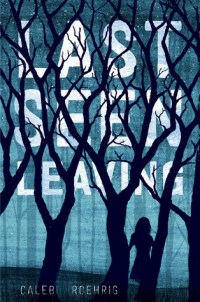
Book: “Last Seen Leaving” by Caleb Roehrig
Publication Date: October 4th, 2016
Why I’m Interested: Teen mysteries and thrillers can be a dangerous game to play. While I have loved some of them, like “We Were Liars”, there have been real clunkers as well. But “Last Seen Leaving” sounds like it has some promise. Caleb’s girlfriend January has disappeared, and everyone thinks that he did it. He’s determined to prove his innocence, but is also hiding a big secret from everyone, possibly including himself. Okay, I’m sold. It sounds intriguing, and if it’s good it could be very very good.
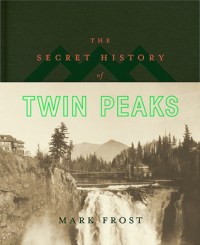
Book: “The Secret History of Twin Peaks” by Mark Frost
Publication Date: October 18th, 2016
Why I’m Interested: Well, for starters, “Twin Peaks” just happens to be my FAVORITE TV SHOW IN THE HISTORY OF EVER!! I was stoked enough when it was announced that it was coming back to TV, but when I found out there was going to be a book to get everyone caught up with what was going on in town in the past 20 years, I could have died. I love the show and I hope that Mark Frost (one of the producers) has some good fates for my favorite characters (Audrey Horne in particular).
Book: “Feedback” by Mira Grant
Publication Date: October 4th, 2016
Why I’m Interested: Grant’s “Newflesh Trilogy”, about two blogging siblings who find themselves in the middle of a conspiracy in a post zombie-apocalypse society, is a very original and fun zombie series. While I was happy with how it all wrapped up for Georgia and Shaun Mason, when I heard that another series set in the same universe and on the same timeline was coming out, well, I was very interested. This series is apparently going to follow some of their competition, other reporters who may be finding other secrets of their own. I’m totally willing to dive back into this high tech zombie universe.
What books are you guys excited for that are coming out this month? Let us know in the comments!
Book Description:The 1895-96 season promises to be an exceptional one for Amelia Peabody, her dashing Egyptologist husband Emerson, and their wild and precocious eight-year-old son Ramses. The much-coveted burial chamber of the Black Pyramid in Dahshoor is theirs for the digging. But there is a great evil in the wind that roils the hot sands sweeping through the bustling streets and marketplace of Cairo. The brazen moonlight abduction of Ramses–and an expedition subsequently cursed by misfortune and death–have alerted Amelia to the likly presence of her arch nemesis the Master Criminal, notorious looter of the living and the dead. But it is far more than ill-gotten riches that motivates the evil genius this time around. For now the most valuable and elusive prized of all is nearly in his grasp: the meddling lady archaeologist who has sworn to deliver him to justice . . . Amelia Peabody!
Review: I’ve come to another conclusion for why I love this series so much (yes, these reviews are steadily devolving into “Amelia Peabody lovefests,” but who cares, I do what I want!) And that reason is that, much to my younger sister’s chagrin, as a kid I absolutely loved the 1999 “The Mummy” and insisted we watch it at least monthly for years. And much of my love revolved around the character Evelyn. I mean, I went on to become a librarian and dressed up as her for Halloween only two years ago, so…yeah, it’s kind of a thing. Anyways, as I read these books, I can’t help put picture Amelia as a kindred spirit for Evelyn and interchange their looks in my imaginary version of the character.
Change out the name for “Emerson” and this is Amelia to a T! (source)
Another archeological season is upon the Peabody/Emerson family, and this year they have snagged the good stuff, receiving a permit to work on the much-desired and mysterious Black Pyramid site that they had been denied the year before. But, of course, much to Emerson’s continual despair, a dig is not a dig with Amelia without much mystery, drama, and a good murder or two.
But Emerson’s own passions are immediately involved with the attempted abduction of their young son, Ramses. However, much as this enrages him, he remains skeptical of Amelia’s “Master Criminal” theories regarding an unknown man who has set himself up as her personal nemesis. And in this case, I hear ya, Emerson! I, too, was a bit skeptical about the leaps of logic that are required to create Amelia’s “Master Criminal” plot, but, of course, Amelia is always right and I should trust! From a plausibility viewpoint as a reader, however, there might have been a few hoops too many that I was asked to jump through in order to buy-in to this concept.
In many ways, this story contained a lot more action than we’ve seen in previous books. Right away with the attempted kidnapping, things are now happening directly to the members of the main family itself, not hapless bystanders that we pick up for one novel’s worth of attention. The increased stakes here immediately make the story that much more thrilling. And, like I said in my previous review, Ramses has grown on me quite a bit, and his response to this particular incident was quite good.
As these stories are all told from Amelia’s perspective, we always view the story through her eyes and perspective. However, the mysteries themselves are often a few steps away from her own actions (though she, of course, always involves herself immediately). With this case, the mystery itself is largely focused on her; SHE is the action of the story. I enjoyed this quite a bit.
Without spoilers, I did enjoy the ending quite a lot, however I had a few qualms with bits of it. The “Master Criminal” himself was sufficiently creepy and I appreciated Amelia’s handling of herself during this section of the book. I wasn’t quite sold on the ultimate resolution of things. Amelia clearly doesn’t sit aside while things happen to and around her, but I feel that the story, and character, could have been better served if a few tropes had been avoided near the end. This is sufficiently vague as to be an annoying commentary, I know, but alas, it’s hard to discuss ending without getting into spoilers!
All told, I very much enjoyed this fourth book in the series. While I particularly enjoyed the direct focus of the mystery being on Amelia and her family, there were a few questionable points in the logic leaps required for Amelia/Emerson to put together the clues, and the ending maybe could have used a few more tweaks. But, if you’re reading this series and enjoying it, pick up this one immediately!
Rating 8: Yada yada, of course I loved it, yada yada!
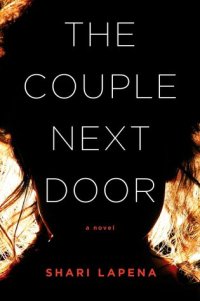
Book Description:How well do you know the couple next door? Or your husband? Or even—yourself?
People are capable of almost anything. . . Anne and Marco Conti seem to have it all—a loving relationship, a wonderful home, and their beautiful baby, Cora. But one night when they are at a dinner party next door, a terrible crime is committed. Suspicion immediately focuses on the parents. But the truth is a much more complicated story.
Inside the curtained house, an unsettling account of what actually happened unfolds. Detective Rasbach knows that the panicked couple is hiding something. Both Anne and Marco soon discover that the other is keeping secrets, secrets they’ve kept for years.
What follows is the nerve-racking unraveling of a family—a chilling tale of deception, duplicity, and unfaithfulness that will keep you breathless until the final shocking twist.
Review: Whenever I pick up a grit-lit thriller novel, I like to try and guess what the big messy twist is going to be. If I go off of logistics of the story and my previous knowledge of the genre, I can sometimes guess some of the twists and turns that are coming up. Barring, of course, that the author either does a really good job of concealing their twists, or brings twists out of nowhere that make little to no sense whatsoever. I can tell you that “The Couple Next Door” has a little bit of both, which flip flopped between the frustrating and the satisfying.
So even though the description is vague, I’m sure that you can guess that the terrible crime that is committed is that baby Cora disappears from her crib while Anne and Marco are at the dinner party in the adjoining home of the duplex. So the question becomes who is behind it? The police, specifically Detective Rasbach, is convinced that it has to be either Anne or Marco. I had made my own predictions about thirty pages in (as Serena can attest to, as she was there when I was spouting off my theories). I’m pretty happy to say that my predictions were pretty wrong, but that isn’t to say that this book wasn’t devoid of issues. Neither Marco nor Anne had a lot of shining moments, and I had issues with both of these characters and how they were portrayed. I’m glad that there weren’t any reckless depictions of post-partum depression, but Anne as a whole wasn’t very interesting, being an incredibly passive player in this entire thing. It’s not that I wanted her to go out and kick people’s teeth in until she found her baby, but I wanted more than her being in a constant state of victimization and having things happen to her instead of making things happen (except late, late, LATE in the game. But a bit more on that later). And then there’s Marco, who manages to make every single terrible decision a person could make in his situation, so while I know that we are probably supposed to feel a teeny bit of sympathy for him, boy I sure didn’t. One of the twists involving him was a surprise, but it made sense, and it just accentuated his stupidity even more. As for the side characters, they were fine, but they did feel like they were just the same old characters that we get in these stories: the slutty neighbor who doesn’t care who she hurts, the cold and judgmental in laws, and the hardened but nonetheless affected detective. They served their purpose, but they weren’t exactly reinventing the wheel, and when the protagonists weren’t really endearing themselves to me it was all the more glaring.
I also need to take a moment to lambast the ending. I am going to avoid giving spoilers here because I do think that this book is worth reading if you like thrillers and grit lit. But be warned, the ending is incredibly, INCREDIBLY tacked on and unnecessary. Especially given the implications that it has about other mental illnesses, as while Lapena was pretty good in her portrayal of post-partum depression she was not as great at other depictions of other disorders. When the big ‘final’ twist as referenced in the description came up, I was pretty miffed and turned off. It was out of place and aggravating. We didn’t need that one last twist. And it derailed the entire story for me.
Ridiculous twist aside, as I mentioned before other reveals and surprises made a lot of sense and did keep me on my toes. I thought that I would be able to predict a lot of it, but I found myself unable to put it down because of the need to now what was going to happen. Lapena does a very good job of parsing out her story, putting the pieces into place in a meticulous and well thought out way. I think that ultimately what I look for in a story like this is whether or not the plot keeps me guessing, and “The Couple Next Door” achieved that. If you are just looking for an entertaining thriller, and can look past the less fleshed out characterizations and ridiculous ending, “The Couple Next Door” is probably a good choice. I don’t regret reading it, I just wish that it had been a bit more.
Rating 6: The plot itself was pretty solid, but the main characters were lacking. Add in a ridiculous ending and it wasn’t what it could have been.
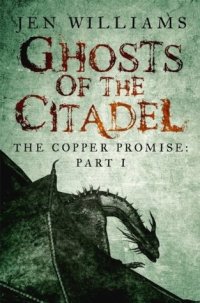
Book Description:It is said that the Citadel is haunted, and that anyone foolish enough to enter will never return. When a mysterious nobleman offers them a small fortune to explore its depths, sellswords Wydrin and Sebastian decide they can afford to be a little foolish – it’s a chance for adventure, riches, and they might even have a tale or two to tell in the tavern afterwards. But they will soon discover that sometimes there is truth in rumour…
Review: A few days ago, poor Kate was having to hear the long tale of woe from me regarding my latest book choice “The Copper Promise.” I remember specifically mentioning that I couldn’t quite put my finger on what the problem was that I was having with the book itself since it featured many of my favorite elements (a spunky heroine, a team adventure, strong high fantasy setting, etc). But for some reason the pacing felt off.
Well, the other day I was doing a bit of research into the book itself when I had a big “Aha!” moment: This book is a compilation of four novellas that were bound together to make the book “The Copper Promise!” It was really a light bulb moment, and now, with this in mind, I am going to move forward with reading/reviewing the book as it was originally published as four separate but serialized stories.
Right off the bat, it was a much more enjoyable experience re-approaching this series as novellas. Read on its own, “Ghost of the Citadel” is an action-packed, snappy-paced adventure story featuring three misfit characters. Tonally, this novella is closer to some of the fantasy of old that was much more campy and poppy. The world-building features classic monsters, fabled wars between mages and gods, and a mysterious Citadel that is the temptation (and seemingly always the death) of adventures throughout the realm.
Our adventures feature Wydrin and her partner Sebastian, a well-established mercenary duo on the look out for their next job. And a fallen lord, Aaron Firth, whose family was murdered and was run off his lands after suffering gruesome torture at the hands of his captor.
As this was a shorter novella, readers are thrown into the action with very little back story for any of these characters. We know a bit more about Firth from a prologue featuring him, but we pick up Wydrin and Sebastian straight from the tavern. I’m intrigued by the hints of backstory for them both. Sebastian heralds from a mountainous realm where he was once a member of an illustrious knights force, but was discharged for unknown reasons. Wydrin seems to have a simple reputation for being one of the best mercenaries out there Wydrin is the type of character who is right up my alley, so I was a bit disappointed by lack of backstory (even hints!) that we were given for her, other than that she is great at her job. Firth was honestly my least favorite character, but I feel like the series is setting him up for a redemption arc, of sorts, so I will wait to see what comes of that in the next three stories.
The story ends on a cliffhanger, so beware of that. But the cliffhanger, and the arc of the story itself, all feels so much more natural when read as an individual novella rather than a section of one book, so I strongly recommend trying to find the ebooks and reading the series in that version.
Rating 7: Once I got myself figured out, an enjoyable first installation for this 4-part novella series!
Book: “The Complete Persepolis” by Marjane Satrapi
Publication Info: Pantheon, October 2007 (originally published 2003)
Where Did I Get This Book: The library!
Book Description:Here, in one volume: Marjane Satrapi’s best-selling, internationally acclaimed memoir-in-comic-strips.
Persepolis is the story of Satrapi’s unforgettable childhood and coming of age within a large and loving family in Tehran during the Islamic Revolution; of the contradictions between private life and public life in a country plagued by political upheaval; of her high school years in Vienna facing the trials of adolescence far from her family; of her homecoming–both sweet and terrible; and, finally, of her self-imposed exile from her beloved homeland. It is the chronicle of a girlhood and adolescence at once outrageous and familiar, a young life entwined with the history of her country yet filled with the universal trials and joys of growing up.
Edgy, searingly observant, and candid, often heartbreaking but threaded throughout with raw humor and hard-earned wisdom–Persepolis is a stunning work from one of the most highly regarded, singularly talented graphic artists at work today.
Review: Every year during Banned Books Week I try to read a book or books that have been banned or challenged. Because damn the man and all that. This time around I thought that it may be the right time to revisit “Persepolis” by Marjane Satrapi, a graphic memoir that has been praised for it’s genius and reviled for it’s content by some people, more recently by a college student in 2015 who wanted it (and other graphic novels) removed from the school curriculum. I first read “Persepolis” in 2009, when a co-worker at my then job let me borrow her copies of Parts 1 and 2, and I really, really liked it (as well as the film that was made based on the books), but had been meaning to re-read the story for a while now. So what better time?
“Persepolis” is a memoir that not only tells a very relatable coming of age story, it also charts a very turbulent time in Iranian history. Satrapi’s parents were militantly anti-Shah, the dictator whose policies oppressed and exploited many Iranians during his reign (a reign that the United States supported because of the profits to be made as a result), so when revolution came, Satrapi’s family had high hopes… But then, those hopes were dashed when fundamentalists took the country over, and war broke out between Iran and Iraq. Satrapi’s story is very straight forward and never delves into over the top dramatics, but through this simple telling also shows the horrors of the unrest during this time period. But along with that we also get the story of a girl who is sent to Austria to spend her teenage years, as her mother didn’t think she would be safe in Tehran anymore given Satrapi’s love of rebellion. So Satrapi tells a story of not fitting in in her home country because of her family’s ideals clashing with the new religious fundamentalism, but also the story of an Iranian girl in the 80s trying to fit in a predominantly Western society that doesn’t quite understand. Satrapi’s self awareness and honesty really drives this book, and so does her penchant for humor and tenderness.
Satrapi does a great job of showing the experiences of all people in Tehran, and while she never excuses the actions of the crueler and more violent people, you also can understand how Iran got to where it did. She also gives some history lessons in this book about the history of her home country and the Western interference that in part led to the Shah, which in turn led to the Revolution that, to her family, set the country back decades in terms of politics and civil liberties. I have some working knowledge of the history of Iran and the Iranian Revolution thanks to some books that I’ve read about it, but Satrapi does a very good job of contextualizing that through her own personal story, both in the midst of the struggles at home and then her own personal struggles in Austria, a place that was meant to be a safe haven but ended up being incredibly oppressive in different ways.
Satrapi is also very forthcoming about her own flaws and bumps in her life, always portraying herself as a human who isn’t perfect, and is trying to find herself. There were a few actions that she took in her youth that definitely made me wince as I re-read this book, as sometimes she did do things that were cruel or selfish. She makes no excuses for these actions, but the reader can’t help but feel sympathy for her because of the various experiences she had that led to these points. If anything it made her all the more relatable, because I’m sure many of us have done things that we are not proud of. She just has the courage to put these things out in the open.
And finally the artwork in this book continues to charm me the second time around. I love the simplicity of it all, a style that can portray a wide range of emotions and motivations, from humor and love, to abject fear and sorrow. The images juxtapose a time of war and ruin with a girl’s coming of age, and it is incredibly effective.
The story itself is broken up into separate parts that all represent a key moment in Satrapi’s life, and I love how they all fit together as a whole while standing on their own as well. It’s such an interesting way to tell such a complex story, and I think that it works very well.
It’s really no secret why people want this book to be banned. From portrayal of Muslims as just normal people, to Satrapi’s frank expressions of her sexuality, to the negative lights that are shed upon Wester Cultures during the critiques of them, “Persepolis” has ruffled many feathers and will probably continue to do so. But it’s such an important and wonderful graphic novel that those who pass it over or openly condemn it are really, really missing out. It remains one of my favorite graphic novels, and I think that it should be required reading for both comics fans and history buffs alike. It was great revisiting “Persepolis” for Banned Books Week.
Rating 10: An astounding, personal, and fabulous graphic novel about coming of age in societal upheaval. Marjane Satrapi’s graphic memoir is insightful, tender, funny, and in some ways haunting. A must read.
Chesterfield County is the latest to take issue with “Eleanor and Park.”
Happy Banned Books Week, everyone!!! Banned Books Week is that very special time of year where libraries and librarians everywhere celebrate the books that offended and shocked people, so much so that they were challenged or removed from shelves or burned in effigy. This time of year is a fun one because you can probably find a library in your area that displays and celebrates banned books, and encourages you to check them out and read them. Why just this month three books were challenged in the Chesterfield County School system in Richmond, Virginia (“Eleanor and Park” by Rainbow Rowell, “Tyrell” by Coe Booth, and “Dope Sick” by Walter Dean Myers) for being ‘pornographic’ and violent. The school district superintendent decided to keep the books on the shelves. We think that book banning is madness and oppressive, so of course we’re going to come at you with our favorite books that have caused some controversy, along with why they were considered so scandalous.
Kate’s Favorite Banned Books
Book: The “Scary Stories” Series by Alvin Schwartz and Stephen Gammell (Ill.)
Publishing Info: Scholastic, Inc, 1981, 1984, and 1991.
Why It’s Been Banned: Violence, scary content, disturbing illustrations. It has been one of the most frequently challenged books in schools in the United States, according to the ALA, and though has been out for 25+ years it stills manages to break the top ten list every once in awhile.
Why I Love It: Look, it’s no secret that the versions with the Stephen Gammell illustrations are straight up nightmare fuel for kids. I read these books for the first time in fifth grade and they messed me up for weeks. But, that said, I loved every bit of them and managed to get my hands on a copy of the treasury before the re-release with tamer, and lamer, illustrations. These books are great because not only are they scary, they also have extensive source notes about the origins of the stories, along with information about American folklore. I still dig these books as a woman in her early thirties, and I STILL don’t like scarecrows. Thanks, Harold.
Book: “A Clockwork Orange” by Anthony Burgess
Publishing Info: W.W. Norton and Company, December 1962
Why It’s Been Banned: Violence, violence, VIOLENCE. Also portrayal of authority. In 1973 a man in Utah was arrested for selling this book (all charges were dropped but he was run out of town on a rail).
Why I Love It: When I was fourteen I asked my Mom if I could see the movie version. She told me a solid ‘hell no’ but then said that if I could find her old copy of the book in the attic, it was mine. I proceeded to bring it to school (specifically detention) and read it in front of the proctor, who demanded if my parents knew I was reading this book. I still love “A Clockwork Orange” because of it’s musings on authority, the idea of choice vs coercion, and the commentary on how society deals with its criminals. The story of the violent criminal Alex has endured the test of time and many controversies, from the depictions of violence to it’s original ‘nadsat’ slang structure. It is incredibly violent and at times hard to read, but it remains a scathing critique of societal power structures.
Book: “The Absolutely True Diary of a Part-Time Indian” by Sherman Alexie
Publishing Info: Little, Brown Books for Young Readers, 2007
Why It’s Been Banned: Sexual contents, racial themes, profanity. In 2013 it was removed from a reading list in a town in Idaho. When a local teen took it upon herself to hand out free copies of the book at a local park, a pearl clutching parent called the police on her.
Why I Love It: “The Absolutely True Diary of a Part-Time Indian” is my favorite modern YA book because of it’s warmth, it’s humor, it’s tragedy, and it’s honesty. Sherman Alexie is one of our best authors writing today, and his personal and wonderful book about Junior Spirit is so real and so powerful that it left me on an airplane flipping between laughing and sobbing. Junior’s story addresses the shameful way that indigenous peoples are treated in this country along with the pains of growing up while feeling like an outsider no matter where you go, as Junior Spirit lives on a reservation but goes to school outside of it. This book is a very relatable book for many teens, however, as Junior also deals with crushes, friendship strife, and puberty. I love this book.
Serena’s Favorite Banned Books
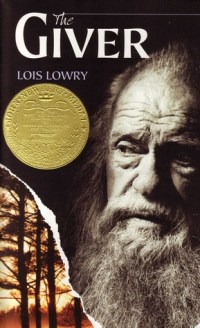
Book: “The Giver” by Lois Lowry
Publishing Info: Houghton Mifflin, April 1993
Why It’s Been Banned: Violence and sexuality. Jonas goes through puberty in this book and the story discusses ways that this dystopian society suppresses sexuality and sexual urges. And many of Jonas’s flashback involve war and violence. Apparently, in 1995 a Kansas woman attempted to have it banned because it “degraded the idea of motherhood.” Sigh.
Why I love It: Let it not be said that there isn’t a strong sense of irony in the books that people attempt to have banned. Like “Fahrenheit 451,” another oft-banned book, “The Giver” features a dystopian world where creative thought and, in many ways, storytelling, are banned to society. So…yeah. I read “The Giver” repeatedly throughout middle school and highschool. Not only is the society that Lowry creates terrifying, but Jonas’s sense of confusion and bewilderment while approaching the mysteries of adulthood rang very true for my teenage self. This a beautifully written novel which opens the reader’s eyes to the beauty to be found in the world, even alongside the horror, and how we can often lose sight of what is important in life if we’re too busy policing *ahem* the world around us.
Book: “A Wrinkle in Time” by Madeleine L’Engle
Publishing Info: Farrar, Straus & Giroux, January 1963
Why It’s Been Banned: Fantasy elements, specifically the belief that it promotes witchcraft, crystal balls, and demons. Undermines religious beliefs and complaints regarding the inclusion of Jesus Christ alongside famous artists/philosophers/scientists/etc who fight off evil.
Why I Love It: This is a classic, young adult fantasy novel and one that I feel people are often surprised to find out is on the banned books list. Not only is it on the list, but it has been ever since being published and still routinely comes under fire, even though it is now recognized by many as a classic and has many awards to its name. I loved it as a teen myself just as a staple example of “science fantasy.” This is kind of strange term, but it perfectly illustrates the blending of fantastical elements with themes and ideas more typically found in “science-y” science fiction that is presented in this story. The complaints against it are very bizarre (does writing about magical elements somehow convince people that they might somehow be real??), especially given the resolution of the story with Meg’s love for her brother as the key to everything.
Book: “Where the Wild Things Are” by Maurice Sendak
Publishing Info: Harper & Row, April 1963
Why It’s Been Banned: More fantasy elements, aghast! Also, dark themes, promoting rebellion in children, and, worst of all, potential psychological damage regarding children’s fear of being sent to bed without dinner by their parents.
Why I Love It: I thought I would change things up and include a picture book on this list, not only because I truly love reading pictures books still as an adult, but also to highlight the fact that picture books make up a good portion of the titles that regularly come under fire by book banners. This is another example of an award-winning novel and a darling of many of our childhoods that is still regularly challenged. Though, again, its true message of the balance between adventure and the love of home that the story presents seems to be lost on some readers. Like Kate’s example above, it’s also thought to be too scary for children, though as a young reader myself, that was part of the reason I, and I suspect many other children, love it! The tension is what made it exciting! A quote from an article regarding the banning of this story: “Boys and girls may have to shield their parents from this book. Parents are very easily scared.” (source)
What banned books are favorites of yours or have you read this year? Let us know in the comments below!
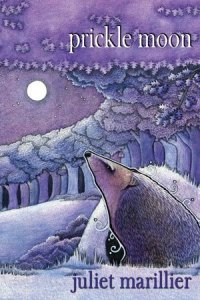
Book Description:“Prickle Moon” is a collection of Juliet Marillier’s best short fiction. It contains eleven previously published stories and five new ones. Included are the Sevenwaters novella, “’Twixt Firelight and Water”, the epic Nordic story, “Otherling”, and “In Coed Celyddon”, a tale of the young man who would one day become King Arthur.
The title story, especially written for the collection, concerns an old Scottish wise woman facing an impossible moral dilemma.
Other new stories in the book include “By Bone-Light”, a contemporary retelling of the Russian fairy tale “Vasilissa the Wise”, and “The Angel of Death”, a dark story about a puppy mill rescue.
Review: I don’t typically read many short story compilations. I like my stories lengthy with lots of room for world-building and character development. And yet, I bought this book! Well this is simply because Juliet Marillier is one of my all-time favorite authors. I’ve read all of her books and she is on a very short list (maybe 3?) of authors whose works I will buy without reading first. I’m sure as the months go by I will feel compelled to ultimately post reviews of all of her books, just out of sheer love and a tendency towards being a completionist. But my first post will be on this more recently read book of hers.
“Prickle Moon” features sixteen total stories; the length of each story varies quite a bit with a few lasting only a handful of pages and others taking up more meaty chunks of the total page count. Many of the stories featured Marillier’s staple touch: mixing fantasy elements with, often Irish, folklore and heritage. Her writing is beautiful, lyrical, and often heart-wrenching.
One of my favorites was the title story “Prickle Moon” which features, as the cover art would imply, hedgehogs and a wise woman struggling to find her place in a small world seemingly going mad with grief where she must face the terrible choices put upon her. I’m not ashamed, I ugly cried during this story.
I also really enjoyed “’Twixt Firelight and Water,” though this is one of the lengthier stories and also one that is directly tied to Marillier’s “Sevenwaters” series. I’m not sure how approachable it would be to casual readers who are not already familiar with the world and the characters. However, if you have read that series, it was such a joy to read this short story and get more details on some of the more sidelined characters from the original stories.
Mariller is also known for her fairy tale retellings, another reason she’s a favorite of mine. And here she tackles Rapunzel and the story of Baba Yaga, both of which were also highlights of mine.
There were a few contemporary stories, as well as one that would have to be labeled science fiction. While I still enjoyed these, they were a bit jarring to run into after zipping through the high fantasy tales that mostly make up this collection. I wasn’t completely sold on the science fiction story, especially, but once I got into the rhythm of the contemporary tales, I found myself enjoying them as well. But it is ultimately pretty clear where her strengths as a storyteller lie.
As I said, I don’t have a strong background in short story collections, so I don’t have a lot of other books to compare it to. However, as a newcomer to this type of book, I found myself really enjoying “Prickle Moon.” I did catch myself often wishing that each story could be its own book, but, alas, I imagine that is always the challenge with short stories. If you enjoy short story collections, especially if you are a fantasy/fairy tale retelling genre lover, I strongly recommend “Prickle Moon.” Just make sure to have that box of tissues ready at hand.
Rating 8: A few of the stories were weaker than the others, but the strong ones were fantastic. Marillier’s beautiful writing style and strengths with fantasy writing were well-represented.
Book: “Lady Killer (Vol.1)” by Jöelle Jones and Jamie S. Rich (Ill.)
Publishing Info: Dark Horse Books, September 2015
Where Did I Get This Book: The library!
Book Description:Betty Draper meets Hannibal! Josie Schuller is a picture-perfect homemaker, wife, and mother—but she’s also a ruthless, efficient killer for hire! A brand-new original comedy series that combines the wholesome imagery of early 1960s domestic bliss with a tightening web of murder, paranoia, and cold-blooded survival.
Review: As much as the 1950s was an incredibly toxic time for just about anyone who wasn’t a white Christian straight man, I must say that the cover of “Lady Killer (Vol.1)” drew me in because of the very Susie Homemaker aesthetic. Well, and the bucket of gore. But really, I think that the 1950s setting for Josie Schuller and her assassin life is a perfect time and place because of how restricted women were during this time period. Not only is it the darkest of gallows humor, it’s also a commentary on gender politics during the time period, which I didn’t expect from this book. Josie is a cold hearted assassin working for a secretive group, but she also has a husband and twin daughters at home that she appears to love very much. Her skills at balancing this family life with her job raises questions for her male bosses, Stenholm and Peck, as they think that being a wife and mother is going to ultimately make her unable to do her job, which leads to the main conflict of this series. So essentially, “Lady Killer” takes the idea of women being unable to have it all and shoves it into a 50s motif, and I was living for it.
Josie herself is a very fun and fascinating protagonist. Balancing this double life seems to be something she can do with ease, and it is, in fact, Stenholm (the big boss) and Peck (her handler) that set her up to fail based of their fear that as a woman she won’t be able to do her job. The rampant sexism that was thrown at a top female assassin was both infuriating and yet so damn appropriate for the time period (and also recent times) that I was seething and yet nodding in recognition. So too was it very satisfying to see her turn the tables on them and prove that not only can she do it all, she can do it better than they can. Sometimes it felt like Josie might be a little too good at her job, but hey, if James Bond can be practically perfect in every way, why not Josie Schuller? It was also very refreshing seeing that Josie isn’t like James Bond in the sense that she had no interest in Peck, whose constant advances on her were met with scorn instead of flirtation. I was worried that to be seen as a perfect assassin she would have to also have no actual attachments to her husband and children, but that isn’t the case. Jones opted to give her a more complex value system than one could have, as while she is a murderer for hire, she does love her husband and children with all her heart, and wants to keep them safe, both physically and emotionally.
I also appreciated that there were gross and unfortunate signs of the times that could have easily been ignored. For example, the first time we meet Josie’s daughters they are playing Indian, which was jarring and set my teeth on edge. There is also a moment that Josie follows Peck to a Chinese restaurant, that is clearly overdone and done up to appeal to the white clientele who expect a certain Chinese Fantasy of the female waitresses. This moment was brief and it introduced us to a very cool fellow assassin named Ruby, but you definitely get the sense that Ruby has her own set of nasty expectations thrust upon her being both a woman and Asian.
The drawings in this book are by Jamie S. Rich. They are also something of note, as they are very throw back with their pastels and bright hues, but realistic and gritty when they need to be. In the same frame there can be vibrant 50s retro chic style mixed with extreme violence and bleakness, which offered a fun juxtaposition and just adds to the gallows humor of the series.
Source: Dark Horse Books
“Lady Killer (Vol.1)” was a fun and nasty romp, and it makes me sad that the next trade collection isn’t expected until December of 2017. Seriously. So I guess that just means that I’m going to have to head on down to the local comic book shop and see if they have the newest series in single issue form. I’m not going to wait for Josie Schuller, I want her now.
Rating 8: A fun and gritty series with dark humor and social commentary, “Lady Killer (Vol.1) has introduced another kick ass female comic character that I am obsessed with.
Where Did I Get this Book: audiobook from the library!
Book Description:Georgie McCool knows her marriage is in trouble; it has been in trouble for a long time. She still loves her husband, Neal, and Neal still loves her, deeply — but that almost seems beside the point now.
Maybe that was always beside the point.
Two days before they’re supposed to visit Neal’s family in Omaha for Christmas, Georgie tells Neal that she can’t go. She’s a TV writer, and something’s come up on her show; she has to stay in Los Angeles. She knows that Neal will be upset with her — Neal is always a little upset with Georgie — but she doesn’t expect him to pack up the kids and go home without her.
When her husband and the kids leave for the airport, Georgie wonders if she’s finally done it. If she’s ruined everything.
That night, Georgie discovers a way to communicate with Neal in the past. It’s not time travel, not exactly, but she feels like she’s been given an opportunity to fix her marriage before it starts…
Is that what she’s supposed to do?
Or would Georgie and Neal be better off if their marriage never happened?
Review: I had read two of Rowell’s young adult novels, “Fangirl” and “Eleanor and Park” and really liked them before coming to this book. I had heard that she had an adult novel floating around, and had it casually on my mental “to read” list, but had never made a real effort to pick it up as it falls out of my usual favorite genres. Last week, however, it happened to pop up as an available audiobook at the library, and that was my sign that now was the time!
I went into this story not knowing much about it. In fact, I had even less than the book description given above, since I was really only checking it out on the strength of Rowell’s other books and the general knowledge that this was about a married couple. That’s about it. So, it was quite a shock when I got to the magical, time-travel phone about 1/4 of the way into the story! A good surprise though.
Georgie is a television writer with her longtime friend and partner, Seth, who has been married for the past 17 years to her college sweetheart, Neal, and has two small girls to complete her family. From the outside, they look like the poster family for a working mom/stay-at-home father lifestyle, with Georgie financing the family, and Neal caring for the two daughters. However, after years of struggles balancing her work/home life, Neal and Georgie’s marriage is coming to a crisis state. Enter time travel, magical phone. A connection for Georgie back to the Neal she knew in college when they were going through a similar rough patch in their relationship.
So, just from that description, this book was quite a step out from my typical reading habits. Magical phones aside (which largely, it really is, as it functions as a plot device and not a lot more), this book was mostly about the relationship between Georgie and Neal, how they got to where they are now and discovering whether they have a future. It’s a romantic, non-romance book, I guess, featuring two lead characters who are anything but typical romantic leads.
I really enjoyed this book. It perfectly balanced the emotional challenges of a long term relationship without vilifying either of the main characters. I’ve read a few other reviews where Georgie came under strong fire as a narrator, but I felt that her struggles, her realization of poor choices and her own failings was the whole point of the story. She is not written to be an unlikable character, just an honest, flawed human being. Being frustrated with her for these traits misses the journey of the story itself. Neal, too, is not written as a perfect partner, and while Georgie is our primary focal point, one can see the role he plays in their relationship fairly clearly.
I also really enjoyed the role that Georgie’s best friend and writing partner, Seth, plays in the story. I had quite a few concerns when he showed up initially, wondering whether we were heading into love triangle territory, but I should have had faith! If there is one thing that Rowell has proven with her previous books, it’s that she knows how to write honest relationships. And, at their core, I don’t believe love triangles can reflect any honesty about human relationships. It’s just not the way people truly form relationships and attachments. Seth’s role in Georgie’s life is refreshing and integral. He has played a role in the weakening bonds between Georgie and Neal, but not due to any romantic entanglements.
I also really enjoyed Georgie’s interactions with the rest of her family, both her young daughters as well as with her mother, step father, and much-younger sister. I’m going to repeat the word “refreshing” here for how much I appreciated this focus on the other people and relationships that make up Georgie’s life. She is not only defined by the primary romantic relationship in her life, but it is clear that the influence and love that she relies on from these other members is paramount in her life. I always enjoy reading about sisters, especially, and Georgie’s mother was a great character, too.
I sped through this audiobook! Usually I just listen to my audiobooks during my commute and call it good, but I found myself listening to this one as I cleaned my house and even before bed. The reader was very good, and I felt the story itself was very engaging. If you enjoy contemporary novels, with a good dash of humor and an honest look at the challenges and joys of married life, I highly recommend “Landline.”
Rating 8: Very good, especially the deeper look into all the many relationships that make up the central character’s life.
Publishing Info: Sourcebooks Landmark, August 2011
Where Did I Get This Book: The library!
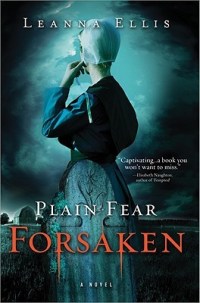
Book Description:“Hannah cannot move on.”
She pines for Jacob, the boy who saved her life when she drowned, bringing her back from the brink of death by breathing life into her.
“But Jacob is gone now, buried.”
Levi’s love for Hannah burns just as strong. But he knows how much Hannah loved his brother Jacob. He also knows the troubling event that took Jacob out of their lives. And he lives with that lie every day.
So when a stranger named Akiva comes to their community, he carries with him two secrets that will change their lives forever: he is in fact Jacob, whom Hannah had lost. And he is now a vampire.
When passions stir and secrets are revealed, Hannah must choose between light and dark, between the one she has always loved and the new possibility of love. But it’s more than a choice of passion; it’s a decision that will determine the fate of her soul.
Review: Did you know that there is not only Amish Romance, but apparently there is also AMISH VAMPIRE ROMANCE???
DID YOU!?!?!?
Because I didn’t, and the moment that I found this out I was like
So what did I do? I requested it as soon as I could because OH MY GOD HOW BIZARRE. I don’t know what I expected. I mean, it’s laid out pretty plainly just what this book is going to be. We have a pious and pure Amish woman who is tempted by a vampire because he’s her long lost love, so of course it’s going to be filled with over the top moments, dialogue, and nonsense. And I know that this book is SO not written for me. But….. Let’s be real, Amish Romance is a special niche of Christian fiction that lets people enjoy wholesome romantic scenes without having to worry about smutty moments. So to me, adding a vampire isn’t going to end up in any way outside of good conquering evil and goodness triumphing over the unholy. But this book gives it the ol’ college try of making the story unpredictable. As if we didn’t know that ultimately Hannah was going to choose the side of the light. Which, hey, more power to Hannah and more power to that kind of story, as some people like that kind of thing. But there sure were a lot of things about this book that rubbed me the wrong way outside of my own predilection for walking on the wild side, fiction wise.
And okay look, you’re going to get some spoilers here, so buckle up.
First of all, I was a bit taken aback by the implications that Jacob (or Akiva, as is his vampire name), the Amish boy who was so taken with travel, art, poetry, and a potential life outside of the Amish community, was effectively punished for his wanderlust by being turned into a vampire. And beyond that, he was portrayed as selfish for being intrigued by a life outside of his community, as if even deigning to imagine a life outside of it is an act punishable by vampirism. Though it seems not to happen terribly often from my limited research, Rumspringa does sometimes lead to people leaving the Amish community. So what is that saying about those who legitimately don’t fit in within the community they were born into and do want to leave it? As it was it kind of came off as judgmental and kind of shame-y, as if you were going to be corrupted for the rest of your days by choosing a different path. Or in Jacob’s case, even thinking about it, as he did, in fact, return home to be baptized! He was just turned into a vampire before he could be. So even thinking of it is so bad you’re punished in such a way? Jacob was this whole concept personified, especially since we had the contrast of his brother Levi (who is the other point in the love triangle with Hannah and Jacob/Akiva). Levi is not only a true and devout Amish man, but also the TRUE hero of the story here in more ways than one. The part that had me absolutely incensed was that when Hannah, our heroine, was younger she almost drowned, and as she remembers it Jacob pulled her out of the water she was caught up in and saved her by breathing air back into her lungs. It was actually a kind of nice backstory to their romance, in my opinion, as it displayed bravery on Jacob’s part and also affection, as well as showing why Hannah may have had a deeper connection to him outside of being essentially betrothed to him. But then, at DEFCON ONE of the climax, it is revealed that it was actually Levi the whole time that had saved her! And JACOB was panicky and scared and did nothing when she was unconscious! So Jacob, who is a freaking vampire and couldn’t even have ultimately won Hannah’s hand in this kind of gross and weird love triangle in the first place, doesn’t even get to have that act of heroism going for him, and is in fact a total coward!! Was that necessary? I don’t think so. I don’t understand why Jacob couldn’t have been more well rounded and multi-faceted, but oh well, apparently you can only be purely good (the steadfast and dependable Levi) or purely evil (the flitty-dreamer-coward-turned-vampire Jacob/Akiva). Heaven forbid there be complexity to these characters. Jacob could have been brave once in his life is all I’m saying.
I also took serious umbrage with poor Hannah’s portrayal. At one point I thought that we were getting a kind of self assured and headstrong female lead who could handle herself, as at one point she told Levi that she didn’t need him to protect her and that she could take care of herself. I’d hoped that that was going to be a theme for her throughout the book, but then it became abundantly clear that no, she couldn’t actually take care of herself and she quite obviously did need Levi’s protection and guidance. After all, Jacob encourages her to dance, drive in a car, and drink alcohol, and this is portrayed in a negative way as if he’s leading her astray IN SPITE OF THE FACT that Hannah never did participate in Rumspringa! So this could feasibly be seen as her doing what most Amish kids are encouraged to do!!! Not once is Hannah portrayed as her own person. She either belongs to Jacob, Levi, or a higher power. Never herself.
And again, I know that this is a different value system than mine, and that this book is not for me but more for them, but the moment you bring vampires into a story, it’s fair game for me. So let’s talk about the vampires. I liked that they are portrayed as more animalistic and less romantic. I liked the mythology that Ellis gave them, as limited as it felt at times. But I also felt like there wasn’t much research done into the history of vampires and how they are portrayed in literature. There was a scene with a character named Roc, a cop from New Orleans with his own personal vendetta against vampires (and a character that I actually thought was pretty okay, when all was said and done. Of course I like the hot mess abrasive cop who drinks too much). In this scene he’s talking with a childhood friend who is now a priest, and he asks if sunlight is indeed something that can hurt vampires. His friend says no. I was pretty excited, because yeah, in older vampire lore sunlight didn’t play into it, that’s a comparatively new part of the mythology. But then the priest said something along the lines of falsehoods being perpetuated by vampires and vampire sympathizers to keep their actual weaknesses hidden, to which Roc asked if that meant that Bram Stoker was a vampire or vampire sympathizer, to which he got a veiled yes.
Guys, in the book “Dracula”, Count Dracula WALKS AROUND IN THE DAYLIGHT. And by this books logic, that confirms that vampires can walk around in daylight! So how would being totally truthful make Stoker a vampire or vampire sympathizer?! I’m okay with promoting fun ideas of vampire myths being propaganda that can be twisted to what suits them, but if you’re going to do that, know which myths apply to which stories!
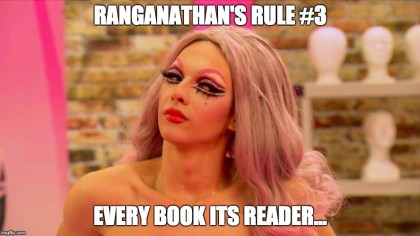
So yeah. This book wasn’t for me. I couldn’t even really enjoy it in a guilty pleasure ‘so bad it’s good’ kind of way. But, that said, I know that a lot of people probably would like this book, both legitimately and ironically. And so it’s with this book, “Forsaken”, that I finally get to pull out Ranganathan’s Rule Number 3 as I side eye the HELL out of it.
Amish Vampire Fiction is not for me, but it may be for you. “Forsaken” is certainly unique, and while I didn’t enjoy it, that doesn’t mean that others won’t. Every book its reader. Just gotta keep repeating that.
Rating 2: I had high hopes for silly fun, but ultimately really didn’t enjoy this one. Some of the vampire stuff was pretty okay, but overall it didn’t do it for me.
 Book: “Goldenhand” by Garth Nix
 Book: “One Was Lost” by Natalie D. Richards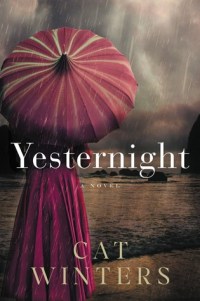
 Book: “The Secret History of Twin Peaks” by Mark Frost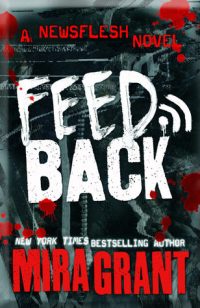
 Book: “Lion in the Valley
 Book: “The Couple Next Door” by Shari Lapena
 Book: “Ghosts of the Citadel” by Jen Williams
 Book: “The Complete Persepolis” by Marjane Satrapi

 Book: The “Scary Stories” Series by Alvin Schwartz and Stephen Gammell (Ill.)
 Book: “A Clockwork Orange” by Anthony Burgess
 Book: “The Absolutely True Diary of a Part-Time Indian” by Sherman Alexie
 Book: “The Giver” by Lois Lowry
 Book: “A Wrinkle in Time” by Madeleine L’Engle
 Book: “Where the Wild Things Are” by Maurice Sendak
 Book: “Prickle Moon” by Juliet Marillier
 Book: “Lady Killer (Vol.1)” by Jöelle Jones and Jamie S. Rich (Ill.)
 Book: “Landline” by Rainbow Rowell
 Book: “Forsaken” by Leanna Ellis
 The Library Ladies