Kate’s Review: “Cheshire Crossing”

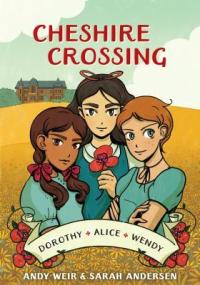
42583942Book: “Cheshire Crossing” by Andy Weir and Sarah Andersen (Ill.)

Publishing Info: Ten Speed Press, July 2019

Where Did I Get This Book: The library!

Book Description: The three meet here, at Cheshire Crossing–a boarding school where girls like them learn how to cope with their supernatural experiences and harness their magical world-crossing powers.

But the trio–now teenagers, who’ve had their fill of meddling authority figures–aren’t content to sit still in a classroom. Soon they’re dashing from one universe to the next, leaving havoc in their wake–and, inadvertently, bringing the Wicked Witch and Hook together in a deadly supervillain love match.

To stop them, the girls will have to draw on all of their powers . . . and marshal a team of unlikely allies from across the magical multiverse.

Review: I recently went back to work after taking my maternity leave, and one of my first tasks was to weed the children’s graphic novel section. I love a good weeding project, and whenever I go through graphics I usually find a few that I want to read, and by checking them out I spare them from being culled from the collection. This was how I stumbled upon “Cheshire Crossing” by Andy “The Martian” Weir. Was I surprised that the guy known for science fiction with hard science themes and snarky humor had written a graphic novel for kids/teens? For sure. But the fact that it starred Wendy Darling, Dorothy Gale, and Alice was incredibly fascinating to me (especially since these three have been brought together in graphic form before in Alan Moore’s, erm, shall we say ‘controversial’ “Lost Girls”.).

“Cheshire Crossing” is a cute and witty mash up of three well loved characters who played rather passive roles in their initial stories. While it’s true that Wendy, Dorothy, and Alice are all important figures within the stories they are from, and have become absolutely and rightfully beloved, they all kind of have things happen to them while the people and worlds around them do the ‘doing’. They wander through Wonderland, Oz, and Neverland acting as surrogates for the reader to explore, which is perfectly understandable. But in “Cheshire Crossing”, Weir gives them a lot to actually do, special powers that they bring to their initial visits, and explores what the consequences would be if three girls came back to their usual lives after going to magical places. It’s not too surprising that they are all seen as ‘crazy’ or ‘hysterical’, and have had to spend time in asylums before coming to Cheshire Crossing, which knows that they are portals to other worlds. The idea of hysterical women, especially at the time that these books were originally written, was very common, and I really enjoyed that Weir explored how our world would have no doubt marginalized and taken any kind of agency from these girls (and something I noticed was that there was no mention of Michael or Peter Darling, which makes me think that the two boys haven’t been institutionalized). Alice especially has a lot to contend with, as her time in Wonderland wasn’t exactly ‘pleasant’. She is by far the most traumatized, and dour, of the girls, and the most interesting because of it.

The one criticism I had about this story is that not very much time was spent at Cheshire Academy itself. While I appreciated that Alice, Wendy, and Dorothy very well may be sick and tired of being taken from place and place and poked and prodded, I had hoped that we would be able to see a little bit more of the motivation of Cheshire Crossing, as the idea of a school that is teaching these girls to harness the powers that they have inside of them (as opposed to the powers that have been lent to them at their various magical visits) is really appealing to me. Instead the three girls hop from world to world, getting into more trouble and inadvertently hooking up Captain Hook and the Wicked Witch of the West. Which is, admittedly, kind of the perfect pairing. Their nanny from Cheshire Crossing does follow them and try to keep them out of trouble (and it’s very heavily implied that this woman is Mary Poppins, though she isn’t called that by name), but she was cleaning up their messes as opposed to actively teaching them how to use their powers. Was it fun visiting Oz, Neverland, and Wonderland in this context? Sure! But I also wanted the grounding of the school so that the three girls could harness their powers even more. That said, this ended on something of a cliffhanger, and therefore there may be more stories in the future.

And finally, the illustrations are absolutely charming. They are done by Sarah Andersen of “Sarah’s Scribbles” fame, and the style is dreamy and pleasing to the eye.

cheshirecrossing-1
(source)

“Cheshire Crossing” is a fun exploration of three girls who deserve a little more credit and an expansion of three well loved fantasy stories. People who love Oz, Wonderland, and Neverland will find a lot to like!

Rating 7: A very cute mash up of three beloved children’s lit heroines, “Cheshire Crossing” has some good commentary on female marginalization during the time the original books were written.

Reader’s Advisory:

“Cheshire Crossing” isn’t on many relevant Goodreads lists, but I think that it would fit in on “Women Kicking Ass (Graphic Novels/Comics)”, and “Curiouser and Curiouser”.

Find “Cheshire Crossing” at your library using WordCat!

Book Club Review: “Persepolis: The Story of a Childhood”

9516We are part of a group of librarian friends who have had an ongoing bookclub running for the last several years. Each “season” (we’re nerds) we pick a theme and each of us chooses a book within that theme for us all to read. Our current theme is “American Girl Readalikes”, in which we each pick an American Girl book and a book that can be connected to it, however tenuous as it may be.

For this blog, we will post a joint review of each book we read for book club. We’ll also post the next book coming up in book club. So feel free to read along with us or use our book selections and questions in your own book club!

Book: “Persepolis: The Story of a Childhood” by Marjane Satrapi

Publishing Info: Pantheon, June 2004

Where Did We Get This Book: The library!

American Girl Book: “Samantha Learns a Lesson” by Susan S. Adler

Book Description: Wise, funny, and heartbreaking, Persepolis is Marjane Satrapi’s memoir of growing up in Iran during the Islamic Revolution. In powerful black-and-white comic strip images, Satrapi tells the story of her life in Tehran from ages six to fourteen, years that saw the overthrow of the Shah’s regime, the triumph of the Islamic Revolution, and the devastating effects of war with Iraq. The intelligent and outspoken only child of committed Marxists and the great-granddaughter of one of Iran’s last emperors, Marjane bears witness to a childhood uniquely entwined with the history of her country.

Persepolis paints an unforgettable portrait of daily life in Iran and of the bewildering contradictions between home life and public life. Marjane’s child’s-eye view of dethroned emperors, state-sanctioned whippings, and heroes of the revolution allows us to learn as she does the history of this fascinating country and of her own extraordinary family. Intensely personal, profoundly political, and wholly original, Persepolis is at once a story of growing up and a reminder of the human cost of war and political repression. It shows how we carry on, with laughter and tears, in the face of absurdity. And, finally, it introduces us to an irresistible little girl with whom we cannot help but fall in love. 

Kate’s Thoughts

While it’s true that I read and reviewed “The Complete Persepolis” a couple years back, I really wanted to read it for book club. It was my turn for the American Girl theme, and I knew that I wanted to do “Samantha Learns a Lesson” (as Samantha has always been my favorite American Girl). So I decided that “Persepolis: The Story of a Childhood” would be the match up, as both are about girls from upper classes who have to learn hard social justice lessons about the lower classes in the society in which they are living.

My opinion of “Persepolis” hasn’t changed since I last addressed it here. It’s still one of my favorite graphic novels of all time, like top ten no question. But with the focus specifically on Satrapi’s childhood for this reading, mixed with the lens I had on social class, AND the current tensions the U.S. is having with Iran, this reading was all the more meaningful for me. Satrapi does a very good job of disseminating how Iran changed so fundamentally as a society in the aftermath of the fall of the Shah, and addresses the complexities of those changes, showing how it isn’t a black and white, right or wrong situation. She also points out her own privileges within Iran during the Cultural Revolution. While she was a girl and her family wasn’t as socially favored as some, they had enough wealth and means that not only could she carefully rebel against societal norms with little repercussions (though some of this was pure luck), she also wasn’t part of the social class that was being used as cannon fodder during the war with Iraq. Along with all that, she also had the means to be sent away for school in Austria when it was becoming clear that being a teenage girl was becoming more and more unsafe.

I’m so pleased that we read “Persepolis: The Story of a Childhood” for book club! It fostered a lot of good conversation, and I will take any excuse to revisit this stunning memoir.

Serena’s Thoughts

My only previous familiarity with this book was through reading Kate’s glowing review of the complete collection. But with that strong recommendation, I was excited to finally get the excuse (more like the push, but “excuse” sounds better) to finally read it myself. And, put simply, like always, Kate was spot-on in her stamp of approval for this title!

I will admit to having only the barest understanding of the events that happened during Iran’s Cultural Revolution. I knew the end result, of course, but had very little clarity on the progression of events. In that way, this book does a fantastic job at bringing reader’s down to the street level of a topic that is often discussed, at least here in the U.S., at very global levels. Her life also offers an interesting window, coming from an educated and modern family who have many privileges at their finger tips that can help mitigate the experience.But, with those privileges, we also see the increased strain of a change that is felt quite acutely, especially for a young girl growing into her teenage years. We see the burgeoning of the obligations towards social justice weighed against the practicalities of safety and one’s own welfare.

I also loved the illustration style of this book. The choice to use only black and white colors not only parallels the movement of a society towards a more black and white way of thinking about life, but leaves the readers to focus largely on the content before them. It is not “prettied up” in anyway that could distract from the fact that this is based upon a woman’s real life experience. That said, the style of drawing is also very approachable to young readers and nicely balances out the stark color palette.

I really enjoyed this book and am so glad Kate picked it for bookclub. Like the broken record I often am, I’m yet again thankful to be part of a group of readers who expose me to books that I would likely not get around to reading on my own.

Kate’s Rating 10: An all time favorite of mine that I will happily revisit over and over.

Serena’s Rating 10: A must read for fans of graphic novels and those looking for more insights into life growing up in Iran during the Cultural Revolution.

Book Club Questions

  1. What did you think of the choice to tell her personal story in graphic form? How do you think it would have been different had it been written in a traditional narrative structure?
  2. “Persepolis: A Story of a Childhoold” is set before, during and after the Cultural Revolution in Iran. How much did you know about this historical period before reading this book?
  3. Like Samantha, Marjane is a child who has to learn some hard truths about the society she’s living in as a child. Are there any obvious differences between how Marjane experienced this period vs other Iranian children from other backgrounds may have?
  4. In an interview Satrapi said that she wanted “Persepolis” to show that Iran wasn’t only the society and culture that is shown through western lenses (that of a fundamentalist culture). Do you think she succeeded? Why or why not?
  5. Captivity and freedom are themes that are prevalent throughout the narrative. What are some of the ways they are presented within the story?
  6. How does a persons personal history interact with the history of a society or a culture they live within? How do you think your own personal history ties with the history of your country?

Reader’s Advisory

“Persepolis: The Story of a Childhood” can be found on the Goodreads lists “Best Memoir Graphic Novels”, and “Reading Recommendations for a Young Feminist”.

Find “Persepolis: The Story of a Childhood” at your library using WorldCat!

Next Book Club book: “It’s Not The End of the World” by Judy Blume

Serena’s Review: “Woven in Moonlight”

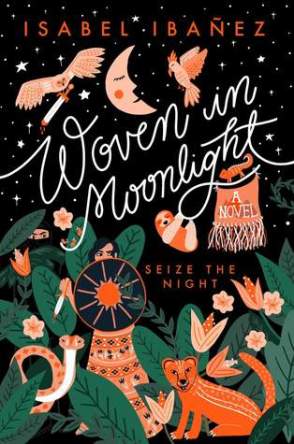
40877706._sy475_Book: “Woven in Moonlight” by Isabel Ibnez

Publishing Info: Page Street Books, January 2020

Where Did I Get this Book: BookishFirst

Book Description: Ximena is the decoy Condesa, a stand-in for the last remaining Illustrian royal. Her people lost everything when the usurper, Atoc, used an ancient relic to summon ghosts and drive the Illustrians from La Ciudad. Now Ximena’s motivated by her insatiable thirst for revenge, and her rare ability to spin thread from moonlight.

When Atoc demands the real Condesa’s hand in marriage, it’s Ximena’s duty to go in her stead. She relishes the chance, as Illustrian spies have reported that Atoc’s no longer carrying his deadly relic. If Ximena can find it, she can return the true aristócrata to their rightful place.

She hunts for the relic, using her weaving ability to hide messages in tapestries for the resistance. But when a masked vigilante, a warm-hearted princess, and a thoughtful healer challenge Ximena, her mission becomes more complicated. There could be a way to overthrow the usurper without starting another war, but only if Ximena turns her back on revenge—and her Condesa.

Review: This book was a no-brainer for me to request. I mean, look at that gorgeous cover? I’m not sure I can remember a book with a cover like that; it immediately stands out and I’m sure the book will benefit from many a spur-of-the-moment pick-up while on the shelves at stores. The book description itself was also incredibly unique-sounding and dealing with a people, place, and culture that I am only passingly familiar. In many ways, the cover and description reminded me greatly of “Gods of Jade and Shadow” which I read last summer and loved. Unfortunately, this comparison didn’t hold true in the actual reading experience…

Ximena has lived most of her life pretending to be someone else, a queen, the Condesa. But mostly a queen under siege: managing dwindling supplies, sending out scouting parties, and dreaming of one day returning her people to their homeland and the city that is now occupied by the cruel king Atoc. Now, with a demanded-marriage between the two leaders of these divided peoples, Ximena has the greatest of all performances before her. She must marry the usurper and serve as an embedded spy, searching for that crack that can benefit her people and her sister-friend, the true Condesa.

Even typing up that description makes me excited about the story this could have been. Yet, alas, could have been, but wasn’t. This is one of those strange books where I question whether I read the same story others read. Currently, it’s rated over 4 on Goodreads, so many people are loving it. Perhaps I can see elements of what all of these other readers are latching on to, but it all seems like too little, too familiar, and too inexplicable to really earn those 4 stars.

The biggest strength this book has going for it is the unique setting, the unique culture (what little we really get of it), and the descriptions of Ximena’s weavings. There are some truly lovely depictions of these detailed creations, and having a mother who is an avid weaver, I could see the magic in her abilities here, even without the actual magic involved. What descriptions we received of the countryside and the city itself were intriguing, but this is also where the bare minimums began to show. I had just enough to form loose images, but I have to admit that many of these were probably drawing from stereotypical images of South American culture (there isn’t even such a thing, hence the extreme stereotype of my mental images that were just drawing from random images from other books and movies set in South American countries). I wish there had been a more detailed look into the daily life of the people, a clearer image drawn of their lives and the world they lived in. Half of the reason I picked up this book was because of the uniqueness to be had here. Finally not another European fantasy novel! But then it felt like the author only went halfway, and I was left wanting.

From the “too little” we move to the “too familiar.” Most of this plot will read as incredibly predictable to anyone who reads a lot of YA fantasy. I could quickly guess who El Lobo was as well as predict several of the other major plot points of the story. Perhaps for readers who aren’t as well versed in current YA fantasy tropes this would read better. Or even age it down to middle grade readers who simply haven’t had the time to build up these stores of memory that make stories like this feel rote and tired. There’s nothing inherently wrong with it; I’ve just read it too many times before. And when the surprise has been taken out of most of the twists, there’s not a lot of drive behind speeding through the rest of the story.

And lastly, the “too inexplicable.” I really struggled with Ximena herself. The love story was, again, predictable. And she kept referring to said characters as “the boy” which I just found cringe-worthy. I get that typing out “young man” seems kind of silly and obviously “guy” is anachronistic and has its own issues. But given the situation we’re meant to be in (she’s there to marry a king), I think we can just stick with “man” and be done with it. Regardless of age, this is an adult situation, and she’s been an adult for many years, making decisions as a ruler and now serving as a spy meant to marry the enemy. Referring to someone as “a boy” can only be a demeaning comment in these circumstances. But she uses it as a bland, seemingly objective description, and it bothered the heck out of me. If he’s “a boy,” he’s a kid and my mind will neatly file him away in the “non-love-interest” section.

Beyond that small nit-pick that I blew out of proportion with my own annoyance, it was hard to understand Ximena. We’re meant to believe that she’s been training, and acting, as the Condesa for almost all of her grown life. Not only would the real Condesa have to be well-versed in self-control, cool thinking, and precise speaking/acting, someone who grew up to serve as a decoy in this role would have to be all of that twice over. But Ximena routinely and regularly loses all self-control. It’s hard to believe that she wasn’t immediately seen through. Or, if not that, it would seem that all respect would be quickly lost for “the Condesa” as a leader since she can’t stop behaving like a rash, easily provoked youth. Ximena spends way too much time caught up in her own personal angst and far too little behaving as a true Condesa would. Sure, she always comments after the fact on how that was really “un-Condesa-like,” but that doesn’t do away with the fact that had she been trained to do this her entire life, there should be nowhere near as many outbursts as there are in the first place.

A book is always going to be a hard sell for me if I can’t connect with the POV character. I found Ximena unbelievable at best and incredibly annoying at worst. From there, the predictable story just lowered it further. I’m really sad that this wasn’t a great read for me. So many people are enjoying it, and I really wish I had read whatever book they’re loving so much. There are many great elements of this story, particularly with the snippets of the world, culture, and history we get. Unfortunately, there’s not enough of any of those things to counteract the weak main character and tired story. But, like I said, lots of people are liking it, so if you’re looking for an ownvoice, Latinx story, it might still be worth a shot.

I didn’t love this one, but a lot of people do. So I’d like to share it with someone who will appreciate it more than I was able. If this sounds like something you would enjoy, make sure to enter the giveaway for a hardback copy!

Rating 6: A really confusing read where I’m not sure what I’m missing that so many other people are loving.

Reader’s Advisory:

“Woven in Moonlight” is on these Goodreads lists: “Latina Leads in YA and Middle Grade Fiction” and “Upcoming 2020 SFF Books with Female Leads or Co-Leads.”

Find“Woven in Moonlight” in your library using WorldCat!

Kate’s Review: “Transmetropolitan (Vol.8): Dirge”

7784056Book: “Transmetropolitan (Vol. 8): Dirge” by Warren Ellis, Darick Robertson (Ill.), & Rodney Ramons (Ill.)

Publishing Info: Vertigo, January 2003

Where Did I Get This Book: I own it!

Book Description: After the events of TRANSMETROPOLITAN: SPIDER’S THRASH, outlaw journalist Spider Jerusalem has lost his press credentials and has been forced underground by the President of the United States. Now with a sniper loose in the Print District, Spider is the only man who can expose the conspiracy behind the destruction of the City and the simultaneous disappearance of its police force. Unfortunately, Spider is currently suffering through blackouts and episodes of mental confusion and may never bring the truth to the masses again.

Review: As 2020 continues on and my anxiety about the upcoming election skyrockets into the stratosphere, Spider Jerusalem is giving me solace. I’m going to be wrapping up my series re-read of “Transmetropolitan” soon, given that after this volume we only have two left. Which means that the stakes are on the rise, as the final confrontation between Spider and The Smiler (and possibly Spider and his own mortality) is going to be here before we know it. And, like most epic stories, it had to get darker before the dawn. “Dirge” goes dark.

It starts with a case of Blue Flu, in which the police in The City have all called in under guise of illness. It just so happens that this occurs the day that a sniper starts to murder people in the Print District. Spider, Yelena, and Channon, down and out without press credentials but still eager to catch the story, are on the case, but find themselves in the middle of a conspiracy that, at this point, the reader saw coming from a mile away. But that doesn’t matter, because the important point that “Dirge” is trying to make is that of COURSE the establishment has become entrenched in these kinds of tactics. These are the tactics that The Smiler thrives upon and uses to consolidate his power. This is what Spider has known for awhile now, ever since Vita Severn was murdered by her own campaign colleagues to boost the approval ratings of her boss. The issue now isn’t that this is what The Smiler does. I feel like at this point, Ellis wants the reader to be completely overwhelmed with the lack of hope, and to feel that The Smiler (who in this volume takes his Vita Severn tactic and does something even more horrific) is so unstoppable that the apathy and despair is the only way a society would be able to react as he slowly destroys everything just to make himself all powerful. God DAMMIT does this continue to feel all too real.

But the biggest blow in this volume is the reveal about Spider’s memory lapses and health issues, and how his role as the voice of truth to the people is almost assuredly coming to an end sooner rather than later. Spoilers here, but it doesn’t really ruin anything and it’s going to come to my larger point: Spider has been exposed to an agent that is eating away at his cognitive functions. His mind is slowly slipping away, and in the end he will be a vessel ravaged by dementia before he ultimately dies from it. Spider has always been the beacon of hope in this series, the one who will bring the truth in any way, shape, of form, and can be the one to spell it all out for the masses so that they can see the ways they are being lied to. And that’s about to come to an end. Reading it the first time I was definitely bummed out. But reading it now, in the context of a press under attack and a time of misinformation, or in some cases people who just don’t care to know the truth, this plot point is devastating. Ellis is taking a risk here, as it’s always a bit ballsy to hobble a character with something debilitating. But that just gives more time for Yelena and Channon to shine, as they are determined to help Spider carry on his work, no matter what. Their identity as a team has come to full bloom, and seeing their character development get to this point is incredibly satisfying.

Warren Ellis is sure to bring the hope to this story, as while Spider, Yelena, and Channon are all hot messes and incredibly crude and rude, you know that they have the greater good in their intentions. And while Spider may be dying, he is still determined and ready to expose The Smiler and his violent, horrendous bullshit so that good can triumph over evil. These days I wonder if this is a naive fantasy. But “Transmetropolitan” is so earnest and dripping with the hope that this can be achieved, that I still want to believe in Spider. I want to believe that information and truth will shine a light on lies, and deception, and that the corrupt will lose in the end. “Dirge” is the point that I feel we are at. We can all take a lesson from Spider. He’s the hero we need. And I hope, I REALLY hope, that we can follow in his footsteps and not give up.

IMG-3638
Source: Vertigo Comics

Up next is the penultimate collection: “The Cure”.

Rating 8: One of the darker entires to this fantastic comic, “Transmetropolitan (Vol. 8): Dirge” goes bleak, but once again lets a little bit of hope shine through.

Reader’s Advisory:

“Transmetropolitan (Vol. 8): Dirge” is included on the Goodreads lists “Bibles for the Revolution”, and “Best of Cyberpunk”.

Find “Transmetropolitan (Vol. 8): Dirge” at your library using WorldCat!

Previously Reviewed:

Giveaway: “Woven in Moonlight”

40877706._sy475_Book: “Woven in Moonlight” by Isabel Ibnez

Publishing Info: Page Street Books, January 2020

Where Did I Get this Book: BookishFirst

Book Description: Ximena is the decoy Condesa, a stand-in for the last remaining Illustrian royal. Her people lost everything when the usurper, Atoc, used an ancient relic to summon ghosts and drive the Illustrians from La Ciudad. Now Ximena’s motivated by her insatiable thirst for revenge, and her rare ability to spin thread from moonlight.

When Atoc demands the real Condesa’s hand in marriage, it’s Ximena’s duty to go in her stead. She relishes the chance, as Illustrian spies have reported that Atoc’s no longer carrying his deadly relic. If Ximena can find it, she can return the true aristócrata to their rightful place.

She hunts for the relic, using her weaving ability to hide messages in tapestries for the resistance. But when a masked vigilante, a warm-hearted princess, and a thoughtful healer challenge Ximena, her mission becomes more complicated. There could be a way to overthrow the usurper without starting another war, but only if Ximena turns her back on revenge—and her Condesa.

Giveaway Details: Though it did take me until February to get around to it, I was excited enough about this book to include it as one of the three titles I was most looking forward to in January. And now the time has come! My full review comes up on Friday, so I won’t go into any spoilers as to my opinions here.

I will say that the concept is an intriguing one, intertwining a unique magic system with the political upheaval and history of Bolivia. It’s an ownvoices work, so the author brings much vibrancy to her story and world. And here, the cover artist really upped the ante creating a cover image that perfectly communicates the heart of the story and is sure to draw readers in. I know it worked well on me!

It’s always great to see young adult fantasy escape from the often overwhelming European-centered stories that are everywhere. And this one presents an area of the world and history that I’m sure many readers are only passably familiar with. For myself, I knew very little and, while this book is still clearly fictional and, you know, magic, it did inspire me to do some research of my own into the country’s history.

So, for those of you who still haven’t gotten around to this book, or for those of you who have already read it and loved it (according to Goodreads, there are many of you!), here’s your chance to get your hands on a hardback copy! The giveaway is open to U.S. residents only and closes on February 12.

Enter now!

Kate’s Review: “Foul is Fair”

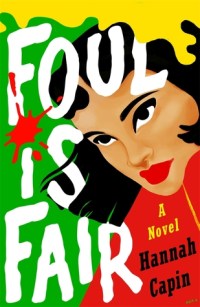
42595554Book: “Foul is Fair” by Hannah Capin

Publishing Info: Wednesday Books, February 2020

Where Did I Get This Book: I received an eARC from the publisher via NetGalley.

Book Description: Elle and her friends Mads, Jenny, and Summer rule their glittering LA circle. Untouchable, they have the kind of power other girls only dream of. Every party is theirs and the world is at their feet. Until the night of Elle’s sweet sixteen, when they crash a St. Andrew’s Prep party. The night the golden boys choose Elle as their next target.

They picked the wrong girl.

Sworn to vengeance, Elle transfers to St. Andrew’s. She plots to destroy each boy, one by one. She’ll take their power, their lives, and their control of the prep school’s hierarchy. And she and her coven have the perfect way in: a boy named Mack, whose ambition could turn deadly.

Foul is Fair is a bloody, thrilling revenge fantasy for the girls who have had enough. Golden boys beware: something wicked this way comes.

Review: Thanks to Wednesday Books and NetGalley for providing me with an eARC of this novel!

When I was in ninth grade my English class read “MacBeth”, the Shakespearean tragedy involving assassination, witches, torment, and revenge. I loved it from the very start, from reading the book itself to when our teacher showed a group of fourteen and fifteen year olds the Roman Polanski film adaptation, which is horrendously bloody and disturbing. I remember turning to my friend Blake at one point and both of us clearly thinking ‘whaaat the fuuuuuck?’ By the time my younger sister got to that class they’d replaced Polanski’s version with the offbeat “Scotland, PA”, a retelling of the classic story set in the world of fast food. It’s hilarious and dark, and I had been waiting for a long time to see another retelling of my favorite Shakespeare play. You can imagine how excited I was when “Foul is Fair” by Hannah Capin was in my email box. A YA retelling of “MacBeth”, from the female point of view, as a revenge story? On paper, this seems like everything that I would want for the Scottish Play. And yet, it became pretty clear pretty early that this wasn’t really going to work for me as much as I’d hoped it would.

giphy
I had certain expectations when I opened up this eARC, and I’m incredulous that basically none of them were met. (source)

Okay, let’s start with the good. Frankly, these days given the repeated reminders of the misogynistic and sexist culture that we live in, and the prevalent stories of abuse and trauma that have been exposed due to the #MeToo movement and powerful abusers falling from grace, I am all for a story that wants to tackle these issues with unrelenting rage. Catharsis is important, especially when it feels like some things never change and that privileged abusers will never see any true consequences (or sometimes hold high places of power, be it a Supreme Court seat or the Oval Office). So the fact that “Foul is Fair” is a power fantasy in which a rape victim is taking out all of her rage  and revenge against her rapists and taking her power back does give it lots of points. Especially since justice in the real world can be so hard to come by. Plus, I really did like the writing itself, as it’s vivid and visceral with a raw power that makes it almost burn off the page.

But when it comes to the characters within this book, I was supremely disappointed. One of the things about “MacBeth” is that while there are clear heroes and villains, each hero and villain has some complexity and nuance to them. MacBeth and Lady MacBeth in particular have moments of ruthlessness and vulnerability, and you understand the motivations for both of them even if you don’t necessarily agree with them, like the whole regicide thing. In “Foul is Fair”, all of the characters feel like two dimensional beings that aren’t defined by much else beyond their scumminess, or their unrelenting rage, or their weirdness. Can this be entertaining? Sure. But I didn’t feel like I really got to know our protagonist, Elle/Jade, outside of her understandable anger about what the golden boys at St. Andrews did to her. Effective plot? Absolutely. But it does not characterization make. Her interactions with her ‘coven’ (I’m also a little confused here, as she is clearly the stand in for Lady MacBeth, but she’s hanging out with Jenny, Summer, and Mads, who are the stand ins for the Weird Sisters. I don’t want to be a purist to the original material, but why was this a choice?) always felt a little ‘2edgy4me’ as they always, ALWAYS talk with coolness and malevolence, and even when they start turning on each other it still comes off as trying way too hard to be badass when all I wanted was to see some relatability amidst the badassness. And on top of all that, sure, there are some “MacBeth” aspects to it, but it definitely felt like it picked and chose the themes that would work best for the story at hand as opposed to actually trying to make it a “MacBeth” retelling. You take away the character names that reference the characters they’re based upon, and it’s not so easy to find the “MacBeth” aspects, it was shifted and changed so much. You can definitely adapt old texts to modern times and do it in ways that still give the original intent and feel of the source material (one of the best moments of this is in “Clueless” where Josh gives summation of Knightley’s dressing down and scolding of Emma with ‘you’re such a brat’. PERFECT!). “Foul is Fair” did not achieve this.

(and as a side note, poor Lady MacDuff gets thrown under the bus in this ‘reimagining’. The poor woman and all of her children are brutally slaughtered because MacDuff is a threat to MacBeth. In this she’s turned into a bitchy queen bee who is complicit in rape. It’s like ya didn’t even TRY to adapt that character! There were other instances of pick and choose feminism, but whatever, I don’t need to get on a soap box.)

There is something to be said for the ultimate rage message of standing up against violent misogyny, and that maybe it needs to be beaten over the head to get the point across. But I had hoped for a little more vicious and biting satire with Shakespearean flair.

Rating 5: The beat down of misogyny and the overall power fantasy was cathartic, but “Foul is Fair” had two dimensional characters and a grasp on the source material only when it suited.

Reader’s Advisory:

“Foul is Fair” is included on the Goodreads lists “YA Shakespeare Retellings”, and “ANGRY LADIES’ BOOK CLUB”.

Find “Foul is Fair” at your library using WorldCat!

Highlights: February 2020

Love is in the air, but so is the snow and wind up here in Minnesota. February is both fun for romance, but also kind of the middle of the longest (seeming) season. Luckily, we have books to look forward to! Here are the titles that have captured our interests this month!

Serena’s Picks

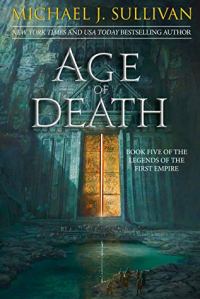
30613608._sy475_-1Book: “Age of Death” by Michael J. Sullivan

Publication Date: February 4, 2020

Why I’m Interested: I’ve been enjoying the heck out of this action-packed, yet surprisingly heart-wrenching, epic fantasy series. And the last book, oof, talk about a cliffhanger! Unfortunately, I hear this one also has a cliffhanger, but, luckily, thanks to the author’s self-publication schedule, it will only be another short wait until this summer before the final book is out. As it stands, after the last book, I’m excited to see all of my heroes tackle what they find in the underworld. And, of course, poor Suri who is captured in the heart of enemy territory. Things are definitely starting to feel like a sprint to the end, and I can’t wait to see what this penultimate book has to offer!

45043929Book: “Storm from the East” by Joanna Hathaway

Publication Date: February 11, 2020

Why I’m Interested: The first book in this series came out of nowhere to really strike my interest. It’s definitely a more politically focused story in a fantasy world. But instead of court politics (though there are those too), this book takes a much larger focus on the manueverings of large countries with and against each other. But at the heart are two young people on opposing sides who have somehow formed a connection. However, neither knows the full truth of not only the other one, but often, not even their own country or allies. In this second book, again separated, Athan and Aurelia once again find themselves caught up in the schemes of the powers around them. The first book had a crushing prologue, and I’m both intrigued and also super nervous to see how our characters end up in the future situation that was presented there. I think this is a trilogy, however, so I’m not sure how close we’ll get in this second book.

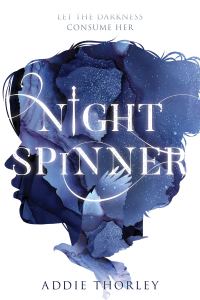
45046766Book: “Night Spinner” by Addie Thorley

Publication Date: February 11, 2020

Why I’m Interested: The book is being marked as a mix of the Grishaverse (mixed feelings about this) and a retelling of “The Hunchback of Notre Dame” (intrigued by this). It tells the story of Enebish, a young woman who only a short time before had been on the cusp of becoming a great leader for her people. Now, after a terrible accident, she’s exiled and mocked, crippled and shunned. But when she’s offered a chance at redemption, she finds herself with only more questions, about herself, her country, her sister, and the mysterious criminal she’s sent to track down. There are elements of that description that seem way too familiar (mostly the “mysterious criminal”), but I’m still interested enough in the “Hunchback of Notre Dame” angle that I’ll be giving it a shot soon.

Kate’s Picks

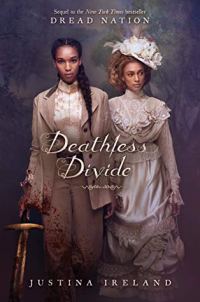
38124119._sy475_Book: “Deathless Divide” by Justina Ireland

Publication Date: February 4, 2020

Why I’m Interested: I greatly enjoyed Ireland’s zombie/alternate history/historical fiction novel “Dread Nation”, which reimagines Reconstruction with a zombie story. So yeah, I’ve definitely been looking forward to “Deathless Divide”, the sequel to this breakout horror hit! Picking up after the events in “Dread Nation”, Jane is hoping to keep moving through a zombie ravaged America and to find her mother out West in California. With her is Katherine, the less combat savvy but still sharp companion that Jane doesn’t think she needs. As they suffer more losses and have to deal with zombies and the awfulness of a racist society, Jane and Katherine have to stick together if they hope to stay alive. I am VERY interested in seeing what Katherine gets to do in this story, as she was one of the more intriguing characters in the first book.

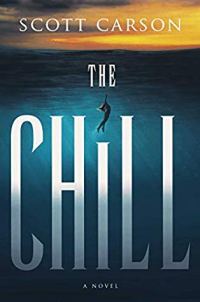
47899437._sy475_Book: “The Chill” by Scott Carson

Publication Date: February 11, 2020

Why I’m Interested: I’m honestly not completely sure what to expect of this one. The description is a bit vague, but in it’s vagueness it’s capturing my attention. Is this cosmic horror? Occult horror? Folk horror? I don’t know. But I do know that Stephen King gave it a positive blurb! At the turn of the 20th Century, a small town in upstate New York was purposely flooded by the construction of a dam, deemed necessary for the good of the many over the good of the few. Now a century later, things are getting strange at the dam, and an inspector sees something that cannot be explained. And it becomes more clear that those who were displaced by the dam’s construction may not have gone too far, and some may not have left. And that something is looking for a new sacrifice. What does this mean? I don’t know. Do I want to find out? Why, yes I do.

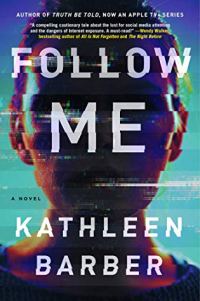
46408162._sy475_Book: “Follow Me” by Kathleen Barber

Publication Date: February 25, 2020

Why I’m Interested: This sounds like a mix of an Instagram influencer’s dramatic shenanigans and Caroline Kepnes’s “You”. So I, of course, want to read it NOW NOW NOW. Audrey’s social media presence covers hundreds of thousands of followers. Now that she’s working a prestigious job at the Smithsonian, she has the opportunity to carefully mold and shape it even more, and to show all her followers the interesting work she’s doing. What she doesn’t realize is that someone has been watching her online for years, and her new job in D.C. has brought her even closer to him. Now he’s more determined than ever to possess Audrey, and is willing to use the dark web to do it. I’m ready to be creeped out!!

What books are you looking forward to this month? Let us know in the comments!

My Year with Jane Austen: “Sense and Sensibility” [1995]

mv5bnzk1mju3mdqyml5bml5banbnxkftztcwnjc1otm2mq4040._v1_ux182_cr00182268_al_Movie: “Sense and Sensibility”

Release Year: 1995

Actors: Elinor Dashwood – Emma Thompson

Marianne Dashwood – Kate Winslet

Colonel Brandon – Alan Rickman

Edward Ferrars – Hugh Grant

Comparison – “Indulge your imagination in every possible flight.”

At two hours and 20 minutes, this was definitely a longer film for what was the norm in the 90s, though even that required a lot of adjustments of the original text. Quite a few characters are cut out, as well as several scenes throughout the story. It doesn’t exactly make the case that there were superfluous characters in the book, but I will say that other than some of the humor from the elder Miss Steele (who is cut in the movie), I never really missed any of the characters who were removed. The small changes made to the order of reveals (Brandon’s history comes out much sooner) and the cut scenes towards the middle and the end all feel natural and smooth. This is truly the test of a good adaptation, and this movie passes with flying colors. The heart of the story remains true even when drastically shortened.

Beyond the cuts to scenes and characters, the screenplay works hard to give its heroes a bit more to do, particularly Edward who barely speaks in the first half of the book. We see a lot of scenes with him bonding with Margaret and through this attention gaining notice by Elinor. There’s also an interesting addition here where Elinor responds to Edward’s complaints about not having an occupation that even his situation is better than what women have: no chance of even having an occupation so without income, they have very few options. It’s only a brief scene, but it does shine an important light on the differences between their situations.

Overall, it seems that this movie was quite well-received, both critically and by audiences. Alan Rickman, in particular, is still pointed to as the quintessential Colonel Brandon, and I think many Austen fans file this movie in the positive category of adaptations. I hadn’t re-watched it for quite some time, but now that I’ve been reminded just how good it is, I’m sure it will not be nearly as long before I pull it out once again.

Heroines – “I hate to hear you talk about all women as if they were fine ladies instead of rational creatures.”

Emma Thompson is a treasure. There is no denying this one universal truth. With regards to her casting, I would say that she reads as a bit older than what the book Elinor was supposed to be (around 19 or 20, I believe). However, in some ways, this older version of Elinor fits even better with the character we are given. The age difference being greater between Elinor and Marianne both makes Elinor’s own perfection when dealing with family trials more believable, but also makes Marianne’s youthful naivety and foolishness seem more in line with the silliness of younger person, leaving her basic sense and intelligence intact with the thought that she, like most, only needed to age out of the follies of youth.

The movie also made a few early efforts to give Elinor opportunities to show emotion which I think also helped translate her character better. In the very beginning of the movie, Edward comes across her silently crying as she watches Marianne play a sad piano piece, knowing that it will be one of the last times Marianne will have a chance to play. Towards the middle of the movie, she also shows more emotion when revealing her prior knowledge of Lucy and Edward’s engagement to Marianne.

Kate Winslet does well with Marianne’s character. Her hair is atrocious, but we can forgive her for that, I guess. She plays Marianne’s love affair with Willoughby with a lovely sense of naive innocence and shines in many of the scenes with him early in the movie. As the movie cuts out some things in the second half of the story, she fades largely into the background during the second hour. Though the scene when she looks down upon Willoughby’s home while standing in the raging storm has all of the classic tragic romance once could possibly want.

Heroes – “What are men to rocks and mountains?”

Seeming to recognize the want of action given to the heroes in the book, it is clear early on that the movie is trying very hard to give the audience opportunities to connect with our leading men during the few chances they get. Edward has a lot more screen time during his initial visit to the Dashwood family home, going on horse back rides with Elinor, playing swords with Margaret, etc. Hugh Grant does a good job lending his typical affable charm to the character and playing up the humorous side of the script. I’ve never loved Hugh Grant as an actor, but there’s no denying how charismatic he is and he makes Edward immediately appealing. Which makes it all the more weird when Edward disappears for a large chunk of time only to reappear briefly to deal with the Lucy situation, disappear again, and then show up for 5 minutes to reuinite with Elinor. The seriousness of the Lucy situation also makes for an awkward transition from funny, charming Edward to morose, gloomy Edward. Grant clearly does better with the former.

Ah, Alan Rickman. Another actor, like Thompson, who will always be a treasure. He is perfectly cast as Colonel Brandon, I think most people agree. The book itself gave more opportunities for Colonel Brandon to shine than Edward, and the movie follows this. Unlike Edward, his presence is more steady throughout and his characterization seems to flow more naturally. The movie also lets us in on his past much earlier in the story, with Mrs. Jennings revealing much of his past to Elinor even before Willoughby arrives on the scene. With this knowledge in advance, it’s easy to connect with Rickman’s serious, but endearingly earnest, take on Colonel Brandon. His romantic actions during Marianne’s illness also play directly to his strengths, rounding out the almost gothic romance of that entire scene.

Villains – “I do not want people to be very agreeable, as it saves me the trouble of liking them a great deal.” 

Greg Wise is a convincing Willoughby. He has enough of a good-natured face that viewers immediately want to like him, an important aspect of the character to more fully sympathize with one of our heroines being so taken in. He also does a good job with the scene in which he leaves Marianne behind and the one where he meets her again at the ball. In the former, he really sells the idea that it is a torment for him and that he truly feels the loss of his connection with Marianne and the family (even if we later learn it is of his own deciding). And at the ball, he still seems affected, but has a good sense of coldness to his demeaner. The movie, however, omits his later visit while Marianne is sick, so all of the coldness of his letter is left as is and not revealed to have been dictated to him by a cruel fiance/wife. Instead, all of Willoughby’s history is delivered by Colonel Brandon, and we are never given Willoughby’s version of events from his own mouth. This seems like a worthwhile cut, in my opinion, as that scene in the book did little to change my feelings towards Willoughby. And as far as the movie is concerned, there is no reason to attempt to redeem him after the fact.

Imogen Stubbs’ Lucy Steele is particularly slimy feeling. From the very first, the actress manages to instill a certain look into Lucy’s eyes that immediately triggers suspicion to the viewers. This suspicion is, of course, immediately gratified by her revealing her history to Elinor. The movie cuts out her older sister, so instead we see Lucy herself revealing her history to Mrs. John Dashwood. What follows, Mrs. John Dashwood physically attacking her, plays for great comedic value and also as a satisfying moment for the viewers themselves.

Romance – “A lady’s imagination is very rapid: it jumps from admiration to love, from love to matrimony in a moment.”

The movie does hard work to try to up the ante for the romance in this story. As I mentioned in my review of the book, there is really very little there. Like I said above in the heroes section, they gave Edward a lot more time in the beginning of the movie to show his growing attachment to Elinor and general character as a whole. This does a lot of good work making their relationship one that viewers become invested in. The movie also adds a scene in the first act where we see Edward begin a confusing conversation with Elinor about his early education that later pays off when we discover his relationship with Lucy and can connect it back to Edward’s attempts to let Elinor know what his hold up is. But, again, there’s no escaping his total absence for much of the rest of the movie. The story also cuts out his visit to the cottage, which is probably for the best, but this choice also just expounds the problem of his dropping off entirely for much of the movie. By the time we get to the romantic conclusion, I, for one, felt more joy in Elinor finally being rewarded just in general than in any real investment in the relationship as a whole.

Colonel Brandon still comes out as the more romantic of the two. Though here, even the movie struggles to really develop a relationship between its two “lovers.” The early scenes between Marianne and Colonel Brandon are barely worth mentioning. We see them playing yard bowling, but never really hear them even talk to each other. But through Rickman’s superb acting and the fact that many of his scenes are with the equally superb Thompson, it’s still easy for viewers to become invested in at least his side of the romance. They add to the ending for Marianne and Brandon as well, since the verging on “marry with the expectation of love to come later” theme of the book for these two wouldn’t work well with modern audiences who want their fairytale ending. So, instead, we get nice scenes of Brandon reading poetry to Marianne quietly as she recovers.

Comedy – “For what do we live, but to make sport for our neighbors, and laugh at them in our turn?”

They cut out several of the comedic characters, like the elder Miss Steele. But, of course, Mrs. Jennings and Sir John are left intact, re-imagined as living together after Mrs. Jenning’s daughter, Sir John’s wife, died. The actors play off each other very well and the other characters are barely missed.

Hugh Laurie, bizarrely, shows up as the grumpy Mr. Palmer. Just another example of the fact that if you watch enough Jane Austen adaptations and Harry Potter, you’re almost sure to run into every famous British actor we know from the last 30 years or so. His Mr. Palmer is just as surly as ever, but he does bring a more sympathetic turn to the character when he expresses worry for Marianne and regret in his family needing to essentially abandon them when they move due to a concern for their young baby.

Fun facts – “Life seems but a quick succession of busy nothings.”

Emma Thompson was nominated for “Best Actress” for this movie and won for “Best Adapted Screenplay.” I believe she is the only actor to be nominated for two categories like this in one film?

The movie ends with a double wedding, a change from the book in which the two sisters marry several months apart. But, the fun fact of it all, is that the scene itself is very like that of the ending of the BBC “Pride and Prejudice” which also features a double wedding for two sisters and also came out in 1995. Collusion? Coincidence? You decide!

Gemma Jones, who plays Mrs. Dashwood, will next appear in this re-read as another famous Austen mother: Mrs. Jones (Bennett) in “Bridget Jones’s Diary.” She will be joined by fellow cast mate, Hugh Grant, who plays the Wickham character in that adaptation.

Greg Wise and Emma Thompson are married. Wise was told by a palm reader, or some such thing, that he would have a love connection with someone in the movie. He went on a date with Winslet, the only single person at the time, but it wasn’t a match. Later, he and Thompson, who got along well on set, married after she split from the cheating Kenneth Branagh (who cheats on Emma Thompson!? A question we all asked of Alan Rickman’s character in “Love, Actually.” If you’re not careful, the recurring cast members in these films can feel a bit inbred when you start putting them all together…).

Best Movie Gif/Meme: “I dearly love a laugh.”

This is a blatant abuse of category creation purely for self-indulgence.
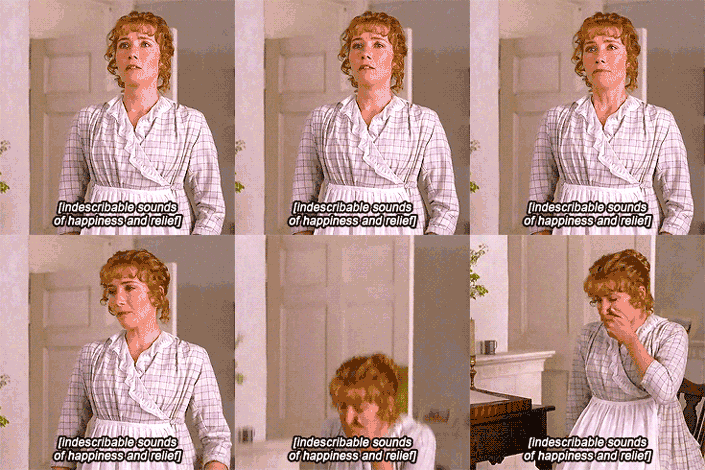
Image result for sense and sensibility 1995 gif

My best friend in college and I had a running joke/list of the most ridiculous crying scenes in movies, and the performance given by Thompson when Elinor discovers that Edward isn’t married was always at the top of this list. This is not to say that the scene is poorly acted, just that, for a crying scene, it’s definitely not subtle.

In two weeks, I’ll review the much longer 2008  version of “Sense and Sensibility.”

Kate’s Review: “Disappearing Earth”

34563821._sy475_Book: “Disappearing Earth” by Julia Phillips

Publishing Info: Knopf, May 2019

Where Did I Get This Book: I borrowed it from my Mom

Book Description: Beautifully written, thought-provoking, intense and cleverly wrought, this is the most extraordinary first novel from a mesmerising new talent.

One August afternoon, on the shoreline of the north-eastern edge of Russia, two sisters are abducted. In the ensuing weeks, then months, the police investigation turns up nothing. Echoes of the disappearance reverberate across a tightly woven community, with the fear and loss felt most deeply among its women.

Set on the remote Siberian peninsula of Kamchatka, Disappearing Earth draws us into the world of an astonishing cast of characters, all connected by an unfathomable crime. We are transported to vistas of rugged beauty – densely wooded forests, open expanses of tundra, soaring volcanoes and the glassy seas that border Japan and Alaska – and into a region as complex as it is alluring, where social and ethnic tensions have long simmered, and where outsiders are often the first to be accused.

In a story as propulsive as it is emotionally engaging, and through a young writer’s virtuosic feat of empathy and imagination, this powerful novel provides a new understanding of the intricate bonds of family and community, in a Russia unlike any we have seen before.

Review: I was visiting my parents when I saw “Disappearing Earth” by Julia Phillips on their coffee table. I asked them who had read it, and my Dad said ‘Your Mom got it for me. I read it. I didn’t like it at all.’ Not the highest of praise, but I also knew that it was probably less a reflection of the quality of writing, and more of the kind of writing. I know my Dad, and I know that literary fiction isn’t really his style. Therefore, I was definitely interested in giving it a go, especially since it had so much praise from the book community. Because that’s what “Disappearing Earth” is at it’s heart: it has the plot of a thriller, but the foundation and bones of a literary novel.

While it’s true that “Disappearing Earth” starts with, and deeply connects, to the disappearance of Alonya and Sophia, two sisters who vanish in an isolated town in Kamchatka, Russia. But it’s definitely more about life in an isolated town in a country that is still feeling the effects of a fallen empire, and the people who live their lives there every day. Each chapter takes place in a different month after the disappearance, spanning over nearly a year, and has a different perspective of a member of the community, or the surrounding communities. Each character has their own connection to the missing girls, from their mother, to a police officer, to the only witness, to members of the Even community who had their own disappearance a few years prior (but more on that later). But focusing on the various people in the town and their own connection to the girls and their disappearance, as direct or indirect as it may be, we get a slice of life narrative that is steeped in sadness, resilience, and a little bit of hope. Can I understand why this perhaps wasn’t my Dad’s kind of book? Sure. It’s not your typical thriller/mystery, even though Alonya and Sophia’s disappearance is always at hand. It’s really more about how these girls went missing, how different people react to it (from disbelief to coldness to determination to know what happened).

The theme that really stood out to me, however, was that of the Even community and characters, specifically Alla Innokentevna, the mother of the missing Lilia, and Ksyusha, a University student who is torn between her community at home and the community she has at school, specifically her boyfriend, a white Russian named Ruslan. One of the big reveals of this book is the disappearance of Lilia, whose disappearance was like Alonya and Sophia’s, but went largely unnoticed by those outside of Esso and the natives who live there. I know so little about Russian society, and the little that I do know has very little to do with the rural communities and the relationships between the white Russians and the native communities. And like in other parts of the world, the non-white victim has gone largely forgotten while two white girls have their faces splashed all over town and beyond. It’s not a mystery what happened to Alonya and Sophia, as we see what happens to them in the very first chapter, but we do find ourselves wondering if Lilia did actually leave by her own volition, or if she fell victim to the same predator as the two younger girls. And Phillips does a very good job of making you fear the very worst, and wrings out some truly heart wrenching moments involving her family. Especially when Alla interacts with Martina, Alonya and Sophia’s mother.

And finally, Phillips completely captured what life is like in this village, making the village feel like a character in and of itself. I got a very good feel for not only the location and the people, but also the day to day emotions and experiences that the communities as a whole had, and how they were shaped by where they live. This was so well done, and I was a bit astounded by how real and evocative the place of this story was.

“Disappearing Earth” may not be the kind of thriller I usually cover, but it’s so damn good. Phillips has blended two genres to make a satisfying and compelling read. I’m no doubt going to have to have a long conversation with my Dad to try and plead its case!

Rating 9: Evocative and melancholy, “Disappearing Earth” is about life on an isolated peninsula, and the way lives change yet continue when a community is rocked by tragedy.

Reader’s Advisory:

“Disappearing Earth” is included on the Goodreads lists “Best Books on the North”, and “Russia Based Thrillers”.

Find “Disappearing Earth” at your library using WorldCat!

Serena’s Review: “City of Stone and Silence”

34640582._sy475_Book: “City of Stone and Silence” by Django Wexler

Publishing Info: Tor Teen, January 2020

Where Did I Get this Book: NetGalley

Book Description: After surviving the Vile Rot, Isoka, Meroe, and the rest of Soliton’s crew finally arrive at Soliton’s mysterious destination, the Harbor―a city of great stone ziggurats, enshrouded in a ghostly veil of Eddica magic. And they’re not alone.

Royalty, monks, and madmen live in a precarious balance, and by night take shelter from monstrous living corpses. None know how to leave the Harbor, but if Isoka can’t find a way to capture Soliton and return it to the Emperor’s spymaster before a year is up, her sister’s Tori’s life will be forfeit.

But there’s more to Tori’s life back in Kahnzoka than the comfortable luxury Isoka intended for her. By night, she visits the lower wards, risking danger to help run a sanctuary for mage-bloods fleeing the Emperor’s iron fist. When she discovers that Isoka is missing, her search takes her deep in the mires of intrigue and revolution. And she has her own secret―the power of Kindre, the Well of Mind, which can bend others to its will. Though she’s spent her life denying this brutal magic, Tori will use whatever means she has to with Isoka’s fate on the line…

Review: After blowing through the first book in this trilogy in about two days, I immediately nabbed a copy from NetGalley. What a joy to find a new series that you absolutely love and have the second book come out the very month you finish the first! While I think the first book stills ranks ahead of this, I was quite pleased with the direction the series seems to be headed in and the surprises that were in store here!

It seems that the ghost ship, Soliton, has finally reached its port. But answers here are as illusive as they were on the mysterious ship. In a land riddled with the walking dead, Isoka must untangle the complicated history of the ship and its makers if she has any hope of returning to her beloved sister, Tori. Back in her home city, Tori has been getting out and about much more than Isoka knew or would have wanted. She spends much of this time volunteering at a hospital for the poor, but her own street instincts have not been lost or forgotten either. With her eyes constantly on an exit strategy, Tori has been carefully cultivating her own connections. But when the city begins to teeter on the bring of revolt, Tori finds herself thrust into the spotlight in a way that may expose secrets that she’s kept even from her own sister.

The introduction of Tori was quite the shift for this book, with the chapters now alternating between the two sisters and their experiences. I enjoyed the addition of this new character quite a lot, though I will also admit that Isoka was still by far my favorite character and I found her story here the more intriguing of the two. But it’s a brave choice to make, and I think it was pulled off well. Tori’s story lays a lot of groundwork for the final confrontation in the third book and brings some complicated themes into a story that, before, was pretty solidly a fun adventure fantasy.

Isoka is still as brilliant as ever. Brave, straight-forward, but with a hard shell that she is only beginning to shed. In the first book we saw her confront her own ability to care for others, both in the immediate and personal, as well as in the whole, as she leads the other Soliton residents to the last remaining safe space on the ship. In this book, she confronts the challenge of lasting leadership when the goal is not so obvious or so black and white in what needs to be done to achieve it. More than anything, she learns what it means to trust others to help her. She’s just the sort of prickly, gruff, super competent hero I like.

The mystery of the port of Soliton is also incredibly intriguing. In the first book, we really only scraped the surface of the ghost ship, knowing just enough to know that we didn’t know anything. This book takes that one ship and now explodes it out to an entire lost city with mysteries that reach back thousands of years. There are answers here to more than just the strange ship and its solitary mission to collected young people with access to magical Wells. There were a lot a lot of legitimately creepy elements. The crabs from the first book read like the type of exciting monsters that one finds in Japanese monster flicks. But here an element of horror is painted over top it all. And I’ll just say this…dinosaurs. Take from that what you will.

As I said above, while I still enjoyed the adventure of Isoka’s story and her own character arc best, Tori was overall an excellent addition. It becomes clear early on that Tori’s own experiences of life on the street were not so effectively wiped away as Isoka had hoped. But, being a very different girl than Isoka with very different gifts, Tori has taken her own route in building up a life for herself, one that is still always prepared for the worst. Through her story, we get a much deeper look into the geo-political state of the Empire Isoka left behind. And the story of growing unrest, a tipping point, and the uprising of the common people against an Empire that has pushed too far is very compelling.

Tori’s own role in this revolution was a very interesting contrast to Isoka. Both have been thrust into leadership roles that they feel ill equipped to manage. Both have incredible power that others can both admire and fear (though Tori’s is kept under wraps from those around her for much of the book). The classic “with great power come great responsibility” motif is explored thoroughly from both angles. But the book takes an interesting approach to the idea. The power itself isn’t in question, it’s more what does responsibility actually look like when one has power? The story explores how power can bring out both the best and worst of people. And that similar experiences of having power, and more importantly here, responsibility thrust upon a person can have very different outcomes, depending on the person. Power alone does not good or evil make.

Overall, I thoroughly enjoyed this sequel. Tori was a fantastic addition, adding new themes into the story as well as creating more shades of grey to the ones already being covered. The world-building and magical history seemed to multiply in this book, and what had been contained to a strange ship, expands out to provide insights into the entire world and magical system itself. And, of course, I love Isoka. I have no filter for this type of powerful, yet emotionally walled off, heroines it seems. If you enjoyed the first book, be ready to kick into the next gear!

Rating 8: A fantastic second outing that highlights the author’s meticulous story-telling techniques, leaving so many goodies and reveals for the second book that one can only wonder at what will come in the third!

Reader’s Advisory:

“City of Stone and Silence” is a newer title so it isn’t on many relevant Goodreads lists, but it is on “Can’t Wait Sci-Fi/Fantasy of 2020.”

Find “City of Stone and Silence” at your library using WorldCat!