Kate’s Review: “Black Canary: Ignite”

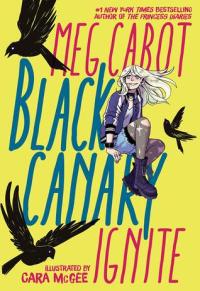
44433717Book: “Black Canary: Ignite” by Meg Cabot and Cara McGee (Ill.)

Publishing Info: DC Zoom, October 2019

Where Did I Get This Book: The library!

Book Description: Thirteen-year-old Dinah Lance knows exactly what she wants, who she is, and where she’s going. First, she’ll win the battle of the bands with her two best friends, then she’ll join the Gotham City Junior Police Academy so she can solve crimes just like her dad. Who knows, her rock star group of friends may even save the world, but first they’ll need to agree on a band name.

When a mysterious figure keeps getting in the way of Dinah’s goals and threatens her friends and family, she’ll learn more about herself, her mother’s secret past, and navigating the various power chords of life.

Review: While it’s hard to rate my favorite DC ladies in a specific order (as there are so many who are wonderful in their own unique ways!), I can say that Dinah “Black Canary” Lance is very high up on the list, like assuredly Top 5. Dinah has been given a lot of attention in the New 52 and DC Rebirth, and her back story has almost always been bleak and dark and indicative of how hardass she can be at times. When I stumbled upon “Black Canary: Ignite” by Meg Cabot, I was a little surprised that the woman who wrote “The Princess Diaries” took on a Black Canary origin story. But then, given that this is a graphic novel written for tweens, I did expect it to be far less dark than some of the stories Dinah has had in the past. Since I’m always looking for more Black Canary content, I checked it out. And what a good decision that was, because Meg Cabot gave Dinah a delightful and plucky storyline that I greatly enjoyed!

We meet Dinah as a rambunctious and snarky thirteen year old. She is in a band with her friends Kat and Vee, she wants to join the Gotham City Junior Police Academy, and tends to butt heads with her parents, as most thirteen year olds do. What struck me the most from the get go is that her life is functional, and she’s surrounded by people who love her and support her. Given that the most recent Black Canary storyline I read involved some serious Mom angst for Dina, thank you Meg Cabot for letting her live a happy early teenagehood! Dinah is funny and awkward, and she is flawed with her temper but cares for her friends. She is also perplexed by the fact that when she yells, things around her tend to break. Cabot was awesome in how she approached this, as Dinah, again, like most teenagers, just wants to be normal, and this crazy scream is hindering that. The situations when this arises are rather innocuous, but still hold pretty high stakes for a kid in middle school. As Dinah has to contend with his, she also has to contend with a strict principal who seems to be out to get her, and with her Dad, Detective Lance, who doesn’t want her to join the Junior Police Academy but won’t really tell her why. Dinah’s relationships are definitely the strongest aspects of this story, as I loved seeing how she interacts with her best friends Kat and Vee (even when things aren’t going great between all of them), and how she both loves but is frustrated by her parents, unaware of the secrets that they have that may shed light on her abilities. By the time she does have to reckon with her parents identities and what that means for her, Cabot had created a great coming of age story to go along with the origin theme.

Cabot’s dialogue is witty and snappy, which is what I’ve come to expect from her. She gives Dinah and those in her circle authentic voices, and had me laughing out loud multiple times as I read. The mystery, however, as to who is following Dinah and what they want with her, isn’t as compelling, if only because it’s pretty straight forward and then ends with a semi-interesting twist that wasn’t terribly surprising. While I was fine with the mystery taking backseat to what was going on with Dinah’s personal discovery of her Canary Cry, I’m not certain that it was supposed to be taking back seat. But it’s also important to keep in mind that this is written for an audience that is quite a bit younger than I am, so the way that I received and parsed out the mystery isn’t necessarily how it would be received by tweens. Therefore, I can’t really speak to its effectiveness.

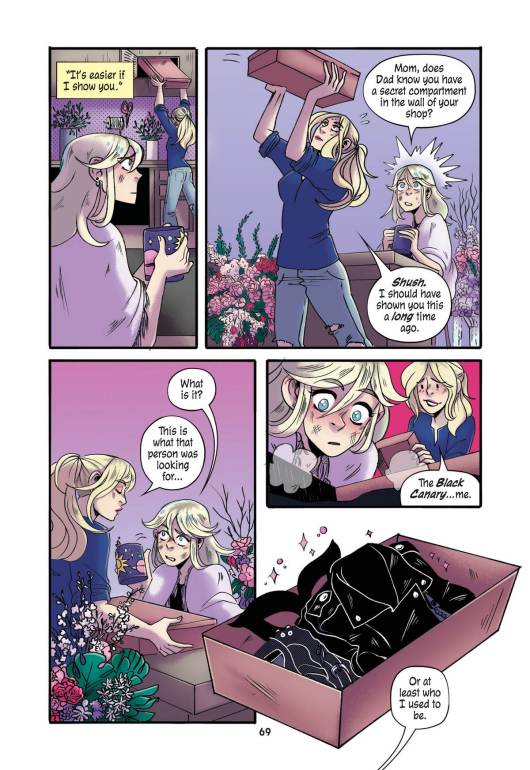
And finally, the artwork by Cara McGee is so on point and charming. I loved the facial expressions, I loved that she would put hearts around Dinah’s parents when they were feeling loving towards each other or Dinah, and I loved the action moments. It’s the perfect accompaniment to the story at hand.

cw059
(source)

“Black Canary: Ignite” is a charming as hell origin story for one of my favorite DC ladies. If you’re like me and love Dinah Lance, definitely find this story and read it.

Rating 8: A fun and clever origin story for Dinah “Black Canary” Lance with the Meg Cabot wit, “Black Canary: Ignite” does justice to one of my favorite super ladies!

Reader’s Advisory:

“Black Canary: Ignite” is included on the Goodreads lists “Strong Female Protagonist”, and “DC Comics by Women”.

Find “Black Canary: Ignite” at your library using WorldCat!

Not Just Books: February 2020

While we do love us some books, believe it not, we do have a life outside of reading. So to highlight our other pop culture interests, on the last Monday of each month, we each will highlight three other “happenings” from the last month. Big events on favorite TV shows, new movies we’ve watched, old movies we’ve “discovered,” etc. Pretty much whatever we found of particular interest outside of the book world during the last month. Share your own favorite things in the comments!

Joint Pick

mv5bmjazymq4ntutmgvjos00owrhltlmyjktzdlkztk2ogq2yje5xkeyxkfqcgdeqxvyodkzntgxmdg40._v1_TV Show: “Picard”

We are both “Star Trek” people, and like many it’s safe to say that “Star Trek: The Next Generation” is our favorite series of the franchise. One of the many reasons is because of Captain Jean Luc Picard, Patrick Stewart’s iconic leader of the Enterprise. So when it was announced that Picard was getting his own show (called “Picard”, appropriately), we were both pumped. It takes place a couple decades after the end of “TNG”, and shows a retired Picard trying to live his life after Star Fleet, and his controversial exit from the organization. But when he encounters a mysterious stranger, he finds himself drawn back into the messy politics of Star Fleet, a potential conspiracy, and a dangerous rescue mission. Not only does Stewart come back, we also get to see Data, Riker and Troi, and Seven of Nine. It’s a dark show, but we are both greatly enjoying it.

Serena’s Picks

mv5bmja3odmxmzm5nf5bml5banbnxkftztgwmdm1nju0ote40._v1_ux182_cr00182268_al_TV Show: “Bones”

Emily and I used to watch this show quite a bit while we were in college. We even rented a bunch of seasons from Blockbuster…so, yeah, we’re old. But at some point or another, amidst all of the vast amounts of shows available, I fell off the wagon for this show. The other side of the coin of all these different shows is the exhausting effort of trying to weed through it all to find a next thing. And finding myself at that point, it felt like the time was right to go back to this show and finish off the last 3 or so seasons I had missed. It’s a fairly standard procedural forensic show that gained much of its popularity on the chemistry between its main characters, Dr. Temperance Brennan and FBI Agent Seely Booth. By the point I fell off, the two characters were married and had a child together. But I was happy to see the show continue well past this point as it proves that it’s not only OK to have you main couple romantically pair up (avoiding the 10 year saga of will they/won’t they ala “Friends” which is also exhausting), but that your show can continue to succeed and be interesting after this point.

mv5bmtk1nzkymtuyn15bml5banbnxkftztgwntm0nzm2ode40._v1_Mini Series: “The Night Manager”

My husband and I watched this mini series over a couple of nights. He had already watched it, but I, for some reason, had never gotten around to it. I haven’t read any John le Carre, a very esteemed spy thriller author who’s book the show is based on. But again, my husband has and had really loved most of them. For me, the stellar cast was the main point of interest. Obviously Tom Hiddleston and Hugh Laurie are excellent, but I also always love Olivia Colman in whatever she does. Between all of that talent, and a tense story of a hotel manager who, through various circumstances, ends up going under cover into the inner workings of a weapons dealer, I was on the edge of my seat throughout most of this show. If you like spy thrillers or have read le Carre’s work, this is definitely a mini series worth checking out.

Kate’s Picks

pokemon-sword-and-shield-legendary-625x352-1Video Game: “Pokemon Sword and Shield”

As someone who has loved Pokemon since she was a tween, I was very excited to try out the new Switch Pokemon games, “Sword” and “Shield”. My husband and I got each other the games for Christmas/Hanukkah, and I was able to dive back in this past month after taking a break post holiday down time. Both “Sword” and “Shield” take place in a whole new region of the Pokemon world, this time seemingly based on the U.K. Not only are there brand new Pokemon (some of which do, admittedly, verge on the ridiculous), there are a lot more side things you can do outside of catching and training Pokemon. Not only can you trade and design Trainer cards, you can change your character’s outfits and hairstyles, and you can also cook recipes for your Pokemon! I’ve enjoyed getting to know my Pokes a little better in this game.

mv5bzwewztcynjctmjazzc00zgu0lwixywqtmdawmmu1nzq1zjq3xkeyxkfqcgdeqxvyodk4otc3mty40._v1_uy1200_cr9106301200_al_Prime Show: “Hunters”

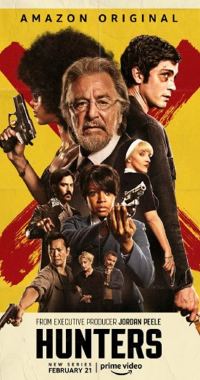
Hunting down and killing Nazis who have infiltrated American society? Sign me the fuck up. This new show is part historical fiction, part spy show, part action movie. The premise is simple: in the 1970s a number of Nazis have come to America and are hoping to establish the Fourth Reich. It’s up to a rag tag group of hunters to track them down and kill them before their plan can succeed. The story is thrilling, clever, and chilling, and the cast is superb. Al Pacino plays a holocaust survivor in charge of the hunters, Carol Kane is an older member of the group, and both Lena Olin and Dylan Baker are a couple of the Nazis in hiding, and boy oh boy are they terrifying. Throw in Jordan Peele as a producer and you know you’re going to have a subversive and well thought out story with a lot of emotional prowess. Also, given the recent rise in vocal white supremacy, it’s a cathartic, if not sometimes difficult, watch. But content warnings abound: the anti-semitic and racial violence is VERY hard to watch.

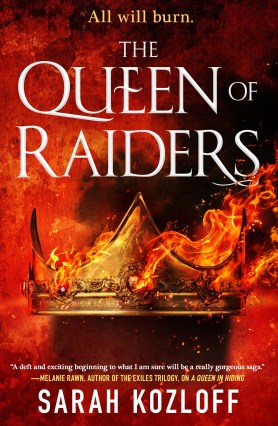
Serena’s Review: “The Queen of Raiders”

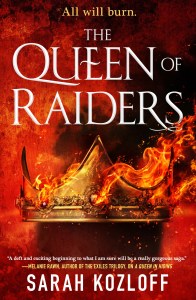
45046587Book: “The Queen of Raiders” by Sarah Kozloff

Publishing Info: Tor Books, February 2020

Where Did I Get this Book: from the publisher!

Book Description: The soliders of Oromondo have invaded the Free States, leaving a wake of misery and death. Thalen, a young scholar, survives and gathers a small cadre of guerilla fighters for a one-way mission into the heart of an enemy land.

Unconsciously guided by the elemental Spirits of Ennea Mon, Cerulia is drawn to the Land of the Fire Mountains to join Thelan’s Raiders, where she will learn the price of war.

Previously Reviewed: “A Queen in Hiding” 

Review: It’s really fun being able to review an entire series like this, one book a month for four months to the series’ conclusion. It makes the whole process so much less painfully unsure. I can read this book, confident that any questions I still have or tension points that are left hanging will be followed up on in only 30 short days! (Well, less, because the publisher was kind enough to send ARCs.) But! Even the public has a very short wait between books, and for a fantasy series that started off as well as this one did, that’s something, indeed!

Cerulia, or Wren as we now know her, is still a queen without a home. Her quest back to her throne is by no means clear, but she is determined to find her way. In many ways, she is still learning the ins and outs of her Talent and is still coming to know her own strengths and weakness as a leader. In this book, her story converges with that of Thalen and his raiders who continue to work towards their own political goals.

This is definitely a complicated political fantasy novel. I’m in the midst of reading another book like this right now. It, too, is the second book in a series. But unlike this one, the first book came out a year ago. It took me quite a while to re-orient myself to the various players, the known (and unknown) alliances, the character motivations, etc. All this on top of the secrets and reveals that were still coming out in the book. It was a lot. This is one of the biggest strengths of releasing a series like this one after another. It’s a decision that may work better or worse for various types of books, but I think Tor picked the best option right of the gate choosing this series to release this way. All of these intricate moving pieces are a lot to keep in mind, but having the books come out one right after another allowed me to jump right into this book with very little adjustment needed.

We get most of the same POV characters that we had before, but between keeping up with Cerulia and Thalen, we also see behind enemy lines into the maneuverings of Lord Matwyck who is currently serving as Lord Regent. Through his son’s eyes, we see the corruption at the heart of Matwyck regime and the priority he places on his own power above that of the country he is meant to care for. I still continue to enjoy Thalen and Cerulia/Wren/Kestrel’s journey. It was fun trying to anticipate how their choices and actions would affect other aspects of the story, and it was great watching some storylines begin to converge (always a point of excitement for books with large ensemble casts like this).

I liked the detailed look into the effects of warfare on an entire region, not only the country first immediately targeted by an army itself. The book explores how war is a long-term disaster, one that doesn’t wrap up neatly or quickly, but instead spreads out with ripple effects touching far and wide. We also look into what rebellion looks like, both on the macro and micro level, from the organized actions of a group of raiders to the personal choices of those with varying levels of influence and power.

My one criticism of the book is one that I had in the first book, as well, and it has carried over here, too. For me, there is something a bit stilted about the writing style of the story. I think part of this is simply word choice and sentence construction. She has a very frank, and to the point, way of writing. But while this leaves a lot of room for detail, it also makes it hard to become emotionally invested in what is going on. The other part comes down to editing: a good editor could potentially identify parts of the story that could be trimmed down, giving the pacing a boost that I think it could use at times.

Overall, I continue to enjoy this series and am excited to get started on the third book in the series! I’ll have a giveaway for that title and my review coming out in March! In the mean time, don’t forget to enter the current giveaway to win a paperback copy of “The Queen of Raiders!”

Rating 7: The short wait time definitely plays in this series’ favor as the author only presses down harder on the complicated-political-fantasy gas pedal in this second novel.

Reader’s Advisory:

“The Queen of Raiders” is a new book, so it isn’t on many Goodreads lists, but it is on “Upcoming 2020 SFF with female leads or co-leads.”

Find “The Queen of Raiders” at your library using WorldCat!


Kate’s Review: “Cirque Berserk”

04 Cirque Beserk CoverBook: “Cirque Berserk” by Jessica Guess

Publishing Info: Unnerving, February 2020

Where Did I Get This Book: I was sent an eARC by the author.

Book Description: The summer of 1989 brought terror to the town of Shadows Creek, Florida in the form of a massacre at the local carnival, Cirque Berserk. One fateful night, a group of teens killed a dozen people then disappeared into thin air. No one knows why they did it, where they went, or even how many of them there were, but legend has it they still roam the abandoned carnival, looking for blood to spill.

Thirty years later, best friends, Sam and Rochelle, are in the midst of a boring senior trip when they learn about the infamous Cirque Berserk. Seeking one last adventure, they and their friends journey to the nearby Shadows Creek to see if the urban legends about Cirque Berserk are true. But waiting for them beyond the carnival gates is a night of brutality, bloodshed, and betrayal.

Will they make they make it out alive, or will the carnival’s past demons extinguish their futures?

Review: Thanks to Jessica Guess for sending me an eARC of this novella!

If there are two things you should know about me and my pop culture affinities, I love slasher movies, and I love the 1980s (in terms of the art and music scene, NOT the political one). And if you give me slasher movies from the 1980s, I’m golden. When Jessica Guess contacted me asking if I would be willing to read her new novella “Cirque Berserk”, the description alone sucked me in. A haunted/evil carnival? Urban legends? A mention of the 1980s? And then, the cover had ROLLER SKATES?! I was IN!! If anything I figured it would be campy and entertaining, but “Cirque Berserk” was more than that. It achieved something I’ve seen a few horror novels fail: it felt like I was reading a slasher movie.

Guess creates a fun urban legend, some visceral gore and violence moments, and wicked characters that are easy to root for even when they are committing horrendous acts of violence. You assume that you’re going to be reading a novella that hits the usual slasher tropes and check boxes: the supernatural or unstoppable/ faceless killer, the final girl, the innocent but expendable teenagers, and on and on. But Guess takes those tropes and manages to subvert them in various ways that kept catching me by surprise. I thought I knew where certain characters or scenes were going, and then the rug would be yanked out from under me and I’d be genuinely surprised. I really don’t want to spoil anything about the plot’s big reveals, and I found them to be fun and effective, but I WILL say that Guess created not only a good mythology for Cirque Berserk and the horrifying things that go on there, she also gives the baddies some real motivation, motivation that the reader can, in some ways, relate to. She also gives the killers identities and backgrounds that aren’t generally seen as much in slasher stories, at least in the sense of how they are fully explored and given some actually tangible and relatable reasons for why they do what they do, at least at first. The focus is less on the expendable teenagers who’ve wandered into the fairgrounds, and more on the baddies, and how they got to where they are when we meet them.

And honestly? This novella is, pardon the bad pub, a scream to read. It opens with a classic slasher movie situation, and goes balls to the wall in terms of visceral horror violence as well as showing the stakes that we are dealing with. We get flashbacks to the fateful and dreadful night when Cirque Berserk went bad, we get some really gnarly kills right out of the Tom Savini playbook, and we get some pretty creepy moments and concepts AND a cameo from my favorite Biblical demon Lilith. On top of all that, it becomes quite clear, quite quickly that this candy coated fever dream of a slasher story is going to be accompanied by a bitchin’ 80s sound track, including tracks by Whitney Huston, Bonnie Tyler, and A-ha.

giphy-3
(source)

Honestly, if you like old school slasher movies that are dropping in day glo 80s nostalgia, “Cirque Berserk” is a novella that you should absolutely check out. It’s fun, it’s a quick read, and it has some great curveballs.

Rating 8: A hell of a fun ride that reads like a slasher movie on the page, “Cirque Berserk” was an entertaining read that I greatly enjoyed.

Reader’s Advisory:

“Cirque Berserk” isn’t on any Goodreads lists as of now, but for a similar read I would steer you towards “My Best Friend’s Exorcism”.

“Cirque Berserk” isn’t in WorldCat yet, but you can find it HERE at Unnerving Magazine.


Giveaway: “The Queen of Raiders”

45046587Book: “The Queen of Raiders” by Sarah Kozloff

Publishing Info: Tor Books, February 2020

Where Did I Get this Book: from the publisher!

Book Description: The soldiers of Oromondo have invaded the Free States, leaving a wake of misery and death. Thalen, a young scholar, survives and gathers a small cadre of guerrilla fighters for a one-way mission into the heart of an enemy land.

Unconsciously guided by the elemental Spirits of Ennea Mon, Cerulia is drawn to the Land of the Fire Mountains to join Thelan’s Raiders, where she will learn the price of war.

Previously Reviewed: “A Queen in Hiding”

Giveaway Details: In partnership with the publisher, I’m happy to be able to offer an ongoing giveaway for each book in this series as they come out! As I mentioned in my review of “A Queen in Hiding,” I was drawn to check out these books not only because of  the intriguing book description but because of the publisher’s initiative “binge-style” approach to publishing: releasing all four books over the course of four months. What a novel approach! Think of it, being an epic fantasy fan and not only not having to secretly wonder whether your favorite series will ever be finished at all, but knowing that you’ll be able to get your hands on the next book in only one short month! Short enough that many readers might even struggle to keep up with publishing rate! An unheard thing for most of us fantasy fans who are used to grueling waits.

So, if you’ve already gotten through the first book in the series, don’t miss your opportunity to win a finished copy of the second! And don’t forget to check back in March and April for giveaways of the third and fourth books, too! The giveaway is open to U.S. residents only and ends on February 26.

Enter to win!

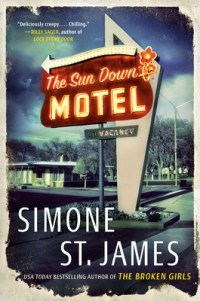
Kate’s Review: “The Sun Down Motel”

45885644Book: “The Sun Down Motel” by Simone St. James

Publishing Info: Berkley, February 2020

Where Did I Get This Book: I received an eARC from the publisher via NetGalley

Book Description: The secrets lurking in a rundown roadside motel ensnare a young woman, just as they did her aunt thirty-five years before, in this new atmospheric suspense novel from the national bestselling and award-winning author of The Broken Girls.

Upstate NY, 1982. Every small town like Fell, New York, has a place like the Sun Down Motel. Some customers are from out of town, passing through on their way to someplace better. Some are locals, trying to hide their secrets. Viv Delaney works as the night clerk to pay for her move to New York City. But something isn’t right at the Sun Down, and before long she’s determined to uncover all of the secrets hidden…

Review: Thanks to Berkley and NetGalley for providing me with an eARC of this book!

I have memories of spending childhood road trips, be it out to Lake Superior or just visiting family down in Iowa, staying in motels. Eventually my mother had it and we were upgraded to hotels, but there was always something kinda fun about the rooms leading out to the parking lot, at least in my mind. It’s been a long while since having that kind of experience, but I thought about it a lot as I read “The Sun Down Motel” by Simone St. James. I greatly enjoyed her book “The Broken Girls”, and when this ended up in my inbox I was happy to see that she had a new book. And not just any old new book, but a new book involving a missing woman, a true crime obsessed amateur sleuth, AND a haunted motel!

giphy-4
It’s like this book was written with me in mind!! (source)

Our two stories/mysteries take place in two different timelines and POVs. The first is that of Viv, who left home in 1982 in hopes of going to New York City, but finds herself in Fell, a strange small town in upstate New York that has a lot of weird and violent baggage. Stranded and broke, she decides to take a job as the night clerk at the Sun Down Motel, a run down motel that’s seedy at best. She disappears without a trace. Then in 2017, her niece Carly, wanting to figure out what happened to her aunt, arrives in Fell, and takes the same job Viv had. Viv’s perspective is in the third person, and Carly’s is in the first, and both POV styles worked well for their parts of the story, and worked together to weave a complex and rich set of mysteries. The first mystery is what happened to Viv, and the second is the question of why the Sun Down Motel is so damn haunted, and I was fully invested in both. St. James was masterful at building upon both mysteries from each others foundations, and I was kept guessing for pretty much all of the book.

And then there are the haunting and ghost elements of this story. These too were incredibly well done and right up my alley. From strange noises, to the feeling of a presence near you even if you can’t see anyone, to lights going out one by one and doors opening on their own, St. James has taken a number of the best tropes from the haunted house genre and applied them effortlessly to a run down motel. The history of The Sun Down has the tragedy and scandal that is comparable to The Overlook in “The Shining”, and like King St. James has created a whole character for a place made of brick, mortar, and ectoplasm. The various ghosts range from the tragic to the intimidating, and all of them had sufficiently creepy moments. Both Viv and Carly have their run ins, and the first one we see was genuinely heart pounding and knocked my socks off. St. James makes it clear that she has not come to play, nor has she come to be ambiguous. There are ghosts at the Sun Down, and one of them is especially PISSED OFF.

But the thing that struck the most resonant chord with me as a reader was the undercurrent of the toxicities of misogyny within our culture, both in the 1980s and in modern times. Girls go missing or are murdered in Fell, and while it causes sensation and gossip, the women are completely forgotten soon thereafter, or objectified in the moment. A mother goes missing and ends up murdered, and the town mourns and turns her into a martyr. A girl with a bad reputation is murdered, and there are underpinnings of victim blaming. A warning is sent out about a strange man who is seemingly fixated and following a girl, and no one cares enough to investigate further. And a ghost who was the victim of misogynistic rage has a wrath and fury that was never afforded to her in life, and has turned her into an unsolved and salacious mystery in death. St. James both makes true crime aficionados plucky and useful in their quest for the truth, but also points out that their interest and arguably ‘hobby’ is based in actual people’s pain, and can cause damage in and of itself. I really, really liked how these themes were sprinkled throughout the story.

I highly recommend “The Sun Down Motel” for fans of thrillers and horror alike! And if you can, read it in a roadside motel, and don’t pay too much attention to the strange sounds you may hear outside. It’s probably nothing.

Rating 9: Eerie and suspenseful, and simmering with justifiable anger, “The Sun Down Motel” is a wonderful mystery with fantastic characters.

Reader’s Advisory:

“The Sun Down Motel” is included on the Goodreads lists “2020 Gothic”, and “Haunted House Books”.

Find “The Sun Down Motel” at your library using WorldCat!

Valentine’s Giveaway!

Valentine’s Day was this past Friday, and in honor of the romantic holiday we have decided to run a giveaway of two romantic novels! Because there’s nothing wrong with celebrating in a belated way, right? Totally!

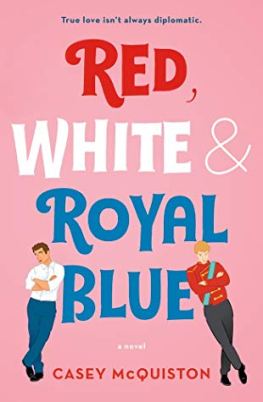
41150487._sy475_Book: “Red, White, & Royal Blue” by Casey McQuiston

Publishing Info: St. Martin’s Griffin, May 2019

Book Description: What happens when America’s First Son falls in love with the Prince of Wales?

When his mother became President, Alex Claremont-Diaz was promptly cast as the American equivalent of a young royal. Handsome, charismatic, genius—his image is pure millennial-marketing gold for the White House. There’s only one problem: Alex has a beef with the actual prince, Henry, across the pond. And when the tabloids get hold of a photo involving an Alex-Henry altercation, U.S./British relations take a turn for the worse.

Heads of family, state, and other handlers devise a plan for damage control: staging a truce between the two rivals. What at first begins as a fake, Instragramable friendship grows deeper, and more dangerous, than either Alex or Henry could have imagined. Soon Alex finds himself hurtling into a secret romance with a surprisingly unstuffy Henry that could derail the campaign and upend two nations and begs the question: Can love save the world after all? Where do we find the courage, and the power, to be the people we are meant to be? And how can we learn to let our true colors shine through? Casey McQuiston’s Red, White & Royal Blue proves: true love isn’t always diplomatic.

Giveaway Details: Kate really loved this romantic and light story of the son of the President of the United States falling in love with the grandson of the Queen of England. First Son Alex is ambitious and gregarious, while Prince Henry is more reserved, and their initial rivalry, of course, turns into romance. “Red, White, & Royal Blue” was a runaway hit last year, and was one of the recipients of the 2020 Alex Award. It’s funny, heartfelt, and gives you a glimpse into a happier timeline where a woman is President and the U.S. isn’t in political shambles. Plus, both Alex and Henry are likable and easy to root for.

43192642._sy475_Book: “Realm of Ash” by Tasha Suri

Publishing Info: Orbit, November 2019

Book Description: The Ambhan Empire is crumbling. A terrible war of succession hovers on the horizon. The only hope for peace lies in the mysterious realm of ash, where mortals can find what they seek in the echoes of their ancestors’ dreams. But to walk there requires a steep price.

Arwa is determined to make the journey. Widowed by a brutal massacre, she’s pledged service to the royal family and will see that pledge through to the end. She never expected to be joined by Zahir, the disgraced, illegitimate prince who has turned to forbidden magic in a desperate bid to save those he loves.

Together, they’ll walk the bloody path of their shared past. And it will call into question everything they’ve ever believed…including whether the Empire is worth saving at all.

Giveaway Details: This was a favorite fantasy read for Serena in 2019. It’s technically the second book by this author set in her Middle East-inspired world, but it can easily be read alone. What makes it notable for this themed giveaway is the lovely slow-burn romance that develops throughout the book. In the midst of some incredibly unique fantasy twists and turns, it was lovely to watch the slow friendship and trust form between the young widow, Arwa, and the outcast prince, Zahir. Together, they will strive to save their country and learn what they will sacrifice in the name of love.

This giveaway for both books is open to U.S. Residents only and ends on February 24th at Midnight (EST).

ENTER HERE

My Year with Jane Austen: “Sense and Sensibility” [2008]

250px-s26s_dvd_cover_2008Movie: “Sense and Sensibility”

Release Year: 2008

Actors: Elinor Dashwood – Hattie Morahan

Marianne Dashwood – Charity Wakefield

Colonel Brandon – David Morrissey

Edward Ferrars – Dan Stevens

Comparison – “Indulge your imagination in every possible flight.”

The biggest difference between this movie and the 1995 version is the added length. It has at least an hour of extra running time which allows the story to both add in scenes and characters that were cut from the book as well as create some unique scenes that, for the most part, do enhance the story. That said, there were also a few mishaps in these added scenes and in the characterization of Willoughby. But overall, I think it did more right than wrong, in this aspect. Watching the two adaptations back-to-back was an entertaining process. It was clear that as much as this story was attempting to be faithful to the novel and be its own thing, the 1995 version was too beloved to completely ignore. There were several scenes or character beats that were clear mirrors to similar ones in the older movie, like some of the early scenes with Edward, Margaret, and Elinor in the library. It wasn’t a scene in the book, so it was a clear nod to the earlier, beloved movie.

I’ll go into more detail below, but I think I liked both actresses in both movies about equally. But the heroes are more split. I preferred Dan Stevens’ Edward here much more than Hugh Grant’s take on the character. Some of this is due to my own dislike of Hugh Grant, but some of it is also simply due to the choices that were made with the character here. Colonel Brandon is a tougher call. I think Alan Rickman’s is probably better, but the added time, again, does a lot for the character here and David Morrissey is still a good fit.

I really liked the use of the dramatic scenery in this movie. There are several moments when nature itself is used to highlight or mirror the internal emotions of the characters. The waves crashing, the driving rain, even the quiet of a seaside cave. It was all beautiful, and paired with a lovely score, the overall tone of the story felt perfect.

I’ve definitely watched this version more than the 1995 version. As I said in that review, I had almost forgotten how much I liked it and will likely increase my re-watching of it in the future. However, I think this one will likely to continue to beat it out overall, if only because, being longer, there’s just so much more of it to enjoy.

Heroines – “I hate to hear you talk about all women as if they were fine ladies instead of rational creatures.”

Both actresses are superb in their roles. They also both bring very different vibes to the characters than Emma Thompson and Kate Winslet did to theirs in the 1995 version. Morahan’s Elinor feels a bit more in line with the character, perhaps. Emma Thompson was almost a bit too perfect, making Elinor, a character who already walks the line of being unbelievable in her perfection, stand out even more above those around her. The solemnity of Morahan’s Elinor is combated by her wide-eyed bewilderment and innocence to the failings of many of those surrounding her. Wakefield leaned in strongly to the lively aspect of Marianne’s character. Due to the increased run time, more of the original lines from Marianne that highlight some of her more extreme romanticisms were included which helped flesh out her character here. Winslet’s version was a bit more refined, I think, but both are enjoyable. I’d have a hard time picking favorites between the four versions and can only really say that I enjoyed them all thoroughly in the adaptations they were in.

The longer running time was also nice in that it gave the story more room to focus on the the small moments in the Dashwoods family. We see a lot of added scenes with Elinor and Marianne, Elinor and Mrs. Dashwood, and even Mrs. Dashwood and Margaret. The movie was very successful in making the viewer feel that this was a real family with real relationships between them that were just as important, if not more so, than the romantic ones that are developing before us.

Heroes – “What are men to rocks and mountains?”

Like the 1995 adaptation, we see the most changes to the original text with how the heroes are depicted. Edward is given many more actual scenes interacting with Elinor in the beginning of the story, and, due to the increased length of this adaptation, we gain back a few scenes with him that were cut in the 1995 version, such as his visit to the Dashwoods about halfway through the story. I particularly liked this inclusion again as it helped keep Edward in the front of the mind (in the 1995 version he kind of fades into the background, making his reappearance towards the end of the movie a bit jarring). It also allowed for an additional small moment where we see him working off his feelings while cutting wood for the Dashwoods. He comments about how little help they have at the cottage and cuts himself off from saying more, though it is clear to the viewer that he is thinking about what he could do for them if he was free to marry as he wishes. I think it works really well as a wholly original added segment, giving viewers a better peak into Edward’s current mindset.

Colonel Brandon, too, benefits from the added time. We see more moments between him and Sir John while they’re hunting, a nice insight into Brandon’s friendship with characters who, on the surface, it would seem are not the type to attract his attention. The movie also adds back in the duel with Willoughby and a few added scenes between these two characters. Unlike the Edward moment, I’m not sure if these added scenes worked as well. I’ll go into more about the Willoughby/Brandon problems below, but even the duel was a bit strange. It seemed out-of-step with the rest of the movie and a Jane Austen story as a whole, feeling too dramatic and too unecessary. Nothing is actually resolved from this duel, it’s never mentioned again, and it doesn’t provide any insights into either character, except, perhaps, lowering Brandon to the level of petty dueling which feels amateurish and boorish and more inline with Willoughby than Brandon overall.

Villains – “I do not want people to be very agreeable, as it saves me the trouble of liking them a great deal.” 

One of my biggest criticisms of this adaption is the character of Willoughby. There are several things working against it for me, but two really stand-out: the choice of actor and several added scenes to the script. As I have more conflicted feelings about the latter choice, I’ll begin with the first. Dominic Cooper is routinely type cast as villainous characters. He’s not super well-known, of course, but for anyone who is familiar with him, it’s an instant giveaway for Willoughby’s being bad. He’s also type cast this way for obvious reasons, he’s simply excellent at being sleazy! So much so, however, that it’s almost impossible to buy his love for Marianne as being anything other than nefarious. This, in turn, makes her own blindness towards him (as well as her mother’s and Elinor’s as well) harder to understand and sympathize with. In the 1995 version of it, it’s easy to see the appeal of Willoughby, and Winslet’s Marianne is blithely shrouded in easy-to-understand youthful naivety.

What’s more, the script makes no effort to keep Willoughby’s villainy a secret. The movie actually opens with the scene of his seduction of Brandon’s ward and her abandonment. Cooper’s face isn’t shown, but he does speak, so careful listeners are immediately alerted when he later shows up. The creator mentioned that this scene was added because they felt that the seduction of Brandon’s ward, a truly awful act, is often easily skipped over, both by book readers and viewers of the 1995 movie. But, while I do think this concern has merit, particularly where the book is involved, it does hurt the movie as far as Willoughby himself. This problem is only compounded when only shortly after meeting Willoughby, the movie adds a scene between him and Brandon in which Brandon asks what his intentions are. Willoughby is shady, Brandon is honorable, it’s all fairly easy to put together.

This movie does include the scene where Willoughby shows up during Marianne’s illness to explain his side of things. But, by token of highlighting the true villainy of his previous acts, the movie undercuts the sincerity of feelings that Willoughby expresses for Marianne. In the book, it’s easier to discern the grey areas in which Willoughby exists and that his decisions are ones that will truly haunt him with the loss of Marianne. Here, you’re too busy disliking him to care about any true regret he may have.

Romance – “A lady’s imagination is very rapid: it jumps from admiration to love, from love to matrimony in a moment.”

Like the 1995 movie, this version also flip flops the order of marriage proposals for Marianne and Elinor. It, too, recognizes the greater investment that the viewer likely has in Elinor’s relationship, thus using her happily ever after as the grand finale of the movie. While we don’t have Emma Thompson’s flamboyant crying, Morahan’s break down and frantic cleaning is perfect for the, up to this point, put together Elinor. I also liked how they showed the different circumstances of Marianne and Elinor once they’re married, with Marianne being romantically swept off her feet into a grand house and Elinor and Edward sharing a small domestic moment, laughing together as he chases chickens around their yard. It’s a nice coda to the different versions of love that they both have always aspired to. I also like how it helps highlight that while Marianne’s first choice wasn’t right and some of her extreme sensibilities were taken too far, she’s not “bad” or “wrong” for wanting the typical, romantic ending with the fancy house and grand husband.

This version also, like that earlier movie, makes more effort to show the growing love of Marianne for Brandon, unlike the book with its quasi “love will come with time but I kind of owe him this” approach. There are only a few short scenes, but they are compelling and classically romantic, highlighting the natural fit of Marianne and Brandon.

Comedy – “For what do we live, but to make sport for our neighbors, and laugh at them in our turn?”

Since this version is so much longer, there was a lot of leeway to add back in characters who were missing in the 1995 version. This includes several characters who played pretty much solely for comedic purposes, like Lady Middleton and the elder Miss Steele. Miss Steele, similarly to her character in the book, has a bigger presence than Lady Middleton, who by definition is bland and uninteresting, and I was glad to see the character return. This also returns the story to the original version where she, not Lucy, is the one to reveal Edward and Lucy’s engagement. As vindicating as it was to see Lucy slapped down in the 1995 one, it did stretch the bounds of the imagination to think she’d be so taken in as to reveal a secret that she felt was important enough to have kept for 5 years prior. Her older sister, perfectly primed as a rather thoughtless blabber mouth, always made more sense, and it plays perfectly here.

While perhaps not “comedic,” I also enjoyed the extended scenes we get with their older brother, Mr. Dashwood. Mark Gastiss, who I knew of mostly from his role as Mycroft in “Sherlock,” is excellent in the role. He’s almost pitiable in how completely ruled he is by his wife, with his every small, good intention being quickly squashed by her.

Fun facts – “Life seems but a quick succession of busy nothings.”

Hattie Morahan and Dan Stevens appear together in “Beauty and the Beast” with him as the handsome prince/Beast (Edward is supposed to be plainish, so we can all agree that the “Beauty and the Beast” casting was better suited to Stevens’s natural good looks than Edward) and she as the Enchantress.

I knew of Dan Stevens first from “Downton Abbey,” so seeing him as a romantic hero was easy enough. David Morrissey, however, was more familiar as the Governor on “The Walking Dead,” so that was a bit of an adjustment. He also reportedly questioned whether another Jane Austen adaptation was necessary, but eventually signed on once he saw how much more action the men were given. Glad he came around, because he does an excellent Brandon here, a tough job after the superb Alan Rickman’s take on the character. But he shall never live down questioning the necessity of another adaptation!

There are a bunch of period costumes that are used repeatedly in Jane Austen adaptions. The actors, of course, are fun to spot popping up in various things, as I mentioned in the 1995 movie review. The re-used houses and locations are the next step of fandom obsession. But costume spotting between adaptations is truly where you know that you’ve arrived at perhaps an unhealthy state of re-watching. There were a bunch in this one, but the dress I did notice was a dotted dress that Marianne wore in this movie that Winslet’s Marianne wore as well in the 1995 movie. Apparently it’s also seen in “Mansfield Park” and “Persuasion,” so I’ll look for it there, too, when I get to those.

Best Movie Gif/Meme: “I dearly love a laugh.”

The script writer, Andrew Davies, is well-know for his work with many other Austen adaptations. In an interview, he mentioned that he felt pressure to do for “Sense and Sensibility” what he did for the 1995 “Pride and Prejudice,” which is commonly seen as the best adaptation of that work even today, going on 30 years later. To that purpose, he created this scene of Edward chopping wood in the rain in a flimsy white shirt to mirror the iconic scene where Colin Firth parades around in a similarly see-through shirt after jumping in a lake.

In two weeks, we jump into our next novel, the first half of “Pride and Prejudice!”

Kate’s Review: “The Third Rainbow Girl”

37655694Book: “The Third Rainbow Girl: The Long Life of a Double Murder in Appalachia” by Emma Copley Eisenberg
Publishing Info: Hachette Books, January 2020

Where Did I Get This Book: The library!

Book Description: In the afternoon or early evening of June 25, 1980, two young women, Vicki Durian and Nancy Santomero, were killed in an isolated clearing in rural Pocahontas County West Virginia. They were hitchhiking to an outdoor peace festival known as the Rainbow Gathering, but never arrived. Their killings have been called “The Rainbow Murders.”

For thirteen years, no one was prosecuted, though suspicion was cast on a succession of local men. In 1993, the state of West Virginia convicted a local farmer named Jacob Beard and sentenced him to life imprisonment. Later, it emerged that a convicted serial killer and diagnosed schizophrenic named Joseph Paul Franklin had also confessed. With the passage of time, as the truth behind the Rainbow killings seemed to slip away, its toll on this Appalachian community became more concrete—the unsolved murders were a trauma, experienced on a community scale.

Emma Copley Eisenberg spent five years re-investigating these brutal acts, which once captured the national media’s imagination, only to fall into obscurity. A one-time New Yorker who came to live in Pocahontas Country, Eisenberg shows how that crime, a mysterious act of violence against a pair of middle-class outsiders, came to loom over several generations of struggling Appalachians, many of them
laborers who earned a living farming, hauling timber, cutting locust posts, or baling hay—and the investigators and lawyers for whom the case became a white whale.

Part “Serial”-like investigation, part Joan Didion-like meditation, the book follows the threads of this crime through the history of West Virginia, the Back-to-the-Land movement, and the complex reality contemporary Appalachia, forming a searing portrait of America and its divisions of gender and class, and its violence.

Review: I’ve mentioned this in the past about how my mother likes to send me book reviews from the New York Times or the Washington Post or what have you if she thinks that the book will be of interest to me. Such themes have included cults, murder, and a first scene which involved two men hooking up in a Bulgarian public restroom. Suffice to say, I’m always intrigued when a new review shows up in my inbox. So when she sent an article about “The Third Rainbow Girl” by Emma Copley Eisenberg, I knew that it was bound to be a spot on recommendation. And not only was it spot on, it was about a true crime cold case that I had never heard of until that moment! Mom comes through once again with the creepy and salacious reads!

giphy-1
Who knows what kind of story will arrive in my inbox next? (source)

“The Third Rainbow Girl” is a dual narrative. One is the examination and dissection of a cold case murder from 1980 in which two women were found murdered in Pocahontas County, West Virginia, and the woman who was their friend and narrowly missed being murdered herself. The other is a personal memoir by Eisenberg, who spent a few formative years working in Pocahontas county decades after the fact. These two narratives come together to paint a portrait of the community, the culture, and the various hardships and struggles the people have, as well as how the murders and the fallout affected those who live there. But they also tell the story of women trying to find their freedom in different ways, and how misogyny and violence can have a hefty price. The story of Nancy Santomero and Vicki Durian is a familiar one of women who meet a violent end, but the way that Eisenberg slowly peels back the layers of their story is haunting and depressing in how incomplete it feels, even if it’s kind of solved. From thrown out charges to an overturned conviction to the confession from notorious serial killer Joseph Paul Franklin (that ultimately was never pursued as charges because he was already on death row for two other murders), Santomero and Durian’s case has been a mystery, even if the case is technically closed. And the idea of the ‘hillbilly monster’ trope has been one that haunted it from the get go, as everyone in town was sure that it was someone local who was taking aggression out on the ‘hippie’ girls. And yet, if Franklin is to be believed, he was an outsider and certainly not the monster we’ve come to associate with pop culture depictions of Appalaichian predators, though far more dangerous than some “Deliverance” backwoods hick. For whatever reason, be it misogyny, or two victims who didn’t fit the ‘missing pretty white woman’ mold to a t (as while they were both white, neither Santomero nor Durian were seen as ‘pretty’ by media frenzy standards, and as hippie chicks had certain stigmas around them), or a community that had turned on itself, this murder is still incomplete, and still haunts Pocahontas County.

The other narrative, that of Eisenberg’s own experiences in Pocahontas County while working for VISTA, gives a little more context to the culture of the area, though it sometimes treads into ‘this could have been ME!’ territory. The title of the book refers to the Third Rainbow Girl, a woman named Elizabeth Johndrow who had been friends with Durian and Santomero but narrowly missed becoming a victim due to timing and sheer luck. You can see that Eisenberg relates to Johndrow, and on other levels Durian and Santomero, because of the need to explore the world and to find herself when she was young and living in the area, without knowing what would come of that need for adventuring. She experienced first hand the highest highs of living in Pocahontas County, and also saw the way that women are both taught to be tough while being cut down because of circumstance and the misogyny that is rampant in that culture, as it is in other American cultures, though Appalachia gets more scrutiny than some supposedly more progressive parts of the country. I thought that the memoir section of this book, along with the history lessons, definitely made me approach the subject matter with more compassion and a more open mind that I would have had it not been there. But that said, I did find some of the comparisons made between her life and the victims lives, even if not overtly, to feel a little self centered. Because of this, I wasn’t as connected to this part of the story, and wanted to get back to the case at hand as it unfolded and shifted.

Overall, “The Third Rainbow Girl” is a unique take on the true crime genre, and it examined themes that many true crime books don’t. I think that if you are looking for straight true crime it may not be the best fit, but if you want a little reflection and contextualization, you should definitely give it a whirl.

Rating 7: A cohesive and deep dive into a cold case that I was unfamiliar with, and while I liked the background provided to West Virginia, the memoir aspect felt a little shoehorned in.

Reader’s Advisory:

“The Third Rainbow Girl” is included on the Goodreads list “True Crime by Women and POC”.

Find “The Third Rainbow Girl” at your library using WorldCat!

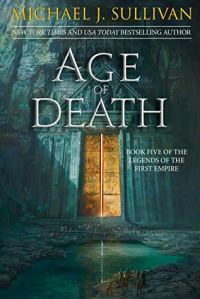
Serena’s Review: “Age of Death”

30613608._sy475_Book: “Age of Death” by Michael J. Sullivan

Publishing Info: Riyria Enterprises LLC, February 2020

Where Did I Get this Book: e-ARC

Book Description: Winter blankets the land, and more than just hope has died. Prevented from invading the Fhrey homeland by the tower of Avempartha, the western army seeks a way across the Nidwalden River before the fane obtains the secret of dragons. As time runs out for both humanity and the mystic Suri, the only chance for the living rests with the dead. Having made their fateful choice, can a handful of misfits do the impossible, or are they forever lost to an inescapable grave? Do gods truly exist? Is it possible to know the future? And what lies beyond the veil of death? In the tradition of Virgil’s Aeneid, Dante’s Divine Comedy, and Milton’s Paradise Lost, the most epic of tales transcend the world of the living. It’s time to see what lies in Elan’s Age of Death.

Previously Reviewed: “Age of Myth” , “Age of Swords”, “Age of War” and “Age of Legend”

Review: Sullivan is not only an established fantasy author, but I have to think he’s one of the most successful as a self-published author. Not only did he start out his career that way and manage to break into the major league standard publishing circuit, he also has now managed to go back to self-publishing and break all kinds of Kickstarter records for books. It also works well for his fans, as I, like many others, was able to get my hands on an early ebook copy. Kind of important after that cliffhanger in the last one! Alas, a cliffhanger was here too (warning!), but, a Kickstarter campaign starts up again shortly, so my wait time is again cut down. Thank god! All of that is neither here nor there to my overall review of the book, but it’s a kind of neat unique trait of these books that I like to highlight. But, the long and the short of it: per the usual for this series, I had a great time reading this book and am now hanging on hooks waiting for the grand finale!

The last book ended with our grand party sinking to their “death” in a disgusting bog, hoping to journey through the land of the dead to the realm of the Fhrey where their dear friend and most powerful ally, Suri, is being held captive. This book picks up immediately from there as our party begins to make their way through the various lands of the dead, meeting up with old friends and new foes along the way. Suri, on the other hand, is caught up in the political maneuverings of the power that be among the Fhrey people, trying to determine friend from foe while protecting the deadly secret of dragon-making, the only advantage the human army has had on their side during this decade-long war.

As this is the fifth book in the series, the characters are all pretty well-established. Aside from a one or two new character that we meet in the underworld, we spend most of our time with these familiar faces. Of course, the challenges they face in the underworld bring new elements of their characters to light, but for the most part, they are all largely as we have come to expect. Of them all, I seem to be enjoying Moya more and more. In this book we see her face some incredibly hard decisions and losses. But the characters who saw the most growth were the two that have walked the line of villainy to some extent to this point, who both feel that they may deserve to be in some of the deeper levels of this underworld.

As far as the underworld itself went, I enjoyed the version we were given here. There were elements of it that were fairly predictable, the groundwork being laid early in the story and predictably coming to fruition later. However, I didn’t feel that this detracted much from the story. There were a couple of character introduced here that did take me completely by surprise, however, and it was exciting to finally see them on the page given how often they had been referenced in other books.

My biggest struggle with this book, however, was the pacing. All of the books are clearly part of six part, epic series, so none of them can truly be read as standalones. That said, they all felt like they had clear beginnings and endings with at least one character seeming to experience an entire arch through the one book. Even the last with its massive cliffhanger felt fairly complete on its own. Here, however, it’s like we were given the Moria scene from “Lord of the Rings”…and that’s it. Nothing before and nothing after. There’s another cliffhanger, yes, but I went in expecting that. It’s more that the story as a whole didn’t really feel like its own thing in its own right. More than any of the others, this one felt like a chunk that had been removed from a larger book and then made its own book. Like it could have been the “Part II” of a bigger book. Again, this wasn’t a game changer or anything, but it did stick out more in this book than in others.

Per the usual now, I really enjoyed this book. On its own, I probably enjoyed it less than others just because it didn’t really feel like a complete book so much as a long section of the previous book and, likely, the last book combined. I also missed not seeing as much of Persephone. But I’m excited for the direction the story is taking with Suri and the Fhrey and, of course, the cliffhanger leaves a lot of tension built up that can’t be resolved quickly enough. Fans of the series so far will be both satisfied with this one and left in a similar position as before: impatient for the next (and last!) book to come!

Rating 8: Gearing up for the final book, this fun fantasy adventure struggles to hold its own as a complete work, but rocks as the next step in the whole.

Reader’s Advisory:

“Age of Death” is a newer title so it isn’t on many Goodreads lists, but it is on “Adult Sci-Fi/Fantasy Releases of 2020.”

Find “Age of Death” at your library using Worldcat!