Kate’s Review: “The Deep”

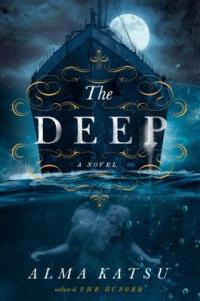
46371247Book: “The Deep” by Alma Katsu

Publishing Info: G.P. Putnam’s Sons, March 2020

Where Did I Get This Book: I received an eARC from NetGalley

Book Description: From the acclaimed and award-winning author of The Hunger comes an eerie, psychological twist on one of the world’s most renowned tragedies, the sinking of the Titanic and the ill-fated sail of its sister ship, the Britannic.

Someone, or something, is haunting the ship. That is the only way to explain the series of misfortunes that have plagued the passengers of the Titanic from the moment they set sail. The Titanic’s passengers expected to enjoy an experience befitting the much-heralded ship’s maiden voyage, but instead, amid mysterious disappearances and sudden deaths, find themselves in an eerie, unsettling twilight zone. While some of the guests and crew shrug off strange occurrences, several–including maid Annie Hebbley, guest Mark Fletcher, and millionaires Madeleine Astor and Benjamin Guggenheim–are convinced there’s something more sinister going on. And then disaster strikes.

Years later, Annie, having survived that fateful night, has attempted to put her life back together by going to work as a nurse on the sixth sailing of the Britannic, newly refitted as a hospital ship to support British forces fighting World War I. When she happens across an unconscious Mark, now a soldier, she is at first thrilled and relieved to learn that he too survived the tragic night four years earlier. But soon his presence awakens deep-buried feelings and secrets, forcing her to reckon with the demons of her past–as they both discover that the terror may not yet be over.

Featuring an ensemble cast of characters and effortlessly combining the supernatural with the height of historical disaster, The Deep is an exploration of love and destiny, desire and innocence, and, above all, a quest to understand how our choices can lead us inexorably toward our doom.

Review: Thank you to NetGalley for providing me with an eARC of this novel!

It’s been ten years since I was working at our local Science Museum and had shifts in the Special Exhibit about the Titanic, and while I am intrigued by the story still, I’m also a tiny bit burnt out on it. This doesn’t necessarily discourage me from reading stories that are related to or based upon the maritime disaster, however, because if I love the author or the premise sounds promising I’ll happily give it a whirl. Because of this, when I heard that Alma Katsu’s newest horror novel, “The Deep”, took place on the Titanic (and also on the similarly doomed sister liner The Britannic), I immediately requested an eARC from NetGalley. Lucky for me, I was given access. Given how much I LOVED Katsu’s take on the Donner Party in “The Hunger” (as reviewed HERE), I was all in for what she could do with the Titanic.

giphy-2
And I hoped it would leave out a hokey romance. (source)

Katsu has once again brought beautiful prose and an eerie supernatural twist to a well known tragedy, and I think that I liked “The Deep” even more than I did “The Hunger”. She utilizes both actual historical figures such as Madeleine Astor, Lady Duff Gordon, and W.T. Stead, as well as original characters to give an all encompassing view of what happened during the ill fated voyage, and what roles everyone played in each other’s experiences both before and after the iceberg. It is the characterizations of all these characters that “The Deep” found it’s greatest strength, and given how much I loved the other parts that says something. Katsu mostly uses the real life characters to examine the social roles that they all played at the time, to great effect. My favorite to follow was Madeleine Astor, the VERY young, pregnant wife of mogul J.J. Astor. Her age is definitely alluded to through her immaturity compared to other characters, but we also get to see how the position she was in couldn’t have been easy. She was always seen as a trophy wife and her legitimacy was questioned by Astor’s family after his death, and Katsu gets into her head and really explores the insecurities that a young wife at this time in her situation almost certainly would have had. I really looked forward to her chapters, because they always left me with such bittersweet feelings. Our original characters mostly focus on stewardess Annie, whose story is told in flashbacks on the Titanic and in the present on the Britannic, where she has become a nurse thanks to her friend Violet Jessup (an actual woman who survived BOTH sinkings). We slowly find out that something strange is afoot on the Titanic, a ghostly presence of some sort, and see through the flashbacks and the present just how it has affected Annie, and how she has affected others. Annie is clearly traumatized by the time she gets on the Britannic, but there are hints that even before she was on the Titanic that something is afoot with her. Along with her we get Mark and Caroline, a young married couple with a small child in tow. Annie is drawn to Mark, and her interest begins to feel like downright obsession over him and his daughter. There, too, is the mystery, as it seems like Mark reciprocates, but then perhaps he doesn’t. The unreliable narration that comes from multiple characters really helped the mystery at hand. I was kept guessing pretty much the entire time as to what kind of supernatural hijinks were afoot, and how it connected to our cast of characters.

And speaking of the supernatural, like in “The Hunger” Katsu perfectly balances the eerie and unsettling along with more subtle and underlying horrors of the real world. It isn’t completely clear from the get go just what we are dealing with in terms of supernatural themes, but as it’s slowly revealed we get to explore the ideas of spiritualism that were popular at the time, as well as lesser known mythologies that line up with some of our characters backgrounds and culture. This easily could have gone in a predictable fashion, as a ghostly presence on a ship like this is no doubt filled with possibilities, no matter how obvious. But instead we got a suspenseful story that combines things that go bump in the night with the horrors of gender, class, and obsession. I really, really loved how she tied it all together and how well she pulled it off.

“The Deep” is another triumph from Alma Katsu. She brings historical fiction horror to new heights, and if The Donner Party was a little too gruesome, The Titanic will be a good way to experience what she can do with the genre.

Rating 9: Haunting and chilling, “The Deep” brings new spooky life to the Titanic story, and paints a supernatural picture that is effortlessly as emotional as it is suspenseful.

Reader’s Advisory:

“The Deep” is new and not yet on many Goodreads lists, but I think that it would fit in on “Fiction Books About The Titanic”.

Find “The Deep” at your library using WorldCat!

Book Club Review: “It’s Not The End of the World”

504509We are part of a group of librarian friends who have had an ongoing bookclub running for the last several years. Each “season” (we’re nerds) we pick a theme and each of us chooses a book within that theme for us all to read. Our current theme is “American Girl Readalikes”, in which we each pick an American Girl book and a book that can be connected to it, however tenuous as it may be.

For this blog, we will post a joint review of each book we read for book club. We’ll also post the next book coming up in book club. So feel free to read along with us or use our book selections and questions in your own book club!

Book: “It’s Not The End of the World” by Judy Blume

Publishing Info: Macmillan, 1972

Where Did We Get This Book: The library!

American Girl Book: “Meet Julie” by Megan McDonald

Book Description: Can Karen keep her parents from getting a divorce? This classic novel from Judy Blume has a fresh new look.

Karen couldn’t tell Mrs. Singer why she had to take her Viking diorama out of the sixth-grade showcase. She felt like yelling, “To keep my parents from getting divorced!” But she couldn’t say it, and the whole class was looking at her anyway.

Karen’s world was ending. Her father had moved out of the house weeks before; now he was going to Las Vegas to get divorced, and her mother was pleased! She had only a few days to get the two of them together in the same room. Maybe, if she could, they would just forget about the divorce. Then the Newman family could be its old self again—maybe. But Karen knew something she didn’t know last winter: that sometimes people who shouldn’t be apart are impossible together.

Kate’s Thoughts

Okay, literary confession time. Before Book Club picked “It’s Not The End of the World”, I had never read anything by Judy Blume. I don’t really know how I missed that, as I was almost certainly in the target demographic of her books, and I know that various classrooms at my grade school had her books on the shelves. But this was my first experience with Blume, so I was glad that one of our members picked it! I know that Blume is a queen of kid lit, so finally reading one of her books seemed far past due. Unfortunately, I didn’t enjoy “It’s Not The End of the World” as much as I thought I would.

I do want to say that first and foremost, I definitely understand the significance of a book about divorce being written in 1972. Especially a book that shows how toxic and terrible an acrimonious marriage and split can be for a family, without the promise of a happy moment of Mom and Dad reuniting because they do still love each other. As the 1970s brought more lenient social mores and changing ideas of values, divorce became more commonplace, and I think it’s so important that kids going through such a thing had a book like “It’s Not The End of the World” to turn to. It’s important to be able to see yourself in the media you consume, and so kids who had to go through that having this reflection of themselves and a reassurance that it is, in fact, not the end of the world, must have been resonant. On top of that, it was very easy to read and Blume’s skills as a writer are on full display.

But all that said, I think that now that more books have been written about divorce as time has gone on, they would be better options to explore than this book. I thought that a lot of the characters were two dimensional, including Karen who seemed quite a bit younger in her voice than the twelve year old she was supposed to be. On top of that, every single adult in this book was just awful, and while I think it’s probably pretty realistic that parents going through this kind of thing won’t always be on their best behavior, they were almost flat out abusive. And it felt to me like this was almost excused by Blume, or at least written off as typical and what to expect from divorcing parents. I don’t know what the 1970s were like, but this seemed unrealistic and histrionic.

I get and appreciate “It’s Not The End of the World,” but I don’t think it holds up as well as I’m told other Blume stories do.

Serena’s Thoughts

So I’ll try to keep my half of this review from just repeating everything Kate said. But somehow, even though we grew up in completely different states and both loved books obsessively, I, too, missed the Judy Blume train. Part of this I think has to do with the fact that I was pretty solidly a genre reader from the get-go and my forays into contemporary fiction have always been few and far between, even as a kid. The only other Blume book I read was “Forever” and that was just because I was assigned it in library school (Kate and I were in this same class, but she wisely chose a different book option for this assignment.) I didn’t particularly enjoy that book. So it was with some skepticism that I started this book, knowing that I hadn’t been the target audience pretty much ever and didn’t loved my only other experience with her work. And, alas, it held true here.

Like Kate said, this book definitely had its time and place, and there’s no arguing with the general popularity of Blume’s work with many middle graders. Still today libraries circulate many copies of her more popular stories. That said, I think this one shows its age and in ways that make it particularly less approachable to modern kids reading it than others. Books dealing with how kids deal with divorce are still needed today, but this one’s approach is heavily cemented in the idea that Karen is experiencing a socially rare event, one that is distinctive enough from her peers’ experiences that she stands out. Not only are attitudes around divorce markedly different than they were in the 70s, but it is simply common enough that Karen’s situation wouldn’t have likely made her stick out in a crowd.

Beyond this, the adults in Karen’s life are almost uniformly letting her down in massive ways. So much so, that at times both parents read as cartoonish in their villainy. There are also elements in their parenting strategies that would fall under a much harsher lens than they might have at the time this was written. Like Kate said, their actions in today’s views could be seen as borderline abusive. But the parents weren’t the only one-dimensional characters. Sadly, I didn’t connect with Karen at all either. She felt largely like a stock character around whom this “afternoon special: divorce!” topic was being framed.

I see how Blume’s work can be highly readable, as I did manage to get through the book quickly. But between this book and “Forever” (a book where I had a lot of similar complaints, particularly around the flat characterization), her writing is definitely not for me. I’m hesitant to throw a beloved author for many under the bus, but…I ain’t seeing it. With this topic specifically, I think there are better books being written now that I would direct readers to before this.

Kate’s Rating 6: Definitely an important work for it’s time and honest in many ways, but now it feels a bit over the top with histrionic moments and pretty two dimensional characters.

Serena’s Rating 5: More interesting as an artifact representing a very different time period with regards to divorce than as an actual story.

Book Club Questions

  1. This book was one of the first children’s novels that had divorce as a main theme. Do you think that it holds up today?
  2. What did you think of the adults in this novel? Did you find them realistic?
  3. What were your thoughts on Val, Karen’s new friend and supposed divorce expert?
  4. Did Karen’s voice feel authentic?
  5. Do you think that “It’s Not The End of the World” is still a book that you might recommend to kids whose families are going through a divorce? Why or why not?

Reader’s Advisory

“It’s Not The End of the World” is included on the Goodreads lists “Coming of Age Stories”, and “Books for My Eleven Year Old Self”.

Find “It’s Not The End of the World” at your library using WorldCat!

Next Book Club Book: “Almost American Girl” by Robin Ha

Serena’s Review: “The Wolf of Oren-Yaro”

46207682Book: “The Wolf of Oren-Yaro” by K.S. Villoso

Publishing Info: Orbit, February 2020

Where Did I Get this Book: ARC from the publisher!

Book Description: “I murdered a man and made my husband leave the night before they crowned me.”

Born under the crumbling towers of Oren-yaro, Queen Talyien was the shining jewel and legacy of the bloody War of the Wolves that nearly tore her nation apart. Her upcoming marriage to the son of her father’s rival heralds peaceful days to come.

But his sudden departure before their reign begins fractures the kingdom beyond repair.

Years later, Talyien receives a message, urging her to attend a meeting across the sea. It’s meant to be an effort at reconciliation, but an assassination attempt leaves the queen stranded and desperate to survive in a dangerous land. With no idea who she can trust, she’s on her own as she struggles to fight her way home.

Review: I was sent an ARC of this book from the publisher. Having never heard of it, I kind of glanced at it and put it on the pile. But, after a few disappointing reads (ones that gave signs of being disappointments almost from the very first page), when I picked this one up, started reading, and looked up not long later having already somehow read ten chapters, I knew that I had finally found a read to break the spell. The rest of the book didn’t let me down!

Talyien has grown up knowing what it is to be immediately distrusted and disliked. Her father lead an unpopular revolt, and even though it ended with a marriage proposal between his daughter and the leading rival family’s son, Talyien’s people have walked a tight line ever since. When her husband of three years mysteriously walks out on the eve of the both his and her coronation, Talyien finds herself ruling alone, now disliked and distrusted more than ever. Now, years later, Queen Talyien hears from him once again, and all too soon she sees herself betrayed, cut off from all that is familiar, and left on her own to prove that she is the strong queen her father raised her to be.

The other day my husband and I happened to have a conversation about the differences between books written in third and first person. I was making the argument that first person often reads s younger, hence it often being found in YA novels. Since the narration is limited to only one point of view, the narrative has to work hard to draw in details with regards to scene and setting. The narrator is also unreliable to a certain extent as they are only able to speak to other characters’ thoughts and motivations through their own lens and perceptions. This leaves a lot of room in the narrative voice to focus on the internal emotions and thoughts of the main character, a strength in particular for YA protagonists and stories where these types of internal musings typically shine. For adult novels, these challenges and limitations are often enough to prompt many authors to stick to the more common third person perspective. All of that to say, this book was an excellent example of an adult fantasy novel turning all of the challenges of first person narration to its advantage.

Talyien has a very distinct voice right off the bat. It’s also made clear early in the book that we don’t know her entire history and that her views of those around her are formed from her own experience of the world. Her father’s history, her own experience as a disliked queen abandoned by her husband, all color her distrusting and stark outlook on humanity. At the same time, she’s incredibly brave, stubborn, and determined to do what she thinks is best for her son and her country. I’m hesitant nowadays to make “Game of Thrones” references, but in a lot of ways she reads the way I always imagined Daenerys to be. Talyien can be ruthless and goal-oriented, but, through the very personal nature of first person narration, we also see the vulnerability and self-doubt that continues to plague her. Plague her, but never stop her.

I really enjoyed the world-building in this story. It is a refreshing new world that is pulling from inspirations that are clearly no European. I’d be hesitant to place it anywhere specifically, as it is clearly a fantasy world, but details about the culture, food, and naming conventions all read as coming from Asian inspiration. I believe the author was born in the Philipines, so I imagine that was part of the backbone building up this world. Again, it is challenging to build a compelling and realistically detailed world through only the eyes of one main character who, in theory, would know much of these facts and have no reason to share them with a reader. But the narration is seamless, and as the story expanded, so did the world surrounding this story. The use of flashback also continued to add layers to our understanding of not only Talyien, but the complicated political history of her nation and its many clans.

The story doesn’t end on a cliff-hanger, per se, but all is definitely not well at the end of this book. We finally learn some of the secrets that Talyien has held so close to her chest throughout much of the book and these reveals explain much about not only her choices but her general views towards those around her and how she chooses to interact with them. There were definitely some unexpected twists to the story, and I was left not knowing how I felt about certain other characters. This speaks to the very fleshed out nature of even secondary characters. They all felt real, and real people aren’t simply good or bad.

I can’t wait to get to the next book in this series. Talyien is at a pretty low point and the stakes are incredibly high, not only for her nation, but on a very personal nature for her. Hopefully I can get my hands on the next book soon! I know the author self-published this one before Orbit picked it up, so I’m hoping they will be able to release the second one quickly! Fans looking for a refreshing new fantasy epic featuring a strong queen who doesn’t give a sheep what you think of her, this is the book for you!

Rating 8: Talyien is everything I want in my fantasy heroines and I can’t wait to see what she does next!

Reader’s Advisory: 

“The Wolf of Oren-Yaro” is on these Goodreads lists: “Upcoming 2020 SFF Books with Female Leads or Co-Leads” and “Asian-Authored Books in 2020.”

Find“The Wolf of Oren-Yaro” at your library using WorldCat!


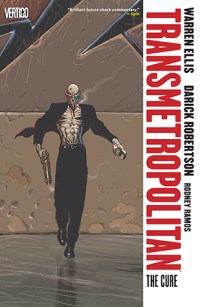
Kate’s Review: “Transmetropolitan (Vol.9): The Cure”

8733231Book: “Transmetropolitan (Vol. 9): The Cure” by Warren Ellis & Darick Robertson (Ill.)

Publishing Info: Vertigo, November 2003

Where Did I Get This Book: I own it.

Book Description: The forces of darkness are closing in on outlaw journalist Spider Jerusalem and his merry, filthy band, but now they’ve got their own rope around the neck of corrupt President Callahan, and it’s time to start tightening the noose. TRANSMETROPOLITAN: THE CURE is the ninth volume reprinting the acclaimed series written by Warren Ellis (PLANETARY, RED) with art by Darick Robertson (The Boys). Jerusalem and his cohorts step up their investigation into Callahan’s misdeeds and turn up some startling evidence…not to mention a sole surviving witness to the President’s depravity. The problem, as always, will be getting the word out before the massive forces of the Executive Branch black out everything, and everyone, involved.

Review: I can’t believe that my re-read of “Transmetropolitan” took me this long, but I also can’t believe that it’s almost over. I’ve been reminded during my revisit that Spider Jerusalem is one of the best comic characters of the past twenty years, and that while this story is outlandish and crude it still has so much to say about the world we live in. I opened up “The Cure”, the penultimate volume, ready to be blown away by how it all turned out and totally ready to move on to the last volume, hyped and pumped up. And that didn’t QUITE happen. I am definitely ready to move on to the last and to enjoy wrapping up this series for a second time. But it didn’t hit me the way that I’d hoped it would, but honestly, that isn’t any fault of this story. It’s more the fault of the world we live in now. Somehow, “Transmetropolitan” feels, dare I say, naive.

giphy-5
I don’t understand how we ended up here. (source)

Overall I am still totally loving this story, though, so we’re definitely going to start with The Good and save the spoilery Not So Good for a bit. I like how Ellis is pulling the final threads all together as the starts to wrap up his story. Spider, Yelena, and Channon are outlaw journalists now, and as they are starting to finish up their final gambit in an effort to take down The Smiler, we’re revisiting old characters and seeing how they still have roles to play in this story. We get to see Fred Christ, the despicable and wormy leader of the Transient movement, and how this character from way back when is connected to our final storyline (and boy, was it really cathartic seeing how Spider finally got to take him down). I loved seeing Royce again, the somewhat cowardly but ultimately loyal former Editor that Spider used to work for. And what I really loved about this volume is that we once again got to see Spider at his very best, trying to protect a source, trying to make her feel comfortable, and showing the empathy that he has deep down, as any good journalist should have when it comes to some of the more complicated and sensitive stories. Channon and Yelena didn’t shine as much in this one, but since Spider’s health is really deteriorating and therefore his downfall is inevitable I am okay with letting the spotlight be on him this time around as he tries to pull out all the stops to bring down The Smiler.

So here is that part that didn’t work for me as much, and since I need to talk about nitty gritty plot points to really address it, consider this your

tenor
(source)

We end this volume with the first strike of the final battle between Spider and The Smiler, in which Spider gets the goods on The Smiler and brings out information that will start the snowball that will theoretically lead to his downfall. I’ve talked about how “Transmetropolitan” has managed to stay relevant in spite of the fact that it’s been out for almost twenty years, and that Ellis has been able to make it feel timeless in regards to our political climate. But what was that first blow of the final takedown? Spider reveals that The Smiler has been having sex with Transient sex workers. It’s used as a HUGE moment and for the first time you see The Smiler’s facade crack, and that he looks genuinely scared that this is going to be the scandal that will take his power away. There are two problems with this for me. The first is that in a world where we are to believe that society has become so degenerative and scummy, I have a hard time believing that a sex scandal like this, even if it involves people who have purposely hybrided (that’s not a word but I can’t think of better way to describe it) themselves with Alien DNA, would actually affect the greater opinion of this culture. I think it would have been more effective if the Big Reveal was somehow getting evidence that The Smiler had set up the murder of martyred Vita Severn, or even that of his own immediate family. And the next thing is that, as we now know, in our CURRENT society the President being revealed to have an affair with a sex worker DIDN’T MEAN JACK SHIT. It kind of takes away the timelessness. That isn’t “Transmetropolitan”‘s fault, and shame on me for projecting my frustrations in this regard to this book, but it did take me out of it.

That aside, I’m very excited to go on to the next and final volume of “Transmetropolitan”. I kind of remember how it ends, but the details are fuzzy. No matter how it susses out, Warren Ellis has created a fantastic world that is still relatable when you look past the very outlandish aspects of it.

Rating 7: We start to wrap up the story of Spider Jerusalem, his filthy assistants, and The City, and while the pieces of the puzzle are seamlessly coming together, it doesn’t hold up as well anymore.

Reader’s Advisory:

“Transmetropolitan (Vol.9): The Cure” is included on the Goodreads lists “Best of Cyberpunk”, and “Best of Vertigo Comics”.

Find “Transmetropolitan (Vol.9): The Cure” at your library using WorldCat!

Previously Reviewed:

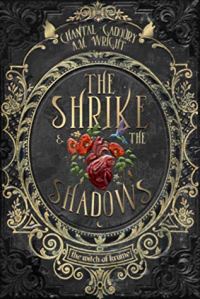
Serena’s Review: “The Shrike & the Shadows”

51012361._sx318_sy475_Book: “The Shrike & the Shadows” by Chantal Gadoury and A.M. Wright

Publishing Info: The Parliament House Press, March 2020

Where Did I Get this Book: NetGalley

Book Description: Men have gone missing before.

The village of Krume is plagued by a haunted wood and a hungry witch. It’s been that way for as long as Hans and Greta can remember, though they have never seen the witch themselves; no one has.

When men start to disappear once again in the cover of night – their bloody hearts turning up on doorsteps – the village falls into frenzied madness.

Hans and Greta, two outcast orphans, find themselves facing accusations of witchcraft and are met with an ultimatum: burn at the stake, or leave the village forever.

With nowhere else to go, they abandon their only home.

As they venture into the strange forest, their path is fraught with horrific creatures, wild and vivid hallucinations, and a mysterious man tied to the witch’s past.

The Shrike is watching, just beyond the deep darkness of the woods.

Review: A lot of fairytales have been retold a million different times in a million different ways. And I, being the sucker I am for fairytale retellings, am more than happy to read the millionth and one version of many of these popular tales. That said, it’s always particularly exciting when I see a new book coming out that it tackling one of the less popular story. I’m sure I’ve read a “Hansel and Gretel” story in the past, but I couldn’t think of one off the top of my head, so I immediately placed a request for this book. Unfortunately, this was not only a disappointment as far as new fairytale retellings go, but also, in my opinion, just not a very good book overall.

The village where Hans and Greta have grown up has long been haunted by an evil that claims the lives of its men, leaving their hearts on the doorsteps of the grieving families. It is under this constant threat that Greta and Hans have tried to make a life for themselves, praying each night that Hans won’t be next. But when they are driven out of the only home they’ve ever know, the two siblings find themselves alone in the very same forest in which lurks this evil force. Will they make it through this woods? And what waits on the other end?

I was really bummed to find that this book was such a miss for me. I seem to have had a recent run of either books I’ve really enjoyed or ones that have really, really not worked for me. I’m hesitant to make this comparison, but what first came to mind was that this book read like a bad fanfiction story. I say this having read and enjoyed a good amount of fanfiction, some of which with writing as good or better than many published novels I’ve read. So this is in no way a ding against fanfiction as a whole. That said, this book exemplifies several of the pitfalls that poor works of fanfiction have been known to fall into: lackluster world-building, washed out characters, and, unfortunately, over use of sex scenes and trauma, seemingly to make up for a lack of real story at its heart.

The world-building is lacking and transitions from scene to scene are awkward at best and nonexistent at worst. I’d have a hard time describing much of anything about the world in which this book takes place. In the beginning of the story we have a scene with Greta frantically searching for her brother. She runs around quite a bit, but I was completely unable to track her movements. She’s at one point in her cabin, then outside, then, I think, in a field. Shortly after that, she and Hans are in the village itself. This action takes place in the first few pages, but it is a perfect example of the lack of attention that went into setting the scenes for this story. There is no foundation upon which any of this happens, and the writing makes no effort to draw a picture in the reader’s mind.

The writing didn’t serve the story any better as far as the plot goes either. Early in the book there’s a scene depicting an attempted assault (this comes out of nowhere, by the way, and was jarring in and of itself). It’s a serious topic, but the way it is depicted is cartoonish in its villainy. The assaulter’s lines of dialogue were cringe-worthy, and the villain himself was made up of only the broadest strokes of stereotypes without any effort to delve into the seriousness of the real-life history behind the power imbalance that was being described. Again, this was only an early example, but this writing problem continued throughout.

Hans and Greta were also difficult to care about. While the writing seemed a bit better equipped to handle these two main characters, they still often felt flat at times. Hans, in particular, was very hard to sympathize with. Greta had the stronger moments of the two, but as the story was split between them, this wasn’t enough on its own to balance out Hans.

And then there’s the sex scenes. As I mentioned, there’s an attempted assault that comes out of nowhere within a few pages of the start of the book. There’s very little build up to this, and, overall, it doesn’t feel handled particularly well. I’m not in the camp that says every book that has scenes like this should have an overt trigger warning on the cover. Mostly this is because strong writing will build to an event of this nature in a way that allows readers time to decide whether to read the event or not. But with weaker writing, these scenes are a bit trickier. And from there, once our characters are in the woods, there are still numerous sex scenes. I enjoy romances here and there and am not a prude about scenes like this in my books. But the sheer volume of them was off-putting, not to mention the jarring juxtaposition of these scenes against the story’s effort to build up the horror and threat of their travels through the woods. Like I said, kind of like bad fanfiction.

I didn’t enjoy this book. I’m not familiar with either of these authors, so I’m not sure if this is indicative of either of their other works. But on its own, this wasn’t a strong story. I had a hard time connecting to the characters, and the world-building was so superficial that I couldn’t describe much of the book if you asked.

Rating 4: Very disappointing, “Hansel and Gretel” deserve better.

Reader’s Advisory: 

“The Shrike and the Shadows” is on this Goodreads list: “Parliament House Novels.”


Kate’s Review: “You Are Not Alone”

45046742Book: “You Are Not Alone” by Greer Hendricks & Sarah Pekkanen

Publishing Info: St. Martin’s Press, March 2020

Where Did I Get This Book: I received an eARC from NetGalley.

Book Description: You probably know someone like Shay Miller. She wants to find love, but it eludes her. She wants to be fulfilled, but her job is a dead end. She wants to belong, but her life is so isolated.

You probably don’t know anyone like the Moore sisters. They have an unbreakable circle of friends. They live the most glamorous life. They always get what they desire.

Shay thinks she wants their life. But what they really want is hers.

Review: Thank you to NetGalley for providing me with an eARC of this novel!

Greer Hendricks and Sarah Pekkanen are a dynamic duo in the thriller writing world, as their previous novels “The Wife Between Us” and “Anonymous Girl” were both buzzworthy books that got a fair amount of attention. I enjoyed both of those books, enough so that I figure that any time they come out with another novel I’m going to be interested in picking it up. Hence, I requested “You Are Not Alone”, their newest thriller/mystery, from NetGalley. I expected an entertaining and very readable thriller, as that has what has been delivered in the past. I am happy to report that not only did it live up to those expectations, it is also their best work yet.

Like their other two novels, “You Are Not Alone” is told through multiple perspectives and multiple time periods. Our main focus is on Shay Miller, an insecure and high strung, lonely woman who witnesses another woman commit suicide by jumping in front of a moving subway. The other perspectives are generally from that of the Moore sisters, Cassandra and Jane, as well as the occasional chapter from the POVs of their friend group. The wide breadth of POVs gave us a very large and detailed picture of the story, and also of the various motivations that each character had that added to the mystery over all. We know that Cassandra and Jane want something from Shay, but we aren’t certain as to what that may be. I thought that all of the women had well done characterization, and that I got a good sense for all of them and why they were doing what they were doing. Shay is the kind of protagonist that we see in thrillers like this in that she’s incredibly flawed and neurotic, but she’s written in such a way that I really liked her and was genuinely concerned for what she was slowly being pulled into. And then there are the Moore Sisters, and how they are both incredibly engaging and gregarious, as well as being terrifying in how they know how to manipulate and insert themselves into Shay’s life without her knowing it.

The mystery was also very enticing, and it kept me guessing and completely enthralled the entire time. As I said, you know that the Moore Sisters want Shay for something, and Hendricks and Pekkanen slowly peel back all the layers, leaving breadcrumbs of clues within all of the perspective chapters. It was laid out and woven together intricately enough that I was genuinely surprised by almost every twist, and all of the twists were well earned by how they were set up sometimes hundreds of pages before. I found myself slowly building up in anxiety, my heart beginning to beat as I got closer to the end and the tension just kept building with little sign of release. By the time it had all come to a head, I felt the deep paranoia that Shay was feeling and completely believed it. I bought in to just about everything, and while I did feel like it wrapped up a little neater than it probably should have (as well as quickly; the ending felt hasty even if it came together well), overall I was definitely satisfied.

“You Are Not Alone” is the best story that Hendricks and Pekkanen have come up with yet, and they will remain a high reading priority for me in the future. If you haven’t read anything by them yet, this is where you should start.

Rating 8: An anxiety inducing and twisty thriller that barely lets up on the tension. “You Are Not Alone” will make you more than a little nervous about who may be keeping their eyes on you.

Reader’s Advisory:

“You Are Not Alone” is included on the Goodreads lists “Female Writing Teams”, and “Can’t Wait Crime, Mystery, & Thrillers 2020”.

Find “You Are Not Alone” at your library using WorldCat!

Highlights: March 2020

March is that special part of year when Winter is (theoretically) on the way out, Spring is on the way, and the promise of Spring Break and St. Patrick’s Day are exciting distractions to get through. We have some books that we are looking forward to during this transitional month! 

Serena’s Picks

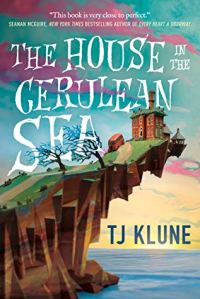
45047384._sy475_Book: “The House in the Cerulean Sea” by TJ Klune

Publication Date: March 17, 2020

Why I’m Interested: The beautiful cover! Look at all those colors and that children’s-storybook-like artwork. Yes, this was the actual thought in my head when I clicked through to read more about what the book is actually, you know, about. But the story itself, of a middle-aged, quiet man who suddenly finds himself charged with the care of a bunch of bizarre orphans, sounded right up my alley. And when I say bizarre, I mean “Umbrella Academy” but on acid, bizarre. We have a gnome, a sprite, a wyvern, an unidentifiable green blob, a were-Pomeranian, and the Antichrist. Pretty excited to check this one out! And all because I thought it was so pretty…

35530507Book: “A Murderous Relation” by Deanna Raybourn

Publication Date: March 10, 2020

Why I’m Interested: Obviously, I’m very excited for the next installment in the Veronica Speedwell mysteries. Particularly due to the events of the last book and wanting to see how that would play out in this book. I think it was also written as a potential last book in the series, though after some author stalking, it seems like there may be more to come. Which I’m totally on board with. Yet again, Veronica and Stoker are called upon for their excellent sleuthing skills. But this time, there is less a mystery to be solved than a scandal to be warded off. The story seems to also be incorporating some connection to “Jack the Ripper,” a seeming requirement for any mystery sent around this time period. I’m curious to see what angle this book will use to approach this much-used portion of history.

42074525._sy475_Book: “The City We Became” by N.K. Jemisin

Publication Date: March 24, 2020

Why I’m Interested: I’ve loved everything I’ve ever read from N. K. Jemisin. She not only amazing, original worlds, but she excels at peopling those worlds with nuanced and complicated characters. She is also an excellent example of an author using science fiction and fantasy to shine harsh lights on very tricky subjects without dumbing anything down or spoon-feeding the reader. The book description for this one is pretty vague. Something about cities, in this case New York City, having souls and five people having to come together to protect it. But, like I said, I’ve loved everything of hers that I’ve read (and the two series I have read are very, very different), so you can bet that I don’t need more details in the description to have me on board and ready to go.

Kate’s Picks

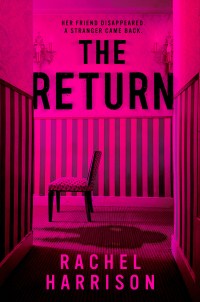
46354144Book: “The Return” by Rachel Harrison

Publication Date: March 24, 2020

Why I’m Interested: I come for the haunted hotel and the missing girl, and then I stay for the disintegrating friendships and the interpersonal drama. “The Return” has been hyped up as “Girls” meets “The Shining”, and if that doesn’t pique my interest I don’t know what will. After Julie goes missing in a national park, her friends, including her best friend Elise, can’t believe that she’s gone. So when she suddenly returns two years later, Elise is elated, and their friend group plans a weekend away as a reunion. But Julie seems… different. Strange things begin happening when the weekend gets underway, and Elise doesn’t know who, or what, Julie is anymore. Creepy and soapy is a combination that I can get behind, so “The Return” is high on my highlights list!

46371247Book: “The Deep” by Alma Katsu

Publication Date: March 10, 2020

Why I’m Interested: I loved, LOVED Alma Katsu’s Donner Party re-imagining horror novel “The Hunger”, so when I heard that she had another historical horror novel coming out, this time involving the sinking of The Titanic, I was very excited. Annie is a stewardess turned hospital attendant who survived the sinking of the Titanic and is now on its sister ship The Britannic as it transports patients wounded in WWI. She can’t forget what happened on the Titanic as much as she tries, especially since something unnatural seemed to be going on. So when one of her patients is a man who was also on Titanic, things start getting strange again. As if whatever was haunting the Titanic has followed to the sister ship. With historical characters and a lot of focus being on the doomed ‘unsinkable’ liner, “The Deep” is sure to be another eerie and beautifully written horror novel.

49223060._sy475_Book: “Darling Rose Gold” by Stephanie Wrobel

Publication Date: March 17, 2020

Why I’m Interested: Like many other true crime freaks/weirdos drawn to the morbid, I was totally taken in by the case of Gypsy Rose Blanchard, whose mother Deedee scammed people into believing that her daughter was afflicted with a multitude of medical problems. As it turned out, Deedee was making Gypsy Rose ill, and Gypsy Rose ended up killing her. “Darling Rose Gold” is clearly inspired by this story. Patty was a single mother to Rose Gold, a girl who seemed to have chronic illnesses that made living a normal life impossible. But as it turns out, it was Patty who was making Rose Gold ill, and conning everyone about her condition. After Patty was convicted of abuse, she went to prison. After she is released, she reaches out to Rose Gold to ask if she can come live with her. Rose Gold says yes. But she may have plans for her mother and abuser. This has been getting some buzz, so I’m VERY excited to jump into it!

What books are you looking forward to this month? Let us know in the comments!

My Year with Jane Austen: “Pride and Prejudice” Part I

1886._sy475_Book: “Pride and Prejudice”

Publication Year: 1813

Book Description: The romantic clash between the opinionated Elizabeth and her proud beau, Mr. Darcy, is a splendid performance of civilized sparring. And Jane Austen’s radiant wit sparkles as her characters dance a delicate quadrille of flirtation and intrigue, making this book the most superb comedy of manners of Regency England.

History – “I read it a little as duty, but it tells me nothing that does not either vex or weary me.”

 When “Pride and Prejudice” was first completed, Jane Austen’s father, believing it to be quality writing, submitted it for publication. It was rejected. Austen then moved on to writing “Sense and Sensibility” and self-publishing that title herself. After its success, she sold the copyright to “Pride and Prejudice” to a publisher who listed the title as by the author of “Sense and Sensibility.” Like that first novel, “Pride and Prejudice” was an immediate success, and the publisher ordered several reprints of the story after the first  run sold out. This, of course, resulted in the publisher profiting much more from this title than did Austen who only earned 110 pounds on the original copyright sale. Austen, however, was pleased with its success and especially with the critical praise that was garnered by her heroine, Elizabeth Bennet. (source)

“”I must confess that I think her [Elizabeth] as delightful a creature as ever appeared in print, & how I shall be able to tolerate those who do not like her at least, I do not know.” 

 —Jane Austen, letter to Cassandra Austen,  January 29, 1813

Part I – Chapters 1 – 34

Story – “The person, be it gentleman or lady, who has not pleasure in a good novel, must be intolerably stupid.”

We are first introduced to the Bennet family as we hear Mrs. Bennet share the exciting news that a wealthy gentleman has moved into the neighborhood. To her, this provides much hope that one of her five daughters might marry well, a necessity in a family that is by no means wealthy, has no sons, and whose estate is entailed away to a distant cousin. After teasing his wife and the sillier of his daughters, Mr. Bennet does visit Mr. Bingley.

The rest of the family then meets him at a ball. There, the eldest Miss Bennet, Jane, does in fact gain the attention of Mr. Bingley. But Elizabeth, the second oldest, gets spurned by the more rich but more proud Mr. Darcy, a friend of Bingley’s. Elizabeth finds this mostly amusing and is happy enough to see her sister be happy. As the weeks progress, they see more of Mr. Bingley and his snobby sisters. Jane is invited over for a dinner by the sisters, but comes down with a bad cold after her mother insists she ride in the rain (hoping for an outcome where Jane is forced to stay the night, though illness was not part of the plan.) Elizabeth goes to care for Jane and spends a good deal of time with the entire party. She draws more and more of Mr. Darcy’s attention (who, we learn, has begun to admire her fine eyes), but neither are particularly pleased by this fact. Jane recovers and the two go home.

The Bennet family is then visited by their cousin, Mr. Collins, who is in line to inherit their home. Mr. Collins is a silly, pompous man, much inclined to give nonsensical speeches and praise his wealthy patroness, Catherine de Bourgh. He also sets his eyes on marrying one of the Bennet sisters and decides on Elizabeth once he learns that Jane is out of the question due to her informal attachment to Mr. Bingley. The family also meet a new officer (a regiment of the army is stationed in the town nearby, much to the delight of the two youngest, and silliest, of the sisters), Mr. Wickham. In the process of making their first introductions, Mr. Darcy and Mr Bingley stop by. Elizabeth notes the cold meeting of Mr. Darcy and Mr. Wickham and privately wonders about it.

They are all charmed by Mr. Wickham’s easy nature and open temperament, but Elizabeth is the lucky woman who is singled out by him for more attention. In the course of an evening on their second meeting, he shares the shocking history between him and Mr. Darcy. The two grew up together, Wickham’s father being the late Mr. Darcy’s groundskeeper, and Mr. Darcy’s father was very attached to Wickham. So much so that he left a valuable estate to him on his death. But when the tragic event happened, the son refused to uphold his father’s will and Wickham was cast out into the world to fend for himself. Elizabeth is shocked that Darcy, whom before she had thought was only proud and rather rude, is as bad as this. She later retells the story to Jane who warns her about making quick judgments against either man.

Mr. Bingley hosts a grand ball at Netherfield, an event all of the Bennet sisters look forward to greatly. Once there, however, Elizabeth is disappointed to find that Wickham has decided not to come, not wanting to be near Mr. Darcy. Instead, she ends up having to dance first with Mr. Collins, and then, shockingly, with Mr. Darcy himself. The two have an awkward dance filled with alternating silences and conversation hidden with double meanings as Elizabeth tries to get to understand Darcy better. The evening is a disaster from there on out. Mary, the middle daughter, makes a poor display on the piano, followed by an even more awkward display by Mr. Bennet has he tries to get her off the piano. The two youngest flirt wildly with everyone in their path. Mr. Collins confronts Mr. Darcy without introduction having found out that Darcy is the nephew of Lady Catherine. And Mrs. Bennet loudly congratulates herself on what she suspects to be the likely marriage between Jane and Mr. Bingley.

The next morning Mr. Collins proposes to Elizabeth. She turns him down. And then has to keep turning him down for quite some time before being forced to just leave the room as he insists on not getting the point. But, to everyone’s amazement, his trip does not end with him returning home, still single, because he then proposes to Elizabeth’s dear friend, Charlotte, who, being in her late 20s and from a family without many prospects, agrees.

Around this same time, Jane receives the distressing news that Mr. Bingley and his entire party have removed themselves back to London. His sister, Caroline, even goes so far as to say that she and her sister are hoping for a quick engagement between Bingley and Mr. Darcy’s younger sister, Georgiana. Jane is distressed, but Elizabeth is quick to tell her that this is clearly a plot by the sisters and friend who never approved of Jane and Mr. Bingley’s attachment. But weeks go by with no news of their returning. Their Uncle and Aunt Gardner come to visit and Jane is asked to go back with them to London when they return home. All are hopeful that she will meet with Bingley again there.

Charlotte asks Elizabeth to come visit her in her new home with Mr. Collins. Elizabeth agrees, though not particularly looking forward to it. Once there, she gets to meet the famed Lady Catherine. She’s a overly proud woman who takes a great deal of interest making proclamations about even the smallest aspects of the Collins’ lives. While there, Mr. Darcy and his cousin Colonel Fiztwilliam come to visit their aunt. Charlotte notes that Mr. Darcy is making more of an effort to call on her family than usual and says it must be due to Elizabeth. Elizabeth scoffs at this idea, though she does wonder at the number of times she meets him while on walks around the park.

She finds Colonel Fitzwilliam to be a very charming man and gets along with him well. On one walk, Colonel Fitzwilliam share some details about how his cousin, Mr. Darcy, congratulates himself on recently saving his dear friend, Mr. Bingley, from a bad marriage. Elizabeth is furious and hurt that her sister’s happiness was ruined by his friend’s interference. Later, alone at the parsonage, Mr. Darcy arrives and unexpectedly proposes to Elizabeth. She refuses. The encounter ends with the two fighting. Elizabeth accuses Darcy of separating Jane and Bingley and also points to his dishonorable treatment of Mr. Wickham. Mr. Darcy makes more belittling comments about Elizabeth’s family and her situation saying that he was kinder to Bingley than to himself in preventing his friend from a connection so beneath himself. He is shocked by the accusations about Wickham but doesn’t directly refute them. He leaves and Elizabeth remains behind, stewing.

Heroines – “I hate to hear you talk about all women as if they were fine ladies instead of rational creatures.”

I think it can be reasonably assumed that Elizabeth is one of the most beloved heroines to ever be penned. Her character is one that could be appreciated in the time she was written but who also appeals to modern readers who can be put off a bit by the more reserved leading ladies of books written at a similar time. She handles a lot of uncomfortable situations in a way that I think most of wish we could, with a smirk, a witty reply, and the ability to say what she thinks without offending others. She’s romantic, wishing to marry for love, but also the most practical of her sisters, being much more cynical than Jane. She’s also flawed. But unlike Emma, the other famously flawed Austen heroine, Elizabeth’s flaws are of the sort that many of us can sympathize with, especially her own lack of awareness that she even possesses this flaw. For the most part, she’s clear-eyed and an excellent judge of character. So it’s easy for her to then slip into a judgement of someone and not question or challenge her own thoughts further. It’s not until the second half of the book that she has to confront this challenge, but I think this self-reflection and learned self-awareness is still very appealing to modern readers. That, and, as I’ll go into later, she has the best lines, especially when arguing.

Jane is our other heroine. She’s an interesting character, really. Elizabeth clearly respects Jane, and Jane is spoken about as being of good sense and rationality. But she pairs these traits with an almost aggressive level of optimism that leaves her almost paralyzed in the face of the evils of the world. And yet Elizabeth, and the reader by proxy, never judges her as foolish. Yes, she’s wrong about Caroline. Yes, when she tries to make both Darcy and Wickham into good guys somehow it’s fairly silly. But she’s written so well that it all feels truly earnest; readers are left, like Elizabeth, wishing they could think so well of others as Jane does.

Heroes – “What are men to rocks and mountains?”

Our two heroes benefit greatly from the increased time with their respective heroines as well as the added scenes we have of them on their own. This does away with most of the problems that the heroes suffered from in “Sense and Sensibility.” While we don’t see a lot of Mr. Bingley and Jane’s actual romance, we do see enough of the two individually interacting with friends and family to easily understand their relationship. Indeed, I’m inclined to agree with Mr. Bennet’s assessment at the end of the book that, if anything, Jane and Mr. Bingley are almost too alike. It is nice to see so much of Bingley and through the more clear eyes of Elizabeth even. Her time at Netherfield cements readers understanding that Bingley deserves all the credit he gets as a charming, good natured gentleman. Even in the face of his sisters’ poor manners and Mr. Darcy’s standoffishness, Bingley holds true as an excellent host and the only one among them to truly behave well under the circumstances.

And, of course, we see much of Darcy as well, both the good and the bad. In the beginning of the book there’s no denying that he could use some improvement. Even if he has always behaved properly (in his dealings with Georgiana and to gain the respect and friendship of a man like Bingley), he is still fairly lacking. His open rudeness to Elizabeth at their first meaning and general aloofness at his surroundings makes him deserving of the early poor reputation he has in the neighborhood (even if Wickham’s contributions to it aren’t true). And we see even further with his snobby comments after the fact when he willing plays along with Caroline’s game of mocking everyone around her, including Elizabeth.

Knowing what we do about his growing interest in Elizabeth, it’s easier to see his actions through a lens of expressing interest. His attentions at Rosings in particular stand out. But, without that inner knowledge, it’s also very easy to see Elizabeth’s side of things. Even without Wickham’s lies, she’s right about his actions with Jane and at best, he’s taken an interest in her to debate points and to sit in silence. Maybe a big concession from his standpoint, but not so for any reasonable woman.

Villains – “I do not want people to be very agreeable, as it saves me the trouble of liking them a great deal.” 

Since at this point in the story Wickham’s version of his history with Darcy is all we have, we’re left in the awkward position where we at best have no real villain and at worst…maybe the villain is Darcy himself? Obviously even the most oblivious reader sees the writing on the wall about Darcy and the inevitable revelation that he is the true hero of the story and the bogus tale Wickham put out there is just that, bogus. But that fact aside, we’re left with a lot of comedic characters who maybe dabble in wrong-doings but mostly get into trouble more due to buffoonery than any actual ill intent. Mr. Darcy, on the other hand, outright admits to separating Jane and Bingley. Which, again, at this point in the story, is the only real, known, and accepted by the perpetrator himself, wrongdoing we have! We get a better understanding of his reasoning in the letter to come in the second half, but by the end of the book Mr. Darcy still reflects back on his actions with regards to this pair as in the wrong.

Caroline, of course, is the other more true villain. She was complicit in convincing Bingley that Jane didn’t care for him. The text never states this, but one would suspect their her view of this matter might have held even more weigh than Darcy’s. She’s a woman (assumed to be more knowledgeable in matters of the heart, whether true or not) and is still considered to be a dear friend of Jane. Of course she should have knowledge of Jane’s inner heart, and if she  says Jane doesn’t care, it’s pretty understandable that Mr. Bingley would believe her. And, unlike Jane, we see Caroline’s behind-the-scenes cruel commentary about her friend and her friend’s family, especially Elizabeth.

This, truly, is a testament to the wrongness of Darcy’s pride in action, that he tolerates and even agrees with some of Caroline’s early snobbery. By the end of the book, Darcy tells Elizabeth that he had been left to follow the good morals he’d been raised with in pride and conceit and would have still been like that if not for her. More so than even Elizabeth saw, we, the readers see this to be true in the change of his private behavior from a man who criticized Jane for “smiling too much” to the one who welcomes the Gardners to his home and shuts down Caroline when she tries to start up the “Elizabeth isn’t all that much” speech again.

But for much of this half of the book, Caroline and Darcy are on the same side of many matters and work together to quell Jane and Mr. Bingley’s burgeoning love affair. Caroline’s treatment of Jane in London is also a good example of why she deserves to be solidly in this category. The reader, however, like Elizabeth, is almost gratified that at least Jane won’t be duped any more as Caroline has now so thoroughly shown her true colors.

Romance – “A lady’s imagination is very rapid: it jumps from admiration to love, from love to matrimony in a moment.”

The most interesting commentary on romance in this first half is the ongoing disagreement between Elizabeth and Charlotte on how to go about courtship and what to expect from matrimony. Charlotte, early in Jane and Bingley’s romance, comments to Elizabeth that Jane should show more affection than she feels to ensure a quick engagement.  Elizabeth laughs at this idea, but later Charlotte puts her own words in action, agreeing to marry Mr. Collins, who she knows to be foolish, after only a few days acquaintance. While Elizabeth is quick to come down harshly against this action, Jane herself weighs in on the argument that different temperments and circumstances will call to different actions. While it is clear that Austen is writing true romances where love is of course necessary for her main protagonists, Jane’s argument here, and even Elizabeth later acceptance of Charlotte’s situation, are nice balances to these lucky few women. Many women of the time would have made a similar choice to Charlotte and, in many ways, her was the more practical and realistic option. We can’t all wait around for handsome, kind, 10,000 pounds a year men to come around! Austen carries this point further in Mansfield Park where we see the other, more unfortunate, side of the “marry for love” choice in Fanny’s mother’s situation.

But, of course, the main romance is between Elizabeth and Darcy. One of the major differences that stood out to me in this re-read, especially reading this one directly after “Sense and Sensibility” is how important are the scenes we witness of Darcy that Elizabeth isn’t privy to. Not only are readers aware of his admiration the entire time, in general, we get a much better understanding of him as a character than we did the romantic leads in the previous book. And there are simply more scenes between Elizabeth and Darcy than we had there, too. We witness scenes of their verbal sparring which reinforce the idea that Darcy would naturally be attracted to her lively nature. There is also Caroline Bingley lingering about as a perfect contrast to Elizabeth.

The failed proposal scene has to be one of my favorite scenes in literature. It’s just so painfully perfect! Darcy’s terrible original attempt, his slow slip into shocked bewilderment at the realization that he’s being turned down, and the sharp anger when the accusations start flying. And Elizabeth’s righteousness and masterclass put-downs are priceless. But what makes it a perfect fight is that in between the honest anger and words, we clearly can identify the moments when each goes overboard in their anger and just gets mean. It’s a point in fighting that almost everyone is familiar with and everything about this scene reads so true to life.

Comedy – “For what do we live, but to make sport for our neighbors, and laugh at them in our turn?”

There are so many great comedic characters in this book! I mean, other than the four characters from the two couples, almost everyone else in this first half play for laughs at one point or another. But there are two that always come up when talking about this book and for good reason: Mrs. Bennet and Mr. Collins.

There has been a more sympathetic eye turned towards Mrs. Bennet recently, given the very real uncertainties and struggles of the future should Mr. Bennet die and none of the daughters be married well. It would definitely be hard, and the girls’ future is largely left to Mrs. Bennet to worry about. This is the kind of thing that would almost always fall on the mother anyways, and Mr. Bennet is particularly unsuited to be of help, what with his general lack of concern regarding what he largely sees as frivolities.

But in many ways this is similar to the circumstances of Mrs. Dashwood and her daughters. But there, while Mrs. Dashwood could be sentimental and romantic to the extreme, she didn’t materially damage the very goal she had in mind. Mr. Darcy’s letter in the second half of the book will lay this out more clearly, but it doesn’t take an astute reader to pick up on the fact that Mrs. Bennet’s nonsense would have a impact on potential suitors wishing to pursue her daughters. Not only would they have to look forward to a future of her as a mother-in-law, but many would likely assume the daughters to be the same and not bother getting to no them further and discovering that the eldest two, at least, have seemed to escape this familial trait.

All of this to say, while I do have some sympathy for Mrs. Bennet, I think she is pretty firmly written as a ridiculous person, a detriment to her daughters, and a character that is not meant to be largely felt for by the reader. One can both be in a bad situation and also make that bad situation worse, and that’s Mrs. Bennet. But with all the seriousness of the situation aside, she’s great fun to read about. Her inconsistencies (particularly with her quick about-face with regards to Darcy’s handsomeness), her nerves, her crowing over her neighbors. Good stuff all.

And, of course, Mr. Collins. No attempt here to redeem him as he just gets worse in the second half of the book. His humor is tinged with a greater feeling of awkwardness and embarrassment. Reading over some of his interactions with others, I almost felt my own discomfort for what Elizabeth and Jane must have felt. Secondary embarrassment for a fictional character! But, again, it’s the proposals where Austen shines in this book. His “wooing” of Elizabeth is the best/worst. There is a very fine line here that is walked perfectly: his buffoonery and pompousness are at a peak, but it’s also still believable enough that a man like him could exist. And, of course, Elizabeth once again shines in her repeated refusals. This scene in particular is almost impossible for me to read now without picturing the 1995 movie version of it. Spoilers: I loved that movie (but doesn’t every Austen fan??).

Favorite quotes – “What did she say? Just what she ought, of course. A lady always does.”

A decent number of the quotes I use in my section titles come from this book, so there’s that. And one cannot write a “Pride and Prejudice” review with a “favorite quotes” section and not highlight one of the most famous opening lines in all of literature:

“It is a truth universally acknowledged, that a single man in possession of a good fortune, must be in want of a wife.”

And, if he had left it at this, perhaps…

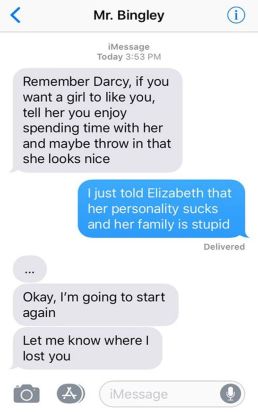
“You must allow me to tell you how ardently I admire and love you.”

But I always like this meme with regards to Darcy’s first proposal:
453f066eb2029f85d54e9316be261504

In two weeks, I’ll review the last half of “Pride and Prejudice” and share my final thoughts on the book as a whole.

Kate’s Review: “Deathless Divide”

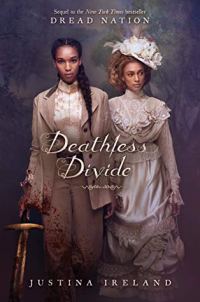
38124119._sy475_Book: “Deathless Divide” by Justina Ireland
Publishing Info: Balzer + Bray, February 2020

Where Did I Get This Book: The library!

Book Description: The sequel to Dread Nation is a journey of revenge and salvation across a divided America.

After the fall of Summerland, Jane McKeene hoped her life would get simpler: Get out of town, stay alive, and head west to California to find her mother.

But nothing is easy when you’re a girl trained in putting down the restless dead, and a devastating loss on the road to a protected village called Nicodermus has Jane questioning everything she thought she knew about surviving in 1880’s America.

What’s more, this safe haven is not what it appears – as Jane discovers when she sees familiar faces from Summerland amid this new society. Caught between mysteries and lies, the undead, and her own inner demons, Jane soon finds herself on a dark path of blood and violence that threatens to consume her.

But she won’t be in it alone.

Katherine Deveraux never expected to be allied with Jane McKeene. But after the hell she has endured, she knows friends are hard to come by – and that Jane needs her, too, whether Jane wants to admit it or not.

Watching Jane’s back, however, is more than she bargained for, and when they both reach a breaking point, it’s up to Katherine to keep hope alive – even as she begins to fear that there is no happily-ever-after for girls like her.

Review: A couple years ago, Justina Ireland wrote the YA horror/historical fiction book “Dread Nation”, a novel about the zombie uprising during Reconstruction in the U.S. Her main character, Jane, was a black teenage girl being trained to be a personal bodyguard for upper class white people, as after the zombies came Black and Indigenous people were recruited to protect the white people of society. It ended with an overrun town and Jane, her frenemy and fellow attendant Katherine, her old flame Jackson, and a group of refugees deciding to head West to California, as Jane was hoping to find her mother. When I heard about “Deathless Divide”, the sequel to “Dread Nation”, I was anticipating another zombie horror novel with the usual apocalypse themes. What I got was something completely different. This time, we get a horror historical fiction novel with distinct themes of a Western, and the lonesome redemptive attempts that come with that genre.

giphy-4
Spoiler Alert: It does. (source)

“Deathless Divide” picks up right after the end of “Dread Nation”, and almost immediately it gets turned on it’s head as to what I had expected from the narrative. For one thing, we are not only getting Jane’s POV, we also get the POV of Katherine, the high strung, prim, and incredibly talented classmate and sometimes friend of Jane. I wanted to know more about Katherine in “Dread Nation”, so when we got to get inside her head in “Deathless Divide” I was overjoyed. Katherine always intrigued me the most from the first book because I loved that she is unabashedly feminine, and is still an incredible fighter, perhaps the best in the book. Too often we see women characters who are made ‘strong’ at the expense of having their femininity stripped away. This is fine, of course, as there are lots of ways to write female characters, but women can fight and kick butt in a corset if they want to, dammit! I also liked getting a deeper exploration of Katherine and the issues that she has to contend with as a very attractive woman who is constantly underestimated, and who, as a woman who passes for white, doesn’t always feel like she has her identity all figured out. Getting to see more of Katherine was delightful. 

The other unexpected shift in the narrative was, as I mentioned before, the fact that it has a distinctly Western theme about it. Usually as a rule I am not a fan of Westerns, as the themes usually don’t grab me AND so many of the Westerns that I think of feel imperialistic. But in “Deathless Divide” Ireland does a really good job of taking the theme of the lone gunslinger and applying it to Jane as her journey progresses, especially since the usual trope of that is a white man. I loved the role for Jane, as she has endured so much trauma and loss and violence because of her race and the fact that Black and Native people have been used as protectors and bodies to protect the White people in a zombie ravaged society. It’s no wonder she would become morally ambiguous as she travels the west looking for revenge. It makes the idea incredibly tragic. And it’s just another of many ways that Ireland once again explores themes and issues of race and racism in America, and like in “Dread Nation” it works very well. From POC being used as guinea pigs to further scientific research to race and class relations in urban settings and capitalism to colorism, “Deathless Divide” shows that some times don’t really change much, and that we still have a long way to go. 

As for the zombies, not much has changed from the first book, and they aren’t as centered this time around. But that said, we do get to delve into the ideas of potential cures, and how different science experiments can bring different outcomes when it comes to the zombies and how they interact with their potential prey. I don’t want to spoil anything here, but just know that Ireland still manages to make the zombies feel fresh and interesting even when they aren’t at the forefront. After all, like in all good zombie stories, it’s the humans that are the bigger threat.

(note: As I mentioned in my review for “Dread Nation”, there had been criticism of the Native characters in that book. I’ve not seen anything in that regard about this book, and I don’t think that I as a white woman can say if Ireland has been more responsible this time around. We do get a more complex and deeper dive into the character of Daniel Redfern, however. If anything changes on this front I will update this post.)

“Deathless Divide” is the end of the road for this world and characters (at least for now; Ireland has said that it COULD happen that more gets written, maybe), and I think that it’s a great follow up and completion. I’ll miss Jane and Katherine.

Rating 8: A satisfying ending with a bold new genre take, “Deathless Divide” wraps up a world of zombies, racism, and empowerment for Black women.

Reader’s Advisory:

“Deathless Divide” is included on the Goodreads Lists “Black Heroines 2020”, and “LGBT SciFi and Fantasy 2015-2020”.

Find “Deathless Divide” at your library using WorldCat!


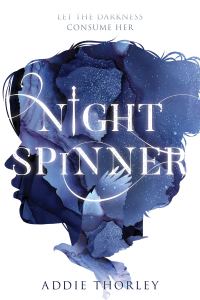
Serena’s Review: “Night Spinner”

45046766Book: “Night Spinner” by Addie Thorley

Publication Info: Page Street Kids, February 2020

Where Did I Get this Book: Edelweiss+

Book Description: Before the massacre at Nariin, Enebish was one of the greatest warriors in the Sky King’s Imperial Army: a rare and dangerous Night Spinner, blessed with the ability to control the threads of darkness. Now, she is known as Enebish the Destroyer―a monster and murderer, banished to a monastery for losing control of her power and annihilating a merchant caravan.

Guilt stricken and scarred, Enebish tries to be grateful for her sanctuary, until her adoptive sister, Imperial Army commander Ghoa, returns from the war front with a tantalizing offer. If Enebish can capture the notorious criminal, Temujin, whose band of rebels has been seizing army supply wagons, not only will her crimes be pardoned, she will be reinstated as a warrior.

Enebish eagerly accepts. But as she hunts Temujin across the tundra, she discovers the tides of war have shifted, and the supplies he’s stealing are the only thing keeping thousands of shepherds from starving. Torn between duty and conscience, Enebish must decide whether to put her trust in the charismatic rebel or her beloved sister. No matter who she chooses, an even greater enemy is advancing, ready to bring the empire to its knees.

Review: Another beautiful cover! It seems like I’m a broken record recently in my praise of the cover art of my books, but it’s also just true that many of them have been extraordinary! It’s nice to see original cover art that properly reflects the book itself rather than trying to brazenly mimic other successful titles in an attempt to trick readers into picking books up. I mean, I get it, publishing is a business and all of that. But a beautiful cover will do the job just as well, as many readers, myself included, will pick up titles like this because the cover is lovely and unique. The book was also marketed at a retelling of “The Hunchback of Notre Dame.” And because I can’t even really picture what that looks like, this was an immediate request for me!

Enebish’s life is now one of seclusion and repression, a far fall from a few years ago when she had been on the cusp of becoming a great warrior and great leader for her people. But when a horrific accident occurs, killing many and crippling Enebish, her life takes a drastic turn, leaving her hated and feared by those who used to respect her. But, after years of hiding from her own powers and ignoring the temptations of the night, she is finally given a path forward to redeem herself. As she chases down a notorious criminal, however, she learns that there are many secrets in the night, not least of all her own.

While this book wasn’t the home run I’d been hoping for, there was still a lot I ended up liking about it. For one thing (and in my book, most importantly), Enebish was an excellent character. While some of her secrets and the reveals she discovers throughout the book were easy to guess, her own process of exploring these new insights was always sympathetic and relatable. As the story progresses, we see more and more clearly that her physical injuries are not nearly as crippling as her fear. Fear of her past, fear of the judgement of others, and, of course, fear of herself.

I was also a fan of the writing style and world-building. It was the kind of book that I was able to immediately sink into. Writing is always one of the hardest aspects of a book to review because what makes one author’s style work and another’s struggle can be both very subjective to the reader as well as almost impossible to pinpoint with specifics. I can usually tell within the first few chapters of a book whether the writing is going to click for me, and right off the bat, this one did. The world-building was also interesting, and I was able to easily picture the various locations that Enebish travels to.

The romance is definitely on the slow-burn side and there were hints of a love triangle at points. Luckily, the story didn’t commit fully to said triangle and the romance itself was very sweet, what little we had of it.

My struggles had to do with the length/pacing of the story, as well as the comparison to ” The Hunchback of Notre Dame.” To the latter point, I found this expectation more distracting than anything. I can see the base elements for why this was referenced in the blurb, but frankly, in the first half of the book I spent way too much time comparing characters and events to that story and not enough appreciating the book before me. I think, as a whole, the comparison is too weak to add anything to the story and is likely to prove more distracting to readers. I recommend trying to put that thought out of your head immediately to better enjoy the book. The middle of the story also lagged a bit, and, overall, I think the book was a bit longer than what was necessary. As the writing and characters were strong, these were minor concerns, but still worth noting.

Overall, I thought this was a really interesting read. I’m not biting at the bit to get to the second one, but it laid down a decent foundation for the plot going forward, and I’m fairly invested in Enebish herself. If you’re looking for an original fantasy novel this spring, this might be one worth checking out!

Rating 7: A bit longer than was necessary, but a compelling lead character and interesting magic system pulled this one into the “win” column.

Reader’s Advisory:

“Night Spinner” is a new book, so it isn’t on many relevant Goodreads lists. But it is on “Profiles in Silhouette.”

Find “Night Spinner” at your library using WorldCat!