Kate’s Review: “Trace of Evil”

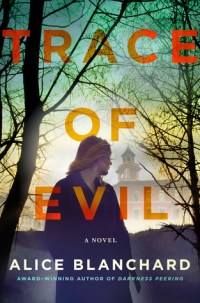
43263388Book: “Trace of Evil” (Natalie Lockhart #1) by Alice Blanchard

Publishing Info: Minotaur Books, December 2019

Where Did I Get This Book: I received an eARC from NetGalley.

Book Description: A riveting mystery that introduces a bold and audacious rookie detective assigned to hunt for a killer who is haunted by the past in this gripping murder case…

Natalie Lockhart always knew she was going to be a cop. A rookie detective on the Burning Lake police force, she was raised on the wisdom of her chief-of-police father. These cases will haunt you if you let them. Grief doesn’t come with instructions.

But the one thing her father couldn’t teach her was how to handle loss. Natalie’s beloved sister was viciously murdered as a teenager, and she carries the scars deep in her heart. Although the killer was locked up, the trace evidence never added up, and Natalie can’t help wondering―is the past really behind her?

As the newest member on the force, Natalie is tasked with finding nine missing persons who’ve vanished off the face of the earth, dubbed “the Missing Nine.” One night, while following up on a new lead, she comes across a savage crime that will change everything.

Daisy Buckner―a popular schoolteacher, wife to a cop, and newly pregnant―lies dead on her kitchen floor. As Natalie hunts for Daisy’s killer in the wake of the town’s shock, her search leads to a string of strange clues―about the Missing Nine, about Daisy’s secret life, and reviving fresh doubts about her sister’s murder.

As the investigation deepens, Natalie’s every move risks far-reaching consequences―for the victims, for the town of Burning Lake, and for herself.

Spellbinding and gripping, Trace of Evil is a novel of twisting suspense that will leave you breathless.

Review: Thanks to NetGalley for sending me an eARC of this novel!

Awhile back one of the librarians I follow on Twitter was speaking highly of a book by an author I hadn’t heard of. He had an ARC of “Trace of Evil” by Alice Blanchard, and when I clicked on the description it sounded like it would be up my alley. Small town police detective, missing people, a victim with secrets, all matters that will pull me into a story on any given day. I got it from NetGalley, and opened it up, expecting all of those things but maybe not much more. And what else did I get?

Witchcraft, covens, and teenagers with secret ties to black magic rituals.

giphy-1
Oh HELL YES. (source)

“Trace of Evil” has three main mysteries that make up the guts of the plot. The first is the most obvious, that of the murder of Daisy Buckner. Natalie Lockhart, our plucky but haunted protagonist, has her own personal connections to Daisy. Not only is she colleagues with Daisy’s husband, Natalie’s older sister Grace wa very close with Daisy, so Natalie’s personal investment is high. I enjoyed seeing Natalie slowly piece together various components to the murder, and how Blanchard was sure to show some of the downfalls of being a woman detective in a small town where everyone knows everything about your past. The second mystery involves a number of missing women, or the Missing Nine, that Natalie has been trying to solve since she joined the force. But along with that obsession, Natalie has her own personal mystery to try and solve; when she was a kid, a masked boy attacked her in the woods. Natalie has spent the rest of her life trying to find out who that boy was. Throw in the fact that her oldest sister Willow was the victim of a horrific murder, and you have a lady cop with a lot of emotional baggage on top of the usual caseload that she has to take on every day. But these various bits of backstory never bog Natalie down, nor does Blanchard make it an excuse to make Natalie overly prickly, overly reckless, or overly damaged. Her traumas absolutely have shaped her, but instead of taking the obvious route of ‘broken but brilliant cop’, Natalie is instead multifaceted and achingly human. I really, really like her as a protagonist (and yes, I’m already rooting for her and her colleague Luke to hook up. She’s had a thing for him since childhood, y’all, it’s great!). Blanchard also is able to take all three mysteries and to show how they are connected, even in the most superficial of ways, and really make the reader buy into the connections. This was one of those instances where I didn’t guess any of the solutions to any of the mysteries, and that left me tickled.

And yes, there is a witchcraft element that I thoroughly enjoyed, if only because I totally saw my own dabbling in Wicca within this plot point. Burning Lake, the town Natalie lives in, has a history of witchcraft and witch trials, and it has permeated a lot of the culture and turned it into a Salem-esque community. Not only did Natalie and her sisters dip their toes into it, but now Natalie’s niece and her friends have started to dabble. But, as is the case in other tales, cliques and infighting tends to lead to a misuse of the ‘magic’, and I loved seeing Blanchard bring that into this story and finding ways to not only connect it to the mystery at hand, but to also show how teen girls who feel powerless can be drawn in to the idea of magic and ritual.

I really, really loved “Trace of Evil”. My hope is that Natalie Lockhart comes back soon, because I now have a new mystery series that I fully intend to keep up with. I highly recommend this thriller to all fans of the genre, and hope that you love it as much as I did.

Rating 10: Suspenseful, detailed, engaging, and filled with great characters, “Trace of Evil” is a promising start to a new series that I thoroughly loved.

Reader’s Advisory:

“Trace of Evil” is new and not included on many Goodreads lists. But I think that it would fit in on “Small Towns with Secrets”, and “Spellbinding Fiction”.

Find “Trace of Evil” at your library using WorldCat!

Kate’s Review: “The Dead Girls Club”

45701350Book: “The Dead Girls Club” by Damien Angelica Waters
Publishing Info: Crooked Lane Books, December 2019

Where Did I Get This Book: I received an eARC from NetGalley

Book Description: A supernatural thriller in the vein of A Head Full of Ghosts about two young girls, a scary story that becomes far too real, and the tragic–and terrifying–consequences that follow one of them into adulthood.

Red Lady, Red Lady, show us your face…

In 1991, Heather Cole and her friends were members of the Dead Girls Club. Obsessed with the macabre, the girls exchanged stories about serial killers and imaginary monsters, like the Red Lady, the spirit of a vengeful witch killed centuries before. Heather knew the stories were just that, until her best friend Becca began insisting the Red Lady was real–and she could prove it.

That belief got Becca killed.

It’s been nearly thirty years, but Heather has never told anyone what really happened that night–that Becca was right and the Red Lady was real. She’s done her best to put that fateful summer, Becca, and the Red Lady, behind her. Until a familiar necklace arrives in the mail, a necklace Heather hasn’t seen since the night Becca died.

The night Heather killed her.

Now, someone else knows what she did…and they’re determined to make Heather pay.

Review: Thank you to NetGalley for sending me an eARC of this novel!

I’ve spoken before about how my childhood was distinctly lacking in spooky urban legends about my community and neighborhood. I don’t know if that’s just larger city living or if I was surrounded by people who didn’t have time for such nonsense, but I do feel a little sad that we had a serious lack in fun, innocent creepy stories (and instead contended with actual creepy stories, like the flasher who’d jump out at joggers on the path by our house). I think that because of this I am especially drawn to stories with scary local folklore themes, and that was the main draw of “The Dead Girls Club” by Damien Angelica Walters. Well, that and the description of a group of teen girls who liked to talk serial killers for funsies. I wish I had that kind of friendship as a teenager. I went into “The Dead Girls Club” with high hopes and expectations that it would meld teenage girl angst with the supernatural, and for awhile I thought it had succeeded. Until it didn’t.

But before we talk about my frustrations, I want to emphasize that “The Dead Girls Club” was a pretty fun ride for the majority of the story. It hops between timelines, that of the present day, and that of the early 1990s. Our focus is mostly on Heather, a woman whose childhood best friend, Becca, was killed one fateful summer, after telling tales of a supposed witch called The Red Lady. Becca, Heather, and their friends were part of a secret club that liked the creepy things in life, but Becca’s obsession with the Red Lady urban legend starts to take over all of their lives. Especially when it seems that this made up story may have some truth to it. In the present we see Heather have to confront this summer when she starts getting secret messages from an anonymous someone (or perhaps something) that hints to knowing the truth about what actually happened to Becca, and what role Heather played in it. We see her try to discern who is stalking her, and see how her lingering fear of The Red Lady starts to take it’s toll on her life and psyche. This is interspersed with flashbacks to when Becca first started telling the stories, and we get to see the slow burn and build up of a deteriorating friendship and what exactly happened between the two girls, which left Becca dead.

I thought that the biggest strengths in this book laid in two factors: the first was the mythology and ambiguity of The Red Lady. Walters gives us enough evidence on both sides of the coin to make the argument that The Red Lady is real, or that The Red Lady is a combination of a lonely child’s imagination run amok and the hysteria shared between friends that are looking to freak themselves out. I do think that the narrative falls on one solution eventually, but I did like that a lot of left up to interpretation for a majority of the story. The other strength was in how Walters portrayed the complicated nature that some teenage friendships can have, specifically between two girls. I know this complexity and complication pretty well from my own experience, and seeing how Becca and Heather both start to grow apart and yet still cling desperately to each other was well written and completely believable. Hell, the Red Lady story itself was a fun and scary one, with smatterings of feminist revenge and all the best ghost stories that come with it. Walters also peels back the motivations for both Heather AND Becca, and once you get to the cores of both of them the spectre of tragedy is just as heavy as the spectre of the Red Lady. They are both sympathetic and frustrating characters, and I think that is the only way they could be written.

But the reason this gets bumped down a few ratings is because, unfortunately, Walters decided to throw in one big and out of left field twist that, for me, derailed the entire story. I won’t spoil it, as I think this is still worth the read, but by the time one of the big reveals came to be I rolled my eyes and muttered a frustrated but not terribly surprised ‘seriously?’ Again, I am not a hater of well done twists. If you can set it up effectively enough that in the moment you have a ‘but of COURSE’ epiphany based on small clues that came before it, I’m going to sing it’s praises forever. But in this case it just felt like a twist for the sake of a twist, and not one that was earned. You gotta earn those twists, people. That’s the only way to stick that landing.

“The Dead Girls Club” is a creepy and unsettling story that didn’t live up to its potential. It’s still worth taking a look, and I am definitely putting Damien Angelica Walters on my radar. But it could have been stronger.

Rating 6: A creepy thriller with a fantastic urban legend at its heart, but it gets derailed by a frustrating twist ending.

Reader’s Advisory:

“The Dead Girls Club” is new and not included on many relevant Goodreads lists, but I think that it would fit in on “Mysteries Featuring Urban Myths/Folklore”.

Find “The Dead Girls Club” at your library using WorldCat!

Kate’s Review: “A Madness of Sunshine”

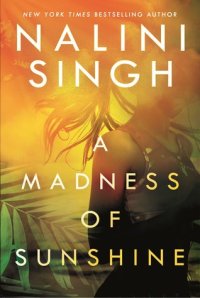
43419669._sx318_Book: “A Madness of Sunshine” by Nalini Singh

Publishing Info: Berkley, December 2019

Where Did I Get This Book: I received an eARC from NetGalley.

Book Description: New York Times bestselling author Nalini Singh welcomes you to a remote town on the edge of the world where even the blinding brightness of the sun can’t mask the darkness that lies deep within a killer…

On the rugged West Coast of New Zealand, Golden Cove is more than just a town where people live. The adults are more than neighbors; the children, more than schoolmates.
 
That is until one fateful summer—and several vanished bodies—shatters the trust holding Golden Cove together. All that’s left are whispers behind closed doors, broken friendships, and a silent agreement not to look back. But they can’t run from the past forever.
 
Eight years later, a beautiful young woman disappears without a trace, and the residents of Golden Cove wonder if their home shelters something far more dangerous than an unforgiving landscape.
 
It’s not long before the dark past collides with the haunting present and deadly secrets come to light.

Review: Thanks to NetGalley and Berkley Books for providing me with an eARC of this novel!

Back at my previous library job, I spent a lot of my time shelving books in all sections of the library. This branch had a very high circulating romance section, and therefore I shelved a lot of Nalini Singh. This was my only exposure to her before Berkley Books sent me the link to an eARC of “A Madness of Sunshine”. I am not really one for romance novels in general, but the description caught my attention for two reasons. The first is that the plot is described like a gritty thriller. Missing women, a town with secrets, a potential serial killer, all of these things entice me. The other is the location: it takes place in New Zealand, my favorite place in the entire world! Could I relive the best vacation of my life through the pages of this book? I was willing to try!

giphy-1
Two of my favorite Kiwis, who did not make an appearance in this book. (source)

“A Madness of Sunshine” is framed as a mystery/thriller, with the main thread of the story being about the disappearance of Miriama, a young and effervescent woman who goes missing and whose absence is noticed by many people within the small town of Golden Cove. It also happens to harken back to similar cases of young women who had gone missing a number of years previously. But the focus is more upon the two people who have their own reasons for wanting to find her. The first is Anahera, a woman who was born and raised in Golden Cove, and then left after a traumatic experience and she met a man who whisked her off to London. She’s back home, now a new widow (and reeling from the shock of his infidelity), and has a personal friendly connection to Miriama and her family. The other is Will, a detective who is trying to move on after he bungled an investigation in such a way that it left collateral damage. As the two of them try to put together the clues towards where Miriama could be, they start to get closer to each other. Which, given that Singh is a prolific and well received romance author, makes sense. I enjoyed both Anahera and Will, and while I didn’t really feel like they grew as much as I would have liked them to within the narrative I liked the heat gradually sparked between them. I did like learning about both of their backgrounds as well, and their various tragic backstory details made me really root for them to find happiness when all was said and done.

However, this is a thriller at it’s core, and when it came to that aspect of this book “A Madness of Sunshine” could have been a bit stronger. I would have liked to have more exploration of the missing women from years earlier, as it felt like they just got mentioned and brought up every once in awhile. I also felt like Miriama was more of an ideal than a character that we were supposed to care about, and because of that I didn’t really care one way or the other if she was found safe and sound at the end of the day. In terms of what happened to her, and what happened to the missing women prior, the solutions to those mysteries were standard and kind of bland. They made sense, but by the time we got to them I was less rocked by the revelations, and more ‘oh, okay’ when all was said and done. Not exactly the kind of reaction I like to have when it comes to the solution of a tantalizing thriller or mystery!

But the biggest positive of this book for me was the New Zealand locale. Singh effortlessly brings the town of Golden Cove to life, and the references to various aspects of New Zealand culture, geography, and history really anchored the setting for me. It makes me think about picking up more Nalini Singh novels, with the expectation of romance and heat, and see what they do for me. After all, it was the romance aspects that were the strongest parts of this book.

I think that if you are a thriller fan who isn’t used to a mix of other genres, “A Madness of Sunshine” may not satisfy your reading itch. But if you are going in with the expectation of a little bit of romance and angst, it might be a pretty good fit!

Rating 6: While it was a bit more heavy on the romantic and hidden past elements than the thriller ones, “A Madness of Sunshine” was an entertaining read, and takes place in my favorite place on Earth.

Reader’s Advisory:

“A Madness of Sunshine” isn’t on many relevant Goodreads book lists yet, but I think it would fit in on “Popular Missing Persons Books”, and “New Zealand”.

Find “A Madness of Sunshine” at your library using WorldCat!

Kate’s Review: “Whisper Network”

41555931._sy475_Book: “Whisper Network” by Chandler Baker

Publishing Info: Flatiron Books, July 2019

Where Did I Get This Book: The library!

Book Description: Four women learn their boss (a man who’s always been surrounded by rumors about how he treats women) is next in line to be CEO—what will happen when they decide enough is enough?

Sloane, Ardie, Grace, and Rosalita are four women who have worked at Truviv, Inc., for years. The sudden death of Truviv’s CEO means their boss, Ames, will likely take over the entire company. Ames is a complicated man, a man they’ve all known for a long time, a man who’s always been surrounded by…whispers. Whispers that have always been ignored by those in charge. But the world has changed, and the women are watching Ames’s latest promotion differently. This time, they’ve decided enough is enough.

Sloane and her colleagues set in motion a catastrophic shift within every floor and department of the Truviv offices. All four women’s lives—as women, colleagues, mothers, wives, friends, even adversaries—will change dramatically as a result.

“If only you had listened to us,” they tell us on page one, “none of this would have happened.”

Review: When my husband and I first brought our daughter home, we had to adjust to spending more time at the house and finding ways to spend the evenings when we weren’t directly caring for the kiddo. One of those ways was to watch “Mad Men” on Netflix, a show that neither of us watched when it was on originally but had been on our lists. I think that both of us were struck and angered by the casual misogyny that a number of the women characters experienced during the course of the show, both at home and at work. Around this time I also got the book “Whisper Network” by Chandler Baker, a Reese’s Book Club pick that had a pretty long hold list at the library. As I read “Whisper Network” I kept thinking about “Mad Men” and how the women at the ad agency had to deal with terrible, abusive men. It wasn’t lost on me that the similarities were incredibly high, even though fifty some years had passed between the timelines in which the characters from both stories were living. Goes to show that while in a number of ways we’ve progressed in terms of women in the work force, some things stay the same, and boy does that rile me up.

giphy
A phrase I’ve related to so many times in the past few years. (source)

“Whisper Network” has been described as a #MeToo story, though the themes have been present long before the movement. Our protagonists, Sloane, Ardie, and Grace all work in the legal department at a high powered corporation, and all of them have had run ins of varying degrees with the soon to be new CEO Ames Garrett. Ames is a well liked member of the company’s corporate boys club, and while he seems to be a shoe in for the position his abusive and harassing tendencies have been swept under the rug. Sloane, Ardie, and Grace are all competent and capable women, and as of now have kept their mouths shut when it comes to their experiences with Ames because they don’t necessarily think that tangling with him directly would be worth it. It’s when a new employee, the young and seemingly naive Katherine, enters the mix that they think perhaps they need to speak up, lest Ames set his predatory sights on her. What comes next involves lies, deception, back stabbing, and an untimely death that Sloane, Ardie, and Grace are blamed for because they decided to speak up. Baker does a really good job of addressing how sometimes victims of harassment, especially if the accused is seen as ‘likable’, can be demonized and vilified for speaking of their experiences. Some of the most effective moments of this were told through ‘witness’ interviews after the main incident, where coworkers, male and female alike, are questioning the veracity of the accusations, and also questioning the stability or motivations of those who have spoken out. It’s angering to read in its realism.

The mystery of “Whisper Network” is pretty straightforward (what really happened to the victim we see at the beginning), though I didn’t really find myself too invested in the solution to it. I was more invested in what was going to happen to those who were left behind as the fallout comes crashing down. I was also more invested in Sloane, Grace, and Ardie getting justice for what had happened to them at the hands of an abusive boss, and at the hands of those who don’t believe them and try to drag their names through the mud. None of the characters really stood out for me, but were all likable enough and relatable enough that I did care about them and how things worked out once the book was done. The character that I liked the most, however, was Rosalita, a night cleaning lady at the company who doesn’t have the same privileges as our main three, and who has her own story to tell, or not tell as the case may be. I liked how Baker brought in a bit of intersectionality when it comes to this #MeToo story, as unlike other characters Rosalita doesn’t have the class privilege they do, and as a woman of color she has more reasons to stay quiet against a powerful white man. I think that Baker could have done more with this, as to me it was the most interesting component to the story.

“Whisper Network” will probably anger you as you read it, but it’s a story that has resonance as the spotlight of #MeToo continues to highlight misogyny and sexual harassment in our culture. The mystery comes second to the social commentary, but it’s still an entertaining page turner.

Rating 7: A #MeToo story with a slow burn mystery, “Whisper Network” is a relevant and upsetting tale of work place harassment and how victims can be unfairly punished for speaking out against powerful harassers.

Reader’s Advisory:

“Whisper Network” is included on the Goodreads lists “MeToo”, and “ATY 2020 – Books Related to News Stories”.

Find “Whisper Network” at your library using WorldCat!

Kate’s Review: “Anything For You”

43263434Book: “Anything for You (Valerie Hart #3)” by Saul Black

Publishing Info: St Martin’s Press, November 2019

Where Did I Get This Book: I received an eARC from NetGalley!

Book Description: Critically acclaimed author Saul Black returns with a heart-racing thriller in which a brutal murder forces one woman to reckon with her own past–and her future.

On a hot summer night, a watchful neighbor locks eyes with an intruder and unwittingly alerts the police to a vicious crime scene next door: a lavish master bedroom where a man lies dead. His wife is bleeding out onto the hardwood floor, clinging to life.

The victim, Adam Grant, was a well-known San Francisco prosecutor–a man whose connection to Homicide detective Valerie Hart brings her face-to-face with a life she’s long since left behind. Adam’s career made him an easy target, and forensic evidence points towards an ex-con he put behind bars years ago. But while Adam’s wife and daughter grapple with their tragic loss, Valerie uncovers devastating clues that point in a more ominous direction. Lurking in the shadows of the Grants’ pristine life is a mysterious blonde who holds the key to a dangerous past.

As Valerie struggles to forge a new path for herself, the investigation forces her to confront the question: can we ever really leave our pasts behind?

Sophisticated and stunning, Anything for You is an unforgettable thriller that will grip readers long after turning the last page.

Review: Thank you to NetGalley for sending me an eARC of this novel!

We had to wait a little while, but finally, FINALLY the gritty and complex detective Valerie Hart is back for another mystery! Saul Black continues the adventures of the San Francisco sleuth in “Anything For You”, and I was lucky enough to get an advanced copy. I don’t have many mystery series I follow, but when a new one comes out I’m game to dig in. I had some mostly positive, but also a bit mixed, feelings about the previous Valerie Hart books after revisiting them (as seen in my previous review), but had high hopes that I’d come out of “Anything For You” still feeling good. And I did. Mostly.

I’ll talk about the mystery first, as that really in the central plot point and Hart is just living in it. A well known lawyer is found murdered in his home, leaving behind a wife and daughter. Hart is on the case, though she should probably step aside given that she almost slept with the man a few years ago (because of course she did). It initially looks open and shut, but as Hart continues to investigate we get to see the slow reveal of a more complex (and sinister) plan and past that the victim might have been hiding. Along with Hart’s investigation and her slow clue building, we also get the perspective of a mysterious woman whose connection isn’t apparent at first, but slowly becomes more and more clear. To me this was the most interesting aspect of this story, and possibly the most interesting slow reveal of all of Black’s Valerie Hart books. I was actually more interested in seeing what this mysterious woman’s story was going to bring next than I was in the official investigation, and then once the tethers did intersect and wrap everything together I was all the more satisfied with how Black build up a cohesive and complex mystery.

As for Hart, I still really like Valerie and I like seeing how she progresses in each book. When we see her in this one, she is now married to her lover Nick, and they are considering starting a family. The questions of parenthood and whether she’s cut out for her are obviously weighing on her mind, and it means that, once again, she starts to drift towards her usual self destructive tendencies. And as much as I love Valerie and I like that it’s being acknowledged that family planning can be filled with complex emotions, I do feel like Valerie’s constant slip up potential is a little old at this point. I’m not saying that there wasn’t any growth whatsoever with her character, as she certainly isn’t static in her behavior or personality. But I do think that it’s an easy out to revert to questions of ‘will she or won’t she’ make bad decisions just for the sake of inner conflict and turmoil. I’m also becoming more and more sensitive to the ‘men write women’ pattern that can be seen sometimes, especially when it comes to ‘strong female characters’. When it comes to Hart, she sometimes falls into all too common tropes about what that means, like sacrificing any aspect of femininity, pointing out the flaws of other women to make her look better, or simply putting more ‘masculine’ traits (that is traits commonly associated with masculinity in our culture) into her bag of tricks to show how tough she is. That isn’t to say that all men or all women exist in a monolith when it comes to behavior and emotional coping skills, as that would also be a foolish thing to insist upon. The problem with Valerie is that more and more she falls into the ‘not like other girls’ box, and it’s one that I have less and less patience for. And honestly, every time that Valerie referred to her genitalia as ‘her c*nt’, I cringed. And I know that Black is British and the associations with that word are very different there, but still. It just felt like another ‘not like other girls’ moment, and it was laid on pretty thick.

giphy-4
(source)

Overall there was a lot for me to like about “Anything for You”, and I am still interested in seeing what lies in store for Valerie Hart and any future endeavors she may undertake. But I’m hoping that her character gets to grow a little more in the future.

Rating 7: Valerie Hart is still a compelling protagonist and the mystery was good, but I’m starting to worry that we’re edging into all too common ‘tough but messed up girl’ tropes.

Reader’s Advisory:

“Anything For You” is new and not included on many Goodreads lists, but I think that it would fit in on “Women Who Solve Crimes”.

Find “Anything For You” at your library using WorldCat!

Previously Reviewed: “The Killing Lessons” and “Lovemurder”


Kate’s Rev Up Series Review: The Valerie Hart Series


Books: “The Killing Lessons” and “Lovemurder” by Saul Black

Publishing Info: St. Martin’s Press, September 2015; Orion, November 2016

Where Did I Get These Books: The library!

Book Descriptions: When the two strangers turn up at Rowena Cooper’s isolated Colorado farmhouse, she knows instantly that it’s the end of everything. For the two haunted and driven men, on the other hand, it’s just another stop on a long and bloody journey. And they still have many miles to go, and victims to sacrifice, before their work is done.

For San Francisco homicide detective Valerie Hart, their trail of victims–women abducted, tortured and left with a seemingly random series of objects inside them–has brought her from obsession to the edge of physical and psychological destruction. And she’s losing hope of making a breakthrough before that happens.

But the murders at the Cooper farmhouse didn’t quite go according to plan. There was a survivor, Rowena’s ten-year-old daughter Nell, who now holds the key to the killings. Injured, half-frozen, terrified, Nell has only one place to go. And that place could be even more dangerous than what she’s running from.

In this extraordinary, pulse-pounding debut, Saul Black takes us deep into the mind of a psychopath, and into the troubled heart of the woman determined to stop him.


The second spine-chilling serial-killer thriller featuring homicide detective Valerie Hart from the author of the critically-acclaimed THE KILLING LESSONS.

Troubled San Francisco homicide detective Valerie Hart is planning a rare weekend away from the job when she gets the call. A body has been found. A woman, brutally murdered. And the cryptic note left by the body is addressed to Valerie.

The victim is unknown to her, but as Valerie analyses the scene, the clues begin to point in a deeply disturbing direction: to a maximum security prison where a woman called Katherine Glass is awaiting execution for a series of gruesome killings. And Valerie was the cop who put her there.

The last thing Valerie wants to do is re-enter Katherine’s twisted world, but when a second body is discovered, with another puzzling clue, she realises she has no choice. Katherine Glass holds the key to the killings, and Valerie needs to find out what she knows before the murders come even closer to home.

Even if it means playing a deadly game where once again, the psychopathic killer holds all the cards.

Review: A few years ago, I took a chance on a book called “The Killing Lessons” by Saul Black. I went in more interested in the overall story and plot, expecting it to be a one off with horrific travelling murderers and a run of the mill hard boiled detective on their tail. But what I found instead was Valerie Hart, a damaged, complex, and fascinating protagonist whose demons and past eclipsed the already compelling and disturbing main plotline. A year later, “Lovemurder” came out, and I was thrilled to see that Valerie Hart was, once again, the hero of the tale. And now, a few years after that, the third in the Valerie Hart series “Anything For You” is about to come out. In anticipation of this new novel, I decided to go back and revisit “The Killing Lessons” and “Lovemurder”, and get myself super hyped for the return of Valerie. So before I review that book, let’s look at the books that came before it, as they are very different stories, and yet are connected by a protagonist that I’ve come to really enjoy.

When we first meet Valerie in “The Killing Lessons”, she is a detective in San Francisco who is haunted by a couple of different things. The first is that she has had a couple of unsolved cases that she can’t shake, cases that have rocked her to her core and have become a dark obsession. The other is a failed relationship with another detective named Nick Blaskovich. She and Nick had a real shot at happily ever after, but after her frustrations about her unsolved cases made her spiral, she pushed him away in the most destructive ways possible. Little does she know that out east in Colorado, the men she has been trying to find are about to strike again, and this time they mess up and leave a witness alive, a little girl named Nell who ran when her mother and brother were brutally murdered. Black seamlessly connects the stories of Valerie, Nell, and the two murderers, and shows them on a collision course. Black gives a lot of attention to all of the players, the chapters trading off between what Xander and Paulie, the murderers, are up to, what Nell is doing as she hides from them, and how Valerie is slowly but surely piecing their tracks together and closing in on them. The story treads more towards the literary than what you may expect from a detective story, and the brutality is striking, and at times a little much to handle. When I read it initially it didn’t seem to bother me, but during my revisit the violence, which is mostly directed towards women, was very difficult to swallow. I think that had Valerie not been given as much attention, depth, and complexity, I would have been more critical. But as it was, Valerie’s storyline shows not only the tenacity and spunk of a truly gifted detective, but also what being a good detective can sometimes do to your psychological state. 

In “Lovemurder”, we turn from overblown sadistic violence, and gravitate more towards a psychological cat and mouse game. In this story, Valerie has to confront Katherine Glass, a serial killer that she put away years ago, but whose mystery partner has started killing again, and claims they won’t stop unless Glass is set free. Like Hart, Glass is a hyper-intelligent woman who knows how to read people, and when she and Valerie start to face off again, the mind games start up again between the two women. Glass claims that she wants to help Valerie since her partner, whom she never knew the identity of, left her high and dry to rot in jail, but Valerie isn’t certain that she can fully trust this woman, insights aside. In this story, there is still a case that is haunting her, but Valerie has grown from the complete mess that she is in “The Killing Lessons”, and exudes a new strength and confidence that really suits her. I like seeing her character grow between novels, as had she just remained static between the two it would have been exhausting. I also liked that Black didn’t feel a need to up the ante on the violence, and that while there is STILL violence in this book, it doesn’t feel nearly as exploitative or misogynistic as it did in “The Killing Lessons”. On top of that, Katherine Glass is another fascinating, complex character, and I really liked seeing her and Valerie go head to head in a battle of the wits. Another aspect I liked is that Valerie’s personal life with Nick is still there, but it doesn’t take the forefront, nor does Black put Valerie in any situation where she is the ‘bad guy’ because she takes her job so seriously and will put it over romance when she deems it fit to do so. 

That isn’t to say that there aren’t pitfalls with Hart and her characterization. I do think that from time to time Black does fall into the ‘men writing women’ trap. Every once in awhile Valerie may do something that would make me pause and say ‘okay, that reads more like a guy’s idea of what a woman would do as opposed to how a woman author would write and read the same situation’. And it’s hard to deny that, as mentioned above, there are definitely misogynistic undertones towards some of the women characters, be it as victims, or just other characters that aren’t Valerie (this is especially evident with a character named Carla in “The Killing Lessons”; her hatred for Valerie is petty and comes back to a man). Plus, there were some strange moments, especially in “The Killing Lessons”, where objectification and violence ruled, and sexuality popped up in places it probably shouldn’t. While it makes some sense when it’s from Xander and Paulie’s point of view (they are sexual sadists after all), there was one moment involving Nell, a prepubescent girl, and the odd note that she hasn’t hit puberty yet as denoted by a, shall we say, lack of certain secondary sexual characteristics. Why did THAT need to be noted? What did it add to the plot as a whole, ESPECIALLY when the observation is coming from a character who is supposed to be benevolent and someone she is safe with? 

But that said, as a whole I am always interested in finding out more about Valerie, and to see where she goes next. So go on I shall, problematic aspects aside (but also kept track of, in case it becomes too much). Suffice to say, when I saw that Black had a new book about her, I was THRILLED and requested it from NetGalley almost immediately. Valerie herself is such a compelling character, as of now I am eager to come back for more. On Thursday, I’ll review her newest adventure, “Anything For You”.

Rating 7 and 8: Black has brutal, dark, and propulsive thrillers, but the true strength is the protagonist Valerie Hart. These books aren’t for the faint of heart and sometimes come off as sexist in some ways, but overall Hart is a complex and interesting character to follow.

Reader’s Advisory:

The Valerie Hart Series is included on the Goodreads lists “Best Female Lead Characters”, and “Best Modern Thrillers”.

Find “The Killing Lessons” and “Lovemurder” at your library using WorldCat!

Kate’s Review: “His Hideous Heart”

39127647Book: “His Hideous Heart” by Dahlia Adler (Ed.)

Publishing Info: Flatiron Books, September 2019

Where Did I Get This Book: I own it.

Book Description: Thirteen of YA’s most celebrated names reimagine Edgar Allan Poe’s most surprising, unsettling, and popular tales for a new generation.

Edgar Allan Poe may be a hundred and fifty years beyond this world, but the themes of his beloved works have much in common with modern young adult fiction. Whether the stories are familiar to readers or discovered for the first time, readers will revel in Edgar Allan Poe’s classic tales, and how they’ve been brought to life in 13 unique and unforgettable ways.

Contributors include Kendare Blake (reimagining “Metzengerstein”), Rin Chupeco (“The Murders in the Rue Morge”), Lamar Giles (“The Oval Portrait”), Tessa Gratton (“Annabel Lee”), Tiffany D. Jackson (“The Cask of Amontillado”), Stephanie Kuehn (“The Tell-Tale Heart”), Emily Lloyd-Jones (“The Purloined Letter”), Hillary Monahan (“The Masque of the Red Death”), Marieke Nijkamp (“Hop-Frog”), Caleb Roehrig (“The Pit and the Pendulum”), and Fran Wilde (“The Fall of the House of Usher”).

Review: I’ve been a fan of Edgar Allan Poe since grade school when I read “The Raven” and “The Tell Tale Heart” in my free time. It was truly the first indication that I was going to shift into full on Goth in high school. His melancholic writings and nerve wracking imagery is still very effective, and while it does have some dated elements it can’t be denied that he has had a huge influence on American Horror writing to this day.

giphy-3
Super relatable in so many ways too. (source)

I still hold him and his works near and dear to my heart, even if I haven’t read as many as I thought I had. I came to this realization as I read “His Hideous Heart”, a collection of new YA interpretations of Edgar Allan Poe’s most famous works, edited by Dahlia Adler. I bought this book for my Kindle, as I was so excited to read it I really didn’t want to wait before I could get it in my hands. The group of YA authors selected was really the icing on the cake, as it includes some of my favorites like Stephanie Kuehn and Tiffany D. Jackson. A group of authors coming from lots of backgrounds and experiences to update some of the stories from the OG Creep Master of American Literature? It can’t get better than that! Like with most Short Story collections I am going to talk about my three favorite works, and then give a summation of the collection as a whole.

“Night-Tide” (based on “Annabel Lee”) by Tessa Gratton

The poem “Annabelle Lee” has made me cry many times in my life. It’s about the death of a young woman and her husband who has been left behind to mourn her, and is most likely based on Poe’s own wife Virginia who tied of tuberculosis. Tessa Gratton takes this always upsetting story theme and twists it up in many positive ways. She changes it into a prose narrative instead of a poem, sets in in a historical fiction timeline, and makes the two lovers two young women who are living in a time where gay romance and love is never going to be accepted. Annabel Lee and Jackie have spent summers at the resort of Kingdom by the Sea and became close friends. But the summer she’s sixteen Jackie arrives to find out that Annabel has passed away of illness, and that Annabel’s family blames Jackie because of their ‘close friendship’ and the sin it was. As Jackie tries to come to terms with her friend’s death, and to try to come to terms with the guilt that she is feeling because of it. Like the poem there are no happy endings here, but it makes the sadness of the poem all the more emotional, as Jackie has to live with the guilt that others and society has placed upon here merely because she and Annabel Lee were in love. And, like it’s inspiration, it made me cry as well.

“The Glittering Death” (based on “The Pit and the Pendulum”) by Caleb Roehrig

“The Pit and the Pendulum” is a tense and scary read where a prisoner is being psychologically and physically tortured during the Spanish Inquisition. Caleb Roehrig, however, subverts that into a modern retelling involving a serial killer, a teenage girl, and misogyny. Laura finds herself the newest victim of a murderer called The Judge, who kidnaps and tortures young women for the sins he’s perceived they’ve committed. Laura has to figure out how to survive the situation and escape. This was probably my favorite story in the collection, as Roehrig does a GREAT job of drawing comparisons between his zealous and woman hating serial killer and the forces that were behind The Spanish Inquisition, showing how repression, misogyny, and religious fundamentalism can instigate violence. Laura as a main character was spunky and tough, and the tension of her imprisonment and her plans for escape had me on the edge of my seat. It’s definitely the scariest story in this book, and I thought that it really found the heart of the source material and cleverly applied it.

“Happy Days, Sweetheart” (based on “The Tell-Tale Heart”) by Stephanie Kuehn

One of Poe’s most famous stories is “The Tell-Tale Heart”, and it’s about jealousy pushing someone to murder, and the guilt that drives the murderer insane. Leave it to Stephanie Kuehn to take that and make something totally different, all while finding the deeper themes and applying them perfectly. An unnamed high school girl has been living in the shadow of Jonah, a charismatic but mediocre white guy at their boarding school. She has always worked hard to be the best, but being a bi-racial girl from outside their community has always kept her down. But now she has a plan to finally become number one, to finally get the praise and recognition she deserves. I LOVED how Kuehn took the idea of women (especially women of color) having to work harder and do more to get the same recognition that a white man gets just by existing, and how that frustration can turn into an all encompassing anger. While it’s true our narrator eventually takes it to extremes (as one would have to with the source material), I still felt that Kuehn drew out her motivations in a way that I found incredibly relatable in a lot of ways. Kuehn is one of my favorite authors, and her contribution to this collection knocked it out of the park to be sure.

And there were a lot of other really strong stories that I didn’t mention! “His Hideous Heart” covers a wide range of genres, and most of the segments were all very strong in their own ways. Even the ones that I didn’t end up caring for as much were more based on the genres they fell in as opposed to the content. There are so many strong authors here, and they all did their very best to do justice to Poe’s original works, with many of them succeeding. But wait, there’s even more to sing the praises of! “His Hideous Heart” not only has these thirteen original stories, it also includes the original works by Poe! So if you aren’t familiar with the source material, you have direct access to it. LOVED that!

“His Hideous Heart” was a great short stories collection. If you are a Poe fan you should read it, and if you aren’t familiar with Poe this is the perfect introduction to the original works AND the updates. And hey, it’s almost Halloween. This is just the book to read this time of year.

Rating 8: A well done and well updated collection of stories that pay homage to Poe, “His Hideous Heart” is an enjoyable read and the perfect book for the Halloween season.

Reader’s Advisory:

“His Hideous Heart” is included on the Goodreads lists “Edgar Allan Poe in YA & Middle Grade Fiction”, and “The Unlikable Female Characters Podcast”.

Find “His Hideous Heart” at your library using WorldCat!

Kate’s Review: “The Institute”

43798285Book: “The Institute” by Stephen King

Publishing Info: Scribner, September 2019

Where Did I Get This Book: The library!

Book Description: From #1 New York Times bestselling author Stephen King, the most riveting and unforgettable story of kids confronting evil since It—publishing just as the second part of It, the movie, lands in theaters.

In the middle of the night, in a house on a quiet street in suburban Minneapolis, intruders silently murder Luke Ellis’s parents and load him into a black SUV. The operation takes less than two minutes. Luke will wake up at The Institute, in a room that looks just like his own, except there’s no window. And outside his door are other doors, behind which are other kids with special talents—telekinesis and telepathy—who got to this place the same way Luke did: Kalisha, Nick, George, Iris, and ten-year-old Avery Dixon. They are all in Front Half. Others, Luke learns, graduated to Back Half, “like the roach motel,” Kalisha says. “You check in, but you don’t check out.”

In this most sinister of institutions, the director, Mrs. Sigsby, and her staff are ruthlessly dedicated to extracting from these children the force of their extranormal gifts. There are no scruples here. If you go along, you get tokens for the vending machines. If you don’t, punishment is brutal. As each new victim disappears to Back Half, Luke becomes more and more desperate to get out and get help. But no one has ever escaped from the Institute.

As psychically terrifying as Firestarter, and with the spectacular kid power of It, The Institute is Stephen King’s gut-wrenchingly dramatic story of good vs. evil in a world where the good guys don’t always win.

Review: Whenever a new book I really want to read is about to come out, I try to get myself positioned high on the request list at the library. When this doesn’t work, I will make sure it’s going to be available at my former job on the day it comes out, as copies from that branch don’t go to the request list. And then once it’s publication day, if I can I will rush to that branch before opening, and become that patron that I used to kvetch about: the one who hangs out outside before the doors open and rushes the new wall as soon as they do. This made it so I got a copy of Stephen King’s “The Institute” at the library the day it came out, and yeah, I was a bit of a sore winner when I snagged it off the display. We are kind of in the midst of a King Renaissance right now, from new books to adaptations of his works in movie theaters and on TV and computer screens. I’m always going to be stoked for anything King related, and he has so much content to explore that you have a lot to work with. Unfortunately, on the flip side of that is the fact that not everything is going to be a winner, and “The Institute”, for me, was not a winner.

But like usual, we’ll start with the good. Even in books he’s written that don’t quite click with me, I am almost always happy with the way that King portrays childhood experiences and childhood friendships. From “It” to “The Body”/”Stand By Me”, the way that he can capture the innocence and yet importance of these childhood bonds and put them on the page is almost always incredibly effective. He brings this talent to “The Institute”, as whenever he focuses on Luke Ellis, Kalisha, and the other child prisoners it feels like you’re seeing real kids interacting with each other. I was worried that the innate precociousness of the children, especially super genius Luke, would stunt the dialogue and relationships, but I greatly enjoyed all of them whether they were playing, scheming, or mourning. While I didn’t feel like I got to know all of them as deeply as I got to know The Losers Club or the four boys who went looking for a dead body, I still liked seeing the glimpses into the relationships that we did, as it was always entertaining. With a resurgence in popularity of ‘kids solving mysteries/fighting back against more powerful entities’ because of “Stranger Things”, I definitely get tapping back into that kind of tale. It is also very hard to deny that, given the horrific reality that children are being imprisoned in cages at the Southern Border, some of the themes are all the more resonant in this story. King does a good job of drawing comparisons without treading into distaste, and given that I’m sure this book had already been submitted to the publisher before some of the more recent developments I definitely couldn’t help but connect his story to the horrible things our Government is doing. Especially as the slow reveal of The Institute’s true intentions is carefully peeled back. Plus, the pacing was well done and it never felt slow, so it was mostly entertaining.

The reason that this doesn’t get a higher score from me is because “The Institute”, while being entertaining, didn’t quite evoke the emotions I have come to want from Stephen King novels. Yes, the concept is horrible and scary, and there were certainly thrilling aspects of the plot as we reach the end, but I never felt the actual tension, elation, sadness, and fear. For whatever reason it just didn’t connect with me. I think that part of it was that this felt less like a horror novel and more like a conspiracy thriller, and while that’s fine and I generally like a good conspiracy thriller, this one just didn’t quite click. And I think the other part I already kind of touched on earlier, in that while I liked the characters and the relationships they had with each other (the kids especially), I don’t think that we got to know them well enough for me to really connect with them. And if I’m not as connected, I’m not as invested. I don’t think “The Institute” was a bad read by any definition, but if a book falls into these traps that I’ve mentioned, I’m just not going to enjoy it as much.

I’m so happy that Stephen King is still writing, and that he’s getting all kinds of attention right now. While “The Institute” was a miss, the man is still my favorite horror author of all time. And given that there’s already rumors of this book being adapted into yet another TV series based on King source material, it may be in your interest to give it a go regardless of what I thought!

Rating 6: While “The Institute” was an entertaining read and had its moments and details that I liked, overall it fell a little flat for me.

Reader’s Advisory:

“The Institute”, surprisingly, isn’t included on many relevant or specific Goodreads lists. But I think that it would fit in on “Conspiracy Fiction”, and “Books like Stranger Things”.

Find “The Institute” at your library using WorldCat!

Kate’s Review: “Full Throttle”

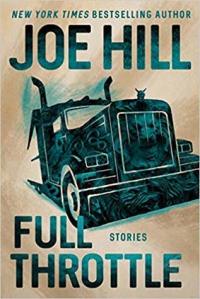
43801817Book: “Full Throttle” by Joe Hill

Publishing Info: William Morrow, October 2019

Where Did I Get This Book: I received an eARC from NetGalley.

Book Description: In this masterful collection of short fiction, Joe Hill dissects timeless human struggles in thirteen relentless tales of supernatural suspense, including “In The Tall Grass,” one of two stories co-written with Stephen King, basis for the terrifying feature film from Netflix.

A little door that opens to a world of fairy tale wonders becomes the blood-drenched stomping ground for a gang of hunters in “Faun.” A grief-stricken librarian climbs behind the wheel of an antique Bookmobile to deliver fresh reads to the dead in “Late Returns.” In “By the Silver Water of Lake Champlain,” two young friends stumble on the corpse of a plesiosaur at the water’s edge, a discovery that forces them to confront the inescapable truth of their own mortality . . . and other horrors that lurk in the water’s shivery depths. And tension shimmers in the sweltering heat of the Nevada desert as a faceless trucker finds himself caught in a sinister dance with a tribe of motorcycle outlaws in “Throttle,” co-written with Stephen King.

Featuring two previously unpublished stories, and a brace of shocking chillers, Full Throttle is a darkly imagined odyssey through the complexities of the human psyche. Hypnotic and disquieting, it mines our tormented secrets, hidden vulnerabilities, and basest fears, and demonstrates this exceptional talent at his very best.

Review: Thank you to NetGalley for sending my an eARC of this book!

Happy Horrorpalooza 2019 everyone! As you may know, in October I try to stick to books that have horror based or Halloween-y themes, as this is absolutely my favorite time of the year and I like to inundate myself with all things scary and spooky. So how lucky are we that we get to kick off the month with a book from one of my favorite horror authors, Joe Hill. Hill is one of those authors that I will always swear my devotion to, and so when I found out that he had a new short stories collection coming out I was stoked as heck. Granted, I had already read a few of the tales in “Full Throttle”, his new collection, as they had been published previously with other collections or in collaboration with his father, Stephen King. But a majority of the tales were new to me, and I couldn’t wait to tackle them all. As per usual with short stories collections, I’ll talk about my favorites, and then give an overall review of the series as a whole. And I have lots to say about my favorites.

“Dark Carousel”

This story is one of the most blatantly horror-centric tales in the collection, and it has a good amount of winking and nudging towards well loved tropes and stories in the genre. With nods towards “Something Wicked This Way Comes”, I took great delight in this creepy tale. Four friends attend a carnival and take a ride on the carousel. After they accuse the carousel operator of wrongdoing, they decide to have some fun and take their revenge on him. But little do they know that they are being watched by non-human eyes, and that their misdeeds will have dire consequences. I really, really loved this story, from the characterizations of our protagonists to the slow build of dread at the carnival and afterwards, and the come down that has ambiguity and a sense of inevitability. The loving references to “Something Wicked This Way Comes” were fun to spot, and the overall wrongness of the carnival and the carousel made for an eerie and unsettling, yet never over the top, scary story. The story isn’t terribly complicated, but it is very effective in what it is trying to achieve. The best horror story in the collection for me, hands down.

“By The Silver Waters of Lake Champlain”

This was one of the stories I had read previously before picking up this book, but given how much I loved it the first time I was excited (and apprehensive) to read it again. But on a second go through, my love for the story only grew, and it is probably my favorite story in the collection. Friends Gail and Joel are visiting Lake Champlain on vacation, and one lazy Sunday morning the two of them find the body of what looks to be a plesiosaur-like reptile. Convinced it’s the famed lake monster Champ, they have dreams that their discovery will make them rich and famous. But instead of fame and glory, they have to confront the hard truths of growing up, loss, and mortality. I first read this story a few years ago, and it blew me away and left me crying. Reading it this time and knowing how it all ends made the experience all the more bittersweet. Hill has the ability to capture tween and teenage voices in authentic ways, and he also knows how to give hints to his characters realities without being explicit. We can surmise that Gail and Joel are both a bit lonely at home, and that their parents, at least during this story, are more focused on nursing vacation hangovers than on their children and what they are getting up to on a foggy morning by the lake. Gail and Joel are probably friends more based on circumstance than anything else, but that doesn’t make their friendship any less valid, nor does it cheapen the ultimate ending this story has. They are connected by interest in the Lake Champlain Monster as well, and honestly anything that shows weird and funny friendship obsessions with cryptids is going to resonate with me, given my past (and present) fascinations with similar topics. But on top of that, for me this is one of the most emotionally charged stories in the bunch (one of the others will be addressed in a moment). Hill is so good at writing grief and trauma, and the last paragraphs are still haunting and incredibly emotional. This is a story that I would LOVE to see expanded into a novel, where Gail goes back to the lake to try to get answers and closure. And even on the second read through I was left a bit emotionally compromised. Nay, extremely emotionally compromised.

tenor
Actual footage of my emotions at the end. (source)

“Late Returns”

I will wholeheartedly own up to the fact that as a librarian I was no doubt going to be biased towards this story. A new librarian, trying to escape his own grief and loss, takes over the Bookmobile job in hopes of spreading the love of reading to people who can’t necessarily make it into the actual library. As he makes the rounds, he starts to encounter people from other times, who may need to read books that were published after their deaths in order to feel complete. This is one of the less creepy or scary stories from the collection, and the unabashed love of reading and the testament to the power of a book is so sublime and wholesome. Hill also tinkers and plays with the idea of time and space continuums in this story in really unique ways. For example, should one of these ‘late returns’ (the name given to the out of time patrons) pick up a book that was published after their death, it may be indecipherable to them if they shouldn’t be reading it. But it will also morph it’s design to fit the design of the era the person was from. It’s little details like these that feel original and incredibly clever. On top of that, we get more emotional moments for some of the characters, from our protagonist processing his own grief to one late return whose son is fighting in Vietnam, and she doesn’t know if she will ever see him again. Again, while I love the scares and thrills that Hill creates, it’s how he taps into the human condition and all its complexities that makes him stand out.

As for the rest of the collection, most if the stories are strong in their own ways. The two collaborations with his Dad show how well they work together, though I will say that “In The Tall Grass” (another I’d read previously) sort of makes me feel like they were trying to one up each other in the shocks department (and I ultimately didn’t really care for it when all was said and done). It is a good balance of a number of genres, and they all fit together even if they aren’t explicitly connected. At the end he has little background notes about how each came to be written, and I thought that gave them even more context which enhanced the reading experience.

“Full Throttle” is a perfectly compiled collection of Hill’s various offerings, and if you want a taste of what he can do, you have a smorgasbord to choose from.

Rating 8: A solid collection of horror, thriller, and dark fantasy, “Full Throttle” has scares and heart and confirms Joe Hill’s prowess as an author of many genres.

Reader’s Advisory:

“Full Throttle” is included on the Goodreads list “Horror to Look Forward To in 2019”.

Find “Full Throttle” at your library using WorldCat!

Kate’s Review: “Bonfire”

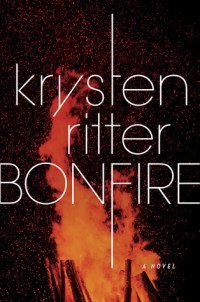
33876540Book: “Bonfire” by Krysten Ritter

Publishing Info: Hutchinson, November 2017

Where Did I Get This Book: eAudiobook from the library!

Book Description: Should you ever go back?

It has been ten years since Abby Williams left home and scrubbed away all visible evidence of her small town roots. Now working as an environmental lawyer in Chicago, she has a thriving career, a modern apartment, and her pick of meaningless one-night stands.

But when a new case takes her back home to Barrens, Indiana, the life Abby painstakingly created begins to crack. Tasked with investigating Optimal Plastics, the town’s most high-profile company and economic heart, Abby begins to find strange connections to Barrens’ biggest scandal from more than a decade ago involving the popular Kaycee Mitchell and her closest friends—just before Kaycee disappeared for good.

Abby knows the key to solving any case lies in the weak spots, the unanswered questions. But as Abby tries to find out what really happened to Kaycee, she unearths an even more disturbing secret—a ritual called “The Game,” which will threaten the reputations, and lives, of the community and risk exposing a darkness that may consume her.

With tantalizing twists, slow-burning suspense, and a remote, rural town of just five claustrophobic miles, Bonfire is a dark exploration of the question: can you ever outrun your past?

Review: Many people associate Krysten Ritter with her version of Jessica Jones, but for me she’s always going to be the tragic, manipulative, and doomed drug addict Jane Margolis from “Breaking Bad”. These are two heavy characters, and Ritter has the chops to deliver their stories with a lot of complexity, humanity, and darkness. And now you can add ‘author of a heavy and dark thriller novel’ to her list of accomplishments.

giphy-4
Keep it up, queen! (source)

I knew that she wrote a book called “Bonfire”, but for whatever reason never got around to picking it up. I’m kind of kicking myself now, given that it has a few elements that I really like, such as small town conspiracy, mean girls, and the potential ill doings of the corporate world. That sure sounds like a healthy mix of ‘things that appeal to Kate’. When I saw that it was checked in in eAudiobook form, I downloaded it and dove right in.

“Bonfire” has some set ups that we’ve seen before in these gritty woman-centered thrillers. Our protagonist, Abby Williams, is returning to her small town of Barrens, Indiana that has only given her bad memories. She was tormented by the resident mean girls, her father was a zealous and abusive drunk, and her mother died when she was a kid. You probably won’t be surprised to find out that she’s still fixated on the past, especially on the disappearance of her ex-best friend turn tormenter Casey. Casey made Abby’s life a living hell, but then vanished off the face of the Earth after graduation, leaving everyone to assume she needed to get out of the small town scene but quick.The longer Abby spends in Barrens, the more unhinged and emotionally compromised she gets, a mix of bad memories, trauma, and her assignment being perhaps more than she anticipated. Throw in a vague love triangle with the former high school golden boy and the former high school outcast, and you have pretty standard fare. I liked Abby quite a bit, as while she was a train wreck (the trope that I’ve long grown tired of in these books), she is also relatable and just enough put together that she didn’t feel flat or two dimensional. I also found her to be a more realistic train wreck than I’ve seen in other books that are similar, as I completely believed her emotional regression when she returns to the town that has left her with so much trauma. She was by far the most complex character of the book, and while I would have liked to have seen a little more oomph from the others, ultimately this is her story. I think that Ritter tried to make a couple of the antagonistic side characters more nuanced, but she didn’t achieve it for me. Perhaps that’s just because they were both so reprehensible based in my own ethical and moral standards that I couldn’t cut them slack, and others would be able to. Not I.

What made “Bonfire” stand out from other books like it is that while the main conflict is, certainly, on a missing person, there is also the theme of corporate wrongdoing and conspiracy. Abby has been sent as a lawyer to investigate Optimum, a large plastics corporation that has brought a lot of money and jobs into Barrens. They have also potentially been illegally dumping waste into the town reservoir, and therein poisoning the citizens. Ritter brings up the fact that a lot of people in town don’t want the investigation, and while it seems like that would be unimaginable she does a really good job of showing how much Barrens, and many small towns, rely on large corporate interests, even if there are terrible costs. Since Barrens was on the brink of collapse before Optimum came in, the question of its future would be up in the air if a huge scandal would drive the corporation into destitution. I really liked how that upped the stakes for all the characters in different ways, and how it shows that some things are bigger than just personal issues between individuals. 

“Bonfire” was a mostly satisfying debut novel from Krysten Ritter. Should she continue to write books, I will almost certainly make sure to pick up whatever she comes out with next. You’ve come a long way from your “Gilmore Girls” stint, baby!

Rating 7: While some of the broader themes and tropes we’ve seen before, “Bonfire” had some stand out plot points and a pretty enjoyable protagonist.

Reader’s Advisory:

“Bonfire” is included on the Goodreads lists “If You Liked Gone Girl, Try…”, and “Best Female Driven Mysteries”.

Find “Bonfire” at your library using WorldCat!