Kate’s Review: “Queer As All Get Out”

This post may contain affiliate links for books we recommend.  Read the full disclosure here.
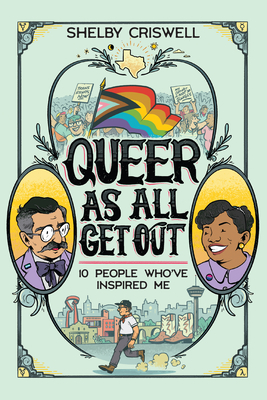
Book: “Queer As All Get Out: 10 People Who’ve Inspired Me” by Shelby Criswell

Publishing Info: Street Noise Books, October 2021

Where Did I Get This Book: I received an eBook from the publisher

Where You Can Get This Book: WorldCat.org | Amazon | Indiebound

Book Description: This graphic novel paints a picture of the lives of 10 specific LGBTQIA people from history, framed by the personal struggles of the author to find acceptance and to carve out a meaningful life as a genderqueer person. Each chapter focuses on a different relatively little-known historical character, presented within the context of the author’s own life. Shelby Criswell’s art is fun and engaging and brings a comic book feel to this enlightening and important subject matter.

Review: Thank you to Street Noise Books for sending me an eBook of this graphic novel!

In honor of Street Noise Books’s 5th Anniversary in publishing, they were kind enough to ask if I would like to help celebrate this achievement with them by highlighting one of their titles from the past five years. I was absolutely into this idea, as I really enjoyed the other works they’ve sent me and because I love the focus on political and social conscious themes. So today I bring you the graphic novel memoir/history book “Queer As All Get Out: 10 People Who’ve Inspired Me” by Shelby Criswell, a book about important queer people in history who have kind of been lost or forgotten to mainstream history as time has gone on. I was very eager to dive into this book, and I was very, very impressed by it.

As a history based graphic novel, this is a great read. While I had heard of a few of the people that Criswell highlights, there were so many that I had absolutely no clue existed even though their contributions and achievements are impressive and impactful. They stories are separated into different sections interspersed with Criswell’s own perspectives of being an out queer person (more on that in a bit), and you can tell that there was a lot of research and a lot of care put into telling these peoples stories correctly and respectfully. From people like Magnus Hirshfeld to Nancy Cárdenas to We’wha and more, the contributions range from the arts, medicine, politics, music, science, and it’s so comprehensive without feeling overwhelming or overstuffed. Criswell clearly did their homework and provides great overviews of these important figures in queer/LGBTQIA+ history, but goes even a step further and has an extensive bibliography for readers to do even more delving if they so choose. I learned so much and it was always very accessible and never felt overwhelming with information.

But I also I really enjoyed how Criswell managed to tie their own story as a queer person living in San Antonio into a really well done exploration of queer people in history who have been overlooked for so many years. Representation is so important for people to be able to see themselves in stories and history, and for far too long many marginalized groups didn’t get as many examples of people like them to be able to see and resonate with. Not only do we get these great minibiographies, we also get the story of a queer person who is trying to figure out their own self, and how these people who have been largely ignored or forgotten are being remembered and being inspirational in their journey of self-discovery. It’s a great way to show the importance of representation in a personal way that the reader can see first hand, and I thought it never detracted from the history bits, which was really great to see.

“Queer As All Get Out” is a great history book, and I mean that not only for LGBTQIA+ history, but also just history in general. The research is there, the facts are accessible, and the point is clear. I definitely recommend it.

Rating 9: An illuminating history of queer and trans people who have contributed to culture and society but have been lost to history, “Queer As All Get Out” is a great history book, LGBTQIA+ or otherwise.

Reader’s Advisory:

“Queer As All Get Out” is included on the Goodreads lists “Reading Rainbow – Queer Graphic Novels”, and “Books for Baby Queers”.
Kate’s Review: “Night of the Grizzlies”

This post may contain affiliate links for books we recommend.  Read the full disclosure here.

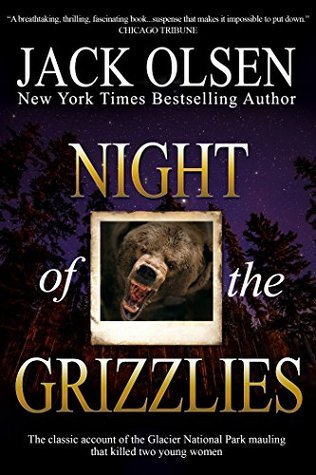
Book: “Night of the Grizzlies” by Jack Olsen

Publishing Info: G.P. Putnam’s Sons, June 1969

Where Did I Get This Book: I own it on Audiobook.

Where You Can Get This Book: WorldCat.org | Amazon

Book Description: Jack Olsen’s true account, traces the causes of the tragic night in August 1967 when two separate and unrelated campers, a distance apart, were savagely mangled and killed by enraged bears. 

Review: Given that I have tried to read more non-fiction this year, I thought that it could be fun to devote one day of Horrorpalooza to a horror story that is true. After all, true stories can be scarier than fictional ones, and while I didn’t really want to do a true crime story for Halloween as it seemed a LITTLE ghoulish, I was inspired by the Tooth and Claw Podcast to instead do a book about the horrors of nature. I decided to go with “Night of the Grizzlies” by Jack Olsen, which is the story of two horrifying grizzly bear attacks in 1967 in Glacier National Park, in which two women were brutally killed by two separate bears in two separate incidents on the same night. It’s probably one of the more well known American animal attack stories, and certainly one of the most well known when it comes to grizzly bears, and it had been on my list for a long time. After listening to the Tooth and Claw episode about the attacks, I decided that the time to read it had come.

“Night of the Grizzlies” is very straight forward in its narrative, telling the story of the two grizzly attacks in Glacier National Park in that one evening, starting with bear incidents that went generally ignored in the park in the weeks leading up to it, and then focusing on the night of the attacks itself, ending with the aftermath. We follow different people and the roles that they play, from naturalists who work for the park to other visitors to the Chalet to park rangers to the victims themselves. Olsen isn’t particularly sensational with his language and storytelling, though he does make the story very easy to read and incredibly gripping. I knew the story going in, but still found it engaging and suspenseful. I liked how he would follow different characters and give us their backgrounds, and I felt like I got to know them without him making any assumptions or taking liberties in their stories. It’s written in a way that is very narrative non-fiction, and it was a quick read that kept at a brisk pace. The stories of the two women killed by these bears are deeply upsetting at their core, as their deaths were shocking, violent, and probably due to the way that the park would throw garbage out for the grizzlies to feed them, which made the bears not only unafraid of humans, but also associating humans with food sources. I also appreciated that before we even get to that story, Olsen gives a lot of straight up facts about grizzly bears not only in Glacier, but in the United States, and the history of them being encroached upon by huge throngs of humans as colonizers moved west and started to spend more and more time in their habitats without having any clue on how to do so safely.

But something to keep in mind about this book is that it is almost sixty years old, and therefore it’s a BIT out of date when it comes to the facts about nature, bear behavior, and other scientific things. There is also some outdated language, and I ALSO felt that Olsen may have been a little harsh on the National Park Service as a whole when it seems like Glacier’s lax policies about bears and feeding bears garbage were a Glacier problem versus the Park Service as a whole. Definitely don’t let bears eat garbage, people. And I will say that that the National Parks do a GREAT job of being informative about the fauna in the parks and how to be safe around them. This is really just a matter of reflecting the time that it was written, and should be absorbed with that in mind. AND ALSO, Olsen sure seems convinced that the rangers killed both bears responsible for the attacks, but I am NOT in agreement based on what we know now about bear behavior and even based on what they found out about the bear after its death. But still, I did find myself thinking perhaps an updated edition could be good, though the demand is probably not exactly clamoring for that…

All in all I found “Night of the Grizzlies” to be absolutely harrowing, interesting, and a scary true story that just solidifies my ‘no thanks’ approach to camping. I’m glad I finally read it!

Rating 7: A gripping and straightforward timeline of the infamous bear attacks at Glacier National Park that changed ideas about the grizzlies there, “Night of the Grizzlies” is well done, thought also a bit outdated.

Reader’s Advisory:

“Night of the Grizzlies” isn’t on any relevant Goodreads lists (the one I found was a general ‘bears’ list and had the likes of “Little Bear” and “The Berenstain Bears”), but it would fit in on “Animal Attacks”.

Kate’s Review: “Welcome to St. Hell”


This post may contain affiliate links for books we recommend.  
Read the full disclosure here.

Book: “Welcome to St. Hell: My Trans Teen Misadventure” by Lewis Hancox

Publishing Info: Graphix, June 2022

Where Did I Get This Book: I own it.

Where You Can Get This Book: WorldCat.org | Amazon | Indiebound

Book Description: A groundbreaking memoir about being a trans teen, in the vein of FUN HOME and FLAMER… and at the same time entirely its own.

Lewis has a few things to say to his younger teen self. He knows she hates her body. He knows she’s confused about who to snog. He knows she’s really a he and will ultimately realize this… but she’s going to go through a whole lot of mess (some of it funny, some of it not funny at all) to get to that point. Lewis is trying to tell her this… but she’s refusing to listen.

In WELCOME TO ST. HELL, author-illustrator Lewis Hancox takes readers on the hilarious, heartbreaking, and healing path he took to make it past trauma, confusion, hurt, and dubious fashion choices in order to become the man he was meant to be. It’s a remarkable, groundbreaking graphic memoir from an unmistakably bold new voice in comics.

Review: I remember that last year at some point I found myself in St. Paul all by my lonesome, and I decided to check out my favorite Twin Cities book store The Red Balloon Bookshop. It focuses on children’s and young adult literature, though you can find adult lit there too. I like supporting them as much as I can, and decided to treat myself to a spontaneous book purchase. Since I’m not a spontaneous person this kind of winging it can stress me out, but pretty quickly I saw “Welcome to St. Hell: My Trans Teen Misadventure” by Lewis Hancox. I had not heard of it but decided this was the spontaneous purchase! And then I let it sit on my shelf for awhile, as I tend to do sometimes. But then I decided to pick it up on a whim, and once I started, I was kicking myself for waiting for so long.

This is a pretty straight forward story, following Lewis Hancox as he tells us his experience of being a trans teenager before coming out and fully realizing his gender identity, starting as a tween in 1999 and going through the beginning of his transition years later. I didn’t know what to expect about this book, but what I found was a very personal and in a lot of ways very hopeful and optimistic story as Lewis, then known as Lois, slowly realizes his transness. The device used is having present day Lewis visiting and dipping in on past Lois, explaining the context of what he was going through at the time and assuring Lois that things will ultimately be alright. It’s a fast read, and I found it very readable and basically devoured it in one evening. It’s not all optimism and joy, as Hancox did have some struggles with dysphoria and an eating disorder during the times he was really trying to make his body disappear, but I appreciated that we also get to see the close friendships he had at the time, as well as his at times stumbling but ultimately accepting family as he explores and reveals his identity. It’s made clear that in his case Hancox always knew that he wasn’t a girl, even if he couldn’t really untangle those feelings for awhile, and seeing that journey on the page, with a lot of supportive people around him, is such an important story, especially for trans teens who may be looking for assurances or a mirror into their own experiences. It’s also a great example of showing how Hancox had not only a loving and in place support system (many of whom are still in his life today), but also how once he DOES get the gender affirming care he needs its a game changer. Again, Hancox is honest about some of the harder things that he had to go through to get there, but there is so much hope and joy in this memoir that it feels like an important read as well as an enjoyable one.

This was also an incredibly funny memoir at times, as Hancox has such a wry sense of humor and can find the funny bits in his experiences as he figured out his true self. There were so many moments that had me chuckling out loud as he either has a sarcastic quip, or how he presents his mother at times, or even just the really relatable teenage moments of awkwardness and insecurity (assuredly magnified in his case has he wasn’t out as trans yet, and in many ways hadn’t really figured it out yet). There was one particular panel involving over-plucked and a bit too high eyebrows that were SO OF THE TIME it was absolutely hysterical to see. Even though Hancox isn’t at all afraid to be honest about some of the real struggles during this time, the tone is always held afloat because of this engaging sense of humor.

And finally, the art. I wasn’t sure WHAT I thought about the art at first, but as the story went on its simplicity really added to the story because it made it so that the story itself was at the forefront. By the end of it I really liked the artwork.

(source: Graphix)

“Welcome to St. Hell” is a great memoir that is so important for this moment where trans people are being targeted and Othered. It’s a well done story with a lot of heart, but it also shows just how crucial acceptance and gender affirming care can be for trans youth, while also being super relatable. I quite enjoyed this one.

Rating 8: A personal, candid, and at times deeply humorous account on being able to live your truth and the journey along the way, “Welcome to St. Hell” is a must read graphic memoir.

Reader’s Advisory:

“Welcome to St. Hell” is included on the Goodreads lists “LGBT!+ Comics and Graphic Novels”, and “Books for Baby Queers”.

Kate’s Review: “Feeding Ghosts”

This post may contain affiliate links for books we recommend.  Read the full disclosure here.

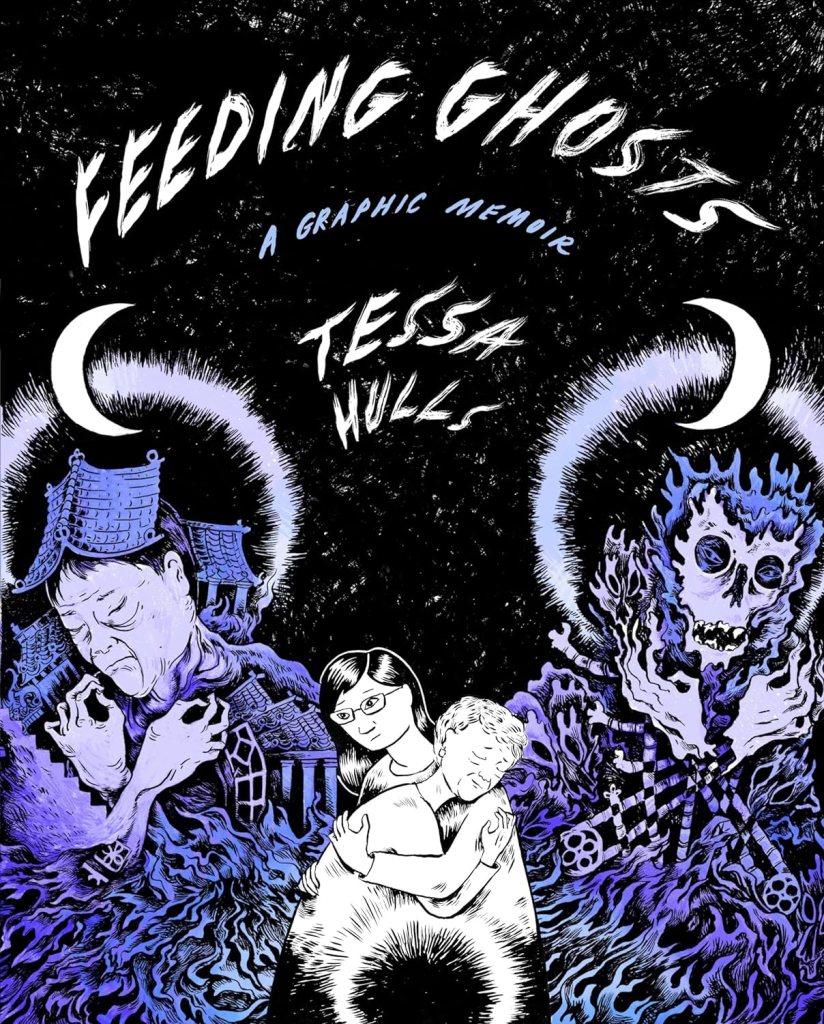
Book: “Feeding Ghosts: A Graphic Memoir” by Tessa Hulls

Publishing Info: MCD, March 2024

Where Did I Get This Book: The library!

Where You Can Get This Book: WorldCat.org | Amazon | Indiebound

Book Description: In her evocative, genre-defying graphic memoir, Tessa Hulls tells the stories of her grandmother, Sun Yi; her mother, Rose; and herself.

Sun Yi was a Shanghai journalist caught in the political crosshairs of the 1949 Communist victory. After eight years of government harassment, she fled to Hong Kong with her daughter. Upon arrival, Sun Yi wrote a bestselling memoir about her persecution and survival, used the proceeds to put Rose in an elite boarding school―and promptly had a breakdown that left her committed to a mental institution. Rose eventually came to the United States on a scholarship and brought Sun Yi to live with her.

Tessa watched her mother care for Sun Yi, both of them struggling under the weight of Sun Yi’s unexamined trauma and mental illness. Vowing to escape her mother’s smothering fear, Tessa left home and traveled to the farthest-flung corners of the globe (Antarctica). But at the age of thirty, it starts to feel less like freedom and more like running away, and she returns to face the history that shaped her.

Gorgeously rendered, Feeding Ghosts is Hulls’ homecoming, a vivid journey into the beating heart of one family, set against the dark backdrop of Chinese history. By turns fascinating and heartbreaking, inventive and poignant, it exposes the fear and trauma that haunt generations, and the love that holds them together.

Review: I sometimes find a book that doesn’t exactly fit the expectations I have based upon the circumstances in which I found it. “Feeding Ghosts: A Graphic Memoir” by Tessa Hulls is a great example of that, as I saw it for the first time on the social media feed of horror influencer Sadie Hartmann, aka Mother Horror. Since she is such a huge presence in the horror lit community I assumed that it was a horror graphic novel (and I mean, the word ‘ghosts’ in the title added to that). But when I did research on it, I realized that it wasn’t a horror story, but a story about three generations of Chinese and Chinese American women, and the trauma that is passed down between the three of them. Sure it wasn’t a horror novel, but the premise still very much intrigued me. So I got it from the library, thinking I’d work through it pretty fast. Little did I know that it would be one of the harder reads of 2024. But not in a bad way by any means.

So I’m immediately going to clarify what I mean by ‘harder’, because I know that it makes it sound like a chore to read. And it is by no means that. When I say harder I am more talking about two things. The first is that this is a VERY dense book. Like on the page, there are SO MANY WORDS for a graphic novel. The most recent graphic memoir I read before this was “Worm” and I was able to read that in one night. That was NOT the case for “Feeding Ghosts”, as Hulls wants to tell three individual stories of herself, her mother Rose, and her grandmother Sun Yi, as well as the story of their relationships due to the trauma that is passed down through them, AS WELL AS a compact history of China in the 20th Century and how that influenced Sun Yi and Rose. The other is that the subject material is very, VERY heavy, with lots of themes that are very difficult, and Hulls approaches them with a matter of fact cadence and tone. Sun Yi was living as a reporter in Shanghai when the Communist Party took over, and after giving birth to Rose out of wedlock (and with a foreigner, as Rose’s father was a Swiss diplomat), and being an undesirable person for other reasons on top fo that, the new government spied on, intimidated, harangued, and harassed her until she and Rose could escape to Hong Kong. Shortly thereafter Sun Yi wrote a memoir speaking out against the Communists, and then had a severe mental breakdown that left Rose to her own devices in a boarding school, and then as a caregiver after they moved to America. In turn, Rose raised her own daughter Tessa with a lot of fear, anxiety, and a clinging fear of losing her to mental illness, which in turn pushed Tessa away and gave her her own set of traumas. Tessa writes this memoir with lots of honesty as to all the things that all of them went through, and how trauma and mental illness can keep reverberating through generations and progeny. With the combination of the jam packed pages and some VERY heavy themes, it took me longer to get through this than I anticipated. But again, that’s not a bad thing. I appreciated the care and context that Hulls wanted to give her family, as well as herself, and I thought that she did a really good job of pulling it all together, as well as allowing herself vulnerability to open up about some very tragic truths about her family history that is still present to this day. It’s quite the achievement, and I found it to be deeply fascinating and moving.

I also quite enjoyed the way that Hulls weaves in the history of 20th Century China into this tale, as so much of that time period had an effect on Sun Yi, and in turn Rose and Tessa down the line. She does a good job of laying out the timeline from the jump as almost an outline, and then diving deeper into the various parts of it, including the invasion of Japan to the Communist Revolution to the Great Leap Forward, and showing how these events shaped Sun Yi’s life, and the repeated traumas in all probability led to her complete mental breakdown that she never recovered from. It’s by no means a deep dive into this time period or the events, but she does make them very accessible and takes some pretty complex moments and parses them out without disrupting the flow of the story of her family. Lord knows I don’t know that much about this time period outside of learning about it for a unit when I was in high school, and I liked having the basics laid out. It’s also so important to the overall story I really like how she made sure it was all there, even if it did contribute to the aforementioned denseness.

All in all, “Feeding Ghosts” is a deeply personal and moving memoir, a magnum opus for an author who was trying to untangle some complicated histories in her family. If you like memoirs, this is absolutely one to check out.

Rating 8: An emotional memoir about cycles of trauma that went through three generations of women, “Feeding Ghosts” is dense, deeply personal, and very well done.

Reader’s Advisory:

“Feeding Ghosts” is included on the Goodreads list “Memoirs Published in Year: 2024”.

Kate’s Review: “Miracle in the Andes”

This post may contain affiliate links for books we recommend.  Read the full disclosure here.

Book: “Miracle in the Andes: 72 Days on the Mountain and my Long Trek Home” by Nando Parrado

Publishing Info: Broadway Books, May 2007

Where Did I Get This Book: I own it.

Where You Can Get This Book: WorldCat.org | Amazon | Indiebound

Book Description: In the first hours there was nothing, no fear or sadness, just a black and perfect silence.

Nando Parrado was unconscious for three days before he woke to discover that the plane carrying his rugby team, as well as their family members and supporters, to an exhibition game in Chile had crashed somewhere deep in the Andes. He soon learned that many were dead or dying—among them his own mother and sister. Those who remained were stranded on a lifeless glacier at nearly 12,000 feet above sea level, with no supplies and no means of summoning help. They struggled to endure freezing temperatures, deadly avalanches, and then the devastating news that the search for them had been called off.

As time passed and Nando’s thoughts turned increasingly to his father, who he knew must be consumed with grief, Nando resolved that he must get home or die trying. He would challenge the Andes, even though he was certain the effort would kill him, telling himself that even if he failed he would die that much closer to his father. It was a desperate decision, but it was also his only chance. So Nando, an ordinary young man with no disposition for leadership or heroism, led an expedition up the treacherous slopes of a snow-capped mountain and across forty-five miles of frozen wilderness in an attempt to find help.

Thirty years after the disaster Nando tells his story with remarkable candor and depth of feeling. Miracle in the Andes—a first person account of the crash and its aftermath—is more than a riveting tale of true-life adventure: it is a revealing look at life at the edge of death and a meditation on the limitless redemptive power of love.

Review: This past winter a friend and I kind of became momentarily obsessed with the story of the Old Christians Rugby Team from Uruguay whose plane crashed in the Andes. It started when “Last Podcast on the Left” covered it and we were texting back and forth, then we both watched “Society of the Snow” separately, and THEN we got together to watch the 1992 film “Alive”, the first movie adaptation about the amazing survival story, which stars Ethan Hawke. Hawke plays Nando Parrado, one of the rugby players who eventually trekked down the mountain to find help. Mind you he did this with his companion Roberto Canessa after being on this mountain for two months, in the cold, and becoming weaker and weaker and more and more malnourished (yes yes we will talk about that in a bit). I decided that the next obvious step in my hyperfixation was to read about it, and I got Parrado’s memoir “Miracle in the Andes:72 Days on the Mountain and My Long Trek Home”. Because Nando Parrado is such a badass, and I wanted to read it from his perspective. So this Spring I finally got around to reading it, and yep. Badass.

Nando Parrado tells an immersive and intense story, jumping right in from when he awakens for a multi-day coma and finds that the airplane that was carrying his rugby team, as well as some fans and family members, has crashed in the peaks of the Andes during a flight from Uruguay to Chile. If you’ve seen “Alive” or “Society of the Snow” or have ready any of the other books about this crash, you know that for those who didn’t die on impact it was a grueling ordeal to survive, and in order to do so the remaining survivors had to resort to anthropophagy, or the consumption of the dead (it’s not cannibalism; that implies killing specifically for the food or with some ritualistic purpose). Parrado talks about the time on the mountain, his memories of his experience being brought to vivid life through his descriptions and his ruminations, reading like a Krakauer book (and I mean, the new edition has a cover that looks a LOT like the style you see on Krakauer’s books, AND it quotes him, so I’m not far off at all). I felt like I was seeing everything he was talking about, and while I was familiar with the story due to my hyperfocus on it this past winter I still found him recalling details that I wasn’t aware of, and having his insight added a whole other layer to it. Especially since he was so insistent on going by foot to find rescue almost from the jump, and was almost always one of the ones to be honest and pragmatic even in the most horrifying of situations. Parrado doesn’t mince words when it comes to how he lobbied to eat the flesh of the dead passengers because he knew that it was the only way to survive in the long term while developing a plan, and I really enjoyed how matter of fact he was about his experiences and the huge role that he played without seeming like a blowhard. Because if anything he has earned the right to be a blow hard, as their ultimate rescue was due in large part to him and his tenacity and bravery, marching down that mountain with Roberto Canessa after two months of being stranded in the middle of nowhere while their environment did everything it could to kill them. It is such an amazing story, and from his POV it’s all the more amazing.

But what struck me most about this memoir was Parrado’s candor about the way his survival experience reshaped the way that he thought about faith and God, and how he redefined (or the very least reexamined) his own faith and views of fate, destiny, and what a miracle is. While many of his teammates seemed to lean more into their faith after they were rescued, Parrado had a different circumstance than many of the people on the plane, in that he was traveling with his mother and sister, and they both died. So while many of those survivors were thinking that their survival was an act of God, Paraddo felt differently. To him, he couldn’t wrap his head around a miracle of survival not including everyone on the plane, and decided that it wasn’t going to be God to save everyone, and it had to be themselves. Parrado had the inner strength and drive to get off that mountain, and he and Canessa surely achieved a miraculous feat by traveling for MILES in the state their bodies were in, with no climbing experience, in treacherous environmental conditions, and getting a rescue mission started with their journey down, but he is very honest with being basically unable to credit a higher power with the survival. That isn’t to say that he’s a full on cynic; on the contrary, he does believe in the miracle of a human’s ability to love and how that can drive a person to do amazing things, and finding the miraculous within that. His love for his father and other sister really kept him going, as he wanted to be able to come back so that their grief, while still monumental, wouldn’t have included grieving over him along with his mother and sister. It struck me as a different conclusion than so many survival stories come with, and while those experiences aren’t bad by any means (experience is, after all, subjective), it was just fascinating seeing a different perspective that felt almost humanist at its heart, especially when so many of his compatriots feel like something divine was at work. All of this being presented in his own words makes it all the more fascinating, and his writing style is so easy to follow that I felt like I had no problem getting into his head as I was reading.

“Miracle in the Andes” is a nail biting and inspirational memoir about survival in a nearly hopeless situation, told by a man who not only lived it, but also led the way to salvation. I cannot recommend it enough to people who love survival tales.

Rating 8: An immersive and awe-inspiring (and at times devastating) tale of survival against the odds and the triumph of the human spirit, “Miracle in the Andes” is a heart pulsing memoir with lots of honestly, introspection, and hope.

Reader’s Advisory:

“Miracle in the Andes” is included on the Goodreads lists “Best True Survival Stories”, and “Non-Fiction Disaster Books”.

Kate’s Review: “Worm”

This post may contain affiliate links for books we recommend.  Read the full disclosure here.

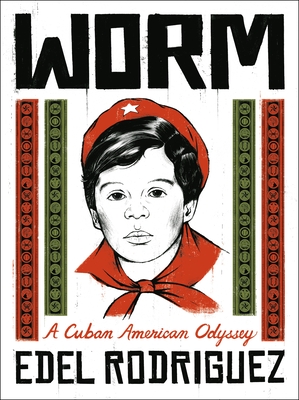
Book: “Worm” by Edel Rodriguez

Publishing Info: Metropolitan Books, November 2023

Where Did I Get This Book: The library!

Where You Can Get This Book: WorldCat.org | Amazon | Indiebound

Book Description: From “America’s illustrator in chief” ( Fast Company ), a graphic memoir of a childhood in Cuba, coming to America on the Mariel boatlift, and a defense of democracy, here and there.

When Edel was nine, Fidel Castro announced his surprising decision to let 125,000 traitors of the revolution, or “worms,” leave the country. The faltering economy and Edel’s family’s vocal discomfort with government surveillance had made their daily lives on a farm outside Havana precarious, and they secretly planned to leave. But before that happened, a dozen soldiers confiscated their home and property and imprisoned them in a detention center near the port of Mariel, where they were held with dissidents and criminals before being marched to a flotilla that miraculously deposited them, overnight, in Florida.

Worm tells a story of a boyhood in the midst of the Cold War, a family’s displacement in exile, and their longing for those they left behind. It also recounts the coming-of-age of an artist and activist, who, witnessing American’s turn from democracy to extremism, struggles to differentiate his adoptive country from the dictatorship he fled. Confronting questions of patriotism and the liminal nature of belonging, Edel Rodriguez ultimately celebrates the immigrants, maligned and overlooked, who guard and invigorate American freedom.

Review: Every once in awhile my Mom will send me a link to an article through the New York Times that has a review of a book that she thinks that would interest me. More often than not I’ve already read it or it was at least on my radar, but sometimes she will send one my way that is totally novel. In this case it was “Worm: A Cuban American Odyssey” by Edel Rodriguez. Perhaps you know of Rodriguez as an artist, specifically the artist behind the viral and infamous Trump artwork that has been on the likes of Der Spiegel and Time Magazine. Rodriguez felt it important to call out Trump on his dangerous and totalitarian tendencies, something he recognized even during the 2016 Primaries when a Trump Presidency was seen as merely a fantasy (we all know how that went). Rodriguez knows this because his family fled Cuba in the 1980s, after his family was being watched, surveilled, and threatened by the Government. “Worm: A Cuban American Odyssey” is that story, as well as story about life in a totalitarian regime, and how even a country that seems filled with idealism can fall into that trap.

Rodriguez combines modern Cuban history, starting with the Cuban Revolution, and moves through it until the 80s, tracking his family’s experience living under Castro in the town of El Gabriel. His father was a photographer while his mother stayed at home, but joined up with the local CDR, a group that was made up of Cuban citizens that would essentially ‘keep an eye’ on the community for any anti-regime activities or sentiments. Edel and his sister grew up with a meager education, and with parents who were constantly worried about watching what they said or did, all while trying to keep their family alive under pretty poor conditions due to poverty and corruption. We follow Edel through various childhood anecdotes and experiences, from the mundane involving friends and family, to the disturbing (such as the time Edel contracted a parasite that went through his legs, and the local hospital didn’t have enough medicine to treat him). As times become more dire as Edel grows older, his family make the choice to leave when Fidel allowed anyone who wanted to leave to leave so long as they could find a boat (and so long as they weren’t killed in the process whether it be by the Government or their own communities, who saw them as traitors and ‘worms’). It’s a deeply harrowing and emotional memoir, and as someone who knows very little about the Cuban Revolution and had certain ideas about Cuban immigration in my mind, this was pretty educational and eye opening (little did I know that the Cuban Immigrant community has MANY reasons to leave, not just because they were Batista loyalists). It also tracks the story of what adjusting to America was like for the family, not only through the eyes of Edel, but also through the eyes of his parents, who came with nothing and had to find their way to provide for their children in a wholly new environment. His parents are so well depicted in all of their complexities, and Rodriguez also touches a bit on how the traumas of escaping this kind of life can spill over into a new life with new challenges.

But this isn’t only a memoir about escaping a totalitarian regime: it is also a warning about the rise of totalitarianism through the eyes of someone who lived it, and how romanticizing or ignoring it is so, so dangerous. Rodriguez doesn’t only take those who romanticize Castro’s Cuba to task, he also REALLY digs into the way that America is embracing their own totalitarian tendencies, as Trump became President and his stink has infected so many other people (or perhaps just let them let their own stink loose). The connections that he draws between the life his family fled and how it all has to start somewhere is bleak and really alarming, and the way he compares the lies of January 6th and the Unite the Right Rally and other far right rage and venom to the violence he saw back home is really, really stark. And we’d best pay attention.

And the artwork is just astounding. It’s visceral and surreal in some ways, but always knows how to cut to the bone. In mostly blacks, whites, greens, and reds, it has a unique and signature style that is reminiscent of Rodriguez’s political works, but which still feels very personal. There is a LOT of text in this book, it almost feels like more of a memoir with an artistic backdrop on each page, but it never feels overwhelming and is still very easy to read.

(source: Metropolitan Books)

“Worm” is a fantastic memoir with an artistic and emotional edge. It’s so important to learn history, especially from those who lived it, and to remember that just because things feel abstract or like they couldn’t happen in your own life, that there will always be people to tell you that you may be wrong. Edel Rodriguez is here to do that.

Rating 9: A harrowing and deeply personal memoir about fleeing totalitarianism, and the looming threat of it in a new home, “Worm” is a fantastic graphic memoir from an outspoken artist.

Reader’s Advisory:

“Worm” is included on the Goodreads lists “NPR’s Books We Love 2023: Favorite Comics and Graphic Novels”, and “Memoirs Published in Year: 2023”.

Kate’s Review: “From A Whisper to a Rallying Cry”

This post may contain affiliate links for books we recommend.  Read the full disclosure here.

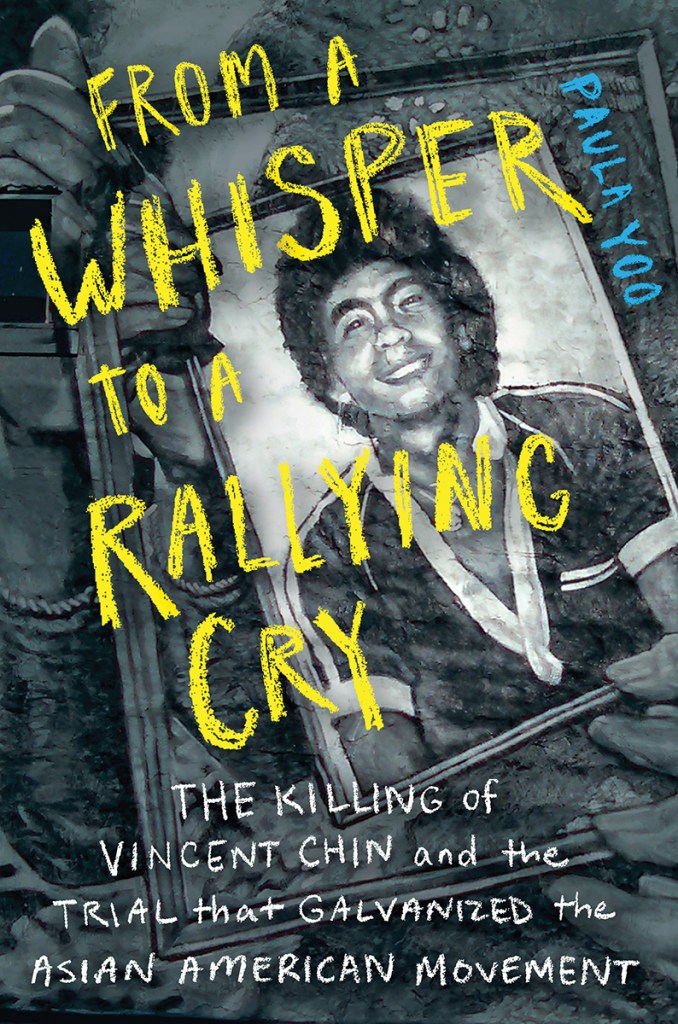
Book: “From a Whisper to a Rallying Cry: The Killing of Vincent Chin and the Trial That Galvanized the Asian American Movement” by Paula Yoo

Publishing Info: Norton Young Readers, April 2021

Where Did I Get This Book: The library!

Where You Can Get This Book: WorldCat.org | Amazon | Indiebound

Book Description: America in 1982: Japanese car companies are on the rise and believed to be putting U.S. autoworkers out of their jobs. Anti–Asian American sentiment simmers, especially in Detroit. A bar fight turns fatal, leaving a Chinese American man, Vincent Chin, beaten to death at the hands of two white men, autoworker Ronald Ebens and his stepson, Michael Nitz.

Paula Yoo has crafted a searing examination of the killing and the trial and verdicts that followed. When Ebens and Nitz pled guilty to manslaughter and received only a $3,000 fine and three years’ probation, the lenient sentence sparked outrage. The protests that followed led to a federal civil rights trial—the first involving a crime against an Asian American—and galvanized what came to be known as the Asian American movement.

Extensively researched from court transcripts, contemporary news accounts, and in-person interviews with key participants, From a Whisper to a Rallying Cry is a suspenseful, nuanced, and authoritative portrait of a pivotal moment in civil rights history, and a man who became a symbol against hatred and racism.

Review: Along with my usual New Years Resolutions of trying to get in better shape and trying to keep more on top of my household chores (both of which I have mixed results on every year), I always try to pick a reading associated resolution. And for 2024, I have chosen to try and review more Non-Fiction books on the blog, as I cover that genre, but haven’t done much with it as of late. So when I was looking for interesting books to take on, I found “From a Whisper to a Rallying Cry: The Killing of Vincent Chin and the Trial That Galvanized The Asian American Movement” by Paula Yoo, I knew that I wanted to add it to the resolution pile. I had heard of Vincent Chin, who was murdered by two white men in Detroit in 1982 after a fight, but I didn’t know the details and didn’t know the fallout. I’m here to learn, and as I was reading I couldn’t help but be reminded that, sadly, some things never change in this country.

Yoo has written a well researched and powerful book about a horrible crime that jump started the Asian American movement in the United States, in that it unified the groups across the Asian Diaspora to find commonalities after Chinese American Vincent Chin was murdered by two white men in what was considered a hate crime (as witnesses said that the perpetrators were hurling slurs at him before the beating). After the murderers plead out and received probation and a fine, outrage reverberated throughout the Asian American community across Detroit, and then across the country. Yoo presents the story in a straightforward way, and presents perspectives from many of the people involved, making for a detailed read that covers a lot of the ins and outs and nuances and complexities. I could see this book being a fantastic book for a classroom when teaching the histories of various Civil Rights movements in this country, as it is written for a teen audience so it is easy to digest, but still tackles hard topics and examines them in ways that make the reader think while learning. It’s a very hard, maddening, and frustrating read, and Yoo captures the anger and sadness as well as the important stepping stones towards hope and solidarity that Chin’s murder led to.

This is such a great resource for those who are not only wanting to learn more about the Asian American movement in the United States, but also for those who want to see how history can repeat itself when it comes to racism and scapegoating during times of turmoil and uncertainty. The connections that Yoo makes between the automobile bust in Detroit and the rise of imported cars and the animosity it fed at the time, as well as the recent spike of anti- Asian American racism and hate crimes during the COVID-19 pandemic, are stark and unable to be ignored. Yoo clearly lays out how racism thrives in times like this, and how it must be called out and laid out as unacceptable. Between this and the historical beats on the Asian American rights movement, this book would be a must read in classrooms when trying to teach these harder aspects of history. Yoo makes it very easy to understand for a YA audience, but it’s also informative and interesting for older readers as well, at least in my experience.

“From a Whisper to a Rallying Cry” is essential and difficult reading. I didn’t know so much about this story, and this was a great way to familiarize myself.

Rating 8: A compelling and devastating account of a murder that kick started a movement, “From a Whisper to a Rallying Cry” is must read social justice history.

Reader’s Advisory:

“From a Whisper to a Rallying Cry” is included on the Goodreads list “YA Social Injustice” .

Kate’s Review: “Family Style: Memories of an American from Vietnam”


This post may contain affiliate links for books we recommend.  
Read the full disclosure here.

Book: “Family Style: Memories of an American from Vietnam” by Thien Pham

Publishing Info: First Second, June 2023

Where Did I Get This Book: The library!

Where You Can Get This Book: WorldCat.org | Amazon | Indiebound

Book Description: A moving young adult graphic memoir about a Vietnamese immigrant boy’s search for belonging in America, perfect for fans of American Born Chinese and The Best We Could Do !

Thien’s first memory isn’t a sight or a sound. It’s the sweetness of watermelon and the saltiness of fish. It’s the taste of the foods he ate while adrift at sea as his family fled Vietnam.

After the Pham family arrives at a refugee camp in Thailand, they struggle to survive. Things don’t get much easier once they resettle in California. And through each chapter of their lives, food takes on a new meaning. Strawberries come to signify struggle as Thien’s mom and dad look for work. Potato chips are an indulgence that bring Thien so much joy that they become a necessity.

Behind every cut of steak and inside every croissant lies a story. And for Thien Pham, that story is about a search– for belonging, for happiness, for the American dream.

Review: June feels so long ago now, now that we are solidly in Winter here in Minnesota, but the reverberations of the ALA Annual Conference are still being felt in my reading journeys. One of the panels Serena and I attended had Thien Pham talking about his graphic memoir “Family Style: Memories of an American from Vietnam”, and I marked it on my ‘to read’ list and almost immediately put a hold on it at my local library. It took awhile for my hold to come in, but when it did I was still very much interested because I had enjoyed his contributions and couldn’t wait to read his story.

“Family Style: Memories of an American from Vietnam” is part immigrant story, part journey of self discovery, part homage to formative foods and cuisines. Pham and his family escaped Vietnam as refugees, and after spending time in a camp in Thailand they ended up in San Jose, California, with little money and few connections. Pham charts out this journey and the eventual settlement in a new country as immigrants, and while he talks about his own personal stories, he also references the stories of the lengths his parents would go to provide for their children. I liked how there was a lot of showing in this book versus telling, which is usually true about graphic novels in general, but Pham lets the reader see what his parents were going through, and what he was going through, with little commentary outside of what is going on in the scene. Pham shares difficult and scary memories, as well as lighthearted ones, and memories that feel pretty relatable to probably anyone reading it (ah the awkwardness of teenage crushes). And as Pham grows up in this new country, he starts to find new parts of his identity while trying to cling to the old ones as well. It’s a pretty familiar tale of children of immigrants or who grew up predominantly outside of their culture, but the personal notes make for a poignant reading experience.

And throughout all of it, there is the intertwining memories of food, and what that food represents to that part of his story. Whether it’s the rice ball that he savored after the small boat his family was on was attacked by pirates, or the Bánh Cuốn his mother made to make them money at the refugee camp, or the salisbury steaks Pham ate at his school in California, each memory with the food to anchor it reveals Pham’s formative years as he grows up in a new place that slowly becomes home. It’s such a testament to the way that food is a constant, and can be a gateway to love, family, memories, and how we interact with our world around us.

And finally, I like Pham’s art style. It’s not SUPER realistic, but it still conveys deep emotions in the moments that it needs to. I also liked the way he would make sure the food always had a bit of realism to it, especially when that food was reflecting that part of the story.

“Family Style: Memories of an American from Vietnam” is a lovely story about food, finding home, and finding oneself.

Rating 9: A poignant and touching (and sometimes quite funny) story about family, identity, and the way that food reflects culture, “Family Style: Memories of an American from Vietnam” is a must read graphic memoir.

Reader’s Advisory:

“Family Style: Memories of an American from Vietnam” isn’t included on any Goodreads lists as of now, but it would fit in on the list “Comics and Graphic Works on Migrants, Refugees, Human Trafficking”.

Book Club Review: “Girly Drinks”

This post may contain affiliate links for books we recommend.  Read the full disclosure here.

We are part of a group of librarian friends who have had an ongoing book club running for the last several years. Each “season” (we’re nerds) we pick a theme and each of us chooses a book within that theme for us all to read. Our current theme is song inspirations, where we were given a random song from a random genre and had to pick a book based on the song.  For this blog, we will post a joint review of each book we read for book club. We’ll also post the next book coming up in book club. So feel free to read along with us or use our book selections and questions in your own book club!

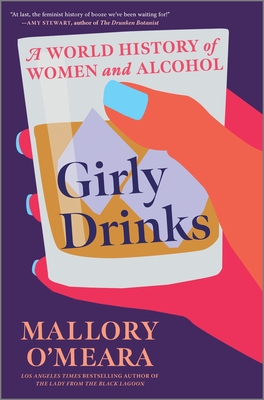
Book: “Girly Drinks: A World History of Women and Alcohol” by Mallory O’Meara

Publishing Info: Hanover Square Press, October 2021

Where Did I Get This Book: Kate owns it.

Where You Can Get This Book: WorldCat.org | Amazon | Indiebound

Song Inspiration: “Oh! Whiskey” by Jimi Goodwin

Book Description: Strawberry daiquiris. Skinny martinis. Vodka sodas with lime. These are the cocktails that come in sleek-stemmed glasses, bright colors and fruity flavors—these are the Girly Drinks.

From the earliest days of civilization, alcohol has been at the center of social rituals and cultures worldwide. But when exactly did drinking become a gendered act? And why have bars long been considered “places for men” when, without women, they might not even exist?

With whip-smart insight and boundless curiosity, Girly Drinks unveils an entire untold history of the female distillers, drinkers and brewers who have played a vital role in the creation and consumption of alcohol, from ancient Sumerian beer goddess Ninkasi to iconic 1920s bartender Ada Coleman. Filling a crucial gap in culinary history, O’Meara dismantles the long-standing patriarchal traditions at the heart of these very drinking cultures, in the hope that readers everywhere can look to each celebrated woman in this book—and proudly have what she’s having.

Kate’s Thoughts

This wasn’t the first time I have read “Girly Drinks” by Mallory O’Meara. As someone who loved “The Lady from the Black Lagoon”, and who does enjoy alcoholic beverages in moderation, I received this book for my birthday shortly after it came out and then read it shortly after that. So when our book club compatriot was having a hard time trying to think of a title that would go along with the song “Oh! Whiskey” and was talking about that at our monthly meeting, I suggested this book because I thought it would be a good fit. And I was right! Not only did it fit the theme, it provided us with lively discussion about patriarchy, misogyny, and women fighting against both (as well as provided us with a fun night of sampling some out of the book beverages we don’t usually indulge in at book club!).

Mallory O’Meara does a great job of laying out the history of women and the alcohol industry, the contributions that many have made since ancient times, and the way that misogynistic and sexists societies have tried to stifle women from partaking, creating, and making a living off of alcohol, deriding their industrious or just recreational indulgences as sinful, improper, and dangerous. Moving from ancient Egypt and Babylon through the Middle Ages all the way up through the 21st Century, she has great research, a well done narrative, and a creative hook that ties women’s parts in alcohol all together (and how men have tried to keep women out through shame and sometimes violence). Chapters are framed around individuals or groups who had influence that is still seen today, whether it’s alewives who revolutionized beer (but whose power in the industry led to persecution with their symbols of pointed hats, brooms, and cats to ward off mice from the grains becoming those of a stereotypical witch), the Widow Cliquot who basically created champagne as we know it, or even Cora Irene “Sunny” Sund, who made the tiki bar The Beachcomber an empire that influenced cocktail culture post WWII. She also explores less known stories of non-Western women, like Japanese women who worked in sake, or South African women who fought literal decades for official recognition as brewers. It’s deeply fascinating, at times rage inducing, but always empowering as O’Meara bolsters women to recognize and acknowledge their power and influence.

“Girly Drinks: A World History of Women and Alcohol” is a very entertaining and insightful read. We had a really fun time with this one! Order that cosmopolitan, ladies. And don’t let anyone shame you for it.

Kate’s Rating 8: An informative, cheeky, and interesting history about women, the alcohol industry, and fighting against misogyny and the patriarchy.

Book Club Questions

  1. If you enjoy drinking alcoholic beverages, what kinds of drinks do you like? Did this book give you any insight into your favorites? If not, do you like any mocktails as they have become more popular?
  2. O’Meara talks about women being shut out of drinking and socializing in taverns and bars and therefore having to make their own drinks and trying to socialize at home. Do you find yourself enjoying going out to bars more, or do you like spending time with friends and family at home? Again, this does not have to include alcohol.
  3. This book has many women in history who have interesting lives and backgrounds. Were there any that you owuld like to learn more about, or who you could see yourself hanging out with in a fantasy situation?
  4. What were your thoughts on the structure of the book and the different highlights in each chapter? Did any stand out to you?
  5. Were there any surprises in this book as it traces the influences of women on the history of alcohol?

Reader’s Advisory

“Girly Drinks: A World History of Women and Alcohol” is included on the Goodreads lists “Feminist Interest 2021”, and “[ATY 2022]: Food and Drink”.

Next Book Club Book: “The Wee Free Men” by Terry Pratchett

Kate’s Review: “The Raven Mother”

This post may contain affiliate links for books we recommend.  Read the full disclosure here.

Book: “The Raven Mother” by Hetxw’ms Gyetxw (Brett D. Hudson), & Natasha Donovan (Ill.)

Publishing Info: HighWater Press, September 2022

Where Did I Get This Book: I received an eARC from the publisher.

Where You Can Get This Book: WorldCat | HighWater Press | Indiebound

Book Description: Hoarders. Scavengers. Clever foragers. Bringers of new life.

Ravens have many roles, both for the land and in Gitxsan story and song. The sixth book in Hetxw’ms Gyetxw (Brett D. Huson)’s Mothers of Xsan series transports young readers to Northwestern British Columbia, where they will learn about the traditions of the Gitxsan, the lives of ravens, and why these acrobatic flyers are so important to their ecosystem.

Follow along as Nox Gaak, the raven mother, teaches her chicks what they need to survive with the help of her flock.

Review: Thank you to HighWater Press for sending me an eARC of this book!

Maintaining my stereotypical Goth girl at heart aesthetic, I have always been a huge fan of corvids of all types. Living in Minnesota that means that crows are the corvids in my backyard, but when my husband and I went to London for our honeymoon I was DESPERATE to see the Ravens at the Tower (I also bought a stuffed raven that still sits on my nightstand). When my parents went to Alaska a few years ago my Mom sent me pictures of ravens any time she caught one on her camera. So yeah, give me any and all corvid content. THEREFORE, I was particularly interested in “The Raven Mother” by Hetxw’ms Gyetxw (aka Brett D. Hudson) in this HighWater Press series that I’m doing this month. And it didn’t disappoint!

“The Raven Mother” is an educational middle grade book that puts the ecological and cultural significance of ravens in British Columbia, Canada, specifically through the context of the Gitxsan People. The story is pretty straightforward as a mother raven tends to her chicks with the help of the ravens in her community. It’s easy to understand and has a lot of good information that’s presented in a way for the audience that I felt worked really well. We not only get Gitxsan words and language interspersed in the narrative, we also get definitions of those words as well as definitions to relevant words that may be unfamiliar to younger readers. We also get a great introduction to the concept of ecosystems and ecology, with talk of seasonal changes, animal movements and migrations, and the way that animals, specifically ravens, connect to the environment they inhabit, and how that can have an effect on other things within the ecosystem. And seeing it through the seasons of a raven and her babies as they grow and change was definitely a good way for the audience to connect to it. If science was presented in such a way when I was a kid I would have really connected to it more, I think.

I also really loved the historical notes in the back of this book, as they give great context for the Gitxsan People and the areas they inhabited during the time that this book is set. The lists of the seasonal moons and the drawn map of the area where the various four clans were placed were easy to follow and the brief history is easy to understand, as well as forthright about the colonized land and space as it is defined by ‘official’ geography today. Again, it is all very approachable and I would have loved to encounter information presented in such a way when I was the target age for this book. And I really can’t stress enough how important it is to have these voices and perspectives amplified as much as possible.

And I am going to gush about the artwork in this book. I absolutely loved it. I loved the design of the animals, landscapes, and people. I loved the colors and how they pop off the page. I loved the way that everything felt like it flowed and connected across pages. I really really loved everything about it, so major props to Natasha Donovan.

I mean just look at this. GORGEOUS! (source: HighWater Press)

Filled with accessible information about ecosystems and culture, “The Raven Mother” is an enjoyable read that will be a great teaching tool for the target audience. I quite enjoyed reading it and will definitely be sharing it with my own child when she’s older.

Rating 8: An educational story about ecosystems, ravens, food webs, and how they all connect to each other, “The Raven Mother” is some solid middle grade science as well as cultural exploration.

Reader’s Advisory:

“The Raven Mother” isn’t on any Goodreads lists as of yet, but I think it would fit in on “Non-Fiction: Crows and Ravens”.