Serena’s Review: “The Snake, the Crocodile, and the Dog”

157857Book: “The Snake, the Crocodile, and the Dog” by Elizabeth Peters

Publishing Info: Grand Central Publishing, February 1994

Where Did I Get this Book: audiobook from the library!

Book Description: Now, in the seventh mystery in the series, the Emerson-Peabodys are traveling up the Nile once again to encounter their most deadly adversary, the Master Criminal, who is back at his sinister best. Amelia Peabody was unabashedly proud of her newest translation, a fragment of the ancient fairytale “The Doomed Prince.” Later, she would wonder why no sense of foreboding struck her as she retold the story of the king’s favorite son who had been warned that he would die from the snake, the crocodile, or the dog. Little did she realize, as she and her beloved husband sailed blissfully toward the pyramids of ancient Egypt, that those very beasts (and a cat as well) would be part of a deadly plot.

Review: And we’re back for my first Amelia Peabody review of the year! After coming out on the top of my favorite reads list from 2016, I had high expectations for this book and this series. But, most comforting of all, even this far into the series, I had very few worries that I would not enjoy this book as much as I have the many that have come before it. Trust has been built, and I can now look forward to each next book in this series with very little trepidation.

“The Snake, the Crocodile, and the Dog” opens with Amelia and Evelyn pining for the adventure and romance of the past. Neither is unhappy with their life, full as each is by family and profession, but both Amelia and Evelyn spend moments reminiscing for the romantic passions they remember pre-children. And from these honest and natural feelings, comes very unwanted results, at least for Amelia. After returning to Egypt for another season, Amelia is looking forward to a rare opportunity to work alone with Emerson, as Ramses has chosen to remain in England for…school (to moon over Nefret, more likely). But these simple plans are suddenly foiled when Emerson is kidnapped and, while escaping the experience with his life, loses his memories in the process, including the fact that he was ever married to a woman named Amelia Peabody.

Generally, I am very suspicious of the whole amnesia plot tactic. This probably stems from being burned in early childhood by the egregious and completely unacceptable use of an amnesia story being thrown into my beloved “Lois and Clark: The New Adventures of Superman” and essentially triggering the beginning of the end for the series as a whole. But I won’t go on another rant about that, though it’s is difficult to resist. However, here, Peters uses it as simply another foil to Amelia’s ever-lasting quest to simply get through an archeological season without murder and mystery.

Having read the series up to this point over the last few years, it was interesting being thrown back in time, essentially, to the character that Emerson was pre-Amelia. I have to say, I’m not sure he deserved her, based on his behavior here! I haven’t re-read the original story, but I have to think that this version of the character was fairly true to how he was written then, and in one word, he’s kind of an ass. I have gotten accustomed to his gruffness and easy piques of anger always being balanced by his love and respect for Amelia. But without her influence or his desire to appease her sense of rightness, these quirks suddenly start overcoming the more appealing parts of his character. However, Amelia remains steadfast to winning him back throughout it all, even if we, the readers, want to smack him up the backside of the head (though she does employ similar tactics in her “wooing”).

The mystery itself is quite a tangled web with many villains re-appearing from past books. Probably the most challenging part of the story was trying to remember these characters and keep their histories straight in my head. There is typically a large cast of characters in these books, but we’re often meeting them for the first time and thus given time to acquaint ourselves. Here, while brief introductions are given, a lot is left to the reader to fill in gaps. I feel like the suspects would have been better rounded out had these histories and motivations been a bit better documented, for those of us who don’t have an encyclopedic memory of the series as a whole.

I also enjoyed the fact that the Nefret storyline wasn’t completely dropped in this book.  Most of the previous books can be read as standalones, and that is true of this one as well, for the most part. But the adventures and outcomes of “The Last Camel Died at Noon” introduced lasting effects on the Emerson-Peabody family going forward. Not only do we have a new character whom we can only assume will be a major staple in the series in the future, but her sudden appearance and secret history would be largely commented on by society as a whole. On the more intimate character level, I loved Amelia’s struggles with adapting to being a mother figure for a daughter as well as a son, and her realization that their needs are very different. And on a larger story level, I appreciated the fact that the happenings of the previous book were paramount to the mystery we have here while still allowing the book to be read on its own. It is a tricky balance to maintain, but one that I feel Peters pulled off very effectively.

While the amnesia storyline was handled for the most part very well, this book does highlight a trend for my views on the series as a whole.  I understand that perhaps the author was concerned that the happy and stable relationship between Amelia and Emerson might come across as tired, book after book, and she felt compelled to throw wrenches into the work. But the two books were this tactic was more prominently used (this story with the amnesia, and “Deeds of the Distruber” where there is much confusion and distrust between the two) were both on the lower end of my ratings. I still very much enjoyed them, but I, at least, don’t need relationship drama from this series to remain interested and when it’s present, it doesn’t add much to the series as a whole.

But, as I said, I still very much enjoyed it and am happily looking forward to the next!

Rating 7: Relationship shenanigans aside, an interesting mystery and a nice tie-in to the previous book.

Reader’s Advisory:

The Snake, the Crocodile, and the Dog” is included on these Goodreads lists: “The Villain Was Interesting” and “Mysteries with great humor.”

Find “The Snake, the Crocodile, and the Dog” at your library using WorldCat.

Previously Reviewed: “The Crocodile on the Sandbank” and “The Curse of the Pharaohs” and “The Mummy Case” and “Lion in the Valley” and “Deeds of the Disturber” and “The Last Camel Died at Noon”
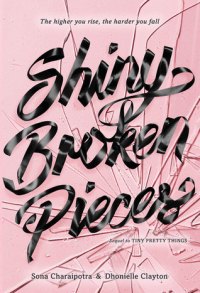
Kate’s Review: “Shiny Broken Pieces”

26198216Book: “Shiny Broken Pieces” by Sona Charaipotra and Dhonielle Clayton
Publishing Info: HarperCollins, July 2016

Where Did I Get This Book: Audiobook from the library!

Book Description: June, Bette, and Gigi have given their all to dance at Manhattan’s most elite ballet school. Now they are competing one final time for a spot at the prestigious American Ballet Company. With the stakes higher than ever, these girls have everything to lose…and no one is playing nice.

June is starting to finally see herself as a prima ballerina. However, getting what she wants might cost her everything—including the only boy she’s ever loved. Legacy dancer Bette is determined to clear her name after she was suspended and accused of hurting her rival, Gigi. Even if she returns, though, will she ever regain the spotlight she craves? And Gigi is not going to let Bette—or the other dancers who bullied her—go unpunished. But as revenge consumes her, Gigi may be the one who pays the price.

After years of grueling auditions, torn ribbons, and broken hearts, it all comes down to this last dance. Who will make the cut? And who will lose her dream forever?

Review: So here we are again, following the vindictive and somewhat sociopathic students at the American Ballet Company. This time, in “Shiny Broken Pieces”, it’s basically senior year and the stakes are higher than ever!!! Which means that, one would think, shit is about to get real, dramatics wise! And maybe we’ll get some answers regarding what happened at the end of the previous book, “Tiny Pretty Things”. Like, who killed Gigi’s butterflies? Who put glass in her shoe? Who shoved her in front of a taxi in hopes that she would be injured for life? We get some answers to all those questions and more. But I’m sorry to say that this sequel didn’t quite live up to the amazingness of the original.

But let’s start at the beginning and start with the good. Also, there are going to be spoilers for this book, because some of my issues are about certain plot points and plot twists.

I really liked that in “Shiny Broken Pieces”, Charaipotra and Clayton were perfectly comfortable exploring and expanding all of their characters to make them even more well rounded and interesting. I think that it’s a pretty brave move to take favorites and lovable characters from the first book and make them more flawed and potentially unlikable in this one, if only to make the point that damaged people can do crappy things, and that doesn’t mean they’re necessarily evil. I’m talking, specifically, about Gigi. Gigi went through some terrible crap in this first book, no doubt about it. From racism thrown her way to injuries caused by others, Gigi is angry, and rightfully so. But in her anger, she starts to lose herself and starts to make the shift from damaged, to broken, and I believe there is a distinct difference. Now we are worried that she is going to turn into a monster, much like Bette was in the first book. And Bette, too, went through some serious changes through the pain that she suffered in the first one. She’s still entitled and snooty, but in this book you see her trying to find her redemption, and the strengths of her character are drawn out and put on display. These girls, the protagonist and the antagonist, get to grow and show that they are just people, and people make mistakes. But that doesn’t mean that they can’t find atonement.

And the dramatics were back in this one, though the ante has been upped and it’s far more life or death for some of the characters. Now that Cassie, one of Bette’s victims from the first story, is back, things start to get especially gruesome at school. From peanut allergies being weaponized to trap doors opening unexpectedly, we do get a dose of the soapy thrills from the first book. But we also get some realistic conflict that maybe and every day teen could have to face. June, for example, is facing the potential of making a choice about her future. She wants to dance, but isn’t sure that she has what it takes to do so. Her eating disorder is running away with her, and many ballet companies won’t take on a girl who could be a liability in that way. Plus, she has her boyfriend now, who wants her to got NYU with him. June has to decide between a potentially unattainable/destructive dream, and a stable and loving but possibly unfulfilling future.

But now we come to the big problem I had with “Shiny Broken Pieces”, and this is where the big spoiler guns come out.

giphy
(source)

So in this book, we find out who did some of the most heinous things to Gigi in the previous book: Will is the one who pushed her in front of the car. Sei-jin is the one who put glass in her ballet shoes. And Henri, who is Cassie’s boyfriend, seduced Will and influenced him to push Gigi in the first place as part of a grand scheme to solidify Cassie’s spot as top dog when she returned to school. So, a gay character, a lesbian character, and a bi-sexual (heavily implied) character were the ones who committed the violent acts against Gigi. And they are the only representations of LGBT characters in this book.

giphy1
I… take issue. (source)

So let me say right now that as a theoretical debate, I don’t really have a problem with characters from marginalized groups being the villains in stories in general. I think that villains can be from all backgrounds and that a well rounded villainous character is a good thing in a lot of stories. I think that equity and representation can extend to antagonists as well as protagonists. HOWEVER, I think that it’s irresponsible to do this if that is the only representation of that group within the narrative. And I think that it’s irresponsible if all of the characters from a marginalized group are antagonists. So for EVERY LGBT character in this book to have done something REALLY terrible (and gosh, Henri really just kind of fit into the ‘evil and untrustworthy bisexual’ trope in all ways, looking back at it), it didn’t sit well. And yes, people like Bette, June, and Gigi also did really terrible things as the story went on as well. But at least Bette, June, and Gigi all had perspective chapters so that we could see into their motivations and into their trains of thoughts. We may have some implied moments for Will and Sei-jin, but because we don’t get their own personal sides to their stories, they definitely come off as two dimensional caricatures with very little, or no redemption. Which isn’t great. These books are awesome when it comes to portrayals of racial diversity, no doubt. But I was very frustrated with the LGBT portrayals.

And finally, the audiobook might not have been the best choice for reading this book. I did it because my stack was so high, but the narrators for the three characters were pretty lackluster. There wasn’t much consistency between them and the accents they gave some characters, and none of them were particularly emphatic or lively. It felt more like they were reading a book, and I think that audiobook narrators really need to embody the book. I wonder if I would have been a bit more forgiving of some of the problems I had with this book (excluding the LGBT representation) if I had read this book in print.

So overall, I think that “Shiny Broken Pieces” was a solid follow up to “Tiny Pretty Things” with a fairly satisfactory ending. But the caveats to that kind of overshadowed how good it could have been.

Rating 7: A pretty solid follow up to the first book, but some problematic portrayals and lackluster narration made it not as entertaining as the first book.

Reader’s Advisory:

“Shiny Broken Pieces” is included on the following Goodreads lists: “Hell is a Teenage Girl”, and “Books with Diversity”.

Find “Shiny Broken Pieces” at your library using WorldCat!

Previously reviewed: “Tiny Pretty Things”

Kate’s Review: “Good As Gone”

29975458Book: “Good As Gone” by Amy Gentry

Publishing Info: Houghton Mifflin Harcourt, July 2016

Where Did I Get This Book: The library!

Book Description: Thirteen-year-old Julie Whitaker was kidnapped from her bedroom in the middle of the night, witnessed only by her younger sister. Her family was shattered, but managed to stick together, hoping against hope that Julie is still alive. And then one night: the doorbell rings. A young woman who appears to be Julie is finally, miraculously, home safe. The family is ecstatic—but Anna, Julie’s mother, has whispers of doubts.  She hates to face them. She cannot avoid them. When she is contacted by a former detective turned private eye, she begins a torturous search for the truth about the woman she desperately hopes is her daughter.

Propulsive and suspenseful, Good as Gone will appeal to fans of Gone Girl and The Girl on the Train, and keep readers guessing until the final pages.

Review: So back in the day there was a “Law and Order: Special Victims Unit” episode called “Stranger” in which a girl who disappeared a number of years prior came back to her family, but it turned out that she wasn’t actually the girl who had disappeared. She was an imposter, and it turned out that the reason the sister was so skeptical and cruel towards her was because SHE HERSELF HAD KILLED THE MISSING GIRL ALL THOSE YEARS AGO. WHAT A TWIST.  God I love “SVU”. This is run of the mill nonsense on that show and I come back for it seventeen years in.

giphy3
I can’t even deny this. (source)

This episode is based on the real life case of Nicholas Barclay, a Texas boy who disappeared at age 13 in 1994. His family was reunited with a man saying that he was Barclay years later… But it turned out he was a fraud named Frédéric Bourdin, a French man who conned many people using false identities. If I’m being honest, when I picked up the book “Good As Gone”, I half expected that to be the case (well maybe not so far as the sister doing the deed in the first place. That’s Grade A SVU malarky right there). But instead of detached and procedural methodical Benson/Stabler realness, I got a book that was actually a bit more twisty and turny, and one that attempts at genuine emotional connection along with the mystery it puts forth.

It’s established right away that Julie may or may not actually be who she says she is. We see these mysterious deceptions through the eyes of Anna, the mother, and through ‘Julie’ herself. I kind of liked that the mystery itself wasn’t based on whether Julie was actually Julie, and that the mystery was whether or not Anna was going to figure it all out. And really, this book is more about the tragedy and trauma that a family has to endure when one of their children disappears, and how everyone copes should they suddenly come back. I think that a lot of the time we only hear about the family being reunited, but rarely do we hear about how hard it can be for everyone to readjust when so much has changed. “Room” certainly takes that theme on, and honestly, “Room” does it better. While it’s good that Gentry did make it clear that the damage is far reaching in this family, and that a potential reappearance isn’t going to just fix everything, I think that the problem for me is that, outside of younger sister Jane, I didn’t really connect to any of the characters in this book. Anna, while I have no doubt her actions are in step with how a person would react in her situation, was so cold and cruel to Jane and sometimes Tom, her husband, I just couldn’t quite get behind her completely. While I don’t doubt that the emotional trauma of losing a child is going to make anyone act in ways that aren’t always healthy, Anna didn’t grab at my sympathy heartstrings so much as put me completely off.

‘Julie”s sections were interesting, going backwards from her ending up on the family doorstep and marching back through time, showing how she got there and the experiences she had to go through. While I know this was done to humanize her and to better understand her psyche, I found myself tempted to skim through these parts. It was a neat way to explain who she was, I will fully admit that, but since she herself didn’t do much for me I wasn’t as invested as others may be. We’re meant to have a lot of mixed feelings about her, and unfortunately it was hard to recover from deep suspicion. And like Anna, I just didn’t quite feel myself attaching to her as a character, even when I saw her going through really horrible and terrible things. Ultimately, it didn’t matter to me if she was who she said she was. The moments I liked best were between her and Jane, the younger sister who always blamed herself for letting a man walk out the door with her older sister as she hid in the closet. Jane was by far the character who intrigued me most, as she has basically been emotionally neglected by her parents because she’s the child who was left behind. Her own guilt festers and manifests in self imposed isolation, and her mother’s veiled resentment throws a wall between them that neither really can push through. It really did make me think about what it must be like for the kids who are left behind in stories like this, and how they handle it.I think that had this book had some perspective chapters from Jane I probably would have enjoyed it quite a bit more.

And on top of everything, the ending (which I’ll leave a mystery for everyone so as not to spoil anything) felt so haphazardly thrown together, with a number of things tied up neatly in a number of bows, that I had a hard time swallowing it. Some things were just too conveniently explained away, and other things were not really addressed as much as I wanted them to be.

“Good As Gone” has all the elements that it needs to make a great book, but the execution left a little to be desired for me. So instead of a great read, it was a fine one. I think that it’s worth your time if you like this genre, but it may leave readers as satisfied as they wish to be.

Rating 6: Yeah, it surprised me a bit here and there, and I liked the overall focus. But I didn’t really connect with any of the characters. I wasn’t really invested in whether the girl claiming to be Julie was actually Julie, and I wasn’t completely satisfied with how it all shook out.

Reader’s Advisory:

“Good As Gone” is included on the Goodreads lists “Female Psychological Thrillers/Suspense”, and “Thrillers You Must Read!”.

Find “Good As Gone” at your library using WorldCat!

Book Excerpt and Giveaway: “Weave a Murderous Web”

Occasionally we are approached with the opportunity to promote books that may be of interest to our readers. And occasionally in lieu of a full review of the book, we will let it speak for itself by posting an excerpt from it. So if you like what you see in one of these excerpts, we have good news! You have the chance to win a copy of it! What could be better?

29444730Book: “Weave a Murderous Web” by Anne Rothman-Hicks and Ken Hicks

Publishing Info: Melange Books LLC, February 2016

Book Description: Jane Larson, a hot-shot litigator for a large law firm in New York City, is sucked into an unfamiliar world of divorce and child support when she helps out a friend. Jane’s discovery of the deadbeat dad’s stash of money soon unravels a web of lies, drugs, and criminal activity that keeps getting more dangerous. Soon, Jane is involved in a high stakes race to recover a missing suitcase of cash and catch the murderer before she becomes the next victim.

Notes from the Blogger:

I received a paperback copy of this book in exchange for this promotional post. I want to thank Kelsey B., who sent it to me and gave our blog this opportunity. Jane Larson is on the case, but from the somewhat unique side of coming from the lawyer’s side, in “Weave a Murderous Web”! I think that fans of mysteries will enjoy this book, which is the second in a series (“The Jane Larson Novels”). Though I haven’t read the first one, I can honestly say that I did feel like this one stood on it’s own two feet pretty well. It should also be noted that Kirkus gave this book a pretty solid review, saying that “The first person narrative delivers both caustic wit and serious reflection (source).”

For more information of the authors, you can find them on Facebook, Twitter, and Goodreads, and the third novel in the series, entitled “Mind Me, Milady” is coming this year. Mystery fans, Jane Larson may be the next mystery protagonist you love to follow! Enter the giveaway below to try and win yourself a free copy of “Weave A Murderous Web”, and read the excerpt below, including the rest of the chapter under the cut! – Kate

Click Here to Enter The Giveaway!!

Excerpt:

I was in my office at Adams & Ridge talking on the telephone when Francine entered. At the moment, my friend, Lee, was on the other end of the wire, yakking up a storm in my ear. Her rant covered already familiar terrain. My man, my David, was drifting dangerously away from me while I did nothing to win him back. As we say around the courts, Oy.

Francine tiptoed forward and placed on my desk a two-day-old copy of The Daily News opened to the item concerning Mark Samuels’ death.

“I gotta go, Lee,” I said.

While Francine waited for me, she had backed into a corner of my office, leaned against the wall, and tried to make her six feet of lanky body less noticeable. Two large metal buttons were pinned to her heavily braided cotton sweater. One read Stop Fracking New York and the other protested against the annual Canadian seal hunt with a scarlet X through an image of a baby seal whose brains had been battered to a pink pulp.

I pointed at the newspaper and gave her a questioning glance, but she quickly averted her eyes to stare at the floor.

“Have you been listening to me at all?” Lee demanded. Her voice rose to a kind of exasperated wail. “David has been dating someone. I think he may be getting serious.”

“David was born serious, Lee,” I said.

“Stop it, Jane,” she shouted so I had to hold the phone away from my ear. Even Francine raised an eyebrow. “You know what I mean.”

“I’m sorry, Lee.”

“I don’t understand why you’re taking this so nonchalantly. You know you still love him. You could get back together in a heartbeat if you’d just spend a tenth as much time on a relationship as you spend on your career.”

“I’m a lawyer, Lee. Not a—”

A sharp intake of breath followed. “Not a baby maker?” Lee demanded. Anger replaced the plaintive wail. “Is that what you were going to say?”

Would I ever admit that the word had been on the tip of my tongue?

“No. I was going to say, ‘not a librarian’, or the owner of some other nine-to-five job. The hours come with the territory, Lee. David knows that, but deep down in that wonderful heart of his, he also thinks the hours spent at the office are A-okay for the guy, but not for the girl. In any event, Martha didn’t raise her daughter to compete over a man.”

The sound of a whale breaching the surface erupted from the phone. “You’re maddening, Jane.”

“No, I’m busy,” I replied.

Lee sighed. “Well, I have to go too. Laurie is home sick and I’m taking her to the doctor. We’ll talk more later, Jane. I’m not going to sit back and let this happen to my two best friends in the world. I’m going to fight, Jane.”

“Goodbye, Lee.”

She disconnected.

Actually, I wasn’t busy at all, or I wouldn’t have spent even that much time on the phone being lectured by Lee. She’s an old friend from Columbia Law, but enough is enough.

A major litigation I had been working on had settled just a day before and the client and powers-that-be at Adams & Ridge were very happy with me—especially Seymour Ridge. The old man himself had hammered out the settlement shortly after I made the CEO of the party suing our client look like a doofus on the witness stand. So, I had some time on my hands until I was given another assignment.

More to the point, I wanted to know why Francine was still standing in my office, staring at the tips of her shoes. She was a legal assistant with the firm. I had gotten her the job. However, she didn’t work on any of my cases. That was a rule I had laid down from the beginning.

“Hello, Francine,” I said.

“Hi, Jane.” She looked up shyly, smiled her timid smile, gave a meaningful glance in the direction of the paper and resumed looking at her shoes. I had known her for so long that she was more like a relative than a friend, in the sense that one does not choose one’s relatives. She was really really shy but also effective in getting her way with me. I read the article….

Continue reading “Book Excerpt and Giveaway: “Weave a Murderous Web””

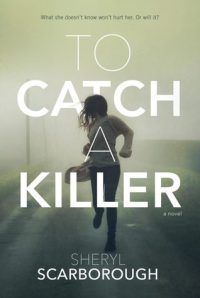
Kate’s Review: “To Catch a Killer”

29939266Book: “To Catch a Killer” by Sheryl Scarborough

Publishing Info: Tor Teen, February 2017

Where Did I Get This Book: The library!

Book Description: Erin Blake has one of those names. A name that, like Natalee Holloway or Elizabeth Smart, is inextricably linked to a grisly crime. As a toddler, Erin survived for three days alongside the corpse of her murdered mother, and the case—which remains unsolved—fascinated a nation. Her father’s identity unknown, Erin was taken in by her mother’s best friend and has become a relatively normal teen in spite of the looming questions about her past.

Fourteen years later, Erin is once again at the center of a brutal homicide when she finds the body of her biology teacher. When questioned by the police, Erin tells almost the whole truth, but never voices her suspicions that her mother’s killer has struck again in order to protect the casework she’s secretly doing on her own.

Inspired by her uncle, an FBI agent, Erin has ramped up her forensic hobby into a full-blown cold-case investigation. This new murder makes her certain she’s close to the truth, but when all the evidence starts to point the authorities straight to Erin, she turns to her longtime crush (and fellow suspect) Journey Michaels to help her crack the case before it’s too late.

Review: Back in the mid 2000s, the world was introduced to the character of Dexter Morgan in the book “Darkly Dreaming Dexter”, which in turn became a hit television series. In this book/TV series, the premise is that Dexter, a forensics lab employee in Miami, is a murderous psychopath, his psychopathy put into place when he witnessed his mother brutally murdered when he was a toddler and was left in a storage locker with her body for a couple of days. In “To Catch A Killer” similar circumstances just leaves Erin with some mild PTSD and a deep interest in forensics. Now I don’t know which situation is more true to life, and my guess is that for a lot of people it would be more a happy medium between the two. But that said, I’m less inclined to believe Scarborough’s scenario than Dexter’s.

Honestly, there were a few things in “To Catch A Killer” that I had a hard time stomaching. For one thing, it felt to me like many of the characters weren’t terribly well thought out. First of all, there’s Erin. I liked Erin enough, actually, she had a solid voice and some pretty fun snappy moments. But like I mentioned above, I just have a hard time thinking that a person who went through that kind of trauma would have more issues than a fascination with forensics and some pretty remote and just mentioned in passing PTSD symptoms. Oh, and a hard time trusting boys, leading to a dating drought in her life. While I did appreciate her quirks and her interests (as I too was a fan of “Natural Born Killers” when I was a teenager), I was never quite buying how together she was, especially since it made it sound like Rachel, her guardian, never really wanted to discuss the murder with her, or even talk about her mother at all. Along with Erin feeling a bit unrealistic, her friends were broad templates of the ‘awesome best friends’ without ever really having much depth added to them. Spam especially, who is the ‘cool gamer girl with the funky sense of style’ trope, and never really moves beyond it. Lysa also functions as a loyal but pragmatic sidekick, there to be a voice of reason and to temper down Spam’s spitfire. I did enjoy that the three of them have their own “Cheater Check” service, where they offer up their forensic investigative services to catch cheating boyfriends and girlfriends, so it wasn’t just Erin who was a science minded lady. I’ll always support girls having science minded role models in fiction. And then there’s Journey, the love interest/potential suspect. Erin knows that he couldn’t have done it, which takes on an interesting angle that could have been explored. While it may be a sort of trite angle, without it Journey is a bit watered down. He has a tragic backstory as well involving his father, but it never really elicited much emotion from me. These teens never felt like they were real teens, but a broad idea of what teenagers act like.

The mystery of ‘who killed Miss P/Erin’s Mom’ is the bigger theme of this book, and the smaller one is ‘who is Erin’s Dad’. Within the first few chapters I had pretty clearly figured out the answers to both questions, and while many red herrings were thrown at me, I ended up being right in the end. I think that had I enjoyed the journey of getting to the conclusion, had I enjoyed the characters and enjoyed how they pieced things together, I would have liked this book more overall. I don’t necessarily read books like this just for the mystery, but for the detection and the investigation. The only parts that I really enjoyed involved Erin’s uncle Victor, Rachel’s brother. He’s an FBI Agent who has written a number of books about crime investigations, and I did enjoy it when he and Erin interacted and geeked out over forensics. These scenes were both fun because of the well researched science that was involved, and because the chemistry between Erin and Victor did feel genuine. Their moments of science and tech geekery were really fun ways to introduce this kind of stuff to the reader, and I really can appreciate that.

I think that overall “To Catch A Killer” had promise, but it just wasn’t the book for me. Perhaps someone super into forensics would enjoy it more, but it didn’t quite stand on it’s own when it wasn’t talking about that stuff.

Rating 4: While it had scenes and moments of cool science and a pretty solid (if not at times unrealistic) main character, “To Catch A Killer” didn’t stand up underneath all it wanted to do.

Reader’s Advisory:

“To Catch a Killer” is fairly new and not on many specific lists, but I think that it would fit in on “Forensics: If It Doesn’t Walk, We Bring Out The Chalk”, and  “Forensic Fiction”.

Find “To Catch a Killer” at your library using WorldCat!

Kate’s Review: “Tiny Pretty Things”

18710209Book: “Tiny Pretty Things” by Sona Charaipotra and Dhonielle Clayton
Publishing Info: HarperTeen, May 2015

Where Did I Get This Book: The library!

Book Description: Gigi, Bette, and June, three top students at an exclusive Manhattan ballet school, have seen their fair share of drama. Free-spirited new girl Gigi just wants to dance—but the very act might kill her. Privileged New Yorker Bette’s desire to escape the shadow of her ballet star sister brings out a dangerous edge in her. And perfectionist June needs to land a lead role this year or her controlling mother will put an end to her dancing dreams forever. When every dancer is both friend and foe, the girls will sacrifice, manipulate, and backstab to be the best of the best.

Review: I honestly couldn’t tell you what it is, but there is something about the “Drama and mean girl bitchery happening at a boarding school/organization for some kind of art form” trope that I am a complete and total sucker for. It doesn’t necessarily HAVE to be about ballet (after all the movie “Fame” isn’t strictly about that art form and I LOVE it), but it’s just an added bonus if it is. “Center Stage” is by no means a good movie, but if I stumble upon it on the TV I am guaranteed to watch it. “Black Swan” messed me up real good and I could have taken even MORE mental anguish and paranoia from it. Because the competition of being the best within the strict and narrow world of ballet makes people do AWFUL THINGS, according to this trope, and I live for it.

giphy12
HERE. FOR. THIS. (source)

So of course “Tiny Pretty Things” was going to appeal to me. The fact that it has an underlying mystery is really just a bonus, I would have picked it up regardless. But “Tiny Pretty Things” also surprised me in a lot of pleasant ways. In a book that could have easily been about a bunch of spoiled and rich white girls (as the ballet world and culture is disproportionately white), authors Sona Charaipotra and Dhonielle Clayton instead represented a rather diverse cast of characters, and the struggles they all face trying to fit into the ballet box. And they do this seamlessly, weaving these everyday moments of frustration or microaggressions against them into the bigger picture, so their struggles are just a natural, and yet exposed, part of their day to day realities. And there are a LOT of themes here, and since I want to break them all down, we’re going to have a lot to talk about.
One of the themes this book talks about is discrimination in the ballet world, both racial and sexual orientation. Gigi, being the only black student at the school, is always being put in the ‘Other’ role by those around her, be it fellow dancers or even the administrators. Her talents and merits are always being picked apart by those around her, and there is always a question of how much she deserves the roles that she’s getting. June, too, isn’t immune to such treatment, even if it’s to a different extent. Her biracial ethnicity has left her without a group, and since she has never known who her father is she is feeling even more like she has never known her true identity. And while they aren’t given many perspective moments, it’s mentioned that there are a number of the Korean dancers at this school who are absolutely fantastic at dance… but never get lead roles, and rarely get solos, because they just don’t ‘fit’ the part. Not only are racial biases spoken of, but so are those of sexuality and the idea of masculine and feminine ideals. There are two LGBTQIA+ characters in this book, and while neither of them have perspective chapters, you do get to learn a bit about them through the other girls eyes. William is gay, and is definitely one of the best male dancers at the school. But again, because he doesn’t meet the physical (and yes, sexual preference) ideal of how a male ballerina should be, he too is denied lead roles. And Sei-Jin, June’s enemy, is a closeted lesbian. She torments June but is also terrified that June will tell the world that she’s a lesbian, therein ruining her chances, in her mind, at stardom. I really appreciated that this was touched on in this book when it easily could have just been ignored.

Along with discrimination there is the obsession with perfection and how far you go to achieve it. Be it the eating disorders that June and another girl named Liz are living with, or the Adderall addiction that Bette has, the competition runs all of these girls completely ragged. And this is why even Bette, mean awful HORRIBLE Bette, is a character that I can’t completely hate. She is certainly entitled and spoiled and bordering on psychopathic, but it is because this is all she has been raised to know, even since she was a little girl. She has seen her perfect older sister rise into prominency in the ballet world, and now their emotionally abusive and alcoholic mother wants both of her daughters to be stars. So Bette, who has been raised to be a star, is driven to the extremes beyond her Adderall addiction to achieve this perfection, and starts to spiral into madness when it just can’t quite be achieved. I really liked that this story addresses the fact that these CHILDREN are being completely put through the ringer, and that most of them aren’t going to make it in the ways that they are being pushed to do so.

Which leads us into the mystery of this book (as yes, there is indeed a mystery). Since Gigi is new and black and doing phenomenally well, someone starts harassing her and tormenting her. And while it very well could be Bette (and some of it is Bette because she’s the worst), some of these pranks and taunts are downright violent. While I may have a pretty good idea as to who it is (this is the first in a duology, so it hasn’t been revealed yet), I’m not quite certain. And I love the fact that I’m not quite certain! There are other little mysteries in this book that are a bit more obvious(such as the identity of June’s father, which I won’t spoil here, but it’s really not too hard to figure out), and while that’s fine, the mystery in itself is pretty run of the mill. The joy and power of this book isn’t in the mystery, though there are lots of pretty amazingly over the top moments of drama that surround it. The joy is definitely in the complex issues that Charaipotra and Clayton put in here, as well as, yes, the juicy juicy drama. Whenever a book about ballerinas ends up with one of said ballerinas getting glass shards left in her ballet shoes, you KNOW that I’m going to be a total sucker for it.

I really really enjoyed “Tiny Pretty Things” and will certainly be picking up “Shiny Broken Pieces” as soon as possible. It’s definitely soapy and dramatic, but it uses this premise to talk about other, very relevant problems within the ballet culture. So it’s a double win for me. Definitely pick it up if you want something fun, light, but thoughtful.

Rating 9: Steeped with soapy and sudsy drama, but also taking on some pretty relevant issues within the ballet world, “Tiny Pretty Things” is both a trashy mystery romp and a relevant commentary. A perfect quick read.

Reader’s Advisory:

“Tiny Pretty Things” is included on the Goodreads lists “Diverse Books by Diverse Authors”, and “Hell Is A Teenage Girl”.

Find “Tiny Pretty Things” at your library using WorldCat!

Kate’s Review: “The Roanoke Girls”

30689335Book: “The Roanoke Girls” by Amy Engel

Publishing Info: Crown, March 2017

Where Did I Get This Book: I received an ARC from the publisher in exchange for an honest review.

Book Description: Roanoke girls never last long around here. In the end, we either run or we die.

After her mother’s suicide, fifteen year-old Lane Roanoke came to live with her grandparents and fireball cousin, Allegra, on their vast estate in rural Kansas. Lane knew little of her mother’s mysterious family, but she quickly embraced life as one of the rich and beautiful Roanoke girls. But when she discovered the dark truth at the heart of the family, she ran fast and far away.

Eleven years later, Lane is adrift in Los Angeles when her grandfather calls to tell her Allegra has gone missing. Did she run too? Or something worse? Unable to resist his pleas, Lane returns to help search, and to ease her guilt at having left Allegra behind. Her homecoming may mean a second chance with the boyfriend whose heart she broke that long ago summer. But it also means facing the devastating secret that made her flee, one she may not be strong enough to run from again.

As it weaves between Lane s first Roanoke summer and her return, The Roanoke Girls shocks and tantalizes, twisting its way through revelation after mesmerizing revelation, exploring the secrets families keep and the fierce and terrible love that both binds them together and rips them apart.

Review: I don’t know what I was expecting when I requested this book from Librarything for a free giveaway (one again, a big thank you to both Librarything and Penguin Random House for sending me this book!). Reading the description it makes “The Roanoke Girls” sound like a pretty typical, run of the mill “Thriller with a Messed Up Female Protagonist”. Secrets happen, you can’t go home again, etcetera. While you can probably surmise what that big secret is if you read the description and have a working knowledge of the genre, I was not prepared for what I was picking up. Pretty early on the big underlying secret is revealed, but it was how Engel handled it that I was most interested in. And it was in the way she handled it that I was most impressed by this book.

Though I won’t go into many spoilers here, I am definitely going to say that this book carries some serious trigger warnings with it, regarding rape and sexual abuse.

Lane, our main character, seemingly falls into the usual trap of ‘messed up female protagonist’ of a story like this. She harbors secrets, she left town and hoped to never return (with many secrets under her belt), and she comes back reluctantly due to a mystery (being the disappearance of her cousin Allegra). Hell, she even runs into Cooper, her old boyfriend who, of course, still lives in this small town and still carries a brightly burning torch for her. She even has an ex-husband that she cheated on, therein ruining their marriage because she felt like she didn’t deserve him. But while these are, yes, certainly tropes that are all too familiar, the way that Engel writes Lane, and the things that Lane has had to endure, almost make it that I can forgive how familiar they are. Lane is by far one of the most damaged protagonists that I’ve seen in this genre, but Engel never makes her victimhood, or any of the victimhood portrayed in this book, seem tantalizing. Therefore, I never felt that it was exploitative in how it portrayed the abuse. I kind of try to measure it on a “Flowers in the Attic” kind of scale when it comes to that kind of thing. And this never felt like “Flowers in the Attic”.  And Lane’s portrayal felt genuine to me, as did Allegra’s. While they both made terrible decisions, and while sometimes they could be absolutely terrible to each other and others, I never felt like there was any judgment that Engel was throwing at them. They always came off as complex and broken, so therefore their behavior was more tragic than maddening (as I sometimes feel in books of this genre).

This story is told through three different ways to varying degrees. The majority of it is from Lane’s perspective, shifting from her summer in Kansas in the past to her return to the family farm in the present. The mystery of Allegra can be pieced together in both of these time periods, as much of what Lane sees and refers to will eventually come back to her present disappearance. The mystery itself wasn’t really all that interesting to me, as I had it pretty well figured out fairly early on. True, Engel tried to toss a couple of red herrings at the reader, making us question who the culprit was, or if there was even a culprit at all, but it’s all laid out if you’re looking for it. Part of that is because of this third perspective, that of every Roanoke Girl. There are little intermittent chapters from a different Roanoke Girl’s perspective, which are there to really emphasize how far reaching and how damaging the ‘big family secret’ is. I was a bit torn about having this all out in the open, because at first I was thinking that it kind of takes away the secrecy. But then it occurred to me that the mystery isn’t what the family secret is. That would almost be too lurid if it was the big reveal. The mystery is about how deep it has affected Lane, and if she was able to get away before it totally consumed her. The sexual abuse is no secret, to anyone, really, not even the characters. The people who are privy to it are either warped by it so they think it’s normal, or they are more inclined to blame the Roanoke Girls, or see them as tainted goods because this is the culture that we live in. The isolation is just as physical as it is emotional, as Lane has no one to turn to. So ultimately I am glad that Engel didn’t treat it like some big twist reveal. Because that would have felt like it was perpetuating it, somehow.

“The Roanoke Girls” was definitely a rough read for a lot of reasons, but I found it to be worthwhile as well. I definitely want people to approach it with caution, because it’s very upsetting. But I do think that it makes the reader think about how we view victims of prolonged sexual abuse in our current cultural climate.

Rating 8: Though it’s incredibly dark and upsetting, “The Roanoke Girls” pushes the envelope and boundaries of the usual genre conventions, and brings up legitimate questions about how our culture views and treats victims.

Reader’s Advisory:

“The Roanoke Girls” has not come out yet and is on very few Goodreads lists. However, it is on “Books About Rape and Rape Culture”, and I think it would fit in on “Family Secrets”.

Though it is not out yet, you will soon be able to find “The Roanoke Girls” at your library using WorldCat!

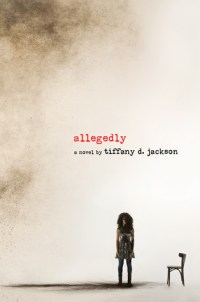
Kate’s Review & Giveaway: “Allegedly”

30037870Book: “Allegedly” by Tiffany D. Jackson

Publishing Info: Katherine Tegan Books, January 2017

Where Did I Get This Book: I own it!

Book Description: Mary B. Addison killed a baby.

Allegedly. She didn’t say much in that first interview with detectives, and the media filled in the only blanks that mattered: A white baby had died while under the care of a church-going black woman and her nine-year-old daughter. The public convicted Mary and the jury made it official. But did she do it? She wouldn’t say.

Mary survived six years in baby jail before being dumped in a group home. The house isn’t really “home”—no place where you fear for your life can be considered a home. Home is Ted, who she meets on assignment at a nursing home.

There wasn’t a point to setting the record straight before, but now she’s got Ted—and their unborn child—to think about. When the state threatens to take her baby, Mary must find the voice to fight her past. And her fate lies in the hands of the one person she distrusts the most: her Momma. No one knows the real Momma. But who really knows the real Mary?

In this gritty and haunting debut, Tiffany D. Jackson explores the grey areas in our understanding of justice, family, and truth, and acknowledges the light and darkness alive in all of us.

Review: Back in January I was in Miami, Florida for a wedding celebration. This also happened to be the same weekend that some crazy and awful shit was going down in this country constitution wise (though this could really mean anything at this point, so I’m specifically referring to the travel ban). During one of the days my husband and I were cooling our heels after family time, I was getting ramped up in an anxiety spiral, so he suggested that we try and find a book store so that I could calm my nerves a bit. We found one in walking distance from our hotel, and I went on a spree. One of the books I picked up was “Allegedly”, as I’d heard some buzz on it and was solidly intrigued by the concept. As bleak and dark as it may be. So I took it on the plane with me and tore threw a lot of it in one sitting.

I liked how unflinchingly honest and real this book was about a great deal of things. Jackson pulls no punches when describing how our criminal justice system treats those who are inside of it, and how it is especially biased against POC offenders. Mary was accused of and convicted of killing a baby, which is, yes, absolutely horrible. But it is made pretty clear from the get go that the attention and rage that is directed at her is based on a deep seated racism in our society. Mary is black, and baby Alyssa was white. Reading about crowds mobbing a NINE YEAR OLD outside a courthouse, demanding the death penalty was gut wrenching, and I was glad that it was put forth multiple times that had the races been reversed between perpetrator and victim, the media wouldn’t have caused such a storm around it. And there on Mary, a child herself, was from then on treated like an adult, an thrown into a legal system that especially punishes people who look like her. I had no doubt that Jackson is taking influence from real life instances, from a nine year old girl being held in solitary to the absolutely abysmal conditions at the group home Mary ends up at.

Not only did I feel that the portrayal of the criminal justice system was accurate, I really liked how Jackson tried to be accurate and fair to portrayals of mental illness in this book. Mary is pretty clearly suffering from some form of PTSD, as her time in prison/solitary confinement as a child has done irreparable damage to her psyche. Instead of going the route of stereotypical symptoms like flashbacks or uncontrollable rage, Mary is skittish, quick to anxiety attacks, and has a heightened sense of flight instead of fight. It’s a side of PTSD that not many people may know about, and I really appreciated that Jackson took such care in her portrayal of it. So, too, is Mary’s Momma portrayed in a pretty realistic way, as a narcissist who may be suffering from bi-polar disorder. We only get to see Momma through Mary’s eyes, but the hints and clues are there that there is definitely something off about her.

Mary herself is a wonderfully created and portrayed narrator (side note: I gotta shout out to the sly aside that one of Mary’s nicknames was Mary Bell… who was also a notorious child aged murderer in England). This book is in the first person, and since Mary has so clearly been stunted from her time in prison there are lots of bits of information that we don’t quite get. The mystery slowly starts to unfold, but you always kind of know that there are things that you are never really going to know about Mary, or her Momma, or the things that happened between them before, after, and even on the night that Alyssa died. You only get to see the various clues to this and the things going on with Ted and at the group home through this lens of a very unreliable narrator. While a lot of the time I think that sometimes this makes some things kind of obvious when it comes to twists, that by hiding certain things you make it obvious that these things are there, Jackson actually surprised me when it really counted. True, I was able to figure out a couple of things, but I feel like it was all one big magic trick that distracted me from the actual solution, so when the actual answers came I was totally knocked off my seat. To the point where I actually said “WAIT….. WHAT?!”

giphy1
BraVO. (source)

“Allegedly” is a fabulous book that I cannot recommend enough, both for the societal themes and for the well crafted mystery. Fans of YA should definitely read it, but I think that this is a GREAT example of how YA shouldn’t be dismissed. Go and get your hands on it ASAP.

Rating 9: A tense and VERY upsetting book about the modern justice system, mental illness, and attempted redemption. Though it’s definitely a hard read, “Allegedly” is an important one.

Reader’s Advisory:

“Allegedly” is included on these Goodreads lists: “Deliciously Dark”, and “YA Debuts 2017”.

Find “Allegedly” at your library using WorldCat!

But the fun doesn’t stop there! You could have your own copy of this book, as I am hosting a give-away for a hardcover copy! You know you want it. The giveaway will run until March 2nd, 2017. Please see the Terms and Conditions for more details.

Click Here To Enter The Give-away!

Kate’s Review: “The Most Dangerous Place on Earth”

28561926Book: “The Most Dangerous Place on Earth” by Lindsey Lee Johnson
Publishing Info: Random House, January 2017 (upcoming)

Where Did I Get This Book: An ARC through Random House (won on LibraryThing), for which I will give an honest review. Thank you, Random House and LibraryThing!

Book Description: In an idyllic community of wealthy California families, new teacher Molly Nicoll becomes intrigued by the hidden lives of her privileged students. Unknown to Molly, a middle school tragedy in which they were all complicit continues to reverberate for her kids: Nick, the brilliant scam artist; Emma, the gifted dancer and party girl; Dave, the B student who strives to meet his parents expectations; Calista, the hippie outcast who hides her intelligence for reasons of her own. Theirs is a world in which every action may become public postable, shareable, indelible. With the rare talent that transforms teenage dramas into compelling and urgent fiction, Lindsey Lee Johnson makes vivid a modern adolescence lived in the gleam of the virtual, but rich with the sorrow, passion, and beauty of life in any time, and at any age.

Review: I can hear it now. When “The Most Dangerous Place on Earth” is officially published, I’m going to bet that there are going to be people who grouse that it’s either unrealistic, or an unfair portrayal of teenagers. But let me tell you. I knew these kids in high school. I basically went to this high school, though mine was in the Midwest and not on the West Coast. I knew kids who were vicious and mean to those who were different to the point that it became sadistic. I knew kids who were under incredible pressure to get into good schools because it was expected of them, and that it nearly broke them. I knew kids with serious drug problems who were shielded by their wealthy parents and faced few repercussions, while kids from less advantaged backgrounds were facing expulsion for not having good enough grades. It wasn’t wealthy enough for “Cruel Intentions’… but it was a Minnesota version of ‘Cruel Intentions’.

giphy4
All Kathryn needs is a winter parka and a toque. (source)

Suffice to say, this book was kind of like a walk down memory lane, the only difference being that in MY day there was no social media to make things that much worse. Thank God. So yes. While it may not reflect the experiences of all teenagers, it sure reflects the experiences of some.

What struck me hardest about “The Most Dangerous Place on Earth” was that, while it was kind of a soapy thriller grit lit novel in some ways, it really read more like a character study of a number of privileged kids, and who they turn into after one terrible, avoidable tragedy. I liked that we were given a framework, a moment that has changed the lives of a number of kids (some tragic, some sympathetic, many horrible), and we get to see how this moment has predetermined how they are going to end up, in a way. This character study is seen through the eyes of a new, young, teacher named Miss Nichols. I think that it was a good idea to have her be the thread throughout this novel, a Greek Chorus to tie all of these other stories together, to show how they connect to each other and how they affect each other. But at the same time, much of my frustration was aimed at Miss Nichols, whose decision making skills and naïveté were a bit hard to fathom at times. It was as if her desire to understand and sympathize with these kids was being punished, which felt pretty cynical. But at the same time, it was kind of refreshing that this wasn’t just another ‘how do I reach these kids?!’ kind of moment, and that these kids can’t be reached because they don’t want to be reached, and the world has convinced them that they don’t have to be. That said, GOSH I wanted to smack Miss Nichols upside the head a few times.

I was far more interested in the perspectives of the kids, because we did get to see how their various lives were being shaped and destroyed by parental coddling/expectations, their wealth, and their seeming ability to be completely untouchable. For me the two most interesting characters we examined were Abigail and Elisabeth, both struggling with their own problems of teenage girlhood. Abigail is an honors student striving for good grades so she can go to a good school, but she has also found herself tangled up in an illicit romance with a teacher, Mr. Ellison. But Abigail was also one of the main instigators of a horrendous bullying episode in eighth grade, whose participation and needling led to the overarching tragedy of the story, and the end of her most important friendship. It was pretty fascinating to get to see all these different angles of Abigail, and while I definitely felt terrible for her in some ways (she is, after all, being manipulated by a sexual predator), she is also absolutely terrible in other ways in how she treats others. Her multifaceted personality was realistic, and a bit more in depth than some of the other awful kids she surrounded herself with. Elisabeth, however, was a surprising character altogether. So much of what we saw of her at first was from the perspective of those around her, from a moment of compassion towards a bullied classmate (with a sad face emoji in the group chat he was being harassed on), to others, including adults, thinking of her as a beautiful girl who is a sex object to all the men and boys around her. But then we find out that her aloofness is hiding her painfully shy personality, and a troubled home life that has pushed her to dark places. Her perspective chapter was the one that hurt the most to read, but in turn she was also the student that I was rooting for the most. It was just so interesting that I as the reader went in with certain expectations about her based on what other characters said, only to find someone completely different, but only when I actually had to listen to/ read about her from her perspective. It was very well played.

So in all, this is an upsetting book, but I do think that there is quite a bit of truth to it. While it shows the dark and disturbing places that high schools, especially those with unlimited access to money and little consequences to their actions, it also shows that things do go on, and that life will keep going after it for those who just hang in there, and learn from their mistakes. And again, as someone who went to a school like this, I found it to be one of the most relatable books about teenagers that I’ve read this year.

Rating 8: An entertaining and addictive look into the dangers of privilege and how bad teenagers can be to each other, and how they can blindly hurt themselves as well.

Reader’s Advisory:

“The Most Dangerous Place on Earth” is not on any lists on Goodreads yet, but I think that it would be a good fit on “The Best of Prep” and “High School Experiences”.

“The Most Dangerous Place on Earth” is not out yet and not available on WorldCat. It is expected to be published on January 10th, 2017. Thanks again to Random House and LibraryThing for providing this ARC!

Kate’s Review: “Before The Fall”

26245850Book: “Before the Fall” by Noah Hawley

Publication Info: Grand Central Publishing, May 2016

Where Did I Get This Book: The library!

Book Description: On a foggy summer night, eleven people–ten privileged, one down-on-his-luck painter–depart Martha’s Vineyard headed for New York. Sixteen minutes later, the unthinkable happens: the passengers disappear into the ocean. The only survivors are Scott Burroughs–the painter–and a four-year-old boy, who is now the last remaining member of a wealthy and powerful media mogul’s family.

With chapters weaving between the aftermath of the tragedy and the backstories of the passengers and crew members–including a Wall Street titan and his wife, a Texan-born party boy just in from London, a young woman questioning her path in life, and a career pilot–the mystery surrounding the crash heightens. As the passengers’ intrigues unravel, odd coincidences point to a conspiracy: Was it merely dumb chance that so many influential people perished? Or was something far more sinister at work? Events soon threaten to spiral out of control in an escalating storm of media outrage and accusations–all while the reader draws closer and closer to uncovering the truth.

The fragile relationship between Scott and the young boy glows at the heart of this novel, raising questions of fate, human nature, and the inextricable ties that bind us together.

Review: For the past couple of years I have been OBSESSED with the FX show “Fargo”. I love the movie, but the show has knocked it out of the park the two seasons it has been on, with a third coming up in the nearish future. I seriously can’t wait because I LOVE this show, and I love how it portrays the deep and violent underbellies of Minnesota life. While still being so damn Minnesotan.

giphy5
(source)

Little did I realize that Noah Hawley, the showrunner for that series, is also an author. I didn’t realize this until after I had checked out his most recent novel “Before The Fall”, and once I did I was pretty damn excited and even more intrigued by it. Hawley has a skill for writing and creating complex and nuanced characters, as seen in Bear and Peggy and Molly and Lorne Malvo on the show he’s in charge of. It shouldn’t be much surprise that he brought that same skill and nuance to a number of his characters in “Before The Fall”. Well, a few of them anyway.

Since the cast is characters is pretty big and their fates sealed from the get go, Hawley only has to really show a little bit of motivation for how each person got on this ill fated plane, and what role, if any, they played in it’s crash. Much of the focus, however, is on former addict and down on his luck painter Scott, an artist with a need to try and understand tragedy and accidents even before he survives a plane crash. Scott is by far the most interesting character in this book, because it is mostly through his eyes that we see the aftermath of such a tragedy. I liked Scott as a character, a pretty good guy trying to figure himself out who finds himself the center of a tragedy, and the person that everyone is trying to get answers from. He wasn’t necessarily a hero in a stereotypical sense; he did what he could in an emergency and was able to save himself and J.J., the four year old lone survivor to a media fortune. But of course the fact he isn’t perfect or the ideal heroic figure, that works against him in the eyes of some, which was a fascinating angle to take. He is a wonderful foil to Eleanor, J.J.’s aunt through his mother, who has been thrust into motherhood while in intense grief. Both Scott and Eleanor care very deeply about J.J., but neither of them really know how to adjust to their new roles that have been heaped upon them, be it hero or mother. It seemed kind of on the nose that Eleanor’s husband Doug was just the worst, more interested in dollar signs than his wife or nephew as they navigate their grief, but he just goes to show that Eleanor is strong, and deep. Perhaps his two dimensional characterization is just there to bolster her when she can stand on her own two feet, but I liked having a clear person to hate, so that’s fine!

And along with that, we see how the world tries to make sense, and tries to point fingers towards blame, and how the media (especially media with vested interests in outcomes) can drive a narrative. The media has been accused of influencing people’s opinions a lot lately, especially in the sense of putting info out there that isn’t totally true, or is flat out false. “Before The Fall” focuses a lot on this plot point, as one of the victims, David Bateman, was the head of a Fox News-esque network that is very controversial because of how it spins things or emphasizes sensationalism over facts. The face of the network, Bill Cunningham, is both incredibly stereotypical and yet one of the more intriguing character in the book, as his need to know what happened to his friend and mentor completely clouds his already super cloudy professional judgement. This of course leads to a very bloodthirsty Witch Hunt that his viewers, and other media, partake in. On one hand you feel for him because he’s very clearly in mourning, but on the other he’s such a bastard for exploiting this tragedy for ratings that you can’t help but hate him as well. So yeah, a bit stereotypical, but at the same time you kind of have to wonder about him. He never really gets a full exploration like many of the other players, but isn’t just flat and boring in his wretchedness like Doug. Friggin’ Doug.

I enjoyed how this book slowly revealed the backstories of the victims of the plane crash, showing the things happening in their immediate lives right before their deaths, or in some cases the events that REALLY put them on this path. I do think that it was kind of a fizzle out in some ways, however, as while we get all this background, so much of it doesn’t really end up being totally relevant to the plot and the outcome. But then, that in and of itself is kind of perfect, because that’s the point. Sometimes things happen, randomly, coincidentally, and these things may not actually matter in the long run, at least at the end of all things. These things may just happen but other things outside of your control can change your destiny. That’s the problem Cunningham never quite figures out, and while some may find it to be pointless, I find it poignant as all get out. And so very “Fargo”.

So while it ended up taking me on a long chase and sometimes superfluously, I did end up really enjoying “Before The Fall”. The twists and turns were a fun ride, and I liked how it ended even if it wasn’t what I have come to expect from thriller mysteries such as these. I say check it out.

Rating 8: A well characterized thriller with a lot of interesting plot paths. Though some characters are flat and obvious, many are very intricate and fascinating, and the ideas the book explored were very good.

Reader’s Advisory:

“Before the Fall” is included on these Goodreads lists: “Best Books of Secrets”, and “What She’s Reading This Summer”.

Find “Before The Fall” at your library using WorldCat!