Kate’s Review: “The Truth Beneath the Lies”

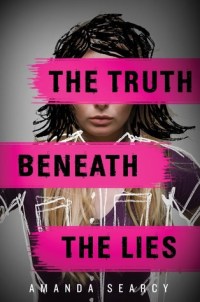
28533271Book: “The Truth Beneath the Lies” by Amanda Searcy
Publishing Info: Delacorte Press, December 2017

Where Did I Get This Book: The library!

Book Description: Fight or Flight. 

All Kayla Asher wants to do is run. Run from the government housing complex she calls home. Run from her unstable mother. Run from a desperate job at No Limit Foods. Run to a better, cleaner, safer life. Every day is one day closer to leaving. 

All Betsy Hopewell wants to do is survive. Survive the burner phone hidden under her bed. Survive her new rules. Survive a new school with new classmates. Survive being watched. Every minute grants her another moment of life. 

But when fate brings Kayla and Betsy together, only one girl will live.

Review: You may remember that I put this book on my Highlights list for December of 2017, perhaps a gamble to do since teen thrillers/mysteries can be so dicey sometimes. I feel like I either really enjoy them, or find them too cliche or unbelievable. I didn’t really know what to expect from “The Truth Beneath The Lies”, as this is Amanda Searcy’s debut novel and the description was vague as vague can be. But I decided to take a page from ABBA and took a chance on it. And I’m not totally sure if it paid off.

It took me a little time to really get into this book. The first problem was that I had to keep reminding myself which girl was Betsy and which girl was Kayla. As you will find in a fair number of mysteries and thrillers these days, “The Truth Beneath The Lies” has a unique storytelling hook (in this case, two distinct narratives that seem separate but will eventually come together to tell a larger story), and a premise and set up that initially provide more questions than answers (and since I feel that this story definitely needs a lack of answers and clarity to be effective, I’m going to try and be, like the description, as vague as possible). The problem, however, was that Kayla and Betsy had so many interchangeable elements to their stories that I really had a hard time at first with keeping them straight. I can’t tell you how many times I had to say ‘okay, which one is this, who has the burner phone and who is working at a grocery store?’ and then look at the book description again. Of the two narratives I was more taken in by Kayla’s story (and even now I had to go back and remind myself who was who), as her frustrating existence made it so her motivations and choices were clearer. While Betsy’s situation was secretive for a reason, it still made it so I was irritated with just how much we were reminded that she was in danger, without explaining why. It all makes sense, but even though it does I still found myself more frustrated than intrigued.

The big twist wasn’t too hard for me to guess either. If you know what to look for and have the ins and outs of the genre in it’s present form down cold, you will probably be able to piece it together at the same rate that I did. And while that certainly isn’t to say that everyone will, or that they will be unimpressed with it, it did take away from my personal experience of reading this. Again, I’m going to remain a bit mum on what I mean by this, because I think that this is potentially worth reading if you aren’t as old hat and cynical as I am. But also figuring out the whole puzzle early on made me question whether or not how Searcy laid the clues out, and even in how she frames major parts of this story, treaded more towards deceit rather than deception. If you read this you will understand what I mean when I say that.

But I will say that ultimately, when all was said and done, I was entertained by this book. Once the cat was out of the bag plot wise, I did want to see how things turned out for our characters, and the consequences that were going to fall upon them all. So in the end it’s not like I regret reading this book, it was just that it didn’t reinvent the wheel when it comes to thrillers, or even YA thrillers. It was perfectly acceptable, but the problem is that with thrillers with twists and turns it’s more fun to be thrilled.

Rating 6: An entertaining thriller, but the twists were a bit predictable while some of the hints treaded more towards deceit than deception.

Reader’s Advisory:

“The Truth Beneath the Lies” isn’t on many relevant (or even correct… superheros?) Goodreads lists at the moment, but I think that it would fit in on “Best Books of Secrets”.

Find “The Truth Beneath the Lies” at your library using WorldCat!

Book Excerpt and Giveaway: “Mind Me, Milady”

Occasionally we are approached with the opportunity to promote books that may be of interest to our readers. And occasionally in lieu of a full review of the book, we will let it speak for itself by posting an excerpt from it. So if you like what you see in one of these excerpts, we have good news! You have the chance to win a copy of it! What could be better?

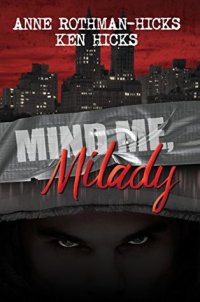
38085332Book: “Mind Me, Milady” by Anne Rothman-Hicks and Kenneth Hicks

Publishing Info: Melange Books LLC, April 2017

Book Description: Jane Larson is an attorney on the Upper East Side of New York City, and the Gentleman Rapist has chosen her to receive his calls announcing each conquest. He also reminds her in chilling terms that he will one day twist his wire around her throat and bend her to his will. 

Jane has professional and personal problems of her own, but she is forced to try to catch this monster when he stalks her newest client. Susan is a sweet young woman who cannot remember large time periods of her past and who has dreams about a prior life in which she was raped. Soon, the Gentleman escalates to murder, and Jane wonders if he was involved in Susan’s forgotten past, or if Susan is simply a means to get to Jane. Either way, Jane is caught in the deadly game of stopping the Gentleman before another woman feels the wire at her throat and hears his sinister whisper to Mind Me, Milady.

Notes from the Blogger:

Last year I was approached to run an excerpt and giveaway of the mystery novel “Weave a Murderous Web” by Anne Rothman-Hicks and Kenneth Hicks. It involved lawyer Jane Larson and a load of cash and some drug money, as well as a murky personal life for Larson herself. I really liked Jane as a character, and the giveaway was a huge success. So when Kenneth Hicks asked if I’d be interested of doing an excerpt and giveaway for the next in the series, “Mind Me, Milady,” I was more than happy to participate! Jane is back, and this time she’s on the case of a serial rapist, hoping to stop him before he strikes again. I still really enjoy Jane as a protagonist to follow, as her character is imperfect and completely relatable. I had a harder time with the mystery this time around, but that was more because of the nature of the crimes at hand and not the storytelling in and of itself. Kirkus has called this book “An engrossing, suspense-filled thriller with an intriguing protagonist” (source).  Basically, Jane is really great and keeps the reader itching for more (as someone who has many personal connections to lawyers, she speaks to my heart)!

For more information of the authors, you can find them on FacebookTwitter, and Goodreads!  Jane Larson is still a fun mystery heroine with a unique occupation you don’t always see in procedural mysteries! Enter the giveaway below to try and win yourself a free ebook copy of “Mind Me, Milady”, and read the excerpt below! Trigger warning: this scene involves violence towards a woman.

Please note that the giveaway copy of this book is an Ebook, with your choice of an ePub, Mobi, or PDF. It’s open to US entrants only and will run until March 23rd at 11:59pm EST. Good luck and happy reading! – Kate

Enter the Giveaway Here!

Excerpt:

Chapter One

It was almost noon when he looked out to the street and saw Natalie step from the cab. A familiar pounding rushed through him—a blood rush of fear, of anticipation.

She ran up the stairs as he had expected she would. She was an athlete, after all, and desperate for this apartment. Rent-controlled, one bedroom, East Side, dirt cheap. Run, Natalie, run.

On the third floor, she saw the door was open a crack and came right in. This was one of the reasons he was drawn to her—her confidence. There was not a tentative bone in her body.

“Hello?” she called. “It’s me. Natalie.” She looked around, pleased by what she saw, no doubt—floors newly sanded and stained, walls freshly painted, kitchen appliances all scrubbed clean. For the rent he had quoted her, it was more than a steal. It was highway robbery. And she was carrying cash for a promised “bonus,” as she put it, because a bribe would be so tacky.

She stepped into the bedroom and heard nothing as he slipped the wire over her lovely head, pulling it tight around her lovely neck. She struggled, but not for long. A knee pressed against the back of her legs forced her to the floor. Lovely legs.

“Mind me, Milady,” he whispered in the British accent he affected for occasions like this. “Mind the Gentleman.”

There was no choice. Denied breath, she was seconds from dying. Quickly, he placed a wide piece of tape over her eyes and another over her mouth. Two longer pieces bound her wrists and ankles. Only then did the wire slacken. Air rushed in through flared nostrils. What was she thinking? Was she grateful just to be alive? And how many more times would he have to bring her to the very edge of death before she learned who was in control?

Kate’s Review: “13 Minutes”

32768519Book: “13 Minutes” by Sarah Pinborough

Publishing Info: Flatiron Books, October 2017

Where Did I Get This Book: The library!

Book Description: Natasha’s sure that her friends love her. But does that mean they didn’t try to kill her?

Natasha is the most popular girl in school. So why was she pulled out of a freezing river after being dead for thirteen minutes? She doesn’t remember how she ended up in the icy water that night, but she does know this—it wasn’t an accident, and she wasn’t suicidal.

Now Natasha’s two closest friends, who are usually her loyal sidekicks, are acting strangely. Natasha turns to Becca, the best friend she dumped years before, to help her figure out the mystery.

At first Becca isn’t sure that she even wants to help Natasha. But as she is drawn back into Natasha’s orbit, Becca starts putting the pieces together. As an outsider, Becca believes she may be the only one who can uncover the truth…which is far more twisted than she ever imagined.

Review: One of last year’s runaway thriller hits in this country was “Behind Her Eyes” by Sarah Pinborough. Yes, it’s on my pile, I’ll get to it eventually. Even though the U.S. didn’t get their sights set on Pinborough too much until this book came out, she has many, MANY books under her belt. One of those books is “13 Minutes”. So of course once “Behind Her Eyes” got the attention it did in the U.S., the same publisher brought “13 Minutes” on over too. So THAT is how I read that one before the megahit. And I must say, even though I went in without any expectations (I didn’t realize they were written by the same author until I had already started it), I can see why people are kind of obsessed with Pinborough’s thriller writing right now. Because “13 Minutes” really sucked me in.

“13 Minutes” pretty much takes “Mean Girls” and throws it into a British crime procedural, a mix that is of course super tantalizing to the likes of me. There’s something about a Queen Bee ending up in a freezing river and then having to solve the mystery of how and why she got there. This story is told in a few different ways. We get straight up third person narrative, some first person POV, and then texts, diary entries, psychiatric notes, and news reports. These are all pretty standard these days when it comes to thriller fiction, but I liked how Pinborough carefully crafted it all together and took you down a path with lots of twists and surprises. I will happily report that a few of them actually caught me off guard. I even got that moment of ‘okay, this seems wrapped up, but there’s so much story left, so what’s going on OHBOYOHBOY’, something that I just delight in when reading a thriller novel. I feel a bit sheepish that I was so easily tricked, but Pinborough combines meticulous clue hiding and just enough unreliable narration on ALL sides that I’m not even mad that I was so totally thrown off the trail, especially since the stakes became quite high quite quickly once I realized I’d been duped.

The characters themselves, however, kind of fall into tropes that are all too familiar these days. Tasha is the mean girl who may have more depth than we expect of her. Becca is a brooding loner who tries to be aloof, but is still desperate for the affection and acceptance of her former best friend. Hayley and Jenny are both nasty and poisonous, but are also victims of Tasha’s scorn and their own insecurities. I didn’t really feel like the wheel was being reinvented with any of them, and while I was attached to Becca at least and wanted everything to be okay for her, I knew that I wouldn’t be horribly upset if it wasn’t. I wasn’t really in it for the characters as much as I was the plot and the mystery. That said, I do think that Pinborough did a pretty good job within those characterizations. I was especially taken with her writing of Tasha, who did feel like the most of complex of them all. I did also like that the book addresses that for many people the need to be accepted can make you do things that you aren’t proud of, and that being a teenager as well can make things especially messy.

But if you are in it to be taken on a fun and wild ride, “13 Minutes” will probably be a good match for you. I read it in about two marathon sittings, and I probably could have done it in one if I had the chance and time to do it. Now that I’ve found out what the big deal is about Pinborough’s thriller writing, I’m definitely going to keep an eye out for any future works that she may be bringing to the table.

Kate’s Rating 7: Though the characters were fairly standard and trope ridden for the most part, the plot and mystery itself kept me guessing and on the edge of my seat.

Reader’s Advisory:

“13 Minutes” is included on the Goodreads list “Young Adult Contemporary Thrillers 2016”, and would fit in on “If You Enjoyed ‘Gone Girl’, You Might Also Like…”.

Find “13 Minutes” at your library using WorldCat!

Serena’s Review: “Jane, Unlimited”

32991569Book: “Jane, Unlimited” by Kristin Cashore

Publishing Info: Kathy Dawson Books, September 2017

Where Did I Get this Book: ARC from the publisher

Book Description: If you could change your story, would you?

Jane has lived a mostly ordinary life, raised by her recently deceased aunt Magnolia, whom she counted on to turn life into an adventure. Without Aunt Magnolia, Jane is directionless. Then an old acquaintance, the glamorous and capricious Kiran Thrash, blows back into Jane’s life and invites her to a gala at the Thrashes’ extravagant island mansion called Tu Reviens. Jane remembers her aunt telling her: “If anyone ever invites you to Tu Reviens, promise me that you’ll go.”

What Jane doesn’t know is that at Tu Reviens her story will change; the house will offer her five choices that could ultimately determine the course of her untethered life. But every choice comes with a price. She might fall in love, she might lose her life, she might come face-to-face with herself. At Tu Reviens, anything is possible.

Review: I have a lot of thoughts on this book, on the book itself (which is of the sort that is probably best appreciated on re-reads) and on the reception of said book by the general reading public. But, without further ado: I, for one, absolutely loved the book and am absolutely baffled by the general reading public’s reception of it.

Jane parents died in an plane crash when she was a baby. They decided to sit on one side of the plane, and on that side, everyone died, On the other side, everyone lived. This choice changed Jane’s life, but led her to a happy childhood growing up with her Aunt Magnolia, a marine biologist with a general joie de vivre approach to life. Now tragedy has stuck again with the death of her beloved Aunt, and Jane finds herself aimless and alone, with only her love for umbrella-making to give her any purpose. That is until she is invited to Tu Revien, a house full of mysteries, and once again, there are important, life-changing choices ahead.

It’s hard for me to really get at this book and my reaction to it without wondering whether my prior knowledge of it affected my read. I’d like to think not, but I’m not sure. For one, I had the joy of getting to meet Kristin Cashore at ALA this last summer and hear her speak on a panel. During the panel, one librarian got up and asked if there were pages missing from her most recent book, as the librarian found it very confusing. Cashore said this was exactly what she had worried about when writing it, knowing that it was an experimental style. First, I was very embarrassed for everyone involved in this situation, as the panel was about a completely different topic and not the place for authors to be quizzed about their own works. Librarians should know better! But I won’t rant about that.

19429839_10154357686492757_3387062802618176631_n
Here I am getting my copy signed by the author! A definite highlight at ALA!

Cashore was gracious enough to explain that she started the book as a “choose your own adventure” story, which than morphed into a more traditional novel, in that it is meant to be read in a linear fashion. So, I had this information going in and to a certain extent knew what to expect. However, that aside, I do think that she did an amazing job setting up that this was where the story was headed, with no prior knowledge of this required. As I laid out in my brief plot description, the story starts out with the idea that Jane’s entire life was shaped around a completely arbitrary decision that her parents made, which side of the plane to sit on. Further, Jane and her friend, Kiran, a member of the family who owns the house and the one who invited Jane there, discuss the fact that choices can lead you to very different places in life, and you never know which choice will be the one to make the big difference.

With this premise, the story starts out slowly putting together a great cast of characters, and many mysteries for Jane to follow. This takes about 100 pages or so, which is where I’ve heard the most complaints about it being a slow read. For me, this was completely necessary work for laying a foundation for the rest of the book. In these pages, we get to know Jane, and those around her. We have mysterious disappearing art, rumors of a missing family and their children, a dog that is obsessed with a painting, and the family’s own strange history with the missing first and second wife of the father. From there, Jane chooses.

And yes, those choices have drastically different outcomes! I’m talking, genre-defying outcomes. I don’t know how I’ll categorize this book when I get to posting it, because it’s a bit of everything. We have mystery, we have intrigue, we have horror, we have sci-fi, we have fantasy. You name it! And what makes this even more excellent is the way the story reads, as, like I said, it is still laid out in a linear manner, meaning each section is meant to be read after the last. You aren’t supposed to “pick” which story to read, but go through them in the order they are presented. Through this method, you see the real genius of what Cashore has done: with each storyline, the reader has more knowledge of all the elements at play. We see characters move in and out of a scene and have more knowledge of what is going on than Jane herself, because we’ve seen that side of the story already, through a previous choice. It’s the kind of book that I’m sure is even better the second time, catching all the small details that are woven throughout all of these various outcomes. It’s simply brilliant.

Beyond this, each genre was compelling. I had my favorites, but I was impressed by Cashore’s ability at them all. The horror story line was particularly disturbing. And, not surprisingly, I enjoyed the sci-fi and fantasy plotlines the best. Most of all, I spent a ridiculous amount of timing wondering which choice I would have made, and then dissecting which plot line would be the best to choose in order to increase one’s chances of eventually encountering ALL of the mysteries, but still avoiding the horror one. Seriously, I’ve continued to think about this for like a week even after finishing the book.

And this is why I’m so baffled by the book’s general reception! Cashore’s writing is as strong as ever. Her characters are compelling, and anyone who’s read “Bitterblue,” specifically, shouldn’t be shocked by her more introspective character in Jane. And yet, on Goodreads, there are so many low stars! And look, I’m all for that everyone has their own opinion, and I’m not here to tell anyone that they’re wrong, but I do find it surprising. I think much of it is simply due to the fact that here we have an author who wrote a beloved fantasy trilogy years ago, and everyone’s been waiting with baited breath for her to re-emerge with her newest YA fantasy work, preferably in the same world. And then we got…this. Which is so completely different than the books we all loved from her before. But if an author is allowed only to write what we loved and were comfortable with before, how limiting would that be? If we only expect one kind of book from any given author simply because they wrote a good one in that mode in the past, we are doing not only them, but ourselves, a massive disservice.

I don’t particularly think this result was anyone’s fault. It’s definitely not Cashore’s, who is free to write whatever calls to her. And I can even understand fan disappointment from those who so loved “Graceling” and were wanting more of the same (for the record, I, too, loved “Graceling” and “Fire” and have my hardback copies stored lovingly on my shelves). But I do challenge readers to strive against the tendency to limit authors and our own reading habits to only the “known” and comfortable. You never know what you’re missing out on. And, let me say, had some of those DNF reviews managed to get past the first half of the book that was not the sword-and-sorcery fantasy they had expected, they might have found themselves choosing a path that included its own delightful fantasy world!

Rating 9: A criminally under-appreciated book and the answer to “what would an adult ‘chose your own adventure’ novel look like?”

Reader’s Advisory:

“Jane, Unlimited” can be found on these Goodreads lists: “Bisexual Fiction in YA” and “Derivatives of Jane Eyre.”

Find “Jane, Unlimited” at your library using WorldCat!


Serena’s Review: “A Conspiracy in Belgravia”

33835806Book: “A Conspiracy in Belgravia” by Sherry Thomas

Publishing Info: Penguin Group, September 2017

Where Did I Get this Book: bought it!

Book Description: Being shunned by Society gives Charlotte Holmes the time and freedom to put her extraordinary powers of deduction to good use. As “Sherlock Holmes, consulting detective,” aided by the capable Mrs. Watson, she’s had great success helping with all manner of inquiries, but she’s not prepared for the new client who arrives at her Upper Baker Street office.

Lady Ingram, wife of Charlotte’s dear friend and benefactor, wants Sherlock Holmes to find her first love, who failed to show up at their annual rendezvous. Matters of loyalty and discretion aside, the case becomes even more personal for Charlotte as the missing man is none other than Myron Finch, her illegitimate half brother.

In the meanwhile, Charlotte wrestles with a surprising proposal of marriage, a mysterious stranger woos her sister Livia, and an unidentified body that surfaces where least expected. Charlotte’s investigative prowess is challenged as never before: Can she find her brother in time—or will he, too, end up as a nameless corpse somewhere in the belly of London?

Previously Reviewed: “A Study in Scarlet Women”

Review:  So this is the book that I bought when I was only halfway through the first one. That’s how much I was loving what Thomas was laying down in her re-imaging of Sherlock Holmes as a young, “fallen” woman named Charlotte. With this method, I was able to put down the first book and immediately pick up the next, and I think this worked in the books’ favor, though, let’s be real, I would have loved it in whatever manner I had gotten to reading it in.

The story picks up almost immediately after the events of “A Study in Scarlet Women.” Charlotte Holmes is still very much just figuring out what her new life will be like living the charade of marketing her services through her fictionalized ailing brother, “Sherlock.” Of course, there are those who know the truth.

Mrs. Watson, Charlotte’s business partner and roommate. Livia, her sister who remains stuck in their unhappy childhood home and whom Charlotte dreams of rescuing one day through her own financial independence. Inspector Treadles, the police detective who worked with her on her first case, and is less than enthused by the fact that the “man” he had esteemed for so long turned out to be a woman, and that, through this revelation, he’s had to confront the reality that his own wife might also be more than she seems. And, of course, Lord Ingram, Charlotte’s childhood compatriot with whom she has a challenging relationship, due to his unfortunate marriage.

This story takes this already large cast of characters and blows it up even further. Most importantly, Lord Bankcroft, the Mycroft of this world and Lord Ingram’s brother, makes an appearance. In the first book we learned that he had made an offer of marriage to Charlotte in the past. And here, we see that he is just as determined, regardless of her role as “Sherlock.” In fact, as an incentive to her consideration, he provides her with several puzzles from his own work in the field of secrets and mysteries. And of course, one turns out to be more than it had seemed. On top of this, Charlotte has a new client: Lady Ingram.

I’m already halfway through a typical word count for these reviews, and I’ve just finished laying out the bare bones of all that goes on in this story. Not only is the mystery just as compelling and complicated as the first, requiring me to again page back and forth a few times to keep track of things, but the interweavings of all of the characters’ relationships and interactions became even more complicated.

I loved that we got to meet Bankcroft in this book and explore the role that he plays in this world. He also provides a legitimate temptation to Charlotte, offering her a doorway back into “acceptable society.” Even one that could offer her some of the same mental challenges that she enjoys in her current position. Through these interactions and her tackling of this case, Charlotte really has to confront what she expects and wants from her life. It’s not as simple as it could be, either, as Charlotte is not simply thinking of herself, but of her two sisters who are languishing in the unhappy and neglectful home of their parents, and who depend on her for any hope of future freedom.

I also enjoyed the continuing expansion of Charlotte’s skillset. As I said in the first review, I appreciated the fact that this version of Sherlock doesn’t come with all of his/her skills already in place. Too often versions of Sherlock seem so over-powered with their supreme abilities in literally everything that they become practically unbelievable. Charlotte is brilliant, but she still has much to learn. I particularly enjoyed the introduction of self-defense lessons taught by none other than Mrs. Watson herself, who, living a life as an actress in the more seedy parts of the world, has a firm foundation under her belt in this area. Charlotte also begins exploring the world of lock-picking and disguise, two other typical areas of expertise for a Sherlock character.

The mystery was also particularly intriguing. As I said, it was just as complicated as the first, something that I find incredibly satisfying. But because we are getting at these mysteries through more personal connections to Charlotte and those around her, I felt that it was even stronger. The mystery she stumbles upon through Mycroft’s work obviously ties into her interactions and future with him. And the mystery brought to her by Lady Ingram clearly affects her tenuous relationship with Lord Ingram. How can she maintain her friendship and loyalty to one while respecting the secrecy of a woman who has come to “Sherlock,” a man wholly unconnected with her husband?

Obviously this is further complicated by the underlying tremors of romantic feelings that exist between Lord Ingram and Charlotte. This aspect of the story is still gradually building, and as a fan of slow-burn relationships, I have loved this part of the story. The author doesn’t hand-wave away the fact that he is married and has children. He chose his wife completely on his own, and he loves his children, regardless of his failed marriage. The realities of these things are solid and not to be easily done away with simply due to his complicated feelings for Charlotte. I love how the author has handled this so far, and that gives me full faith to trust where she is leading readers in future books.

This is going to go down as yet another book that I’ve read recently that is even better than the first. If you enjoy Sherlock Holmes stories, particularly re-imaginings of the classic character, than this is a must for your next read! I’ve now become quite spoiled, reading both books back to back, so the wait for the next book, due to come out sometime this year, looks like it will be quite tortuous.

Rating 9: Fantastic! Both this, and the first one, are early runners for my “Best of 2018” list already!

Reader’s Advisory:

“A Conspiracy in Belgravia” is a newer title and isn’t on many relevant Goodreads list, but it is on “Regency and Victorian Mysteries.”

Find “A Conspiracy in Belgravia” at your library using WorldCat!


Serena’s Review: “A Study in Scarlet Women”

28588390Book: “A Study in Scarlet Women” by Sherry Thomas

Publishing Info: Berkley Books, October 2016

Where Did I Get this Book: Christmas present from Kate!

Book Description: With her inquisitive mind, Charlotte Holmes has never felt comfortable with the demureness expected of the fairer sex in upper class society. But even she never thought that she would become a social pariah, an outcast fending for herself on the mean streets of London.

When the city is struck by a trio of unexpected deaths and suspicion falls on her sister and her father, Charlotte is desperate to find the true culprits and clear the family name. She’ll have help from friends new and old—a kind-hearted widow, a police inspector, and a man who has long loved her.

But in the end, it will be up to Charlotte, under the assumed name Sherlock Holmes, to challenge society’s expectations and match wits against an unseen mastermind.

Review: While this has been on my TBR list for QUITE a while, I’ve also been incredibly nervous by the entire concept. I mean, let’s be honest, their is definitely “Sherlock exhaustion” in the air. I can think of several adaptations that came out in the last few years off the top of my head, all with “new” twists on the character. Many of these “new” twists are all very similar and have something to do with a female Sherlock, either a modern relation of him, or a modern relation of Watson who is a young woman, something! So, on the face of things, this book falls solidly in the same category. However, it has also been hugely popular and several reviewers whom I trust raved about it. But the credit in this case for me finally getting to reading it goes to Kate for getting it for me for Christmas. And man, suddenly all of my seemingly good reasons for being hesitant about this read went immediately out the window!

As stated, this is yet another re-imagining of Sherlock Holmes. In this version, Charlotte Holmes takes on the role of the brilliant detective, and the surrounding classic characters all get a revamp too. We have a newly imagined Watson, a new take on Mrs. Hudson, and a few references to the Myrcroft of this world. What’s particularly brilliant about them all is how much license the author gave herself to completely re-think these characters, their histories, and their relationships to each other. All too often, “unique” retellings only switch one basic fact and then try to simply re-tell the same story. Like, let’s just make Sherlock a woman, but change nothing else about the character, regardless of the massive impact that this one change would have on everything else. In a case like this, that change makes all the difference, given the very different worlds that men and women inhabited at this time. Often, this leaves these retellings feeling not only hollow, but anachronistic.

But Thomas takes it a step further: not only is Charolette a woman, but she is a woman who, while just as brilliant as Sherlock, is also distinctly her own person. We would expect a female Sherlock (indeed, we’ve seen this play out many times before) to be described as a thin, willowy woman, not only in an attempt to mimic the original character’s height and thinness, but because when wasn’t the young female lead thin and willowy? (but of course she’s insecure about it…) Charlotte is none of these things. A large focus of her day is spent thinking about food, and she has a strict number of chins that she’s decided are allowable before she much cut back. She’s blonde, cherubic, and society regularly uses the word “darling” to describe her. So right off the bat, this is a welcome change! At one point in the story, one character says something along the lines that it is God’s little joke that the most brilliant mind is housed in a body least likely to be suspected of having it. It’s awesome.

Further, Charlotte is written as a believable young woman would be, brilliant mind aside. Her intelligence is on display at all times (particularly her insights into people’s minds based on their clothes choices, as garish fashion is another of her pet loves), but she’s also a young woman who has been raised as a member of the gentry. She’s not automatically amazing at everything (a trope that is far too common for almost all Sherlock iterations nowadays). There are people in her life whom she respects who share with her these skill sets. I loved this attention to realism, and it helped make Charlotte feel like a more believable young woman. And it’s great fun to watch her build towards the “woman of all trades” that she will ultimately become.

Beyond Charlotte, the other characters were exceptional. As I said, their relationships with her and their own personal histories are much changed from the original, but somehow Thomas manages to perfectly capture the essence of each and re-create the roles they play in Charlotte’s story. There are little clues scattered throughout that were immensely fun to put together with my knowledge of the originals.

Further, Thomas introduces new characters, most notably, a beloved sister for Charlotte, Livia. Through Livia, we get an insight into Charlotte’s childhood and family life. Livia, too, serves the purpose of humanizing Charlotte. This was another aspect of this take on Sherlock Holmes that I loved. All too often, because he is brilliant, he’s simply allowed to treat others terribly and it seems as if he truly doesn’t care for anyone around him. Livia impresses upon Charlotte how important it is to learn how to function socially, and we never question Charlotte’s humanity due to her unfailing love for her sisters, particularly Livia.

All of this and I haven’t even covered the mystery! I can barely even sum it up, because, man, it was complicated. And this is one of the biggest compliments I can give it! I love mysteries that are challenging for the reader, and I loved piecing it all together after the reveals towards the end. But I can also see how this might be a turnoff for readers who don’t particularly enjoy mysteries. As I said, this one is pretty complicated, and with the huge cast of characters/suspects, I had to page back and forth a few times to make sure I was keeping track of everything. I didn’t mind this, but it may prove frustrating for other readers.

Beyond all of this, I loved the exploration of what it meant to be a woman in this time, and the underlying feminism at the heart of the story. Never does it bash you over the head, but instead, meticulously, carefully, and graciously, it lays out the case that women are just people, people who have their own thoughts, desires, ambitions, and loves. None of this taking away from the men around them, but simply existing alongside them. There was one scene, in particular, between Inspector Treadles (Charlotte/Sherlock’s connection in the police force) and his wife that really strikes upon this fact. Mrs. Watson, too, was a lovely force of will in this way. And, obviously, Charlotte herself who was ever practical about the limitations of her sex and how best to manage them towards her own goals.

I really could just rave about this book forever, but I’ll cut myself off here. I literally stopped reading about halfway through and ordered the sequel, so expect to see a review for that up soon!

Rating 9: A pure delight! THIS is the Sherlock Holmes re-imagining that I’ve been waiting for!

Reader’s Advisory:

“A Study in Scarlet Women” can be found on these Goodreads lists: “Victorian/Regency Female Sleuths/Mysteries” and “Reimagined.”

Find “A Study in Scarlet Women” at your library using WorldCat!

Kate’s Review: “Before I Let Go”

33918883Book: “Before I Let Go” by Marieke Nijkamp

Publishing Info: Sourcebooks Fire, January 2018

Where Did I Get This Book: I received an ARC from NetGalley.

Book Description: Best friends Corey and Kyra were inseparable in their snow-covered town of Lost Creek, Alaska. When Corey moves away, she makes Kyra promise to stay strong during the long, dark winter, and wait for her return.

Just days before Corey is to return home to visit, Kyra dies. Corey is devastated―and confused. The entire Lost community speaks in hushed tones about the town’s lost daughter, saying her death was meant to be. And they push Corey away like she’s a stranger.

Corey knows something is wrong. With every hour, her suspicion grows. Lost is keeping secrets―chilling secrets. But piecing together the truth about what happened to her best friend may prove as difficult as lighting the sky in an Alaskan winter…

Review: I want to extend a special thanks to NetGalley for sending me an ARC of this book!

It’s been a cold cold cold January up here in L’Etoile du Nord, and while we weren’t hit with a bomb cyclone of snow our temps were pretty low starting out the month. So whenever I read books that take place in Alaska, I usually think to myself ‘yeah, I feel that’. So the town of Lost Creek in “Before I Let Go” felt pretty darn relatable, at least in terms of climate and temperature. But Marieke Nijkamp made sure that the comparisons stopped there, as she created a community based on secrecy and lies. So when I picked this up I thought that I was getting a weird and creepy story about a town hiding things. Sadly, that wasn’t what Nijkamp gave me, and to be honest I’m not totally sure what exactly she did give me. “Before I Let Go” was a bit of a muddled mess.

The story is told in a couple of ways. The main ways are through flashbacks and moments in the present. We see the relationship that Corey and Kyra had before Corey and her mother moved away, and we also see how Corey is dealing with the loss of her friend, and how the town is dealing as well. And within those two ways, we get a couple of devices. Those devices include phone conversations, written out like transcripts, and then actual letters and correspondence, with notes as to whether they were sent or not. I usually like stories that experiment with the storytelling, and these devices were fine. But there was a third device that wasn’t introduced until halfway into the book, and that was through what appeared to be either screenplay or play directions. This only happened a couple of times, and it was introduced so late that it felt less organic and far more jarring. The first time it happened I was completely thrown for a loop, and it yanked me right out of the story. If you are going to use this device, I feel like it would better serve the story if you do it far earlier than halfway into it.

I also had a hard time getting invested in the characters and the story. The description seemed to imply that this was going be a mystery a la “Twin Peaks”, with a strange town with secrets that culminate with a dead girl who died mysteriously, but I didn’t feel like it ever took the plunge with any of the themes. For example, Kyra, who is bipolar (more on that in a bit), painted to cope with her manic episodes, and it’s implied that she has a bit of a psychic or prophetic ability through her painting. So, of course the town starts to take interest in this, as they want to know what their futures hold. Which is fine, but the psychic angle isn’t explored that much at all. It’s just thrown out there as a reason for the town to latch on, and it’s never said why she has them, IF she has them, or how they manifest. So it feels less like an intriguing plot point and more like a device that could have been achieved in other ways. So what did this story want to be? A small town melodrama? A coming of age/coming home story? A supernatural mystery? I wasn’t certain. If it wanted to be all three, I don’t think they were combined well into a single narrative. While we do get to learn a fair amount about Kyra through Corey’s memories, the letters, and the town people and their recollections, I feel like we know very little about Corey, our actual protagonist. All we know is that she had a deep relationship with Kyra, and wants to find out what happened to her, an obsession that is stoked by her own guilt for leaving her in the first place.

I do have to give props on a few things though. I did think that it was neat that Nijkamp made the choices to make a number of her characters LGBTQIA, as Corey is asexual, there is a gay couple in town, and Kyra was a lesbian. One of the central conflicts that Corey is struggling with is the fact that she and Kyra had a tense moment that they never really addressed, which wasn’t so great because it definitely felt a little ‘bury your gays’ for Kyra. But I do like that Nijkamp did have some ace representation, and doesn’t portray Corey as ‘disgusted’ by intimacy, as the stereotypes can sometimes imply. It also seemed to be that Nijkamp was conscientious to be careful and respectful when writing Kyra and her bipolar disorder. There was a very important moment where Kyra expresses frustration that she is only being seen as her bipolar disorder and not as a person, and I think that with so much stigma around mental illness having characters like Kyra is important for representation.

So while I think the representation and the themes of mental illness were well achieved, overall “Before I Let Go” was a disappointment, story wise. I had higher hopes for it, and while I could see myself recommending it to some, if you are looking for the thriller this might have wanted to be, look elsewhere.

Rating 4: It had some promise and takes a responsible and realistic approach to mental illness, but I felt like it didn’t really know what it wanted to be genre wise, and because of this felt confused and muddled.

Readers Advisory:

“Before I Let Go” is included on the Goodreads lists “YA & Middle Grade Fiction Set in Alaska”, and “Mental Health Book Bingo”.

Find “Before I Let Go” at your library using WorldCat!

Kate’s Review: “It’s Always The Husband”

31451082Book: “It’s Always The Husband” by Michele Campbell

Publishing Info: St. Martin’s Press, May 2017

Where Did I Get This Book: Audiobook from the library!

Book Description: Kate, Aubrey, and Jenny. They first met as college roommates and soon became inseparable, even though they are as different as three women can be. Twenty years later, one of them is standing at the edge of a bridge . . and someone else is urging her to jump.

How did things come to this?

As the novel cuts back and forth between their college years and their adult years, you see the exact reasons why these women love and hate each other—but can feelings that strong lead to murder? Or will everyone assume, as is often the case, that it’s always the husband? 

Review: On the show “Major Crimes”, one of my favorite characters, Detective Lt. Provenza, has a tag line that he lives by. “It’s always the husband, it’s always the husband it’s ALWAYS the husband.” Of course, on the show it isn’t ALWAYS the husband, but it plays to the sad statistic that when a woman is murdered, the odds are that her murderer is going to be her husband or boyfriend. It probably doesn’t surprise you that when I first heard of the book “It’s Always The Husband” by Michele Campbell that this phrase was going through my head. But like on “Major Crimes”, I had a feeling going in that it would be a bit more complicated than the steadfast and all too real adage that Provenza likes to toss about.

The story is told through two time periods that tend to flip flop from one to the other. The first is twenty years in the past, when three women start their freshman year of college at a prestigious school in New England. Aubrey is the girl who got there solely on her brains, and is escaping an impoverished life back in Nevada. Jenny is a townie who has ambitions and hopes to become more than her small town expectations. And Kate is the entitled and rick party girl, who expects life to be handed to her. Their differences were stark and while I had a hard time believing that they would have been as close as the book makes them out to be (specifically Jenny; I just don’t believe that she would have put up with Kate’s bullshit), I felt like they were all well explored and fleshed out. I liked seeing how they changed and shifted in their personalities from their freshman year to the present day, when they have all gone their separate ways and established themselves. I also liked that none of them were all good, or all bad. While Kate was absolutely a wretched and toxic human being, Campbell threw in some background and plot points that humanized her. While Jenny was determined and incredibly competent, and absolutely my favorite of the three main characters, she makes stupid decisions and mistakes that I wanted to smack her upside the head for. And Aubrey is so damaged and innocent that you definitely feel sorry for her, but a dark side lingers there, and when it rears it’s ugly head you can’t help but be a bit freaked out by it. As a reader I cared about all of them in some way, and was invested in how things turned out for all of them, and who it was that ended up on that bridge. It may also be a testament to how good the narrator was on this audiobook, as she varied her voices and inflections for each character wonderfully.

The mystery itself was very well done. The clues to what happened are laid out in both the past and the present, giving hints both in actions and the characters personality traits. This book definitely kept me guessing as it went on, and I never had a complete handle on what the ultimate solution was, which I really liked. My thoughts and opinions shifted in the ways that Campbell probably wanted them to, and I didn’t even mind that I was being led about like a puppet on a string because it was so fun to be taken on this journey. It eventually becomes clear just who it is on the bridge, but even getting to that first reveal was a fun trip to take, and it was even more enticing to find out who put her in that position, and why.

I will say that there were a couple of things that I took umbrage with. For one, there is a storyline with the new Chief of police in town who is investigating the murder, Owen. He goes in completely biased, as he had a VERY short dalliance with the victim before she ends up dead, and I found myself just irritated with everything about him and his motivations. I also found it a bit hard to swallow that an unexpected dinner with a woman who didn’t even give him her real name would affect him so much, no matter how magnetic she was, and it felt like an unnecessary way to throw in some drama. There are plenty of cops who try to fit evidence to a perp as opposed to the other way around without having a personal connection to the victim, so that seemed a bit superfluous. And this book also does that thing that I just cannot stand, in that in the last page and paragraphs of the book a FINAL TWIST is revealed. Man, that made me roll my eyes super hard. But unlike other books that have implemented this strategy in my recent reading, I enjoyed this one enough for everything else that I couldn’t hold it  totally against it. Just know that it’s coming.

“It’s Always The Husband” was a sudsy and compelling thriller that I had a great time listening to. While it had some flaws, overall I greatly enjoyed it. And I think that it would truly get Provenza to rethink his usual mantra.

Rating 7: A fast paced and well plotted thriller with some great revelations and some great surprises. One plot line was a bit tedious and frustrating, but overall I enjoyed what this book had to give.

Reader’s Advisory:

“It’s Always The Husband” is included on the Goodreads lists “2017 Librarian Recommended Books”, and “Best Twists”.

Find “It’s Always The Husband” at your library using WorldCat!

Serena’s Review: “The Hippopotamus Pool”

126730Book: “The Hippopotamus Pool” by Elizabeth Peters

Publishing Info: Grand Central Publishing, June 1997

Where Did I Get this Book: audiobook from the library!

Book Description: A masked stranger offers to reveal an Egyptian queen’s last tomb… and Amelia Peabody Emerson and her irascible archaeologist husband are intrigued, to say the least. When the guide mysteriously disappears before he tells his secret, the Emersons sail to Thebes to follow his trail, helped – and hampered – by their teenaged son, Ramses, and beautiful ward, Nefret. Before the sands of time shift very far, all will be risking their lives foiling murderers, kidnappers, grave robbers, and ancient curses. And the Hippopotamus Pool? It’s a legend of war and wits that Amelia is translating, one that alerts her to a hippo of a different type – a nefarious, overweight art dealer who may become her next archenemy!

Previously Reviewed: “The Crocodile on the Sandbank” and “The Curse of the Pharaohs” and “The Mummy Case” and “Lion in the Valley” and “Deeds of the Disturber” and “The Last Camel Died at Noon” and “The Snake, the Crocodile, and the Dog.”

Review: This is the most privileged-person reading problem ever: how do I continue to find creative ways of praising these books and this author without just sinking into repetitive gushing?? It’s problem, people.

Let’s just say that the strengths of this series are just as present in this book as they have been in the many before it. Amelia is ever the entertaining heroine (I’ve been listening to the audiobook version for the past several books, and it’s almost impossible now to separate the Amelia of the page and the Amelia that is brought to life with Barbara Rosenblatt’s expert and canny reading of her). Emerson, an excellent romantic hero, foibles and all.  A mystery, complicated and full of new suspects. Villains, some old and some new.

But I will focus on a few of the newer bits of this story. For one, while there is comfort in the stability of Amelia, Emerson, and their relationship, it’s a nice balance to have it contrasted with the ever-evolving lives of their children. Ramses and Nefret are now teenagers, Ramses on the young teen side and Nefret right smack in the middle, an especially complicated age for a young woman of fortune.

For his part, Ramses is beginning to evolve his relationship from child-with-adults to putting out feelers establishing himself as an independent entity. His changing relationship with his parents is perfectly illustrated in small changes (calling them “mother and father” rather than “mama and papa”). But also comes into play in larger ways as he pushes for independence and respect. However, Ramses’s relationship with them is firmly bound in familial love and respect. So these struggles often present themselves instead in strained interactions with his “sister” Nefret.

The two are at a perfect point for frustration. Sixteen and fourteen are around the exact ages when two years represents a world of difference and both the older and younger sibling struggle. In this case, it is all the more challenging in the fact that while Nefret has been adopted by the Emersons, she is not their natural born daughter.

Peters strikes the perfect balance in this sibling relationship. They bicker and argue like all the best siblings, but there is also a clear underlying tension in the knowledge of their non-typical family relationship. Further, Nefret is still adjusting to life in British Society, with all of the ridiculous rules and impositions that come with it. Yes, she’s growing up with a “mother” who shirks much of this (lucky for Nefret!),  but society itself has a way of pushing back, this time in the form of “suitors.”

I particularly loved Amelia’s attempts to parent a young daughter. She went from having one child, a very non-typical boy, at that. To having a pre-teen daughter who came with the added complications of being smart, headstrong, beautiful, and an heiress. But like anything, Amelia is up to the task. Theirs is a very nice example of female relationships, both maternal and friendly.

As I said, most of these stories come with the addition of new characters and you never quite know which ones are “one offs” or which are there to stay. We had Nefret introduced recently, but Peters wasn’t done there! Here we have the addition of David, a young boy (around Ramses’s age) who is loosely related to Abdullah, but through various mishaps has lead a life estranged from his family and raised to a life of crime. This will not do, of course! Particularly since Ramses forms a close, brotherly bond with David throughout this book. I feel confident that David is a character that is here to stay, and I’m excited to see what role he falls into in this strange family.

Beyond characters, this story is one of the first in a while to truly delve into a major dig, this time with the discovery of a queen’s tomb. While Egyptology is always important to these stories, there are varying degrees in each. I very much enjoyed having another mystery focused so closely on a dig.

Lastly, this book tackles some difficult topics with the sudden death of Evelyn and Walter’s infant child. Through Amelia’s eyes we see Evelyn’s struggle with this loss, the strain that is put on her and Walter’s marriage, and the process of living through grief. This also leads to Evelyn and Walter playing a much larger role in this book than they have for quite a long time. While the reason was tragic, I loved having these two characters back in a book. Evelyn especially. Not only does Amelia’s relationship with her lead to a deeper exploration of loss and depression, but Evelyn also rises through it into a role that was surprising and fun to read. Walter, on the other hand, had moments where I wanted to slap him upside his head. I can’t quite remember whether he always had some of the tendencies he put on display in this book, or whether this is evidence of Peters evolving his character over time and through experience. Don’t get he wrong, however, I still finished the book enjoying his character.

Well, hopefully I managed to cover some new ground in my praise of this book! But really, I’ll take the challenge of tricky reviews for the assurance of enjoyable novels any day. For fans of the Amelia Peabody mysteries, this is yet another to check out!

Rating 8: Yet another excellent story. This one tackles some tough issues, but handles them well and introduces another (hopefully!) main character.

Reader’s Advisory:

“The Hippopotamus Pool” is included on these Goodreads lists: “Regency and Victorian Mysteries” and “Archaeology Novels.”

Find “The Hippopotamus Pool” at your library using WorldCat.


Serena’s Review: “The Fifth Petal”

29741905Book: “The Fifth Petal” by Brunonia Barry

Publishing Info: Crown, January 2017

Where Did I Get this Book: Blogging For Books

Book Description: When a teenage boy dies suspiciously on Halloween night, Salem’s chief of police, John Rafferty wonders if there is a connection between his death and Salem’s most notorious cold case, a triple homicide dubbed “The Goddess Murders,” in which three young women, all descended from accused Salem witches, were slashed on Halloween night in 1989. He finds unexpected help in Callie Cahill, the daughter of one of the victims newly returned to town. Neither believes that the main suspect, Rose Whelan, respected local historian, is guilty of murder or witchcraft.

But exonerating Rose might mean crossing paths with a dangerous force. Were the women victims of an all-too-human vengeance, or was the devil raised in Salem that night? And if they cannot discover what truly happened, will evil rise again?

Review: This is the second book by Barry, the first being “The Lace Reader.” I haven’t read this book, and when I requested this one I didn’t know that it was connected to this first novel. However, luckily for me, this story takes place many years later and any recurring characters that appear are at a different enough point in their lives that I never felt that missing this first book had much of an impact on my views of this. And, all told, they were fairly postive

As we all know by now, Kate is the horror/thriller reader on this blog, but in the spirit of Halloween, I tried to choose one book to read that month that was at least somewhat “on theme.” Enter “The Fifth Petal,” a murder mystery with ties to relations of the women accused as witches in the Salem trials. So, yeah, about as close as I’m ever going to venture to true horror. Witches, however, are more within my realm of experience and interest, so this seemed like a good compromise.

As the story progressed, I found this connection to modern day Salem and its history to be one of the more intriguing aspects of the story. Like many people, this place, time, and horrifying event, has always held a note of fascination for me. I feel that I went into this story already knowing much of this information, but I still enjoyed the nuggets I as able to pick up here and there, especially about the modern day town.

The author’s note at the end goes into good detail about how much of it is based on truth, which made these aspects of the story even better, in hindsight. Much of layout of the town is accurate, such as the location of the hanging tree. Goes to show how much good research reflects well on a story.

The story was also very action packed and never wanted for movement. This is a good and bad thing, in my view. I whipped through this read very quickly, but at the same time, portions of the story felt muddled, trying to fit too much within a limited page count. It’s a tough balance to strike, but I feel that either slowing it down in a few parts, or simply extending the page count out a bit so each of these elements had more room to breathe, would have ultimately served the novel well. At a certain point I began to question whether all of these various plotlines were necessary.

Callie was an ok leading lady. The mystery of her lost memories was interesting, but in a lot of ways she was just kind of bland. Nothing about her really stood out to me, and she ended up reading like the typical main character at the heart of stories like this. This, too, might have been improved had the author not devoted so much time to the many, many plotlines that I referenced earlier.

I also found myself enjoying the romantic spin of the story. I don’t typically read contemporary books, or contemporary romance, specifically, but every once in a while, themes from books like that can hit the spot. This book was a good compromise in this way as well. Got my romance fix, but still got to keep my fantasy/thriller moments.

Ultimately, I enjoyed “The Fifth Petal.” It wasn’t without flaws, and it falls pretty far outside of my usual reading tastes, but it was an fun enough time. It won’t stand out to me as anything special, but for readers who enjoy thrillers and contemporary romance a bit more than me, this might be a good read for you!

Rating 7: Fairly unassuming and enjoyable. Could be improved by fewer plotlines stuffed into one story, but was a quick read, especially for those interested in the Salem Witch Trials.

Reader’s Advisory:

“The Fifth Petal” is a newer book, but it is on this Goodreads list: “Fall, Halloween, New England Fiction.”

Find “The Fifth Petal” at your library using WorldCat!

More information:

About Brunonia Barry

More on The Fifth Petal”