Kate’s Review: “In Every Generation”

This post may contain affiliate links for books we recommend.  Read the full disclosure here.
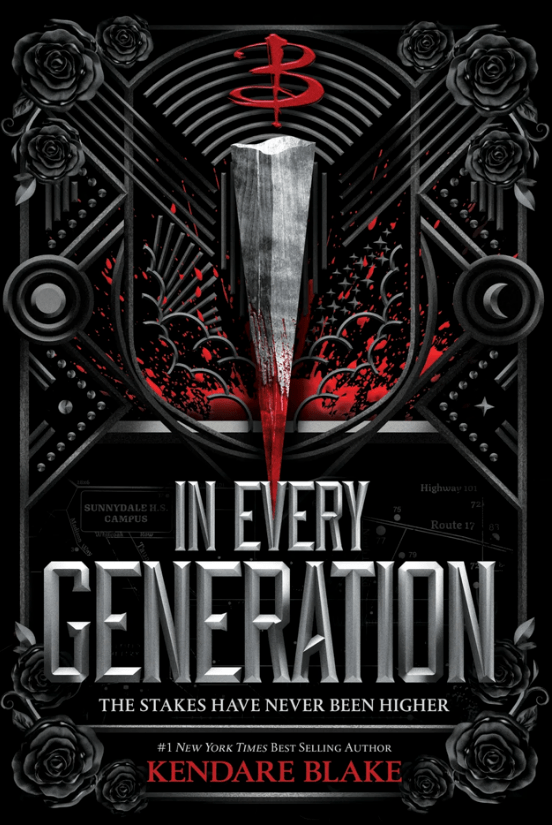
Book: “In Every Generation” by Kendare Blake

Publishing Info: Disney-Hyperion, January 2022

Where Did I Get This Book: I received an eBook from the publisher.

Where You Can Get This Book: WorldCat | Amazon | Indiebound

Book Description: Frankie Rosenberg is passionate about the environment, a sophomore at New Sunnydale High School, and the daughter of the most powerful witch in Sunnydale history. Her mom, Willow, is slowly teaching her magic on the condition that she use it to better the world. But Frankie’s happily quiet life is upended when new girl Hailey shows up with news that the annual Slayer convention has been the target of an attack, and all the Slayers—including Buffy, Faith, and Hailey’s older sister Vi—might be dead. That means it’s time for this generation’s Slayer to be born.

But being the first ever Slayer-Witch means learning how to wield a stake while trying to control her budding powers. With the help of Hailey, a werewolf named Jake, and a hot but nerdy sage demon, Frankie must become the Slayer, prevent the Hellmouth from opening again, and find out what happened to her Aunt Buffy, before she’s next.

Get ready for a whole new story within the world of Buffy!

Review: Thank you to Disney-Hyperion for sending me an eBook copy of this novel!

It’s so funny, when the shows “Buffy the Vampire Slayer” and “Angel” ended I never really went back to revisit them. I wrote a hell of a lot of fan fiction about my favorite characters, but I don’t think I’ve ever done a full rewatch. This is odd because “Buffy” is a show that had a huge impact on me as a teen for a litany of reasons, but between dissatisfaction with some of the way the stories ended and the fact that Joss Whedon is a massive prick, actually getting back into my “Buffy” love has been pretty much sidelined until the past year or so. Whether it was watching “Cobra Kai” and seeing striking parallels between bad girl Tori and my favorite dark slayer Faith, or getting books at ALAAC that were part of the “Buffy” universe, 2022 kind of brought back some of that love. So when I was approached to read Kendare Blake’s new Buffy books, starting with “In Eery Generation”, I went in with an open mind, because I like Blake as an author and I’ve been feeling extra nostalgic. That said, I was not prepared for how much I was going to enjoy “In Every Generation”, the first book in her Frankie Rosenberg series. Guys. I REALLY LIKED THIS BOOK! I was transported back to when the whole family would watch “Buffy” and then my high school best friend Blake would call to dissect the episode!

Queen. (source)

There is always a bit of a risk when a franchise is rebooted for a new generation, and given that “Buffy” ended almost twenty years ago (oh GOD I’m getting old) it may have seemed odd that suddenly we are getting a lot of new content that stems from our favorite vampire slayer. It doesn’t really help that Buffy Summers’s creator Joss Whedon has been exposed as a total shithead in recent years. But Blake takes a job that could have been VERY difficult and makes it seem so easy, in that not only does she effectively capture the pure snarky, heartfelt, and very 2000s essence of “Buffy”, but she also creates new characters that feel real, believable within the world, and makes them just as likable and able to hold their own against old favorites. I really, really loved Frankie Rosenberg, the daughter of Willow who has been awakened as the first Slayer-Witch after an attack on a gathering of slayers that may have left Buffy, Faith, et al dead. We have familiar call backs to Buffy’s own original journey through Frankie and her new group of Scoobies (such as her best friend Jake Osbourne, teen werewolf and cousin to Willow’s ex-boyfriend Oz, and Hailey, a human girl with a missing slayer sister), but Frankie is wholly different from Buffy and really feels like a well thought out person and character. I wholly believed her as an awkward teenage girl who grew up around some of Sunnydale’s best and brightest combatants against evil, and also liked that there was a certain Gen Z flair brought to her character I also liked how Blake taps into vampire lore beyond the “Buffy” stuff, as Frankie may or may not be gearing up to fight against Countess Elizabeth Báthory, notorious Hungarian murderess who, in this, may or may not be a vampire. Blake has used historical events for inspiration before in her horror fiction, vampire fiction no less, and I really liked how it worked here too. It makes the stakes (hurr hurr) higher and it feels more interesting than just having it be Dracula or something (yes, that is a read, if you know, you know). Frankie is just so likable, her friends are adorable too, and I am wholly eager to follow then through this trilogy.

But here is the thing that really sold it for my elder millennial self: BLAKE HAS BASICALLY SHOWCASED A FEW OF MY FAVORITE CHARACTERS FROM THE SHOW AND MADE THEM EVERYTHING I EVER WANTED THEM TO BE! We all know what a big Spike fan I am thanks to my review for William Ritter’s “Bloody Fool for Love”, and I have very high standards and expectations and hopes for any interpretation of my favorite snarky ensouled vampire. Blake has made him SO, SO EXCELLENT!! She has his voice down, she gives him a lot of really fun things to do, and she really knows how to tap into his more vulnerable sides by making him Frankie’s Watcher (with full school librarian aspects and everything, much to his chagrin) and making him care for her like a daughter. I also really loved Willow in this, as she is very much Willow but with a motherly bent, but also a woman who has been thrust back into a magical role that she had been limiting because of her past with dark magic getting out of control. And the one that surprised me the most but also made me SO happy was seeing that Oz is here!! This surprised me a bit because he left in Season 4 and was barely ever mentioned again, but I always had a soft spot for him because Seth Green was the reason I started watching “Buffy” in the first place. Blake expertly taps into the Willow and Oz connection without erasing the fact that Willow is a lesbian, but still keeps their care for each other feeling very real even if platonic. Honestly, everything Blake did with these characters, be it their interpretations or the backstory she built to get from the “Angel” finale to here (I’m fine with erasing the comics canon), made it feel so, so perfectly “Buffy”. Hell, she even limited Xander’s role, and as someone who has never liked Xander (don’t even get me started, I could do a TED talk) but understands why he kind of needs to be here, I was very okay with the part he did play. If Faith shows up as the series continues, I will be on cloud nine. I WANT TO SEE WHAT SHE DOES WITH FAITH. And I, of course, want to see Buffy. But I appreciate that Blake is holding off a bit. Frankie needs to grow into her own thing without THAT weight on her shoulders, so I will bide my time for Buffy to show up. Because she has to.

Overall I super, super enjoyed “In Every Generation”. I am SO amped to see where we go from here, and I am so happy that Kendare Blake has taken on a universe near and dear to my heart and continued it so well. “Buffy” fans old and new need to seek it out.

Rating 9: Boy did this hit every single “Buffy” note that I ever hoped for. So good to see an old favorite in good hands.

Reader’s Advisory:

“In Every Generation” is included on the Goodreads lists “Buffy the Vampire Slayer”, and “Countess Elizabeth Báthory – Fiction and Non-Fiction”.

Kate’s Review: “American Vampire: Volume 5”


This post may contain affiliate links for books we recommend.  
Read the full disclosure here.

Book: “American Vampire: Volume 5” by Scott Snyder, Rafael Albuquerque (Ill.), & Dustin Nguyen (Ill.)

Publication Info: Vertigo, March 2013

Where Did I Get This Book: I own it.

Where You Can Get This Book: WorldCat | Amazon | Indiebound

Book Description: In the first story, series mainstays Skinner Sweet, Pearl and company return to Hollywood in the ’50s during the Red Scare. In a time where America was on the lookout for the next Communist threat, was the real danger something far more insidious? A major turning point in American Vampire lore begins here!

In the second tale, familiar face and vampire hunter Felicia Book is “retired” from vampire hunting when she gets called back into action to track down and kill the most powerful vampire of all time. The hunt takes our heroes through post-war Europe, behind the Iron Curtain and into the heart of Russia to track this deadly enemy

Writer Scott Snyder (Batman, Swamp Thing) and artist Rafael Albuquerque bring together even more threads to the complex tapestry that is the world of American Vampire.

Review: When it came time to pick up “American Vampire: Volume 5” for this re-read, I remembered that I liked this volume a lot the first time I read it, but didn’t really remember why. So I was wondering if taking it on again almost ten years later was going to be a different experience, as lord knows I’ve already had some perspective shifts in the first four volumes. But almost immediately upon jumping in I realized that there was a reason I liked this volume so much, and it was pretty evident that was going to be the case once again.

Our first big story is set in 1950s Europe, with Felicia Book and her son Gus (both living more normal lives due to the supposed ‘cure’ for vampirism she got at the end of her last major arc) spending their time in France. When Felicia is approached by her former VMS boss Hobbes asking her to help the group track down a stolen Dracula (yep, THAT Dracula, the long dormant leader of the Carpathian vampires) she gets pulled back into a job she left behind because Gus is now being compelled by the notorious Count. Felicia continues to be my favorite character in this series, and I loved seeing her fight tooth and nail to keep her son safe, while also feeling lots of resentment about being pulled back into the Vassals at behest of her old friend and boss. I also think that Snyder did a good job of bringing in Dracula without making it hokey or, frankly, stupid. It’s certainly not the first time a modern vampire story has brought Dracula into the fold, but it’s a successful way to bring him in because it feels unique but also rooted in the source material, but also doesn’t overwhelm. Watching Felicia, Hobbes, Gus, and other unlikely allies track down Dracula in ways that mirror the way Dracula is tracked down in the original novel is just fun (I especially like the way that they bring in a Renfield character as well as substituting Soviet soldiers for glamored peasantry), and it all leads to a significant shift in Felicia’s and Gus’s storyline. I’m always happy to spend time with Felicia and Gus, and this really puts them at the forefront of their lovely mother/son relationship.

The other big story is back in the U.S. and has Pearl and Skinner (gag) at the forefront, and brings them back to her origins as an American Vampire in Hollywood. Now it’s the 1950s and Hollywood is undergoing the Red Scare, and Pearl and Sweet are recruited to investigate studio execs and other power players who may be harboring vampires. Pearl, however, is also contending with her husband Henry’s coma, as his attack at the end of her last arc has left her worried that she’s going to lose him. The relationship between Pearl and the absolutely sweet and wonderful (but mortal) Henry has been such a mainstay in this series, but time has been aging Henry while Pearl has stayed youthful, and his mortality is oh so very clear right now. I have always loved Pearl and Henry, and as the series has gone on Snyder has subtly addressed the elephant in the room of how she will ultimately have to say goodbye just due to the reality of their situation. I couldn’t give less of a fuck about how Skinner fits into all of this, though I do admit that I DO enjoy seeing a sire and his fledgling team up, especially after she believed she killed him during WWII. On my first read of this I remember really resenting the fact that Skinner is actually kind of tolerable in this arc, but because it’s mostly due to Pearl and their connection I guess I’m going to allow it. That said, he’s still so static and boring in his malevolence. It was just nice seeing Pearl be able to deal with the baggage there at least a little bit, while also revisiting the trauma that started it all back in Hollywood and the cesspit it is. The women continue to be the shining stars of the series, and, like Felicia, Pearl finds herself at a crossroads by the end of this volume. But hers is far more melancholy.

This was the best volume yet. Snyder both brings things to proper ends, but also opens new doors with more possibilities on the horizon. Keep Pearl and Felicia in the spotlight, “American Vampire”. They continue to be amazing in their complexity and resilience.

Rating 9: The strongest volume yet, with many things coming to conclusions and other things just beginning.

Reader’s Advisory:

“American Vampire: Volume 5” is included on the Goodreads lists “Vertigo Titles: Must Read Comic Books A-E”, and “Best Adult Vampire Books”.

Kate’s Review: “A History of Fear”


This post may contain affiliate links for books we recommend.  
Read the full disclosure here.

Book: “A History of Fear” by Luke Dumas

Publishing Info: Atria Books, December 2022

Where Did I Get This Book: I received an eARC from NetGalley.

Where You Can Get This Book: WorldCat | Amazon | Indiebound

Book Description: Grayson Hale, the most infamous murderer in Scotland, is better known by a different name: the Devil’s Advocate. The twenty-five-year-old American grad student rose to instant notoriety when he confessed to the slaughter of his classmate Liam Stewart, claiming the Devil made him do it.

When Hale is found hanged in his prison cell, officers uncover a handwritten manuscript that promises to answer the question that’s haunted the nation for years: was Hale a lunatic, or had he been telling the truth all along?

Unnervingly, Hale doesn’t fit the bill of a killer. The first-person narrative that centers this novel reveals an acerbic young atheist, newly enrolled at the University of Edinburgh to carry on the legacy of his recently deceased father. In need of cash, he takes a job ghostwriting a mysterious book for a dark stranger, but has misgivings when the project begins to reawaken his satanophobia, a rare condition that causes him to live in terror that the Devil is after him. As he struggles to disentangle fact from fear, Grayson’s world is turned upside-down after events force him to confront his growing suspicion that he’s working for the one he has feared all this time—and that the book is only the beginning of their partnership.​​

A History of Fear is a propulsive foray into the darkness of the human psyche, marrying dread-inducing atmosphere and heart-palpitating storytelling.

Review: Thank you to NetGalley for sending me an eARC of this novel!

In the wide wide swaths of horror sub genres, many of which I tread in and out of as I go on my reading adventures, there are two that I don’t really prioritize based on my own personal preferences. The first is literary horror. It’s not that I don’t like literary horror, it’s more a visceral response that I have that is similar to cinema that uses the phrase ‘elevated’ horror; specifically that I feel like when something is bragged to be literary horror, it implies that genre horror is ‘less than’. That’s a chip on my shoulder, one hundred percent. The other is any horror that involves The Devil, and THAT is based on the fact that I have rage triggers involving Satanic Panic, and that I also just don’t believe in The Devil as The Adversary. So perhaps it was weird that I wanted to read “A History of Fear” by Luke Dumas, which is billed as literary horror about a man who claims the Devil made him murder a friend. But I guess I was feeling daring, because I requested this book and therefore committed to it. And honestly, I’m glad I took the chance, because even as two sub genres that don’t work well for me, this one did work!

There is always an undercurrent of ambiguity in this novel that adds to the disorientation and unease, due to a few different factors. The first is that the majority of the POV is through the eyes of Grayson Hale, a man who was convicted of murdering a fellow student and blaming it on the devil. As the reader reads the pages, there is already a sense of unreliability, as it is unclear as to whether Hale actually did run afoul the Devil through D.B., the man who wants him to write a book about the Devil in Scotland, or if he is a very disturbed individual who was in actuality battling against more metaphorical demons. The second is that there are snippets of interviews and commentaries from an outside party of a reporter named Daniela, who so intrigued with the tale and Hale’s memoir that she sets out to try and figure out just what DID happen. I liked how we would get Hale’s perspective, and then have it picked at and added to by Daniela’s notes. Is he really being tormented by a mysterious ‘D.B.’ who was employer turned villain? Is he really seeing flying demons? Or is it all a part of a childhood fear of the devil that has come to fruition because of untreated mental illness? It makes for a very well rounded and multi faceted tale, and makes it so the reader is both put off by Hale, but for many, many reasons finds reasons to pity him. I really loved how it allowed for bit revelations to be sprinkled in without feeling overreached in the main narrative. And on the flip side, it also means that the reader can have the rug yanked out from under their expectations.

As for horror elements, Dumas approaches it from a few different ways. As Hale’s paranoia grows, the dread really builds, and we have descriptions of shadowy beings lurking in Hale’s periphery, as well as winged beasts that he is certain are stalking him and attacking him. There are, of course, devil themes and demon themes as well, but as someone who isn’t particularly scared by the idea of The Devil it wasn’t really this main horror trope that put me off and set my teeth on edge. It was more the question of whether or not Hale is actually perhaps losing his grip on reality, and how his life experience and childhood memories of trauma and isolation and self loathing can wreak so much havoc. I would say that “A History of Fear” is very much a ‘literary’ horror novel in the sense that Dumas experiments with narrative structure and various subversions of elements, but it’s also because at its heart a meditation on what ‘evil’ is, and how it manifests in very real ways.

“A History of Fear” is a chilling read for a dark winter night. It will leave the reader with questions and doubt, and will get under one’s skin because of it.

Rating 8: A haunting, ambiguous, and ultimately tragic literary horror novel that oozes malice and unease.

Reader’s Advisory:

“A History of Fear” is included on the Goodreads list “Bring on the Creepy!”.

Kate’s Review: “Number One Fan”

This post may contain affiliate links for books we recommend.  Read the full disclosure here.

Book: “Number One Fan” by Meg Elison

Publishing Info: MIRA, August 2022

Where Did I Get This Book: I own it.

Where You Can Get This Book: WorldCat | Amazon | Indiebound

Book Description: She created a beautiful world. Now he wants it all.

On her way to a speaking engagement, bestselling novelist Eli Grey gets into a cab and accepts a drink from the driver, trusting that everything is fine. She wakes up chained in the stranger’s basement. With no close family or friends expecting her to check in, Eli knows she needs to save herself. She soon realizes that her abduction wasn’t random, and though she thinks she might recognize her captor, she can’t figure out what he wants. Her only clues are that he’s very familiar with her books and deeply invested in the fantastical world she creates. What follows is a test of wills as Eli pits herself against a man who believes she owes him everything—and is determined to take it from her.

Terrifying and timely, set against the backdrop of convention culture and the MeToo reckoning, Number One Fan unflinchingly examines the tension between creator and work, fandom and source material, and the rage of fans who feel they own fiction.

Review: Back during my Stephen King Binge of 8th Grade, I read his stalker fan horror story “Misery” and was absolutely unglued by it. I found a copy on a family trip to California, purchasing it at Bookshop Santa Cruz in Santa Cruz, and have vivid memories of reading it on the airplane home and feeling abject dread as Annie Wilkes tortured author Paul Sheldon as she held him hostage in her isolated farm house. It’s still Top 5 King for me. This year I kept hearing buzz for the book “Number One Fan” by Meg Elison, which was being touted as a gender swapped reimagining of “Misery”, but through a more modern and feminist lens. Sign me up regardless, honestly, and I was expecting it to be a critique of fandom culture and the debate of ownership of a work between creators and fans. And it’s that, to be sure. But throw some Sad and Rabid Puppies in for good measure, and that is what makes “Number One Fan” so utterly disturbing.

If you know, you know. (source)

“Number One Fan” has a pretty straight forward, multi third person perspective narrative. Our main focus is on Eli, an author whose adult fantasy series has made waves across fandom and has thrust her into the spotlight, whether she is really able to cope with it or not. While traveling for a convention, she hops into an Uber, but then passes out and finds herself trapped in an unknown basement. Her captor is somewhat familiar to her, though she can’t figure out why, but he is hellbent on usurping her fantasy world and turning her into her main character for his own obsessions. We jump from perspective to perspective, either seeing Eli’s present or her backstory that builds up to her present, or Leonard, her captor, as he plots and schemes and hopes to possess her story and his image of her. As we slowly get to know both Eli and Leonard, we get a twisted commentary on fandom, the writing world, nerds and convention culture, and the toxic brew that can come with all of it. It’s a very suspenseful story as Leonard becomes more deranged and Eli becomes more desperate, and as a few players on the outside, namely Eli’s assistant and an FBI agent he contacts when Eli goes off the grid, try to figure out what all is happening. I loved watching all of the pieces fall into place as captive and captor entangle.

But it’s the abject realism of the horrific circumstances Eli is in that really hit home “Number One Fan” for me. I’ll start with the most obvious: the fact that she is a woman who has been kidnapped and is being held against her will. Elison doesn’t hold back on the horror elements of this that make it feel all the more real and effective as a woman reader; be it the one moment she lets her guard down getting into a ride share, or the way she is gaslit by Leonard in an effort to mold her to his twisted sexual fantasy, or even just the gross realities of how disgusting and unsanitary surroundings would wreak havoc on a woman’s body (UTIs, yeast infections, what have you), the kidnapping itself is scary as hell. But there are also other elements that are scary and super real, like the way that Eli has been harassed and picked apart by others because of her existence as a woman in nerd culture, or the way that even when it is clear that something terrible has happened, that it’s dismissed by some. Or the fact that numerous other women have been targets and victims of Leonard is other ways, and it has always gone under the radar. “Misery” is scary to be sure, but its focus is more on an author whose work has been fixated on by one unhinged fan because of the work itself. In “Number One Fan”, you get the sense that the fixation is based on gender, entitlement, and misogyny. And given that things like GamerGate and, yes, the Hugo Awards Sad Puppies and Rabid Puppies Slates are still causing ripples in recent so called ‘culture wars’, it makes this feel all the more timely, and all the more unnerving. Also, content warnings are probably needed for this one. With violent misogyny comes sexual violence, and while it isn’t super explicit, the spectre of it is on the pages.

“Number One Fan” is a disturbing and well done horror novel with a feminist battle cry bent. I will be on the look out for more horror from Meg Elison.

Rating 8: A modern and deeply disturbing reimagining of “Misery” that hits misogyny and fan culture themes, “Number One Fan” is scary and timely.

Reader’s Advisory:

“Number One Fan” is included on the Goodreads list “Horror to Look Forward To in 2022”.

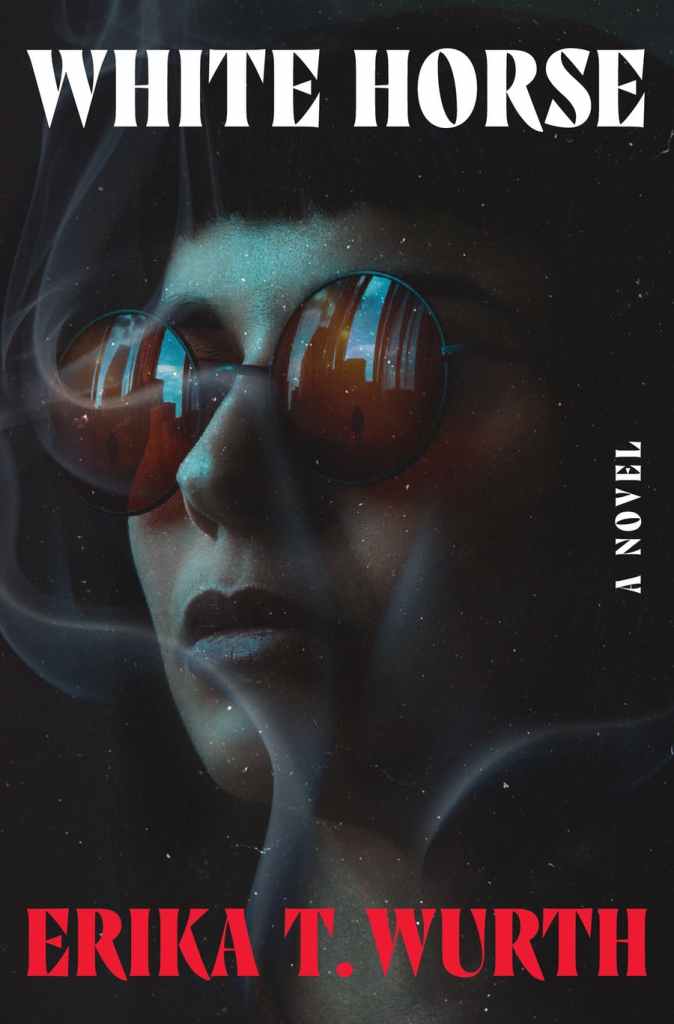
Kate’s Review: “White Horse”

This post may contain affiliate links for books we recommend.  Read the full disclosure here.

Book: “White Horse” by Erika T. Wurth

Publishing Info: Flatiron Books, November 2022

Where Did I Get This Book: I received an eARC from NetGalley.

Where You Can Get This Book: WorldCat | Amazon | Indiebound

Book Description: Heavy metal, ripped jeans, Stephen King novels, and the occasional beer at the White Horse have defined urban Indian Kari James’s life so far. But when her cousin Debby finds an old family bracelet that once belonged to Kari’s mother, it inadvertently calls up both her mother’s ghost and a monstrous entity, and her willful ignorance about her past is no longer sustainable

Haunted by visions of her mother and hunted by this mysterious creature, Kari must search for what happened to her mother all those years ago. Her father, permanently disabled from a car crash, can’t help her. Her Auntie Squeaker seems to know something but isn’t eager to give it all up at once. Debby’s anxious to help, but her controlling husband keeps getting in the way. Kari’s journey toward a truth long denied by both her family and law enforcement forces her to confront her dysfunctional relationships, thoughts about a friend she lost in childhood, and her desire for the one thing she’s always wanted but could never have.

Review: Thank you to NetGalley for providing me with an eARC of this book!

It is such a good time to be a horror fan right now. I’m sure I’ve said that before, but it remains true. We are getting so many varied stories with so many different perspectives and voices right now, and it makes for such rewarding and interesting reading. I saw “White Horse” by Erika T. Wurth on a few different platforms, and it took me a few times to really look into it. Once I did, however, I knew that I needed to read it. The buzz was promising and the premise really caught my eye. And once I started reading I slowly began to realize that this was going to be an awesome reading experience. “White Horse” is a fantastic horror novel from a new Indigenous voice in horror literature.

The horror elements in this book are some of the most unique moments and beats that I have read in recent memory. Wurth takes a concept that sounded pretty straightforward (a haunted bracelet that brings protagonist Kari visions of her dead mother as well as some kind of monster), but it never feels hokey and it feels fresh and original with the way she approaches it. The visions she has are unsettling bordering on scary, with the imagery of her mother Cecilia being both eerie but also filled with a deep sadness that permeates the pages. Kari, who is of of Apache and Chickasaw descent and lives in urban Denver, is realizing that her missing mother Cecilia didn’t leave, but is actually a Missing and Murdered Indigenous Woman, and that Kari’s visions are going to haunt her and drive her into despair if she doesn’t find out what really happened. It is clear that Wurth has a very clear idea of how she wants to construct these supernatural and real life horrors, and it works very, very well, especially since so much Indigenous culture and spiritual aspects drive the story themes. Whether it’s visions or the story of the Lofa, Wurth uses these mythologies and beliefs and fits them into the story at hand perfectly. We also get a love letter to a more familiar horror icon, as Kari’s love for Stephen King connects to her journey as she finds herself at the Stanley Hotel, where King was inspired to write “The Shining”, and this part of the book was so jovial AND creepy that it was one of the horror highlights I’d experienced in my reading this year. Wurth really captured the Stanley, from the descriptions to the history to the way that it can make a Stephen King fan feel just be stepping foot inside (as someone who visited a few years ago, it was like going back and experiencing it all over again). I loved all of these elements so much.

And Kari herself is a very compelling protagonist, for so many reasons. She is wry and funny, for one, and I loved the way she gives no fucks about how other people think of her. I love her complicated relationship with her cousin Debby, how she clings to her and loves her fiercely, and I ached over her relationship with her father, whom she cares for after he was in an accident that left him with some pretty significant brain damage. Kari is rough and tumble, but she has endured a lot of trauma and loss in her life, which also enters into the horror themes of this book. So much of the foundation for this horror story is rooted in generational and communal trauma, specifically towards Indigenous women living in modern American society. From the MMIW aspect to microaggressions Kari endures here and there to the way that addiction can strain a person and make them do monstrous things, to even aspects of the magical and supernatural systems at hand, this story is from an Indigenous lens and perspective, and it make the book stand out all the more.

“White Horse” is a must read horror novel. I urge horror fans to pick it up, because it’s phenomenal.

Rating 10: Dark and soulful, “White Horse” is an effective horror story that also examines modern Indigenous life and the trauma that can come with it.

Reader’s Advisory:

“White Horse” is included on the Goodreads lists “Magical Realism”, and “Colorado”.

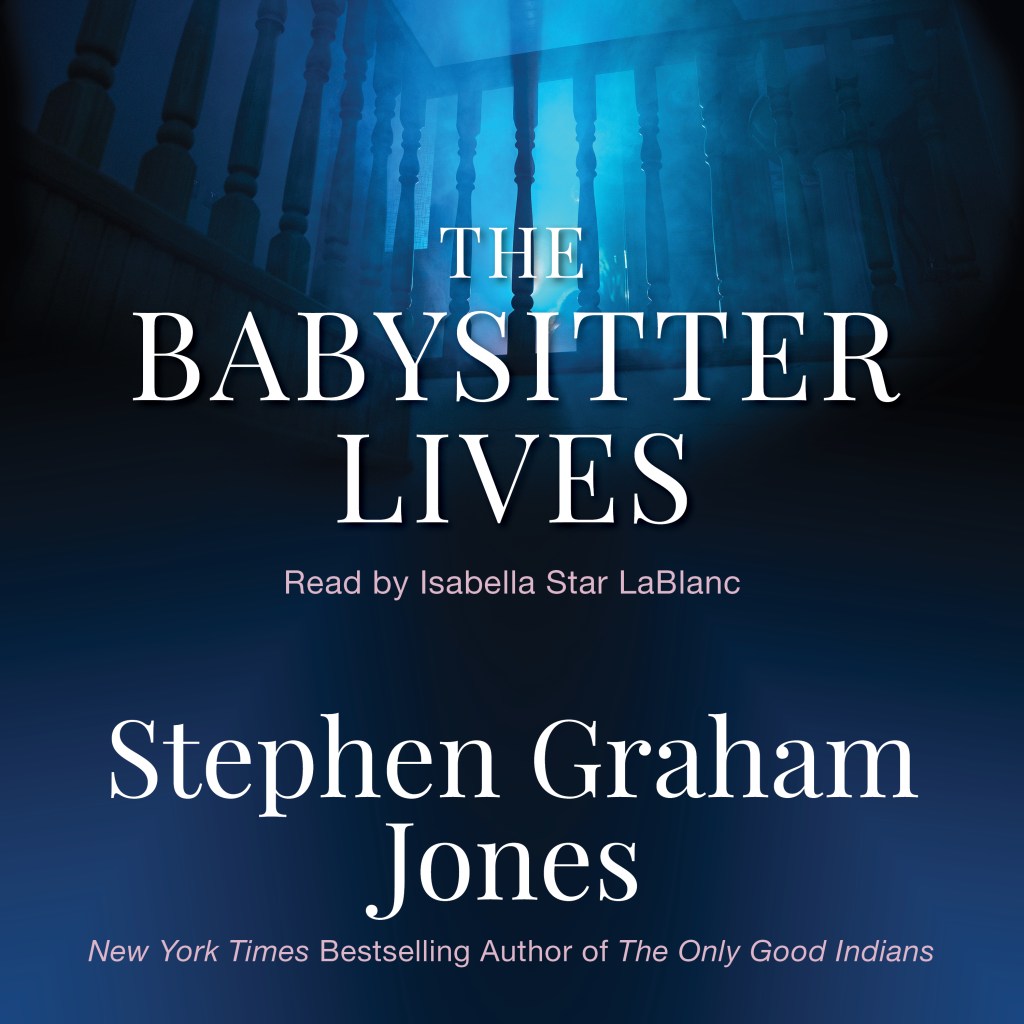
Kate’s Review: “The Babysitter Lives”

This post may contain affiliate links for books we recommend.  Read the full disclosure here.

Book: “The Babysitter Lives” by Stephen Graham Jones

Publishing Info: Simon and Schuster, August 2022

Where Did I Get This Book: I own it.

Where You Can Get This Book: Amazon | Libro.fm

Book Description: When high school senior Charlotte agrees to babysit the Wilbanks twins, she plans to put the six-year-olds to bed early and spend a quiet night studying: the SATs are tomorrow, and checking the Native American/Alaskan Native box on all the forms doesn’t mean jack if you choke on test day.

But tomorrow is also Halloween, and the twins are eager to show off their costumes—Ron is a nurse, in an old-fashioned white skirt-uniform, and Desi has an Authentic Squaw costume, complete with buckskin and feathered headdress. Excitement is in the air.

Charlotte’s last babysitting gig almost ended in tragedy, when her young charge sleepwalked unnoticed into the middle of the street, only to be found unharmed by Charlotte’s mother. Charlotte vows to be extra careful this time. But the house is filled with mysterious noises and secrets that only the twins understand, echoes of horrors that Charlotte gradually realizes took place in the house eleven years ago. Soon Charlotte has to admit that every babysitter’s worst nightmare has come true: they’re not alone in the house.

The Babysitter Lives is a mind-bending haunted house tale from the Jordan Peele of horror literature, Stephen Graham Jones.

Review: I did very little babysitting in high school. I had two families that I did the occasional babysitting job for, and they were family friends so it wasn’t really a ‘business’ relationship. Basically it was guaranteed pizza, soda, and the promise of watching “X Files” in syndication after the kids went to bed with a chunk of change to show for it. But I love a horror story involving a scrappy babysitter, so when I read that Stephen Graham Jones had a new audiobook about that very thing I was very, very excited. The man has already solidified his place as a favorite horror author of mine, and this trope just makes it all the more tantalizing! I went into “The Babysitter Lives” with a unique reading experience from the get go: it’s rare that I do audiobooks these days as I am not in a car nearly as much as I used to be. Because of this, I didn’t devour this book with as much aplomb as I may have a print book. But it’s still Stephen Graham Jones, and he is still a master of strange and entertaining horror stories, so as that was my only option, it was necessary, albeit a change from how I usually enjoy him.

Overall, I enjoyed “The Babysitter Lives”. I love a haunted house story, and Jones is always up to the task of tinkering with a classic trope and making it fresh and deeply unsettling or weird. It’s pretty clear pretty quickly that this isn’t your average haunted house or babysitting in trouble story, and as we follow Charlotte and her charges through a terror filled night things get more and more dire, and the plotting gets more and more compelling. There are a lot of different horror elements at play; a haunted house, shadow doubles, space/maybe time rifts, and some good old fashioned body horror and splatterpunk gore that had me cringing throughout. There were so many what the HELL is going on moments and twists and turns that it felt a bit like whiplash, but we were always grounded in Charlotte and her drive to be a responsible and effective babysitter, especially after a close call involving one of her other charges. She goes through some serious shit as this babysitting job goes on, and Jones really knows how to milk the scares and unease for all they’re worth. While it’s true that I wasn’t the BIGGEST fan of how some things shake out, I definitely get why they have to go the way they do when it comes to the story that Jones is trying to tell.

But the aspect of this book that made this all the more layered was Charlotte herself, whose babysitting duties are well honed and whose characterization makes the tale richer. Charlotte is a driven teenage girl who has dreams for herself, but is always having to deal with perceptions of those around her because of her Indigenous heritage. Whether it is the twins she is caring for who have Indian Halloween costumes, or hints of microaggressions for their parents, or even well meaning but sometimes insensitive girlfriend Murphy, Charlotte has lots of experience having to combat racist bullshit, and unfortunately it’s just another thing she has to fight against during this babysitting job. Jones balances this pointed commentary with other things at hand, so it always flows really well and just feels like another, more realistic horror (along with other aspects I haven’t touched upon here, but let’s just say that as a teenage girl Charlotte also has to protect herself from a more worldly creep than any spectre this house could create) to permeate the narrative and make it all the richer.

And finally, this is an audiobook, and I have found that even the strongest story can be derailed by an audiobook narrator who is lackluster. But we are in very good hands with Isabella Star LeBlanc, who brings all of the characters to life with varied performances, and who builds up tension with her stylistic choices in narration. I don’t do audiobooks as much anymore, but LeBlanc is a narrator who makes me think that perhaps I should carve out more time to do so.

“The Babysitter Lives” is a scary and relentless horror story that turns the haunted house and babysitter slasher tropes on their heads. We are so lucky to have Stephen Graham Jones here in the horror world! He consistently delivers!

Rating 8: Stephen Graham Jones keeps up with the weird and unsettling terror in a book about a badass babysitter!

Reader’s Advisory:

“The Babysitter Lives” isn’t on any Goodreads lists as of now, but it would fit in on “Haunted House Books”.

Kate’s Review: “Blackwater”

This post may contain affiliate links for books we recommend.  Read the full disclosure here.

Book: “Blackwater” by Jeannette Arroyo & Ren Graham

Publishing Info: Henry Holt & Co. (BYR), July 2022

Where Did I Get This Book: The library!

Where You Can Get This Book: WorldCat | Amazon | Indiebound

Book Description: Tony Price is a popular high school track star and occasional delinquent aching for his dad’s attention and approval. Eli Hirsch is a quiet boy with a chronic autoimmune disorder that has ravaged his health and social life. What happens when these two become unlikely friends (and a whole lot more . . .) in the spooky town of Blackwater, Maine? Werewolf curses, unsavory interactions with the quarterback of the football team, a ghostly fisherman haunting the harbor, and tons of high school drama.

Co-illustrated by Jeannette Arroyo and Ren Graham, who alternate drawing chapters in their own unique and dynamic styles, Blackwater combines the spookiness of Anya’s Ghost with the irreverent humor of Nimona.

Review: I’m admittedly a bit of a slacker lately when it comes to graphic novels, and I am making a promise to myself that in 2023 I am going to try and do a better job of reading more graphics. But when I saw “Blackwater” by Jeannette Arroyo and Ren Graham on my Goodreads feed, it caught my eye, and I made sure to get my hands on it for 2022. It has a lot of great things going for it: a horror graphic novel! With POC and queer and trans characters! With a spooky cover right off the bat!

So first, the werewolf stuff. Werewolves aren’t a subgenre I dislike by any means, I just don’t find myself reading or consuming much around this kind of monster (that said, read “Such Sharp Teeth!” by Rachel Harrison!). But I do know when a werewolf story has hamfisted metaphors as opposed to well done ones, and “Blackwater” has a mix of both. For one, this isn’t REALLY werewolves in a traditional sense as it’s more about emotional state than moon phases. Once Tony, one of our protagonists, gets bit, he’s turning into a wolf whenever his feelings get the better of him, usually rage. Which is, frankly, a bit obvious and a little bit of a cheat to say it’s werewolves when it’s not REALLY at the heart of the matter werewolves, mythos wise. But on the flip side, there is a good exploration of grief and loss in this book that does also tie into wolf transformation, but also as it applies to other characters and the hardships they are facing. One protagonist Tony is grieving a broken relationship with his father or a changing friendship with a childhood friend, just as other protagonist Eli is grieving a strained relationship with his mother because of how she responds to his chronic illness. Both of them feel lonely in their own ways, and that fits into the overall metaphor well too. There is also a side story involving Eli’s ability to see ghosts and a ghostly fisherman who has some unfinished business on Earth that I found to be the most effective storyline, but I don’t want to go into why I found it as such as it will be pretty spoiler heavy if I did. But let’s just say that I did find myself crying a bit with this whole plot line.

But here is the aspect that didn’t work for me and I wish it had: the romance between Tony and Eli. I get what the authors were trying to do, having them slowly start to fall for each other after each having preconceived notions about the other, and having them both grow as people in a coming of age tale where their romance is just the icing on the cake. But the issue I had with this was 1) I didn’t feel like I got to know either of them well enough to get super invested, and 2) there is a moment that REALLY derailed it for me, and I need to talk about it a bit so I’m going to do a

(source)

So early on in the book, Tony is still pretty chummy with (though admittedly outgrowing) his childhood best friend Biff. Biff is a complete jerk, and he bullies Eli for being weird and solitary and different, and Tony, though he doesn’t approve, feels like he can’t push back against his friend. He doesn’t participate, but he doesn’t stop it either. He also offhandedly mentions to Eli that he has asthma and has to use an inhaler before his track meets. Eli, angry that Tony didn’t stand up for him, takes his inhaler out of his bag and throws it into the woods. Then Tony has an asthma attack during the track meet, to the point an ambulance has to be called. He ends up just fine, but still, that’s pretty serious. And when it does come out that Eli did this, there is anger on Tony’s part, but he is pretty much told that ‘hey, Eli made a mistake, but you should forgive him’ and that is that, and I just…. That didn’t sit well with me. I don’t have asthma so I’m not going to speak for those who do, but I do have memories of my younger sister having to be up at 3am with a nebulizer multiple times a week because of her asthma making it hard for her to breathe, so for this kind of thing to be dismissed as a slip up versus something that is potentially VERY dangerous was hard to swallow. I don’t need Eli to be a villain over it, because yes, people do make mistakes when they are in pain and it can be nuanced! But it made it hard for me to be rooting for them as a couple when Eli did this and then kept it a secret for so long. Add in a vague lack of fleshed out chemistry and it just didn’t justify the romantic reconciliation. If there was more time to give me a relationship chemistry based reason for them to overcome this I could have been more forgiving, probably. I’ve done it before! But I just didn’t see the chemistry or character development for that.

And I do want to mention the artwork, mostly because the two authors, Arroyo and Graham, alternate taking on the illustrations as the story is told. I liked the round robin-esque aspect of this and the way that two creators come together to tell a story through their own aesthetics. It doesn’t really add anything to the story at hand, but it’s a fun idea and I think they executed it well. I also liked their styles overall. They hit the right tone, with scary elements when needed but sweet designs as well.

(source: blackwatercomic.tumblr.com)

So when it comes to werewolf themes and romance I thought that “Blackwater” was a bit lackluster, but the deeper themes of grief and loss were well conceived and constructed. Ultimately I’d say it was ‘okay’.

Rating 6: It’s an okay werewolf tale with some decent themes about grief that work, but the romance was so so when I had hoped I’d be more invested. Plus there’s a moment that I thought was pretty unforgivable that’s glossed over.

Reader’s Advisory:

“Blackwater” is included on the Goodreads lists “Trans YA Fiction”, and “BIPOC Boy MC in YA Fantasy/SciFi/Mystery”.

Kate’s Review: “American Vampire (Vol. 4)”

This post may contain affiliate links for books we recommend.  Read the full disclosure here.

Book: “American Vampire (Vol.4)” by Scott Snyder, Rafael Albuquerque (Ill.), & Jordi Bernet (Ill.)

Publishing Info: Vertigo, September 2012

Where Did I Get This Book: I own it.

Where You Can Get This Book: WorldCat | Amazon | Indiebound

Book Description: American Vampire flashes back to two very distinct points in American history. The first tale comes from the early 1800’s with the “The Beast in the Cave” featuring art by the legendary Jordi Bernet (Torpedo, Jonah Hex). Learn about the original American Vampire, Skinner Sweet, and his involvement in the brutal Indian Wars, and an ancient evil hidden in the heart of the Old West. Plus, more about the man Skinner used to call his best friend – James Book!

The second tale comes straight from 1950s America, where American Vampire is terrorizing the suburbs with hot rods, teenyboppers and fangs! “Death Race” focuses on ferocious new vampire hunter Travis Kidd – but what is his connection to Skinner Sweet? As the story comes to a violent end, a sworn enemy’s identity is finally revealed, and lots of blood is spilled!

Writer Scott Snyder (Batman, Swamp Thing) and artist Rafael Albuquerque bring together even more threads to the complex tapestry that is the world of American Vampire.

Review: Admittedly as I was going about my read through of “American Vampire”, I picked up “Volume 4” and had an ‘I have no memory of this place’ moment. I had vivid recollections of the previous volume, just as I have recollections of what comes next. But this one didn’t stand out in my mind. So I was eager to dive in and remind myself what this volume had to offer. But as I was reading, I realized that there was probably reason I didn’t remember much. “American Vampire (Vol. 4)” is, unfortunately, the weakest part of the story yet.

But as always, let’s start with what I did like, and that was mostly the story “The Nocturnes”. We follow Calvin, one of the Vassals that was sent on the basically doomed Taipan mission during WWII, who we thought was dead, but actually was turned into a vampire when he was accidentally exposed to some of Pearl’s blood. The good news is he’s still working for the Vassals, and this standalone tale is following him and what he’s been up to. Mostly it’s taxonomy for the organization, categorizing different and new vampire subspecies, and in this story it isn’t a mission that has his interest, but a familial one: once he became a vampire he cut all ties to the living world outside of work, and he just wants to see his brother perform in his singing group. Unfortunately it’s in a sundown town, and also unfortunately, there are vampires afoot. I like Calvin as a character, and I liked seeing this exploration of what you have to give up as a Vassal, as those we have met up until now have been pretty solitary anyway. I also liked the way that it explores Jim Crow racism and sundown towns, and Calvin’s Othering because of his skin as well as his undead status. It’s a perspective we haven’t seen yet in the story and I enjoyed it.

BUT, that said, the other arcs in this collection haven’t aged super well from when they were first published. For one, guess who has once again been relegated to the sidelines: Pearl. She is barely in this book. Felicia Book isn’t in it at all. And we are STILL dwelling on Skinner Sweet, and while I KNEW that he wasn’t actually dead, it’s still frustrating that we didn’t get any kind of breather from him as a character who gets a huge friggin’ spotlight. This story takes us back to when he wasn’t yet a vampire, and we find out that he was actually good friends with James Book of all people, and they fought together during the Indian Wars, and oh boy. OH BOY. For one, the very complex and tragic subject matter at hand just doesn’t really sit well with me these days, given how the U.S. Government has consistently participated in a genocide against Indigenous peoples, and having that as a plot point in this story feels pretty grotesque. For another, we get into what is a well meaning story about the actual first American Vampire, an Indigenous woman named Mimiteh who was attacked by colonizer vampires and staked by the Vassals of the Morning Star as a precaution. After rising from the dead she is worshipped and feared by the Apache peoples that the U.S. Government is trying to overwhelm, and it just feels appropriative. It sure doesn’t help that Mimiteh is stark naked in nearly every encounter we see of her, which makes it feel all the more dehumanizing. And here’s a tip, making James Book, one of the pretty clear cut ‘good guys’ of this series, a participant in colonial driven genocide is probably not a good idea if you want him to remain clean nosed (creepy relationship with Felcia’s mother aside). The other story is about a vampire hunter for the Vassals named Travis Kidd, whose family was killed by a vampire and now he’s trying to take all vampires out. I did like some things about this story, namely that Travis kind of has a Charles Starkweather feel to him, in that when we first meet him he is killing his teenage girlfriend’s family, but they are vampires so it’s not the horrific spree that Starkweather had. It’s a wry reference to be sure. But, SURPRISE SURPRISE, do you know who it is that he ultimately wants his revenge against? You guessed it. SKINNER FREAKING SWEET. So we get very little Pearl in this collection, NO Felicia Book, and we get TWO HUGE STORIES WITH SWEET. SERIOUSLY?!

My feelings towards Skinner Sweet, and I MAY BE THE ONLY ONE?! (source)

Okay, so it was a bit of a stumble, but “American Vampire (Vol. 4)” does set up the next arc with a solid cliffhanger. I feel like Pearl and Felicia get more to do next time around, so onwards I go with higher hopes.

Rating 6: It just hasn’t aged super well. Also, while I knew we weren’t done with Skinner Sweet, I REALLY wish we were done with Skinner Sweet. That said, a story following Calvin is pretty good, and I liked some true crime connection and homages.

Reader’s Advisory:

“American Vampire (Vol. 4)” is included on the Goodreads list “Best Horror Comics/Graphic Novels”.

Previously Reviewed:

Kate’s Review: “Effects Vary”

This post may contain affiliate links for books we recommend.  Read the full disclosure here.

Book: “Effects Vary” by Michael Harris Cohen

Publishing Info: Cemetary Gates Media, October 2022

Where Did I Get This Book: I received an eARC from the author.

Where You Can Get This Book: Amazon

Book Description: Effects Vary features 22 stories of dark fiction and literary horror that explore the shadow side of love, loss, and family. From an aging TV star’s murderous plan to rekindle her glory days, to a father who returns from war forever changed, from human lab rats who die again and again, to a farmer who obeys the dreadful commands of the sky, these stories, four of them award winners, blur the thin line between reality and the darkest reaches of the imagination.

Review: Thank you to Michael Harris Cohen for reaching out an sending me an eARC of this novel!

Halloween season may be over (ugh, it always goes way too fast), but you know me and you know how much I love scary stories. So we aren’t staying away from horror for too long, as today I am taking on “Effects Vary” by Michael Harris Cohen. When this ended up in our inbox, I thought that it was probably about time that I pick up a horror short stories anthology. It has been awhile, after all. And the info I found about it piqued my interest, even though I tend to be a little gun shy about short story collections in general. But the good news is that “Effects Vary” was another positive experience with this format!

The stories in this collection run a real gamut! From different sub genres to different perspective construction to different lengths, the twenty two stories fit together well but all stand on their own in different ways. As always when it comes to short stories, I’ll talk about my favorite three, and then about the collection as a whole.

“Pain Is Your Teacher” : This is one of the shorter stories in the bunch, which is about the length of a drabble (for people who aren’t familiar with fan fiction, that’s a few hundred words at most). A woman writes a farewell letter to her husband as they are settling up their divorce, and as the letter winds down she reveals a last laugh she got upon him after years of abuse. Again, this is a short story, one of the shortest in the collection, but it gets right to the point and goes for the throat almost immediately. I felt like I learned everything I needed to know about Alexander and his nameless soon to be ex wife, and I thought that it was vicious and satisfying in all the right ways.

“Everything Is Forever”: A self proclaimed psychic and mostly charlatan is making an appearance on a TV show and having to explain how one of her recent predictions got things so wrong. As someone who has vivid memories of my nanny watching Sylvia Browne on “Montel”, and as someone who loves a medium story (legitimate or otherwise), I really liked the trajectory this one took. It’s another shorter story in this collection, but even in the limited pages Cohen manages to create a broad narrative and backstory for Joyce the psychic, and creates a tragic circumstance that cuts right to the emotional quick and is absolutely haunting.

“The Ex-Court Painter, Goya, and The Princess”: This one was almost certainly my favorite story in the collection, as it’s unsettling as hell but also has a certain bittersweetness to it. An ex-court painter for Spanish King Charles IV is called back to the palace to paint for the King, even though Goya has taken over. He finds out that the King wants him to paint a portrait of the princess, who as a baby has died tragically shortly after being born. As the painter comes back every year to create a new portrait that imagines how she would have aged, his obsession with the dead princess he has created starts to grow. This one is very creepy, as our ex-court painter becomes more and more fixated on a girl who has been long dead (and who died as an infant no less!), but it also captures grief, regret, and madness in ways that treat more towards melancholy rather than flat out shock or distaste.

The rest of the stories were kind of hit or miss for me, though I do think that there were more hits than misses. Cohen can easily jump from setting to setting and has so many characters and circumstances that all feel well thought out and envisioned, and I thought that all of them did a good job of setting a scene and going on a journey in ways that were quick but satisfying.

If you, reader, are wondering why this has a 7 rating instead of a higher one when I have been generally pretty positive, I will say that there were some ongoing themes in the collection that were really hard for me to deal with, specifically child death. I felt like there was more child death in this collection than I was able to really handle at the time of reading it, as it’s a difficult theme even once in a story. So in a collection of multiple stories that have multiple moments of children dying, it’s probably no surprise that I had a hard time with this. What can I say, I’m unfortunately one of those people that, now that she has a child, is far more sensitive to such things (for examples, I can’t watch Alex Kintner’s death in “Jaws”, and I have to stop watching the opening scene of “Scream” when Casey’s parents come home). This is obviously VERY subjective from reader to reader, so while I had a difficult time dealing with it, another reader may be totally okay with it as a theme in their horror fiction. But it still did have an effect on my reading experience. One could say that effects vary.

You have no idea how proud I was with that little joke. (source)

Overall, “Effects Vary” is an effective and varied collection of dark fantasy and horror tales. I’m sure that most horror fans will find a lot to like here!

Rating 7: A huge array of horror stories for any horror fan, “Effects Vary” is a varied collection of scary tales.

Reader’s Advisory:

“Effects Vary” isn’t on any Goodreads lists as of now, but it would fit in on “Best Horror Short Stories”.

Kate’s Review & Giveaway: “Gallows Hill”

This post may contain affiliate links for books we recommend.  Read the full disclosure here.

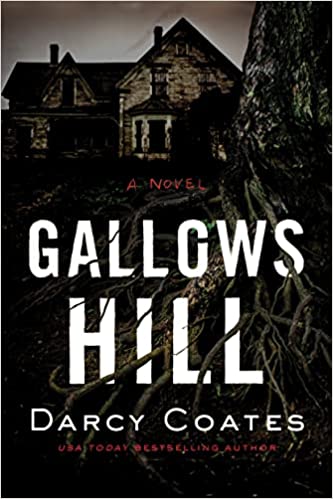
Book: “Gallows Hill” by Darcy Coates

Publishing Info: Poisoned Pen Press, September 2022

Where Did I Get This Book: I received an eARC from NetGalley.

Where You Can Get This Book: WorldCat | Amazon | Indiebound

Book Description: The Hull family has owned the Gallows Hill Winery for generations, living and working on the beautiful grounds where they grow their famous grapes. Until the night Mr. and Mrs. Hull settle down for the evening…and are dead by morning.

When their daughter, Margot, inherits the family business, she wants nothing to do with it. The winery is valued for its unparalleled produce, but it’s built on a field where hundreds of convicts were once hanged, and the locals whisper morbid rumors. They say the ground is cursed.

It’s been more than a decade since Margot last saw her childhood home. But now that she’s alone in the sprawling, dilapidated building, she begins to believe the curse is more than real―and that she may be the next victim of the house that never rests…

Review: Thank you to NetGalley for sending me and eARC of this novel and thank you to Poisoned Pen Press for sending me a print ARC of this novel!

I can’t believe that Halloween is almost here. While I love Halloween to death, I always get a bit melancholy around the end of October, as it’s my favorite time of year, and when Halloween happens, then it’s over. But fear not! Just because the season is ending, that doesn’t mean that the scares are going to stop on this blog, and let me tell you do I have a doozy of a haunted house story to close out the month with. “Gallows Hill” by Darcy Coates is the second of her novels that I have read, and I went into it with solid anticipation, as I enjoyed “From Below” a great deal. So going from ghost ship to haunted house seemed like a good transition, and hoo boy, I was NOT prepared for this book. This book was SCARY!

One night in particular as I read was filled with anxiety, and I loved it. (source)

In terms of plot and cast of characters, I thought that “Gallows Hill” was well imagined and well presented. I liked Margot, the woman who left the winery as a child with no explanation from her parents for her exile, and who has now returned for the first time, an adult who is inheriting now that her parents have died strange and premature deaths. Coates takes her time in slowly revealing just what is going on with Gallows Hill and the winery, laying out puzzle pieces bit by bit and letting us investigate along with Margot. Everything that seems strange or farfetched has a well thought out explanation, and every character has a part to play. Margot herself is easy to like and easy to relate to, as she discovers what is going on at the same pace the reader does, and I thought that all the pieces came together well, with some solid surprises along with reveals that are perhaps obvious but still weighted with some mystery. Coates makes it easy to invest in every character, which makes the stakes all the higher when creepy things start to turn into the flat out horrifying. And the Gothic setting of an isolated winery with a new owner who has no idea what she is getting into, and what secrets the people around her are keeping from her, fits the sub genre so well while also being a bit unconventional, which was super satisfying for someone who loves a good Gothic horror story.

And let’s talk about scary. This book is SCARY. I absolutely found myself setting my Kindle down in the middle of one particularly scary moment, and told myself ‘I should probably put this down for the night’. But after I went to brush my teeth and get ready for bed, I crawled back into bed and picked it right back up. So obviously it’s also incredibly addictive. Coates really knows how to create a tense moment, and then to ratchet it up about ten times, and the grotesque imagery uneasy history of the horror points, and the isolated and suffocating setting of a country estate haunted by its history is a perfect horror combination. I am not going to go into specifics as it’s far more effective to be surprised. But holy cow, we absolutely get the sense of being stalked and hunted in this moment that I told myself I was walking away. But along with that, Coates doesn’t feel tempted to leave ambiguity open as the story progresses and comes to a close. The end is definitive, and I appreciate that in a time where sometimes horror stories feel a need to leave things open in an effort for a fear of the unknown. Which, fine, if done well. But there is something to be said about committing to a conclusion, and I love that Coates does that.

You can’t do much better than a classic haunted house tale during Halloween, and “Gallows Hill” is a great example of that. I really enjoyed this book and how freaky it was. Darcy Coates is officially a must read horror author for me now, which means I have a lot of back catalog to explore. And I can’t wait.

And wait, there’s more! Given that this is the end of Horrorpalooza 2022, I thought it would be fun to end with a special treat. So I am running a giveaway of a print ARC of this book, that also has Darcy Coates’s signature in the front (thanks again to Mandy Chahal for providing the book!)! The giveaway is open to U.S. residents only and will end on November 3rd.

Enter The Giveaway HERE

And that is the end of Horrorpalooza 2022! I hope that everyone has a fun, safe, and spooky Halloween!

Rating 9: Scary, entertaining, and the perfect Halloween read. If you haven’t tried Darcy Coates yet, start with “Gallows Hill”.

Reader’s Advisory:

“Gallows Hill” is included on the Goodreads list “2022 Gothic”.