Serena’s Review: “The Embroidered Book”

This post may contain affiliate links for books we recommend.  Read the full disclosure here.

Book: “The Embroidered Book” by Kate Heartfield

Publishing Info: Harper Voyager, August 2023

Where Did I Get this Book: ARC from the publisher!

Where Can You Get this Book: WorldCat.org |Amazon | IndieBound

Book Description: 1768. Charlotte, daughter of the Habsburg Empress, arrives in Naples to marry a man she has never met. Her sister Antoine is sent to France, and in the mirrored corridors of Versailles they rename her Marie Antoinette.

The sisters are alone, but they are not powerless. When they were only children, they discovered a book of spells – spells that work, with dark and unpredictable consequences.

In a time of vicious court politics, of discovery and dizzying change, they use the book to take control of their lives.

But every spell requires a sacrifice. And as love between the sisters turns to rivalry, they will send Europe spiralling into revolution.

Review: I was really excited to check this one out when the publisher reached out with an ARC. It’s a perfect cross-section of two of my favorite genres, fantasy and historical fiction. On top of that, while, like many, I know a decent amount about Marie Antoinette, I knew next to nothing about her older sister. Honestly, if you’d quizzed me on whether she even had and older sister, there’s a 50/50 chance I’d have gotten it wrong altogether!

This book really fell into two categories for me, when organizing my thoughts for this review: the impact of it as a piece of historical fiction, and the impact as a fantasy novel. Overall, this was a positive reading experience for me, but by and large this came down to my enjoyment of the book as a work of historical fiction. As I said, I came at this book with only the basic understanding of Marie Antoinette during her life as Queen of France, and knew next to nothing about her childhood or the life of her sister. Immediately, it was quite clear that the author had done her due diligence with the research that went into re-creating the lives of these two women. I enjoyed witnessing their childhood, and then, through their separation, the similarities and differences they each faced in their roles as rulers. There was a deep exploration of the limited preparedness that women brought to these roles, by the nature of their cloistered upbringing and education, as well as the strict boundaries of their power. Yes, in name, they are rulers of countries. In reality, their roles as women are equally defined and bound by the men in their lives as the “common” women.

As characters, I thought they were each well-drawn and compelling, both coming across at times as sympathetic and at others as incredibly foolish and short-sited. However, due to the historical boundaries placed on the story, their relationship as sisters was hindered by the fact that they are separated fairly early in their lives and then spend the next several decades only communicating via letters and through magical means. I understand why this had to be the case, but it did make the relationship between the two feel fairly watered down.

Lastly, the fantasy elements. There were a lot of unique magical elements introduced early in the book, as well as the brewing conflict that plays out throughout the story about who all should have access to magic. There were some interesting developments here, but in the end, I do feel like this was the weakest aspect of the book. Not only did the climax of this particular arc fail to land with any weight, but, in the end, the story concludes exactly as history has seen in, as if magic was never even a factor. I understand not wanting to re-write history, but you’re also introducing literal magic to this world, so it’s not as if this is ever a “realistic” presentation of the story. Indeed, it felt as if you could lift the fantasy elements out of this story whole cloth and really not feel the change. And that’s not really a criticism, as I think the strength of the story as a piece of historical fiction alone would have been enough to make it a worth-while read. In the end, that’s who I would most recommend this book to, those who enjoy historical fiction and who won’t mind the sprinkled fantasy elements that are included.

Rating 8: Perhaps not making the best use of its fantasy elements, this book is still an intriguing piece of historical fiction that explores the lives and limits of two sisters.

Reader’s Advisory:

“The Embroidered Book” isn’t on any Goodreads lists, but it should be on Historical Fantasy Genre Books.

Joint Review: “Silver Nitrate”

This post may contain affiliate links for books we recommend.  Read the full disclosure here.

Book: “Silver Nitrate” by Silvia Moreno-Garcia

Publishing Info: Del Rey, July 2023

Where Did We Get This Book: We received eARCs from NetGalley and Edeweiss+!

Where You Can Get This Book: WorldCat.org | Amazon | Indiebound

Book Description: From the New York Times bestselling author of The Daughter of Doctor Moreau and Mexican Gothic comes a fabulous meld of Mexican horror movies and Nazi occultism: a dark thriller about the curse that haunts a legendary lost film–and awakens one woman’s hidden powers.

Montserrat has always been overlooked. She’s a talented sound editor, but she’s left out of the boys’ club running the film industry in ’90s Mexico City. And she’s all but invisible to her best friend, Tristán, a charming if faded soap opera star, though she’s been in love with him since childhood.

Then Tristán discovers his new neighbor is the cult horror director Abel Urueta, and the legendary auteur claims he can change their lives—even if his tale of a Nazi occultist imbuing magic into highly volatile silver nitrate stock sounds like sheer fantasy. The magic film was never finished, which is why, Urueta swears, his career vanished overnight. He is cursed.

Now the director wants Montserrat and Tristán to help him shoot the missing scene and lift the curse . . . but Montserrat soon notices a dark presence following her, and Tristán begins seeing the ghost of his ex-girlfriend.

As they work together to unravel the mystery of the film and the obscure occultist who once roamed their city, Montserrat and Tristán may find that sorcerers and magic are not only the stuff of movies.

Kate’s Thoughts

I always look forward to Silvia Moreno-Garcia’s new books, because I know that I am almost assuredly going to be a well done take on whatever genre she wants to tackle. We’ve seen horror, we’ve seen fantasy, we’ve seen noir, and romance. She really knows how to be a chameleon and jump from genre to genre, and “Silver Nitrate” is no exception. This time we have a little bit of magical realism, a little bit of historical fiction, and a little bit of good old fashioned occult horror. As well as the real life horrors of post WWII Nazis fleeing to Latin America. Man, that’s another thing I love about Moreno-Garcia; she deftly inserts historical context from a place I have little knowledge of into her stories, and I find it so, so fascinating every time.

“Silver Nitrate” is both an exploration of mystic occult intrigue as well as a history lesson in Mexican cinema. I really loved learning all of these historical tidbits about movie history in Mexico, and the film industry in general and the inner workings of it. I was having to go and look into some of her references (okay, many of her references), but that made the experience all the richer because I LOVE connecting historical dots and how it can really elevate a tale. And she always does it in a way that flows very well, never taking me out of the story too much (just enough to go on a tangent or two). The history of Mexican cinema was just such a fun angle to me, and I really enjoyed learning more and seeing that side of the story.

And as for the horror aspects of this story, Moreno-Garcia once again really evokes the creepy in her narrative. Whether it is strange imagery that Tristán is seeing after getting in too deep, or the idea of a cursed film in general, or the very real scares of the idea of Nazis using mysticism as a way to gain power, there are so many unsettling aspects of this book and Moreno-Garcia balances them all. She can do flat out horror, or building unease, and both parts on the horror spectrum fit in very well within the story.

Another delightful story from Silvia Moreno-Garcia! I love that we get new content by her pretty consistently, and I cannot wait to see what kind of genre hopping she takes on next!

Serena’s Thoughts

Another summer comes, another Silvia Moreno-Garcia book to joint review here on our blog! At this point, it’s well established how much we both enjoy this author. But one of the things I appreciate the most is how I can never anticipate what sort of story I will get from her next. Yes, she often incorporates fantasy and horror elements (hence both of our love of her work!), but the exact sort of story is always very different. Last summer found us reading a re-imaging of “The Island of Doctor Moreau.” And this summer we do a deep dive into the 90s and classic Mexican film history.

I’ll be honest, I know next to nothing about this topic, so I spent a large portion of this book with my phone open to Google, frantically researching the various directors and actors mentioned. But, as I said, this is one of the great joys of her work. I also went down several rabbit holes regarding Nazis and mysticism; always a fun time! I really liked how these two seemingly very disconnected topics were woven together so neatly. One thing that stood out to me on this read is the unique approach to fantasy and magic systems that this author takes. That is, she doesn’t worry about it much. Much of the magic in her books is used to enhance the overall tone of the book, with very little put into explaining to readers how exactly any of this works. She’s a perfect answer to the types of fantasy fans who insists that complex systems with clear rules, ala Brandon Sanderson, is the only way to portray magic.

I also really liked our main two characters. Their relationship, a friendship built over decades of knowing one another, was such a true depiction of this sort of rare person in one’s life. Someone who you understand so well that you, on one hand, can’t stand them, but on the other hand, love them more than life itself. I particularly liked the swapped nature of their personalities from the sort that we typically see, with Montserrat taking on the more aggressive, proactive role, with Tristan very much serving as the softer one of the two.

Overall, this was another excellent story by this author. See you all next summer (fingers crossed!), can’t wait to see what we’ll be reading next time!

Kate’s Rating 8: A fun combination of horror, history, and occultism.

Serena’s Rating 8: A fascinating mix of historical deep dives and truly creepy moments!

Reader’s Advisory:

“Silver Nitrate” is included on the Goodreads lists “Vintage Media in Dark Fiction”, and “Non-Caucasian Protagonists in Science Fiction, Fantasy, Horror, and Paranormal Romance”.

Book Club Review: “Music From Another World”

This post may contain affiliate links for books we recommend.  Read the full disclosure here.

We are part of a group of librarian friends who have had an ongoing book club running for the last several years. Each “season” (we’re nerds) we pick a theme and each of us chooses a book within that theme for us all to read. Our current theme is song inspirations, where we were given a random song from a random genre and had to pick a book based on the song.  For this blog, we will post a joint review of each book we read for book club. We’ll also post the next book coming up in book club. So feel free to read along with us or use our book selections and questions in your own book club!

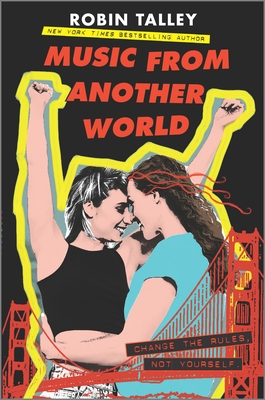
Book: “Music From Another World” by Robin Talley

Publishing Info: Inkyard Press, March 2020

Where Did We Get This Book: Kate owns it; Serena got it from the library!

Where You Can Get This Book: WorldCat.org | Amazon | Indiebound

Song Inspiration: “Alternative Ulster” by Stiff Little Fingers

Book Description: A master of award-winning queer historical fiction, New York Times bestselling author Robin Talley brings to life an emotionally captivating story about the lives of two teen girls living in an age when just being yourself was an incredible act of bravery.

It’s summer 1977 and closeted lesbian Tammy Larson can’t be herself anywhere. Not at her strict Christian high school, not at her conservative Orange County church and certainly not at home, where her ultrareligious aunt relentlessly organizes antigay political campaigns. Tammy’s only outlet is writing secret letters in her diary to gay civil rights activist Harvey Milk…until she’s matched with a real-life pen pal who changes everything.

Sharon Hawkins bonds with Tammy over punk music and carefully shared secrets, and soon their letters become the one place she can be honest. The rest of her life in San Francisco is full of lies. The kind she tells for others—like helping her gay brother hide the truth from their mom—and the kind she tells herself. But as antigay fervor in America reaches a frightening new pitch, Sharon and Tammy must rely on their long-distance friendship to discover their deeply personal truths, what they’ll stand for…and who they’ll rise against.

Kate’s Thoughts

Our newest Book Club theme is pretty unique, I think, in which we picked music genres out of a hat and then picking a random song from said genre. I was lucky in that I got punk, which is one of my favorite music genres, and then I got “Alternative Ulster” by Stiff Little Fingers, a Northern Irish band I had very limited knowledge of. But when I looked into the lyrics and it was about people dreaming of a better life and a better place where everyone can just live freely, my mind went to “Music From Another World” by Robin Talley, a book I bought in the early days of COVID but never read. It just seemed perfect given that it’s a book about two queer girls who are pen pals in the 1970s, who are contending with various laws that are threatening to make queer people targets of discrimination, hate, and violence. Sounds familiar, right? That’s the other reason I chose this book. And it just so happened punk music was also a theme!

(source)

Overall I really enjoyed “Music from Another World”, for a number of reasons. The first is that I liked the setting of late 1970s California, as this was a time that was pivotal in the gay rights movements of the 20th century, with Harvey Milk making history and making waves and LGBTQIA+ people pushing back against hateful legislation like Proposition 6 and other bills like it (all while said bills were being embraced and promoted by right wing bigots like Anita Bryant). Talley did a pretty good job of setting the scene, and showing protagonists Sharon and Tammy as they lean on punk music and each other through pen pal letters. The historical details were well presented and felt pretty easy to understand, and it breaks down this moment in ways that make it easy to connect to the current moment as LGBTQIA+ are being targeted again. I also liked the epistolary style of this book, told by letters and diary entries, but I know that such a style isn’t for everyone, as it can be a bit clunky at times (and is in this novel). I was able to forgive it because I like these kinds of found media/transcript plot devices, but also because I liked Tammy and Sharon slowly start to trust each other and develop a bond that neither were expecting. I also, as you can probably tell, really liked how this felt like a hopeful and earnest cry out to readers to not let discrimination and hate towards LGBTQIA+ people fester and take hold, and to push back. It’s hard to find hope in that regard these days. But like Harvey Milk said, ‘ya gotta give ’em hope’. And I fell like this book does that.

I enjoyed “Music from Another World”. It’s just the start of a new Book Club theme, and I have a feeling it’s going to be an interesting one!

Serena’s Thoughts

Overall, I liked this book, too, and agree with everything Kate said. I think the historical elements were particularly interesting and relevant to younger readers who may not be as familiar with this period in history, especially in the LGBT community. As Kate mentioned, there were some clearly intentional choices to focus on hope rather than despair, and I think that’s just always a really great message, regardless. This was especially noteworthy with the decisions made with regards to when and how to end the story.

I did struggle a bit with the style of the story. I’m a really hard sell the epistolary style in novels in general. I’m one of those annoying people who get fixated on details like “no one would EVER write out this much dialogue in a diary!!” So I did struggle to connect to the characters a bit. While I did like them, I think I felt so removed from their story due to the format of the story, that I never felt like I was really sucked into the story. I was too aware that I was reading the entire time to really enjoy this one, if that makes sense.

But I do think this book will appeal to a lot of readers and is a really unique way of telling this sort of story. It is very informative, while also reading as a sweet, teenage love story.

Kate’s Rating 8: A hopeful and far too relevant story about daring to be yourself and striving for a better reality, “Music From Another World” was enjoyable and inspiring.

Serena’s Rating 7: While I struggled with the format, I think this book will greatly appeal to a large swath of readers looking for a hopeful take on history and the present.

Book Club Questions

  1. What were your thoughts on the epistolary narrative device in this book? Did you feel like it worked?
  2. When Sharon visits the Castro with Peter, she notes that there are not many women at the protests, and that she feels like she doesn’t really belong. What do you think Talley was trying to say with this feeling of isolation?
  3. Talley opted to end the book with the failure of Prop 6, and didn’t go into the assassination of Harvey Milk by Dan White or the White Light Riots that happened after. With Milk being such a huge part of Tammy’s narrative, did you think ending before his death was a good narrative choice? Why or why not?
  4. Tammy and Sharon connected to each other at first because of their love of punk music. Have you ever connected with someone and bonded over a love of music?
  5. By the end of the book it’s a bit up in the air about Sharon and Peter’s relationship with their mother? Do you think that she will eventually accept her children as they are?
  6. This book came out in early 2020. What parallels do you see between this story and what is happening with American policy today?

Reader’s Advisory

“Music From Another World” is included on the Goodreads lists “Alex’s Sapphic Masterlist”, and “YA Set in the 1970s”.

Next Book Club Pick: “Girly Drinks: A World History of Women and Alcohol” by Mallory O’Meara

Kate’s Review: “American Vampire: 1976”

This post may contain affiliate links for books we recommend.  Read the full disclosure here.

Book: “American Vampire: 1976” by Scott Snyder, Rafael Albuquerque (Ill.), & Francesco Francavilla (Ill.)

Publishing Info: DC Comics, November 2021

Where Did I Get This Book: I own it.

Where You Can Get This Book: WorldCat.org | Amazon | Indiebound

Book Description: America is broken. Trust between the government and the American public has crumbled. Paranoia reigns supreme.

Skinner Sweet has exhausted all efforts to regain his lost immortality. With his powers and purpose gone, he is now determined to go out with a bang. At a seedy motorcycle rally in the desert where he’s closer than ever to his death wish, Pearl Jones and a shocking partner track him down for one last, desperate mission. The force known as the Gray Trader and its minions are tunneling through the bowels of the world to unleash hell on Earth–just in time for America’s bicentennial. With catastrophe looming, it’s up to Skinner and Pearl to reconcile and change the course of history–or die trying.

Review: Well folks, we have come to the end of another comic re-reading/comic completion hybrid, as “American Vampire: 1976” is the end of the road for the “American Vampire” series by Scott Snyder. There was a pretty substantial gap between “Volume 8” and “1976”, just as there was a gap in the real comics release of the series. I don’t know what caused the wait, but I remember part of my reason for kind of giving up on the series the first time around was due to the fact I knew it didn’t have an ending. Well, now it does, and to me it seemed like there were a few things that needed to be addressed in order to stick it. And…. I think that it mostly did, with a couple stumbles…

We have jumped forward to 1976, and our characters have scattered to the wind since we left them. Skinner Sweet, having been rendered mortal after his last tangle with the Gray Trader a decade prior, has accepted that he can’t regain his immortality and has decided to become a stuntman in hopes of going out in a blaze of glory. So when he’s approached by Pearl with one more mission, we find out what all our vampires have been up to leading up to the American Bicentennial. Pearl is barely holding things together with the VMS, Felicia is on a mission to save Gus from the Gray Trader who has taken him hostage, Travis Kidd blames himself for the loss of Gus, and we find out that Jim Book has returned to the fold and has been Pearl’s partner for a number of years. Oh, and Mimiteh has come back as well (and HOORAY, she isn’t just a stereotype AND he has clothing this time around). I loved that this took place in 1976, in a year that American was celebrating its history in the face of a lot of bleakness (the loss of the Vietnam war, post-Watergate disillusionment, etc), and as the VMS has to try and stop an apocalypse that is going to happen during the Bicentennial celebration. It’s a great tone, and a great way for the story to wrap up as America has it’s own, in a way, reflection moment. And the big last showdown with the Gray Trader and it’s final push to destroy the world was well thought out and had high stakes and lots of suspense.

There are a lot of characters that we need to tackle, and, for the most part, many of them get some good page time and a fair amount of focus. I loved seeing Pearl rally the troops, I enjoyed seeing Skinner being pulled in again as he’s trying to, maybe finally, be able to get his immortality back, and I liked seeing Travis Kidd have more growth and depth as he grapples with how he failed Felicia and Gus. But that does lead to one of the pitfalls here, as one of the characters who is a bit shafted is Felicia, as it felt like she was just a frenzied grieving mother as she worries about Gus’s well being. Sure, she gets some pretty okay moments, but she didn’t feel like Felicia, and since we were at the end of the road I really wanted more in saying goodbye. It ended up feeling abrupt and lacking for my favorite character in the series.

There was one other big stumble for me in this final collection as we wrap up this story, and I need to go into detail to explain the problem I had with it. SO, therefore I am going to have to tell you to skip to the last paragraph if you don’t want to know and give you a

SPOILER ALERT! (source)

So a few volumes back, it was revealed that Jim Book, the original hero who was the lawman pursuing Skinner Sweet back in the day after being his foster brother in childhood, was actually still ‘alive’ and was also a vampire from the American strain. It took this long for him to come back, and I was actually pretty amped to see him because I was excited to see him confronting Skinner, but more I was anticipating seeing him meet his daughter Felicia. And for awhile I was riding high on his presence, because it added a new interesting layer to Skinner, as his foil, who was not only an enemy but also his dearest friend and in some ways brother, was back in his life after so much baggage… But. BUT. Not only did we not get any pay off with Jim meeting his daughter Felicia (HONESTLY, HOW DARE THEY SIDELINE HER SO MUCH?)… Jim ends up betraying the VMS and has been evil and siding with the Gray Trader the whole time!!!!! WHAT THE FUCK?! What a frustrating and unearned heel turn for this character! And it felt like it was done 1) because it’s shocking and a HUGE blow and twist for the VMS, and 2) it just props up Skinner more as a hero because if Jim freaking BOOK is bad, then Skinner is going to look good by comparison, and you know what?

(source)

Am I being perhaps a little to precious about Jim Book as a character? Yeah, maybe. But it was also pretty damned rushed after a long delay to bring him back into the fold. There was a missed opportunity there because it would have been far more interesting for Skinner’s final push for potential redemption to be about his foster brother as opposed to his love for Pearl (especially since it made Pearl’s final story a bit too intwined with Skinner when she can stand on her own, thankyouverymuch).

Okay I complained a lot but for the most part I did enjoy “American Vampire: 1976”, I swear! The series had a lot to address and wrap up, and I thought that Snyder did justice to most of his characters and plot lines. And what a great moment in time for the story to end. I will miss Pearl, Felicia, Gus, and, God help me, even Skinner freakin’ Sweet. “American Vampire” is a great series, and I’m glad I finished it.

Rating 7: Overall this is a solid conclusion to an enjoyable series. “American Vampire: 1976” has some stumbles, but it’s nice to see Pearl, Skinner, Felicia, and others go out with a bang.

Reader’s Advisory:

“American Vampire: 1976” isn’t included on any Goodreads lists as of now, but it would fit in on “Recommendations for Buffy Fans” (though the entire series should probably be on that list too).

Book Club Review: “The Raven and the Reindeer”

This post may contain affiliate links for books we recommend.  Read the full disclosure here.

We are part of a group of librarian friends who have had an ongoing book club running for the last several years. Each “season” (we’re nerds) we pick a theme and each of us chooses a book within that theme for us all to read. Our current theme is retellings and re-imaginings.  For this blog, we will post a joint review of each book we read for book club. We’ll also post the next book coming up in book club. So feel free to read along with us or use our book selections and questions in your own book club!

Book: “The Raven and the Reindeer” by T. Kingfisher

Publishing Info: Argyll Productions, July 2017

Where Did We Get This Book: The library!

Where You Can Get This Book: WorldCat.org | Amazon | Indiebound

Retelling/Re-imagining: “The Snow Queen”

Book Description: When Gerta’s friend Kay is stolen away by the mysterious Snow Queen, it’s up to Gerta to find him. Her journey will take her through a dangerous land of snow and witchcraft, accompanied only by a bandit and a talking raven. Can she win her friend’s release, or will following her heart take her to unexpected places?

A strange, sly retelling of Hans Christian Andersen’s “Snow Queen,” by T. Kingfisher, author of “Bryony and Roses” and “The Seventh Bride.”

Kate’s Thoughts

I have very little familiarity with fairy tales that go beyond The Brothers Grimm, and while I know the basics of “The Snow Queen”, I never read it as a kid and I don’t know a lot of the details (if we’re being vulnerable on the blog today, my information mostly came from Tumblr posts when “Frozen” came out). But I did know that I like T. Kingfisher, and I liked the past reimagining she did, “What Moves the Dead”. So when Serena picked “The Raven and the Reindeer” I was on board. No questions asked.

I thought that “The Raven and the Reindeer” was not only a creative and unique reimagining of “The Snow Queen” based on my knowledge, I also thought that it was heartfelt and at times very funny. Which is something that I expect from Kingfisher these days. I really liked Gerta’s character arc, as she starts out as a starry eyed and somewhat naïve teenager who thinks she is in love with her life long friend Kay, who is very noncommittal to her as, really, any sort of significant person in his life. After he’s kidnapped by the Snow Queen and Gerta goes on a quest to save him, she starts her own personal journey of self discovery, with the help of a snarky raven named Mousebones with whom she can communicate, as well as that of Janna, a bandit girl with a heart of gold. I loved seeing Gerta start to realize that she may not necessarily need Kay to love her to feel whole and complete, and also starting to realize that perhaps her attractions are towards someone else. Kingfisher also makes such a fun character out of Mousebones, whose snarky attitude adds most of the humor and had me chuckling over and over again.

I really enjoyed “The Raven and the Reindeer”! T. Kingfisher has such a knack for charming stories that feel very original, and this would be a great place to start with her catalog if you haven’t already!

Serena’s Thoughts

This was a pretty easy book club pick for me. I knew I wanted to do a fairytale re-telling, and then, obviously, I’ve loved everything I’ve ever read by T. Kingfisher. Beyond that, “The Snow Queen” is a tough nut to crack as far as re-tellings go and I haven’t read too many of them (unlike the endless versions of “Beauty and the Beast” and “Cinderella” stories to be found!)

As predicted, I really liked Kingfisher’s take on this story. I’m pretty familiar with the original, so it was easy to recognize the many similarities as well as the points of divergence. In particular, I really liked the switch made to Gerta and Kay’s relationship, with Gerta slowly beginning to understand that while she still wanted to save her friend, Kay might not be where it’s at as far as love interests go. Instead, Kingfisher also reimagines the bandit girl who in this story serves as not only the true love interest, but also as a companion for Gerta on the second half of her journey.

I also really enjoyed the quirky animals found throughout the story. This is another staple of Kingfisher’s work, and it melded perfectly with this fairytale that already has a number of animals featured within it. The raven, of course, was hilarious and excellent, as well as the exuberant, magical otters that pull the Snow Queen’s sleigh. But, I have to say, the reindeer, for all that he’s only around for a very short bit, really hit me in the feels. I’ll admit that there were tears.

Overall, this was a fun re-imaging of the classic tale, and I think it will appeal to all fairytale re-telling fans!

Kate’s Rating 8: This is a charming and funny re-imagining of a fairy tale that I wasn’t super familiar with.

Serena’s Rating 8: Sweet and heartfelt, this is an excellent re-telling of “The Snow Queen.”

Book Club Questions

  1. How familiar are you with the original story? Was there a change that stood-out to you?
  2. Kingfisher re-imagines the relationships at the heart of this story. What do you think of her portrayal of Gerta and Kay’s frienship?
  3. There were a number of mini adventures throughout this story, which one did you enjoy the most and why?
  4. Which animal companion was your favorite and why?
  5. This story focuses on themes of courage and self-esteem. In what ways did the author tackle these topics and was it effective?

Reader’s Advisory

“The Raven and the Reindeer” isn’t on any Goodreads lists, but it should be on Popular The Snow Queen Retellings Books.

Next Book Club Pick: “Music from Another World”

Kate’s Review: “A Botanist’s Guide to Flowers and Fatality”

This post may contain affiliate links for books we recommend.  Read the full disclosure here.

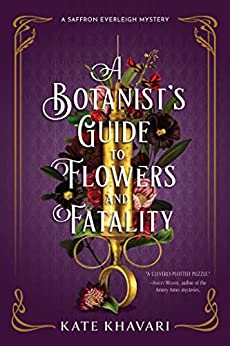
Book: “A Botanist’s Guide to Flowers and Fatality” by Kate Khavari

Publishing Info: Crooked Lane Books, June 2023

Where Did I Get This Book: I received an eARC from NetGalley.

Where You Can Get This Book: WorldCat.org | Amazon | Indiebound

Book Description: 1920s London isn’t the ideal place for a brilliant woman with lofty ambitions. But research assistant Saffron Everleigh is determined to beat the odds in a male-dominated field at the University College of London. Saffron embarks on her first research study alongside the insufferably charming Dr. Michael Lee, traveling the countryside with him in response to reports of poisonings. But when Detective Inspector Green is given a case with a set of unusual clues, he asks for Saffron’s assistance.

The victims, all women, received bouquets filled with poisonous flowers. Digging deeper, Saffron discovers that the bouquets may be more than just unpleasant flowers— there may be a hidden message within them, revealed through the use of the old Victorian practice of floriography. A dire message, indeed, as each woman who received the flowers has turned up dead.

Alongside Dr. Lee and her best friend, Elizabeth, Saffron trails a group of suspects through a dark jazz club, a lavish country estate, and a glittering theatre, delving deeper into a part of society she thought she’d left behind forever.

Will Saffron be able to catch the killer before they send their next bouquet, or will she find herself with fatal flowers of her own in Kate Khavari’s second intoxicating installment.

Review: Thank you to NetGalley for sending me an eARC of this novel!

It’s about a year since I reviewed the first Saffron Everleigh mystery, “A Botanist’s Guide to Parties and Poisons”, and I can tell you that I am still not really a plant person. It took me forever to get my act together this Spring when it comes to clearing my landscaping of refuse, so my bleeding heart wasn’t as, uh, hardy as I had hoped it would be, and the weeds have already taken over. But real life green thumb problems aside, I’m still very much into plant nerd Saffron and her love for various kinds of flora, and therefore I knew that I wanted to read her second adventure, “A Botanist’s Guide to Flowers and Fatality”! So back to post WWI England we go, with high hopes of deadly plants and Interwar sensibilities!

I am still really enjoying the time period and societal placement of this book. Post WWI London remains a setting that is rich with possibilities, and this time Khavari has implemented a device that I have a personal connection to: floriography! For those who are unfamiliar, floriography, or language of the flowers, is the Victorian social practice of using flowers to communicate feelings and intentions. When I worked at a Victorian Historic House in St. Paul, one of the tours I gave was all about sexuality and romance during this time period, and I talked about floriography in courtships. In “A Botanist’s Guide to Flowers and Fatality”, Saffron is brought into a murder investigation by Detective Inspector Green when bouquets of poisonous flowers are found at all the victims homes. It’s such a great way to make Saffron needed as not only a civilian, but also as a woman, and it’s such a great hook as a puzzle piece to the murder mystery. We also see the way that Saffron has to navigate her role as an amateur detective in this setting, facing a lot of issues not limited to misogyny and expected gender roles, and how she has to utilize her new academic partner, Michael Lee, in her works both at the university (where they are investigating plant poisoning reports throughout the countryside for research) and in the criminal investigation, because him being a man (a very smart and capable man, but no more so than Saffron herself) can open doors a bit easier than she alone can. I really liked Lee as a character, his sarcasm and wit egging Saffron on and leading to some fun moments of banter and sexual tension (we’ll be talking more on that in a bit), and I did like that while being a new member to the story he felt like he fit in almost immediately. His role both at the University parts of the book as well as the criminal parts rounded her out really well and complemented her without constraining her.

The mystery was also pretty well done. I loved seeing Saffron and Lee have to go into unseemly JAZZ CLUBS and have to wrangle with the idle rich and their COCAINE HABITS, and I loved the deadly bouquets and the undercover hijinks they have to get into to get to the truth. Given that this is solidly a cozy mystery series (ha, of the two of us it’s probably surprising that I’m the one covering the two cozy mystery series on the blog), it never goes into very suspenseful territory, as you generally know that Saffron is going to figure it all out and probably come out unscathed, and it’s never TOO gruesome. But that doesn’t mean that Khavari’s mystery is dull by any means, and I thought that there were well done red herrings and well executed ‘ah ha!’ moments.

I will say that there was one aspect that didn’t quite work for me that kind of brought down the rest of the book in some ways: we find ourselves in a bit of a love triangle with Saffron. Our first suitor is Alexander, her partner in detection from the first book, who has gone on the Amazon expedition mentioned in that novel. Saffron has been exchanging letters with him while he’s on the trip. The other, of course, is the aforementioned Lee, her new partner in detection who is pretty much the opposite of Alexander in all ways. Where Alexander is brooding, Lee is extroverted and vivacious. Where Alexander is earnest, Lee is sardonic and a bit of a bad boy. It’s a trope we have seen many times in a love triangle, and I was kind of bummed to see Saffron thrust into this when she is so much more interesting on her own and doesn’t need romantic conflict (some of which, on Alexander’s side, felt very out of character and made him pretty unlikable, at least to me) to buoy up her story.

So, aggravating love triangle aside, I did enjoy “A Botanist’s Guide to Flowers and Fatality”. It continues to represent the time and place in an enjoyable way, and Saffron Everleigh is still a fun and engaging heroine!

Rating 7: A fun new adventure for tenacious detective Saffron Everleigh, with interesting new characters and deadly flowers abound.

Reader’s Advisory:

“A Botanist’s Guide to Flowers and Fatality” is included on the Goodreads lists “Historical Mystery 2023”, and “Cozy Mysteries 2023 New Releases”.

Previously Reviewed:

Blog Tour: “The Late Mrs. Willoughby”

This post may contain affiliate links for books we recommend.  Read the full disclosure here.

Book: “The Late Mrs. Willoughby” b y Claudia Gray

Publishing Info: Vintage, May 2023

Where Did I Get this Book: from the marketer!

Where Can You Get this Book: Amazon | IndieBound | WorldCat

Book Description: Catherine and Henry Tilney of Northanger Abbey are not entirely pleased to be sending their eligible young daughter Juliet out into the world again: the last house party she attended, at the home of the Knightleys, involved a murder—which Juliet helped solve. Particularly concerning is that she intends to visit her new friend Marianne Brandon, who’s returned home to Devonshire shrouded in fresh scandal—made more potent by the news that her former suitor, the rakish Mr. Willoughby, intends to take up residence at his local estate with his new bride.

Elizabeth and Fitzwilliam Darcy of Pemberley are thrilled that their eldest son, Jonathan—who, like his father, has not always been the most socially adept—has been invited to stay with his former schoolmate, John Willoughby. Jonathan himself is decidedly less taken with the notion of having to spend extended time under the roof of his old bully, but that all changes when he finds himself reunited with his fellow amateur sleuth, the radiant Miss Tilney. And when shortly thereafter, Willoughby’s new wife—whom he married for her fortune—dies horribly at the party meant to welcome her to town.

With rumors flying and Marianne—known to be both unstable and previously jilted by the dead woman’s newly made widower—under increased suspicion, Jonathan and Juliet must team up once more to uncover the murderer. But as they collect clues and close in on suspects, eerie incidents suggest that the killer may strike again, and that the pair are in far graver danger than they or their families could imagine.

Previously Reviewed: “The Murder of Mr. Wickham”

Review: I really loved “The Murder of Mr. Wickham” when I read it last year. So much so that it became my preferred present for the many readers in my family. Not only was it an excellent mystery, but the author managed to do the near-impossible and accurately depict not one, not two, but a huge cast of Jane Austen’s most popular characters. And on top of that, she created two new characters who were able to hold their own in this very competitive cast. All of this to say, I was incredibly pleased to see that there was a sequel coming out this year!

When Juliet Tilney sets out on another social visit, she’s confident in assuring her parents that there is no possibility of murder this go around. Oh, how wrong she will be. For, when visiting the still-struggling Marianna Brandon, Juliet Tilney is introduced to the Willoughbys, and during one note-worthy dinner party, what should happen but that Mrs. Willoughby drops dead of poison. Now, with the help of her friend Jonathan Darcy, Juliet once again sets out to get to the bottom of the mystery.

I was really excited to see what this book had in store. While I was very impressed with the first book, it was also very much a product of the specific circumstances that made up the plot. Jonathan and Juliet were excellent new characters, but the work of carrying the plot and the interest of the reader, was largely hefted by the sprawling cast of popular Jane Austen heroes and heroines. This book is a much more tightly focused story with a much more limited cast of characters. In this way, Jonathan and Juliet had more work to do to carry the book largely on their own. And I think they were more than capable of the job!

I really liked the continued exploration of Jonathan’s low level autism and how his life has been shaped by the reactions of others and their ability or inability to accept or understand him. Here, we get an insight into Jonathan’s past as a victim of bullying at the hands of none other than Mr. Willoughby himself. We also see Jonathan struggle to understand his changing feelings for Juliet and realizing that he, and not only others, has been placing limitations on himself. It was an interesting and subtle exploration that I thought worked very well. For her part, Juliet’s story is much more straight-forward. But I particularly enjoyed the small commentary that ran through the book that acknowledges the limited choices that young women like Juliet faced. A social visit such as this, where Juliet travels to live with her friends the Brandons for several weeks, would not just be a trip of leisure. No, a large chunk of the expectations and motivation would be that a young woman would gain access to new society and new opportunities for marriage. Juliet reflects several times on the challenges between balancing the very practical concerns of a woman such as herself, one with only limited financial support from her family, with her own romantic preferences.

I also really enjoyed the mystery in this one. I was able to predict a few of the secondary aspects of the mystery, but the author did a great job of laying out believable red herrings and misdirecting the reader effectively from the larger truth behind what had happened and why. The motivation, in particular, was interesting and played into a plotline that I had been thinking of as a completely separate thing up until the end.

I will say, however, that this one did suffer a bit by the loss of the other Jane Austen characters. While I enjoyed Juliet and Jonathan immensely, my own preferences for Austen’s characters would not have me picking a focus on “Sense and Sensibility” and all of the secondary characters that make up this book’s cast. As these characters connect to the first book, I understand why this choice was made, and I also think that, as a whole, they were all done very well. I really liked getting to see Eleanor and Edward, in particular. But Brandon and Marianne just aren’t top choices for me, personally, so I couldn’t help being a bit less interested in their dynamics.

This was a very solid follow-up to the first book! In many ways, Claudia Gray made more a statement with this book than with the first: that wasn’t just a happy chance! No, she’s just that legitimately talented. Fans of the first book will definitely enjoy this, and I recommend both of these books to any fans of historical mysteries or Jane Austen.

Rating 8: With the first book, Gray made a splash as one of the best authors tackling Jane Austen re-imaginings today. With this one, she cements her place in the genre.

Reader’s Advisory:

“The Late Mrs. Willoughby” isn’t on any Goodreads lists, but it should be on Jane Austen Re-tellings.

Book Club Review: “Spear”

This post may contain affiliate links for books we recommend.  Read the full disclosure here.

We are part of a group of librarian friends who have had an ongoing book club running for the last several years. Each “season” (we’re nerds) we pick a theme and each of us chooses a book within that theme for us all to read. Our current theme is retellings and re-imaginings.  For this blog, we will post a joint review of each book we read for book club. We’ll also post the next book coming up in book club. So feel free to read along with us or use our book selections and questions in your own book club!

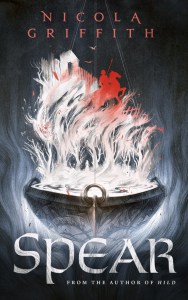
Book: “Spear” by Nicola Griffin

Publishing Info: Tordotcom, April 2022

Where Did We Get This Book: The library!

Where You Can Get This Book: WorldCat | Amazon | Indiebound

Retelling/Re-imagining: “Legends of King Arthur”

Book Description: The girl knows she has a destiny before she even knows her name. She grows up in the wild, in a cave with her mother, but visions of a faraway lake come to her on the spring breeze, and when she hears a traveler speak of Artos, king of Caer Leon, she knows that her future lies at his court.

And so, brimming with magic and eager to test her strength, she breaks her covenant with her mother and, with a broken hunting spear and mended armour, rides on a bony gelding to Caer Leon. On her adventures she will meet great knights and steal the hearts of beautiful women. She will fight warriors and sorcerers. And she will find her love, and the lake, and her fate.

Kate’s Thoughts

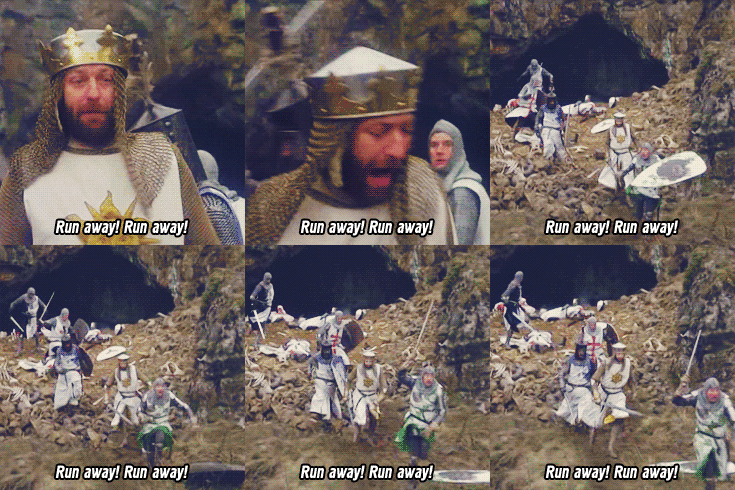
I’ve mentioned a number of times on here that I am not super versed in some of the more classic European literature tales, and that extends to Arthurian legends. I think that the adaptations I have seen all the way through are Disney’s “The Sword in the Stone”, which is more about Arthur getting the sword and not much else, and “Monty Python and the Holy Grail”, which is, of course, near perfection. But it’s not like an absurdist comedy with holy hand grenades and killer rabbits is going to reflect Arthur in all his significance. So going into “Spear” I didn’t really know what to expect, as I have a vague working knowledge of some aspects of the source material, but not much. And I’m sorry to say that while I went in trying to be open minded, “Spear” wasn’t my jam. I just kept thinking about coconuts and John Cleese slaughtering people in ridiculous ways and wishing I was watching that again.

(source)

So there were some things I liked about “Spear” and that was mostly in the ways that Nicola Griffin tinkered with the characters and the canon. Whether it was having main character Peretur be a gender bent version of Parzival during his quest with the other knights for the Holy Grail. I liked Peretur’s queer relationship with Nimuë, I liked that Arturus (Arthur), Gwenhwyfar (Guinevere) and Llanza (Lancelot) were in a loving thrupple as opposed to being in a dramatic love triangle, and I liked some of the ways that Griffin explores themes of the Grail and the magical bits of it. But there was so much I struggled with. The biggest issue I had was the writing. It is VERY lyrical, and very detailed, and I had initially picked this book up in print form but threw in the towel VERY quickly and opted for audio. My thought process was that I would be on a couple road trips to Duluth before book club and could use that time to listen, as I’ve had success in the past with that if I find the writing tricky. But it didn’t really help this time. And I think that had I had more investment in the Arthurian source material I would have been more vested in engaging, but since I don’t know it very well I found this book to be a tricky read, bordering on a chore. I am inclined to believe that this is probably a ‘your mileage may vary’ situation, but it just didn’t click with me.

Fans of King Arthur and very purple prose writing styles would probably connect with this, but it wasn’t for me.

Serena’s Thoughts

This was an interesting read for me. On paper, it has a lot of things I really enjoy. I’m fairly familiar with King Arthur legends, but mostly through a strange smattering of exposure to various retellings and adaptations and my own internet rabbit holes of research. I’ve only looked at a few of the “original” legends, themselves. All of this to say, when I picked up “Spear,” I was able to tell right away that this was going to appeal to the big fans of these stories. And that comes to the second thing I typically enjoy: lyrical writing. From the very first page, this is what stands out the most about this book for me. The writing is dense and poetic. There were many times that I found myself having to re-read long sentences to piece together exactly what was being said. As a fan of lyrical writing, I’m used to this experience to some extent, but even for me, I found this one a bit more challenging that I would have liked. That said, I can’t emphasize enough how impressed I am with Griffin’s ability to match the tone of the “original” King Arthur legends. For the big fans, this book will feel as if it can be neatly slotted right in alongside those, as the style of writing and storytelling found here match so well to those.

It’s also clear that Griffin has done her research. For such a short novel, it’s truly impressive just how many details and references she manages to pack in there. As a fan of Juliet Marillier’s, an author who largely relies on Irish folklore and legends, I enjoyed seeing some of these tales and beings woven in throughout this story.

I also really liked our main character and her story. I had a few concerns early on when she showed hints of being a bit too unbelievably good at certain skills with no explanation, but luckily there did turn out to be good reasons for this. I also enjoyed the gender-swapping of her character from male to female and the various changes and additions that Griffith brought to the story. Overall, I did find myself struggling to read this one more than I had hoped (the writing is hard), but I do think that it will greatly appeal to hardcore King Arthur fans.

Kate’s Rating 5: This was a bit of a slog for me, as I couldn’t connect to the writing style and I know very little about King Arthur lore and legend.

Serena’s Rating 8: For me, personally, this was probably a 7. But I rounded up to an 8 for the true Arthur aficionados who will appreciate the meticulous and detailed work that went into creating this story.

Book Club Questions

  1. How familiar are you with the legends of King Arthur? Specifically, how much did you know about the various iterations of Percival?
  2. Did you like the gender-swapped approach to this story? How do you think this changed or impacted the tale as a whole?
  3. The writing in this book is very in line with the style found in many of the more traditional Arthur stories. How did this impact your reading?
  4. How familiar were you with the various Irish legends and folklore that wove in and out of this story?
  5. This is a novella, so it has a reduced page count from a typical novel. Did this seem to fit the story we have here? Would you have liked it to be longer or shorter? And if so, why? Were there parts you wanted to know more about or could have done without?

Reader’s Advisory

“Spear” is on these Goodreads lists: Amazons, Valkyries, and Warrior Women and Sapphic Retellings.

Next Book Club Pick: “The Raven and the Reindeer” by T. Kingfisher

Book Club Review: “Great or Nothing”

This post may contain affiliate links for books we recommend.  Read the full disclosure here.

We are part of a group of librarian friends who have had an ongoing book club running for the last several years. Each “season” (we’re nerds) we pick a theme and each of us chooses a book within that theme for us all to read. Our current theme is retellings and re-imaginings.  For this blog, we will post a joint review of each book we read for book club. We’ll also post the next book coming up in book club. So feel free to read along with us or use our book selections and questions in your own book club!

Book: “Great or Nothing” by Joy McCullough, Caroline Tung Richmond, Tess Sharpe, & Jessica Spotswood

Publishing Info: Delacorte, March 2022

Where Did We Get This Book: The library!

Where You Can Get This Book: WorldCat | Amazon | Indiebound

Retelling/Re-imagining: “Little Women”

Book Description: A reimagining of Little Women set in the spring of 1942, when the United States is suddenly embroiled in the second World War, this story, told from each March sister’s point of view, is one of grief, love, and self-discovery.

In the spring of 1942, the United States is reeling from the attack on Pearl Harbor. While the US starts sending troops to the front, the March family of Concord, Massachusetts grieves their own enormous loss: the death of their daughter, Beth.

Under the strain of their grief, Beth’s remaining sisters fracture, each going their own way with Jo nursing her wounds and building planes in Boston, Meg holding down the home front with Marmee, and Amy living a secret life as a Red Cross volunteer in London–the same city where one Mr. Theodore Laurence is stationed as an army pilot.

Each March sister’s point of view is written by a separate author, three in prose and Beth’s in verse, still holding the family together from beyond the grave. Woven together, these threads tell a story of finding one’s way in a world undergoing catastrophic change.

Kate’s Thoughts

I’m someone who has what is probably an average relationship with the book “Little Women”. I read it once a long time ago, I really like the 1994 film with Winona Ryder, and when I was working at a historic Victorian house I was one of the people who would lead a “Little Women” themed Christmas tour. I’m not super wedded to the book like I am “Anne of Green Gables”, but I like it enough. When I saw that Book Club was going to take on a “Little Women” re-imagining that takes place during World War II, it struck me as a perfect time period to revisit this story of sisters growing up during war time and learning hard life lessons while also finding their places in the world. And I was happy to see that I was right.

“Great or Nothing” is written in four different perspectives from four different authors, one for each March sister. The story plunks us midway through the original tale, with Beth already dead and Jo, Meg, and Amy separated and feeling the distance (especially since they all left on a sour note between the three of them). The surviving sisters take on roles that women could have during WWII that perfectly fit each of them. We have Meg at the home front doing fundraising, planting victory gardens, and teaching children. We have Jo working in a plane factory, doing a whole Rosie the Riveter thing. And we have Amy in London volunteering for the Red Cross, and meeting up with Laurie who is fighting in Europe. Beth also has a perspective, with poetry being used because she’s dead, I guess? Regardless, I really felt like all of these settings were perfect for the various sisters, and I mostly liked how all of the sisters felt like their core characters set in a new time. I think that my favorite was Meg’s, as the home front has always fascinated me with war bonds, fund raising, and advocacy, but I did like Jo’s story of working in a factory and finding romance with a lady war reporter named Charlie (as a true Professor Bhaer fan, I loved how they brought this relationship into this story with a queer twist). That said, I did find it a little bit of a bummer that we were at a point in the story where Meg, Jo, and Amy weren’t really interacting with each other, as that is part of the charm of the original story for me. It seemed like an odd choice, but at the same time since it was four different authors writing each sister, I suppose that makes some sense so as not to step on each other’s toes.

“Great or Nothing” is a really well thought out re-imagining of a classic tale, with a nice blending of voices from different authors to give Meg, Jo, Beth, and Amy March interesting stories in the 20th century.

Serena’s Thoughts

I’m probably similar to Kate in my devotion levels to the original “Little Women.” Enjoyed the book, liked the 90s version of the movie well enough, really liked the recent one that was released a few years ago. But, like Kate, I don’t have any strong emotions attached to it, which in many ways makes it the perfect book for a retelling! If you’re not a devoted fan, you won’t get as mad at changes!

Anyways, the first thing that stood out to me was how much I liked the change in time period. There are a million and one WWII books out there, but this story really took a unique angle at exploring all of the very different ways that women contributed to the war front, both at home and abroad. Not only did this give the reader a wide range of angles on this particular time of history, but all of these choices also worked perfectly with the characters themselves. I was also very impressed with how well the different writing styles of all of the authors worked together. Perhaps….too impressed? If I hadn’t know that this was authored by four different people, I’m not sure I would have guessed, and I’m not sure that’s really for the best. Obviously, cohesion on this sort of project is key, but I also think you lose something from the original goal if every author’s voice is paired down to the point that they’re indistinguishable from each other.

As for the story, I thought it did a good job of hitting the major plot points that fans will look for. That said, I didn’t necessarily enjoy many of these chapters. While I liked the look at the types of work that Meg and Jo were doing, their personal arcs I found more frustrating. Honestly, if I had to hear one more time about the big fight they all got into, I think I would have screamed. In this way, I felt like this book really missed the mark on the overall theme of “Little Women.” Yes, the sisters have their quarrels, but the primary heart of the story is built around the deep bonds they all share. So for this book to spend the vast majority of its time with each sister endlessly reflecting on their broken ties…it just felt like a bummer and a let down of the original premise. This being the case, Amy’s story rose to the top for me as the only one that felt as it had any real action or stakes involved. I enjoyed getting to see her and Teddy’s romance play out more in real-time as well, rather than the off-page romance we get in the original.

Overall, I felt like this book was ok. I didn’t love anything it was doing, but I also didn’t hate any of it. I think Meg and Jo both could have been done better by, but I really enjoyed Beth’s poetry sections and Amy’s plot line. Fans of the original looking for a unique take will likely enjoy this, however.

Kate’s Rating 8: A great new setting for a classic tale of sisters growing up and finding themselves, “Great or Nothing” is a successful “Little Women” retelling.

Serena’s Rating 7: An interesting reimaging with an excellent use of shifting the historical setting, but it still somehow feels as if it misses the mark on the heart of the original story.

Book Club Questions

  1. What did you think of the time period in this retelling? Do you think that World War II fit in with the “Little Women” story?
  2. Each of the March sisters was written by a different author. Did you like any sister more than the others?
  3. Did the Beth sections with the poetry work for you as you were reading? Would you have preferred to see another character’s perspective over Beth’s, like Laurie, or Marmee?
  4. Which of the sister’s plots would you like to be in? The homefront? A factory? Acting as a Red Cross volunteer overseas? Something else?
  5. What is your experience with the original “Little Women” story?

Reader’s Advisory

“Great or Nothing” is included on the Goodreads lists “Book Riot 2022 #21: Read a Queer Retelling of a Classic of the Canon, Fairytale, Folklore, or Myth”, and “YA & Middle Grade Retellings of “Little Women””.

Next Book Club Pick: “The Raven and the Reindeer” by T. Kingfisher

Kate’s Review: “Lone Women”

This post may contain affiliate links for books we recommend.  Read the full disclosure here.

Book: “Lone Women” by Victor LaValle

Publishing Info: One World, March 2023

Where Did I Get This Book: I received an eARC of this novel from the publisher via NetGalley.

Where You Can Get This Book: WorldCat | Amazon | Indiebound

Book Description: Blue skies, empty land—and enough room to hide away a horrifying secret. Or is there? Discover a haunting new vision of the American West from the award-winning author of The Changeling.

Adelaide Henry carries an enormous steamer trunk with her wherever she goes. It’s locked at all times. Because when the trunk is opened, people around her start to disappear

The year is 1914, and Adelaide is in trouble. Her secret sin killed her parents, and forced her to flee her hometown of Redondo, California, in a hellfire rush, ready to make her way to Montana as a homesteader. Dragging the trunk with her at every stop, she will be one of the “lone women” taking advantage of the government’s offer of free land for those who can cultivate it—except that Adelaide isn’t alone. And the secret she’s tried so desperately to lock away might be the only thing keeping her alive.

Told in Victor LaValle’s signature style, blending historical fiction, shimmering prose, and inventive horror, Lone Women is the gripping story of a woman desperate to bury her past—and a portrait of early twentieth-century America like you’ve never seen.

Review: Thank you to One World for sending me a link to an eARC of this novel on NetGalley!

Rejoice, horror fans, for we are once again blessed with a stunning new horror story by Victor LaValle. It has been awhile since I’ve dived into a LaValle book, and I was very, very stoked when “Lone Women” ended up in my inbox. And I was even MORE thrilled when Book of the Month had it as a choice for March, because I DO LOVE A PRINT COPY OF A GREAT HORROR NOVEL! I had high expectations for this novel, following a Black woman named Adelaide who decides to try and homestead in Montana in the early 20th Century, and who has a mysterious steamer trunk she just needs to keep an eye on and keep closed. Because that premise alone is VERY enticing, and when you throw in LaValle, you know it’s going to be even moreso. This man knows how to craft a well done horror tale with lots of subversions, after all.

I can’t really talk too much about the horror aspects of this novel, as I really don’t want to spoil too much because I do think that part of the appeal is the slow reveal and the surprises that come with it. What I will say is that LaValle has once again taken something that we’ve seen before, but turned it on its head and made it feel fresh, unique, and tragic on top of the scary. Adelaide is running from a violent moment that has changed the course of her life, and she is bringing with her the literal baggage that comes with that violent moment, and we have no clue as to what it is. But what we do know is that she is desperate to keep that baggage contained, whether it is the actual bag that she has brought with her, or the trauma that has been inflicted upon her and her family due to the circumstances that fell upon them all. I loved the slow tension of the trunk with the lock, and I also loved the slow burn horror elements that were more steeped in realism. I was just as nervous of Adelaide when she was surrounded by suspicious people whose motives we had no clue about as I was worried about just what it was that she was lugging around in the trunk. And I REALLY loved what exactly it was what was in said trunk, as it reminded me of a specific story that I had enjoyed at one point, but have turned my back on as of late due to questions of ethical consumption of it. And that’s all I will say.

And I won’t tell so as not to ruin it. (source)

But it is also the very gritty and realistically bleak historical fiction aspects of this book that jump off the page. LaValle weaves together a tapestry of not only the American imperialist ideals of Manifest Destiny, but also the way that the American Government would use this to its own advantage, and how it could appeal to a group of Othered women. Whether it is Adelaide due to her race as well as her horrific burden, or neighbor Grace and her son Sam who are functioning as a single mother and child trying to make it together, or Miss Bertie and Fiona Wong who are not only women of color but also two lesbians who have to hide who they are, the idea of being ‘lone women’ and trying to make a life in isolation, as well as while carrying various secrets that may keep them emotionally isolated, was profound as hell. The grim realities of trying to make it in an unfamiliar place with harsh winters, the danger of being a woman alone with strangers passing through, the way that the haves will try and take advantage of the have nots, all of it feels very real and unromantic takes on the idea of the West. This book absolutely feels like a Western, but it doesn’t make it seem like a charming simpler time you may find in a John Wayne movie. It highlights the misogyny, colonialism, and racism of that ideal. And I loved that.

“Lone Women” is another fantastic novel by Victor LaValle that takes on horror themes and tweaks them to feel more resonant and poignant than one may expect. I always love LaValle’s horror works, and this one is, I think, my favorite of the lot.

Rating 9: Breathtaking horror and gritty historical fiction rolled into one, “Lone Women” shows the tenacity of outsider women with secrets, some of which are otherworldly.

Reader’s Advisory:

“Lone Women” is included on the Goodreads lists “The Best Historical Horror Novels”, and “Horror to Look Forward To in 2023”.