Kate’s Review: “Earthdivers (Vol. 1): Kill Columbus”

This post may contain affiliate links for books we recommend.  Read the full disclosure here.

Book: “Earthdivers (Vol. 1): Kill Columbus” by Stephen Graham Jones & Davide Gianfelice (Ill.)

Publishing Info: IDW, September 2023

Where Did I Get This Book: I received an ARC from the publisher at ALAAC23

Where You Can Get This Book: WorldCat.org | Amazon | Indiebound

Book Description: The year is 2112, and it’s the apocalypse exactly as rivers receding, oceans rising, civilization crumbling. Humanity has given up hope, except for a group of Indigenous outcasts who have discovered a time travel portal in a cave in the desert and figured out where everything took a turn for the worst: America.

Convinced that the only way to save the world is to rewrite its past, they send one of their own—a reluctant linguist named Tad—on a bloody, one-way mission to 1492 to kill Christopher Columbus before he reaches the so-called New World. But there are steep costs to disrupting the timeline, and taking down an icon isn’t an easy task for an academic with no tactical training and only a wavering moral compass to guide him. As the horror of the task ahead unfolds and Tad’s commitment is tested, his actions could trigger a devastating new fate for his friends and the future.

Join Stephen Graham Jones and artist Davide Gianfelice for Earthdivers, Vol. 1, the beginning of an unforgettable ongoing sci-fi slasher spanning centuries of America’s Colonial past to explore the staggering forces of history and the individual choices we make to survive it.

Review: Thank you to IDW comics for giving me an ARC of this book, and thank you to Stephen Graham Jones for being SO kind when you signed it!

Back when I had just gotten back from ALA, people were asking me what my highlights were. And one of them was meeting Stephen Graham Jones at a signing at the IDW booth. I was already ecstatic when I saw that he was going to be there, and even more excited when I realized that he was signing ARCs of the first volume of his series “Earthdivers”, a fantasy/speculative fiction/historical fiction series about Indigenous people on a dying earth using a time travel portal to send one of their own back in time to stop America from happening (as America is seen as the main driver of the climate change disaster). I had been eager for this first volume, and getting it WHILE MEETING HIM (and having a lovely conversation!) was just the very best. And “Earthdivers (Vol. 1): Kill Columbus” is everything I had hoped it would be.

The concept alone is so unique and also so, so bold. I mean, it takes serious spunk to frame a story about the assassination of a man that is still, in a number of places, celebrated every year as the supposed ‘discoverer of America’, but whose horrific crimes and direct and indirect actions towards the Indigenous peoples on this continent are impossible to ignore. Even I was like ‘whoa’ when I read the premise of the comic book, but the rage is earned, and it is palpable on the pages as Tad, the man chosen to go back in time and assassinate Columbus, has to take on a mission with high and dangerous stakes. And low odds of success. I loved seeing Tad grapple with the fact he will never see his wife again, that he has to do things that he never thought he could do, and also really enjoyed seeing him slowly start to accept his mission and the bloody business that goes with it. Jones depicts the brutality of life on the ship, whether it’s the dire conditions or the hierarchy that lends itself to violence, and also shows the less acknowledged aspects of the voyage the ships are on (specifically the religious zeal that Columbus has). I also found the tension building and building and building as Tad realizes that his chances to kill Columbus and stop that version of America from happening are slipping through his fingers, and that if he fails, it was all for nothing, and it could mean the end of humankind. The tension is rife, the violence is visceral, and the anger and desperation is well depicted.

But I also liked the ways that Jones depicts the others back on Earth in 2112, as the world is dying due to climate change and they are becoming all the more desperate, especially when they realize that the time portal in the cave may have more dangers than realized. I really liked Sosh, Tad’s wife who is in an uneasy partnership with Yellow Kid, the member of the group who came up with the idea, but has been a little shifty as far as Sosh is concerned. I liked the moral ambiguity that Jones gives a number of his characters, as it raises very difficult questions about the lengths that these characters are willing to go to make this mission a success. And along with that, I really enjoyed how the time travel themes didn’t feel like super hard Sci Fi, and more like fantastical or speculative based in the system in place. We don’t really know what the deal is with this cave, but I have a feeling things are going to be explored as the series goes on.

And I really liked the artwork. I like the use of color and the angles that Davide Gianfelice brings to the page, and I loved the detailed character designs for our main players.

(source: IDW)

What a fantastic start to what is sure to be a fantastic series! “Earthdivers (Vol. 1): Kill Columbus” is another shining star from Stephen Graham Jones. I cannot wait to see what happens next!

Rating 9: Unapologetic, daring, dark, but hopeful, “Earthdivers: Kill Columbus” is a must read in speculative fiction with a visceral message and lots of what ifs.

Reader’s Advisory:

“Earthdivers (Vol. 1): Kill Columbus” isn’t on any Goodreads lists as of now, but it would fit in on “Graphic Novels & Comics by The Aboriginal, Indigenous, and Native Peoples of the World”, and “Best Time Travel Fiction”.

Serena’s Review: “Murder at Midnight”

This post may contain affiliate links for books we recommend.  Read the full disclosure here.

Book: “Murder at Midnight” by Katharine Schellman

Publishing Info: Crooked Lane Books, September 2023

Where Did I Get this Book: ARC from the publisher!

Where Can You Get this Book: WorldCat.org | Amazon | IndieBound

Previously Reviewed: “The Body in the Garden” and “Silence in the Library” and “Death at the Manor”

Book Description: Perfect for fans of Deanna Raybourn and Ashley Weaver, when a body is found shot to death after an unexpected snowstorm, Lily Adler quickly realizes that some people will stop at nothing to bury their secrets this holiday season.

Regency widow Lily Adler is looking forward to returning to Hertfordshire to spend time with the family of her late husband. She is also excited that Captain Jack Hartley, her friend and confidante, will be visiting his own family after a long voyage at sea. With winter quickly approaching, Lily is most excited at the prospect of a relaxing and enjoyable Christmastide season away from the schemes and secrets she witnessed daily in London.

At a neighborhood ball, she soon becomes reacquainted with a friend of her late husband, Peter Coleridge, a wealthy man who not only manages Irish investments, but also a fund that most of the locals of Hertfordshire take part in. There, she also learns Jack’s sister, Amelia, is the subject of much of the neighborhood gossip—although Amelia refuses to explain if there is any truth to it. For a brief moment, Lily wonders if she ever really left London.

When a snowstorm forces several guests, including both the Adlers and the Hartleys, to stay the night, Lily quickly deduces that all is not well this holiday season. In the morning, a maid discovers the body of a guest in the poultry yard, shot to death—and he is the same man that is scandalously linked to Amelia.

Lily accepts the offer to assist in the investigation, but will she find more than what she bargained for the more she digs? Or will she herself be buried deep within the snow?

Review: Time for another historical mystery review! At this point, I’m really only up-to-date with this series and Sherry Thomas’s “Charlotte Holmes” series. There’s just not enough time in the day to get to all of the books I want, and, unfortunately when push comes to shove, I’ll often prioritize SFF over historical fiction and mysteries. But I do seem to be able to manage to keep up with these two series. I was particularly interested in this latest Lily Adler book due to the fact that while I had enjoyed all of the books up to that point, I had real problems with the latest one. So in my mind, the quality of this latest book would be really telling for my continued enjoyment of the series! And I’m happy to report that while we may not have recaptured the highs of the first book or two, this one is a solid entry in the series and enough of a return to form to ensure my continued reading of these books.

There was a lot to like in this new Lily Adler book. For one thing, I really love this style of mystery, where a large group of suspects (and victims!) are trapped in a location together and must solve a murder. The format allows for a large cast of characters, tons of red herrings that are believable, and much emphasis placed on interpersonal relationships, something that I always focus on in my reading. I also enjoyed the exploration of the group dynamic, which we see done expertly here. As Lily and her companions go longer and longer trapped together in this house, we see the breakdown of conventions and norms, the reduction of individuals to their more basic instincts, and the tendency for people to circle the wagons and “other” anyone who doesn’t fit within strict definitions of right and wrong. For her part, Lily Adler sweeps through these tensions with grace and a practical eye for how these dynamics can relate to guilt and innocence, misplaced fear or rightfully felt concern to hide one’s involvement in a crime. I also really enjoyed the fact that while I was able to piece together some clues to the mystery, there were many other twists and turns that I didn’t spot coming!

I also really enjoyed the continued interpersonal and romantic dynamics. In the previous book, a new love interest was introduced, and while I didn’t have any issues with this character on his own, I was already firmly in the corner of Lily and Jack. So of course I was beyond pleased when Jack himself returned in this book and played a fairly central role. But I also was surprised by how much I enjoyed the continued exploration of Lily’s relationship with this other suitor. The relationship took a few surprising turns, and I was impressed by the way the author used this relationship to highlight the true choices that women faced in this time, even when partnered to a good man by every definition.

I also really enjoyed meeting some new characters, notably Jack’s younger sister Amelia who plays a central role in this story. We also get some POV chapters from her, which I very much enjoyed. Fans of the series are sure to enjoy this one!

Rating 8: All in all, this was an excellent entry in the series. I was glad to see the return of fan favorite characters, and was pleased to see an improvement in the mystery itself.

Reader’s Advisory:

“Murder at Midnight” can be found on this Goodreads list: Historical Mystery 2023

Kate’s Review: “Vampires of El Norte”

This post may contain affiliate links for books we recommend.  Read the full disclosure here.

Book: “Vampires of El Norte” by Isabel Cañas

Publishing Info: Berkley, August 2023

Where Did I Get This Book: I received an eARC from NetGalley.

Where You Can Get This Book: WorldCat.org | Amazon | Indiebound

Book Description: Vampires and vaqueros face off on the Texas-Mexico border in this supernatural western from the author of The Hacienda.

As the daughter of a rancher in 1840s Mexico, Nena knows a thing or two about monsters—her home has long been threatened by tensions with Anglo settlers from the north. But something more sinister lurks near the ranch at night, something that drains men of their blood and leaves them for dead. Something that once attacked Nena nine years ago.

Believing Nena dead, Néstor has been on the run from his grief ever since, moving from ranch to ranch working as a vaquero. But no amount of drink can dispel the night terrors of sharp teeth; no woman can erase his childhood sweetheart from his mind.

When the United States attacks Mexico in 1846, the two are brought abruptly together on the road to war: Nena as a curandera, a healer striving to prove her worth to her father so that he does not marry her off to a stranger, and Néstor as a member of the auxiliary cavalry of ranchers and vaqueros. But the shock of their reunion—and Nena’s rage at Néstor for seemingly abandoning her long ago—is quickly overshadowed by the appearance of a nightmare made flesh. And unless Nena and Néstor work through their past and face the future together, neither will survive to see the dawn.

Review: Thank you to NetGalley for providing me with an eARC of this novel!

Given how much I loved “The Hacienda”, I was totally waiting on pins and needles to see what Isabel Cañas was going to do for a follow up to her Gothic ghost story debut. It’s probably no shocker that I was elated when I saw that her next book was going to be about vampires. She approached the haunted house story with such a unique and cool hook, I just knew that she would do the same with vampires.

Much like “The Hacienda”, the time and place of “Vampire of El Norte” makes for the perfect setting for this horror novel. Taking place in the 1840s during the Mexican-American War, where the U.S. started to invade Mexico in hopes of taking more land for itself. Our protagonists Nena and Néstor find themselves swept up in it, as Nena is the daughter of a powerful ranch owner and Néstor is a vaquero who has returned to the ranch after a long absence when Mexicans start to band together to fight against the Anglos. The societal structure of Nena and Néstor’s world is laid out plainly and shows conflict, as these childhood friends are on different footing, but both have reasons to feel confined and oppressed in their own ways. For Nena it is her fear that her father will marry her off like property as a daugther, and for Néstor it is his lower class standing, which makes their lingering attraction from childhood all the more forbidden. But even more so is the fact that white settlers from the U.S. and the United States Government are encroaching in an act of violent colonialism, and for Nena and Néstor their very survival could be at risk, with him on the front lines, her acting as a healing curandera to the soldiers and fighters, and both of them being Mexican citizens who could face violence at the hands of invaders. The horrors of colonialism have a significant part to play in this book, as does classism and misogyny and the traumas that come with both. I really liked Nena and Néstor as they start to reconnect, and how their admiration and attraction is approached in a way that feels realistic while still being wholly satisfying. I also loved them on their own, as Nena is ambitious and capable, while Néstor is sweet and loyal, and their chemistry is simmering off the pages.

And then there are the vampires. It’s the perfect allegor, using vampires against the backdrop of Imperialistic wars as outsiders want to leech off of the people who live on the land that they desire to approrpiate. And I liked the vampire mythos in this book, as they are very animalistic and very brutal, with some interesting systems at play in how vampires function and live within the storyline and world. I really enjoyed the dread that builds as various characters find themselves stalked and hunted by the vampires, sometimes in lonely and vast areas in nature where there is little hope of help and already high stakes due to the war that is raging around them. There were lots of moments that really tapped into the suspense, and I think that if there was one aspect of this book that I needed more from it would probably be that I needed more vampire action.

Once again, Isabel Cañas nails a historical horror story, and brings with it not only supernatural threats and villains, but villains that were very real. “Vampires of Il Norte” needs to be on horror fans book piles!

Rating 8: A suspenseful and engaging horror story about vampires and colonialism, “Vampire of El Norte” is another well done historical horror novel by Isabel Cañas.

Reader’s Advisory:

“Vampires of El Norte” is included on the Goodreads lists “Mexican Gothic”, and “Historical Fiction Set in Latin America”.

Serena’s Review: “The Embroidered Book”

This post may contain affiliate links for books we recommend.  Read the full disclosure here.

Book: “The Embroidered Book” by Kate Heartfield

Publishing Info: Harper Voyager, August 2023

Where Did I Get this Book: ARC from the publisher!

Where Can You Get this Book: WorldCat.org |Amazon | IndieBound

Book Description: 1768. Charlotte, daughter of the Habsburg Empress, arrives in Naples to marry a man she has never met. Her sister Antoine is sent to France, and in the mirrored corridors of Versailles they rename her Marie Antoinette.

The sisters are alone, but they are not powerless. When they were only children, they discovered a book of spells – spells that work, with dark and unpredictable consequences.

In a time of vicious court politics, of discovery and dizzying change, they use the book to take control of their lives.

But every spell requires a sacrifice. And as love between the sisters turns to rivalry, they will send Europe spiralling into revolution.

Review: I was really excited to check this one out when the publisher reached out with an ARC. It’s a perfect cross-section of two of my favorite genres, fantasy and historical fiction. On top of that, while, like many, I know a decent amount about Marie Antoinette, I knew next to nothing about her older sister. Honestly, if you’d quizzed me on whether she even had and older sister, there’s a 50/50 chance I’d have gotten it wrong altogether!

This book really fell into two categories for me, when organizing my thoughts for this review: the impact of it as a piece of historical fiction, and the impact as a fantasy novel. Overall, this was a positive reading experience for me, but by and large this came down to my enjoyment of the book as a work of historical fiction. As I said, I came at this book with only the basic understanding of Marie Antoinette during her life as Queen of France, and knew next to nothing about her childhood or the life of her sister. Immediately, it was quite clear that the author had done her due diligence with the research that went into re-creating the lives of these two women. I enjoyed witnessing their childhood, and then, through their separation, the similarities and differences they each faced in their roles as rulers. There was a deep exploration of the limited preparedness that women brought to these roles, by the nature of their cloistered upbringing and education, as well as the strict boundaries of their power. Yes, in name, they are rulers of countries. In reality, their roles as women are equally defined and bound by the men in their lives as the “common” women.

As characters, I thought they were each well-drawn and compelling, both coming across at times as sympathetic and at others as incredibly foolish and short-sited. However, due to the historical boundaries placed on the story, their relationship as sisters was hindered by the fact that they are separated fairly early in their lives and then spend the next several decades only communicating via letters and through magical means. I understand why this had to be the case, but it did make the relationship between the two feel fairly watered down.

Lastly, the fantasy elements. There were a lot of unique magical elements introduced early in the book, as well as the brewing conflict that plays out throughout the story about who all should have access to magic. There were some interesting developments here, but in the end, I do feel like this was the weakest aspect of the book. Not only did the climax of this particular arc fail to land with any weight, but, in the end, the story concludes exactly as history has seen in, as if magic was never even a factor. I understand not wanting to re-write history, but you’re also introducing literal magic to this world, so it’s not as if this is ever a “realistic” presentation of the story. Indeed, it felt as if you could lift the fantasy elements out of this story whole cloth and really not feel the change. And that’s not really a criticism, as I think the strength of the story as a piece of historical fiction alone would have been enough to make it a worth-while read. In the end, that’s who I would most recommend this book to, those who enjoy historical fiction and who won’t mind the sprinkled fantasy elements that are included.

Rating 8: Perhaps not making the best use of its fantasy elements, this book is still an intriguing piece of historical fiction that explores the lives and limits of two sisters.

Reader’s Advisory:

“The Embroidered Book” isn’t on any Goodreads lists, but it should be on Historical Fantasy Genre Books.

Joint Review: “Silver Nitrate”

This post may contain affiliate links for books we recommend.  Read the full disclosure here.

Book: “Silver Nitrate” by Silvia Moreno-Garcia

Publishing Info: Del Rey, July 2023

Where Did We Get This Book: We received eARCs from NetGalley and Edeweiss+!

Where You Can Get This Book: WorldCat.org | Amazon | Indiebound

Book Description: From the New York Times bestselling author of The Daughter of Doctor Moreau and Mexican Gothic comes a fabulous meld of Mexican horror movies and Nazi occultism: a dark thriller about the curse that haunts a legendary lost film–and awakens one woman’s hidden powers.

Montserrat has always been overlooked. She’s a talented sound editor, but she’s left out of the boys’ club running the film industry in ’90s Mexico City. And she’s all but invisible to her best friend, Tristán, a charming if faded soap opera star, though she’s been in love with him since childhood.

Then Tristán discovers his new neighbor is the cult horror director Abel Urueta, and the legendary auteur claims he can change their lives—even if his tale of a Nazi occultist imbuing magic into highly volatile silver nitrate stock sounds like sheer fantasy. The magic film was never finished, which is why, Urueta swears, his career vanished overnight. He is cursed.

Now the director wants Montserrat and Tristán to help him shoot the missing scene and lift the curse . . . but Montserrat soon notices a dark presence following her, and Tristán begins seeing the ghost of his ex-girlfriend.

As they work together to unravel the mystery of the film and the obscure occultist who once roamed their city, Montserrat and Tristán may find that sorcerers and magic are not only the stuff of movies.

Kate’s Thoughts

I always look forward to Silvia Moreno-Garcia’s new books, because I know that I am almost assuredly going to be a well done take on whatever genre she wants to tackle. We’ve seen horror, we’ve seen fantasy, we’ve seen noir, and romance. She really knows how to be a chameleon and jump from genre to genre, and “Silver Nitrate” is no exception. This time we have a little bit of magical realism, a little bit of historical fiction, and a little bit of good old fashioned occult horror. As well as the real life horrors of post WWII Nazis fleeing to Latin America. Man, that’s another thing I love about Moreno-Garcia; she deftly inserts historical context from a place I have little knowledge of into her stories, and I find it so, so fascinating every time.

“Silver Nitrate” is both an exploration of mystic occult intrigue as well as a history lesson in Mexican cinema. I really loved learning all of these historical tidbits about movie history in Mexico, and the film industry in general and the inner workings of it. I was having to go and look into some of her references (okay, many of her references), but that made the experience all the richer because I LOVE connecting historical dots and how it can really elevate a tale. And she always does it in a way that flows very well, never taking me out of the story too much (just enough to go on a tangent or two). The history of Mexican cinema was just such a fun angle to me, and I really enjoyed learning more and seeing that side of the story.

And as for the horror aspects of this story, Moreno-Garcia once again really evokes the creepy in her narrative. Whether it is strange imagery that Tristán is seeing after getting in too deep, or the idea of a cursed film in general, or the very real scares of the idea of Nazis using mysticism as a way to gain power, there are so many unsettling aspects of this book and Moreno-Garcia balances them all. She can do flat out horror, or building unease, and both parts on the horror spectrum fit in very well within the story.

Another delightful story from Silvia Moreno-Garcia! I love that we get new content by her pretty consistently, and I cannot wait to see what kind of genre hopping she takes on next!

Serena’s Thoughts

Another summer comes, another Silvia Moreno-Garcia book to joint review here on our blog! At this point, it’s well established how much we both enjoy this author. But one of the things I appreciate the most is how I can never anticipate what sort of story I will get from her next. Yes, she often incorporates fantasy and horror elements (hence both of our love of her work!), but the exact sort of story is always very different. Last summer found us reading a re-imaging of “The Island of Doctor Moreau.” And this summer we do a deep dive into the 90s and classic Mexican film history.

I’ll be honest, I know next to nothing about this topic, so I spent a large portion of this book with my phone open to Google, frantically researching the various directors and actors mentioned. But, as I said, this is one of the great joys of her work. I also went down several rabbit holes regarding Nazis and mysticism; always a fun time! I really liked how these two seemingly very disconnected topics were woven together so neatly. One thing that stood out to me on this read is the unique approach to fantasy and magic systems that this author takes. That is, she doesn’t worry about it much. Much of the magic in her books is used to enhance the overall tone of the book, with very little put into explaining to readers how exactly any of this works. She’s a perfect answer to the types of fantasy fans who insists that complex systems with clear rules, ala Brandon Sanderson, is the only way to portray magic.

I also really liked our main two characters. Their relationship, a friendship built over decades of knowing one another, was such a true depiction of this sort of rare person in one’s life. Someone who you understand so well that you, on one hand, can’t stand them, but on the other hand, love them more than life itself. I particularly liked the swapped nature of their personalities from the sort that we typically see, with Montserrat taking on the more aggressive, proactive role, with Tristan very much serving as the softer one of the two.

Overall, this was another excellent story by this author. See you all next summer (fingers crossed!), can’t wait to see what we’ll be reading next time!

Kate’s Rating 8: A fun combination of horror, history, and occultism.

Serena’s Rating 8: A fascinating mix of historical deep dives and truly creepy moments!

Reader’s Advisory:

“Silver Nitrate” is included on the Goodreads lists “Vintage Media in Dark Fiction”, and “Non-Caucasian Protagonists in Science Fiction, Fantasy, Horror, and Paranormal Romance”.

Book Club Review: “Music From Another World”

This post may contain affiliate links for books we recommend.  Read the full disclosure here.

We are part of a group of librarian friends who have had an ongoing book club running for the last several years. Each “season” (we’re nerds) we pick a theme and each of us chooses a book within that theme for us all to read. Our current theme is song inspirations, where we were given a random song from a random genre and had to pick a book based on the song.  For this blog, we will post a joint review of each book we read for book club. We’ll also post the next book coming up in book club. So feel free to read along with us or use our book selections and questions in your own book club!

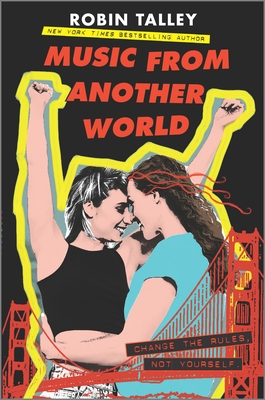
Book: “Music From Another World” by Robin Talley

Publishing Info: Inkyard Press, March 2020

Where Did We Get This Book: Kate owns it; Serena got it from the library!

Where You Can Get This Book: WorldCat.org | Amazon | Indiebound

Song Inspiration: “Alternative Ulster” by Stiff Little Fingers

Book Description: A master of award-winning queer historical fiction, New York Times bestselling author Robin Talley brings to life an emotionally captivating story about the lives of two teen girls living in an age when just being yourself was an incredible act of bravery.

It’s summer 1977 and closeted lesbian Tammy Larson can’t be herself anywhere. Not at her strict Christian high school, not at her conservative Orange County church and certainly not at home, where her ultrareligious aunt relentlessly organizes antigay political campaigns. Tammy’s only outlet is writing secret letters in her diary to gay civil rights activist Harvey Milk…until she’s matched with a real-life pen pal who changes everything.

Sharon Hawkins bonds with Tammy over punk music and carefully shared secrets, and soon their letters become the one place she can be honest. The rest of her life in San Francisco is full of lies. The kind she tells for others—like helping her gay brother hide the truth from their mom—and the kind she tells herself. But as antigay fervor in America reaches a frightening new pitch, Sharon and Tammy must rely on their long-distance friendship to discover their deeply personal truths, what they’ll stand for…and who they’ll rise against.

Kate’s Thoughts

Our newest Book Club theme is pretty unique, I think, in which we picked music genres out of a hat and then picking a random song from said genre. I was lucky in that I got punk, which is one of my favorite music genres, and then I got “Alternative Ulster” by Stiff Little Fingers, a Northern Irish band I had very limited knowledge of. But when I looked into the lyrics and it was about people dreaming of a better life and a better place where everyone can just live freely, my mind went to “Music From Another World” by Robin Talley, a book I bought in the early days of COVID but never read. It just seemed perfect given that it’s a book about two queer girls who are pen pals in the 1970s, who are contending with various laws that are threatening to make queer people targets of discrimination, hate, and violence. Sounds familiar, right? That’s the other reason I chose this book. And it just so happened punk music was also a theme!

(source)

Overall I really enjoyed “Music from Another World”, for a number of reasons. The first is that I liked the setting of late 1970s California, as this was a time that was pivotal in the gay rights movements of the 20th century, with Harvey Milk making history and making waves and LGBTQIA+ people pushing back against hateful legislation like Proposition 6 and other bills like it (all while said bills were being embraced and promoted by right wing bigots like Anita Bryant). Talley did a pretty good job of setting the scene, and showing protagonists Sharon and Tammy as they lean on punk music and each other through pen pal letters. The historical details were well presented and felt pretty easy to understand, and it breaks down this moment in ways that make it easy to connect to the current moment as LGBTQIA+ are being targeted again. I also liked the epistolary style of this book, told by letters and diary entries, but I know that such a style isn’t for everyone, as it can be a bit clunky at times (and is in this novel). I was able to forgive it because I like these kinds of found media/transcript plot devices, but also because I liked Tammy and Sharon slowly start to trust each other and develop a bond that neither were expecting. I also, as you can probably tell, really liked how this felt like a hopeful and earnest cry out to readers to not let discrimination and hate towards LGBTQIA+ people fester and take hold, and to push back. It’s hard to find hope in that regard these days. But like Harvey Milk said, ‘ya gotta give ’em hope’. And I fell like this book does that.

I enjoyed “Music from Another World”. It’s just the start of a new Book Club theme, and I have a feeling it’s going to be an interesting one!

Serena’s Thoughts

Overall, I liked this book, too, and agree with everything Kate said. I think the historical elements were particularly interesting and relevant to younger readers who may not be as familiar with this period in history, especially in the LGBT community. As Kate mentioned, there were some clearly intentional choices to focus on hope rather than despair, and I think that’s just always a really great message, regardless. This was especially noteworthy with the decisions made with regards to when and how to end the story.

I did struggle a bit with the style of the story. I’m a really hard sell the epistolary style in novels in general. I’m one of those annoying people who get fixated on details like “no one would EVER write out this much dialogue in a diary!!” So I did struggle to connect to the characters a bit. While I did like them, I think I felt so removed from their story due to the format of the story, that I never felt like I was really sucked into the story. I was too aware that I was reading the entire time to really enjoy this one, if that makes sense.

But I do think this book will appeal to a lot of readers and is a really unique way of telling this sort of story. It is very informative, while also reading as a sweet, teenage love story.

Kate’s Rating 8: A hopeful and far too relevant story about daring to be yourself and striving for a better reality, “Music From Another World” was enjoyable and inspiring.

Serena’s Rating 7: While I struggled with the format, I think this book will greatly appeal to a large swath of readers looking for a hopeful take on history and the present.

Book Club Questions

  1. What were your thoughts on the epistolary narrative device in this book? Did you feel like it worked?
  2. When Sharon visits the Castro with Peter, she notes that there are not many women at the protests, and that she feels like she doesn’t really belong. What do you think Talley was trying to say with this feeling of isolation?
  3. Talley opted to end the book with the failure of Prop 6, and didn’t go into the assassination of Harvey Milk by Dan White or the White Light Riots that happened after. With Milk being such a huge part of Tammy’s narrative, did you think ending before his death was a good narrative choice? Why or why not?
  4. Tammy and Sharon connected to each other at first because of their love of punk music. Have you ever connected with someone and bonded over a love of music?
  5. By the end of the book it’s a bit up in the air about Sharon and Peter’s relationship with their mother? Do you think that she will eventually accept her children as they are?
  6. This book came out in early 2020. What parallels do you see between this story and what is happening with American policy today?

Reader’s Advisory

“Music From Another World” is included on the Goodreads lists “Alex’s Sapphic Masterlist”, and “YA Set in the 1970s”.

Next Book Club Pick: “Girly Drinks: A World History of Women and Alcohol” by Mallory O’Meara

Kate’s Review: “American Vampire: 1976”

This post may contain affiliate links for books we recommend.  Read the full disclosure here.

Book: “American Vampire: 1976” by Scott Snyder, Rafael Albuquerque (Ill.), & Francesco Francavilla (Ill.)

Publishing Info: DC Comics, November 2021

Where Did I Get This Book: I own it.

Where You Can Get This Book: WorldCat.org | Amazon | Indiebound

Book Description: America is broken. Trust between the government and the American public has crumbled. Paranoia reigns supreme.

Skinner Sweet has exhausted all efforts to regain his lost immortality. With his powers and purpose gone, he is now determined to go out with a bang. At a seedy motorcycle rally in the desert where he’s closer than ever to his death wish, Pearl Jones and a shocking partner track him down for one last, desperate mission. The force known as the Gray Trader and its minions are tunneling through the bowels of the world to unleash hell on Earth–just in time for America’s bicentennial. With catastrophe looming, it’s up to Skinner and Pearl to reconcile and change the course of history–or die trying.

Review: Well folks, we have come to the end of another comic re-reading/comic completion hybrid, as “American Vampire: 1976” is the end of the road for the “American Vampire” series by Scott Snyder. There was a pretty substantial gap between “Volume 8” and “1976”, just as there was a gap in the real comics release of the series. I don’t know what caused the wait, but I remember part of my reason for kind of giving up on the series the first time around was due to the fact I knew it didn’t have an ending. Well, now it does, and to me it seemed like there were a few things that needed to be addressed in order to stick it. And…. I think that it mostly did, with a couple stumbles…

We have jumped forward to 1976, and our characters have scattered to the wind since we left them. Skinner Sweet, having been rendered mortal after his last tangle with the Gray Trader a decade prior, has accepted that he can’t regain his immortality and has decided to become a stuntman in hopes of going out in a blaze of glory. So when he’s approached by Pearl with one more mission, we find out what all our vampires have been up to leading up to the American Bicentennial. Pearl is barely holding things together with the VMS, Felicia is on a mission to save Gus from the Gray Trader who has taken him hostage, Travis Kidd blames himself for the loss of Gus, and we find out that Jim Book has returned to the fold and has been Pearl’s partner for a number of years. Oh, and Mimiteh has come back as well (and HOORAY, she isn’t just a stereotype AND he has clothing this time around). I loved that this took place in 1976, in a year that American was celebrating its history in the face of a lot of bleakness (the loss of the Vietnam war, post-Watergate disillusionment, etc), and as the VMS has to try and stop an apocalypse that is going to happen during the Bicentennial celebration. It’s a great tone, and a great way for the story to wrap up as America has it’s own, in a way, reflection moment. And the big last showdown with the Gray Trader and it’s final push to destroy the world was well thought out and had high stakes and lots of suspense.

There are a lot of characters that we need to tackle, and, for the most part, many of them get some good page time and a fair amount of focus. I loved seeing Pearl rally the troops, I enjoyed seeing Skinner being pulled in again as he’s trying to, maybe finally, be able to get his immortality back, and I liked seeing Travis Kidd have more growth and depth as he grapples with how he failed Felicia and Gus. But that does lead to one of the pitfalls here, as one of the characters who is a bit shafted is Felicia, as it felt like she was just a frenzied grieving mother as she worries about Gus’s well being. Sure, she gets some pretty okay moments, but she didn’t feel like Felicia, and since we were at the end of the road I really wanted more in saying goodbye. It ended up feeling abrupt and lacking for my favorite character in the series.

There was one other big stumble for me in this final collection as we wrap up this story, and I need to go into detail to explain the problem I had with it. SO, therefore I am going to have to tell you to skip to the last paragraph if you don’t want to know and give you a

SPOILER ALERT! (source)

So a few volumes back, it was revealed that Jim Book, the original hero who was the lawman pursuing Skinner Sweet back in the day after being his foster brother in childhood, was actually still ‘alive’ and was also a vampire from the American strain. It took this long for him to come back, and I was actually pretty amped to see him because I was excited to see him confronting Skinner, but more I was anticipating seeing him meet his daughter Felicia. And for awhile I was riding high on his presence, because it added a new interesting layer to Skinner, as his foil, who was not only an enemy but also his dearest friend and in some ways brother, was back in his life after so much baggage… But. BUT. Not only did we not get any pay off with Jim meeting his daughter Felicia (HONESTLY, HOW DARE THEY SIDELINE HER SO MUCH?)… Jim ends up betraying the VMS and has been evil and siding with the Gray Trader the whole time!!!!! WHAT THE FUCK?! What a frustrating and unearned heel turn for this character! And it felt like it was done 1) because it’s shocking and a HUGE blow and twist for the VMS, and 2) it just props up Skinner more as a hero because if Jim freaking BOOK is bad, then Skinner is going to look good by comparison, and you know what?

(source)

Am I being perhaps a little to precious about Jim Book as a character? Yeah, maybe. But it was also pretty damned rushed after a long delay to bring him back into the fold. There was a missed opportunity there because it would have been far more interesting for Skinner’s final push for potential redemption to be about his foster brother as opposed to his love for Pearl (especially since it made Pearl’s final story a bit too intwined with Skinner when she can stand on her own, thankyouverymuch).

Okay I complained a lot but for the most part I did enjoy “American Vampire: 1976”, I swear! The series had a lot to address and wrap up, and I thought that Snyder did justice to most of his characters and plot lines. And what a great moment in time for the story to end. I will miss Pearl, Felicia, Gus, and, God help me, even Skinner freakin’ Sweet. “American Vampire” is a great series, and I’m glad I finished it.

Rating 7: Overall this is a solid conclusion to an enjoyable series. “American Vampire: 1976” has some stumbles, but it’s nice to see Pearl, Skinner, Felicia, and others go out with a bang.

Reader’s Advisory:

“American Vampire: 1976” isn’t included on any Goodreads lists as of now, but it would fit in on “Recommendations for Buffy Fans” (though the entire series should probably be on that list too).

Book Club Review: “The Raven and the Reindeer”

This post may contain affiliate links for books we recommend.  Read the full disclosure here.

We are part of a group of librarian friends who have had an ongoing book club running for the last several years. Each “season” (we’re nerds) we pick a theme and each of us chooses a book within that theme for us all to read. Our current theme is retellings and re-imaginings.  For this blog, we will post a joint review of each book we read for book club. We’ll also post the next book coming up in book club. So feel free to read along with us or use our book selections and questions in your own book club!

Book: “The Raven and the Reindeer” by T. Kingfisher

Publishing Info: Argyll Productions, July 2017

Where Did We Get This Book: The library!

Where You Can Get This Book: WorldCat.org | Amazon | Indiebound

Retelling/Re-imagining: “The Snow Queen”

Book Description: When Gerta’s friend Kay is stolen away by the mysterious Snow Queen, it’s up to Gerta to find him. Her journey will take her through a dangerous land of snow and witchcraft, accompanied only by a bandit and a talking raven. Can she win her friend’s release, or will following her heart take her to unexpected places?

A strange, sly retelling of Hans Christian Andersen’s “Snow Queen,” by T. Kingfisher, author of “Bryony and Roses” and “The Seventh Bride.”

Kate’s Thoughts

I have very little familiarity with fairy tales that go beyond The Brothers Grimm, and while I know the basics of “The Snow Queen”, I never read it as a kid and I don’t know a lot of the details (if we’re being vulnerable on the blog today, my information mostly came from Tumblr posts when “Frozen” came out). But I did know that I like T. Kingfisher, and I liked the past reimagining she did, “What Moves the Dead”. So when Serena picked “The Raven and the Reindeer” I was on board. No questions asked.

I thought that “The Raven and the Reindeer” was not only a creative and unique reimagining of “The Snow Queen” based on my knowledge, I also thought that it was heartfelt and at times very funny. Which is something that I expect from Kingfisher these days. I really liked Gerta’s character arc, as she starts out as a starry eyed and somewhat naïve teenager who thinks she is in love with her life long friend Kay, who is very noncommittal to her as, really, any sort of significant person in his life. After he’s kidnapped by the Snow Queen and Gerta goes on a quest to save him, she starts her own personal journey of self discovery, with the help of a snarky raven named Mousebones with whom she can communicate, as well as that of Janna, a bandit girl with a heart of gold. I loved seeing Gerta start to realize that she may not necessarily need Kay to love her to feel whole and complete, and also starting to realize that perhaps her attractions are towards someone else. Kingfisher also makes such a fun character out of Mousebones, whose snarky attitude adds most of the humor and had me chuckling over and over again.

I really enjoyed “The Raven and the Reindeer”! T. Kingfisher has such a knack for charming stories that feel very original, and this would be a great place to start with her catalog if you haven’t already!

Serena’s Thoughts

This was a pretty easy book club pick for me. I knew I wanted to do a fairytale re-telling, and then, obviously, I’ve loved everything I’ve ever read by T. Kingfisher. Beyond that, “The Snow Queen” is a tough nut to crack as far as re-tellings go and I haven’t read too many of them (unlike the endless versions of “Beauty and the Beast” and “Cinderella” stories to be found!)

As predicted, I really liked Kingfisher’s take on this story. I’m pretty familiar with the original, so it was easy to recognize the many similarities as well as the points of divergence. In particular, I really liked the switch made to Gerta and Kay’s relationship, with Gerta slowly beginning to understand that while she still wanted to save her friend, Kay might not be where it’s at as far as love interests go. Instead, Kingfisher also reimagines the bandit girl who in this story serves as not only the true love interest, but also as a companion for Gerta on the second half of her journey.

I also really enjoyed the quirky animals found throughout the story. This is another staple of Kingfisher’s work, and it melded perfectly with this fairytale that already has a number of animals featured within it. The raven, of course, was hilarious and excellent, as well as the exuberant, magical otters that pull the Snow Queen’s sleigh. But, I have to say, the reindeer, for all that he’s only around for a very short bit, really hit me in the feels. I’ll admit that there were tears.

Overall, this was a fun re-imaging of the classic tale, and I think it will appeal to all fairytale re-telling fans!

Kate’s Rating 8: This is a charming and funny re-imagining of a fairy tale that I wasn’t super familiar with.

Serena’s Rating 8: Sweet and heartfelt, this is an excellent re-telling of “The Snow Queen.”

Book Club Questions

  1. How familiar are you with the original story? Was there a change that stood-out to you?
  2. Kingfisher re-imagines the relationships at the heart of this story. What do you think of her portrayal of Gerta and Kay’s frienship?
  3. There were a number of mini adventures throughout this story, which one did you enjoy the most and why?
  4. Which animal companion was your favorite and why?
  5. This story focuses on themes of courage and self-esteem. In what ways did the author tackle these topics and was it effective?

Reader’s Advisory

“The Raven and the Reindeer” isn’t on any Goodreads lists, but it should be on Popular The Snow Queen Retellings Books.

Next Book Club Pick: “Music from Another World”

Kate’s Review: “A Botanist’s Guide to Flowers and Fatality”

This post may contain affiliate links for books we recommend.  Read the full disclosure here.

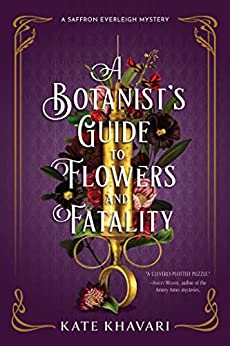
Book: “A Botanist’s Guide to Flowers and Fatality” by Kate Khavari

Publishing Info: Crooked Lane Books, June 2023

Where Did I Get This Book: I received an eARC from NetGalley.

Where You Can Get This Book: WorldCat.org | Amazon | Indiebound

Book Description: 1920s London isn’t the ideal place for a brilliant woman with lofty ambitions. But research assistant Saffron Everleigh is determined to beat the odds in a male-dominated field at the University College of London. Saffron embarks on her first research study alongside the insufferably charming Dr. Michael Lee, traveling the countryside with him in response to reports of poisonings. But when Detective Inspector Green is given a case with a set of unusual clues, he asks for Saffron’s assistance.

The victims, all women, received bouquets filled with poisonous flowers. Digging deeper, Saffron discovers that the bouquets may be more than just unpleasant flowers— there may be a hidden message within them, revealed through the use of the old Victorian practice of floriography. A dire message, indeed, as each woman who received the flowers has turned up dead.

Alongside Dr. Lee and her best friend, Elizabeth, Saffron trails a group of suspects through a dark jazz club, a lavish country estate, and a glittering theatre, delving deeper into a part of society she thought she’d left behind forever.

Will Saffron be able to catch the killer before they send their next bouquet, or will she find herself with fatal flowers of her own in Kate Khavari’s second intoxicating installment.

Review: Thank you to NetGalley for sending me an eARC of this novel!

It’s about a year since I reviewed the first Saffron Everleigh mystery, “A Botanist’s Guide to Parties and Poisons”, and I can tell you that I am still not really a plant person. It took me forever to get my act together this Spring when it comes to clearing my landscaping of refuse, so my bleeding heart wasn’t as, uh, hardy as I had hoped it would be, and the weeds have already taken over. But real life green thumb problems aside, I’m still very much into plant nerd Saffron and her love for various kinds of flora, and therefore I knew that I wanted to read her second adventure, “A Botanist’s Guide to Flowers and Fatality”! So back to post WWI England we go, with high hopes of deadly plants and Interwar sensibilities!

I am still really enjoying the time period and societal placement of this book. Post WWI London remains a setting that is rich with possibilities, and this time Khavari has implemented a device that I have a personal connection to: floriography! For those who are unfamiliar, floriography, or language of the flowers, is the Victorian social practice of using flowers to communicate feelings and intentions. When I worked at a Victorian Historic House in St. Paul, one of the tours I gave was all about sexuality and romance during this time period, and I talked about floriography in courtships. In “A Botanist’s Guide to Flowers and Fatality”, Saffron is brought into a murder investigation by Detective Inspector Green when bouquets of poisonous flowers are found at all the victims homes. It’s such a great way to make Saffron needed as not only a civilian, but also as a woman, and it’s such a great hook as a puzzle piece to the murder mystery. We also see the way that Saffron has to navigate her role as an amateur detective in this setting, facing a lot of issues not limited to misogyny and expected gender roles, and how she has to utilize her new academic partner, Michael Lee, in her works both at the university (where they are investigating plant poisoning reports throughout the countryside for research) and in the criminal investigation, because him being a man (a very smart and capable man, but no more so than Saffron herself) can open doors a bit easier than she alone can. I really liked Lee as a character, his sarcasm and wit egging Saffron on and leading to some fun moments of banter and sexual tension (we’ll be talking more on that in a bit), and I did like that while being a new member to the story he felt like he fit in almost immediately. His role both at the University parts of the book as well as the criminal parts rounded her out really well and complemented her without constraining her.

The mystery was also pretty well done. I loved seeing Saffron and Lee have to go into unseemly JAZZ CLUBS and have to wrangle with the idle rich and their COCAINE HABITS, and I loved the deadly bouquets and the undercover hijinks they have to get into to get to the truth. Given that this is solidly a cozy mystery series (ha, of the two of us it’s probably surprising that I’m the one covering the two cozy mystery series on the blog), it never goes into very suspenseful territory, as you generally know that Saffron is going to figure it all out and probably come out unscathed, and it’s never TOO gruesome. But that doesn’t mean that Khavari’s mystery is dull by any means, and I thought that there were well done red herrings and well executed ‘ah ha!’ moments.

I will say that there was one aspect that didn’t quite work for me that kind of brought down the rest of the book in some ways: we find ourselves in a bit of a love triangle with Saffron. Our first suitor is Alexander, her partner in detection from the first book, who has gone on the Amazon expedition mentioned in that novel. Saffron has been exchanging letters with him while he’s on the trip. The other, of course, is the aforementioned Lee, her new partner in detection who is pretty much the opposite of Alexander in all ways. Where Alexander is brooding, Lee is extroverted and vivacious. Where Alexander is earnest, Lee is sardonic and a bit of a bad boy. It’s a trope we have seen many times in a love triangle, and I was kind of bummed to see Saffron thrust into this when she is so much more interesting on her own and doesn’t need romantic conflict (some of which, on Alexander’s side, felt very out of character and made him pretty unlikable, at least to me) to buoy up her story.

So, aggravating love triangle aside, I did enjoy “A Botanist’s Guide to Flowers and Fatality”. It continues to represent the time and place in an enjoyable way, and Saffron Everleigh is still a fun and engaging heroine!

Rating 7: A fun new adventure for tenacious detective Saffron Everleigh, with interesting new characters and deadly flowers abound.

Reader’s Advisory:

“A Botanist’s Guide to Flowers and Fatality” is included on the Goodreads lists “Historical Mystery 2023”, and “Cozy Mysteries 2023 New Releases”.

Previously Reviewed:

Blog Tour: “The Late Mrs. Willoughby”

This post may contain affiliate links for books we recommend.  Read the full disclosure here.

Book: “The Late Mrs. Willoughby” b y Claudia Gray

Publishing Info: Vintage, May 2023

Where Did I Get this Book: from the marketer!

Where Can You Get this Book: Amazon | IndieBound | WorldCat

Book Description: Catherine and Henry Tilney of Northanger Abbey are not entirely pleased to be sending their eligible young daughter Juliet out into the world again: the last house party she attended, at the home of the Knightleys, involved a murder—which Juliet helped solve. Particularly concerning is that she intends to visit her new friend Marianne Brandon, who’s returned home to Devonshire shrouded in fresh scandal—made more potent by the news that her former suitor, the rakish Mr. Willoughby, intends to take up residence at his local estate with his new bride.

Elizabeth and Fitzwilliam Darcy of Pemberley are thrilled that their eldest son, Jonathan—who, like his father, has not always been the most socially adept—has been invited to stay with his former schoolmate, John Willoughby. Jonathan himself is decidedly less taken with the notion of having to spend extended time under the roof of his old bully, but that all changes when he finds himself reunited with his fellow amateur sleuth, the radiant Miss Tilney. And when shortly thereafter, Willoughby’s new wife—whom he married for her fortune—dies horribly at the party meant to welcome her to town.

With rumors flying and Marianne—known to be both unstable and previously jilted by the dead woman’s newly made widower—under increased suspicion, Jonathan and Juliet must team up once more to uncover the murderer. But as they collect clues and close in on suspects, eerie incidents suggest that the killer may strike again, and that the pair are in far graver danger than they or their families could imagine.

Previously Reviewed: “The Murder of Mr. Wickham”

Review: I really loved “The Murder of Mr. Wickham” when I read it last year. So much so that it became my preferred present for the many readers in my family. Not only was it an excellent mystery, but the author managed to do the near-impossible and accurately depict not one, not two, but a huge cast of Jane Austen’s most popular characters. And on top of that, she created two new characters who were able to hold their own in this very competitive cast. All of this to say, I was incredibly pleased to see that there was a sequel coming out this year!

When Juliet Tilney sets out on another social visit, she’s confident in assuring her parents that there is no possibility of murder this go around. Oh, how wrong she will be. For, when visiting the still-struggling Marianna Brandon, Juliet Tilney is introduced to the Willoughbys, and during one note-worthy dinner party, what should happen but that Mrs. Willoughby drops dead of poison. Now, with the help of her friend Jonathan Darcy, Juliet once again sets out to get to the bottom of the mystery.

I was really excited to see what this book had in store. While I was very impressed with the first book, it was also very much a product of the specific circumstances that made up the plot. Jonathan and Juliet were excellent new characters, but the work of carrying the plot and the interest of the reader, was largely hefted by the sprawling cast of popular Jane Austen heroes and heroines. This book is a much more tightly focused story with a much more limited cast of characters. In this way, Jonathan and Juliet had more work to do to carry the book largely on their own. And I think they were more than capable of the job!

I really liked the continued exploration of Jonathan’s low level autism and how his life has been shaped by the reactions of others and their ability or inability to accept or understand him. Here, we get an insight into Jonathan’s past as a victim of bullying at the hands of none other than Mr. Willoughby himself. We also see Jonathan struggle to understand his changing feelings for Juliet and realizing that he, and not only others, has been placing limitations on himself. It was an interesting and subtle exploration that I thought worked very well. For her part, Juliet’s story is much more straight-forward. But I particularly enjoyed the small commentary that ran through the book that acknowledges the limited choices that young women like Juliet faced. A social visit such as this, where Juliet travels to live with her friends the Brandons for several weeks, would not just be a trip of leisure. No, a large chunk of the expectations and motivation would be that a young woman would gain access to new society and new opportunities for marriage. Juliet reflects several times on the challenges between balancing the very practical concerns of a woman such as herself, one with only limited financial support from her family, with her own romantic preferences.

I also really enjoyed the mystery in this one. I was able to predict a few of the secondary aspects of the mystery, but the author did a great job of laying out believable red herrings and misdirecting the reader effectively from the larger truth behind what had happened and why. The motivation, in particular, was interesting and played into a plotline that I had been thinking of as a completely separate thing up until the end.

I will say, however, that this one did suffer a bit by the loss of the other Jane Austen characters. While I enjoyed Juliet and Jonathan immensely, my own preferences for Austen’s characters would not have me picking a focus on “Sense and Sensibility” and all of the secondary characters that make up this book’s cast. As these characters connect to the first book, I understand why this choice was made, and I also think that, as a whole, they were all done very well. I really liked getting to see Eleanor and Edward, in particular. But Brandon and Marianne just aren’t top choices for me, personally, so I couldn’t help being a bit less interested in their dynamics.

This was a very solid follow-up to the first book! In many ways, Claudia Gray made more a statement with this book than with the first: that wasn’t just a happy chance! No, she’s just that legitimately talented. Fans of the first book will definitely enjoy this, and I recommend both of these books to any fans of historical mysteries or Jane Austen.

Rating 8: With the first book, Gray made a splash as one of the best authors tackling Jane Austen re-imaginings today. With this one, she cements her place in the genre.

Reader’s Advisory:

“The Late Mrs. Willoughby” isn’t on any Goodreads lists, but it should be on Jane Austen Re-tellings.