Kate’s Review: “The Deep”

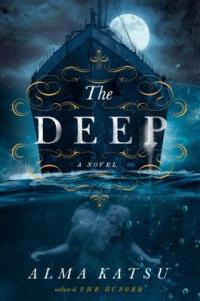
46371247Book: “The Deep” by Alma Katsu

Publishing Info: G.P. Putnam’s Sons, March 2020

Where Did I Get This Book: I received an eARC from NetGalley

Book Description: From the acclaimed and award-winning author of The Hunger comes an eerie, psychological twist on one of the world’s most renowned tragedies, the sinking of the Titanic and the ill-fated sail of its sister ship, the Britannic.

Someone, or something, is haunting the ship. That is the only way to explain the series of misfortunes that have plagued the passengers of the Titanic from the moment they set sail. The Titanic’s passengers expected to enjoy an experience befitting the much-heralded ship’s maiden voyage, but instead, amid mysterious disappearances and sudden deaths, find themselves in an eerie, unsettling twilight zone. While some of the guests and crew shrug off strange occurrences, several–including maid Annie Hebbley, guest Mark Fletcher, and millionaires Madeleine Astor and Benjamin Guggenheim–are convinced there’s something more sinister going on. And then disaster strikes.

Years later, Annie, having survived that fateful night, has attempted to put her life back together by going to work as a nurse on the sixth sailing of the Britannic, newly refitted as a hospital ship to support British forces fighting World War I. When she happens across an unconscious Mark, now a soldier, she is at first thrilled and relieved to learn that he too survived the tragic night four years earlier. But soon his presence awakens deep-buried feelings and secrets, forcing her to reckon with the demons of her past–as they both discover that the terror may not yet be over.

Featuring an ensemble cast of characters and effortlessly combining the supernatural with the height of historical disaster, The Deep is an exploration of love and destiny, desire and innocence, and, above all, a quest to understand how our choices can lead us inexorably toward our doom.

Review: Thank you to NetGalley for providing me with an eARC of this novel!

It’s been ten years since I was working at our local Science Museum and had shifts in the Special Exhibit about the Titanic, and while I am intrigued by the story still, I’m also a tiny bit burnt out on it. This doesn’t necessarily discourage me from reading stories that are related to or based upon the maritime disaster, however, because if I love the author or the premise sounds promising I’ll happily give it a whirl. Because of this, when I heard that Alma Katsu’s newest horror novel, “The Deep”, took place on the Titanic (and also on the similarly doomed sister liner The Britannic), I immediately requested an eARC from NetGalley. Lucky for me, I was given access. Given how much I LOVED Katsu’s take on the Donner Party in “The Hunger” (as reviewed HERE), I was all in for what she could do with the Titanic.

giphy-2
And I hoped it would leave out a hokey romance. (source)

Katsu has once again brought beautiful prose and an eerie supernatural twist to a well known tragedy, and I think that I liked “The Deep” even more than I did “The Hunger”. She utilizes both actual historical figures such as Madeleine Astor, Lady Duff Gordon, and W.T. Stead, as well as original characters to give an all encompassing view of what happened during the ill fated voyage, and what roles everyone played in each other’s experiences both before and after the iceberg. It is the characterizations of all these characters that “The Deep” found it’s greatest strength, and given how much I loved the other parts that says something. Katsu mostly uses the real life characters to examine the social roles that they all played at the time, to great effect. My favorite to follow was Madeleine Astor, the VERY young, pregnant wife of mogul J.J. Astor. Her age is definitely alluded to through her immaturity compared to other characters, but we also get to see how the position she was in couldn’t have been easy. She was always seen as a trophy wife and her legitimacy was questioned by Astor’s family after his death, and Katsu gets into her head and really explores the insecurities that a young wife at this time in her situation almost certainly would have had. I really looked forward to her chapters, because they always left me with such bittersweet feelings. Our original characters mostly focus on stewardess Annie, whose story is told in flashbacks on the Titanic and in the present on the Britannic, where she has become a nurse thanks to her friend Violet Jessup (an actual woman who survived BOTH sinkings). We slowly find out that something strange is afoot on the Titanic, a ghostly presence of some sort, and see through the flashbacks and the present just how it has affected Annie, and how she has affected others. Annie is clearly traumatized by the time she gets on the Britannic, but there are hints that even before she was on the Titanic that something is afoot with her. Along with her we get Mark and Caroline, a young married couple with a small child in tow. Annie is drawn to Mark, and her interest begins to feel like downright obsession over him and his daughter. There, too, is the mystery, as it seems like Mark reciprocates, but then perhaps he doesn’t. The unreliable narration that comes from multiple characters really helped the mystery at hand. I was kept guessing pretty much the entire time as to what kind of supernatural hijinks were afoot, and how it connected to our cast of characters.

And speaking of the supernatural, like in “The Hunger” Katsu perfectly balances the eerie and unsettling along with more subtle and underlying horrors of the real world. It isn’t completely clear from the get go just what we are dealing with in terms of supernatural themes, but as it’s slowly revealed we get to explore the ideas of spiritualism that were popular at the time, as well as lesser known mythologies that line up with some of our characters backgrounds and culture. This easily could have gone in a predictable fashion, as a ghostly presence on a ship like this is no doubt filled with possibilities, no matter how obvious. But instead we got a suspenseful story that combines things that go bump in the night with the horrors of gender, class, and obsession. I really, really loved how she tied it all together and how well she pulled it off.

“The Deep” is another triumph from Alma Katsu. She brings historical fiction horror to new heights, and if The Donner Party was a little too gruesome, The Titanic will be a good way to experience what she can do with the genre.

Rating 9: Haunting and chilling, “The Deep” brings new spooky life to the Titanic story, and paints a supernatural picture that is effortlessly as emotional as it is suspenseful.

Reader’s Advisory:

“The Deep” is new and not yet on many Goodreads lists, but I think that it would fit in on “Fiction Books About The Titanic”.

Find “The Deep” at your library using WorldCat!

My Year with Jane Austen: “Pride and Prejudice” Part I

1886._sy475_Book: “Pride and Prejudice”

Publication Year: 1813

Book Description: The romantic clash between the opinionated Elizabeth and her proud beau, Mr. Darcy, is a splendid performance of civilized sparring. And Jane Austen’s radiant wit sparkles as her characters dance a delicate quadrille of flirtation and intrigue, making this book the most superb comedy of manners of Regency England.

History – “I read it a little as duty, but it tells me nothing that does not either vex or weary me.”

 When “Pride and Prejudice” was first completed, Jane Austen’s father, believing it to be quality writing, submitted it for publication. It was rejected. Austen then moved on to writing “Sense and Sensibility” and self-publishing that title herself. After its success, she sold the copyright to “Pride and Prejudice” to a publisher who listed the title as by the author of “Sense and Sensibility.” Like that first novel, “Pride and Prejudice” was an immediate success, and the publisher ordered several reprints of the story after the first  run sold out. This, of course, resulted in the publisher profiting much more from this title than did Austen who only earned 110 pounds on the original copyright sale. Austen, however, was pleased with its success and especially with the critical praise that was garnered by her heroine, Elizabeth Bennet. (source)

“”I must confess that I think her [Elizabeth] as delightful a creature as ever appeared in print, & how I shall be able to tolerate those who do not like her at least, I do not know.” 

 —Jane Austen, letter to Cassandra Austen,  January 29, 1813

Part I – Chapters 1 – 34

Story – “The person, be it gentleman or lady, who has not pleasure in a good novel, must be intolerably stupid.”

We are first introduced to the Bennet family as we hear Mrs. Bennet share the exciting news that a wealthy gentleman has moved into the neighborhood. To her, this provides much hope that one of her five daughters might marry well, a necessity in a family that is by no means wealthy, has no sons, and whose estate is entailed away to a distant cousin. After teasing his wife and the sillier of his daughters, Mr. Bennet does visit Mr. Bingley.

The rest of the family then meets him at a ball. There, the eldest Miss Bennet, Jane, does in fact gain the attention of Mr. Bingley. But Elizabeth, the second oldest, gets spurned by the more rich but more proud Mr. Darcy, a friend of Bingley’s. Elizabeth finds this mostly amusing and is happy enough to see her sister be happy. As the weeks progress, they see more of Mr. Bingley and his snobby sisters. Jane is invited over for a dinner by the sisters, but comes down with a bad cold after her mother insists she ride in the rain (hoping for an outcome where Jane is forced to stay the night, though illness was not part of the plan.) Elizabeth goes to care for Jane and spends a good deal of time with the entire party. She draws more and more of Mr. Darcy’s attention (who, we learn, has begun to admire her fine eyes), but neither are particularly pleased by this fact. Jane recovers and the two go home.

The Bennet family is then visited by their cousin, Mr. Collins, who is in line to inherit their home. Mr. Collins is a silly, pompous man, much inclined to give nonsensical speeches and praise his wealthy patroness, Catherine de Bourgh. He also sets his eyes on marrying one of the Bennet sisters and decides on Elizabeth once he learns that Jane is out of the question due to her informal attachment to Mr. Bingley. The family also meet a new officer (a regiment of the army is stationed in the town nearby, much to the delight of the two youngest, and silliest, of the sisters), Mr. Wickham. In the process of making their first introductions, Mr. Darcy and Mr Bingley stop by. Elizabeth notes the cold meeting of Mr. Darcy and Mr. Wickham and privately wonders about it.

They are all charmed by Mr. Wickham’s easy nature and open temperament, but Elizabeth is the lucky woman who is singled out by him for more attention. In the course of an evening on their second meeting, he shares the shocking history between him and Mr. Darcy. The two grew up together, Wickham’s father being the late Mr. Darcy’s groundskeeper, and Mr. Darcy’s father was very attached to Wickham. So much so that he left a valuable estate to him on his death. But when the tragic event happened, the son refused to uphold his father’s will and Wickham was cast out into the world to fend for himself. Elizabeth is shocked that Darcy, whom before she had thought was only proud and rather rude, is as bad as this. She later retells the story to Jane who warns her about making quick judgments against either man.

Mr. Bingley hosts a grand ball at Netherfield, an event all of the Bennet sisters look forward to greatly. Once there, however, Elizabeth is disappointed to find that Wickham has decided not to come, not wanting to be near Mr. Darcy. Instead, she ends up having to dance first with Mr. Collins, and then, shockingly, with Mr. Darcy himself. The two have an awkward dance filled with alternating silences and conversation hidden with double meanings as Elizabeth tries to get to understand Darcy better. The evening is a disaster from there on out. Mary, the middle daughter, makes a poor display on the piano, followed by an even more awkward display by Mr. Bennet has he tries to get her off the piano. The two youngest flirt wildly with everyone in their path. Mr. Collins confronts Mr. Darcy without introduction having found out that Darcy is the nephew of Lady Catherine. And Mrs. Bennet loudly congratulates herself on what she suspects to be the likely marriage between Jane and Mr. Bingley.

The next morning Mr. Collins proposes to Elizabeth. She turns him down. And then has to keep turning him down for quite some time before being forced to just leave the room as he insists on not getting the point. But, to everyone’s amazement, his trip does not end with him returning home, still single, because he then proposes to Elizabeth’s dear friend, Charlotte, who, being in her late 20s and from a family without many prospects, agrees.

Around this same time, Jane receives the distressing news that Mr. Bingley and his entire party have removed themselves back to London. His sister, Caroline, even goes so far as to say that she and her sister are hoping for a quick engagement between Bingley and Mr. Darcy’s younger sister, Georgiana. Jane is distressed, but Elizabeth is quick to tell her that this is clearly a plot by the sisters and friend who never approved of Jane and Mr. Bingley’s attachment. But weeks go by with no news of their returning. Their Uncle and Aunt Gardner come to visit and Jane is asked to go back with them to London when they return home. All are hopeful that she will meet with Bingley again there.

Charlotte asks Elizabeth to come visit her in her new home with Mr. Collins. Elizabeth agrees, though not particularly looking forward to it. Once there, she gets to meet the famed Lady Catherine. She’s a overly proud woman who takes a great deal of interest making proclamations about even the smallest aspects of the Collins’ lives. While there, Mr. Darcy and his cousin Colonel Fiztwilliam come to visit their aunt. Charlotte notes that Mr. Darcy is making more of an effort to call on her family than usual and says it must be due to Elizabeth. Elizabeth scoffs at this idea, though she does wonder at the number of times she meets him while on walks around the park.

She finds Colonel Fitzwilliam to be a very charming man and gets along with him well. On one walk, Colonel Fitzwilliam share some details about how his cousin, Mr. Darcy, congratulates himself on recently saving his dear friend, Mr. Bingley, from a bad marriage. Elizabeth is furious and hurt that her sister’s happiness was ruined by his friend’s interference. Later, alone at the parsonage, Mr. Darcy arrives and unexpectedly proposes to Elizabeth. She refuses. The encounter ends with the two fighting. Elizabeth accuses Darcy of separating Jane and Bingley and also points to his dishonorable treatment of Mr. Wickham. Mr. Darcy makes more belittling comments about Elizabeth’s family and her situation saying that he was kinder to Bingley than to himself in preventing his friend from a connection so beneath himself. He is shocked by the accusations about Wickham but doesn’t directly refute them. He leaves and Elizabeth remains behind, stewing.

Heroines – “I hate to hear you talk about all women as if they were fine ladies instead of rational creatures.”

I think it can be reasonably assumed that Elizabeth is one of the most beloved heroines to ever be penned. Her character is one that could be appreciated in the time she was written but who also appeals to modern readers who can be put off a bit by the more reserved leading ladies of books written at a similar time. She handles a lot of uncomfortable situations in a way that I think most of wish we could, with a smirk, a witty reply, and the ability to say what she thinks without offending others. She’s romantic, wishing to marry for love, but also the most practical of her sisters, being much more cynical than Jane. She’s also flawed. But unlike Emma, the other famously flawed Austen heroine, Elizabeth’s flaws are of the sort that many of us can sympathize with, especially her own lack of awareness that she even possesses this flaw. For the most part, she’s clear-eyed and an excellent judge of character. So it’s easy for her to then slip into a judgement of someone and not question or challenge her own thoughts further. It’s not until the second half of the book that she has to confront this challenge, but I think this self-reflection and learned self-awareness is still very appealing to modern readers. That, and, as I’ll go into later, she has the best lines, especially when arguing.

Jane is our other heroine. She’s an interesting character, really. Elizabeth clearly respects Jane, and Jane is spoken about as being of good sense and rationality. But she pairs these traits with an almost aggressive level of optimism that leaves her almost paralyzed in the face of the evils of the world. And yet Elizabeth, and the reader by proxy, never judges her as foolish. Yes, she’s wrong about Caroline. Yes, when she tries to make both Darcy and Wickham into good guys somehow it’s fairly silly. But she’s written so well that it all feels truly earnest; readers are left, like Elizabeth, wishing they could think so well of others as Jane does.

Heroes – “What are men to rocks and mountains?”

Our two heroes benefit greatly from the increased time with their respective heroines as well as the added scenes we have of them on their own. This does away with most of the problems that the heroes suffered from in “Sense and Sensibility.” While we don’t see a lot of Mr. Bingley and Jane’s actual romance, we do see enough of the two individually interacting with friends and family to easily understand their relationship. Indeed, I’m inclined to agree with Mr. Bennet’s assessment at the end of the book that, if anything, Jane and Mr. Bingley are almost too alike. It is nice to see so much of Bingley and through the more clear eyes of Elizabeth even. Her time at Netherfield cements readers understanding that Bingley deserves all the credit he gets as a charming, good natured gentleman. Even in the face of his sisters’ poor manners and Mr. Darcy’s standoffishness, Bingley holds true as an excellent host and the only one among them to truly behave well under the circumstances.

And, of course, we see much of Darcy as well, both the good and the bad. In the beginning of the book there’s no denying that he could use some improvement. Even if he has always behaved properly (in his dealings with Georgiana and to gain the respect and friendship of a man like Bingley), he is still fairly lacking. His open rudeness to Elizabeth at their first meaning and general aloofness at his surroundings makes him deserving of the early poor reputation he has in the neighborhood (even if Wickham’s contributions to it aren’t true). And we see even further with his snobby comments after the fact when he willing plays along with Caroline’s game of mocking everyone around her, including Elizabeth.

Knowing what we do about his growing interest in Elizabeth, it’s easier to see his actions through a lens of expressing interest. His attentions at Rosings in particular stand out. But, without that inner knowledge, it’s also very easy to see Elizabeth’s side of things. Even without Wickham’s lies, she’s right about his actions with Jane and at best, he’s taken an interest in her to debate points and to sit in silence. Maybe a big concession from his standpoint, but not so for any reasonable woman.

Villains – “I do not want people to be very agreeable, as it saves me the trouble of liking them a great deal.” 

Since at this point in the story Wickham’s version of his history with Darcy is all we have, we’re left in the awkward position where we at best have no real villain and at worst…maybe the villain is Darcy himself? Obviously even the most oblivious reader sees the writing on the wall about Darcy and the inevitable revelation that he is the true hero of the story and the bogus tale Wickham put out there is just that, bogus. But that fact aside, we’re left with a lot of comedic characters who maybe dabble in wrong-doings but mostly get into trouble more due to buffoonery than any actual ill intent. Mr. Darcy, on the other hand, outright admits to separating Jane and Bingley. Which, again, at this point in the story, is the only real, known, and accepted by the perpetrator himself, wrongdoing we have! We get a better understanding of his reasoning in the letter to come in the second half, but by the end of the book Mr. Darcy still reflects back on his actions with regards to this pair as in the wrong.

Caroline, of course, is the other more true villain. She was complicit in convincing Bingley that Jane didn’t care for him. The text never states this, but one would suspect their her view of this matter might have held even more weigh than Darcy’s. She’s a woman (assumed to be more knowledgeable in matters of the heart, whether true or not) and is still considered to be a dear friend of Jane. Of course she should have knowledge of Jane’s inner heart, and if she  says Jane doesn’t care, it’s pretty understandable that Mr. Bingley would believe her. And, unlike Jane, we see Caroline’s behind-the-scenes cruel commentary about her friend and her friend’s family, especially Elizabeth.

This, truly, is a testament to the wrongness of Darcy’s pride in action, that he tolerates and even agrees with some of Caroline’s early snobbery. By the end of the book, Darcy tells Elizabeth that he had been left to follow the good morals he’d been raised with in pride and conceit and would have still been like that if not for her. More so than even Elizabeth saw, we, the readers see this to be true in the change of his private behavior from a man who criticized Jane for “smiling too much” to the one who welcomes the Gardners to his home and shuts down Caroline when she tries to start up the “Elizabeth isn’t all that much” speech again.

But for much of this half of the book, Caroline and Darcy are on the same side of many matters and work together to quell Jane and Mr. Bingley’s burgeoning love affair. Caroline’s treatment of Jane in London is also a good example of why she deserves to be solidly in this category. The reader, however, like Elizabeth, is almost gratified that at least Jane won’t be duped any more as Caroline has now so thoroughly shown her true colors.

Romance – “A lady’s imagination is very rapid: it jumps from admiration to love, from love to matrimony in a moment.”

The most interesting commentary on romance in this first half is the ongoing disagreement between Elizabeth and Charlotte on how to go about courtship and what to expect from matrimony. Charlotte, early in Jane and Bingley’s romance, comments to Elizabeth that Jane should show more affection than she feels to ensure a quick engagement.  Elizabeth laughs at this idea, but later Charlotte puts her own words in action, agreeing to marry Mr. Collins, who she knows to be foolish, after only a few days acquaintance. While Elizabeth is quick to come down harshly against this action, Jane herself weighs in on the argument that different temperments and circumstances will call to different actions. While it is clear that Austen is writing true romances where love is of course necessary for her main protagonists, Jane’s argument here, and even Elizabeth later acceptance of Charlotte’s situation, are nice balances to these lucky few women. Many women of the time would have made a similar choice to Charlotte and, in many ways, her was the more practical and realistic option. We can’t all wait around for handsome, kind, 10,000 pounds a year men to come around! Austen carries this point further in Mansfield Park where we see the other, more unfortunate, side of the “marry for love” choice in Fanny’s mother’s situation.

But, of course, the main romance is between Elizabeth and Darcy. One of the major differences that stood out to me in this re-read, especially reading this one directly after “Sense and Sensibility” is how important are the scenes we witness of Darcy that Elizabeth isn’t privy to. Not only are readers aware of his admiration the entire time, in general, we get a much better understanding of him as a character than we did the romantic leads in the previous book. And there are simply more scenes between Elizabeth and Darcy than we had there, too. We witness scenes of their verbal sparring which reinforce the idea that Darcy would naturally be attracted to her lively nature. There is also Caroline Bingley lingering about as a perfect contrast to Elizabeth.

The failed proposal scene has to be one of my favorite scenes in literature. It’s just so painfully perfect! Darcy’s terrible original attempt, his slow slip into shocked bewilderment at the realization that he’s being turned down, and the sharp anger when the accusations start flying. And Elizabeth’s righteousness and masterclass put-downs are priceless. But what makes it a perfect fight is that in between the honest anger and words, we clearly can identify the moments when each goes overboard in their anger and just gets mean. It’s a point in fighting that almost everyone is familiar with and everything about this scene reads so true to life.

Comedy – “For what do we live, but to make sport for our neighbors, and laugh at them in our turn?”

There are so many great comedic characters in this book! I mean, other than the four characters from the two couples, almost everyone else in this first half play for laughs at one point or another. But there are two that always come up when talking about this book and for good reason: Mrs. Bennet and Mr. Collins.

There has been a more sympathetic eye turned towards Mrs. Bennet recently, given the very real uncertainties and struggles of the future should Mr. Bennet die and none of the daughters be married well. It would definitely be hard, and the girls’ future is largely left to Mrs. Bennet to worry about. This is the kind of thing that would almost always fall on the mother anyways, and Mr. Bennet is particularly unsuited to be of help, what with his general lack of concern regarding what he largely sees as frivolities.

But in many ways this is similar to the circumstances of Mrs. Dashwood and her daughters. But there, while Mrs. Dashwood could be sentimental and romantic to the extreme, she didn’t materially damage the very goal she had in mind. Mr. Darcy’s letter in the second half of the book will lay this out more clearly, but it doesn’t take an astute reader to pick up on the fact that Mrs. Bennet’s nonsense would have a impact on potential suitors wishing to pursue her daughters. Not only would they have to look forward to a future of her as a mother-in-law, but many would likely assume the daughters to be the same and not bother getting to no them further and discovering that the eldest two, at least, have seemed to escape this familial trait.

All of this to say, while I do have some sympathy for Mrs. Bennet, I think she is pretty firmly written as a ridiculous person, a detriment to her daughters, and a character that is not meant to be largely felt for by the reader. One can both be in a bad situation and also make that bad situation worse, and that’s Mrs. Bennet. But with all the seriousness of the situation aside, she’s great fun to read about. Her inconsistencies (particularly with her quick about-face with regards to Darcy’s handsomeness), her nerves, her crowing over her neighbors. Good stuff all.

And, of course, Mr. Collins. No attempt here to redeem him as he just gets worse in the second half of the book. His humor is tinged with a greater feeling of awkwardness and embarrassment. Reading over some of his interactions with others, I almost felt my own discomfort for what Elizabeth and Jane must have felt. Secondary embarrassment for a fictional character! But, again, it’s the proposals where Austen shines in this book. His “wooing” of Elizabeth is the best/worst. There is a very fine line here that is walked perfectly: his buffoonery and pompousness are at a peak, but it’s also still believable enough that a man like him could exist. And, of course, Elizabeth once again shines in her repeated refusals. This scene in particular is almost impossible for me to read now without picturing the 1995 movie version of it. Spoilers: I loved that movie (but doesn’t every Austen fan??).

Favorite quotes – “What did she say? Just what she ought, of course. A lady always does.”

A decent number of the quotes I use in my section titles come from this book, so there’s that. And one cannot write a “Pride and Prejudice” review with a “favorite quotes” section and not highlight one of the most famous opening lines in all of literature:

“It is a truth universally acknowledged, that a single man in possession of a good fortune, must be in want of a wife.”

And, if he had left it at this, perhaps…

“You must allow me to tell you how ardently I admire and love you.”

But I always like this meme with regards to Darcy’s first proposal:
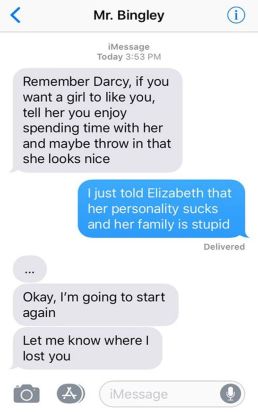
453f066eb2029f85d54e9316be261504

In two weeks, I’ll review the last half of “Pride and Prejudice” and share my final thoughts on the book as a whole.

Kate’s Review: “Deathless Divide”

38124119._sy475_Book: “Deathless Divide” by Justina Ireland

Publishing Info: Balzer + Bray, February 2020

Where Did I Get This Book: The library!

Book Description: The sequel to Dread Nation is a journey of revenge and salvation across a divided America.

After the fall of Summerland, Jane McKeene hoped her life would get simpler: Get out of town, stay alive, and head west to California to find her mother.

But nothing is easy when you’re a girl trained in putting down the restless dead, and a devastating loss on the road to a protected village called Nicodermus has Jane questioning everything she thought she knew about surviving in 1880’s America.

What’s more, this safe haven is not what it appears – as Jane discovers when she sees familiar faces from Summerland amid this new society. Caught between mysteries and lies, the undead, and her own inner demons, Jane soon finds herself on a dark path of blood and violence that threatens to consume her.

But she won’t be in it alone.

Katherine Deveraux never expected to be allied with Jane McKeene. But after the hell she has endured, she knows friends are hard to come by – and that Jane needs her, too, whether Jane wants to admit it or not.

Watching Jane’s back, however, is more than she bargained for, and when they both reach a breaking point, it’s up to Katherine to keep hope alive – even as she begins to fear that there is no happily-ever-after for girls like her.

Review: A couple years ago, Justina Ireland wrote the YA horror/historical fiction book “Dread Nation”, a novel about the zombie uprising during Reconstruction in the U.S. Her main character, Jane, was a black teenage girl being trained to be a personal bodyguard for upper class white people, as after the zombies came Black and Indigenous people were recruited to protect the white people of society. It ended with an overrun town and Jane, her frenemy and fellow attendant Katherine, her old flame Jackson, and a group of refugees deciding to head West to California, as Jane was hoping to find her mother. When I heard about “Deathless Divide”, the sequel to “Dread Nation”, I was anticipating another zombie horror novel with the usual apocalypse themes. What I got was something completely different. This time, we get a horror historical fiction novel with distinct themes of a Western, and the lonesome redemptive attempts that come with that genre.

giphy-4
Spoiler Alert: It does. (source)

“Deathless Divide” picks up right after the end of “Dread Nation”, and almost immediately it gets turned on it’s head as to what I had expected from the narrative. For one thing, we are not only getting Jane’s POV, we also get the POV of Katherine, the high strung, prim, and incredibly talented classmate and sometimes friend of Jane. I wanted to know more about Katherine in “Dread Nation”, so when we got to get inside her head in “Deathless Divide” I was overjoyed. Katherine always intrigued me the most from the first book because I loved that she is unabashedly feminine, and is still an incredible fighter, perhaps the best in the book. Too often we see women characters who are made ‘strong’ at the expense of having their femininity stripped away. This is fine, of course, as there are lots of ways to write female characters, but women can fight and kick butt in a corset if they want to, dammit! I also liked getting a deeper exploration of Katherine and the issues that she has to contend with as a very attractive woman who is constantly underestimated, and who, as a woman who passes for white, doesn’t always feel like she has her identity all figured out. Getting to see more of Katherine was delightful. 

The other unexpected shift in the narrative was, as I mentioned before, the fact that it has a distinctly Western theme about it. Usually as a rule I am not a fan of Westerns, as the themes usually don’t grab me AND so many of the Westerns that I think of feel imperialistic. But in “Deathless Divide” Ireland does a really good job of taking the theme of the lone gunslinger and applying it to Jane as her journey progresses, especially since the usual trope of that is a white man. I loved the role for Jane, as she has endured so much trauma and loss and violence because of her race and the fact that Black and Native people have been used as protectors and bodies to protect the White people in a zombie ravaged society. It’s no wonder she would become morally ambiguous as she travels the west looking for revenge. It makes the idea incredibly tragic. And it’s just another of many ways that Ireland once again explores themes and issues of race and racism in America, and like in “Dread Nation” it works very well. From POC being used as guinea pigs to further scientific research to race and class relations in urban settings and capitalism to colorism, “Deathless Divide” shows that some times don’t really change much, and that we still have a long way to go. 

As for the zombies, not much has changed from the first book, and they aren’t as centered this time around. But that said, we do get to delve into the ideas of potential cures, and how different science experiments can bring different outcomes when it comes to the zombies and how they interact with their potential prey. I don’t want to spoil anything here, but just know that Ireland still manages to make the zombies feel fresh and interesting even when they aren’t at the forefront. After all, like in all good zombie stories, it’s the humans that are the bigger threat.

(note: As I mentioned in my review for “Dread Nation”, there had been criticism of the Native characters in that book. I’ve not seen anything in that regard about this book, and I don’t think that I as a white woman can say if Ireland has been more responsible this time around. We do get a more complex and deeper dive into the character of Daniel Redfern, however. If anything changes on this front I will update this post.)

“Deathless Divide” is the end of the road for this world and characters (at least for now; Ireland has said that it COULD happen that more gets written, maybe), and I think that it’s a great follow up and completion. I’ll miss Jane and Katherine.

Rating 8: A satisfying ending with a bold new genre take, “Deathless Divide” wraps up a world of zombies, racism, and empowerment for Black women.

Reader’s Advisory:

“Deathless Divide” is included on the Goodreads Lists “Black Heroines 2020”, and “LGBT SciFi and Fantasy 2015-2020”.

Find “Deathless Divide” at your library using WorldCat!


My Year with Jane Austen: “Sense and Sensibility” [2008]

250px-s26s_dvd_cover_2008Movie: “Sense and Sensibility”

Release Year: 2008

Actors: Elinor Dashwood – Hattie Morahan

Marianne Dashwood – Charity Wakefield

Colonel Brandon – David Morrissey

Edward Ferrars – Dan Stevens

Comparison – “Indulge your imagination in every possible flight.”

The biggest difference between this movie and the 1995 version is the added length. It has at least an hour of extra running time which allows the story to both add in scenes and characters that were cut from the book as well as create some unique scenes that, for the most part, do enhance the story. That said, there were also a few mishaps in these added scenes and in the characterization of Willoughby. But overall, I think it did more right than wrong, in this aspect. Watching the two adaptations back-to-back was an entertaining process. It was clear that as much as this story was attempting to be faithful to the novel and be its own thing, the 1995 version was too beloved to completely ignore. There were several scenes or character beats that were clear mirrors to similar ones in the older movie, like some of the early scenes with Edward, Margaret, and Elinor in the library. It wasn’t a scene in the book, so it was a clear nod to the earlier, beloved movie.

I’ll go into more detail below, but I think I liked both actresses in both movies about equally. But the heroes are more split. I preferred Dan Stevens’ Edward here much more than Hugh Grant’s take on the character. Some of this is due to my own dislike of Hugh Grant, but some of it is also simply due to the choices that were made with the character here. Colonel Brandon is a tougher call. I think Alan Rickman’s is probably better, but the added time, again, does a lot for the character here and David Morrissey is still a good fit.

I really liked the use of the dramatic scenery in this movie. There are several moments when nature itself is used to highlight or mirror the internal emotions of the characters. The waves crashing, the driving rain, even the quiet of a seaside cave. It was all beautiful, and paired with a lovely score, the overall tone of the story felt perfect.

I’ve definitely watched this version more than the 1995 version. As I said in that review, I had almost forgotten how much I liked it and will likely increase my re-watching of it in the future. However, I think this one will likely to continue to beat it out overall, if only because, being longer, there’s just so much more of it to enjoy.

Heroines – “I hate to hear you talk about all women as if they were fine ladies instead of rational creatures.”

Both actresses are superb in their roles. They also both bring very different vibes to the characters than Emma Thompson and Kate Winslet did to theirs in the 1995 version. Morahan’s Elinor feels a bit more in line with the character, perhaps. Emma Thompson was almost a bit too perfect, making Elinor, a character who already walks the line of being unbelievable in her perfection, stand out even more above those around her. The solemnity of Morahan’s Elinor is combated by her wide-eyed bewilderment and innocence to the failings of many of those surrounding her. Wakefield leaned in strongly to the lively aspect of Marianne’s character. Due to the increased run time, more of the original lines from Marianne that highlight some of her more extreme romanticisms were included which helped flesh out her character here. Winslet’s version was a bit more refined, I think, but both are enjoyable. I’d have a hard time picking favorites between the four versions and can only really say that I enjoyed them all thoroughly in the adaptations they were in.

The longer running time was also nice in that it gave the story more room to focus on the the small moments in the Dashwoods family. We see a lot of added scenes with Elinor and Marianne, Elinor and Mrs. Dashwood, and even Mrs. Dashwood and Margaret. The movie was very successful in making the viewer feel that this was a real family with real relationships between them that were just as important, if not more so, than the romantic ones that are developing before us.

Heroes – “What are men to rocks and mountains?”

Like the 1995 adaptation, we see the most changes to the original text with how the heroes are depicted. Edward is given many more actual scenes interacting with Elinor in the beginning of the story, and, due to the increased length of this adaptation, we gain back a few scenes with him that were cut in the 1995 version, such as his visit to the Dashwoods about halfway through the story. I particularly liked this inclusion again as it helped keep Edward in the front of the mind (in the 1995 version he kind of fades into the background, making his reappearance towards the end of the movie a bit jarring). It also allowed for an additional small moment where we see him working off his feelings while cutting wood for the Dashwoods. He comments about how little help they have at the cottage and cuts himself off from saying more, though it is clear to the viewer that he is thinking about what he could do for them if he was free to marry as he wishes. I think it works really well as a wholly original added segment, giving viewers a better peak into Edward’s current mindset.

Colonel Brandon, too, benefits from the added time. We see more moments between him and Sir John while they’re hunting, a nice insight into Brandon’s friendship with characters who, on the surface, it would seem are not the type to attract his attention. The movie also adds back in the duel with Willoughby and a few added scenes between these two characters. Unlike the Edward moment, I’m not sure if these added scenes worked as well. I’ll go into more about the Willoughby/Brandon problems below, but even the duel was a bit strange. It seemed out-of-step with the rest of the movie and a Jane Austen story as a whole, feeling too dramatic and too unecessary. Nothing is actually resolved from this duel, it’s never mentioned again, and it doesn’t provide any insights into either character, except, perhaps, lowering Brandon to the level of petty dueling which feels amateurish and boorish and more inline with Willoughby than Brandon overall.

Villains – “I do not want people to be very agreeable, as it saves me the trouble of liking them a great deal.” 

One of my biggest criticisms of this adaption is the character of Willoughby. There are several things working against it for me, but two really stand-out: the choice of actor and several added scenes to the script. As I have more conflicted feelings about the latter choice, I’ll begin with the first. Dominic Cooper is routinely type cast as villainous characters. He’s not super well-known, of course, but for anyone who is familiar with him, it’s an instant giveaway for Willoughby’s being bad. He’s also type cast this way for obvious reasons, he’s simply excellent at being sleazy! So much so, however, that it’s almost impossible to buy his love for Marianne as being anything other than nefarious. This, in turn, makes her own blindness towards him (as well as her mother’s and Elinor’s as well) harder to understand and sympathize with. In the 1995 version of it, it’s easy to see the appeal of Willoughby, and Winslet’s Marianne is blithely shrouded in easy-to-understand youthful naivety.

What’s more, the script makes no effort to keep Willoughby’s villainy a secret. The movie actually opens with the scene of his seduction of Brandon’s ward and her abandonment. Cooper’s face isn’t shown, but he does speak, so careful listeners are immediately alerted when he later shows up. The creator mentioned that this scene was added because they felt that the seduction of Brandon’s ward, a truly awful act, is often easily skipped over, both by book readers and viewers of the 1995 movie. But, while I do think this concern has merit, particularly where the book is involved, it does hurt the movie as far as Willoughby himself. This problem is only compounded when only shortly after meeting Willoughby, the movie adds a scene between him and Brandon in which Brandon asks what his intentions are. Willoughby is shady, Brandon is honorable, it’s all fairly easy to put together.

This movie does include the scene where Willoughby shows up during Marianne’s illness to explain his side of things. But, by token of highlighting the true villainy of his previous acts, the movie undercuts the sincerity of feelings that Willoughby expresses for Marianne. In the book, it’s easier to discern the grey areas in which Willoughby exists and that his decisions are ones that will truly haunt him with the loss of Marianne. Here, you’re too busy disliking him to care about any true regret he may have.

Romance – “A lady’s imagination is very rapid: it jumps from admiration to love, from love to matrimony in a moment.”

Like the 1995 movie, this version also flip flops the order of marriage proposals for Marianne and Elinor. It, too, recognizes the greater investment that the viewer likely has in Elinor’s relationship, thus using her happily ever after as the grand finale of the movie. While we don’t have Emma Thompson’s flamboyant crying, Morahan’s break down and frantic cleaning is perfect for the, up to this point, put together Elinor. I also liked how they showed the different circumstances of Marianne and Elinor once they’re married, with Marianne being romantically swept off her feet into a grand house and Elinor and Edward sharing a small domestic moment, laughing together as he chases chickens around their yard. It’s a nice coda to the different versions of love that they both have always aspired to. I also like how it helps highlight that while Marianne’s first choice wasn’t right and some of her extreme sensibilities were taken too far, she’s not “bad” or “wrong” for wanting the typical, romantic ending with the fancy house and grand husband.

This version also, like that earlier movie, makes more effort to show the growing love of Marianne for Brandon, unlike the book with its quasi “love will come with time but I kind of owe him this” approach. There are only a few short scenes, but they are compelling and classically romantic, highlighting the natural fit of Marianne and Brandon.

Comedy – “For what do we live, but to make sport for our neighbors, and laugh at them in our turn?”

Since this version is so much longer, there was a lot of leeway to add back in characters who were missing in the 1995 version. This includes several characters who played pretty much solely for comedic purposes, like Lady Middleton and the elder Miss Steele. Miss Steele, similarly to her character in the book, has a bigger presence than Lady Middleton, who by definition is bland and uninteresting, and I was glad to see the character return. This also returns the story to the original version where she, not Lucy, is the one to reveal Edward and Lucy’s engagement. As vindicating as it was to see Lucy slapped down in the 1995 one, it did stretch the bounds of the imagination to think she’d be so taken in as to reveal a secret that she felt was important enough to have kept for 5 years prior. Her older sister, perfectly primed as a rather thoughtless blabber mouth, always made more sense, and it plays perfectly here.

While perhaps not “comedic,” I also enjoyed the extended scenes we get with their older brother, Mr. Dashwood. Mark Gastiss, who I knew of mostly from his role as Mycroft in “Sherlock,” is excellent in the role. He’s almost pitiable in how completely ruled he is by his wife, with his every small, good intention being quickly squashed by her.

Fun facts – “Life seems but a quick succession of busy nothings.”

Hattie Morahan and Dan Stevens appear together in “Beauty and the Beast” with him as the handsome prince/Beast (Edward is supposed to be plainish, so we can all agree that the “Beauty and the Beast” casting was better suited to Stevens’s natural good looks than Edward) and she as the Enchantress.

I knew of Dan Stevens first from “Downton Abbey,” so seeing him as a romantic hero was easy enough. David Morrissey, however, was more familiar as the Governor on “The Walking Dead,” so that was a bit of an adjustment. He also reportedly questioned whether another Jane Austen adaptation was necessary, but eventually signed on once he saw how much more action the men were given. Glad he came around, because he does an excellent Brandon here, a tough job after the superb Alan Rickman’s take on the character. But he shall never live down questioning the necessity of another adaptation!

There are a bunch of period costumes that are used repeatedly in Jane Austen adaptions. The actors, of course, are fun to spot popping up in various things, as I mentioned in the 1995 movie review. The re-used houses and locations are the next step of fandom obsession. But costume spotting between adaptations is truly where you know that you’ve arrived at perhaps an unhealthy state of re-watching. There were a bunch in this one, but the dress I did notice was a dotted dress that Marianne wore in this movie that Winslet’s Marianne wore as well in the 1995 movie. Apparently it’s also seen in “Mansfield Park” and “Persuasion,” so I’ll look for it there, too, when I get to those.

Best Movie Gif/Meme: “I dearly love a laugh.”

The script writer, Andrew Davies, is well-know for his work with many other Austen adaptations. In an interview, he mentioned that he felt pressure to do for “Sense and Sensibility” what he did for the 1995 “Pride and Prejudice,” which is commonly seen as the best adaptation of that work even today, going on 30 years later. To that purpose, he created this scene of Edward chopping wood in the rain in a flimsy white shirt to mirror the iconic scene where Colin Firth parades around in a similarly see-through shirt after jumping in a lake.

In two weeks, we jump into our next novel, the first half of “Pride and Prejudice!”

My Year with Jane Austen: “Sense and Sensibility” [1995]

mv5bnzk1mju3mdqyml5bml5banbnxkftztcwnjc1otm2mq4040._v1_ux182_cr00182268_al_Movie: “Sense and Sensibility”

Release Year: 1995

Actors: Elinor Dashwood – Emma Thompson

Marianne Dashwood – Kate Winslet

Colonel Brandon – Alan Rickman

Edward Ferrars – Hugh Grant

Comparison – “Indulge your imagination in every possible flight.”

At two hours and 20 minutes, this was definitely a longer film for what was the norm in the 90s, though even that required a lot of adjustments of the original text. Quite a few characters are cut out, as well as several scenes throughout the story. It doesn’t exactly make the case that there were superfluous characters in the book, but I will say that other than some of the humor from the elder Miss Steele (who is cut in the movie), I never really missed any of the characters who were removed. The small changes made to the order of reveals (Brandon’s history comes out much sooner) and the cut scenes towards the middle and the end all feel natural and smooth. This is truly the test of a good adaptation, and this movie passes with flying colors. The heart of the story remains true even when drastically shortened.

Beyond the cuts to scenes and characters, the screenplay works hard to give its heroes a bit more to do, particularly Edward who barely speaks in the first half of the book. We see a lot of scenes with him bonding with Margaret and through this attention gaining notice by Elinor. There’s also an interesting addition here where Elinor responds to Edward’s complaints about not having an occupation that even his situation is better than what women have: no chance of even having an occupation so without income, they have very few options. It’s only a brief scene, but it does shine an important light on the differences between their situations.

Overall, it seems that this movie was quite well-received, both critically and by audiences. Alan Rickman, in particular, is still pointed to as the quintessential Colonel Brandon, and I think many Austen fans file this movie in the positive category of adaptations. I hadn’t re-watched it for quite some time, but now that I’ve been reminded just how good it is, I’m sure it will not be nearly as long before I pull it out once again.

Heroines – “I hate to hear you talk about all women as if they were fine ladies instead of rational creatures.”

Emma Thompson is a treasure. There is no denying this one universal truth. With regards to her casting, I would say that she reads as a bit older than what the book Elinor was supposed to be (around 19 or 20, I believe). However, in some ways, this older version of Elinor fits even better with the character we are given. The age difference being greater between Elinor and Marianne both makes Elinor’s own perfection when dealing with family trials more believable, but also makes Marianne’s youthful naivety and foolishness seem more in line with the silliness of younger person, leaving her basic sense and intelligence intact with the thought that she, like most, only needed to age out of the follies of youth.

The movie also made a few early efforts to give Elinor opportunities to show emotion which I think also helped translate her character better. In the very beginning of the movie, Edward comes across her silently crying as she watches Marianne play a sad piano piece, knowing that it will be one of the last times Marianne will have a chance to play. Towards the middle of the movie, she also shows more emotion when revealing her prior knowledge of Lucy and Edward’s engagement to Marianne.

Kate Winslet does well with Marianne’s character. Her hair is atrocious, but we can forgive her for that, I guess. She plays Marianne’s love affair with Willoughby with a lovely sense of naive innocence and shines in many of the scenes with him early in the movie. As the movie cuts out some things in the second half of the story, she fades largely into the background during the second hour. Though the scene when she looks down upon Willoughby’s home while standing in the raging storm has all of the classic tragic romance once could possibly want.

Heroes – “What are men to rocks and mountains?”

Seeming to recognize the want of action given to the heroes in the book, it is clear early on that the movie is trying very hard to give the audience opportunities to connect with our leading men during the few chances they get. Edward has a lot more screen time during his initial visit to the Dashwood family home, going on horse back rides with Elinor, playing swords with Margaret, etc. Hugh Grant does a good job lending his typical affable charm to the character and playing up the humorous side of the script. I’ve never loved Hugh Grant as an actor, but there’s no denying how charismatic he is and he makes Edward immediately appealing. Which makes it all the more weird when Edward disappears for a large chunk of time only to reappear briefly to deal with the Lucy situation, disappear again, and then show up for 5 minutes to reuinite with Elinor. The seriousness of the Lucy situation also makes for an awkward transition from funny, charming Edward to morose, gloomy Edward. Grant clearly does better with the former.

Ah, Alan Rickman. Another actor, like Thompson, who will always be a treasure. He is perfectly cast as Colonel Brandon, I think most people agree. The book itself gave more opportunities for Colonel Brandon to shine than Edward, and the movie follows this. Unlike Edward, his presence is more steady throughout and his characterization seems to flow more naturally. The movie also lets us in on his past much earlier in the story, with Mrs. Jennings revealing much of his past to Elinor even before Willoughby arrives on the scene. With this knowledge in advance, it’s easy to connect with Rickman’s serious, but endearingly earnest, take on Colonel Brandon. His romantic actions during Marianne’s illness also play directly to his strengths, rounding out the almost gothic romance of that entire scene.

Villains – “I do not want people to be very agreeable, as it saves me the trouble of liking them a great deal.” 

Greg Wise is a convincing Willoughby. He has enough of a good-natured face that viewers immediately want to like him, an important aspect of the character to more fully sympathize with one of our heroines being so taken in. He also does a good job with the scene in which he leaves Marianne behind and the one where he meets her again at the ball. In the former, he really sells the idea that it is a torment for him and that he truly feels the loss of his connection with Marianne and the family (even if we later learn it is of his own deciding). And at the ball, he still seems affected, but has a good sense of coldness to his demeaner. The movie, however, omits his later visit while Marianne is sick, so all of the coldness of his letter is left as is and not revealed to have been dictated to him by a cruel fiance/wife. Instead, all of Willoughby’s history is delivered by Colonel Brandon, and we are never given Willoughby’s version of events from his own mouth. This seems like a worthwhile cut, in my opinion, as that scene in the book did little to change my feelings towards Willoughby. And as far as the movie is concerned, there is no reason to attempt to redeem him after the fact.

Imogen Stubbs’ Lucy Steele is particularly slimy feeling. From the very first, the actress manages to instill a certain look into Lucy’s eyes that immediately triggers suspicion to the viewers. This suspicion is, of course, immediately gratified by her revealing her history to Elinor. The movie cuts out her older sister, so instead we see Lucy herself revealing her history to Mrs. John Dashwood. What follows, Mrs. John Dashwood physically attacking her, plays for great comedic value and also as a satisfying moment for the viewers themselves.

Romance – “A lady’s imagination is very rapid: it jumps from admiration to love, from love to matrimony in a moment.”

The movie does hard work to try to up the ante for the romance in this story. As I mentioned in my review of the book, there is really very little there. Like I said above in the heroes section, they gave Edward a lot more time in the beginning of the movie to show his growing attachment to Elinor and general character as a whole. This does a lot of good work making their relationship one that viewers become invested in. The movie also adds a scene in the first act where we see Edward begin a confusing conversation with Elinor about his early education that later pays off when we discover his relationship with Lucy and can connect it back to Edward’s attempts to let Elinor know what his hold up is. But, again, there’s no escaping his total absence for much of the rest of the movie. The story also cuts out his visit to the cottage, which is probably for the best, but this choice also just expounds the problem of his dropping off entirely for much of the movie. By the time we get to the romantic conclusion, I, for one, felt more joy in Elinor finally being rewarded just in general than in any real investment in the relationship as a whole.

Colonel Brandon still comes out as the more romantic of the two. Though here, even the movie struggles to really develop a relationship between its two “lovers.” The early scenes between Marianne and Colonel Brandon are barely worth mentioning. We see them playing yard bowling, but never really hear them even talk to each other. But through Rickman’s superb acting and the fact that many of his scenes are with the equally superb Thompson, it’s still easy for viewers to become invested in at least his side of the romance. They add to the ending for Marianne and Brandon as well, since the verging on “marry with the expectation of love to come later” theme of the book for these two wouldn’t work well with modern audiences who want their fairytale ending. So, instead, we get nice scenes of Brandon reading poetry to Marianne quietly as she recovers.

Comedy – “For what do we live, but to make sport for our neighbors, and laugh at them in our turn?”

They cut out several of the comedic characters, like the elder Miss Steele. But, of course, Mrs. Jennings and Sir John are left intact, re-imagined as living together after Mrs. Jenning’s daughter, Sir John’s wife, died. The actors play off each other very well and the other characters are barely missed.

Hugh Laurie, bizarrely, shows up as the grumpy Mr. Palmer. Just another example of the fact that if you watch enough Jane Austen adaptations and Harry Potter, you’re almost sure to run into every famous British actor we know from the last 30 years or so. His Mr. Palmer is just as surly as ever, but he does bring a more sympathetic turn to the character when he expresses worry for Marianne and regret in his family needing to essentially abandon them when they move due to a concern for their young baby.

Fun facts – “Life seems but a quick succession of busy nothings.”

Emma Thompson was nominated for “Best Actress” for this movie and won for “Best Adapted Screenplay.” I believe she is the only actor to be nominated for two categories like this in one film?

The movie ends with a double wedding, a change from the book in which the two sisters marry several months apart. But, the fun fact of it all, is that the scene itself is very like that of the ending of the BBC “Pride and Prejudice” which also features a double wedding for two sisters and also came out in 1995. Collusion? Coincidence? You decide!

Gemma Jones, who plays Mrs. Dashwood, will next appear in this re-read as another famous Austen mother: Mrs. Jones (Bennett) in “Bridget Jones’s Diary.” She will be joined by fellow cast mate, Hugh Grant, who plays the Wickham character in that adaptation.

Greg Wise and Emma Thompson are married. Wise was told by a palm reader, or some such thing, that he would have a love connection with someone in the movie. He went on a date with Winslet, the only single person at the time, but it wasn’t a match. Later, he and Thompson, who got along well on set, married after she split from the cheating Kenneth Branagh (who cheats on Emma Thompson!? A question we all asked of Alan Rickman’s character in “Love, Actually.” If you’re not careful, the recurring cast members in these films can feel a bit inbred when you start putting them all together…).

Best Movie Gif/Meme: “I dearly love a laugh.”

This is a blatant abuse of category creation purely for self-indulgence.

Image result for sense and sensibility 1995 gif

My best friend in college and I had a running joke/list of the most ridiculous crying scenes in movies, and the performance given by Thompson when Elinor discovers that Edward isn’t married was always at the top of this list. This is not to say that the scene is poorly acted, just that, for a crying scene, it’s definitely not subtle.

In two weeks, I’ll review the much longer 2008  version of “Sense and Sensibility.”

My Year with Jane Austen: “Sense and Sensibility” Part II

14935._sy475_Book: “Sense and Sensibility”

Publication Year: 1811

Book Description: Marianne Dashwood wears her heart on her sleeve, and when she falls in love with the dashing but unsuitable John Willoughby she ignores her sister Elinor’s warning that her impulsive behaviour leaves her open to gossip and innuendo. Meanwhile Elinor, always sensitive to social convention, is struggling to conceal her own romantic disappointment, even from those closest to her. Through their parallel experience of love—and its threatened loss—the sisters learn that sense must mix with sensibility if they are to find personal happiness in a society where status and money govern the rules of love.

Part II – Chapters 32 – End

Story – “The person, be it gentleman or lady, who has not pleasure in a good novel, must be intolerably stupid.”

Elinor relates Colonel Brandon’s tale to Marianne, and while it does shine more light on Willoughby’s character, she is still greatly affected. The Willoughby’s marry and leave town and Marianne can be convinced to begin returning to the world. Around this time, the Miss Steele’s and Mr. Dashwood and Fanny all arrive in town as well, greatly expanding their social groups. While out and about, the Miss Dashwoods run across the younger Mr. Ferrars who does not recommend himself by being rather vain and full of himself; he aligns perfectly with what they know of the rest of the family (barring Edward), however.

The Middletons, Steeles, Dashwoods, and Ferrars all begin to mix and mingle forming various opinions on each other. Elinor is caught up in it all and ends up being present when Lucy Steele first meets her future (unbeknownst to her) mother-in-law. The Ferrars, however, are so busy subtly, or not so subtly, slighting Elinor, that Lucy ends up with a good deal of praise and attention. Mariannne, still out of sorts, finds this intolerable and has a few break-downs while in company.

Later, Lucy crows to Elinor over how well-received she was. Elinor makes an effort to temper her enthusiasm, but gives up eventually. Edward arrives and they are all awkward together. From there, the days continue with Elinor and Marianne being thrown routinely into the company of various Steeles and Ferrars. The younger Mr. Ferrars only further proves himself to be ridiculous and Lucy Steele takes every opportunity to throw more barbs Elinor’s way.

Eventually, the Miss Steeles recommend themselves so much to the Ferrars and Mr. Dashwood/Fanny Dashwood that they are asked to come stay with the family. While there, however, the elder Miss Steele lets it slip that her sister is engaged to Edward. The sisters are immediately banished from the premise, but Edward stands by Lucy, losing his own family fortune in the process. With this shocking truth, Marianne finally realizes what Elinor has been suffering  through the last several months. Mr. Dashwood visits and drops several hints that as much as the Ferrars family might have disapproved of other prospective wives for Edward, they would have much preferred that person to Lucy Steele.

Colonel Brandon hears of Edward’s plight, and knowing him to be friend of Elinor and Marianne’s, he offers him a small estate from which Edward can go into work with the church. Elinor is tasked with delivering this news to Edward, which she does, knowing that it will be the final nail in the coffin of what could have been between her and Edward.

Finally, Marianne and Elinor begin their trip home. On the way, they stop at the Middletons and while there Marianne comes down with a bad fever. Over the next few days the fever worsens to the point that Colonel Brandon rushes off to fetch Mrs. Dashwood, in case the worst should happen. Over the night, Marianne’s fever finally breaks. And in the early morning, Elinor receives an unwelcome visitor: Mr. Willoughby. He heard of Marianne’s illness and traveled through the night to check on her. He explains his side of the story, that knowing his own selfishness and after being cut off by his wealthy aunt (after she heard of the incident with Colonel Brandon’s ward), he immediately set off to marry an heiress. He claims that his true love will always be for Marianne, however. And now that his aunt has forgiven him and restored his wealth, he lives in even more regret for not remaining faithful to her. Elinor tells him that none of this does any good for Colonel Brandon’s ward and that Marianne is lost to him forever, though Elinor does now pity him more than she had before.

Later, Mrs. Dashwood arrives and is relived to find Marianne recovering. Eventually, they make their way back home. Elinor relates what Mr. Willoughby told her, and Marianne acknowledges it all in a much more calm manner. From that point, Marianne makes a conscious effort to settle herself and try to emulate Elinor’s approach to life more fully.

One day, they hear from one of their servants that a Mrs. Lucy Ferrars has been spotted in town nearby with her husband. This seems to settle the matter until not long after, Edward himself arrives. After some confusion, it becomes clear that Lucy had broken her engagement with Edward once he lost his fortune and instead attached herself to the younger Mr. Ferrars who now, conveniently, has all of said fortune to himself. Thus, Mrs. Ferrars ends up with Lucy as a daughter-in-law either way. Edward proposes to Elinor, they marry, and move into the small estate near Colonel Brandon’s home. Marianne, eventually, comes to recognize the more important points of character in Colonel Brandon’s person, though less overtly romantic they may be, and they, too, marry.

Heroines – “I hate to hear you talk about all women as if they were fine ladies instead of rational creatures.”

The first half of this half is really torturous for poor Elinor. She first has to contend with an onslaught of jabs from Lucy, all while caring for a despondent Marianne. And then when the truth finally comes out, she’s the one tasked with delivering the news that through Colonel Brandon’s generosity, Edward and Lucy will be able to marry immediately. Marianne finally knowing the truth turns out to also not be as helpful as one would suspect, as she seems to at first think the only way Elinor could have managed to keep this all a secret was if she didn’t truly love Edward anyways, so there wasn’t much real loss. Not one of Marianne’s finer moments. It is, of course, gratifying to see Elinor rewarded in the end. However, I will say that all the traits that make her such an upstanding woman, do, unfortunately, also make her one of the less exciting Austen heroines. She reads more like a commentary from Austen on how women should behave (with Marianne serving as a not-too-subtle example of some of the worst flaws of the women of that time), than as a true character herself.

Marianne, for all of her ridiculousness, is definitely the more entertaining read of the two. Some have reviewed this book and commented that perhaps Marianne’s punishment for giving way to the full onslaught of sensibility common to teenage girls is a bit harsh. She’s smacked down fairly publicly with the Willoughby situation, and then ends up on death’s doorstep to boot. And, as I’ll discuss a bit later, her “romance” with Colonel Brandon reads more as a reward for him being a good person than as anything truly for Marianne herself. There is perhaps also some humor to be found in Marianne’s endeavors to make herself more like Elanor. With the same dogged pursuit that she gave romanticism, we see her here tackling a reading list and strictly minding her own temper. There’s not too much of the book left after her illness, and plot points are being covered quickly one after another. So there isn’t a lot of time devoted to how Marianne ultimately turns out. One can hope that she still retains some of her liveliness and wit, if a bit more evened out by a better sense of reality and calm. If given that, I think she could turn out similar to Emma Woodhouse in some ways. Both are clever and driven by extreme emotions, sometimes to the point of foolishness, but both are also clearly good women who love those in their lives fully.

Heroes – “What are men to rocks and mountains?”

I didn’t really remember this fact as well, since it had been several years since I had read this book before this re-read, but Colonel Brandon is by far the more fully fleshed out character. Not only are we given many more insights into his own history, he simply has at least twice the amount of page time as Edward. I feel like if I went back through the book, I could count on two hands the number of pages that have actual dialogue from Edward on them. I’ll have to keep my eye on it in future books, but I seem to think this is one of the only examples of a primary romantic hero suffering from “tell instead of show” writing. It’s not a common flaw on Austen’s part in general, and definitely not of her main characters. But here, Edward is less of a main character than a plot device, really. We’re simply told of many of his good qualities and, like Colonel Brandon, really, we form most of our opinion on him based on the fact that we know Elinor and she has good judgement. So if she says he’s good, then he must be good.

Colonel Brandon, on the other hand, is given much more room to shine. Not only do we have a better understanding of his character when he lays out his own history prior to meeting the Dashwoods, but we see several examples of his innate goodness. His offering of the rectory to Edward and Lucy is an act of kindness that is almost hard to believe. Again, he doesn’t know this man at all and is doing this purely based on the Dashwoods’ good opinion and his sympathy for a plight that reminds of his own early life. Beyond that, we see the devotion he had for his former love and the care he has taken of her daughter. And, of course, his extreme agitation at Marianne’s illness and how he takes it upon himself personally to fetch her mother. He is definitely deserving of happiness, and it’s gratifying to see Marianne acknowledge the true nobility of his actions.

Villains – “I do not want people to be very agreeable, as it saves me the trouble of liking them a great deal.” 

The Ferrars family takes center stage in this second half, putting on full display why, while Edward may be a loss to Elinor, being part of their family more than she already is, is not. Lucy is also in rare form. She continues to gloat over Elinor and, while we’re told she has some sense, she still seems unable to grasp the bigger story going on: that her seeming easy acceptance by the Ferrars family is meant more as a dig against Elinor than as praise of herself. We’re meant to feel bad for Edward when their engagement is discovered, but I have to admit part of me always revels in Lucy’s take-down, short-lived as it is. I think the biggest tell, however, as far as her character goes, is that even after she’s married the younger Mr. Ferrars, she goes out of her way to send her good wishes to Elinor as “Mrs. Ferrars.” There is no point to this action other than being one last petty dig to a woman who was nothing but tolerant and understanding of her and who had done her no personal wrong. Lucy is a small, small woman.

Willoughy’s explanation to Elinor always read as a bit odd to me. I’m not quite sure I really see the point of his apology. Perhaps in so far as it lets Marianne better understand his character and that in his own selfish way he was in love with her at one point and thus she is able to get full closure? But as a modern reader, I’m even less sympathetic to his plight than Elinor is. She seems to come away from the conversation with some pity for him, but still firm in her censure over the way he treated Colonel Brandon’s ward. But between that action and the pure self-centeredness, lack of empathy, and flagrant pursuit of wealth at all costs, I have a hard time pitying him as Elinor and Marianne do. If he is unhappy, he has brought it on himself. There is no pity from me for someone who treated others as poorly as he did, with eyes wide open about his own actions and priorities.

Romance – “A lady’s imagination is very rapid: it jumps from admiration to love, from love to matrimony in a moment.”

Again, the romance is very muted in this last half, even when the happily-ever-afters start rolling in. Edward and Elinor’s actual proposal and acceptance aren’t included, and the story moves quickly to the facts of their new life with them moved into the rectory. Marianne’s story is even more hastily wrapped up, with her “romance” with Colonel Brandon probably reading as one of the least romantic pairings for a heroine in all of Austen’s work. Indeed, it is almost implied that she marries Colonel Brandon with the expectation of coming to love him fully, rather than actually being in love at the moment. It makes sense for the larger points about sense and sensibility that are being made in the book, but purely from a romance satisfaction stand-point, it leaves a lot to be desired. If anything, I’m more disappointed on Colonel Brandon’s part than anything. I’m sure Marianne comes to love him as he deserves, but it doesn’t quite sit right with a modern reader to think of her as “settling” for him based purely on his merits rather than actually feelings.

Comedy – “For what do we live, but to make sport for our neighbors, and laugh at them in our turn?”

There is mostly dark comedy to be found in this second half, specifically in the round-about way the snobby Mrs. Ferrars ends up with Lucy as a daughter-in-law in the end anyways. Between the serious nature of Edward’s future, the continued fall-out of Willoughby’s actions, and Marianne’s life-threatening illness, it’s rather a serious second half. Mrs. Jennings, in fact, one of the primary comedic characters in the first half, really rises to her own and we the steadfast loyalty and real concern she has for the Miss Dashwoods, even if some improper comments still slip out. It’s gratifying to see Marianne finally acknowledge all that Mrs. Jennings has done for them, even if she has her moments of crassness.

Favorite quotes – “What did she say? Just what she ought, of course. A lady always does.”

“Elinor agreed to it all, for she did not think he deserved the compliment of rational opposition.”

The put-down we all wish we could think of in the moment.

“Always resignation and acceptance. Always prudence and honour and duty. Elinor, where is your heart?”

To some extent, I agree with Marianne here. This is probably why Elizabeth, Emma, and Anne stand out more to me as Austen heroines. All (with the exception of Emma at times) are respected and proper ladies of their time, but they also seem to have more heart to them. Their emotions are better understood and conveyed to the reader. Perhaps the simple fact that each in their way has a more apparent flaw than Elinor makes them read more fully as people and thus easier to become attached to and root for.

“Elinor could sit still no longer. She almost ran out of the room, and as soon as the door was closed, burst into tears of joy, which at first she thought would never cease.”

Finally. And we’ll see that the movies all have fun with this moment of final release for Elinor.

Final thoughts – “I declare after all there is no enjoyment like reading!”

Here at the end of the first book in this re-read, I’m already thinking of some type of summary post I’ll have to do at the end of it all. Mostly because re-reading this one made me fully realize how much of my memory of some of the books has been impacted by my more frequent watching of movie adaptations. I had forgotten just how little page time was devoted to the men in this book and even more so the specifics of how Marianne/Colonel Brandon’s romance played (or didn’t play) out. That’s just one example, but I caught myself doing comparisons many times.

I’m also curious to see how my memory does with each of the heroines of the other books. I’ve re-read “Pride and Prejudice” and “Emma” more than the others, so I feel fairly confident there. But this re-read also highlighted just how little I remembered of how Elinor and Marianne are described on page. In this read through, I really found myself focusing, almost to the point of distraction, more on what Austen was trying to say through her very different depictions of Elinor and Marianne. In some ways, it made this book feel more like “Northanger Abbey” than her other books. Both that book and this seem to be making a fairly distinct commentary on a particular subject rather than reading as a simple story.

Here, Austen is really laying it on thick with her opinions on women who give way to flights of romanticism to the point that they lose sight of reality and perspective. Knowing Austen’s own life, particularly the fact that she never married, it’s easy to see how she might condemn this type of overly-sentimental approach to life. Marianne routinely makes grand pronouncements that anyone who has lived in the world would know won’t hold up. Instead, Elinor is a constant presence as a reminder of all that is good, reserved, and true. She may not be flashy, but she’s clearly Austen’s response to the type of flighty, unmitigated sentimentality that she must have been seeing around herself and that she reflected in Marianne.

I found myself stopping and thinking about passages in this book fairly often as I was reading. While the story was lacking much of the comedy and romance that I think we often expect from Austen’s work, I think this book was tackling an important topic for Austen. Much as “Northnager Abbey” was her attempt to poke fun at the type of silly Gothic romances that were so popular at the time, this was her call to arms for women to give credence to their own self-control and sense. I think it’s also fairly interesting that these were two of her earlier written books. Perhaps, in some sense, she was able to get these larger points “out of her system” (that phrase implies it was a bad thing, but that’s not really it) in these early books, and thus allowed herself more leeway to fully indulge in her storytelling in her later books. We’ll see if my memory holds more true for those when I get there!

In two weeks, I’ll review the 1995 movie of “Sense and Sensibility.”

My Year with Jane Austen: “Sense and Sensibility” Part I

14935._sy475_Book: “Sense and Sensibility”

Publication Year: 1811

Book Description: Marianne Dashwood wears her heart on her sleeve, and when she falls in love with the dashing but unsuitable John Willoughby she ignores her sister Elinor’s warning that her impulsive behaviour leaves her open to gossip and innuendo. Meanwhile Elinor, always sensitive to social convention, is struggling to conceal her own romantic disappointment, even from those closest to her. Through their parallel experience of love—and its threatened loss—the sisters learn that sense must mix with sensibility if they are to find personal happiness in a society where status and money govern the rules of love.

History – “I read it a little as duty, but it tells me nothing that does not either vex or weary me.”

“Sense and Sensibility” was Jane Austen’s first published work, but it was a long time in the making. It is thought that work was likely started on this book when Austen was only 19 in 1975. The manuscript was originally titled “Elinor and Marianne” and went through several re-writes, including likely a major change from an epistolary format to the current form, before settling as the book we now know. Austen self-published the book with its author only listed as “a Lady.” Over the next two years, the entire first run of the novel was sold out and Austen was able to publish a second run and collect earnings on it for several years. (source)

“I am never too busy to think of S & S.  I can no more forget it, than a mother can forget her sucking child; & I am much obliged to you for your enquiries.”

 —Jane Austen, letter to Cassandra Austen, April 25, 1811

Part I – Chapters 1 – 31

Story – “The person, be it gentleman or lady, who has not pleasure in a good novel, must be intolerably stupid.”

In this first half of the book we meet the Dashwoods, a family consisting of Mrs. Dashwood and her three daughters, Elinor, Marianne, and Margaret. They are left without a fortune of their own after Mrs. Dashwood’s husband dies. Their half brother and his wife move into their home bringing with them Mrs. Fanny Dashwood’s brother, Mr. Ferrars. Elinor and Mr. Ferrars form an attachment. Seeing the match as unsuitable, Fanny Dashwood puts pressure on the Dashwoods to leave and find an establishment of their own. Thinking it for the best that Elinor and Mr. Ferrars continue their relationship out of sight of his meddling sister, Mrs. Dashwood and her three daughters move to the countryside into a cottage rented to them by a distant cousin, a Sir John Middleton.

Sir John and his family are all oddities, though mostly harmless. The Dashwoods also meet a family friend, Colonel Brandon, who, in his upper 30s, is seen as an established bachelor. It is quickly noticed, however, that he seems to have an interest in Marianne. She, however, quickly dismisses him as both too old and too reserved. Instead, through a romantic first introduction, she forms a fast, strong, and apparent to all attachment to a Mr. Willoughby. The two are incredibly open and frank about their attachment, but no formal engagement is ever mentioned. Elinor warns Marianne to curb her enthusiasm and behave in a more reserved manner as her and Willoughby’s current level of attachment is drawing the eyes and gossip of those around them.

Willoughby and Marianne’s attachment reaches a point where her family and friends cannot but assume they are secretly engaged. More questions are raised however when Willoughby suddenly quits the neighborhood and returns to town; Marianne is devastated, but still sure of his attachment. Presently, Mr. Ferrars does appear, though he is out of spirits. The family notes a new ring on his finger that looks to have a lock of hair the same color as Elinor’s. There is speculation, but Elinor says she never gave him any of her hair.

Eventually, a new party of two young women, the Ms. Steeles, join the party. Through the endless jokes of Mrs. Jennings, Sir John’s mother in law, the younger sister, Lucy Steele, guesses that at some point Elinor and Mr. Ferrars might have been speculated to have an attachment. She privately shares with Elinor that she, Lucy, has been in a secret engagement with Mr. Ferrars for several years, only kept secret due to the sure disapproval of his family; it is revealed that it was her hair in the ring. Elinor is hurt, but understands that Mr. Ferrars never made any promises or outright overtures to herself. Instead, she grieves at the poor match between the sensible Mr. Ferrars and the conniving Lucy Steele.

Mrs. Jennings asks Elinor and Marianne to join her in London. They agree, with Marianne becoming increasingly excited by the likelihood of meeting again with Mr. Willoughby. When there, she writes him several times and waits for him daily to make an appearance; he does not. Eventually, they meet at a ball and it becomes clear that Willoughby has broken with her and is now only days away from being engaged to a wealthy young woman. He writes a cruel letter to Marianne, apologizing for her “having been mislead” and returns Marianne’s letters. Marianne confides in Elinor that they were never engaged formally. Marianne sinks into a deep depression, confused and inconsolable.

Colonel Brandon appears, and still attached to Marianne and concerned for her welfare, shares his own personal history. He lost his first love when she was forced to marry his brother. The marriage went poorly and she ended up bereft. Colonel Brandon only rediscovered her when she was on her deathbed with a young girl child. Brandon took the girl under his wing. Early in this year, the girl disappeared from her keepers. When Brandon rediscovered her, she was pregnant and had been abandoned by her lover, Willoughby. Elinor is shocked and agrees that this news must be made known to Marianne.

Heroines – “I hate to hear you talk about all women as if they were fine ladies instead of rational creatures.”

First off, I think that book description is very misleading. For one thing, it represents Marianne as the primary sister of the two, where the book reads very much from Elinor’s perspective (the reader is in on the same secrets she knows, is unclear on the same information she is, and is privy for private conversations between her and other characters). I also think the last line is misleading about the overarching conclusion that Austen leads readers towards in this book, but I’ll go more into that in my concluding thoughts in the second part of this review in a few weeks.

It’s hard to be objective about Elinor and Marianne because of this greater focus on Elinor and said conclusion at the end. We are told that Marianne is sensible, clever, and a fine lady but we see her behave fairly poorly in this first half. But really, she mostly behaves the way most seventeen year old girls would. We are simply used to our young historical fiction leading ladies often doing better. But, of all Austen’s heroines, other than perhaps Catherine in “Northanger Abbey” (who also behaves poorly and like a teenage girl at times), Marianne is the youngest heroine we get. It’s a testament to Austen’s strength as an author that she is able to walk the fine line when creating a character such as Marianne that the reader is never pushed too far over the edge into dismissing her as romantically foolish and not worth rooting for. From the beginning, given that we are seeing things through Elinor’s eyes, the reader understands that Marianne’s actions are not ideal. Beyond that, the reader on their own can read her grandiose statements and see in them the naivety of youth.

Elinor, of course, is our solid rock. Throughout the entire book, we never see her make a misstep. At times, however, this leaves her as reading a bit more dull than some of Austen’s other ladies. She definitely falls on the Fanny Price side of the spectrum, being more reserved and providing most insight through personal reflection rather than witty dialogue. She’s not the most exciting heroine, but there’s a certain comfort in knowing that the story is safe in her hands, and, because it’s Austen, she’ll be rewarded in the end. Her handling of Lucy Steele is probably her at her finest. Here she almost takes her sense of propriety too far! Yes, Lucy told her a secret. But it’s hard to imagine taking that so to heart that you don’t even tell your beloved sister. Marianne, however, while not a blabber mouth, is also not the most discreet in her actions, so I do understand to some extent. However, it is never specified that this is a factor in Elinor’s thought process. Had she had Jane Bennett for a sister, one of the most demure and trust-worthy characters in all of Austen’s books, we can only assume that Elinor would still keep it to herself. Perhaps it is technically the right and honorable choice, but it is also one that almost stretches the believability of Elinor’s character to the breaking point. Is anyone really that dedicated?

Heroes – “What are men to rocks and mountains?”

We will get into this more when I review one of the movie adaptations for this book, because I think it’s the director who addresses this same thought in a commentary section, but the heroes of this book are, in my opinion, the weakest offerings Austen has to offer. Mr. Ferrars and Colonel Brandon are both decent characters and good men. But as romantic heroes, they are lacking. Mostly this because we are given next to nothing as far as interactions between them and our two ladies.

In this first half, Edward and Elinor’s burgeoning relationship happens entirely off page. We get zero examples of their interactions together and only hear about their relationship through the eyes of others and through Elinor’s modest, restrained discussions of her views on him. When he does finally appear again, we are once again limited to few interactions and zero between only Elinor and Edward. Indeed, I think it’s fair to say we hear more dialogue between Marianne and Edward debating various points on appreciation of art. And from there, we are mostly left with a man who is described as being withdrawn and moody. We later learn why, but compelling it does not make him.

Colonel Brandon fairs better as we do get to see more from him. To a certain extent, we can see his admiration for Marianne grow. And through his later communications with Elinor about his past and the comparisons he sees with Marianne, we get real insights into the emotional depth he has. But, again, there is very little to no interactions between him and Marianne herself. We hear their feelings on each other as communicated to Elinor, and very little else.

In this first half, it is clear who the heroes are, but frankly, they don’t feel very heroic. Brandon will ultimately fit this description much better than Edward, but as far as romantic plots lines goes, this first half clearly illustrates why this book fell lower on my preferences when I was looking for a swoon-worthy read.

Villains – “I do not want people to be very agreeable, as it saves me the trouble of liking them a great deal.” 

There are two main villains in this first half, Fanny Dashwood and Willoughby. Mr. Dashwood is also a villain, but mostly from being weak-willed and lead by his wife. In many instances, this plays more for comedic value than as a villainous depiction.

We get more from Fanny in the second half of the book, but the beginning scenes of the book with her talking Mr. Dashwood out of giving his sisters anything are a masterclass in despicable manipulation. That, and her snide comments to Mrs. Dashwood about Elinor and what does/does not belong with the house really cement readers’ feelings towards her early on. Through her, we’re set up pretty well to hate on the rest of the Ferrars family, Edward aside, when we later meet them.

Willoughby is a classic Austen villain. He shows up on the scene under mysterious, romantic circumstance, is charming and charismatic, attracting not only our main ladies, but the general esteem of the neighborhood, and while maybe not the absolute best prospect (Willoughby at least seems more financially secure than other similar characters in other books), would still be an agreeable match. Fans of Austen all know to beware of this type of character, but as we also see him and his courtship of Marianne through the sensible Elinor’s eyes, readers are immediately clued in to all not being well in this arena. While criticism is also thrown at Marianne for her behavior, Willoughby’s independence and control over his destiny, as a man, makes his actions much more reprehensible and Elinor quickly notes the dishonor in what she believes must be partially, if not all, his insistence that the assumed engagement remain secret.

We see most of his villainy laid out in this book, and in many ways he is one of the worst of the men presented in Austen’s books. He does become more pitiable in the second half when he can make his own case, but there is no ignoring the way he treats Colonel Brandon’s ward, a girl whose life has now been upended, her reputation beyond repairing, and at best has a future of quiet isolation in the country to look forward to. Marianne fairs better for being better protected and Willoughby’s own regard seeming to be stronger. But in the end, he makes the selfish decision to give her up for a fortune that has been lost to him (he at least thinks forever) due to his own reprehensible prior actions. Even in his affair with Marianne we see signs of his lack of regard for her reputation, bringing her to his future home and asking for a lock of her hair, all while knowing they are not engaged and these are not appropriate actions.

Romance – “A lady’s imagination is very rapid: it jumps from admiration to love, from love to matrimony in a moment.”

As I said above in the heroes section, this book is particularly light on the romance. The biggest romance we see on page is between Marianne and Willoughby, which is obviously not meant as an enjoyable love story so much as a cautionary tale. Elinor reflects quite a lot on both that relationship and that of the one between Lucy Steele and Edward. Lucy, while also perhaps fitting under the villain category, is an interesting character and I had forgotten just how manipulative and cleverly snide she was in her interactions with Elinor. To her credit, Elinor doesn’t downplay any of Lucy’s wits, but is given ample opportunity in personal reflection to list out Lucy’s flaws in case any reader remains unclear. With what little we have of Edward, it’s hard to fully picture how these two came together, but in many ways I see their future together, had it happened, to be somewhat similar to that of Mr. and Mrs. Bennett: a marriage where neither partner can love or respect the other.

We see several other flawed marriages as well. Mrs. Fanny Dashwood clearly manipulates her husband much of the time and he is too weak-willed to hold firm judgments himself. Sir John and his wife seem content enough, though they are painted as two individuals who take pleasure in very different things. And we have Mrs. Jennings’ other daughter and her husband, a marriage that Elinor reflects on with bewilderment. The wife is all smiles and laughs, tittering away about how silly her husband is. For his part, he is rude and dismissive of her and those around her. Elinor wonders at how a woman can be so happy with a husband who is so consistently saying unhappy things about and to her. But, as Austen often notes, marriage is peculiar thing.

Comedy – “For what do we live, but to make sport for our neighbors, and laugh at them in our turn?”

I’ll have to reflect on this more as I go through this re-read, but I think this book might be one of the less humerous of the bunch. Sir John and Mrs. Jennings are clearly the main comedic figures who don’t also have an element of villainy to their characters. Mrs. Jennings is a familiar neighborhood great lady who often appears in Austen’s works and due to her age and position can get away with saying all kinds of ridiculous things. While many of these are funny to the reader, we also see how it can be very painful for others to be around her. Elinor in particular ends up suffering for Mrs. Jennings essentially cluing Lucy in to Elinor’s past with Edward. But in the second half we see much more of the good of Mrs. Jennings that makes up for some of this.

The elder Miss Steele is also a good comedic figure. She doesn’t get a whole lot of page time, but what she does have is probably some of the funniest parts of the story. Her obsession with “beau” and her constant attempts to get others to ask her about them. She has some great lines of dialogue and there are even several good lines from the narrative itself that really go to town with the silliness of this character. With a page-time to laughs ratio, I think she wins hands down.

Favorite quotes – “What did she say? Just what she ought, of course. A lady always does.”

“If I could but know his heart, everything would become easy.”

I’m sure most of us can sympathize with this thought.

“It is not everyone,’ said Elinor, ‘who has your passion for dead leaves.”

Simple, but a lovely illustration of Austen’s clever writing even in small moments. Plus, one of Elinor’s few funny lines of dialogue.

“She [Marianne] expected from other people the same opinions and feelings as her own, and she judged of their motives by the immediate effect of their actions on herself.”

This is a spot-on observation about people in general. I think most all of us fall in this category at one point or another. These are the type of lines that are just casually inserted in a larger scene that make you do a double-take as you realize that some tidbit of profound wisdom and insight has just been dropped on your lap.

In two weeks, I’ll review the last half of “Sense and Sensibility” and share my final thoughts on the book as a whole.

Serena’s Review: “The Weight of a Soul”

43517326Book: “The Weight of a Soul” by Elizabeth Tammi
Publishing Info: Flux, December 2019

Where Did I Get this Book: NetGalley

Book Description: When Lena’s younger sister Fressa is found dead, their whole Viking clan mourns—but it is Lena alone who never recovers. Fressa is the sister that should’ve lived, and Lena cannot rest until she knows exactly what killed Fressa and why—and how to bring her back. She strikes a dark deal with Hela, the Norse goddess of death, and begins a new double life to save her sister.

But as Lena gets closer to bringing Fressa back, she dredges up dangerous discoveries about her own family, and finds herself in the middle of a devastating plan to spur Ragnarök –a deadly chain of events leading to total world destruction.

Still, with her sister’s life in the balance, Lena is willing to risk it all. She’s willing to kill. How far will she go before the darkness consumes her?

Review: I’ve read a few Vikings stories in the past year or so and largely enjoyed them all. Mythology is always a win for me, so it’s been fun to see Norse mythology getting its day in the sun after Roman and Greek had staked out the genre for so long. Combine those things with a story about sisters and this book was a no brainer for me to request. Sadly, all of those things together still somehow didn’t prove to be enough for me to really enjoy this book.

Lena and Fressa have grown up together to be as close as sisters can be. But while Lena is set out to lead a quiet, predictable life as a healer, it is Fressa who draws people to her with the sheer force of her vitality. So it is a shock when Fressa is suddenly found dead. But the life of a Viking is one of violence and sudden endings, so life moves on, for everyone but Lena. Driven to discover not only what happened to Fressa but to bring her beloved sister back, Lena sets out on a mission that will test the boundaries of life and death and draw her into the dark places of the world and herself.

So, as I said, this book wasn’t a hit for me. Even the things I liked are couched between things I disliked. For example, I liked the sisterly relationship. However, the story jumps through plot elements so quickly in the beginning that I was never able to feel fully connected to Fressa, thus lessening the impact of her death and my own commitment to the lengths (some pretty bad) that Lena went to in her attempts to bring her sister back.

I also enjoyed the mythology aspect of the story. However, again, there was really very little of it and only two god characters played a part and even then were more plot devices than anything else. The goddess, in particular, I felt was underwhelming and non-threatening, not something you want from an all-powerful being.

The pacing of the story also felt very off. As I said, the beginning of the book rushes through many important plot points. It’s attempting to not only set up the relationship between the sisters, but between them both and Fressa’s fiance, the girls’ parents, and  a few of the other village members as well. Between this and the brief attempts at history and world-building, the story feels like it’s simply jumping from one plot point to another. And then, suddenly, when Lena begins her journey, the brakes are pumped, hard. The rest of the book felt plodding, meandering, and frankly, rather boring. This left the overall pacing of the story feeling jarring and mismatched.

Beyond this, Lena was simply not a very likable character. The story is all set up to explore some deeper themes with regards to grief and the morality of choosing who lives and dies. And Lena, being a young woman presumably studying to be a healer, seems like a character primed to interact with these tough situations and choices in a compelling manner. Not so. While her descriptions of grief were at times beautiful and touching on some good ideas, the morality of her decisions was pretty terrible. And, even worse, she seems to think nothing of the terrible things she does.

It’s all well and good to have a character get so caught up in their own sorrow that their worldview becomes myopic to the point of a loss of their own morality, but the interesting part there is having the character explore this topic in some meaningful way. Or simply be from there after written as a villain. But Lena is unquestionably the hero of the story and yet she never seems to really care about the things that she does. As I said, it seems even more questionable when paired together with the empathy that it would have taken to be a healer. I was also not a fan of the romance of this story. It felt unnecessary at best and at worst it made Lena even more unlikable.

The idea of balancing a lost soul with the “weight” of another equal soul is a very interesting idea (though the end result is fairly predictable for fans of the genre), but much its potential was wasted behind choppy pacing and an unlikeable main character. Frustratingly, it seems like only a few minor tweaks could have really improved the story. Flashbacks, for example, would have worked better for the scenes before Fressa’s death and would have broken up some of the more plodding bits of the last half of the book. Ah well, what could have been alas was not! Fans of Norse mythology may like this book, but I think in the end it doesn’t live up to its own potential.

Rating 5: The unlikable main character was the last nail in the coffin for a book that unfortunately wasted several good aspects.

Reader’s Advisory:

“The Weight of a Soul” is on these Goodreads lists: “YA & Middle-Grade Norse Mythology” and “YA Vikings.”

Find “The Weight of a Soul” at your library using WorldCat!

Serena’s Review: “Dangerous Alliance: An Austentacious Romance”

44244324Book: “Dangerous Alliance: An Austentacious Romance” by Jennieke Cohen
Publishing Info: HarperTeen, December 2019

Where Did I Get this Book: Edelweiss+

Book Description: Lady Victoria Aston has everything she could want: an older sister happily wed, the future of her family estate secure, and ample opportunity to while her time away in the fields around her home.

But now Vicky must marry—or find herself and her family destitute. Armed only with the wisdom she has gained from her beloved novels by Jane Austen, she enters society’s treacherous season.

Sadly, Miss Austen has little to say about Vicky’s exact circumstances: whether the roguish Mr. Carmichael is indeed a scoundrel, if her former best friend, Tom Sherborne, is out for her dowry or for her heart, or even how to fend off the attentions of the foppish Mr. Silby, he of the unfortunate fashion sensibility.

Most unfortunately of all, Vicky’s books are silent on the topic of the mysterious accidents cropping up around her…ones that could prevent her from surviving until her wedding day.

Review: “…An Austentacious Romance.” Need I say more? I’ve been debating doing a re-read of all of Jane Austen’s novels for the blog, so as a middle ground in the mean time, this was an obvious book to request. I often don’t enjoy straight re-tellings of Austen’s stories (often they are made into contemporary romances, and I just don’t care for those myself), but this one seemed to have struck on something new: a historical piece that both pulls from the themes found in Austen’s books and straight up references those books as reading material that the heroine herself is fond of. Part of this equation work, however, on the whole, this was less than I had wanted it to be.

Lady Victoria Aston has always tried to model her life around her favorite heroines, those found in Jane Austen’s works. So, when difficulties suddenly strike her family and she finds herself suddenly needing to marry well to secure their futures, she looks to these wise and witty ladies once again for guidance. But be it rogues who are much more dangerous than those found in the pages of a book or a childhood friend who has secrets of his own, Lady Vicky quickly finds that life is much more complicated than she had thought. And it’s not only the typical challenges of the marriage market that plague her, but somehow dangerous accidents seem to be cropping up everywhere as well. Is it all connected and, more importantly, what would Jane Austen do in this situation?

Obviously, for me, this is a fantastic premise for a book. Austen re-tellings are found all over the place, some successful, others…less so. But what a fun idea, to pull from common aspects found within Austen’s novels all while referencing those very books in the story itself with a main character whose story takes place in our own world and the time of Austen’s publications. It’s a fun idea, but unfortunately, it ends up being a bit too much.

The elements of the story that are not direct references to Austen’s work do end up coming across better. We have characters who definitely fall into familiar categories from Austen’s works: the rogues, the fools, the loving sisters. There are also familiar plot points, especially with regards to the romantic confusions and the family relationships. For herself, Vicky is a capable heroine. And, given the necessity of this book being read by modern readers, she’s much more proactive and involved in the action of the plot than some of Austen’s own leading ladies. If this does lend a bit of a anachronistic feeling to the story, it’s at least a familiar flaw for books in the historical romance genre.

That said, while some of the humor and romance do line up well with Austen’s own books, these lighter topics sit awkwardly next to some much darker themes. This is where the first of my complaints really came to play. I’m not saying that books in this genre can’t touch on darker themes, but handling them is a delicate thing. The book is tripping along happily and then BANG! A super dark scene is thrown at the reader. It was jarring and unexpected in a bad way. For a book that has the words “Austentacious romance” in the title,  there are some expectations laid down from the start. And while many of those were fulfilled, some of these darker bits did not lay comfortably with the rest. And after the second such instance, I was thrown out of the book enough to continue reading only warily, which resulted in my inability to fully immerse myself again in the fluffy fun of it all.

My second problem came with the Jane Austen references themselves, bizarrely enough. I’m not quite sure if ultimately I was just less enthralled with this concept as a whole once I actually started reading it, or whether this book just over-played its hand. There were simply too many of them! Almost every situation had Vicky comparing herself to one or another of Austen’s heroines.

And many of these references weren’t to well-known aspects of Austen’s works. This part, to some extent, I did enjoy as it proved that the author wasn’t just cherry picking the popular, well-known, and commonly referenced bits of Austen’s work. No, readers actually need to be familiar with many of Austen’s lesser read books, specifically “Mansfield Park” which received a lot of attention here and whose heroine, Fanny Price, often falls last on many people’s lists of favorites. But, all of that said, this does leave the book in the awkward position of only being truly appreciated by hard and fast Austen lovers, the very people who are likely to be the most critical of other books, such as this one, that are trying to emulate those beloved titles.

All told, however, there were just too many of these references for my taste. There were several moments where the comparisons did nothing to further enlighten the scene or character being contrasted in this book and only served to break up the action and distract the reader. I can’t say for certain that it would have been better without the references at all, but thinking back on it, I’m not sure it would be any worse for losing them either.

Overall, this was kind of a disappointing book for me. Don’t get me wrong, I think for the most part it delivers on what it promises. But I think the story does throw in some darker scenes that don’t mesh well with the light-hearted nature of the rest of the book and the Austen references ended up being more a distraction than anything. Reader who enjoy historical romance will still likely enjoy this book. But know that you’ll need to be familiar with more than just “Pride and Prejudice” and “Emma” to fully appreciate this story!

Rating 7: A neat little book that didn’t feel quite settled with itself: tonal inconsistency and an imbalance between original work and Austen references made up most of my complaints.

Reader’s Advisory:

“Dangerous Alliance: An Austentacious Romance” is on these Goodreads lists: Young Adult Regency and Jane Austen variations published in 2019.

Find “Dangerous Alliance: An Austentacious Romance” at your library using WorldCat!

Serena’s Review: “Skin”

24721903Book: “Skin” by Ilka Tampke

Publishing Info: Consortium Book Sales & Distribution, October 2019

Where Did I Get this Book: Edelweiss+

Book Description: Southwest Britain, AD 43.

For the people of Caer Cad, ‘skin’ is their totem, their greeting, their ancestors, their land.

Ailia does not have skin. Abandoned at birth, she serves the Tribequeen of her township. Ailia is not permitted to marry, excluded from tribal ceremonies and, most devastatingly, forbidden to learn. But the Mothers, the tribal ancestors, have chosen her for another path.

Lured by the beautiful and enigmatic Taliesin, Ailia embarks on an unsanctioned journey to attain the knowledge that will protect her people from the most terrifying invaders they have ever faced.

Review: I believe this book was self-published a few years ago (or published from a smaller, independent publisher?), so I wasn’t aware of it until I saw it and its sequel, due out in January, pop up on Edelweiss. Always in the mood for historical fiction and intrigued by the unique time period in which this was set, I was quick to request it! And while it was darker than I had expected, the beautiful writing and gripping story swept me along in a quick read-through.

Ailia has grown up living a half-life. Her mysterious origins left her without a skin, an identifier by which tribes connect to each other and their land. Without this marker, she exists outside of the normal structure of life, unable to fully participate and with a large question mark looming over her future. But when their quiet life is interrupted by the threat of war, Ailia journeys far and wide to not only find her own place, but to save her people.

This book was a bit hit and miss for me. But if I’m honest about it, the “misses” are likely just personal preferences at the moment and maybe not being in the correct headspace for some of the darker elements of this story. To start with the good stuff, however! The first thing that really stood out to me immediately was the beautiful style of writing. This book was very reminiscent of Juliet Mariller’s writing, and I really couldn’t give out a better compliment than that! It is lyrical and heart-wrenching, perfectly painting the picture of life in this early part of history in Britain. It’s the kind of thing that is hard to pin down; somehow the style of writing itself lends a sense of atmosphere to the story.

I also really liked the setting and time period of this book. It’s set in early AD Britain where Roman influence and invasion has been ebbing and flowing for a while. I don’t know much about this time period, so I can’t speak to the historical accuracy of the story. The author does include a good note at the end which does detail some of the historical influences behind the work. But beyond that, again perhaps due to the strength of the writing, it was easy to sink into the time and place being presented, even when elements of this life felt completely foreign.

I also like Ailia as the main character. The book is written in first person from her point of view, so it is quick and easy to fall into line with her character. While the general outline of her story isn’t the most original (outsider comes into her own power as a central figure in a growing conflict), I was still invested in her arc throughout the story. The idea of “skins” was also very intriguing, especially in connection with how Ailia sees herself and how other see her.

Now for the downsides. This book is dark. Very, very dark. Right from the start the reader is thrown into a pretty violent scene. And given the nature of the story, the lifestyle, and the growing conflict, this violence does continue to pop up throughout the story. Typically I’m not overly squeamish about violence, and it never felt gratuitous or glorified here. In fact, I would even say that this violence was part of what made the book feel so grounded in the time period and events that it was trying to depict. So, again, I think it was largely that I was just surprised by it and wasn’t in a good emotional place to read about some of these topics. Perhaps re-reading it later I wouldn’t struggle as I did here. And other readers may not have the same qualms I did.

My one other struggle with the book has to do with the ending, so this is obviously a hugely subjective problem. For me, the ending was of the sort that left me more focused on the grim nature of the story than on the beauty of the writing. It felt incredibly realistic, but it was the kind of reality that I didn’t necessarily want to be left with at the end of a story. I guess I needed a bit more light to counterbalance all of the brutality, and for me, the book just ended on yet another grim note.

It’s hard to rate and review books when you struggle with how they end. Obviously, that’s the last experience I had of the book, and it wasn’t an overly positive one. I’m definitely curious to see where the sequel goes from here. There is a chance that, depending on how that book goes, the ending of this one might be retroactively improved for me. And all of this to say, my qualms with this one were very much based on my own preferences. Overall, the writing, story, and characters are all strong. It was just too much darkness for me. Readers who aren’t put off by that and enjoy atmospheric historical fiction (with a dash of fantasy, of course!) will likely enjoy this.

Rating 7: A reader’s case of “it’s not you; it’s me.”

Reader’s Advisory:

“Skin” is on these Goodreads lists: “Coming of Age Stories” and “Books for the INFJ.”

Find “Skin” at your library using Worldcat!