Blog Tour: Excerpt of “To Kiss a Wallflower”

This post may contain affiliate links for books we recommend.  Read the full disclosure here.

Book: “To Kiss a Wallflower” by Jen Geigle Johnson, Heather B. Moore, & Anneka R. Walker

Publishing Info: Mirror Press, June 2022

Where Did I Get this Book: from the publicist!

Where Can You Get this Book: Amazon | IndieBound | WorldCat

Book Description: THE WALLFLOWER’S DANCE by Jen Geigle Johnson

Lottie Hughes likes people, as long as they aren’t too close. Does it bother her that no one asks her to dance? Yes, but she’s not sure how to drum up dance partners when she has almost no dowry, no title, and freezes up when anyone tries to talk to her. When she suddenly inherits a huge amount and is the new center of attention all over London, her secret dreams might come true but also her worst nightmares. Suddenly everyone wants to talk to her. Men ask her to dance. And she is inundated with interested suitors. She fights to stay close to the few friends she knows are true. One man saw her before her life changed forever. But does she want to accept his help when he, too, might be insincere?

LETTERS TO A WALLFLOWER by Heather B. Moore

Ellen might be beautiful and considered a diamond of the first water by Society, but she is so very tired of the pressure to marry a titled gentleman so that her beauty won’t go to waste. When her cousin Dinah dares Ellen to attend a ball with no frills and to stand with the wallflowers, Ellen takes on the dare. What’s in the wager for her? The prize cuttings of her aunt’s extraordinary roses. But what Ellen isn’t expecting is Lord Ravenshire to engage her in the most interesting conversation. When she confesses to him of her opposition in marrying for a title, he confesses his distaste of the London scene. They strike a bargain together, one which will either push them apart or lead to a future sweeter than either of them could have imagined.

TO MARRY A WALLFLOWER by Anneka R. Walker

Charlotte Winters is destined to spinsterhood until she turns down an unwanted proposal and everything changes. With gossip rampant, her father attempts to salvage her reputation by betrothing her to another. Soon she is sent off to her aunt’s to meet Lord Templeton, her intended. Anxiety-ridden, Charlotte begs her aunt to let her observe Lord Templeton from afar before their introduction. She never planned to pretend to be her fictional cousin to learn more about him, or to fall in love with Lord Templeton’s friend in the process. Lord Templeton dreads returning to the empty halls of Newcliff Manor. When his father’s old friend, Mr. Winters reaches out for assistance, Lord Templeton finds himself returning home engaged to a woman he has never met. Desperate to learn more about Miss Winters, he befriends her cousin. He wouldn’t have spoken to her, or lied about his identity, if he’d known the quiet woman would sneak into his heart.

Note: Thank you so much to Laurel Ann for reaching out to me with the opportunity to participate in this blog tour! I love working with other bloggers to help promote books that may not get as much attention on their own. It’s also a great way of meeting other bloggers out there who are doing some excellent work! Today, I’m going to feature an excerpt from this book. I’ll likely post a full review at a later date. Enjoy!

Excerpt:

The Wallflower’s Dance

by Jen Geigle Johnson

Chapter One

Despite Lottie’s mother, who wished to know and be known by all and sundry, Lottie was still of the opinion that few people were required for happiness. Three things were needed: her closest friends, a good book, and lovely walks in the park. 

And perhaps a husband. 

Someday. 

If he too preferred little company, books, and walks in the park. 

She brought her brush, thick with paint, over the wood of a new table. She’d found a particular shade of lavender and knew it would go well in her sitting room. The lovely rich color covered the white beneath it completely. 

Lottie smiled. Once this coat dried, she could add embellishments, flowers, a trailing vine of green, whatever she liked.

Her mother peeked her head in the door to her art room. “Lottie.” The higher-pitched energy that exuded from her mother any time of day only felt companionable when Lottie too was full of energy. Which was usually reserved for the late hours of a ball. Something about the middle of the night filled Lottie with adventure. By then, her mother was typically nodding off in a corner somewhere.

“I’m painting, Mother. Come see this shade of purple. It’s like nothing I’ve ever used before.”

To her credit, she stepped into the room and glanced at the painting. “Very nice. Now. If you could take a break, we need to be stunning, absolutely beautiful for a walk in the park.”

Lottie perked up at walk, but when the gleam in her mother’s eyes sharpened and Lottie paid attention to stunning and beautiful as requirements, she knew this was going to be less about walking and more about being seen. “Perhaps you and your friends could go without me this morning? I’m hoping to finish up this coat.” She knew her excuse sounded weak and her mother did too, judging by the dismissive wave of her fingers.

“Oh come, word has it that Prinny will make an appearance, which suddenly turns a casual walk in the park into a major event of the Season. This is your chance for more introductions, more doors opened to you. Who knows, you may even meet a duke!” The wide, hopeful eyes at the doorway were evidence that Lottie was not going to be able to avoid the park. She left her brush in water and stood, wiping fingers on her apron.

“Should I wear the violet?” 

Mother was about to give Lottie’s maid very detailed instructions as to her appearance anyway, so she might as well ask her before choosing a dress herself.

“No, too dark and bold for a walk in the park. Wear a pastel. But a colorful bonnet. Don’t worry, I’ve instructed Dorothea in all the particulars.”

Dorothea, Lottie’s maid, very obviously worked for her mother. She could never be convinced to alter the prearranged instructions on Lottie’s presentation. But no matter. Lottie moved obediently to her bedroom and the preparations began, starting with an intricate hairstyle that would be hidden underneath her bonnet. But Lottie knew better than to discuss her opinion on the particulars. She watched Dorothea in the mirror. Perhaps they would be able to have some entertainment to enliven them both. Entertainment in the form of another maid, reading aloud their latest favorite novel. Lottie’s eyes met Dorothea’s. “Will Penny be able to slip away?”

“I believe so, miss.” Dorothea smiled. She enjoyed the books as much as Lottie, and if Lottie was to be sitting in this chair for hours, they may as well be entertained.

Lottie had discovered the rare occurrence of a servant who knew how to read. Even though she sometimes stumbled, she did less so now that she’d been tasked with the very important assignment of reading to Lottie while she prepared for the day. Penny slipped in through the servants’ entrance. “I’ve just come from the kitchen.” Her mischievous smile made Lottie laugh.

“Are they missing you?”

She waved a hand. “Not at all. Cook has an army of people in there, helping. I’ve finished all my other chores.”

“Excellent and, of course, I called for you. That should help.”

Both servants shared a look, which she took to mean that she had little clout in the servants’ eyes. Well, no matter. “Please start at the beginning.”

Penny nodded, her eyes gleaming with the same hopeful expectation Lottie herself felt. And then she began to read. 

“The Family of Dashwood had long been settled in Sussex.”

Joint Review: “What Moves the Dead”

This post may contain affiliate links for books we recommend.  Read the full disclosure here.
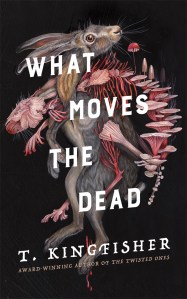
Book: “What Moves the Dead” by T. Kingfisher

Publishing Info: Tor Nightfire, July 2022

Where Did I Get this Book: Edelweiss+; NetGalley

Where Can You Get this Book: Amazon | IndieBound | WorldCat

Book Description: When Alex Easton, a retired soldier, receives word that their childhood friend Madeline Usher is dying, they race to the ancestral home of the Ushers in the remote countryside of Ruritania.

What they find there is a nightmare of fungal growths and possessed wildlife, surrounding a dark, pulsing lake. Madeline sleepwalks and speaks in strange voices at night, and her brother Roderick is consumed with a mysterious malady of the nerves.

Aided by a redoubtable British mycologist and a baffled American doctor, Alex must unravel the secret of the House of Usher before it consumes them all.

Serena’s Thoughts:

As fans of this blog know, I’ve been on a bit of a T. Kingfisher kick lately, after discovering how much I liked her worked after reading “Nettle & Bone.” So when I saw that she was coming out with a horror novella this summer, I was all on board to read it. And of course we had to have our resident horror expert’s take as well, so I roped Kate into this one.

I haven’t read the original “The Fall of the House of Usher;” frankly, I have read very little Poe altogether. But it was easy enough to guess at the typic of gothic horror story it must have been. So, I can’t say how closely T. Kingfisher followed that story. What I do know is that the author took the liberty of not only creating an original narrating character, but an entire country and culture from which that character originated. With that came one of the most interesting takes on new pronouns that I’ve ever seen. What made it work for me was just how well-thought out the language decisions were. They all made sense in the realm of what we can see in other real languages. But beyond the pronouns, Kingfisher used this culture to highlight the limitations placed on women of the time. But, as the author tends to have a light touch on her prose, it was all done in a humorous, if not any less important, way.

I also really liked the horror aspect of this story. In the author’s note (always read the author’s note!), Kingfisher mentions that she was in the process of writing this book when Sylvia Moreno-Garcia put out her “Mexican Gothic,” another gothic horror with a focus on mushrooms and fungus. I’m glad that Kingfisher wasn’t put off of writing this book, however, because they are ultimately very different stories. The fungus, itself, was very different. Sure, it played for all the spooky horror moments. But it also drew on different emotions that I had definitely not expected. I don’t want to get into it further than that for spoiler reasons, but I was definitely having some surprising reactions to various twists and turns towards the end of the book.

Kate’s Thoughts:

Unlike Serena, I have read “The Fall of the House of Usher”, but it had been, oh… twenty five years since I last read it? I remembered the basics, though I did wonder if I would spot the parallels as well as I would have had it not been a quarter century. But good news! I remembered enough to make the comparisons! But even better news is that T. Kingfisher has made the story unique and able to stand on its own while still harkening to the spirit of the original! That is to say, I definitely enjoyed this book!

A lot of the things I found interesting and unique Serena touched upon, but as the resident horror person I will stick to that aspect of the book. Kingfisher does a really good job of sticking to the Gothic paranoia of isolation and slow mental and emotional decline, while also introducing a really gross and unsettling body horror aspect with the fungal themes. While body horror can be a sub genre that makes me incredibly uneasy, what I liked about Kingfisher’s take on it is that this book rarely goes for deliberate over the top gross outs, and instead relies on unsettling imagery like hares that are behaving oddly, or a sleepwalking woman that just seems off, or the eerie beauty of a lake that glows at night for reasons unknown. We never get to super high levels of horror in this book, as there are plenty of moments of levity as well as a matter of fact tone as the story goes on, but there are plenty of beats that are incredibly creepy that feel like moments in the original tale. It’s a very well done homage and retelling that made me squeamish for all the right reasons.

Fans of the original story should check this out, not only because it’s well done, but also because it’s a good introduction to an author who is doing creative things across genres.

Serena’s Rating 8: A short, spooky tale that introduces a new version of a classic tale, new character and culture included!

Kate’s Rating 8: Unsettling and unique, “What Moves the Dead” is a fun reimagining of a Poe staple.

Reader’s Advisory:

“What Moves the Dead” can be found on these Goodreads lists: Fungus Fiction and Summer of Speculative Reading

Serena’s Review: “Half a Soul”

This post may contain affiliate links for books we recommend.  Read the full disclosure here.

Book: “Half a Soul” by Olivia Atwater

Publishing Info: Orbit, June 2022

Where Did I Get this Book: ARC from the publisher!

Where Can You Get this Book: Amazon | IndieBound | WorldCat

Book Description: Ever since she was cursed by a faerie, Theodora Ettings has had no sense of fear or embarrassment – a condition which makes her prone to accidental scandal. Dora hopes to be a quiet, sensible wallflower during the London Season – but when the strange, handsome and utterly uncouth Lord Sorcier discovers her condition, she is instead drawn into dangerous and peculiar faerie affairs.

If Dora’s reputation can survive both her curse and her sudden connection with the least-liked man in all of high society, then she may yet reclaim her normal place in the world. . . but the longer Dora spends with Elias Wilder, the more she begins to suspect that one may indeed fall in love, even with only half a soul.

Review: I was so excited when I received an ARC of this book from Orbit (thank you!). The book description alone checks so many personal favorites of mine that it’s kind of ridiculous. It’s also been a while since I’ve read a good faerie story, so I was particularly excited to revisit this fantasy fan favorite topic.

As a young girl, Theodora Ettings, or Dora, fell prey to a malicious faerie curse. In the blink of an eye, she lost half of her soul and along with it all the sharper edges of emotion. As a young lady, while unconcerned herself with others’ dismay, Dora recognizes that her strange ways and habit of blurting out whatever she is thinking will likely prohibit her from every finding her own marriage match. She’s content, however, to simply help her beloved cousin and make a home with her as a slowly aging spinster. But life takes an unexpected turn when she stumbles into a strange mystery leaving children cursed in a comatose state. Also on the case is the prickly and antisocial Lord Sorcier. As they work closely together, each begins to question their pre-established views of their own futures.

In my opinion, the biggest question with any historical work, be it fantasy, mystery, what have you, is whether the author has a decent handle on the language of the time. Poor word choice, stuttered style, and anachronisms are the surest way to immediately lose me as a reader with this type of book. Immediately, I was relieved to find that not only did this author have a solid handled on this aspect of the story, but she was adept at inserting witty turns of phrase and leaning on some of the inherent ridiculousness of pairing faeries and magic with proper Regency language. This clever writing style was present across prose and dialogue, and there were several laugh-out-loud moments for me during this read.

I also really enjoyed Dora and the effect her curse has on her life and her interactions with the people around her. If you try and think to hard about how the curse truly works with limiting her emotions, you can likely run into a brick wall of confusion, as we do see Dora forming strong attachments to characters throughout the book. But given the explanation that Dora herself gives at one point, I thought it made enough sense for me. Plus, I was having too much fun with the way her curse was playing out on the page, as well as the slow-burn romance that was developing between her and Elias, the Lord Sorcier, to ever feel the need to question or complain.

The mystery around the children was interesting as well. Through this portion of the story, the author shines a clear light on the terrible working/living conditions of the poor living in London at this time. Not only did she highlight the challenges facing this population, but she neatly described the vast distance (partly physically, but mostly through intentional looking away) between the classes and the unwillingness of those living a comfortable life to turn their eyes to the despair surrounding them. There was also a pretty great twist towards the end of this mystery which really added to the story as a whole.

This was a light-hearted, fast-reading romantic fantasy. Fans of Regency romance are sure to enjoy it, as well as those who want a more playful look at faeries and faerie courts. I loved the heck out of this book, and now am even more excited to check out the next one coming out from this author later this summer!

Rating 9: A purely joyful reading experience all around!

Reader’s Advisory:

“Half a Soul” isn’t on any Goodreads lists yet, but it should be on Regency Fantasy Books.

Serena’s Review: “Ordinary Monsters”

This post may contain affiliate links for books we recommend.  Read the full disclosure here.

Book: “Ordinary Monsters: by J.M. Miro

Publishing Info: Flatiron Books, June 2022

Where Can You Get this Book: Amazon | IndieBound | WorldCat

Book Description: England, 1882. In Victorian London, two children with mysterious powers are hunted by a figure of darkness —a man made of smoke.

Sixteen-year-old Charlie Ovid, despite a lifetime of brutality, doesn’t have a scar on him. His body heals itself, whether he wants it to or not. Marlowe, a foundling from a railway freight car, shines with a strange bluish light. He can melt or mend flesh. When two grizzled detectives are recruited to escort them north to safety, they are forced to confront the nature of difference, and belonging, and the shadowy edges of the monstrous.

What follows is a journey from the gaslit streets of London, to an eerie estate outside Edinburgh, where other children with gifts—the Talents—have been gathered. Here, the world of the dead and the world of the living threaten to collide. And as secrets within the Institute unfurl, Marlowe, Charlie and the rest of the Talents will discover the truth about their abilities, and the nature of the force that is stalking them: that the worst monsters sometimes come bearing the sweetest gifts.

With lush prose, mesmerizing world-building, and a gripping plot, “Ordinary Monsters” presents a catastrophic vision of the Victorian world—and of the gifted, broken children who must save it.

Review: First off, thank you so much to Flatiron Books for sending me an ARC copy of this book! However, I `will say, given its page count, I may have defaulted to reading the ebook more often than not, if only to spare my poor wrists. I was very excited to dive into this one given its description. I always love it when I can find books that cross my favorite genres, and historical fiction plus fantasy is right up my alley. Pair that with a concept that sounds awfully close to Victorian “X-Men,” and I’m all in.

Two children with strange and wonderous powers are on the run, each unsure of who or what they are. Only that these mysterious gifts they possess have drawn the attention of dark figures who chase them and surely mean no good. Soon enough however, with the help of two detectives, they make their way to a safe haven where they find out that they are not the only children with powers. Indeed, there are more and they have a name: the Talents. While centered primarily in 1882 England, the story jumps around the world highlighting the experiences of other Talents scattered across the continents.

I have to say, it’s either an incredibly gutsy or an incredibly confident author who puts out their debut novel at 672 pages. Yes, fantasy is the genre where you’ll find the most tolerant crowd for behemoth tomes. But even well-established authors like Brandon Sanderson started out with normal-length books before releasing their full powers (his most recent “Stormlight Archive” book comes in at a whopping 1230 pages!). It’s also a confident editor who doesn’t instruct that same debut author to trim things up a bit. And while I would say that this book might have been better served being trimmed down some (there’s just no avoiding the fact that this is a lot to ask of readers who no nothing about an author and whether the time the reader is committing to them will be paid back in kind), it also held up well given the sheer length.

Part of this is helped by the style of the story. While the book definitely has some main-ish characters, the story also jumps around a lot, exposing readers to a plethora of new characters, cultures, and locations. It also helped that there were some really stand-out action sequences, most particularly a pretty cool battle on a train. These intermittent fight scenes helped give the story a jolt of adrenaline right when the reader could start to feel a bit bogged down by the sheer length of the book.

The characters were all just ok, for me. I enjoyed them all well enough, but none of them really spoke to me in a way that it would be any one of their stories that draws me back to this world. Instead, they felt closer to avatars that reader is using to explore this newly understood world where magical elements line up beside historical figures and facts that we may already be familiar with.

The story also swerved into the darker parts of fiction, drawing neat parallels between itself and the penny dreadfuls that were so popular at this time. But these darker elements were supported by a strong focus on found families and inner strength, using a diverse set of characters to highlight the human experience that connects us. The writing was also powerful and sure-handed.

Overall, I enjoyed this book quite a lot. It is an undertaking, to be sure, but I think it is well worth it. I fully expect this book to get a second look by many fantasy fans and that the inevitable second and third parts of the proposed trilogy will be anxiously awaited. If you’re an avid fantasy fan and don’t mind a massive tome, definitely give this one a try. Also, don’t forget to enter to win an ARC of this book!

Rating 8: A long, but well-worth it historical fantasy read!

Reader’s Advisory:

“Ordinary Monsters” is on this Goodreads list: Can’t Wait Books of 2022

Giveaway: “Ordinary Monsters”

This post may contain affiliate links for books we recommend.  Read the full disclosure here.

Book: “Ordinary Monsters: by J.M. Miro

Publishing Info: Flatiron Books, June 2022

Where Can You Get this Book: Amazon | IndieBound | WorldCat

Book Description: England, 1882. In Victorian London, two children with mysterious powers are hunted by a figure of darkness —a man made of smoke.

Sixteen-year-old Charlie Ovid, despite a lifetime of brutality, doesn’t have a scar on him. His body heals itself, whether he wants it to or not. Marlowe, a foundling from a railway freight car, shines with a strange bluish light. He can melt or mend flesh. When two grizzled detectives are recruited to escort them north to safety, they are forced to confront the nature of difference, and belonging, and the shadowy edges of the monstrous.

What follows is a journey from the gaslit streets of London, to an eerie estate outside Edinburgh, where other children with gifts—the Talents—have been gathered. Here, the world of the dead and the world of the living threaten to collide. And as secrets within the Institute unfurl, Marlowe, Charlie and the rest of the Talents will discover the truth about their abilities, and the nature of the force that is stalking them: that the worst monsters sometimes come bearing the sweetest gifts.

With lush prose, mesmerizing world-building, and a gripping plot, “Ordinary Monsters” presents a catastrophic vision of the Victorian world—and of the gifted, broken children who must save it.

Giveaway Details:

I always love it when I can find books that cross over two (or more!) genres that I enjoy. It’s the reason why most of the mystery novels I read/review for this blog are also historical pieces and not modern murder mysteries. Much of the fantasy I read, however, is second-world fantasy, meaning the entire setting, time period, and culture is unique to the story. But there’s a pretty solid subgenre of historical fantasy, stories that simply recreate a time and place and add a dash of magic to the entire affair.

Reading through this description, “Ordinary Monsters” essentially sounds like Victorian “X-Men” if you ask me. And who’s not interested in that?! Of course, my usual wariness of large casts of characters is at play, but there are some solid examples of ensemble stories, so hopefully this is one of those!

Per the usual, my review for this book will be up Friday. But don’t wait until then to get in on the chance to win a copy of this book! This giveaway is open to U.S. residents only and will end on June 14.

Enter to win!

Kate’s Review: “A Botanist’s Guide to Parties and Poisons”

This post may contain affiliate links for books we recommend.  Read the full disclosure here.

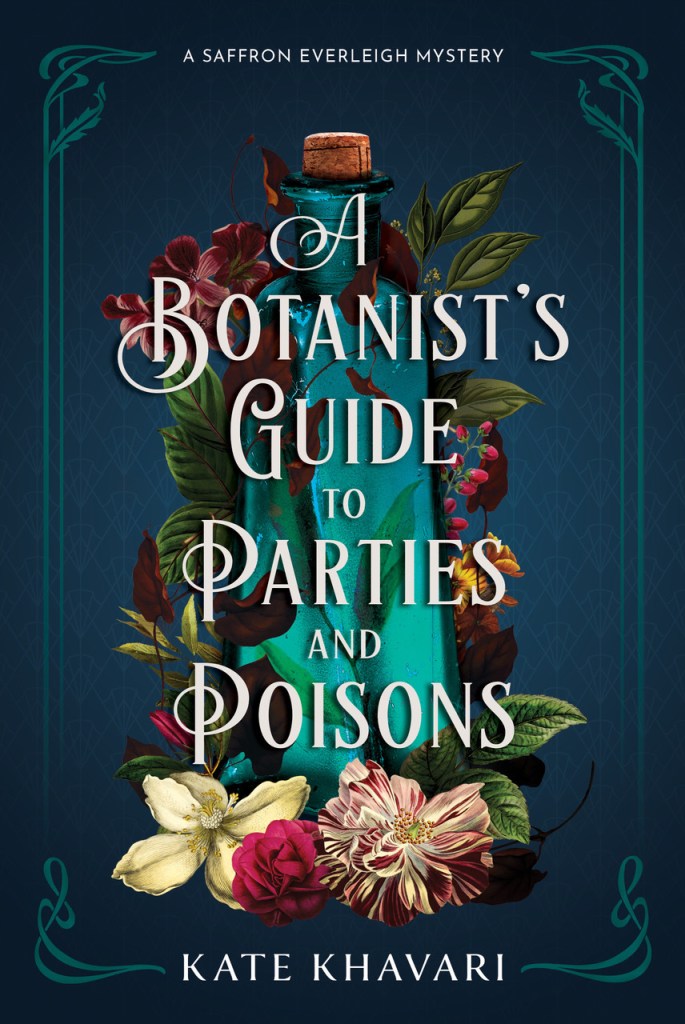
Book: “A Botanist’s Guide to Parties and Poisons” by Kate Khavari

Publishing Info: Crooked Lane Books, June 2022

Where Did I Get This Book: I received an eARC from NetGalley.

Where You Can Get This Book: WorldCat | Amazon | Indiebound

Book Description: Saffron Everleigh is in a race against time to free her wrongly accused professor before he goes behind bars forever. Perfect for fans of Deanna Raybourn and Anna Lee Huber, Kate Khavari’s debut historical mystery is a fast-paced, fearless adventure.

London, 1923. Newly minted research assistant Saffron Everleigh attends a dinner party for the University College of London. While she expects to engage in conversations about the university’s large expedition to the Amazon, she doesn’t expect Mrs. Henry, one of the professors’ wives to drop to the floor, poisoned by an unknown toxin. Dr. Maxwell, Saffron’s mentor, is the main suspect, having had an explosive argument with Dr. Henry a few days prior. As evidence mounts against Dr. Maxwell and the expedition’s departure draws nearer, Saffron realizes if she wants her mentor’s name cleared, she’ll have to do it herself.

Joined by enigmatic Alexander Ashton, a fellow researcher, Saffron uses her knowledge of botany as she explores steamy greenhouses, dark gardens, and deadly poisons. Will she be able to uncover the truth or will her investigation land her on the murderer’s list?

Review: Thank you to NetGalley for providing me with an eARC of this novel!

I’m not really a plant person. Every year I have the best intentions when it comes to the landscaping that came with our house, as there is lots of room and lots of nice flowers… but I’m never motivated to clean it up or make it look pretty (though I have taken in irises, peonies, and a bleeding heart from friends and family, which are all lovely and stick out amongst the weeds). But poisonous plants are a whole other thing, given that I would LOVE to go on a tour of a poisonous garden at some point in my life, with the proper precautions in place. So when I saw the description of “The Botanist’s Guide to Parties and Poisons” by Kate Khavari, I jumped at the chance to read it, for whatever reason getting into my head it was going to be a thriller level mystery about academia and poisons. Thriller level, not so much. Honestly this is probably more along the lines of the kinds of mysteries Serena reviews on her, but here we are and I still liked it, so I’m taking it on!

In similar themes and fashions that I have associated with historical mysteries, “A Botanist’s Guide to Parties and Poisons” is engaging, swift entertainment with a fun protagonist and a fascinating setting. Set in post WWI London, Saffron Everleigh is one of the only women research assistants/academics at the University of London, where she works in botany to the well respected Dr. Maxwell. So when he is accused of trying to poison a colleague’s wife at a university soiree as revenge, Saffron is determined to clear his name and find the real culprit. As far as the mystery goes, I thought that Khavari has a workable list of suspects who all have their reasons, as well as some good red herrings and misdirects. And who doesn’t like the potential murder weapon being an exotic and dangerous poisonous plant? I especially liked all of the talk about the deadly plants, and how Khavari created one especially for the story that sounded perfectly plausible. It’s not a super complex mystery and while there are twists they’re pretty standard. I was more interested in our characters, particularly Saffron and her recruited sidekick Alexander Ashtonm a biology researcher who is serious but swoony all the same. They play off of each other very well, and their chemistry is at a nice simmer for their will they or won’t they dynamic. I also liked Saffron’s best friend and roommate Elizabeth, whose spunky and winsome personality makes her a fun foil. Most of the other characters are pretty two dimensional, but my guess is that casts of characters will rotate in and out and therefore the main players are really the only ones that need the most depth.

I also found the World War I themes in this book make it stand apart from the other mysteries in this subgenre that I am accustomed to. WWI is a war that was just awful and devastating, as wars are, but it tends to get a bit overlooked within popular culture and literature. Khavari has its presence in the background, as Saffron and other characters have been affected by it in very sad ways. For Saffron, she lost not only her childhood friend/assumed future husband Wesley to the war, as well as her father, a brilliant scientist who felt the need to enlist, and died due to mustard gas in a trench. This early in the series we have the background set up for this personal pain, and while Saffron and others touch upon the grief of all these men lost, it never overwhelms the story. There is also Alexander, who is a veteran turned researcher, whose reputation of being perhaps hot tempered at times is more a reflection of his PTSD due to his experiences. Khavari makes a note at the end of the book that she wanted to be as true to the ‘shell shock’ experience as she could be, and I felt that Alexander was a responsible look into the aftermath of such a trauma. There are a fair amount of potential content warnings that could apply here (as well as instances of harassment and one moment of potential sexual assault), but Khavari is careful with all of it. Again, it’s early in the series, and I’m sure there will be more exploration of such themes. We had a good set up here that balanced well with the larger mystery.

Though it wasn’t the tone I expected, I enjoyed “A Botanist’s Guide to Parties and Poisons”. I plan to keep up with Saffron’s ongoing adventures, especially if there are more poisonous plant shenanigans.

Rating 7: A charming mystery with some enticing themes, “A Botanist’s Guide to Parties and Poisons” will please those who like jaunty historical mysteries with plucky heroines.

Reader’s Advisory:

“A Botanist’s Guide to Parties and Poisons” is included on the Goodreads lists “ATY 2022: Flora & Fauna”, and “Historical Mystery 2022”.

Serena’s Review: “Where the Lost Wander”

This post may contain affiliate links for books we recommend.  Read the full disclosure here.

Book: “Where the Lost Wander” by Amy Harmon

Publishing Info: Lake Union Publishing, April 2020

Where Did I Get this Book: from the library!

Where Can You Get this Book: Amazon | IndieBound | WorldCat

Book Description: The Overland Trail, 1853: Naomi May never expected to be widowed at twenty. Eager to leave her grief behind, she sets off with her family for a life out West. On the trail, she forms an instant connection with John Lowry, a half-Pawnee man straddling two worlds and a stranger in both.

But life in a wagon train is fraught with hardship, fear, and death. Even as John and Naomi are drawn to each other, the trials of the journey and their disparate pasts work to keep them apart. John’s heritage gains them safe passage through hostile territory only to come between them as they seek to build a life together.

When a horrific tragedy strikes, decimating Naomi’s family and separating her from John, the promises they made are all they have left. Ripped apart, they can’t turn back, they can’t go on, and they can’t let go. Both will have to make terrible sacrifices to find each other, save each other, and eventually… make peace with who they are.

Review: Great authors are hard to come by. It’s especially exciting when you come across one who excels in one of your favorite genres. But the magical unicorn great author is one who seems able to write excellent novels in almost any genre! Authors like Sylvia Moreno Garcia and Naomi Novik come to mind. Amy Harmon turns out to be yet another of those authors. Everything she writes is a solid, individual piece of art, and yet she flits from genre, time period, and theme with the ease of an author who has written twenty books of the same ilk before. It’s so impressive. All of this to say, I was very excited when I saw she had written a historical novel about the Oregon Trail. There aren’t too many books out there (at least that I’ve found) that tackle this period of time, so I was excited to see what Harmon had to bring, knowing full well that she was more than up to the task of delivery something great once again!

Like others who came before them, Naomi and her family brave the dangers of the long trip out West on the promise of a new life to be found by the end. For Naomi, a young widow, this opportunity to begin again is precious to her. But like all travelers of the trail, Naomi and her family need the benefits offered by a knowledgeable guide. For this, they turn to John Lowry, a half Native American man whose familiarity with the territory is sure to help their journey run smoothly. Along the way, Naomi and John feel themselves drawn closer and closer together. But disaster and tragedy strike, and, now separated, John and Naomi must fight to return to each other.

So, beyond being excellent, I think I can also say that Harmon always writes books that will pull at the heartstrings in some way or another. As much as I’ve loved all of her books, this one included, I haven’t managed to get through any of them without tearing up. And this one had big time tears! Not to say that this is a bad thing. Indeed, it speaks to the power of Harmon’s writing that you will quickly find yourself so immersed in this world and story that the sheer power of will found in our main characters is enough to pull at your heart. Not to mention the very real dangers and tragedies they each must face in the course of this story.

Harmon doesn’t shy away from portraying the harsh realities of this time and place (she also has an excellent author’s note at the end about her own family’s history and her approach to researching and writing this story.) For his part, John clearly doesn’t fit into either of his parents’ worlds. Not that of his Native American mother with whom he only lived the first few years of his life. Nor the white settlers who continually side eye him even though he has lived and worked alongside them his entire adult life. There was no neat solution or simplistic “good” or “bad” guys. Instead, Harmon took a nuanced look at the life and experience of an individual in this role. For her part, Naomi’s life is not straightforward either. She’s a young woman (though widowhood does offer a certain sort of freedom) in a time period where she has very little agency over her life and choices. Instead, she must work within the strict options given to her, often having to make heartbreaking decisions just to survive.

The romance itself was lovely. It was a slow-burn romance, and we had plenty of time to get to know both John and Naomi individually. And then they are separated, and we have to get to know them once again when they must rise to the challenges set before them. When they come together again, it’s bittersweet and lovely. Like I said, there’s a lot of tragedy in this book, but the for its part, the romance itself is completely satisfying.

This is definitely a challenging read, so readers picking it up should be prepared to read some darker themes, both of violence against women as well as death. But all of the tragedy is balanced with beauty and a clear-eyed look at life during this time period. Fans of historical fiction, specifically the time of the Oregon Trail, should definitely check this one out!

Rating 8: Beauty and heartbreak are equally balanced in this lovely work of historical fiction.

Reader’s Advisory:

“Where the Lost Wander” can be found on these Goodreads lists: Historical Fiction 2020 and Amazing Books that are Barely Known.

Blog Tour: “The Murder of Mr. Wickham”

This post may contain affiliate links for books we recommend.  Read the full disclosure here.

Book: “The Murder of Mr. Wickham” by Claudia Gray

Publishing Info: Vintage, May 2022

Where Did I Get this Book: ARC from the publisher!

Where Can You Get this Book: Amazon | IndieBound | WorldCat

Book Description: The happily married Mr. Knightley and Emma are throwing a house party, bringing together distant relatives and new acquaintances—characters beloved by Jane Austen fans. Definitely not invited is Mr. Wickham, whose latest financial scheme has netted him an even broader array of enemies. As tempers flare and secrets are revealed, it’s clear that everyone would be happier if Mr. Wickham got his comeuppance. Yet they’re all shocked when Wickham turns up murdered—except, of course, for the killer hidden in their midst.

Nearly everyone at the house party is a suspect, so it falls to the party’s two youngest guests to solve the mystery: Juliet Tilney, the smart and resourceful daughter of Catherine and Henry, eager for adventure beyond Northanger Abbey; and Jonathan Darcy, the Darcys’ eldest son, whose adherence to propriety makes his father seem almost relaxed. In a tantalizing fusion of Austen and Christie, the unlikely pair must put aside their own poor first impressions and uncover the guilty party—before an innocent person is sentenced to hang.

Review: There is a truth universally acknowledged: the more ardent a fan of Jane Austen a reader is, the more critical that fan will be of any and every Jane Austen adaptation/sequel. I feel fairly confident making a generalization like that, and I would easily include myself in it. There have been times when my snobbery has reached levels not seen in any other favorite genre or beloved series of books. But I’m glad that I didn’t let this lesser self dictate whether or not I picked up this book, cuz, man, other than “Death Comes to Pemberley,” this is probably my favorite Jane Austen continuation yet!

In Emma’s view, a house party is always just the thing to cheer matters up! So she and her husband, Mr. Knightley, gather a large group of friends, acquaintances, and family members to share in a visit at their home. This cheerful event is made much less so, however, when the disreputable Mr. Wickham shows up one dark and stormy night. And what’s worse than an unwelcome guest? One that is rude enough to get themselves murdered on the premises, thus leaving all the remaining guests left as suspects. With so many members of the group having motives for thinking the world would be better off without Mr. Wickham, the Darcy’s oldest son, Jonathan, and the young Juliet Tilney decide to tackle the mystery themselves. But as they get closer and closer to discovering the murderer, the more horrifying the truth becomes, because it must have been one of their dear friends!

It’s immediately obvious that the author is herself a huge fan of Jane Austen. This book is so clearly a love letter to all of these characters and to all of the fans that it’s impossible to miss. This also makes the reading experience entirely dependent on one’s familiarity with these characters and stories. There are so many small nods and inside jokes that will only be appreciated by ardent fans, that the reading experience will likely be vastly different for those familiar with these stories and those who have been less-exposed. And because the story includes characters from all of the books, the reader pretty much has to have all six novels well under the belt to appreciate the work the author has put into creating in this story.

As fun as all of these Easter egg clues were to spot, what really made this book stand out was how well the author understood the characters she was working with, in all of their strengths and weaknesses. Most especially, she envisioned how these personalities would play off one another, both between each other and within their own marriages (since, due to the nature of Austen’s books, we see very little of what these characters’ lives are like in the marital state). Gray doesn’t shy away from pointing out some of the flaws in these characters that could drive wedges into their marriages. However, everything is handled with such care that you never feel like any of these choices or actions are out of character with the originals. Instead, we see how many of them grow even further once some of these characteristics are exposed to the harsh light of day.

From a purely preferential state, I was glad to see that Emma and Knightley were by far the most stable of the couples. Not only do they know each other much better than anyone else (Emma having grown up with Knightley as a good friend from the very beginning), but the original book does a good job dealing with each of their flaws to begin with. Fans of “Mansfield Park,” however, may be dismayed to see that Fanny and Edmund, on the other hand, probably have the most work to do. Again, this never feels like an overt critique of the original story, but instead seems perfectly in line with these two characters and the way their romance played out (honestly, one of the more weird ones when you think about it). It’s satisfying to see Fanny come more into her own and Edmund be forced to reckon with some of the ways that he didn’t do his best with regards to Fanny and their relationship.

All of this written and I haven’t even touched on the mystery! I honestly can’t say enough good thing about this as well. It’s truly impressive how well Gray managed to work Wickham into all of these characters’ lives in ways that felt completely natural and inline with their stories. Not once did his relationship with these characters feel forced or shoe-horned in to fit the narrative. Instead, it felt completely organic and believable. Thus making the entire thing so stressful! It starts to become truly horrifying wondering how this mystery is going to be resolved without vilifying one of our beloved main characters!

I also really enjoyed the original characters of Jonathan and Juliet. It’s tough work to create new characters and stand them up against classics like Elizabeth Bennet and Emma Woodhouse, but Gray manages it! For one thing, the book features so many viewpoints that Jonathan and Juliet are by no means the sole focus. We get plenty of time with our other favorites, but I also began to appreciate both Jonathan and Juliet in their own right. I was also pleased to see that while there are hints of a potential romance between these two, the story didn’t commit to anything in this arena. There simply wasn’t enough time in this book to not do a disserve to the mystery by trying to force in a fully-fledged romance as well.

All of this to say, I highly recommend this book to any Jane Austen fan out there! The more familiar you are with the originals, the more you’re likely to enjoy this!

Rating 9: Simply excellent and sure to please even the most picky Jane Austen fan!

Reader’s Advisory:

“The Murder of Mr. Wickham” isn’t on any Goodreads lists yet, but it should be on Jane Austen Sequels and Pastiches.

Kate’s Review: “The Hacienda”

This post may contain affiliate links for books we recommend.  Read the full disclosure here.

Book: “The Hacienda” by Isabel Cañas

Publishing Info: Berkley, May 2022

Where Did I Get This Book: I received an eARC from NetGalley.

Where You Can Get This Book: WorldCat | Amazon | Indiebound

Book Description: Mexican Gothic meets Rebecca in this debut supernatural suspense novel, set in the aftermath of the Mexican War of Independence, about a remote house, a sinister haunting, and the woman pulled into their clutches

In the overthrow of the Mexican government, Beatriz’s father is executed and her home destroyed. When handsome Don Rodolfo Solórzano proposes, Beatriz ignores the rumors surrounding his first wife’s sudden demise, choosing instead to seize the security his estate in the countryside provides. She will have her own home again, no matter the cost. But Hacienda San Isidro is not the sanctuary she imagined.

When Rodolfo returns to work in the capital, visions and voices invade Beatriz’s sleep. The weight of invisible eyes follows her every move. Rodolfo’s sister, Juana, scoffs at Beatriz’s fears—but why does she refuse to enter the house at night? Why does the cook burn copal incense at the edge of the kitchen and mark its doorway with strange symbols? What really happened to the first Doña Solórzano?

Beatriz only knows two things for certain: Something is wrong with the hacienda. And no one there will help her. Desperate for help, she clings to the young priest, Padre Andrés, as an ally. No ordinary priest, Andrés will have to rely on his skills as a witch to fight off the malevolent presence haunting the hacienda and protect the woman for whom he feels a powerful, forbidden attraction. But even he might not be enough to battle the darkness. Far from a refuge, San Isidro may be Beatriz’s doom.

Review: Thank you to NetGalley for providing me with an eARC of this novel!

I am a little embarrassed to admit that Isabel Cañas’s debut Gothic horror novel “The Hacienda” was just sitting on my Kindle for months. I requested it pretty early out from the release date, and I know that when I do that books do tend to just sit. By the time I deemed it right to pick up, the chiding ‘downloaded on ___’ indicator was staring at me and making me fidget. And then when I started it, I felt myself all the more annoyed because holy COW. This book was immediately awesome! With a description that has “Mexican Gothic” meets “Rebecca” I knew it was going to be a treat, but boy howdy was I not ready for the treat that it was. I absolutely LOVED “The Hacienda”.

It bears repeating. (source)

Right off the top I want to say that the ghost story and Gothic elements are ON POINT. Cañas knows how to set the scene and slowly build the dread, pretty much starting right from Beatríz’s arrival to Hacienda San Isidro when she sees gutted rodents strewn about the courtyard. Cats are the culprits, she is told, though there is tension in the air, and it slowly builds and consumes until the tension is unbearable. There are plenty of haunted house moments applied here, from cold spots to slamming doors, to glowing eyes seen in the darkness for a fleeting second, to skeletons found in hidden places. It soon becomes clear to Beatríz that there is something haunting this estate, and as she tries desperately to get someone to believe her, it’s the servants and the locals who have the most insight. When most Priests scoff at her, one, Padre Andrés, answers her call for an exorcism. I loved Beatríz as a tormented and determined protagonist, as she both fits the bill for a Gothic heroine while also pushing against stereotypes as she refuses to be gaslit over what is happening in the home. And I also really liked Andrés, whose Father Karas-esque test of faith hides the fact that he is, at his heart, a witch whose practices have been hidden and repressed by the colonial culture that has taken root (more on that soon). They make a great horror story team, as they are easy to root for a relate to and make you become very invested very quickly. Which makes the haunting they are dealing with all the scarier. And makes the forbidden attraction between them even more high stakes. And yes, SWOON WORTHY.

But there are also a lot of underpinning themes regarding classism, racism, colonialism, and political upheaval that make “The Hacidenda” all the richer when it comes to the story it aims to tell. The aforementioned priest/witch, Andrés, basically went into the priesthood to hide his witchcraft and folk healing that has been passed down through the generations, as the Inquisition came to Mexico and practicing such would make him a target. The previous mistress, Doña Catalina, was abusive and cruel to her servants, who are of lower social standing and are also mostly mestizo in their heritage, and she sees them as subhuman. Juana, the half sister of Don Rodolfo, is a child of a hacendado but as a woman with a mysterious family background has no social claim to his wealth. And even Beatríz has connections to these political themes, as her father was murdered by Don Rodolfo’s party, and as a woman has few options and sees marriage to him as a way to keep herself safe. It’s when these real life horrors and injustices are applied to the horror tale that it really stands out, bringing in a critique of colonized Mexico and the damage it has done to the people who live there. Cañas has a fantastic authors note at the back of this book that really puts it all into context, and she weaves it in perfectly.

And on top of all that, I really loved Cañas’s writing style. She has the right flow, the most haunting and at times beautiful imagery, and paces everything just right. This is a fantastic debut.

“The Hacienda” is can’t miss horror fiction. Scary and thoughtful and a must read to be sure.

Rating 9: Gothic and creepy with ghosts, witchcraft, and commentary, “The Hacienda” is a great horror novel that can’t be missed!

Reader’s Advisory:

“The Hacienda” is included on the Goodreads lists “Latinix Horror/Fantasy”, and “2022 Gothic”.

Kate’s Review: “The Fervor”

This post may contain affiliate links for books we recommend.  Read the full disclosure here.

Book: “The Fervor” by Alma Katsu

Publishing Info: G.P. Putnam’s Sons, April 2022

Where Did I Get This Book: I received an eARC from NetGalley.

Where You Can Get This Book: WorldCat | Amazon | IndieBound

Book Description: From the acclaimed and award-winning author of The Hunger and The Deep comes a new psychological and supernatural twist on the horrors of the Japanese American internment camps in World War II.

1944: As World War II rages on, the threat has come to the home front. In a remote corner of Idaho, Meiko Briggs and her daughter, Aiko, are desperate to return home. Following Meiko’s husband’s enlistment as an air force pilot in the Pacific months prior, Meiko and Aiko were taken from their home in Seattle and sent to one of the internment camps in the Midwest. It didn’t matter that Aiko was American-born: They were Japanese, and therefore considered a threat by the American government.

Mother and daughter attempt to hold on to elements of their old life in the camp when a mysterious disease begins to spread among those interned. What starts as a minor cold quickly becomes spontaneous fits of violence and aggression, even death. And when a disconcerting team of doctors arrive, nearly more threatening than the illness itself, Meiko and her daughter team up with a newspaper reporter and widowed missionary to investigate, and it becomes clear to them that something more sinister is afoot, a demon from the stories of Meiko’s childhood, hell-bent on infiltrating their already strange world.

Inspired by the Japanese yokai and the jorogumo spider demon, The Fervor explores a supernatural threat beyond what anyone saw coming; the danger of demonization, a mysterious contagion, and the search to stop its spread before it’s too late.

Review: Thank you to NetGalley for sending me an eARC of this novel!

I say this a lot on here, but I have a few must read authors and this post is about another one. I have been living for Alma Katsu’s historical horror stories since I picked up “The Hunger” a few years ago, the promise of a horror retelling of the Donner Party too amazing to pass up. We went on to “The Deep” which brought us ghosts and the Titanic. And when I heard about “The Fervor”, and how it was going to be a historical horror story set during Japanese American Internment during World War II, I was both incredibly excited, but also hit by a sense of grief. That’s usually how I feel when I read about the Internment,as I’ve covered on here in a couple of other book reviews. But I was also very excited to see what she was going to do with it. Because Alma Katsu is always unique and surprising with her scares that blend history with horror.

Once again Katsu has created a deeply disturbing horror story steeped in historical events that have their own Earthly horrors to them. “The Fervor” has a few different subgenres that it taps into, from contagion horror to political conspiracy to some fantastic Japanese folklore involving yōkai and demons alike, all within the context of the home front during World War II where America had imprisoned its own citizens because of their Japanese ancestry and heritage. I really liked all of it and how Katsu blends it all together, weaving the supernatural elements with the real world ones. There are strange and dreamy moments of kitsune fox spirits, or visions the jorogumo spider demon dressed as a woman in a red kimono who appears with a swaddled bundle, and usually brings disaster if you get too close. I’m familiar with the kitsune story, but the jorogumo spider demon was new and it was so, SO creepy. I mean, spiders are already not my favorite thing, but it was the imagery of the woman in red and the knowledge that something bad was going to happen when she appeared that really set me on edge.

But let’s be real. The greater horror at the heart of “The Fervor” is the horrors of xenophobia and racism and the oppression of the Japanese American citizens under Executive Order 9066, and how the American Government and society at large justified it. In spite of the fact that Meiko and Aiko obviously have nothing to do with the fighting in the Pacific (there are some distant connections…. but that’s all I will say and I want to reiterate that Meiko and Aiko are innocent, like all those held prisoner during this awful period), they are victims of distrust and racism. And once a mysterious illness starts spreading through Minidoka, and mysterious government agents start arriving and acting shady about said illness, we get a whole new layer of horror that has echoes of some of the things we are seeing today. Katsu draws connections between modern day racism towards the Asian American community (especially right now, given that hate crimes again Asian Americans, especially women, have been on the rise in the face of the COVID-19 pandemic), as well as the ways that our government bodies are willing to Other non-white groups to gain power of various kinds, and to keep the darker realities hidden from the public. I’m really trying not to spoil anything. Just know that it all feels like as the more things change, the more they stay the same. It’s powerful parallels, and it’s the true horror of the novel.

What’s interesting about this historical retelling horror tale that Katsu has become known for is that the Japanese Internment and World War II is still, for some people, in living memory. With the Donner Party and the sinking of the Titanic it’s been so long that living witnesses aren’t really a complicating factor, but Katsu makes sure that the not so distant time period isn’t complicating to the story she is trying to tell. We have a mix of fictional characters like Meiko, Aiko, and Fran, but also characters inspired by real people like Archie Mitchell, the missionary whose wife was killed by a Fu-Go balloon bomb in Oregon (if you haven’t read up on the Fu-Go balloons it’s DEEPLY fascinating and I recommend you do). Katsu explores all the different angles of these characters and how their races, genders, and social standings have placed them where they are in society, and how that in turn ties into the greater themes of the story. For Meiko and Aiko, their race has made them enemies of the government. For Fran, she is a white woman but is also Jewish, and is also trying to make a career for herself in a world where men have the power to stop her dreams for any perceived misstep. And then there’s Archie, a white Christian man who is in deep mourning due to his wife’s death at the hands of a strange bomb that can cannot get any information on from authorities, who is conflicted between his rage and his guilt for past indiscretions, and how this leads him to some very dangerous people. They are all interesting and complex, and I loved following all of them as they all eventually come together to try and solve just what is happening with this mysterious illness, and how it connects to the Fu-Go’s and the Internment camps. It’s stellar characterization.

“The Fervor” is another disturbing and effective horror story from Alma Katsu. She is doing historical horror in ways that are so unique, and this one has a deep pain and anger within its pages that feels incredibly warranted. One of the scariest things it reveals is that America hasn’t learned much from one of its most despicable moments.

Rating 8: A compelling and still too relevant story about racism, Othering, jingoism, and fear, “The Fervor” is another well done historical horror remix of tragic events from Alma Katsu.

Reader’s Advisory:

“The Fervor” is included on the Goodreads lists “Internment Camps in Fiction”, and “2022 Horror Novels Written by Women and Non-Binary Femmes”.