Kate’s Review: “Beneath The Trees Where Nobody Sees”

This post may contain affiliate links for books we recommend.  Read the full disclosure here.

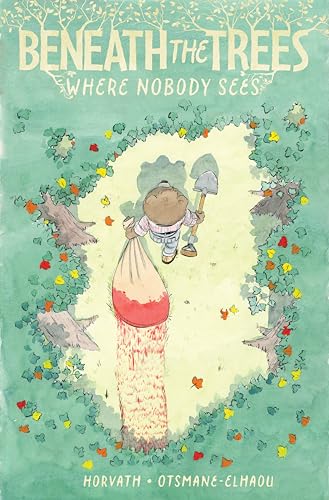
Book: “Beneath the Trees Where Nobody Sees” by Patrick Horvath

Publishing Info: IDW, September 2024

Where Did I Get This Book: I own it.

Where You Can Get This Book: WorldCat.org | Amazon | Indiebound

Book Description: Live, laugh, shed blood. Dexter meets Richard Scarry’s Busy, Busy Town in this twisted debut graphic novel!

Don’t. Murder. The locals.

This is small-town serial killer, upstanding citizen, and adorable brown bear Samantha Strong’s cardinal rule. After all, there’s a sea of perfectly ripe potential victims in the big city just beyond the forest, and when you’ve worked as hard as Sam to build a cozy life and a thriving business in a community surrounded by friendly fellow animal folk, warm decor, and the aroma of cedar trees and freshly baked apple pie…the last thing you want is to disturb the peace.

So you can imagine her indignation when one of Woodbrook’s own meets a grisly, mysterious demise—and you wouldn’t blame her for doing anything it takes to hunt down her rival before the town self-destructs and Sheriff Patterson starts (literally) barking up the wrong tree.

Cute critters aren’t immune to crime in this original graphic novel debut by writer-artist Patrick Horvath.

Review: When I was a child one of my favorite toys was a doll house for a set of “Maple Town” toys. For those who are not late Gen X/Elder Millenials, “Maple Town” was a Japanese anime for kids that ran on Nick Jr. I didn’t have cable as a kid, but my grandparents did, and every once in awhile I’d catch an episode here or there, but I LOVED my toy set that involved Patty and Ricky Rabbit and Bobby Bear even without consistent exposure to the show. I hadn’t thought about “Maple Town” in years….. And then I saw the cover and snippets from “Beneath the Trees Where Nobody Sees” by Patrick Horvath. And my IMMEDIATE thought was ‘oh my God it’s ‘Maple Town’ if ‘Maple Town’ was about a serial killer!’ Which obviously meant that I NEEDED TO READ IT.

Me to myself as I threw it in my online shopping cart (source).

As far as a mystery thriller goes with a shady as hell protagonist, “Beneath The Trees Where Nobody Sees” is top notch, with small town secrets and an anti-heroine who is whip smart and incredibly unnerving. We follow Samantha Bear a small town woman with a good job at the hardware store, some community connections, a love for her small town…. and a drive for brutally murdering unsuspecting people in the Big City that is far away and untouched by her happy life with her neighbors. But when someone starts killing people in Woodbrook, not only does it make Samantha cagey that someone will perhaps find her out during the investigation, it also just pisses her off that the town she loves and has spared is being targeted by a serial killer as sadistic as she is. So we follow Samantha as she conducts and investigation to help her community and keep her own nose clean. That’s just so fun in a nasty kind of way, and Horvath really sets up a well plotted mystery that is only enriched by Samantha, who is simultaneously the very worst but also SO easy to root for. I really enjoyed the pace of her investigation, and the cast of characters who act as suspects and victims made for some well done surprises, as well as well done shocks (and sad moments. A couple really great characters don’t fare so well!). And for the most part the reveals made sense while not feeling obvious, as well as some well placed red herrings that don’t feel cheap or frustrating. It really does read like a “Dexter” arc, as referenced in the description, with Samantha making a great dual detective/villainess.

The mystery itself is pretty well done, but what REALLY makes this book stand out (unsurprisingly so) is the fact that all of the characters are cutesy forest animals that have been drawn in adorable anthropomorphized fashions. It is such a strange dichotomy watching these delightful creatures doing pretty horrifying things, as this book is VIOLENT, but man it really adds to the appeal because it’s so creative. There are also some pretty fun meta bits, one in particular with Samantha being the woods and meeting a bear that is just like a bear a human would meet in the woods. So seeing this serial killer teddy bear-esque bear interact with a more realistic bear was just kinda fun. I MEAN HECK, the whole idea of these cute forest animals being in this situation in GENERAL is fun! What a concept! I brings an already solid serial killer thriller up a few levels.

And Horvath’s graphics are just…. My God. They are visceral and so cute and gory and charming and it’s a bizarre combination that works wonders.

(source: IDW)

“Beneath the Trees Where Nobody Sees” is one of the most unique graphic novel experiences I’ve had this year. If you like serial killer stories, and completely precious animals, this is sure to delight.

Rating 9: Twisted and unnerving but also super fun and somehow kind of adorable in its own ways, “Beneath the Trees Where Nobody Sees” is a bloody thriller with cutesy forest animals doing terrible things.

Reader’s Advisory:

“Beneath the Trees Where Nobody Sees” isn’t on any Goodreads lists as of now, but if you like the “Dexter” series or really any stories that follow a charismatic killer, this will probably click with you.

Book Club Review: “Superman Smashes the Klan”

This post may contain affiliate links for books we recommend.  Read the full disclosure here.

We are part of a group of librarian friends who have had an ongoing book club running for the last several years. Each “season” (we’re nerds) we pick a theme and each of us chooses a book within that theme for us all to read. This June we celebrated our 10 year anniversary of book club. So in celebration of that milestone, we are re-visiting authors we read way back in those first few years of our book club. For this blog, we will post a joint review of each book we read for book club. We’ll also post the next book coming up in book club. So feel free to read along with us or use our book selections and questions in your own book club!

Book: “Superman Smashes the Klan” by Gene Luen Yang & Gurihiru (Ill.)

Publishing Info: DC Zoom, May 2020

Where Did We Get This Book: Kate owns it; Serena got it from the library!

Where You Can Get This Book: WorldCat.org | Amazon | Indiebound

Repeat Author: Gene Luen Yang

Book Description: The year is 1946, and the Lee family has moved from Chinatown to Downtown Metropolis. While Dr. Lee is eager to begin his new position at the Metropolis Health Department, his two kids, Roberta and Tommy, are more excited about being closer to the famous superhero Superman!

Tommy adjusts quickly to the fast pace of their new neighborhood, befriending Jimmy Olsen and joining the club baseball team, while his younger sister Roberta feels out of place when she fails to fit in with the neighborhood kids. She’s awkward, quiet, and self-conscious of how she looks different from the kids around her, so she sticks to watching people instead of talking to them.

While the Lees try to adjust to their new lives, an evil is stirring in Metropolis: the Ku Klux Klan. The Klan targets the Lee family, beginning a string of terrorist attacks. They kidnap Tommy, attack the Daily Planet, and even threaten the local YMCA. But with the help of Roberta’s keen skills of observation, Superman is able to fight the Klan’s terror, while exposing those in power who support them–and Roberta and Superman learn to embrace their own unique features that set them apart.

Kate’s Thoughts

This isn’t the first time I’ve read this book, as I’m sure some of you will remember that I reviewed it a couple years ago (and it even ended up on my Best Of list that year). But I knew that when I was going to select an author to revisit I was going to to Gene Luen Yang, and “Superman Smashes the Klan” just seemed like the correct choice. And my opinion hasn’t changed too much since I first read it. I still really love this graphic novel.

Yang takes a very heavy (but still all too relevant) story about racism and prejudice in America, f0llowing the Lees, a Chinese American who have just moved to a predominantly white neighborhood in Metropolis after living in Chinatown, in the 1940s. As they all have their own strategies (and struggles) in adjusting, it doesn’t help that the Klan of the Fiery Cross (a clear analog to the KKK) has started targeting them. Meanwhile, Superman befriends the Lees, and his still coming to terms with his own identity, as an alien who has tried to pass as human when he is Clark Kent, and who is revered in his Superman identity, though he knows that people could shift on him at the drop of a hat. I loved the comparing and contrasting of the Lees and Superman and their inner conflicts about how to assimilate and how to be ‘ideal’ without being threatening. Yang actually took a previous story from the Superman radio show and expanded it in this story, and he makes it so easily accessible to his target audience, making it very digestable and very relatable and readable. And as I said, the themes in this book of racism and bigotry and Othering are still far too relevant, which makes it all the more necessary reading for kids, and packaged so well with such a fantastic interpretation of a beloved comic character who always symbolizes the very best of us.

“Superman Smashes the Klan” is still a fantastic read. I enjoyed it just as much this time as the first time, and it fostered from great conversations in our book club.

Serena’s Thoughts:

Unlike Kate, I hadn’t read this one before. But like Kate, I am a massive Superman fan, so was excited to check it out! And I can definitely see what all the fuss was about! This was an excellent graphic novel in pretty much every way.

The story manages to take on some very heavy themes (pretty easy to guess which based on the title alone) but does so in a manner that is both approachable to kids and useful to adults. Even more impressive, for covering some difficult topics, the reading experience is still an expression of joy and hope. I think this is incredibly important for any Superman story and was pleased to see how well the overall tone of Superman was captured. This probably shouldn’t be a surprise as I know that the author has written other Superman stories as well.

I particularly enjoyed the exploration of the immigrant experience and how Superman’s own alien origins played into this. As most Superman fans know, the character was originally presented without the ability to fly, only the ability to “jump over tall buildings.” Here, that idea is taken on and presented as Superman’s concerns of expressing his full abilities due to an incident when he was younger in which the people of Smallville reacted with fear to the full range of his “otherness.” It was such an interesting way of tackling not only an interesting fact about the character but of the many challenges of the immigrant experience.

I also very much appreciated the historical aspects of the story, especially author’s note at the end that went into more details about the origins of the story itself. This is a great read for any Superman fan and well worth a read!

Kate’s Rating 9: Still a great read and still all too relevant, “Superman Smashes the Klan” is a fantastic piece of historical fiction and a wonderful look at the immigrant experience in the face of prejudice, whether you are from Earth or Krypton.

Serena’s Rating 8: Tackling tough topics while maintaining the sense of hope in humankind that is so crucial to the Superman mythos.

Book Club Questions

  1. What did you think of the story of the Lee Family and how it brings together a story of culture, assimilation, racism, and identity?
  2. Were you familiar with some of the timelines described in this book in regards to the KKK in this country’s history? Did any of these revelations surprise you?
  3. What were your thoughts on the comparison and contrast between Superman’s experience as an Other and that of the Lee family?
  4. Did you enjoy how Yang incorporated Superman’s original leaping powers into this story, as well as other powers that evolved over time?
  5. What were your thoughts on the reveal of the identity behind the Grand Mogul? What do you think Yang was trying to say with that twist?
  6. Let’s talk about the different kinds of racism and bigotry in this book, from out and out Klansmen to more ‘acceptable’ and covert forms of racism (i.e. Chuck’s mom, even Mr. Lee’s prejudice against Black people). Thoughts on that?
  7. Who would you recommend this book to? How would you use it as a connector to today’s social issues?

Reader’s Advisory

“Superman Smashes the Klan” is included on the Goodreads lists “Superheroes, Comics, and Social Justice”, and “Best of Superman”.

Next Book Club Pick: “Summer Days and Summer Nights” by Stephanie Perkins (Ed.)

Kate’s Review: “Welcome to St. Hell”


This post may contain affiliate links for books we recommend.  
Read the full disclosure here.

Book: “Welcome to St. Hell: My Trans Teen Misadventure” by Lewis Hancox

Publishing Info: Graphix, June 2022

Where Did I Get This Book: I own it.

Where You Can Get This Book: WorldCat.org | Amazon | Indiebound

Book Description: A groundbreaking memoir about being a trans teen, in the vein of FUN HOME and FLAMER… and at the same time entirely its own.

Lewis has a few things to say to his younger teen self. He knows she hates her body. He knows she’s confused about who to snog. He knows she’s really a he and will ultimately realize this… but she’s going to go through a whole lot of mess (some of it funny, some of it not funny at all) to get to that point. Lewis is trying to tell her this… but she’s refusing to listen.

In WELCOME TO ST. HELL, author-illustrator Lewis Hancox takes readers on the hilarious, heartbreaking, and healing path he took to make it past trauma, confusion, hurt, and dubious fashion choices in order to become the man he was meant to be. It’s a remarkable, groundbreaking graphic memoir from an unmistakably bold new voice in comics.

Review: I remember that last year at some point I found myself in St. Paul all by my lonesome, and I decided to check out my favorite Twin Cities book store The Red Balloon Bookshop. It focuses on children’s and young adult literature, though you can find adult lit there too. I like supporting them as much as I can, and decided to treat myself to a spontaneous book purchase. Since I’m not a spontaneous person this kind of winging it can stress me out, but pretty quickly I saw “Welcome to St. Hell: My Trans Teen Misadventure” by Lewis Hancox. I had not heard of it but decided this was the spontaneous purchase! And then I let it sit on my shelf for awhile, as I tend to do sometimes. But then I decided to pick it up on a whim, and once I started, I was kicking myself for waiting for so long.

This is a pretty straight forward story, following Lewis Hancox as he tells us his experience of being a trans teenager before coming out and fully realizing his gender identity, starting as a tween in 1999 and going through the beginning of his transition years later. I didn’t know what to expect about this book, but what I found was a very personal and in a lot of ways very hopeful and optimistic story as Lewis, then known as Lois, slowly realizes his transness. The device used is having present day Lewis visiting and dipping in on past Lois, explaining the context of what he was going through at the time and assuring Lois that things will ultimately be alright. It’s a fast read, and I found it very readable and basically devoured it in one evening. It’s not all optimism and joy, as Hancox did have some struggles with dysphoria and an eating disorder during the times he was really trying to make his body disappear, but I appreciated that we also get to see the close friendships he had at the time, as well as his at times stumbling but ultimately accepting family as he explores and reveals his identity. It’s made clear that in his case Hancox always knew that he wasn’t a girl, even if he couldn’t really untangle those feelings for awhile, and seeing that journey on the page, with a lot of supportive people around him, is such an important story, especially for trans teens who may be looking for assurances or a mirror into their own experiences. It’s also a great example of showing how Hancox had not only a loving and in place support system (many of whom are still in his life today), but also how once he DOES get the gender affirming care he needs its a game changer. Again, Hancox is honest about some of the harder things that he had to go through to get there, but there is so much hope and joy in this memoir that it feels like an important read as well as an enjoyable one.

This was also an incredibly funny memoir at times, as Hancox has such a wry sense of humor and can find the funny bits in his experiences as he figured out his true self. There were so many moments that had me chuckling out loud as he either has a sarcastic quip, or how he presents his mother at times, or even just the really relatable teenage moments of awkwardness and insecurity (assuredly magnified in his case has he wasn’t out as trans yet, and in many ways hadn’t really figured it out yet). There was one particular panel involving over-plucked and a bit too high eyebrows that were SO OF THE TIME it was absolutely hysterical to see. Even though Hancox isn’t at all afraid to be honest about some of the real struggles during this time, the tone is always held afloat because of this engaging sense of humor.

And finally, the art. I wasn’t sure WHAT I thought about the art at first, but as the story went on its simplicity really added to the story because it made it so that the story itself was at the forefront. By the end of it I really liked the artwork.

(source: Graphix)

“Welcome to St. Hell” is a great memoir that is so important for this moment where trans people are being targeted and Othered. It’s a well done story with a lot of heart, but it also shows just how crucial acceptance and gender affirming care can be for trans youth, while also being super relatable. I quite enjoyed this one.

Rating 8: A personal, candid, and at times deeply humorous account on being able to live your truth and the journey along the way, “Welcome to St. Hell” is a must read graphic memoir.

Reader’s Advisory:

“Welcome to St. Hell” is included on the Goodreads lists “LGBT!+ Comics and Graphic Novels”, and “Books for Baby Queers”.

Kate’s Review: “Crumbs”

This post may contain affiliate links for books we recommend.  Read the full disclosure here.

Book: “Crumbs” by Danie Stirling

Publishing Info: Clarion Books, July 2022

Where Did I Get This Book: The library!

Where You Can Get This Book: WorldCat.org | Amazon | Indiebound

Book Description: Falling in love just got sweeter in this charming, romantic YA graphic novel from WEBTOON, the #1 digital comic platform. Ray, a young seer struggling with her powers, discovers first love and friendship in her town’s magic bakery.

In a very special town, there’s an even more unusual bakery with a selection of baked treats hand-crafted to help your dreams come true. For Ray, a quiet young woman with special powers of her own, the order is always the same: a hot tea with a delicious side of romance.

When Ray meets Laurie, the kind barista who aspires to be a professional musician, she gets a real taste of love for the first time. But even with a spark of magic, romance isn’t so simple. Both Ray and Laurie are chasing their own dreams and even when Ray starts to see the future, she can’t predict her fate with Laurie.

Based on the beloved webcomic from WEBTOON, this sweet coming-of-age story of friendship and first love comes to life in graphic novel format with gorgeous illustrations and exclusive content.

Review: I had seen “Crumbs” by Danie Stirling here and there on my various book related social media accounts, mostly Goodreads. The cover kept showing up and I had to look into it because it was, admittedly, super cute, and by the time I did check it out I was pretty convinced that I should read it. What’s not to like, after all? I like graphic novels, the magical elements sounded cute and serene, and I like a nice feel good romance. And besides, I feel like I’m suffering from massive existential dread in my day to day life, so something fluffy and sweet could be welcome. So I checked it out from the library and gave it a go. To mixed results.

I will say that this book is admittedly very sweet and cozy. I do like that there seems to be a sudden rise in more cozy fantasy novels, with titles like “Legends and Lattes” and “The Very Secret Society of Irregular Witches” being pretty well liked by audiences, as sometimes you just need a charming and sweet story and you want it to have fantasy elements to boot. I did find “Crumbs” to be a very easy going read, and I liked the light fantasy tidbits like the magical bakery, the phones with little spirits acting as Siris, and even the hinted at broader magical government system and how even THAT can be a bit of a can of worms. I would absolutely LOVE to spend time at Marigold’s bakery, eating cakes and drinking coffees with various spells and charms cast upon them to help the consumer with things like self confidence and romance (but not in a boundary breaking or violating way). I also really liked that our protagonist Ray is a Seer, but not in the usual sense, in that she can only see things that are happening in the present and are existing in the now. So while she can’t, say, predict a giant storm that is going to be coming in a week’s time, she can see that at this moment there is a rainstorm happening miles away. Usually we think of seers in fantasy as being strictly dabbling in the future, so having it be in the now is SO interesting to me. This of course grows and shifts as Ray hones her powers during her time working for the Grand Council, which helps keep society in place and acts as governing body of sorts, and I enjoyed the ins and outs of it.

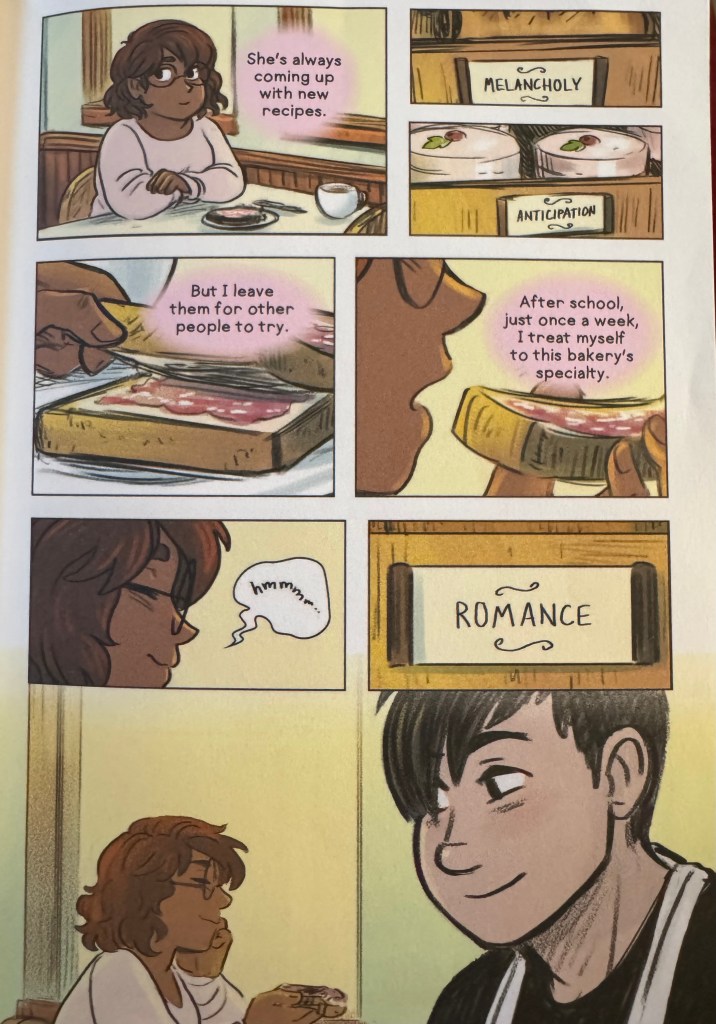
But I think that there is a clear flip side to this, and that is the fact that it’s almost TOO cozy and twee when it comes to the romance arc between Ray and her boyfriend Laurie. It starts cute and sweet enough, as Laurie is the barista at her aunt Marigold’s bakery and Ray is a regular customer, going there once a week for tea and a romance pastry, and seeing them tentatively begin a relationship was tender and felt pretty realistic in a number of ways. But I think that what was less interesting to me was that their conflicts, while pretty realistic as well, just didn’t feel very high stakes to me, and therefore felt kind of boring. I don’t need there to be a huge melodramatic problem that leans towards full on dysfunction or toxicity. But at the same time, I really don’t find myself super invested when the problems are about mild trust issues (that we don’t REALLY explore beyond one moment) and someone who is too much of a people pleaser. I can understand that there are people who aren’t comfortable with any kind of high stakes unhealthiness being portrayed in a relationship, but man, I do kind of want a little more conflict in my fiction, because for me fiction is about being able to explore those things in a safe way BECAUSE it is fiction. I know that this is personal preference, and that there are almost certainly people out here who will really love this aspect of the book. But it didn’t gel with me.

Finally, I really liked the artwork. It fits the tone of the story, and I always love seeing how food is drawn in graphic novels because it’s fun to see how tantalizing it can be.

(source: Clarion Books)

“Crumbs” didn’t work for me an all levels, but I definitely know there are people who like cozy fantasy and gentle stories about romance and relationships that will enjoy it.

Rating 5: It’s a sweet and gentle romance with some hints of magical creativity, but “Crumbs” didn’t invest me too much in the central characters and their maneuvering through a relationship.

Reader’s Advisory:

“Crumbs” is included on the Goodreads lists “Cozy Fantasy Romance Reads”, and “Food Themed Romance Comics”.

Book Club Review: “A Study in Emerald” & “Snow, Glass, Apples”

This post may contain affiliate links for books we recommend.  Read the full disclosure here.

We are part of a group of librarian friends who have had an ongoing book club running for the last several years. Each “season” (we’re nerds) we pick a theme and each of us chooses a book within that theme for us all to read. This June we celebrated our 10 year anniversary of book club. So in celebration of that milestone, we are re-visiting authors we read way back in those first few years of our book club. For this blog, we will post a joint review of each book we read for book club. We’ll also post the next book coming up in book club. So feel free to read along with us or use our book selections and questions in your own book club!

NOTE: At the beginning of July, accusations of abuse and sexual assault were made against Neil Gaiman by two women. When our book club selected, met and read “A Study in Emerald” and “Snow, Glass, Apples” and we wrote our reviews, this information had not yet come to light. These accusations are deeply concerning and upsetting. Since we had committed to review these books on the blog before these accusations came to light, we’ve decided to post our reviews of these books to fulfill that commitment. That said, if you or someone you know needs help or wants to find someone to speak with confidentially, HERE is a link to RAINN’s resource page, which also links to more information about the organization in general and how to support victims of sexual violence.

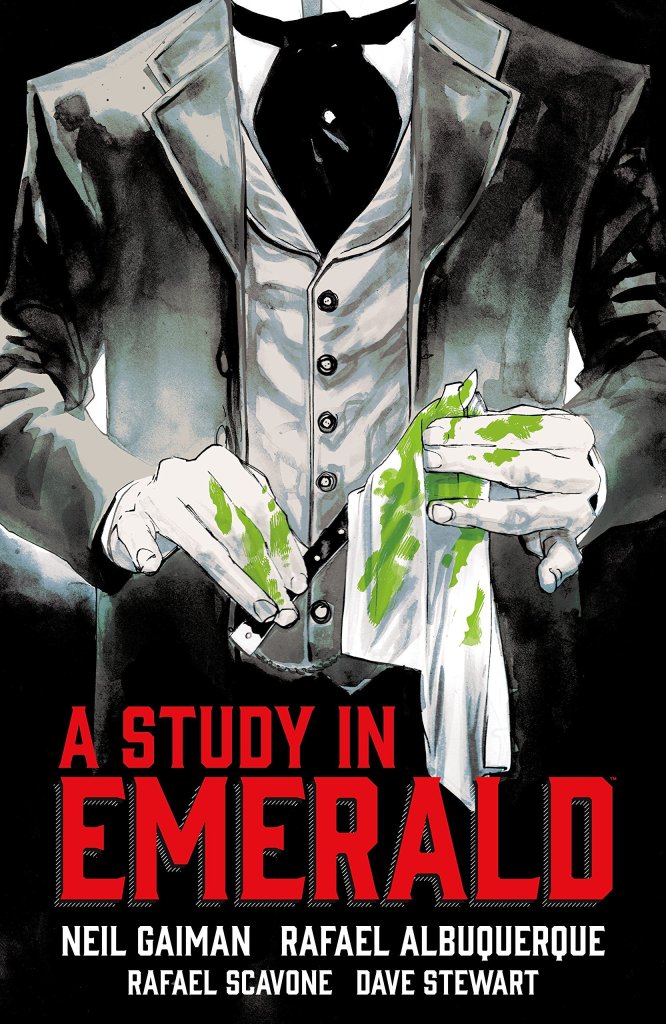
Book: “A Study in Emerald” by Neil Gaiman and Rafael Albuquerque (Illustrator), Rafael Scavone, Dave Stewart (Illustrator)

Publishing Info: Dark Horse Books, June 2018

Where Did We Get This Book: The library!

Where You Can Get This Book: WorldCat.org | Amazon | Indiebound

Repeat Author: Neil Gaiman

Book Description: The complex investigation takes the Baker Street investigators from the slums of Whitechapel all the way to the Queen’s Palace as they attempt to find the answers to this bizarre murder of cosmic horror!

From the Hugo, Bram Stoker, Locus, World Fantasy, Nebula award-winning, and New York Times bestselling writer Neil Gaiman comes this graphic novel adaptation with art by Eisner award winning artist Rafael Albuquerque!

Kate’s Thoughts

It’s interesting. As someone who loves a good mystery and thriller, I haven’t read TOO much Sherlock Holmes (outside of the stories I read in middle school for English class, and “The Hound of the Baskervilles” for book club way back when). And as someone who loves horror, I haven’t read ANY H.P. Lovecraft. But I know enough about Holmes, Watson, Baker Street, and Cthulhu thanks to the pop culture and literary zeitgeist. So I could absolutely appreciate a LOT about “A Study In Emerald”, which brings the mythos of Lovecraft’s cosmic horrors to Baker Street and Victorian London. It’s a creative mashup, and I found the story up to the task.

I really enjoyed the creeping horror of this tale, and how it does harken back to the classic Holmes cases, and not just through the characters that we see on the page. There are fun references to other mysteries, there is definitely a Sir Arthur Conan Doyle air to the way that the story unfolds, and the way that Gaiman weaves in the Old Ones and Cthulhu into the story and makes it just seamlessly fit in is really fun. It also works as an interesting comment upon the Colonialist impact that England was having across the world, as the Old Ones are coming in and ruling over everyone with a malicious intent towards power and conquest. And I always enjoy the artwork of Raphael Albuquerque, and his style works really well in this story. It’s compelling and fun, and while it’s a stand alone short story it feels very established. It’s a lot of fun, and I enjoyed it very much.

Serena’s Thoughts

I loved this book! There were so many clever ideas all mixed together in a way that felt totally fresh and unique. And given how many adaptations and variations there have been on Sherlock Holmes and Watson, producing something that feels truly original is quite the accomplishment! Of course, the primary factor there comes down to the inclusion and use of Lovecraft’s classic horror creatures. But there is definitely a way that this could have gone very wrong. Instead, Gaiman never over-played his hand. And while the alternate timeline/history of this world and the role the Old Ones play in it was very interesting, at its heart, the story is still very much a classic Sherlock Holmes mystery. From the framing of the story from the companion’s perspective to the use of verbose language with only limited dialogue, it all felt perfectly in line with the tone of the original. Despite the fact that there are tentacled royalty ruling the world!

I also enjoyed the big twist at the end. As a big Sherlock fan, I was suspicious that this was where we were headed fairly early, but that still didn’t diminish how effective it was. I also think that it was subtle enough that it could still play as a pretty big twist for the majority of readers. It was a clever case of “look at this hand and not the other,” using the Lovecraft elements to great effect. The art also worked perfectly with the overall tone. The sepia color palette worked well to create a sense of the time period, and the inclusion of the little advertisements between chapters was excellent.

Really, my only criticism is that in some ways it felt like the prequel to a series. I immediately went on Goodreads hoping to line up the sequel. But alas. I’d definitely read more in this world if given the chance, and I think this is a great read for all Holmes fans out there!

Kate’s Rating 8: A creative mash up of two literary icons makes for an interesting adaptation that works incredibly well.

Serena’s Rating 9: Clever and unique, which is truly an accomplishment considering the plethora of adaptations out there for both Holmes and Lovecraft’s creatures!

Book Club Questions

  1. What were your thoughts on the surprise reveal at the end of the book? Did you see it coming? Did you think it fit well?
  2. Did you like the theme as the monarchs of Europe actually being Old Ones from Lovecraft’s stories?
  3. Did you enjoy the throw back advertisements that separated the sections of the story?
  4. This is a graphic novel that was told purely in captions and with little to no actual speech bubbles. Did you like this creative choice?
  5. What did you think of the art style of this story? Did you feel like it fit the tone of the narrative?

Reader’s Advisory

“A Study in Emerald” is included on the Goodreads lists A Study in Sherlock Holmes and Lovecraft in Victorian Era.

Book: “Snow, Glass, Apples” by Neil Gaiman and Colleen Dorman (Illustrator)

Publishing Info: Headline, August 2019

Where Did We Get This Book: The library!

Where You Can Get This Book: WorldCat.org | Amazon | Indiebound

Repeat Author: Neil Gaiman

Book Description: A chilling fantasy retelling of the Snow White fairy tale by bestselling creators Neil Gaiman and Colleen Doran.

A not-so-evil queen is terrified of her monstrous stepdaughter and determined to repel this creature and save her kingdom from a world where happy endings aren’t so happily ever after.

From the Hugo, Bram Stoker, Locus, World Fantasy, Nebula Award-winning and Sunday Times-bestselling writer Neil Gaiman (American Gods) comes this graphic novel adaptation by Colleen Doran (Troll Bridge).

Kate’s Thoughts

I already love a fairytale retelling, especially if it is a bit dark and twisted. And I have come to enjoy “Snow White” more as of late because my daughter got a Snow White dress during our Spring Break trip to Disney, which has made me all the fonder of the story. But then you add in not only a version that is told from the perspective of the Evil Queen AND it has a vampire Snow White?? OH HELL YES. Gaiman knows how to do dark in his stories, and this one is SO creepy and twisted, telling a story about a young queen who finds herself a stepmother to a monstrous vampiric child, and wants to keep her kingdom safe from the predatory nature of the girl whose skin is white as snow and lips are red as blood. Snow White’s Evil Queen is so two dimensional in the original tale and many tales that came after it, so for Gaiman to not only make her the protagonist but to also make her flawed but generally a good hearted woman who is trying to use magic to help her subjects is so excellent and such a breath of fresh air. I loved the subversions in the magical elements, and how it harkens to the source material but tweaks it into something new. And something REALLY disturbing.

And I absolutely loved the art style in this book. It feels like a combination of medieval tapestries and art deco aesthetic, and there are so many gorgeous details that leap off the page. It’s truly breathtaking, with few actual panels but free form mural-esque spilling into each other. But it still remains linear and easy to follow along with the very detailed and complex designs. Our book club host asked us what our favorite image was, and I had such a hard time picking because there are so many amazing images.

I loved “Snow, Glass, Apples”. What a compelling reimagining of “Snow White”.

Serena’s Thoughts

I also really enjoyed this one! Probably no great shocker as I love fairytale re-tellings, especially twisted versions of the story. This one, told from the perspective of the “evil” step-mother succeeded on a lot of fronts. First of all, I absolutely adored this art style! I found myself reading this one much more slowly than the first, simply because I wanted to look at all the intricate details on every singled panel. There are several pages that I would buy and frame and put up in my home library, they were that beautiful. I also really enjoyed the “stream of consciousness” style the art used, with several spreads effectively moving the reader through the page without the use of panels or blocks.

I also enjoyed the twist on the “Snow White” tale. I wasn’t prepared for just how dark it was going to get! Fairly early in the story, the reader is introduced to the major “twist” to the tale and you think “Ok, I get where the darkness is going to go.” And then you get about two-thirds of the way and and it’s like “Oh! Nope, this went way darker and in a way more disturbing direction than I had expected!” For the most part, I think this darkness all worked. That said, there were a few brief moments and details that did feel like they were there purely for shock value and not any real narrative purpose.

Overall, I thought this was a very interesting re-imaging of the classic tale. I think the art really stole the show for me. And while I think many fans of dark fantasy will enjoy this one, it’s definitely NSFW, so keep that in mind if you’re reading it in public!

Kate’s Rating 9: A disturbing but horrifically gorgeous reimagining of Snow White.

Serena’s Rating 8: Horrifying in the best way, but the gorgeous art was really the win as far as I’m concerned!

Book Club Questions

  1. What did you think of following the Queen’s POV in this story? Are you used to seeing her side of the “Snow White” story?
  2. Did you buy into the idea of a vampire Snow White? Why or why not?
  3. What are your thoughts on how Gaiman subverted the witchcraft in this versus the original?
  4. What did you think of the aspect of the Spring Faire in this tale and how it related to the Queen’s motivation in the story?
  5. Did you like the art style in this? Did it fit the tone of the tale?

Reader’s Advisory

“Snow, Glass, Apples” is included on the Goodreads lists Snow White Retellings and Graphic Novels with Fairytale or Mythical elements

Next Book Club Pick: “Superman Smashes the Klan” by by Gene Luen Yang
Kate’s Review: “Feeding Ghosts”

This post may contain affiliate links for books we recommend.  Read the full disclosure here.

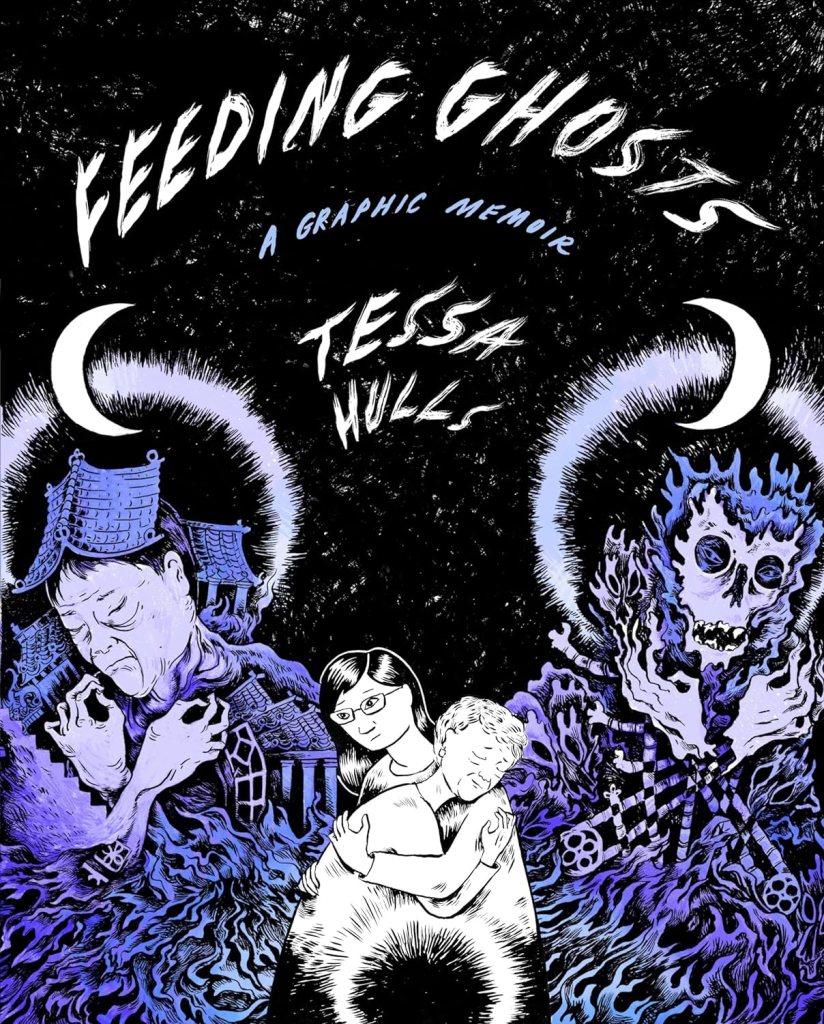
Book: “Feeding Ghosts: A Graphic Memoir” by Tessa Hulls

Publishing Info: MCD, March 2024

Where Did I Get This Book: The library!

Where You Can Get This Book: WorldCat.org | Amazon | Indiebound

Book Description: In her evocative, genre-defying graphic memoir, Tessa Hulls tells the stories of her grandmother, Sun Yi; her mother, Rose; and herself.

Sun Yi was a Shanghai journalist caught in the political crosshairs of the 1949 Communist victory. After eight years of government harassment, she fled to Hong Kong with her daughter. Upon arrival, Sun Yi wrote a bestselling memoir about her persecution and survival, used the proceeds to put Rose in an elite boarding school―and promptly had a breakdown that left her committed to a mental institution. Rose eventually came to the United States on a scholarship and brought Sun Yi to live with her.

Tessa watched her mother care for Sun Yi, both of them struggling under the weight of Sun Yi’s unexamined trauma and mental illness. Vowing to escape her mother’s smothering fear, Tessa left home and traveled to the farthest-flung corners of the globe (Antarctica). But at the age of thirty, it starts to feel less like freedom and more like running away, and she returns to face the history that shaped her.

Gorgeously rendered, Feeding Ghosts is Hulls’ homecoming, a vivid journey into the beating heart of one family, set against the dark backdrop of Chinese history. By turns fascinating and heartbreaking, inventive and poignant, it exposes the fear and trauma that haunt generations, and the love that holds them together.

Review: I sometimes find a book that doesn’t exactly fit the expectations I have based upon the circumstances in which I found it. “Feeding Ghosts: A Graphic Memoir” by Tessa Hulls is a great example of that, as I saw it for the first time on the social media feed of horror influencer Sadie Hartmann, aka Mother Horror. Since she is such a huge presence in the horror lit community I assumed that it was a horror graphic novel (and I mean, the word ‘ghosts’ in the title added to that). But when I did research on it, I realized that it wasn’t a horror story, but a story about three generations of Chinese and Chinese American women, and the trauma that is passed down between the three of them. Sure it wasn’t a horror novel, but the premise still very much intrigued me. So I got it from the library, thinking I’d work through it pretty fast. Little did I know that it would be one of the harder reads of 2024. But not in a bad way by any means.

So I’m immediately going to clarify what I mean by ‘harder’, because I know that it makes it sound like a chore to read. And it is by no means that. When I say harder I am more talking about two things. The first is that this is a VERY dense book. Like on the page, there are SO MANY WORDS for a graphic novel. The most recent graphic memoir I read before this was “Worm” and I was able to read that in one night. That was NOT the case for “Feeding Ghosts”, as Hulls wants to tell three individual stories of herself, her mother Rose, and her grandmother Sun Yi, as well as the story of their relationships due to the trauma that is passed down through them, AS WELL AS a compact history of China in the 20th Century and how that influenced Sun Yi and Rose. The other is that the subject material is very, VERY heavy, with lots of themes that are very difficult, and Hulls approaches them with a matter of fact cadence and tone. Sun Yi was living as a reporter in Shanghai when the Communist Party took over, and after giving birth to Rose out of wedlock (and with a foreigner, as Rose’s father was a Swiss diplomat), and being an undesirable person for other reasons on top fo that, the new government spied on, intimidated, harangued, and harassed her until she and Rose could escape to Hong Kong. Shortly thereafter Sun Yi wrote a memoir speaking out against the Communists, and then had a severe mental breakdown that left Rose to her own devices in a boarding school, and then as a caregiver after they moved to America. In turn, Rose raised her own daughter Tessa with a lot of fear, anxiety, and a clinging fear of losing her to mental illness, which in turn pushed Tessa away and gave her her own set of traumas. Tessa writes this memoir with lots of honesty as to all the things that all of them went through, and how trauma and mental illness can keep reverberating through generations and progeny. With the combination of the jam packed pages and some VERY heavy themes, it took me longer to get through this than I anticipated. But again, that’s not a bad thing. I appreciated the care and context that Hulls wanted to give her family, as well as herself, and I thought that she did a really good job of pulling it all together, as well as allowing herself vulnerability to open up about some very tragic truths about her family history that is still present to this day. It’s quite the achievement, and I found it to be deeply fascinating and moving.

I also quite enjoyed the way that Hulls weaves in the history of 20th Century China into this tale, as so much of that time period had an effect on Sun Yi, and in turn Rose and Tessa down the line. She does a good job of laying out the timeline from the jump as almost an outline, and then diving deeper into the various parts of it, including the invasion of Japan to the Communist Revolution to the Great Leap Forward, and showing how these events shaped Sun Yi’s life, and the repeated traumas in all probability led to her complete mental breakdown that she never recovered from. It’s by no means a deep dive into this time period or the events, but she does make them very accessible and takes some pretty complex moments and parses them out without disrupting the flow of the story of her family. Lord knows I don’t know that much about this time period outside of learning about it for a unit when I was in high school, and I liked having the basics laid out. It’s also so important to the overall story I really like how she made sure it was all there, even if it did contribute to the aforementioned denseness.

All in all, “Feeding Ghosts” is a deeply personal and moving memoir, a magnum opus for an author who was trying to untangle some complicated histories in her family. If you like memoirs, this is absolutely one to check out.

Rating 8: An emotional memoir about cycles of trauma that went through three generations of women, “Feeding Ghosts” is dense, deeply personal, and very well done.

Reader’s Advisory:

“Feeding Ghosts” is included on the Goodreads list “Memoirs Published in Year: 2024”.

Kate’s Review: “Lore Olympus: Volume Six”

This post may contain affiliate links for books we recommend.  Read the full disclosure here.

Book: “Lore Olympus: Volume Six” by Rachel Smythe

Publishing Info: Inklore, May 2024

Where Did I Get This Book: I own it.

Where You Can Get This Book: WorldCat.org | Amazon | Indiebound

Book Description: “We have to make an example of her.”

Chaos reigns in Olympus as Zeus publicly declares Persephone a traitor and issues a warrant for her arrest. But Hades defies his brother’s decree, sheltering Persephone in the Underworld—and as the pair spend more time together, they are able to speak openly about their pasts. The goddess of spring admits the truth behind the bloody secret that led to Zeus’s ire, and the king of the Underworld shares the trauma he suffered at the hands of his power-hungry father, Kronos.

But as Hades and Persephone’s relationship grows stronger, others begin to fall apart. The bond between Hades and Zeus is stretched to its limit, threatening to fracture the peace between their realms. Persephone and Artemis’s friendship hangs by a thread as the goddess of the hunt slowly uncovers the vile truth about her twin, Apollo. A line is being drawn in the heavens, putting everyone’s loyalties into question as all the gods are forced to choose sides.

And as the cracks in the foundation of the pantheon spread, something darker and more earth-shattering might soon be released. . . .

Review: I’m starting to really enjoy being able to count down to new “Lore Olympus” volumes as they have come out, usually one in the Spring and one in the Fall. It’s nice having a guaranteed amazing read to look forward to, and this Spring we are now on “Lore Olympus: Volume Six”. I try not to let myself bank too heavily on the quality of a highly anticipated read, but in the case of Rachel Smythe and her amazing reimagining of Greek Mythology I am pretty sure that I have no need to worry. She knows what she is doing. And what she is doing is putting some of my favorite deities through the ringer. Like, repeatedly. And skillfully. So on we go into the newest “Lore Olympus” collection, and man, did it once again blow me away.

When we left off, we saw Zeus demanding that Persephone and Demeter be returned to Olympus as fugitives so that Persephone could be punished for her crime of smiting morals, with Demeter punished for covering it up. Persephone ran into hiding, and Hades went looking for her. We don’t take too much time dilly dallying about Persephone on the run, and once Hades does reunite with her he now has some choices to make. He can either be loyal to his brother, who is also his ally in their alliance as Gods, or he can be loyal to Persephone, the woman he is falling in love with. It’s a great conflict and it’s a really good way to showing what a fucking narcissistic buffoon Zeus is, as the Gods all argue (over zoom call) as to what should be done next. Also, this zoom call is hilarious even thought it’s discussing some pretty heavy stuff. I especially liked Artemis being stuck on mute and not realizing it, and Hera just chain smoking in disdain for her husband and peeking into his frame every once in awhile. Smythe still has so many hilarious moments even as the story gets more and more intense and high stakes, and it never feels out of place or jarring.

In this volume, we are finally starting to get some full on answers about Persephone’s secret as the Bringer of Death. Earlier we got one version of the story, in that it was said that she massacred a number of mortals for pulling flowers in a forbidden area, which resulted in the deaths of many of Persephone’s flower nymph friends. What I really loved was that that initial explanation had been originally hyped up and sensationalized, and we had another version that seemed far more reasonable, if still disturbing. But Smythe decided that go even deeper, and to explore the idea that perceptions and realities might not line up still, and by letting Persephone tell it in her own words, and to open up to Hades about this, was a clever twist on its own. But this also leads to us learning more about Hades, and his own traumatic past of being swallowed and imprisoned by his father Kronos, and how that has affected his life going forward. In the previous volume Hades mentions that he didn’t really KNOW Persephone, and in this volume they now know each other in incredibly intimate ways, and their relationship is evolving and growing apace in a healthy way because of it. It is making this romance a slow burn for sure, but it’s also showing how two damaged people CAN find love and intimacy in spite of their baggage, and in a healthy way, and that they deserve to heal and be loved. It’s pretty clear to me that so much of “Lore Olympus” is about unpacking and healing from trauma, and I love seeing these two heal together.

It’s also the attention and expansion of the supporting characters that has always made Smythe stand out, and in this volume we not only expand upon previous characters and their motivations, but we also get to see new interactions between the characters that clearly set up or harken back to the source mythology. I really love seeing nods to tertiary players like Echo and Daphne, and Smythe opts to make these originally quite passive characters into three dimensional beings that I have fully come to care about (and which makes me nervous for their fates as the series goes on). The thing that really caught me by surprise was how suddenly invested I was in the burgeoning romance between Daphne, a flower nymph who is striving to be a fitness and beauty influencer, and Thanatos, God of Death who has been a resentful lackey to Hades and who has been plotting against Persephone with Minthe and Thetis. I never would have imagined these two interacting, and yet Smythe has built it up in a way that feels wholly natural, and gives Daphne the agency that she doesn’t get in the original myth (though as mentioned above, I’m very worried about where this is going).

Oh and new characters too! New characters that are fully representative of their original characterization, but still feel like their original intent. The biggest one in this Volume is that we finally get to meet Hephaestus, one of Zeus and Hera’s sons who, in the original myth, was ostracized from Olympus by Hera due to his disability (two club feet and inability to walk), but became a master craftsman and blacksmith. In this, it seems that he has extricated himself of his own choosing, and has an estrangement with his parents that is a bit more muddled. Perhaps it’s because he is an amputee, but you get the sense that it’s more about emotional unavailability from his parents (and the more we learn about Hera’s backstory, the more it becomes clear that being a neglected wife to Zeus is the LEAST of her traumas, which almost certainly affects her relationships with everyone). He is also more of a computer and tech wiz as opposed to a metallurgist, and I really, really loved that update. Oh, and now Leto is here too, aka the mother of Apollo and Artemis, and it’s pretty clear that HER appearance is going to set up the another big antagonistic arc for Apollo in this story. God he’s just the worst, and now we know that his mother played a part in that.

I’ve once again gone on and on in a review for this series, but “Lore Olympus: Volume Six” is another home run from Smythe. I’m always worried that it’s going to fall off, or start showing cracks, but man, it’s still going strong. I’m still wholly enamored.

Rating 9: New revelations, new relationships, and new threats are all emerging, but Smythe keeps the joy, humor, and heart in play.

Reader’s Advisory:

“Lore Olympus: Volume Six” isn’t included on many Goodreads lists just yet, but it would fit in on “Hades and Persephone”.

Kate’s Review: “Worm”

This post may contain affiliate links for books we recommend.  Read the full disclosure here.

Book: “Worm” by Edel Rodriguez

Publishing Info: Metropolitan Books, November 2023

Where Did I Get This Book: The library!

Where You Can Get This Book: WorldCat.org | Amazon | Indiebound

Book Description: From “America’s illustrator in chief” ( Fast Company ), a graphic memoir of a childhood in Cuba, coming to America on the Mariel boatlift, and a defense of democracy, here and there.

When Edel was nine, Fidel Castro announced his surprising decision to let 125,000 traitors of the revolution, or “worms,” leave the country. The faltering economy and Edel’s family’s vocal discomfort with government surveillance had made their daily lives on a farm outside Havana precarious, and they secretly planned to leave. But before that happened, a dozen soldiers confiscated their home and property and imprisoned them in a detention center near the port of Mariel, where they were held with dissidents and criminals before being marched to a flotilla that miraculously deposited them, overnight, in Florida.

Worm tells a story of a boyhood in the midst of the Cold War, a family’s displacement in exile, and their longing for those they left behind. It also recounts the coming-of-age of an artist and activist, who, witnessing American’s turn from democracy to extremism, struggles to differentiate his adoptive country from the dictatorship he fled. Confronting questions of patriotism and the liminal nature of belonging, Edel Rodriguez ultimately celebrates the immigrants, maligned and overlooked, who guard and invigorate American freedom.

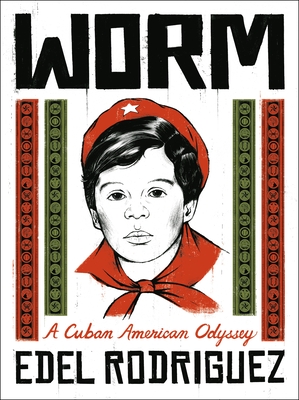
Review: Every once in awhile my Mom will send me a link to an article through the New York Times that has a review of a book that she thinks that would interest me. More often than not I’ve already read it or it was at least on my radar, but sometimes she will send one my way that is totally novel. In this case it was “Worm: A Cuban American Odyssey” by Edel Rodriguez. Perhaps you know of Rodriguez as an artist, specifically the artist behind the viral and infamous Trump artwork that has been on the likes of Der Spiegel and Time Magazine. Rodriguez felt it important to call out Trump on his dangerous and totalitarian tendencies, something he recognized even during the 2016 Primaries when a Trump Presidency was seen as merely a fantasy (we all know how that went). Rodriguez knows this because his family fled Cuba in the 1980s, after his family was being watched, surveilled, and threatened by the Government. “Worm: A Cuban American Odyssey” is that story, as well as story about life in a totalitarian regime, and how even a country that seems filled with idealism can fall into that trap.

Rodriguez combines modern Cuban history, starting with the Cuban Revolution, and moves through it until the 80s, tracking his family’s experience living under Castro in the town of El Gabriel. His father was a photographer while his mother stayed at home, but joined up with the local CDR, a group that was made up of Cuban citizens that would essentially ‘keep an eye’ on the community for any anti-regime activities or sentiments. Edel and his sister grew up with a meager education, and with parents who were constantly worried about watching what they said or did, all while trying to keep their family alive under pretty poor conditions due to poverty and corruption. We follow Edel through various childhood anecdotes and experiences, from the mundane involving friends and family, to the disturbing (such as the time Edel contracted a parasite that went through his legs, and the local hospital didn’t have enough medicine to treat him). As times become more dire as Edel grows older, his family make the choice to leave when Fidel allowed anyone who wanted to leave to leave so long as they could find a boat (and so long as they weren’t killed in the process whether it be by the Government or their own communities, who saw them as traitors and ‘worms’). It’s a deeply harrowing and emotional memoir, and as someone who knows very little about the Cuban Revolution and had certain ideas about Cuban immigration in my mind, this was pretty educational and eye opening (little did I know that the Cuban Immigrant community has MANY reasons to leave, not just because they were Batista loyalists). It also tracks the story of what adjusting to America was like for the family, not only through the eyes of Edel, but also through the eyes of his parents, who came with nothing and had to find their way to provide for their children in a wholly new environment. His parents are so well depicted in all of their complexities, and Rodriguez also touches a bit on how the traumas of escaping this kind of life can spill over into a new life with new challenges.

But this isn’t only a memoir about escaping a totalitarian regime: it is also a warning about the rise of totalitarianism through the eyes of someone who lived it, and how romanticizing or ignoring it is so, so dangerous. Rodriguez doesn’t only take those who romanticize Castro’s Cuba to task, he also REALLY digs into the way that America is embracing their own totalitarian tendencies, as Trump became President and his stink has infected so many other people (or perhaps just let them let their own stink loose). The connections that he draws between the life his family fled and how it all has to start somewhere is bleak and really alarming, and the way he compares the lies of January 6th and the Unite the Right Rally and other far right rage and venom to the violence he saw back home is really, really stark. And we’d best pay attention.

And the artwork is just astounding. It’s visceral and surreal in some ways, but always knows how to cut to the bone. In mostly blacks, whites, greens, and reds, it has a unique and signature style that is reminiscent of Rodriguez’s political works, but which still feels very personal. There is a LOT of text in this book, it almost feels like more of a memoir with an artistic backdrop on each page, but it never feels overwhelming and is still very easy to read.

(source: Metropolitan Books)

“Worm” is a fantastic memoir with an artistic and emotional edge. It’s so important to learn history, especially from those who lived it, and to remember that just because things feel abstract or like they couldn’t happen in your own life, that there will always be people to tell you that you may be wrong. Edel Rodriguez is here to do that.

Rating 9: A harrowing and deeply personal memoir about fleeing totalitarianism, and the looming threat of it in a new home, “Worm” is a fantastic graphic memoir from an outspoken artist.

Reader’s Advisory:

“Worm” is included on the Goodreads lists “NPR’s Books We Love 2023: Favorite Comics and Graphic Novels”, and “Memoirs Published in Year: 2023”.

Kate’s Review: “Earthdivers (Vol.2): Ice Age”

This post may contain affiliate links for books we recommend.  Read the full disclosure here.

Book: “Earthdivers (Vol. 2): Ice Age” by Stephen Graham Jones, Ricardo Burchielli (Ill.), Patricio Delpeche (Ill.), & Emily Schnall (Ill.).

Publishing Info: IDW Publishing, February 2024

Where Did I Get This Book: I received an eARC from NetGalley.

Where You Can Get This Book: WorldCat.org | Amazon | Indiebound

Book Description: Guest artists Riccardo Burchielli ( DMZ ), Patricio Delpeche, and Emily Scnall join Stephen Graham Jones— New York Times best-selling author of The Only Good Indians and My Heart Is a Chainsaw —for a mission to the Ice Age exploring America’s pre-Columbian past!

When Martin and Tawny’s children disappeared, the couple barreled into the desert to track them down at any cost. Instead, they ran afoul of another group of rovers who claimed to be saving the world by traveling through a cave portal to the year 1492 to prevent the creation of America—an idea that defied belief until the grieving parents were lured into the cave and vanished in time and space.

Now alone, Tawny must adapt to the wild marshlands of prehistoric Florida, circa 20,000 BC, and the breathtaking and bloodthirsty megafauna are the least of her problems when she’s caught in a war between a community of native Paleo-Indians and an occupying Solutrean force. Tawny’s odds of survival are in free fall, but she’s a mother on a mission…and she’s holding on to hope that the cave brought her here for a family reunion.

In the tradition of Saga , the next chapter of the critically acclaimed sci-fi epic is here in Earthdivers Vol. 2 . Collects Earthdivers #7-11.

Review: Thank you to NetGalley for providing me with an eARC of this graphic novel!

When I first started Stephen Graham Jones’s fantasy/Sci-Fi time travel series “Earthdivers”, for whatever reason I thought that it was only going to be focused on what the first volume covered: the time travel assassination of Christopher Columbus. Why I thought it was only going to be that is beyond me, but when that arc came to an end at the start of “Kill Columbus”, I wondered where we were going next, with no clue or idea as to what the path was going to be. Who were we going to follow now? Was it still going to be historical fiction time travel-y? Our protagonist’s storyline pretty much definitively ended, what is going to happen now? And then I saw the cover for “Earthdivers (Vol. 2): Ice Age”, and I was blown away. BACK IN TIME TO THE ICE AGE?! HELL YES! And when I saw that we were following another time traveller, this time Tawney, a mother who was searching for her children, I was all the more excited. And shocking absolutely no one, “Earthdivers: Ice Age” is suspenseful, intriguing, and enthralling.

I really love that we are starting to explore stories of other characters in the book who have fallen afoul the mysterious cave. In “Ice Age” our focus is on Tawney, a grieving mother who had been looking for her missing twins when she and her friends were lured into the cave by Emily as an act of self defense. When Tawney wakes up, she is no longer in the 22nd century, but all the way back to the Ice Age and the Paleolithic era of humans. This is such a great choice, narrative wise, as it not only opens up a slew of possibilities as to what stories are going to potentially be told next (after all, there were multiple people who ended up in the cave around the time that Tawney did….), but it also gives us lots of different character possibilities. Tawney was a good first choice, because her motivation is based on her love for her kids, and it drives not only her want to survive in this wholly new setting, but also the choices that she makes while there. I really loved Tawney as a main character for this volume, and I loved the idea of the Ice Age as a setting and having her have to figure out how to survive in this totally new environment. Whether it’s dealing with smilodonts, having to adapt to the cold, or trying to find ways to communicate with the people she meets and connects with, it makes for a gripping story of a stranger in a strange land.

And in true Jones fashion, “Ice Age” also taps into societal injustices that feel very true today and places them even in the Ice Age. I wasn’t sure what to expect with this volume, as I thought that the Ice Age would have different hardships, but Jones keeps with the fighting against colonialism theme, using the clashes between Indigenous people and Solutreans (a controversial theory that Europeans settled in the Americas during the Ice Age by traveling over the frozen waters, HERE is a pretty good write up as to why it’s unlikely and also racist). It’s genius because it’s laying not only another kind of invading force story, but also tapping into Tawney’s inner turmoil about how to proceed when she finds herself protecting and becoming attached to a Solutrean child, as she sees her own children in him. These led to some really emotional beats, as Tawney, unlike Yellow Kid in “Kill Columbus”, draws lines when it comes to children as victims, no matter how much it could seem like a ‘greater good’. I also love how Jones has taken this fringe theory of Solutrean discovery and torn it apart by having Tawney basically fight back against the invading forces with her know how from her own time period. It’s very creative and makes for a really interesting volume! Throw in some more backstory for the Earthdivers and their motivations, as well as world building for the ravaged planet they are trying to reset, and the story arc continues to build on its complexity in very rewarding ways.

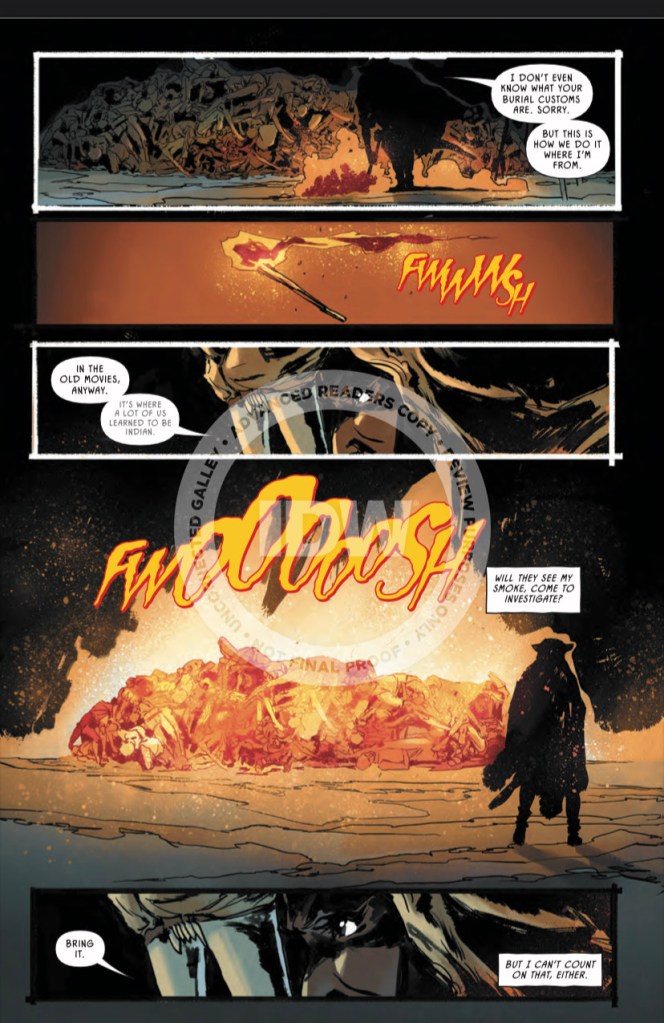
And finally, the artwork. We have some new artists in this volume, Ricardo Burchielli, Patricio Delpeche, and Emily Schnall. I liked the new styles that they brought, as while they still fit in with the previous Volume, they did bring their own aesthetics and signatures to the work.

(source: IDW)

I’m still really digging “Earthdivers” and how outside the box Stephen Graham Jones is taking it. I can’t wait to see who we follow through the cave next, and what time period it’s going to be.

Rating 8: Another creative and intense time travel story from Stephen Graham Jones! I’m loving the world building at the creative time and place.

Reader’s Advisory:

“Earthdivers (Vol. 2): Ice Age” isn’t included on any Goodreads lists as of yet, but would fit in on “Graphic Novels & Comics By The Aboriginal, Indigenous, and Native Peoples of the World”, and “Time Travel”.

Kate’s Review: “Fence (Vol. 4): Rivals”

This post may contain affiliate links for books we recommend.  Read the full disclosure here.

Book: “Fence (Vol. 4): Rivals” by C. S. Pacat & Johanna the Mad (Ill.)

Publishing Info: BOOM! Box, June 2020

Where Did I Get This Book: The library!

Where You Can Get This Book: WorldCat.org | Amazon | Indiebound

Book Description: The team at King’s Row must face the school that defeated them in the fencing state championships last year, but first Nicholas and Seiji must learn to work together as a team…and maybe something more!

FOILED AGAIN?

Just as Nicholas, Seiji and the fencing team at the prodigious Kings Row private school seem to be coming together, a deadly rival from their past stands in their way once more. MacRobertson is the school that knocked Kings Row out of the State Championships last year – but unless Nicholas and Seiji can learn to work together as a team, their school is doomed once again! And maybe those two can learn to be something more than teammates too… 

Review: We are back to an exclusive prep school and back to the highest highs and lowest lows of teenage competitive fencing! That’s right, I am now tackling “Fence (Vol. 4): Rivals”! It hasn’t been so long since I reviewed a volume in this series, but the stakes are rising higher as Nicholas, Seiji, Harvard, Aiden, and Eugene now have to move past the glories of being ON the team, and actually work AS a team when going up against the school that knocked them out of the championship contention last time! I’m honestly excited to move in this direction, as I know they’re all good. But are they good enough to get to where they (and we) want them to be (aka able to knock that entitled and cocky Jesse Coste right on his ass when the time comes)? C.S. Pacat has set us up for a tense sports moment, and I am happy to say that it was pretty well done!

I mentioned in the last review that I was worried that the fighting between Seiji and Nicholas was starting to get repetitive, but in “Fence: Rivals” we seem to be finally done with their antagonistic rivalry and find them in a pretty good place, relationship wise. I am relieved that we are seeing their relationship grow and change, and how Seiji and Nicholas are now confiding in each other more and finding more common ground, especially now that Jesse Coste has made his presence known, and intimidated Seiji after doing some demonstrations with him for the team. I love seeing Seiji rattled and seeing his more vulnerable side, and we are now getting hints that perhaps his animosity towards Jesse is a bit more than just fencing based. Clues for further storylines I’m sure, but I’m here for it because it is bringing more depth to Seiji, which is good to see. Heck, Pacat is bringing more character exploration to a number of the teammates, and is doing it in a way that flows well with the action at hand without overshadowing it.

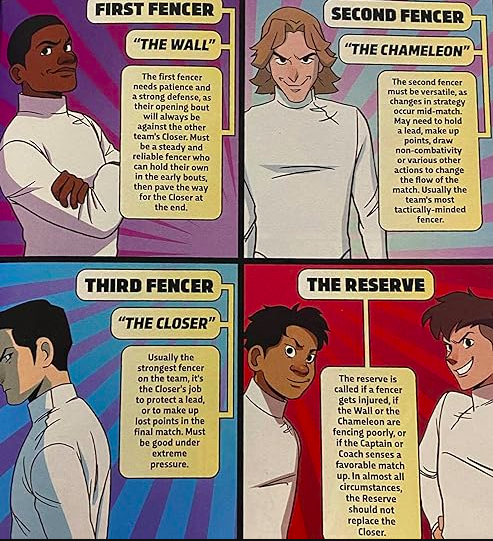
Which is good, because I found the tournament storyline itself to be really well done in pacing and suspense! What I liked most about this volume was how Pacat really brings in technique and strategy of fencing and puts it front and center as King’s Row has to go up against one of their biggest rivals. I have spoken of my very minimal fencing experience, so some of the stuff in this is familiar to me, but I thought that Pacat did a fantastic job of putting it into context and explaining the set ups and strategies of an actual tournament (as at this point we’ve mostly only seen round robin tryouts as the team itself was being built). It’s presented in a way that makes it very easy to understand and never stymies the storytelling, but makes it that much more layered and informative. It also shows the way that the King’s Row team needs to fight back against their adversaries at MacRobertson, while dealing with issues in their own ranks (including Aiden’s flakiness, Seiji’s ‘only out for myself’ attitude, and Nicholas’s unpredictability), and honing them as advantages. It was downright riveting watching this tournament unfold!

And the art is still great. I don’t really have much more to say about it from other reviews, but I liked how the information about fencing is presented in this volume, and part of that is how Johanna the Mad designs the panels.

(source)

Our team has started to figure out how to work with each other! Now they surely have challenges ahead. And I can’t wait to see what happens in the next volume!

Rating 8: A thrilling competition and the promise of perhaps a stronger bond between teammates makes for an enjoyable fourth foray into the “Fence” Series!

Reader’s Advisory:

“Fence (Vol. 4): Rivals” is included on the Goodreads lists “Graphic Novels Featuring LGBTIQ+ Themes”, and “Books About Queer People in Sports”.

Previously Reviewed