Book: “The Boy Who Lost Fairyland” by Catherynne M. Valente
Publishing Info: Feiwel & Friends, March 2015
Where Did I Get this Book: from the library!
Book Description:When a young troll named Hawthorn is stolen from Fairyland by the Golden Wind, he becomes a changeling – a human boy — in the strange city of Chicago, a place no less bizarre and magical than Fairyland when seen through trollish eyes. Left with a human family, Hawthorn struggles with his troll nature and his changeling fate. But when he turns twelve, he stumbles upon a way back home, to a Fairyland much changed from the one he remembers. Hawthorn finds himself at the center of a changeling revolution–until he comes face to face with a beautiful young Scientiste with very big, very red assistant.
Review:
This book marks a notable shift from the books previous to it in the series. Alas, our beloved September is nowhere in sight! And instead of experience the bizarre transition from “reality” to “fairyland,” the trip has been reversed with poor baby troll, Hawthorn, being selected as a changling and mailed (the postal service exists everywhere it seems!) to the “real world.” Here he faces the challenges of adapting his nonsensical worldview to a very sensible (or so it claims) world. While the story differs, the beautiful writing, philosophical musings, and abundant creativity remains. So following my established reviewing format for this series, here are a few passages that stood out to me.
Growing up has been a theme throughout this entire series, and this book was no different. The mixture of melancholy and joy, confusion and excitement, and the general sense that we don’t have this whole thing figured quite out is wonderfully discussed.
I shall tell you an awful, wonderful, unhappy, joyful secret: It is like that for everyone. One day you wake up and you are grown. And on the inside, you are no older than the last time you thought Wouldn’t it be lovely to be all Grown-Up right this second?
So, too, the coping mechanisms of childhood. I, obviously, identify with this last method.
Some small ones learn to stitch together a Coat of Scowls or a Scarf of Jokes to hide their Hearts. Some hammer up a Fort of Books to protect theirs.
One of my favorite things about this series are the quirky insights into aspects of life that, on the surface, have very little to do with the story of a Changeling troll or a wandering human girl in Fairyland. One of my favorites from this book:
English loves to stay out all night dancing with other languages, all decked out in sparkling prepositions and irregular verbs. It is unruly and will not obey—just when you think you have it in hand, it lets down its hair along with a hundred nonsensical exceptions.
Philosophical views on life are vivid and rich in this book. I’m still surprised by how seamlessly the author works these in. What could so easily become preachy and silly-ly on-the-nose instead reads as a beautiful side note placed directly next to an excellent fairy tale.
A choice is like a jigsaw puzzle, darling troll. Your worries are the corner pieces, and your hopes are the edge pieces, and you, Hawthorn, dearest of boys, are the middle pieces, all funny-shaped and stubborn. But the picture, the picture was there all along, just waiting for you to get on with it.
The other books probably had this as well, but in this story I found myself appreciating the shorter, one sentence thoughts that sprung off the pages. Someone should make a coffee table book out of these stories with some of these quotes.
She’s an old woman possessed of great powers–but aren’t all old women possessed of great powers? Occupational hazard, I think.
Lovely.
It is not so easy to always remember who you are.
True.
Rules are for those who can’t think of a better way.
Correct.
A thing too familiar becomes invisible
Worth an extra thought.
While the beautiful language and creativity remained in this story, I found myself missing our familiar characters. Hawthorn is a lovely protagonist, but I had spent three books coming to know September, and the last books ends with the feeling that she is on the cusp of something important. And, while she does make an appearance towards the end of this story and I see the neat place that this story fill within the larger narrative, I still found myself finishing it and wishing for a bit more.
That said, I still highly enjoyed this book and it is clearly setting the series up for this final book. I’m both excited and so, so nervous! Please let things work out for my lovely September!
Rating 7: Still quite enjoyable, but slightly less preferred than others in the series
Where Did I Get this Book: audiobook from the library!
Book Description from Goodreads:Though ruled by British overlords, the Chinese of colonial Malaya still cling to ancient customs. And in the sleepy port town of Malacca, ghosts and superstitions abound.
Li Lan, the daughter of a genteel but bankrupt family, has few prospects. But fate intervenes when she receives an unusual proposal from the wealthy and powerful Lim family. They want her to become a ghost bride for the family’s only son, who recently died under mysterious circumstances. Rarely practiced, a traditional ghost marriage is used to placate a restless spirit. Such a union would guarantee Li Lan a home for the rest of her days, but at a terrible price.
After an ominous visit to the opulent Lim mansion, Li Lan finds herself haunted not only by her ghostly would-be suitor, but also by her desire for the Lim’s handsome new heir, Tian Bai. Night after night, she is drawn into the shadowy parallel world of the Chinese afterlife, with its ghost cities, paper funeral offerings, vengeful spirits and monstrous bureaucracy—including the mysterious Er Lang, a charming but unpredictable guardian spirit. Li Lan must uncover the Lim family’s darkest secrets—and the truth about her own family—before she is trapped in this ghostly world forever.
Review: This book has been hanging around on my TBR list for so long that I have zero idea where it came from, and honestly, had very little idea what it was even about. A historical book about Malaysia in the late 1800s? A ghost story? Fantasy book? Yep. Yep to all three. “The Ghost Bride” came out of left field and was everything I hadn’t known to look forward to.
There are so many things I could talk about with this novel, I’m not even sure where to start. First off, I guess, is the rich detail that Yangsze Choo brings to this story. The language, culture, and vibrancy of Malaya (now Malaysia) was so rich and nuanced throughout. It was like the most beautiful, most interesting history lesson on a part of the world and the merging of several cultures that I had very little understanding of to begin with. It was evident that Choo had meticulously researched her subject, and more impressively, she integrated these facts and details in a way that never felt unnecessary or distracting from what was, largely, a very action-packed story.
The story itself was also surprising. I guess if I had read the book description a bit more thoroughly, this might not have been as shocking. But the unexpected turn from a traditional, period piece story into a underworld fantasy adventure was a jolt to the system. And even throughout these more fantastical portions of the story, the narrative never lost sight of its foundation, even then laying more insight into the time period, culture, and religious beliefs of the people of Malaya. (It is worth noting that while elements of this story were created by the author, she includes detailed author’s notes at the end that explain her decisions and provide even more insight into the background of these elements.) Even the ending was unexpected. About one third of the way through the book, I thought I had a pretty good idea where the story was going. About two thirds of the way through, I had changed this slightly, but it was still pretty much the same. The last 50 pages? Nope, I had it all wrong the whole time and the story was even better for it!
The characters themselves were also well written and thought out. Li Lan is an endearing protagonist, Tian Bai a compelling villain, and side characters such as her loving, yet superstitious nanny, Amah, and Er Lang, a mysterious man who keeps crossing Li Lan’s path, add flavor and spunk to the story.
Additionally, I listed to the audiobook version of this story which was read by the author herself. She had a great voice, and her pronunciation was particularly useful for a book like this where I would have likely butchered half the words in my head had I been reading the book. If you enjoy historical stories with an fantastical element, definitely check out “The Ghost Bride.”
Rating 9: An unexpected yet very welcome surprise! Just like the ending of the story itself!
Book Description:Coming down from the mountain to a new life in the city is a thrill to Miri. She and her princess academy friends have been brought to Asland to help the future princess Britta prepare for her wedding.There, Miri also has a chance to attend school-at the Queen’s Castle. But as Miri befriends students who seem sophisticated and exciting she also learns that they have some frightening plans. Torn between loyalty to the princess and her new friends’ ideas, between an old love and a new crush, and between her small mountain home and the bustling city, Miri looks to find her own way in this new place.
Review: Continuing my self-education in middle grade novels, after reading and enjoying “Princess Academy” it was a quick jaunt back to the library to scrounge up its sequel. And, while the first book can be read as a stand alone book (a trait I will never not praise), “Palace of Stone” is a worthy successor, expanding the world of Danland and challenging Miri’s own perceptions of right and wrong and her place within this society.
This story picks up shortly after the events of the first book with Miri and her village enjoying the boost to their local economy that came with Miri’s discovery of the true worth of the linder stone that their village mines. However, when Miri and a few familiar characters travel to Asland to join the soon-to-be princess, Britta, Miri discovers how tremulous this newly earned freedom can be. Revolution is rumbling throughout the kingdom of Danland.
One of the themes that I most appreciated from the first book was its emphasis on the joy of learning. Here, this concept is expanded even further with Miri attending university while in Asland and dreaming of her plans to continue and expand the local school she’s been running back home. The cast is also expanded when she gains an unexpected friend in fellow scholar, Timon.
Timon serves a definite purpose in this book, as he is the conduit between Miri and the underground swell of revolutionaries. And this concept of revolution, history, and democracy is at the core of the story. I greatly appreciate the care that Hale uses in laying out this path before Miri, with all of the temptation, confusion, and impossible choices that situations like this cause. And, while this is a middle grade novel and with this comes, perhaps, a few too many convenient solutions, Hale also spends a good portion of the novel fully exploring these themes before wrapping up the story.
Timon also brings with him a love triangle, and here is where I’m not so sure. While I think I understand what Hale was going for, forcing Miri and Peder to challenge the realities of their relationship and feelings in an adult manner (rather than the ease of an early crush), I question whether this was the best route. It also could just be that I’m so sick and tired of love triangles that even ones that are introduced for a good reason and, largely, executed well, are still frustrating to read.
In many ways this book was a step up from the first story. But at the same time, I struggled with it a bit more. Perhaps I just had higher expectations for Miri and wanted to see more growth in her as a character between the last book and this. Of course, she’s still young, and, of course, the point of this story was to challenge her even further, but perhaps when I’m reading about a character who is contemplating marriage, I also wanted to see a bit more perception from her. Her naivety in the first book was charming and believable. She’s still charming here, but there were points where her naivety was a bit much. We’ve been presented with a smart character, some common sense and ability to reason through certain things while still being challenged by others would have been more believable and enjoyable.
For readers who enjoyed “Princess Academy,” this book is a fun follow up. It retains many of the traits that made the first book so enjoyable while also adding complexity to the challenges the main characters face. While there were a few stumbling points, I definitely recommend it as a strong sequel story.
Book Description from Goodreads:On the surface, Sorry-in-the-Vale is a sleepy English town. But Kami Glass knows the truth. Sorry-in-the-Vale is full of magic. In the old days, the Lynburn family ruled with fear, terrifying the people into submission in order to kill for blood and power. Now the Lynburns are back, and Rob Lynburn is gathering sorcerers so that the town can return to the old ways.
But Rob and his followers aren’t the only sorcerers in town. A decision must be made: pay the blood sacrifice, or fight. For Kami, this means more than just choosing between good and evil. With her link to Jared Lynburn severed, she’s now free to love anyone she chooses. But who should that be?
Spoilers for “Unspoken!”
Review: “Untold” picks up directly after the events that unfolded in “Unspoken.” The Lynburn family is in the midst of a civil war and the small town of Sorry-in-the-Vale is caught in the middle. Unwilling to simply sit on the sidelines while the fate of her town is decided without her, Kami gathers her friends and begins her own preparations. All while balancing her new, uncomfortable, un-linked relationship with Jared Lynburn. “Unspoken” ended with a bang, and between the now open secret that is the sorceror infestation in the town, and Kami and Jared’s evolving relationship from source/sorceror to…who knows what, there was a lot of material to work with. And sadly, I feel like most of that material was dropped in favor of witty dialogue.
This may be an example of an author’s strengths playing against her. As I mentioned in my review of the first book, this story, too, was peppered with snappy and fun language. However, unlike the first book, the stakes are much higher from the very beginning of this story. There is much less room in the natural evolution of the plot for characters to all stand around chatting like they’re in an episode of “Gilmore Girls.” So to create these situations, the author had to put the brakes on her story and create relationship drama, all to a largely disappointing effect.
Unfortunately, that relationship drama manifests itself not only in the upping of the love triangle potential seen in the first book, but also in creating a tangent storyline for Holly who is dealing with her confusing feelings after being kissed by Angela. The love triangle is doomed from the very beginning. Aside from my feeling that it is impossible to write a realistic love triangle, this one is made all the more silly from bizarre situations like “oops, it was dark and I kissed the wrong boy!” to the classic misunderstandings that are only possible due to incredible amounts of plot acrobatics. And then when they “suddenly” realize things…
And as for the drama regarding Holly, I have mixed feelings about this. In some ways, it was a great exploration of burgeoning awareness of a character’s more complicated sexuality, and there were some great moments where this topic was explored from a variety of perspectives. But at other times, it was used as yet another “misunderstanding” plot wedge between Kami and Jared, which just undervalued most of the work that had been done up to this point. Suddenly, Holly’s exploration of herself and her feelings for others was just one more crinkle in the main straight couple’s issues. That frustration aside, I don’t want to end this paragraph on a completely negative point, since I do still really appreciate the diversity that is the cast of characters in this book.
Another of the strengths of the first book was its inclusion of Kami’s family members as active, important people in her life (none of the “invisi-parent” that is so often found in YA). And in this aspect, “Untold” goes even further. Kami’s whole family is affected by this sorcerer war, having been connected to the Lynburn family for years in some mysterious way. Her father and mother struggle to reconcile their reactions to this changing worldview, and her brothers, Tomo and Ten, may be caught up in the struggle as well. Throughout the story, Kami’s thoughts are never far from her family, and it is clear that she loves them deeply and that they are at the forefront of her mind when she plans her resistance against Rob Lynburn. This was a refreshing inclusion.
So, while I did still enjoy “Untold,” I also feel that it succumbed to “second novel syndrome.” The author had to put the brakes on her own story so as to leave material for the third and final installment. And to do that, a lot of relationship nonsense was added. But, while disappointing, I’m still invested enough to want to read the final book, so that will be making its way onto my reading list.
Rating 6: A step down from the first book, but still enjoyable.
Book Description:Miri lives on a mountain where, for generations, her ancestors have quarried stone and lived a simple life. Then word comes that the king’s priests have divined her small village the home of the future princess. In a year’s time, the prince himself will come and choose his bride from among the girls of the village. The king’s ministers set up an academy on the mountain, and every teenage girl must attend and learn how to become a princess.
Miri soon finds herself confronted with a harsh academy mistress, bitter competition among the girls, and her own conflicting desires to be chosen and win the heart of her childhood best friend. But when bandits seek out the academy to kidnap the future princess, Miri must rally the girls together and use a power unique to the mountain dwellers to save herself and her classmates.
Review: I was trained as a public librarian with an emphasis on young adult and children’s services. Bizarrely, this resulted in a high exposure to young adult titles, children’s stories, and pictures books with only a few books scattered in between that could be rightly categorized as “middle grade.” My definition for this group is books that are enjoyed by readers aged 10-13. Therefore, in an attempt to self-educate myself and to stay up to date with this segment of readers, I’ve been slowly working my way through Shannon Hale’s collection of works. She’s a well-known and respected middle grade author and I’ve enjoyed her other titles. “Princess Academy” is also a Newbery Honor Book, which further speaks to her prowess in this genre, and all in all, I can see why its praises have been so loudly sung.
Right off the bat, I was skeptical of this book’s premises. The title alone seems to imply that what we have here is a story about a bunch of girls vying for a prince’s attention and I’ve been burned by this before (side-eyeing “The Selection”). But I was relieved and surprised to discover that “Princess Academy” was so much more than that!
One of the most important aspects of this book, for me, was its depictions of friendship and family. The set-up is primed for catty-girl-drama, and while Miri does struggle with her relationship with some of the girls, the reader is presented with honest depictions of fully fleshed out teenage girls. Personalities may clash, but it is never reduced to silliness. If anything, it is depicted as the typical growing-up process that all children face. Lessons like diplomacy, sensitivity, and empathy are all in play.
Another of my favorite themes of this book was its emphasis on learning. Miri and her fellow academy girls come from a very poor village where education is completely lacking. In this way, the princess academy is presented as important in the most basic way: it is not only a tool by which to prepare a princess, but a unique opportunity to be taken advantage of by a group of girls who otherwise would have had very few options. Miri’s growing realization of the size of the world and all of the knowledge that exists is wonderful to follow. And, while the book does use this gained education as a plot tool, there is a clear emphasis on the fact that Miri realizes her own love of learning purely for its own merit. This is a great message for a middle grade novel.
There were also some fun elements of mystery within the story, including Miri’s friend Britta’s hidden past and the slow reveal of powers of her humble home. All of this is tied up neatly in simple, yet lovely, language. And, while the story does have sequels, it can also be read as a stand-alone book. All of this said, the book is firmly set in the category of middle grade. The writing style and language use is simple and the story is straightforward. However, if you enjoy middle grade novels, this book is definitely worth checking out!
Rating 8: Very strong middle grade novel highlighting great themes of friendship and learning!
Book Description from Goodreads: Kami Glass loves someone she’s never met . . . a boy she’s talked to in her head ever since she was born. She wasn’t silent about her imaginary friend during her childhood, and is thus a bit of an outsider in her sleepy English town of Sorry-in-the-Vale. Still, Kami hasn’t suffered too much from not fitting in. She has a best friend, runs the school newspaper, and is only occasionally caught talking to herself. Her life is in order, just the way she likes it, despite the voice in her head.
But all that changes when the Lynburns return.
The Lynburn family has owned the spectacular and sinister manor that overlooks Sorry-in-the-Vale for centuries. The mysterious twin sisters who abandoned their ancestral home a generation ago are back, along with their teenage sons, Jared and Ash, one of whom is eerily familiar to Kami. Kami is not one to shy away from the unknown—in fact, she’s determined to find answers for all the questions Sorry-in-the-Vale is suddenly posing. Who is responsible for the bloody deeds in the depths of the woods? What is her own mother hiding? And now that her imaginary friend has become a real boy, does she still love him? Does she hate him? Can she trust him?
Review: I’m not sure how this book ended up on my TBR pile. I’ve read some Sarah Rees Brennan in the past, but it has been a while since I picked up one of her books. So, it was a pleasant surprise when I was browsing the library shelves (Goodreads app in hand to check against my to-read lists) and found this book right there waiting for me and didn’t have a lot of pre-existing expectations set in place going in. And it was good! Brennan manages to balance many classic YA tropes with a fresh voice and perspective that allows them to grow past their typical, clumsy restraints.
From the get go, I liked Kami Glass. She’s pretty much a half-Japanese, British born, Lois-Lane-in-the-making. And we all know how much I love Lois Lane. Full of spunk, wit, and drive, Kami pursues her goals with an energy that can’t help but draw in those around her. And in a testament to the author’s creative ability, the cast of characters who surround Kami are as diverse as they are typical, without falling over the stumbling block stereotypes often found in young adult literature. Kami has a female best friend, Angela, who is very clearly her strongest support system (stereotype avoided: lack of female friends for the female protagonist so as to cement her “difference” from “other girls”). There is even a third female friend, Holly, one of the more popular girls at school (stereotype avoided: “mean girls”). Angela has an older brother who is a healthy, non-romantic male friend of Kami’s (stereotype avoided: meet-cute with the boy-next-door who is a love interest). Kami has a very stable, loving family complete with two parents and two younger brothers (stereotype avoided: nonexistent/absent parents, lack of siblings or poor relationship with a distasteful, often older, sibling).
And, while there are the makings of a love triangle, this too is waded through carefully and with respect to the emotional struggles that would exist due to the situation. In fact, the way the relationship between Kami and Jared was portrayed was one of my favorite aspects of the story. Each honestly believed the other was a made-up character in their own head. Discovering at age 16 that your imaginary friend is not only real, but here in your own town, going to your own school, would have dramatic affects. This is not a romantic, blissful situation. Suddenly the closeness and emotional vulnerability becomes real and, perhaps, invasive. Kami begins to question where she leaves off and Jared begins. Physical contact is uncomfortable to the extreme.
I can’t say how much I appreciated the author’s handling of this situation. What could have so easily been twisted into a silly, romantic plot device is instead highlighted as intensely unhealthy, especially when Kami and Jared attempt to build a real friendship/relationship with their fully existing selves. In a book notable for its witty dialogue and punchy descriptions, Kami spends a significant amount of time analyzing independence, a sense of self, and what a healthy relationship should look like.
The mystery and fantasy elements of the story were also strong. The history of the Lynburn family and this small, British town was chilling and the book does a good job setting up this conflict for the remaining two books in the series. My one point of real criticism is the location for the book. It is set in England, however, the language felt very Americanized. Not being natively British, I’m not sure if maybe my expectations are out of sorts or whether this is an actual failing. But I routinely forgot that this was set in England at all. The lack of British terms and turns of phrase in the dialogue felt odd. Other than creating a “manor family” legacy for the Lynburns and the town of Sorry-in-the-Vale, this setting felt underutilized and perhaps even disingenuous with regards to the other narrative decisions.
Overall, I enjoyed this book and have already placed a request at the library for the second one!
Rating 7: Very good, though a few questionable decisions with regards to underutilizing its setting.
We are part of a group of librarian friends who have had an ongoing bookclub running for the last year and a half. Each “season” (we’re nerds) we pick a theme and each of us chooses a book within that theme for us all to read. Our current theme is “Books with Movie Adaptations.”
For this blog, we will post a joint review of each book we read for bookclub. We’ll also post the next book coming up in bookclub. So feel free to read along with us or use our book selections and questions in your own bookclub!
Book: “Warm Bodies” by Isaac Marion
Publishing Info: Atria, October 2010
Where Did We Get This Book: Serena owns it, Kate got the audiobook from the library
Book Description from Goodreads:R is a young man with an existential crisis–he is a zombie. He shuffles through an America destroyed by war, social collapse, and the mindless hunger of his undead comrades, but he craves something more than blood and brains. He can speak just a few grunted syllables, but his inner life is deep, full of wonder and longing. He has no memories, no identity, and no pulse. Just dreams.
After experiencing a teenage boy’s memories while consuming his brain, R makes an unexpected choice that begins a tense, awkward, and strangely sweet relationship with the victim’s human girlfriend. Julie is a burst of vibrant color in the otherwise dreary and gray landscape that R lives in. His decision to protect her will transform not only R, but his fellow Dead, and perhaps their whole lifeless world…
Serena’s Thoughts:
I read this book several years ago, and watched the movie right when it came out, so when bookclub decided to do a “book/movie” theme, this was an easy choice for me! I hadn’t re-read it since, and with the movie version being the more recent version I had experienced for the story, it was fun reviewing the original material and seeing the difference from the reverse perspective as well.
I think this book flew beneath the radar for quite a while before it was announced as a movie, and then when it was, everyone dismissed it as “zombie romance.” Which, really, shouldn’t that intrigue people, not put them off? But alas, judgement arose. And given that the new editions of the books have been released with the movie cover (a whole post could be committed to the subject of how much I hate movie-covers for books), I can’t even blame people who pass this over with that thought. I mean, look at this thing!
Can you get any more teen-pop-stereotypical-romance-looking than that? No, the answer is no. And this is a tragedy, because the story is not that at all. Sure, there is some romance, but it’s sad to see what is a very philosophical book be overlooked simply because of that inclusion.
R is such an intriguing narrator. For a character whose actual dialogue is limited to brief syllables, he’s quite verbose as a protagonist. While much of the changing that he goes through can be attributed to his run in with Perry’s brain (the teenage boy he eats on one scavenging trip) and Julie, the living girl he befriends, R is clearly a force of change himself. With brutal honesty, he evaluates zombie society, humanity, and the force of human will.
With so many pop-culture representations of zombie-hood currently, Marion’s version is very intriguing. Zombies are often just stumbling, groaning, beasts. But here, they have, at the most basic sense, a world of their own. Their attempts to re-create life through human constructs such as marriage, school, and religion, all while bereft of the inner feelings that accompany them is not only sad but deeply disturbing. Further, Marion succeeds at something that the poor, struggling writers of “The Walking Dead” tv series have been attempting for so long: connecting the dots between the living and the zombie-fied. “We are the walking dead,” and all of that, but done in a subtle and truly impactful manner (unlike certain shows…).
I haven’t spent much time talking about Julie, and I think she was the biggest surprise for me when I re-read this book. The first go around, I didn’t really put much thought into her as a character. This time, looking more closely, I appreciate the fine line that Marion walked when writing her. She could so easily fall into the Manic Pixie Dream Girl category. But for all of her snappy lines and crafty bedroom design (cuz of course, she’s a teen girl, then obviously she must paper mache her room!), Julie’s background is dark. Much darker than I had remembered. These struggles help round her out as a character and allow her to offer a unique perspective into the world of the Living, without getting too caught up in the super sweet, “hope is all you need!” naivety that she could have been reduced to.
All in all, I had a really fun time returning to this book!
Kate’s Thoughts:
Perhaps you will be surprised to hear that it wasn’t me who picked the zombie book for our bookclub, but our dear Serena. But that should just go to show that this book isn’t just for fans of the horror and zombie genre. I think that the nice thing about the zombie genre, when done well, is that it’s usually far more about humanity and the human psyche than it is about marauding monsters. The few exceptions I can think of are “Dawn of the Dead” (the original), in which zombies are drawn to a mall because of a instinctual need for the routine of their past lives, and “Day of the Dead,” in which Bub the zombie starts to relearn various human emotions and actions, and feels affection for the man who has “created” him in a way. So “Warm Bodies” kind of took that concept and ran with it. Marion takes it even further though, and deconstructs just what makes humanity in a person, and gets way existential about it. Which kind of surprised me in the best way possible.
It took me a little while to warm up to R, as I did, admittedly, have a hard time with how he just kind of took Julie under guise of keeping her safe, and hid from her that he had, uh, eaten her boyfriend. But as he went on, he really, really grew on me, and I became very fond of him and his journey of self discovery. His rumination about what it means to be human, and his descriptions of the zombie culture and how it functions on indifference and complacence, were so thought provoking and tragically beautiful that I was completely enraptured with his voice and narration. I love the idea that zombies aren’t really totally lost if they look for connections and seek out beauty in life (because of R and Julie and their own connection).
Julie too makes for a very good character, like Serena said. She never rang false and never felt like she was too perfect, or too understanding and good. I really, really loved her relationship with R. Their connection grew and progressed in a natural way, and I never felt like it was unrealistic or forced as time went on. It was also very complicated and had many layers, as R did, indeed, kill and eat her boyfriend, Perry. But even that was resolved and reconciled in a way that I found believable, and I was thinking that there was no way that I was going to be satisfied with that whole thing. Joke’s on me, I guess.
And I also want to say that M, R’s best friend, was exactly the kind of pal that I aspire to be. Snarky and sarcastic (even as a zombie) but ultimately loyal, and pretty damn great. I also liked Julie’s best friend, Nora, who is pragmatic and thoughtful, but never feels like she’s just a second fiddle. It goes to show that Marion took great care when crafting his supporting characters as well.
I greatly enjoyed “Warm Bodies.” I am so glad that I finally got to it with Serena’s good taste in book club books!
Serena’s Rating 9: Really great, even better the second time around.
Kate’s Rating 9: Such a complex and enjoyable love story, and a very deep look at what makes a human a human.
Book Club Notes and Questions:
“Warm Bodies” came out a couple years ago, nearing the end of the paranormal romance phase of teen movies and right in the midst of the rise of dystopia as the new theme. As a film, it’s a bit more light-hearted than the original source material, but that isn’t to say that it isn’t a good adaptation. Nicholas Hoult plays R, a casting choice that makes almost perfect sense. First of all, his eyes are huge and expressive, and can convey so much emotion as R, even when he is still in the midst of being in his limited zombie phase. He is nuanced and subtle in his acting, and makes a believable zombie who is slowly evolving. Theresa Palmer plays Julie, and also brings justice to that role. Her back story isn’t as dark and depressing, at least it isn’t explored as much, and while it’s nice that things worked out a bit better for her, it’s too bad that we lost that character exploration. It’s also too bad that the decision was made to cast Nora, in the book a biracial woman, as a white woman. It’s not that Analeigh Tipton didn’t do a good job, because she is pretty great, but it’s a sad reminder that Hollywood is still fully into white washing characters.
1. Zombie stories have always arose from what seems to be society’s own existential fear. What is your perspective on the unique version of zombies and human society that is presented in this book?
2. It is never made quite clear what the “Bonies” are in this world. The human equate them almost to aliens and the zombies themselves almost fear them. How do you think they came to exist? Did they have their own inner society? Own goals and agendas?
3. The movie lightened up the story a lot and there were a few significant changes. What changes did you like? Were there ones you wished they hadn’t changed?
4. What notable differences between the book and movie did you see in the portrayal of the main characters (R, Julie, Perry, Nora, and M)?
5. Music, writing, and art are discussed a lot in this book. Does the story have anything to offer on the impact these things have on humanity? And the more fun question, if you were a zombie and had a favorite song, what would it be?
Book: “The Girl Who Soared Over Fairyland and Cut the Moon in Two” by Catherynne M. Valente
Publishing Info: Feiwel & Friends, October 2013
Where Did I Get this Book: audiobook from the library!
Book Description from Goodreads:September misses Fairyland and her friends Ell, the Wyverary, and the boy Saturday. She longs to leave the routines of home, and embark on a new adventure. Little does she know that this time, she will be spirited away to the moon, reunited with her friends, and find herself faced with saving Fairyland from a moon-Yeti with great and mysterious powers.
Review: Can my whole review just be this gif?:
No? Ok, fine, but I have to say, with this, the third installment in Valente’s “Fairyland” series, my love of these books has only continued to grow and my coherence for a reviewing them continues to deteriorate. But onwards we go in my now usual fashion for this series: blatant and unapologetic quoting!
September is growing up. We spend the longest portion yet in this series with September home in the “real world” waiting, wondering, and, now as an older girl, preparing for her trip to Fairyland. And with this growing up comes feelings, so many feelings! Fear, sadness, worry, and, suddenly, the thought that one must hide all of these feelings away. September has been practicing her “stern” face.
“It is such hard work to keep your heart hidden! And worse, by the time you find it easy, it will be harder still to show it. It is a terrible magic in this world to ask for exactly the thing you want. Not least because to know exactly the thing you want and look it in the eye is a long, long labor.”
But finally her traveling companion and escort to Fairyland arrives in the form of a very grumpy Blue Wind and she’s away! In the previous story, with September’s adventures in Fairyland Below, we spent a lot of time with the shadow versions of her companions, the wyverary A-Through-L, and the madrid Saturday, who were not quite the same as the true versions of themselves. So, as a reader, I could sympathize with September’s reflections on missing friends and loved ones and the complex feelings that arise from being reunited with those we care about after years of grieving their absence (though I am a spoiled reader who only had to wait until the next book to find my beloved characters again).
“September laughed a little. She tried to make it sound light and happy, as though it were all over now and how funny it was, when you think about it, that simply not having another person by you could hurt so. But it did not come out quite right; there was a heaviness in her laughing like ice at the bottom of a glass. She still missed Saturday, yet he was standing right beside her! Missing him had become a part of her, like a hard, dark bone, and she needed so much more than a few words to let it go. In all this while, she had spent more time missing Saturday than seeing him.”
The breadcrumbs that had been laid out in past books regarding the slow build relationship between September and Saturday come to a head in this story. Fully ensconced in “teenagedom,” September and Saturday struggle with the everyday challenges of first love while also dealing with the very-not-everyday-challenges of dating a madrid whose experiences with time as a river that can be traveled up and down with ease puts uncomfortable truths in the forefront. September had a glance of what could be her and Saturday’s daughter in the very first book, and a few run-ins with an adult Saturday in this story just further highlights her discomfort with fate, love, and choosing.
“But the trouble is, I do want to be surprised. I want to choose. I broke the heart of my fate so that I could choose. I never chose; I only saw a little girl who looked like me standing on a gear at the end of the world and laughing, and that’s not choosing, not really. Wouldn’t you rather I chose you? Wouldn’t you rather I picked our future out of all the others anyone could have?”
And per what is typical of these books, September’s adventures through bizarre and magical lands, meeting nonsensical and wonderful creatures, is all peppered with philosophical ponderings that speak to deeper truths. A few of my favorites include:
“Marriage is a wrestling match where you hold on tight while your mate changes into a hundred different things. The trick is that you’re changing into a hundred other things, but you can’t let go. You can only try to match up and never turn into a wolf while he’s a rabbit, or a mouse while he’s still busy being an owl, a brawny black bull while he’s a little blue crab scuttling for shelter. It’s harder than it sounds.”
and
“It’s Latin, which is an excellent language for mischief-making, which is why governments are so fond of it.”
and, of course,
“All Librarians are Secret Masters of Severe Magic. Goes with the territory.
I don’t think I have mentioned it in past reviews, but these books come with beautiful illustrations by Ana Juan. I listened to this book on audiobook (read by the author herself, and she was very good), so I missed the illustrations here. I nabbed a copy of the printed version to peruse them and they are beautiful, as they were in the previous books. Yet another plus to the series as a whole!
by Ana Juan
Rating 10: The perfect balance of beautiful and poignant.
Book Description from Goodreads:Keri has been struggling to run her family bakery since her mother passed away. Now the father she barely knew—the Lord of Nimmira—has died, and ancient magic has decreed that she will take his place as the new Lady. The position has never been so dangerous: the mists that hide Nimmira from its vicious, land-hungry neighbors have failed, and Keri’s people are visible to strangers for the first time since the mists were put in place generations ago.
At the same time, three half-brothers with their own eyes on the crown make life within the House just as dangerous as the world outside. But Keri has three people to guide her: her mysterious Timekeeper, clever Bookkeeper, and steadfast Doorkeeper. Together they must find a way to repair the boundary before her neighbors realize just how vulnerable Nimmira is.
Review: I have read a few other titles by Rachel Neumeier, and I’m beginning to come to a bit of a conclusion about her work. She has great ideas and the book summary is always amazing, but the actual execution somehow makes even the most thrilling concept seem tedious.
Everything about this book description is right up my alley. Features a strong leading lady, set in a unique fantasy setting, aided by her friends with a dash of romance, and out to save a kingdom. And it all started out well. Keri, an outcast in her own town given the questionable nature of her birth, is attempting to run her recently deceased mother’s bakery on her own when her life is turned upside down. She is suddenly the new heir to the small, but economically wealthy, country of Nimmira and the invisibility spells that have protected it for so long from its vicious and greedy neighbors are failing. With the help of her childhood friends, Tassel and Cort, she must set out to right what is wrong before her country falls.
Unfortunately, for what sounds like an action-packed start, the story quickly falls into several pitfalls right off the bat. Firstly, Tassel and Cort, for as little page time as they get in the beginning of the story, are each intriguing characters. Keri’s character is itself rather bland, but when played against the more flamboyant Tassel or the stern, responsible Cort, her character is seen in the best light. Unfortunately, both characters, especially Cort, are absent for large chunks of the story, leaving us with Keri at her most pale.
Further, with magical protections failing, a new kingdom to run, and the arrival of questionable neighbors with perhaps evil intentions, you would think there would be a lot of room for the story to move. Instead, we spend pages and pages with characters just talking and planning on what to talk about next, and who should talk to who, and on and on. And look, I’m all for detailed storytelling and character building, but when huge portions of the book are simply characters rehashing the exact same subject over and over again I lose my patience. There was one line about a neighboring country perhaps not realizing that Nimmira was vulnerable that was repeated at least 5-6 times throughout the book. It would have been laughable, if it wasn’t frustrating.
What makes many of these factors all the more irritating is the strong premises, like I mentioned. The author has created a unique magic system, but then fails to explain how it works. With almost any fantasy novel, there is a level of basic acceptance that readers are expected to go in with, but unfortunately this story pushed past this point. Keri, Tassel, and Cort all come into their new roles and discover their own specific brand of magic. However, the limits, boundaries, or rules of each of their abilities is never explored. There were several points where one or another character would conveniently discover just the right ability at just the right time to get them out of whatever scenario they were stuck in. This is not a magic system, this is a plot magic.
And sadly, the romance was not what I had hoped for either. It’s odd that I’m usually complaining about instalove relationships in young adult books, and while this was definitely not that, it was equally unsatisfying. Cort is absent for large portions of the book, which means that any progression of feelings (Keri starts off respecting Cort but very definitely not interested) isn’t based on any interactions between the characters, but more a “realization” towards the end of the story that she had always felt that way. Similar to the sudden magical abilities that were never hinted at before, this was sudden love feelings that we are shown no examples of, just merely told are suddenly there, on both characters’ part. It was very disappointing.
All in all, while there were strengths to this story (a creative world, an interesting idea for a magical system, and the beginnings of good characters), none of these strengths were ever fully realized, and it was ultimately a frustrating and disappointing read.
Rating 5: For having such a strong premises, the story and characters never felt fully fleshed out or sure of themselves.
Book: “The Girl Who Fell Beneath Fairyland and Led the Revels There” by Catherynne M. Valente
Publishing Info: Feiwel & Friends, October 2012
Where Did I Get this Book: the library!
Book Description from Goodreads:September has longed to return to Fairyland after her first adventure there. And when she finally does, she learns that its inhabitants have been losing their shadows—and their magic—to the world of Fairyland Below. This underworld has a new ruler: Halloween, the Hollow Queen, who is September’s shadow. And Halloween does not want to give Fairyland’s shadows back.
Review: It’s another home run, folks! And, since I am not one for changing routine, I’m going to conduct this review in the same manner as I did the last: Insert beautiful quotes and weep at the author’s literary majesty. Here we go!
“A book is a door, you know. Always and forever. A book is a door into another place and another heart and another world.”
September is waiting anxiously to return to Fairyland and continue her adventures. But this time around, her return is marked not with the exultation of a savior, but the practical results of her previous actions. Her shadow, lost in exchange for aide the last go around, is loose and making trouble in Fairyland-Below and it is up to Septmeber, as the owner of said shadow and therefore responsible, to set things straight (or as straight as they can get in such a nonsense world).
“You know, in Fairyland-Above they said that the underworld was full of devils and dragons. But it isn’t so at all! Folk are just folk, wherever you go, and it’s only a nasty sort of person who thinks a body’s a devil just because they come from another country and have different notions. It’s wild and quick and bold down here, but I like wild things and quick things and bold things, too.”
September is also growing up, much to her own dismay. She is no longer a Heartless Child and her new, untried heart proves to be quite a struggle in this book. She must bargain away a first kiss as well as time itself, an even more precious and unknowable currency.
“For though, as we have said, all children are heartless, this is not precisely true of teenagers. Teenage hearts are raw and new, fast and fierce, and they do not know their own strength. Neither do they know reason or restraint, and if you want to know the truth, a goodly number of grown-up hearts never learn it.”
This new heart proves troublesome with her friends as well, new and old. The realization that friends are different, individual people with their own thoughts, feelings, and priorities challenges September’s perception of herself and the world. But A-Through-L and the Madrid, Saturday, are as wonderful as ever. Her relationship with Saturday grows deeper and even more confusing for poor child-on-the-verge-of-adulthood hearts.
“And then she felt her Ell’s great strong presence beside her, and Saturday slipped his hand in hers. Oh. Oh. They would not abandon her. Of course, they would not. How silly she had been. They were her friends—they had always been. Friends can go odd on you and do things you don’t like, but that doesn’t make them strangers.”
Valente continues her unique writing style of beautiful lyricism, grammatical twists, and deep truths masked in narrative gymnastics. I continue to enjoy her insertions of the narrator’s own voice on the story.
“Oh, September! It is so soon for you to lose your friends to good work and strange loves and high ambitions. The sadness of that is too grown-up for you. Like whiskey and voting, it is a dangerous and heady business, as heavy as years. If I could keep your little tribe together forever, I would. I do so want to be generous. But some stories sprout bright vines that tendril off beyond our sight, carrying the folk we love best with them, and if I knew how to accept that with grace, I would share the secret.”
As I’ve mentioned, the real joy of these books lies in the combination of nonsensical world building and creativity alongside very deep, and often sad, thoughts on life and living. This book, specifically, deals a lot with September’s father, his absence while fighting in a war in Europe, and the effects that war itself has on a person.
“Her father’s shadow looked sadly down at her. “You can never forget what you do in a war, September my love. No one can. You won’t forget your war either.”
September learns several lessons regarding grief, friendship, love, betrayal and forgiveness all while cavorting in an underworld ruled by her own capricious shadow. The shadow-selves in this story are a fascinating look at the unknown self, the better and worse aspects of each being that lie out of our own sight and awareness.
“For there are two kinds of forgiveness in the world: the one you practice because everything really is all right, and what went before is mended. The other kind of forgiveness you practice because someone needs desperately to be forgiven, or because you need just as badly to forgive them, for a heart can grab hold of old wounds and go sour as milk over them.”
All around, another amazing story featuring September and Fairyland. I loved this book almost as much as the first, the only detraction being my own rush to want to return to the beloved Fairyland characters from the first story, which is a hard thing to hold against a series that is themed around creative new ideas and worlds. Again, I will be rushing on to the third book and am pretty sure that this series will end up being purchased and added to my own personal library.
“A library is never complete. That’s the joy of it. We are always seeking one more book to add to our collection.”

 Book: “The Boy Who Lost Fairyland” by Catherynne M. Valente
 Book: “The Ghost Bride” by Yangsze Choo
 Book: “Palace of Stone” by Shannon Hale
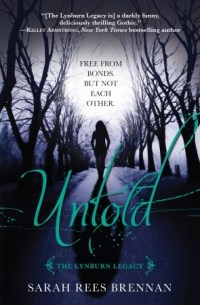 Book: “Untold” by Sarah Rees Brennan
 Book: “Princess Academy” by Shannon Hale
 Book: “Unspoken” by Sarah Rees Brennan
 We are part of a group of librarian friends who have had an ongoing bookclub running for the last year and a half. Each “season” (we’re nerds) we pick a theme and each of us chooses a book within that theme for us all to read. Our current theme is “Books with Movie Adaptations.”
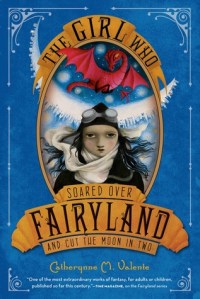 Book: “The Girl Who Soared Over Fairyland and Cut the Moon in Two” by Catherynne M. Valente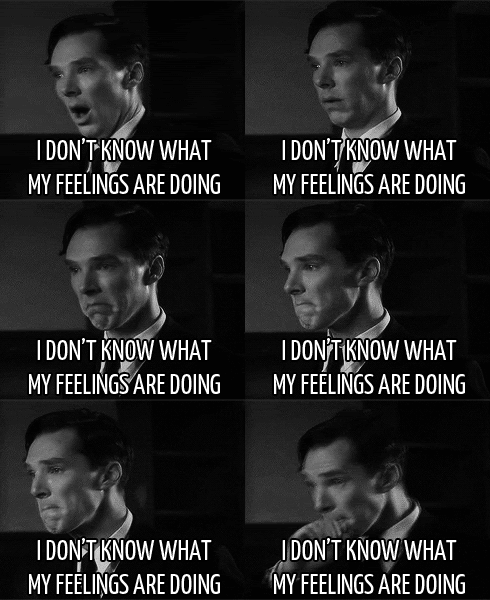

 Book: “The Keeper of the Mist”
 Book: “The Girl Who Fell Beneath Fairyland and Led the Revels There” by Catherynne M. Valente
 The Library Ladies