
Serena’s Review: “The Bloodforged”

24611461Book: “The Bloodforged” by Erin Lindsey

Publishing Info: Ace, September 2015

Where Did I Get this Book: audiobook from the library!

Book Description: As war between Alden and Oridia intensifies, King Erik must defend his kingdom from treachery and enemies on all sides—but the greatest danger lurks closer to home…

When the war began, Lady Alix Black played a minor role, scouting at the edge of the king’s retinue in relative anonymity. Though she’s once again facing an attacking Oridian force determined to destroy all she holds dear, she is now bodyguard to the king and wife to the prince.

Still, she is unprepared for what the revival of the war will mean. Erik is willing to take drastic measures to defend his domain, even if it means sending Prince Liam into a deadly web of intrigue and traveling into the perilous wild lands of Harram himself.

Only the biggest threat to the kingdom might be one that neither Alix nor Erik could have imagined, or prepared for…

Review: This book needs one subtitle, and one subtitle only: “The Bloodforged: A Lesson in Going from Bad to Worse.” Not in quality, mind you. But the plot…phew! War and politics aren’t fun for anyone it seems!

The story picks up six months after the great battle that ended the previous book, and Alix’s kingdom is still very much at war. And not just any war, a war they are well on their way to losing. As Rig reports back from the front line (being now the General of the King’s armies), they only have a few months left unless they can secure aid from their neighboring countries. And thus Lindsey neatly separates all of our favorite main character off onto dangerous diplomatic missions where we spend a good amount of time wondering who has it worse.

First off, there is a major change in style for this book from the first. While it starts off from Alix’s perspective, it is quickly established that we will be following three other characters, primarily. Liam, who is sent to discover what is delaying the launch of a promised fleet of ships from the neighboring republic. Erik, who along with Alix, begins a treacherous trek through the mountains, home of the fierce mountain tribes, to reach their other neighbors who are also dilly dallying about committing to help. And Rig, back off to the front lines and tasked with holding the enemies at bay while reinforcements are begged for by the others. Alex, really, gets much less page time than the three others, and while at first I was frustrated by this change, I soon found myself equally invested in the tales of these three men.

Even more so than the first book, this second story in the series pushes even further away from any “fantasy” trappings. This book is largely about war tactics and political tactics. Again, it is hard to figure out which would  be more painful to have to deal with. Poor Liam, new to his role as crown prince, is completely out of his league trying to navigate the political maneuvering of a republic whose players are all focused more on re-election than in helping him uncover the mystery of the sabotaged fleet, all while fighting off attempts on his life. And poor Rig. Fighting a losing battle on the kingom’s borders, not knowing when or if help will arrive. Even worse, he discovers that there is at traitor in his midst. And then Erik and Alix, their perils are perhaps the most straightforward, but just as dangerous. Cold, hunger, snow, and wild tribesman who don’t turn a friendly eye on trespassers all present hindrances on their attempts to reach their allies across the mountains. All of these three stories were intriguing and I would have a hard time picking one as a favorite. This is a huge win for a second book in a series where our main character is pushed to the side in favor of splitting the narrative between three other characters who had largely been only secondary in the first book.

Another change is the shift in romance. Obviously, our newlyweds, Alix and Liam, are almost immediately separated which marks a rather distinct end to any expectations that this book was going to have much happy romantic fluff in it. Instead, the book shifts to focusing on those left on the outside of this relationship, most notably Erik who had given up his attachment to Alix in favor of supporting her and maintaining a relationship with his newly discovered brother. Turns out feelings don’t just disappear. Further, Liam is blissfully unaware of the admiration (crush) that one of his fellow soldiers has for him. I appreciated that both of these mini arcs were handled respectfully and honestly. Liam’s naivety was endearing and hilarious at times. And I just felt sorry for Erik much of the time as it was always clear that Alix’s heart was forever Liam’s.

One flaw of the book was the lack of resolution to a few key points. Liam’s admirer is never really confronted, and the story line just fades away completely in the end without it ever being addressed. More frustrating, the spy in Rig’s camp is not outed in this book as well. More so with this second point than the first, some of these dropped plotlines may be simply being left for the final book in the trilogy.

As I said, the magical aspects of this book were largely pushed to the background. However, it does come roaring back in the end of the book, though this does result in a big of a cliffhanger. So , be warned of that. This book does need to be read after the first one, and does end in such a way that would be unsatisfying if you’re not on board for a third book. And, like I said at the beginning, things go from bad to worse in many ways, so readers are left on tenterhooks for the fate of the realm and our favorite characters by the end. I have no idea how Lindsey is going to resolve all of these factors, but I’m excited to find out!

Rating 8: A solid sequel that surprised me in many ways!

Reader’s Advisory:

“The Bloodforged” is included on this Goodreads list (probably not that helpful) “Redheads”  and should be on this list (probably more helpful) “Political Fantasy.”

Find “The Bloodforged” at your library using Worldcat!

Previously Reviewed: “The Bloodbound”

Emily’s Corner: “The Wind-Up Bird Chronicle”

20170202_140222Emily and I (Serena) have been friends since the first week of freshman year of college. Other than a lost purse (I did the losing, Emily did the calming), take a wild guess as to what we bonded over? Yes, that is correct: books. And the fact that we both had plans to be English majors and would go on to coordinate our schedules to have as many similar classes as possible! All that said, Emily has agreed to be a semi-regular contributor to our blog, so keep your eyes open for posts from her in “Emily’s Corner” on random Mondays going forward!
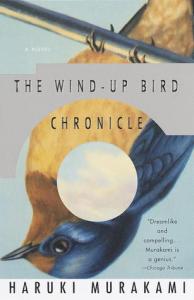
284066Book: “The Wind-Up Bird Chronicle” by Haruki Murakami
Publishing Info: Originally published in three parts between 1994 and 1995, the English translation was published in 1997

Where Did I Get this Book: A gift from a friend in book club

Book Description: In a Tokyo suburb a young man named Toru Okada searches for his wife’s missing cat.  Soon he finds himself looking for his wife as well in a netherworld that lies beneath the placid surface of Tokyo.  As these searches intersect, Okada encounters a bizarre group of allies and antagonists: a psychic prostitute; a malevolent yet mediagenic politician; a cheerfully morbid sixteen-year-old-girl; and an aging war veteran who has been permanently changed by the hideous things he witnessed during Japan’s forgotten campaign in Manchuria. Gripping, prophetic, suffused with comedy and menace, The Wind-Up Bird Chronicle is a tour de force equal in scope to the masterpieces of Mishima and Pynchon.

Review: My book club did something a little different for our January read. Instead of reading the same book, we each picked out our favorite novel and did a book swap. (My pick was The Blue Castle, of course.)

The book I received was “The Wind-Up Bird Chronicle,” by Haruki Murakami. Our book club had read his earliest work “Wind/Pinball” together, so I was delighted to receive a more recent publication. Murakami is one of those maddening geniuses who knocked it out of the park on his first try writing a novel. I had high expectations for “Wind-Up Bird Chronicle” and it did not disappoint.

A word on Murakami’s writing style; he takes the most mundane, ordinary situations and makes them riveting. Case in point, I started the book during Christmas break while visiting my parents. My dad asked what I was reading and I said something along the lines of “it’s about a guy and his wife, and the wife has a cat, and it goes missing, and she’s upset with the husband for not caring, so he goes to look for it, and it’s all about this tension in their marriage . . .”

Dad cut me off. “That sounds boring.”

Boring this is not! Murakami takes this story and twists it, wrenches it, in fact. It turns into this surrealist, cerebral adventure that takes on an otherworldly quality without losing its grasp on reality. It was exhausting trying to keep up and yet I couldn’t put it down.

The story twists and turns from the perspectives of the man and his search for his wife who mysteriously vanishes along with the cat, a precocious teenager so fascinated by death that she almost commits murder, bloody flashbacks to the power struggles and mind games of war-torn Manchuria, eerie sisters whose magical talents are the hub of the story, a villain who controls his victims by mentally raping and trapping them in an otherworld, and a wealthy but strange mother-son duo named after baking spices.

I get it. This sounds like an acid trip. This is not a story that you can explain by saying “and then such-and-such happened.” And for sure it is a far cry from the “man looks for lost cat” opening.

That is what is magical about Murakami; he takes you on such a slow and winding journey, where everything makes sense until it doesn’t. You look back to see how far you have come, almost unable to believe that a story about a lost cat could turn into the most violent, most beautiful, most moving thing you’ve read in years.

This book isn’t so much about the story, though it is truly a riveting story. It’s about Murakami’s way with words. He is unlike any author I’ve encountered, writing about daily activities like boiling pasta and ironing shirt collars in such a way that they become intensely beautiful rituals. Something as simple as climbing down a dry well becomes an out-of-body experience, for both the protagonist and the reader. I was gasping by the end of that chapter.

There is a horrifying torture scene, and while I normally have a very low tolerance for this sort of thing, I couldn’t help but be entranced by how Murakami achieved a level of grace and beauty in it. I was trapped between being appalled and being fascinated.

For me, Murakami’s work is about experiencing his way with words just as much as it is about getting caught up in a good story.

Rating 8: While this is one of the most incredible books I’ve read in a while, my squeamishness over the aforementioned torture scene and some terribly awkward phone sex kept this from getting a higher score. Still, this is a must-read for anyone who appreciates the cerebral/magical realism genre.

Reader’s Advisory:

“The Wind-Up Bird Chronicle” is included on these Goodreads lists: “Magical Realism” and “Mind Twist.”

Find “The Wind-Up Bird Chronicle” at your library using Worldcat!

Serena’s Review: “The Burning World”

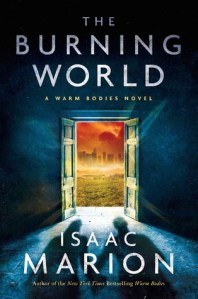
16148435Book: “The Burning World” by Isaac Marion
Publication Info: February 2017, Atria/Emily Bestler Books

Where Did I Get this Book: the library!

Book Description: R is recovering from death.

He’s learning how to breathe, how to speak, how to be human, one clumsy step at a time. He doesn’t remember his old life and he doesn’t want to. He’s building a new one with Julie.

But his old life remembers him. The plague has another host far more dangerous than the Dead. It’s coming to return the world to the good old days of stability and control and the strong eating the weak, and stopping it will require a frightening journey into the surreal wastelands of America—and the shadowy basement of R’s mind.

Review: This book came into the publishing world like a new Beyonce album: no word, and then suddenly it appears! I highlighted this book as one that I was looking forward to reading, but also with a bit of trepidation. “Warm Bodies” was such a beautiful, funny little book that opened and closed so neatly that the thought of a sequel had honestly never even crossed my mind. So, while I was excited to re-visit this world, especially in the aftermath of Julie and R’s discovery of re-animating (?) zombies back to humans, I was a bit concerned that it was going to succumb to sequel-itis and bring nothing new to the table while negatively impacting the brilliance of the original. And while there were a few rough patches, particularly in the beginning, I am pleased to report that Marion’s expansion to his world and series is well fleshed (ha!) out!.

635729580302245934-1568177425_bad20joke
You can’t stop this laugh train! (source)

“The Burning World” picks up a few months after the events of “Warm Bodies,” and things aren’t going as smoothly as Julie and R had hoped re: reintroducing the zombies into society. I mean, in the movie version of the first book, the zombies and humans are literally playing baseball together and sharing umbrellas in the end. This book quickly does away with any of these happy fantasies. Turns out people aren’t quite as easy to convince that beings that used to kill and eat their brains are really just uber repressed people who need to reconnect with their feelings if only they’d give them all a chance! Even R himself, the protege of this whole zombie-transformation-movement is struggling with the reality of this transition. When he was cured, mobility, language, and most especially, memory didn’t suddenly just reappear. They’ve all had to be tediously re-learned, and when the story begins, it is clear that he’s hit a bit of a wall.

When I made my admittedly very bad pun about fleshing out the world, that is probably the most notable aspect of this book. Marion takes his rather simplistic little zombie world and really goes crazy with it. Half the appeal of “Warm Bodies” was the complete lack of importance that was given to the history of the world. Something went wrong, zombies appeared, and this is the hell everyone is now living in. No explanation necessary. Doing away with this charm was a risky move, but a challenge that Marion proves to be up to meeting. Not only do we get details into R’s own history, but through his patchy and slowly returning memories (present in flashbacks interspersed throughout the story) we see how broken the world really was. If anything, the world of “Warm  Bodies” was a step in the right direction from what had come before! Fractions and zealots fought for power, religion and business warred to control the minds of the people, and zombies were almost an after thought to the craziness.

One particularly, albeit smaller, detail that was brought to the table was the reality of what transforming from a zombie that can’t be killed by anything less than a shot to the head into a person entails. Nora’s story comes to the forefront as a nurse attempting to treat these re-emerging injuries. If you’re shot as a zombie, you don’t heal. Becoming human again doesn’t magically do away with life-ending injuries. This brought a level of seriousness to the procedure that I hadn’t expected, and one that is tied into a major plot line for Julie later in the book.

Most of the plot involves an airplane roadtrip across America. Julie’s home is invaded by a shadowy group with whom R is having strange kindlings of memories, forcing them to go on the run. Mixed in with the expanded world (which cities fell, which cities burned, which came up with their own rule of law), our heroes are faced with the constant question of what future they are running towards: one in which they fight or one in which they flee. I loved how these questions are never approached with an obvious answer. The characters on either side make valid arguments, and though as a reader I knew what the ultimate decision would be, I appreciated the fact that other survival techniques were not poo-pooed away.

So, I really did love much of the book. The expanded world, the added characters, R’s complicated history. However, there were a few setbacks. In the beginning especially, I felt as if the writing was a bit stilted and trying too hard as far as philosophical musings go. “Warm Bodies” hit just the right balance in this regard, and I felt like “The Burning World” suffered from the weight of expectations. Once the story really gets going, there’s enough of a structure to hang these existential musings upon, but in the beginning it just felt tedious and a bit forced.

Secondly, there was a strange “We” character that would show up between chapters. Even by the end of the book, I’m not sure what I was supposed to be getting from these chapters. And it’s not like there were only a few! There were pages of this stuff, and much of the same tedious philosophical ramblings would be crammed into this section with no character or story to really focus on. About midways through we meeting a zombie boy who becomes something of a character in these bits, but the whole thing still feels very strange and disconnected from the story. Presumably it’s building towards some sort of reveal in the final third book in this series, but in this one it felt like a distraction and an unwarranted break in the main plotline’s action.

And on that note, there is a bit of a cliffhanger at the end of this book. Nothing intolerable, in my opinion, but it does end in a manner that requires a follow up read to really reach any type of resolution to both the story and character arcs. But, luckily, this was a strong enough sequel that I’m all in for the next and last book!

Rating 8: A solid, surprise follow up to a story that, previously to this, I had been happy enough seeing as complete!

Reader’s Advisory:

“The Burning World” is newly released and thus not on many Goodreads lists, but it is on  “Zombies!” and should be on “Apocalypses and Dystopias.”

Find “The Burning World” at your library using Worldcat!

Serena’s Review: “Ghostly Echoes”

28110857Book: “Ghostly Echoes” by William Ritter
Publishing Info: Algonquin Young Readers, August 2016

Where Did I Get this Book: audiobook from the library!

Book Description: Jenny Cavanaugh, the ghostly lady of 926 Augur Lane, has enlisted the investigative services of her fellow residents to solve a decade-old murder—her own. Abigail Rook and her eccentric employer, Detective R. F. Jackaby, dive into the cold case, starting with a search for Jenny’s fiancé, who went missing the night she died. But when a new, gruesome murder closely mirrors the events of ten years prior, Abigail and Jackaby realize that Jenny’s case isn’t so cold after all, and her killer may be far more dangerous than they suspected.

Fantasy and folklore mix with mad science as Abigail’s race to unravel the mystery leads her across the cold cobblestones of nineteenth-century New England, down to the mythical underworld, and deep into her colleagues’ grim histories to battle the most deadly foe she has ever faced.

Review: Trekking right along with my read through of the Jackaby series, “Ghostly Echoes” starts off basically right where “Beastly Bones” leaves off. Jenny, the local friendly ghost whose murder has went unsolved for a decade, has finally decided to take things into her own hands. Literally. She actually learns how to pick up things. But this is an important step, and one that coincides with the return of murders that seem to match the M.O. of her own assailant many years ago.

This book represents an interesting turning point in the series so far. Up to this point, the books have been largely stand-alone novels. Sure, a few things will be referenced here and there, but very few plot lines carry through directly from one book to the other. However, in the last book, Ritter laid the groundwork for a “big bad” to best all “big bads.” And one who had been operating in the background all along. Here, we find this is very true, with the plot lines from not only its direct prequel, “Beastly Bones,” but also from the first book in the series, “Jackaby,” being tied together to a larger mystery.

However, this book was very hit and miss for me, tonally. Ritter was essentially wanting to have his cake and eat it too with this one. The larger plot line and mystery were intriguing. Both Jenny’s burgeoning abilities to operate in the real world, the murders that seem so similar to her own, and the clues that begin to point to a strange organization that is operating with its own nefarious agenda were interesting. There was a lot to get through just with this main story line.

But Ritter had also to pay off the set-up he had built with the previous two books where readers expect to find wit, strange beasts, and madcap adventures. All of these bits, while good, seemed to fit in strangely with the more serious tone of this book. I found myself getting pulled one way and the other when the book would veer back and forth between the main story and the smaller interactions that, while important to the overall plot, felt more light and oddly out of line with the rest of the story.

As I mentioned in my last review of the series, the story is at its best when the character of Jackaby is used sparingly. He did have more page time in this story than the last, but this book also did a lot of work building up his past and making him into a more three dimensional character with deeper inner struggles than the simple “wacky Doctor-like” character he has been presented as for the last two books. I was happy to see him becoming more of a character than a plot point.

Towards the end, Ritter did seem to find his footing a bit better, sending Abigail off on an adventure of her own. However, Abigail probably was the least served character by this change of pace to the series. As I mentioned above, Jackaby’s past and character are fleshed out more fully. Jenny becomes an actual character in her own right beyond simply being a friendly ghost and friend to Abigail. But Abby herself? Largely it just feels like she was there to narrate the story to us. And while she does get her own action, it is only that: action. There didn’t feel like there was a lot of character development for her in this book, which I sadly missed. Also Charlie! He was barely there!

So, in conclusion, this book was a bit of a mixed bag. I very much liked the added depth that was given to the greater story line that now pulls through all the books in the series. And Jackaby himself is a more intriguing character now that it has been revealed that he is more than just a quirky, gimmick. But my favorite character, and the main character of the series, was left dangling a bit. And tonally, the book was a bit all over the place, teetering between a more serious larger plot line, and the expected wackiness established in the first two books.

The next and final book comes out this summer, however, and I am still excited to see how Ritter wraps up this all up!

Rating 7: Some imbalanced highs and lows make for a mixed bag read, but still a strong series overall!

Reader’s Advisory:

“Ghostly Echoes” is included on these Goodreads lists: “YA & Middle Grade Historical Mysteries”and should be on this list “YA Mythology Challenge.”

Find “Ghostly Echoes” at your library using Worldcat!

Previously Reviewed: “Jackaby” and “Beastly Bones”

Serena’s Review: “Silver on the Road”

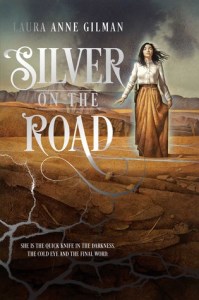
20748097Book: “Silver on the Road” by Laura Anne Gilman

Publishing Info: Saga Press, October 2015

Where Did I Get this Book: the library!

Book Description: On her sixteenth birthday, Isobel makes the choice to work for the devil in his territory west of the Mississippi. But this is not the devil you know. This is a being who deals fairly with immense—but not unlimited—power, who offers opportunities to people who want to make a deal, and makes sure they always get what they deserve. But his land is a wild west that needs a human touch, and that’s where Izzy comes in. Inadvertently trained by him to see the clues in and manipulations of human desire, Izzy is raised to be his left hand and travel the circuitous road through the territory. As we all know, where there is magic there is power and chaos…and death.

Review: You know you read a lot of a specific genre when you begin to recognize cover art artists! So, while I would like to say that I first looked at this book based on its amazing premise, the truth is that the cover artist has also done covers for some of my other favorite fantasy reads, so those books just immediately leap out at me whenever I’m browsing through lists. But, books are not their covers and all of that, so the unique premise was ultimately what landed this one for me as worth checking out. And, while there were a few frustrations here and there, all told, I very much enjoyed this book as a refreshing change of pace for fantasy fiction.

Honestly, with so much of urban fantasy and historical fantasy starting to feel tired and weighed down by too many tropes, it’s shocking that the concept of alternative Western fantasy hasn’t struck home more fully. What an untapped setting and part of history! And this alternative American Wild West was really the major strength of the book.

In this version of history, the West (essentially anything that would have been gained in the Louisiana Purchase in true history) is literally wild, kept in check only by the mysterious and half-fabled Devil who rules the Territory. The true essence and character of the Devil is never fully explored, whether he is the actual Devil from a Biblical sense, or whether this is a name he has acquired from magic-fearing folk who don’t know what else to call him. At a certain point, I simply began associating him with the type of Devil character you hear/read about in folk tales (like the  Devil in the song “The Devil Went Down to Georgia.”)

But this is a good example of the type of “go with it” mentality that is necessary for this book. There are many questions raised and very few answers given. This could be frustrating at times, particularly when I got to the end and realized some of them would be left unanswered completely. But with the world-building itself, it was easier to simply stop trying to over-analyze and simply enjoy immersing oneself in it instead.

Izzy, a young woman who has worked at a tavern alongside the Devil her whole life, is recruited by him to travel the Territory as his Left Hand. Here, too, there was not a lot of clarification. Izzy is simply set out into the world alongside Gabriel, a travel-worn companion who knows the hidden paths and pitfalls of the Territory and who has stuck his own mysterious bargain with the Devil (more unanswered questions!). What she can do, how she can do it, and even when she should do it are all unknowns to her and us.

I very much enjoyed these two characters and their expedition, however. This is a very slow burn novel, and much of the page time is spent with these two on the road, basically wandering from one place to another. Only towards the very end of the book do the small plot points that have been stumbled upon really begin to come together to form any type of unified conflict and arc. For those looking for a more tight story with a more natural progression of learned information, this book may be a struggle. I was able to attach myself strongly enough to the character development of Izzy and Gabriel that most of this was ok by me. I also, personally, very much enjoy hiking and discovering new parts of the world around bends in roads. So, for me, the meandering approach to storytelling that was largely just a roadtrip on a horse was appealing.

I very much enjoyed this book. However, for some it may read as slow and the unanswered questions could be frustrating. I had a fairly laid back approach to this, knowing there was a sequel that was just published, but even I found myself frustrated at times. Izzy’s powers are so undefined, even at the end, that while I know that progress was made in this book (a conflict was resolved and all), it still felt like Izzy herself had very far to go. And Gabriel’s past is still very much a large question mark. But I’m on board enough to want to read the next one where hopefully some of this will be answered!

Rating 8: What could be a slow, frustrating read, was saved by a truly unique setting in a fantastical, alternative American West.

Reader’s Advisory:

“Silver on the Road” is included on these Goodreads lists: “Best Fantastic American West” and “Dead Man’s Hand.”

Find “Silver on the Road” at your library using Worldcat!


Serena’s Review: “Heartstone”

31290944Book: “Heartstone” by Elle Katharine White

Publishing Info: Harper Voyager, January 2017

Where Did I Get this Book: the library!

Book Description: A debut historical fantasy that recasts Jane Austen’s beloved “Pride & Prejudice” in an imaginative world of wyverns, dragons, and the warriors who fight alongside them against the monsters that threaten the kingdom: gryphons, direwolves, lamias, banshees, and lindworms.

They say a Rider in possession of a good blade must be in want of a monster to slay—and Merybourne Manor has plenty of monsters.

Passionate, headstrong Aliza Bentaine knows this all too well; she’s already lost one sister to the invading gryphons. So when Lord Merybourne hires a band of Riders to hunt down the horde, Aliza is relieved her home will soon be safe again.

Her relief is short-lived. With the arrival of the haughty and handsome dragonrider, Alastair Daired, Aliza expects a battle; what she doesn’t expect is a romantic clash of wills, pitting words and wit against the pride of an ancient house. Nor does she anticipate the mystery that follows them from Merybourne Manor, its roots running deep as the foundations of the kingdom itself, where something old and dreadful slumbers . . . something far more sinister than gryphons.

Review: I keep doing it to myself, picking up books that are re-tellings of Jane Austen’s famous novels, always hoping and yet so often disappointed. But this, this, is why I do it! Every once in a blue moon an author gets it right, not feeling too beholden to the original, while also staying true to the themes and doing proper justice to the characters. I very much enjoyed “Hearstone,” both as a retelling of “Pride and Prejudice” and as an original work of fantasy fiction!

As the summary explains, only the barest of bones of the original story can be seen here. This is a different word with a different history and a different society. Fantastical beasts aren’t simply inserted into the Regency England we know from the original novels. And right off the bat this is a strength of the story. Jane Austen’s works are filled with female characters who in one way or another struggle with the limitations that dictate their lives. White does away with this aspect right away. Women not only populate this world equally, but they are active, functioning members of the world. There were many characters from the original who are gender-swapped, like Colonel Foster who becomes a female commander. This was a particularly interesting and freeing choice, I believe, as the story is laid out in a much more action-oriented manner, and White’s world allows all of her characters to play in it equally. Aliza and Anjey (the “Jane” sister) don’t simply get to know their to-be Rider beaus through balls and dancing, but by contributing to the cause to rid their land of monsters.

The story is also told from first person perspective, another change from the original. But Aliza is an entertaining and relatable leading lady. It is interesting watching her develop her opinions and prejudices from the perspective of her inner thoughts, something we don’t see from Elizabeth Bennet. Further, her change of heart as she learns the truth about Daired and grows to care for him is an interesting arc that feels news and fresh coming from this more introspective viewpoint. Daired himself is an appealing leading man. While there is no competing with Mr. Darcy, Daried’s own prejudices and points of pride make sense for the character. In some ways the fact that he manages to attach himself to Aliza based on very few interactions is both more understandable and less than Darcy’s affection for Elizabeth. The two spend more time together than Darcy/Elizabeth and in situations that would cause attachments to develop more quickly. However, as great as the Aliza is, as a character it is less obvious to see why she would stand out so much to Daired who runs into so many people throughout society. Elizabeth’s sparkly wit and uniqueness were always obvious. However, I very much enjoyed their romance, specifically the added action towards the end of the book.

As for secondary characters, it is interesting to see that White seems to have looked at Austen’s original supporting cast and essentially thought “Man, not everyone can be that obnoxious!” This, too, was a welcome change. Austen’s ability to write the ridiculous side of humanity and people is unparalleled. So rather than try to mimic it, White simply eased up on it altogether. The Mr. Collins character is still silly, but she makes him also a good man who ends up in a truly affectionate marriage. Mrs. Bentaine is still set on marrying off her daughters, but she’s also clearly a loving parent, and her insufferablness is very much cut back on. Even deplorable characters like Lady Catherine and Caroline Bingley are reformed, though still flawed. The Caroline Bingley character is a perfect example of both this more positive reimagining and the increased role that female characters play in the story, being a Rider herself alongside Daired and Brysney.

As for the world-building, I very much enjoyed how White built up her fantasy world around this classic story. Nothing felt forced, and she used the fantasy elements as motivations for the plot, not simply as window dressing to support a pre-determined system of events. All of the major plot points from the original story are inherently tied to the specific aspects of this new world.

This was one of the more enjoyable Jane Austen retellings that I can remember reading in quite a long time. If you enjoyed the originals, but also like high fantasy, I definitely recommend checking this one out!

Rating 9:

Reader’s Advisory:

“Heartstone” isn’t on any Goodreads lists yet, but it should be on “Best Jane Austen Retellings.”

Find “Heartstone” at your library using Worldcat!

Joint Review: “Beauty: A Retelling of the Story of Beauty and the Beast”

41424Book: “Beauty: A Retelling of the Story of Beauty and the Beast” by Robin McKinley
Publishing Info: Harper, October 1978

Where Did We Get this Book: Serena’s owns it, and Kate borrowed it from Serena!

Book Description: Beauty has never liked her nickname. She is thin and awkward; it is her two sisters who are the beautiful ones. But what she lacks in looks, she can perhaps make up for in courage.

When her father comes home with the tale of an enchanted castle in the forest and the terrible promise he had to make to the Beast who lives there, Beauty knows she must go to the castle, a prisoner of her own free will. Her father protests that he will not let her go, but she answers, “Cannot a Beast be tamed?”

Serena’s Thoughts

I originally read this book back in highschool after finding it while browsing through my school library. What a lucky day of my life! I had read a few books by Robin McKinley before this but had somehow missed the fact that she wrote a Beauty and the Beast re-telling (she actually wrote two! Her other book is titled “Rose Daughter” and is a bit more of an adaptation of the tale than a straight re-telling like this one). Fast forward an undefined number of years and “Beauty” is one of a handful of books that I re-read almost on a yearly basis. It’s the epitome of a comfort read for me, at this point. And with that in mind, I’ve found it a bit challenging to review it here for the blog! Unpacking the book as an actual work of fiction outside of my own long history of gushing over it is tricky!

One of the most noteworthy aspects of this tale is its simplicity. There are a million and one Beauty and the Beast adaptations, and they all approach the tale differently with unique additions to the tale and versions of the main characters. What makes “Beauty” stand out is the fact that it really isn’t providing anything extra to the tale: if you could have a novel-length version of the fairy tale itself, no bells or whistles added, this would be it. The tale unfolds in a very familiar way, broken into three parts essentially. There is Beauty’s life through her family’s fall from wealth, then her time adapting to a more simple life and hearing tales about a mysterious woods that one days hits too close to home with her father’s unlucky trip to a strange castle, and then the final third, Beauty’s time in the castle itself, falling in love with a Beast.

I particularly appreciate the fact that McKinley doesn’t rush the first half of this novel. As anxious as I am (and I’m sure many readers as well) to get to the meat of the story, Beauty and the Beast’s love story, this initial build up is important for setting up Beauty as a three dimensional character. We need time to understand Beauty herself, and to grow to love her family as well so that her sacrifice, when it comes, to leave them forever has the emotional weight it deserves.

Due to this greater fleshing out of the beginning of the story, Beauty’s family all get a lot more page time. The sisters, particularly, become their own characters with their own struggles. And, luckily, they are treated much more kindly by McKinley than sisters often fare in fairy tales being neither catty nor selfish.

But, of course, the true joy of the story does indeed come in its second half when Beauty begins her new life at the castle and meets the Beast. Here lies the true brilliance of the story. Under less sure hands we have seen too many incantations of the Beast where he can fall into many character traps, like the overly angsty Beast, or, most likely, the “anger issues are sexy” Beast. The Beast in this story is perfect as a strange, romantic hero. The tragedy of his story and life up to this point is the primary emotion that is brought to the forefront. And it is this sympathy for him upon which Beauty begins to build her feelings. But, even more importantly, McKinley allows her characters to travel the full of arc of a burgeoning relationship. Each are wary of the other (Beauty, for obvious reasons, and the Beast due to the vulnerability he must show to grow close to another human after so long), then through small moments and risks on each character’s part, a friendship develops, and only from there do we begin to see the romance come. McKinley never stumbles in this progression, and its this sure-handedness that makes the story and Beauty and the Beast’s relationship so beautiful and believable.

Re-reading this book for the millionth time, and especially with the new movie on my mind, it strikes me that the original Disney movie might have needed to credit this book for parts of their story. I mean, really, there’s even mention of a dog-like footstool! And this was written before that movie!! Perhaps a questionable lack of attribution on Disney’s part…

Kate’s Thoughts

So I had never actually read “Beauty” until I was at Serena’s house awhile back, and she literally thrust her copy of the book into my hands. I had only read “Sunshine” by Robin McKinley before then, though I had some familiarity with her other works because my mother really likes the “Damar” series. I, too, am a huge fan of the story of “Beauty and the Beast”, as the Disney movie is my favorite Disney movie of all time, and I’ve always enjoyed the fairy tale. Hell, in college I wrote a paper about the symbolism of the Beast in regards to sex and growing up. So yes, Serena was right to toss this my way with the command of ‘read it, read it now’.

I think that the biggest thing that strikes me about this book is that McKinley is very careful to flesh out all of the characters, from Beauty to her sisters to the Beast. While some fairy tales function more on tropes and common themes, McKinley takes these kind of stock characters and explores them a bit more. I was especially happy, like Serena was, that Beauty’s sisters Grace and Hope were also kind and empathetic people. I was worried that there was going to be some of the usual ‘only one girl can be the good one’ malarky, but this book is really kind to it’s female characters. Beauty herself was a wonderful surprise as well, as she is good and kind but has her own weaknesses and is not perfect. I felt a lot of love from her family, which is so rare in so many fairy tales. Seeing them going from wealth to near poverty was a really neat take, giving the story more motivation for the Father to go off, and more motivation for Beauty to make the sacrifices that she ends up making. And I will admit that I was also invested in the love story that befalls upon Grace, who is longing for a long lost love to return to her, even if the odds aren’t in her favor.

And like Serena, I also liked the parts with the Beast and how their relationship progresses. The Beast never really comes off as an actual threat to Beauty, which is a difficult line to treat with this story. I know that a lot of people compare this fairy tale to Stockholm Syndrome (I have a lot of opinions as to why this is incorrect, but that’s another rant for another day), but in “Beauty” it felt more like a mutual understanding between Beauty and the Beast instead of a captive situation. I feel like this gives Beauty the credit she deserves, and it doesn’t let any critiques turn her into a victim in spite of her obvious agency. Her relationship with the Beast is tentative, then sweet, and it was nice seeing them progress and learn about each other.

I think that the best part about this book is that it’s really just fluffy and pure escapism, which sometimes we really just need. There isn’t any unnecessary drama or nonsense, and you know that you’re going to get a happy ending. But even if the ending is guaranteed to be happy, McKinley does a great job of keeping you interested in the journey to happily ever after. If you are a fan of “Beauty and the Beast”, this is definitely a book that you should be picking up. Do yourself this favor!!!

Serena’s Rating 10: My absolute favorite fairy tale re-telling of all!

Kate’s Rating 10: An absolutely lovely retelling of one of my very favorite fairy tales.

Reader’s Advisory:

“Beauty: A Retelling of the Story of Beauty and the Beast” is on these Goodreads lists: “Beauty and the Beast” and “The Best Fairytales and Retellings.”

Find “Beauty: A Retelling of the Story of Beauty and the Beast” at your library using WorldCat!

Serena’s Review: “Wintersong”

24763621Book: “Wintersong” by S. Jae-Jones

Publishing Info: Thomas Dunne, February 2017

Where Did I Get this Book: ebook ARC from NetGalley

Book Description: All her life, nineteen-year-old Liesl has heard tales of the beautiful, mysterious Goblin King. He is the Lord of Mischief, the Ruler Underground, and the muse around which her music is composed. Yet, as Liesl helps shoulder the burden of running her family’s inn, her dreams of composition and childish fancies about the Goblin King must be set aside in favor of more practical concerns.

But when her sister Käthe is taken by the goblins, Liesl journeys to their realm to rescue her sister and return her to the world above. The Goblin King agrees to let Käthe go—for a price. The life of a maiden must be given to the land, in accordance with the old laws. A life for a life, he says. Without sacrifice, nothing good can grow. Without death, there can be no rebirth. In exchange for her sister’s freedom, Liesl offers her hand in marriage to the Goblin King. He accepts.

Down in the Underground, Liesl discovers that the Goblin King still inspires her—musically, physically, emotionally. Yet even as her talent blossoms, Liesl’s life is slowly fading away, the price she paid for becoming the Goblin King’s bride. As the two of them grow closer, they must learn just what it is they are each willing to sacrifice: her life, her music, or the end of the world.

Review: This book has been marketed as a good read for fans of “Labyrinth,” and while I’m familiar with the movie, I wouldn’t say that I’m a die hard fan by any means. I think I’ve only seen it once? But from what I remember, this book description does seems very close to that story. Perhaps too close? I have read several iterations of the “Goblin King” fairytale, however, and have had a hit or miss run of them. But I’m always intrigued by the basic arc and curious to see what new twists each author will bring to a fairly established story. However, while “Wintersong” is written beautifully, after reading it I wouldn’t list it as one of my top choices for this type of story.

Basically, this story can be split into two halves. The first deals with Liesl’s mission to save her beloved sister Kathe from the clutches of the Goblin King who has stolen her away. For the most part, I very much enjoyed this first half of the book. Liesl’s relationship with her sister is realistically complicated, based in both deep familial love but also challenged by Liesl’s jealously of the perfection she attributes to her sister based on her beauty. While this strained relationship could at times leave Liesl looking a bit selfish and self-centered, I felt like it also tapped into the true undercurrents that develop in many sibling relationships. And the fact that beneath it all Liesl would do anything, even sacrifice herself, to save her sister properly orients both her character and the sisters’ relationship as a positive one.

The second half of the story is where it goes a bit off the rails for me. This is kind of surprising, because as much as I loved the first half, I always knew where the meat of this story would lie: Liesl’s time spent as the wife of the Goblin King. And typically, this is the part of these types of stories that I enjoy the most. That said, it is also the most challenging to write as now the Goblin King must be developed to have more layers beyond villainy and the complicated relationship between him and his stolen bride must be more fully fleshed out.

And while there were elements of this half of the story I did enjoy, I also felt like the novel became a bit confused about what it was trying to do and say. Honestly, it almost feels as if this book would have done better if it had been marketed as an adult fantasy novel. Being pushed into YA territory leaves the physical aspects of the two’s relationship rather strained and almost working against the author’s arc of self-discovery for Liesl. It just felt odd at times.

The Goblin King’s transformation into a tragic, romantic hero also felt like something we have seen too often before. And while that isn’t always a fault (as I said, I’ve read many of these types of novels), this book’s descriptions of him at times seem to take its own angst and oh so tragic beauty too seriously. The lyricism of the novel that serves the story so well in its world building and descriptions of music, begins to feel a bit empty and cliche when it comes to their romantic relationship.

At this point in the review, I would say the book was coming in at a solid 5. I liked the first half, didn’t really like the second half, so a very middle of the road read. However, I won’t spoil it, but I was very disappointed with the end of the novel. I understand what the author was trying to do. However, there are too many questions left unanswered, and, again, the beautiful tragedy of it all seemed to be taking itself too seriously for the type of book this is. I hear there is a sequel in the works, and I do not appreciate books that leave cliff hangers that require readers to continue to get any sense of resolution. Sure, leave the door open and set the stage, but end it in a way that is still satisfying if readers don’t want to continue. So yes, I was unhappy with the end of the book. It may work for some, but it didn’t for me, hence the extra drop in my rating of it.

Serena’s Review and Giveaway: “A Conjuring of Light”

29939230Book: “A Conjuring of Light” by V.E. Schwab
Publishing Info: Tor Books, February 2017

Where Did I Get this Book: I bought it! (And an extra for this giveaway, since, let’s be real: I’m keeping mine!)

Book Description: Londons fall and kingdoms rise while darkness sweeps the Maresh Empire—and the fraught balance of magic blossoms into dangerous territory while heroes and foes struggle alike. The direct sequel to “A Gathering of Shadows,” and the final book in the Shades of Magic epic fantasy series, “A Conjuring of Light” sees Schwab reach a thrilling culmination concerning the fate of beloved protagonists—and old enemies.

Review: While I should have felt completely confident after Schwab nailed the always-challenging middle book of a series, the final book is really what a series lives and dies on and…and…nothing bad must happen to my lovelies, Lila, Kell, and Rhy! And, while bad things do happen in this book (narrative-wise, not quality-wise, thank god), as a closing chapter for the trilogy, “A Conjuring of Light” was everything I wanted and many things I didn’t know I even DID want!

I was lucky enough to have gotten around to “A Gathering of Shadows” only a week or so before this book came out. So I only had to live with that killer cliffhanger for a few days before I rushed out to my local bookstore and purchased this book. I feel true and deep pity for all the other readers out there who had to struggle with it for a whole year! With my approach, and the fact that this book takes off exactly where the previous one leaves off (Lila rushing to Kell’s rescue AGAIN, and Rhy sinking into death-remission), this almost felt like the very long second half of the story that was started in the second book.

The pacing of this book is essentially action-packed from the get go with a few, very few, breaks often in the form of flash back sequences. As the personified dark magic seeps into Kell’s world, the true magnitude of the disaster that our heroes are up against begins to take form. The stakes are impossibly high, and from the beginning it was clear that any hope of winning wasn’t going to come without a steep cost. While the second book highlighted what magic can do as it was put on show during the international competition, this book shows its limitations, especially at the hands of the fragile human magicians with their limited capacity to channel it. The fancy flourishes and tricks prove to be much too little against the seemingly unstoppable force that is the Shadow King.

This book also can be split into two parts. The seemingly futile disaster overtaking Red London, and then a jaunty ship journey, complete with Sea Serpents! If it sounds like those two things wouldn’t mix well, you’d be wrong. And in many ways, this second half of the book was my favorite. It was essentially an odd company adventure romp featuring my favorite characters: Lila, Kell, Alucard, and, bizarrely, Holland.

Lila is, and will always be, my favorite character. And while much of her growth took place in the second novel, we see her really come into her own in this book, recognizing the benefit of staying put every once in a while and the strength to be gained from relationships with others, even with the risk of loss.

Kell, too, was much more filled out coming off the second novel, so his arc was also more limited to simply overcoming this great nemesis. However, there was some interesting nuance added to his relationship with the royal parents, and his relationship with Rhy continues to by my favorite portrayal of brotherhood on page.

And, obviously, Lila and Kell now together….my heart!

The more surprising character arcs came for both Alucard and Holland. With both, but especially with Holland, we are given a much clearer look into their past through flashbacks. Alucard’s story highlights the fact that Red London, as advanced as it is, does struggle with similar prejudices as our own world, a fact that he suffers for greatly.

And Holland. His story came out of left field! While the first book does a good job setting him up as more than a simple villain, this is where we finally see behind the mask and are witness to the complete and utter tragedy that has been his life. Honestly, after seeing it all, Holland turns out to be the strongest character of them all, even given the fact that they largely wouldn’t even be in this whole “Shadow King” mess had it not been for him.

I’ve already written a bunch and I still feel like I’ve barely skimmed the surface of what’s to love about this book and series as a whole. I honestly can’t recommend it enough for fans of fantasy. It’s been a long time since I’ve read a trilogy that feels so perfect in every way. In this case, even the most wild and outlandish praise is well deserved.

Rating 10: A perfect 10 for the whole trilogy.

Reader’s Advisory:

“A Conjuring of Light” is newly released and thus not on many Goodreads lists, but it should be on “Fantasy/SF Atlas–London” and “Magic, Adventure, Romance.”

Find “A Conjuring of Light” at your library using Worldcat!

But wait! There’s more! If somehow you have managed to resist instantly purchasing this for yourself, never fear, I am hosting a giveaway for a hardcover edition of “A Conjuring of Light!”

EDIT: I failed to update the “comment on the blog” question for the giveaway! So instead of favorite murder mystery (darn you, Kate, and your murder mysteries and my own ineptitude when recycling your work!), what is your favorite fantasy novel that was published in the last year?

Click here to enter the giveaway!

Serena’s Review: “A Gathering of Shadows”

20764879Book: “A Gathering of Shadows” by V. E. Schwab

Publishing Info: Tor Books, February 2016

Where Did I Get this Book: audiobook from the library!

Book Description: It has been four months since a mysterious obsidian stone fell into Kell’s possession. Four months since his path crossed with Delilah Bard. Four months since Prince Rhy was wounded, and since the nefarious Dane twins of White London fell, and four months since the stone was cast with Holland’s dying body through the rift–back into Black London.

Now, restless after having given up his smuggling habit, Kell is visited by dreams of ominous magical events, waking only to think of Lila, who disappeared from the docks as she always meant to do. As Red London finalizes preparations for the Element Games–an extravagant international competition of magic meant to entertain and keep healthy the ties between neighboring countries–a certain pirate ship draws closer, carrying old friends back into port.

And while Red London is caught up in the pageantry and thrills of the Games, another London is coming back to life. After all, a shadow that was gone in the night will reappear in the morning. But the balance of magic is ever perilous, and for one city to flourish, another London must fall.

Review: After the high that was “A Darker Shade of Magic,” I went into “A Gathering of Shadows” with extremely high expectations. And without any ado, this book more than met those!

Second books in a trilogy are a beast. The stage has been set, the characters established, but the grand finale must be held off. Too many series experience the “second book slump” when these delicate balances can’t be met. Often these books come across as filler, so busy holding back that they never present a story of their own. “A Conjuring of Light” shows how you do a second novel right.

The story itself is simple yet effective. Schwab builds her narrative around an Olympics-like competition of magicians that will be held in Red London, using it as a support on which to overlay the character development of Kell and Lila.

Kell is struggling with his new reality, his life forced tied to Rhy’s. With any harm that is done to him affecting Rhy as well, his freedom has been greatly limited by a King and Queen who fear for their son and heir’s life. Further, while Kell struggled with the awe with which the city’s populace viewed him before, after the devastation left in the Black London artifact’s wake, hero worship has shifted to general fear and distrust. Sensing this growing restlessness and unhappiness, Rhy concocts a scheme for Kell to enter the Games in disguise.

Lila, on the other hand, is living her dream. Through a series of flashbacks, we see the way she managed to con her way onto a pirate ship and slowly ingratiate herself with the charming captain and powerful magician, Alucard Emery. She has also slowly been training as a magician and in true “Lila” style has decided that nothing will due but to also enter the Games as a disguised contestant. Her sheer brazenness and over-confidence is unfailingly charming!

While one of my favorite aspects of the first novel was the report that was built up between Kell and Lila, I found myself equally enjoying this extended period of separation. Schwab drew out the tension, ratcheting up reader’s expectations higher and higher, as she had her two main characters circle closer and closer to one other through their experiences in the Games before finally, and satisfyingly, clashing together towards the final third of the novel.

Through Lila’s lessons with Alucard and the Games themselves, Schwab also greatly expands her magical system. While we heard a lot about elemental magic in the first book, we were largely only exposed to Kell’s specific brand of blood magic. Here, however, the full force of what can be done with elemental magic is on display, and it was fascinating!

Behind the scenes, we also begin to see the stage being set for the grand final conflict to come in the last book. Holland, our favorite Antari villain from the first book, has survived and the Black London magic is yet again in play.

As I said, this book seemed to hit all of the marks as as second novel. Schwab carefully uses this book to add layers to her main characters and give them all room to grow and react to the happenings of the first book (we also get more of Rhy in this story, which I loved). The main story arc advances very little, but the Games serve as an architectural framework upon which to hang this character development, provide action, and expand an existing magic system. And behind it all, the building blocks are slotted in place for the final story.

A warning: this book ends on a massive, MASSIVE, cliffhanger. But despair not! The final book is out, and I will have a review for that up on Friday along with a giveaway!

Rating 10: A rare thing indeed, a sequel that meets the same high rating as its predecessor!

Reader’s Advisory:

“A Gathering of Shadows” is included on these Goodreads lists: Thieves and “YA Books with Parallel Universes” (though this book is not a YA title, officially).

Find “A Gathering of Shadows” at your library using Worldcat!