
Serena’s Review: “Shades of Milk and Honey”

8697507Book: “Shades of Milk and Honey” by Mary Robinette Kowal

Publishing Info: Tor Book, August 2010

Where Did I Get this Book: the library!

Book Description: Shades of Milk and Honey” is exactly what we could expect from Jane Austen if she had been a fantasy writer: “Pride and Prejudice” meets “Jonathan Strange & Mr. Norrell.” It is an intimate portrait of a woman, Jane, and her quest for love in a world where the manipulation of glamour is considered an essential skill for a lady of quality.

Jane and her sister Melody vie for the attentions of eligible men, and while Jane’s skill with glamour is remarkable, it is her sister who is fair of face. When Jane realizes that one of Melody’s suitors is set on taking advantage of her sister for the sake of her dowry, she pushes her skills to the limit of what her body can withstand in order to set things right—and, in the process, accidentally wanders into a love story of her own.

Review: As a fan of Jane Austen, I routinely find myself picking up books that have any hint of similarities. And as the description with this one promised a mix of Jane Austen PLUS fantasy, I knew I would have to read it immediately.

In many ways,  Jane lives in typical Regency England. Manners, gentlemen and ladies, balls, and lots of sitting in breakfast rooms gossiping about one’s neighbors. Except, to be a proper, accomplished lady, alongside skills in embroidery, painting, and music, one must also master the art of glamour. Described as folding and weaving light, a glamourist is able to create magical scenes and movement, often for the purposes of impressing one’s neighbors at dinner parties. It seems equivalent with hiring a master painter to create unique portraits for one’s family, essentially. And while Jane’s sister Melody received the looks and charm of the family, Jane is the sister skilled in this specific art.

I really enjoyed the descriptions of this glamour magic. It is such a unique idea and seems to have endless applications. It’s curious seeing it primarily as an art form, as I would imagine there would have to be many other more practical uses for something like this, other than just decorating rich people’s houses. But, like many historical “manners” stories, we are mostly focused on the very privileged lives of our gentry main characters, so I guess seeing it mainly as a form of art makes sense. The whole idea is fascinating and the descriptions of the process of weaving light and the end results were engaging.

As for characters, they were fairly typical fare for a book that is purporting itself as a “Jane Austen read-alike.” It was an interesting mix of storylines and character types from both “Pride and Prejudice” and “Sense and Sensibility.” For fans of Jane Austen’s work and those two books specifically, it was fun spotting the tie-ins. Jane, herself, was a likeable heroine, if perhaps lacking some of Elizabeth Bennet’s spunk. Vincent, too, plays the role of the broody leading man effectively. His backstory was interesting and I enjoyed learning more about his character and motivations.

There were a few problems with the writing itself. For the most part, the language is descriptive and elegant. However, there were times where it seemed that the author couldn’t decide how fully to commit to the language of the time. Words would go back and forth from being spelled in the traditional manner to the modern. And there were even a few words of the time that it seemed the author didn’t fully understand. She used the word “droll” in place of the word “dour” it seemed, several times using “droll” to describe a character who was behaving in a gloomy and stern manner. This was frustrating to see in what was otherwise a very competent novel.

All in all, language quibbles aside, I very much enjoyed this book and will be checking out the next one. As all of Jane Austen’s stories were one-offs, it will be interesting to see what the author does with this story, now that we are beyond the point that any of those books cover.

Rating 7: A very unique magic system, if only marked down for some peculiar language mistakes.

Reader’s Advisory:

“Shades of Milk and Honey” is included on these Goodreads lists: “Fantasy of Manners” and ““Sister” Novels.”

Find “Shades of Milk and Honey” at your library using WorldCat.


Serena’s Review: “Den of Wolves”

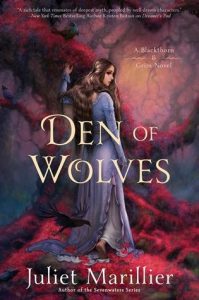
22567184Book: “Den of Wolves” by Juliet Marillier

Publishing Info: Roc, November 2016

Where Did I Get this Book: I bought it!

Book Description: Healer Blackthorn knows all too well the rules of her bond to the fey: seek no vengeance, help any who ask, do only good. But after the recent ordeal she and her companion, Grim, have suffered, she knows she cannot let go of her quest to bring justice to the man who ruined her life.

Despite her personal struggles, Blackthorn agrees to help the princess of Dalriada in taking care of a troubled young girl who has recently been brought to court, while Grim is sent to the girl’s home at Wolf Glen to aid her wealthy father with a strange task—repairing a broken-down house deep in the woods. It doesn’t take Grim long to realize that everything in Wolf Glen is not as it seems—the place is full of perilous secrets and deadly lies…

Back at Winterfalls, the evil touch of Blackthorn’s sworn enemy reopens old wounds and fuels her long-simmering passion for justice. With danger on two fronts, Blackthorn and Grim are faced with a heartbreaking choice—to stand once again by each other’s side or to fight their battles alone…

Review: I had this book pre-ordered on Amazon, so it showed up the day after it was released, and I was ready. Door closed. Husband, I’ll see you later. I’m going to READ THIS BOOK NOW.

Per the usual, Blackthorn and Grim’s lives are once again caught up in the mysteries of their neighbors. These two never get any peace! This time it comes in the form of a neighboring landholder, Tola, his daughter, a mysterious stranger, and a fantastical heartwood house that Grim is recruited to help build. After befriending the outcast and half-crazed builder, Bardan, Grim begins to suspect a dark secret lingering between the builder and the lord Tola. Blackthorn, for her part, befriends Tola’s daughter, Cara, whose fears of failure and disapproval severely impact her ability to speak to others, but who has a fey-like connection to the woods of her home in Wolf Glen and the birds that inhabit it.

This book follows the established format laid out in the first two stories. Chapters alternate between Blackthorn and Grim’s perspectives, as well as that of a third party character. Here, we have both Cara and Bardan’s perspectives, though Cara is given more page time than Bardan. His own narrative being one filled with confusion, amnesia, and a prevailing madness, Bardan’s chapters only begin to become clear as the story and mystery unfolds, making this uneven allotment more understandable. Cara’s chapters were very enjoyable, over all. Her character is one who is crippled by anxiety, and she represents a unique voice in a story like this, providing insight into challenges that many people face outside of a fantasy setting.

In the first two books, my main criticism (not that it was a strong one or that there were many to begin with) was with these side narrators. Oran was, quite simply, rather boring in the first book. And in “Tower of Thorns,” Geiléis revealed herself as a slightly unsavory character right from the beginning. With both of these, their chapters often felt frustrating, leaving me wanting to rush through to get back to Blackthorn and Grim. Here, Bardan, but especially Cara, are much more enjoyable characters on their own, alleviating some of this tension between page time given to their own stories and that of our main characters.

The mystery itself was a bit easy to guess. I’ve read a lot of Marillier’s books, so this could be simply due to the fact that I am very familiar with her storytelling and the ties she creates between the tale being told in the book itself and the mini folktales often sprinkled within. That being said, I still very much enjoyed watching things unfold, and there were still a few unexpected twists thrown in at the end.

Blackthorn and Grim are, of course, the main selling point of this entire series and that remains true in this book. I didn’t go through and count pages, but I felt that Grim’s narrative was more prominent than  Blackthorn’s in this story. At the very least, he’s closer to the action. But given the events of the last book, most notably the emotional revelations that came through on Grim’s part, I felt like this book needed to give Blackthorn more space from the action to reflect on herself and her own feelings and relationship with Grim. So, while this may have left her a bit more disconnected from solving the mystery itself (though she definitely plays a large role, don’t get me wrong), I was very satisfied to follow her more introspective story arc.

My one criticism of this book comes down to outside factors beyond the story itself. Marillier’s publisher only signed a contract for a three book series, though the author set up the books to be a longer-running series. With that in mind, she needed to write this book in a way that it could stand either as the end of a trilogy or as a middle point in an ongoing series should the publisher decide to pick it up for more. This created a very awkward position for the book to inhabit. Parts of the story felt rushed, particularly with regards to Blackthorn’s ongoing vendetta against the high lord who did her such wrong in the past. And, even, the progression of her relationship with Grim, while still very satisfying, did at times also feel that it might have benefited from an additional book to properly complete the slow-burn approach laid out in the first two novels.

The ending does its job though. It can serve as the final part of a trilogy, but does leave the door open for sequels, should the publisher so choose. Obviously, I would love to read more of this series. Blackthorn and Grim are both very unique narrators to the genre, both being older, more broken individuals than are commonly seen. Either way, however, this book did not disappoint, and I will happily shelve it right next to all of the other Marillier books I have bought (which is all of them).

Rating 9: Loved it! The only mark against it is its need to serve as two things as once, both the final third of a trilogy or the middle book of a series.

Reader’s Advisory:

“Den of Wolves” is a new book and isn’t on many Goodreads lists yet, but it should be on “Irish Myth and Folklore.”

Find “Den of Wolves” at your library using WorldCat.

Previously Reviewed: “Dreamer’s Pool” and “Tower of Thorns”


Serena’s Review: “The Girl Who Raced Fairyland All the Way Home”

18961360Book: “The Girl Who Raced Fairyland All the Way Home” by Catherynne M. Valente
Publishing Info: Feiwell and Friends, March 2016

Where Did I Get this Book: the library!

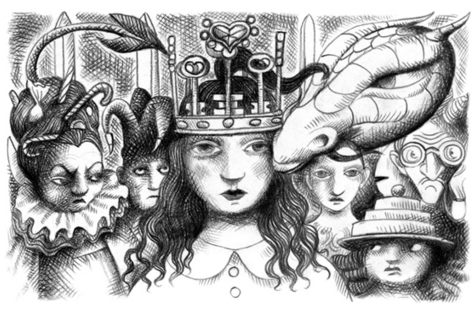
Book Description: Quite by accident, September has been crowned as Queen of Fairyland – but she inherits a Kingdom in chaos. The magic of a Dodo’s egg has brought every King, Queen, or Marquess of Fairyland back to life, each with a fair and good claim on the throne, each with their own schemes and plots and horrible, hilarious, hungry histories. In order to make sense of it all, and to save their friend from a job she doesn’t want, A-Through-L and Saturday devise a Royal Race, a Monarckical Marathon, in which every outlandish would-be ruler of Fairyland will chase the Stoat of Arms across the whole of the nation – and the first to seize the poor beast will seize the crown. Caught up in the madness are the changelings Hawthorn and Tamburlaine, the combat wombat Blunderbuss, the gramophone Scratch, the Green Wind, and September’s parents, who have crossed the universe to find their daughter…

Review: I delayed it for a few months, but here we are at last, woefully at the last book in the “Fairyland” series. But there are two things bolstering my spirits after finishing this series. 1.) It ended on such a great note! Always a concern that somehow something so good will be bungled and tarnished forever by a whiff on the ending. And 2.) now that it has been finished, and finished so well, I can happily go out and purchase the entire series and re-read them to my heart’s content!

Per my usual review method for this series, I’m going to include some of my favorite quotes from the book. If I’ve said it once, I’ve said it a million times: the writing in this series is so beautiful and has to be its biggest selling point.

“One of the awful secrets of seventeen is that it still has seven hiding inside it. Sometimes seven comes tumbling out, even when seventeen wants to be Grown-Up and proud. This is also one of the awful secrets of seventy.”

We’ve watched September grow up throughout these books. If the theme of the entire series could be summed up, it would be: growing up is a terrible, onerous process and then once you get there, you realize it was all kind of a hoax to begin with. Throughout all of the books, I very much enjoyed Valente’s razor sharp views on childhood. It’s all too easy to let childhood morph into a time and place of wildflowers and carefree days, and as adults forget the truly awful parts about it. The helplessness, the lack of freedom, the unassuredness, the constant changes both in yourself and in how the world see/treats you.

“We have all of us got it jumbled up. You never feel so grown up as when you are eleven, and never so young and unsure as when you are forty. That is why time is a rotten jokester and no one ought to let him in to dinner.”

New to this book, we meet Septemeber’s parents and her Aunt more fully! The interlude chapters document their journey. It was particularly enjoyable reading about their experiences, both in Fairyland and as the ones who were left behind by a wandering September. We always hear about the kids who get swept off to magical lands, but nothing about the poor parents who are left missing their children. Further, the reminder that these same parents and adults were once children and had adventures of their own.

“The Land of Parents is strange and full of peril.”

While Hawthorne and Tamburlaine do play a role in this story, it was again September’s story and her friends that we follow throughout the book. However, Blunderbuss, the combat wombat, plays a much larger role than I had expected and it was awesome. She is by far the best new addition to group from the last few books. Her acerbic wit and blunt way of speaking often provided the most hilarious bits of the story. And her contribution to the ending was as surprising as it was welcome.

“You gotta be nice to strangers even when they are the worst, because they don’t know you well enough to understand how shut your big face can mean I’ve missed you more than the whole world can know.”

And, finally, I cannot end this review without talking a bit about my darling pairing of September and Saturday. I have to say, this was my biggest concern about the story and one of the reasons I held off reading this book for so long. How could this be resolved in a way that wasn’t going to be heart breaking somehow? And, while the ending wasn’t anything like I could have expected, it was so, so satisfactory. So, go forth dear readers without fear on this account!

“The tales lovers tell each other about how they met are hushed and secret things. They change year by year, for we all meet many times as we grow up and become different and new and exciting people–and this never stops, even for a minute, even when we are ninety.”

I really can’t rave enough about this book. While “The Boy Who Lost Fairyland” was very good, it did feel like a step away from the Fairyland books that I had come to love. So I was a bit concerned when starting this one that maybe the magic had worn off just a little. But this book comes roaring back, and I would say it most closely rivals my love of the first book in the series. When/if I have children, this series will definitely be making an appearance on the must-read-aloud list. If you like fantasy, especially of the sweet and nonsensical kind, ala “Alice in Wonderland,” don’t miss out on this series!

And with that…

“Endings are rubbish. No such thing. Never has been, never will be. There is only the place where you choose to stop talking. Everything else goes on forever.”

19312407

Rating 9: An amazing story on its own, but also an unexpected and poignant ending to the series as a whole.

Reader’s Advisory:

“The Girl Who Raced Fairyland All the Way Home” is included on this Goodreads list: “own the Rabbit Hole in Children’s Fantasy” and Best Chapter Books for Young Girls

Find “The Girl Who Raced Fairyland All the Way Home” at your library using Worldcat!

Previous Reviews: “The Girl Who Circumnavigated Fairyland in a Ship of Her Own Making” and “The Girl Who Fell Beneath Fairyland and Led the Revels There,” and “The Girl Who Soared Over Fairyland and Cut the Moon in Two” and “The Boy Who Lost Fairyland”

Serena’s Review: “The Copper Promise” Part 4: “Upon the Ashen Blade”

19858251Book: “Upon the Ashen Blade” by Jen Williams
Publishing Info: Headline, January 2014

Where Did I Get this Book: the library!

Book Description: Demons and gods, revenge and lies, and still the dragon moves slowly north. Wydrin, Sebastian and Frith now have the tools that could end the destruction, but a vast army lies between them and victory, and time is running out. The race is on to stop Y’Ruen before all of Ede is under her flame.

Review: We’ve arrived at the the fourth and final novella that makes up “The Copper Promise” and our heroes have a lot to do. Wydrin: save her brother’s life. Sebastian: figure himself out and deal with the pesky little demon he’s sold his soul to. Frith: complete his journey to not being an unlikable, arrogant, ass while escaping a crow god. All: deal with the dragon bent on destroying the world with her fire and brood army. So, you know, a reasonable task for about 110 pages of story!

As mentioned in the last review, we were left on cliffhangers in all three stories. But not to fear, these were wrapped up fairly quickly at the beginning of this. So, too, our merry band were speedily re-united. While I enjoyed the three separate storylines for each that we got in the last book (a bit to my surprise!), I was very happy to have our heroes back together. It has become more and more clear that Wydrin is who has been holding things together for her and Sebastian for the last few years. Not only does he make very bad decisions without her (as we saw last time), but the guy is just too serious for his own good and has some major self-esteem issues to work through. Wydrin’s sense of humor, and sense of support, were badly needed by both him and Frith.

Frith’s cliffhanger was solved a bit too easily for my taste, but, due to the page count and long list of tasks mentioned above, this wasn’t all that surprising. It did lead to another mini adventure for the group that I very much enjoyed. The settings and magic systems that these novellas use have a very “classic high fantasy” feel to them that is refreshing in this day and age. All too often, fantasy now reads very dark, grim, and full of anti-heroes and political maneuvering.

giphy2
Yes, yes, but sometimes can’t we just have fantasy fun?? (source)

I particularly enjoyed the pieces of this story that came together through connections to the previous three novellas. The added chapter perspectives from the point of view of the members of the brood army paid off in a great way, particularly in bits where there were clever nudges to the reader that weren’t picked up on by our unknowing heroes. And Frith’s backstory was resolved in a satisfactory manner. I wasn’t quite sure where the author was going with this for a while, as the storyline seemed sprinkled in amidst the larger plot conflict of the dragon in strange ways at times.

I really only have two complaints. The first is completely unsurprising and expected: this section was too short to do justice to the many dangling storylines left to be wrapped up. Especially, I would have liked more time with Sebastian and the brood army since the relationship between the two was built up quite a lot in the second and third story. My second complaint has to do with a portion of Wydrin’s story that I felt was ultimately taking up page time that could have been used elsewhere (in the aforementioned Sebastian/brood army bits, or in the epic battle at the end, or simply in giving more time to the evolving relationship between Wydrin and Frith). Really, there were plenty of places that could have used the page time, and I had largely forgotten about this antagonist already. There were elements here that tied into the resolution of the entire story, but I wish there had been a way to deal with this in a manner that didn’t take up as much time. Or maybe just make the whole section longer, and I wouldn’t have cared as much about the pages devoted to this section if they had no impact on the other story components.

Struggles with the limited page time allotted to ending this novella series aside, I very much enjoyed this last entry in the series. I would guess that to read this oneself, you are most likely to come across “The Copper Cat” edition that includes all four novellas. As I mentioned in my first post, I’m not sure how successful this story would be if approached as a traditional fantasy novel in one pieces. The pacing would be strange throughout the entire book, and the changes in storytelling would be very jarring (having the brood army chapters in there for 100 pages without any explanation and then suddenly disappearing, then having another 100 page section told with the three different plots lines, etc). I think the author/publisher would have done themselves a favor if it had been marketed more clearly as a compilation of four novellas. As it stands, without doing extra research and discovering this for oneself, many readers could be left with a bad taste in their mouth simply due to these pacing challenges. It’s really too bad. A simple note on the cover along with marked section titles would have done the trick. But, especially if one goes in knowing this to begin with, I would highly recommend this to readers who enjoy more traditional, slightly campy fantasy adventure stories.

Rating 8: A good ending, though too short to fully do the many plot points justice.

Reader’s Advisory: 

“Upon the Ashen Blade” isn’t included on any lists on its own, but the compilation “The Copper Promise” is on this list “Books You Wish More People Knew About.”

Find “Upon the Ashen Blade” at your library using WorldCat!

Previously Reviewed:Ghosts of the Citadel” and “Children of Fog” and “Prince of Wounds”

Serena’s Review: “The Queen of Attolia”

40158Book: “The Queen of Attolia” by Megan Whalen Turner
Publishing Info: Greenwillow Books, April 2000

Where Did I Get this Book: the library!

Book Description: Revenge
When Eugenides, the Thief of Eddis, stole Hamiathes’s Gift, the Queen of Attolia lost more than a mythical relic. She lost face. Everyone knew that Eugenides had outwitted and escaped her. To restore her reputation and reassert her power, the Queen of Attolia will go to any length and accept any help that is offered…she will risk her country to execute the perfect revenge.

…but
Eugenides can steal anything. And he taunts the Queen of Attolia, moving through her strongholds seemingly at will. So Attolia waits, secure in the knowledge that the Thief will slip, that he will haunt her palace one too many times.

…at what price?
When Eugenides finds his small mountain country at war with Attolia, he must steal a man, he must steal a queen, he must steal peace. But his greatest triumph, and his greatest loss, comes in capturing something that the Queen of Attolia thought she had sacrificed long ago…

Review: Well, as predicted, I’m well on my to zipping through this entire series well before the publication of the newest book (expected sometime next spring). But I just can’t help myself!

Coming off the strength of the last book, I was very excited picking up this book to discover what new adventures Gen would get himself into next! So I was a bit dismayed when I soon realized that the format of this book has changed from the first. “The Thief” was told from Gen’s first person perspective. This book is not only told from a third person perspective, it also has widened the cast to include chapters from other characters. But I should have had faith! This book was even better than the last, and this change in format is largely responsible for the improvements.

The first person perspective often seems like the more intimate style of storytelling. You’re living fully in a character’s head, so of course readers feel more closely connected to a character written this way. However, as I’ve discussed before, there are also limitations to this type of storytelling. Here we see the strengths of the third person approach. In many ways, it better suits the type of story that Whalen Turn is trying to tell. After pulling the rug out from under readers the way she did at the end of the first book, the author couldn’t use the same trick twice. We all know how clever Gen is and won’t be fooled again! Or will we…

A third person perspective and the increased use of other characters allowed the plot to become that much more intricate, especially given the shift in tone that this story takes. The first was largely an adventure/heist story. This is political intrigue, and very smart political intrigue at that. Often in YA, political intrigue seems to be dumbed down to such an extent that you can barely call it “intrigue.” Not so here. And the added character perspectives, most notably, those of the Queen of Attolia, add so much to this broadened take on the relationships between our main characters and the countries they rule.

I can’t say enough how impressed I am with the tale that was built for the Queen of Attolia (the character, not to be confused with the title of the book itself!). After the first book, I had her comfortably slotted into the “evil queen” character type and nothing more. Low and behold, Whalen Turner had miles more of character development in store for her.

And, of course, I can’t end this review without specifically talking about Gen. While we get less of him, I feel that by the end of this book, I understood this complex, flawed, but brilliant character that much more. The author makes a very brave choice with regards to Gen early in this book, and I was thrilled that she didn’t take any easy outs with how she dealt with the fallout of this choice. Honestly, like I said earlier, I thought that after being fooled once I would be enough on the look out to spot plot developments in this book. But not so. I was shocked when it happened, and even more shocked with the brilliant way that Whalen Turner faced her building narrative straight on, all while cleverly pulling the wool over readers’ eyes.

I can’t rave enough about this series. There is a lot more political maneuvering in this book than in the first (and than is often found in YA fantasy). But these days, with “Game of Thrones” at the the height of its power, I feel that this series is primed for a resurgence.

Rating 10: Brilliant plotting, complex characters, gutsy risk taking that pays off!

Reader’s Advisory:

“The Queen of Attolia” is included on these Goodreads lists: “Political themed YA fiction” and “Most Intelligent Plots.”

Find “The Queen of Attolia” at your library using WorldCat.

Previously Reviewed: “The Thief”


Serena’s Review: “A Shadow Bright and Burning”

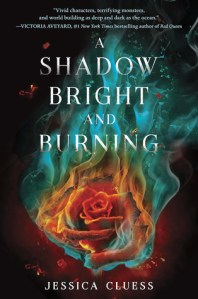
23203252Book: “A Shadow Bright and Burning” by Jessica Cluess
Publishing Info: Random House BFYR, September 2016

Where Did I Get this Book: the library!

Book Description: I am Henrietta Howel. The first female sorcerer. The prophesied one. Or am I?

Henrietta Howel can burst into flames. When she is brought to London to train with Her Majesty’s sorcerers, she meets her fellow sorcerer trainees, young men eager to test her powers and her heart. One will challenge her. One will fight for her. One will betray her. As Henrietta discovers the secrets hiding behind the glamour of sorcerer life, she begins to doubt that she’s the true prophesied one. With battle looming, how much will she risk to save the city–and the one she loves?

Review: I featured this book back on one of my highlights posts, and low and behold it finally showed up on my library hold shelf! While I sped through the story and it did avoid most YA tropes that are immediate turn offs for me, I ultimately found myself slightly underwhelmed.

As the book description proves, this story is pretty typical young adult fantasy fare, right down to the special power being fire-related (why is it always fire??). I have to say, if I were an author, I’d be staying as far away as I could from anything that might leave my main character open to “girl on fire” comparisons to Katnis…but that’s just me. Further, the introduction of a million and one love interests, a secret life that she must hide, and a prophesy, completes the trope infestation. But, like I said, Cluess did do just enough to avoid falling completely into any one of these pitfalls.

Henrietta, first off, was a good narrator. She isn’t going to win any awards as the most exciting protagonists out there, but her voice was still interesting and she rarely had any “too dumb to live” moments that one sees too often. The setting, an alternate Victorian London that is under siege by a host of powerful magical entities, was creative, but also opened up the door for one of my biggest sticking points with the book.

There’s an inherent struggle when writing any book that has ties to actual history. The protagonist, especially a young woman character, needs to be true to her time, but the author still needs to create room for her to move. Too often, we have young women with ideas that are far too progressive, or who seems to too easily shuck off the constraints of her time period. So, here, I appreciated what Cluess tried to do. There are several moments where it is clear that Henrietta struggles with the mindset about women’s capabilities that is woven deep into this time period’s culture. However, ultimately, her path is just as easy, leaving the story feeling very awkward. And, while I appreciate the attempts to keep these biases realistic, there were almost too many of them, or they were awkwardly placed, undoing and often muddying the character’s own story arc.

For example, at one point, after Henrietta has already proven to herself and many around her that she is a powerful force to be dealt with, another character expresses a very misogynistic opinion to her, and she simply rolls over and agrees. Obviously, one show of force by a powerful young woman isn’t going to change the minds of everyone, but I would have liked to see the character’s own perspective on these things adjust accordingly as the book progressed and she gained more confidence in herself. A story of a young woman growing to appreciate her own strength and question what she has been told is the obvious route for a story like this, and ultimately, that’s where the narrative is going. But, as I said, these moments were still woven throughout the book in a very odd way that left me feeling off balance with regards to Henrietta’s actual character arc. It felt like the character’s growth was being sacrificed to continue the charade of her own insecurity (another one of my least favorite tropes: the character who must remain insecure just to garner compliments from those around them).

And, of course, there were the whiffs of a love triangle. The story avoids my biggest qualm with this trope, when it takes over the story in place of actual action, but it’s still there, and I don’t feel that it adds anything to the narrative itself. If it had been left out completely, I honestly feel like there would have been absolutely zero change to the story itself, and that’s never a good thing. And, due to this and my general wariness from being once burned, twice shy, it was hard to become fully invested in the many, many young men characters that surround Henrietta, as I have no idea which one will be the next love-triangle fodder in following sequels.

Ultimately, while the story was enjoyable and I was able to speed through it without any major hiccups, this book isn’t doing anything new for the genre. Almost every piece of it felt familiar and reminiscent of one or another young adult fantasy series. If you enjoy this type of story, then go ahead and read it. But if you’re looking for a new take on young adult fantasy, or are too burned out on some of these tropes (love triangles, special girl with special powers, limited world building), then you might want to give this one a pass.

Rating 6: While inoffensive, it was also slightly uncreative and had a few too many familiar pieces trying to pose as unique.

Reader’s Advisory:

“A Shadow Bright and Burning” is included on these Goodreads lists: “Victorian YA Novels” and “ParaHistorical Fiction.”

Find “A Shadow Bright and Burning” at your library using WorldCat.

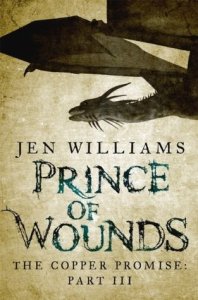
Serena’s Review: “The Copper Promise” Part 3: “Prince of Wounds”

19829913Book: “Prince of Wounds” by Jen Williams

Publishing Info: Headline, February 2014

Where Did I Get this Book: the library!

Book Description: Before they can face the terror that they unleashed, they must face themselves: the magic that Lord Frith carries could save them, if only he could control it; Wydrin’s impulsive nature leads to a deadly conflict with pirates; and Sebastian is beginning to understand that victory can only come with sacrifice.

Review: In this, the third part of this novella series, our intrepid heroes have all been split up and were each having a bit of an existential crisis of one kind of another. While the other two stories have each had their own main story arc (a dungeon adventure and a besieged town in need of saving), this novella is the first that is largely used to set the stage for the last section of the story, where one expects the very large, very mean dragon that has been terrorizing the land might need to be dealt with.

I was a bit concerned when I first realized that this entire novella was going to alternate between our three main characters and they weren’t likely to meet up again here. I’ve been enjoying the group dynamics from the onset of this story, and was concerned that a few of the characters might not hold up as well on their own (mostly Firth, who I hadn’t completely warmed up to by the end of the second story). But these concerns were misplaced, as I found all three stories very enjoyable.

Firth is off on a quest to find anyone who might be able to teach him the language of the mages, his only hope for gaining control of the powers he gained in the first story. His journey and time spent learning is accordingly shortened due to the length of this segment (a total of around 100 pages, leaving him only 35 or so after splitting it with Sebastian and Wydrin). But I did enjoy what little we got from him. Some of his actions from the previous two stories were given a new, more favorable, light.  And, while I was able to predict the twist in his tale, I enjoyed watching it unfold, either way. There was also a lot of good background information on the old gods and the war they waged with the mages that started this whole mad-house of an adventure off in the first place.

Sebastian is in a bad place. His strange connection with the dragon and the brood army is a constant torment, and we pick up with him in the midst of what feels like a doomed and pointless journey: simply tracking the destruction. His whole story line was kind of a bummer, but we did learn what got him kicked out of his Order. Of course, it was tragic. But I appreciate the diversity that his character and history are bringing to the story. He is a nice change-up to the typical “knight” archetype that is seen in adventure fantasy novels like this. He comes across a grim family cult who are obsessed with sacrificing their visitors to their god of suffering (hence the title of this section), and…it’s not pretty.

Wydrin. Poor Wydrin is adrift after being abandoned in the night by Sebastian. She remains my favorite character, but the first half of her section felt the most disconnected of the three. We basically get a very brief, very sidelined from the larger story, mini adventure for her that seems to serve no real purpose other than  kick in the pants to get her moving. She does meet up with an unexpected character from the first novella who even further drags her back into the main storyline. We also meet her pirate brother, Jarath, who is a fun addition to the cast. Much of her story, unfortunately, is getting from one place to another. But her dialogue is as snappy as ever, so I was satisfied.

All three stories end on massive cliffhangers, so I am very glad that I am reading this the way I am and not as it was initially published where I’d have had to wait a whole month for any resolution. As it is, I’ll just flip this page here…

Rating 8: All three characters were able to stand on their own, and the set up for the last section is great!

Reader’s Advisory: 

“Prince of Wounds” isn’t included on any lists on its own, but compilation “The Copper Promise” is on this list “Traditional Fantasy Written by Women.”

Find “Prince of Wounds” at your library using WorldCat!

Previously Reviewed:Ghosts of the Citadel” and “Children of Fog”

Serena’s Review: “The Thief”

448873Book: “The Thief” by Megan Whalen Turner

Publishing Info: Greenwillow Book, October 1996

Where Did I Get this Book: the library!

Book Description: The king’s scholar, the magus, believes he knows the site of an ancient treasure. To attain it for his king, he needs a skillful thief, and he selects Gen from the king’s prison. The magus is interested only in the thief’s abilities.

What Gen is interested in is anyone’s guess. Their journey toward the treasure is both dangerous and difficult, lightened only imperceptibly by the tales they tell of the old gods and goddesses.

Review: As you can see in the publishing information section, this is a book that’s been around in the young adult fantasy lexicon for quite a while. It routinely comes up in lists of fan favorites and has the bonafides to back it up being listed as a Newbery Honor Book. It is also a long running series, not necessarily in total number of books, but in their slow, steady release. After a long break after this, the first, Turner has released a new novel in the series every 4-5 years it seems, and the next is scheduled to be published next spring. So, with this in mind, I decided that now was a good time to dive into this series!

At first I wasn’t quite sure what to make of this story. Told from the perspective of Gen, a common thief who is rotting in prison until he is enlisted to aid in a royal treasure hunt, the story seemed like a fairly straight forward adventure. The story telling came across rather stilted at first, with Gen often coming across as a lazy, unlikable protagonist. The writing and plot also seemed a bit too simplified for my expectations for a Newbery book. And yet…

17b
(source)

Turner masterfully handles her protagonist. As I’ve said before, it’s a challenging task to write an unreliable narrator, even more so in these circumstances as the narrator is unreliable for reasons that might make him even harder to write than normal. I know that wasn’t a very helpful sentence, but I don’t want to give away things.

Further, the slow build in plot development also had huge pay offs in the end. The story itself is very short, so that may have been part of my initial skepticism with its slow burn approach to plot. But, ultimately, the adventure, fantasy, and world building were ultimately fleshed out in truly great ways. There were a lot of twists and turns throughout the story that I didn’t expect, including a dive into the mystical that came a bit out of left field for me.

While this story only briefly touches on the politics and relationships found between the countries in this fantasy world, I can see the groundwork that is being lain here. The story itself, however, does read as a stand-alone, so it’s a curious place to be, knowing there are several novels to follow.

But, as I mentioned, I feel that this book garnered its award purely on the strength of Gen as a narrator. His voice is unique (so unique that I wasn’t quite sure what I was dealing with initially and was prone to disliking him, as I mentioned), but, depending on how the next few books go, I think he has the potential to be one of my favorite leading characters.

This is a short, quick read that is well worth its time! Make sure to give it the chance it deserves if you find yourself, like me, struggling with the beginning. The payoff is well worth it! Now, we’ll see how successful I am at spacing out the rest of the books before next spring’s new release. Or…I’ll just read them all right away and waste away in anticipation like the rest of the poor fanbase who have been waiting so much longer than I will have!

Rating 8: A truly unique narrator who is worth the effort it takes to understand him!

Reader’s Advisory:

“The Thief” is included on these Goodreads lists: “Best Thief Books” (it’s first on this list, which says something, I think!) and “Genius Protagonist.”

Find “Dreamer’s Pool” at your library using WorldCat.


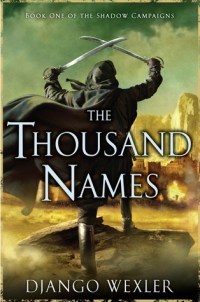
Serena’s Review: “The Thousand Names”

15810910Book: “The Thousand Names” by Django Wexler

Publishing Info: Roc, July 2013

Where Did I Get this Book: audiobook from the library!

Book Description: Captain Marcus d’Ivoire, commander of one of the Vordanai empire’s colonial garrisons, was resigned to serving out his days in a sleepy, remote outpost. But that was before a rebellion upended his life. And once the powder smoke settled, he was left in charge of a demoralized force clinging tenuously to a small fortress at the edge of the desert.

To flee from her past, Winter Ihernglass masqueraded as a man and enlisted as a ranker in the Vordanai Colonials, hoping only to avoid notice. But when chance sees her promoted to command, she must win the hearts of her men and lead them into battle against impossible odds.

The fates of both these soldiers and all the men they lead depend on the newly arrived Colonel Janus bet Vhalnich, who has been sent by the ailing king to restore order. His military genius seems to know no bounds, and under his command, Marcus and Winter can feel the tide turning. But their allegiance will be tested as they begin to suspect that the enigmatic Janus’s ambitions extend beyond the battlefield and into the realm of the supernatural—a realm with the power to ignite a meteoric rise, reshape the known world, and change the lives of everyone in its path.

Review: I honestly don’t remember how this book came to be on my to-read pile, and I also had very little to zero memory of what the basic premises was when I picked it up. A fantasy novel…ok…got it. So, without much preparation or expectation, it was an adventure discovering this book and a pleasant surprise, especially considering it was not the type of fantasy I typically read.

As readers of this blog may have picked upon, my fantasy reading tends to veer towards the “fairytale-like” and medieval fantasy. This is decidedly not that. It can only be described as military fantasy, and, surprisingly, I kind of dug it. Our two chapter perspective characters, Marcus and Winter, both serve in a regiment of the army that is stationed in a far-away outpost, only now seeing action after an uprising of the native people have pushed their army to the sea. They meet up with the newly-arrived Colonel Vhalnich, and while at first skeptical of this eccentric new leader, both, in their own way, come to discover that he may be a military genius…and also caught up in some other nefarious plots! My use of the ellipses is intentional.  The military genius portion is by far the more emphasized part of the story than the mystical plots.

Hats off to Wexler for making such a military-focused story appealing to even casual fans like myself. While it took a bit longer for me to become invested in the story and to fully realize (and accept) that this is what this book was going to be, ultimately, by halfway through the story, I was thoroughly enjoying even the most detailed of military strategy. Most likely this was due to the fact that by this point I was thoroughly invested in our main characters (Marcus/Winter), and almost equally invested in their subordinates (Bobby, Graff, etc) and was frantically urging them to “form square!” and “pull back!” and dreading each page turn where surely one of them wouldn’t make it through.

I also really enjoyed Colonel Vhalnich. We never get a chapter from his perspective, but in many ways he is the Sherlock to Marcus’s Watson. And I always love a “Sherlock-esque” brilliant character! He even throws out “Just wait and see, my dear lad, all will be clear in time!” lines! This may be a very specific joy of mine and not mean much to others, but I loved it.

Marcus was a decent protagonist, fairly straightforward and reminiscent of a “knight in shining armor” character. While I admired his devotion to his friends, there were plenty of times where I just wanted to smack him upside the head at the idiocy of some of his gallantry. There were a few twists that I saw coming a mile away that I couldn’t quite forgive him for missing (though I’m pretty sure we were supposed to be surprised as readers as well…ah all, this is what comes from reading so much of the same genre!).

Winter, however, was a completely unique and thoroughly enjoyable character to find in this type of novel. A run-away young women who has disguised herself as a man and been hiding out in the army for years as a form of survival and, almost, self-penitence for failing her lover Jane in a critical moment years before. I’ve come across the warrior-women-disguised-as-a-man character plenty of times before, but what is notable about Winter is not only sexuality (we avoid many of the romance tropes with other male characters in the military this way) but also her general reluctance to be there. It’s more a survival tactic than some deep-seeded desire to be a combatant. Her arc and growth was the most compelling part of this story.

The first half of the book is, as I said, very firmly rooted in its military tactics, and while this emphasis continues to a point throughout the whole story, I was happy when we got into a bit more of the magic and  mystery towards the second third. The history and players in this set-up were interesting and new. However, by the time the book wrapped itself up, I was still left with a lot of questions. I’m unsure whether this is a good or a bad thing. It is clearly set up as the first in a series, so not all secrets should be told. But, especially with regards to the title object itself “The Thousand Names,” I found myself still largely confused about what exactly it was and how it was important.

Overall, for a story that was pretty far out from my usual preferences, I found myself very much enjoying this book. Winter was a refreshingly new lead character; it was fun to be annoyed with Marcus’s “idiotic nobility” moments; and, as I’ve said many a time, I like genius characters like the Colonel. So, while I won’t be in a mad rush for the second book, I will definitely include it on my “get to it eventually” list. But if you like military fiction more than I do, definitely check this book out!

Rating 8: A surprisingly engaging read, though perhaps not sticking the landing and reveals as well as I might have liked.

Reader’s Advisory:

“The Thousand Names” is included on these Goodreads lists: “Military Fantasy” and “LGBT Sci-fi and Fantasy.”

Find “The Thousand Names” at your library using WorldCat.

Serena’s Rev-Up Review: “Tower of Thorns”

22567177Book: “Tower of Thorns” by Juliet Marillier

Publishing Info: Roc, November 2015

Where Did I Get this Book: I bought it!

Book Description: Disillusioned healer Blackthorn and her companion, Grim, have settled in Dalriada to wait out the seven years of Blackthorn’s bond to her fey mentor, hoping to avoid any dire challenges. But trouble has a way of seeking out Blackthorn and Grim.

Lady Geiléis, a noblewoman from the northern border, has asked for the prince of Dalriada’s help in expelling a howling creature from an old tower on her land—one surrounded by an impenetrable hedge of thorns. Casting a blight over the entire district, and impossible to drive out by ordinary means, it threatens both the safety and the sanity of all who live nearby. With no ready solutions to offer, the prince consults Blackthorn and Grim.

As Blackthorn and Grim begin to put the pieces of this puzzle together, it’s apparent that a powerful adversary is working behind the scenes. Their quest is about to become a life and death struggle—a conflict in which even the closest of friends can find themselves on opposite sides.

Review: In preparation for the release of the third book in the “Blackthorn and Grim” series this November, I’m charging forward with my reviews of the series so far. In the first novel, “Dreamer’s Pool” I fell in love with our main characters, Blackthorn and Grim, but questioned Marillier’s decision to include a third character perspective in that story. She followed a similar pattern with this novel, but, perhaps due to a stronger mystery, I found myself enjoying this book even more than the last.

Blackthorn and Grim have settled into their quiet life. Blackthorn, curmudgeony and reserved, providing her healing service to the countryside in which she resides, while waiting out her seven-year bargain to not pursue revenge on the man who destroyed her life. And Grim, faithfully devoting himself to helping her, and his neighbors, however he can, silent and steady, but deeply broken. But when asked to accompany Oran and his pregnant wife, Flidais, to a neighboring providence, Blackthorn can’t refuse and finds herself once again caught up in a fantastical mystery.

As I said, I enjoyed this book even more than the last. Having already been introduced to the characters, I enjoyed reading about Blackthorn and Grim’s continual struggles to adapt to a life that they feel disconnected to and a world that often feels distanced from their own experiences. Their stories are tragic, and the beautiful relationship they have formed is so lovely. In particular, we get more background on Grim’s story in this novel, which was important at this stage. In the first story, we know that something happened, clearly, but there were very few clues as to what. I very much enjoyed this backstory and how it fleshed out Grim’s character.

I also enjoyed the increased involvement that Blackthorn undertook in solving the mystery in this story. Being the recluse that she is, in both books she is extremely reluctant to become involved, but I did appreciate the increased action on her part in this story. The added layers to her relationship with and understanding of Grim were all fantastic, and I’m excited to see where Marillier is taking their relationship. Will it stay platonic? Will it become romantic? I feel like it could go either way, and honestly, I would be satisfied with either approach, which, when you think about it, is a pretty remarkable feat for an author to pull off.

And, as I said in the beginning, I did enjoy the third character perspective more in this story than in the last. Lady Geiléis’s chapters are devoted to spinning another tale that neatly ties in to the primary mystery. Perhaps as a more “shades of grey” character, her perspective was simply more interesting than that of Oran who at times came across as a bit of a milksop. The mystery regarding the howling creature and the tower was also much more compelling than Flidais’s story in the first book. By halfway through the book, I reached a point where I couldn’t put it down (which was a bit inconvenient since I was visiting family over Thanksgiving last year when I was reading it and was probably very rude and antisocial due to this book!). The story was decidedly darker than the first, and I was legitimately creeped out by parts of it.

I thoroughly enjoyed this novel, and it is always exciting to find a series that seems to be improving as it goes. I’m so excited (and slightly nervous given the high expectations!) for the third book’s release! I already have my copy pre-ordered.

Rating 9: Fantastic! A more compelling (and creepy!) mystery, and added layers to our main characters and their relationship.

Reader’s Advisory:

“Tower of Thorns” is included on these Goodreads lists: “Fantasy with Old-School Fairy Tale Vibes”and “Books for Fans of Robin McKinley.”

Find “Tower of Thorns” at your library using WorldCat.

Previously Reviewed:Dreamer’s Pool”