Serena’s Review: “Labyrinth’s Heart”

This post may contain affiliate links for books we recommend.  Read the full disclosure here.
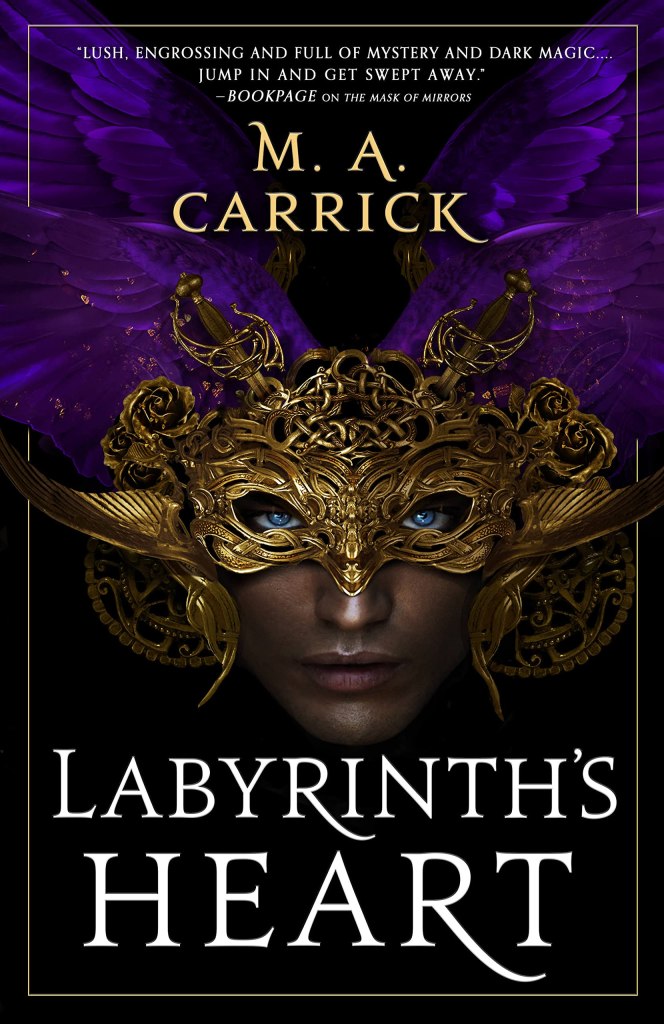
Book: “Labyrinth’s Heart” by M. A. Carrick

Publishing Info: Orbit, Aug. 2023

Where Did I Get this Book: from the publisher!

Where Can You Get this Book: WorldCat.org | Amazon | IndieBound

Book Description: Ren came to Nadežra with a plan. She would pose as the long-lost daughter of the noble house Traementis. She would secure a fortune for herself and her sister. And she would vanish without a backward glance. She ought to have known that in the city of dreams, nothing is ever so simple.

Now, she is Ren, con-artist and thief. But she is also Renata, the celebrated Traementis heir. She is Arenza, the mysterious pattern-reader and political rebel. And she is the Black Rose, a vigilante who fights alongside the legendary Rook. 

Even with the help of Grey Serrado and Derossi Vargo, it is too many masks for one person to wear. And as the dark magic the three of them helped unleash builds to storm that could tear the very fabric of the city apart, it’s only a matter of time before one of the masks slips—and everything comes crashing down around them.

Previously Reviewed: “The Mask of Mirrors” and “The Liar’s Knot”

Review: This will be another tough review to write, but for different reasons than I usually experience. I’ve absolutely loved this trilogy so far. In hindsight, I almost want to go back and give both of the other books 10 ratings! They’re the kind of stories that have characters who stick with you, popping up in my mind long after I’ve turned the last page. So it’s a weird situation to now finish up the trilogy and…just like it, not adore it! The struggle in writing up my thoughts, then, is that I may come across as more critical than the book deserves on its own merits. It’s still an excellent book in the end!

I’ll start with the unequivocal good parts. The writing. Across the board, all three books have been so incredibly well written. Natural dialogue, vivid descriptions, and a steady hand at the wheel throughout, never losing a sense of tone or place, even while balancing a million characters, cultures, and magic systems. It’s even more impressive that two authors worked together to write this! It’s absolutely seamless, and I have to wonder how they even pulled it off.

Beyond that, the world-building continues to impress. This is a fully-formed world, complete with various cultures and peoples, all with long histories that we see impacting the choices made today. Further, there are no purely good or purely evil sides to many of the complicated situations that arise. The authors carefully navigate the concepts of necessary revolution while equally condemning wanton violence or the easy slip into simply swapping positions, leaving the wrong-doing still present, if now in different hands. Extremism is rightfully identified and denounced, no matter the histories involved, and instead a focus on working together and living alongside those who are different is clearly emphasized.

The story also started out just as strong as the rest. Indeed, for the first third of the book, I was convinced that this would also end up as a 9 or 10 level read for me. This section had all the hallmarks of what I loved from the first two books: a clever Ren, a morally grey Vargo, and an emphasis on characterization, giving the reader ample opportunity to see even small moments play out between all the characters we’ve come to love so thoroughly. It was only as the book continued that I began to have problems, and it really came down to two things: Ren’s character arc (to lesser extent, Vargo as well), and the attempt to wrap up every loose thread.

To tackle the characters stuff first, while the story started out strong, character-wise, as we got more into the thick of the resolutions to the various plot lines, the characterization began to fall through the cracks. I remember mentioning in my review of the second book that I was beginning to have minor quibbles with the character arch of Ren and Vargo, both having to do with the wavering of their characterization from the first book. Unfortunately, that was doubled-down on here. For his part, Vargo pretty much lost all of his moral ambiguity, instead reacting with nothing but love and understanding to almost every reveal sent his way. Which, sure, I want him to get all the found family connections he ultimately ends up with, but it was all just so…easy, no conflict to speak of.

For her part, Ren became the most special of all the special snowflakes by the end of this book. She was still a well-written character, unlike many characters who end up with this nickname given to them, but the problem remained. By the end of the book, a character joking introduces her listing off all the unique, important roles that she now inhabits. And while it’s played for laughs, it also unintentionally highlights the problem. Ren was at her best when she was a con woman, deftly navigating numerous roles and goals while also trying to balance the deeper feelings and connections she was developing with those around her. Here, after that first third of the book is done, we pretty much lose all of the cleverness or greyness of this character. Again, someone makes a joke at one point that Ren “saves the world through talking.” And it’s true! And that’s bad!! Especially because, for a character like Ren, if she was going to solve problems through talking, it should be through clever manipulation and schemes. Instead, the book devolves into numerous speeches about togetherness and understanding that miraculously solve pretty much every problem or conflict.

Further, some of the joy of the first two books was seeing Ren slowly learn to expand her understanding of family to characters like Vargo, Grey and the Traementis family. Well, here, that’s all blown out of the water by the absolute deluge of family units Ren finds herself apart of. The reason the ties between Ren, Vargo, Grey, and Traementis family worked was due to the sheer amount of page time devoted to developing them. These later connections don’t have that and also worked against these established characters, as we spent less time between the ones we care about, as Ren was overrun by the various family groups that now surround her.

And lastly, this book suffers from a severe case of “Return of the King” syndrome. You know what I’m talking about: a story that ends up with numerous, seemingly endless, endings. And here, it feels like the endings start up near the half way point! There was a lot that needed to be wrapped up in this book already. But the authors didn’t help themselves by adding new characters and new histories on top of what they already had to deal with.

Beyond that, there seemed to be an almost compulsive need to wrap up every ill that ever befell this world. And look, I don’t love grimdark fantasy, and I honestly think that the fantasy genre as a whole, and particularly epic fantasy, needs to come out of the haze inflicted upon it by “Game of Thrones,” the idea that a fantasy story isn’t “serious” if it isn’t full of horribleness and tragedy. So I applaud the authors for proving that this needn’t be the case.

Unfortunately, it feels like they went too far in the other direction! The main plots lines being wrapped up well? Great! But then it began to feel as if every character was being neatly paired up, every historical ill-doing was magically made right, and any point of character conflict was easily resolved with a few short words and a hug. And the magic system was totally abused in the service of this goal! Need some past wrong figured out? Something something magic! It all began to feel like too much. And with everything so, SO neatly resolved, it started to feel unrealistic, undercutting the real pain and heartache that was at the heart of all of the characters’ motivation, up to this point.

I think one of the strangest take aways from this book was the feeling that it was both too long and too short. Too long, because numerous scenes and plot points didn’t seem to go anywhere and could have easily been lifted (even while keeping the strong scenes between members of the core cast!). And too short because a full half of the book had to be devoted to wrapping up the entire trilogy with ending after ending coming in quick succession. Instead, had this been split into two books, some of these ending could have been dealt with in one book, leaving the others to the final book.

Wow, so this ended up being way longer than I had intended, but it turns out I had a lot to say! Overall, however, I still loved Ren, Grey, and Vargo. The love story between Grey and Ren is one of my favorites in a long time, and the writing across the entire trilogy was excellent. This one may trip a bit at the end, but it by no means undercuts the strength of the entire trilogy and my emphatic recommendation of it to all fantasy fans!

Rating 8: Too many endings and some wobbly characterization brought this one down a bit, but it was still a satisfying conclusion to an excellent trilogy!

Reader’s Advisory:

“Labyrinth’s Heart” can be found on these Goodreads lists: Renaissance and Tudor Fantasy and Genius Protagonists ( who DEMONSTRATE actual thinking in intricate plots).

Serena’s Review: “The Ashfire King”

This post may contain affiliate links for books we recommend.  Read the full disclosure here.

Book: “The Ashfire King” by Chelsea Abdullah

Publishing Info: Orbit, April 2025

Where Did I Get this Book: Netgalley!

Where Can You Get this Book: WorldCat.org | Amazon | IndieBound

Book Description: A merchant and a prince trapped in the crumbling realm of jinn must figure out how to save one world to return to their own in The Ashfire King, the second book in the Sandsea Trilogy.

Neither here nor there, but long ago… After fleeing a patricidal prince, legendary merchant Loulie al-Nazari and banished prince Mazen bin Malik find themselves in the realm of jinn. But instead of sanctuary, they find a world on the cusp of collapse.

The jinn cities, long sheltered beneath the Sandsea by the magic of its kings, are sinking. Amid the turmoil, political alliances are forming, and rebellion is on the rise. When Loulie assists a dissenter—one of her bodyguard’s old comrades—she puts herself in the center of a centuries-old war.

Trapped in a world that isn’t her own and wielding magic that belongs to a fallen king, Loulie must decide: Will she carry on someone else’s legacy or carve out her own?

Previously Reviewed: “The Stardust Thief”

Review: Insert “It’s been 84 years” gif here! But seriously, that’s how long it’s felt since I read and reviewed “The Stardust Thief!” So long that I’ve run into the author of this book not once, but twice, at ALA conventions! So I’ve been super excited ever since I saw that we finally had a publication date for this one!

Wisely, the author included a fairly extensive opening chapter covering all of the action from the first book. I really liked that book, but I’ll admit, I’d forgotten many of the details that were then covered in this introduction. Even with it, I was left a bit floundering when the actual story started up, trying to re-orient myself with not only where our characters were located, but how exactly they’d all ended up where they did. Once I got my footing more under me, I was able to settle in better.

Overall, I think this was a solid second book. It didn’t quite reach the highs of the first one, but it did a good job of reminding me why I enjoyed this world to begin with. Loulie and Mazen remain great characters to follow, though my preference for Loulie continues. Mazen is fine, but it didn’t feel like he had much of an arc to explore in this book, which left his chapters often feeling a bit light or hollow. For her part, Loulie is still reeling from the loss of Quadir, as well as with the new paths she sees for herself going forward. Further, with the loss of this essential relationship, we see her struggle to trust and grow close with Mazen. The barest hints of romance are established here, and I’m definitely excited to see how that is wrapped up in the last book!

Speaking of Quadir, I was disappointed to see him disappear for so much of this book. I get why it was necessary for the plot, but he was a nice balance to the other characters, and I think his loss does effect the overall quality of this book. Especially given the blandness of Mazen’s chapters.

I enjoyed the main plot, for the most part. Though I will say that by the time we get to the end of this book, looking back on the events that took place, much of it felt like side quests, rather than an advancement of the primary story. This book definitely struggled with “second book syndrome,” and I wonder if the story as a whole would have been better served as a duology? There’s always a push for fantasy series to be bigger, longer, and then assumed, better. But sometimes a story works better when it’s tighter, and that might be the case here. Of course, we won’t really know until the third book is out and we see how it all is tied up in the end.

Overall, this was an enjoyable read. It didn’t quite live up to the highs of the first book, and I’ll admit to being a bit let down, given the long wait for this one. But it’s also a solid read on its own and sets up some exciting events for the third book. Ultimately, this may be one of those rare books that will read better if you haven’t already read the first one and can instead now read them back to back. The floundering around that I felt at the beginning is definitely best avoided!

Rating 8: A fun return in a long-awaited sequel! This may have suffered a bit from “second book syndrome,” but it was still great to return to this world and these characters!

Reader’s Advisory:

“The Ashfire King” can be found on this Goodreads list: Arabian, Egyptian, and Indian Fantasy.

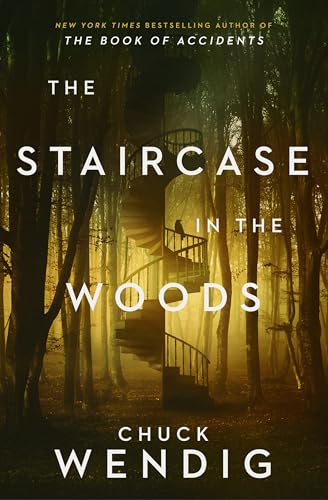
Kate’s Review: “The Staircase in the Woods”

This post may contain affiliate links for books we recommend.  Read the full disclosure here.

Book: “The Staircase in the Woods” by Chuck Wendig

Publishing Info: Del Rey, April 2025

Where Did I Get This Book: I received an eARC from NetGalley.

Where You Can Get This Book: WorldCat.org | Amazon | Indiebound

Book Description: A group of friends investigates the mystery of a strange staircase in the woods in this mesmerizing horror novel from the New York Times bestselling author of The Book of Accidents.

Five high school friends are bonded by an oath to protect one another no matter what.

Then, on a camping trip in the middle of the forest, they find something a mysterious staircase to nowhere.

One friend walks up—and never comes back down. Then the staircase disappears.

Twenty years later, the staircase has reappeared. Now the group returns to find the lost boy—and what lies beyond the staircase in the woods. . . .

Review: Thank you to NetGalley for providing me with an eARC of this novel!

Chuck Wendig has cemented himself as a must read horror author for me, as his books always keep me on the edge of my seat while also sending me on an emotional rollercoaster. Because of this, whenever he has a new book I am always immediately going to seek it out. His newest novel “The Staircase in the Woods” was no exception, and given the premise involves a super unnerving urban legend that has fascinated me for years, I was eager to get my hands on it and see what Wendig would do. Once again, it did not disappoint.

I really enjoyed the foundation of the horror of the story: a mysterious staircase to seemingly nowhere in the middle of the woods. This urban legend has always fascinated me, and I remember reading threads on this on Reddit years ago, so when I saw that Wendig was taking it on for his new book I was eager to see what he would do with it. There is a lot of wiggle room with this baseline concept, as the staircases in most of the urban legends aren’t ever really explained outside of the uncanny (at least in the experiences that I have with this kind of plot), so Wendig could pretty much do anything. And what he DOES do is so unnerving and unsettling and creepy and unique. I don’t want to spoil much because going in without any hints makes it all the more impactful, and WOW does it have its moments of nightmare fuel. And mind bending weirdness.

But, and it comes as no surprise to me because this is usually the case, it’s the very human aspects of this story that elevated it to the levels it rose to. Especially in regards to the complicated friendships between high school friends who grew apart due to time, distance, and a shared trauma that none of them have reckoned with. As someone who keeps up with only three high school friends decades later, the way that Wendig captures the relationships between Owen, Lore, Hamish, and Nick (as well as the now missing Matty) with such bittersweetness, nostalgia, and heartache had a serious emotional impact. I remember those friendships from my teenage years when we were all trying to discover ourselves, and the highs and the lows and how back then we thought we’d never change… only to fall away from each other. Granted, my friend group drifted due to very common reasons, not because one of our friends disappeared at the top of an impossible staircase in the woods, but the melancholy and grief and difficulties of the severed friendships and the tricky reunion felt very, very real. Wendig really just knows how to portray the complexities of human nature and human relationships, and brings it out in the midst of the scary stuff that is at the forefront of this novel.

“The Staircase in the Woods” is another winner of a horror novel from Chuck Wendig. If you still haven’t checked this guy out, what are you waiting for?

Rating 8: Deeply creepy and in many ways emotional and bittersweet, “The Staircase in the Woods” is another winner from Chuck Wendig!

Reader’s Advisory:

“The Staircase in the Woods” is included on the Goodreads list “Horror to Look Forward to in 2025”.

Serena’s Review: “Firebird”

This post may contain affiliate links for books we recommend.  Read the full disclosure here.

Book: “Firebird” by Juliette Cross

Publishing Info: Bramble, April 2025

Where Did I Get this Book: ARC from the publisher!

Where Can You Get this Book: WorldCat.org | Amazon | IndieBound

Book Description: A conqueror captivated…
A witch prophesied to save them all…
A world where dragons rule Rome.


From the moment Roman general and nephew to the emperor Julianus Dakkia laid eyes on Malina, he was enthralled by the Dacian dancer. Years later, the fierce beauty stands before him on a scarred battlefield, her life in danger. He instinctively shifts into his fierce dragon form to save her, an action that may mean his head on the imperial gate. But he and his dragon know one thing: she belongs to them.

Malina can’t believe that the centurion who had once bestowed a secret talisman on her is the Roman general of legendary brutality. His warrior prowess cannot be denied, yet they don’t reveal the secret he hides. All Malina knows is his protection and gentle touch. And she cannot deny how her soul has always seemed to answer his.

As they navigate a world where flying deathriders conquer and burn, their love will ignite a firestorm that can only end in heartbreak or death. Or both.

Review: This is a difficult book to review. On one hand, it’s simply following a tried-and-true romantasy equation, almost point by point at times. On the other hand, within the greater context of the story, I think many of these tropes rubbed the wrong way for me. However, given how standard much of the language and tropes used in this book are to the genre, I fully expect my opinion of this one to be an outlier. Ah well. By this point, I’m well used to being on the wrong side of these dragon romance books. (But wait! I did like “Dragon Unleashed” by Grace Draven, so it’s not all bad all the time automatically or anything!)

As always, I do want to start with a few positives. For the most part, I did enjoy the setting of this book, being based on ancient Rome. I feel like this is a bit of a trend recently, and as I enjoy Roman history, it’s been fun seeing it pop up within the fantasy genre (largely because the history is so long and full of different highs and lows and focal points that you can end up with quite a lot of variety even with this focus).

That said, I don’t think this particular iteration did much with this concept. For example, this book was hyped as a combination of ancient Rome meets George R.R. Martin. Do you know what those two things have in common? A strong focus on political machinations! Do you know what this book had practically zero of? That’s right, political machinations. Anything you do see is so superficial as to be practically worthless. Instead, the comparison to Martin would more accurately come down to the book’s focus on the horrendous treatment of women in this civilization. Obviously, there is historical accuracy behind much of this. But that alone doesn’t justify a heavy focus on the subject unless it’s going to be addressed thoroughly. And, like Martin, there were times where this book seemed to be reveling in the horror of it all, rather than including them for any truly important reason. Pay attention to the trigger warnings on this one, for sure.

My real problem came down to the romance, however. In so many ways, this romance exemplified the many ways that romantasy tropes can go wrong if sprinkled into any old plot line without much care. For some background, an important feature of this book is the fact that the MMC (morally grey with tons of secrets, obvs) participated in the razing of the MFC’s people. Which, again, this sort of thing is a staple of the genre, and the obligatory reveals of his ulterior motivations can be expected. But, necessarily, that explanation has to be incredibly good to counterbalance the actual gruesome harm he participated in, something that cannot be simply erased. Some authors are capable of turning this corner with their MMC. Others…are not.

Beyond this, the entire set up of the book and the romance is based around the fact that the MMC captures the FMC and keeps her as a “body slave.” So, that’s a pretty heavy topic to manage in a romance, that sort of dynamic, where the power imbalance is so extreme. Again, this can be navigated, but it takes a careful hand on the wheel to do so. Unfortunately, we didn’t see that here. Instead, the romance starts up quickly and hits hard, without ever really dealing with the facts of this power imbalance. And for me, this left an inescapable sheen of ickiness over the entire affair.

Further, the inclusion of dragons into this story lead to a strong focus on mating bonds. Beyond the laziness factor of this trope (which allows authors to just handwave away any actual character growth or natural progression of romantic interest/feelings and instead justify instalove/lust), the language that accompanied this choice rubbed up incredibly awkwardly (to put it mildly) against the slave/master nature of the relationship. “You’re mine.” “Say you’re mine.” etc. etc., are all very common phrases in romance/romantasy, especially when you’re dealing with any sort of mating bond situation. However, when paired with the set up of this story and the dynamics between Juliannus and Malina, this all began to feel rather gross. And, again, this isn’t to say that mating bond books can’t be done well! I think “Bride” by Ali Hazelwood is an excellent example of how to navigate this trope, avoiding the instalove pitfall as well as the questions regarding consent. This book, however, did not do any of that.

So yeah, I really disliked this book. I think it’s a perfect example of the “plug and play” style of writing that is all too prevalent in the rising star that is the romantasy genre. Everyone wants to cash in and the results are books that feel as if the author/publisher simply drew popular tropes out of a hat and mashed them together, with no concern for how well they would work together. Mating bonds and the possessive language that often accompany it? Sometimes good! Pair that with a slave/master dynamic and fastburn intimacy? Absolutely not.

I don’t recommend this book. I think there are much better examples of all the tropes included to be found elsewhere, and I think the author’s inability to properly explore the power imbalance of her central romance ruins any attempt to enjoy it.

Rating 4: Tropes gone bad and a rather gross slave/master romance at its heart really ruined this one for me.

Reader’s Advisory:

“Firebird” can be found on these Goodreads lists: Greco – Roman Fantasy and April 2025 Most Anticipated Romance Releases.

Kate’s Review: “The Ballad of Nod (#1): Waking Up From Nightmares”

This post may contain affiliate links for books we recommend.  Read the full disclosure here.

Book: “The Ballad of Nod (#1): Waking Up From Nightmares” by James Burton and Kira Burton

Publishing Info: Scattered Comics, May 2025

Where Did I Get This Book: I received an eBook from the author.

Where You Can Get This Book: This first issue has not been published yet, but when it does it will be available at James Burton’s website Angry Brain Artworks when it comes out sometime in May.

Book Description: The Ballad of Nod is the story of a young girl named Fey who is grieving the loss of her Father to cancer. The regrets, fear and pain is attracting the nightmares of the dream world to invade her reality every night. The only thing stopping them is the courage of her Guardian, a Teddy Bear named Patches, who each night fights back the darkness. That is until the worst of the worst a night prince called the Phobetor drags him into the dark. Now Fey must choose to find her courage to go in and save him or hide and loose someone else she loves.

Review: Thank you to James Burton for sending me an eBook of this comic!

I am one of those adults who just couldn’t part ways with a couple of my childhood stuffed animals. There are two in particular that I felt a need to hold on to, the first being Carmichael the Cat, the second being Bump the Bear. Both of them now officially belong to my five year old and reside in her room, but every once in awhile when I’m feeing deeply anxious or down I will bring Bump to my room to hang out for a few days before returning him. So I absolutely understand a bond a child has with a beloved childhood toy. And in “The Ballad of Nod (#1): Waking Up From Nightmares” by siblings James and Kira Burton, we get a really good dark fantasy tale that not only captures the security of a childhood toy, but also the deep grief of mourning a parent who has passed away long before their time.

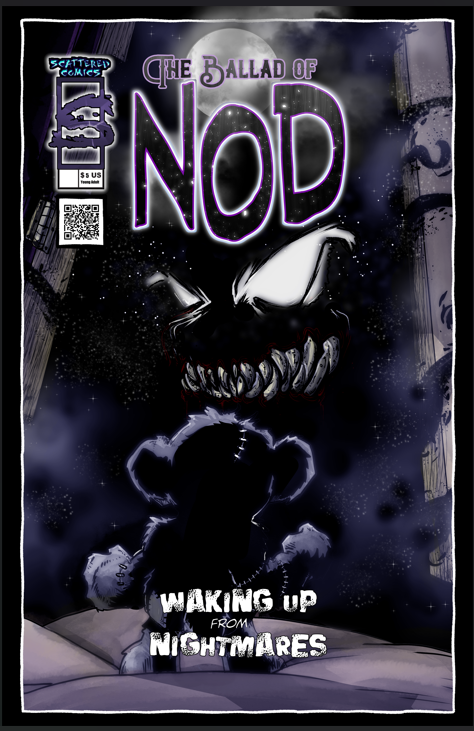
Judging by the cover of this first issue, you can immediately tell that this is going to be a horror story, with a monstrous face being front an center. But then there is this adorable and quite determined looking silhouette of a teddy bear, and that is part of the real crux of this story: the bond between a girl and the guardian teddy that protects her from monsters and beasts every night as she sleeps. Fey is a little girl whose father died of cancer, and has found comfort in a bear named Patches, so named because when she wakes up in the morning he has rips and tears that need to be mended. I love this concept on its own, feeling like a dreamy dark fantasy that also has some very real human elements. I’ll start with the horror first, and I can say right off the bat it worked well for me. I love the idea of a security toy actively fighting off the monsters under the bed or in the closets, as these toys are so loved and so ingrained in childhood as a way to fight anxiety (I mean hello, I still use the aforementioned Bump to help quell my ADULT anxieties!), so the metaphor worked very, very well for me. And then to flip the concept and to have Fey have to be the one to take the first steps to rescue Patches and to face her fears to do so is also a great twist on the expected plot. We only have issue one that has a fair amount of set up, but the monsters that we saw were effective and intimidating, and it has a lot of promise to be VERY creepy for the audience as the story goes on.

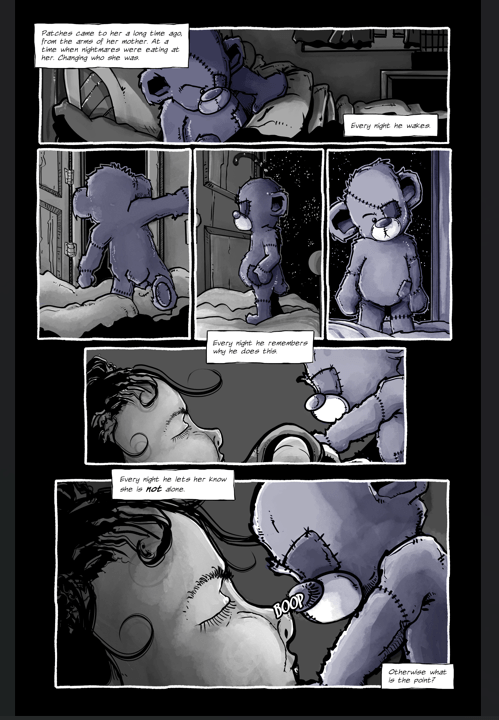
But the other huge theme of this comic is the deeply emotional story about Fey losing her father to cancer, and having to navigate her grief and the trauma around it. This story feels personal, and is very well explored and had me tearing up during certain moments. Our first issue has a lot of exposition to set up Fey’s history and her emotional state, and I thought that it did it very well with flashbacks to her father’s hospitalization, implied times right after his passing, and also seeing how Patches came into her life as a buoy during a very dark and difficult time. It makes Patches’s mission feel all the more poignant, and then Fey’s own mission to be the one to save him feel all the more powerful. The dreamy earnestness of it all reminded me of something similar to the likes of “Locke and Key”.

And finally, the artwork. I thought it was well matched to the tone, and it has the ability to be both unsettling and scary as well as adorable (Patches is ADORABLE).

(source: Scattered Comics)

I definitely want to read more to see how this goes. “The Ballad of Nod: Waking Up From Nightmares” is a stellar start to what promises to be an emotional and heartfelt (and scary) series.

Rating 8: Emotional, creepy, and heartfelt to the core, “The Ballad of Nod (#1): Waking Up From Nightmares” is a promising start to a new dark fantasy comic series.

Reader’s Advisory:

“The Ballad of Nod (#1): Waking From Nightmares” isn’t on any Goodreads lists as of yet, but it gives me serious Joe Hill vibes.

Serena’s Review: “The Raven Scholar”

This post may contain affiliate links for books we recommend.  Read the full disclosure here.

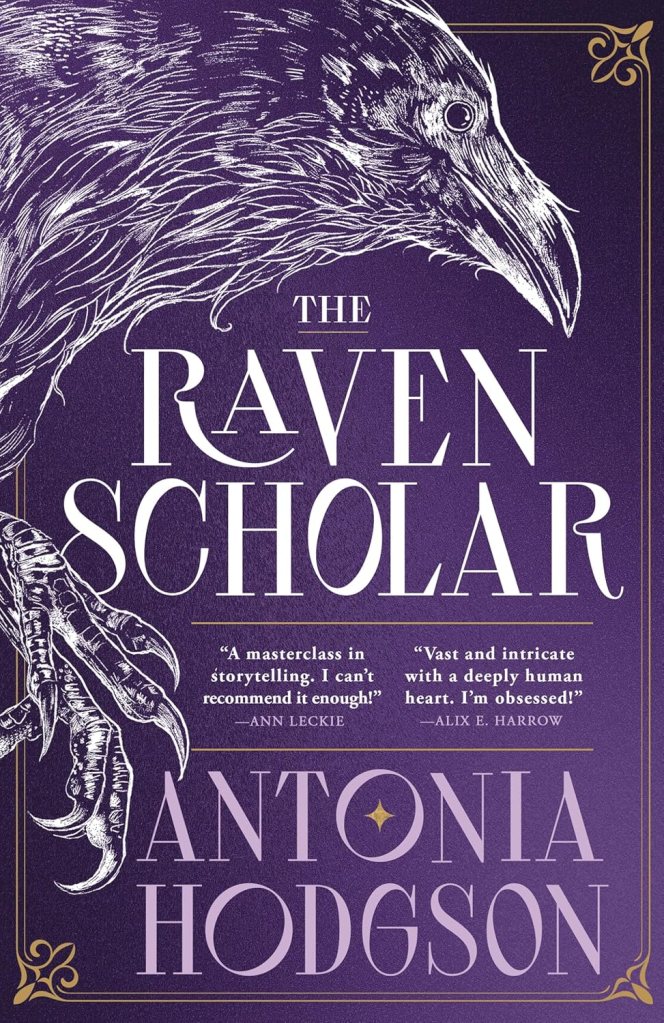
Book: “The Raven Scholar” by Antonia Hodgson

Publishing Info: Orbit, April 2025

Where Did I Get this Book: ARC from the publisher!

Where Can You Get this Book: WorldCat.org | Amazon | IndieBound

Book Description: Let us fly now to the empire of Orrun, where after twenty-four years of peace, Bersun the Brusque must end his reign. In the dizzying heat of mid-summer, seven contenders compete to replace him. They are exceptional warriors, thinkers, strategists—the best of the best.

Then one of them is murdered.

It falls to Neema Kraa, the emperor’s brilliant, idiosyncratic High Scholar, to find the killer before the trials end. To do so, she must untangle a web of deadly secrets that stretches back generations, all while competing against six warriors with their own dark histories and fierce ambitions. Neema believes she is alone. But we are here to help; all she has to do is let us in.

If she succeeds, she will win the throne. If she fails, death awaits her. But we won’t let that happen.

We are the Raven, and we are magnificent.

Review: No delay: I absolutely loved this book! It was one of those special reads where I went in with zero expectations and was blown away! I wasn’t familiar with the author (this is her first fantasy novel) and all I really knew about this one was that it featured yet another deadly, magical competition. Which, at this point, is more of a red flag than an interest point, given how flooded the genre has been with these sorts of books for the last several years. But man, this one proved why, in the right hands, even a tired trope can really come to life!

Part of this is the simple fact that, while the competition is the structure around much of the plot is built, it’s not really the main focus of the story. Instead, the central premise of the book is much more heavily focused on what starts as a murder mystery but quickly spirals out into a much larger conspiracy. And this larger mystery encompasses decades of history, some plot points from over 20 years ago, some events from a decade before, and others from more recent years. Much of this is slowly revealed throughout the course of Neema’a investigation, but the author also neatly uses a few chapters of a prologue that follows another character from years before. This was such a brave choice, as this character becomes central to the story, but is also never seen on page again. It’s a show of confidence that the author felt that the narrative voice and Neema herself were strong enough to reclaim the story back from a very different starting focus. With all of this, as the story unfolds, the reader is lulled into a sense of putting things together only to be smacked over the head with several huge late game reveals, some of which truly took my by surprise!

As for the competition, it did stand out from others, both in its simplicity and in its unique points. Some of it is just straight forward fighting, no real gimmicks. And as far as the magical competition portions went, the book was much more focused on the qualities of the groups who put these portions of the event together, what they wanted to see from a winner and a leader. In this way, these trials felt much less like the typical dangerous escapades we’re used to seeing. Instead, several of them are fairly generic, but made interesting by what they say about the individuals who participate in them based on the choices they make. This was also helped by the steady hand the author utilized throughout in creating this cast of competitors. Very early, I felt I had not only a strong understanding of who each of these characters were, but they all felt fully fleshed out and individual from one another, bringing their own baggage and their own motivations to this competition.

And, at the heart of it all, we have Neema and the Raven. Neema was simply excellent, everything I want from a protagonist. Smart, but awkward. Thrust into a situation she was completely unprepared for, we see all the stumbles of a flawed individual, but we also see the way her particular strengths lead her through. And most importantly, the ways in which she navigates these trials and the investigation all felt natural and believable to her history and abilities. Sometimes it’s really easy to see the author’s hand on the wheel with the creation of situations that seem to conveniently just work out for a main character who, by any rights, should fail miserable. Neema doesn’t glide through. People don’t trust her, don’t like her, and if she hadn’t attracted the interest of the Raven, it’s clear she would have done terribly. I also enjoyed the quirks of her characterization, the ways in which her strengths (her incredible scholarly knowledge) has and continues to create barriers to her ability to form connections to others. At times it was hard to see her treated so harshly by those around her, but the bright spots of the Raven’s narration and the very subplot-y love interest balanced these tough moments out.

And, of course, there is the Raven themself. What a unique narrative quality! There’s a way that this could have gone very wrong, that a quirky style like this could have been overplayed and over done. Instead, this has to be one of the most fresh feeling narrative styles that I’ve seen in a while! For those who are concerned, the majority of the story is told in your typical third person past tense approach. But sprinkled throughout, we are reminded that we are being told this story through the eyes of a very specific being with their own goals and perspective. Not to mention, the Raven was hilarious!

This book was pretty much my perfect read! Incredible fantasy world-building, an excellent main character, mystery, action, romance, it has it all! For a book that is 700 pages long, by the final portion, all I could think about was the fact that I wanted it to be even longer and how am I possibly going to wait for the sequel! This one doesn’t end on a cliffhanger, per se, but by the end of the book, this world looks very different than it did when it began and Neema’s journey is a wild ride, sprawling out before her. If you enjoy epic fantasy, this is a must read, as far as I’m concerned!

Rating 10: In a word: magnificent. Hodgson blasts onto the epic fantasy stage with a book that will quickly become a must-read for fans of the genre.

Reader’s Advisory:

“The Raven Scholar” can be found on this Goodreads list: 2025 Adult Fantasy & Science Fiction

Serena’s Review: “Gifted & Talented”

This post may contain affiliate links for books we recommend.  Read the full disclosure here.

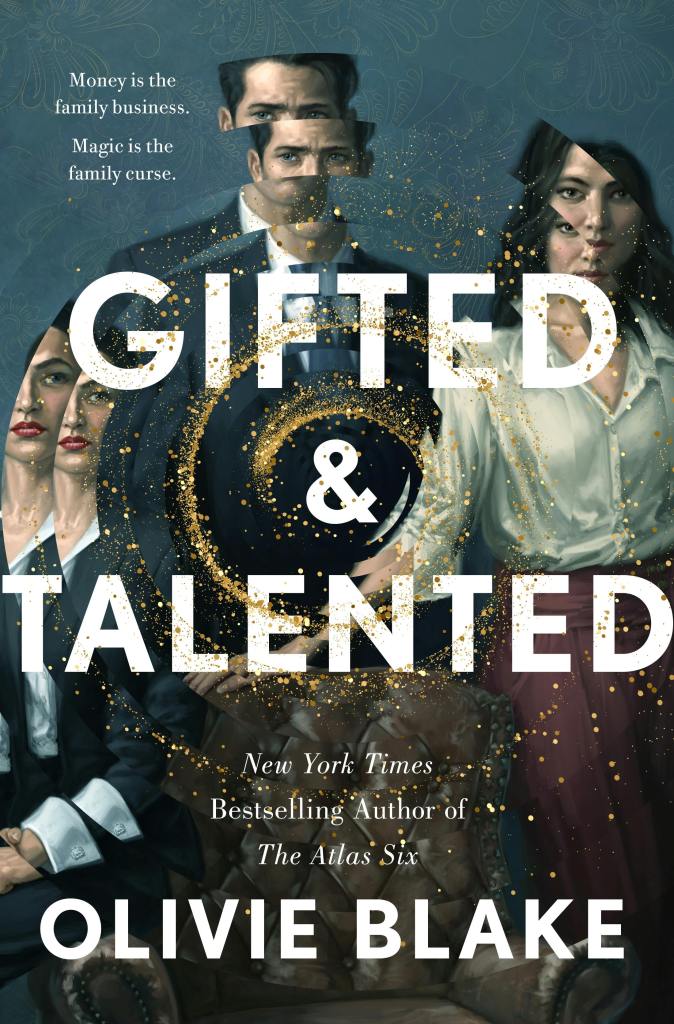
Book: “Gifted &Talented” by Olivie Blake

Publishing Info: Tor Books, April 2025

Where Did I Get this Book: ARC from the publisher!

Where Can You Get this Book: WorldCat.org | Amazon | IndieBound

Book Description: Thayer Wren, the brilliant CEO of Wrenfare Magitech and so-called father of modern technology, is dead. Any one of his three telepathically and electrokinetically gifted children would be a plausible inheritor to the Wrenfare throne.

Or at least, so they like to think.

Meredith, textbook accomplished eldest daughter and the head of her own groundbreaking biotech company, has recently cured mental illness. You’re welcome! If only her father’s fortune wasn’t her last hope for keeping her journalist ex-boyfriend from exposing what she really is: a total fraud.

Arthur, second-youngest congressman in history, fights the good fight every day of his life. And yet, his wife might be leaving him, and he’s losing his re-election campaign. But his dead father’s approval in the form of a seat on the Wrenfare throne might just turn his sinking ship around.

Eilidh, once the world’s most famous ballerina, has spent the last five years as a run-of-the-mill marketing executive at her father’s company after a life-altering injury put an end to her prodigious career. She might be lacking in accolades compared to her siblings, but if her father left her everything, it would finally validate her worth—by confirming she’d been his favorite all along.

On the pipeline of gifted kid to clinically depressed adult, nobody wins—but which Wren will come out on top?

Review: I’m one of those viewers who both recognized and appreciated the brilliant writing and acting found in “Succession” but who also struggled to enjoy the actual process of watching it. As a media consumer (books, movies, or shows), I’ve found that I struggle the most with stories where I can’t find a likable character to cling to. They don’t need to be perfect or strictly heroic, but just…likable. Jesse Pinkman from “Breaking Bad” is the perfect example of the sort of character I need to find to truly enjoy a story. So, when I saw that Olivie Blake was coming out with a new book and that it definitely was giving off strong “Succession” vibes, I was interested, but also a bit wary. That show was a slog at times of just hating everyone and everything they did. Would this book follow in its footsteps? Well, yes and no.

On the good side, I think some of Blake’s flowery, evocative style of writing worked really well with this sort of story. At best, everyone in this book is incredibly flawed, and Blake uses them and the situations they keep finding (creating!) themselves in to offer many beautifully crafted insights into the world as a whole. Commentary on power, ambition, and, of course, the complicated nature of siblings, with all of the competition and resentment that can be tied up in such a unique relationship. Here is someone who is the only other person/people in the world who truly understands your history, who’s seen it all, the good, the bad, the ugly. You love them; you can’t hide from them. I’ve struggled with Blake’s writing style at times in the past, but I think it paired really well with this sort of story.

That said, I am starting to put together the dots on the sorts of characters Blake has been writing lately. Namely, the kind that are found in things like “Succession.” In that way, she was perfectly positioned to write this sort book. But on the other hand, I’ve had a harder and harder time connecting with her books because I feel as if she always writes characters who I end up really disliking. They’re not just morally grey, they’re often rude, selfish, stubborn to the point of idiocy, etc. And while here these characters fit in well with the sort of story she was trying to write, I can’t say I enjoyed them any more for it. I kept banging my head against a wall, as I jumped from character to character who couldn’t help shooting themselves in the foot with terrible approaches to life and how they treat others.

I’ll also say that I question the necessity of the fantasy elements in this book. There are definite comparisons to “The Umbrella Society” (some were a bit too close, honestly, and made it feel less creative on its own), but, for the most part, the magic was so far in the background to the interpersonal dynamics that I’m not sure if it was serving much of a purpose. Other than staying true to the sort of books that Blake has written in the past and that her fans expect from her. But here at least, I think the book might have been better served to have remained a straight contemporary fiction novel. As it stands, I don’t think the sparce fantasy elements truly contribute much to the book itself. Those who are going in as hardcore fantasy readers will be left with a book that feels thin in this area.

Overall, this was an ok read. I will say, as a reader who has struggled with Blake’s style of writing in the past (sometimes it can veer into the land of pretentiousness), I think that the themes and subject matter of this book were well suited to her talents and the book shone brightest in its use of language to describe some of these darker currents. However, all of the characters were so unlikable that I can’t say I actually enjoyed my reading experience. Looking back, I think that’s been the difference for me with her books that I’ve enjoyed vs. those I didn’t. And it was unfortunate that this largely fell in the latter category. However, fans of Blake’s style should definitely check this out, especially if you’re the sort of reader who enjoys truly morally compromised characters!

Rating 7: Some poignant commentary on themes of sibling rivalry and ambition was held back a bit for me by a cast of truly unlikable characters.

Reader’s Advisory:

“Gifted & Talented” can be found on this Goodreads list: 2025 Adult Fantasy & Science Fiction and

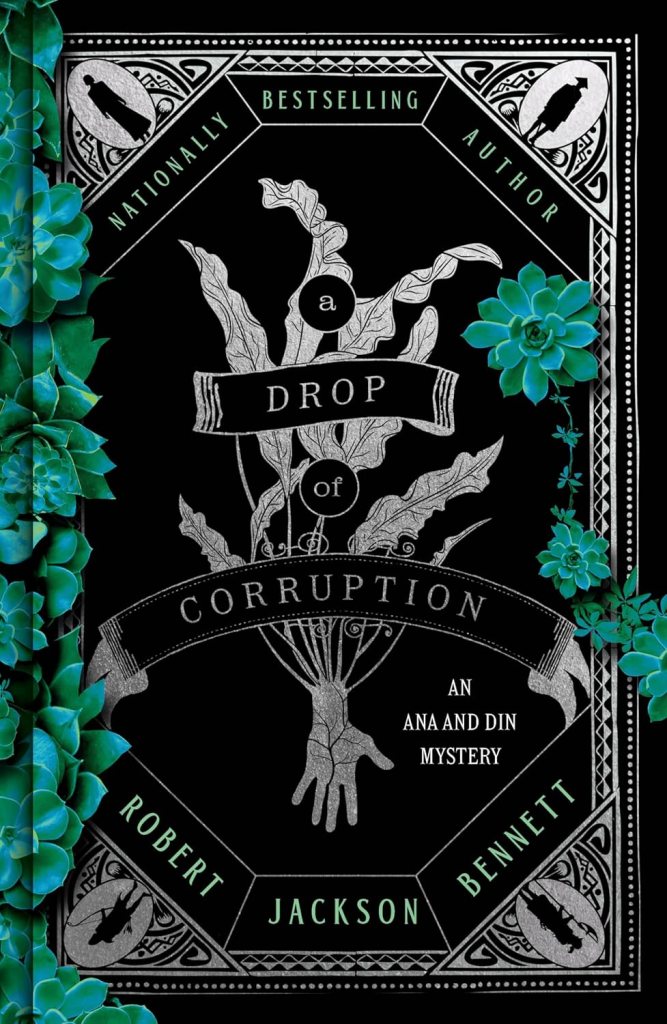
Serena’s Review: “A Drop of Corruption”

This post may contain affiliate links for books we recommend.  Read the full disclosure here.

Book: “A Drop of Corruption” by Robert Jackson Bennett

Publishing Info: Del Rey, April 2025

Where Did I Get this Book: ARC from the publisher!

Where Can You Get this Book: WorldCat.org | Amazon | IndieBound

Book Description: In the canton of Yarrowdale, at the very edge of the Empire’s reach, an impossible crime has occurred. A Treasury officer has disappeared into thin air—abducted from his quarters while the door and windows remained locked from the inside, in a building whose entrances and exits are all under constant guard.

To solve the case, the Empire calls on its most brilliant and mercurial investigator, the great Ana Dolabra. At her side, as always, is her bemused assistant Dinios Kol.

Before long, Ana’s discovered that they’re not investigating a disappearance, but a murder—and that the killing was just the first chess move by an adversary who seems to be able to pass through warded doors like a ghost, and who can predict every one of Ana’s moves as though they can see the future.

Worse still, the killer seems to be targeting the high-security compound known as the Shroud. Here, the Empire’s greatest minds dissect fallen Titans to harness the volatile magic found in their blood. Should it fall, the destruction would be terrible indeed—and the Empire itself will grind to a halt, robbed of the magic that allows its wheels of power to turn.

Din has seen Ana solve impossible cases before. But this time, with the stakes higher than ever and Ana seemingly a step behind their adversary at every turn, he fears that his superior has finally met an enemy she can’t defeat.

Review: I’ve never gone wrong picking up another book by this author! But I was particularly excited to grab this sequel, as the first one was the perfect mixture of two things I love especially: incredibly creative fantasy worlds and a Holmes/Watson duo solving complex mysteries. And this was one of those rare sequels where I went in pretty much wanting exactly the same as the first one! And boy, did I get it, and more!

So, I’ll jump straight to the end of the review now and say this was pretty much my idea of a perfect read. Not only did it bring back everything I loved from the first book, but it expanded on the the world-building and fantasy aspects of the story and gave greater depth to our main characters. The mystery itself was also complex and interesting, with numerous twists and turns. There were the right number of red herrings that readers could form their own guesses and theories, but then, when the final reveal came, there were inevitably pieces that were still true revelations.

I also really enjoyed the deeper themes of monarchy and empire that were explored in this book. The first one brushed up on some of these themes as well, but this one really dove into the ideas of kings and their seemingly deep-seated appeal as a form of governance. (On this point, the author included a really excellent author’s note at the end that is definitely worth giving a read!). Throughout the story, there is commentary and exploration of these structures of society, who falls through the cracks and who benefits, and why people cling to form of government that doesn’t serve them. Beyond this, there were some really great discussions of the inglorious but necessary role of justice enforcers and the pursuit of truth, even when it takes you to some dark places. (Of course, this being a fantasy novel, those dark places were more then simply metaphorically “dark.”) Is it ever right to do the wrong thing for the right reason? Who decides and how should justice be served? These are big topics, but the book does a great job of tackling them, without ever feeling heavy-handed or preachy.

Beyond this, I was simply happy to spend more time with Din and Ana. From Din, we saw the challenges that he’s faced, working for such an eccentric woman as Ana for now several years. In some ways, he’s adjusted well. In others, it’s clear he’s still floundering to find his role in this world. For Ana’s part, she’s still brilliant, but also strange in a way that is often perturbing. As the story continued, we began to see more and more glimpses behind the curtain, and there were some great reveals regarding her own history towards the end of the book.

The world Bennet has created here continues to be simply wild. So much creativity, but also so much horror, awaits around every corner. Similarly to the first book, this isn’t the read for you if you struggle with body horror. The dangers of this world present in incredibly unique and disturbing ways, and Bennet doesn’t shy away from fully describing it as such. The stakes of this book are also closely tied to the biodiversity of this world, and it was great exploring how humanity has found a way to live and thrive in a world as perilous as this one.

Overall, this was an excellent sequel, everything I could have wanted from a follow-up book! It took the phenomenal groundwork that was laid in the first book and ran wild with it. Can’t wait to see what comes next!

Rating 10: Deliciously dark, exploring the disturbing nature not only of this wild fantasy world but also of the depths of humanity itself.

Reader’s Advisory:

“A Drop of Corruption” is on this Goodreads list: Best Books Ever.

Serena’s Review: “The Gods Time Forgot”

This post may contain affiliate links for books we recommend.  Read the full disclosure here.

Book: “The Gods Time Forgot” by Kelsie Sheridan Gonzalez

Publishing Info: Alcove Press, April 2025

Where Did I Get this Book: Netgalley!

Where Can You Get this Book: WorldCat.org | Amazon | IndieBound

Book Description: Manhattan, 1870. Rua knows only two things: her name, and that she has no memories. So when the wealthy Harrington family mistakes Rua for their missing daughter, Emma, Rua goes along with the charade, hoping for answers about who she really is. As she tries to blend into a society she doesn’t remember, she’s drawn to a firmly off-limits the Lord of Donore, a newcomer to Manhattan society who is somehow familiar to Rua.

Finn is new to this side of the Atlantic and knows that the best way to fit in as Lord of Donore is to make friends in high places and play by the rules of society. He knows he shouldn’t become involved with a mysterious, recently missing debutante, but he’s intrigued by Emma Harrington, and Finn has an uncanny feeling that this isn’t the first time they’ve met. 

With societal pressures mounting on both sides, Rua is determined to discover the truth about the missing Harrington daughter and her own past. But when her memories begin to return, they’re of a world far stranger than New York and traced in dark magic.

As ancient secrets unfurl in Rua’s memory, Rua and Finn are forced to uncover the mystery of their past and try to save their future. In this gritty and glittering romantasy, nothing and no one is as they seem.

Review: Looking back on my reading experience of this book and what I think will likely happen for other readers as well, I keep coming back to “expectations vs. reality.” No one is done any favors when a book is set up as one thing, but then turns out to be very different. There are two primary areas where this happened: the marketing of this book’s genre and the book summary’s explanation of the romance.

So, first off, the genre expectations. This is marketed as a romantasy title. As we discussed in my subgenres post from a few weeks ago, this would mean the book is first and foremost a romance novel but situated within a fantasy setting. Now, the summary does explain that this book is also set in a particular point in history, so it can only be expected that an exploration of life in this place and time will make up a portion of the book. The problem here is that this actually took up the majority of the book! I got over the half way mark in this book before even remembering that this had been promoted as a romantasy…and other than a few throwaway lines here or there, there had been zero actual fantasy elements involved. I enjoy historical fiction, so it’s perhaps not surprising that I got as far as I did before this became apparent. But for readers who go in with the expectation of a romantsy novel, I think there will be disappointment.

Even on the historical front, I did struggle to really enjoy this book. There were a lot of ball room scenes and society scenes that simply began to feel repetitive, with many people behaving as the worst versions of characters from Bridgerton. Not only these settings, but the fact that every single time, these events would result in Rua making some “shocking” statements about how messed up all of these restrictions were. But more often than not, it just came across as Rua saying the most brain-numbingly obvious fact in the most abrasive manner possible. I think there are ways to write characters who defy societal expectations and thus draw attention to its flaws, but Rua was like a bull in a China shop in all of the worst ways.

The second problem came down to the romance and, again, how it is marketed in the book summary. As you can see above, the summary clearly pairs Rua with a character named Finn. Several paragraphs give us a brief overlay of their story together. But then I picked up this book and discovered, oh wait, it’s another love triangle and a character named Annette (who is NOWHERE TO BE SEEN in the book summary) is going to play a role in the romance. Again, poorly managed expectations don’t benefit anyone! Some readers really enjoy love triangles, but looking at this book description, they’d have no idea that this was a straightforward MF love story. Conversely, other readers (like me) don’t enjoy love triangles and try to avoid them. I know myself well enough to know that almost all love triangles set back my reading experiences fairly significantly, so I try to avoid requesting/reviewing those titles, as I don’t love writing critical reviews, especially when I know this aspect of it is totally subjective.

The story also struggles with its pacing. As I said above, the first half to 75% is largely focused on Rua’s experiences living in this society. But then the last quarter is a mad whirlwind, trying to wrap up all of the plotlines. It is here, too, where the fantasy elements finally really show up.

All of this to say, this book wasn’t for me, but that’s because I wasn’t the correct reader for it! (Well, I could get behind the historical stuff, but I just wasn’t expecting it as much when I went in.) I think there are readers out there who will enjoy this one, but I do think it would have been in this book’s best interest to be more straightforward about the romance tropes at its heart as well as the primary genre focus of the story.

Rating 6: Unfortunately, this one didn’t work for me. There was less fantasy than I was expecting, and I felt blindsided by yet another love triangle.

Reader’s Advisory:

“The Gods Time Forgot” can be found on these Goodreads lists: Victorian Fantasy and 2025 Debut Novels.

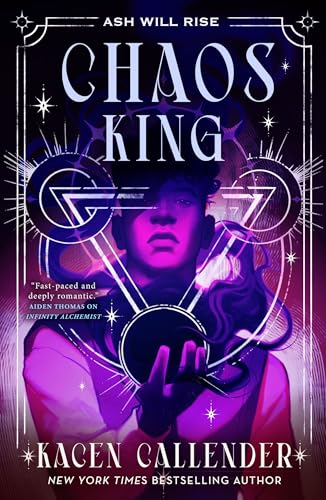
Serena’s Review: “Chaos King”

This post may contain affiliate links for books we recommend.  Read the full disclosure here.

Book: “Chaos King” by Kacen Callender

Publishing Info: Tor Teen, April 2025

Where Did I Get this Book: ARC from the publisher!

Where Can You Get this Book: WorldCat.org | Amazon | IndieBound

Book Description: Ever since he rose up against his father and saved New Anglia from destruction, Ash has been struggling to adapt to his new life. He has nightmares every night, haunted by strange black orbs and his screaming dead mother. Ash is sure she’s trying to warn him that the world is still in danger, and becomes determined to find a way to speak to her again―but communicating with the dead isn’t easy, even for an alchemist as powerful as Ash.

Previously Reviewed: “Infinity Alchemist”

Review: I didn’t love the first book in this series, but many of its problems also may have came down to all the elements a first book must tackle. Given more familiarity with the characters in this second go-around, I was interested to see where the story would go from there!

I will say, I did like this one better than the first. For one thing, I think the pacing was more balanced here. This makes sense, as it didn’t have to do nearly has much heavy lifting with regards to introducing the basic structures of this society and magic system. That being the case, the story had more free rein to dive straight into the main plot and several intense action sequences. This same benefit extended to the characters. While I still don’t love multiple love interests, the longer I’ve spent with all three of these people, the more I came to care about their various travails.

However, I still found myself struggling with the swapping pronouns for one of the characters. Inclusivity is important, but there are practical realities of reading a story via the written word that does create barriers to how this sort of character is presented. As it stands, swapping pronouns often throughout the story left me struggling to piece together who was saying/doing what. And this markedly detracted from my ability to stay connected to the plot, as I had to constantly come out of the story to piece together sentences and scour previous bits for context clues. Like I said in my original review, I’m not sure what the solution is here, but I think in light of the very real limitations of the written word, simply sticking with “they” as a pronoun would have greatly improved the writing in this book.

I did enjoy the themes explored here. This society has very real boundaries placed on its people, and we see the struggles our characters go through. Beyond that, we have the exploration of themes regarding religion and magic, and the lengths people are pushed to in their devotion to their beliefs. Revolution stories are always a good time in fantasy!

That said, the book has an odd ending. I thought this was a duology when I picked this one up, but the end definitely leaves the door open for more, with several questions left unanswered. Ultimately, I think if you enjoyed the first book, this one will definitely hold up as a good sequel. Even for those who didn’t love the first book, this was definitely an improvement!

Rating 7: While it’s an improvement on the previous book, I still struggled with the readability at times, and the ending had me scratching me head a bit.

Reader’s Advisory:

“Chaos King” can be found on this Goodreads list: 2025 Dark Academia Releases.