Serena’s Review: “Eversion”

This post may contain affiliate links for books we recommend.  Read the full disclosure here.
Book: “Eversion” by Alastair Reynolds

Publishing Info: Orbit, August 2022

Where Did I Get this Book: from the publisher!

Where Can You Get this Book: Amazon | IndieBound | WorldCat

Book Description: From the master of the space opera, Alastair Reynolds, comes a dark, mind-bending SF adventure spread across time and space, Doctor Silas Coade has been tasked with keeping his crew safe as they adventure across the galaxy in search of a mysterious artifact, but as things keep going wrong, Silas soon realizes that something more sinister is at work, and this may not even be the first time it’s happened.

In the 1800s, a sailing ship crashes off the coast of Norway. In the 1900s, a Zepellin explores an icy canyon in Antarctica. In the far future, a spaceship sets out for an alien artifact. Each excursion goes horribly wrong. And on every journey, Dr. Silas Coade is the physician, but only Silas seems to realize that these events keep repeating themselves. And it’s up to him to figure out why and how. And how to stop it all from happening again.

Review: I received an ARC of this book in the mail this month, and it really couldn’t have been more timely! While I love science fiction, of the genres I read, I probably know the fewest authors in this genres who are currently writing. It’s also a sweeping genre full of a lot of different types of stories, some of which appeal to me more than others. But I had heard good things about Reynolds in the past, and this story also seemed like an interesting combination of genres, including historical fiction and mystery/thrillers alongside the obvious science fiction. And man, what a pleasant surprise it was!

Doctor Silas Coates set out on what, for him, should have been a fairly straight forward job: to serve as the on-board doctor on an exploratory mission. The ship and crew have been hired to discover and research a mysterious foreign object located in the deepest, darker corners of the known world. But as the mission progresses, Silas begins to suspect that not only does he know very little about the nature of this mission, but that something greater is at work. Increasingly, what could at first be hand-waved as deja vu begins to feel like something more. As if…perhaps…he’s done this all before.

If my description of this book sounds vague (as does the official one), that’s because this is one of those great, but frustrating to review, books where much of the appeal and tension of the book is built around the mysteries at the heart of the story. That being the case, there’s not a whole lot that I can talk about that wouldn’t spoil some of the best aspects of the entire reading experience. I can say that while a primary mystery is at the heart of the story, there were definitely more than one to be found. In fact, the minute you think you’ve begun to piece together exactly what’s going on, the book would skip away, revealing yet another secret beneath the last. This made the reading experience incredibly fun and addictive; I definitely stayed up way to late finishing the book as it was almost physically impossible to put it down past a certain point.

There was also a great blend of historical fiction and science fiction. At various points in the book you could get lost on the page and feel as if you were fully immersed in a period piece following an old time sailing ship. At another, the ins and outs of space exploration and advanced technology take center stage. And the solid writing transitions smoothly from one scene and setting to another, never missing a step.

Silas was also an excellent main character. We feel his bewilderment and increasing fear as the story builds. But it’s his steadfast commitment to his job and his dedication to the friendships he has begun to build on this mission that really hold the story together. As he remains the only consistent aspect of the story, as a character, a lot is riding on his shoulders, and I thought he carried it well. I, for one, had a hard time not skipping ahead to the end of the book just to make sure everything worked out for him in the end. Something I can neither confirm nor deny!

The book was also a lot spookier than I had expected going in. Not only was the building tension of the entire situation incredibly stressful, but there were some significant fear factors involved in the story. The unknown, of course. But also claustrophobia, body horror, and the general fear of the strange and bizarre. That said, it’s definitely not a horror novel, and I found the scary aspects to be balanced well by the more sentimental moments.

Overall, I really liked this book! It was a fun, fast read that held more than one surprise at the heart of the story. You’ll be left guessing and frantically turning pages all through the night!

Rating 9: All the things: historical! thriller! science fiction! horror! And all at a clipping pace that will leave you breathless with anticipation.

Reader’s Advisory:

“Eversion” can be found on this Goodreads list: Science fiction & fantasy roundup, 2022

Serena’s Review: “The Drowned Woods”

This post may contain affiliate links for books we recommend.  Read the full disclosure here.

Book: “The Drowned Woods” by Emily Lloyd-Jones

Publishing Info: Little Brown Books for Young Readers, August 2022

Where Did I Get this Book: Edelweiss+

Where Can You Get this Book: Amazon | IndieBound | WorldCat

Book Description: Once upon a time, the kingdoms of Wales were rife with magic and conflict, and eighteen-year-old Mererid “Mer” is well-acquainted with both. She is the last living water diviner and has spent years running from the prince who bound her into his service. Under the prince’s orders, she located the wells of his enemies, and he poisoned them without her knowledge, causing hundreds of deaths. After discovering what he had done, Mer went to great lengths to disappear from his reach. Then Mer’s old handler returns with a proposition: use her powers to bring down the very prince that abused them both.

The best way to do that is to destroy the magical well that keeps the prince’s lands safe. With a motley crew of allies, including a fae-cursed young man, the lady of thieves, and a corgi that may or may not be a spy, Mer may finally be able to steal precious freedom and peace for herself. After all, a person with a knife is one thing…but a person with a cause can topple kingdoms.

Review: I absolutely loved “The Bone Houses” when it came out a few years ago. Ever since, I’ve been practically stalking the author on Goodreads to see when she’d be releasing another book. So, it’s no surprise that when this one came up on Edelweiss+, I immediately requested it and devoured it. And now, I guess I’m back to the stalking??

With great power comes great responsibility, and all of that. So when Mer discovers the prince has been using her water powers to locate enemy wells and poison them to kill civilians, she makes herself scarce. Now, having lived in the shadows, disappearing from place to place, her long-ago handler has tracked her down with a proposition: a dangerous mission, but one that could cripple the prince and his power for good. Alongside a young man with incredible fighting abilities and some connection to the Fae and a strange little corgi who could be a spy, Mer sets off to topple a kingdom.

There was a lot to love about this book! I will say, it took me a bit longer to find myself fully drawn into this story, but I think part of the reason for that is this felt like a more serious story. Not to say it wasn’t an enjoyable read, but all of the characters we meet immediately held the weight of long personal histories that still burdened them. This left them all with incredible story arcs, but the story required a bit more time invested before you fully begin to feel pulled into the story. But once there, everything was amazing. The writing is also so solid that any slow start is immediately counterbalanced by the sheer joy of reading the prose.

The author described this book as “Welsh Atlantis” at one point, and what a cool idea that was! Apparently, there is some myth of a land that used to exist off Wales but was subsumed under the waves by the mistake of a young woman and her water magic. This story is that myth but told from the perspective of the water mage. Mer was an incredible character, and the more we learn about her tragic history of betrayal after betrayal, the more we understand the slow work it is for her to trust again. I also really liked her magic. When you hear “water magic” there are some pretty obvious examples that come to mind. But while those are included, the author was also so creative with how this ability could be used in other devastating ways.

Fane was also an excellent character. Again, his fighting magic could have been an overly familiar fantasy trope, but instead the author created unique boundaries and limits on how it could be used and the price it cost Fane. His story also slowly revealed the truths of his history and his own motivations and goals moving forward. There were a couple of surprises that I definitely didn’t see coming with his role in the story.

There were two romances in this book, one was a romance of the past between Mer and an heir to the thieves guild. And then the other was the slow-burn between the Mer of the current day with Fane. Both were lovely in their own right, and I enjoyed how Mer’s experiences with her first love shaped how her feelings developed for Fane.

This book will definitely satisfy those who enjoyed “The Bone Houses,” even if it was a bit slower of a read. The epilogue, especially, had some nice connections laid out between this story and that. Though it is no way necessary to have read that book before tis one. Fantasy fans, especially those looking for a solid stand-alone story based on myth, should definitely check this one out!

Rating 9: Definitely a favorite for the year, this story pulls together everything I like: a mythical fantasy story, a slow-burn romance, and excellent character-driven arcs.

Reader’s Advisory:

“The Drowned Woods” is mostly on on rather boring Goodreads lists like this one YA Releases August 2022.

Kate’s Review: “Long Live the Pumpkin Queen”


This post may contain affiliate links for books we recommend.  
Read the full disclosure here.

Book: “Long Live the Pumpkin Queen” by Shea Ernshaw

Publishing Info: Disney Press, August 2022

Where Did I Get This Book: I received an ARC from the publisher at ALAAC22.

Where You Can Get This Book: WorldCat | Amazon | Indiebound

Book Description: Jack and Sally are “truly meant to be” … or are they?

Sally Skellington is the official, newly-minted Pumpkin Queen after a whirlwind courtship with her true love, Jack, who Sally adores with every inch of her fabric seams — if only she could say the same for her new role as Queen of Halloween Town. Cast into the spotlight and tasked with all sorts of queenly duties, Sally can’t help but wonder if all she’s done is trade her captivity under Dr. FInkelstein for a different — albeit gilded — cage. But when Sally and Zero accidentally uncover a long-hidden doorway to an ancient realm called Dream Town in the forest Hinterlands, she’ll unknowingly set into motion a chain of sinister events that put her future as Pumpkin Queen, and the future of Halloween Town itself, into jeopardy. Can Sally discover what it means to be true to herself and save the town she’s learned to call home, or will her future turn into her worst… well, nightmare.

Review: Thank you to Disney Press for giving me an ARC of this novel!

This will come as a shock to absolutely no one, but when I was in high school I was obsessed with “The Nightmare Before Christmas” like any good Goth kid was. I loved the aesthetic, I loved the story, and I LOVED Sally Ragdoll, Jack Skellington’s love interest (voiced by the iconic Catherine O’Hara). As much as I love her, she admittedly doesn’t have a lot to do in the movie outside of being a sweet romantic foil who sees the downside to Jack’s Christmas vision. When I heard that Shea Ernshaw had written a new YA dark fantasy called “Long Live the Pumpkin Queen”, which starred Sally after her marriage to Jack, I was nervous. I like Ernshaw’s work, but Sally is near and dear to my heart. When it was available at ALA, I picked it up, and on my first day of post conference isolation I decided to read it. And read it I did. In one sitting. This is the exact kind of story a Sally Ragdoll lover wants to have in their life.

And yes also for the romantics who love this couple with all their heart. (source)

Shea Ernshaw has created a dark fairytale that has Sally at the very center of it. After marrying Jack and becoming the Pumpkin Queen of Halloween Town, Sally is uncomfortable in her new role as she doesn’t know how well she fits in in a role that she never thought she would have. It’s a great story for this character, given that the movie is really about Jack and his identity crisis. Why not put Sally in the spotlight and have her have to grapple with her identity? Pretty early on we establish her discomfort with her standing, and then we give her a journey of her own outside of Halloween Town that has her grappling with not only a threat upon Jack and all of Halloween Town, but also with what she thought she knew about herself and who she is. I loved seeing Sally have some agency here, and seeing her go on a journey that puts her in a position of being the hero without having to worry about being relegated to damsel in distress. It is a very satisfying plot for this character, that allows her to stand on her own and to flesh her out from her original role. Again, I love Sally in the movie. I related a lot to Sally back in the day. But this version of Sally does a good job of expanding upon that character while staying true to the things that make her endearing.

Ernshaw also creates some new worlds and mythologies here that fit in perfectly with the source material. For one, we get to explore a new holiday town, as Jack and Sally take their honeymoon in Valentine’s Town. The way this town is described is so effortlessly charming and adorable, with sweet confections and flowers and cherubs dazzling the two weirdos from Halloween Town, as well as creating a version of a ‘queen’ that influences Sally’s perception of what that means. We also find ourselves in a strange new place called Dream Town, which is the center of our conflict, as Sally inadvertently releases something from that realm that puts Halloween Town, and all the other realms, in danger. The way that Ernshaw creates this town and the magical systems that surround it, and how they connect to the other realms and the real world, reads like a dark fairy tale with well thought out working parts. It also feels like it can all fit into Tim Burton’s original visions of these worlds and how they relate to each other.

And yes, romantics, while this is Sally’s story, there are plenty of lovely, sweet moments between her and her husband, Jack Skellington. The sweet romance and love between these two characters always makes me smile, and Ernshaw definitely does justice for the couple. Jack just adores Sally, and her love for him is palpable, and given that they were one of my earliest ships I was VERY happy with how these two were written and how their relationship is portrayed.

As a huge “Nightmare Before Christmas” fan, I was very satisfied with “Long Live the Pumpkin Queen”. Sally has always deserved her own moment in the spotlight, and Ernshaw really delivered. I grabbed this with trepidation, but now I’m holding onto it and will certainly be revisiting in the future.

Rating 9: As someone who loves “The Nightmare Before Christmas” and Sally Ragdoll, this was just terrific.

Reader’s Advisory:

“Long Live the Pumpkin Queen” isn’t on many Goodreads lists yet, but it would fit right in on “Dark Fairy Tales”.

Kate’s Review: “Kismet”

This post may contain affiliate links for books we recommend.  Read the full disclosure here.

Book: “Kismet” by Amina Akhtar

Publishing Info: Thomas & Mercer, August 2022

Where Did I Get This Book: I own it.

Where You Can Get This Book: WorldCat | Amazon | Indiebound

Book Description: From Amina Akhtar comes a viciously funny thriller about wellness—the smoothies, the secrets, and the deliciously deadly impulses.

Lifelong New Yorker Ronnie Khan never thought she’d leave Queens. She’s not an “aim high, dream big” person—until she meets socialite wellness guru Marley Dewhurst. Marley isn’t just a visionary; she’s a revelation. Seduced by the fever dream of finding her best self, Ronnie makes for the desert mountains of Sedona, Arizona.

Healing yoga, transcendent hikes, epic juice cleanses…Ronnie consumes her new bougie existence like a fine wine. But is it, really? Or is this whole self-care business a little sour?

When the glam gurus around town start turning up gruesomely murdered, Ronnie has her answer: all is not well in wellness town. As Marley’s blind ambition veers into madness, Ronnie fears for her life.

Review: I am not, nor have I ever been, someone who buys into influencer stuff, especially not ‘wellness’ influencers. Yes, my husband and I have a Peloton that I am constantly trying to get into a solid routine with, and yes, I’ve tried yoga, and meditation. But that’s about as far as I go. AND EVEN THEN I feel like I’m constantly stopping and starting, no matter how much I love having Cody Rigsby tell me that I’m fierce, babe! But I’m also super interested in the drama around influencers and some of the dirt you hear about the wellness community, but that’s just because I love a good mess. And that is probably why I was very interested in reading “Kismet” by Amina Akhtar. For one, the cover is gorgeous. I’m not as big into book covers as Serena, but this one just snagged my attention the moment I saw it. And then when I saw that it was a satirical thriller that pokes fun at the wellness movement, much like her previous book “#FashionVictim” did for the fashion industry, that just clinched it. I had to read it.

Me to this book as I clicked it open on my Kindle. (source)

In terms of working as a thriller, “Kismet” has all the elements to lead to general success. We have an engaging protagonist in Ronnie, a young woman who is trying to start a new leaf after years of living with her abusive aunt Shameem. She has recently found confidence thanks to her life coach turned friend Marley, an aspiring wellness influencer who convinced her to sell her home and move to Sedona, Arizona, a wellness based community. Ronnie has self doubt issues which makes it easy to care for her, and easy to believe that she may not trust her judgement as things start to take a turn for the strange, to the violent. We also have a mystery of a mysterious person murdering predatory wellness influencer superstars in the community, perhaps partially at the behest of the local raven population. Seeing Ronnie try to become her own person while starting to realize that she may be getting close to a murderer makes for a suspenseful mystery, though perhaps not in ways I was expecting. There were a lot of good moments of suspense, as well as some good twists and turns that I didn’t see coming, and the murders are both disturbing but also kind of tongue in cheek as some truly reprehensible people get picked off one by one. It really made it so I couldn’t put the book down as I charged forth to find out just what was going on.

But the aspect of this book that really hit it out of the park was how Akhtar so effortlessly satirizes and dismantles the idea of ‘wellness’ culture in our society, and how fraudulent, isolating, privileged, and, yes, racist it can be. The community Ronnie and Marley join has an open and body positive/health conscious demeanor and facade, but from the jump there are numerous problematic aspects to it. Be it people appropriating aspects of other cultures to make money, or disrespecting the environment around them, or hostility towards the Other (namely Ronnie, the only person of color in the community), Akhtar skewers the concepts that are thrown around by wellness influencers and has a very fun time making the community more and more unhinged whilst seeking out crystals, spiritual connection, and a like minded, albeit cult-like, group of neighbors. There is also a good exploration of white women weaponizing their race against women of color, as the friendship between Ronnie and Marley is codependent at best, and deteriorates into something far more toxic, with Marley hurling microaggressions, condescension, and then potential violence towards someone whom she supposedly loves like a sister. The community itself, with a few exceptions, is just as bad towards Ronnie, and it’s a very effective way of showing how this supposedly positive, wellness minded ethos is very much for a certain kind of person, all others to be either fetishized or looked upon with suspicion. It’s some great satire, and it has teeth.

I thoroughly enjoyed “Kismet”. And I think I will stick to my wellness routine of the exercise bike, quick meditation, and the occasional bath bombed soak in the tub.

Rating 9: Addictive, biting, funny, and genuinely surprising, “Kismet” is a hell of a fun read that satirizes an industry that could use a good ribbing.

Reader’s Advisory:

“Kismet” is included on the Goodreads list “Mystery & Thriller 2022”.

Book Club Review: “We Are Not Free”


This post may contain affiliate links for books we recommend.  
Read the full disclosure here.

We are part of a group of librarian friends who have had an ongoing book club running for the last several years. Each “season” (we’re nerds) we pick a theme and each of us chooses a book within that theme for us all to read. Our current theme is “Book Bingo” where we drew reading challenges commonly found on book bingo cards from a hat and chose a book based on that.  For this blog, we will post a joint review of each book we read for book club. We’ll also post the next book coming up in book club. So feel free to read along with us or use our book selections and questions in your own book club!

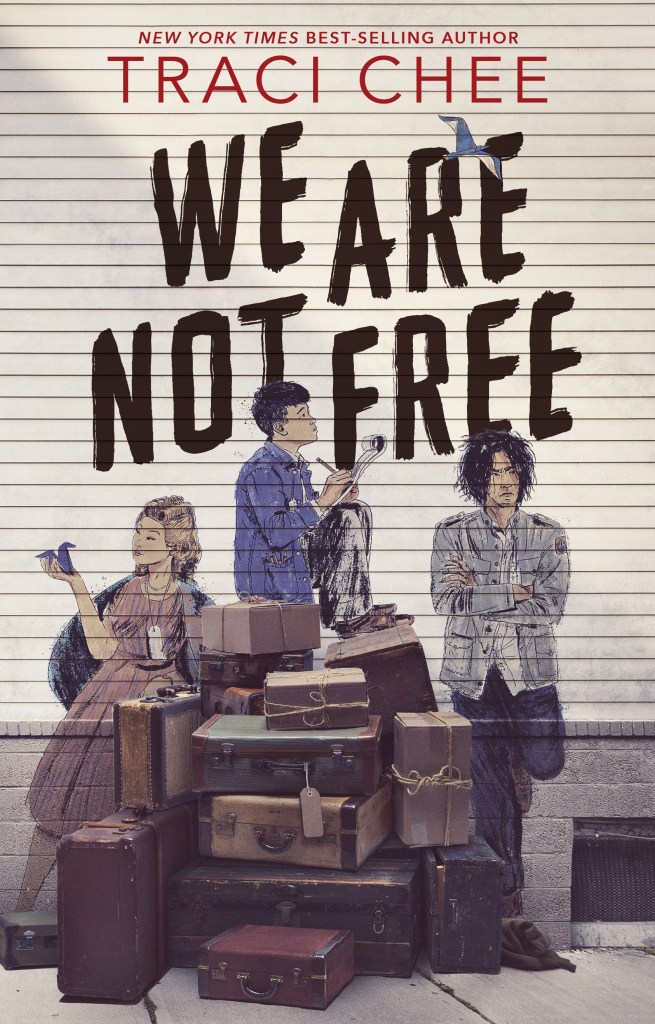
Book: “We Are Not Free” by Traci Chee

Publishing Info: HMH Books For Young Readers, September 2020

Where Did I Get This Book: The library!

Where You Can Get This Book: WorldCat | Amazon | Indiebound

Book Bingo Prompt: A book that takes place during a war.

Book Description: “All around me, my friends are talking, joking, laughing. Outside is the camp, the barbed wire, the guard towers, the city, the country that hates us. We are not free. But we are not alone.” 

We Are Not Free, is the collective account of a tight-knit group of young Nisei, second-generation Japanese American citizens, whose lives are irrevocably changed by the mass U.S. incarcerations of World War II.

Fourteen teens who have grown up together in Japantown, San Francisco. Fourteen teens who form a community and a family, as interconnected as they are conflicted. Fourteen teens whose lives are turned upside down when over 100,000 people of Japanese ancestry are removed from their homes and forced into desolate incarceration camps. In a world that seems determined to hate them, these young Nisei must rally together as racism and injustice threaten to pull them apart.

Kate’s Thoughts

This was actually my Book Bingo prompt, and I wanted to think a little bit outside of the box when it came to picking a book that took place during a war. Partially because I’m not super interested in military themed fiction, and partially because I wanted to kind of wanted to stay away from pro-militaristic themes. It quickly occurred to me that I hadn’t yet read Traci Chee’s YA historical fiction “We Are Not Free”, a book about a number of Japanese-American teens who are incarcerated during World War II because of the United States Government’s despicable Executive Order 9066. I’ve reviewed a lot of recent novels about the Japanese American Incarceration on this blog, and found this to be the perfect opportunity. And boy, what a book, and what a great book club discussion.

Chee approaches this story through the eyes of numerous characters, each one getting their own chapter with different perspectives and sometimes writing styles, and each character engages with a different fact or theme of the Incarceration. At first I was a little daunted by the idea of so many characters, but Chee does a really good job of not only letting us get into their heads and get to know them, but also touches on so many aspects of the Incarceration this way. Instead of finding the characters to be maybe less complex due to the one chapter approach, I ended up really caring for all of them as they mention each other and as we get into their heads, allowing us to see how they are perceived by others, but also how they see themselves. They all feel very authentic in their voices, either in how they are reacting to their ordeal and their trauma, or even just in moments of them having very relatable teenage moments that go beyond the Incarceration, like teen love, or school issues, or moments of joy that can still be found in spite of everything.

But we also are able to explore a number of aspects of the Incarceration through these characters that may have been a bit overstuffed had it just been one or two. Chee skillfully tackles things like having to leave everything behind, the cultural divide between the non-Amercain (by force of the government) Issei vs their American Citizen children Nisei, the loyalty oath that was given as a choice to sign or not to sign (and why some may sign and others may not), and the experience of those who enlisted in the war to try and prove their loyalty to their country. And many more. The book doesn’t shy away from any of it, and finds the nuance and complexity in some things while being unflinchingly honest about others. It is such a valuable book in that way for anyone who wants to learn about the Incarceration, as it has relatable and enjoyable characters whom the reader will attach to, and will therein learn through. Our book club had some awesome conversations about this book, and I have no doubt that classrooms would as well.

I’m glad I finally read “We Are Not Free”, and glad that this cycle’s theme got me off my butt to finally do so. It’s highly recommended, and necessary, historical fiction.

Kate’s Review 9: Powerful, engrossing, enraging, and hopeful, “We Are Not Free” is a valuable tool to learn about the Japanese American Incarceration that is must read for those interested in the subject.

Book Club Questions

  1. What did you think of the structure of this novel? Did you like all the different perspectives? Why or why not?
  2. When did you first learn about the Incarceration? How was it approached when you did learn about it?
  3. Chee has an author’s note about the use of modern language sensibilities in this book? What were your thoughts on this choice?
  4. Did you have a chapter you liked best or that stood out from the others? What was it about that chapter that spoke to you?
  5. What were you thoughts on the way Chee portrayed the conflict between Nisei vs Issei in how they dealt with their ordeal?
  6. Do you think this would be a useful tool to teach the Incarceration to teenagers? Why or why not?

Reader’s Advisory

“We Are Not Free” is included on the Goodreads lists “Japanese American Internment in YA & Middle Grade Fiction”, and “Surviving in the Japanese Relocation Centers of WW2”.

Next Book Club Book: “The Ten Thousand Doors of January” by Alix E. Harrow

Kate’s Review: “Mademoiselle Revolution”

This post may contain affiliate links for books we recommend.  Read the full disclosure here.

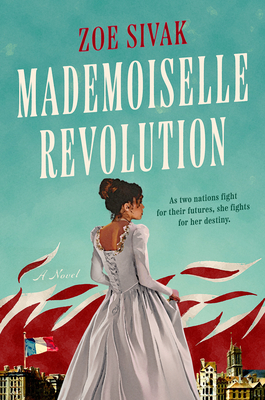
Book: “Mademoiselle Revolution” by Zoe Sivak

Publishing Info: Berkley Books, August 2022

Where Did I Get This Book: I received an eARC from the publisher via NetGalley.

Where You Can Get This Book: WorldCat | Amazon | Indiebound

Book Description: A powerful, engrossing story of a biracial heiress who escapes to Paris when the Haitian Revolution burns across her island home. But as she works her way into the inner circle of Robespierre and his mistress, she learns that not even oceans can stop the flames of revolution.

Sylvie de Rosiers, as the daughter of a rich planter and an enslaved woman, enjoys the comforts of a lady in 1791 Saint-Domingue society. But while she was born to privilege, she was never fully accepted by island elites. After a violent rebellion begins the Haitian Revolution, Sylvie and her brother leave their family and old lives behind to flee unwittingly into another uprising–in austere and radical Paris. Sylvie quickly becomes enamored with the aims of the Revolution, as well as with the revolutionaries themselves–most notably Maximilien Robespierre and his mistress, Cornélie Duplay.

As a rising leader and abolitionist, Robespierre sees an opportunity to exploit Sylvie’s race and abandonment of her aristocratic roots as an example of his ideals, while the strong-willed Cornélie offers Sylvie safe harbor and guidance in free thought. Sylvie battles with her past complicity in a slave society and her future within this new world order as she finds herself increasingly torn between Robespierre’s ideology and Cornélie’s love.

When the Reign of Terror descends, Sylvie must decide whether to become an accomplice while a new empire rises on the bones of innocents…or risk losing her head

Review: Thank you to Berkley Books for sending me access to an eARC of this novel via NetGalley!

I remember a few years ago I was at a party that was thrown by a former work colleague, and I was sitting on the couch with my friend Scott as we played introverts and talked to each other for almost two hours as we caught up and enjoyed each other’s company. We ended up talking about the ills of society, and he made some comment about guillotines and the French Revolution, and as I sipped my mixed drink I said ‘yeah, but then you get Robespierre. I don’t want Robespierre!’ I’ve had a chip on my shoulder about Robespierre ever since we learned about the French Revolution in tenth grade. Like, what a dick! A timeless tale of someone who had good intentions but then was completely corrupted by power and then turned into a goddamn blood soaked monster in an effort to hold onto his power.

It’s a weird angry fixation I have, but it’s mine all the same. (source)

Needless to say, when I found an email from Berkley Books in my folder tempting me with “Mademoiselle Revolution”, a story about a biracial woman who fled Haiti during their Revolution only to find herself cozying up to Robespierre during the French Revolution, I was immediately on board. BRING ON THE ROBESPIERRE DISSECTION AND HOPEFULLY SLANDER!

But even better, “Mademoiselle Revolution” is a story that has a deeply resonant heart, centered by its protagonist Sylvie de Rosiers, a biracial woman who grew up in privilege due to her father’s status as a plantation owner, though her mother was one of the enslaved women he owned whom he raped and exploited. Sylvie was raised in her father’s home and treated like family, though her lineage and the color of her skin made it so she never truly belonged, even as she got to live in lavish luxury while other people who looked like her were being subjected to daily brutality and dehumanization. It is when the Haitian Revolution is at her doorstep and her family flees that Sylvie starts to grapple with the Otherness she has always dealt with, and her complicity to a system that she had the privilege to be mostly removed from. It makes for a complex and nuanced character from the jump, and it sets up to make all of her choices, once she and her loving brother Gaspard end up in Paris, make perfect sense. I really loved seeing Sylvie evolve in this story as she tries to make up for her complicity, and how she dives head first into the romanticism and justice seeking angles of the rumbling French Revolution as she gets close to Robespierre and his lover Cornélie, and how her guilt and optimism and naïveté send her into dangerous waters. Sivak tackles the racial politics and racism of the time and the cultures at hand with deftness, and shows the seeming contradictions of Sylvie’s experiences with ease and in a way that makes it very understandable. She is also that really well done main character who interacts with historical figures without feeling like it’s overdone or unrealistic. Sylvie’s role is well conceived enough that I totally bought into all of the scenarios and relationships that Sivak put her in, and that says a lot. Because Sylvie does a LOT.

I also really liked how Sivak shows that complexities of a group of true believers whose hearts start in the right place, and then become corrupted as time goes on. That’s my biggest issue with Robespierre at the end of the day; he wasn’t wrong about the corruption and the violence of the French Aristocracy. But when you start cutting the heads off of anyone you please because you THINK they may disagree with you, that’s when you become a whole other problem. And Sivak has a lot of horrifying moments in this book that really hit home how off point the message became, which led to a lot of suffering and then Napoleon friggin’ Bonaparte. There is one scene in particular that involved a severed head being put on display around town, specifically in a cafe, and used in a way that is SO dehumanizing and disgusting that it made my blood run cold. Sivak does a fantastic job of showing just how horrific the Reign of Terror, and the violence leading up to it, was, and how people like Robespierre are more than willing to exploit and use people like Sylvie to get what they want. It is intense and it makes for some very suspenseful moments, and that is why I am classifying this as a thriller as well as an historical fiction title. It’s absolutely harrowing at times, watching the walls close in on the circle of revolutionaries as they turn on each other.

I really enjoyed “Mademoiselle Revolution”. It is sure to wow fans of political thrillers and historical fiction alike. Go out and get your hands on this book!

Rating 9: Engaging, intense, and harrowing, “Mademoiselle Revolution” is a historical political thriller that explores identity, race, revolution, and the dangers of fanaticism.

Reader’s Advisory:

“Mademoiselle Revolution” is included on the Goodreads lists “Historical Fiction – The Caribbean”, and “Historical Fiction – France”.

Serena’s Review: “Fevered Star”

This post may contain affiliate links for books we recommend.  Read the full disclosure here.

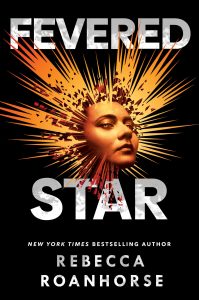
Book: “Fevered Star” by Rebecca Roanhorse

Publishing Info: Saga Press, April 2022

Where Did I Get this Book: audiobook from the library!

Where Can You Get this Book: Amazon | IndieBound | WorldCat

Book Description: The great city of Tova is shattered. The sun is held within the smothering grip of the Crow God’s eclipse, but a comet that marks the death of a ruler and heralds the rise of a new order is imminent.

The Meridian: a land where magic has been codified and the worship of gods suppressed. How do you live when legends come to life, and the faith you had is rewarded?

As sea captain Xiala is swept up in the chaos and currents of change, she finds an unexpected ally in the former Priest of Knives. For the Clan Matriarchs of Tova, tense alliances form as far-flung enemies gather and the war in the heavens is reflected upon the earth.

And for Serapio and Naranpa, both now living avatars, the struggle for free will and personhood in the face of destiny rages. How will Serapio stay human when he is steeped in prophecy and surrounded by those who desire only his power? Is there a future for Naranpa in a transformed Tova without her total destruction?

Previously Reviewed: “Black Sun”

Review: This one came out a few months ago, obviously, so it’s probably a bit surprising it took me this long to get to this. I loved the heck out of “Black Sun,” but I had a good reason for my delay! I listened to the original book as an audiobook with an excellent full cast of readers and I couldn’t bare to give up the opportunity of experiencing this book in the same format. Given the immense waitlist for the library’s audiobook copy, I wasn’t the only one with this plan. So here we are, months after its release, finally getting to this one!

The order of the last several centuries came smashing down in one violence-filled day. Now, gods walk the Earth and powerful forces vie to fill the void in power left after the destruction of Sun Priest and her order. But she has not gone. Instead, Naranpa finds herself filled with a powerful force of light, the dimetric opposition to Serapio’s Crow god and the enforced shadow over the sun. Xiala, adrift in the city, works to find her way back to Serapio after learning he survived what he thought was a suicide mission. But soon she, too, is caught up in forces more powerful than herself, and slowly she begins to understand that her past and future are fast heading towards a calamitous intersection.

So, it’s no surprise that I very much enjoyed this book. True, it did suffer a bit from “second book syndrome,” but we’ll get to that after we go through all the pros. For one thing, it’s always hard to start up a second book in a fantasy series one whole year after reading the first. There’s always a lot to catch up on. But Roanhorse does an excellent job of recapping the events of the first book without resorting to paragraphs of exposition. One way that she does this is by reintroducing the story in the first few chapters from characters who, while present in the first book, were definitely slotted to the second tier. Through their eyes, we see the cataclysmic events that occurred when Serapio called upon the Crow God and destroyed the priesthood.

I will say, that while I enjoyed getting more of an inside look into these other players and their interpretations of what is going on (as well as more and more layers involved in whose plan is really being followed here), I did miss getting to spend as much time with our initial three characters. Of them all, Naranpa definitely has the most storyline in this book. We see her not only have to come to grips with the presence of a godly power within her body, but we see her struggles to redefine her place in the world. The priesthood is gone, and her brother, a leader of the underworld of the city, has plans for her. Her journey is one of self-definition and, eventually, the realization that her vision of the future and the world is what made her unique as the high priestess, and it may be what is needed now.

Sadly, we see very little of Serapio. Mostly, he’s the man who wasn’t meant to live, and now that he finds himself occupying a time past the point of his own imagination, he, too, must redefine his own path. But for both Serapio and Naranpa, they are the avatars of gods with their own plans. So we see the struggle they each must balance between their own sense of duty and the futures they see outside of what their gods may have in mind.

We do get a fair amount from Xiala, which is great since she was my favorite character from the first book. But her story is really where we see the pitfalls of the second book thing coming into play. The biggest flaw of the book is that much of the story is window dressing (excellent and fascinating, but still window dressing) for getting our main character from one point to another point from which book three will surely jump forward. Xiala’s story is literally this: she spends 90% of the book travelling from point A to point B, all of it driven by factors around her and characters making decisions that force her hand. This leaves her in a very passive role, spending much of her time wishing she could reunite with and help Serapio and the rest of the time avoiding her past. Her story does pick up a bit towards the end, and I was pleased to find out more about what exactly happened to Xiala that left her an exile of her own people.

As I mentioned above, the story added a lot of layers of intrigue and shadowy players who have been moving pieces around in the background and only now are coming into the light. Honestly, I’m not sure I was able to fully keep track of it all. But I was having such a blast anyways that I didn’t really mind. This will likely be one of those things that will come down to retrospect: does the third book pull this all together in a way that makes this book more clear in hindsight? Or did I actually miss important things here, which might mean there was a slight lack of clarity here. Either way, I’m fully on board for book two and am very excited to see where our characters go from here. I do hope that Serapio and Xiala can be reunited though. My poor romantic heart was very sad to see zero scenes of them together in this book. Alas. Anyways, fans of the first book will surely be pleased with this one and should definitely check it out if they haven’t already!

Rating 9: While some of the pacing and lack of direct action speaks to “second book syndrome,” there was enough intrigue and character growth to leave this one as a very satisfying and enjoyable read.

Reader’s Advisory:

“Fevered Star” can be found, bizarrely, on this Goodreads lists: What Women Born in the 90’s Have Read in 2022

Kate’s Review: “The Devil Takes You Home”

This post may contain affiliate links for books we recommend.  Read the full disclosure here.

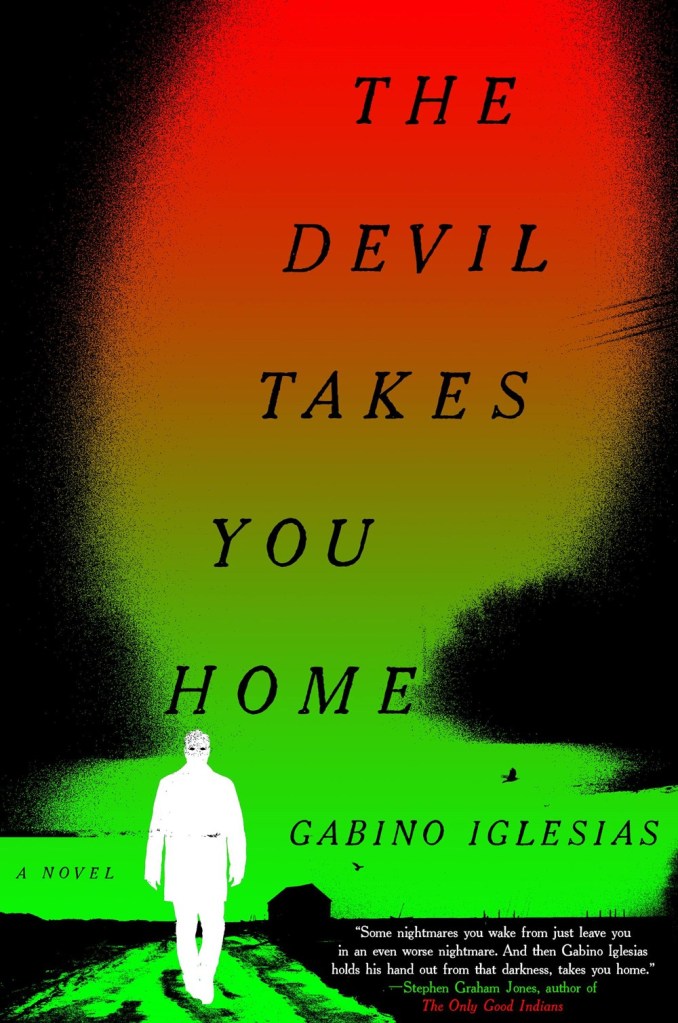
Book: “The Devil Takes You Home” by Gabino Iglesias

Publishing Info: Mulholland Books, August 2022

Where Did I Get This Book: I received an eARC from NetGalley and an ARC from the publisher at ALA.

Where You Can Get This Book: WorldCat | Amazon | Indiebound

Book Description: From Bram Stoker, Anthony, and Locus award-nominated author, Gabino Iglesias, comes a genre-defying thriller about a father desperate to salvage what’s left of his family, even if it means a descent into violence–both supernatural and of our own terrifying world.

Buried in debt due to his young daughter’s illness, his marriage at the brink, Mario reluctantly takes a job as a hitman, surprising himself with his proclivity for violence. After tragedy destroys the life he knew, Mario agrees to one final job: hijack a cartel’s cash shipment before it reaches Mexico. Along with an old friend and a cartel-insider named Juanca, Mario sets off on the near-suicidal mission, which will leave him with either a cool $200,000 or a bullet in the skull. But the path to reward or ruin is never as straight as it seems. As the three complicated men travel through the endless landscape of Texas, across the border and back, their hidden motivations are laid bare alongside nightmarish encounters that defy explanation. One thing is certain: even if Mario makes it out alive, he won’t return the same.

The Devil Takes You Home is a panoramic odyssey for fans of S.A. Cosby’s southern noir, Blacktop Wasteland, by way of the boundary-defying storytelling of Stephen Graham Jones and Sylvia Moreno-Garcia

Review: Thank you to NetGalley and to Mulholland Books for giving me an eARC and an ARC of this novel!

I had been hearing about “The Devil Takes You Home” by Gabino Iglesias for a number of months, either on social media or on buzzy book lists. It was one that was definitely on my list, given that I enjoyed Iglesias’s previous book “Coyote Songs”, so when I had the opportunity to read it via NetGalley AND through an ARC I got at ALA, I was eager, but nervous to start. I knew that Iglesias wasn’t going to pull punches, and the description alone tipped me off that this was probably going to be supremely creepy, and also very sad. And reader, I was right. Iglesias just kicked me in my feelings AND set me on the edge of my seat in this part horror story, part cartel thriller, part indictment of American society and the tragedies it creates through its apathy.

The supernatural horrors that Iglesias describes and explores were super, super unsettling, using an air of mystery and ambiguity to fuel them. Just as Mario doesn’t know what he is seeing in the tunnels or out in the desert, we too don’t know, outside of glimpses and short descriptions of things that just don’t sound right. A potential psychic gift that is growing louder. Creatures that sound perhaps humanoid-ish, but which are feral and grotesque. Witchcraft and rituals harkening to the Narcosatánicos conjures up seemingly impossible acts, with the dead coming to life for a fleeting moment to descend upon enemies. Rituals end with otherworldly goo that is then used as a blessing of sorts. A story of a man whose barn was inhabited by a strange being. All of these moments were fleeting, and we didn’t linger to understand or to get an explanation, and honestly that made it all the scarier.

But then it was the real life horrors that REALLY got under my skin. Iglesias doesn’t put too much focus on the magical or otherworldly terrors, but he lasers in on the very real terrors of cartel violence, systemic racism, torture, and childhood illness and brings out so much dread and devastation. I found myself having to put the book down after a particularly devastating moment, but it always feels like there is a purpose and meaning behind the most devastating beats. Iglesias also knows how to capture the rage and trauma and grief that Mario is feeling after his family is ripped asunder by his daughter Anita’s illness, and how a child dying of leukemia is the greatest horror of this book should you be a parent of a young kid (and hello, that is me, so you know I was just reeling in despair). Iglesias doesn’t hold back on the realism that comes with the violence and the violent world that Mario inhabits, and you find yourself horrified by some of the things he does, but you also completely understand it as he is grief stricken AND up to his ears in medical debt. The clear line of society causing so many ills due to capitalism, racism, and class warfare cuts through the pages of this novel, and the desperation of some of our characters drives them into this dark journey in which we are passengers. It mixes horror and thriller and spits out something wholly unique. As I was reading it it felt almost dreamlike, which I imagine is the point, as Mario certainly doesn’t know what is reality and what is in his head as the journey goes on.

“The Devil Takes You Home” is scary and tragic, a cartel thriller and a ghoul-ridden horror tale at once, and it left me breathless by the end. Steel yourself for this one, both in the vivid moments of violence, but also the tragedy of a parent at the end of their rope.

Rating 9: Dark and genre bending, “The Devil Takes You Home” is incredibly tense, unwaveringly scary, and is both bleak and dreamlike.

Reader’s Advisory:

“The Devil Takes You Home” would fit in on the Goodreads list “Diverse Horror”.

Book Club Review: “Circe”

This post may contain affiliate links for books we recommend.  Read the full disclosure here.

We are part of a group of librarian friends who have had an ongoing book club running for the last several years. Each “season” (we’re nerds) we pick a theme and each of us chooses a book within that theme for us all to read. Our current theme is “Book Bingo” where we drew reading challenges commonly found on book bingo cards from a hat and chose a book based on that.  For this blog, we will post a joint review of each book we read for book club. We’ll also post the next book coming up in book club. So feel free to read along with us or use our book selections and questions in your own book club!

Book: “Circe” by Madeline Miller

Publishing Info: Little Brown and Company, April 2018

Where Did We Get This Book: The library!

Where You Can Get This Book: WorldCat | Amazon | Indiebound

Book Bingo Prompt: a book with a map

Book Description: In the house of Helios, god of the sun and mightiest of the Titans, a daughter is born. But Circe is a strange child – not powerful, like her father, nor viciously alluring like her mother. Turning to the world of mortals for companionship, she discovers that she does possess power – the power of witchcraft, which can transform rivals into monsters and menace the gods themselves.

Threatened, Zeus banishes her to a deserted island, where she hones her occult craft, tames wild beasts and crosses paths with many of the most famous figures in all of mythology, including the Minotaur, Daedalus and his doomed son Icarus, the murderous Medea, and, of course, wily Odysseus.

But there is danger, too, for a woman who stands alone, and Circe unwittingly draws the wrath of both men and gods, ultimately finding herself pitted against one of the most terrifying and vengeful of the Olympians. To protect what she loves most, Circe must summon all her strength and choose, once and for all, whether she belongs with the gods she is born from, or the mortals she has come to love.

Kate’s Thoughts

I was obsessed with Greek Mythology as a kid, so much so that I would be constantly checking out books of that topic from the library, or taking little extracurricular classes on the subject in my grade school (these classes were called ‘Minis’ and we could sign up for just about any topic). In high school I took a class on Greek mythology, and one of the books we read was “The Odyssey”, the well known tale of Odysseus trying to make his way home after the Trojan War. I didn’t REALLY care for the book, but I did love the time he spent on Aeaea with Circe, the witch who turns his men into pigs. When Serena picked “Circe” for book club I was happy for two reasons. The first is that I love Madeline Miller’s book “The Song of Achilles”. The second is that “Circe” had been sitting on my shelf ever since it first came out and this was the kick to the pants I needed to pick it up.

Much like “Song of Achilles”, Miller takes a well known Greek myth and character and delves into a backstory that fits the greater mythology while exploring more modern themes and notions. In this we get the backstory of Circe the witch, from her time as the child of a Titan and a nymph to her banishment to her desert island to her time with Odysseus and beyond, while also exploring her womanhood, her isolation, her thought process, and her traumas. We see her role in other parts of Greek Mythology, sometimes being a passive player and other times being very active, and so in turn see new perspectives on some of these stories. Who could make the Minotaur pitiful, or Medea a little more complicated, or Odysseus less heroic? Madeline Miller can, and it works perfectly through the eyes of Circe as she weathers her own storms and learns her own lessons.

You need not be a fan of Greek Mythology to pick up “Circe”, as the themes are broad and relatable as a woman who has been disenfranchised has to stake a claim to her ability to live her life and keep herself and her loved ones safe. It’s resonant and powerful and I really enjoyed it.

Serena’s Thoughts

I’ve had “Circe” sitting on my TBR pile for quite a while also. That said, I also have “Song of Achilles” right there next to it. While I’ve heard great things, I’m just not up for all the tears! So it was an easy pick to just skip ahead to “Circe,” a tale that, while tragic at times, didn’t come with a foregone, ball bawl-worthy conclusion.

I can echo everything Kate said. I, too, very much enjoyed Greek mythology as a kid and teen. I didn’t have the same resources for taking classes on the subject, but I definitely gobbled up everything I could. Even with that being the case however, I haven’t re-familiarized myself with the pantheon or myths for quite some time, so reading this book, I can speak to the fact that it’s still approachable for those with less (or older) knowledge of the original stories. For one thing, I didn’t remember just how entwined some of these stories became. It was truly impressive how many various different myths, gods, heroes, and monsters the author was able to weave Circe’s story through and around.

Circe’s story was also very much one of power, especially the unique power of being a woman. It was an all inclusive exploration, not looking away from the restrictions placed on women with power but also acknowledging the specific destructive tendencies that some powerful women can turn to in a world that would limit their options. Circe’s own experience with her magic progress over literally centuries. And we see several examples of other powerful women working with their own forms of power and existence, both to good and bad outcomes. I also really liked the versions of womanhood we see through Circe’s life. We see a daughter, a sister, a lover, a mother, a friend. All tied within her own ongoing story of self-acceptance and growth.

I really liked this book. I think it’s the kind of story that has a lot of great cross-over appeal, likely to please fans from almost all genres.

Kate’s Rating 9 : A truly marvelous exploration of a notorious character of Greek Mythology, “Circe” gives the Witch of Aeaea a compelling backstory and some well done connections to other myths while taking on themes of womanhood, power, and resilience.

Serena’s Rating 10: Simply brilliant, a powerful re-imagination of a powerful female character who has existed largely on the sidelines of mythology.

Book Club Questions

  1. How familiar were you with the Greek myths that are touched on in this story? Particularly “The Odyssey” itself?
  2. Circe and her siblings all take very different paths in life. In what ways did their upbringings make them similar and in what ways did they differ? Why do you think they each chose the paths they did?
  3. This book has many themes revolving around women and power. What aspects of this theme stood out to you? How did Circe’s attitude towards her own power shift throughout the book?
  4. Circe come from a dysfunctional family. In what ways do we see this impact her choices when raising her son? Does she fall into any of the same traps? How do her choices compare to those she was raised with?
  5. What did you think of the portrayal of the various gods and titans we see in this story? Did they align with what you knew of these mythical beings from before? In what ways did they surprise you?

Reader’s Advisory

“Circe” is on these Goodreads lists: Best Books About Mythology and Awesome Women of the Ancient World.

Serena’s Review: “Half a Soul”

This post may contain affiliate links for books we recommend.  Read the full disclosure here.

Book: “Half a Soul” by Olivia Atwater

Publishing Info: Orbit, June 2022

Where Did I Get this Book: ARC from the publisher!

Where Can You Get this Book: Amazon | IndieBound | WorldCat

Book Description: Ever since she was cursed by a faerie, Theodora Ettings has had no sense of fear or embarrassment – a condition which makes her prone to accidental scandal. Dora hopes to be a quiet, sensible wallflower during the London Season – but when the strange, handsome and utterly uncouth Lord Sorcier discovers her condition, she is instead drawn into dangerous and peculiar faerie affairs.

If Dora’s reputation can survive both her curse and her sudden connection with the least-liked man in all of high society, then she may yet reclaim her normal place in the world. . . but the longer Dora spends with Elias Wilder, the more she begins to suspect that one may indeed fall in love, even with only half a soul.

Review: I was so excited when I received an ARC of this book from Orbit (thank you!). The book description alone checks so many personal favorites of mine that it’s kind of ridiculous. It’s also been a while since I’ve read a good faerie story, so I was particularly excited to revisit this fantasy fan favorite topic.

As a young girl, Theodora Ettings, or Dora, fell prey to a malicious faerie curse. In the blink of an eye, she lost half of her soul and along with it all the sharper edges of emotion. As a young lady, while unconcerned herself with others’ dismay, Dora recognizes that her strange ways and habit of blurting out whatever she is thinking will likely prohibit her from every finding her own marriage match. She’s content, however, to simply help her beloved cousin and make a home with her as a slowly aging spinster. But life takes an unexpected turn when she stumbles into a strange mystery leaving children cursed in a comatose state. Also on the case is the prickly and antisocial Lord Sorcier. As they work closely together, each begins to question their pre-established views of their own futures.

In my opinion, the biggest question with any historical work, be it fantasy, mystery, what have you, is whether the author has a decent handle on the language of the time. Poor word choice, stuttered style, and anachronisms are the surest way to immediately lose me as a reader with this type of book. Immediately, I was relieved to find that not only did this author have a solid handled on this aspect of the story, but she was adept at inserting witty turns of phrase and leaning on some of the inherent ridiculousness of pairing faeries and magic with proper Regency language. This clever writing style was present across prose and dialogue, and there were several laugh-out-loud moments for me during this read.

I also really enjoyed Dora and the effect her curse has on her life and her interactions with the people around her. If you try and think to hard about how the curse truly works with limiting her emotions, you can likely run into a brick wall of confusion, as we do see Dora forming strong attachments to characters throughout the book. But given the explanation that Dora herself gives at one point, I thought it made enough sense for me. Plus, I was having too much fun with the way her curse was playing out on the page, as well as the slow-burn romance that was developing between her and Elias, the Lord Sorcier, to ever feel the need to question or complain.

The mystery around the children was interesting as well. Through this portion of the story, the author shines a clear light on the terrible working/living conditions of the poor living in London at this time. Not only did she highlight the challenges facing this population, but she neatly described the vast distance (partly physically, but mostly through intentional looking away) between the classes and the unwillingness of those living a comfortable life to turn their eyes to the despair surrounding them. There was also a pretty great twist towards the end of this mystery which really added to the story as a whole.

This was a light-hearted, fast-reading romantic fantasy. Fans of Regency romance are sure to enjoy it, as well as those who want a more playful look at faeries and faerie courts. I loved the heck out of this book, and now am even more excited to check out the next one coming out from this author later this summer!

Rating 9: A purely joyful reading experience all around!

Reader’s Advisory:

“Half a Soul” isn’t on any Goodreads lists yet, but it should be on Regency Fantasy Books.