Serena’s Review: “The Princess Knight”

Book: “The Princess Knight” by G.A. Aiken

Publishing Info: Kensington, November 2020

Where Did I Get this Book: NetGalley!

Book Description: Gemma Smythe dedicated her life to the glory of battle. With her fellow War Monks, she worshipped the war gods, rained destruction on her enemies, and raised the dead when the fancy took her. Until her sister Keeley became the prophesied Blacksmith Queen, and Gemma broke faith with her order to journey to the Amichai Mountain and fight by Keeley’s side.

The Amichai warriors are an unruly, never-to-be-tamed lot, especially their leader-in-waiting, Quinn. But when the War Monks declare support for Gemma’s ruthless younger sister Beatrix, the immaturity of her key ally is the least of Gemma’s problems. She has to get to the grand masters, dispel their grudge against her, and persuade them to fight for Keeley and justice. If her conviction can’t sway them, perhaps Quinn’s irritating, irreverent, clearly unhinged, ferocity will win the day . . .

Previously Reviewed: “The Blacksmith Queen”

Review: I read “The Blacksmith Queen” a few years ago and enjoyed it well enough for the wacky thing it was: a fantasy, romance, kind of comedy, kind of urban fantasy, bizarre little story. I hadn’t read anything else by the author, so I really didn’t know what I was getting into. But I did like the main characters, especially Keely, and usually that’s enough for me to want to continue on with a series. I requested this sequel quite a while ago and only got around to it recently, however. I’m glad I finally did though, because I thought it was a lot of fun!

Gemma has always been a warrior, fighting her elite force of monks. But her loyalties are tested and refocused when her sister becomes the fabled Queen. But the War Monks don’t follow her, instead choosing her younger, and more brutal, younger sister. But Keely’s efforts need their support, and it is up to Gemma to persuade them back. Perhaps, she wonders, they will respond better to someone equally unhinged? Perhaps the infuriatingly handsome and unruly fighter, Quinn? With so much at stake, Gemma must find a way to bridge these divides and bring aid to her sister’s fight.

As I said, I hadn’t read this author’s previous series (same world), so I wasn’t familiar with out multiple books in the same story really operated. I was pleased to find that this one continued forward with having several POV characters and that, most importantly, Keely still featured heavily as a main character herself. I was excited to read about Gemma, of course, but I wasn’t looking forward to totally forgoing Keely who I’d liked so much in the first book and who, being queen, still had a large role to play going forward.

The characters, overall, still remain my favorite part of this story. I was particularly interested in reading Gemma’s story and her attempts to balance her loyalties between her sister, the queen, the fighting force of monks that she had been fully committed to prior to the last story. Her history around the worship of the death god that the warrior monks serve was also very interesting, as well as, of course, their practice of raising the dead. I did struggle a bit to become fully invested in Gemma’s story, however, because Keely was still such a presence in this book, and I knew her a bit better. But I did enjoy the fact that Gemma was distinctly her own character. She was much more wary and paranoid than her more trusting and accepting sister, something that I think works with her warrior’s background.

The romance also takes a back seat in this book. I enjoyed it well enough, but it was definitely not the most compelling part of the story. They had decent chemistry, but there wasn’t a lot of spark, more just a steady burn of comradery that turns into a relationship at one point. I like this kind of love arch, too, so I was ok with it. But, like I said, if you’re tuning in for a sparkling romance, this probably isn’t it. Instead, the story focuses much more heavily on the battles and political maneuvers that Keely and her force must employ to protect her queenship from the various other heirs who are still hoping to unseat her. These action-packed scenes were a blast, and the story really felt like it was on its most solid footing during these points.

Overall, I really enjoyed this book. Perhaps a bit more than the first, even, just because I knew a bit better what to expect from it. I was also pleased with Gemma as a new character, while also not having to give up my beloved Keely, which I took as a big win. Fans of this author and her work are sure to enjoy this one!

Rating 8: Light on the romance, but it compensates with a fast-moving, action-packed story.

Reader’s Advisory:

“The Princess Knight” isn’t on any Goodreads lists, but it should be on Badass Female Leads!

Find “The Princess Knight” at your library using WorldCat!

Kate’s Review: “Hour of the Witch”

Book: “Hour of the Witch” by Chris Bohjalian

Publishing Info: Doubleday Books, May 2021

Where Did I Get This Book: I received an eARC from NetGalley.

Book Description: A young Puritan woman–faithful, resourceful, but afraid of the demons that dog her soul–plots her escape from a violent marriage in this riveting and propulsive historical thriller from the #1 New York Times bestselling author of The Flight Attendant.

Boston, 1662. Mary Deerfield is twenty-four-years-old. Her skin is porcelain, her eyes delft blue, and in England she might have had many suitors. But here in the New World, amid this community of saints, Mary is the second wife of Thomas Deerfield, a man as cruel as he is powerful. When Thomas, prone to drunken rage, drives a three-tined fork into the back of Mary’s hand, she resolves that she must divorce him to save her life. But in a world where every neighbor is watching for signs of the devil, a woman like Mary–a woman who harbors secret desires and finds it difficult to tolerate the brazen hypocrisy of so many men in the colony–soon finds herself the object of suspicion and rumor. When tainted objects are discovered buried in Mary’s garden, when a boy she has treated with herbs and simples dies, and when their servant girl runs screaming in fright from her home, Mary must fight to not only escape her marriage, but also the gallows. A twisting, tightly plotted thriller from one of our greatest storytellers, Hour of the Witch is a timely and terrifying novel of socially sanctioned brutality and the original American witch hunt.

Review: Thank you to NetGalley for providing me with an eARC of this novel!

Back in middle school I decided to read “The Crucible” by Arthur Miller, after my drama class chose it as one of the scenes that we’d perform and I was voted to be Mary Warren in said scene. After reading the whole play my thirteen year old self was super indignant, and I basically have had a seething anger deep in my soul for any kind of witchcraft or Satanic Panic fueled hysteria ever since. Because of this, I was eager to snatch up the new historical fiction thriller “Hour of the Witch” by Chris Bohjalian. I’ve enjoyed Bohjalian’s stories in the past, I love me a good historical fiction thriller, and demolishing the Patriarchy in Puritan times? We ALL know how I feel about that!

Yes please. (source)

Now I don’t want anyone thinking that “Hour of the Witch” is a pro-Witchcraft-As-Way-To-Smash-Misogyny kind of tale. Instead, Bohjalian takes the idea of a community turning on a strong minded woman and tries to tell it in a way that would be realistic towards the time and culture. Mary isn’t a woman who ends up turning to Satan because it’s the only clear path to agency in her life. Instead, we get a tale of a woman who dares stand up for herself and wants to advocate for her health and happiness against an abusive husband while still being God fearing and devout, and while also questioning power structures that are hypocritical. I admittedly don’t have as much breadth of knowledge in this part of American history and Puritan times, but from the historical notes in the back it seems like Bohjalian did his very best to make it realistic, and therein I found Mary to be believable. Her story of trying to divorce her abusive husband Thomas, and being the target of scorn and then witchcraft accusations for daring to push against the misogynistic norms, is suspenseful, frustrating, and incredibly readable. I loved Mary as a character, and seeing her fight in the face of powerful and abusive men was both cathartic, but also tense, as we all know how the power structures during the Puritan times could easily cry ‘witch’ and have a person killed (that said, while this story really does a good job of addressing the oppression that women faced, little is noted of the Indigenous groups in the area. I’m not sure how Bohjalian could have tackled such a huge aspect from Mary’s perspective without feeding into paternalistic or oppressive views, but when the groups were mentioned it felt like a nod without doing much work beyond that. Take that as you will).

In terms of plot, “Hour of the Witch” is definitely steeped in suspense, as well as a little bit of mystery. Working against Mary in her endeavors are her husband’s standing in the community, the fact that no one has seen him hurt her as he’s always careful to do it when they are alone, and the fact that some three tined forks were found buried in her yard, which at the time were thought to be ‘the devils tines’ due to the three prongs resembling a pitchfork (side note: when I worked at a historic fort that had a context set during the Georgian period, a dining demonstration did mention the lack of three tined forks in America in spite of the fact they were prevalent in Europe. We didn’t talk about ‘the devils tines’ aspect, however). The questions are 1) is Mary going to be able to escape her husband without being convicted of witchcraft, and 2) who IS the one who is setting her up to look like a witch? Such moments will make you shake with rage, but it also just goes to show that some things never change. Mary is accused of lying for attention, lying to offset the fact she hasn’t been able to have children as of yet, lying because she’s lustful, and lying because she’s a witch. These days, maybe we don’t see as much ‘witch’ stuff, but the rest of those accusations against an abused woman in hopes of painting her as a liar are all too familiar. And as for what is really going on with the buried forks in her yard, I really enjoyed trying to figure out what was going on there, as Bohjalian has a whole SLEW of suspects and possibilities, some one which are not as they seem. I was left on pins and needles worrying about what was going to happen to Mary, as well as wanting to spit nails out of rage when looking at how the men in the community (with a couple exceptions) and some of the women were treating her because of the misogyny that was rife. BE PREPARED TO BE MAD.

Overall, I thought that “Hour of the Witch” was a pretty good read, with a unique setting that felt timeless all the same. It may not be the Satanic feminism that I tend to love, but I still enjoyed it!

Rating 8: Suspenseful and unique in voice and setting, “Hour of the Witch” tells a tale as old as time about misogyny, women, and a society that uses one to keep the other in its place no matter what the outcome.

Reader’s Advisory:

“Hour of the Witch” is included on the Goodreads lists “Witch Hunts in Historical Fiction”, and “2021 Gothic”.

Find “Hour of the Witch” at your library using WorldCat, or a local independent bookstore using IndieBound!

Serena’s Review: “A River in the Sky”

Book: “A River in the Sky” by Elizabeth Peters

Publishing Info: Harper Collins, April 2010

Where Did I Get this Book: audiobook from the library!

Book Description: August 1910. Banned from the Valley of the Kings, Amelia Peabody and husband Emerson are persuaded to follow would-be archaeologist Major George Morley on an expedition to Palestine. Somewhere in this province of the corrupt, crumbling Ottoman Empire—the Holy Land of three religions—Morley is determined to unearth the legendary Ark of the Covenant.

At the request of British Intelligence, Emerson will be keeping an eye on the seemingly inept Morley, believed to be an agent of the Kaiser sent to stir up trouble in this politically volatile land. Amelia hopes to prevent a catastrophically unprofessional excavation from destroying priceless historical finds and sparking an armed protest by infuriated Christians, Jews, and Muslims. Meanwhile, Amelia’s headstrong son, Ramses, working on a dig at Samaria, encounters an unusual party of travelers and makes a startling discovery—information that he must pass along to his parents in Jerusalem…if he can get there alive.

Previously Reviewed: “The Crocodile on the Sandbank” and “The Curse of the Pharaohs” and “The Mummy Case” and “Lion in the Valley” and “Deeds of the Disturber” and “The Last Camel Died at Noon” and “The Snake, the Crocodile, and the Dog.” and “The Hippopotamus Pool” and “The Ape Who Guards the Balance” and “Guardian of the Horizon”

Review: It’s been quite a while since I’ve returned to my beloved Amelia Peabody series. Not from any lack of continued interest, just the continuous growth of my TBR which shames me into reading more current books more often than not. But I felt like it was high time to return to a comforting favorite, so here we are! What adventures will Amelia and her family get up to this time?

The season ahead looks bleak for Amelia and Emerson. They are forbidden from working in their beloved location in the Valley of the Kings and have no fruitful prospects before them. But, sure enough, adventure arrives on their doorway in the form of spy craft and intrigue. This time they are sent by the British government to follow the activities of a would-be archeologist whom the intelligence community suspects of being an agent of disruption sent by the Kaiser to sew chaos in Palestine. But Amelia and Emerson are archeologists at their hearts and can’t help getting caught up in the man’s mad quest to uncover the Ark of the Covenant (and prevent the man from blundering up the entire affair to boot!)

Following what seems to be a bit of a trend, this book largely sees our party split up, with Amelia and Emerson working their own case, and Ramses off on his own (with some other friends) doing his own thing. The story intertwine in a creative way, but I think, overall, I’m always a bit disheartened by the books that playout like this. So much of what makes these stories so good is the interaction between its very charismatic cast of characters. Other than perhaps Amelia herself, I’ve never felt like any of the other cast can really stand well on their own. I think this book is making a case for Ramses being more of his own character, and perhaps that will just be the way later books go and he will begin to flesh out more as we move forward. But for now, I still miss the amusing parental/grown-child interactions that we see from this family unit when they’re all together.

For whatever reason, I also struggled a bit more with the mystery in this book. Some of this could just be due to the chopped-up nature of my reading experience, only listening to chunks here and there when I could catch a minute. But I had a hard time keeping track of the cast of characters, especially between the discoveries we learn from Ramses’ plotline and those we were discovering with Amelia and Emerson. I did like, however, that the general flow of both of these sections felt very different. Amelia and Emerson’s plotline largely felt familiar, with the pair travelling to an excavation site and finding their trip and work constantly interrupted by baffling experiences. Ramses, however, followed a much more action-packed story that was less a mystery than it was a thriller. The combination of both tones made for an interesting reading experience. It was just a bit tough reacclimating when we switched from one to the other.

I also really liked the new setting. The last book saw the crew return to the Lost Oasis, and that was a breath of fresh air from the usual Egyptian setting. But here we had an entirely new location, one we had never visited previously. This is where I wish our family group had been together more of the time, and the story could have devoted more of its page time to exploring the ins and outs of this region. As it was, we only had Amelia and Emerson’s chapters to really dive into Jerusalem and its political/cultural/religious quagmire.

I really enjoyed returning to this series. I do think that my piece-meal approach to reading these later books is hurting my experience a bit, though. I can see that the author is really trying to grow Ramses into a fully fledged lead character in his own right, but because I have such long gaps in my reading experience, he always is the least interesting to me, something that may become more of a problem going forward. Hopefully I can get to the next one more quickly and start to become more invested in him in his own right. But fans of the series are sure to be pleased with this one, especially if you’re already more onboard the Ramses train.

Rating 8: A fun new adventure that mixes the traditional mystery with a more action-packed thriller style of storyline.

Reader’s Advisory:

“A River in the Sky” is on these Goodreads lists: Novels That Let You Travel in Retro Style and Historical Mysteries and Thrillers Featuring Women.

Find “A River in the Sky” at your library using WorldCat!

Serena’s Review: “The Light of the Midnight Stars”

Book: “The Light of Midnight Stars” by Rena Rossner

Publishing Info: Redhook, April 2021

Where Did I Get this Book: from the publisher!

Book Description: Deep in the Hungarian woods, the sacred magic of King Solomon lives on in his descendants. Gathering under the midnight stars, they pray, sing and perform small miracles – and none are more gifted than the great Rabbi Isaac and his three daughters. Each one is blessed with a unique talent – whether it be coaxing plants to grow, or predicting the future by reading the path of the stars.

When a fateful decision to help an outsider ends in an accusation of witchcraft, fire blazes through their village. Rabbi Isaac and his family are forced to flee, to abandon their magic and settle into a new way of life. But a dark fog is making its way across Europe and will, in the end, reach even those who thought they could run from it. Each of the sisters will have to make a choice – and change the future of their family forever.

Review: I really enjoyed the first book by this author I read. It was a similar tale of sisterhood, fairytale-like magic, all couched around the persecution the Jewish people have faced throughout history. On the surface, this book looks like it could be almost the exact same story, only add one more sister to the bunch. Am I complaining about that? Heck no!

Each possessed of their own natural, magical talent, three sisters have grown up performing minor miracles beneath the night skies of their forest home deep in Hungary. While wonderous and fantastical, not all view the abilities of the Solomandar sisters as signs of goodness. Instead, their faith and their practices attract dark forces to their once peaceful home. Each must contend with these evil workings intruding on their lives, and each must come to their own path forward, living in a world that is not as good as the believe it can or should be.

There are many things to like about this book. First, as I mentioned, there are a lot of similarities in themes and style of storytelling between this and the first book, so if you enjoyed that story, you probably don’t need to read much further in this review before picking this book up. But this is not a series, and this book does stand on its own with its own unique characters and arcs.

With three sisters’ stories now to tell, I was a bit concerned that I would find myself gravitating towards one more than other, thus rending large chunks of the story as less-interesting. Indeed, even with the ‘The Sisters of the Winter Wood,” I found myself becoming more invested in Liba’s story over Laya’s. Here, I think the author has improved on that and made each of the three sisters compelling in her own right. Each travelled very distinct paths and had to overcome their own specific challenges and experience their own growth. I could probably still pick a favorite if you forced it out of me, but as I don’t have to, I wont!

I also really liked the tone of this book. Last month, I wrote a post on “literary fantasy” and how hard a sub-genre that is to categorize and/or even find to read. But I think this book is a perfect example of a multi-faceted fantasy title that spans genres. Not only would I consider it a “literary fantasy” novel, but it could also be shelved under historical fantasy and fairytale fantasy. These are a lot of subgenres to balance, and I applaud the author for managing all three so well! I particularly enjoyed the intersections of historical events and the fairytale-like style of writing. The author includes an excellent note at the end detailing the various pieces of folklore she pulled from when writing this book. And it’s truly impressive how neatly she has lain these fantasy elements on top of a time and place in real history.

I continue to really enjoy books by this author. Fans of historical fiction who also enjoy a good fairytale are sure to enjoy it. The story is full of magic and wonder, all overlain across a darkly-real threat. It is sure to pull at your heartstrings.

If you’re interested in reading this book, don’t forget to check out the giveaway I’m hosting for an ARC copy!

Rating 8: Dark and beautiful, the woods and starlight feel almost real in and of themselves.

Reader’s Advisory:

“The Light of the Midnight Stars” is on these Goodreads lists: Midnight and Historical Fiction 2021.

Find “The Light of the Midnight Stars” at your library using WorldCat!

Kate’s Review: “The Forest of Stolen Girls”

Book: “The Forest of Stolen Girls” by June Hur

Publishing Info: Feiwel & Friends, April 2021

Where Did I Get This Book: I received an eARC from NetGalley.

Book Description: After her father vanishes while investigating the disappearance of 13 young women, a teen returns to her secretive hometown to pick up the trail in this second YA historical mystery from the author of The Silence of Bones.

Hwani’s family has never been the same since she and her younger sister went missing and were later found unconscious in the forest, near a gruesome crime scene. The only thing they remember: Their captor wore a painted-white mask. To escape the haunting memories of this incident, the family flees their hometown. Years later, Detective Min—Hwani’s father—learns that thirteen girls have recently disappeared under similar circumstances, and so he returns to their hometown to investigate… only to vanish as well.

Determined to find her father and solve the case that tore their family apart, Hwani returns home to pick up the trail. As she digs into the secrets of the small village—and reconnects with her now estranged sister—Hwani comes to realize that the answer lies within her own buried memories of what happened in the forest all those years ago.

Review: Thank you to NetGalley for providing me with an eARC of this novel!

Last year I read June Hur’s novel “The Silence of Bones”, and quite enjoyed it. It’s always great to see new Own Voices authors getting new stories out into the world, especially within genres that tend to be associated with whiteness. While I know that there are a myriad of historical mysteries out there from many backgrounds, in my experience and the experiences of people around me the general thoughts on the genre tend to skew towards European or American settings. I want to stretch and challenge this thought in my own reading. So given that “The Silence of Bones” took place in 19th Century Korea, it was a fresh feeling setting when I read it, and I liked that a lot. When I saw that Hur had a new historical myster/thriller coming out called “The Forest of Stolen Girls”, I was massively excited to read it, hoping that it would live up to “The Silence of Bones” in terms of plotting and mystery. And I have great news: it exceeded it.

Let’s start with the time, setting, and characters. Given that Hur really connected with me on all three of these points with “The Silence of Bones”, I had high hopes that same would be said for “The Forest of Stolen Girls”. And this time she went even above and beyond my expectations. Once again we are in historical Korea, though we’ve gone even further back in time to the 15th Century on Jeju Island. The setting is isolated and remote, and for Hwani, who has spent a few years on the mainland it is a jarring return because of culture shifts and also because of the trauma that she suffered there. I loved the descriptions of the island and the nature and wilderness that surrounds the village, and I also loved that Hur did throw in tidbits of historical facts (like the Haenyeo divers, and how on Jeju girls weren’t much less valued than boys because it was the girls who did the diving), about the area. It just felt like a unique setting, one that lends itself very well to the plot, and it was one that I greatly enjoyed. I also really liked our main characters, Hwani and Maewol, two sisters separated by distance and also their shared trauma and the fallout. The strong bond that they share as sisters has been tested and strained because of Hwani being sent to the mainland to live with her aunt, while Maewol was left behind, a decision made by their father. Hwani has the utmost respect for him, while Maewol resents him. Hwani felt constrained by her time on the mainland, while Maewol felt abandoned. Their frustrations and resentments, of course, come out and target each other, but this felt realistic and true to how sometimes sibling relationships can be fraught because of circumstances they can’t always control. I loved seeing both of them have to learn to trust each other again, and have to team up and use each other’s various skills to try and solve what had happened to their father, and what had happened to the local girls.

In terms of the mystery itself, I found it to be very engaging, suspenseful, and well crafted. There are a number of people in their town who could be very believable suspects when it comes to who is taking teenage girls, and Hur makes sure to give believability as well as deniability to almost all of them. The way that the mystery connects to Hwani and Maewol is well done, as is the compounded mystery of what happened to their father when he tried to go solve it once and for all. And on top of all that, for added context Hur adds a historical note at the end of the book that talks about human trafficking, specifically that of girls and women, during this time period in Korea, which really put into perspective that while the years and centuries can keep on going and progress and changes can be made, but some things just keep on happening and one of those things is violent misogyny.

“The Forest of Stolen Girls” is another great historical mystery/thriller from June Hur. If you are looking to shake up your historical fiction content and reading lists, definitely give this one a look! I cannot wait to see what Hur comes out with next.

Rating 8: A dark, suspenseful novel with timeless themes and a unique setting, “The Forest of Stolen Girls” is a solid historical mystery!

Reader’s Advisory:

“The Forest of Stolen Girls” is included on the Goodreads lists “Asian Historical Fiction”, and “2021 YA Mysteries and Thrillers”.

Find “The Forest of Stolen Girls” at your library using WorldCat, or at a local independent bookstore using IndieBound!

Kate’s Review: “The Magic Fish”

Book: “The Magic Fish” by Trung Le Nguyen

Publishing Info: Random House Graphic, October 2020

Where Did I Get This Book: The library!

Book Description: Tiến loves his family and his friends…but Tiến has a secret he’s been keeping from them, and it might change everything. An amazing YA graphic novel that deals with the complexity of family and how stories can bring us together.

Real life isn’t a fairytale. But Tiến still enjoys reading his favorite stories with his parents from the books he borrows from the local library. It’s hard enough trying to communicate with your parents as a kid, but for Tiến, he doesn’t even have the right words because his parents are struggling with their English. Is there a Vietnamese word for what he’s going through?

Is there a way to tell them he’s gay?

A beautifully illustrated story by Trung Le Nguyen that follows a young boy as he tries to navigate life through fairytales, an instant classic that shows us how we are all connected. The Magic Fish tackles tough subjects in a way that accessible with readers of all ages, and teaches us that no matter what—we can all have our own happy endings.

Review: I will be the first to admit that outside of my re-read of “The Sandman”, I’ve been slacking on the graphic novels as of late. But after dropping the ball on that, I have promised myself that I will try to be better, and make an effort to get some more in the review rotation. And let me tell you, I have a good one to start with, by a local author no less! I hadn’t heard of “The Magic Fish” by Trung Le Nguyen until I saw it pop up on my Goodreads feed, and once I felt comfortable getting physical library books again after our Fall/early Winter surge I requested it. I went in with little knowledge and expectations, and was thoroughly impressed with what I found.

“The Magic Fish” has a number of themes that swirl in its pages, and all of them connect through the importance and power of stories, namely fairy tales. The plot follows Tiến, a middle school boy who is the son of Vietnamese immigrants who left Viet Nam as refugees, and who don’t speak much English. To practice mother Hiền will have Tiến check out fairy tales from the library and they will read them together. We follow Tiến as he starts to accept his sexuality, and as he wonders and worries about what his parents will think when he tells them that he’s gay. This takes place in the 1990s, and while Tiền’s friends seem to be accepting, people at school, and society at large, is not as much, which makes him feel Othered. Meanwhile, Hiền left her home in the aftermath of the Viet Nam War, and hasn’t returned to see her family in many years. She and her husband are doing their best to raise their son in Minnesota, but being away from the home he had to leave is hard, and when she does go back it’s due to a very significant loss. I liked seeing both the themes of identity and immigration being addressed in the ways that they were, through some subtle and bittersweet longings, anxiety, and hope.

And then, the fairy tales. Both Hiền and Tiền bond through and are drawn to fairy tales, which intersperse within the narrative. The first two are various takes on the “Cinderella” story, one being the German “Allerleirauh”, and the other being the Vietnamese “Tấm Cám”. Story one is shared between Hiền and Tiền at their home, while the second is one that Hiền is revisiting while she is back in Vietnam. Both interpretations and presentations play into what we’re seeing in the moment, be it Tiền hiding his true self from his mother, or Hiền being reminded that sometimes fairy tales don’t have the happily ever afters that everyone seeks. But it’s the re-telling of “The Little Mermaid” that I liked the best, another shared between Hiền and Tiền, and subverted in a way that shows that we tell our own stories, and that we get to choose how they end. It’s all so seamless and lovely, and I greatly enjoyed it.

And the artwork. THE ARTWORK. Different stories have different designs, and again, they tie into what is going on in the moment on the surface and beneath it. For example, the three fairy tales all had different aesthetic designs for the art styles (my personal favorite was “Tấm Cám”, influenced by a 1950s Viet Nam French Colonial style), while moments in reality may have different colors depending on time and place. It always works, and all of it is beautiful.

“The Magic Fish” is a charming story that reads and feels like a modern fairy tale. I highly recommend that you read it if you love graphic novels.

Rating 8: A lovely coming of age story with magical moments and gorgeous artwork, “The Magic Fish” is a joyful and emotional tale of family and the power of stories.

Reader’s Advisory:

“The Magic Fish” is included on the Goodreads lists “Queer Graphic Novels”, and “Comic Book Club Recommendations”.

Find “The Magic Fish” at your library using WorldCat, or a local independent bookstore using IndieBound!

Book Club Review: “Red at the Bone”

We are part of a group of librarian friends who have had an ongoing bookclub running for the last several years. Each “season” (we’re nerds) we pick a theme and each of us chooses a book within that theme for us all to read. Our current theme is “Outside the Genre Box”, in which we each picked a book from a genre or format that we don’t usually read.

For this blog, we will post a joint review of each book we read for book club. We’ll also post the next book coming up in book club. So feel free to read along with us or use our book selections and questions in your own book club!

Book: “Red at the Bone” by Jacqueline Woodson

Publishing Info: Riverhead Books, September 2019

Where Did We Get This Book: The library!

Genre/Format: Literary Fiction

Book Description: Moving forward and backward in time, Jacqueline Woodson’s taut and powerful new novel uncovers the role that history and community have played in the experiences, decisions, and relationships of these families, and in the life of the new child.

As the book opens in 2001, it is the evening of sixteen-year-old Melody’s coming of age ceremony in her grandparents’ Brooklyn brownstone. Watched lovingly by her relatives and friends, making her entrance to the music of Prince, she wears a special custom-made dress. But the event is not without poignancy. Sixteen years earlier, that very dress was measured and sewn for a different wearer: Melody’s mother, for her own ceremony– a celebration that ultimately never took place.

Unfurling the history of Melody’s parents and grandparents to show how they all arrived at this moment, Woodson considers not just their ambitions and successes but also the costs, the tolls they’ve paid for striving to overcome expectations and escape the pull of history. As it explores sexual desire and identity, ambition, gentrification, education, class and status, and the life-altering facts of parenthood, Red at the Bone most strikingly looks at the ways in which young people must so often make long-lasting decisions about their lives–even before they have begun to figure out who they are and what they want to be.

Kate’s Thoughts

Although this genre doesn’t tend to make it onto the blog, I am not really a stranger to literary fiction. If a literary novel has a topic that sounds interesting, or has a lot of hype around it, I will probably pick it up, and a lot of the time I enjoy it as a genre. But somehow I missed “Red at the Bone” by Jacqueline Woodson when it came out, so when book club picked it as the Outside the Genre Box book I was eager to dive in. I read it in the course of an afternoon, as the family saga theme is one that I’ve always been a sucker for.

“Red at the Bone” is an emotional look at a family that has gone through a lot through the generations. We start with the society coming out celebration of Melody, a sixteen year old Black teenager living in New York City in 2001. She is wearing the dress that her mother Iris was supposed to wear before her, but her pregnancy at 16 cancelled the event. We look at the entire family, jumping through time, perspectives, and themes, and learn how Melody came to be, how her relationship with Iris has become what it has, and how the influence of her other family members, and the influences of their experiences, has affected her, and all of them. Woodson takes a good hard look at class differences, the way that parents have hopes for their children that don’t always mesh, and the way that trauma can be passed down through family lines, even if the later generations weren’t there to experience the initial traumatic event (for example, there is a lot of attention paid to the Tulsa Massacre, and how that horrible event has lingered down the family line). I found the different perspectives of different family members to be powerful, and Woodson gave all of them a lot of attention even in the comparatively lower number of pages. I was especially moved by the way that Woodson looks at mother and daughter relationships, and the difficulties that can be found there (I’m probably a bit biased in that regard, but I have no doubt that anyone will find it emotionally resonant as Woodson is so good).

I really liked “Red at the Bone”. It’s a quick read, but it hits in all the right ways.

Serena’s Thoughts

Unlike Kate, I really and truly don’t read a lot of literary fiction. Pretty much rules me out of being an adult librarian (rather than YA/children’s, which what I was trained for)! But I have read one or two here and there, usually upon recommendation, and often enjoyed them. I typically want more magic and unicorns in my reading, but if the writing and story are strong, I can get behind ordinary life as well.

I knew nothing about this author before reading this. Or, really, anything about what the story was about even. So I picked it up with no real preconceptions. And then I didn’t set it down until it was finished. Yes, it is a shorter book as well, but it was also compulsively readable. The layers of family history and personalities perfectly layered one on top of the other to weave together an intricate tapestry of lives lived through various trials and tribulations. We see the many ups and downs of everyone’s lives and how these experiences shape not only the character whose head we are in currently, but how these traumas, joys, choices ripple out to affect everyone else around them and following them.

Like Kate, I was particularly interested in the story of motherhood that is at much of the heart of this story. While I have two boys instead of a daughter, I am, of course, a daughter myself. It was heart-breaking and yet completely relatable to experience the fierce love and fierce hurt that can exist within this unique relationship. I also very much related to the sudden, sometimes harsh, reality of what parenthood looks like.

My own experience was very different, behind older, married to my husband, and both hoping for this outcome. But there were also moments of very real, very dark places in the actual experience of become a mother, too. The idea that overnight your entire identity seems to be sucked into this new born baby. It’s the first thing people ask you, it’s almost all you are to people for so long. And, you know, the baby isn’t even grateful! Just screaming and crying and demanding food all the time! Little punk. I kid, but it is also very hard. I can’t even imagine going through it as a young teenager and trying to find some way to be a good mother while also retain some part of a life for yourself that you hadn’t even had a chance to start.

There were so many incredible themes that resonated in this book: family, identity (both sexual and racial), history and legacy. For such a short book, it would be easy to write several essays covering different topics broached in this story. Fans of literary fiction, especially those focused on family and identity should definitely check this one out.

Kate’s Rating 8: An emotional and lyrical family saga, “Red at the Bone” is a quick and powerful read.

Serena’s Rating 8: Beautiful and heart-breaking, a must-read for fans of stories focused on family.

Book Club Questions

  1. What did you think of the structure of the narrative? Was it easy for you to follow?
  2. Did you have a character that you liked the most, or wanted to learn more about beyond the story that they had in this book?
  3. What did you think about the way that Woodson presented this family and the dynamics within in?
  4. There is a lot of family trauma and grief that this family has gone through over the years, as well as hope for future generations. What did you take away from this story in terms of trauma that passes through family lines, as well as aspirations for legacy?
  5. Iris and Melody are the central relationship within this story. Do you think that their relationship has hope to evolve into something new beyond the end? Do you think that it needs to?

Reader’s Advisory

“Red at the Bone” is included on the Goodreads lists “Anticipated Literary Reads for Readers of Color 2019”, and “Popsugar 2021 #33: A Book Featuring Three Generations”.

Find “Red at the Bone” at your library using WorldCat, or a local independent bookstore using IndieBound!

Next Book Club Book: “Annihilation” by Jeff VanderMeer

Monthly Marillier: “Heir to Sevenwaters”

“Monthly Marillier” is a review series that is, essentially, an excuse for me to go back and re-read one of my favorite author’s back catalog. Ever since I first discovered her work over fifteen years ago, Juliet Marillier has been one of my favorite authors. Her stories are the perfect mixture of so many things I love: strong heroines, beautiful romances, fairytale-like magic, and whimsical writing. Even better, Marillier is a prolific author and has regularly put out new books almost once a year since I began following her. I own almost all of them, and most of those I’ve read several times. Tor began re-releasing her original Sevenwaters trilogy, so that’s all the excuse I needed to begin a new series in which I indulge myself in a massive re-read of her books. I’ll be posting a new entry in this series on the first Friday of every month.
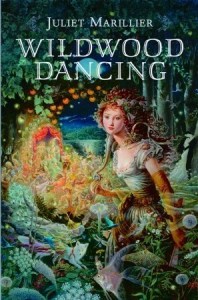
Book: “Heir to Sevenwaters” by Juliet Marillier

Publishing Info: Roc, November 2008

Where Did I Get this Book: own it!

Book Description: The chieftains of Sevenwaters have long been custodians of a vast and mysterious forest. Human and Otherworld dwellers have existed there side by side, sharing a wary trust. Until the spring when Lady Aisling of Sevenwaters finds herself expecting another child? A new heir to Sevenwaters. Then the family’s joy turns to despair when the baby is taken from his room and something…unnatural is left in his place. To reclaim her newborn brother, Clodagh must enter the shadowy Otherworld and confront the powerful prince who rules there.

Review: Marillier wrote several other books between her first three “Sevenwaters” entries and this, the first of a second set of three. I’ll get to many of those books later, but I thought it might be nice to review all of the “Sevenwaters” books straight out in order. Reading this the first time, I remember being concerned that Marillier was returning to a world and story that had largely felt contained and completed in the first trilogy. But this was a strong outing for the second set and started this next trilogy out on the right foot.

Set during the same generation as Fainne from “Child of the Prophesy,” this second trilogy shifts its focus to the Lord of Sevenwaters, Sean’s, children. The well-ordered life of Sevenwaters is disrupted in the best way with the birth of the first boy in the family, Finbar. But this joyous arrival is soon cut short when Finbar is stolen away. Only Clodagh recognizes that something magical is afoot, seeing the sticks-and-stones baby that was left behind as a living, breathing magical infant and not simply the cruel, inanimate doll the others all see. She sets out on a dangerous mission to exchange this magical creature for the return of her baby brother. With her travels Cathal, a young man with his own mysteries and a distinctly rude take on Clodagh and her life, but who has his own connections to the Fae world and could help her rescue baby Finbar before his loss tears Clodagh’s family and world apart.

There’s a lot to love about this return to the Sevenwaters world. But there were also elements of this story that began to frustrate me in their similarity to hiccups I had with the previous books. But we’ll start with the pros, as always!

Marillier’s writing and creativity with the magical elements of the story are as strong as ever. She has a beautiful way of painting scenes on the page that feel just as real as they do magical and whimsical. In this story, Clodagh and the reader travel into the wonderous world of the Fae themselves, and here Marillier’s masterful portrayal of magic with an underlying sense of danger was on point. As beautiful and mystical as this world and its beings are, it is also clear that it is a distinctly inhuman place and the rules and dangers are not of the sort that are immediately clear or rational to a human mind.

I particularly loved description of the Fae infant that is left behind in Finbar’s place. The bond that grows between this baby and Clodagh was beautiful and heart-breaking. Frankly, I was almost more invested in this relationship than I was in the building romance between Clodagh and Cathal. But man, reading this book as a mother now made some elements of it very difficult to get through. There was more ugly crying than I care to admit.

I also enjoyed Clodagh as a main character. However, she was also very similar to some of the leading ladies we’ve seen in the past, particularly Liadan. They are both described as very domestic and happiest at home. But when faced with challenges and the obstinance of their families, each chooses to make their own choices and way in the world. So while I like Clodagh, just as I liked Liadan before her, I wish there had been a bit more variety to her characterization that would make her stand out as distinct in her own right.

I also struggled to connect to Cathal. While there are several interesting reveals to his character later in the story, and the eventual romance is very sweet, he comes across as a bit too rude and harsh in the beginning. I enjoy a good enemies-to-lovers romance as much as the next person, but it’s a delicate balance to strike, and I think Cathal veered a bit too far in the rude direction initially (and for too long) to fully recover in my opinion as the story went on.

The book also takes quite a while to really get going. This is also a standard feature of Marillier’s works and something that only bothers me now and then. I think if the main character and tertiary characters are strong enough, I don’t notice the slow starts. But this one had weaker characters in Clodagh and Cathal, so I felt myself beginning to become impatient that we get this show on the road. This wasn’t helped by my incredible frustration with the entire Sevenwaters clan other than Clodagh herself.

In “Son of Shadows,” we see the Sevenwaters family’s awful treatment of Niamh. The explanations that come later don’t do much to rectify this treatment of a beloved daughter. And then here, again, we see Clodagh, a young woman who, to this point, had been completely trusted and relied upon, suddenly dismissed as crazy and irrational when she draws attention to the Fae characteristics at play in Finbar’s disappearance. She’s spoken to quite badly at points. It’s pretty shocking treatment towards a young woman who’s given no prior indications to being prone to flights of fancy. And shocking to have it come from a family who has more experience with magical beings and enchantments than most could say. Something is definitely wrong with this family and its treatment of supposedly “beloved” daughters.

Overall, however, I enjoyed this return to Sevenwaters. The magical elements, in particular, felt unique and interesting. The main character is endearing, if familiar, and her bond with the Fae baby is quite lovely. Fans of Marillier’s work and the previous Sevenwaters trilogy are sure to like this book.

Rating 8: A return to a familiar world brings some new magical elements, but also a few familiar tropes.

Reader’s Advisory:

“Heir to Sevenwaters” is on these Goodreads lists: Best Australian Fantasy Reads and The Best Books about Elves or Faeries.

Find “Heir to Sevenwaters” at your library using WorldCat!

Serena’s Review: “Namesake”

Book: “Namesake” by Adrienne Young

Publishing Info: Wednesday Books, March 2021

Where Did I Get this Book: Edelweiss+

Book Description: Trader. Fighter. Survivor.

With the Marigold ship free of her father, Fable and its crew were set to start over. That freedom is short-lived when she becomes a pawn in a notorious thug’s scheme. In order to get to her intended destination she must help him to secure a partnership with Holland, a powerful gem trader who is more than she seems.

As Fable descends deeper into a world of betrayal and deception she learns that her mother was keeping secrets, and those secrets are now putting the people Fable cares about in danger. If Fable is going to save them then she must risk everything, including the boy she loves and the home she has finally found.

Previously Reviewed: “Fable”

Review: I’ve really liked some books from Adrienne Young in the past, but I think “Fable” might have been my favorite in a while. For one thing, I always enjoy a good pirate/sea-faring story, and they’re fairly hard to come by, making the stand-out ones all the better when you find them. While the first book wasn’t perfect, it was definitely a solid start to the duology and the cruel cliff-hanger did its work: I picked up this one as soon as possible when it became available!

Shortly after thinking she’d finally found a place and family of her own in the Marigold and its crew, Fable is abducted and finds herself caught up in the scheming of several powerful players. Unbeknownst to her, Fable might be the clue to unlocking one of the rarest finds in the sea. And soon, Fable must risk it all to make a future for herself and her crew. But to do so, she must delve into the secrets of her family, especially her mother, a woman Fable had thought she knew up until now.

I wasn’t quite sure where this book was going to be headed when I got to the cliffhanger at the end of the first book. In many ways, most of Fable’s arcs had already been completed. She’d confronted the father who abandoned her. Found a crew. Made her fortune in a risky treasure hunt. And found love with the captain of the Marigold. And then she was abducted, with very little fanfare or clues as to why. This could have gone two ways, of course. It could have felt like a last-minute addition by an author/publisher who insisted they’d wring a sequel out of this thing come hell or highwater. Or it could be a thoughtful addition to Fable’s story that felt organic and natural in its own right. I’m glad to report that it is the second.

While much of the first book dealt with Fable’s complicated relationship with a father who refused to acknowledge her as his daughter publicly, this book dives into Fable’s relationship and understanding of her mother and her mother’s family. From the first book, Isolde is made out to be the prototypical perfect mother figure. She was everything Fable wanted to be and looked up to, while also a comforting, loving mother to Fable as a child. But this book tackles the idea that we never really know our parents, as much as we may love them and want to emulate them. Isolde, like the sea she loved, had depths and currents to her that very few understood, and it was exciting watching Fable navigate the twists and turns uncovered in her own family history through Isolde’s lingering relatives.

There were several points in this story, particularly with regards to the Isolde storyline, that could have felt very predictable. I had a number of suspicions regarding the direction the story seemed to be headed. Luckily, only one of those really played out (though that one in particular still frustrates me to no end, as I felt like at least part of it should have been more obvious to Fable and her crew). Instead, we see new layers to many characters. Villains come and go. Motivations wax and wane. It’s always a bit unclear as to who is doing what and why.

And at the heart of it, Fable is a steady, sympathetic character. The revelations about her family that rock her own understanding of herself and history, while shocking, don’t dislodge her core purpose and understanding of her place in the world. Her values, her love for her family, both found and blood, remain true even when tested by power, suspicion, and deception.

I also liked that we got to see a bit more backstory for a few of the other crew members. In the first book, many of them felt like token characters with only one or two traits to really distinguish them from each other. Here, we get a bit more history for a few of them that grounds their stories in ways that make you care about more than just Fable herself.

I still found the romance to be a bit dull. But in this different circumstance, the second book versus the first, I was almost glad for that dullness. More than anything, I hate it when authors add drama to their established romances as if that’s the only way to maintain the reader’s interest in it. If your romance can’t hold up to its characters being together, it wasn’t great to start with. I’ve said it before and I’ll keep saying probably forever.

Overall, I was very pleased with this sequel. It explored new areas of the duology’s central theme, that of family, while also staying true to the main character and foundations of the story that were laid down in the first book. Fans of “Fable” are sure to enjoy this second high-seas adventure!

Rating 8: Exciting but poignant, “Namesake” continues to build on the excellent foundation laid down in the first book.

Reader’s Advisory:

“Namesake” is on these Goodreads lists: OE Fiction, Fantasies & Epics Book Club and Ginger woman: Redheaded Heroine in Romance.

Find “Namesake” at your library using WorldCat!

Kate’s Review: “Every Vow You Break”

Book: “Every Vow You Break” by Peter Swanson

Publishing Info: William Morrow, March 2021

Where Did I Get This Book: I received an eARC from NetGalley.

Book Description: A bride’s dream honeymoon becomes a nightmare when a man with whom she’s had a regrettable one-night stand shows up in this electrifying psychological thriller from the acclaimed author of Eight Perfect Murders.

Abigail Baskin never thought she’d fall in love with a millionaire. Then she met Bruce Lamb. He’s a good guy, stable, level-headed, kind—a refreshing twist from her previous relationships. But right before the wedding, Abigail has a drunken one-night stand on her bachelorette weekend. She puts the incident—and the sexy guy who wouldn’t give her his real name—out of her mind, and now believes she wants to be with Bruce for the rest of her life.

Then the mysterious stranger suddenly appears—and Abigail’s future life and happiness are turned upside down. He insists that their passionate night was the beginning of something much, much more. Something special. Something real—and he’s tracked her down to prove it. Does she tell Bruce and ruin their idyllic honeymoon—and possibly their marriage? Or should she handle this psychopathic stalker on her own? To make the situation worse, strange things begin to happen. She sees a terrified woman in the night shadows, and no one at the resort seems to believe anything is amiss… including her perfect new husband.

Review: Thank you to NetGalley for providing me with an eARC of this novel!

After totally dropping the ball on getting my hands on Peter Swanson’s last book, I vowed, VOWED, that I wouldn’t let that happen again. They are just far too enjoyable. So when I saw that NetGalley had his newest book “Every Vow You Break” available, I jumped at the chance to read it, therein guaranteeing that I wouldn’t be so incredibly late this time. And, like most Swanson books, I was completely taken in by the mystery, this time taking place on a strange and isolated island as a newly married couple starts to crumble under secrets, lies, and a looming threat of a potential stalker hiding in the woods. Oh yes. This is exactly what I wanted from this book.

What I find striking about Swanson’s books is that they can hit completely different notes and feelings depending on the story. I think that were I to have no idea that Swanson wrote both “Eight Perfect Murders” and “Every Vow You Break” I’d have been gobsmacked that they were the same author. And “Every Vow You Break” also has a different feel from some of his earlier works as well. It doesn’t rely on a big early twist to set the reader off course, nor does it toss in any last moment twists and turns that feel unearned. But all that said, what I thought was going to be a pretty straight forward thriller about a woman being stalked by a man she had a single sexual encounter with turned into something far more sinister than I imagined. And I LOVED that. I pieced together a few aspects of this book, but for the most part I was kept on my toes, and fell for a couple of the red herrings that Swanson tossed out there. It felt fresh and new, and I had a hard time putting the book down once I had picked it up. Swanson took the story to places that I didn’t really anticipate, and I will say (whilst keeping it vague) that he tackles themes like misogyny, rape culture, and sexism in ways that felt responsible and biting. Which, again, I wasn’t expecting from this read. I should really learn to expect the unexpected from him, and yet….

Beyond the plot, our main character of Abigail was also a genuine and realistic protagonist. She definitely makes some poor decisions as the story goes on, as it’s really not a good idea to sleep with another person during your bachelorette party weekend, but for all of her faults you can understand why she does the things she does. And she’s probably the least screwed up protagonist that Swanson has introduced us too, or at the very least the least morally grey trending towards malevolent. I really liked Abigail by the end and was fully invested in what was going to happen to her. While the other characters didn’t feel as multi dimensional as she did, that didn’t bother me so much because even though it was in the third person, it was really her point of view that we were getting. Would I have been intrigued to get the POV of a few of the other characters, in particular Scottie, the man who she is trying to get away from? Absolutely. But at the same time, the decision to make it purely Abigail’s tale not only leaves more room for twists and surprises, it also lets her experience and perspective have the control of the narration as to what is happening to her.

If I’ve said it once, I’ve said it a thousand times (or at least as many times as I’ve reviewed a Peter Swanson book): if you are into thrillers and still haven’t read something by Peter Swanson, do yourself a favor. Go read one of his books. “Every Vow You Break” would be a great place to start.

Rating 8: Another fun thriller filled with twists and turns from Peter Swanson!

Reader’s Advisory:

“Every Vow You Break” is included on the Goodreads lists “Wedding Mysteries & Thrillers”, and “Domestic Thrillers”.

Find “Every Vow You Break” at your library using WorldCat or a local independent bookstore using IndieBound!