Joint Review: “The Raven Boys”

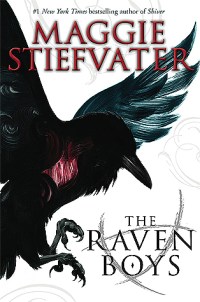
The Raven Boys

This week we’re bringing to you a special, all-week review series of Maggie Steiefvater’s “Raven Cycle” books. Containing both fantasy and horror elements, we’ve both been independently reading this series, and with the release of the fourth and final book earlier this spring, we thought it was about time to share our thoughts! So each day check in to read our thoughts on the next in the series. To round out the week, on Friday we’ll be posting a more extensive list of other books/series that we recommend if you enjoyed the “Raven Cycle.” Today we start with the first book in the series, “The Raven Boys.”

Book: “The Raven Boys” by Maggie Stiefvater

Publishing Info: Scholastic Press, September 2012

Where Did I Get this Book: Serena got the audio book from the library, and Kate got the print version from the library.

Book Description: Every year, Blue Sargent stands next to her clairvoyant mother as the soon-to-be dead walk past. Blue never sees them–until this year, when a boy emerges from the dark and speaks to her.

His name is Gansey, a rich student at Aglionby, the local private school. Blue has a policy of staying away from Aglionby boys. Known as Raven Boys, they can only mean trouble.

But Blue is drawn to Gansey, in a way she can’t entirely explain. He is on a quest that has encompassed three other Raven Boys: Adam, the scholarship student who resents the privilege around him; Ronan, the fierce soul whose emotions range from anger to despair; and Noah, the taciturn watcher who notices many things but says very little.

For as long as she can remember, Blue has been warned that she will cause her true love to die. She doesn’t believe in true love, and never thought this would be a problem. But as her life becomes caught up in the strange and sinister world of the Raven Boys, she’s not so sure anymore.

Serena’s Thoughts:

I had heard a lot about this series before I started the first book. All three of the first books were already published and raved about. So, I was nervous. I’ve been burned by the YA hype machine in the past. Further, I had read “Shiver” a few years ago, and while I thought the writing was lovely, I wasn’t overly impressed by yet another werewolf love story, even if the fantasy elements were more creative than one typically finds in the tried and true genre of werewolf romance! But, color me surprised! “The Raven Boys” was a very enjoyable reading experience!

One assumption I made from reading the jacket description and from previous experience with young adult fantasy fiction was that this was going to be Blue’s story. Blue’s perspective. Blue’s thoughts and feelings. I was surprised and so pleased to find that it was more than that. The concept of the story felt like it was primed for a “special snowflake” character basking in the attention of a bunch of boys. But instead we have Blue as only one of several characters who have formed deep and complicated friendships with one another. Indeed, Blue is the most recent addition, so in this book the friendships between Gansey, Adam, Ronan and Noah were the deeper and more interesting relationships, with Blue’s “new comer” status serving as a portal into this world for the reader.

Adam and Gansey have a particularly trying relationship and there were several moments when I just wanted to bang their heads together. But this reflects Stiefvater’s success to not only depict a realistic male friendship, one that is challenged by the strong personalities and differing perspectives of each member, but also of the real and deep seeded effects of privilege and how formative unique life experiences are on the way that individuals approach life and decision making. Kate talks about this a bit more, but I was really impressed by the careful and very true handling of many hard subjects.

And, impressively, I wasn’t overly bothered by what seemed to be the set up for a love triangle. Maybe it was the absence of the hyperbolic language that usually accompanies this trope. The girl is always “torn” between “two great loves” and “oh my, what can she do she just can’t pick they’re both so hawttttt!” This is a much more honest approach to teen relationships. Boy meets girl. Maybe they’re interested. Maybe they’re not. They’re not quite sure. Let’s maybe see? Still, though, finishing the book, I wasn’t convinced that this element added to the book, necessarily. Sure, it didn’t detract from it in the way I typically expect, but it also wasn’t making headway in any direction that felt necessary. I was curious and a bit apprehensive for how this would be resolved going forward.

While the fantasy was light in this book, I enjoyed what we had of it. If anything, the light sprinkling of details made these fantastical elements feel as if they were knitted into a “real world” setting in a much more believable way than other examples I can think of where BAM magic arrives!

I also listened to this as an audio book and I can’t rave enough about the reader Will Patton. He is by far the best reader I’ve come across in my forays into audiobook. He commits so fully to the reading, varies is voice expertly for all the different characters ( to the point where I could tell from the first sentence of each chapter whose perspective it was from simply by the adjusted cadence to Patton’s voice), and slows/speeds/emotes/ in line with what is happening in the story. I honestly worry that I loved this book more than I would have reading it simply on the grounds that his narration was so amazing.

Kate’s Thoughts:

I picked up the print version of “The Raven Boys” a couple years ago as part of my stack for a vacation. I have fond memories of reading this book, about ghosts and the supernatural and other spooky themes, while staying in a supposedly haunted hotel room in America’s Most Haunted City (aka, Savannah, Georgia). Because how appropriate, right?! While reading this book, however, I remember not being as impressed by it as I had hoped I would be. I really liked the characters as they were presented to us, and I liked the idea of Blue’s psychic family and her ability to feed psychics as her power. I just didn’t find the central conflict in this one very intriguing. The main villain didn’t do much for me, and even though I liked the lay line storyline, I wasn’t totally sold. What sells me about this book is Blue, her household, and her Raven Boys. I’m someone who has always gravitated towards platonic male friendships ever since I was a small girl, and therefore seeing Blue’s friendships with Gansey, Adam, Ronan, and Noah really resonated with me.

I also really liked how well thought out the town of Henrietta was in this book. Stiefvater did a very good job of making a fictional small town community, with the ups and downs that a small town community has. The age old conflict between the privileged students of the local school and the townies is very present in this book, and the reader can understand both sides that these characters are coming from. I especially like how naively good Gansey is when it comes to Adam, who is a student at the school on scholarship but lives in a poverty stricken and abusive household. Gansey sees Adam as his best friend, but there will always be that conflict there because of the class divide. I also find it very realistic that while Blue and Gansey are very clearly drawn to each other in this book, that class thing is there for them as well, which in turn makes her feel more comfortable with Adam. Can you say ‘love triangle’?

That was another big problem I had with this book, outside of the weaker supernatural plot. I am totally sick of seeing love triangles in YA fiction. It is so overdone and it is a lazy way to add conflict. I was none too happy to see that this trope was being trotted out again in a book that otherwise had some really lovely platonic interactions between Blue and all of her Raven Boys.

giphy2
(source)

I actually think that “The Raven Boys” is, for me, the weakest in the series. Stiefvater did a lot with the characters since the beginning, and their growth is evident.

Serena’s Rating 7: Great start to a series, appropriately laying the ground work, though the romantic angle was questionable.

Kate’s Rating 7: Lovely characters and a great setting made for a good start, though the main conflict of the story did not interest me as much as I’d hoped it would.

Reader’s Advisory:

We’ll include a detailed Reader’s Advisory post for the whole series on Friday!

Find “The Raven Boys” at your library using WorldCat!


Serena’s Review: “The Wrath and the Dawn”

18798983Book: “The Wrath & the Dawn” by Renee Andieh

Publishing Info: G.P. Putnam’s Sons Books for Young Readers, May 2015

Where Did I Get this Book: the library!

Book Description: One Life to One Dawn.

In a land ruled by a murderous boy-king, each dawn brings heartache to a new family. Khalid, the eighteen-year-old Caliph of Khorasan, is a monster. Each night he takes a new bride only to have a silk cord wrapped around her throat come morning. When sixteen-year-old Shahrzad’s dearest friend falls victim to Khalid, Shahrzad vows vengeance and volunteers to be his next bride. Shahrzad is determined not only to stay alive, but to end the caliph’s reign of terror once and for all.

Night after night, Shahrzad beguiles Khalid, weaving stories that enchant, ensuring her survival, though she knows each dawn could be her last. But something she never expected begins to happen: Khalid is nothing like what she’d imagined him to be. This monster is a boy with a tormented heart. Incredibly, Shahrzad finds herself falling in love. How is this possible? It’s an unforgivable betrayal. Still, Shahrzad has come to understand all is not as it seems in this palace of marble and stone. She resolves to uncover whatever secrets lurk and, despite her love, be ready to take Khalid’s life as retribution for the many lives he’s stolen. Can their love survive this world of stories and secrets?

Review: Fairy tale retellings have been enjoying quite their moment in the sun over the last few years in the young adult publishing industry. And while they are some of my favorite stories to read, I’ve also about reached my saturation point for the number of ways you can try to make the prince character in a version of “Cinderella” actually interesting. So, I was very excited when I ran across this book and discovered it not to be yet another common fairy tale exploiting a craze but instead a story inspired by “A Thousand and One Nights.” I mean, I dressed up as Scheherazade as a kid for Halloween once, so obviously I was going to read this immediately. And, for the most part, it’s a pretty solid entry.

It’s hard to review this while also gauging my reaction based on whether or not I appreciated this book for what it was actually doing or because I was just so thrilled it was doing something different from the many other retellings. A big question with these is whether or not it differs enough from the original story. And this sort of did? The basic premise is still there. King kills wives each morning, woman sets out to avenge her friend who was a victim of this madness, woman staves off the axe via elaborate and strategic story-telling. And Shahrzad embodied many of the traits of the original character: spunk, bravery, and sheer stubbornness to see this mad plan through.

Unfortunately, because it is a novel and not a fairy tale, the book also fell victim to its premise. In the fairy tale, it’s very easy to spin this type of tale and escape relating the details or inconsistencies, especially using common story telling lines like “Another morning dawned. Another day passed. And Scheherazade continued to enchant her king husband.” That’s sweet and poetic and moving forward along those lines, it’s easy enough to set up your happy ending. With this? Not as much. There’s no way, even with the most sympathetic king character to not make Shahrzad’s transition from “revenge driven murderess in the making” to “love stricken girl who thinks maybe, yeah, he’s not that bad” seem less then believable and make her, as a character, highly questionable. All that said? I think the author did the best she could with this set up. I mean, it’s a crazy story to begin with, so going in, there has to be some forgiveness for the madness of the whole set up.

Other than this, the writing and scene-setting was beautiful. Again, maybe it’s because we don’t see a lot of settings like this in YA fantasy books nowadays, but the descriptions of the desert and lifestyle were beautiful and fresh. I also liked the inclusion of the stories that Shahrzad told each night. It would have been easy to just use a cheat, maybe tell one story, and then sweep the remaining nights under the rug. But the tales themselves were interesting and fun. Your mileage with this may vary, however, as the stories can also read as long breaks in the actual narrative of the book itself.

One other big detractor: a love triangle.

tumblr_mtlkdecjws1qkiyi1o1_400
(Source)

Overall, I really enjoyed this story. It’s the first in a duology (praise be, not a trilogy or, heaven forbid, a series…) So, I’m moving directly on to the next and should have a review of that up soon! This story pretty much wrapped up the retelling part from the original, which leaves the next with completely new content. We’ll see how it goes!

Rating 7: Good retelling, but fell into some common pitfalls.

Reader’s Advisory:

Serena’s Review: “The Boy Who Lost Fairyland”

18961361Book: “The Boy Who Lost Fairyland” by Catherynne M. Valente

Publishing Info: Feiwel & Friends, March 2015

Where Did I Get this Book: from the library!

Book Description: When a young troll named Hawthorn is stolen from Fairyland by the Golden Wind, he becomes a changeling – a human boy — in the strange city of Chicago, a place no less bizarre and magical than Fairyland when seen through trollish eyes. Left with a human family, Hawthorn struggles with his troll nature and his changeling fate. But when he turns twelve, he stumbles upon a way back home, to a Fairyland much changed from the one he remembers. Hawthorn finds himself at the center of a changeling revolution–until he comes face to face with a beautiful young Scientiste with very big, very red assistant.

Review:

This book marks a notable shift from the books previous to it in the series. Alas, our beloved September is nowhere in sight! And instead of experience the bizarre transition from “reality” to “fairyland,” the trip has been reversed with poor baby troll, Hawthorn, being selected as a changling and mailed (the postal service exists everywhere it seems!) to the “real world.” Here he faces the challenges of adapting his nonsensical worldview to a very sensible (or so it claims) world. While the story differs, the beautiful writing, philosophical musings, and abundant creativity remains. So following my established reviewing format for this series, here are a few passages that stood out to me.

Growing up has been a theme throughout this entire series, and this book was no different. The mixture of melancholy and joy, confusion and excitement, and the general sense that we don’t have this whole thing figured quite out is wonderfully discussed.

I shall tell you an awful, wonderful, unhappy, joyful secret: It is like that for everyone. One day you wake up and you are grown. And on the inside, you are no older than the last time you thought Wouldn’t it be lovely to be all Grown-Up right this second?

So, too, the coping mechanisms of childhood. I, obviously, identify with this last method.

Some small ones learn to stitch together a Coat of Scowls or a Scarf of Jokes to hide their Hearts. Some hammer up a Fort of Books to protect theirs.

One of my favorite things about this series are the quirky insights into aspects of life that, on the surface, have very little to do with the story of a Changeling troll or a wandering human girl in Fairyland. One of my favorites from this book:

English loves to stay out all night dancing with other languages, all decked out in sparkling prepositions and irregular verbs. It is unruly and will not obey—just when you think you have it in hand, it lets down its hair along with a hundred nonsensical exceptions.

Philosophical views on life are vivid and rich in this book. I’m still surprised by how seamlessly the author works these in. What could so easily become preachy and silly-ly on-the-nose instead reads as a beautiful side note placed directly next to an excellent fairy tale.

A choice is like a jigsaw puzzle, darling troll. Your worries are the corner pieces, and your hopes are the edge pieces, and you, Hawthorn, dearest of boys, are the middle pieces, all funny-shaped and stubborn. But the picture, the picture was there all along, just waiting for you to get on with it.

The other books probably had this as well, but in this story I found myself appreciating the shorter, one sentence thoughts that sprung off the pages. Someone should make a coffee table book out of these stories with some of these quotes.

She’s an old woman possessed of great powers–but aren’t all old women possessed of great powers? Occupational hazard, I think.

Lovely.

It is not so easy to always remember who you are.

True.

Rules are for those who can’t think of a better way.

Correct.

A thing too familiar becomes invisible

Worth an extra thought.

While the beautiful language and creativity remained in this story, I found myself missing our familiar characters. Hawthorn is a lovely protagonist, but I had spent three books coming to know September, and the last books ends with the feeling that she is on the cusp of something important. And, while she does make an appearance towards the end of this story and I see the neat place that this story fill within the larger narrative, I still found myself finishing it and wishing for a bit more.

That said, I still highly enjoyed this book and it is clearly setting the series up for this final book. I’m both excited and so, so nervous! Please let things work out for my lovely September!

Rating 7:  Still quite enjoyable, but slightly less preferred than others in the series

Reader’s Advisory:

“The Boy Who Lost Fairyland” is included on this Goodreads list: “Fairies in Children’s Fiction” and “Changelings.”

Find “The Boy Who Lost Fairyland” at your library using Worldcat!

Previous Reviews: “The Girl Who Circumnavigated Fairyland in a Ship of Her Own Making” and “The Girl Who Fell Beneath Fairyland and Led the Revels There,” and “The Girl Who Soared Over Fairyland and Cut the Moon in Two.”


Kate’s Review: “Welcome to Night Vale”

25270656Book: “Welcome to Night Vale” by Joseph Fink and Jeffrey Cranor

Publishing Info: HarperAudio, October 2015

Where Did I Get This Book: Audiobook from the library!

Description: Night Vale is a small desert town where all the conspiracy theories you’ve ever heard are actually true. It is here that the lives of two women, with two mysteries, will converge. Nineteen-year-old Night Vale pawn shop owner Jackie Fierro is given a paper marked ‘KING CITY’ by a mysterious man in a tan jacket. She can’t seem to get the paper to leave her hand, and no one who meets this man can remember anything about him. Jackie is determined to uncover the mystery of King City before she herself unravels. Diane Crayton’s son, Josh, is moody and also a shape shifter. And lately Diane’s started to see her son’s father everywhere she goes, looking the same as the day he left years earlier. Josh, looking different every time Diane sees him, shows a stronger and stronger interest in his estranged father, leading to a disaster Diane can see coming, even as she is helpless to prevent it. Diane’s search to reconnect with her son and Jackie’s search for her former routine life collide as they find themselves coming back to two words: ‘KING CITY’. It is King City that holds the key to both of their mysteries, and their futures …if they can ever find it.

Review: In the summer of 2013 I discovered a quirky and strange little podcast called “Welcome to Night Vale”. This is going to sound incredibly hipster of me, but I got into it right before it exploded in popularity on the Internet and across geek fandoms everywhere. I followed it for awhile, as it really is my kind of story. It’s kind of like “Lake Wobegon” meets “Twin Peaks” meets “X-Files” meets “Parks and Rec”. The premise is that it’s a radio show of community updates run by a man named Cecil Palmer, and the community has black helicopters, monsters for librarians, floating cats, and hooded figures congregating in the local dog park, which may or may not transport you to another dimension. So it’s weird. Like, VERY weird. But it also has a lot of heart. I kind of lost interest after the StrexCorp storyline wrapped up, but I do still have a fondness for the universe and decided to give the book a try. I initially got it in print from the library…. But after perusing it, I was like ‘oh… Maybe not’.

giphy
My thoughts: “Oh God, was it always like this? Was it always this aggressively quirky? Did I LIKE this?!” (source)

After having a crisis of faith in a podcast I had fond memories of, I returned the book and vowed never to speak of it again. But then I saw, months later, that the audiobook was available to download, and that Cecil Baldwin, the voice actor for Cecil Palmer and main voice of the show, was reading the book. So I decided to give it a try that way. And THAT, my friends, made ALL the difference.

So yeah, “Welcome to Night Vale” is weird, and is aggressively quirky, and yeah, it probably has a smug sense of satisfaction about itself and how clever it is. But Cecil Baldwin as Cecil Palmer just makes it so damn charming and makes the town so damn lovable that he really, REALLY saves the story. And he does the same for the book when he reads it. I think that as a book this kind of set up just doesn’t really totally work, so it makes sense to give it the pacing that an audiobook can provide because this is it’s home format. You need to listen to “Welcome to Night Vale”, just like you listen to the podcast. I can’t explain why. But you just do.

“Welcome to Night Vale” also happens to have a lot of heart buried in it’s creepy and strange and uncanny-esque premise, and the book has the same thing going for it. Though it isn’t in community radio format (sadly, though Cecil and his boyfriend Carlos DO make appearances), it does have strange anecdotes and oddities in a narrative sense. In the book we follow two women, Jackie and Diane. Jackie is perpetually nineteen, but she is also trying to find herself just like many nineteen year olds are. Her struggles are both strange, as she has a piece of paper permanently attached to her hand, but she wants to know who she is, as she cannot seem to remember. And then there’s Diane, whose son in a shapeshifter, sure. But their relationship is so damn spot on in it’s portrayal of a single mother dealing with a teenage son who is growing up and apart from her. It is the very parts of these characters that make them human that make the aggressive quirkiness easy to swallow. Even if “Welcome to Night Vale” is goofy and very, very strange, if you look past that, the characters are people with very real, touching problems. And I also really liked the relationship between Jackie and Diane, who are united in their need to know what King City is, but are still very different and aren’t always going to get along because of that.

But buyer beware. I think that unless you have a working knowledge of this podcast and the world that it has set up, this book will be very confusing and probably maddening to you. It’s working on the premise that you know what the scoop is with Night Vale, and it doesn’t hold the reader’s hand in the strangeness. It just leaps into the narrative full throttle. The podcast was always weird, but kind of gradually worked it’s way to where the story is now, and the book just goes into it. Which kind of makes me have to ask this question, if you jumped in and were surprised or indignant that it didn’t make sense to you:

giphy1
(source)

That would be like me jumping in the middle of a “Halo” novelization series and wondering why it was that I don’t understand what was happening. Those books aren’t written for me because I am not a “Halo” fan, and sadly, this book isn’t written for you because you are not a “Night Vale” fan. This book can’t stand alone, guys. It just can’t. You need to know this mythology. Which isn’t exactly a great thing for this book, in all honesty. The point, I would imagine, was to try and branch out to other people outside of the built in listener base. And this book probably won’t do that.

I thought it was fun enough. I’m not necessarily clamoring back to the podcast in a game of catch up, but I do still love Cecil Palmer the character and Cecil Baldwin the voice. “Welcome To Night Vale”, if listened to, should be a fun little bonus for the podcast. But a stand alone book it is not.

Rating 7: This will probably be fun for fans of the podcast, but I don’t think that there is any way that a layman could enjoy this book. If you haven’t listened to the show, this is NOT for you. Either jump into the podcast, or leave it be. Also, it only worked for me when I listened to it.

Reader’s Advisory:

“Welcome to Night Vale” isn’t featured on any Goodreads lists as of now. I’m not surprised. So instead, here is a link to a blog that has some read-alikes, and hell, here is the damn podcast. You really should start here.

Find “Welcome to Night Vale” at your library using WorldCat!


Serena’s Review: “Palace of Stone”

12926132Book: “Palace of Stone” by Shannon Hale

Publishing Info: Bloomsbury, August 2012

Where Did I Get this Book: the library!

Book Description: Coming down from the mountain to a new life in the city is a thrill to Miri. She and her princess academy friends have been brought to Asland to help the future princess Britta prepare for her wedding.There, Miri also has a chance to attend school-at the Queen’s Castle. But as Miri befriends students who seem sophisticated and exciting she also learns that they have some frightening plans. Torn between loyalty to the princess and her new friends’ ideas, between an old love and a new crush, and between her small mountain home and the bustling city, Miri looks to find her own way in this new place.

Review: Continuing my self-education in middle grade novels, after reading and enjoying “Princess Academy” it was a quick jaunt back to the library to scrounge up its sequel. And, while the first book can be read as a stand alone book (a trait I will never not praise), “Palace of Stone” is a worthy successor, expanding the world of Danland and challenging Miri’s own perceptions of right and wrong and her place within this society.

This story picks up shortly after the events of the first book with Miri and her village enjoying the boost to their local economy that came with Miri’s discovery of the true worth of the linder stone that their village mines. However, when Miri and a few familiar characters travel to Asland to join the soon-to-be princess, Britta, Miri discovers how tremulous this newly earned freedom can be. Revolution is rumbling throughout the kingdom of Danland.

One of the themes that I most appreciated from the first book was its emphasis on the joy of learning. Here, this concept is expanded even further with Miri attending university while in Asland and dreaming of her plans to continue and expand the local school she’s been running back home. The cast is also expanded when she gains an unexpected friend in fellow scholar, Timon.

Timon serves a definite purpose in this book, as he is the conduit between Miri and the underground swell of revolutionaries. And this concept of revolution, history, and democracy is at the core of the story. I greatly appreciate the care that Hale uses in laying out this path before Miri, with all of the temptation, confusion, and impossible choices that situations like this cause. And, while this is a middle grade novel and with this comes, perhaps, a few too many convenient solutions, Hale also spends a good portion of the novel fully exploring these themes before wrapping up the story.

Timon also brings with him a love triangle, and here is where I’m not so sure. While I think I understand what Hale was going for, forcing Miri and Peder to challenge the realities of their relationship and feelings in an adult manner (rather than the ease of an early crush), I question whether this was the best route. It also could just be that I’m so sick and tired of love triangles that even ones that are introduced for a good reason and, largely, executed well, are still frustrating to read.

In many ways this book was a step up from the first story. But at the same time, I struggled with it a bit more. Perhaps I just had higher expectations for Miri and wanted to see more growth in her as a character between the last book and this. Of course, she’s still young, and, of course, the point of this story was to challenge her even further, but perhaps when I’m reading about a character who is contemplating marriage, I also wanted to see a bit more perception from her. Her naivety in the first book was charming and believable. She’s still charming here, but there were points where her naivety was a bit much. We’ve been presented with a smart character, some common sense and ability to reason through certain things while still being challenged by others would have been more believable and enjoyable.

For readers who enjoyed “Princess Academy,” this book is a fun follow up. It retains many of the traits that made the first book so enjoyable while also adding complexity to the challenges the main characters face. While there were a few stumbling points, I definitely recommend it as a strong sequel story.

Rating 7: Worth checking out!

Reader’s Advisory:

“Palace of Stone” is included on this Goodreads list: “The Best Fairytales and Retellings” and “Best Heroine in a Fantasy Book.”

Find “Palace of Stone” at your library using Worldcat!

Previous Review: “Princess Academy”


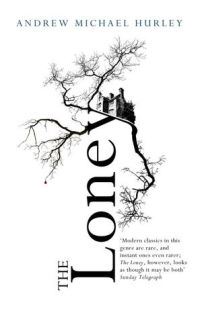
Kate’s Review: “The Loney”

25458371Book: “The Loney” by Andrew Michael Hurley
Publishing Info: John Murray, August 2015 (first published September, 2014)

Where Did I Get This Book: The library!

Book Description: If it had another name, I never knew, but the locals called it the Loney – that strange nowhere between the Wyre and the Lune where Hanny and I went every Easter time with Mummer, Farther, Mr and Mrs Belderboss and Father Wilfred, the parish priest.

It was impossible to truly know the place. It changed with each influx and retreat, and the neap tides would reveal the skeletons of those who thought they could escape its insidious currents. No one ever went near the water. No one apart from us, that is.

I suppose I always knew that what happened there wouldn’t stay hidden for ever, no matter how much I wanted it to. No matter how hard I tried to forget…

Review: Gothic horror is a genre that has been making something of a comeback in recent years. The themes of isolation and madness and the inability to trust what you are seeing are all very upsetting, and in a time when manor homes and country life has changed and dwindled these themes have evolved to fit even the urban life. So perhaps our recent fears of losing touch with each other in spite of being so connected have paved the way for this comeback. “The Loney” by Andrew Michael Hurley goes back to the basics of the gothic horror novel, setting it in an earlier time and yet making it feel even earlier. Though it takes place in the 1970s in England, sometimes I felt like it was the turn of the century given the superstitions and moralities that ruled in this book.

It concerns Smith, a man who in present days hears of a news story of a child’s remains, found in the area where his family took a Catholic Pilgrimmage in the 1970s when he was a boy. He takes the reader back in time to this long forgotten and repressed weekend. His older brother, Hanny, can’t talk, and their mother Mummer, zealously Catholic and desperate to cure him, thinks that a ritual in this area will cure him. Her strict and dogmatic approach to Catholicism is in stark contrast to that of the new Priest, Father Bernard, who is far more meditative and lenient when it comes to Christ’s teachings. The Old Ways versus Reform is one of the many themes in this book, as change is both sought out but also feared. Mummer doesn’t believe that medicine can cure Hanny, but also thinks that this new Priest isn’t devout enough, in spite of the fact he very well may be representative of changing times and ideals. Mummer is putting her faith into Father Bernard, but has no actual faith in him because he doesn’t line up with what she thinks faith should be. The priest who better lines up with her was Father Wilfred, a tyranical and steadfast priest who passed away shortly before their trip, a death surrounded by strange rumors of it’s circumstances.

And then there are the locals, which consist of two groups. The first is a man and woman couple, and a pregnant teenager that Hanny is especially taken by. Smith and Hanny don’t get much concrete information about the girl, why she is here, and who the father of her child is. Just that this may not necessarily be her first time at the birthing rodeo. Then there are the strange men who wander through the countryside with their dog, and in and out of the pilgrims’ path. I couldn’t help but get some serious “Wicker Man” (the original, not the terrible remake) vibes whenever they came into play, their own beliefs in stark contrast to those of Mummer and Father Bernard (and the newly deceased Father Wilfred). They too have their own rituals and beliefs, and their own zealotry. I can’t say that the way that they were mysterious and threatening in their weird ways was a new concept, but it did serve an interesting purpose in this book when contrasted with Mummer’s beliefs. Mummer may be faithful and righteous, but she is cruel and cold to her children, especially Hanny. And then you have the strange and threatening locals who have their own anti-Christian beliefs, but who ultimately get shit done in their own ways, even if it is also pretty terrible. And given that this book takes place in Lancashire, the area that has a history of witch trials and witch burnings, the locals and their motives and powers are all the more relevant and creepy. It became clear by the end that “The Loney” was a meditation of faith, religion, and true belief at the expense of others. Even if true belief does work in some cases, there is always going to be some kind of cost.

I say that this is horror because the setting is classic to the genre. The characters wander around misty and dank moors, surrounded by coastline, marsh, and ruins. Smith feels alone in his own fears and skepticism of how this pilgrimage will go, but his love for his older brother makes him desperate to believe that all is well, even when it’s clear that it most certainly isn’t. But while the themes were spot on in this book, in gothic tone and religious reflection, I think that my biggest problem with this book was that it wasn’t particularly scary. At least not to me. I had gone in expecting some kind of slow burn creepiness that would unsettle me through and through, but instead I was just sort of ‘oh. okay’ by the end of it. The themes are interesting, and I liked the comparison and contrasting between the Catholic beliefs and the beliefs and strange, Nativity-esque ritual that the locals were doing (and whose grim climax fittingly happens during Easter weekend). The metaphor and symbolism weren’t lost on me. But I wish that it had been scarier.

For those looking for a scary book, “The Loney” may not be for you. But for those looking for an examination of deep and unyielding faith and the awful things it can reap, you may want to check it out.

Rating 7: A story with fascinating themes on religion and zealous faith, but not as scary as I had hoped it would be.

Reader’s Advisory:

“The Loney” is included on these Goodreads lists: “Folk Horror and Mystery”, and “Best of Little Known Authors”.

Find “The Loney” at your library using WorldCat!


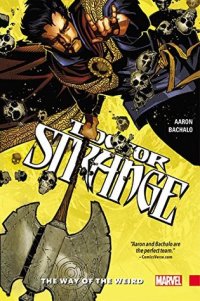
Kate’s Review: “Doctor Strange (Vol.1): The Way of the Weird”

26030872Book: “Doctor Strange (Vol.1): The Way of the Weird”

Publishing Info: Marvel Comics, May 2016

Where Did I Get This Book: The library!

Description: Only Doctor Strange can protect our world from the darkness beyond — now, witness the full toll that constant struggle takes on Earth’s Sorcerer Supreme! Every spell cast comes at a cost, but what happens when Strange falls behind on his tab? Find out as the good doctor wakes up somewhere very odd, nearly naked — with no spell books, no weapons and no memory of how he got there…or why all the monsters are chasing him! And as a new visitor to Strange’s Sanctum Sanctorum learns one wrong door can lead to oblivion, a magic circle of Strange’s friends and allies are about to face their greatest threat. Dark forces are destroying everything mystical in the multiverse, and their sights are set on this dimension. Magic’s days are numbered, and Doctor Strange is not ready!

Review: Okay, listen up, nerds. I’ve said it before, but I’m saying it again. I am very solidly a DC girl when it comes to my comic book stuff and movies (Deadpool and X-Men being exceptions). I have dabbled in multiple Marvel comics, but ultimately (besides Deadpool) I haven’t found many Marvel stories that resonate with me, or that I feel a desperate need to continue. But I have always been vaguely intrigued by Doctor Strange. For one thing, the very premise of his character is right up my alley. I mean, sorcerers are awesome and I will always get behind that kind of thing. But the bigger reason is that on one of my favorite TV shows, “The Venture Bros”, there is a character named Doctor Orpheus who is based upon Doctor Strange. And I love me some Doctor Orpheus. Now Doctor Strange is no Doctor Orpheus, but I actually enjoyed this comic all the same.

What I liked about this comic is that Doctor Strange has found himself at a place where using his magic has caused him to play a very high price when it comes to his existence. He’s incredibly powerful and can help others with his magic, but all of that comes with consequences to himself. He lives in a very haunted and paranormally active house, known as the Sanctum Sanctorum. He can only eat food that is so far out there and filled with magic because regular food no longer sustains him, and even hurts him. He has few friends and few contacts outside of his housekeeper/cook/martial arts teacher/confidant, Wong. And while he thinks that he is fine in this existence, when magic itself starts to disappear from his home and his life, he has to come to terms with how far gone he is and how much he relies on it. And it’s cost to him. He is no longer able to do whatever he needs to do in terms of magical acts and powers. There are now consequences to his magic, and that makes him no longer the all powerful being that Doctor Strange has kind of been up until this point. It’s pretty dark in theme, but the tone never feels brooding or morose. It always treads the line pretty finitely.

This book also introduces us to a new character named Zelma Stanton, a librarian from the Bronx who is the perfect foil for our sorcerer. We get a human who is unfamiliar with this magic to fill in for the reader, who needs things explained to her the way that we do. But it’s done in a way that never feels over-done or exposition heavy. In fact, Zelma is a very fun and witty character who, I think, is going to be fun to follow. Also, HELLO, she’s a librarian! That alone was enough to make me love her immediately. I also do have to give some serious props to Marvel when it comes to how they handle adding new characters of different backgrounds, races, orientations, and histories. It’s always great seeing more diversity in comic books, so welcome Zelma and I hope you stick around!

The overarching mystery of where the magic is going has been put into motion, as other Sorcerer Supremes like Strange have been murdered. But it’s no where near being fully explained. I wasn’t as interested in this mystery as I was interested in Zelma, or Doctor Strange’s background and his present troubles. I know that some of his troubles are derived from this arc, but I would have been perfectly fine if this was just a character study of a person who can no longer function without an outside force there to keep them going. So I guess I kind of wish that this was going to be more like “Sandman” and less like other superhero comics. The good news is that it still has my attention. While I’ve looked at other Marvel comics and said ‘oh yeah, I’ll go on eventually’, only to not go on at all or to be disappointed by where they eventually went, I am looking forward to seeing where Doctor Strange is going next. Not enough to get me to go buy the comic books themselves, mind you, but still. I want to keep going. That’s pretty impressive in and of itself.

Rating 7: I wish that this was more like a Gaiman-exploring mythology a la “Sandman”, but “Doctor Strange: The Way of the Weird” entertains. Strange and Zelma are a good team.

Reader’s Advisory:

“Doctor Strange (Vol.1): The Way of the Weird” isn’t on many lists yet. But I would recommend it if you like “Sandman” for sure, and the newer Marvel comics.

Find “Doctor Strange (Vol.1): The Way of the Weird”at your library using World Cat!


Serena’s Review: “Unspoken”

10866624Book: “Unspoken” by Sarah Rees Brennan

Publishing Info: Random House, September 2012

Where Did I Get this Book: the library!

Book Description from Goodreads: Kami Glass loves someone she’s never met . . . a boy she’s talked to in her head ever since she was born. She wasn’t silent about her imaginary friend during her childhood, and is thus a bit of an outsider in her sleepy English town of Sorry-in-the-Vale. Still, Kami hasn’t suffered too much from not fitting in. She has a best friend, runs the school newspaper, and is only occasionally caught talking to herself. Her life is in order, just the way she likes it, despite the voice in her head.

But all that changes when the Lynburns return.

The Lynburn family has owned the spectacular and sinister manor that overlooks Sorry-in-the-Vale for centuries. The mysterious twin sisters who abandoned their ancestral home a generation ago are back, along with their teenage sons, Jared and Ash, one of whom is eerily familiar to Kami. Kami is not one to shy away from the unknown—in fact, she’s determined to find answers for all the questions Sorry-in-the-Vale is suddenly posing. Who is responsible for the bloody deeds in the depths of the woods? What is her own mother hiding? And now that her imaginary friend has become a real boy, does she still love him? Does she hate him? Can she trust him?

Review: I’m not sure how this book ended up on my TBR pile. I’ve read some Sarah Rees Brennan in the past, but it has been a while since I picked up one of her books. So, it was a pleasant surprise when I was browsing the library shelves (Goodreads app in hand to check against my to-read lists) and found this book right there waiting for me and didn’t have a lot of pre-existing expectations set in place going in. And it was good! Brennan manages to balance many classic YA tropes with a fresh voice and perspective that allows them to grow past their typical, clumsy restraints.

From the get go, I liked Kami Glass. She’s pretty much a half-Japanese, British born, Lois-Lane-in-the-making. And we all know how much I love Lois Lane. Full of spunk, wit, and drive, Kami pursues her goals with an energy that can’t help but draw in those around her. And in a testament to the author’s creative ability, the cast of characters who surround Kami are as diverse as they are typical, without falling over the stumbling block stereotypes often found in young adult literature. Kami has a female best friend, Angela, who is very clearly her strongest support system (stereotype avoided: lack of female friends for the female protagonist so as to cement her “difference” from “other girls”). There is even a third female friend, Holly, one of the more popular girls at school (stereotype avoided: “mean girls”). Angela has an older brother who is a healthy, non-romantic male friend of Kami’s (stereotype avoided: meet-cute with the boy-next-door who is a love interest). Kami has a very stable, loving family complete with two parents and two younger brothers (stereotype avoided: nonexistent/absent parents, lack of siblings or poor relationship with a distasteful, often older, sibling).

And, while there are the makings of a love triangle, this too is waded through carefully and with respect to the emotional struggles that would exist due to the situation. In fact, the way the relationship between Kami and Jared was portrayed was one of my favorite aspects of the story. Each honestly believed the other was a made-up character in their own head. Discovering at age 16 that your imaginary friend is not only real, but here in your own town, going to your own school, would have dramatic affects. This is not a romantic, blissful situation. Suddenly the closeness and emotional vulnerability becomes real and, perhaps, invasive. Kami begins to question where she leaves off and Jared begins. Physical contact is uncomfortable to the extreme.

I can’t say how much I appreciated the author’s handling of this situation. What could have so easily been twisted into a silly, romantic plot device is instead highlighted as intensely unhealthy, especially when Kami and Jared attempt to build a real friendship/relationship with their fully existing selves. In a book notable for its witty dialogue and punchy descriptions, Kami spends a significant amount of time analyzing independence, a sense of self, and what a healthy relationship should look like.

The mystery and fantasy elements of the story were also strong. The history of the Lynburn family and this small, British town was chilling and the book does a good job setting up this conflict for the remaining two books in the series. My one point of real criticism is the location for the book. It is set in England, however, the language felt very Americanized. Not being natively British, I’m not sure if maybe my expectations are out of sorts or whether this is an actual failing. But I routinely forgot that this was set in England at all. The lack of British terms and turns of phrase in the dialogue felt odd. Other than creating a “manor family” legacy for the Lynburns and the town of Sorry-in-the-Vale, this setting felt underutilized and perhaps even disingenuous with regards to the other narrative decisions.

Overall, I enjoyed this book and have already placed a request at the library for the second one!

Rating 7: Very good, though a few questionable decisions with regards to underutilizing its setting.

Reader’s Advisory:

“Unspoken” is included on these Goodreads lists: “Best YA Books with Non-White Protagonists” and “Strong Womances In YA.”

Find “Unspoken” at your library using Worldcat!

Kate’s Review: “The Vampire Lestat”

43814Book: “The Vampire Lestat” by Anne Rice

Publishing Info: Knopf, 1985

Where Did I Get This Book: The Library!

Book Description from Goodreads: Once an aristocrat in the heady days of pre-revolutionary France, now Lestat is a rockstar in the demonic, shimmering 1980s. He rushes through the centuries in search of others like him, seeking answers to the mystery of his terrifying exsitence. His story, the second volume in Anne Rice’s best-selling Vampire Chronicles, is mesmerizing, passionate, and thrilling.

Review: When I was in high school, like many teenage girls who didn’t feel like they fit in anywhere, I went through a few identity explorations. I was a hippie, I was a rocker, I was a punk, and I was, mostly at the heart of myself, a goth. Black lipstick, black nail polish, dog collar, I had all of that and a sullen attitude and an obsession with the macabre. Though not as extreme, I was kind of Molly Shannon’s character from the “Goth Talk” Saturday Night Live skit.

960x540
Though my best friend was more of a flannel and Minnesota Wild merchandise kind of guy. (source)

I also had a serious love for vampires. This was before “Twilight”, so my objects of obsession were “Buffy the Vampire Slayer”, and Anne Rice’s “Vampire Chronicles”. I read “Interview with the Vampire”, “The Vampire Lestat”, and “Queen of the Damned”, but quit the series once I figured out that it was super different from the movie “Queen of the Damned”, which was probably where my true heart was in regards to that that universe. But that should come as no surprise to anyone who knows me, as that movie was all about vampire bad boy goth rocker Lestat and his swagger.

f1de26026296cbb10412cbaef70f9265
I’m not sorry. (source)

So one night my husband and I decided to watch “Queen of the Damned”, and the next day I decided to pick up “The Vampire Lestat” at work. Call me inspired. It wasn’t long after starting, though, that I realized just how much that movie bastardized the book, the characters, most everything from the Anne Rice stories. I guess I’d blocked that out.

Picking up after “Interview with The Vampire”, “The Vampire Lestat” is the origin story of that book’s antagonist, Lestat de Lioncourt. We knew he was a snarky snippy bad boy in “Interview”, so now we get his side of the story in “The Vampire Lestat”. Unlike “Interview”, “The Vampire Lestat” is a book about a vampire who has few to no regrets about who he is at the end of the day. What I had forgotten from my high school years is that Lestat is not only a brat and an egoist, he also probably has too many emotions and feelings about those around him and those he cares about, which ultimately screws him over again and again. I like that Rice gave him the same problems as other angsty vampires of that trope, but instead of being gloomy and sulky, he turns it into armor. Lestat is definitely a cruel and destructive character by the end of this book, but seeing why he is that way is the kind of story I am a huge, huge sucker for. I especially liked his relationship with his friend and lover Nicky, a sensitive soul who isn’t cut out for the vampire life. It lays groundwork for why Lestat is so drawn to Louis, in spite of their clear differences. The descriptions of the decadent life of pre-Revolutionary France were sumptuous and rich, and Rice took me to every single place that she wanted to. While her writing can tread into the melodramatic at times, I love how she can really transport the reader into her world.

I also like the brass balls that Rice had in writing an openly bisexual character (knowing some of his love interests down the line I say bisexual instead of gay) to be her protagonist. While I’m sure in the 80s it could have been written off as ‘he’s a vampire and therefore some kind of twisted creature’, the love that Lestat has for Nicky and Louis both is never portrayed as anything other than real and all encompassing. True, they aren’t the most healthy of relationships (at all), but in the subtlety and banter and tenderness of these characters, Rice wrote up a story far more romantic than the movie version of “Queen of the Damned” did when they forced Lestat into a monogamous and hetero relationship with Jessie (not that I’m not a fan of that too, because I am, but it seems so sanitized compared to this book. And that came out in 2002! This book was written in 1985 for God’s sake!). And tragic. So very tragic. Lestat has vulnerability in this book that I had completely forgotten about, but it doesn’t compromise how ruthless he is. If anything the fact that he can love so much and be so cruel and vicious makes him all the more intriguing to me.

But then there are the not as good things. This book suffers from serious  fantasy bloat, as while it is supposed to be Lestat’s story we also get some background for other characters that doesn’t feel like it fits. I love Marius and I like Armand, but I wasn’t here for their stories, I was here for Lestat’s. Unfortunately, these backgrounds were shoehorned in, and I found myself skimming those parts, which is too bad because that mythology is definitely interesting. I just didn’t feel that it fit in this story. There was also the uncomfortable relationship that Lestat had with Gabrielle, his first vampire fledgling who also happens to be his mother. While nothing was explicit and while Lestat was more preoccupied with Nicky, the weird erotic undertones between these two were a bit off putting. I want to like Gabrielle, because there is a lot of depth there. She has her place as a woman during the 1700s, so becoming a vampire gives her a new freedom that she never could have experienced when she was alive. So it’s really unfortunate that her presence was a bit more uncomfortable than it should have been given the potential that was there.

Overall, re-reading “The Vampire Lestat” was a fun endeavor if only because I appreciated it a bit more this time around. I will probably re-visit “Queen of the Damned” (the book) at some point, but for now I’m content with the bastardized movie and thinking about Lestat, Louis, and Nicky.

Rating 7: I love Lestat to death and his voice is snarky, bitchy, and dark. His story, however, is a bit convoluted and sometimes loses him as the main character.

Reader’s Advisory:

“The Vampire Lestat” is included on these Goodreads Lists: “Rooting for the Bad Guy”, and “Best Gay Vampires” (you knew this was coming. Lestat and Louis FOREVER!).

Find “The Vampire Lestat” at your library using WorldCat!


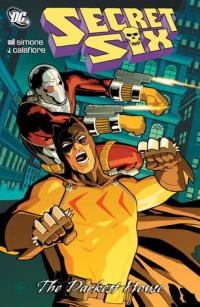
Kate’s Review: “Secret Six (Vol.6): The Darkest House”

12138927Book: “Secret Six (Vol.6): The Darkest House” by Gail Simone and Jim Calafiore (Ill.).

Publishing Info: DC Comics, January 2012

Where Did I Get This: The library!

Book Description from Goodreads: As a member of the Secret Six is determined to bring back a loved one from the Gates of Hell using a ‘Get Out of Hell Free’ card stolen back in the first arc of the series. Meanwhile Bane must face his inner demons and make some crucial decisions regarding his future with the Secret Six!

Review: And here we are. We have reached the end of The Secret Six arc, pre- New 52. I wasn’t ready to say goodbye, really. I put it off as long as I could. But the time has come to say goodbye to my favorite mercenary super villains (who are not really all that villainous). Which sucks all the more because it was a very indefinite goodbye, with little closure for really any of the characters I have come to love. In their final arc we go back to the beginning, bringing back the much fought over ‘Get Out of Hell Free’ card that was so coveted in Volume 1. I’m sure you can probably guess who wants to use this card. After all, Scandal Savage hasn’t really gotten over Knockout, even though she’s dating the very lovely Liana. But when she decides to use it, she finds that someone has backstabbed her and taken the card for themselves. Our next arc involves a Hail Mary attempt for the Six, with Bane deciding that it is time to try and take out his long held enemies once and for all.

I don’t know how I feel about the end of this. It was annoying that there was one last bit of backstabbing. I thought we were past this, guys. So much about this storyline left me feeling a bit cold. For one thing, Scandal, darling, you have a lovely, LOVELY companion in Liana. So why are you deciding NOW that you need to go get Knockout back from hell? I had thought that she had moved on and was very happy with her and Liana, as I feel that Liana is far more interesting than Knockout is. It didn’t help that Liana was put in a very precarious situation and Scandal was too busy trying to get her old lover back to really assist her until it was almost too late. THIS DID NOT SIT WELL WITH ME. It just felt weird to bring Knockout back right at the end of things. And maybe they didn’t know it was the end. But it feels needless.

I also am frustrated that Bane just decides that they are going to take out Batman’s allies, which in turn leads to their downfall as a team. This also felt like a weird plot choice to me! Especially since I thought that he was doing pretty well with this group of people, and was possibly done with this Batman obsession. But what do I know? I guess they just needed to end it somehow and so WHY NOT END IT WITH THE GODDAMN JUSTICE LEAGUE TAKING THESE POOR LOSERS OUT? I was pleased that Huntress was there to critique and criticize the whole concept of heroes and what makes a hero. Because let’s be honest, the thing that I like about Secret Six is that they are kind of ambiguous, and could be good if they really wanted to be. And not only could they be good, they are so inept at being totally bad (outside of MAYBE Bane) that there was no way they stood any kind of chance.

All of this said, there were things in this that I liked. More sweet moments between Jeanette and Deadshot (and her being very dominant when kissing him just made me grin from ear to ear) and a sweet scene between an isolated Ragdoll and Scandal were great, and when they were in Hell I was especially satisfied by what Catman got to see, given that his father was such a horrible person and has, indeed, ended up in this awful, torturous place. My favorite arc, however, was a date that Bane went on with Liana’s friend and fellow dancer Spencer. He took her to a carnival, guys. A CARNIVAL.

bane2
(source)

This was everything I ever wanted.

So, while I was ultimately disappointed with the end of the series, I still loved “Secret Six” as a whole. I loved all of these characters. I loved Simone’s writing. I wish that there was more. I may have to see how the New 52 Secret Six are. But I feel like the originals will always hold the key to my heart.

Rating 7: A somewhat weak end, but Bane going on a date is so good. I’ll miss the Six.

Reader’s Advisory:

“Secret Six (Vol.6): The Darkest House” is included on these Goodreads lists: “Diverse Heroes in Comics/Graphic Novels”, and “Greatest Graphic Novels”.

Find “Secret Six (Vol.6): The Darkest House” at your library using WorldCat!

Previous reviews of “Secret Six”: “Villains United”,  “Unhinged“, “Depths”, “Danse Macabre”, “Cats in the Cradle”, and “The Reptile Brain”.