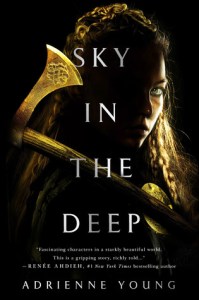
Serena’s Review: “Sky in the Deep”

34726469Book: “Sky in the Deep” by Adrienne Young

Publishing Info: Wednesday Books, April 2018

Where Did I Get this Book: NetGalley

Book Description: Raised to be a warrior, seventeen-year-old Eelyn fights alongside her Aska clansmen in an ancient rivalry against the Riki clan. Her life is brutal but simple: fight and survive. Until the day she sees the impossible on the battlefield—her brother, fighting with the enemy—the brother she watched die five years ago.

Faced with her brother’s betrayal, she must survive the winter in the mountains with the Riki, in a village where every neighbor is an enemy, every battle scar possibly one she delivered. But when the Riki village is raided by a ruthless clan thought to be a legend, Eelyn is even more desperate to get back to her beloved family.

She is given no choice but to trust Fiske, her brother’s friend, who sees her as a threat. They must do the impossible: unite the clans to fight together, or risk being slaughtered one by one. Driven by a love for her clan and her growing love for Fiske, Eelyn must confront her own definition of loyalty and family while daring to put her faith in the people she’s spent her life hating.

Review: I immediately requested this book when I strayed upon it on NetGalley. For one, I live in Minnesota, so it’s almost obligatory that I read any YA novel about Vikings. But that aside, the Viking things alone would be enough regardless of geography simply because it sounded like a breath of fresh air. I mean, I love fairytales and royalty fantasy fiction as much as the next person, but there’s been A LOT of those published recently. But a young woman Viking? Sign me up!

Eelyn is a warrior. Her father is a warrior, her brother was a warrior, before dying tragically several years ago, and her entire society is built around a strict rotation of warring and preparing to war with their rival clan, the Riki. But, as the book description above states, things go very wrong when she catches sight of her should-be dead brother battling against her clan alongside a fellow Riki warrior. Now, captured, alone, and surrounded by the enemy, Eelyn struggles to understand a brother she no longer knows and a people who seemingly frighteningly similar to her own.

The first thing I loved about this book was the author’s willingness to live in the world she built. Unlike other books, *cough*”The Cruel Prince”*cough*, Eelyn is a warrior and we SEE her fight. She kills people, and she doesn’t make apologies for it. This is her world, so why would she question these ways? Again and again, even as the battle lines move and the enemies change, we see Eelyn’s skills and why she is respected as a fighter. Further, there is never any mention of her gender playing any role in things. For one thing, she’s by no means unique for being a female warrior. Her best friend fights alongside her, and they have a practiced, methodical way of moving across a battlefield that only comes through much repetition and trust. So, too, in the Riki camp, women are just as likely to take up an axe or sword as the men. It was refreshing how free of comment this book was on this premise.

The action scenes in particular stood out. They are sprinkled throughout the story, successfully picking back up the pace just when things were on the verge of becoming a bit slow. The battles were also given a good amount of page time, with many details about the use of the land in strategy and the actual fights taking place. I was all over this, but it does mean you have to be a fan of battle scenes and sword/axe fighting to enjoy this book.

The storyline itself was fairly predictable. We all know going in that it’s going to be a pretty tried and true version of a main character learning that those she’s always hated might not be all that bad and oh look, here’s a convenient OTHER that they can both band up with against and she will be the point of connection between them. However, for all of that, I feel like the story was managed well and saved from too much predictability by the honest and challenging inner struggles that Eelyn goes through, particularly with her feelings towards a brother who she mourned but now finds alive and well, living with her enemy.

Eelyn is not a perfect person, and it is her imperfections that save what could have been a pretty typical story. Her anger, resentment, and prejudices do not go quickly or easily away. Even by the end of the book, it is still clear that she struggles to accept what her brother chose, and she is quick to understand and sympathize with her people’s distrust when she proposes banding together.

I did enjoy the romance as well, though it did progress a bit quickly for my taste. The book is fairly short, however, so this was maybe a bit unavoidable. What really made it was how free this plotline was from any grand romantic gestures or flowery, angsty prose. Fiske was an example of one of my more favorite romantic heroes: silent and steady. Between his solid presence, and the fact that most of the emotional stakes of the book were still tied up between Eelyn and her feelings towards her brother, the romantic plotline served as an understated but sweet portion of the book.

Again, given the shortness of the book, things did progress quite quickly throughout the entire story. I could have done with several more chapters of Eelyn’s time in the Riki village and a slower arc for her coming to understand these people. However, the writing was beautiful, particularly the descriptions of winter in the deep forest. And the action is appropriately violent and exciting. If you’re a fan of historical fiction and are looking for a quick, standalone read, I definitely recommend checking out “Sky in the Deep!”

Rating 7: A breath of fresh air in YA fiction, where the female warrior is appropriately badass and the action carries readers through what could be a slightly predictable story.

Reader’s Advisory:

“Sky in the Deep” is a new title, so it isn’t on many relevant Goodreads list, but it is on “2018 YA Historical Fiction.”

Find “Sky in the Deep” at your library using WorldCat!

Serena’s Review: “The Heart Forger”

33918881Book: “The Heart Forger” by Rin Chupeco

Publishing Info: Sourcebooks Fire, March 2018

Where Did I Get this Book: from the publisher!

Book Description: In The Bone Witch, Tea mastered resurrection―now she’s after revenge…

No one knows death like Tea. A bone witch who can resurrect the dead, she has the power to take life…and return it. And she is done with her self-imposed exile. Her heart is set on vengeance, and she now possesses all she needs to command the mighty daeva. With the help of these terrifying beasts, she can finally enact revenge against the royals who wronged her―and took the life of her one true love.

But there are those who plot against her, those who would use Tea’s dark power for their own nefarious ends. Because you can’t kill someone who can never die…

War is brewing among the kingdoms, and when dark magic is at play, no one is safe.

Previously reviewed: “The Bone Witch”

Review: Due to happy scheduling chances, I was able to read “The Bone Witch” and “The Heart Forger” pretty much back to back. Not only is this always a fun way to read books and their sequels, but it’s especially nice with stories that have complicated world-building and non-linear storytelling. “The Bone Witch” was a beast of a book, with tons of detailed descriptions of the world, magic system, and a past/future POV character. The “Heart Forger” pretty much picks up immediately after the events of the first book, and doesn’t hesitate to expand even further on its own world, while also adding a healthy dose of increased action to the mix.

Newly-minted bone witch, Tea, has a lot on her plate at the start of this story. Her beloved mentor is still slowly perishing due to her lost heartglass, Tea’s brother’s love life has presented some political complications, her own crush on Prince Kance continues, there’s a murderous woman in the dungeons who promises great power and to reveal secrets about the elder Asha if only Tea would listen, and now a sleeping sickness is making its way through the royal family, in a direct line towards Kance himself.

This says nothing of the future Tea’s story, which has gone from zero to sixty from the last book to this. No longer is the older Tea content to live her life banished on a desolate beach, raising her daeva beasts from the dead. Her mission has started, and alongside her newly-raised beloved, Kalen, she sets out to conquer nations, all in a greater quest whose origins and purposes are still only vaguely hinted at.

Between all of this, the increased action is probably the most notable aspect of this sequel. If there was one fairly common complaint about the last book, it was that it was perhaps a bit too slow. I enjoyed it quite a bit, as I like reading books that focus on detail and slow character development. And given this one’s fast-paced story line, in retrospect, the time and effort that was put into place laying the foundation for this world, this conflict, and the characters who take part in it, were well worth the effort. Our characters quickly travel from one location to another, surviving and battling against multiple city-wide sieges and more slinky, sinister hidden antagonists as well. I particularly loved the increased action for Tea’s dragon-like daeva. It  was all very “Dany and her dragons” esque.

The political intrigue was also ratcheted up to a new level. With the sleeping sickness spreading between the royal families, tensions are high and everyone is looking for someone to blame. And the only man who might have the answer, the titular Heart Forger, is no where to be found.

In the future, an older Tea is fully committed to her plan, whatever that is. From what we (from the bard’s POV) can tell, it looks a lot like raising armies of the dead to attack entire countries. We get further insights into Tea’s vengeance, something about secrets that the elder Asha have been hiding, and a larger plot by this world’s ever-dangerous arch enemies, the Faceless. But for all of battles, both large and small, we still know very little about Tea’s reasons as a whole. There are numerous references to her having killed some woman, but we don’t know who this was or how it happened. In the end, there were almost too many question left unanswered for my taste.

One of the things I most enjoyed was the developing romance between Kalen and Tea. At the end of the first book, we saw Tea raise him from the dead and welcome him as her beloved. But at the start of this book, the younger Tea is still fully enthralled with Prince Kance. Her slow realizations about her feelings for Kalen and their relationship’s progression were very enjoyable and probably best took advantage of the solid foundation that was built between these two in the first book. I really dislike insta-love romances, and this was a particularly good example of how to avoid that, and instead have a strongly built and developed romantic story line.

For all of these good things, I did struggle with this book a bit more than the first one. For one thing, the first book spent a lot of time with all of the details and rules of this world. But then, here, we see numerous exceptions and loopholes built into the world, all seemingly used to simply move the story the way the author needed it to go. At best this was distracting as I tried to work out how these exceptions made sense in the larger scheme of things, and at worst it felt like blatant deus ex machina moments where the author’s hand was all too visible.

Further, there were a few characters who made decisions that seemed completely nonsensical and out of character even. In particular, some of the “revelations” in the future story line really seemed at odds with the characters. People keeping secrets for no reason, and then revealing them when the story would be best served for a dramatic moment. But why then keep them in the first place? I have a hard time when suspense is built in a story at the expense of consistent and rational characters

And, while I still enjoy the juxtaposition of the future and past story lines of Tea, the devise itself is starting to feel like its hindering the story. The secrets thing that I just mentioned is largely a problem because they’re needed to prop up the suspense of the future story line. And, by the end of the book, there are still too many question that were left unanswered. The older Tea has said several thing that sure, sounded cool, but don’t particularly tie-in very well to the events taking place with past Tea. In my opinion, the story has out grown this structure and that trying to maintain it was starting to actively work against this book. I hope that in the next the two story lines quickly meet up and we move forward with a single plot.

All in all, however, I still very much enjoyed “The Heart Forger.” The increased action made it a fun read, and now that the characters have all been established, it was a joy to follow all of their individual plot lines. Further, the romance between Tea and Kalen is one the best I’ve read recently. “The Bone Witch” is required reading for this book, but if you liked that one, than you’re sure to enjoy this one as well!

Rating 7: Action packedwith a sweet romance to boot, but became a bit bogged down by its own writing device with the past/present dueling story lines.

Reader’s Advisory:

“The Heart Forger” is a newer title, so isn’t on many Goodreads lists, but it is on “Asian MG/YA 2018.”

Find “The Heart Forger” at your library using WorldCat!


Serena’s Review: “Rosemarked”

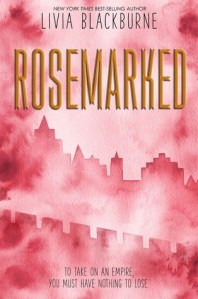
29346927Book: “Rosemarked” by Livia Blackburne

Publishing Info: Disney-Hyperion, November 2017

Where Did I Get this Book: from the publisher!

Book Description: A healer who cannot be healed . . .

When Zivah falls prey to the deadly rose plague, she knows it’s only a matter of time before she fully succumbs. Now she’s destined to live her last days in isolation, cut off from her people and unable to practice her art—until a threat to her village creates a need that only she can fill.

A soldier shattered by war . . .

Broken by torture at the hands of the Amparan Empire, Dineas thirsts for revenge against his captors. Now escaped and reunited with his tribe, he’ll do anything to free them from Amparan rule—even if it means undertaking a plan that risks not only his life but his very self.

Thrust together on a high-stakes mission to spy on the capital, the two couldn’t be more different: Zivah, deeply committed to her vow of healing, and Dineas, yearning for vengeance. But as they grow closer, they must find common ground to protect those they love. And amidst the constant fear of discovery, the two grapple with a mutual attraction that could break both of their carefully guarded hearts.

Review: I was very excited to receive a copy of this book in the mail for review. I had seen it bouncing around on a few review sites, but generally it seemed to land fairly unnoticed. Which, now having read it, is quite a shame! “Rosemarked” is a powerfully simple story of invasion and colonization, hope in the face of loss, and the resilience of two characters who are set with an impossible task.

Zivah, a young healer, finds herself with the unwelcome task of caring for a troop of Amparan soldieres who fall ill with the dreaded rose plague while passing through her home. While her people have arranged a peaceful treaty with these forces, their lands is still regularly plundered and their people harmed. But Zivah knows her duty. She saves as many as she can, including the commander of the guard, but finds herself now cursed with the plague herself, doomed to die in a few years when the fever returns. But her life is not over. She finds herself drawn into a plan to infiltrate the Amparan capital to better learn what their plans are for her homeland. Now, alongside Dineas, a young solder who only recently escaped the dungeons of the city he now marches back towards and who still carries mental and emotional scars from this time, Zivah has a chance to use her knowledge of poisons and healing to save her people.

The story is told with alternating view points between Zivah and Dineas. This worked particularly well due to the vast differences in not only their personalities, but also in their life experiences and how these have shaped their worldviews. As a healer, Zivah struggles with her new reality, doomed to a short life in which even her vast knowledge cannot save her. Further, as she is highly contagious, her entire vocation has been lost to her. In this new mission, she is asked to bend and manipulate her own oaths as a healer to do no harm. What is “harm” when the balance is between individuals and nations? Where is the line when using her knowledge of herb lore and poisons?

Dineas, too, has a powerful arc throughout the story. After his time in prison, he is too broken to return to the capital as he is, not able to put on the performance necessary to convince the Amparan soldiers that he is one of them. Instead, Zivah uses a complicated potion to take away his memories. With this act, the story ultimately ends up with three characters: Zivah, original Dineas, and the Dineas who has no memory. This new Dineas, freed from his memories of torture and hatred, forms a close relationship with the healer who “saves” him. However, as their mission continues, the old Dineas must be brought forth routinely to report on what new Dineas has seen. This leads to much inner confusion and tension as he imposes his own memories, fears, and prejudices onto the actions and emotions of a self who has been freed of his difficult past. Both versions of Dineas’ are soldiers to the core. But through their two perspectives, one jaded and one naive, they each struggle with the harsh realities of warfare and the knowledge that soldiers on either side of any war are ultimately people themselves, with their own loves and lives.

The rose plague plays a large part in this story, not only through the massive impact it has on shaping Zivah’s now shortened life, but in the portrayal of this world as a whole. The plague kills the majority of those it touches. A small few recover but are doomed to live solitary lives in plague villages, waiting for the return of the fever that will claim them. And an even smaller number recover completely, the rose-colored marks on their skin browning, resulting in their being known as “umbertouched.” Through Zivah’s eyes, we see the half-life that those left with this in-between portion of life are forced to live. Cut off from society, the rosemarked are shuffled out of sight into grimy, lawless colonies, similar to a leper colony. They can not interact with loved ones, for fear of passing on the disease. And they have no future, living only on borrowed time. What’s worse, for the majority of them, society prefers to pretend they simply no longer exist. Zivah, and all the others she meets who are rosemarked, are living life in a very different want than the average person. They know their time is limited, and with this in mind, their mental calculus of risk and reward is very different.

Also, for a fantasy novel, there was practically no magic in this story. Really, other than the fact that it is set in a made-up world that is pestered by a fictional plague, this book could read as historical fiction. I quite enjoyed the lack of magic in this story, and the slow, methodical way the plot plays out. The story is simple and straightforward, relying heavily on the strength of its two central characters and their individual arcs throughout the book. For some readers, this may read as a bit slow and dull.  But for readers who enjoy character-focused stories and who can appreciate a fantasy novel with very little magic, “Rosemarked” is definitely a book worth checking out! It’s the first in a duology, with the second, “Umbertouched” set to release next fall.

Rating 7: A character-driven story that perhaps lacks depth, but still touches on important topics of vocation, one’s role in the world, and the horrible decisions that ongoing warfare brings upon a people.

Reader’s Advisory:

“Rosemarked” is a newer title and isn’t on many relevant Goodreads list, but it should be on “Best Fiction Books About Diseases or Viruses.”

Find “Rosemarked” at your library using WorldCat!

Kate’s Review: “Batman: Nightwalker”

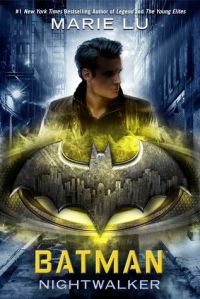
29749090Book: “Batman: Nightwalker” (DC Icons #2) by Marie Lu
Publishing Info: Random House Books for Young Readers, January 2018

Where Did I Get This Book: The library!

Book Description: Before he was Batman, he was Bruce Wayne. A reckless boy willing to break the rules for a girl who may be his worst enemy.

The Nightwalkers are terrorizing Gotham City, and Bruce Wayne is next on their list.

One by one, the city’s elites are being executed as their mansions’ security systems turn against them, trapping them like prey. Meanwhile, Bruce is turning eighteen and about to inherit his family’s fortune, not to mention the keys to Wayne Enterprises and all the tech gadgetry his heart could ever desire. But after a run-in with the police, he’s forced to do community service at Arkham Asylum, the infamous prison that holds the city’s most brutal criminals.

Madeleine Wallace is a brilliant killer . . . and Bruce’s only hope.

In Arkham, Bruce meets Madeleine, a brilliant girl with ties to the Nightwalkers. What is she hiding? And why will she speak only to Bruce? Madeleine is the mystery Bruce must unravel. But is he getting her to divulge her secrets, or is he feeding her the information she needs to bring Gotham City to its knees? Bruce will walk the dark line between trust and betrayal as the Nightwalkers circle closer.

Review: Now it is very true that both Serena and I are big Superman fans here, willing to stand for him and stand up to anyone who would wish him ill or call him anything less than great. And we were solidly Team Superman in the most recent DC movies that involved him. But I do have to admit that even though I want to smack Batman upside the head a lot of the time, especially in his most recent iterations and interpretations, there is a very special place in my heart for him. I will openly concede that I love him, darkness and all. What can I say? I am a true, true sucker for the emotionally unstable messed up problematic loner guy in my fiction. Bruce, take your place alongside J.D. from “Heathers”, Kylo Ren, and Bobby Briggs.

giphy21
Oh and who could forget this fella? (source)

So you KNOW that I was all about reading “Batman: Nightwalker” by Marie Lu, the second book in the “DC Icons” young adult series. These books tend to take the teenage selves of these superheroes/heroines and give them something of an origin story, or at the very least an early foray into their ultimate heroic destines. I read “Wonder Woman: Warbringer” by Leigh Bardugo last fall, and was very excited to see what the next in the series had to offer. Marie Lu herself has become a bigger and bigger name in YA, with her previous book “Warcross” getting a lot of buzz for its sci-fi and techno thriller premise. So giving her Batman was a natural choice, with his love for tech.

The Bruce Wayne that we meet in “Nightwalker” is not Batman yet. He’s still a teenager, recently turned eighteen and trying to keep going in spite of the loss of his parents, a trauma that still haunts him. Lu’s Wayne feels more like the teenage self of Michael Keaton’s version of Wayne. He is damaged and sad, but he still wants to see the best in those he cares about and wants them to be safe. There isn’t any disproportional arrogance here; he’s reflective and cautious, and has genuine connections and affections for the important people in his life. He also is fully aware of his own privilege in this world, and Lu takes many opportunities to address that his wealth and skin color has given him all the advantages that other people in similar situations just would not have (more on that later).  It’s a characterization that I found refreshing, and one that has been sorely missed ever since Bale took the cowl over and Affleck went from there. Lu does a very good job with Bruce, and with most of the other characters she writes, both familiar and original ones.  Alfred is a properly dry but loving guardian to Bruce (and yes, he’s still a bit too permissive, but then Alfred would kind of have to be for Bruce to turn into Batman later in life). Lucius Fox is a gadget fanatic but has some other background and abilities, mentoring Bruce in his love for all things tech. And my favorite was the appearance of Harvey Dent, who is one of Bruce’s best friends. I don’t know what it is about so many newer stories framing Harvey as a good person who’s turn to villainy as Two Face is steeped in tragedy (probably because of “The Long Halloween”), but I am HERE for it and I have to say that Lu has written the best one yet. There is no hint of what’s coming for him in the future, there is only a moral person and a wonderful friend who cares deeply for Bruce. Whenever Harvey was a perfect cinnamon roll of an individual (so pretty much ALL THE TIME) I just whimpered and clutched the book to my chest.

giphy22
WHY, MARIE, WHY?! (source)

The original characters, however, did not fare as well for me. Okay, let me rephrase that. Most of them did. I liked Detective Draccon, who puts Bruce on the Arkham community service beat, though she wasn’t really doing much beyond being Gordon before Gordon was around. I REALLY liked Bruce and Harvey’s bestie Dianne, a smart and empathetic brain who is fiercely loyal to her two main dudes. I had a harder time believing Madeline, the antagonistic (or IS SHE?) criminal genius who may or may not be connected to The Nightwalkers, who are targeting and killing the rich in Gotham. While I liked that she was super intelligent and super morally ambiguous, I felt that the forced star crossed lovers sort of vibe that she and Bruce gave off was unnecessary. I didn’t really need their empathy and understanding towards each other to turn into a romance that couldn’t be, I think that it would have been just fine if it was left platonic. I felt that by making her pine for Bruce undermined her own agency and self-actualization. Also, their constant “do I trust you or should I not because there’s this sexy charge between us but you are on the other side of this big long conflict” dynamic was WAY TOO Batman/Catwoman, and that just will not do. There can be only one Selina Kyle. The Nightwalker concept itself did feel very Batman villain-y, and also brought in some interesting questions about capitalism and wealth distribution in this country. I greatly enjoyed that entire aspect and how Bruce approaches it, and explores it just beyond the black and white morality and fully into the greys of capitalism’s winners and losers.

Overall, I found “Batman: Nightwalker” to be a pretty fun book. I would absolutely recommend it to any fan of Batman, especially those who may need Batman with a little more hope.

Rating 7: A fun early Batman adventure with some familiar faces and a likable Bruce Wayne. I didn’t approve of the need for a love interest, but it was a fast and fun read.

Reader’s Advisory:

“Batman: Nightwalker” is included on the Goodreads lists “Super Hero Books (Not Graphic Novels”, and “2018 Retelling Releases”.

Find “Batman: Nightwalker” at your library using WorldCat!

Kate’s Review: “13 Minutes”

32768519Book: “13 Minutes” by Sarah Pinborough

Publishing Info: Flatiron Books, October 2017

Where Did I Get This Book: The library!

Book Description: Natasha’s sure that her friends love her. But does that mean they didn’t try to kill her?

Natasha is the most popular girl in school. So why was she pulled out of a freezing river after being dead for thirteen minutes? She doesn’t remember how she ended up in the icy water that night, but she does know this—it wasn’t an accident, and she wasn’t suicidal.

Now Natasha’s two closest friends, who are usually her loyal sidekicks, are acting strangely. Natasha turns to Becca, the best friend she dumped years before, to help her figure out the mystery.

At first Becca isn’t sure that she even wants to help Natasha. But as she is drawn back into Natasha’s orbit, Becca starts putting the pieces together. As an outsider, Becca believes she may be the only one who can uncover the truth…which is far more twisted than she ever imagined.

Review: One of last year’s runaway thriller hits in this country was “Behind Her Eyes” by Sarah Pinborough. Yes, it’s on my pile, I’ll get to it eventually. Even though the U.S. didn’t get their sights set on Pinborough too much until this book came out, she has many, MANY books under her belt. One of those books is “13 Minutes”. So of course once “Behind Her Eyes” got the attention it did in the U.S., the same publisher brought “13 Minutes” on over too. So THAT is how I read that one before the megahit. And I must say, even though I went in without any expectations (I didn’t realize they were written by the same author until I had already started it), I can see why people are kind of obsessed with Pinborough’s thriller writing right now. Because “13 Minutes” really sucked me in.

“13 Minutes” pretty much takes “Mean Girls” and throws it into a British crime procedural, a mix that is of course super tantalizing to the likes of me. There’s something about a Queen Bee ending up in a freezing river and then having to solve the mystery of how and why she got there. This story is told in a few different ways. We get straight up third person narrative, some first person POV, and then texts, diary entries, psychiatric notes, and news reports. These are all pretty standard these days when it comes to thriller fiction, but I liked how Pinborough carefully crafted it all together and took you down a path with lots of twists and surprises. I will happily report that a few of them actually caught me off guard. I even got that moment of ‘okay, this seems wrapped up, but there’s so much story left, so what’s going on OHBOYOHBOY’, something that I just delight in when reading a thriller novel. I feel a bit sheepish that I was so easily tricked, but Pinborough combines meticulous clue hiding and just enough unreliable narration on ALL sides that I’m not even mad that I was so totally thrown off the trail, especially since the stakes became quite high quite quickly once I realized I’d been duped.

The characters themselves, however, kind of fall into tropes that are all too familiar these days. Tasha is the mean girl who may have more depth than we expect of her. Becca is a brooding loner who tries to be aloof, but is still desperate for the affection and acceptance of her former best friend. Hayley and Jenny are both nasty and poisonous, but are also victims of Tasha’s scorn and their own insecurities. I didn’t really feel like the wheel was being reinvented with any of them, and while I was attached to Becca at least and wanted everything to be okay for her, I knew that I wouldn’t be horribly upset if it wasn’t. I wasn’t really in it for the characters as much as I was the plot and the mystery. That said, I do think that Pinborough did a pretty good job within those characterizations. I was especially taken with her writing of Tasha, who did feel like the most of complex of them all. I did also like that the book addresses that for many people the need to be accepted can make you do things that you aren’t proud of, and that being a teenager as well can make things especially messy.

But if you are in it to be taken on a fun and wild ride, “13 Minutes” will probably be a good match for you. I read it in about two marathon sittings, and I probably could have done it in one if I had the chance and time to do it. Now that I’ve found out what the big deal is about Pinborough’s thriller writing, I’m definitely going to keep an eye out for any future works that she may be bringing to the table.

Kate’s Rating 7: Though the characters were fairly standard and trope ridden for the most part, the plot and mystery itself kept me guessing and on the edge of my seat.

Reader’s Advisory:

“13 Minutes” is included on the Goodreads list “Young Adult Contemporary Thrillers 2016”, and would fit in on “If You Enjoyed ‘Gone Girl’, You Might Also Like…”.

Find “13 Minutes” at your library using WorldCat!

Kate’s Review & Giveaway: “Senlin Ascends”

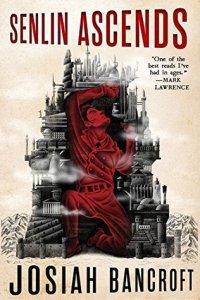
35271523Book: “Senlin Ascends” by Josiah Bancroft
Publishing Info: Orbit, January 2018

Where Did I Get This Book: I received an ARC from the publisher!

Book Description: The Tower of Babel is the greatest marvel in the world. Immense as a mountain, the ancient Tower holds unnumbered ringdoms, warring and peaceful, stacked one on the other like the layers of a cake. It is a world of geniuses and tyrants, of airships and steam engines, of unusual animals and mysterious machines. Soon after arriving for his honeymoon at the Tower, the mild-mannered headmaster of a small village school, Thomas Senlin, gets separated from his wife, Marya, in the overwhelming swarm of tourists, residents, and miscreants.

Senlin is determined to find Marya, but to do so he’ll have to navigate madhouses, ballrooms, and burlesque theaters. He must survive betrayal, assassins, and the long guns of a flying fortress. But if he hopes to find his wife, he will have to do more than just endure.

This quiet man of letters must become a man of action. 

Review: I firstly want to thank Orbit publishing for sending me an ARC copy of “Senlin Ascends”!

For someone who used to work in a historic Victorian house in full Victorian maid’s uniform (and sometimes Victorian style undergarments), I’m surprisingly not in tune with steampunk literature. My only steps in the genre are Alan Moore’s “League of Extraordinary Gentlemen” comic series, and the book “The Clockwork Scarab”. But when Orbit sent me “Senlin Ascends”, it became clear quite quickly that I was going to be jumping right into the deep end of a complex and steampunky world. I will admit that I was a bit overwhelmed at first as I got to know Thomas Senlin, cautious and meek school teacher, and his excursion into a technology ridden and complex Tower of Babel. But as I read on, I got into the groove.

The first thing that struck me was how intricate and creative this alternate world is that Josiah Bancroft has created. The Tower of Babel is an imposing structure from Biblical Mythology, and Bancroft transports it to a Victorian-esque time period in a world that is similar to our own, but not quite the same. The references to Victorian societal norms and fashions within a world of steam blimps and flying ships was very fun, as were the strange puzzles and conflicts within the Tower itself as Senlin moves his way through, hoping to find his lost wife, Myra. From drug dens to maniacal plays to space piracy, Bancroft puts Senlin in a world that he, and the reader, doesn’t see coming. I enjoyed jumping from scenario to scenario, experiencing it through the eyes of someone just as uninitiated as I was. The writing itself to describe this world was lyrical and flowing, reminding me of more classical styles similar to an adventure novel by Verne or Stevenson. It was just another nod to the time that steampunk tends to function in, and it fit the story perfectly.

I also enjoyed seeing the journey of Senlin himself. He starts as a meek and pragmatic school teacher from a small town, who brings is effervescent and new bride Mayra to the Tower in hopes of a vibrant honeymoon. All he knows of the Tower is what he has read in guidebooks, which make it seem fascinating and wondrous. As he comes to realize that it is, in fact, far more dangerous than he was led to believe, he has to confront himself and his own pitfalls and weaknesses if he wants to get Mayra back. To be frank, when Senlin starts out he is naive and privileged, and his transformation to hero is a slow one. It’s one thing if you start out merely naive, but it seems that Bancroft deliberately wanted to make him earn his hero status, as Senlin starts out with maddening cowardice, whose idealism has put his wife in serious danger that he can’t quite confront. I would go so far as to say that Senlin starts out as a rather unlikable character, as he abandons people who are helping him or working with him if he can escape with his tail between his legs. But to start him out this way means that he is going to learn from his mistakes, and by learning he becomes a better, if more hardened, person more equipped to function within the corrupt tower. His rotating companions and allies all have their roles to play in his growth, and I liked meeting them and seeing how he interacted with them.

But there was a glaring issue I took with “Senlin Ascends”, and that is how women have functioned within the narrative thus far. The most important, of course, is Mayra, and while we do get a little bit more insight beyond his here and there, she is very much objectified as a victim to be saved. She disappears within the first pages, and becomes this specter of longing who is merely idealized and not explored as a person, but as an ideal. I’m hoping that she does show up more in the later books and can become more than a beautiful, missing woman in a red helmet (side note: I love the fashions described in this book, and if this is what steampunk fashion is for the most part, I’m down!). Then there was Edith, one of the first people Senlin meets in the Tower. While she has ended up in a pretty cool place by the time he meets up with her again, what we see on page is her being put through the ringer and tortured, and not really any of the triumphs that bring her to final, self actualized state. It’s great she gets there eventually, but it would have meant more to see it. There is Voleta, who is the sister of one of Senlin’s companions, who was forced into performing acrobatics for abusive and corrupt men of power, another damsel in distress. And finally there’s Iren, an insanely strong enforcer who Senlin teaches how to read. While she was intriguing in her storyline, wanting to learn to read and become more that just brute force, she was, again, a woman to be saved in some way. I am going to give all of this the benefit of the doubt for now, as this is book one in a series and there are more books for all of them to come into their own. But I had hoped that women would play more of a role in this book beyond motivation for men.

Those issues aside, I did find “Senlin Ascends” to be a compelling story with lots of really neat ideas.

Rating 7: An exciting adventure novel with an interesting protagonist. I wish that female characters weren’t relegated to victim status, but am hoping in the next book they will get more to do and be more fleshed out.

But there’s more! I am giving away a free ARC of this novel! Given the indie success of this book and the other books in the series, I’m thinking that it will make a splash in the mainstream publishing world! The giveaway is open to U.S. residents only, and will be running until January 23rd!

Enter The Giveaway Here! 

Reader’s Advisory:

“Senlin Ascends” is just getting started and isn’t on any Goodreads lists, but I think that it would fit in on “Steampunk”, and “Best Steampunk and Gaslight Works”.

Find “Senlin Ascends” at your library using WorldCat!

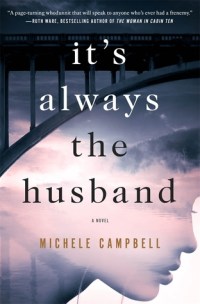
Kate’s Review: “It’s Always The Husband”

31451082Book: “It’s Always The Husband” by Michele Campbell
Publishing Info: St. Martin’s Press, May 2017

Where Did I Get This Book: Audiobook from the library!

Book Description: Kate, Aubrey, and Jenny. They first met as college roommates and soon became inseparable, even though they are as different as three women can be. Twenty years later, one of them is standing at the edge of a bridge . . and someone else is urging her to jump.

How did things come to this?

As the novel cuts back and forth between their college years and their adult years, you see the exact reasons why these women love and hate each other—but can feelings that strong lead to murder? Or will everyone assume, as is often the case, that it’s always the husband? 

Review: On the show “Major Crimes”, one of my favorite characters, Detective Lt. Provenza, has a tag line that he lives by. “It’s always the husband, it’s always the husband it’s ALWAYS the husband.” Of course, on the show it isn’t ALWAYS the husband, but it plays to the sad statistic that when a woman is murdered, the odds are that her murderer is going to be her husband or boyfriend. It probably doesn’t surprise you that when I first heard of the book “It’s Always The Husband” by Michele Campbell that this phrase was going through my head. But like on “Major Crimes”, I had a feeling going in that it would be a bit more complicated than the steadfast and all too real adage that Provenza likes to toss about.

The story is told through two time periods that tend to flip flop from one to the other. The first is twenty years in the past, when three women start their freshman year of college at a prestigious school in New England. Aubrey is the girl who got there solely on her brains, and is escaping an impoverished life back in Nevada. Jenny is a townie who has ambitions and hopes to become more than her small town expectations. And Kate is the entitled and rick party girl, who expects life to be handed to her. Their differences were stark and while I had a hard time believing that they would have been as close as the book makes them out to be (specifically Jenny; I just don’t believe that she would have put up with Kate’s bullshit), I felt like they were all well explored and fleshed out. I liked seeing how they changed and shifted in their personalities from their freshman year to the present day, when they have all gone their separate ways and established themselves. I also liked that none of them were all good, or all bad. While Kate was absolutely a wretched and toxic human being, Campbell threw in some background and plot points that humanized her. While Jenny was determined and incredibly competent, and absolutely my favorite of the three main characters, she makes stupid decisions and mistakes that I wanted to smack her upside the head for. And Aubrey is so damaged and innocent that you definitely feel sorry for her, but a dark side lingers there, and when it rears it’s ugly head you can’t help but be a bit freaked out by it. As a reader I cared about all of them in some way, and was invested in how things turned out for all of them, and who it was that ended up on that bridge. It may also be a testament to how good the narrator was on this audiobook, as she varied her voices and inflections for each character wonderfully.

The mystery itself was very well done. The clues to what happened are laid out in both the past and the present, giving hints both in actions and the characters personality traits. This book definitely kept me guessing as it went on, and I never had a complete handle on what the ultimate solution was, which I really liked. My thoughts and opinions shifted in the ways that Campbell probably wanted them to, and I didn’t even mind that I was being led about like a puppet on a string because it was so fun to be taken on this journey. It eventually becomes clear just who it is on the bridge, but even getting to that first reveal was a fun trip to take, and it was even more enticing to find out who put her in that position, and why.

I will say that there were a couple of things that I took umbrage with. For one, there is a storyline with the new Chief of police in town who is investigating the murder, Owen. He goes in completely biased, as he had a VERY short dalliance with the victim before she ends up dead, and I found myself just irritated with everything about him and his motivations. I also found it a bit hard to swallow that an unexpected dinner with a woman who didn’t even give him her real name would affect him so much, no matter how magnetic she was, and it felt like an unnecessary way to throw in some drama. There are plenty of cops who try to fit evidence to a perp as opposed to the other way around without having a personal connection to the victim, so that seemed a bit superfluous. And this book also does that thing that I just cannot stand, in that in the last page and paragraphs of the book a FINAL TWIST is revealed. Man, that made me roll my eyes super hard. But unlike other books that have implemented this strategy in my recent reading, I enjoyed this one enough for everything else that I couldn’t hold it  totally against it. Just know that it’s coming.

“It’s Always The Husband” was a sudsy and compelling thriller that I had a great time listening to. While it had some flaws, overall I greatly enjoyed it. And I think that it would truly get Provenza to rethink his usual mantra.

Rating 7: A fast paced and well plotted thriller with some great revelations and some great surprises. One plot line was a bit tedious and frustrating, but overall I enjoyed what this book had to give.

Reader’s Advisory:

“It’s Always The Husband” is included on the Goodreads lists “2017 Librarian Recommended Books”, and “Best Twists”.

Find “It’s Always The Husband” at your library using WorldCat!

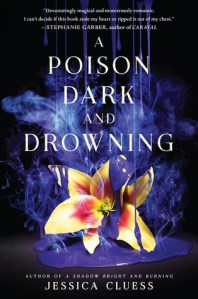
Serena’s Review: “A Poison Dark and Drowning”

33629245Book: “A Poison Dark and Drowning” by Jessica Cluess
Publishing Info: Random House Books for Young Readers, September 2017

Where Did I Get this Book: Blogging for Books

Book Description: Henrietta doesn’t need a prophecy to know that she’s in danger. She came to London to be named the chosen one, the first female sorcerer in centuries, the one who would defeat the bloodthirsty Ancients. Instead, she discovered a city ruled by secrets. And the biggest secret of all: Henrietta is not the chosen one.

Still, she must play the role in order to keep herself and Rook, her best friend and childhood love, safe. But can she truly save him? The poison in Rook’s system is transforming him into something monstrous as he begins to master dark powers of his own.

So when Henrietta finds a clue to the Ancients’ past that could turn the tide of the war, she persuades Blackwood, the mysterious Earl of Sorrow-Fell, to travel up the coast to seek out strange new weapons. And Magnus, the brave, reckless flirt who wants to win back her favor, is assigned to their mission. Together, they will face monsters, meet powerful new allies, and uncover the most devastating weapon of all: the truth.

Previously Reviewed: “A Shadow Bright and Burning”

Review: I wasn’t a huge fan of “A Shadow Bright and Burning.” It wasn’t the worst thing ever, but I had a few distinct issues with it and, perhaps worse, after reading it, I pretty much forgot about it and the fact that it was the first in a trilogy. But then “A Poison Dark and Drowning” popped up on Blogging for Books, and I thought “why the heck not?” I also requested an audiobook version from the library, since we all know how I am about needing my multiple formats. And, in this case particularly, I’m very glad I did! While this wasn’t a perfect book and several of my concerns from the first came to fruition here, this sequel is definitely an improvement on the first, increasing the stakes, expanding the setting, and, for the audiobook, read by an awesome narrator who added much needed depth and tone to Henrietta’s voice.

Opening shortly after the end of the first novel, Henrietta has settled into her new life as a sorcerer. As well as she can, that is, knowing that she is being asked to live a lie and pose as the prophesied savior. London is in a precarious point in the war against the almost all-powerful Ancients, lead by the horrifying Skinned Man, Relim. Yes, at the end of the last book they struck a crucial blow, killing one of the Ancients for the first time ever. But the protective ward around the city fell as a result, and now they all wait, exposed, wondering why Relim hasn’t yet struck. Throughout all of this, Henrietta’s focus is also drawn more close to home as her childhood friend and love, Rook, begins to succumb to the darkness that has poisoned him after being attacked in the last book.

It is clear that Cluess felt much more freed up, as it were, when she wrote this novel. It’s not even that surprising. She had a lot of ground to cover in the first book including world-building, the mysteries surrounding Henrietta’s family, and setting up not one but two magic systems. Here, with all of these factors already in place, it feels like the author was finally able to open her wings. The pacing of this story was much more active, and the magical elements fit more naturally into the storyline. Henrietta’s tale takes outside of London, onto the treacherous ocean, ruled by a monstrous spider Ancient, to a misty moor hiding a monster hunter’s house, down into the land of fairy that is ruled by the capricious and cruel Queen Mab, and through many different battles, with the Ancients themselves, as well as their creepy familiars.

Henrietta herself is also more fully fleshed out in this novel. While she still had a tendency to withhold information and lie more often than is likely wise (a pet peeve of mine with YA heroines), she’s also more sure of herself and of her own powers, specifically her magicians magic. She also barely avoids the typical “martyr complex” also all too familiar for YA heroines, and still maintains a practical head on her shoulder, even when atrocities are being committed simply to lure her out. Part of my increased appreciated for Henrietta is due to the clever and nuanced voice that the audiobook narrator managed to give the character. There were moments where she added tones of humor, exasperation, and sense to dialogue that may have read more melodramatic simply from the page. It’s one of those tricky things, in cases like this. I honestly can’t tell how much of my improved attitude towards this character comes from the way she was written (was the characterization actually stronger?) or from simply enjoying this narrator quite a bit (would I have appreciated the first book’s version of Henrietta more had I listened to the audiobook version of that one too?).  Ultimately, I do think that Henrietta’s storyline was much stronger in this book, largely freed from the angst and drama from the first book.

We also delved more deeply into Henrietta’s history and into the mystery surrounding how and why the portal that let the Ancients into this world was open 17 years ago. While I found some of this to be fairly predictable, there were enough twists and turns added to still make the reveals feel new and interesting.

The stakes were also much higher in this story. The ward is down, London is in danger, and the odds are not good. And these things aren’t simply left as passive threats. There are battles, soldiers die. Towns are destroyed, and civilians suffer. Beyond this, there are consequences, real and terrible consequences, to the choices that characters make. I was surprised and impressed by the author’s commitment to “going there” with some of these decisions. This added seriousness of tone did a lot to balance out my major, and predictable criticism of this book: a love square.

As I mentioned in my review of the first book, the story is set up with Henrietta surrounded by a bunch of young men, all potential love interests in some manner or another. In that book we had Rook, Henrietta’s childhood love, and Magnus, the charming rogue. The story ended with Henrietta choosing Rook, in no little part due to the fact that Magnus turned into a jerk who was not only already engaged but let loose that he thought Henrietta was beneath him. But here, not only does Magnus get freed back up, breaking his engagement, but somehow is retconned into being much more regretful about his previous behavior. Henrietta’s heart is with Rook, however his descent into darkness and the unknowable future make their relationship challenge. And now we also add in Blackwood, the dark and brooding magicain who was slow to warn to Henrietta in the first book, but looks to be being slotted into a sort of “Mr. Darcy/bad boy” role where he’s made better by his close friendship with Henrietta, a relationship that, at first only on his side but slowly on hers as well, begins to blossom into something more.

The worst part of all of this was the fact that the book was clipping along until about halfway through with barely a reference to any romance, other than a few thoughts and concerns shot Rook’s way. And then BAM, right in the middle of the story and the action the brakes were thrown on and the story became stuck in love-triangle/square-melodrama. Thankfully, the story did kick back into the action eventually, but there were times in the middle of this section where I almost put the book down. I really don’t understand why this is considered to be necessary in YA fantasy. The story was so strong without it, and sure a dash of romance is often appreciated, but tonally, the book takes a massive swerve when it suddenly commits so much page time to these silly romantic flounderings. And ultimately, this middle section soured my opinion on all the characters involved: Henrietta, Blackwood, Rook. Magnus, bizarrely, probably comes out of all of this in the best light. And in the end, I’m not sure how I’m supposed to feel about where things stand. Who exactly am I supposed to be rooting for? The fact that I can’t tell is the biggest problem, and ultimately, I wish Henrietta would just kick them all to the side and go have awesome adventures with Maria.

To end on a good note, Maria, a Scottish witch they pick up on their travels, was probably my favorite part of this story. Not only does she add the much needed female companion to Henrietta, but as a character herself, she’s excellent. Through her we see the horrors that the witches have suffered, alongside the magicians who we’ve heard about through Henrietta’s story, during the systematized persecution put in place after the portal was opened years ago. She has a powerful magical ability, and she wields an ax. And, best of all, the story sets her up in a pivotal role going forward. Again, Henrietta, girl, throw those boys away and hang with Maria. Rook = no personality. Blackwood = kind of a jerk with controlling tendencies. Magnus = already showed his cards as a player. Maria = besty who is the only one Henrietta is comfortable being completely truthful with. Seems pretty obvious to me.

Ultimately, I did enjoy “A Poison Dark and Drowning” more than the first. The story is given increased depth and danger, and while some of my predictions regarding the plethora of love interests did come to icky fruition, the added character of Maria makes up for it. If you like audiobooks, I do recommend checking out that version of the story as some of my increased opinion could be due to the narrator’s skillful reading.

Rating 7: Full of action and dark twisty magic, if unfortunately interrupted by silly romantic entanglements at times.

Reader’s Advisory: 

“A Poison Dark and Drowning” is fairly new and isn’t on any very relevant Goodreads lists, but it should be on “Victorian YA Novels.”

Find “A Poison Dark and Drowning”  at your library using WorldCat.


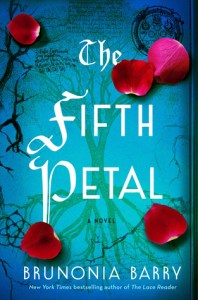
Serena’s Review: “The Fifth Petal”

29741905Book: “The Fifth Petal” by Brunonia Barry

Publishing Info: Crown, January 2017

Where Did I Get this Book: Blogging For Books

Book Description: When a teenage boy dies suspiciously on Halloween night, Salem’s chief of police, John Rafferty wonders if there is a connection between his death and Salem’s most notorious cold case, a triple homicide dubbed “The Goddess Murders,” in which three young women, all descended from accused Salem witches, were slashed on Halloween night in 1989. He finds unexpected help in Callie Cahill, the daughter of one of the victims newly returned to town. Neither believes that the main suspect, Rose Whelan, respected local historian, is guilty of murder or witchcraft.

But exonerating Rose might mean crossing paths with a dangerous force. Were the women victims of an all-too-human vengeance, or was the devil raised in Salem that night? And if they cannot discover what truly happened, will evil rise again?

Review: This is the second book by Barry, the first being “The Lace Reader.” I haven’t read this book, and when I requested this one I didn’t know that it was connected to this first novel. However, luckily for me, this story takes place many years later and any recurring characters that appear are at a different enough point in their lives that I never felt that missing this first book had much of an impact on my views of this. And, all told, they were fairly postive

As we all know by now, Kate is the horror/thriller reader on this blog, but in the spirit of Halloween, I tried to choose one book to read that month that was at least somewhat “on theme.” Enter “The Fifth Petal,” a murder mystery with ties to relations of the women accused as witches in the Salem trials. So, yeah, about as close as I’m ever going to venture to true horror. Witches, however, are more within my realm of experience and interest, so this seemed like a good compromise.

As the story progressed, I found this connection to modern day Salem and its history to be one of the more intriguing aspects of the story. Like many people, this place, time, and horrifying event, has always held a note of fascination for me. I feel that I went into this story already knowing much of this information, but I still enjoyed the nuggets I as able to pick up here and there, especially about the modern day town.

The author’s note at the end goes into good detail about how much of it is based on truth, which made these aspects of the story even better, in hindsight. Much of layout of the town is accurate, such as the location of the hanging tree. Goes to show how much good research reflects well on a story.

The story was also very action packed and never wanted for movement. This is a good and bad thing, in my view. I whipped through this read very quickly, but at the same time, portions of the story felt muddled, trying to fit too much within a limited page count. It’s a tough balance to strike, but I feel that either slowing it down in a few parts, or simply extending the page count out a bit so each of these elements had more room to breathe, would have ultimately served the novel well. At a certain point I began to question whether all of these various plotlines were necessary.

Callie was an ok leading lady. The mystery of her lost memories was interesting, but in a lot of ways she was just kind of bland. Nothing about her really stood out to me, and she ended up reading like the typical main character at the heart of stories like this. This, too, might have been improved had the author not devoted so much time to the many, many plotlines that I referenced earlier.

I also found myself enjoying the romantic spin of the story. I don’t typically read contemporary books, or contemporary romance, specifically, but every once in a while, themes from books like that can hit the spot. This book was a good compromise in this way as well. Got my romance fix, but still got to keep my fantasy/thriller moments.

Ultimately, I enjoyed “The Fifth Petal.” It wasn’t without flaws, and it falls pretty far outside of my usual reading tastes, but it was an fun enough time. It won’t stand out to me as anything special, but for readers who enjoy thrillers and contemporary romance a bit more than me, this might be a good read for you!

Rating 7: Fairly unassuming and enjoyable. Could be improved by fewer plotlines stuffed into one story, but was a quick read, especially for those interested in the Salem Witch Trials.

Reader’s Advisory:

“The Fifth Petal” is a newer book, but it is on this Goodreads list: “Fall, Halloween, New England Fiction.”

Find “The Fifth Petal” at your library using WorldCat!

More information:

About Brunonia Barry

More on The Fifth Petal”

Kate’s Review: “Fragments of the Lost”

27797316Book: “Fragments of the Lost” by Megan Miranda

Publishing Info: Crown Books for Young Readers, November 2017

Where Did I Get This Book: I received an ARC from the publisher and NetGalley!

Book Description: From the New York Times bestselling author of All the Missing Girls and The Perfect Stranger comes a suspenseful psychological mystery about one girl’s search to uncover the truth behind her ex-boyfriend’s death. Perfect for fans of We Were Liars and 13 Reasons Why . 

Jessa Whitworth knew she didn’t belong in her ex-boyfriend Caleb’s room. But she couldn’t deny that she was everywhere–in his photos, his neatly folded T-shirts, even the butterfly necklace in his jeans pocket . . . the one she gave him for safe keeping on that day.

His mother asked her to pack up his things–even though she blames Jessa for his accident. How could she say no? And maybe, just maybe, it will help her work through the guilt she feels about their final moments together.

But as Jessa begins to box up the pieces of Caleb’s life, they trigger memories that make Jessa realize their past relationship may not be exactly as she remembered. And she starts to question whether she really knew Caleb at all. 

Each fragment of his life reveals a new clue that propels Jessa to search for the truth about Caleb’s accident. What really happened on the storm-swept bridge?

Review: A special thank you to Crown Books for Young Readers and NetGalley for providing me with an ARC of this book!

So perhaps you all remember that I read and reviewed Megan Miranda’s novel “All the Missing Girls”, and I wasn’t very impressed with it beyond the framing of it. But I was intrigued enough by her as a writer that I knew I’d probably pick up something else she had written in the future. That book happened to be “Fragments of the Lost”, a new YA psychological thriller by her. I saw that it was available on NetGalley, and decided to request it. When I finally got to reading it, I figured that I would start it one evening and make my way through, as I did with “All the Missing Girls”. But lo and behold, I actually sat down and read it in one sitting. So you know that we’re off to a pretty good start when THAT happens.

I think that what grabbed me about this book right away was Jessa, our main character. She’s a girl who has gone through the awful trauma of losing her ex-boyfriend Caleb after his car is thought to have gone off a cliff during a rainstorm and flood. She’s believable in that she has mixed feelings about cleaning out Caleb’s room, as they had broken up before his car went off the cliff on that rainy day. She was a very down to earth and realistic person, never treading into the realm of simpering or frustrating in her emotions. Which is funny, because I fully prepared myself for her to be the kind of wreck that Nicolette was in “All the Missing Girls”, and yet it was in the YA novel that Miranda’s main character was bit more nuanced. As she cleans up Caleb’s room, we get to see their relationships through flashbacks, depending on the object that she is sorting in the moment. While it had ample chances to become schmaltzy, it never did because Jessa is that well rounded and complex of a character. As for the other characters, we really only got to see them through Jessa’s eyes, so it was harder to get a gauge of who they were. I think that you certainly can give readers a handle on other characters through a main character filter, but I didn’t feel like we completely got there with Jessa. While I really liked her, everyone else was fairly bland. Caleb was really just this enigmatic good person that we didn’t really get to know beyond this plotline, and while I did like their mutual friend Max, a sweet geeky kind of guy, he was really just there to provide support to Jessa through thick and thin, no matter what. I liked him and I liked how he interacted with her, but he was just there for the ride and showing up when needed.

The mystery was solid enough, and I liked that we were given the pieces as Jessa boxed up his room. From a pair of spare glasses to a broken fan to some sporting equipment, we learn bit by bit what Caleb was like, what his relationship with Jessa was like, and why perhaps none of it was as real as she thought it was. I think that had it stopped there, and been an examination about young love lost, the different sides of people even in relationships, and why we may never know everything about them, this would have been a pretty powerful book. But while the mystery was solid (as to what actually happened to Caleb that day), I think that it may have actually hindered an already powerful narrative. That isn’t to say that Miranda had to write a book that was solely a meditation on grief and loss, because it’s her prerogative to write a mystery and I say have at it. Hell, this mystery was interesting to follow and I liked it enough. But along with it, we started to get into areas that kind of pulled me out of the story because of how unrealistic things were. It was mostly little things, like how a library computer would probably NEVER have search history that went between sign in sessions because of privacy laws, or how it would take a whole lot more than just a fake ID to completely restart your life as a new person. These may not seem like much, but it was enough to take me out of the story even for a little while, which was distracting. There was also a sudden shift in solution in the end, and you all know how I feel about that kind of thing. When I’m told that only options A and B are going to work, I have a really hard time swallowing a sudden option C rearing it’s ugly, if not convenient head.

“Fragments of the Lost” was a twisty turny read, though, and I think that it’s one of the stronger YA thriller/mysteries that I’ve read this year. Meg Miranda should definitely write more for this audience, as she brings the nuance that is needed to write an effective whodunit.

Rating 7: A pretty interesting mystery with an engrossing parsing of clues, “Fragments of the Lost” is a tangled read with some unexpected surprises. The characterization of supporting characters could have been stronger, but I enjoyed reading it.

Reader’s Advisory:

“Fragments of the Lost” is pretty new and not on many Goodreads lists, but I think that it would fit in on “YA Post Death Novels”.

Find “Fragments of the Lost” at your library using WorldCat!