Serena’s Rev-Up Review: “Bitterblue”

Book: “Bitterblue” by Kristin Cashore

Publishing Info: Dial, May 2012

Where Did I Get this Book: own it!

Book Description: Eight years have passed since the young Princess Bitterblue, and her country, were saved from the vicious King Leck. Now Bitterblue is the queen of Monsea, and her land is at peace.

But the influence of her father, a violent psychopath with mind-altering abilities, lives on. Her advisers, who have run the country on her behalf since Leck’s death, believe in a forward-thinking plan: to pardon all of those who committed terrible acts during Leck’s reign; and to forget every dark event that ever happened. Monsea’s past has become shrouded in mystery, and it’s only when Bitterblue begins sneaking out of her castle – curious, disguised and alone – to walk the streets of her own city, that she begins to realise the truth. Her kingdom has been under the thirty-five-year long spell of a madman, and now their only chance to move forward is to revisit the past.

Whatever that past holds.

Two thieves, who have sworn only to steal what has already been stolen, change her life forever. They hold a key to the truth of Leck’s reign. And one of them, who possesses an unidentified Grace, may also hold a key to her heart . . .

Previously Reviewed: “Graceling” and “Fire”

Review: So this re-read has been one of discoveries so far. I discovered first that “Graceling” held up really well in the ten plus years since it was first published, even given the boom of similar YA fantasies novels that have come out since. I discovered that while I still prefer “Graceling” overall, I actually liked the romance in “Fire” better. And with “Bitterblue” I discovered…I actually hadn’t read this one before?? I own a copy, and I think I must have skimmed through it at some point, but a full, cover-to-cover read? Nope! Given my takeaway at the end of this read, I suspect I may have skimmed some Goodreads reviews when this came out and put it on the back-burner, being a bit wary. Because, yes, for me, this was quite the step down from the highs of “Graceling” and “Fire.”

Bitterblue has been queen of Monsea since she was ten and her sociopathic father was killed at the hands of Bitterblue’s strongest protector, Katsa. In the years since, Bitterblue has struggled to put her broken country back together. But with endless paperwork and little contact with her actual people, Bitterblue begins to suspect that her efforts aren’t accomplishing much. She takes matters into her own hands and sneaks out to wander the streets of her city and see the state of things for herself. What she discovers opens the floodgates and she is suddenly overwhelmed with all of the mysteries and secrets that have lurked from the time of her cruel father’s reign.

So, overall, I really didn’t love this book. It was so surprising and disappointing to have a reaction like this after just loving both books that came before! But, unfortunately, I think there were several things that worked against it. Not least of which is the fact that I think that even its strengths ultimately work against it when compared to the books that came before. Namely that Cashore’s strengths for creating interesting new worlds and great fantastical elements weren’t allowed any room to grow here. We’ve already been introduced to Monsea, and while the story does show us around the city itself and has some new things to add here, the world itself is largely familiar. The magic, too, is familiar. We may meet a few new Gracelings, but their abilities and their place in the world are already understood. So, too, we already know about the Seven Realms and, largely, how they differ from one another and interact with each other. All of this works to undercut much of what made the first two books so great: Cashore’s deeply imaginative new worlds and magic systems.

And while both of the first two books were slower reads overall, this one really seemed to drag on. It’s much longer than the first two, and nothing in the story really justifies this length. Bitterblue is constantly beset with new mysteries and new roadblocks on any progress she’s making on the ones that came before. More than once she simply gives up and returns to her paperwork in her tower. This is just as boring and anti-climatic for the reader as it’s said to be for her. What’s more, many of the mysteries are built around the seemingly crazy actions of many of the characters around her. But they are so random and so off-the-wall that with the lack of understanding around them comes also the lack of caring. Unlike the books before where it felt like clues were being laid down that reader’s could begin to piece together for themselves (part of what kept the pacing better in those books), here, it all feels too disconnected to any logic or overall plan to really engage the reader.

I also really, really disliked the romance in this book. This was truly shocking as the other books in this series had two of my favorite romances ever. But here, nothing really works about it. Saf is a terrible romantic hero. When he’s not annoyingly immature (it’s never a good sign when you’re heroine herself calls the hero this and she’s completely right!), he’s outright rude and mean to Bitterblue. And all of this is when he’s even on the page at all, for there are large chunks of the story where he’s nowhere to be seen. From a personal reading perspective, his absence isn’t missed as when he was around I was mostly frustrated by him. But from the perspective of trying to build a compelling romance, it’s hard to do when you’re romantic hero is nowhere to be found for the last half of the book. And the end was only satisfying because it was ultimately unsatisfying, essentially!

I did like Bitterblue as a character, but I think the romance and the plodding storyline both did her a massive disserve. It was also confusing trying to understand why Bitterblue was suddenly noticing all of these things around her. Presumably she’s been acting as queen for the last 8 years, and while she was too young initially to take notice, it’s hard to understand what was distracting her from it all for the last few years. There’s no obvious impetus for any of it, really. “Winterkeep” will also feature Bitterblue, so I’m excited to see how the character fares when put in a different (hopefully better!) story. We’ll find out next week when we finally get to “Winterkeep” itself!

Rating 6: Very disappointing. It has some serious weaknesses on its own, but it’s definitely not helped by the fact that the two before it were such hits for me.

Reader’s Advisory:

“Bitterblue” is on these Goodreads lists: YA Second World Fantasy and Best Kick-Ass Female Characters From YA and Children’s Fantasy and Science Fiction.

Find “Bitterblue” at your library using WorldCat!

Book Club Review: “Sailor Moon Eternal Edition (Vols 1 and 2)”

We are part of a group of librarian friends who have had an ongoing bookclub running for the last several years. Each “season” (we’re nerds) we pick a theme and each of us chooses a book within that theme for us all to read. Our current theme is “Outside the Genre Box”, in which we each picked a book from a genre or format that we don’t usually read.

For this blog, we will post a joint review of each book we read for book club. We’ll also post the next book coming up in book club. So feel free to read along with us or use our book selections and questions in your own book club!

Book: “Sailor Moon Eternal Edition (Vols 1 & 2)” by Naoko Takeuchi

Publishing Info: Kodansha Comics, September 2018/November 2018

Where Did I Get These Books: I own them.

Genre/Format: Manga

Book Description: The guardians in sailor suits return in this definitive edition of the greatest magical girl manga of all time! Featuring an extra-large size, premium paper, and an all-new translation and cover illustrations by creator Naoko Takeuchi!

Teenager Usagi is not the best athlete, she’s never gotten good grades, and, well, she’s a bit of a crybaby. But when she meets a talking cat, she begins a journey that will teach her she has a well of great strength just beneath the surface and the heart to inspire and stand up for her friends as Sailor Moon! Experience the Sailor Moon manga as never before in these extra-long editions.

Kate’s Thoughts

Though I have read some manga here and there and have watched a fair number of anime series (I actually just started watching “Death Note” for the first time, and I’m DIGGING it!), I never go into “Sailor Moon”. I had friends in high school who liked it, but by the time I did get into anime and ‘Magical girl’ stories, I pretty much just went with “Princess Tutu” and left it at that. So when our new Book Club session started up and one of our members wanted to read the first two books in “Sailor Moon”, I figured that now was as good a time as any to read one of the most influential Magical Girl mangas.

I think that had I been in a very specific time frame when reading “Sailor Moon” for the first time (perhaps after grade school but before I entered my ‘I’m not like other girls and too cool for girly shit’ punk and Goth phase in high school) I would have probably appreciated it more than reading it now. That isn’t to say that I don’t get why “Sailor Moon” is such a phenomenon. I liked the mythology of the Sailor Scouts, and I liked how we slowly got to meet each one and the different things that they all bring to the table. I also can tell that there is a LOT of mythology we haven’t even gotten to yet, and that as Usagi and her friends/teammates go forward there will be a lot more to learn regarding their identities, how Tuxedo Mask (the mysterious love interest) fits into it all, and how Usagi will balance this with her normal life as a teenage girl. In the first volume there is a lot of this kind of set up, while the second volume there is more solid adventuring and conflict that escalates. It was also pretty neat to see that things weren’t afraid to get dark as the plot arcs went on in Volume 2, and there were some pretty high stakes involved for Usagi and the others, as well as some legitimate peril to wrangle with. But at the end of the day Usagi herself was hard to connect with because there is a lot of effort to make her super imperfect to contrast with the amazing Sailor Moon alter ego that she has inside of her. But at the end of the day, these stories are not written for me as the intended audience, and because of that this is definitely a ‘your mileage may vary’ situation, as I DEFINITELY get the appeal in theory. Just not in my own practice.

I now feel like I have a better understanding of a story that has a very firm and well earned place in pop culture. It may not be for me, but I love that it is a story for teenage, fantasy loving girls who want their own kind of power fantasy. My hat does off to that and to them.

Serena’s Thoughts

Unlike Kate, I did read a lot of magical girl fantasy right around when this was coming out. But, unlike Kate in general, I’ve never really gotten into reading Manga or graphic novels much at all. As an adult, I’ve discovered more graphic novels that I enjoy, but it’s still not a go-to type of reading for me, even within my preferred genres. And as a middle school girl, I think I just associated any/all graphic novels with comic books and filed them away under “boring boy stuff.” I went on to have a complicated relationship with “Sailor Moon” in high school due to my on again off again boyfriend’s love of the series and my suspicion that he only wanted to date me initially based on my name being the same as the Americanized version of the main character’s. I was pleased to find that on reading the series now the main character’s name has been reverted back to the original, thus reducing my flashbacks to teenage years and highschool love letters between Serena and “Tuxedo Mask” (yes, he would sign off like that!)

With that little jaunt down memory lane out of the way, I had a lot of similar impressions to Kate. I can definitely see the appeal of this story and understand how it came to have such a far-reaching fanbase. The characters are all intriguing, the magic is fun, and the story is willing to engage with some darker themes. It also has much of the drama and awkwardness that teenagers enjoy, with Sailor Moon’s teenage identity providing a stark contrast to her magical girl persona.

Like Kate said, the second volume had more to work with after the first one spent much of its time laying down the foundation for the series. But even in the second one, it was clear that the story was just scratching the surface of all the stories it wanted to tell with these characters. I was pleased to see it go a bit deeper than the first volume did.

Overall, this also wasn’t really my thing. But I think that’s probably mostly due to my age and my generally picky approach to graphic novels and Manga. I picked up a “Pride and Prejudice” Manga at ALA a few years ago, and even that wasn’t really my jam. So this one had a steep hill to climb. But I definitely see the appeal for fans of the format and fantasy lovers in general, especially teenagers.

Kate’s Rating 6: Definitely ground breaking and assuredly appealing to magical girl fantasy fans, but not really my cup of tea at the end of the day.

Serena’s Rating 6: Approachable and fun for those who fit its audience type; unfortunately that wasn’t me.

Book Club Questions

  1. Have you read any manga before this? If so, what manga have you read and how does it compare to “Sailor Moon”? If not, what did you think of this first foray into the format?
  2. What did you think of the structure of the story as a stream of consciousness path that Usagi is taking? Did you like learning things as she did, or do you wish there had been a more organic way to explore the mythology?
  3. Did any of the Sailor Scouts appeal to you more than the others? If so, who, and why do you think that is?
  4. What did you think of the relationship between Sailor Moon/Usagi and Tuxedo Mask?
  5. Which elements, if any, of the ‘magical girl’ genre did you find most appealing?

Reader’s Advisory

“Sailor Moon Eternal Edition” Vols 1 and 2 (in other formats) are included on the Goodreads lists “Magical Girl Manga”, and “Fandom Origins”.

Find “Sailor Moon Eternal Edition” Vols 1 and 2 at your library using WorldCat, or a local independent bookstore using IndieBound!

Next Book Club Book: “The Widows of Malabar Hill”

Serena’s Review: “Bridgerton Collection”

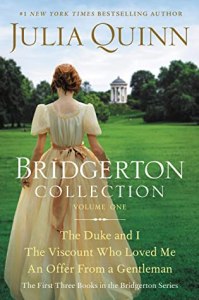
Book: “Bridgerton Collection: Volume One” by Julia Quinn

Publishing Info: Kindle Edition, May 2020

Where Did I Get this Book: own the e-book

Book Description: The first three Bridgerton books all in one e-book volume! Includes The Duke and I, The Viscount Who Loved Me, and An Offer From a Gentleman.

Set between 1813 and 1827, the Bridgerton Series is a collection of eight novels, each featuring one of the eight children of the late Viscount Bridgerton.

I’m going to do a quick mini-review for all three books in this series. I’ve reviewed a couple random books by Julia Quinn on this blog over the years, but I’ve jumped all over the place from random books in this main series to ones from the prequel series, etc. But with the Netflix show just coming out, I thought it was high time to at least familiarize myself with the first three in the correct order so that when I watched the show I wouldn’t be completely lost. Because obviously I was going to watch the show! Historical romance?? Yes, please!

The Duke and I

So I had actually read this, the first book in the series, once before years ago. I didn’t remember much about it except that, unfortunately, I had rated it fairly low on Goodreads at the time. I went in with some skepticism. Unfortunately, this wasn’t a great start to my read through of these first books in the series, and my original rating wasn’t far off for how I would rate this book now.

The strengths of Quinn’s writing is clear, and it’s easy to understand how she has become one of the most popular romance authors of the time. This book completes its most important edict: it sets the stage for a million and a half sequels, creates an interesting window in this version of British society, and has quick, snappy writing that move the story along.

Unfortunately, the actual story in this book and especially its heroine and hero’s relationship was a huge let down. Each were very toxic in their own ways, and I’m not one for throwing that word around lightly. There are some extreme inconsistencies in how knowledgeable Daphne is about certain aspects of life that stretch the point of believability to its breaking point. And the great “conflict” between the Simon and Daphne leads to each treating the other in very despicable ways, with Daphne committing a pretty unforgivable crime against Simon. I’m sure this wasn’t the intent of the author with this scene, but it’s definitely how it reads and how it would (and should!) be understood. As our first two paired up grouping, I’m sure we’ll see more of Simon and Daphne on the sidelines in other books, but I’ll try to just put this one behind me. I’m also really curious how they’ll play this particular relationship in the Netflix adaptation.

Rating 6: A good start to the series, but the horrid actions of both the hero and the heroine really drops it down.

“The Viscount Who Loved Me”

First things first: this second book was a great improvement on the first. While I still had some problems with the hero, Anthony (the Bridgerton in this little story), the heroine, Kate, was vastly better than Daphne. Not only was she not bizarrely ignorant of some pretty basic facts of life, she also didn’t assault her husband. So there’s that. But beyond all of that, Kate is just a fun character. She’s spunky, smart, and a fun character to follow through this story.

Anthony takes a bit more time to warm up. For one thing, he’s presented as the go-to historical romance leading man character type: a rake. I could probably write an entire thesis on why this type of character seems to dominate these books and why most of them get it wrong, but I’ll resist. To sum up, Mr. Darcy is considered the epitome of romance heroes, and I think many authors confuse the appeal that comes from his being a catch due to his lack of interest with the idea that rakes are a decent sit-in as they, too, have no interest in love and marriage. Big difference being that Mr. Darcy didn’t have a reputation for toying with women’s hearts. But enough on that. Anthony’s rake-ness is part of his problem, as is the fact that he has some pretty unappealing ideas about the relationship between husbands and wives initially. Thankfully, he seems to work through that and does end up being a likeable enough character.

What stood out the most about this book was the dialogue. Maybe it was just the nature of the story, Kate’s trying to spare her sister from the devious rake, but there was a lot of snappy, fun interchanges between our leading lady and leading man. There were several moments where I chuckled out loud, which was a nice reminder of why I’ve liked other books by this author in the past. Overall, I’m much more excited to see this relationship play out on the show than the first one.

Rating 8: Much better than the first, but still marked down for the hero being kind of an ass for a good chunk of the first half.

“An Offer from a Gentleman”

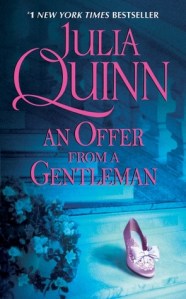
This book was a bit different than the two that came before it. As the cover implies, it’s a very loose re-telling of Cinderella. Sophie is an illegitimate daughter who meets our her, Benedict Bridgerton, at a ball where she’s undercover as a true lady. Sparks fly. Two years later, the two meet again, but Benedict doesn’t recognize his lady love in the servant girl before him. An intriguing enough premise and a fun twist on the more traditional retellings out there.

I, again, liked the heroine, Sophie, better than the hero (I guess Daphne goes down as the worst of the three). She was earnest and stood up for herself well enough given the situation (I’ll touch on that when I get to Benedict). But she also kept unnecessary secrets that created a bunch of angst and drama for no good reason. I always struggle with these types of narrative mechanisms that are clearly put in there to move the story one way or another but defy any understanding. There’s no good reason for Sophie to keep these secrets other than the fact that it creates the drama and fallout the author was looking for.

And Benedict. Oh, Benedict. He’s probably my least favorite hero of the three we’ve seen. When he meets Sophie again, he pressures her to be his mistress or a servant in his house. And when I say pressure, I mean he puts the screws to her over it. It’s pretty obnoxious. And from there, he goes on to warn her that somehow it is her responsibility to head him off early because if he gets too, um, excited, he wouldn’t be able to stop. Nope! Don’t like that! Throughout it all, he’s pretty self-absorbed and unable to understand Sophie or her motives. Even when the truth is revealed, somehow Benedict is the injured party in all of this. I hope the show makes some big improvements on this particular story. Well, this one and the first one.

Rating 7: Not as bad as the first one, but the hero had some big problems and the heroine created unnecessary drama.

Kate’s Review: “The Good Girls”

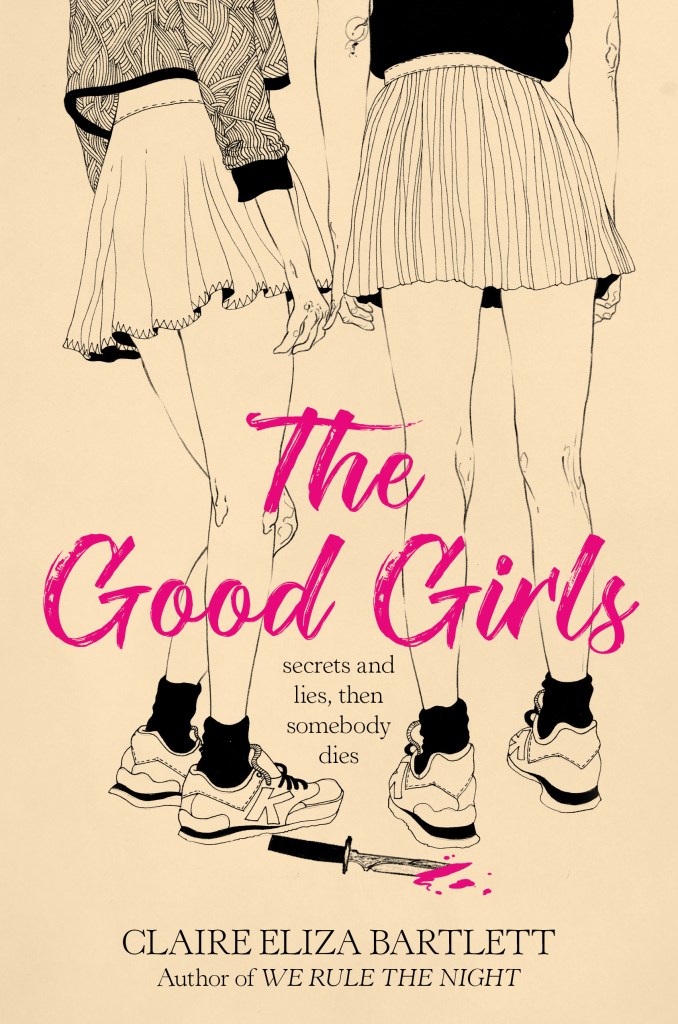
Book: “The Good Girls” by Claire Eliza Bartlett

Publishing Info: HarperTeen, December 2020

Where Did I Get This Book: I received an eARC from NetGalley.

Book Description: The troublemaker. The overachiever. The cheer captain. The dead girl.

Like every high school in America, Jefferson-Lorne High contains all of the above. After the shocking murder of senior Emma Baines, three of her classmates are at the top of the suspect list: Claude, the notorious partier; Avery, the head cheerleader; and Gwen, the would-be valedictorian. Everyone has a label, whether they like it or not–and Emma was always known as a good girl. But appearances are never what they seem. And the truth behind what really happened to Emma may just be lying in plain sight. As long-buried secrets come to light, the clock is ticking to find Emma’s killer–before another good girl goes down.

Review: Thanks to NetGalley for providing me with an eARC of this novel!

I am not too proud to admit that while I was an outcast and a weirdo in high school, I was not without my own faults when it came to judging other people, especially girls. It takes a lot of time and effort to try and unlearn the malignant lessons that society teaches you when it comes to how girls are supposed to be and act, and even as a woman in her mid thirties I’m STILL learning. I wish that I had read books at that age that would have helped the process along a bit. The good news is that girls these days can pick up books like “The Good Girls” and get some pretty good insight into how to reject internalized misogyny and rape culture! What I thought was going to be a YA thriller turned into something that had more value than I anticipated when it comes to theme and message.

The strongest aspect of “The Good Girls” is how Bartlett examines the damage that rape culture and misogyny wreaks upon young women no matter what their ‘social standing’ is, and how the damage can manifest in different ways. I think that one of the more popular ways to address it in teen fiction these days is to give a perspective to an ‘outcast’ character who is seen as promiscuous or ‘bad news’ in other ways. We do get that here with Claude the party girl and (deceased) Lizzy the addict, but we also see how it can still be damaging to girls who are seen as ‘good’ or ‘successful’, like cheer captain Avery and ‘good girl’ Emma. I think it’s especially important for this kind of ‘representation’ (for lack of a better term) in YA literature, as those who aren’t targeted in the more obvious ways may be less able to recognize it. I also liked that this book addresses that sometimes people in authority positions, because of their own biases, can stumble and fail when it comes to protecting those who are victimized. Or, even worse, use their position of authority to intimidate others into silence, or perpetuate abuse themselves. I thought that “The Good Girls” tackled these themes really well.

All of that said, in terms of mystery and thrills, “The Good Girls” missed the mark for me. While the characterizations were valuable and felt pretty realistic, they also managed to not work outside the box of the tropes that they fit into. I liked all of the main characters well enough, but none of them felt that different from other iterations of the boxes that they fell into. And when it comes to the mystery of who pushed Emma into the river, and what actually happened to Lizzy and how the two connect, I didn’t find myself raring to find the answer or terribly shocked by how it all played out. Even the smaller mysteries that add into the larger parts didn’t really surprise me, and I called a couple of the reveals pretty early on. Admittedly a couple caught me by surprise, but even then I wasn’t wowed. It just feels pretty run of the mill when it comes to the story itself. Not bad by any means. But also not unique. And at the end of the day, valuable message and explorations aside, I read “The Good Girls” because I was looking for a thriller, which it didn’t really provide.

I think that if you go into “The Good Girls” looking for a character study on the effect of misogyny and rape culture on girls from all kinds of labels, you will find something interesting, and certainly something with an important message that could help YA readers. But in terms of mystery and thrills, it isn’t really anything new.

Rating 6: I really liked the themes that take on rape culture and misogyny, but the story itself didn’t feel much different from other stories that have similar characters and plot points.

Reader’s Advisory:

“The Good Girls” is included on the Goodreads list “YA Mysteries and Thrillers”, and would fit in on “Small Towns with Secrets”.

Find “The Good Girls” at your library using WorldCat, or a local independent bookstore using IndieBound!

Serena’s Review: “My Calamity Jane”

Book: “My Calamity Jane” by Cynthia Hand, Brodi Ashton, and Jodi Meadows

Publishing Info: HarperTeen, June 2020

Where Did I Get this Book: the library!

Book Description:

Welcome ​to 1876 and a rootin’-tootin’ America bursting with gunslingers, outlaws, and garou.

JANE (a genuine hero-eene)

Calamity’s her name, and garou hunting’s her game—when she’s not starring in Wild Bill’s Traveling Show, that is. She reckons that if a girl wants to be a legend, she should just go ahead and be one.

FRANK (*wolf whistle*)
Frank “the Pistol Prince” Butler is the Wild West’s #1 bachelor. He’s also the best sharpshooter on both sides of the Mississippi, but he’s about to meet his match. . . .

ANNIE (get your gun!)
Annie Oakley (yep, that Annie) is lookin’ for a job, not a romance, but she can’t deny there’s something about Frank she likes. Really likes. Still, she’s pretty sure that anything he can do, she can do better.

A HAIRY SITUATION
After a garou hunt goes south and Jane finds a suspicious-like bite on her arm, she turns tail for Deadwood, where there’s been talk of a garou cure. But things ain’t always what they seem—meaning the gang better hightail it after her before they’re a day late and a Jane short.

Previously Reviewed: “My Lady Jane” and “My Plain Jane”

Review: I’ve really been enjoying these strange little tales. The authors take familiar characters or historical figures named “Jane” and then just go to town with wild imaginings of alternatives to their stories. We’ve had shape-shifters, ghosts, supernatural detectives, you name it! So, really, other than knowing that this story is tackling the Wild West and some of the familiar figures we associate with it, I had really no idea what I was getting into. It was a rip-roaring good time, of course, but I did find that I was less enthralled with this story than the two others.

In this version of the story, our famous trio work for a Wild West show that is only half show business. The other side of their profession includes hunting garou, or werewolves. All that sharp-shooting has to be good for something, after all! But on a hunt for the Alpha, things go wrong for our titular character and she ends up with a suspicious bite and on the run herself. Her friends, Annie and Frank, won’t let her go so fast, and soon enough the three find themselves on their own wild adventure!

So, while this book did have some of the classic elements I’ve come to expect from this series and these authors (good characters, romance, wack-a-doodle comedy), I did struggle with it a bit more. To start with the good things, the characters, like always, were all super strong. I liked that we got POV chapters for all three of the main characters, Jane, Annie, and Frank. They each had some interesting arcs and perspectives on the goings-on around them. I think I probably liked Annie the best, though Frank was a close second. Strangely, for all that she is the title character, of the three, Jane seemed to fade the most into the background of the story. I think this was somewhat similar to my feelings about the Jane character in the second book, where she, too, was secondary to the other main character.

The comedy was just ok in this one. For some reason, it all seemed to be trying a bit too hard and came across as more forced and unnatural than it did in the first two books. It might just be a combination of genres. “My Lady Jane” is trying to adapt a tragic bit of history and “My Plain Jane” is re-telling a gothic romance. Each of those stories are working from a more serious foundation and layering comedy and nonsense on top of it. Westerns, however, especially Wild West stories, already have an inherent performative sense to them. So between the over-the-top nature of the original tall tales, the comedy just heaped on more of the same, leaving the entire thing feeling a bit over-worked.

There were also some strange moments of social commentary that seemed to be sporadically dropped in. I have no problem with fantasy books tackling social issues. In fact, I think sometimes the nature of fantasy allows authors to get at thoughts and ideas in a way that really elaborates on the bigger issues without getting too caught up in a modern, political statement. But they sat oddly in this book. A bit too preachy. A bit too on the nose. A bit too out of place.

Part of my struggle may just be that I don’t typically care for westerns. Sure, I know the tall tales and characters that are used in this book, but the genre as a whole doesn’t hold a lot of appeal to me. Overall, it just felt like a bit of a let down when compared to the two books that came before, which I really enjoyed. If you’re a fan of the series so far, and especially if you enjoy westerns, this is probably worth checking out. But for me it was the weakest of the three.

Rating 6: The shine has worn off just a little on this particular formula.

Reader’s Advisory:

“My Calamity Jane” is on these Goodreads lists: 2020 YA Historical Fiction and Jane Titles.

Find “My Calamity Jane” at your library using WorldCat!
Serena’s Review: “The Awakening”

Book: “The Awakening” by Nora Roberts

Publishing Info: November 24, 2020

Where Did I Get this Book: NetGalley

Book Description: When Breen Kelly was a girl, her father would tell her stories of magical places. Now she’s an anxious twentysomething mired in student debt and working a job she hates. But one day she stumbles upon a shocking discovery: her mother has been hiding an investment account in her name. It has been funded by her long-lost father—and it’s worth nearly four million dollars.

This newfound fortune would be life-changing for anyone. But little does Breen know that when she uses some of the money to journey to Ireland, it will unlock mysteries she couldn’t have imagined. Here, she will begin to understand why she kept seeing that silver-haired, elusive man, why she imagined his voice in her head saying Come home, Breen Siobhan. It’s time you came home. Why she dreamed of dragons. And where her true destiny lies—through a portal in Galway that takes her to a land of faeries and mermaids, to a man named Keegan, and to the courage in her own heart that will guide her through a powerful, dangerous destiny…

Review: I read a few of Nora Roberts’s more traditional romances back in the day (way, way back in the day, now that I think about it). But I know that she’s written a lot of books in other genres, too, most notably, perhaps, mysteries. I’ve also seen that she’s released more fantasy novels recently, and having missed the “Year One” trilogy when it was coming out, I thought I’d jump on the first book in a new fantasy series she started up this fall. And so, I nabbed an e-ARC of ‘The Awakening.” Sadly, it wasn’t all that I was hoping it would be.

Breen has lived a simple life full of doing what is expected of her and not expecting much in return. But when she discovers that her mother has been keeping a massive secret from her, a massive 4 million dollars worth secret, Breen decides that enough is enough and it’s time to take control of her life. And the first thing she decides to do is to travel to Ireland, the homeland of the father who left home never to return when she was a child. But she discovers much more than a new country, instead finding herself in a completely new land and one that comes with a destiny for her even greater than she had ever imagined.

To start with the pros for this book, there’s simply no denying that Roberts has a very appealing and approachable style of writing. She’s able to deftly paint a picture of all kinds of locations and peoples and immediately create connections between the reader and her story. These strengths were particularly on display in the opening chapter of this book that is set in the fantasy world. I was quickly drawn in and curious to know more about Keegan and the history of his people and land.

Unfortunately, the strengths of this opening chapter made the switch to Breen’s story land with quite a thud. For one thing, Breen simply isn’t the most exciting character. Yes, that is part of her story, her learning to come more into her own. But it’s still a long slog through the thoughts and actions of a character who is bland to the extreme. It got to the point where I was even beginning to be frustrated by the friends around her who were all described as being great people. It’s almost a constant stream of support and encouragement from everyone around her to the point that A.) the friends are almost unbelievable in their goodness and B.) Breen’s complete inability to expect better for herself and have confidence without all of this validation becomes strange.

I also felt that some of these friendships fell into pretty stereotypical patterns. Her friend, Marco, read as the “gay best friend” straight out of the early 2000s. He’s right there telling her to update her wardrobe and reclaim her natural hair color, etc etc. It felt a little shallow and dated, to be honest. And then she starts a blog, which of course immediately takes off and she has a bunch of followers and has found a natural ability in writing. Which…don’t even get me started on that. Obviously, being a writer and blogger myself, this raised some serious eyebrows on my part. I mean, I have an easier time believing in a magical land of dragons and fairies than that someone started a random travel blog and somehow immediately has thousands of followers reading and commenting.

The story got better when she finally makes her way to the new land, but it was a bit too late for me. It took a long, long time for her to even get there, and by the time she does, I was already struggling too much with Breen herself to really redeem the book for me. I did like the romance and fantasy elements when we go there, though. This is the first book in a trilogy, but I’m still unsure whether I’ll keep on with it. Fans of Nora Roberts will probably like this, but it could have been better, in my opinion.

Rating 6: A decent fantasy story, but the main character dragged it down.

Reader’s Advisory:

“The Awakening” is a newer title, so it isn’t on many relevant Goodreads lists, but it is on Books with parallel world.

Find “The Awakening” at your library using WorldCat!
Kate’s Review: “Clown in a Cornfield”

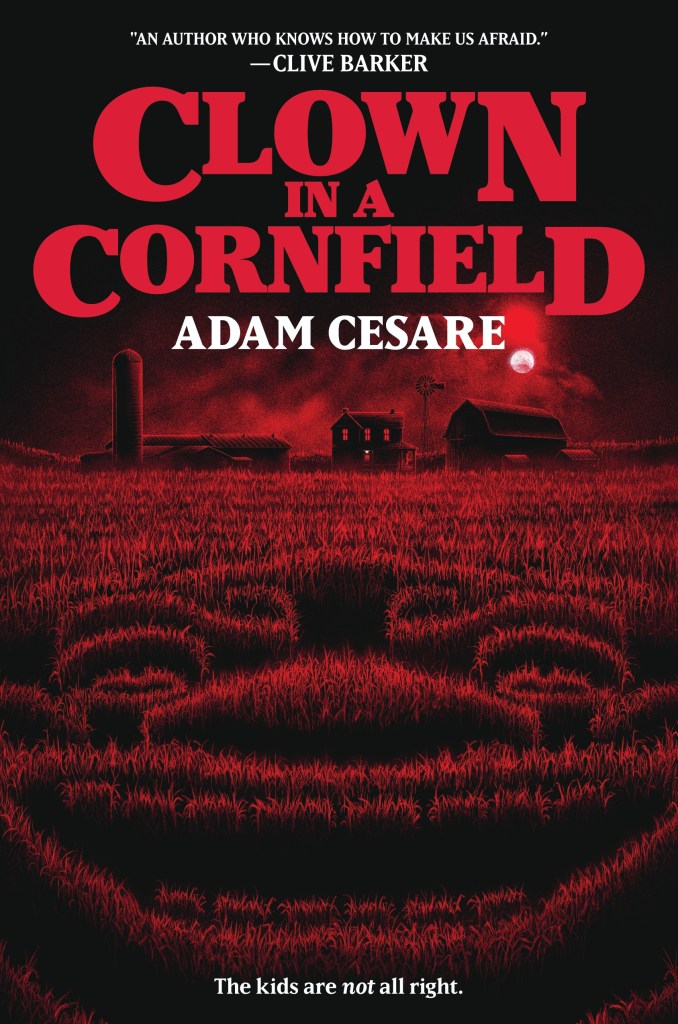
Book: “Clown in a Cornfield” by Adam Cesare

Publishing Info: HarperTeen, August 2020

Where Did I Get This Book: I own it.

Book Description: Quinn Maybrook just wants to make it until graduation. She might not make it to morning.

Quinn and her father moved to tiny, boring Kettle Springs to find a fresh start. But ever since the Baypen Corn Syrup Factory shut down, Kettle Springs has cracked in half. On one side are the adults, who are desperate to make Kettle Springs great again, and on the other are the kids, who want to have fun, make prank videos, and get out of Kettle Springs as quick as they can.

Kettle Springs is caught in a battle between old and new, tradition and progress. It’s a fight that looks like it will destroy the town. Until Frendo, the Baypen mascot, a creepy clown in a pork-pie hat, goes homicidal and decides that the only way for Kettle Springs to grow back is to cull the rotten crop of kids who live there now.

Review: I am not afraid of clowns. I have friends who are, but I myself don’t really have much beef with them outside of sometimes finding them a little pointless. Even the likes of Pennywise of John Wayne Gacy’s Pogo just don’t really make me tap into my inner coulrophobic. But I do like a book that reads like a slasher story, and reading the description of “Clown in a Cornfield” by Adam Cesare felt like exactly that. Throw in some Millennial resentment towards older generations that don’t quite get the road we’ve had to travel, and I was eager to dive in and see what Cesare was going to do with all of it.

“Clown in a Cornfield” is a bit of a slasher story, a bit of small town secrets story, and some ‘okay, Boomer’ memes all mixed together to create a YA horror tale. On a few levels, this works out pretty well and makes for fun reading. The very concept of a bunch of teens being slaughtered by someone wearing a clown mask is great horror fodder, but “Clown in a Cornfield” takes it a few steps further than that and works through some generational angst that is playing out in the real world. The town of Kettle Springs, the setting of this book, is having a bit of a reckoning when it comes to the older people in town versus the teenagers. The older people want Kettle Springs to stay the same, living off of good family values, hard work, and the corn syrup factory that has given the town jobs and prosperity, until recently, that is. The younger generation, specifically the teens, just want to live their lives and then move on. Cesare takes a pretty realistic conflict and pumps it full of blood and guts, and it works pretty well, with those with traditional values blaming inevitable changes in values for all the ills within the town. It could have been heavy handed, but Cesare keeps his tongue planted in cheek firmly enough that it’s a rather effective satire. I also liked a few of our main characters, namely Quinn, the new girl in town who is trying to fit in. Quinn has enough tragic backstory to give her a little bit of pathos, but also stands on her own two feet well enough that she is likable and endearing.

But that said, some of the executions of the plot points didn’t work as well for me. Besides Quinn and a couple other characters, we don’t really get to know enough about a number of the people we’re following so that it doesn’t feel like the stakes are too high when the clown Frendo (“No Country for Old Men” reference?) comes a knocking with weaponry and murderous intent. I don’t really care too much when a slasher film just has a bunch of stereotypes to act as machete fodder for a masked killer, but I think that on the page you have a little more wiggle room to give us some insight into your characters, even if it’s just a little bit. Along with that, the pacing was a little off at times, feeling a bit rushed in some places but kind of draggy in others. I bought the plot overall, as it really is just a slasher story and I know what I’m getting into there. But I think that had there been a little more focus on fleshing out some other characters and less on making super cool kills happen, it probably would have worked a little better. Especially since the satire was pretty well thought out.

Inevitable progress to traditionalists everywhere. (source)

“Clown in a Cornfield” is a pretty fun read. I think that it would have worked better as a gory limited series, but Cesare left room for a sequel, and it was good enough that I would definitely read it. If you don’t like clowns, maybe skip it? But if you’re like me, this could be a fun read for this time of year.

Rating 6: A sly premise and some fun characters keep this story afloat, though the plot is a little hasty at times and the scares feel like they’d work better on screen than on the page.

Reader’s Advisory:

“Clown in a Cornfield” isn’t included on many relevant Goodreads lists, but it would fit in on “Clown Horror”. Obviously.

Find “Clown in a Cornfield” at your library using WorldCat, or a local independent bookstore using IndieBound!

Book Club Review: “The BreakBeat Poets Vol. 4: LatiNext”

We are part of a group of librarian friends who have had an ongoing bookclub running for the last several years. Each “season” (we’re nerds) we pick a theme and each of us chooses a book within that theme for us all to read. Our current theme is “Around the World”, in which we each picked a continent and had to match a book that takes place there and/or is written by an author from that continent or of that continent’s descent.

For this blog, we will post a joint review of each book we read for book club. We’ll also post the next book coming up in book club. So feel free to read along with us or use our book selections and questions in your own book club!

Book: “The BreakBeat Poets Vol. 4: LatiNext” by Felicia Rose Chavez (Ed.), José Olivarez (Ed.), and Willie Perdomo (Ed.)

Publishing Info: Haymarket Books, April 2020

Where Did We Get This Book: The library!

Continent: North America

Book Description: In the dynamic tradition of the BreakBeat Poets anthology, The BreakBeat Poets Vol. 4: LatiNEXT celebrates the embodied narratives of Latinidad. Poets speak from an array of nationalities, genders, sexualities, races, and writing styles, staking a claim to our cultural and civic space. Like Hip-Hop, we honor what was, what is, and what’s next.

Kate’s Thoughts

So in the song “The Great Imposter”, there is the (much condensed down and cherry picked) line ‘Poetry, so sweet…..’. And reader, I do not feel this way towards poetry. There are a few flickers of poetry that I’ve enjoyed over the years. I love me some Poe, and Dickinson, and the poem “The Second Coming” by Yeats, as well as the occasional book in verse (Jason Reynolds in particular is a favorite of mine). But as a rule it’s really not my cup of tea. So when book club decided to do poetry with “The BreakBeat Poets Vol.4: LatiNext”, I was hesitant. I also, however, like to be game for whatever my dear friends may pick so I got it and dove in. I’m happy to report that I did not hate it, not even a little bit. This may sound like a back handed compliment, but I assure you, it’s not.

There were actually a number of poems from this collection that I greatly enjoyed. If you look at the commonalities between the various poems and poets that I cited above, if you give me something dark, I will probably be more into it, so the poems that really struck a chord with me in this book were those that addressed hard topics, like death, sadness, and despair. I wholeheartedly admit that the optics of that are not very good within the context of this collection, but at least I can say that that’s generally what’s going to get me on board with poetry. All that said, I really liked the mission of this collection, highlighting Latinx voices within the American and Latinidad experiences. These range from the political to the tongue in cheek to the joyful to the sorrowful, and I think that it does a great job of introducing new ideas of what poetry is and what it can be for different people.

But, at the end of the day, it’s still poetry. Serena will expand on this a bit more, but I do think that it went on a bit long. This may be because the way that it was sectioned, as the darker things were all at the front of the collection as opposed to spaced out. I didn’t mind the structure, as I like things being themed and categorized, but for someone like me who has ideas as to what kind of poetry she does and doesn’t like, it made me skim more and more the further along we got. I can’t really say if this is a failing in the poets, as they probably weren’t going to resonate with me because it’s poetry, but I do think that it suffered from some bloat. I totally get why bloat would happen here, wanting to give voice and representation to so many different possibilities. But it’s still a bit bloated.

All in all, there were some things here that I really liked. I don’t think that I will look into more of the collections that The BreakBeat Poets have done, but if you do like the genre, check it out. It may resonate more with you than it did with me.

Serena’s Thoughts

Back in college, oh so long ago, it was a close call when choosing majors between English Literature or English Writing (yes, there are multiple options for important topics like English!). The main case for the English Writing route was my love for the poetry classes and professors. I ended up going the Literature route, but was one of those “loves school a bit too much” dummies who still signed up to take the Capstone course for both routes. You know, why not take the highest level course for a education route you’re not even majoring in?? Anyways, long story short, I took that class because I loved reading and writing poetry that much. All of this to say, I’m a bit of a poetry snob, and it’s not really something I’m proud of, but there it is.

With that background, I often find reading poetry for fun rather challenging. I really, really enjoy great poetry, but I’m also extremely picky about what I think constitutes great poetry. For me, it’s the culmination of topics, language choice, and some simple beauty that is hard to describe but comes across like a great painting in that you know it but have a hard time saying why it’s great. After reading this book, I’d say there were a good handful of poems that really worked for me with these criteria. But there were also a good number that didn’t.

The challenge of this collection is both its strength and what I think ultimately got in the way of its being truly great. It’s so important to highlight diverse poetry and poets, and there’s a wealth of history, stories, and experiences that the Latinx community brings to the table. Some of my favorite poems spoke to some of the expected topics like immigration challenges as well as some of the smaller experiences that we might not immediately think of, like how the continued mispronunciation of one’s name can impact one’s life.

The other side of this coin, however, is that there is JUST SO MUCH to cover. Latinx covers a huge swath of cultures and countries, some speaking to their experiences in their native lands, others speaking to their experiences as Americans with Latinx heritage. There’s a lot of ground to cover, and it’s pretty clear that the editors were overwhelmed by trying to cover all their bases. It’s an impossible task to start out with, and one that I think ultimately bogged down this collection. There were a number of poems that just didn’t work for me. They weren’t bad, per se, but I also felt that they weren’t as powerful as some of the others. And in a collection that begins to feel bloated at around the 50% marker, weaker poems do more damage in hiding the truly good ones than any value they add on their own.

That said, I still really like the general approach of these poetry collections and am curious to look into the ones that came before this.

Kate’s Rating 6: A unique and at times quite powerful collection of voices not seen as much in poetry. But it’s still poetry, nonetheless, and therefore not really my jam.

Serena’s Rating 6: Some really great poems highlighting lesser known experiences and topics were at times hidden in a collection that was a bit over-sized.

Book Club Questions

  1. What did you think of the section structure of this collection?
  2. Did you have a favorite poem? What about it stood out to you?
  3. What topics did you feel were well addressed in this collection, and what topics did you want to have more focus?
  4. How did this poetry collection compare to other collections you have read in the past?
  5. What do you think the next BreakBeats Poetry Collection will be?

Reader’s Advisory

“The BreakBeat Poets Vol. 4: LatiNext” is included on the Goodreads lists “2020 Poetry Books By Authors of Color”, and “Stephen’s Multicultural and Anti-Racist Reading List”.

Find “The BreakBeat Poets Vol.4: LatiNext” at your library using WorldCat, or a local independent bookstore using IndieBound!

Next Book Club Book: “Sorcerer to the Crown” by Zen Cho

Serena’s Review: “The Silvered Serpents”

45044785Book: “The Silvered Serpents”  by Roshani Chokshi

Publishing Info: Wednesday Books, September 2020

Where Did I Get this Book: NetGalley

Book Description: Séverin and his team members might have successfully thwarted the Fallen House, but victory came at a terrible cost — one that still haunts all of them. Desperate to make amends, Séverin pursues a dangerous lead to find a long lost artifact rumored to grant its possessor the power of God.

Their hunt lures them far from Paris, and into the icy heart of Russia where crystalline ice animals stalk forgotten mansions, broken goddesses carry deadly secrets, and a string of unsolved murders makes the crew question whether an ancient myth is a myth after all.

As hidden secrets come to the light and the ghosts of the past catch up to them, the crew will discover new dimensions of themselves. But what they find out may lead them down paths they never imagined.

A tale of love and betrayal as the crew risks their lives for one last job.

Previously Reviewed: “The Gilded Wolves”

Review: I wasn’t blown away by “The Gilded Wolves,” the first in this YA fantasy trilogy. But as I liked it more than Chokshi’s other books I’ve read and the cast of characters was compelling, I decided to keep going with the series. Well, I have, and…I don’t think I liked this one any better? Maybe worse? And yet I still will probably read the third? I’m not sure what this says about me as a reader or about the trilogy itself. Me, probably a completionist. The trilogy, something about it must be intriguing enough to keep me invested.

Things have kind of fallen apart for our crew after the dramatic events at the end of “The Gilded Wolves.” Each on their own, each has been trying to make their own way in the world, feeling cut-off from the rest. But when a lead on “The Divine Lyrics,” the magical book at the heart of Severin’s (and Laila’s) quest, finally comes to light, Severin brings them back together for one last adventure. Into the heart of the north and through mysteries new and astounding, the crew must once again bring each of their unique skill sets to hand in order to pull of this last job. But, of course, nothing goes as planned and a darker price is waiting than any of them could have imagined.

So, a lot of the problems I had with the first book (and with this author in general) were still present here, unfortunately. There’s something about her style of writing that I struggle with. On one hand, there’s the turns of phrase that seem to be written more because they sound beautiful and poetic rather than the fact they convey any actual image. The titles, for example, of both of these books doesn’t seem to really connect directly to much in the story. But they sure sound pretty! Most of the time it didn’t bother me too much, but there were definitely other times when I would re-read a sentence and be like “Sure…sounds nice…but…what?” And that confusion carries over to my second struggle with the writing.

While the author does a good job with characterization for the most part and clearly has a bunch of unique fantasy ideas. She’s not lacking in imagination on either front. But when it comes to the actual description of locations, objects, and how they interact with each other…it’s just not good. There were entire locations (where the book spent a significant amount of time) that I couldn’t describe to you. There was an entire action scene that was a blur of movement, and by the end, again, I couldn’t tell you what exactly had happened. The writing looks pretty on the front of things, but it too often failed at its most basic requirement: conveying ideas clearly.

I also struggled with the plot itself. The mystery was both at times not clear at all (Severin and his cohort would jump through leaps of logic that were either impossible to follow or just totally unbelievable that anyone would connect those dots). And at other times so bizarrely obvious that I couldn’t be less impressed when AHA! the reveal finally came and Severin and his crew were just oh, so clever for putting it together.

And, sadly, on top of all of this, my favorite part of the first book, the characters, was a let-down here as well. They’re all still interesting enough, but man, this was a glum book. Severin was practically unrecognizable, and his decisions were, again, hard to buy at times. As for the rest, they all seemed to become more and more caught up with unnecessary secret keeping that served no other purpose than to stir up more drama. It was just all kind of sad and tiring.

And yet…I’m probably going to finish out the story. For one thing, this book mostly felt like a place hold and necessary vehicle for the author to get from point A to point B. So while this middle portion of the trip was a let down, I can still be hopeful that it was all to the purpose of getting us somewhere more interesting. I’m not really holding out much hope for the writing to clear up and suddenly become my cup of tea, but I do have hopes that the characters themselves will go interesting places and resolve their own story lines in compelling ways. Fans of the first book are sure to like this one. But if you were on the fence there, you’ll probably have similar feelings here. I leave it to you whether it’s worth going through it based on only the hope of a well-executed landing.

Rating 6: Fairly glum and mired in its own “middle-ness” in the trilogy.

Reader’s Advisory:

“The Silvered Serpents” is on these Goodreads lists: “Asian MG/YA 2020” and “2020 YA Sequels.”

Find “The Silvered Serpents” at your library using WorldCat!

Kate’s Review: “Don’t Look For Me”

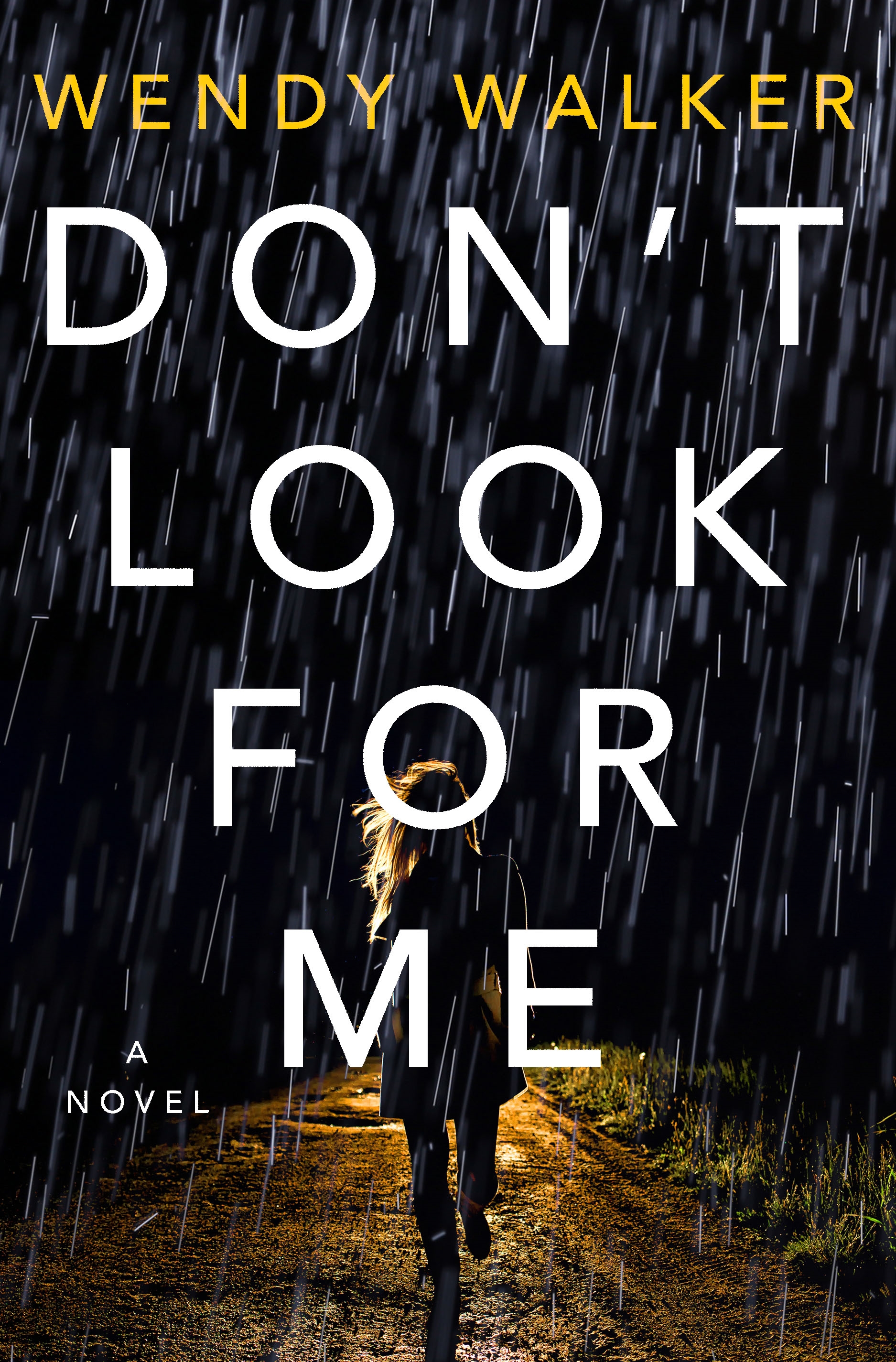
49127515Book: “Don’t Look For Me” by Wendy Walker

Publishing Info: St. Martin’s Press, September 2020

Where Did I Get This Book: I received an eARC from NetGalley.

Book Description: In Wendy Walker’s thrilling novel Don’t Look for Me, the greatest risk isn’t running away. It’s running out of time. One night, Molly Clarke walked away from her life. She doesn’t want to be found. Or at least, that’s the story. The car abandoned miles from home. The note found at a nearby hotel. The shattered family that couldn’t be put back together. They called it a “walk away.” It happens all the time. Women disappear, desperate to leave their lives behind and start over.

But is that what really happened to Molly Clarke?

Review: Thank you to NetGalley for providing me with an eARC of this novel!

The last Wendy Walker book I read was “The Night Before”, which took me on a fun and convoluted ride. Given how much I enjoyed that book, I was very interested in reading her newest book, “Don’t Look For Me”, a thriller about a wife and mother who may have walked away from her life…. or perhaps not. The summary was a bit vague, which only raised my interests more. I was thinking that we were going to get a story filled with questions about Molly Clarke’s whereabouts. And it wasn’t quite that. I’m going to give a bit more info in my review than the summary does, which is kind of going to be spoilery in itself because of that. So if you don’t want to know….. turn back now?

“Don’t Look For Me” has two narratives at play. The first is of Nicole, Molly’s daughter who, after a new lead has come in regarding her mother’s disappearance, returns to the town Molly was last seen in. Nicole has guilt over her last interactions with her mother, and is fighting her own demons because of a tragic incident in the family past (more on that in a bit). The second narrative is that of Molly herself, whose car ran out of gas on the way home while passing through the small town, and who accepted a ride from a man and his daughter…. and then ended up being held captive in their home. The timelines converge pretty early, and you see Nicole trying to solve the mystery of her mom’s supposed ‘walk away’, while Molly is trying to escape her captors by using her wits and her need to survive. I enjoyed how Walker lined these two timelines up, and how you would see the actions of one affect or bleed into the other. Through these two perspectives we see how Molly might have been the type to walk away, as her family life has been a wreck ever since the death of her youngest child, in which she blames herself. And Nicole blames her too. This aspect of the story was very strong, and I thought that as an examination of a family swallowed up by grief, blame, and anger it was well done and very sad. Walker also toys a bit with perspectives and perceptions between the two women, and how they regard people they are interacting with. I won’t say much more than that, but I will say that Walker uses a device that really only works on paper, and she did it well.

But thriller and mystery wise, “Don’t Look For Me” felt pretty run of the mill. Molly checked almost ever box of plucky intrepid survivor, while Nicole has a lot of the vices and bad habits that you see of protagonists with tortured souls. The clues are all in place, and while it wasn’t obvious as to who had taken Molly and why, once we got the big reveal it felt a bit underwhelming. I’m not sure if it was because I didn’t really feel like I cared enough for the characters, or if it was the set up, but I didn’t have much investment as to what happened to either Molly or Nicole. On top of that, there was another one of those surprise twists that comes in near the end, which felt unbelievable and a bit unearned to me. I wish that more moments had been put in place that would have felt like everything coming together, as opposed to kind of nutty things just being flung at the reader in hopes that they would stick.

While “Don’t Look For Me” did keep me reading, and while it was a quick read, I ultimately wanted a bit more from it.

Rating 6: A middle of the road thriller with a paint by numbers plot, “Don’t Look For Me” had some interesting perspective manipulations and examinations of a family in turmoil, but was overall average.

Reader’s Advisory:

“Don’t Look For Me” is included on the Goodreads lists “Psychological Chillers by Women”, and “‘The Girl on the Train’ Read A Likes”.

Find “Don’t Look For Me” at your library using WorldCat, or a local independent bookstore using IndieBound!