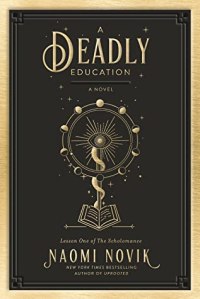
Book Description: Learning has never been this deadly
“A Deadly Education” is set at Scholomance, a school for the magically gifted where failure means certain death (for real) — until one girl, El, begins to unlock its many secrets. There are no teachers, no holidays, and no friendships, save strategic ones. Survival is more important than any letter grade, for the school won’t allow its students to leave until they graduate… or die! The rules are deceptively simple: Don’t walk the halls alone. And beware of the monsters who lurk everywhere. El is uniquely prepared for the school’s dangers. She may be without allies, but she possesses a dark power strong enough to level mountains and wipe out millions. It would be easy enough for El to defeat the monsters that prowl the school. The problem? Her powerful dark magic might also kill all the other students.
Review: Naomi Novik has quickly become a must-read author for me. After this book, she’s pretty much a must-buy author (I only have maybe 5 of those, so that says something, I think!). But, still, when requesting this book, what I’d read from her had been both of her fairytale retellings and the first several of her Napoleonic wars/dragon historical fantasy series. This didn’t sound remotely like either of those, instead being billed as a modern, more grim, “Harry Potter” style boarding school story. But man, Novik can do anything, and my trust is now fully earned, no matter how strange the book description is!
Scholomance is technically a school. There are no teachers and students are on their own to make classes and finish homework, sure. But that’s only half, and arguably the less important half, of what this school provides. Instead, it offers magical kids the best chance they have of surviving their juvenile years. Sure, their odds are still pretty darn bad in the school, but better than the next to nothing they have outside. El’s chances have been even worse from the start. Yeah, she has the raw power, but she seems to repel people for some reason. And in a place where forming alliances is a necessary survival tactic, that’s not good. But here, in her second to last year at the school, staring down the barrel of a final year full of even more likely death, El begins to uncover secrets about not only the school, but herself, and the boy who has been roaming around annoyingly playing savior to all this entire time.
I adored everything about this book, so it’s kind of hard to think of where to start when reviewing it. It’s also so totally unique, interesting, and complicated that it’s hard to find the middle ground between reviewing important aspects of the story and not spoiling the fun for new readers. There’s just so much good stuff to unpack!
I guess I’ll start with the world-building itself. The book description has a tough job trying to describe what Scholomance really is, and, as you can see, I probably struggled too in my own summary. That’s because it’s so complicated and well-constructed that it’s almost impossible to really give a broad overview. Novik seems to have thought out every intricate detail for this magical place, from how the cafeteria works, to the menacing library, to the simplest of things, like how the school assigns and monitors homework and what happens if students fall behind. And it’s all just so creative! I can’t think of a single other fantasy story that has anything like the place Novik has thought up here. And that’s saying something, I think, in a genre that is becoming more crowded by the day (especially YA that has a tendency to become trope-ridden and bogged down in certain themes every few years).
One of the most impressive aspects of all of this that, being as complicated and detailed as it all is, our narrator is given a heavy load of information to be handing off to readers. There’s a significant portion of the first half of the book that is largely devoted to detailing all of these little aspects. It would have been so easy for it to have felt like info-dumping or to have dragged down the pacing and plot of the story. But, for one thing, the information being provided is just too interesting on its own to feel bored by. And secondly, our narrator had a fantastic voice from the start that is strong enough to carry this type of detail-ridden load.
El is everything I like in a narrator: snarky, consistently characterized, yet vulnerable in ways that we (and she) discover throughout the story. From the book description, I was kind of expecting some type of tired anti-hero story or quasi-villain plot line for her, but it’s really nothing like that. Sure, her powers are destructive and there’s this pesky doomsday-esque prophesy lingering around her, but she’s just as skeptical of all that nonsense as the reader wants to be. El’s story, here, is not only finding acceptance with some key friends around her, but in accepting what she has to offer. On one hand, she can be overly confident, but on the other, we see her realize her own values and where her personal lines are between survival and standing up for some moral greater good.
And to balance her out, of course, we have a “Chosen One.” This friendship was everything! Both El and Orion’s characters play perfectly off each other. She, stand-offish, uninterested, and, again, snarky. He, bumbling, clueless of his affect on people, and obnoxiously heroic. I loved everything about this friendship and the slow build to sort of romance that it comes to towards the end.
It’s also clear, here, where the comparisons to “Harry Potter” are coming from. Orion Lake is definitely a response to Harry Potter and all of the other “chosen” heroes we see in fantasy fiction. Novik has said that “Spinning Silver” was essentially her “yelling” at the “Rumpelstiltskin” fairytale, and that this would be her yelling at “Harry Potter.” Comparisons to “Harry Potter always make me nervous. For one thing, I love Harry Potter so, for me, a book being compared to it is either going to be a massive let-down of trying to copy something that shouldn’t be copied. Or it’s going to be some type of “response” piece that spends more time criticizing another book series than in being its own thing. Luckily, this falls right in the middle and does it perfectly.
You can definitely see where Novik is making a point about the type of “chosen one” story that Harry Potter tells, but, while she does touch on some of the obvious themes, she also deep dives into a lot of aspects of this type of storyline that one doesn’t often think about. There’s a strong focus on inequality and injustice, but it’s approached through angles and perspectives that are unique to this world. The themes, of course, carry over, but it stays true to the fantasy world it is and the types of justice and injustice that would be inherent to it. It’s left to the reader to transcribe these thoughts onto our own world and our own experiences of injustice within society.
This review has already gotten pretty long, and I could go on and on. But, in this case, I almost feel like the less said the better! There’s so much great stuff to discover here that I don’t want to spoil any more of it! Needless to be said, my copy is already pre-ordered, and I highly recommend any and all fantasy fans to get their hands on this book ASAP!
Rating 10:Breaking fantasy walls that I didn’t know even exited! Simply fantastic!
Book: “A Good Girl’s Guide to Murder” by Holly Jackson
Publishing Info: Delacorte Press, February 2020
Where Did I Get This Book: I own it.
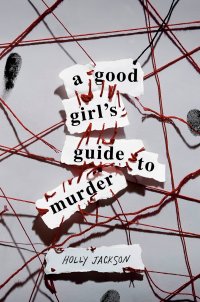
Book Description:Everyone in Fairview knows the story.
Pretty and popular high school senior Andie Bell was murdered by her boyfriend, Sal Singh, who then killed himself. It was all anyone could talk about. And five years later, Pip sees how the tragedy still haunts her town.
But she can’t shake the feeling that there was more to what happened that day. She knew Sal when she was a child, and he was always so kind to her. How could he possibly have been a killer?
Now a senior herself, Pip decides to reexamine the closed case for her final project, at first just to cast doubt on the original investigation. But soon she discovers a trail of dark secrets that might actually prove Sal innocent . . . and the line between past and present begins to blur. Someone in Fairview doesn’t want Pip digging around for answers, and now her own life might be in danger.
This is the story of an investigation turned obsession, full of twists and turns and with an ending you’ll never expect.
Review: Back when we were a COVID-free world and the thought of going shopping in person didn’t give me hives, my Mom and I went to Barnes and Noble on a trip to the Mall of America. I always like to check what the YA display has, because even though I know it will usually be heavy on the fantasy and romance, you can also find some gems of teen thrillers. That was how I initially learned about “A Good Girl’s Guide to Murder” by Holly Jackson. I let it be, but the name stuck in my head enough that when quarantine happened about a month later I had the title of a book I wanted to order. It still took a little time to get to it, but I finally picked it up and gave it a go…. and kicked myself for waiting to start it as long as I did.
“A Good Girl’s Guide to Murder” has all the elements that I want in any kind of thriller, let alone a teen one. The protagonist is interesting and well fleshed out, for one thing. Pippa is the kind of teenage girl I probably wished I was at the time. She’s clever, she’s funny, and her true crime obsession, one true crime in particular, is a fun nod to all true crime enthusiasts everywhere. But on top of all of those things, she is by no means perfect, but not in the obvious ways that some thriller heroines go. She has a well adjusted home life, she has healthy friendships and relationships, and she isn’t drowning in her own dysfunction. You like her almost immediately, and even when she does sometimes do dumb things (like most teenagers probably would on occasion), they are believable. And it isn’t just Pip that is enjoyable as a character. Her friends are all fun with witty and snappy personalities, and her partner in investigating, Ravi, is incredibly likable along with being a little bit tragic. Ravi is the younger brother of Sal, the boy who everyone assumes murdered Andie but who ended up dead before he could be charged (supposedly by his own hand). Not only does Ravi’s involvement make Pip’s endeavor all the more personal and high stakes, it also makes it feel more ‘legitimate’ as opposed to just a random girl not really connected to a tragedy sticking her nose in it because of a quirky true crime obsession. Jackson also makes note of racism within police investigations and media coverage, as Sal, being Indian American, was immediately accepted as the murderer because of racist ideas about his culture and how women fit into it, in spite of a few big inconsistencies. Ravi, too, doesn’t have the same privileges as Pip does as they investigate, and Jackson definitely makes certain to address these things when Pip needs to be educated on them. I thought that was a good theme throughout this novel.
And on top of likable characters, we also get a VERY stellar, complex, but not overwrought mystery at hand. We get to see Pippa approach it through her perspective in a few different ways, be it through the narrative itself, her log entries for her capstone project, or the notes that she has taken about the case. The clues are all there, and while I admit that I kind of figured out one of the big aspects to the case pretty early on, Jackson throws in enough believable red herrings that I did end up doubting myself. It’s a classic whodunnit with a lot of people who would have reason and motive, and then you add in ANOTHER layer with a mystery person starting to threaten Pip as she gets closer and closer to finding out the truth about what happened to Andie. There are well executed moments of legitimate tension, and you do really start to worry about Pip as she starts to unearth long kept secrets and lies. This is the kind of suspense you really want in a thriller, and Jackson is able to maintain it throughout the story, though there are a good number of moments of levity sprinkled in. Just to give the reader a break in the tension here and there. I was hooked, and basically read it in the course of two days, foregoing other forms of entertainment until I was done. Yeah, it’s VERY fun.
And the best part is that a sequel is coming out next Spring here in the States.
Between this and the hope of a potential vaccine, Spring 2021 is looking PRETTY good! (source)
“A Good Girl’s Guide to Murder” is a great read and a hell of a lot of fun! Shame on me for sleeping on it for so long! Thriller fans, do yourself a favor and go read this book!
Rating 9: Incredibly fun, properly twisty, and a very impressive debut novel, “A Good Girl’s Guide to Murder” gave me everything I want in my YA thrillers, and more.
Many authors don’t come out the door swinging with a blockbuster book. And even when they do, over the course of their careers, there are usually some quieter novels that somehow seem to slip beneath the radar of the general reading public’s notice. So today we’re going to dig into those backlists and highlight some lesser-known titles from a few of our favorite authors!
Serena’s Picks
Book: “The Near Witch” by V.E. Schwab
Schwab seemed to come onto the scene around 2013 when her book “Vicious” first came out and took readers by storm. Since then she’s gone on to write a number of high profile works, including one of my favorite trilogies ever, the “Shades of Magic” series. But before that came this quiet, little fantasy novel originally published in 2011. In fact, it was so quiet that it was re-released in 2019 (after Schwab’s name had gained so much more buying power) with the hopes that it would garner more readership than it did in its first outing. It’s a lovely book, and as one of her earliest books, it’s easy to see the building blocks forming here for themes that she will dive more deeply into in coming books. It’s also a stand-alone, that rare and magical beast of fantasy fiction.
Book: “Warbreaker” by Brandon Sanderson
I’ve already highlighted “Elantris” in previous lists, so while I do think that that book ranks as Sanderson’s most unknown title, I thought I’d go with another one that often gets overlooked in the huge list of titles this author’s produced. This is all subjective, of course, but I think that Sanderson first really came onto the epic fantasy scene with the release of “Mistborn,” published in 2006. So that makes this book, published in 2009, one of those strange cases where a book by an already-popular author seems to fall through the cracks. Mostly this is probably due to the stand-alone nature of the book when Sanderson was already beginning to make a name for himself as an epic fantasy series author. But this book is simply fantastic and probably has my favorite cover of all of his works. It features his usual strong female-characters and intricate magic system, this time based around color and music. It’s a delightful book and one definitely worth checking out for fans of Sanderson’s work or of epic fantasy in general.
Book: “Heart’s Blood” by Juliet Marillier
Not only is Marillier one of my favorite authors ever, but she’s been consistently producing fantasy works for over twenty years now since her first book,”Daughter of the Forest,” came out in 1999. Over that period of time, her “Sevenwaters” books and their off-shoots have been by far her most popular and well-known titles. But she’s also quietly produced several stand-alone novels and duologys. Like her first book, “Heart’s Blood” is a fairytale re-telling. What’s more, it’s a “Beauty and the Beast” re-telling! My favorite! But among the many interwoven books that Marillier has produced over time, this one stands on its own and often gets left unnoticed. Which is such a shame given how beautiful a story it is. Plus, it has a very unique approach to re-imaging one of the most popular (and challenging!) fairytales out there. If you love “Beauty and the Beast,” or fairytale re-tellings in general, this is one to add to your TBR list!
Kate’s Picks
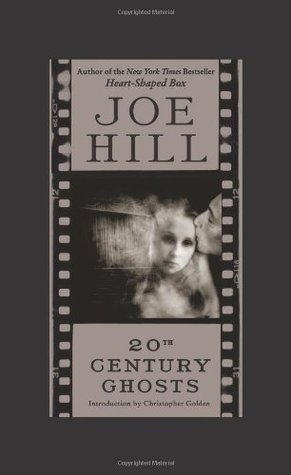
Book: “20th Century Ghosts” by Joe Hill
Joe Hill is becoming more and more popular thanks to adaptations of his works “Locke and Key” and “N0S4A2” being brought to the TV screen, but I think that one of his lesser known titles, and one of my favorites, is the short stories collection “20th Century Ghosts”. Hill runs a complete gamut in his storytelling her, from the legitimately disturbing “Best New Horror” (in which an editor for a horror anthology tries to meet the elusive author of a twisted story), to the bittersweet “Better Than Home” (the story of a relationship between a boy with special needs and his father), to the fascinating “Abraham’s Boys” (a spin off to “Dracula” where Van Helming moves to America and raises his two sons to be vampire hunters). This collections makes it easy to find a story of Hill’s that you can relate to and enjoy, and it also shows off his vast talent as an author with a deft ability to hop from genre to genre and give them all solid representation. If you are just discovering Hill now, you definitely need to read “20th Century Ghosts”.
Book: “Fevre Dream” by George R.R. Martin
While these days most people associate George R.R. Martin as the guy who created (and has neglected to finish) “A Song of Ice and Fire”. This probably means you think high fantasy when you hear his name. But did you know that he wrote a story about a vampire on a steamboat traveling down the Mississippi River? It’s true! “Fevre Dream” was actually the first thing of Martin’s that I read, and it took me years to actually make the connection between these two very different works. In the mid 19th Century, a riverboat captain named Abner Marsh is approached by a wealthy mysterious man named York. York wants Marsh to take him down the Mississippi, though he isn’t very forthcoming as to why. Marsh, needing the money, takes the job… And then finds himself a travel companion to someone who may not be human. If you like vampire stories and Martin’s other works, give this one a shot!
Book: “The Running Man” by Richard Bachman (aka Stephen King)
This one may be a bit of a cheat, but too often have I been talking about the movie “The Running Man” with someone only to blow their minds that not only is it based on a book, it’s based on a book by Stephen King (writing as his old alias Richard Bachman). While it’s true that the movie and the book are pretty different in plot and tone, the basic premise is the same: in the first quarter of the 21st century, the U.S. has become a dystopian nightmare in which poverty, strife, and fascism have run rampant, and the most powerful man in America is the host of the show “The Running Man”. On this show people have to evade people who are trying to kill them. In the novel Ben Richards signs up in hopes of winning the prize to support his wife and baby, and has to stay alive long enough to collect. It’s dystopian angst to be sure, but it’s pulse pounding and suspenseful, and was one of the books that King got to push beyond expectations.
What are some of your favorite books that aren’t as well known by authors you love? Let us know in the comments!
Book Description: Abandoned by her people, Queen Talyien’s quest takes a turn for the worse as she stumbles upon a plot deeper and more sinister than she could have ever imagined, one that will displace her king and see her son dead. The road home beckons, strewn with a tangled web of deceit and unimaginable horrors – creatures from the dark, mad dragons and men with hearts hungry for power.
To save her land, Talyien must confront the myth others have built around her: Warlord Yeshin’s daughter, symbol of peace, warrior and queen and everything she could never be.
The price for failure is steep. Her friends are few. And a nation carved by a murderer can only be destined for war.
Review: I requested an ARC of the first book in this series kind of on a whim. To be frank, I was actually kind of put off by the series being titled “Chronicles of the Bitch Queen.” I mean, I get it…she-wolves, bitch, yep. And I’m sure it’s also `tied in with the fact that Talyien is not a beloved queen. But still, it’s kind of an abrasive series title, and I wasn’t sure what exactly I was getting into. Turned out, what I was getting into was an intriguing new fantasy world headed-up by a no-nonsense but still deeply flawed heroine. So after finishing that first book, it was really exciting to see that the second was coming out only 6 months later. And here we are!
Talyien’s situation hadn’t started out well when she set off from her homeland in the hopes of reconciling with the husband that had abandoned her and her son years earlier. It had only gotten worse since with repeated assassination attempts, betrayal, said husband heading back to her home, potentially to kill their son, leaving Talyien stranded in a foreign country with very few friends. But she is nothing if not persistent, especially when the life of her son is at stake. As she makes her way back to him, however, Talyien covers an even deeper web of lies, one that exists not only in the present but extends back to the past.
I think I liked this book even more than the first! For one thing, I’m still really enjoying the first person narration but told from the POV of an adult woman. All too often, the only place I really see first person narration is in YA novels with teenage protagonists. And this, in turn, leads to a certain immaturity in their focus (don’t get me wrong, I still love me a good YA fantasy, but the narrators can sometimes be a bit silly). But here, we have an adult who has a full history behind her, one that she is capable of looking back on and recognizing her own and others’ mistakes. It also makes all of her interactions with those around her particularly interesting. In some ways, she’s an unreliable narrator as her perceptions of others and their motivations are always colored by what she knows (or guesses) about them. But we also have an inside look into how their actions and words influence her.
This book also seemed to expand on almost all aspects. We see more of the world-building as Talyien and her crew travel around trying to make their way back to her son. I really enjoyed out fully fleshed out this world feels. We hear about the different foods, languages, and cultural behaviors from place to place. And it’s all presented in a very natural-feeling way, no info dumping. There was also more of magic to found in this second book and more action in general.
I also really liked how much more we learned about Talyien’s father and his actions. There’s also a pretty deep-dive into the lasting influence that her father has had on Talyien. From the very start of the book, it’s clear that his perceptions of her, his lessons, his strengths and failures as a parent are a continual influence on Talyien’s own perception of herself and of the choices she can make. She, of course, is also unreliable in her memories of him, as we, the reader, can see some of his flaws in a more clear way than she can.
Overall, I really enjoyed this book. It felt like it took what the first book laid down as a foundation and started really building up from there. Everything just felt more fully fleshed out, and the story was even more exciting. Of course, it’s no surprise that Talyien’s story doesn’t end here with rainbows and butterflies, so I’m excited to see what happens in the third book. Don’t forget to enter to win an ARC copy of this book as well!
Rating 8: Even bigger and better than the first!
Reader’s Advisory:
“The Ikessar Falcon” is a new title, so it isn’t on any Goodreads lists yet, but it should be on: “Asian-Authored Books in 2020.”
Publishing Info: St. Martin’s Press, September 2020
Where Did I Get This Book: I received an eARC from NetGalley.
Book Description: In Wendy Walker’s thrilling novel Don’t Look for Me, the greatest risk isn’t running away. It’s running out of time. One night, Molly Clarke walked away from her life. She doesn’t want to be found. Or at least, that’s the story. The car abandoned miles from home. The note found at a nearby hotel. The shattered family that couldn’t be put back together. They called it a “walk away.” It happens all the time. Women disappear, desperate to leave their lives behind and start over.
But is that what really happened to Molly Clarke?
Review: Thank you to NetGalley for providing me with an eARC of this novel!
The last Wendy Walker book I read was “The Night Before”, which took me on a fun and convoluted ride. Given how much I enjoyed that book, I was very interested in reading her newest book, “Don’t Look For Me”, a thriller about a wife and mother who may have walked away from her life…. or perhaps not. The summary was a bit vague, which only raised my interests more. I was thinking that we were going to get a story filled with questions about Molly Clarke’s whereabouts. And it wasn’t quite that. I’m going to give a bit more info in my review than the summary does, which is kind of going to be spoilery in itself because of that. So if you don’t want to know….. turn back now?
“Don’t Look For Me” has two narratives at play. The first is of Nicole, Molly’s daughter who, after a new lead has come in regarding her mother’s disappearance, returns to the town Molly was last seen in. Nicole has guilt over her last interactions with her mother, and is fighting her own demons because of a tragic incident in the family past (more on that in a bit). The second narrative is that of Molly herself, whose car ran out of gas on the way home while passing through the small town, and who accepted a ride from a man and his daughter…. and then ended up being held captive in their home. The timelines converge pretty early, and you see Nicole trying to solve the mystery of her mom’s supposed ‘walk away’, while Molly is trying to escape her captors by using her wits and her need to survive. I enjoyed how Walker lined these two timelines up, and how you would see the actions of one affect or bleed into the other. Through these two perspectives we see how Molly might have been the type to walk away, as her family life has been a wreck ever since the death of her youngest child, in which she blames herself. And Nicole blames her too. This aspect of the story was very strong, and I thought that as an examination of a family swallowed up by grief, blame, and anger it was well done and very sad. Walker also toys a bit with perspectives and perceptions between the two women, and how they regard people they are interacting with. I won’t say much more than that, but I will say that Walker uses a device that really only works on paper, and she did it well.
But thriller and mystery wise, “Don’t Look For Me” felt pretty run of the mill. Molly checked almost ever box of plucky intrepid survivor, while Nicole has a lot of the vices and bad habits that you see of protagonists with tortured souls. The clues are all in place, and while it wasn’t obvious as to who had taken Molly and why, once we got the big reveal it felt a bit underwhelming. I’m not sure if it was because I didn’t really feel like I cared enough for the characters, or if it was the set up, but I didn’t have much investment as to what happened to either Molly or Nicole. On top of that, there was another one of those surprise twists that comes in near the end, which felt unbelievable and a bit unearned to me. I wish that more moments had been put in place that would have felt like everything coming together, as opposed to kind of nutty things just being flung at the reader in hopes that they would stick.
While “Don’t Look For Me” did keep me reading, and while it was a quick read, I ultimately wanted a bit more from it.
Rating 6: A middle of the road thriller with a paint by numbers plot, “Don’t Look For Me” had some interesting perspective manipulations and examinations of a family in turmoil, but was overall average.
Book Description: Abandoned by her people, Queen Talyien’s quest takes a turn for the worse as she stumbles upon a plot deeper and more sinister than she could have ever imagined, one that will displace her king and see her son dead. The road home beckons, strewn with a tangled web of deceit and unimaginable horrors – creatures from the dark, mad dragons and men with hearts hungry for power.
To save her land, Talyien must confront the myth others have built around her: Warlord Yeshin’s daughter, symbol of peace, warrior and queen and everything she could never be.
The price for failure is steep. Her friends are few. And a nation carved by a murderer can only be destined for war.
Giveaway Details: I really enjoyed the first book in this series, “The Wolf of Oren-Yaro” when I read it earlier this spring. So I was super excited to see that the second one would be coming out this fall, so soon after.
The first story introduces us to Queen Talyien, a young queen who is anything but beloved by her people. Abandoned by her husband and left with a young son and a country that is barely holding itself together, Talyien strives to hold the fraying bits of her life together. When she attempts to reconcile with her husband several years after the fact, everything seems to go wrong and Talyien begins to discover that her problems may be even bigger than she had thought.
There were a bunch of things I really liked about the first book. The writing was strong and confident. The world-building was unique but not to caught up in itself. But most of all, I really liked Talyien. Talyien was that type of heroine that defies all of the stereotypes one typically finds when looking up examples of “strong female protagonists.” Yes, she’s smart, a good fighter, and independent. But she’s also flawed, self-aware, and has made choices that aren’t also good, and realizes it! Beyond this, it’s always nice to have an adult woman as the heroine. Too often fantasy stories focus on very young female characters. Not that I have a problem with those characters and the often very lovely romances they bring with them, but it’s also nice to have a change. Talyien is a grown woman who’s seen the ups and downs or romances and marriage and has a small child of her own. Her problems and outlooks on life are very different than the young woman just setting out in the world.
The end of the first book left Talyien in a situation all the more dire than the one she started in, so I’m excited to see what she gets up to in this one! I’m not really expecting rainbows and butterflies, but man, can’t something go right for this woman? My full review will be up this Friday. In the meantime, we’re giving away a copy of this book. The giveaway is open to U.S. residents only and ends on September 23.
Publishing Info: Katherine Tegen Books, September 2020
Where Did I Get This Book: I received an eARC from Edelweiss+.
Book Description:Korey Fields is dead.
When Enchanted Jones wakes with blood on her hands and zero memory of the previous night, no one—the police and Korey’s fans included—has more questions than she does. All she really knows is that this isn’t how things are supposed to be. Korey was Enchanted’s ticket to stardom.
Before there was a dead body, Enchanted was an aspiring singer, struggling with her tight knit family’s recent move to the suburbs while trying to find her place as the lone Black girl in high school. But then legendary R&B artist Korey Fields spots her at an audition. And suddenly her dream of being a professional singer takes flight.
Enchanted is dazzled by Korey’s luxurious life but soon her dream turns into a nightmare. Behind Korey’s charm and star power hides a dark side, one that wants to control her every move, with rage and consequences. Except now he’s dead and the police are at the door. Who killed Korey Fields?
Review: Thank you to Edelweiss+ for providing me with an eARC of this novel!
If I’ve said it once, I’ve said it a hundred times: if you haven’t checked out Tiffany D. Jackson’s books, be you a YA thriller fan or just a thriller fan in general, you absolutely NEED to. Jackson is one of my favorite authors, and when I heard that her newest novel, “Grown”, was taking on the sexual exploitation of Black teenage girls searching for stardom, I knew that it was going to be her toughest, but perhaps most important, novel yet.
First of all, content warnings abound on this book. Jackson herself puts a content warning at the beginning of this book, and it is definitely necessary. “Grown” deals with themes of sexual abuse, grooming, and psychological abuse and trauma.
“Grown” is an unflinching look at the sexual abuse and victimization of teenage girl Enchanted, a Black girl with dreams of becoming a singing sensation. When R&B superstar Korey Fields (who is twenty eight to her seventeen) sees her at an audition, he offers to take her under his wing and help her become a singer, but from the get go you know that something is off. He texts her about her life. He compliments her on how pretty she is. He calls her ‘Bright Eyes’. But once he gets her on tour and away from her parents and her support system, he isolates her, he abuses her, and he makes her completely subservient to him under guise of care and love. There are clear influences from R. Kelly in this story (side note: if you are interested in social justice issues regarding the #MeToo movement but haven’t watched “Surviving R. Kelly” yet, go watch it. Go watch it now.), but Enchanted as a character is wholly original and an incredibly realistic teenage girl. Her insecurities, her dreams, her certain naiveté, everything about her was on point. Jackson paints a clear portrait of a girl who has been manipulated into a dangerous situation, and you never feel any victim blaming towards her. On the contrary, we see how easy it would be for Enchanted to get into that situation because of the manipulations of a predator, and the inaction of those who are willing to prop up a predator based on his fame, wealth, and power. Jackson also points out the very important point that Black girls aren’t as easily seen as victims in our culture due to societal racism that dehumanizes Black people, and sexualizes Black girls from a young age. Misogynoir is a very dangerous thing, and it allows predators to get away with their predation, and you see it over and over again with Enchanted, even in seemingly mundane ways (one moment that struck me was when her swim coach told her to get a bigger suit because she was ‘spilling out’ of the one she was wearing, as if Enchanted’s body is somehow her fault). Seeing all of this play out is devastating, and seeing Enchanted failed by those who should be protecting her (I am leaving her parents out of this indictment, by the way, as while I don’t want to go into TOO many details, they are powerless in their own ways) is so upsetting.
Oh, and there is also a mystery at hand here! Right off the bat, Korey Fields is dead, and Enchanted is covered in ‘beet juice’. The narrative is split into two timelines. The first is before, and the second is during and after, with first person accounts, transcripts, and conversations all sprinkled in to lay out the building blocks of the murder case. I did feel like the mystery took a back seat to the bigger issues at hand, but that is totally okay in this work. In fact, things that made the mystery more complex and threw doubt as to Enchanted’s reliability as a first person narrator almost weakened the narrative, as it didn’t feel necessary to throw in twists and turns to throw the reader off the scent. Regardless, it was a satisfying mystery that was well laid out, and I liked how Jackson used different writing styles and devices to build up a suspenseful story that you are invested in.
“Grown” is once again a triumph by Tiffany D. Jackson. But it’s also perhaps one of the more important reads about #MeToo themes. It also asks many hard questions and makes the reader really think about how society values power and fame over the welfare of others.
Rating 9: An important, suspenseful, and heart wrenching story, “Grown” shines a much needed light on misogyny, sexual violence, and the way that race plays a part to make victims, especially Black women and girls, even more vulnerable.
Occasionally we here at Library Ladies get an email asking for some Reader’s Advisory. Sometimes it’s a general ‘what should I read next?’, and sometimes it’s a specific genre or theme that the reader is asking for. We do our best to match the reader to some books that they may like based on the question they give us.
I find I read some of the same authors over and over again, or really similar kinds of books. Are there short story collections that will introduce me to a variety of new authors? Bonus points for a wide range of settings/perspectives! Can’t wait to see what you find!
Short Story Newcomer
Hi Newcomer!
That’s one of the beauties of short story collections: you can find a lot of great new authors that you wouldn’t have found otherwise! Here are a few edited collections across the genres that may tickle your fancy…
Book: “A Phoenix First Must Burn” by Patrice Caldwell
This is a sci-fi/fantasy collection that focuses on telling the stories of Black women as explored through the lens of speculative fiction. There are folktales, post-apocalyptic stories, space adventures and more. What really makes this collection stand out is that, while many of the stories touch on tough topics such as betrayal, strength, and resistance, they all also ultimately focus on hope. It’s a great collection full of women from all walks of life and covering a wide scope of fantasy sub-genres. For those looking for a double dipper or fantasy short stories but all tales that focus on topics that are very relatable today, this is definitely a collection worth checking out.
Book: “Odd Partners: An Anthology” by Anne Perry
Mysteries seem like quite the challenge to write in short story format, but this collection features a long list of well-known mystery authors willing to take on the task! The collection focuses on the theme of, well, odd partners. So if you like stories that feature oddball team-ups, like the classic Dr. Watson and Sherlock Holmes, than this is definitely the collection for you. Of course, many of the authors take this theme even further, applying it to the clashes between arch-enemies, as well as the more bizarre teams up, like those between humans and animals.
Book: “The Book of Dragons” by Jonathan Strahan
It’s pretty commonly accepted that dragons are by far the most popular fantasy creature in lore. So it is only fitting that they get a series of short stories all to themselves. Not only does this collection focus on dragons, but it comes with a star-studded list of authors including Garth Nix, Ann Leckie, Kate Elliot, Jane Yolen, and many more! The collection also includes beautiful black and white line art, and its stories are presented in a variety of formats, including poetry. There are also dragons and dragon legends from around the world, including China, Europe, Africa and North America. Definitely a must read if you’re a fan of these epic beasts!
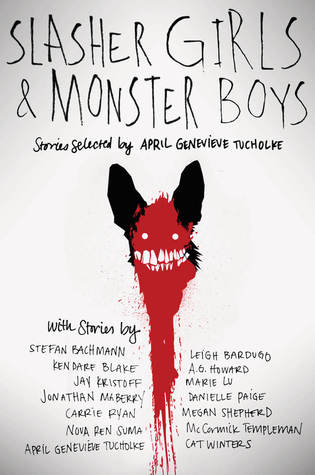
Book: “Slasher Girls and Monster Boys” by April Genvieve Tulchoke
Calling all horror fans, if you are looking for a wide variety of haunts and horrors, “Slasher Girls and Monster Boys” is the book for you! This collection brings together a wide array of YA authors from many backgrounds and perspectives, and challenges them to write a short horror story taking influence from other horror works. So that means that you could be reading a whole new tale of terror, but it could be taking influence from such iconic horror lore as “Final Destination”, “Psycho”, “The Omen”, and many many more. With authors like Leigh Bardugo, Kendare Blake, Marie Lu, and many more, you will no doubt be able to find something that will whet your terror pallet.
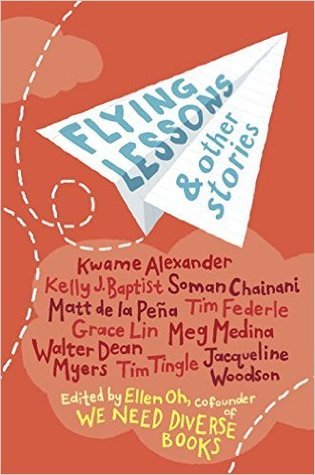
Book: “Flying Lessons and Other Stories” by Ellen Oh
We read this book in our book club a few years ago, but it still is a collection that stands out in our minds of being a well rounded group of stories. The We Need Diverse Books organization published this book of juvenile fiction that has characters and authors that are from many different diverse backgrounds, and are within stories of different genres. From fantasy to realistic fiction to poetry, “Flying Lessons and Other Stories” has a large swath of tales. With authors like Grace Lin, and Kwame Alexander, the stories can be funny, or sad, or suspenseful at times, but always relatable for readers to be sure.
Book: “Fresh Ink” by Lamar Giles
We finish out our list with another collection in conjunction with We Need Diverse Books, this time with a focus on a YA Own Voices authors. “Fresh Ink” is similar to “Flying Lessons” in its content, and has some overlap with the authors from that anthology, but this one has some more mature themes. Once again we have many different Own Voices authors dabbling in various genres. From Jason Reynolds to Nicola Yoon to Walter Dean Myers and more, “Fresh Ink” also happens to have a graphic novel form short story which makes it a little more unique when compared to other books on this list.
Do you have a favorite short story collection or anthology? Let us know in the comments!
Comparison – “Indulge your imagination in every possible flight.”
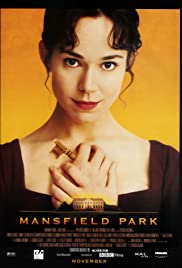
This is probably the most interesting Jane Austen adaptation we’ve seen so far in this review series. For the most part (other than the modern re-imaginings, of course), the other movies have stuck pretty closely to their book counterparts. There are small changes here and there, extra lines added/removed, and various actors bringing their own flare to the characters, to varying levels of success. But while this movie does keep the main plot points included, it also makes some significant character changes and also heavily focuses on themes only briefly touched upon in the book, most notably, the role of the slave trade on British life during this time period.
I’ll dive more deeply into the character changes later, but both Fanny and Sir Thomas have some striking dissimilarities to their book versions. But the other big change is the focus on slavery and the growing abolitionist movement at the time. Right in the beginning of the movie as Fanny travels to Mansfield, she sees a slave ship docked on the coastline and is struck by it. Later, as an adult, she and Edmund discuss the abolitionist movement, with Edmund noting that while progress in that area is a moral good, their livelihoods are currently funded by the wealth provided by the Bertram family’s plantations in Antigua. For his part, Sir Thomas espouses some very racist and incorrect points of view at a family gathering, starting off a minor family scuffle when Edmund and Fanny attempt to correct him. And, of course, we later see the horrific actions that Sir Thomas has taken against his slaves depicted in Tom’s artwork. I’ll get more into Sir Thomas and these violent acts later, but I have a similar problem with that depiction as I do with some of this theme.
Mainly, the movie seems to be wanting to have it both ways: it wants to bring up this topic as one that would be relevant to the times and add a more meaningful weight to Edmund and Fanny’s discussion (the book largely focuses on nature and religion here), but the movie also doesn’t want to change anything significant about the story in this light. Meaning, there’s all of this discussion about the slave trade, but no characters actually make any meaningful steps or really change anything about their lives in response to this. This is likely realistic, it’s not like many nobles of the time were probably giving up their fortune in the work of moving towards freedom from the African people enslaved. But it also makes the movie end on a very awkward, unresolved note. It’s rather uncomfortable. Perhaps that was the point? But if so, even that fails to really settle with any weight.
Heroines – “I hate to hear you talk about all women as if they were fine ladies instead of rational creatures.”
I have mixed feelings on this portrayal of Fanny Price. On one hand, I really like Frances O’Connor’s acting overall and think she fits the mental image I had of Fanny pretty perfectly. On the other hand, I think the character is really all over the place throughout the movie, sometimes being presented as a strong-willed, verging on rebellious young woman, and at others reverting back to the more meek and mild version of the character that we’re familiar with from the book.
One of the big challenges of adapting this book is Fanny herself. She’s an even more quiet and reserved character than Eleanor who also has Marianne to balance her out. So, I get that adjustments had to be made here. Edmund’s “grooming” of Fanny definitely doesn’t work for modern audiences. Nor does the fact that most of Fanny’s longer speeches (that she makes out loud at least) have to do with the wonders of nature, poetry, and the clergy. As I’ve mentioned in my review of the books, there are even times when Fanny seems to be suffering from some mild form of Stockholm Syndrome, especially with how thankful she is for Mrs. Norris’s constant reminders of how very, very lucky Fanny is to be in a family where she is largely ignored and otherwise put to work as a glorified maid service for the ladies of the house.
So, all of that acknowledged, I generally am ok with the changes they’ve made to Fanny here, especially when they emphasize her more wild moments (running around with Edmund, horse back riding, being more firm when she stands up to Sir Thomas about refusing Mr. Crawford). There is a bit of whiplash when she switches back to being meek/mild all of a sudden, but I get it.
The only real problem I have with her portrayal is the decision the movie makes to have her briefly accept Henry Crawford. Again, on one hand, I get the point the movie is trying to make about the very real, very scary situation facing women of the time. We see Fanny witness the life her mother has had after marrying the wrong man, essentially. She married for love, but it is clear that that love is gone and all that remains is a life marred with poverty and too many children. This could easily be Fanny’s future, and I like that they acknowledge these hard choices, especially in a Jane Austen film that, naturally, usually tells the much more romantic, lovely version of young women finding love and wealth (or at least good comfort) together.
I also think that this change can add a good balance point between Edmund and Fanny, which I’ll talk more about later. But strictly looking at it as a character adaptation from what we’re given in the book, this is the biggest change to Fanny’s character we see and one that undermines one of the most prevalent aspects of her entire character. Through the book, Fanny is largely a silent observer. But through access to her inner thoughts and the more revealing conversations we see between her and Edmund, it becomes very clear that Fanny is the only character who is truly clear-eyed about the people and events going on around her. She also is the only one to hold true to the principles she expresses. Edmund talks a good game, but he ultimately joins in the play (after very little prompting really) and is willfully blind to Mary Crawford’s true character. Most of the rest don’t even come close to his levels. By the end of the book, Austen devotes a decent amount of time to Sir Thomas reflecting on the failures of parenting that lead to his children being raised to look the part of well-bred individuals but who ultimately lacked the firm foundation that is required beneath it all to be truly moral or proper.
Fanny, alone, stands true to her beliefs. Even in Portsmouth where we see her struggling to get by in her family’s household (her health actually suffers), Fanny’s focus shifts to what she can bring to this family and she devotes much of her time to improving Susan. When Crawford visits, she sees his improvements as nothing more than a hopeful sign that he will soon recognize the pain he causes her by continuing to pursue her. She knows she doesn’t love him. Knows that a future with a character such as he is (one who she has witnessed toying with women) is questionable at best. If anything, for the book character at least, seeing the situation her mother is in also reinforces the idea that marrying the wrong man can have dire consequences, making Henry Crawford’s fortune not necessarily the assurance of comfort that it originally seems, from a purely practical sense.
The story is almost built around this essential trait of Fanny’s, and one that is presented as unique and rare to her, so to give that up in the movie is strange to say the least. And, given that she changes her mind the very next day, adding weight to Crawford’s accusations of her own inconstancy and lack of trustworthiness, I’m not quite sure what it really adds to the movie. Does it really give us any greater insights into Fanny herself? Into the situation women faced? All of that could have still been accomplished without undermining the steadiness that Fanny is later praised for. Edmund even calls it her “infallible guide”…but the movie itself just worked against such strong language or terms. I think I just wish the movie had done more with this moment. If they were really going to play around with such a key part of Fanny’s character (perhaps the key part of her character), I feel like more needed to be done to justify the change, either leading up to her making this decision or in the fallout. As it is, it feels unnecessary and both undermines Fanny herself and lends some extra motivation for Henry Crawford’s rash actions later on (though not much, and I’ll touch on that in the Villains section).
Heroes – “What are men to rocks and mountains?”
Edmund is so much more likable in this movie than he is in the book. My love for Jonny Lee Miller has been well-established at this point, so of course, I credit his natural charisma as helping bring the character more forward as a hero. But we also simply see more heroic deeds from him. Or, at the very least, more romantic hero deeds from him. Unlike in the book, this version presents Edmund as half-aware of his interest in Fanny the entire time. The audience is never left to question whether Edmund has feelings for Fanny, it’s there from the beginning. It’s there when he mistakes his father’s praising of his choice in women, thinking of Mary Crawford, for Fanny herself. It’s there when, after Mary Crawford disheartens him about her views on the clergy, he demands the first two dances with Fanny instead of Mary. It’s there when we watch Edmund and Henry Crawford gaze after Fanny as she leaves the ball, clearly paralleling them both as interested parties. It’s there in strained words of missing her when he fetches her back home and then when we falls asleep on her shoulder. And it’s most especially there when he initiates their almost kiss in the middle of their middle-of-the-night encounter in Tom’s room (this, still, before Edmund had even heard Mary Crawford finally truly expose herself).
Miller’s version strikes a good balance between Edmund’s own moral sense while also making him believably young and naïve enough to fall for a woman like Miss Crawford. His take on the character is very fresh-faced and wide-eyed. So while we see him giving good speeches on the quality of literature and concerns about the slave trade, it’s also easy enough to see him swayed over to being in a tawdry play and pursue Mary past the point of reason. In the end, it’s much easier to forgive him his nonsense for all the more good we’re given to continue liking him throughout this version.
Villains – “I do not want people to be very agreeable, as it saves me the trouble of liking them a great deal.”
For a book that is already largely made up of villains, somehow the movie went and made more?? I’ll get into the Crawfords, of course, but one of the most major changes to this adaptation of the book is the striking character revision of Sir Thomas. In the book, he could be gruff at times, but was largely a benevolent character, often coming in second to Edmund as actually caring about Fanny’s needs. We see him arrange the ball for her largely out of genuine care for her and her brother. And even after she refuses Mr. Crawford and he speaks harshly to her, he follows this up directly with the action of making sure there is a fire in her room. From there, he does nothing but quietly discuss the situation with Edmund and resolve to let things play out as they will. The worst that can be said about him is that he becomes a bit neglectful when caught up in the family drama at the end, leaving Fanny to linger in Portsmouth.
Here, not the case. It’s actually a very uncomfortable change, overall. I’m not necessarily opposed to re-writing the character this way, but I’m not sure what purpose it ultimately served with how it’s done here. We don’t really need a reason to dislike this character as, like I’ve said, there are plenty of unlikable characters in this story. And even if they had left the character completely as is in this movie, harsher threats to Fanny and colder/creepier disposition overall, he would have been plenty unlikable. But then they add in the graphic nature of his treatment of the slaves at the plantation. The images Tom draws depict every sort of violence, up to and including sexual violence. And then…the movie never touches the topic again.
We’re left with a family who essentially goes on as is, with Fanny and Edmund interacting with everyone in the same manner as always, even going so far as to bring Fanny’s younger sister, Susan, into the household. In the book, this makes sense. With this type of character portrayal for Sir Thomas? There are some serious eyebrow raises about introducing a young woman into that situation, ones that you have to think the very moral and upright Fanny and Edmund (one has to assume she would tell him about this) would have serious concerns about. And then, beyond that, the movie fails completely to make any actual statement or rebuke of this character. It just…sits there. If you’re going to touch on this very real part of history, you have to actually do something with it. As it is, it’s almost worse than not acknowledging these harsh realities at all, since the movie introduces the topic but then does so little with it that it begins to feel exploitative and used for graphic thrills rather than adding any meaningful commentary. I have a big problem with it, ultimately.
For their part, the Crawford siblings are pretty similar to what we see in the book. I do like that we actually get to see the scene where Mary Crawford so thoroughly exposes herself as a terrible person. In the book, it’s kind of anticlimactic to just hear about it second hand through Edmund’s recounting to Fanny.
As for Henry Crawford, the casting here was perfect as I think he immediately sets of spidey-senses for most women as not a trustworthy guy. Too charming by half! His arc is influenced a bit, I think, by the changes they make to Fanny’s decision to briefly accept him only to promptly drop him again the very next day. Not that this disappointment in any ways justifies his or Maria’s actions. But it does paint the entire thing in a bit of a different light, since he’s clearly still reeling from this quick about-face. It also does add weight to his comment that Fanny is somehow the perfect example of trustworthiness. He’s right! She’s not, really, after this! It’s a very human thing she does, but he also has a point. In the book, there is really nothing pushing him towards Maria other than sheer boredom and ego. Here he does have a recently broken heart to somewhat explain his poor decision making. As far as his character arc goes, I’m fine with either option. I have more problems with what it does to Fanny’s character than his, really.
Romance – “A lady’s imagination is very rapid: it jumps from admiration to love, from love to matrimony in a moment.”
As I discussed in the “Heroes” section, the romance is greatly increased in this version of “Mansfield Park.” The entire movie gives us ample evidence that Fanny’s love is requited but that Edmund is just too much of a dunderhead to really put it all together. Really, there’s almost more on the screen highlighting Edmund’s love of Fanny than the other way around. We know it to be true since Fanny pretty much confesses as much, but he has many more actions and lingering looks to his side of things (probably a testament to the director/writers knowing who the main audience will likely be composed of…).
In some ways, Edmund and Fanny are more balanced together in this version as well. I know it’s been some fan’s complaints that it seems that Fanny is essentially Edmund’s reward at the end of the book for getting through the trial that was Mary Crawford. In my review of the book, I argued that it is the opposite: that Edmund is Fanny’s reward for staying true to her principles in the face of everything. Here, we see them both stumble. Edmund, of course, still pursues Mary Crawford (though the near kiss with Fanny does introduce a question into whether he’d have gone through with that relationship even if Mary hadn’t sabotaged herself). He still even has the line about not being able to picture anyone as his wife but for Mary (harder to buy that line in a movie like this that only shortly before had him confusing his father’s compliments on his choice of a potential bride for Fanny instead of Mary…tell me again how he couldn’t picture anyone else as a bride??) But here, we also see Fanny stumble, briefly giving in to the fear of a future of poverty and accepting Henry Crawford’s proposal, if only for one night. I talked more about that in the Heroines section, but I think the decision itself plays best when viewed through the romance angle, as one that makes equals, equally flawed at least, out of our main couple.
Comedy – “For what do we live, but to make sport for our neighbors, and laugh at them in our turn?”
The movie definitely adds in more comedy to the proceedings, making it, in some ways, feel more like a Jane Austen story that the original book did itself. There’s a great little montage right after the family party meets the Crawfords where we go through each individual primping and prepping themselves, all clearly besotted in one way or another with the two new comers. Some of Mrs. Norris’s nastiness is hedged a bit more for laughs, though she’s still generally just an awful person. And Fanny and Edmund’s interactions are often tinged with a lighter note as well than they were in the books. Wisely, the director and writers steered well-clear of giving too many impressions of Edmund’s “molding” Fanny as she grew, something that is often referenced in the book but that means something very different to modern audiences than it would have at the time.
Mr. Rushworth is definitely the primary humorous character. He’s great from start to finish. He doesn’t have a ton of screen time, but the actor really makes the most of even the brief appearances we do see. He bumbles about, seemingly only half aware of his surroundings at any given moment, clearly ignorant of his fiancé’s contempt. His bragging about his number of speeches and costume changes to the baffled Sir Thomas (this, on their first meeting!) is pure gold. And, of course, we get to actually see the morning where Maria and Crawford are discovered to be missing. In some ways, seeing the reality of the situation settle on poor Mr. Rushworth does more to really highlight the wrongness of the situation than what we got in the book. Silly he may be, but here we get to actually see the human cost of two selfish individuals and their thoughtless actions.
And, of course, the movie kept in my favorite comedic moment from the book: when Lady Bertram is clearly sleeping through all of the action and startles awake only to quickly protest that she was not, in fact sleeping.
Fun facts – “Life seems but a quick succession of busy nothings.”
Not only does Jonny Lee Miller play two Jane Austen heroes (something that I believe is unique to him?), he also had already played a character in a “Mansfield Park” adaptation before being cast as Edmund here. He played one of Fanny’s younger brothers in the 1983 mini-series version of the story.
This Fanny Price is partially modeled after Jane Austen herself, with Fanny working as an aspiring author. Some of the bits of writing she reads in the movie come from Austen’s own early work as a teenager.
The actresses who play young Fanny and young Susan are sisters in real life.
Best Movie Gif/Meme:“I dearly love a laugh.”
Thought this one was pretty good:
In two weeks, I’ll the 2007 version of “Mansfield Park.”
Book: “Basketful of Heads” by Joe Hill and Leomacs (Ill.)
Publishing Info: DC Comics, September 2020
Where Did I Get This Book: I received an eARC from NetGalley.
Book Description:June Branch visits her boyfriend, Liam, on Brody Island for a relaxing last weekend of summer. After an escaped group of criminals breaks into the house that June and Liam are watching, Liam is taken by them. June grabs a strange Viking axe and flees from the intruders. When one of the attackers finds her, she swings the axe and takes off his head, which rolls away and begins to babble in terror. For June to uncover the truth, she’ll need to hear the facts straight from the mouths of her attackers, with…or without their bodies attached. Collects issues #1-7.
Review: Thank you to NetGalley for sending me an eARC of this graphic novel!
While it’s true that we aren’t getting a new Joe Hill novel this year, never fear fellow Hill lovers! He has made his triumphant return into the comics world with DC’s imprint Hill House Comics! Given how intricate and awesome “Locke and Key” is, when I heard that he was coming up with his own comic imprint I was very happy. When his premiere contribution “Basketful of Heads” became available in its full form on NetGalley I downloaded it almost immediately after I saw it. I had high hopes, and like most Hill content that comes my way, it met my expectations.
First thing is first, Hill has created some fun characters and a fun setting for this story. Brody Island feels exactly like the kind of beach town you would see in 1970s and 80s lore, with heavy nods to “Jaws” in particular (as this is one of Joe Hill’s favorite movies I wasn’t surprised; Brody Island named for the police chief in that movie, as well as a character saying someone should be hung up by their ‘buster browns’, a la the mayor). In this limited scope of a story you get a sense of the town and the people who live there, and the nostalgia factor was on point. Our protagonist June is the kind of lady character I’ve come to expect from Hill. She’s tough, she’s no nonsense, but she isn’t forced into a stereotypical ‘badass woman’ box we sometimes see when these kinds of characters are on the page. While it’s true that she’s lopping people’s heads off in hopes of saving herself and her boyfriend Liam, which is incredibly badass, she retains her personality and her core being. June also has some well done complexity, as she loves her boyfriend but has aspirations of her own through her education and focus on psychology. While others disparage her aspirations, she values them and holds true to them. I loved June. Add her to the list of excellent Hill heroines.
And then there’s the horror and mystery aspects of this story. As June takes off the heads of violent men who want to do her and Liam harm, we see a lot of gore and splatterpunk-esque violence that is very entertaining. We don’t really know what it is about the axe that June is carrying that makes people’s heads stay alive after being removed from the body, but ultimately it doesn’t matter. The bigger question is why were June and Liam targeted by their attackers. And as that mystery slowly unfolds, we get a well plotted and full of twists ride that I really enjoyed. Hill has a number of tricks up his sleeves, and I found all of them entertaining as hell. I sped through this story wanting to know how it was all going to turn out, and with every reveal I was excited to learn more. Throw in some really fun Easter egg references to Stephen King and his work (prisoners from Shawshank on the run, the location of “Derry County”) and I could barely contain the smiles on my face that kept breaking out.
On top of all that, I liked the art style quite a bit. It is splatterpunk and gory when it needs to be, but also has some moments of cartoony camp and intimate expressions on our characters faces.
“Basketful of Heads” was a really fun story, and I couldn’t be happier now that Joe Hill is back to doing some work in comics. I will definitely be looking into his imprint more to see what other stories come out of it. Summer may be over, but if you want to cling to it a little while longer and you like this kinda thing, pick it up!
Rating 8: Super fun, super gory, super twisty, “Basketful of Heads” is a hoot and a half and a hell of a ride.
Reader’s Advisory:
“Basketful of Heads” is new and isn’t included on any Goodreads lists, but I think that it would fit in on “Best Horror Comics/ Graphic Novels”.
 Book: “A Deadly Education” by Naomi Novik
 Book: “A Good Girl’s Guide to Murder” by Holly Jackson




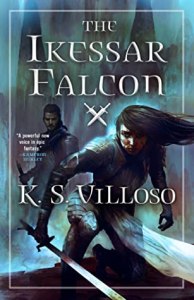 Book: “The Ikessar Falkcon” by by K. S. Villoso
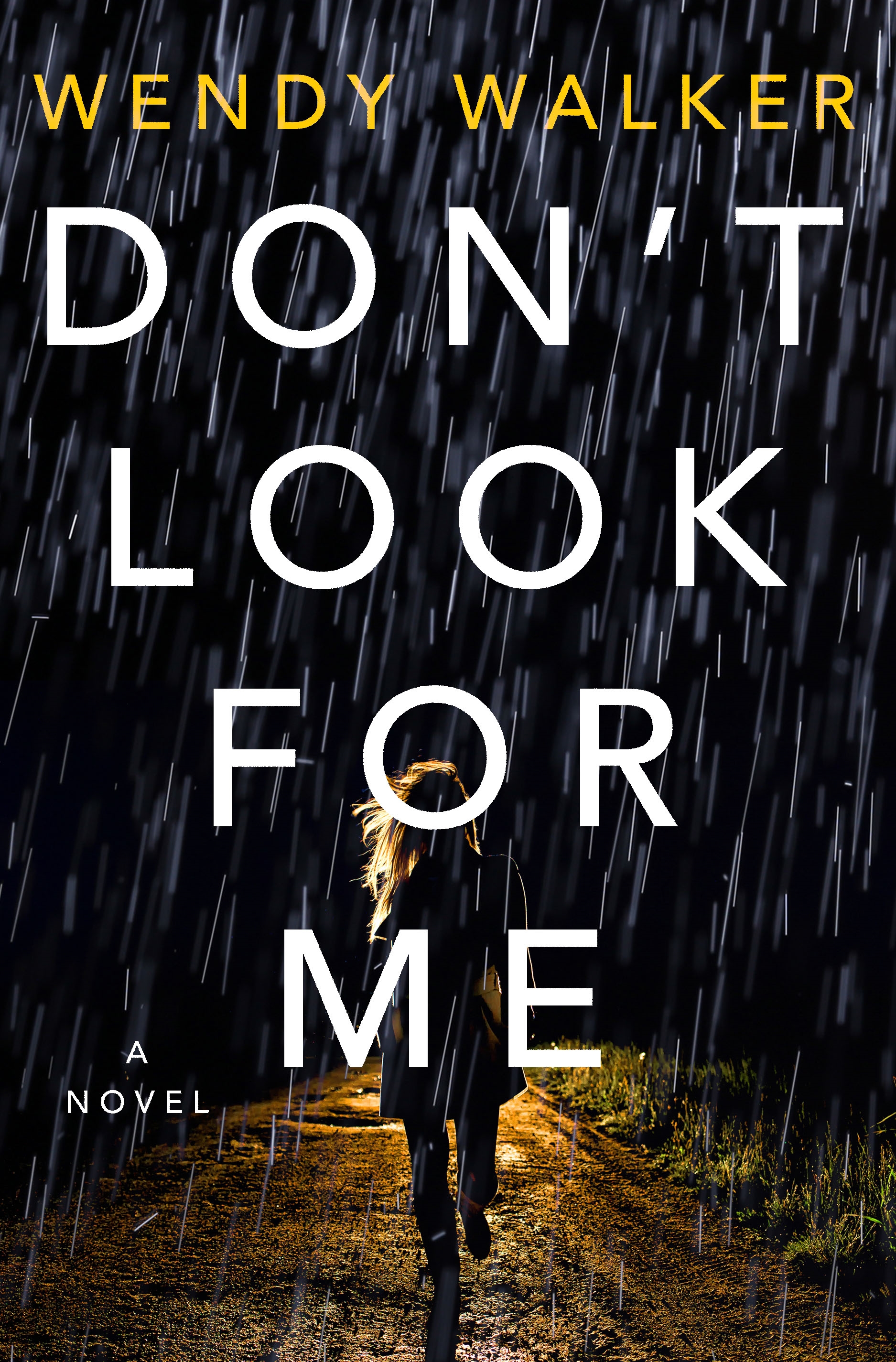 Book: “Don’t Look For Me” by Wendy Walker
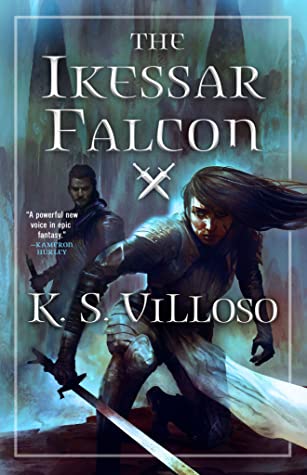 Book: “The Ikessar Falkcon” by by K. S. Villoso
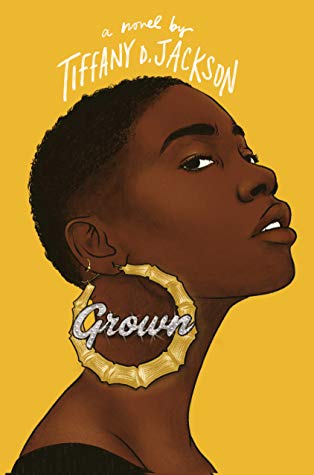 Book: “Grown” by Tiffany D. Jackson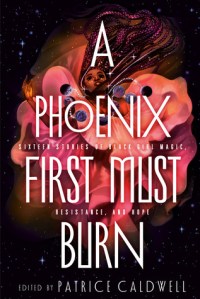




 Book: “Basketful of Heads” by Joe Hill and Leomacs (Ill.)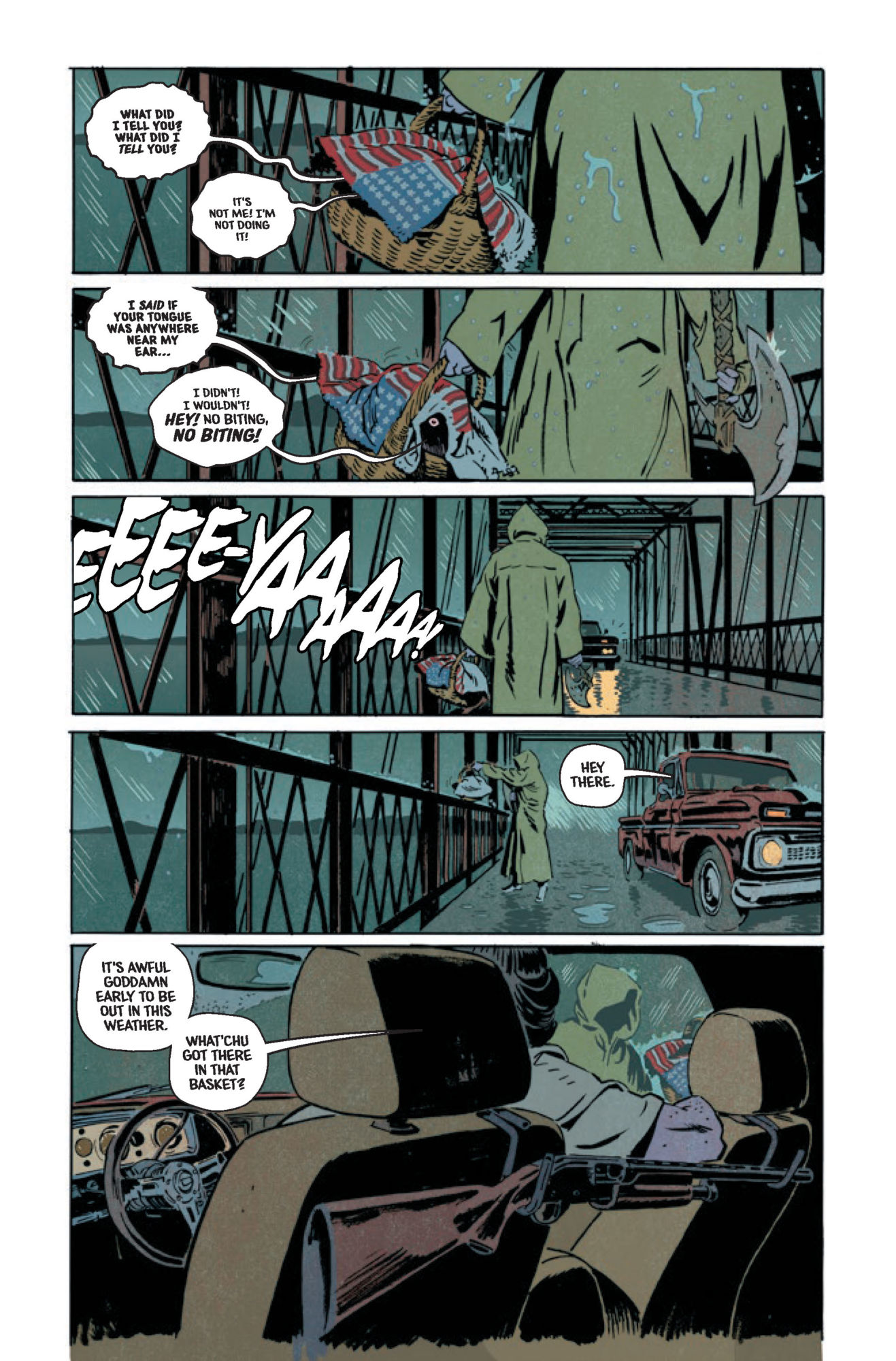
 The Library Ladies