Serena’s Review: “A River in the Sky”

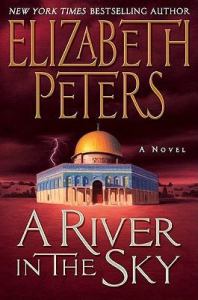
Book: “A River in the Sky” by Elizabeth Peters

Publishing Info: Harper Collins, April 2010

Where Did I Get this Book: audiobook from the library!

Book Description: August 1910. Banned from the Valley of the Kings, Amelia Peabody and husband Emerson are persuaded to follow would-be archaeologist Major George Morley on an expedition to Palestine. Somewhere in this province of the corrupt, crumbling Ottoman Empire—the Holy Land of three religions—Morley is determined to unearth the legendary Ark of the Covenant.

At the request of British Intelligence, Emerson will be keeping an eye on the seemingly inept Morley, believed to be an agent of the Kaiser sent to stir up trouble in this politically volatile land. Amelia hopes to prevent a catastrophically unprofessional excavation from destroying priceless historical finds and sparking an armed protest by infuriated Christians, Jews, and Muslims. Meanwhile, Amelia’s headstrong son, Ramses, working on a dig at Samaria, encounters an unusual party of travelers and makes a startling discovery—information that he must pass along to his parents in Jerusalem…if he can get there alive.

Previously Reviewed: “The Crocodile on the Sandbank” and “The Curse of the Pharaohs” and “The Mummy Case” and “Lion in the Valley” and “Deeds of the Disturber” and “The Last Camel Died at Noon” and “The Snake, the Crocodile, and the Dog.” and “The Hippopotamus Pool” and “The Ape Who Guards the Balance” and “Guardian of the Horizon”

Review: It’s been quite a while since I’ve returned to my beloved Amelia Peabody series. Not from any lack of continued interest, just the continuous growth of my TBR which shames me into reading more current books more often than not. But I felt like it was high time to return to a comforting favorite, so here we are! What adventures will Amelia and her family get up to this time?

The season ahead looks bleak for Amelia and Emerson. They are forbidden from working in their beloved location in the Valley of the Kings and have no fruitful prospects before them. But, sure enough, adventure arrives on their doorway in the form of spy craft and intrigue. This time they are sent by the British government to follow the activities of a would-be archeologist whom the intelligence community suspects of being an agent of disruption sent by the Kaiser to sew chaos in Palestine. But Amelia and Emerson are archeologists at their hearts and can’t help getting caught up in the man’s mad quest to uncover the Ark of the Covenant (and prevent the man from blundering up the entire affair to boot!)

Following what seems to be a bit of a trend, this book largely sees our party split up, with Amelia and Emerson working their own case, and Ramses off on his own (with some other friends) doing his own thing. The story intertwine in a creative way, but I think, overall, I’m always a bit disheartened by the books that playout like this. So much of what makes these stories so good is the interaction between its very charismatic cast of characters. Other than perhaps Amelia herself, I’ve never felt like any of the other cast can really stand well on their own. I think this book is making a case for Ramses being more of his own character, and perhaps that will just be the way later books go and he will begin to flesh out more as we move forward. But for now, I still miss the amusing parental/grown-child interactions that we see from this family unit when they’re all together.

For whatever reason, I also struggled a bit more with the mystery in this book. Some of this could just be due to the chopped-up nature of my reading experience, only listening to chunks here and there when I could catch a minute. But I had a hard time keeping track of the cast of characters, especially between the discoveries we learn from Ramses’ plotline and those we were discovering with Amelia and Emerson. I did like, however, that the general flow of both of these sections felt very different. Amelia and Emerson’s plotline largely felt familiar, with the pair travelling to an excavation site and finding their trip and work constantly interrupted by baffling experiences. Ramses, however, followed a much more action-packed story that was less a mystery than it was a thriller. The combination of both tones made for an interesting reading experience. It was just a bit tough reacclimating when we switched from one to the other.

I also really liked the new setting. The last book saw the crew return to the Lost Oasis, and that was a breath of fresh air from the usual Egyptian setting. But here we had an entirely new location, one we had never visited previously. This is where I wish our family group had been together more of the time, and the story could have devoted more of its page time to exploring the ins and outs of this region. As it was, we only had Amelia and Emerson’s chapters to really dive into Jerusalem and its political/cultural/religious quagmire.

I really enjoyed returning to this series. I do think that my piece-meal approach to reading these later books is hurting my experience a bit, though. I can see that the author is really trying to grow Ramses into a fully fledged lead character in his own right, but because I have such long gaps in my reading experience, he always is the least interesting to me, something that may become more of a problem going forward. Hopefully I can get to the next one more quickly and start to become more invested in him in his own right. But fans of the series are sure to be pleased with this one, especially if you’re already more onboard the Ramses train.

Rating 8: A fun new adventure that mixes the traditional mystery with a more action-packed thriller style of storyline.

Reader’s Advisory:

“A River in the Sky” is on these Goodreads lists: Novels That Let You Travel in Retro Style and Historical Mysteries and Thrillers Featuring Women.

Find “A River in the Sky” at your library using WorldCat!

Kate’s Review: “Mirrorland”

Book: “Mirrorland” by Carole Johnstone

Publishing Info: Scribner, April 2021

Where Did I Get This Book: I received an ARC from the publisher.

Book Description: With the startling twists of Gone Girl and the haunting emotional power of Room, Mirrorland is a thrilling work of psychological suspense about twin sisters, the man they both love, and the dark childhood they can’t leave behind.

Cat lives in Los Angeles, far away from 36 Westeryk Road, the imposing gothic house in Edinburgh where she and her estranged twin sister, El, grew up. As girls, they invented Mirrorland, a dark, imaginary place under the pantry stairs full of pirates, witches, and clowns. These days Cat rarely thinks about their childhood home, or the fact that El now lives there with her husband Ross.

But when El mysteriously disappears after going out on her sailboat, Cat is forced to return to 36 Westeryk Road, which has scarcely changed in twenty years. The grand old house is still full of shadowy corners, and at every turn Cat finds herself stumbling on long-held secrets and terrifying ghosts from the past. Because someone—El?—has left Cat clues in almost every room: a treasure hunt that leads right back to Mirrorland, where she knows the truth lies crouched and waiting…

A twisty, dark, and brilliantly crafted thriller about love and betrayal, redemption and revenge, Mirrorland is a propulsive, page-turning debut about the power of imagination and the price of freedom.

Review: Thank you to Scribner for sending me an ARC of this novel!

Right before I picked up “Mirrorland” by Carole Johnstone, I gave up on a thriller novel involving twin women, one of whom goes missing off a boat, and the other who finds herself getting closer to her twin’s husband after her sister’s supposed death. I actually ended up giving up on it, and it just wasn’t gelling with me. So imagine my double take when I picked up “Mirrorland”, and found a story about twin women, one of who goes missing off a boat, and the other getting closer to the MIA twin’s husband. Coincidence like whoa! Very “Dante’s Peak” and “Volcano”! All that aside, I did find myself more interested in “Mirrorland”, and didn’t find it hard to finish. But that only gets one so far.

“Mirrorland” has a lot of promise and potential that made me interested to read it, but the execution was a little lackluster. In terms of the good, I loved seeing Cat try to hunt through her old home, finding out piece by piece what someone (could it be El?) has left for her to find. As she slowly peels back the clues and starts to piece together what could have happened to her sister, we get a really fun narrative device that feels like it could also be unreliable. I also liked slowly learning about what Mirrorland’s purpose was for Cat and El, and the slow reveal as to what their home life was like that necessitated a place like Mirrorland. There were genuine surprises to go with it, and some of the big reveals totally caught me off guard.

But that is part of the problem with this book. For a few of the twists and reveals, one in particular that I don’t want to go into too much detail about, we have to really, REALLY do some suspension of disbelief and plot gymnastics for it to work. By the time we got to that big reveal, it was so out of left field that we had to have a character actively sit down and explain it, in the ultimate telling versus showing strategy. It feels a lot like the end of “Psycho”, where we get a stilted monologue about what the heck was going on with Norman Bates kind of offsets the entire film. It doesn’t work very well there, and it doesn’t work very well here either. And really, it’s so farfetched and unbelievable, and the story before it isn’t strong enough to make up for it (unlike “Psycho”). I was kind of flabbergasted that we got all of the wrap up in a monologue, as that feels like a big no no to me.

And to add insult to injury, I really didn’t connect with any of the characters. The only one that we really got to know was Cat, and she didn’t feel like she was reinventing the wheel when it comes to unreliable and tortured protagonists in stories like this one. And everyone else fit into very familiar and well worn tropes we see in the genre without really exploring beyond. Overall, it just felt like more of the same. While I definitely don’t doubt that this book and the book I had given up on previously were complete coincidences when it came to plot details and ideas, the fact remains that there just didn’t feel like there was a lot of originality going on in this book, nor were the characters people I was invested in.

“Mirrorland” was a bit of a letdown. Books don’t always have to reinvent the wheel, but if you’re going to lean into familiar themes and ideas, I want a seamless execution.

Rating 5: Lots of twists and turns, but some real plot gymnastics to make some of them work and not terribly interesting characters makes “Mirrorland” a bit of a letdown.

Reader’s Advisory:

“Mirrorland” is included on the Goodreads list “Mystery & Thriller 2021”.

Find “Mirrorland” at your library using WorldCat, or at a local independent bookstore using IndieBound!

Not Just Books: April 2021


While we do love us some books, believe it not, we do have a life outside of reading. So to highlight our other pop culture interests, on the last Monday of each month, we each will highlight three other “happenings” from the last month. Big events on favorite TV shows, new movies we’ve watched, old movies we’ve “discovered,” etc. Pretty much whatever we found of particular interest outside of the book world during the last month. Share your own favorite things in the comments!

Serena’s Picks

Netflix Movie: “Rebecca”

I watched the 1940 version of “Rebecca” back when I was a kid, and my family was going through a classic film phase. It was one of my early exposures to Gothic stories, especially ones that aren’t set in the “Wuthering Heights”/”Jane Eyre” period of history. So I was excited to see that we were getting a new version of the story in 2020. While the movie is a shorter affair and thus has to greatly reduce the time it spends developing the creepy nature of the house and Rebecca’s history, I did, overall, enjoy this version. Lily James was perfectly cast. Armie Hammer was…also there. I do wish the movie had leaned in a bit more into not only the abject creepy aspects of the story, but also the isolation and “fish out of water” feeling that our heroine languishes beneath for much of the book. Fans of the novel should definitely check it out.

Movie: “News of the World”

I haven’t gotten around to reading “News of the World” yet, though my husband and in-laws loved it. I have read the author’s other book, “Rebel Women” and really enjoyed it, so I was excited to check this movie out. Set shortly after the Civil War, the story follows a man who’s made a profession of travelling the south reading newspapers to the gathered towns people who have little access to what is going on in the further reaches of their own country. Along the way, he meets a young girl who has been raised by a Native American tribe and also doesn’t seem to fit in the current world order. It’s a lovely movie, with the beautiful landscape and cinematography almost stealing the show from the main leads. But Tom Hanks is a joy as always and Helena Zengel was excellent as well. There were definitely tears involved, but I really loved this movie and would definitely recommend it to most everyone.

Kate’s Picks

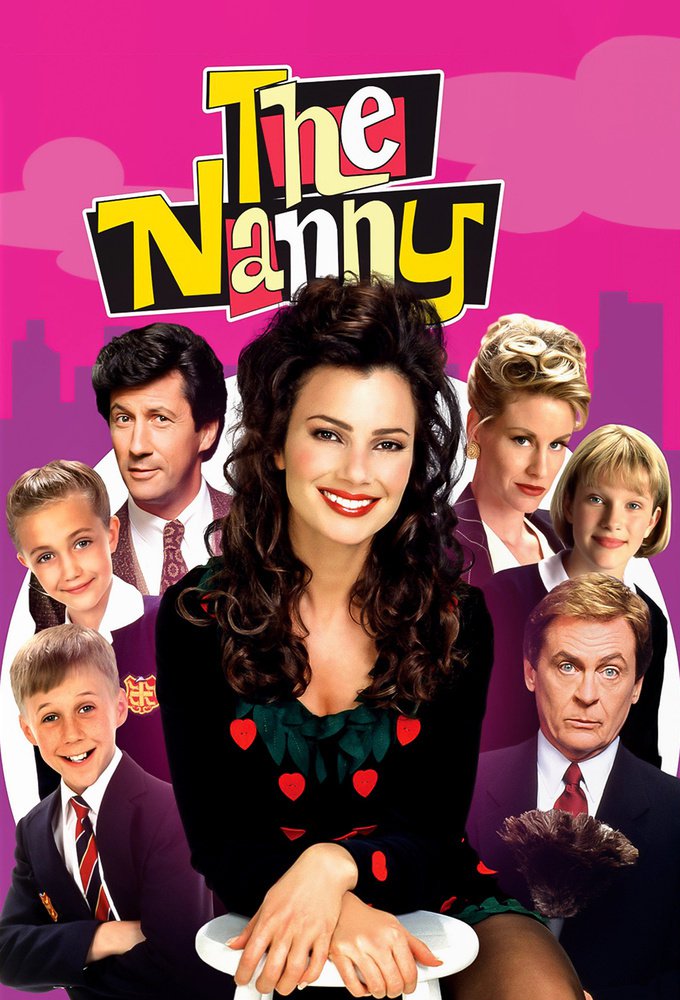
TV Show: “The Nanny”

I had always said that the moment that 90s sitcom “The Nanny” dropped on streaming, that would be one of the greatest streaming moments of my life, and lo and behold, HBOMax went and made my dream come true! I loved this Fran Drescher comedy from the early to mid 1990s, where she stars as fun and sassy Fran Fine, a Queens woman who ends up nannying for a wealthy Upper East Side family. And while it certainly has its dated elements (all the Trump jokes just don’t feel so funny anymore), I am still completely enamored with this show. The cast is hilarious, and all of them having great chemistry with each other (my favorite is sarcastic and dry butler Niles, because of COURSE). The fashions of the era are AMAZING in their gaucheness! And Fran Fine is still a wonderful main character with a great sense of humor and a lot of heart (why yes, I have cried a few times during this rewatch). Even my husband loves to get in on the action, given that part of his family were, indeed, Jewish New Yorkers living in Queens. It’s just wonderful and I’m so happy I can stream it now.

TV Show“Ted Lasso”

I’d heard about “Ted Lasso” in passing many many times in the past year, and while I kind of knew what it was about (“Jason Sudeikis plays a sports coach, right?” was my exact question to my husband), I didn’t know too much. So when my husband decided to watch it, I went in a little blind. But man, I’m glad he threw it on our TV, because it is A DELIGHT! Yes, Jason Sudeikis plays Ted Lasso, an American football coach from Kansas who is recruited to go be the new European football coach for a team in England. While the owner of the team, Rebecca, has her reasons for hiring a man completely oblivious to how the game of soccer works, Lasso is optimistic, incredibly kind, and has the gumption to try and bring his team together! It’s supremely sweet, has a lot of really heartfelt performances (my personal favorite is that of Juno Temple who plays Keeley, a footballer’s girlfriend who is just the cutest), and yes, is VERY funny. And with everything going on, it’s a lovely escape.

Joint Pick

Film: “Promising Young Woman”

We both individually started entries for this movie before realizing it, so instead of repeating ourselves, here’s a joint entry! This thriller film daunted both of us for awhile, but we each finally sat down to watch it and OOF. It is really good, but really, REALLY dark (though apt as hell). Carey Mulligan plays Cassie, a woman who wants to get vengeance for her best friend, who was raped by Cassie’s medical school classmate, and who died by suicide after no action was taken against her rapist. Cassie spends her free time pretending to be drunk at clubs and bars, and when men take her home in hopes of taking advantage, she reveals her sobriety and turns the tables. When she finds out Nina’s rapist is getting married, she decides to punish everyone she feels led to Nina’s death. It’s a searing, dark, and sometimes very funny film that less so takes on men (though it’s true there are few men in this who aren’t terrible), but more takes on a society that allows men to victimize women without consequence. It also takes on the ways that trauma can completely take over someone’s life. Steel yourself for this one, guys.

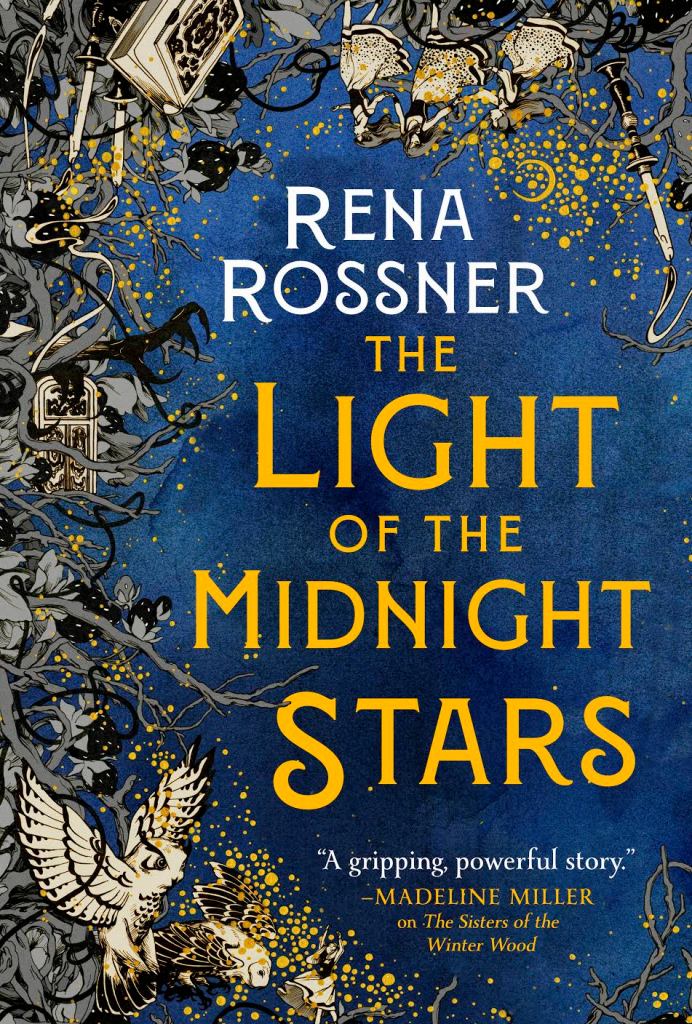
Serena’s Review: “The Light of the Midnight Stars”

Book: “The Light of Midnight Stars” by Rena Rossner

Publishing Info: Redhook, April 2021

Where Did I Get this Book: from the publisher!

Book Description: Deep in the Hungarian woods, the sacred magic of King Solomon lives on in his descendants. Gathering under the midnight stars, they pray, sing and perform small miracles – and none are more gifted than the great Rabbi Isaac and his three daughters. Each one is blessed with a unique talent – whether it be coaxing plants to grow, or predicting the future by reading the path of the stars.

When a fateful decision to help an outsider ends in an accusation of witchcraft, fire blazes through their village. Rabbi Isaac and his family are forced to flee, to abandon their magic and settle into a new way of life. But a dark fog is making its way across Europe and will, in the end, reach even those who thought they could run from it. Each of the sisters will have to make a choice – and change the future of their family forever.

Review: I really enjoyed the first book by this author I read. It was a similar tale of sisterhood, fairytale-like magic, all couched around the persecution the Jewish people have faced throughout history. On the surface, this book looks like it could be almost the exact same story, only add one more sister to the bunch. Am I complaining about that? Heck no!

Each possessed of their own natural, magical talent, three sisters have grown up performing minor miracles beneath the night skies of their forest home deep in Hungary. While wonderous and fantastical, not all view the abilities of the Solomandar sisters as signs of goodness. Instead, their faith and their practices attract dark forces to their once peaceful home. Each must contend with these evil workings intruding on their lives, and each must come to their own path forward, living in a world that is not as good as the believe it can or should be.

There are many things to like about this book. First, as I mentioned, there are a lot of similarities in themes and style of storytelling between this and the first book, so if you enjoyed that story, you probably don’t need to read much further in this review before picking this book up. But this is not a series, and this book does stand on its own with its own unique characters and arcs.

With three sisters’ stories now to tell, I was a bit concerned that I would find myself gravitating towards one more than other, thus rending large chunks of the story as less-interesting. Indeed, even with the ‘The Sisters of the Winter Wood,” I found myself becoming more invested in Liba’s story over Laya’s. Here, I think the author has improved on that and made each of the three sisters compelling in her own right. Each travelled very distinct paths and had to overcome their own specific challenges and experience their own growth. I could probably still pick a favorite if you forced it out of me, but as I don’t have to, I wont!

I also really liked the tone of this book. Last month, I wrote a post on “literary fantasy” and how hard a sub-genre that is to categorize and/or even find to read. But I think this book is a perfect example of a multi-faceted fantasy title that spans genres. Not only would I consider it a “literary fantasy” novel, but it could also be shelved under historical fantasy and fairytale fantasy. These are a lot of subgenres to balance, and I applaud the author for managing all three so well! I particularly enjoyed the intersections of historical events and the fairytale-like style of writing. The author includes an excellent note at the end detailing the various pieces of folklore she pulled from when writing this book. And it’s truly impressive how neatly she has lain these fantasy elements on top of a time and place in real history.

I continue to really enjoy books by this author. Fans of historical fiction who also enjoy a good fairytale are sure to enjoy it. The story is full of magic and wonder, all overlain across a darkly-real threat. It is sure to pull at your heartstrings.

If you’re interested in reading this book, don’t forget to check out the giveaway I’m hosting for an ARC copy!

Rating 8: Dark and beautiful, the woods and starlight feel almost real in and of themselves.

Reader’s Advisory:

“The Light of the Midnight Stars” is on these Goodreads lists: Midnight and Historical Fiction 2021.

Find “The Light of the Midnight Stars” at your library using WorldCat!

Kate’s Review: “The Forest of Stolen Girls”

Book: “The Forest of Stolen Girls” by June Hur

Publishing Info: Feiwel & Friends, April 2021

Where Did I Get This Book: I received an eARC from NetGalley.

Book Description: After her father vanishes while investigating the disappearance of 13 young women, a teen returns to her secretive hometown to pick up the trail in this second YA historical mystery from the author of The Silence of Bones.

Hwani’s family has never been the same since she and her younger sister went missing and were later found unconscious in the forest, near a gruesome crime scene. The only thing they remember: Their captor wore a painted-white mask. To escape the haunting memories of this incident, the family flees their hometown. Years later, Detective Min—Hwani’s father—learns that thirteen girls have recently disappeared under similar circumstances, and so he returns to their hometown to investigate… only to vanish as well.

Determined to find her father and solve the case that tore their family apart, Hwani returns home to pick up the trail. As she digs into the secrets of the small village—and reconnects with her now estranged sister—Hwani comes to realize that the answer lies within her own buried memories of what happened in the forest all those years ago.

Review: Thank you to NetGalley for providing me with an eARC of this novel!

Last year I read June Hur’s novel “The Silence of Bones”, and quite enjoyed it. It’s always great to see new Own Voices authors getting new stories out into the world, especially within genres that tend to be associated with whiteness. While I know that there are a myriad of historical mysteries out there from many backgrounds, in my experience and the experiences of people around me the general thoughts on the genre tend to skew towards European or American settings. I want to stretch and challenge this thought in my own reading. So given that “The Silence of Bones” took place in 19th Century Korea, it was a fresh feeling setting when I read it, and I liked that a lot. When I saw that Hur had a new historical myster/thriller coming out called “The Forest of Stolen Girls”, I was massively excited to read it, hoping that it would live up to “The Silence of Bones” in terms of plotting and mystery. And I have great news: it exceeded it.

Let’s start with the time, setting, and characters. Given that Hur really connected with me on all three of these points with “The Silence of Bones”, I had high hopes that same would be said for “The Forest of Stolen Girls”. And this time she went even above and beyond my expectations. Once again we are in historical Korea, though we’ve gone even further back in time to the 15th Century on Jeju Island. The setting is isolated and remote, and for Hwani, who has spent a few years on the mainland it is a jarring return because of culture shifts and also because of the trauma that she suffered there. I loved the descriptions of the island and the nature and wilderness that surrounds the village, and I also loved that Hur did throw in tidbits of historical facts (like the Haenyeo divers, and how on Jeju girls weren’t much less valued than boys because it was the girls who did the diving), about the area. It just felt like a unique setting, one that lends itself very well to the plot, and it was one that I greatly enjoyed. I also really liked our main characters, Hwani and Maewol, two sisters separated by distance and also their shared trauma and the fallout. The strong bond that they share as sisters has been tested and strained because of Hwani being sent to the mainland to live with her aunt, while Maewol was left behind, a decision made by their father. Hwani has the utmost respect for him, while Maewol resents him. Hwani felt constrained by her time on the mainland, while Maewol felt abandoned. Their frustrations and resentments, of course, come out and target each other, but this felt realistic and true to how sometimes sibling relationships can be fraught because of circumstances they can’t always control. I loved seeing both of them have to learn to trust each other again, and have to team up and use each other’s various skills to try and solve what had happened to their father, and what had happened to the local girls.

In terms of the mystery itself, I found it to be very engaging, suspenseful, and well crafted. There are a number of people in their town who could be very believable suspects when it comes to who is taking teenage girls, and Hur makes sure to give believability as well as deniability to almost all of them. The way that the mystery connects to Hwani and Maewol is well done, as is the compounded mystery of what happened to their father when he tried to go solve it once and for all. And on top of all that, for added context Hur adds a historical note at the end of the book that talks about human trafficking, specifically that of girls and women, during this time period in Korea, which really put into perspective that while the years and centuries can keep on going and progress and changes can be made, but some things just keep on happening and one of those things is violent misogyny.

“The Forest of Stolen Girls” is another great historical mystery/thriller from June Hur. If you are looking to shake up your historical fiction content and reading lists, definitely give this one a look! I cannot wait to see what Hur comes out with next.

Rating 8: A dark, suspenseful novel with timeless themes and a unique setting, “The Forest of Stolen Girls” is a solid historical mystery!

Reader’s Advisory:

“The Forest of Stolen Girls” is included on the Goodreads lists “Asian Historical Fiction”, and “2021 YA Mysteries and Thrillers”.

Find “The Forest of Stolen Girls” at your library using WorldCat, or at a local independent bookstore using IndieBound!

Giveaway: “The Light of Midnight Stars”

Book: “The Light of Midnight Stars” by Rena Rossner

Publishing Info: Redhook, April 2021

Book Description: Deep in the Hungarian woods, the sacred magic of King Solomon lives on in his descendants. Gathering under the midnight stars, they pray, sing and perform small miracles – and none are more gifted than the great Rabbi Isaac and his three daughters. Each one is blessed with a unique talent – whether it be coaxing plants to grow, or predicting the future by reading the path of the stars.

When a fateful decision to help an outsider ends in an accusation of witchcraft, fire blazes through their village. Rabbi Isaac and his family are forced to flee, to abandon their magic and settle into a new way of life. But a dark fog is making its way across Europe and will, in the end, reach even those who thought they could run from it. Each of the sisters will have to make a choice – and change the future of their family forever.

I really enjoyed Rena Rossner’s first book, “The Sisters of the Winter Wood”, when I read it in 2018. It was a lovely, fairytale-like story featuring two sisters, so pretty much right up my alley! The author also experimented with her style of writing, alternating between the more traditional prose for one sister, and a lyrical, poetic form for the other. Not only did this make the reading experience feel varied and alive, but the choice of each style of writing matched the aspects of each sister: the solid, grounded prose for the sister who can turn into a bear, and the more whimsical, flighty poems for the sister who can turn into a swan.

With that incredible first outing, I was excited to see that the author had another book coming out this spring. And even more excited when I received an ARC in the mail! In many ways this book sounds similar: a Jewish fairytale featuring sisters, this time three. Is this too similar to the first one? Or just more to like? I’ll post my full review this coming Friday. In the meantime, enter to win a copy! This giveaway is open to U.S. residents only and ends on April 28, 2021.

Enter to win!

Kate’s Review: “The Magic Fish”

Book: “The Magic Fish” by Trung Le Nguyen

Publishing Info: Random House Graphic, October 2020

Where Did I Get This Book: The library!

Book Description: Tiến loves his family and his friends…but Tiến has a secret he’s been keeping from them, and it might change everything. An amazing YA graphic novel that deals with the complexity of family and how stories can bring us together.

Real life isn’t a fairytale. But Tiến still enjoys reading his favorite stories with his parents from the books he borrows from the local library. It’s hard enough trying to communicate with your parents as a kid, but for Tiến, he doesn’t even have the right words because his parents are struggling with their English. Is there a Vietnamese word for what he’s going through?

Is there a way to tell them he’s gay?

A beautifully illustrated story by Trung Le Nguyen that follows a young boy as he tries to navigate life through fairytales, an instant classic that shows us how we are all connected. The Magic Fish tackles tough subjects in a way that accessible with readers of all ages, and teaches us that no matter what—we can all have our own happy endings.

Review: I will be the first to admit that outside of my re-read of “The Sandman”, I’ve been slacking on the graphic novels as of late. But after dropping the ball on that, I have promised myself that I will try to be better, and make an effort to get some more in the review rotation. And let me tell you, I have a good one to start with, by a local author no less! I hadn’t heard of “The Magic Fish” by Trung Le Nguyen until I saw it pop up on my Goodreads feed, and once I felt comfortable getting physical library books again after our Fall/early Winter surge I requested it. I went in with little knowledge and expectations, and was thoroughly impressed with what I found.

“The Magic Fish” has a number of themes that swirl in its pages, and all of them connect through the importance and power of stories, namely fairy tales. The plot follows Tiến, a middle school boy who is the son of Vietnamese immigrants who left Viet Nam as refugees, and who don’t speak much English. To practice mother Hiền will have Tiến check out fairy tales from the library and they will read them together. We follow Tiến as he starts to accept his sexuality, and as he wonders and worries about what his parents will think when he tells them that he’s gay. This takes place in the 1990s, and while Tiền’s friends seem to be accepting, people at school, and society at large, is not as much, which makes him feel Othered. Meanwhile, Hiền left her home in the aftermath of the Viet Nam War, and hasn’t returned to see her family in many years. She and her husband are doing their best to raise their son in Minnesota, but being away from the home he had to leave is hard, and when she does go back it’s due to a very significant loss. I liked seeing both the themes of identity and immigration being addressed in the ways that they were, through some subtle and bittersweet longings, anxiety, and hope.

And then, the fairy tales. Both Hiền and Tiền bond through and are drawn to fairy tales, which intersperse within the narrative. The first two are various takes on the “Cinderella” story, one being the German “Allerleirauh”, and the other being the Vietnamese “Tấm Cám”. Story one is shared between Hiền and Tiền at their home, while the second is one that Hiền is revisiting while she is back in Vietnam. Both interpretations and presentations play into what we’re seeing in the moment, be it Tiền hiding his true self from his mother, or Hiền being reminded that sometimes fairy tales don’t have the happily ever afters that everyone seeks. But it’s the re-telling of “The Little Mermaid” that I liked the best, another shared between Hiền and Tiền, and subverted in a way that shows that we tell our own stories, and that we get to choose how they end. It’s all so seamless and lovely, and I greatly enjoyed it.

And the artwork. THE ARTWORK. Different stories have different designs, and again, they tie into what is going on in the moment on the surface and beneath it. For example, the three fairy tales all had different aesthetic designs for the art styles (my personal favorite was “Tấm Cám”, influenced by a 1950s Viet Nam French Colonial style), while moments in reality may have different colors depending on time and place. It always works, and all of it is beautiful.

“The Magic Fish” is a charming story that reads and feels like a modern fairy tale. I highly recommend that you read it if you love graphic novels.

Rating 8: A lovely coming of age story with magical moments and gorgeous artwork, “The Magic Fish” is a joyful and emotional tale of family and the power of stories.

Reader’s Advisory:

“The Magic Fish” is included on the Goodreads lists “Queer Graphic Novels”, and “Comic Book Club Recommendations”.

Find “The Magic Fish” at your library using WorldCat, or a local independent bookstore using IndieBound!

Diving Into Sub-Genres: Gothic Horror

We each have our own preferred genres of choice. Kate loves horrors and thrillers, really anything that will keep her up at night! And Serena enjoys escaping through hidden doors into realms of magic and adventure. We also read mysteries, historical fiction, graphic novels, etc. etc. And that’s not even counting the multitude of sub-genres contained within each greater genre. In this series, one of us with present a list of our favorites from within a given sub-genre of one of our greater preferred genres.

The term “Gothic” can range across a swath of things. While there are certainly scary Gothic stories out there, it’s not limited to that. I mean, “Wuthering Heights” is absolutely a Gothic novel, but it’s not really horror (though Heathcliffe is scary in other ways). The same can be said about “Jane Eyre”. But for this post I want to focus on the horror side of the genre, with tales that send chills down your spine along with the isolation aspect.

Gothic horror, for me, has to have a few elements. The first is, like any good Gothic novel, general isolation or isolated feelings. I want a protagonist to be in a situation that has them cut off for whatever reason, be it physically or emotionally, or sometimes both! I also want a lingering foreboding threat that is unseen or unknown to the protagonist. Sure, let the mystery of whatever the threat is unfold as the story plays out, but let it be a question. Sweeping romanticism isn’t a must, but it can be fun to spice things up. And for me, while the threat doesn’t always have to be supernatural, it’s kind of a plus! There are plenty of examples in horror literature, from the old school like “Frankenstein” and “The Count of Otranto”, to newer stories like “The Little Stranger” for the 21st century and “The Woman in Black” for the 20th. The choices on this list are some of my personal favorites. They usually deal with an isolated setting, a protagonist that has no idea what they’re getting into/finds themselves struggling with their emotions/mental health/reality, there is some kind of supernatural threat, and there are enough moments of utter dread that unsettled me beyond my time reading it.

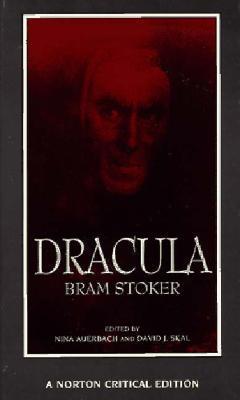
Book: “Dracula” by Bram Stoker

I have to start with a classic. Bram Stoker’s “Dracula” is the Godfather of modern vampire lore, its mark stamped firmly not only on vampire stories, but on the horror genre as a whole. While a lot of it takes place in London (as Count Dracula makes his way to England and starts sinking his teeth into the trouble he can get into there), our first moments involve Jonathan Harker going to an isolated Castle in Eastern Europe, only to be held prisoner in this lonely setting by the Count. Along with that, the unknown threat of the Count slowly starts to seep into our group in London, as he preys upon Lucy Westenra in a manor house, torments those around her on the estate with his lurking presence, and has influence over his servant Renfield, who is imprisoned in an insane asylum. This all ends with a showdown in the desolate mountains of Transylvania, the West meets the East. This remains one of my favorite horror novels of all time, and it just oozes Gothic sensibilities.

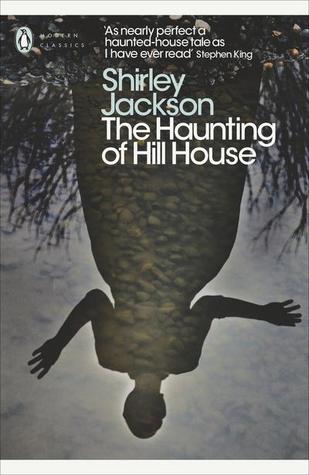
Book: “The Haunting of Hill House” by Shirley Jackson

Ghosts tend to have a big part to play in Gothic horror, as the haunted house story goes hand in hand with the themes in the sub-genre. One of my favorite traditional haunted house stories is “The Haunting of Hill House” by Shirley Jackson. Four people decide to investigate the notorious Hill House, an isolated mansion that has rumors of ghostly activity and a tragic past. As they stay at and spend their time in the house, strange things begin to happen, and they find themselves affected in different ways. For Nell, a woman with sensitivity and a fragile spirit, she starts to lose her grip in reality, and starts to feel connected to the house, and whatever is living there. Bumps in the night, unreliable characters, a little bit of melodrama, and the theme of decay, be it of an old house or one’s sanity, are abound in this book! Maybe don’t read it late at night. Or maybe DO read it late at night.

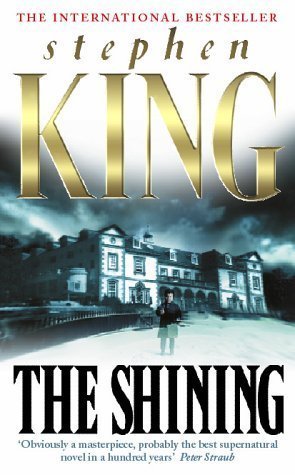
Book: “The Shining” by Stephen King

Being the huge Stephen King fan that I am, of course he was going to end up on this list one way or another. But darn it, “The Shining” is absolutely a Gothic horror novel! The Torrance family goes up into the mountains to serve as winter caretakers at an old hotel, knowing that once the snows come they won’t be leaving. That’s your isolation. The father, Jack, is struggling with addiction and anger issues, as well as the fact that he has been violent towards his loved ones in the past. That’s your tenuous grip on keeping it together. Oh, and the place also happens to be haunted by spirits of those who have died there, and the hotel itself may be an evil force hoping to corrupt not only Jack, but psychic little boy Danny. SUPERNATURAL ELEMENTS! And given that this book has so many damn scares, it hits all of my sub-genre points check list. “The Shining” is considered one of King’s masterworks, and the Gothic elements just pump the dread up even more. How do you escape from a homicidal patriarch when you’re snowed in?

Book: “Mexican Gothic” by Silvia Moreno-Garcia

I think that it’s important to think outside the sub-genre box a little bit, and that is what Silvia Moreno-Garcia set out to do with her horror novel “Mexican Gothic”. After all, Gothic horror, and the Gothic milieu in general, has been pretty White and Western centric since its inception. But Moreno-Garcia was ready to push the boundaries, and created a Gothic gem in a setting some may not think of for the genre: 1950s Mexico. Noemí is a young woman living a fun party life in Mexico City, but when her newly wed cousin sends her an urgent letter, she rushes to be with her in an isolated mansion in the countryside. The family that lives there is English in origin and runs a mine, and they are both mysterious and alluring. When Noemí decides to stay to see what’s up, she starts to dream of threats, doom, and blood, as if the house itself is an ominous presence. The secrets of the family, the strange atmosphere, and the plucky heroine in over her head all make for a great Gothic tale of terror!

Book: “House of Leaves” by Mark Z. Danielewski

“House of Leaves” is a book that I read probably about ten years ago, and fully intend to revisit at some point. But only when I am willing to take on a huge commitment that is filled with complicated mind fucks, and stories within stories. The book has multiple narratives stacked into each other, with footnotes, deliberate design choices, and imagery to tell a huge and sprawling tale. But at the heart of it is the story of a family that buys a house that is impossibly larger than the blueprints and floorplan would imply. As the family tries to figure out what is going on, the house changes, and things become more and more sinister as they are seemingly unable to escape. But on top of that, there is someone who has stumbled upon the story of this family, who then in turn becomes mentally isolated and completely obsessed with the story. We have layers of isolation and creepiness here, folks, and while I’m not QUITE ready to revisit it, when I do I know it will suck me right back in.

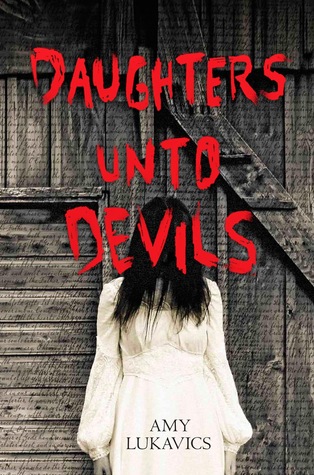
Book: “Daughters Unto Devils” by Amy Lukavics

For a lot of people, the traditional Gothic setting is usually a house or castle in a European moor or forest or something along those lines. And while those are absolutely Gothic, how many people have thought about the vastness of the American prairie? I give you “Daughters Unto Devils”, one of the scariest YA horror novels I’ve read in my entire life. Teenager Amanda Verner and her family move from their home in the mountains to a new abandoned cabin in the prairie (which was completely covered in blood on the walls when they arrived, foreboding to the nth degree). The setting is new, the family has endured recent hardship, and Amanda is hiding the secret that she is pregnant. It slowly becomes clear that something is outside their cabin, something that has been stalking Amanda even before their move. Family secrets? Check. New setting that has cut them off from the rest of the world? Check! A woman coming into her own identity who is starting to question her sanity? Check and mate, my friends. “Daughters Unto Devils” messed me up pretty good, and the Gothic elements in a unique setting really make the book.

What horror books would you categorize as Gothic horror? What are some of your favorites? Share in the comments below!

Serena’s Review: “A Desolation Called Peace”

Book: “A Desolation Called Peace” by Arkady Martine

Publishing Info: Tor Books, March 2021

Where Did I Get this Book: from the publisher and Edelweiss+!

Book Description: An alien armada lurks on the edges of Teixcalaanli space. No one can communicate with it, no one can destroy it, and Fleet Captain Nine Hibiscus is running out of options.

In a desperate attempt at diplomacy with the mysterious invaders, the fleet captain has sent for a diplomatic envoy. Now Mahit Dzmare and Three Seagrass—still reeling from the recent upheaval in the Empire—face the impossible task of trying to communicate with a hostile entity.

Whether they succeed or fail could change the fate of Teixcalaan forever.

Previously Reviewed: “A Memory Called Empire”

Review: I made the mistake of waiting over a year after “A Memory Called Empire” was published before reading it. Not this time! The second I saw the sequel pop up on Edelweiss I requested it. And then I had to diligently wait to read it so that I could cover more recent books in a timely fashion. That took some self-control, let me tell you. But the time finally came, and the payoff was definitely worth it! I think I may have enjoyed this book even more than the first.

The war that Mahit started to save her station has begun. Back home at Lsel Station, however, she thinks her part in this story is over, even with the reminder of what she’s done flying past in the form of Teixcalaan war ships. But soon enough, she’s called back into action. Three Seagrass arrives with a request: join her in making first contact with these strange aliens. With no coherent language and the mysterious ability to appear suddenly, these creatures are nothing like the Teixcalaan Empire has faced before. Maybe a barbarian is the only one who will understand them?

In the way of good second novels, “A Desolation Called Peace” is bigger than “A Memory Called Empire” in pretty much every way. Not only does the story expand outwards from the single city/planet that it was localize within in the first book, but the narrative itself expands to encompass not only Mahit’s storyline, but also Three Seagrass’s and several other new (and familiar) characters. These efforts to broaden the scope of the story result in an expansion that feels leaps and bounds ahead of the first book. And this is particularly impressive given how detailed and precise the world-building was there, already.

The culture, language, history, etc., of Teixcalaan felt fully realized in all of the little ways one doesn’t think about but that stand-out when you really step back to appreciate an author’s work. From its emphasis on poetry and literature in its speech and protocol, to the cloudhook technology that seems a natural extension from where our own smartphones are headed. And here, Martine takes that strong foundation, and blows it up to add not only a more detailed look at Mahit’s home, Lsel Station, but adds in an entire new species/culture of the aliens our main characters are interacting with. All while still exploring the ins and outs of the Empire itself, with a closer look at the different religions within it and at the inner workings (both technological and political) of Teixcalaan’s powerful military. Frankly, it’s incredible.

The expansion of character POVs was also really impactful. I loved Mahit in the first book, but in this one, she was probably the least interesting character. Now, don’t read that wrong! I still loved her and her arc, it’s more to say that the additional characters were just that interesting that the more familiar Mahit faded a bit into the background in comparison. I particularly enjoyed getting to see into Three Seagrass’s mind. She was a huge character in the first book, so getting to see finally through her eyes was amazing. Beyond her own interesting story, I was particularly impressed by the duel views that Mahit and Three Seagrass brought to similar issues. Three Seagrass is clearly not a malicious character, but being in her head was a great opportunity to witness a character recognizing and confronting their own privilege and biases.

Beyond Three Seagrass, we also had chapters from the leader of the military front, a powerful, female general, and from Three Antidote, the young partial clone of the previous emperor who we met in the first book. I won’t go into much regarding either of their stories as there are some spoilers there, but, needless to say at this point, I really loved them both. Perhaps, particularly, Three Antidote’s chapters were impressive for how well they capture the thinking of a young boy approaching maturity but still a child at heart. With all the complicated, fleshed out adults, it can be hard to write a compelling child character alongside them, but Martine perfectly captured the thinking and actions of a kid in Three Antidote’s unique position. Again, incredible.

I also really loved the twisty way the story unfurled, with pieces that you didn’t even realize were pieces falling together in the end to resolve many mysteries all at once and illuminate themes you thought were only brought up as passing anecdotes. This review is already long, but if I let myself, I could probably go on and on. Fans of the first book are sure to love this one, too, and any sci-fi reader who hasn’t jumped on board this train, really needs to!

Rating 10: A masterpiece of a space opera! All the more impressive for expanding so effortlessly from the highs of the first novel.

Reader’s Advisory:

“A Desolation Called Peace” is on these Goodreads lists: Adult Sci-Fi/Fantasy of 2021 and 2020/21 Space Opera.

Find “A Desolation Called Peace” at your library using WorldCat!

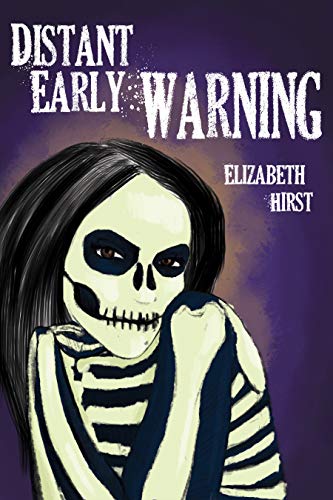
Kate’s Review: “Distant Early Warning”

Book: “Distant Early Warning” by Elizabeth Hirst

Publishing Info: Renaissance, April 2021 (originally published 2014)

Book Description: Canada is in crisis. Global warming has taken hold, and amid the flooding and the super storms, another horror has risen, more devastating than the rest. The dead begin rising from the ground at night, screaming out strange gibberish songs that terrify and entrance anyone who hears them. With people dying and fleeing all around, the north quickly becomes a wild west, without the west.

Felicia “Denny” Dennigan lives far from the crisis, with a good job at the university and a roof over her head, but her life is far from perfect. A perpetual loner, she relies on sporadic visits from her Dad as her only lifeline to friends or family. So, when Dad doesn’t return one fall day, and his dog, Geoff, shows up without him, Denny is concerned for his safety. The last postcard he sent her was from Sudbury, on the edge of the chaos up North…

Denny’s worst fears are confirmed when she sees Dad on TV, dead, and screaming. Desperate to end his suffering, Denny gives up her job, buys supplies, and heads out with Geoff to discover the truth behind her father’s death, but truth always comes with a cost. What Denny discovers in the wilds of Northern Ontario will shatter all of her assumptions about her life, and what lies beyond.

Review: Thank you to Renaissance for sending me an ARC of this book!

It’s been a bit since I delved into a zombie tale, and I don’t know if it’s because I’m zombied out, or if I just haven’t been seeing as many lately. Whatever the case may be, I haven’t been hanging with the undead as of late. But when I was approached by Renaissance to read and review “Distant Early Warning” by Elizabeth Hirst, I was immediately interested, for a couple of reasons. 1) It sounded like a new take on a zombie tale, which I’m always down for, and 2) it’s a story set in the wilds of Canada! As a Minnesotan, I feel a deep kinship with our neighbors to the North, so I absolutely am game for any tale that takes place there. If you got a horror story on top of it, that sounds like a party!

And let me tell you, once international travel is safe again, I intend to go visit! (source)

Overall, I enjoyed about “Distant Early Warning”. I really liked Denny as our main character. For one, I thought that she was wry and funny, and I liked her scrappy spirit and her determination to figure out what happened to her father. She has a lot of relatable moments, and I liked that she is described in ways that feel not really of the norm from what you’d expect from a zombie story heroine. I loved her connection to Geoff, her father’s dog, and I liked seeing her slowly come into her own as she goes on her journey into the wild. And yes, I’m that sucker who liked the slow building relationship between her and Wayne, a man she meets under suspicious circumstances, but someone who she comes to rely upon for companionship (as he too relies upon her). Denny was easy to invest in, and was easy to root for. And the complicated relationship she had with her father is a journey that slowly unfolds and has a lot of pathos to it.

In terms of the zombie story themes, I thought that the Screamers and some of the ways that they functioned were pretty cool and original. They could range from the general menace to more of a boss fight in a video game, but what made it even more intriguing was that (without giving much away) Denny has the skills to counteract them in ways that hasn’t been seen in stories like this before. There are also clear moments of ‘the humans are the real monsters’ within the narrative, and we get the realization that 1) climate change that is man made has really screwed up everything else on top of the whole Screamers thing, and 2) it’s hard to know who you can trust when you stumble upon humans in these lawless areas. The climate change aspect felt pretty unique to me, even if the humans as the real threat has been done many times over in zombie tales. But I also liked the fact that there just kind of had a bit of hopefulness tinging the story as we go forward, from Denny finding strength that she didn’t know she had, to her being able to actually open up to people in face of hardship and loss.

In some ways “Distant Early Warning” keeps to well treaded paths of a zombie tale, but in other ways it has uniqueness to it that I enjoyed. It’s entertaining, has a great heroine, and a cute dog. What more could you want?

Rating 7: An at times unique take on a zombie tale with some mild eco-horror thrown in, “Distant Early Warning” is entertaining as well as hopeful in the face of the unknown.

Reader’s Advisory:

“Distant Early Warning” isn’t on any Goodreads lists as of yet, but I think it would fit in on “Eco Horror Books”, and “Horror Novels Set in Canada”.

Find “Distant Early Warning” on the publisher’s website!

ALSO, before I end this post, I want to share some links to organizations and groups that are collecting donations for Daunte Wright’s family members during this awful time, as well as the community of Brooklyn Center. Daunte Wright should be alive. Black Lives Matter.

Brooklyn Center Mutual Aid

Donations to Chyna, Daunte’s girlfriend and mother of his son, through a local health organization

A GoFundMe Campaign set up by Duante’s family

Emergency Housing Resources for families who live in the apartment buildings across from the police station (as tear gas and flashbangs have been going off right outside their home)