Book Description: In a city covered in ice and ruin, a group of magicians face off in a daring game of magical feats to find the next headliner of the Conquering Circus, only to find themselves under the threat of an unseen danger striking behind the scenes.
As each act becomes more and more risky and the number of missing magicians piles up, three are forced to reckon with their secrets before the darkness comes for them next.
The Star: Kallia, a powerful showgirl out to prove she’s the best no matter the cost
The Master: Jack, the enigmatic keeper of the club, and more than one lie told
The Magician: Demarco, the brooding judge with a dark past he can no longer hide
Review: The book description immediately drew me in on this one, sounding very similar to “The Night Circus,” one of my favorite stand-alone books. But then it continued and started sounding too much like yet another “Six of Crows” knock-off. I swear, the minute any summary starts listing characters as “The ‘thief/assassin/master/etc.'” I now immediately become suspicious. It could have went either way, so in I dove!
Kallia has always been ambitious, dreaming of more than just her small act in a local club. So when a competition is announced to find the next headliner for the Conquering Circus, she jumps at the opportunity. Fleeing alone through the woods, she briefly escapes Jack, the owner of the club. But safety is not to be found in this new city as her fellow competitors begin to fall prey to disappearances and mysterious accidents. But Kallia knows of no way but forward, and with the judge of the competition brooding in the shadows, Kallia begins to find she has more than one reason for sticking it out.
To get it out of the way, this wasn’t all I had hoped it would be. However, the problems I had with it weren’t due to any comparisons to “Six of Crows.” Instead, it was one of those odd reads where just enough things didn’t come together in a smooth way and left me with a disjointed and disconnected reading exerpience.
The first problem I had was with the writing itself. There was a lot of telling in this book and a lack of showing. Kallia’s abilities are highlighted on and off, but we’re essentially told she’s that much better than everyone else….just because she is. For a story that is comprised of many dark fantasy elements, scenes that just burst, sparkle, and pop from the page (she’s trying out for something called the “Conquering Circus” for Pete’s sake!), the actual prose often fell flat, and I found myself having to work hard to keep myself grounded in the story.
The pacing was also incredibly slow feeling. Again, this was a strange experience as, on paper, things were definitely happening. We have Kallia’s initial flight through the woods to get to this new city. Then her experiences in the competition itself. As well as the strange happenings when she’s home alone. Even typing it out, it sounds like it should read like an action-packed thrill ride. But instead, it felt slow and plodding. Again, I think there was just something lacking in the writing to really give the plot the “oomf” it needed to get started.
The characters were probably the best part of the book, but they didn’t stand out as especially unique. I found myself getting annoyed by Kallia’s innate “specialness” and the generous helping of arrogance that came along with this. I was marginally more interested in the two male character, the mysterious judge who is the primary romantic interest as well as Aaros, a young man who quickly becomes her best friend in this new city.
Sadly, this book wasn’t for me. There was the bones of a good story here, but I just couldn’t get into it. This is definitely one of those where one should take my rating with a grain of salt as there’s a decent chance that many of these things didn’t work for me just because I wasn’t in the right mood for this type of book. If you like fantasy and dark circuses, this still might be worth checking out. But if you were on the fence already, maybe give it a pass.
Rating 6: Just not for me with writing that couldn’t manage to draw me into the story.
Where Did I Get This Book: I received and eARC from NetGalley.
Book Description: Students at an elite prep school are forced to confront their secrets when their ex-best friend turns up dead.
Nancy Luo is shocked when her former best friend, Jamie Ruan, top ranked junior at Sinclair Prep, goes missing, and then is found dead. Nancy is even more shocked when word starts to spread that she and her friends–Krystal, Akil, and Alexander–are the prime suspects, thanks to “The Proctor,” someone anonymously incriminating them via the school’s social media app.
They all used to be Jamie’s closest friends, and she knew each of their deepest, darkest secrets. Now, somehow The Proctor knows them, too. The four must uncover the true killer before The Proctor exposes more than they can bear and costs them more than they can afford, like Nancy’s full scholarship. Soon, Nancy suspects that her friends may be keeping secrets from her, too.
Review: Thank you to NetGalley for providing me with an eARC of this novel!
Awhile back, probably the early Spring, I saw a really interesting book cover and read an interesting description. And then, being a dope, I didn’t write down the title of the book, because surely, SURELY, I would remember it. Shockingly enough, I didn’t, and I kept trying to remember what it was called. I knew that it was a thriller, and that it had an all Asian American cast of characters. Eventually I did stumble back upon it, and that was when I finally added “How We Fall Apart” by Katie Zhao to my reading list. After the self-inflicted strife of trying to remember the title, I was eager to sink into it and read it, sure that my anticipation and need to remember would be worth it, but I’m sad to say that “How We Fall Apart” didn’t quite live up to the self made hype.
But as always, we’ll look to the positive first. “How We Fall Apart” has its greatest strength in the characters and how Zhao shows a wide range of circumstances between them. Nancy, Akil, Krystal, Alexander, and even possible murder victim Jamie all have similar cultural backgrounds, as they are all Asian American and many of whom have immigrant parents. But they also have varying circumstances, from the very wealthy and privileged to the lower income with many financial hurdles to overcome. In flashbacks Jamie lords her wealth and power over her best frenemy Nancy, always happy to point out that Nancy’s mother is the family maid, along with other moments of classist bullshit. And unlike a couple of her friends, Nancy has a LOT more to lose if things come out, as her scholarship could very well be on the line if she is revealed to be part of some past controversies and ‘incidents’. It’s nice seeing the complexities within a community, and this book shows them in a simple and easy to understand way. There are also moments where Zhao reminds us that no matter how privileged some of these students are, they still have to face racism from their white student counterparts, and it was moments of nuance like these that worked for me.
But in terms of a thriller, “How We Fall Apart” doesn’t really have much new to offer to the genre. It has a very similar premise to a few popular YA thriller series, from a group of kids who are suspected of a murder they didn’t commit to an anonymous tormenter who is slowly making their lives living hellscapes, the tropes are well worn and not really expanded upon. It just feels a lot like “Pretty Little Liars” (even with a student/teacher relationship subplot, though the good news is that here it is NOT glorified at all nor is it portrayed in any positive light) meets “One of Us Is Lying”, and I was hoping that we would get something a bit more than that. I didn’t really find myself invested in who “The Proctor” was, or how things were going to shake out for Nancy and company in terms of the future as well as in the past (there are many references to an ‘incident’ that Nancy is trying to hide). Ultimately, I felt like I’ve seen this before, and that made for not as enjoyable reading.
But that said, there are absolutely people out there (especially Young Adults) who aren’t as seasoned as I am when it comes to YA thrillers (is “PLL” even a thing anymore?). I have no doubt that “How We Fall Apart” would probably be effective for them. But for someone who has done more than just dipping their toes into the genre, it will probably leave you feeling like there could have been more.
Rating 5: Not offering much beyond what we’ve seen many times before (outside of some well done character insight), “How We Fall Apart” would probably be a good read for those new to the genre, but will probably disappoint old pros.
We each have our own preferred genres of choice. Kate loves horrors and thrillers, really anything that will keep her up at night! And Serena enjoys escaping through hidden doors into realms of magic and adventure. We also read mysteries, historical fiction, graphic novels, etc. etc. And that’s not even counting the multitude of sub-genres contained within each greater genre. In this series, one of us with present a list of our favorites from within a given sub-genre of one of our greater preferred genres.
I will admit, the very idea of encompassing the entire classification of True Crime into the sub-genre box is a little bit of a cheat. One can certainly argue that true crime is a genre in and of itself, as it is a genre within the Non-Fiction Umbrella of books and storytelling. But the reason that I am going to classify it here as a sub genre is because I am the blogger who takes on the entirety of Non-Fiction on this blog, though that is admittedly few and far between. Because of this, I’m going to talk about true crime as a sub-genre on its own, but I am hoping that I will cover a swath of the kinds of stories you can find within that topic, genre or sub-genre or what have you.
True crime has kind of seen a bit of a resurgence as of late, with a sudden explosion of podcasts, docuseries, and yes, books on the topics of serial killers, missing people, and the random and strange acts that happen to fall into a gamut of wrongdoing. I’ve been a huge fan of true crime since I was a grade schooler, when I read my first true crime book (which was a kids oriented book about Jack the Ripper of all things!). While I enjoy picking up a book about true crime, I also find myself struggling with the moral dilemma of using other peoples pain for my own intrigue and, in crasser terms, entertainment. I do think that there is something that can be found in true crime that can be useful, however, even if that’s only to explore some of my own anxieties about these things in a safe and controlled way. So here is a list of some of my favorite true crime books, be they about cases or stories I’ve found interesting, or books that I have found genuinely useful when it comes to mitigating my own fears surrounding the subject.
Book: “The Stranger Beside Me: Ted Bundy: The Shocking Inside Story” by Ann Rule
Honestly there are a whole lot of ‘classic’ true crime books that I truly love, from “Helter Skelter” by Vince Bugliosi to “In Cold Blood” by Truman Capote, but when picking one for this list I had to go with “The Stranger Beside Me” by Ann Rule. True, there has been a weird obsession with Ted Bundy in the past few years, and I definitely get and agree with the criticism regarding telling his story over and over again (especially when so much focus is on HIM and not the women he brutalized and murdered). But I decided to include “The Stranger Beside Me” because it was the book that propelled Ann Rule to the legendary true crime writer status that she had when she was alive. And it’s the added fact that Rule was friends with Bundy because they worked in the same suicide hotline call center, and that she, too, fell for the ‘well he couldn’t possibly because he’s so upstanding’ fallacy that made him so dangerous. Rule gives context to Bundy’s story, does have some focus on his victims, and also analyzes her own role in all of this, as she was investigating and writing about the murders that her friend Ted was committing while not connecting the dots. It’s a well done look into how a serial killer like Bundy could manipulate those around him, and a very personal story about the blinders that people have when it comes to those they care about, even when there is ample evidence that they are not good people.
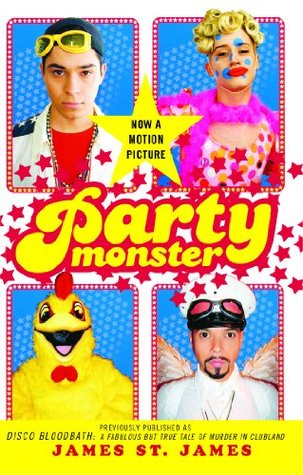
Book: “Party Monster: A Fabulous But True Tale of Murder in Clubland” by James St. James
This is once again a bit of a personalized account of what it’s like to be friends with a murderer, but it definitely has a bit more, shall we say, flamboyance if only because the author is legendary Club Kid James St. James. “Party Monster” (formerly known as “Disco Bloodbath”) is St. James’s true crime book/partial memoir about his friendship with Michael Alig, fellow Club Kid who murdered another Club Kid named Angel Melendez over a drug squabble. But “Party Monster” is also a first hand account of the 1990s club scene in New York City, and the wild, vibrant, idealistic, and sometimes destructive people who lived within it. St. James is a very funny writer who talks about the ups and downs of being a Club Kid (basically professional partiers known for their extravagance in costumes, themes, and attitudes in the club scenes), his battles with addiction, and his fremeny relationship with Alig, who ended up being a psychpathic murderer. St. James never fails to make me laugh, but he also tells a very intriguing story that has a lot of pathos because of what it was like being queer, poor, and somewhat adrift at a young age in a big city.
Book: “The Devil in the White City: Murder, Magic, and Madness at the Fair That Changed America” by Erik Larson
Erik Larson is probably more of a history writer, as his books have the framework of taking a historical event and examining different facets of it, or the unintended consequences of it. “The Devil in the White City” just happens to involve a serial killer named H.H. Holmes. In Chicago in 1893, the World’s Fair (also known as the World’s Columbian Exposition) drew many people to the city from all over the country. It just so happened that H.H. Holmes was taking advantage of this fact, as he set up a hotel for women to live, and then would murder them and profit off of their deaths. “The Devil in the White City” does a deep dive into the history of the Exposition, with the background, the planning, the execution, and the bumps along the way, as well as telling the story of a legitimate American monster. I love how he makes the historical connections between a huge event and the smaller event that was able to happen because of that huge event. And along with the true crime aspect, you get some interesting factoids about the Chicago World’s Fair and the city itself!
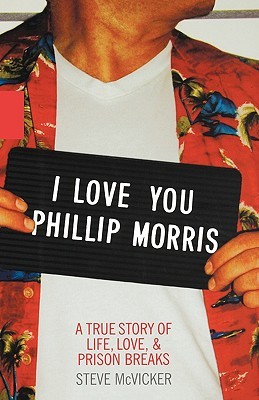
Book: “I Love You Phillip Morris: A True Story of Life, Love, and Prison Breaks” by Steve McVicker
On the non-violent side of things, we turn to one of the most bizarre true crime books I have ever read that involves fraud, prison breaks, and true love (sort of). “I Love You Phillip Morris” is a bananas stranger than fiction book to be sure. Steve Russell was a family man who had ties to his Church community, a wife and daughter, and promising career in business. He was also a closeted gay man, and after going to prison for a fraud charge he met and fell desperately in love with fellow inmate Phillip Morris. Russell would go on to escape from jail over and over again, usually with outlandish plans and ALWAYS on Friday the 13th, but he would always fall victim to his love for Morris, and his inability to just move on or stop committing fraud/pulling a con would mean he’d be caught again and again. It’s a truly nutty story that is entertaining as all get out, and with a lack of serial killing or other violent themes it’s a good pick for those who are interested in true crime as a whole, but are worried about triggering aspects of it. “I Love You Phillip Morris” is just kinda fun as well as bonkers.
Book: “Stolen Innocence: My Story of Growing Up In a Polygamous Sect, Becoming a Teenage Bride, and Breaking Free of Warren Jeffs” by Elissa Wall and Lisa Pulitzer
“Stolent Innocence” by Elissa Wall was the second book that I had ever read on the Fundamentalist Church of the Latter Day Saints (or FLDS), but it was the first one that was from the perspective of a woman who had escaped the abusive cult that had held her prisoner ever since she was born into it. The FLDS is an extremist offshoot of Mormonism that still practices Polygamy, and more often than not marries of teenage girls (and someones younger) to older men, who then are trapped in an abusive marriage in which they are dehumanized and subjected to sexual assault as well as other abuses (sometimes even at the hands of their sister wives). Elissa Wall’s memoir is such a story, as she talks about growing up in the FLDS, as well as when convicted rapist Warren Jeffs took over and really upped the ante on violence and sexual abuse towards the members. This book is compelling, personal, and in many ways quite upsetting. But it is also a testament to the strength that Elissa had to get herself out of this situation and to find a new life for herself. The FLDS also has it’s fingers in other crime pies, like fraud, harassment, child abandonment, and trafficking, so it really has a full swath of true crime topics.
Book: “The Gift of Fear: Survival Signals That Protect Us from Violence” by Gavin de Becker
I am ending this list with a book that is less about a specific true crime case, and more about ways to potentially lower chances of becoming victim to something bad (though I want to stress something here: in no way am I saying that victims of crimes are at fault in any way shape or form. This is just a book that I have been able to use in my actual life in some ways and found it helpful). “The Gift of Fear” is written by Gavin de Becker, who specializes in violent behavior, with lots of focus on stalking and abusive behaviors. de Becker talks about different scenarios and cases, from victims of violence to stalking to targeted harassment, and shares tips and techniques on how he advises people to use their instincts and wits to get out of or avoid dangerous situations. I myself had a fairly creepy and aggressive phone stalker for a year or so back when I was right out of college, and this book gave me some good advice on how to proceed, which ended up being effective. It’s definitely not perfect (I think that he misses the mark on his section on domestic violence, and yes, it can come off a little victim blamey at times), but there are definitely good nuggets of info about listening to your gut if a situation doesn’t feel right, and to not worry about how you may be perceived because of it.
What true crime books are must reads for you? Feel free to share in the comments!
Where Did I Get this Book: audiobook from the library!
Book Description: Iolanthe Seabourne is the greatest elemental mage of her generation—or so she’s been told. The one prophesied for years to be the savior of The Realm. It is her duty and destiny to face and defeat the Bane, the most powerful tyrant and mage the world has ever known. This would be a suicide task for anyone, let alone a reluctant sixteen-year-old girl with no training.
Guided by his mother’s visions and committed to avenging his family, Prince Titus has sworn to protect Iolanthe even as he prepares her for their battle with the Bane. But he makes the terrifying mistake of falling in love with the girl who should have been only a means to an end. Now, with the servants of the tyrant closing in, Titus must choose between his mission—and her life.
Review: Honestly, it’s shocking that I haven’t gotten to this trilogy sooner. So far, I’ve loved everything I’ve ever read from Sherry Thomas. Her “Lady Sherlock” series is one of my favorite historical mysteries still publishing. Her “Mulan” re-telling was perfection and everything I’ve always wanted for that story. I even enjoyed the straight-up romance novel I read from her, the genre where she got her start. So the fact that I’m getting to her YA fantasy trilogy last is pretty strange, given my general reading preferences. What can I say? Part of me was probably saving it since I fully expect to love it to pieces.
Iolanthe was just going about her business, summoning lightening and all of that, when the Prince barges in informing her that she’s some sort of prophesied savior of the world, meant to take on the powerful tyrant that rules over their world. For his part, Titus has always known this day was coming. His mother foretold it long ago and told Titus to be on the look out, as he is meant to guide and protect this savior in their mission. But enemies are at their door, and it is all Iolanthe and Titus can do to keep two steps ahead of them. And while duty weights heavily on Titus, he finds his foretold future harder and harder to bare in the face of his growing feelings for Iolanthe.
As predicted, I really enjoyed this book. The book description, however, I felt was a bit deceptive. All that it describes is true, but there are a few aspects of the story that were big surprises. For one thing, Iolanthe is not aware of her savior status, so that is a huge part of her arc, growing to learn and accept this destiny that’s laid out before her. It also plays a major role in her relationship with Titus, since his appearance is tied so closely to her being informed that she must take on a perilous, and likely deadly, task.
The story also isn’t only set in a third-world fantasy setting. Instead, Titus and Iolanthe travel to London and spend time in the boys’ school that Titus attends there. This lead into another surprise, but one of my favorite tropes ever: Iolanthe disguised as a boy. The situation is rife with all of the humor and adventure that one would expect, and Thomas’s witty writing style is on point here. There were several laugh out-loud moments, both in clever dialogue sequences and imaginatively wacky situations. The story itself was just a blast to read.
I also really liked Iolanthe and Titus. They each felt like very distinct characters who were approaching a destiny that they shared in very different ways. Titus has known the role he must play for years; everything is new to Iolanthe. It was also nice to see that the friendship/love story that developed was paced in a more realistic way, with the road bumps and swift turns that one would expect from this situation. Iolanthe must learn to trust Titus, and Titus must learn to see Iolanthe as an individual with her own opinions and autonomy, not just a nameless, faceless “prophesied one.”
My one critique of my reading experience had to do with the audiobook version. It’s tough, because on one hand, I think the narrator nailed the humorous aspects of the story. However, the way the book works, the narration quickly and often shifts between Titus and Iolanthe. There are no chapter titles or warnings when this shift takes place, and the narrator didn’t do a lot to differentiate their voices. So there were time where I was thrown a bit before realizing that we had switched POVs. It was confusing and distracting at times, which was too bad.
I enjoyed the heck out of this book. I already bought the entire trilogy, so I think I might try to read the second one in print to see if that helps with the POV switching. But, really, the only question that remains is how long can I delay the joy of blowing straight through the next two books??
Rating 8: Action-packed, hilarious, and with a lovely slow-burn romance at its heart. Everything I like and more!
Where Did I Get This Book: I received an eARC from NetGalley.
Book Description: Oliver Park, a young recovering addict from Indiana, finally has everything he ever wanted: sobriety and a loving, wealthy partner in Nathan, a prominent DC trauma surgeon. Despite their difference in age and disparate backgrounds, they’ve made a perfect life together. With everything to lose, Oliver shouldn’t be visiting Haus, a gay bathhouse. But through the entrance he goes, and it’s a line crossed. Inside, he follows a man into a private room, and it’s the final line. Whatever happens next, Nathan can never know. But then, everything goes wrong, terribly wrong, and Oliver barely escapes with his life. He races home in full-blown terror as the hand-shaped bruise grows dark on his neck. The truth will destroy Nathan and everything they have together, so Oliver does the thing he used to do so well: he lies.
What follows is a classic runaway-train narrative, full of the exquisite escalations, edge-of-your-seat thrills, and oh-my-god twists. P. J. Vernon’s Bath Haus is a scintillating thriller with an emotional punch, perfect for readers curious for their next must-read novel.
Review: Thank you to NetGalley for sending me an eARC of this novel!
I love seeing the books that some of my favorite authors are reading. Usually I can gauge if I’m going to mesh well with a book if an author I really trust is raving about it. So when Caroline Kepnes made mention of “Bath Haus” by P.J. Vernon, I was definitely curious to pick it up. I went in with certain expectations, most of them falling into the lurid. But almost immediately I realized that “Bath Haus” was going to be not only high octane and like a runaway freight train, it was also going to be super, super dark and disturbing.
From the jump “Bath Haus” is off the rails, and while that may not work in some authors hands, Vernon has no problem starting at fifty and working his way ever upward. We have two perspectives in this book. The first is Oliver, the young former addict who has found himself in a lavish, and highly controlled, relationship with Nathan. Oliver’s POV starts with almost getting strangled while attempting a hook up at a bath house, who then finds himself having to lie to his lover, and then being stalked by his attacker. While another thriller may have kept it here on this familiar trajectory, we have a second POV, of Nathan, Oliver’s older partner. Nathan is controlling, hot tempered but able to mask it, and suspicious of anyone and anything that may get between him and Oliver. And it’s because of this that “Bath Haus” has a whole other layer of suspense. Because not only is Oliver finding himself in a web with Kristian, his mysterious and menacing attacker, you as the reader see that he is ALSO potentially in danger due to his relationship with Nathan, which is unhealthy at best and possibly deranged. Not that Oliver knows this. Because of all these angles, the suspense was at a constant and Vernon managed to amp it up without it feeling histrionic or melodramatic. The flip side of this, however, is that at times the complexity wasn’t there for the characters. This applies more to Nathan, as he has a number of tropes that are pretty par for the course when it comes to his characterization. It didn’t take away from the entertainment, but it wasn’t really doing anything new in that regard.
And what’s more, it kept me guessing! There are enough twists, well crafted red herrings, and revelations in this book that I was in the dark a majority of the time. Things that could have been tacked on in other instances felt necessary, and by the time we did hit surprise after surprise I realized that while I perhaps came close to guessing a twist or two, I was off enough that the reveals felt fresh and surprising. I also really enjoyed how Vernon told the story through not only two different perspectives, but also through a bit of time jumping. This was mostly for Oliver’s benefit, as it really let the reader get into his mind, his past, and his traumas that helped explain a lot about the decisions that he makes as the book goes on. Being able to get this insight really helped, especially when Oliver makes decisions that may come off as really, really stupid. At least you get information as to why he’s making the stupid choice. Especially when stupid choice after stupid choice builds up to so. many. moments where the tension is so taut it felt like it would snap. There were numerous moments where my jaw dropped open and I gasped, or had to close my Kindle and walk away for a bit just to gather my bearings.
All of this said, I really need to tell people that this book is FILLED with content warnings. I almost described this as an erotic thriller at first, just because of some of the themes and elements, but stopped myself because the content isn’t really meant to be titillating. From sexual assault to mental and physical abuse to really disturbing scenes of violence, “Bath Haus” is dark and graphic and it doesn’t pull punches. It never felt distasteful to me, but it pushes boundaries and it is incredibly unsettling.
“Bath Haus” isn’t going to be for the faint of heart, but I think that it’s going to be talked about by those who do read it. It has a way of settling into your consciousness and twisting it about. I was left thinking about it for a few days after finishing, and oof. Recommended, but for a very specific reader.
Rating 8: Suspenseful and unsettling, “Bath Haus” is a twisted thriller that will get under your skin.
Book Description: Evil always seeks a foothold. We must not give it one.
After a heartbreaking loss, Lou, Reid, Beau, and Coco are bent on vengeance more than ever before—and none more so than Lou.
But this is no longer the Lou they thought they knew. No longer the Lou that captured a chasseur’s heart. A darkness has settled over her, and this time it will take more than love to drive it out.
Review: I know, I know. Didn’t I essentially swear off this series at the end of my review of “Blood & Honey?” And yes, I was incredibly disappointed by that second entry, not only as its own (poorly done) work but for the extreme drop in quality from the first book which I mostly enjoyed. But…I have so much trouble escaping my completionist compulsions. That last entry is just kind of…hanging there. So here I am. And while the trilogy is in no way going down as a “must read” any time soon (there’s still no forgiving that second entry), at least I can now say that ended it on a better note than that.
Everyone was in a dark place after the great loss suffered at the end of the last book. But none more so than Lou. A girl whose brightness had once caught the attention of a grim, stubborn young chasseur is now consumed with a darkness that wants nothing more than vengeance. To Reid and their friends, Lou is barely recognizable, and they worry they won’t be able to pull her back to herself before she’s lost forever, swept up in a wave of revenge that will topple systems and countries.
So, I obviously had problems with the second book. I thought the characters were barely recognizable, and I hated, hated, the ridiculous drama that became the romance. With that, I wasn’t sure what I was going to get with this third book. Lou, in particular, was set out on a very specific trajectory that had some extreme potential for crashing and burning into a fiery pit of tropes. Instead, while I think the book never climbs back to the high of the first, I was pleased to see a good exploration of important themes like grief in the face of the duties still required and the different pains and joys of found families versus those we’re born to.
The fast-paced action of the story probably helped distract me from some of my continued complaints about characterization. As the story gallops towards its final confrontations and conclusions, there is action scene on top of action scene. As we’ve seen many times before in this series, our characters again and again trip over “best laid plans” problems, with obstacles thrown in their way repeatedly. This contrivance, however, serves as more than just page filler and gets into the theme I mentioned above regarding having to keep moving forward even in the face of grief. The world doesn’t stop when losses occur; the world doesn’t care that our characters are hurting. Instead, life continues even while necessary processing and healing must happen alongside practical decisions and actions.
The relationships between the characters were also nice to see emphasized once again. I especially liked the friendship between Lou and Coco and how vital they were to one another, this small family they had made for themselves, each disconnected from their birth families in different ways. I also liked a lot of the scenes we had between Lou and Reid. Now that the series was over the hump, it was clear the author could return these two characters to the much more pleasing process of coming together (instead of the difficult-to-believe theatrics of the middle book that worked at tearing them apart).
My ultimate conclusion is that these books would have been much better served as the duology they were initially meant to be. Looking at all three, now that they have been published, it’s easy enough to see what the duology might have looked at. A lot of unnecessary angst, plot contrivance, and filler could have been trimmed, leaving behind the solid exploration of important themes, the witty banter, and a lovely romance. I’m mostly sad that we didn’t get that story. But I’m happy enough that it ended in a satisfying way. For those who have enjoyed the series so far, I’m sure they’ll be pleased with this entry. For those who were burned on the second book, I won’t say that this book justifies a return to the series, but it also won’t be a monumental regret if you choose to complete the trilogy.
Rating 7: Mostly a relief that it improved from the second book and managed to tie things together well enough.
Book Description: Music City Salvage is a family operation, owned and operated by Chuck Dutton: master stripper of doomed historic properties, and expert seller of all things old and crusty. But business is lean and times are tight, so he’s thrilled when the aged and esteemed Augusta Withrow appears in his office, bearing an offer he really ought to refuse. She has a massive family estate to unload – lock, stock, and barrel. For a check and a handshake, it’s all his. It’s a big check. It’s a firm handshake. And it’s enough of a gold mine that he assigns his daughter Dahlia to personally oversee the project.
Dahlia preps a couple of trucks, takes a small crew, and they caravan down to Chattanooga, Tennessee, where the ancient Withrow house is waiting – and so is a barn, a carriage house, and a small, overgrown cemetery that Augusta Withrow left out of the paperwork.
Augusta Withrow left out a lot of things.
The property is in unusually great shape for a condemned building. It’s empty, but it isn’t abandoned. Something in the Withrow mansion is angry and lost. This is its last chance to raise hell before the house is gone forever, and there’s still plenty of room in the strange little family plot.
Review: I’m always on the hunt for a haunted house read, as Gothic horror almost always sends shivers up my spine. If the story involves a ghost or two, all the better! I was perusing a book list of such things, and I saw “The Family Plot” by Cherie Priest was one of the selections. I had never heard of this book, and decided that I would add it to my audiobook list to have going while walking around the neighborhood or running weekend errands. And almost immediately I knew that I was in for a fun ride. A Southern Gothic haunted house story that takes full aim at the secrets that the wealthy keep? Hell yes.
“The Family Plot” is a ghost story that hits a lot of the things I love about the sub-genre. The first is that the setting just felt so real and well explored. Withrow Mansion was incredibly well described and detailed, and as I listened to the book I felt like I could see the rooms, the remnants of the life it had within, every aspect of the grounds and the house that was built there. It was also a really cool concept to have the people being haunted NOT being a new owner, or a descendant, or someone who has come to the mansion to live there, but a salvage crew that is there to gut it and make a buck. As Dahlia and her crew interact in the house, and as things get more and more dire, the reason they stay is very believable: if this job doesn’t work out, they will almost certainly be out of business. It makes the stakes a bit higher, and feels like a more tangible reason to not turn tail and run (though to be fair, homeowners almost always have sunk everything into a new house and leaving may not be much of an option for them either). Dahlia also has a well explained backstory, and as we slowly find out the backstory to the house and the spirits that are within in, we can draw parallels between her and the aggrieved spirits that I thought made it feel even scarier as the story went on.
And yes, this is a well done ghost story to boot. The dread builds and the scares are done in varying ways, from subtle shifts in scenery to full on jump scares as written on the page. But Priest also manages to avoid a few overdone tropes. Instead of Dahlia and her crew being stubborn nonbelievers, for the most part they all accept the fact that there are, in fact, ghosts in the house they are working on. One of the most frustrating themes in stories like this is that the person who knows that something is seriously wrong is usually pooh-poohed by those around them, and frankly, it’s usually a woman being told she’s being hysterical by the man in her life. But in “The Family Plot”, Dahlia is never seen as crazy, and is never treated as such by her colleagues. That said, there is tension between her and her cousin Bobby, which just adds a whole other level of intensity to the story, especially as the situation worsens. On top of all of this, our narrator did a great job with all of the characters, and her reading of it set the mood just perfectly.
But then, the goodwill that I had toward this story soured a bit at the end. I’m going to try not to spoil anything, as ultimately I think that this is worth the read if you’re looking for a solid haunted house story. But we get a final twist right at the end, like the VERY end, that just felt a bit like a cheat. As someone who LOVES horror, like loves loves loves it, I’m a bit of an outlier perhaps in that I’m not a fan of a last moment about face in regards to the resolution of the plot. Like, say that your protagonist escapes the pit of the psycho killer, only to stumble upon one of the psycho killer’s henchmen they didn’t know was a henchman while they’re escaping, then they get thrown back into the pit and we get a smash cut to the credits. That kind of sudden turn around doesn’t work for me on screen or on page, and any whiff of such just turns me off. And unfortunately, we get one of those twists here, and I’m just never going to like that kind of thing, and it tainted my overall enjoyment.
Frustrating end moment aside, I genuinely had a good time listening to “The Family Plot”. Halloween season isn’t so far away, so add this one to your pile of creepy reads you may be saving for that time of year!
Rating 7: A genuinely spooky haunted house story that is a bit derailed in the last couple of paragraphs, “The Family Plot” was a bit frustrating at the end, but was overall a fun horror experience.
Book: “Velvet Was the Night” by Silvia Moreno-Garcia
Publishing Info: Del Rey, August 2021
Where Did We Get This Book: Received an eARC from NetGalley, received an eARC from Edelweiss+.
Book Description:From the New York Times bestselling author of Mexican Gothic comes a “delicious, twisted treat for lovers of noir” about a daydreaming secretary, a lonesome enforcer, and the mystery of a missing woman they’re both desperate to find.
1970s, Mexico City. Maite is a secretary who lives for one thing: the latest issue of Secret Romance. While student protests and political unrest consume the city, Maite escapes into stories of passion and danger.
Her next-door neighbor, Leonora, a beautiful art student, seems to live a life of intrigue and romance that Maite envies. When Leonora disappears under suspicious circumstances, Maite finds herself searching for the missing woman—and journeying deeper into Leonora’s secret life of student radicals and dissidents.
Meanwhile, someone else is also looking for Leonora at the behest of his boss, a shadowy figure who commands goon squads dedicated to squashing political activists. Elvis is an eccentric criminal who longs to escape his own life: He loathes violence and loves old movies and rock ’n’ roll. But as Elvis searches for the missing woman, he comes to observe Maite from a distance—and grows more and more obsessed with this woman who shares his love of music and the unspoken loneliness of his heart.
Now as Maite and Elvis come closer to discovering the truth behind Leonora’s disappearance, they can no longer escape the danger that threatens to consume their lives, with hitmen, government agents, and Russian spies all aiming to protect Leonora’s secrets—at gunpoint.
Velvet Was the Night is an edgy, simmering historical novel for lovers of smoky noirs and anti-heroes.
Serena’s Thoughts
I remember noting in one of my early Moreno-Garcia reads that she’s a unique author in that she seems to jump from genre to genre with ease. It’s truly something rare, I believe, as most authors have a defined genre within they operate comfortably. Sherry Thomas is another favorite author of mine who comes to mind with this shared ability. But Moreno-Garcia takes it to a new level. I’ve read a Gothic horror, a Regency romance, a Mexican folktale fantasy, and now here I am reviewing a noir! At the very least, she’s single-handedly expanding my horizons in my genre reading!
One thing that does remain consistent between her books is her love of featuring duel/multiple POVs in her books. Here we experience the story from both an inside and outside perspective. On one hand, we have Maite, an introverted young woman who leads a quiet life reading her beloved romance novels before getting drawn into the mysterious disappearance of her neighbor Leonora. And on the other, we have Elvis, a gang member who works with the Hawks, an organization that works to quell political dissenters. He is interested in Leonora’s disappearance for very different reasons.
There was much to love about this book, from its exploration of the deep loneliness found in two characters leading very different lives, to the vivid painting of life in Mexico during this period of history. I knew only a little about what was going on during this time, so I was particularly interested in seeing Moreno-Garcia’s take on that situation. Elvis’s storyline, in particular, presented a unique take on these events, coming from the inside of the Hawk organization itself.
But her strengths have always been her characters and the strong, atmospheric worlds she sets them loose in. Here, both Maite and Elvis, while very, very different characters, were equally compelling. Their stories weave together slowly and with attention given to the inner workings of each character and the arcs they are covering. I don’t read a lot of noirs, but I believe this slower-paced storytelling is a specific aspect of the genre, and it blends perfectly with Moreno-Garcia’s love of careful character building.
Overall, I really enjoyed this book. I think I ultimately still prefer her other books that had supernatural/fantasy elements involved, but that’s also just very inline with my own reading tendencies. Fans of noirs and historical fiction, I’m sure, will gobble this up, but I recommend it to readers of all genres,
Kate’s Thoughts
Boy oh boy, I am consistently blown away by how good Silvia Moreno-Garcia is at seamlessly slipping into a new genre with every book I read, and while I always hope that she will come back for more horror and thriller elements as time goes on, I do like a good mystery. I’m not as in tune with the Noir subgenre as I am other mystery subgenres, but I do enjoy a good Noir film every now and again. Because of this, I was eager to read her new Noir novel, “Velvet Was the Night”
Serena touches on a lot of the same things I liked about this book in her review, so I’ll try not to repeat her too much. I also enjoyed both of our protagonists Maite and Elvis, and their very different backgrounds and motivations for finding Leonora. Maite gets pulled into it because 1) she was watching the woman’s cat, and 2) the mystery is exciting, and her life is decidedly not. Elvis, on the other hand, works for a secret group that crushes political dissenters, and Leonora is involved in student activism. The elements of an intricate mystery are there as they both go on the search and find out a lot about her life and how it fits into the landscape of 1970s Mexico City. I liked both Maite for her somewhat naïveté laced personality and the dark and dangerous journey she takes, and I liked Elvis and how, even though he works for a group of suppressive fascists, he has his own bits of rebellion as he, too, goes on a journey on self discovery. They both feel confined to their existences, and start to realize that there could be more.
And it’s really the time and place that worked the best for me in this story. I have no little knowledge of Mexican history, so a lot of this felt like I was learning a bit about an area I knew little about as we went on the journey. I found myself looking up information about Luis Echeverría Álvarez and El Halconazo as I was reading the book just to educate myself some more, and it made the political dissent angle all the more interesting to me. I love how Moreno-Garcia pulled a Noir story out of a setting that you don’t see within the subgenre all that often, at least in my experience. Some of the details and allusions to that theme were very unsettling, and wove in an entire lower level of dread that the Hawks were going to catch up with Maite, Rubén, and Leonora and then all hell would break loose.
“Velvet Was the Night” is a well done new Noir mystery that is sure to entertain mystery fans. Hats off to Moreno-Garcia for once again doing a great job with a new genre!
Serena’s Rating:
Kate’s Rating 8: A taut mystery, fun characters, and a unique setting made “Velvet Was the Night” a fun noir mystery that I enjoyed quite a bit.
Animorphs Graphix #1: “The Invasion” by K.A. Applegate & Michael Grant, Adapted by Chris Grine
Publishing Info: Graphix, October 2020
Where Did I Get this Book: own it!
Book Description: Sometimes weird things happen to people. Ask Jake. He could tell you about the night he and his friends saw a strange light in the sky that seemed to be heading right for them. That was the night five normal kids learned that humanity is under a silent attack — and were given the power to fight back.Now Jake, Rachel, Cassie, Tobias, and Marco can transform into some of the most dangerous creatures on Earth. And they must use that power to outsmart an evil greater than anything the world has ever seen. . . .
I’m know I’m super late at getting around to reading this, but as the second graphic novel is coming out here shortly in October, I knew I had to get on top of things now. I read graphics novels only on and off, so I had mixed feelings about this series being released in this format. On one hand, any new version of the series is amazing (how incredible is it that a cult favorite kids’ series from the 90s’ is getting re-worked in 2021??). But on the other hand, I had seen some previewed pages of the artwork and didn’t really like it. However, my unwavering love of the series won out and here we are!
Said no one ever reading these books. But hey, I’ll take it.
Best Change: I really liked the use of color-coded dialogue bubbles for thought speak. That was always going to be one of the big struggles of adapting this series. This style also allows the thought bubbles to float anywhere in the pane, not needing to be drawn directly next to the character speaking. This gives the artist a lot more flexibility with action scenes and such. I also liked that the colors were largely coordinated to their main morphs, Jake has orange, Marco has black, Visser Three has red. I found the pink for Rachel to be the the worst though. Not only is that not connected to her grey elephant or brown grizzly later, but the pink color itself often clashed with the other color schemes of the panel in a way that the more earthy tones didn’t. I also don’t like the general, tired, “pretty girls like pink” motif that it was playing towards.
Worst Change: I’m more curious to see how this will play out in future books than it being any sort of real “worst,” but this book had some strange pacing with regards to it being “Jake’s” book. The first half of the book is so entirely told through dialogue bubbles, that I was honestly thrown for a loop when Jake began an internal narration when he morphed the lizard (somewhere around page 120). It was jarring to suddenly be in his head in that way given the way the rest of the story had played out. I wish the book had stuck more closely to a consistent internal narration running from Jake throughout, clearing marking him as the character at the heart of this particular installment. I’m really curious to see what happens with Rachel’s story in the next book. That story does involve her alone in her cat morph more often (unlike Jake who was with the group through most of this book), so there’s a better opportunity there to have the pacing be more consistent with her internal narration.
Pretty, Pretty Pictures: Like I said, one of the reasons I held out on initially reading this was my immediate dislike of the general style. I get that the characters are kids and that the story is also for a younger audience. But it’s also gruesome and tackles some serious issues, ideal for teenage readers, as well. As it is, the style reads very “kiddy” to the point that I think teenagers might be reluctant to read it (not only is this a good age group for this story, but YA is a market behemoth in the publishing industry, making tons of money for most publishers, so it’s foolish to cut off chances at cornering that reading group). As with any comic/graphic novel, the art changes slightly over time, so perhaps the style can try and lean a bit more closely to the realistic version used for the animals and aliens. On another point there, I think the mixture of very cartoon-y human kids vs the more realistic, sharp-edged drawings of the animals and aliens was a bit distracting.
I also did not at all like the red noses. I’m not sure what the point of that even was. It just reads as very old-fashioned and weird. There are a few panels where the characters almost look like “Rudolph the Red-Nosed Reindeer” from that super old stop-motion animation. It definitely isn’t adding anything to the book, and I hope it changes.
With some more variation to noses, the art would also be helped in making the characters more distinguishable from each other. Rachel and Tobias are the obvious problem characters. Tobias will be a hawk for the majority, so that gets around it. But it’s never good when two of your characters look so similar in the very beginning of the story as you’re trying to set the stage. It also does nothing for the “Rachel is amazingly beautiful” idea if she’s nearly identical to a teenage boy character. Adjusting all of the faces slightly would also give them more room to express more complicated emotions.
Tobias? Rachel? Who knows?!
Our Fearless Leader: Overall, I liked the version of Jake we saw here. I think his character looked very “boy next door” but also like the kind of kid that would be the one looked to as a leader, could be popular but is kind of just doing his own thing most of the time. As it’s “his book,” we had a number of panels that spoke to his inner thoughts without the use of dialogue, and I think they worked very well. Most of them had to do with Tom and Jake’s slow understanding that something’s wrong with Tom. We see his look of hurt when he finds out that not only does Tom not care that Jake didn’t make the basketball team, but Tom himself has quit and couldn’t care less. And, perhaps most movingly, we see the horror and sadness when Jake sees Tom break through the Yeerk’s control for a brief moment and Jake must finally admit that Tom is a Controller.
I think, overall, these moments worked very well and the art was able to convey a good deal of emotion without resorting to dialogue, either out loud or inner thought. I’ll be most curious to see how this moves forward in other books, as I feel like it was only used sparingly here and is perhaps one of the areas that could grow the most as the artist becomes more comfortable drawing these characters.
Xena, Warrior Princess: There wasn’t a whole lot of characterization given for Rachel. They never mentioned her being Jake’s cousin, so that was strange. And the contrast between her looks and ferocious fighting style wasn’t really highlighted at all. She’s lucky to have the second book as it will hopefully flesh her out more. I really hope they include the cousin bit; that’s so fundamental in the growing tension between Jake and Rachel in the back half of the series.
A Hawk’s Life: There were a few things to like about Tobias’s character here. First, his connection to Elfangor is really highlighted, as well as his immediate connection to the mission as important and something that he will pursue with or without the others.
I also like the way his eventual end, stuck in hawk form, is built up over the story. Once he acquires that morph, we rarely see him in human form, even when he’s not yet stuck. There were also a good number of lines, both from him and the others, that hinted at why he had such a connection to this form. The freedom, the escape from a world that has largely ignored, neglected and rejected him. And, of course, the back panel featuring him as a hawk is one of the more beautiful pieces of art in the entire book.
Peace, Love, and Animals: Overall, I liked what we go from Cassie here. We got to see both the barn and The Gardens, and how her connections to animals are crucial to the Animorphs’ success going forward. But, like Rachel, I felt that she, too, had very little actual characterization. Compared to all three boy characters who I think had solid defining traits early on (Jake’s reluctant leadership, Marco’s cynicism and smarts, and Tobias’s heart and discomfort with his place in humanity), both girls felt pretty weak and undefined. There’s plenty of time to change that, but it was a bit disappointing from a series that really stood out for how balanced it was in its characters.
I was also disappointed not to see any reference to Cassie’s particular skill with morphing. There was one line thrown out there about Cassie being good at it, but we didn’t get to actually see much of it. Though I guess she morphs mostly off page or behind the other characters at the farm, so there wasn’t a lot of opportunity. Hopefully we’ll see it in the second book when she demorphs and has the angel wings that Rachel specifically points out.
The Comic Relief: I really liked Marco here. I think he was actually perhaps the most well done (close tie with Tobias, perhaps). Grine nailed the combination of smarts and reluctance that was so integral to Marco’s early characterization. There’s also plenty of room given to explaining early on why he’s so reluctant. But we also see him clearly step forward when needed by his friends. And the important role he plays in balancing out Jake’s more impulsive, less thought-out moments. It’s really cool to see that, especially. Particularly how he was the most unwilling to think/talk about what had happened in the construction site, but then immediately picks up on the weirdness of Tom, proving that his mind is always working with the reality of this information, even more so than the others who, on the surface, seem to have accepted it more.
E.T./Ax Phone Home: Obviously, not featured. The artwork for the Andalites though is interesting. It’s not exactly how I pictured it. There were a lot of references to the Andalites being similar in shape to deer, very slim and light on their feet. Their bodies, especially their hands, were also often referenced as being rather thin and weak. All of this was used to draw attention to the true strength of their tail blades and how important that feature was to them, thus its use in so much of their culture (shape of their ships, religious rituals, etc.) The Andalites here look much more hefty, more workhorse-like than anything. I mean, it’s fine, but still a bit weird. I wonder if Grine will slim them down a bit for Ax to demonstrate that he’s still young?
Best (?) Body Horror Moment: One of the things that really sold me on this adaptation was the fact that Grine didn’t hesitate to go there with the story. The artwork itself can make the story look very juvenile and kiddy (obviously it’s about kids and marketed to kids, but the story is much more dark than I think most would expect for what is considered a kids’ book). Right off the bat, obviously, you see what happens to Elfangor. But the real punch came with the disaster that was the Yeerk pool run, particularly their chaotic escape while being chased by Visser Three’s fire monster. There are several, several, panels that show people burning alive from his flames. It’s tough stuff, but fully necessary to really set the tone for what this story is and where it’s headed. People die. A lot.
Couples Watch!: I’m not sure if it was on purpose or what, but there’s next to no reference to Jake’s crush on Cassie. She makes her usual line early on about appreciating the boys’ walking her and Rachel home, but that’s about it. However, bless his heart, Grine definitely left in the Rachel/Tobias connection. There are several moments here and there throughout, most notably Rachel commenting that she’d care if something were to happen to Tobias when he claims his aunt and uncle wouldn’t even notice if he disappeared.
If Only Visser Three had Mustache to Twirl: I do think the more stocky body type worked for Visser Three’s Andalite form. Kind of wish they had made Elfangor more slim the way he was described in the book and left Visser Three as the only Andalite built in this more combative mode. I really liked the way both the alien morphs were depicted. They were appropriately huge and terrifying, really highlighting, through sheer size alone, what these young kids are up against. It was a great way of using the visual format of this version to highlight the challenges ahead.
I also want to highlight this panel:
Giving me big time “Balrog in Moria” vibes, what with the fire demon alien thing and the narrow bridges breaking and crumbling.
NO YEERKS SHALL PASS!!!
Adult Ugly Crying at a Middle Grade Book: Right off the bat, with Elfangor’s death. It always got me in the book, too, of course, but there’s something incredibly hard about actually seeing it happen. The fact that he’s not just killed but actually eaten alive by Visser Three. All the worse when you already know the history between these two from “The Andalite Chronicles.” What kind of messed up being must Visser Three be to actually choose to eat (instead of killing/executing in a more normal, not psychotic way) an enemy like Elfangor was to him??
What a Terrible Plan, Guys!: Little moments that kind of go by unnoticed in the book really popped in this version. In this instance, I think of the sheer idiocy of the “just stand in front of her guys!” moment when Cassie is almost caught demorphing from a horse by the Controller!police officer. I really liked this interpretation of a moment that exemplifies how many near misses the Animorphs get away with through sheer dumb luck. The group standing there with arms around each other: “This is how we like to stand!” Great stuff.
Favorite Page/Panel:
I had a really hard time with this pick because there are so many iconic images that were so neat to see come to life on the page. A close runner up was a three-panel page of elephant!Rachel, gorilla!Marco, and tiger!Jake fighting Hork Bajir in the Yeerk Pool. It was just such a perfect image of these three in battle form for the first time (though Rachel’s grizzly is her much more iconic battle morph later on).
But I finally settled on this one:
This was the moment that started it all. It’s both powerful and incredibly sad, as it’s clear that Elfangor is near his end in the picture. The use of the bright lights coming from the box and the dark shadows surrounding them all in the construction site is a lovely metaphor for the Animorphs ongoing battle against the oppressive Yeerk regime trying to creep across the world and universe. “Do not be afraid.”
I also have to throw this one in here as it seems like a nod and a wink to die-hard fans who know the Marco/trash can relationship is something special:
“Do you hate trash cans? Is that your problem? Do you just HATE TRASH CANS?!!”
Final Thoughts: I liked this book way more than I was expecting. I guess I really shouldn’t be surprised given how much I loved the original series, but I also figured that the fact that I loved the original so much was the very reason I’d struggle here. The fact that it was so faithful to the original story is probably what really did it for me.
I think there’s definite room for improvement with some of the art choices, but I also think that Grine set up the story and characters very well (with some exceptions for Cassie and Rachel, but even they were ok, all things considered). There were some really smart decisions with the colored bubbles for thought speak and the choice not to shy away from the more gruesome, dark aspects of the story.
My biggest concern is what is going to happen going forward. While I loved that the first book was given an entire graphic novel all to itself, that’s not a sustainable pace to get through all 50+ books, not to mention Chronicles and Megamorphs. This was a long book, as far as graphic novels go. And obviously one book a year would leave this series being published continuously for half a century. A more likely route would be to combine books into one graphic novel or skip unessential stories (there are a number, especially towards the second third.)
From the preview of the next one, it seems like we’re diving straight into an adaptation of just the second book, which is worrying as far as this all goes. Maybe the idea is to get through the first 5-6 and then start combining? Either way, one book a year is a hard sell for such a slow-moving series as this is. On their own, each adventure does very little to move the bigger plot forward. That works when they’re coming out once a month, but once a year? Seems like it might be hard to keep a loyal fan base invested at that pace. I guess we’ll see what the plans are going forward after the second one releases.
Note: I’m not going to rate these books since I can’t be objective at all!
Given that I did a re-read of R.L. Stine’s original “Fear Street” series, as well as a few “Super Chillers” and a couple special Trilogies within the Universe, when I saw that Netflix was going to make some “Fear Street” movies I knew I was game. And because that re-read series was chronicled on this blog, I figured that I ought to give my thoughts on these new movies as well, as nostalgia bombs and a new way for people to connect with a classic series in YA horror literature! So let’s see what the Netflix “Fear Street” Trilogy does for the series when introducing it to a new generation!
I sat down to watch “Fear Street Part One: 1994” at the end of the July 4th long weekend. The kid was asleep, the husband was out for the night, I had some mac and cheese and the TV all to myself. And almost immediately it was clear that this was not going to be the “Fear Street” of my youth, given that right in the first few minutes we had some pretty heavy swears and a blow up sex doll. But after I got over the fact that this movie, based on a series that had mostly off page violence and very LIGHT implications of teenage sexuality, was going to be balls to the wall slasher gore, I bought in but fast!
A quick description: In the town of Shadyside in 1994, a massacre at the local mall has upended the town, once again making people talk about how it feels cursed. It seems that ever couple of decades or so, something terrible happens and a slasher killer of some sort commits some kind of terrible murder spree. When a group of teens from Shadyside and the neighboring (and rival) town Sunnyvale unexpectedly awaken an ancient evil that has been pulling the strings, they have to figure out how to stop it, before it takes them all out.
The first thing that struck me about “Fear Street Part One: 1994” is the oozing nostalgia that it presents right off the bat. Our first scene takes place at a B. Daltons book store (RIP, B. Daltons), in which someone is buying “The Wrong Number”, one of the earlier “Fear Street” books. The soundtrack throughout the movie transported me back to my grade school years, ranging from the obvious like “Creep” by Radiohead to the more salacious “Closer” by Nine Inch Nails (I may have nearly spit out my beverage at this moment). It’s a nod to the time that these books were being written and were popular, but it also means that our characters can be put in perilous situations like in the books where a cell phone can’t come in handy to help save the day. Oh, and the fashions! I loved seeing the fashions! These kinds of nostalgia moments were highlighted in each of my “Fear Street” recaps, so seeing the movie makers really lean in was a lot of fun.
I also really liked the characters, as while they are definitely a bit more foul mouthed and prone to more sex and gory endings (all of this is fine by me), they all feel like “Fear Street” teens. Our main character Deena (that’s gotta be another nod to “The Wrong Number”, right? Deena Martinson?) is a bit of a loner with a geeky younger sibling named Josh. She runs with a couple of rebels, Simon and Kate, who peddle drugs on the side, Simon to support his family and Kate to make enough money to get out of Shadyside as fast as she can. And Deena is also pining for her ex, Sam, but unlike in the books of the past, Sam is a girl. LOVE the sapphic romance in this movie, just as I loved how diverse the cast is in many other ways. In the original books it was a lot of heteronormative white kids, but this “Fear Street” has had some much needed updating and it is for the better to be sure. They all have great chemistry with each other, and unlike in the books when you probably don’t have much attachment because of how cardboard they are, I really loved all of them, which made a few of the outcomes more weighted, even if they were splattery fun at the same time.
And how about the “Fear Street” connections and feel? Honestly, it does a good job of both paying homage and lifting from the source material, as well as creating new mythos and backgrounds for Shadyside and the people who live there. In terms of nods to the classic tales, we have characters who are named after those from the books, as well as references to Sarah Fear, and the Goode family as well. And next movie mostly takes place at Camp Nightwing, the summer camp in the original series! There is also the origins of the curse that Shadyside has upon it, with a teenage girl being executed for Witchcraft, though it’s changed a bit as of now. But that said, there are hints that the third movie in this trilogy, with the year 1666 as the time period, will probably take a lot of origin from the “Fear Street Saga”. After all, the Goode Family is popping up here and there. But a lot of the new stuff works really well, and makes the Shadyside lore (albeit original to the movie) come to life and all converge into a really fun horror movie. I’m thinking that we are going to see more backstories for the various baddies that pop up in this movie, as well as why Shadyside and Sunnyvale have a deep seated rivalry, as the series goes on, and I am absolutely stoked to see how this all came to be.
All in all, “Fear Street Part One: 1994” is a really fun slasher movie with a lot of love for the source material. Given that the “Fear Street” series was one of my personal horror building blocks, it was wonderful seeing it get an R-rated slasher treatment!
In two weeks I will review the next film in the series, “Fear Street Part Two: 1978”.








 The Library Ladies