Serena’s Review: “A Thousand Steps into Night”

This post may contain affiliate links for books we recommend.  Read the full disclosure here.

Book: “A Thousand Steps into Night” by Traci Chee

Publishing Info: Clarion Books, March 2022

Where Did I Get this Book: Edelweiss+

Where Can You Get this Book: Amazon | IndieBound | WorldCat

Book Description: In the realm of Awara, where gods, monsters, and humans exist side by side, Miuko is an ordinary girl resigned to a safe, if uneventful, existence as an innkeeper’s daughter. But when Miuko is cursed and begins to transform into a demon with a deadly touch, she embarks on a quest to reverse the curse and return to her normal life. Aided by a thieving magpie spirit and continuously thwarted by a demon prince, Miuko must outfox tricksters, escape demon hunters, and negotiate with feral gods if she wants to make it home again. But with her transformation comes power and freedom she never even dreamed of, and she’ll have to decide if saving her soul is worth trying to cram herself back into an ordinary life that no longer fits her… and perhaps never did.

Review: I’ve had really good luck recently with Asian fairytales (see: “The Girl Who Fell Beneath the Sea”). Not only have the stories been knock-outs, but the covers have been to die for! And this cover is right up there with the rest; just lovely. And while it didn’t quite hit the highs I was looking for, it was still a solid read and a definite recommendation for those looking for fairytale-like stories not based on Western myths or set in the West.

While Miuko has never fit into her small, dying village (too loud, too honest, too willing to push the limited boundaries given to women), she has resigned herself to life as an innkeeper’s daughter. Her father, at least, is loving if a bit bemused by his extraordinary daughter. However, when she comes across a demon one late night on the road who curses her to slowly turn into a demon herself, Miuko is forced to flee in search of a cure. On the way, she picks up a magpie shape-shifter friend and learns that she may not be the only one suffering a detrimental curse.

While this book wasn’t quite what I hoped it would be, it was still a fast, fun read. What stood out to me immediately when starting this book was just how funny it was! I wasn’t really expecting that at all, but the book had me laughing out loud at times. What was especially clever about these amusing aspects were that they were strewn across the story and characters, not simply restricted to dialogue, something you often see with authors who rely on their characters’ sarcasm to carry the comedy load. Instead, the narration itself was funny, and you would even find jokes imbedded in the footnotes.

Yes, footnotes. That was a very unique aspect of the story. At first, I wasn’t quite sure what to make of the style choice to include footnotes in an otherwise fairly straightforward fantasy story. But in the end, I think they really worked. For one thing, they allowed the author to use much more of the original language without worrying that readers were not picking up on important aspects of the story or nuances between concepts. Some readers may find them distracting, but for me, they worked very well. And, like I said before, the author was smart enough to continue her light-hearted tone even into these parts of the story.

I also really liked our main character, Muiko, and her pal, the magpie shapeshifter, Geiki. Muiko was immediately relatable, but it was really when Geiki came onto the scene that the characters fell into place for me. The two had a great rapport, and Geiki himself was the funniest part of the entire book. There’s no romance in this book (something that I always want to see, but that’s purely subjective). But I do think that these two and their friendship served as a solid stand-in for a romantic plotline. And it’s always good to see books that focus on different relationships as their central relationship, like friendships and sibling relations.

My main critiques of the story comes down to the pacing and some of the choices made in the middle of the book. It does take a bit for the story to get going, but I found that I was invested enough in Muiko to wait out this slow start. On the other hand, towards the middle of the book, the story started to feel a bit formulaic and predictable. Muiko and Geiki seem to go on a near-endless number of side quests essentially. Not only did these begin to add up, but the theme of them all began to feel a bit too predictable at times, with capital “L” lessons. I get that the society found in this book is very patriarchal and the author was looking to explore the various ways that women and others suffer under such a limited culture, most particularly in their very ability to live safely. But at a certain point, it began to feel like the author had a checklist that she was working through, so much so that the plot began to feel more like a device than an organic story that explored these concepts in a natural way.

Overall, however, I thought this was a really fun read. Even if I had a few critiques about it, it’s very likely that other fantasy fans will find it perfectly enjoyable as is. Honestly, the footnotes will probably be the biggest controversial item in the book, with some readers loving them and others hating them.

Rating 8: A fun, unique fantasy novel with an excellent leading character and one of the best side-kicks I’ve read in a while!

Reader’s Advisory:

“A Thousand Steps into Night” can be found on this Goodreads list: 2022 Book Releases by Asian Authors

Blog Tour and Review: “Secret Identity”

This post may contain affiliate links for books we recommend.  Read the full disclosure here.

Book: “Secret Identity” by Alex Segura

Publishing Info: Flatiron Books, March 2022

Where Did I Get this Book: I received an eARC from the publisher via NetGalley as part of this Blog Tour.

Where Can You Get this Book: WorldCat | Amazon | IndieBound |

Book Description: From Anthony Award-winning writer Alex Segura comes Secret Identity, a rollicking literary mystery set in the world of comic books.

It’s 1975 and the comic book industry is struggling, but Carmen Valdez doesn’t care. She’s an assistant at Triumph Comics, which doesn’t have the creative zeal of Marvel nor the buttoned-up efficiency of DC, but it doesn’t matter. Carmen is tantalizingly close to fulfilling her dream of writing a superhero book.

That dream is nearly a reality when one of the Triumph writers enlists her help to create a new character, which they call “The Lethal Lynx,” Triumph’s first female hero. But her colleague is acting strangely and asking to keep her involvement a secret. And then he’s found dead, with all of their scripts turned into the publisher without her name. Carmen is desperate to piece together what happened to him, to hang on to her piece of the Lynx, which turns out to be a runaway hit. But that’s complicated by a surprise visitor from her home in Miami, a tenacious cop who is piecing everything together too quickly for Carmen, and the tangled web of secrets and resentments among the passionate eccentrics who write comics for a living.

Alex Segura uses his expertise as a comics creator as well as his unabashed love of noir fiction to create a truly one-of-a-kind novel–hard-edged and bright-eyed, gritty and dangerous, and utterly absorbing.

Review: Thank you so much to Maris Tasaka of Macmillan for sending me an eARC of this book via NetGalley and for including our blog on the Blog Tour of this book!

My enjoyment of comic books and therein graphic novels was solidly influenced by my mother, who was an avid DC fan as a child. During a childhood trip to visit my grandparents in Iowa, my mother managed to find a huge box of her old comics, and I had a grand old time reading through them and familiarizing myself with Superman, The Flash, Green Lantern, and Batman (I feel like this was her favorite title; SO MANY BATMAN COMICS). I definitely spent some time thinking about this as I read “Secret Identity”, a new literary mystery from Alex Segura, that has its main thrust and story in the comics industry during the 1970s (about ten years after my Mom was reading the various heroes of DC), and starring a young woman named Carmen who loves comics and is working with them, though not at the capacity she’d like. Because misogyny and racism, of course! That alone is compelling as hell, but when you add some ghost writing, an unstable ex, and a murder to boot? That’s even more tantalizing.

“Secret Identity” is fast paced, suspenseful, and it sends the reader back to 1970s New York City with ease. As I was reading I felt deeply immersed in the time and place, able to picture everything that was being described. The setting makes for a great mystery, given that 1970s New York City was gritty and grim in many ways, and Segura gives us a solid whodunnit with a fantastic detective at the forefront. I really loved Carmen as our protagonist, as she is determined and ambitious, as well as very relatable and likable while trying to balance her gender, ethnicity, and sexuality in a very patriarchal vocation and society. I was righteously indignant for her given the fact that she is a Latin woman working in a boys club industry during a time of changing gender dynamics, and her experiences very much reflect that. Be it being dismissed by her boss, being seen as a secretary and not much more, being hit on by men and having to fend them off while hiding the fact she’s into women, or being excluded from her coworkers, even in inadvertent ways, Carmen has to deal with a lot of shit. And she does it because she loves comics, she lives and breathes comics, and that makes her tolerate it all…. Until a coworker named Harvey approaches her for creative help on a new character they call The Lynx, a female superhero that subverts the norms. Carmen is the force behind the best parts of her, but Harvey takes the full credit because of course he does. Carmen’s anger about this is kind of short lived, however, as before she can confront him he is murdered. And the reason for that may be because of the Lynx. Combining this violation of her creative property with a murder mystery makes for a very complicated journey for Carmen, as while she has to frame it as wanting to find justice for her friend, there is the deeper component of wanting to reclaim her character, but also being in danger BECAUSE of the character. The mystery is very well crafted, and Segura lays out the clues and has a number of well placed red herrings to boot.

And this entire story is a true Valentine to superhero comics and the way they can sweep a reader up and influence them, while being realistic about what the comics industry was like during the time period. Carmen is not only a great noir-esque amateur detective, but I loved how Segura made her love and passion for comics so evident and believable, and how honest he is about the highs and lows of the comics industry. Carmen’s enthusiasm and knowledge is really fun on the page, and we even get to see some of the pages of the comics of The Lynx as the story goes on and when the themes are relevant (given that Segura is also a comics writer, these moments were extra awesome and felt really authentic). And while this takes place in the 1970s, my guess is that some of the issues are timeless, and Segura takes on mediocre writers who get promotions based on sex and race, misogyny, idea theft, and other toxic realities of being a woman and POC in the comics industry. It adds another layer to the mystery, given that Harvey was more than happy to steal the credit from Carmen and figured that there wouldn’t be anything she could do about it. It all comes together nicely and in a way that adds to the plot and makes it all the more complex and interesting.

I definitely enjoyed “Secret Identity”, and already have a wide swath of people in mind as to who I would recommend it to (my Mom, for instance)! The buzz around this book is absolutely spot on. Anyone into superhero comics from the era, or just comics in general, should pick it up!

Rating 9: A solid mystery, a love letter to comics, and a stirring character study, “Secret Identity” is a must read for comics fans and mystery fans alike!

Reader’s Advisory:

“Secret Identity” is included on the Goodreads lists “Books for Geeky Girls”, and “About Comics”.

Other Stops on the Blog Tour:

Jessicamap Reviews (March 10)

Serena’s Review: “A Promise of Fire”

This post may contain affiliate links for books we recommend.  Read the full disclosure here.

Book: “A Promise of Fire” by Amanda Bouchet

Publishing Info: Sourcebooks Casablanca, August 2016

Where Did I Get this Book: from the library!

Where Can You Get this Book: Amazon | IndieBound | WorldCat

Book Description: Catalia “Cat” Fisa lives disguised as a soothsayer in a traveling circus. She is perfectly content avoiding the danger and destiny the Gods-and her homicidal mother-have saddled her with. That is, until Griffin, an ambitious warlord from the magic-deprived south, fixes her with his steely gaze and upsets her illusion of safety forever.

Griffin knows Cat is the Kingmaker, the woman who divines the truth through lies. He wants her as a powerful weapon for his newly conquered realm-until he realizes he wants her for much more than her magic. Cat fights him at every turn, but Griffin’s fairness, loyalty, and smoldering advances make him increasingly hard to resist and leave her wondering if life really does have to be short, and lived alone.

Review: This book ended up on my TBR list for a few reasons. For one thing, I’m still on the hunt for a new urban fantasy series to follow. And while this book wouldn’t technically fall into that category, the fast action and quippy heroine is definitely on par with what you find in that subgenre. I’ve also been perusing various romantic fantasy recommendation lists and this book has popped up on a few of them. So I went in with high hopes. Alas, this one was definitely not my cup of tea.

Cat has slowly built up a quiet and unnoticeable life as a soothsayer in the circus. There she has found not only freedom from attention but a found family in the others who don’t quite fit into the world and see the circus as a place of acceptance. But apparently Cat isn’t quite unnoticeable enough, as one day she draws the attention of a warlord who sees her magical abilities for what they are: the power to tell truth from lie. Now, captured and hauled across the kingdom to work for the warlord’s Queen, Cat begins to find her past rising up to catch her once again. Slowly, however, she begins to feel herself drawn to this warlord and his band of merry men. Could there be another future for her?

I was so disappointed with this book. And that’s mostly because when it started out, I was sure I was going to love it! I got through at least of a quarter of it and maybe closer to a third still thinking this. The writing is quick, the action is entertaining, and the dialogue was quippy and funny. Cat herself was immediately likeable and relatable. She seemed like the perfect kind of heroine to lead up a story like this (and did feel very “urban fantasy” like, for what it’s worth). I also had high hopes for Griffin as a love interest. He was definitely holding down the “dark and brooding” fort pretty thoroughly.

But then, as the story continued, it became clear that the dynamic between these two wasn’t going to change in the way I needed it to to enjoy it. The writing began to feel more juvenile. And the twist of the story began to feel so predictable and convenient that I couldn’t help being bothered by it. I almost had whiplash at how fast I went from really gobbling up a book to really struggling to even finish the thing.

I got on a pretty big soapbox when talking to a friend recently about romance novels and how the “problematic” approach to romance as a genre needs to be tempered with the escapism that we always look for in our fiction. Obviously, the terrible situations found in horror and thrillers novels are not something we would approve of in real life. So some of the relationships in romance novels may have elements in them that we wouldn’t love in real life, but because they are romance novels and have an essential promise of safety and love between the characters, it’s essentially a safe place to experience romantic arcs. Alas, this little speech doesn’t work for everything, and shortly after I made it, I came across this book.

Like I said, I wouldn’t not recommend this book because of the “problematic” relationship at its core. Indeed, this is a fairly high rated book on Goodreads. It was only that in my completely objective scale of what I can appreciate about in the traditional “alpha” romantic hero and what I can’t stand, this one fell too far in the negative direction. Obviously, the story starts out with kidnapping, so there’s a power dynamic at play there from the very start. And I was totally fine with that! It was just that as the book went on, I kept waiting for Griffin to essentially realize what he’d done in taking way Cat’s choices and, given his growing respect and love for her, giver her the choice to stay or go. Sadly, that didn’t come. Instead, Cat essentially talked herself into staying based, at least in my observation, on very few truly positive qualities to be found in Griffin and his band. Again and again, Griffin would ignore Cat’s language rebuffing him. We the reader know that she’s into it, but he didn’t come around to any of the respect I need these alpha types to have to keep my scale balanced. This is one of the reasons I’ve liked the “From Blood and Ash” series so far; the hero there has all of the moments of respect and understanding of his heroine that I definitely need to see in my romances.

I also began to be annoyed by Cat’s inner dialogue. Initially, I found her spunky and fun, just the right tone of snark and sarcasm that I like in my action fantasy heroines. But then she said “Ack!” one too many times in her head and…yeah, I couldn’t stop seeing it from then on. I really dislike this writing technique. I’m not sure what it’s meant to add, but it made Cat seem childish and silly. Something I definitely didn’t need from a heroine who is supposed to be standing up to her alpha male captor. Definitely don’t need anything that tips that power imbalance to an even worse degree.

Some of the supposed reveals were also really easy to spot. I don’t think this would have been a problem had I not been already struggling with the romance and Cat’s inner monologue. I didn’t go into this book expecting epic style twists or world-building that shocked and amazed. But on top of the other flaws, these weaker aspects also began to hurt the book more and more as it went.

This was so disappointing. Like I said, it was worse because I was so excited as I was reading the first part of the book. I even had the second one all lined up on my library hold list, that’s how sure I was that I was going to gobble this series up. And then it just tanked. Again, this book has pretty high ratings on Goodreads, and it did have that fun, quick reading style that some (including me at times) love, so this may still be for you. I really think it comes down to your tolerance level with alpha male leading men.

Rating 6: The “hero” of this book was not so heroic in my estimation, and the heroine’s inner dialogue was very cringey at times.

Reader’s Advisory:

“A Promise of Fire” is on these Goodreads lists: Slow-burn romance and (strangely) Sci-Fi/Fantasy with Healthy Relationships.

Kate’s Review: “Dark Stars: New Tales of Darkest Horror”

This post may contain affiliate links for books we recommend.  Read the full disclosure here.

Book: “Dark Stars: New Tales of Darkest Horror” by Joh F.D. Taft (Ed.)

Publishing Info: Tor Nightfire, March 2022

Where Did I Get this Book: I received an eARC from NetGalley.

Where Can You Get this Book: WorldCat | Amazon | IndieBound

Book Description: Dark Stars, edited by John F.D. Taff, is a tribute to horror’s longstanding short fiction legacy, featuring 12 terrifying original stories from today’s most noteworthy authors, with an introduction by bestselling author Josh Malerman and an afterword by Ramsey Campbell.

Created as an homage to the 1980 classic horror anthology, Dark Forces, edited by Kirby McCauley, this collection contains 12 original novelettes showcasing today’s top horror talent. Dark Stars features all-new stories from award-winning authors and up-and-coming voices like Stephen Graham Jones, Priya Sharma, Usman T. Malik, Caroline Kepnes, and Alma Katsu, with seasoned author John F.D. Taff at the helm. An afterword from original Dark Forces contributor Ramsey Campbell is a poignant finale to this bone-chilling collection.

Within these pages you’ll find tales of dead men walking, an insidious secret summer fling, an island harboring unspeakable power, and a dark hallway that beckons. You’ll encounter terrible monsters—both human and supernatural—and be forever changed. The stories in Dark Stars run the gamut from traditional to modern, from dark fantasy to neo-noir, from explorations of beloved horror tropes to the unknown—possibly unknowable—threats. It’s all in here because it’s all out there, now, in horror.

Review: Thank you to NetGalley for providing me with an eARC of this collection!

“Dark Stars: New Tales of Darkest Horror” was a long time coming! As has been a theme for some books in the past two years, it was initially supposed to come out at one time, then got bumped back by a number of months due to various issues. It had been on my radar for awhile, as it was sporting the names of a number of my favorite authors (Caroline Kepnes and Stephem Graham Jones, what’s up?), AND was set up as an homage to horror anthology collections over the years (the title alone harkens to “Dark Forces”, a horror anthology from 1981 that is considered a game changer for horror short fiction in many horror circles). Those two things alone were enough to make me shrug off my nervousness about tackling a short story collection, when my experiences with such things are mixed. Granted, lately I’ve had a pretty good run with short story anthologies, but as a pessimist I’m always waiting for the other shoe to drop!

I’ll break it down first with the stories I liked best. And the ones I’m picking are a mix of the obvious but also something new.

“The Attentionist” by Caroline Kepnes

Kepnes is one of my very favorite authors, so no duh she ends up as a top story in this collection. “The Attentionist” is a story that has a huge focus on sisterly rivalry, with a heavy dose of the original 1970s “Black Christmas” thrown in for good and horrifying measure. Maeve and Reg are teenage sisters, both desperate for the attention and approval of boys. They both have fantasies about being swept off their feet and live vicariously through each other, especially when Maeve gets a phone call that Reg answers and it leads to a fantasy about a potential boyfriend… But when Maeve picks up the phone, it isn’t a dream boy, but a threatening stalker, who keeps on calling, much to Maeve’s horror… and excitement. Kepnes is so damn good at making creepy and disturbing content go down with ease thanks to snark, sarcasm, and satire, and I was both very unsettled by this story while also being highly entertained. I liked the pacing, the turn on a dime reveals, and the way that Kepnes easily shows the consequences of her teenage girl characters being so deeply warped by society’s message about male approval at any cost.

“All the Things He Called Memories” by Stephen Graham Jones

Another favorite author makes it to my favorites list from this collection! And he did not disappoint, which isn’t surprising. “All the Things He Called Memories” is a blend of a few kinds of horror themes: isolation, the unknown, and the fear of not knowing a person you think you know. Jones sets his tale during the height of the first year of COVID-19, with married couple Bo and Marcy not leaving their home and trying to find ways to pass the time, Marcy suggesting they talk about their fears and the scariest thing they can remember from their lives. Bo talks about the feeling of always being watched whenever he was alone in his house, and feeling a presence around him…. And then, that presence starts to creep back into his psyche. But is it something supernatural, or a symptom of COVID restlessness.. or something worse? This story, like many Jones stories, has a deeply human element to it, with relatable characters and a slow build of creepiness that set my teeth on edge, and as Bo tries to figure out what is going on, Jones lays out many possibilities, only to have a very unsettling outcome that is going to stay with me for awhile. As someone who also has a terrible irrational feeling of being hunted while on the steps in my house, afraid of what may or may not be in the dark, this one was a home run for me.

“Challawa” by Usman T. Malik

I hadn’t read anything by Usman T. Malik until this short story collection, so I really didn’t know what to expect going in, but “Challawa” was fantastic. Karima and her husband Ed have travelled to India, with Karima interested in folklore and history of a small town that was the location of an English backed match factory during the Imperial occupation of Britain. As Karima learns of the folklore and mythology of the region, she is also dealing with her husband’s infidelity, the stillbirth of their child, and how their relationship has been reeling because of it (and other issues). As Karima gets closer to her guide and the lore, the history of violent colonialism bleeds in and leads up to a terrifying realization. This one was probably my favorite in the collection as a whole, as Malik not only has some great South Asian monster lore he’s working with, but also very real horrors of misogyny, racism, colonialism, and the traumas that all come with it. I’m reluctant to use this comparison because this is very much an Eastern story and shouldn’t have to have Western analogs, BUT, there are definitely similar universal themes that made me think of “Midsommar”. But given that I didn’t like “Midsommar”, I’m not going to say that “Challawa” is akin to it in all ways. It stands on its own as something unique and SUPER scary.

And while there were standouts from a couple more authors (I do want to acknowledge Alma Katsu’s story “The Familiar’s Assistant”, because man did that nail vampire themes!), the rest were mixed. There were some that were okay, or at least kept my attention, and there were others that really didn’t work for me, be it because of strange style choices, scattered narratives, or some slight to expansive appropriation of Indigenous cultural stories and themes. That last point aside, I’m sure that the variety of story types and subgenres means that there will be something for everyone in this collection, but as someone who is already wary of story collections the number of misses merely confirmed my wariness. There are certainly gems here, as you can see above, but having to get through the stories that weren’t as interesting was a bit of a chore.

If you are a horror person who really enjoys short story collections (and I know a few!), “Dark Stars” is a pretty good example of that. I’m always happy to find more authors I connect with, and that is something that this book provided for me.

Rating 7: A third really stood out, a third were okay, and a third were not for me. All in all, a mixed collection.

Reader’s Advisory:

“Dark Stars: New Tales of Darkest Horror” is included on the Goodreads list “Horror to Look Forward to in 2022”.

Diving Into Sub-Genres: Urban Fantasy

This post may contain affiliate links for books we recommend.  Read the full disclosure here.

We each have our own preferred genres of choice. Kate loves horrors and thrillers, really anything that will keep her up at night! And Serena enjoys escaping through hidden doors into realms of magic and adventure. We also read mysteries, historical fiction, graphic novels, etc. etc. And that’s not even counting the multitude of sub-genres contained within each greater genre. In this series, one of us with present a list of our favorites from within a given sub-genre of one of our greater preferred genres.

Urban fantasy is a very distinct sub-genre of the larger fantasy genre. I believe it’s a fairly polarizing one as well: fantasy readers either really love it or really dislike it. Like some other sub-genres in much greater sprawling genres, it also gets a lot of snobbery directed to it as “low brow” fantasy literature. I think most of this comes down to the fact that urban fantasy is typically fast-moving, action packed, and focused more on an individual lead character than on creating a massive, complex world, magical system and cast of characters.

A few features that are common in urban fantasy typically come down to setting and the type of fantasy elements involved. As the title of the sub-genre implies, most urban fantasy is set in an urban environment. Almost always, urban fantasy takes place in some alternate version of our own world, with real cities featured as the backdrop. However, “urban” by no means is limited to major cities, as there are plenty of urban fantasy series set in fairly small to medium sized metro area (or even some that take place mostly in rural locations). The thing that mostly stands out is that they are decidedly NOT second world fantasy and don’t include entirely made up lands.

They also typically feature a cast of magical creatures. The leading character usually has some connection between these worlds, the world of the humans and the, often underground, world of magical beings. You see a lot of vampires, werewolves, demons, and fairies in these types of books. Urban fantasy also typically features one or two leading characters and is highly focused on following their particular tales across a series of books. And, as I mentioned above, the writing is often fast paced and has an emphasis on quippy dialogue and action set pieces.

Book: “Moon Called” by Patricia Briggs

Patricia Briggs writes almost quintessential urban fantasies. She has two major series, but her “Mercy Thompson” series is her longest running with the other series coming in as a spin-off. Mercy is a coyote shapeshifter, but she starts the series trying to live primarily in the human world as a mechanic. This doesn’t last long, however, when she gets caught up in an on-going mystery involving her handsome werewolf neighbor, Adam. As the series continues, the world expands massively to include vampires, ghosts, demons, and a bunch of other less well-known magical creatures. This is a fast-paced story with a heavy emphasis on Mercy’s own quippy narration.

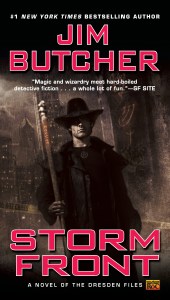
Book: “Storm Front” by Jim Butcher

I haven’t read a lot of Butcher’s “Dresden” series myself, but there is no way to talk about urban fantasy and not mention this incredibly popular author. There’s a pretty large stereotype that urban fantasy is written by women, for women, and features women, but Butcher’s “Dresden” series puts paid to that idea as it’s probably one of the biggest series out there. The story follows Harry Dresden, a wizard who also works as a private investigator for the Chicago P.D. when ordinary crimes present with decidedly unordinary elements. Because the main character is a P.I., these books mix elements from urban fantasy, mysteries, and crime fiction into action-packed bundles of fun.

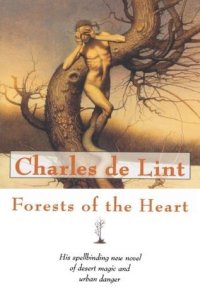
Book: “Forest of the Heart” by Charles de Lint

Charles de Lint is the author I go to when I’m looking for cross-over between urban fantasy and literary fiction. Unlike the first two books on this list, de Lint’s stories operate at a slower pace and place a stronger emphasis on description and scene-setting. Technically, “Forests of the Heart” is in the middle of one of his series, but many of his books stand alone, and this was one of my personal favorites of his. The story features Bettina, a part Native American, part Mexican woman who is a witness to the ongoing conflict between the spirits that came over with settlers and the native beings who roam the land. She calls these dark beings, the ones from the other lands, los lobos and stays well clear. Until one shows up on her doorstep.

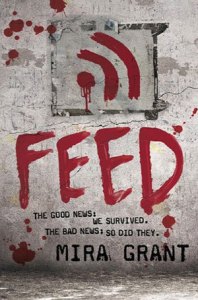
Book: “Feed” by Mira Grant

This is another book that has a lot of cross-over appeal, this time between urban fantasy and horror. Zombies exist in a kind of nebulous realm where both horror and fantasy claim them as beings to be found in their own genres. So, we’ll give zombies to urban fantasy with this one. The story is of two siblings and bloggers, Georgia and Shaun, who are documenting the ongoing zombie apocalypse. This is also a YA book (all the rest of these are technically listed as adult fiction, though I’d say they can also count as new adult). The story does lean into the gore and horror side of things, so strict fantasy fans should be aware of that. But the story does meet a lot of the other criteria for urban fantasy: fast-paced storytelling, a contemporary setting, and two main characters featured heavily at the heart of the story.

Book: “Written in Red” by Anne Bishop

Anne Bishop’s “Others” series is another wildly popular urban fantasy series. And, while it meets many of the standards of the genre (urban setting, werewolves, nature spirits, etc.) it is decidedly not a fast paced book. Instead, this is the urban fantasy series for those fantasy fans who really like to revel in the world itself. A lot of emphasis is placed on the characters and the world structure, and a lot on the politics between the humans and the fantasy creatures. Less emphasis on action, with there often only being one or two action scenes, some even happening off page. It does present an incredibly unique setting and world where the colonizers of North America found that they were by no means the most powerful to walk the land and have to find ways to not tick off the powerful magical forces that rule this continent.

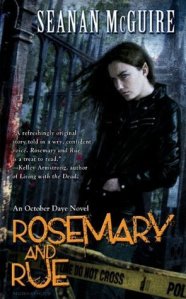
Book: “Rosemary and Rue” by Seanan McGuire

And to round out my list, we return to another very popular, very traditional series of urban fantasy. Seanan McGuire’s ongoing “October Daye” series is probably one of the best out there. I, for one, am a huge fan! The story follows the titular October Daye, a changeling who is part human and part fae. Like many of the main characters in urban fantasy series, she starts out trying to maintain a life that distances herself from Faerie, a place where she feels she has been betrayed. But, so too, she doesn’t quite fit into this human world either. After a murder falls into her lap, Toby is pulled back into the fae world and must take up her old role as a knight errant. From there, the series unfolds with her becoming more and more enmeshed in the goings on between Faerie and the human world. This series stands out because of Toby herself. Given her unique situation (no spoilers!), she’s a bit of a darker character than some of the other leading urban fantasy ladies we’ve seen.

What are some of your favorite urban fantasy books?

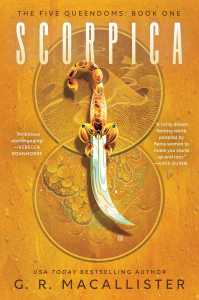
Serena’s Review: “Scorpica”

This post may contain affiliate links for books we recommend.  Read the full disclosure here.

Book: “Scorpica” by G. R. Macallister

Publishing Info: Saga Press, February 2022

Where Did I Get this Book: e-ARC from the publisher!

Where Can You Get this Book: Amazon | IndieBound | WorldCat

Book Description: A centuries-long peace is shattered in a matriarchal society when a decade passes without a single girl being born in this sweeping epic fantasy that’s perfect for fans of Robin Hobb and Circe.

Five hundred years of peace between queendoms shatters when girls inexplicably stop being born. As the Drought of Girls stretches across a generation, it sets off a cascade of political and personal consequences across all five queendoms of the known world, throwing long-standing alliances into disarray as each queendom begins to turn on each other—and new threats to each nation rise from within.

Uniting the stories of women from across the queendoms, this propulsive, gripping epic fantasy follows a warrior queen who must rise from childbirth bed to fight for her life and her throne, a healer in hiding desperate to protect the secret of her daughter’s explosive power, a queen whose desperation to retain control leads her to risk using the darkest magic, a near-immortal sorcerer demigod powerful enough to remake the world for her own ends—and the generation of lastborn girls, the ones born just before the Drought, who must bear the hopes and traditions of their nations if the queendoms are to survive.

Review: It seems like I just finished up reviewing a book with a very similar concept to this one. “The First Girl Child” was also a fantasy with a plotline centered around the sudden loss of girl babies being born in the land. This book’s set up, however, promises to tell a very different story, centering the tale around a matriarchal society where the dearth of women means a loss of leadership, military prowess, and much more. So I was very excited when the publisher reached out to me with an eARC to review this book. Let’s dive on it!

The world is made up of five nations, all queendoms ruled by powerful leading women. This world order, so stable for so long, is suddenly thrown into question when girl babies suddenly stop being born. As the land shifts beneath their feet, each Queen must confront the peril that comes with this delicate balance being thrown into chaos. Alliances are broken. Trust is shattered. And fear seems to rising in every sector of the land.

While this book wasn’t quite what I hoped it would be, there were still several things that were quite well done. The world-building, at first, did come off as a bit simplistic with its five little kingdoms neatly divided into specific traits, such as an emphasis on military prowess, bureaucratic guile, or magical abilities. It’s kind of a YA tactic that I’ve seen all too often: a get-out-of-jail free card to replace complicated culture building when peopling one’s world. But, luckily, here, as the story continued to unfold, I did find more work put in to this world than just these easily defined kingdoms. Through the various queens we see, the nature of each people became more complex, making for a more interesting interplay between these kingdoms.

The story is also committed to it’s slower style of story-telling. This is a very dialogue-light tale, with a lot of work done in the narration itself. Sometimes this worked, and other times, less so. It took quite a while for me to become invested in the story, partly due to this slower pacing and partly due to the split POVs (a pet peeve of mine and by no means an objective ding to this book.) With less dialogue on the page, it did take a bit longer to feel like I really understood the difference between the characters. But again, as the story built, I did find myself becoming more invested in certain characters (less so in others, always my problem with multiple POV books it seems).

In some ways, the book was almost too believable. In the face of such a sudden, completely unexpected devastation as the loss of girls in a matriarchal society, most people have no idea what to do, including many of the queens we see here. On one hand, looking at how real-world countries struggle to take meaningful action in the face of disasters that happen on such a grand scope (pandemics, climate change, etc.), it’s easily believable to see the struggles of these leaders to react in any true way. Largely, many of them came off as very passive in the face of this disaster. I was pleased to see one of these queens actively moving forward, and it’s no surprise that her story was my favorite.

Overall, I liked this book fairly well. It’s definitely a slow-moving beast and is dedicated to the minutia at heart of the situation created. Those fantasy readers who enjoy geopolitical stories will likely find lots to like here. If you’re more into action and quick dialogue, however, this probably isn’t for you.

Rating 7: An interesting concept and world that is ultimately hindered by being maybe a bit too realistic.

Reader’s Advisory:

“Scorpica” is on this Goodreads list: Upcoming 2022 SFF Books With Female Leads or Co-Leads.

Kate’s Review: “Nine Lives”

This post may contain affiliate links for books we recommend.  Read the full disclosure here.

Book: “Nine Lives” by Peter Swanson

Publishing Info: William Morrow & Company, March 2022

Where Did I Get This Book: I received an eARC from NetGalley.

Where You Can Get This Book: WorldCat | Amazon | Indiebound

Book Description: The story of nine strangers who receive a cryptic list with their names on it – and then begin to die in highly unusual circumstances.

Nine strangers receive a list with their names on it in the mail. Nothing else, just a list of names on a single sheet of paper. None of the nine people know or have ever met the others on the list. They dismiss it as junk mail, a fluke – until very, very bad things begin happening to people on the list. First, a well-liked old man is drowned on a beach in the small town of Kennewick, Maine. Then, a father is shot in the back while running through his quiet neighborhood in suburban Massachusetts. A frightening pattern is emerging, but what do these nine people have in common? Their professions range from oncology nurse to aspiring actor.

FBI agent Jessica Winslow, who is on the list herself, is determined to find out. Could there be some dark secret that binds them all together? Or is this the work of a murderous madman? As the mysterious sender stalks these nine strangers, they find themselves constantly looking over their shoulders, wondering who will be crossed off next….

Review: Thank you to NetGalley for providing me with an eARC to this novel!

I’ve been reading Peter Swanson novels since 2016, in which “The Killing Kind” totally blew me away and kept me on my toes. I have come to expect him to find ways to bring in new twists and turns that are totally earned by also shocking and unexpected, sometimes even deconstructing what we have come to expect of the thriller genre as a whole. Because I have this knowledge and because I’m so familiar with his tricky little carpet yanks, one would think that when I went into his newest book “Nine Lives” that I would have figured all of this out. One would think that I would be expecting a twist and that when it came I would say ‘ah yes, I knew that was coming’. And hey, to be fair, there were a couple early on moments that I thought ‘well either that was the twist or perhaps there IS no big reveal this time just to keep me on my toes even more’.

And then this guy STILL manages to completely take me by surprise with a twist I didn’t expect AT ALL.

And it’s just one of a good few in this story! (source)

The thing that I like the most about Peter Swanson, beyond the ability he has to totally floor me, is that he always crafts mysteries that have just enough twists to be interesting without going into wholly farfetched territory. As each stranger on the list of names is slowly picked off one by one, the deaths are done in ways that are almost always matter of fact, totally believable, and in a finite and quick manner that makes the beat punch hard, but then go onto the next. We don’t linger on melodrama nor do we feel a need to explain until it’s fully time for explanations. The clues are placed here and there, and they all fit together once they start to near each other. And while it’s true that I caught a couple of them in advance, the lion’s share were truly surprising. It has definite allusions to the Agatha Christie story “And Then There Were None” without feeling like a direct lifting, and while acknowledging that there are some tweaks here and there. The mystery is strong, even if a lot of the characters kind of fall by the wayside. But I think that that is kind of to be expected in some ways, just because there are nine people on the list, and a limited amount of time that they are going to be alive given that they are all targets of a killer. But for a few of them I felt like we did get some pretty okay insight into who they were as people outside of this, even while others fell flat or into two dimensional tropes.

I have seen criticism of the motive behind what all is going on, and I can definitely get why the criticism is there. Ultimately the construction of the mystery is sound and it has very solid working parts, but the actual foundation of the motive was pretty generic and glossed over. It doesn’t really help that there had to be a huge ‘telling instead of showing’ component at the end, with a big letter that explains just about everything. That’s usually a huge splash of cold water on a book for me, and I remember thinking ‘ah jeeze’ when I realized what was happening.

But hey, I was still having a fun time as we barreled towards the end of “Nine Lives”. The motive may be eh, but the journey through a list of nine marked people is still really fun. Keep on catching me off guard, Peter Swanson! I always like being surprised!

Rating 7: A fun twist on “And Then There Were None” with a few good surprises, “Nine Lives” is another entertaining read from Peter Swanson, even if some of the details are glossed over or undercooked.

Reader’s Advisory:

“Nine Lives” is included on the Goodreads list “Mystery & Thriller 2022”, and would fit in on “‘And Then There Were None’ Trope Novels”.

Serena’s Review: “Gallant”

This post may contain affiliate links for books we recommend.  Read the full disclosure here.

Book: “Gallant by V.E. Schwab

Publishing Info: Greenwillow Books, March 2022

Where Did I Get this Book: Edelweiss+

Where Can You Get this Book: Amazon | IndieBound | WorldCat

Book Description: Everything casts a shadow. Even the world we live in. And as with every shadow, there is a place where it must touch. A seam, where the shadow meets its source.

Olivia Prior has grown up in Merilance School for girls, and all she has of her past is her mother’s journal—which seems to unravel into madness. Then, a letter invites Olivia to come home—to Gallant. Yet when Olivia arrives, no one is expecting her. But Olivia is not about to leave the first place that feels like home, it doesn’t matter if her cousin Matthew is hostile or if she sees half-formed ghouls haunting the hallways.

Olivia knows that Gallant is hiding secrets, and she is determined to uncover them. When she crosses a ruined wall at just the right moment, Olivia finds herself in a place that is Gallant—but not. The manor is crumbling, the ghouls are solid, and a mysterious figure rules over all. Now Olivia sees what has unraveled generations of her family, and where her father may have come from.

Olivia has always wanted to belong somewhere, but will she take her place as a Prior, protecting our world against the Master of the House? Or will she take her place beside him?

Review: Though some of her books have been a bit of a miss for me, V.E. Schwab is firmly on my “must read” list. Even those books that I didn’t love still always had superb writing and creative fantastical ideas. And then there’s the fact that these less liked books are far and away the more rare for me. Typically, I’ve really adored her writing and own several of her books outright. But when a book hasn’t hit for me, it’s typically come from her YA fare. So, while I was super excited to see a new book coming out, I was a bit more nervous than I typically would be when I saw that this was marketed as YA. Luckily, that wasn’t an issue here! Is that because I’d argue this might not be YA?

Olivia dreams of what every orphan child dreams of: a home and a family who want her. But at age 14, she’s well aware that all she has left in this world, truly, is her mother’s cryptic journal. So no one is more surprised than she when a letter suddenly arrives at her orphanage calling Olivia home to Gallant. But when she arrives, though she does discover family, she realizes that not only did her unwelcoming cousin Mathew not send the letter, but that he seems almost desperate for her to leave as soon as possible. When she stumbles into a shadowy world mirroring Gallant itself, she begins to suspect that there is more to the old house and her family’s history than she ever could have imagined.

This book was marketed as a Gothic “The Secret Garden,” and I can definitely see that all over this book. It’s also notable that V.E. Schwab is something of an old hand at penning these type of overlaying, mirrored worlds. This same concept is at the heart of her popular “Shades of Magic” trilogy, so it was fun seeing her return to that same fantasy element. But, true to her being a very talented author, she does so in a way that it is original and stands completely separate from that trilogy.

For one thing, I’d argue that this book is more Middle Grade than YA. The protagonist, Oliva, is definitely on the younger side of teenage-dom. And, not that all YA books require romance by any means, but the story itself is fully devoid of any love story, something that is rare in typical YA fantasy fare. The themes of the story, family, home, the understanding of choosing the way we move forward into a more adult world, are all of the sort that I think would appeal greatly to Middle Grade audiences. Some of the fantasy elements are a bit dark, but I’d think the average middle grader would be up for it.

Olivia was an excellent main character. She is a character who has grown up without the ability to communicate verbally. She can hear but must use sign language or writing to speak with those around her. It’s telling of Schwab’s abilities that she was able to write such a complex character and story while relying on minimal dialogue. Instead, she finds a variety of ways for Olivia to communicate. But while doing this, the author also explores the way that those without a voice can be easily silenced and dismissed, speaking to a power imbalance that many may not even be aware of.

I really liked Gallant and its shadow-world as well. The Gothic overtones were high, with secret passages, moldering rooms hinting of past grandeur slowly sinking into decrepitude, and haunted forms flitting in and out of rooms. The history of the house and Olivia’s family was also very interesting. I especially appreciated the use of a selection of abstract artwork that is sprinkled throughout the story to add another layer to the story unfolding on the page.

I did have to drop the rating down a bit by the time I got to the end, however. While the quality of the storytelling, world-building, and characterization were high throughout, by the time I finished the last page I was left with a sense of feeling a bit unmoored. When I think back on the book, I’m not sure I can see a real point to the story. That, and the fact that I feel like the ending didn’t so much conclude a story as re-set the board. I’m not quite sure what to make of it, honestly. But I feel like Schwab somehow missed the mark a bit here.

Overall, however, I really enjoyed this book. I definitely think it’s worth checking out for fans of Gothic fantasy. It’s also a great stand-alone story and one that doesn’t include a love story at its heart. I think it probably veers closer to Middle Grade than YA, but at a certain point that distinction blends to a point where both would likely enjoy it equally.

Rating 8: Splendidly creepy while also reflecting on deeper topics such as the choice involved in home and family.

Reader’s Advisory:

“Gallant” is on these Goodreads lists: 2022 Gothic and 2022 Anticipated Fiction Fantasy Reads.

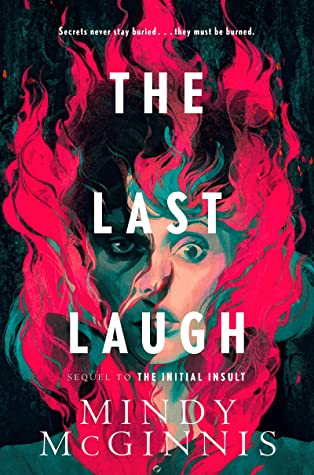
Kate’s Review: “The Last Laugh”

This post may contain affiliate links for books we recommend.  Read the full disclosure here.

Book: “The Last Laugh” by Mindy McGinnis

Publishing Info: Katherine Tegen Books, March 2022

Where Did I Get this Book: I received an eARC from NetGalley

Where You Can Get this Book: WorldCat | Amazon | IndieBound

Book Description: In the dark and stunning sequel to The Initial Insult, award-winning author Mindy McGinnis concludes this suspenseful YA duology as long-held family secrets finally come to light . . . changing Amontillado forevermore.

Tress Montor murdered Felicity Turnado—but she might not have to live with the guilt for long. With an infected arm held together by duct tape, the panther who clawed her open on the loose, and the whole town on the hunt for the lost homecoming queen, the odds are stacked against Tress. As her mind slides deeper into delirium, Tress is haunted by the growing sound of Felicity’s heartbeat pulsing from the “best friend” charm around her fevered neck.

Ribbit Usher has been a punchline his whole life—from his nickname to his latest turn as the unwitting star of a humiliating viral video. In the past he’s willingly played the fool, but now it’s time to fulfill his destiny. That means saving the girl, so that Felicity can take her place at his side and Ribbit can exact revenge on all who have done him wrong—which includes his cousin, Tress. Ribbit is held by a pact he made with his mother long ago, a pact that must be delivered upon in four days.

With time ticking down and an enemy she considers a friend lurking in the shadows, Tress’s grip on reality is failing. Can she keep both mind and body together long enough to finally find out what happened to her parents?

Review: Thank you to NetGalley for providing me with an eARC of this novel!

I’ve been awaiting “The Last Laugh” by Mindy McGinnis since the moment I finished “The Initial Insult”. If you recall, that novel took Edgar Allan Poe tales and turned them into a modern small town setting involving grudge and secret holding teenagers, and did it in a way that worked fairly well. It also ended with a bit of a cliffhanger, one that had my head spinning about where it could go next. I had some theories, and while I was on the money in some ways, in other ways “The Last Laugh” surprised me.

Somehow “The Last Laugh” was even darker than “The Initial Insult”, which is saying something given that the last book ended with a teenage girl being bricked up in a coal shaft and left to die (though in Tress’s defense, she had had a change of heart, but thought that Felicity had died before she could reverse her plan and just left her there… even though Felicity wasn’t actually dead yet. BLEAK!). We are now following Tress again as she deals with her guilt for Felicity’s demise, and we now have two new perspectives to engage with since Felicity is out of the picture and the Black Panther is free. The first is Ribbit, Tress’s cousin who was humiliated via an online video where his classmates got him drunk and filmed it. The second is Rue, the gentle orangutan at Tress’s grandpa’s animal sideshow, who adores Tress. Tress’s story goes the way you think it would: she’s severely injured due to the panther mauling her arm, and is feeling immense guilt. But Ribbit’s perspective was interesting. I knew that he had a part to play given his “Hop-Frog” analog, but getting into his mind shows sides to him that we couldn’t see before that reflect darker things going on not just in his life, but also the entire Usher/Allan/Montor Family Tree. I greatly enjoyed seeing how all of this would come together in terms of its own unique story, but also through the Edgar Allan Poe works that gave it direct inspirations. And the things that McGinnis reveals this time around were deeply, deeply unsettling, and presented in ways that made this book creepy as hell. And Rue’s perspectives were a bit more of a mixed bag, in that I got why we had the Panther in the first book, as the Panther plays a key role in that book in terms of the plot. In this, Rue’s role felt a little more shoehorned in, in that there needed to be symmetry with the poetry animal perspective, but ultimately wasn’t really needed. The thing that does happen (I’m being vague purposefully) didn’t really feel like it needed to happen. But I liked her affection for Tress.

This time around I didn’t feel as if we were as deluged with Poe references, and that was to the benefit of the story. I think that this is probably because so much was set up for this book in “The Initial Insult” that the references were already well established and could flourish a bit more. This time around the biggest influences were that of “The Tell Tale Heart”, “The Fall of the House of Usher”, and, as started in the previous book, “Hop-Frog”. But like with the last book, and I think even a little more son, McGinnis subverts the influences and themes and makes them fit a modern setting. A heart buried beneath a floor is now a friendship necklace. A cruel royal court is now less about monarchy and more about Homecoming. And there are far more metaphors at work rather than literal outcomes. It flowed better this time around, and that made for the follow through to be incredibly satisfying as a conclusion to a tale that was set up in the previous volume.

And the gore. OH THE GORE. While I felt that “The Initial Insult” was more akin to the psychological thrills of Poe’s works, “The Last Laugh” falls way more into the horror side of things. And it’s not just because of the gore (but there is a good amount of it). It’s also because of the creeping feeling that something really bad is going to happen before it’s all over. It isn’t just a suspense that builds, it’s true dread.

I was very pleased with “The Last Laugh” and how it wrapped up this love letter to Edgar Allan Poe. McGinnis doesn’t mess around when it comes to dark thrillers, be they for Young Adults or people my age.

Rating 8: A satisfying and unsettling conclusion to a Poe-rich thriller, “The Last Laugh” takes on more Poe themes and will unnerve you.

Reader’s Advisory:

“The Last Laugh” is included on the Goodreads list “Books Influenced by Edgar Allan Poe”.

Previously Reviewed:

Book Club Review: “Project Duchess”

We are part of a group of librarian friends who have had an ongoing book club running for the last several years. Each “season” (we’re nerds) we pick a theme and each of us chooses a book within that theme for us all to read. Our current theme is “Romance”, in which we each picked a book that is a romance, or has elements that fit romance tropes to a T. For this blog, we will post a joint review of each book we read for book club. We’ll also post the next book coming up in book club. So feel free to read along with us or use our book selections and questions in your own book club!

Book: “Project Duchess” by Sabrina Jeffries

Publishing Info: Zebra, June 2019

Where Did We Get This Book: The library!

Romance Trope: Grumpy/Sunshine

Book Description: A series of stepfathers and a difficult childhood have left Fletcher “Grey” Pryde, 5th Duke of Greycourt, with a guarded heart, enviable wealth, and the undeserved reputation of a rogue. Grey’s focus on expanding his dukedom allows him little time to find a wife. But when his mother is widowed yet again and he meets the charmingly unconventional woman managing his stepfather’s funeral, he’s shocked to discover how much they have in common. Still, Grey isn’t interested in love, no matter how pretty, or delightfully outspoken, the lady . . .
 
Beatrice Wolfe gave up on romance long ago, and the arrogant Duke of Greycourt with his rakish reputation isn’t exactly changing her mind. Then Grey agrees to assist his grief-stricken mother with her latest “project”: schooling spirited, unfashionable Beatrice for her debut. Now that Beatrice is seeing through Grey’s charms to his wounded heart, she’s having trouble keeping him at arm’s length. But once Grey starts digging into her family’s secrets, she must decide whether her loyalties lie with her family . . . or with the man whose lessons capture her heart . . .   

Serena’s Thoughts

Ostensibly, this book should have been for me. When I do read romance, I generally prefer historical romance, with all of those grand ball scenes and the obsessively weird culture of manners. I find that the overly formal way of moving through life in these books is a nice balance to the actual bodice-ripping romance of them. Sadly, this book wasn’t for me though.

There were a few problems that I had. Firstly, the romance itself doesn’t feel very well built up, with the “hero” pretty much sexualizing the heroine immediately. Obviously, some of this is expected in romance novels, so it’s not the fact that it happened that was the problem. More, it was the fact that it was right off the bat which just immediately set him up in a bad light for me. Beyond that, the book is very “tell-y” with this character in general. We’re told over and over again that he’s this “rake-ish” individual, but we never see any evidence of this “bad boy” persona.

Much of this problem comes down to the fact that the entire book takes place on the family’s country estate. That’s right! There are no grand ball room scenes or society gossip, because the entire story is removed from all of that. Instead, we have only Grey’s family and Beatrice’s brother for any and all social interactions. Not only does it feel limited, but it was very obvious that the author was almost equally devoted to setting up all of these other characters as potential leads in her future books as she was with telling the actual story on hand. It all played against me becoming at all invested in Grey and Beatrice.

I also didn’t love the mystery that was included in this story. Again, this probably should have been a hit for me as, when I do read mysteries, they’re often historical mysteries of just this sort. But here, by cramming the mystery in alongside the romance, the author missed the mark on both. The romance was lukewarm. And the mystery was unappealing. Not only did we always know that the main suspect would be innocent, but the story ends on a cliffhanger in a misguided attempt to get readers to pick up the next book. In my case, that just worked against it. I felt even more put off by the story in not having this resolved. This plot line took up a ton of page time and arguably reduced changes to increase my interest in the romance of the story, the thing most readers who pick up this kind of book will be looking for. Fans of historical romance can likely find better options out there.

Kate’s Thoughts

Okay, we have officially moved into romance territory that I rarely dare to tread. I can count the number of ‘bodice ripper’ romance on one hand, including this one… And I think that the number is 2. MAYBE 3 if we want to be a little loosey goosey with our time periods. And while thus far our book club romances have been mostly contemporary (with one fantasy), I knew a Regency romance would probably have to happen. So I went into “Project Duchess” trying to have an open mind. But by the time I was finished, I realized that this subgenre of romance really… REALLY isn’t for me.

I have a lot of the same thoughts as Serena, from the clunky way that the characters are used, to the telling vs showing, to the isolated setting (though I admit that I had NO idea that this was a thing until it came up in book club; it wasn’t until Serena pointed out that keeping it on a country estate with no dances, urban gossip, or new characters was incredibly limiting. Once she pointed it out I was like ‘oh hey, yeah!!!’). I also thought that giving Beatrice a darker backstory involving her lecherous uncle wasn’t handled super well, as it was there to make her tragic but wasn’t examined in a way that felt healthy. One good fuck probably isn’t going to wash away trauma. I know it’s a romance novel and a little unrealistic storytelling isn’t a crime (in any book really), but it just didn’t sit right with me.

AND I am going to echo my frustration with the mystery. I, being a gal who loves a good murder plot, wanted to know what HAD happened to all of Lydia’s husbands! Once it clicked that we weren’t going to get any answers in this book, as the story was setting up a whole series involving all the boring characters (excluding Gwyn. I liked Gwyn), I was pretty frustrated.

“Project Duchess” was a miss for me. I would say that maybe it’s just because it’s not my genre, but seeing Serena’s review above, it makes me think it’s maybe a miss all around.

Serena’s Rating 6: Not for me, which was a shock considering that, on paper, it should have been right up my alley.

Kate’s Rating 4: I wasn’t expecting too much but was still disappointed.

Book Club Questions

  1. How well do this hero and heroine fit the “grump/sunshine” romance trope?
  2. What did you think about the mystery at the heart of the novel? What predictions do you have going forward?
  3. Beatrice’s history with her uncle is quite dark. How well do you think the book tackled this topic?
  4. What did you think of Beatrice and Greycourt as a couple and the various iterations of their romance that we saw throughout this book?
  5. This is clearly the first book in a set-up series. Will you continue reading? What character are you most interested in reading about next?

Reader’s Advisory

“Project Duchess” is on these Goodreads lists: Romance Heroes and Heroines Over 35! and 2019 Historical Romance.

Find “Project Duchess” at your library using WorldCat or at a local independent bookstore using IndieBound!

Next Book Club Book: “Beach Read” by Emily Henry