Serena’s Review: “Notorious Sorcerer”

This post may contain affiliate links for books we recommend.  Read the full disclosure here.

Book: “Notorious Sorcerer” by Davinia Evans

Publishing Info: Orbit, September 2022

Where Did I Get this Book: ARC from the author!

Where Can You Get this Book: Amazon | IndieBound | WorldCat

Book Description: Welcome to Bezim, where sword-slinging bravi race through the night and rich and idle alchemists make magic out of mixing and measuring the four planes of reality.

Siyon Velo, Dockside brat turned petty alchemist, scrapes a living hopping between the planes to harvest ingredients for the city’s alchemists. But when Siyon accidentally commits an act of impossible magic, he’s catapulted into the limelight—which is a bad place to be when the planes start lurching out of alignment, threatening to send Bezim into the sea.

It will take a miracle to save the city. Good thing Siyon has pulled off the impossible before. Now he just has to master it.

Review: This is one of those books where the title was doing a lot of the work in my reasoning for picking it up to review. Plus, I thought the cover was pretty cool. Other than that, I really only understood it to be a fantasy novel that involved alchemy somehow and may or may not be a portal fantasy. But I’m always game for an unknown debut book, so I was excited when I received an ARC from the author.

Bezim is a land strictly divided by the haves and have nots. Those in the upper class have easy access to education and, through that education, magic, while those in the lower classes must struggle by. Of course, alchemy is a magic that has its dangers as well as its powers, so a firm understanding of its uses is necessary to prevent some of the horrific disasters that have been suffered in the past. But for Siyon, he’s happy enough to live somewhere in the middle, patching together his own small time alchemy with very little adherence to the rules that are meant to govern it. That is until he performs a shocking act of magic that both impresses and concerns all who witness it. For now, the future of Bezim is in question again and it seems only an unlearned amateur may be capable of saving it.

This was definitely one of those middle-of-the-road books for me. There was nothing glaringly wrong with any of it. And, in fact, much that was right. Yet, I still struggled to feel fully immersed in the story. The pacing is fast right from the start, with the story galloping along from one action-packed scene to the next. On one hand, this made the story a fun, quick read. But on the other hand, I felt like I was struggling to fully connect to the characters I was meeting on the page, as they were so quickly vaulting from one action set piece to another, with very little time given to any sort of introspection.

I did really like the magic system we were given, and the interesting ways that staples from classic portal fantasy and other alchemy stories were woven together. There was enough that was familiar to make the story approachable (and to help with the fact that, again, the fast pacing left less room for lengthy explanations than other, slower fantasy novels), but there were a lot a lot of original ideas on display as well.

I had also heard a lot of references in early blurbs of the book to the funny and light-hearted tone of the story, and those definitely check out. But, again, I wasn’t necessarily blown away by any of comedic elements. For one thing, I began to struggle with Siyon as a main character when it came to this balance of comedy and primary protagonist. His character is introduced as an “act first, think second” type of person, and we see that again and again. Some of this plays to great comedic affect. But there also came a point when he had been warned again and again about the dangers of alchemy and continued to hand-wave these warnings away. After a bit, I began to feel more frustrated by his poor decision-making than amused.

Overall, this was a perfectly fine debut fantasy novel. There was a lot of potential every where you looked: intriguing world-building, humorous writing, interesting characters. But it also felt like every one of these aspects could have been fleshed out just a bit more to make something truly noteworthy. That said, fans of fast-moving, action-packed fantasy novels should definitely check this one out.

Rating 7: A quick, fun read, but perhaps lacking some of the depth I look for to make a book really feel like it’s going to stick with me.

Reader’s Advisory:

“Notorious Sorcerer” isn’t on any Goodreads lists yet, but it should be on Alchemy Books.

Kate’s Review: “The Raven Mother”

This post may contain affiliate links for books we recommend.  Read the full disclosure here.

Book: “The Raven Mother” by Hetxw’ms Gyetxw (Brett D. Hudson), & Natasha Donovan (Ill.)

Publishing Info: HighWater Press, September 2022

Where Did I Get This Book: I received an eARC from the publisher.

Where You Can Get This Book: WorldCat | HighWater Press | Indiebound

Book Description: Hoarders. Scavengers. Clever foragers. Bringers of new life.

Ravens have many roles, both for the land and in Gitxsan story and song. The sixth book in Hetxw’ms Gyetxw (Brett D. Huson)’s Mothers of Xsan series transports young readers to Northwestern British Columbia, where they will learn about the traditions of the Gitxsan, the lives of ravens, and why these acrobatic flyers are so important to their ecosystem.

Follow along as Nox Gaak, the raven mother, teaches her chicks what they need to survive with the help of her flock.

Review: Thank you to HighWater Press for sending me an eARC of this book!

Maintaining my stereotypical Goth girl at heart aesthetic, I have always been a huge fan of corvids of all types. Living in Minnesota that means that crows are the corvids in my backyard, but when my husband and I went to London for our honeymoon I was DESPERATE to see the Ravens at the Tower (I also bought a stuffed raven that still sits on my nightstand). When my parents went to Alaska a few years ago my Mom sent me pictures of ravens any time she caught one on her camera. So yeah, give me any and all corvid content. THEREFORE, I was particularly interested in “The Raven Mother” by Hetxw’ms Gyetxw (aka Brett D. Hudson) in this HighWater Press series that I’m doing this month. And it didn’t disappoint!

“The Raven Mother” is an educational middle grade book that puts the ecological and cultural significance of ravens in British Columbia, Canada, specifically through the context of the Gitxsan People. The story is pretty straightforward as a mother raven tends to her chicks with the help of the ravens in her community. It’s easy to understand and has a lot of good information that’s presented in a way for the audience that I felt worked really well. We not only get Gitxsan words and language interspersed in the narrative, we also get definitions of those words as well as definitions to relevant words that may be unfamiliar to younger readers. We also get a great introduction to the concept of ecosystems and ecology, with talk of seasonal changes, animal movements and migrations, and the way that animals, specifically ravens, connect to the environment they inhabit, and how that can have an effect on other things within the ecosystem. And seeing it through the seasons of a raven and her babies as they grow and change was definitely a good way for the audience to connect to it. If science was presented in such a way when I was a kid I would have really connected to it more, I think.

I also really loved the historical notes in the back of this book, as they give great context for the Gitxsan People and the areas they inhabited during the time that this book is set. The lists of the seasonal moons and the drawn map of the area where the various four clans were placed were easy to follow and the brief history is easy to understand, as well as forthright about the colonized land and space as it is defined by ‘official’ geography today. Again, it is all very approachable and I would have loved to encounter information presented in such a way when I was the target age for this book. And I really can’t stress enough how important it is to have these voices and perspectives amplified as much as possible.

And I am going to gush about the artwork in this book. I absolutely loved it. I loved the design of the animals, landscapes, and people. I loved the colors and how they pop off the page. I loved the way that everything felt like it flowed and connected across pages. I really really loved everything about it, so major props to Natasha Donovan.

I mean just look at this. GORGEOUS! (source: HighWater Press)

Filled with accessible information about ecosystems and culture, “The Raven Mother” is an enjoyable read that will be a great teaching tool for the target audience. I quite enjoyed reading it and will definitely be sharing it with my own child when she’s older.

Rating 8: An educational story about ecosystems, ravens, food webs, and how they all connect to each other, “The Raven Mother” is some solid middle grade science as well as cultural exploration.

Reader’s Advisory:

“The Raven Mother” isn’t on any Goodreads lists as of yet, but I think it would fit in on “Non-Fiction: Crows and Ravens”.

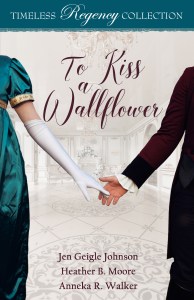
Serena’s Review: “To Kiss a Wallflower”

This post may contain affiliate links for books we recommend.  Read the full disclosure here.

Book: “To Kiss a Wallflower” by Jen Geigle Johnson, Heather B. Moore, & Anneka R. Walker

Publishing Info: Mirror Press, June 2022

Where Did I Get this Book: from the publicist!

Where Can You Get this Book: Amazon | IndieBound | WorldCat

Book Description: THE WALLFLOWER’S DANCE by Jen Geigle Johnson

Lottie Hughes likes people, as long as they aren’t too close. Does it bother her that no one asks her to dance? Yes, but she’s not sure how to drum up dance partners when she has almost no dowry, no title, and freezes up when anyone tries to talk to her. When she suddenly inherits a huge amount and is the new center of attention all over London, her secret dreams might come true but also her worst nightmares. Suddenly everyone wants to talk to her. Men ask her to dance. And she is inundated with interested suitors. She fights to stay close to the few friends she knows are true. One man saw her before her life changed forever. But does she want to accept his help when he, too, might be insincere?

LETTERS TO A WALLFLOWER by Heather B. Moore

Ellen might be beautiful and considered a diamond of the first water by Society, but she is so very tired of the pressure to marry a titled gentleman so that her beauty won’t go to waste. When her cousin Dinah dares Ellen to attend a ball with no frills and to stand with the wallflowers, Ellen takes on the dare. What’s in the wager for her? The prize cuttings of her aunt’s extraordinary roses. But what Ellen isn’t expecting is Lord Ravenshire to engage her in the most interesting conversation. When she confesses to him of her opposition in marrying for a title, he confesses his distaste of the London scene. They strike a bargain together, one which will either push them apart or lead to a future sweeter than either of them could have imagined.

TO MARRY A WALLFLOWER by Anneka R. Walker

Charlotte Winters is destined to spinsterhood until she turns down an unwanted proposal and everything changes. With gossip rampant, her father attempts to salvage her reputation by betrothing her to another. Soon she is sent off to her aunt’s to meet Lord Templeton, her intended. Anxiety-ridden, Charlotte begs her aunt to let her observe Lord Templeton from afar before their introduction. She never planned to pretend to be her fictional cousin to learn more about him, or to fall in love with Lord Templeton’s friend in the process. Lord Templeton dreads returning to the empty halls of Newcliff Manor. When his father’s old friend, Mr. Winters reaches out for assistance, Lord Templeton finds himself returning home engaged to a woman he has never met. Desperate to learn more about Miss Winters, he befriends her cousin. He wouldn’t have spoken to her, or lied about his identity, if he’d known the quiet woman would sneak into his heart.

Review: A few months ago, I participated in a blog tour for this book and posted an excerpt here on the blog. Well, today I’m back with my full review of the collection. Since there are three entirely separate stories contained within this book, I thought I’d split my review into three mini reviews, one for each story.

“The Wallflower’s Dance”

This is your classic friends-to-lovers romance, and it covered every base you want to see in this type of story. The friendship between the hero and the heroine was believable, as was the fact that it seemed understandable that each was so caught up in this type of interaction that it would take a certain sort of jolt to shock their systems into seeing each other in different ways.

I did struggle a bit towards the end of this story, however. It seemed that that solid foundation of friendship was easily undercut with doubts about the other’s intentions. This would have felt believable with other characters, but with two people who have known each other for so long, it was a bit hard to buy their sudden decision to believe complete strangers over a longtime friend. There was also one last shot of complete insanity on the heroine’s part after the truth was made known to her. It was only one paragraph, which honestly made it all the more frustrating. Just take that one bit out and nothing would change in the story, except a better opinion of your heroine!

That said, I still had a fun time reading this story.

“Letters to a Wallflower”

This was another classic romance trope: the fake dating/courtship romance. As is implied by the title, there’s a brief (luckily very brief!) period of time when our hero and heroine set-up a correspondence to get them each out of the eyes of pestering mothers and society and back to their beloved country abodes.

To be fair, this one plays fast and loose with the whole “wallflower” theme. Ellen is in fact a very beautiful, sought after young lady who tires of getting asked to dance too many times. So she makes a deal with her friend to try to hide as a wallflower and see if she is asked to dance at all. Unfortunately for her, Lord Ravenshire sets out with the purpose of dancing with all of the wallflowers. But through this mishap they hit on the idea to fake a relationship.

There were a few anachronisms early in this book (the word “hairdo” and an ordering of earl as one of the highest ranks, which is incorrect), but overall I think the writing in this book was the best. After I got past the first few errors, I really enjoyed this one, and it was probably my favorite of the three.

To Marry a Wallflower”

We wrap up our regency romances with the “secret identity” trope. For all that this is the trope I picked in our recent romance tropes bookclub theme, it’s probably one of my least favorite. All too often I have a hard time believing the essential lie at the heart of these kind of confusions wouldn’t do more lasting damage than they seem to. So, I was the most nervous going into this one of the three.

Honestly, I did struggle a bit with this story. There was a lot of terrible advice given out, and I thought the excuse to pose as different people was a bit weak for both Charlotte and Luke. Their interactions were sweet and I did become invested in their relationship as the story continued. But I could never fully get past the secret identity thing that tinged every moment. The reveal itself was a nice payoff, but I think I would have enjoyed this one more if it hadn’t been this trope to begin with. But that’s a purely subjective opinion, and fans of “secret identity” romances may love this one!

As a whole, I think this is a really solid compilation of clean, sweet Regency romances. This is part of a very long series of Regency romances made up of short stories, so fans of those are sure to enjoy this. Readers who are also looking for a low commitment, sweet romance read should also check this out. They’re the perfect reads for someone looking to whip through a romance story in one night’s time!

Rating 7: I was left wanting just a bit more from all three of these stories, but they were also fun and satisfying reads on their own which are sure to appeal to fans of clean historical romance stories!

Reader’s Advisory:

“To Kiss a Wallflower” is part of the Timeless Regency Collection Series.

Kate’s Review: “Daphne”


This post may contain affiliate links for books we recommend.  
Read the full disclosure here.

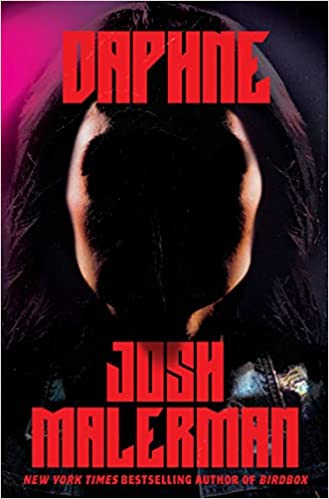
Book: “Daphne” by Josh Malerman

Publishing Info: Del Rey Publications, September 2022

Where Did I Get This Book: I received an eARC from NetGalley.

Where You Can Get This Book: WorldCat | Amazon | Indiebound

Book Description: It’s the last summer for Kit Lamb: The last summer before college. The last summer with her high school basketball team, and with Dana, her best friend. The last summer before her life begins.

But the night before the big game, one of the players tells a ghost story about Daphne, a girl who went to their school many years ago and died under mysterious circumstances. Some say she was murdered, others that she died by her own hand. And some say that Daphne is a murderer herself. They also say that Daphne is still out there, obsessed with revenge, and will appear to kill again anytime someone thinks about her.

After Kit hears the story, her teammates vanish, one by one, and Kit begins to suspect that the stories about Daphne are real . . . and to fear that her own mind is conjuring the killer. Now it’s a race against time as Kit searches for the truth behind the legend and learns to face her own fears—before the summer of her life becomes the last summer of her life.

Mixing a nostalgic coming-of-age story and an instantly iconic female villain with an innovative new vision of classic horror, Daphne is an unforgettable thriller as only Josh Malerman could imagine it.

Review: Thank you to NetGalley for sending me an eARC of this novel!

Let me set the scene. It was 2003. I was a senior in high school. One afternoon in the senior lounge during the school day ‘X period’ (aka a free period where clubs could meet or kids could talk to teachers or you could just dick around for a bit), some other girls and I started talking about Bloody Mary. We decided it would be fun to go to the locker rooms by the gym and play, as it had been FOREVER since we all had. I went with this group of girls, none of whom who were my friends, per se, just classmates whose orbits I generally wasn’t around, but bonded by nostalgia for an urban legend. We turned off the lights, said ‘I believe in Bloody Mary’ three times, and expected nothing of it. So imagine our surprise when there was a loud BANG in the darkness of the locker room. We tore out screaming, only to find out shortly thereafter a gym teacher was tidying up and that was the bang, and we had scared her to death with our terrified shrieks. I kept thinking about this story while I read Josh Malerman’s newest book “Daphne”, a horror novel about an urban legend that slasher kills her way through a high school girls basketball team. Mostly because of the urban legend factor. But also because this deeply disturbing horror novel also touches on the undercurrent left unsaid in this memory: that of teetering between youth, and adulthood, and the things we grapple with in between.

First and foremost, yes, “Daphne” is a very unsettling horror story, and I expected nothing less from Malerman. I’ve enjoyed the other books I’ve read of his, and I think that this one is probably the scariest yet for me. He knows how to slowly build a strangling dread as our cast of characters, a group of high school basketball players with WNBA dreams and interests, are picked off one by one by a brutal urban legend called Daphne after her story is told at a sleepover. We mostly focus on star player Kit, a girl who loves her teammates and the game, but is also plagued by her own struggles with severe anxiety, even before she starts obsessively thinking about Daphne and those around her start dying. Malerman does a fantastic job of slowly pacing the tension in this story so that the reader goes through similar beats as the characters. General unease slowly morphs to gear morphs to genuine dread. The characters find themselves thinking of Daphne, and then she comes for them in truly grotesque, slasher-y ways, and I was basically freaking out every time we got to a kill scene. It’s brutal and very splatter-y, but the tension is top notch psychological suspense to give it more oomph. We slowly start to get the real story behind the urban legend, and we start to care about these characters and invest in them even know we know that terrible things at the hands of this ghost, or monster, or SOMETHING are going to happen to them. It’s unnerving as hell and it really got under my skin. I think that I would have liked a bit more come down at the end, as all the tension has to go somewhere and I didn’t feel like there was enough room for it by the conclusion. But ultimately this book delivers on scares. EVEN THE GODDAMN COVER JUST FUCKS WITH MY HEAD.

But along with the scares is the very relatable undercurrent of Kit’s anxiety, anxiety about not only Daphne, but also of the unknown aspects of life itself. I’m someone who has been grappling with anxiety my entire life, and one of the worst times was in high school because of how much was unknown. I had no idea what life had in store after I left the very familiar life I was leading, with my parents and my friends and my family being left behind. As someone who had panic attacks, a good amount of them in late high school, I really, really related to Kit, and I loved that Malerman wanted to explore her mind even beyond that of a slasher killer’s potential victim, but also a girl who is battling her fears of the unknown as they manifest into panic attacks and buzzing dread without obvious cause. Perhaps it doesn’t get to this level for all teens, but Kit battling her mind to try and keep Daphne out is just as much Kit battling her mind to keep fear itself out. It hit home in a way I wasn’t really expecting, and just felt like it really captured that unease about what comes next when you are about to leave the life you’ve known for eighteen years. And really, the way that Daphne creeps up on you until you can’t stop thinking about her, and then completely wrecks you? That’s anxiety in a nutshell. Daphne crushes her victims, just as anxiety crushes those that it affects.

“Daphne” is going to stay with me awhile. It’s deeply fucked but also bittersweet. And like the titular character, I don’t see myself being able to stop thinking about it for awhile.

Rating 9: Disturbing, unnerving, and in some ways bittersweet, “Daphne” is a horror novel that won’t leave a reader’s thoughts for awhile after reading it.

Reader’s Advisory:

“Daphne” is included on the Goodreads list “Horror to Look Forward to in 2022”.

Joint Review: “The Witch and the Tsar”

This post may contain affiliate links for books we recommend.  Read the full disclosure here.

Book: “The Witch and the Tsar” by Olesya Salnikova Gilmore

Publishing Info: Ace, September 2022

Where Did We Get This Book: We received eARCs from NetGalley and Edelweiss+.

Where You Can Get This Book: WorldCat | Amazon | Indiebound

Book Description: As a half-goddess possessing magic, Yaga is used to living on her own, her prior entanglements with mortals having led to heartbreak. She mostly keeps to her hut in the woods, where those in need of healing seek her out, even as they spread rumors about her supposed cruelty and wicked spells. But when her old friend Anastasia—now the wife of the tsar, and suffering from a mysterious illness—arrives in her forest desperate for her protection, Yaga realizes the fate of all of Russia is tied to Anastasia’s. Yaga must step out of the shadows to protect the land she loves.

As she travels to Moscow, Yaga witnesses a sixteenth century Russia on the brink of chaos. Tsar Ivan—soon to become Ivan the Terrible—grows more volatile and tyrannical by the day, and Yaga believes the tsaritsa is being poisoned by an unknown enemy. But what Yaga cannot know is that Ivan is being manipulated by powers far older and more fearsome than anyone can imagine.

Olesya Salnikova Gilmore weaves a rich tapestry of mythology and Russian history, reclaiming and reinventing the infamous Baba Yaga, and bringing to life a vibrant and tumultuous Russia, where old gods and new tyrants vie for power. This fierce and compelling novel draws from the timeless lore to create a heroine for the modern day, fighting to save her country and those she loves from oppression while also finding her true purpose as a goddess, a witch, and a woman

Kate’s Thoughts

This was a little bit of a gamble for me, as I knew that it was fantasy, and I knew that it was going to be pretty heavy on Russian mythology for inspiration. And given that I’m not a huge fantasy person, and my book of Russian myths and fairytales has sat on my shelf unopened for years, I was rolling the dice. BUT, it also follows Yaga, a witch, and I DO LOVE WITCHES. So I took a chance on this one, and the bag was… pretty mixed.

The positives are definitely ample! For one, I liked Yaga as our protagonist. She’s a healer who is half immortal and has done her best to keep people around her safe, including her old friend Anastasia who is the Tsar’s wife, and who is being poisoned. Yaga, unfortunately, has to learn that not everyone has the same noble heart, and most of this book is her trying to survive not only against a spiraling Ivan the Terrible (who is doing unthinkable things in Russia; what a time to be reading this, given the guy in charge of Russia right now), but also other immortals and gods and demi gods. I liked how Gilmore subverted some of the mythologies to reflect lies and propaganda that the Orthodox Russian Church was spewing to undercut the non-Christian theologies of the time. I know that the fact Yaga has been de-aged from crone to young woman has frustrated some readers, which I definitely get, but I kind of like the idea of her reputation of being a cruel crone is actually a lie to make people distrust a woman who is actually a midwife, healer, and powerful woman in a community.

But overall, I think that I didn’t have enough working knowledge of the mythology (and even the history! I don’t know much about Russian history, honestly), and that meant that I couldn’t fully appreciate what Gilmore was trying to do. I also thought that it was a little ambling at times as the story went on. It wasn’t really a slog, but I did sometimes find myself skimming a bit to get through specific scenes.

So overall, “The Witch and the Tsar” was an okay read, but I’m not sure I got everything I could have gotten from it. Maybe I need to go grab that unopened book of Russian folklore off my shelf.

Serena’s Thoughts

Me, I’m the reader frustrated by the aged-down Yaga! But before I get to that, let’s start with my general impression. Unlike Kate, everything about this book is directly up my alley, so it was a bit of a no-brainer that I was going to read it either way. But I was happy she suggested we joint review it, since I think that has left us in an interesting position now. Since…the very fact that this was up my alley might be why I wasn’t this book’s biggest fan? More precisely, I feel like I’ve read this book before and better versions of it.

For example, while I generally appreciate the commentary on wise women and healers and how these women were undercut by the incoming Christian church in its various forms, I’ve also read many, many fantasy novels that have covered this very thing. And in very similar, unfortunately better, ways. So for me, many aspects of this book just struck chords that were too familiar to other, better stories, leaving me in a constant state of comparison. A big one was “The Bear and the Nightingale” and that trilogy, a series that is also Russian history/folklore inspired and tackles these same conversion points between Christianity, old world religion, and the demonization of women who were healers or stood out in any other way.

Beyond that, I had a hard time connecting to Yaga. Yes, part of me was simply disappointed that she was a young woman because I’ve read a million and one novels about young women in fantasy and it’s always refreshing to read about different age groups (people over 30 exist! especially older women! things happen to them and there is a unique power and experience to be mined there!). But beyond that, Yaga, while still young-looking, is in fact meant to be quite old. And yet she routinely seemed to be quite naive in a way that I found hard to reconcile with the amount of lived experience she should have under her belt at this point.

I also wish we had gotten a bit more from the Russian folklore, as Kate mentioned. I’m pretty familiar with a lot of it, simply due to the fact that it’s had a bit of a run recently as a go-to in fantasy fiction. But there were certain elements that I felt were just plunked down into the story without much thought or creativity. Like the house with chicken legs just kind of appears? I’ve read some pretty interesting takes on this entire concept (Orson Scott Card’s “Enchantment” probably has the most creative one I’ve seen at this point), but this book just seemed to skip over some of these opportunities.

All in all, my conclusion is the same as Kate’s. This wasn’t a slog of a read by any means, but by the time I finished it, I realized I spent most of the book thinking about other, similar stories and wishing this was more like those.

Kate’s Rating 6: I liked Yaga as a protagonist and I liked the way Gilmore subverted Russian myth and folklore, but it felt ambling at times, and I think I would have gotten more if I were more familiar with the mythology.

Serena’s Rating 6: If you haven’t read much Russian fantasy folklore, this might appeal to you. But there are better examples out there that left this one feeling uncomfortably derivative at times.

Reader’s Advisory:

“The Witch and the Tsar” is included on the Goodreads lists “Mythological Re-Imaginings” and “Wise Women, Witches, Midwives, Healers, and Strong Girls”.

Serena’s Review: “Foul Lady Fortune”

This post may contain affiliate links for books we recommend.  Read the full disclosure here.

Book: “Foul Lady Fortune” by Chloe Gong

Publishing Info: Margaret K. McElderry Books, September 2022

Where Can You Get this Book: Amazon | IndieBound | WorldCat

Book Description: It’s 1931 in Shanghai, and the stage is set for a new decade of intrigue.

Four years ago, Rosalind Lang was brought back from the brink of death, but the strange experiment that saved her also stopped her from sleeping and aging—and allows her to heal from any wound. In short, Rosalind cannot die. Now, desperate for redemption from her traitorous past, she uses her abilities as an assassin for her country.

Code name: Fortune.

But when the Japanese Imperial Army begins its invasion march, Rosalind’s mission pivots. A series of murders is causing unrest in Shanghai, and the Japanese are under suspicion. Rosalind’s new orders are to infiltrate foreign society and identify the culprits behind the terror plot before more of her people are killed.

To reduce suspicion, however, she must pose as the wife of another Nationalist spy, Orion Hong, and though Rosalind finds Orion’s cavalier attitude and playboy demeanor infuriating, she is willing to work with him for the greater good. But Orion has an agenda of his own, and Rosalind has secrets that she wants to keep buried. As they both attempt to unravel the conspiracy, the two spies soon find that there are deeper and more horrifying layers to this mystery than they ever imagined.

Review:

As I mentioned in my give away post for this book, not only did I not know that it was a follow-up to a previously completed duology, but I also didn’t know it had any connections to “Romeo and Juliet.” My better-informed blogging partner quickly caught me up, adding that I would likely be fine jumping into this new duology without going back to the first (though she also did generally recommend it.) So, starting out, all I knew was that our previous main characters shockingly died a tragic death at the end of the first series, and that this duology would start up a few years later following the character who showed up in that series in the role of Rosaline. Not much, I know, but enough to pique my interest for sure!

Four years ago, Shanghai was turned on its head by the powerful decision of two young people upending a system that had felt intractable. For Rosalind, there was an even more personal change at work. After an experiment to save her life, Rosalind awoke with the inability to sleep or age and the ability to heal from all wounds. With these curses and blessings in hand, Rosalind has set her life to work for her country, attempting to make up for past wrongs. To do this, she has become the infamous assassin code named “Fortune.” But when the political climate begins to shift into ever more dangerous territory, Rosalind finds herself reassigned to work as a spy alongside another, Orion Hong, whose playboy lifestyle she appreciates less and less. Especially when she discovers they will be undercover as husband and wife.

So, I’ll confirm that this book is definitely approachable for readers who are not familiar with the original duology. That said, there are definitely aspects of the story that would have been enhanced having had that history. While the author didn’t overly rely on previously established interest in characters to sell them to readers this go around, I could definitely point out the characters who would have popped up in the first series and were clearly meant to pique extra interest here. Beyond that, I found some of the political parties and various gang affiliations to be a bit confusing, and I’m sure had I read the first books this would have been more clear. But, that said, I was able to piece together enough to get the general idea and feel invested in the book and characters.

I want to applaud the author for writing an assassin who, you know, actually kills people? Seems kind of shocking that this is some testament to particular skill, but it has been long established on this blog how irritated I’ve been by books that are heavily promoted as being about morally grey assassins and then turn out to be about purely moral, only-justified/self-defense-killing, Mary Sues. Here, we have Rosalind taking out a character in the very first few chapters. And while she does have personal reasons, it’s also clearly a job that she has been sent on and she doesn’t weep or wail about the dirty aspects of it.

However, I was much more invested in the spying portion of this book. Which is good, since that is by far the more central theme of the story. There were a lot of moving pieces to the mystery at the heart of the spy operation. Lots of double-crossing and you’re never quite sure who works for who and where anyone’s true loyalties lie. The author did a good job of creating a tense and suspicious atmosphere, ratcheting up the suspense as the book went on.

I will say, I wasn’t overly invested in the romance or the male lead in general. Even if it was to hide more of his character than he wanted to share, I’ve read a few too many swaggering playboys to be overly enamored with him. I also felt like the book was a bit too long, and could have used some tightening up, overall. But, for the most part, I very much enjoyed this book. Fans of the first duology I’m sure will love it. And don’t forget, we’re hosting a giveaway for an ARC copy of this book. The giveaway is open to U.S. residents only and ends on September 21. Enter now!

Rating 8: An excellent YA spy novel with a lot of twists along the way, including a major one at the end!

Reader’s Advisory:

“Foul Lady Fortune” isn’t on any Goodreads lists currently, but it should be on Poison!

Kate’s Review: “Pīsim Finds Her Miskanaw” and “Amō’s Sapotawan”

This post may contain affiliate links for books we recommend.  Read the full disclosure here.

Books: “Pīsim Finds Her Miskanaw” and “Amō’s Sapotawan” (The Six Seasons Vol. 1 & 2) by William Dumas, Leonard Paul (Ill.), and Rhian Brynjolson

Publishing Info: HighWater Press, August 2020 (Vol.1) & September 2022 (Vol.2)

Where Did I Get These Books: I received eARCs from the publisher.

Where You Can Get These Books: WorldCat (1) (2) | Portage and Main Press (1) (2) | Indiebound (2)

Book Descriptions:

“Pīsim Finds Her Miskanaw”: In 1993, the remains of a young woman were discovered at Nagami Bay, South Indian Lake, Manitoba. Out of that important archeological discovery came this unique story about a week in the life of Pisim, a young Cree woman, who lived in the Mid 1600s. In the story, created by renowned storyteller William Dumas, Pisim begins to recognize her miskanow – her life’s journey – and to develop her gifts for fulfilling that path. The story is brought to life by the rich imagery of Leonard Paul, and is accompanied by sidebars on Cree language and culture, archaeology and history, maps, songs, and more.

“Amō’s Sapotawan”: Rocky Cree people understand that all children are born with four gifts or talents. When a child is old enough, they decide which gift, or mīthikowisiwin, they will seek to master. With her sapotawan ceremony fast approaching, Amō must choose her mīthikowisiwin. Her sister, Pīsim, became a midwife; others gather medicines or harvest fish. But none of those feel quite right.

Amō has always loved making things. Her uncle can show her how to make nipisiwata, willow baskets. Her grandmother can teach her how to make kwakwāywata, birchbark containers and plates. Her auntie has offered to begin Amō’s apprenticeship in making askihkwak, pottery.

What will Amō’s mīthikowisiwin be? Which skill should she choose? And how will she know what is right for her?

Reviews: Thank you so, so much to Lohit Jagwani from HighWater Press for sending me eARCs of these books!

We are on our second week of my month long HighWater Press Blog Series, and we shift from traditional graphic novel to look at the first two books of a Middle Grade historical fiction series called “The Six Seasons” by storyteller and asiniskaw īthiniw Knowledge Keeper William Dumas. These books are part of a greater project known as the Six Seasons of the Asiniskaw Īthiniwak, which hopes to work towards preserving Indigenous languages and knowledge bases of the Asiniskaw Īthiniwak, or Rocky Cree. Honestly it sounds like a fantastic project (read more HERE), and part of it is this series, with the first two books being “Pīsim Finds Her Miskanaw”, and the second being “Amō’s Sapotawan”. Both books follow teenage girls who are going on journeys of self discovery, while also teaching kids about life and culture of the Rocky Cree before significant European contact.

I’ll start with the first in the series, “Pīsim Finds Her Miskanaw”, which follows a teenage Rocky Cree girl who is learning the ways of becoming a midwife. As her family group an community is preparing to journey to a communal gathering, Pīsim is trying to determine if she has the skills and drive to be a midwife. As the community travels to the Spring Gathering, stories are shared, bonds are strengthened, and Pīsim finds herself having to use her skills and knowledge in an unexpected situation. I really loved watching this young woman connect with those around her and hear the various stories that everyone tells, and how she rises to the task of delivering a baby on her own when she and her uncle and pregnant aunt are separated from the rest of the group during a storm on the water. But what stands out the most in this book (and similarly in “Amō’s Sapotawan”) are the rich and intricate details about all types of aspects of Rocky Cree life and culture. We get translations of various vocabulary, maps of the water that Pīsim and her family are traveling upon for the Spring Gathering, and various facts about life for the Rocky Cree during this time period. I was very, very enthralled by the great information and how detailed it was, and my former historical society employee heart was all aflutter. There is such good information in this book, and it’s incredibly accessible to the audience it is catered towards. I really enjoyed seeing the story of Pīsim come into her own.

“Amō’s Sapotawan” is another story about a young girl, though this time it is in summer and this time we follow Pīsim’s sister Amo. In this story, Amō is a teenager who is trying to decide on her mīthikowisiwin, her craft that she wishes to hone, as her ceremony to celebrate that gift, or her sapotawan, is about to happen. Coinciding this is the berry picking that the community does in the summer, as well as an ever present threat of wild fires that tend to kick up during this time of year and that can drive a community to have to flee on a moment’s notice. As Amō contemplates what she wants to choose, she experiences fairly typical moments in what the culture and life was like for the Rocky Cree, though there are, admittedly, some significant beats that may help drive her to choose her ultimate gift. I liked this story a lot as well, and like Pīsim’s story before there were a lot of great notes and facts interspersed within the story.

In terms of the artwork, the stories are accompanied by two different artists and two different styles. Leonard Paul provided the art for Pīsim’s story, while Rhian Brynjolson did for Amō’s. I think that of the two I preferred that of Paul, as that kind of style just speaks to me more, but they are both aesthetics that match the tales at hand pretty well, and I think that they would both connect with a middle grade audience as they read these books.

The importance of knowing the life and culture for the Rocky Cree pre-significant European contact can’t be stressed enough given the genocide Indigenous and First Nations peoples were (and still are) subjected to, and I think that these books by William Dumas are such rich resources and tools to help preserve this knowledge, and very necessary. I greatly enjoyed both “Pīsim Finds Her Miskanaw” and “Amō’s Sapotawan” as great information resources and coming of age tales.

Rating 8: Incredibly rich in detail, historical notes, and culture, “Pīsim Finds Her Miskanaw” and “Amō’s Sapotawan” are both great introductions to Rocky Cree history and culture as well as gentle, heartwarming stories about finding oneself.

Reader’s Advisory:

“Pīsim Finds Her Miskanaw” and Amō’s Sapotawan” are not on many Goodreads lists, but I think they would fit in on “Indigenous Children’s Literature”.

Giveaway: “Foul Lady Fortune”

This post may contain affiliate links for books we recommend.  Read the full disclosure here.

Book: “Foul Lady Fortune” by Chloe Gong

Publishing Info: Margaret K. McElderry Books, September 2022

Where Can You Get this Book: Amazon | IndieBound | WorldCat

Book Description: It’s 1931 in Shanghai, and the stage is set for a new decade of intrigue.

Four years ago, Rosalind Lang was brought back from the brink of death, but the strange experiment that saved her also stopped her from sleeping and aging—and allows her to heal from any wound. In short, Rosalind cannot die. Now, desperate for redemption from her traitorous past, she uses her abilities as an assassin for her country.

Code name: Fortune.

But when the Japanese Imperial Army begins its invasion march, Rosalind’s mission pivots. A series of murders is causing unrest in Shanghai, and the Japanese are under suspicion. Rosalind’s new orders are to infiltrate foreign society and identify the culprits behind the terror plot before more of her people are killed.

To reduce suspicion, however, she must pose as the wife of another Nationalist spy, Orion Hong, and though Rosalind finds Orion’s cavalier attitude and playboy demeanor infuriating, she is willing to work with him for the greater good. But Orion has an agenda of his own, and Rosalind has secrets that she wants to keep buried. As they both attempt to unravel the conspiracy, the two spies soon find that there are deeper and more horrifying layers to this mystery than they ever imagined.

Giveaway Details:

I added this book to my TBR pile some time this spring. To prove just how little I knew about it, not only did I not know that it was a follow-up story to a previously completed duology, but I also didn’t know it had any times to a retelling of “Romeo and Juliet.” The only way I discovered any of this was that while plotting out which booths to check out in the initial rush for books at the ALA convention in June, I mentioned being on the look out for this book and she knew way more about the author and series than me. In fact, she’s read the previous duology. But she assured me that I should be able to pick up the story with this one fine on its own, so I kept it on my list of books to look out for. And, lucky me, Kate came through for the win and found an ARC for me!

So, all of this to say, I know very little about this book other than that it follows the “Rosaline” character from the previous duology where, alas but not shockingly, our romantic duo perished in some tragic manner. And there’s something about her being an assassin? Truly, I know very little. Per the usual, I’ll be posting my review this coming Friday. But for those who are in the know (or just curious newbies like me!), here’s your chance to get your hands on an ARC copy of this book! The giveaway is open to U.S. residents only and ends on September 21.

Enter to win!

Kate’s Review: “I’m The Girl”

This post may contain affiliate links for books we recommend.  Read the full disclosure here.

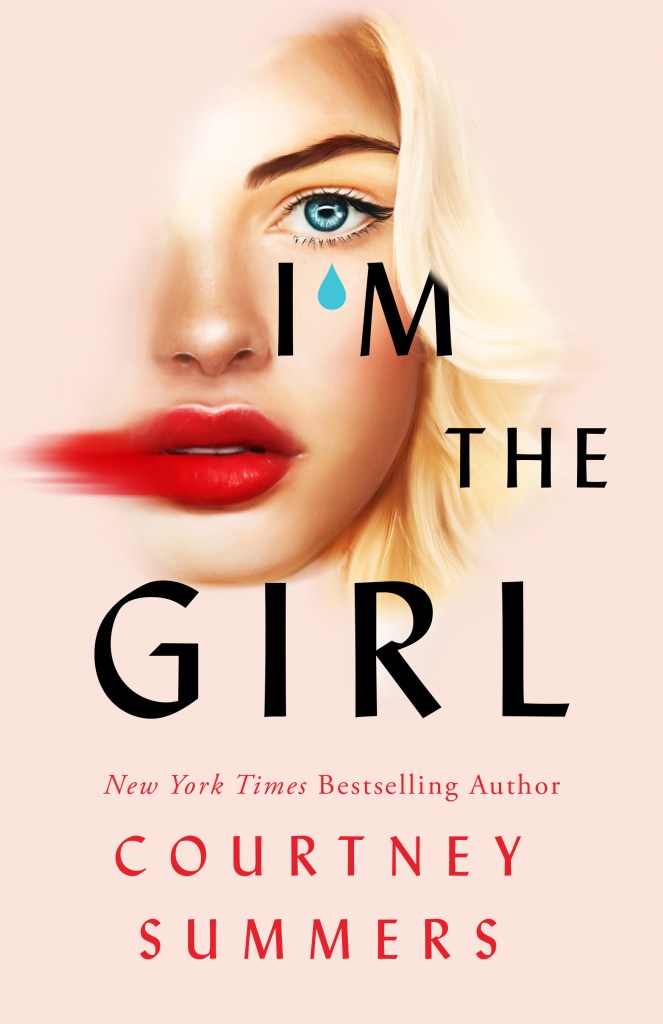
Book: “I’m The Girl” by Courtney Summers

Publishing Info: Wednesday Books, September 2022

Where Did I Get This Book: I received an ARC from the publisher at ALAAC22.

Where You Can Get This Book: WorldCat | Amazon | Indiebound

Book Description: The new groundbreaking queer thriller from New York Times bestselling and Edgar-award Winning author Courtney Summers.

When sixteen-year-old Georgia Avis discovers the dead body of thirteen-year-old Ashley James, she teams up with Ashley’s older sister, Nora, to find and bring the killer to justice before he strikes again. But their investigation throws Georgia into a world of unimaginable privilege and wealth, without conscience or consequence, and as Ashley’s killer closes in, Georgia will discover when money, power and beauty rule, it might not be a matter of who is guilty—but who is guiltiest.

A spiritual successor to the 2018 breakout hit, Sadie, I’m the Girl is a masterfully written, bold, and unflinching account of how one young woman feels in her body as she struggles to navigate a deadly and predatory power structure while asking readers one question: if this is the way the world is, do you accept it?

Review: Thank you to Wednesday Books for giving me an ARC of this novel!

Ever since I read “Sadie” by Courtney Summers, I knew that she was going to become one of my must read authors. “Sadie” kicked me in the gut, but I loved every minute of it because of it’s rawness. I was lucky enough to snag her newest book “I’m The Girl” at the Annual ALA Conference (well, Serena snagged it for me on our first night strategic ‘split up and find all the ARCs’ mission), but I knew that I would probably drag my feet on reading it for a bit. Just because I knew that she wasn’t going to pull punches in her newest thriller. She never does, you see. But I also knew that this one, with its haunting cover and somewhat vague description, was going to be something else. And when I did finally sit down and read it, it had my attention, even if it was another kick in the gut.

I will first and foremost say that this book, like most of Courtney Summers’s books, is a rough one. We do not shy away from pretty bleak but realistic issues, like grooming, sexualization of children, trauma, and rape, and it makes for a book that is filled to the brim with content warnings that should be heeded by those who have sensitivities. I am a fairly steely reader for the most part, but even this one had me deeply uncomfortable at a number of moments. But I think that it’s also important to be frank and candid about these things, especially if they are handled in a way that isn’t exploitative or titillating, and I think that Summers achieves that. If we are going to explore beauty as power and how, in turn, powerful people wish to exploit and own beautiful things and people, it’s important to look at what all that means, and I think that we do that here. Even when it’s dark and very disconcerting to do said exploration.

The mystery is the main artery of this story, as our protagonist Georgia stumbles upon the dead body of thirteen year old Ashley James, who was the missing daughter of the local deputy sheriff, after she herself was hit by the car of the potential perpetrator. George is recruited by Ashley’s sister Nora to help solve what happened, but there is a lot more to this story than a teenage murder mystery, and the complexity is deftly handled. George is also hoping to start working at the small town’s elite resort and social club Aspera, where celebrities, politicians, and other big wigs come from far and wide to experience the luxury provided by Matthew and Cleo Hayes and their done up employees, the women known as ‘Aspera Girls’. George’s mother was an Aspera girl until a scandal left her without a job, and while George has always been beautiful her mother, now deceased, always told her she wouldn’t belong. George is a very complicated character, whose foray in amateur detective-hood is overshadowed by her quest to fit into the opulence of Aspera, no matter the cost and no matter the sacrifice. Summers takes her time in unveiling bits and pieces of the plot, be it the mystery of what happened to Ashley, or the reasons that George is so desperate to join Aspera, and what she has tried to do to make herself stand out from the crowd in an effort to wield her beauty as the only power she feels she has. I did like the mystery overall, and I liked seeing George delve into the secrets of Aspera in connection to Ashley as she worked there, given that small town secrets are always okay in my book as a theme, and mysterious organizations are as well. I kind of figured out what was going on in regards to Ashley, but ultimately that isn’t the point of this book. This is more an exploration of the ways that girls are told they can be powerful, but how those in power can also take that power away in insidious ways. Especially if there is wealth and disenfranchisement involved between the players. And it all set me on edge, even as I tore through it over the course of a couple nights.

“I’m The Girl” is another triumph by Courtney Summers that looks into the void and doesn’t sugar coat what it sees. People will need to steel themselves for this one, but I think it’s powerful reading all the same.

Rating 9: Dark, powerful, and gritty to the bone, “I’m The Girl” is another unnerving YA thriller from Courtney Summers.

Reader’s Advisory:

“I’m The Girl” is included on the Goodreads lists “If You Love Veronica Mars… YA Books”, and “#MeToo”.

Book Club Review: “The Ten Thousand Doors of January”


This post may contain affiliate links for books we recommend.  
Read the full disclosure here.

We are part of a group of librarian friends who have had an ongoing book club running for the last several years. Each “season” (we’re nerds) we pick a theme and each of us chooses a book within that theme for us all to read. Our current theme is “Book Bingo” where we drew reading challenges commonly found on book bingo cards from a hat and chose a book based on that.  For this blog, we will post a joint review of each book we read for book club. We’ll also post the next book coming up in book club. So feel free to read along with us or use our book selections and questions in your own book club!

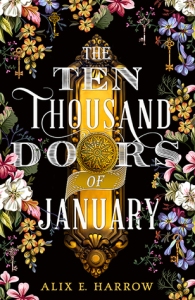
Book: “The Ten Thousand Doors of January” by Alix E. Harrow

Publishing Info: Redhook, September 2019

Where Did I Get This Book: The library!

Where You Can Get This Book: WorldCat | Amazon | Indiebound

Book Bingo Prompt: A book with a misleading title

Book Description: In a sprawling mansion filled with peculiar treasures, January Scaller is a curiosity herself. As the ward of the wealthy Mr. Locke, she feels little different from the artifacts that decorate the halls: carefully maintained, largely ignored, and utterly out of place.

Then she finds a strange book. A book that carries the scent of other worlds, and tells a tale of secret doors, of love, adventure and danger. Each page turn reveals impossible truths about the world and January discovers a story increasingly entwined with her own.

Kate’s Thoughts

We’re back to a familiar statement from me during a Book Club post and discussion: I am not really a fantasy reader outside of a few specific exceptions, be it titles (“The Lord of the Rings”; “The Neverending Story”) or sub-genres (dark fantasy). So going into my review of “The Ten Thousand Doors of January”, you need to take all of this with a grain of salt. Maybe a teaspoon or two. I am almost never going to be able to vet a fantasy title super well because as a genre it’s not my bag, baby (a phrase that was tossed around in book club during the discussion).

What I will say about this book that I did like was the way that Harrow incorporated social issues of the time period into the book. We see the struggles of life in Edwardian-era England for not only women, but also women of color within a certain social stature. While January is somewhat shielded from some of this because of her placement with Locke, she is still kept in a gilded cage, and eventually put in an asylum under guise of hysteria when in actuality she is more inconvenient for Locke and his contemporaries when she becomes a perceived threat. And then once she is more outside of Locke’s ‘protection’ (you can’t REALLY call it that), her race is suddenly something she also has to contend with in a more direct and overt fashion. I also liked the way that Harrow addresses aspects of Imperialism and Colonialism through the character of Jane, a woman born in Africa who was being subjected to a missionary school, and eventually finds a door that helps her find freedom. And really, her door, where she encounters a world with a matriarchal cheetah society, was SUPER interesting! But we didn’t really get to see much of that. We didn’t get to see as many doors as I anticipated.

So yeah, I liked the social aspects of this book, as it’s great to see fantasy address these themes. But it’s still fantasy, which just isn’t my genre. So this is very much a ‘your mileage may vary’ situation.

Serena’s Thoughts

Don’t worry fantasy lovers! As the resident fantasy reader, I am happy to step up to vet titles in this genre. And, all told, I found a lot to like in this book. This is definitely one of those fantasy novels that leans heavily on subgenres like historical and literary fiction. While there is definite magic involved in the story and it is surely a portal fantasy, the pacing and overall feel of the book falls more in line with literary fantasy and historical fiction than anything else. As Kate mentioned, the book focuses a lot on the realities of life in this time period for both women and people of color. Even though there are fantastical doorways into different worlds, there is no magic wand to wave away the very real challenges facing many during this time.

The pacing of this book is also on the slower side, spending much more time developing the overall feel of the story and the realities that January is facing. But to balance this slower pace, the story is broken up into two primary stories: one that of January herself, and the second following another young woman born a few decades before January who also found doorways and used them to redirect the pathway laid before her. I really enjoyed the way these two stories came together. I was also surprised by a few twists and turns that were given a long the way. For all the dire circumstances and reality that makes up so much of January’s life, the story includes a hefty dose of hope right when things could begin to feel a bit too bleak.

Overall, I really liked this book. It’s definitely on the slower side and errs towards the lyrical over the action-packed. Like some book club members pointed out, for a book about a thousand doorways between worlds, the story spends most of its time in our old familiar world. But I think that worked for the balance that was being struck between fantasy story and a larger reflection on this period of history and its people.

Kate’s Review 6: It’s fantasy. I liked some of the social themes presented and the small tastes of some of the worlds. But it’s just not my genre.

Serena’s Review 8: A lyrical fantasy novel that makes up for its slower pacing with its lovely character work.

Book Club Questions

  1. What were your thoughts on January as a protagonist of this book? Did you connect with her as a main character?
  2. Did you find it to be a nice change of pace when the book would transition to the Adelaide story arc?
  3. Which side characters did you find the most compelling in this story? Were there any side worlds through the doors you liked reading about?
  4. What were your thoughts on how this book tackled and addressed various social aspects like imperialism, racism, and sexism?
  5. Were there any moments that stood out in particular in this novel?
  6. Who would you recommend this book to?

Reader’s Advisory

“The Ten Thousand Doors of January” is on these Goodreads lists: Portal Fantasy Books and Best Books with a Month in the Title.

Next Book Club Book: “Old Man’s War” by John Scalzi