Book Description: After narrowly escaping death at the hands of the Dames Blanches, Lou, Reid, Coco, and Ansel are on the run from coven, kingdom, and church—fugitives with nowhere to hide.
To elude the scores of witches and throngs of chasseurs at their heels, Lou and Reid need allies. Strong ones. But protection comes at a price, and the group is forced to embark on separate quests to build their forces. As Lou and Reid try to close the widening rift between them, the dastardly Morgane baits them in a lethal game of cat and mouse that threatens to destroy something worth more than any coven.
Review: Well, after enjoying the first book well enough this summer, it was kind of a given that I’d include it in my fall reading schedule. After all, I’d had a lot of success this summer with reading books that had been very popular last year and then were followed up by equally good, if not better, sequels (“The Merciful Crow” and its sequel, for example!). And, while the first book in this duology (ugh trilogy) wasn’t as strong as that one, it still caught my interest, and I had hopes the trend would continue. Alas, no. Not only did the trend decidedly not continue, but I actively disliked this book and am probably out on this (again, ugh ) dulogy-turned- trilogy.
After the dramatic events at the end of “Serpent & Dove,” Reid, Lou and their friends find themselves on the run and in need of allies. Their search is a long and arduous one, pushing them all to the limits. On top of this all, Reid and Lou are still managing the new waters of their marriage after secrets on both of their sides have now been revealed. Will they all be able to stand strong together and will they be able to outwit the powerful force amassing against them?
So, that’s a pretty junky book summary that I just wrote. And that’s because…this is a pretty junky book? Seems harsh, but I really am having a hard time coming up with any positive to say about this book. The problems start right away when I can’t write a good summary of this book because nothing happens in it. And it’s over 500 pages long! Instead of any plot to speak of, it’s made up of angst, drama, out of character actions/thoughts, and the worst case of “middle book syndrome” that I’ve ever seen. Part of the blame for this is, of course, because either the publisher or author (I’m guessing this was pushed by the publisher after the success of the first book) decided to stretch what originally envisioned as a duology into an unnecessary trilogy. And it shows. In a bad, bad way.
There is practically no action in this book until the last 40 pages. It’s just Lou, Reid and the others looking for allies, and with not much success. It’s not so much a story plot as a story plot point…a small one, at that. Definitely not one that justifies this book’s extreme length either. I mean, on one hand, it was always going to be a hard sell changing what was meant to be a duology into a trilogy kind of late in the game. But then to make the now-added middle book into a massively long middle book? The plot can’t support it. The character arcs (if there are any to speak of) can’t support it. It’s just not good storytelling.
The other major problem for me was in in the character arena and the romance. As I pointed out, this book was clearly stretched too thin on plot, and it feels the same with the characters. Their arcs no longer felt natural, but instead each character felt, at best, wildly out of character at times, and at worst, like they had been made into totally unlikable, totally different characters altogether. I struggled with Reid’s likablity in the first book. He was downright unpleasant in this one. His overly protective attitude towards Lou was in no way endearing and was often aggressively sexist in its portrayal. When he wasn’t caught up in that, it was internal angst and indecision all the live long day. Lou was a bit better, but still less likable than she was in the first. For her, much of her “arc,” such as it was, was more confusing than anything. She seemed to lose much of the personality she had in the first book and was at times almost unrecognizable.
To top a bad situation off, the book ends on a massive cliffhanger. And at this point, given how bad the rest of the book had been, this did not have the desired affect of cajoling last minute interest out of me, but instead just pissed me off more. It’s almost as if the publisher/author knew the book on its own wasn’t enough to keep most fans around, so they added this final twist as a last ditch effort. Really, the entire book seems to serve an example of publishing greed gone to far. If it had remained as a duology, with this the second and final portion, I’m sure we would have had a lot more actual plot and a lot less unnecessary character drama. The tone of the entire series could have remained consistent, and fans would have been satisfied. Instead, out of a need to squeeze the last drops out of the golden goose that was the first book, the series was stretched to a breaking point that is now losing fans. At least, they’ve lost me.
Rating 4: Supremely disappointing and barely recognizable as having come from the same author as the first book.
Book Description: Séverin and his team members might have successfully thwarted the Fallen House, but victory came at a terrible cost — one that still haunts all of them. Desperate to make amends, Séverin pursues a dangerous lead to find a long lost artifact rumored to grant its possessor the power of God.
Their hunt lures them far from Paris, and into the icy heart of Russia where crystalline ice animals stalk forgotten mansions, broken goddesses carry deadly secrets, and a string of unsolved murders makes the crew question whether an ancient myth is a myth after all.
As hidden secrets come to the light and the ghosts of the past catch up to them, the crew will discover new dimensions of themselves. But what they find out may lead them down paths they never imagined.
A tale of love and betrayal as the crew risks their lives for one last job.
Review: I wasn’t blown away by “The Gilded Wolves,” the first in this YA fantasy trilogy. But as I liked it more than Chokshi’s other books I’ve read and the cast of characters was compelling, I decided to keep going with the series. Well, I have, and…I don’t think I liked this one any better? Maybe worse? And yet I still will probably read the third? I’m not sure what this says about me as a reader or about the trilogy itself. Me, probably a completionist. The trilogy, something about it must be intriguing enough to keep me invested.
Things have kind of fallen apart for our crew after the dramatic events at the end of “The Gilded Wolves.” Each on their own, each has been trying to make their own way in the world, feeling cut-off from the rest. But when a lead on “The Divine Lyrics,” the magical book at the heart of Severin’s (and Laila’s) quest, finally comes to light, Severin brings them back together for one last adventure. Into the heart of the north and through mysteries new and astounding, the crew must once again bring each of their unique skill sets to hand in order to pull of this last job. But, of course, nothing goes as planned and a darker price is waiting than any of them could have imagined.
So, a lot of the problems I had with the first book (and with this author in general) were still present here, unfortunately. There’s something about her style of writing that I struggle with. On one hand, there’s the turns of phrase that seem to be written more because they sound beautiful and poetic rather than the fact they convey any actual image. The titles, for example, of both of these books doesn’t seem to really connect directly to much in the story. But they sure sound pretty! Most of the time it didn’t bother me too much, but there were definitely other times when I would re-read a sentence and be like “Sure…sounds nice…but…what?” And that confusion carries over to my second struggle with the writing.
While the author does a good job with characterization for the most part and clearly has a bunch of unique fantasy ideas. She’s not lacking in imagination on either front. But when it comes to the actual description of locations, objects, and how they interact with each other…it’s just not good. There were entire locations (where the book spent a significant amount of time) that I couldn’t describe to you. There was an entire action scene that was a blur of movement, and by the end, again, I couldn’t tell you what exactly had happened. The writing looks pretty on the front of things, but it too often failed at its most basic requirement: conveying ideas clearly.
I also struggled with the plot itself. The mystery was both at times not clear at all (Severin and his cohort would jump through leaps of logic that were either impossible to follow or just totally unbelievable that anyone would connect those dots). And at other times so bizarrely obvious that I couldn’t be less impressed when AHA! the reveal finally came and Severin and his crew were just oh, so clever for putting it together.
And, sadly, on top of all of this, my favorite part of the first book, the characters, was a let-down here as well. They’re all still interesting enough, but man, this was a glum book. Severin was practically unrecognizable, and his decisions were, again, hard to buy at times. As for the rest, they all seemed to become more and more caught up with unnecessary secret keeping that served no other purpose than to stir up more drama. It was just all kind of sad and tiring.
And yet…I’m probably going to finish out the story. For one thing, this book mostly felt like a place hold and necessary vehicle for the author to get from point A to point B. So while this middle portion of the trip was a let down, I can still be hopeful that it was all to the purpose of getting us somewhere more interesting. I’m not really holding out much hope for the writing to clear up and suddenly become my cup of tea, but I do have hopes that the characters themselves will go interesting places and resolve their own story lines in compelling ways. Fans of the first book are sure to like this one. But if you were on the fence there, you’ll probably have similar feelings here. I leave it to you whether it’s worth going through it based on only the hope of a well-executed landing.
Rating 6: Fairly glum and mired in its own “middle-ness” in the trilogy.
Comparison – “Indulge your imagination in every possible flight.”
For all my complaints about the 1999 version of this story, there’s a reason I’ve seen that one a decent number of times while this is only my second viewing of this version. Sure it’s free of some of the truly upsetting changes that the 1999 version made, but it also feels strangely dull and heartless, nothing something you ever want to see from an Austen adaptation.
With the exception of Haley Atwell, I think most of the casting is wrong is film. Or, at the very least, worse than the 1999 version’s cast. There is very little chemistry between any and all of the characters up to and including our main romantic pair. Atwell, alone, manages to have good chemistry with most of those she works alongside. The rest seem to be largely working alongside each other rather than directly with one another. It’s hard to buy into any of the relationships we’re being presented with, let alone become terribly invested.
I also think the overall tone of the movie is working against our main characters. Fanny and Edmund are both serious characters. But the movie insists on making them run around and frolic like children. The grand ball scene becomes a capering picnic. And the final romantic climax is marred by our two love birds chasing each other around like little kids. There’s just something off about the whole thing that never allows the movie to feel like it has settled into what it wants to be.
It, too, changes aspects of the original story, most notably cutting out the entire Portsmouth scene (to save money on actors and locations??). This single change alone I think hurts the movie quite a lot. And strangely, like I said, that while the 1999 version arguably made bigger (and often worse) changes, the smaller, seemingly less offensive, changes made here somehow make this movie, as a whole, less engaging. Even while remaining more true to the book in many ways (the inclusion of Fanny’s brother William, for example), I would say this movie fails just as much as an adaptation of Austen’s work. And, when given the choice, I’ll still watch the 1999 version before this.
Heroines – “I hate to hear you talk about all women as if they were fine ladies instead of rational creatures.”
I really don’t love this version of Fanny Price. Full disclosure, I’m not a huge fan of Billie Piper at the best of times, but I don’t think it’s just her acting that I don’t like here. Like the previous version of “Mansfield Park,” this one takes a similar route with Fanny by making her much more exuberant. Even more so, I’d say. We have multiple scenes of her running around through the house, chasing a dog around, playing with children. I’m sure it’s supposed to emphasize her innocence, but combined with her hair styling (loose hair is only for very young girls in this time period), all it does is serve to make Fanny seem overly child-like herself.
Other changes, like re-imagining the ball as a picnic do nothing to help with this perception. No lovely, noble dance scenes, but instead, again, children’s yard games that do nothing to help Fanny’s coming across as little girl-ish. I also don’t like the change of having her remain at Mansfield Park by herself rather than go to Portsmouth. By removing this contrast of settings, we’re left with even less to highlight the truly well-bred refinement of Fanny that is supposed to be hiding beneath her quiet nature. And, of course, the final “romantic” scene that has her and Edmund chasing each other around the house…like children.
Heroes – “What are men to rocks and mountains?”
I have a bit of a “chicken or the egg” issue with Blake Ritson’s version of Edmund. I saw the 2009 “Emma” where he plays the sleazy Mr. Elton before I saw this one, so that impression was firmly in my mind the first time I saw this movie. But, on the other hand, he was cast into that role very shortly after portraying Edmund in this film in 2007. So obviously someone else saw his performance here and thought “Eh, maybe not romantic hero material…but this kind of slimy character? Perfect!”
Edmund as a character is always a tough role. His morality can come across as patronizing and preachy. He falls for the obviously wrong woman and spends most of his time with his head in the sand. And then the book itself does very little to show him coming to his sense, so any adaptation is left almost entirely on its own for how to navigate this transition.
Unfortunately for him, Ritson also had to go up against Miller’s version of the character from the 1999 movie, one of the few aspects of that movie that most fans agree was solidly good. And I just don’t think Ritson was up to the task. He’s very hard to take seriously and often comes across more as a caricature of a gentleman than anything else. Him, also, running around after Fanny during the big “romantic” scene doesn’t help this version of Edmund’s character be taken seriously.
Villains – “I do not want people to be very agreeable, as it saves me the trouble of liking them a great deal.”
I really like Haley Atwell’s version of Mary Crawford. She has a natural easy charm that makes it much easier to buy into Edmund’s blind infatuation with her. She’s beautiful, but also brings a different type of warmth to the character that makes her very engaging. If anything, it’s almost a bit harder to see faults in this version of Mary than in others. For one thing, when Henry Crawford approaches her about his plans to woo Fanny, this Mary seems to be much more earnestly concerned for Fanny’s welfare, which endears her more to viewers.
Henry Crawford is also well-cast, having that roguish and somewhat wild look that appeals to certain women. It’s easy to see why flags go up for Fanny, and this version doesn’t hesitate from pushing the Crawford/Maria romance to its extremes, having them actually make out while practicing for the play, almost being caught by Rushworth and Julia. Again, however, the decision to have Fanny simply stay on at Mansfield Park instead of making her trip to Portsmouth doesn’t serve the story well. Crawford showing up here has much less impact that it did having him show up on the poor doorstep of Fanny’s original family. If anything, it’s even easier to see why Fanny would be unmoved by all of this. She doesn’t have the comparison of Mansfield and Portsmouth that Sir Walter mentions when hatching a plan to urge her towards Crawford in both the book and the 1999 version of the movie. Her just being lonely at Mansfield doesn’t seem like it would at all serve the same purpose. Given how little many of the family members pay attention to her anyways (and when they do, it’s just to give her orders, so in some lights, this is almost a vacation for her), it’s hard to think that the lack of “society” is really all that much for a young woman who stayed home much of the time anyways. And then, what’s more, Fanny doesn’t have an opportunity to see Crawford at his best when he’s behaving so nicely to her often rude and uncouth family in Portsmouth. Altogether, it’s no wonder she doesn’t waver here.
The biggest miss as far as villains go, however, is Mrs. Norris. This version of the character is all over the place and the movie never seems to really settle on what aspect of her personality it wants to highlight. It’s never clear exactly what her motives are, why she says/does what she says/does, or what her problem with Fanny is in the first place. Obviously, the book has plenty of time to flesh out her character, but even the 1999 version of the story was able to provide a clear image of who Mrs. Norris is. Here, she just kind of flits in and out of scenes and makes an odd comment here or there. Without having the book as a mental reference, I’m not sure if the casual viewer would have any idea what to make of her.
Romance – “A lady’s imagination is very rapid: it jumps from admiration to love, from love to matrimony in a moment.”
Shocking no one, as I’ve already referenced it in both the heroine and hero sections, I don’t love the romance in this movie. I don’t think that Piper and Ritson had very good chemistry. In fact, I think they almost worked against each other in some ways. Unlike the 1999 version of this story, this movie doesn’t put nearly as much effort into establishing Edmund’s underlying feelings for Fanny. I think Jonny Lee Miller was much better at some of the smaller, more subtle facial expressions that indicated interest in Fanny along the way. And the screenplay itself wrote in more opportunities for this relationship to be brought forward. Not having a grand ball scene really doesn’t help this. I can’t remember where I read this, but some commentator once noted that the ball scenes were almost like the sex scenes for Austen romances, often the pinnacle and brimming over point for building up these relationships.
And, I really can’t express this enough…I hated, hated, the whole running after one another scene as the grand finale of this romance. It’s just so silly and juvenile. Any romantic tone is completely undercut, and it just feels anticlimactic. There is a fairly big change to Lady Bertram’s character in this scene, as she is instrumental in getting Fanny and Edmund alone, and then notes to Sir Walter that Fanny’s always been in love with Edmund and it looks like he finally noticed. There’s obviously no hint of this type of perception in the book version of the character, but it’s the kind of funny little change that I didn’t mind in this movie. If anything, it felt more “Austen-like” than anything else in this last scene. So, with everything else, I’ll take it.
It’s only a small thing, but I do like the inclusion of Fanny and Edmund waltzing at the end of this movie. It’s one of those small, throw-away moments that will appeal to history fans who will recognize that this type of dancing was just coming onto the scene around this time. It’s a nice little wink of the eye.
Comedy – “For what do we live, but to make sport for our neighbors, and laugh at them in our turn?”
The comedy is always the challenge for this story. The book itself is probably the least comical of all of Austen’s works and the adaptations have to come to their own decisions about what to do with a leading lady who is so aggressively earnest, quiet, and good-natured that the thought of her cracking jokes is almost unheard of. The 1999 version did a fairly decent job of getting some humor in for Fanny, but, of course, that version was also way off base with much of Fanny’s characterization (as far as it resembling the character in the book, at least) so it’s no wonder that they could make this practically original heroine funny on top of the rest. Here, Fanny is more in line with the book version, but also just more dull.
The loss of Mrs. Norris is pretty huge here. The other movie used her for comedy to great success, even if it was the “love to hate” kind of comedy. But she’s such a non-presence here that the same can’t be said. The Crawfords, too, with their limited screen time, don’t have much humor. Rushworth is still good, of course, but he also doesn’t capture the screen the same way that the previous Rushworth did. I have a harder time even remembering anything distinctive about this version where I can point to several instances of laughs from the 1999 version of the character.
Overall, the movie feels fairly joyless, for all that they’re trying to make some grand point of Fanny’s child-like wonder of life with her constant frolicking.
Fun facts – “Life seems but a quick succession of busy nothings.”
Really not much here, other than the usual costume connections between many of these Austen adaptations.
The actress who plays young Fanny also played a younger version of Billie Piper character in “Doctor Who.”
And, speaking of “Doctor Who,” a whole host of actors from this film have made appearances in the long-running show, including Billie Piper, Julia Joyce, Michelle Ryan and Jemma Redgrave.
Best Movie Gif/Meme:“I dearly love a laugh.”
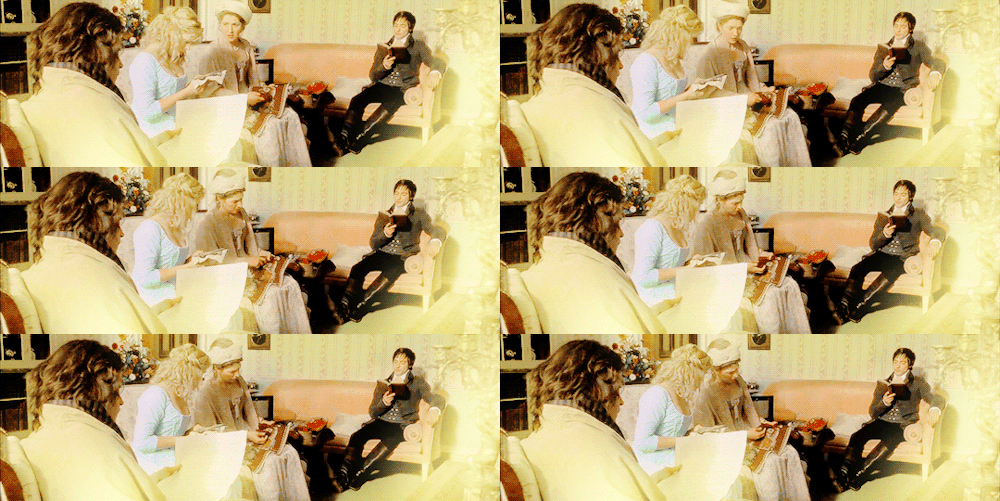
This is the big moment where Edmund realizes his love for Fanny…about sums it up, I think. *snores*
Book Description: Learning has never been this deadly
“A Deadly Education” is set at Scholomance, a school for the magically gifted where failure means certain death (for real) — until one girl, El, begins to unlock its many secrets. There are no teachers, no holidays, and no friendships, save strategic ones. Survival is more important than any letter grade, for the school won’t allow its students to leave until they graduate… or die! The rules are deceptively simple: Don’t walk the halls alone. And beware of the monsters who lurk everywhere. El is uniquely prepared for the school’s dangers. She may be without allies, but she possesses a dark power strong enough to level mountains and wipe out millions. It would be easy enough for El to defeat the monsters that prowl the school. The problem? Her powerful dark magic might also kill all the other students.
Review: Naomi Novik has quickly become a must-read author for me. After this book, she’s pretty much a must-buy author (I only have maybe 5 of those, so that says something, I think!). But, still, when requesting this book, what I’d read from her had been both of her fairytale retellings and the first several of her Napoleonic wars/dragon historical fantasy series. This didn’t sound remotely like either of those, instead being billed as a modern, more grim, “Harry Potter” style boarding school story. But man, Novik can do anything, and my trust is now fully earned, no matter how strange the book description is!
Scholomance is technically a school. There are no teachers and students are on their own to make classes and finish homework, sure. But that’s only half, and arguably the less important half, of what this school provides. Instead, it offers magical kids the best chance they have of surviving their juvenile years. Sure, their odds are still pretty darn bad in the school, but better than the next to nothing they have outside. El’s chances have been even worse from the start. Yeah, she has the raw power, but she seems to repel people for some reason. And in a place where forming alliances is a necessary survival tactic, that’s not good. But here, in her second to last year at the school, staring down the barrel of a final year full of even more likely death, El begins to uncover secrets about not only the school, but herself, and the boy who has been roaming around annoyingly playing savior to all this entire time.
I adored everything about this book, so it’s kind of hard to think of where to start when reviewing it. It’s also so totally unique, interesting, and complicated that it’s hard to find the middle ground between reviewing important aspects of the story and not spoiling the fun for new readers. There’s just so much good stuff to unpack!
I guess I’ll start with the world-building itself. The book description has a tough job trying to describe what Scholomance really is, and, as you can see, I probably struggled too in my own summary. That’s because it’s so complicated and well-constructed that it’s almost impossible to really give a broad overview. Novik seems to have thought out every intricate detail for this magical place, from how the cafeteria works, to the menacing library, to the simplest of things, like how the school assigns and monitors homework and what happens if students fall behind. And it’s all just so creative! I can’t think of a single other fantasy story that has anything like the place Novik has thought up here. And that’s saying something, I think, in a genre that is becoming more crowded by the day (especially YA that has a tendency to become trope-ridden and bogged down in certain themes every few years).
One of the most impressive aspects of all of this that, being as complicated and detailed as it all is, our narrator is given a heavy load of information to be handing off to readers. There’s a significant portion of the first half of the book that is largely devoted to detailing all of these little aspects. It would have been so easy for it to have felt like info-dumping or to have dragged down the pacing and plot of the story. But, for one thing, the information being provided is just too interesting on its own to feel bored by. And secondly, our narrator had a fantastic voice from the start that is strong enough to carry this type of detail-ridden load.
El is everything I like in a narrator: snarky, consistently characterized, yet vulnerable in ways that we (and she) discover throughout the story. From the book description, I was kind of expecting some type of tired anti-hero story or quasi-villain plot line for her, but it’s really nothing like that. Sure, her powers are destructive and there’s this pesky doomsday-esque prophesy lingering around her, but she’s just as skeptical of all that nonsense as the reader wants to be. El’s story, here, is not only finding acceptance with some key friends around her, but in accepting what she has to offer. On one hand, she can be overly confident, but on the other, we see her realize her own values and where her personal lines are between survival and standing up for some moral greater good.
And to balance her out, of course, we have a “Chosen One.” This friendship was everything! Both El and Orion’s characters play perfectly off each other. She, stand-offish, uninterested, and, again, snarky. He, bumbling, clueless of his affect on people, and obnoxiously heroic. I loved everything about this friendship and the slow build to sort of romance that it comes to towards the end.
It’s also clear, here, where the comparisons to “Harry Potter” are coming from. Orion Lake is definitely a response to Harry Potter and all of the other “chosen” heroes we see in fantasy fiction. Novik has said that “Spinning Silver” was essentially her “yelling” at the “Rumpelstiltskin” fairytale, and that this would be her yelling at “Harry Potter.” Comparisons to “Harry Potter always make me nervous. For one thing, I love Harry Potter so, for me, a book being compared to it is either going to be a massive let-down of trying to copy something that shouldn’t be copied. Or it’s going to be some type of “response” piece that spends more time criticizing another book series than in being its own thing. Luckily, this falls right in the middle and does it perfectly.
You can definitely see where Novik is making a point about the type of “chosen one” story that Harry Potter tells, but, while she does touch on some of the obvious themes, she also deep dives into a lot of aspects of this type of storyline that one doesn’t often think about. There’s a strong focus on inequality and injustice, but it’s approached through angles and perspectives that are unique to this world. The themes, of course, carry over, but it stays true to the fantasy world it is and the types of justice and injustice that would be inherent to it. It’s left to the reader to transcribe these thoughts onto our own world and our own experiences of injustice within society.
This review has already gotten pretty long, and I could go on and on. But, in this case, I almost feel like the less said the better! There’s so much great stuff to discover here that I don’t want to spoil any more of it! Needless to be said, my copy is already pre-ordered, and I highly recommend any and all fantasy fans to get their hands on this book ASAP!
Rating 10:Breaking fantasy walls that I didn’t know even exited! Simply fantastic!
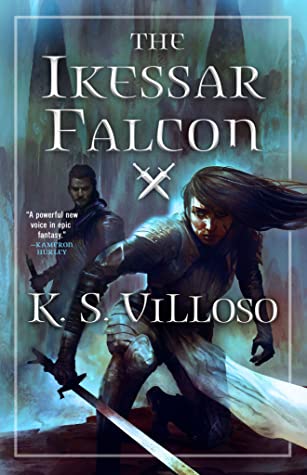
Book Description: Abandoned by her people, Queen Talyien’s quest takes a turn for the worse as she stumbles upon a plot deeper and more sinister than she could have ever imagined, one that will displace her king and see her son dead. The road home beckons, strewn with a tangled web of deceit and unimaginable horrors – creatures from the dark, mad dragons and men with hearts hungry for power.
To save her land, Talyien must confront the myth others have built around her: Warlord Yeshin’s daughter, symbol of peace, warrior and queen and everything she could never be.
The price for failure is steep. Her friends are few. And a nation carved by a murderer can only be destined for war.
Review: I requested an ARC of the first book in this series kind of on a whim. To be frank, I was actually kind of put off by the series being titled “Chronicles of the Bitch Queen.” I mean, I get it…she-wolves, bitch, yep. And I’m sure it’s also `tied in with the fact that Talyien is not a beloved queen. But still, it’s kind of an abrasive series title, and I wasn’t sure what exactly I was getting into. Turned out, what I was getting into was an intriguing new fantasy world headed-up by a no-nonsense but still deeply flawed heroine. So after finishing that first book, it was really exciting to see that the second was coming out only 6 months later. And here we are!
Talyien’s situation hadn’t started out well when she set off from her homeland in the hopes of reconciling with the husband that had abandoned her and her son years earlier. It had only gotten worse since with repeated assassination attempts, betrayal, said husband heading back to her home, potentially to kill their son, leaving Talyien stranded in a foreign country with very few friends. But she is nothing if not persistent, especially when the life of her son is at stake. As she makes her way back to him, however, Talyien covers an even deeper web of lies, one that exists not only in the present but extends back to the past.
I think I liked this book even more than the first! For one thing, I’m still really enjoying the first person narration but told from the POV of an adult woman. All too often, the only place I really see first person narration is in YA novels with teenage protagonists. And this, in turn, leads to a certain immaturity in their focus (don’t get me wrong, I still love me a good YA fantasy, but the narrators can sometimes be a bit silly). But here, we have an adult who has a full history behind her, one that she is capable of looking back on and recognizing her own and others’ mistakes. It also makes all of her interactions with those around her particularly interesting. In some ways, she’s an unreliable narrator as her perceptions of others and their motivations are always colored by what she knows (or guesses) about them. But we also have an inside look into how their actions and words influence her.
This book also seemed to expand on almost all aspects. We see more of the world-building as Talyien and her crew travel around trying to make their way back to her son. I really enjoyed out fully fleshed out this world feels. We hear about the different foods, languages, and cultural behaviors from place to place. And it’s all presented in a very natural-feeling way, no info dumping. There was also more of magic to found in this second book and more action in general.
I also really liked how much more we learned about Talyien’s father and his actions. There’s also a pretty deep-dive into the lasting influence that her father has had on Talyien. From the very start of the book, it’s clear that his perceptions of her, his lessons, his strengths and failures as a parent are a continual influence on Talyien’s own perception of herself and of the choices she can make. She, of course, is also unreliable in her memories of him, as we, the reader, can see some of his flaws in a more clear way than she can.
Overall, I really enjoyed this book. It felt like it took what the first book laid down as a foundation and started really building up from there. Everything just felt more fully fleshed out, and the story was even more exciting. Of course, it’s no surprise that Talyien’s story doesn’t end here with rainbows and butterflies, so I’m excited to see what happens in the third book. Don’t forget to enter to win an ARC copy of this book as well!
Rating 8: Even bigger and better than the first!
Reader’s Advisory:
“The Ikessar Falcon” is a new title, so it isn’t on any Goodreads lists yet, but it should be on: “Asian-Authored Books in 2020.”
Book Description: Abandoned by her people, Queen Talyien’s quest takes a turn for the worse as she stumbles upon a plot deeper and more sinister than she could have ever imagined, one that will displace her king and see her son dead. The road home beckons, strewn with a tangled web of deceit and unimaginable horrors – creatures from the dark, mad dragons and men with hearts hungry for power.
To save her land, Talyien must confront the myth others have built around her: Warlord Yeshin’s daughter, symbol of peace, warrior and queen and everything she could never be.
The price for failure is steep. Her friends are few. And a nation carved by a murderer can only be destined for war.
Giveaway Details: I really enjoyed the first book in this series, “The Wolf of Oren-Yaro” when I read it earlier this spring. So I was super excited to see that the second one would be coming out this fall, so soon after.
The first story introduces us to Queen Talyien, a young queen who is anything but beloved by her people. Abandoned by her husband and left with a young son and a country that is barely holding itself together, Talyien strives to hold the fraying bits of her life together. When she attempts to reconcile with her husband several years after the fact, everything seems to go wrong and Talyien begins to discover that her problems may be even bigger than she had thought.
There were a bunch of things I really liked about the first book. The writing was strong and confident. The world-building was unique but not to caught up in itself. But most of all, I really liked Talyien. Talyien was that type of heroine that defies all of the stereotypes one typically finds when looking up examples of “strong female protagonists.” Yes, she’s smart, a good fighter, and independent. But she’s also flawed, self-aware, and has made choices that aren’t also good, and realizes it! Beyond this, it’s always nice to have an adult woman as the heroine. Too often fantasy stories focus on very young female characters. Not that I have a problem with those characters and the often very lovely romances they bring with them, but it’s also nice to have a change. Talyien is a grown woman who’s seen the ups and downs or romances and marriage and has a small child of her own. Her problems and outlooks on life are very different than the young woman just setting out in the world.
The end of the first book left Talyien in a situation all the more dire than the one she started in, so I’m excited to see what she gets up to in this one! I’m not really expecting rainbows and butterflies, but man, can’t something go right for this woman? My full review will be up this Friday. In the meantime, we’re giving away a copy of this book. The giveaway is open to U.S. residents only and ends on September 23.
Comparison – “Indulge your imagination in every possible flight.”
This is probably the most interesting Jane Austen adaptation we’ve seen so far in this review series. For the most part (other than the modern re-imaginings, of course), the other movies have stuck pretty closely to their book counterparts. There are small changes here and there, extra lines added/removed, and various actors bringing their own flare to the characters, to varying levels of success. But while this movie does keep the main plot points included, it also makes some significant character changes and also heavily focuses on themes only briefly touched upon in the book, most notably, the role of the slave trade on British life during this time period.
I’ll dive more deeply into the character changes later, but both Fanny and Sir Thomas have some striking dissimilarities to their book versions. But the other big change is the focus on slavery and the growing abolitionist movement at the time. Right in the beginning of the movie as Fanny travels to Mansfield, she sees a slave ship docked on the coastline and is struck by it. Later, as an adult, she and Edmund discuss the abolitionist movement, with Edmund noting that while progress in that area is a moral good, their livelihoods are currently funded by the wealth provided by the Bertram family’s plantations in Antigua. For his part, Sir Thomas espouses some very racist and incorrect points of view at a family gathering, starting off a minor family scuffle when Edmund and Fanny attempt to correct him. And, of course, we later see the horrific actions that Sir Thomas has taken against his slaves depicted in Tom’s artwork. I’ll get more into Sir Thomas and these violent acts later, but I have a similar problem with that depiction as I do with some of this theme.
Mainly, the movie seems to be wanting to have it both ways: it wants to bring up this topic as one that would be relevant to the times and add a more meaningful weight to Edmund and Fanny’s discussion (the book largely focuses on nature and religion here), but the movie also doesn’t want to change anything significant about the story in this light. Meaning, there’s all of this discussion about the slave trade, but no characters actually make any meaningful steps or really change anything about their lives in response to this. This is likely realistic, it’s not like many nobles of the time were probably giving up their fortune in the work of moving towards freedom from the African people enslaved. But it also makes the movie end on a very awkward, unresolved note. It’s rather uncomfortable. Perhaps that was the point? But if so, even that fails to really settle with any weight.
Heroines – “I hate to hear you talk about all women as if they were fine ladies instead of rational creatures.”
I have mixed feelings on this portrayal of Fanny Price. On one hand, I really like Frances O’Connor’s acting overall and think she fits the mental image I had of Fanny pretty perfectly. On the other hand, I think the character is really all over the place throughout the movie, sometimes being presented as a strong-willed, verging on rebellious young woman, and at others reverting back to the more meek and mild version of the character that we’re familiar with from the book.
One of the big challenges of adapting this book is Fanny herself. She’s an even more quiet and reserved character than Eleanor who also has Marianne to balance her out. So, I get that adjustments had to be made here. Edmund’s “grooming” of Fanny definitely doesn’t work for modern audiences. Nor does the fact that most of Fanny’s longer speeches (that she makes out loud at least) have to do with the wonders of nature, poetry, and the clergy. As I’ve mentioned in my review of the books, there are even times when Fanny seems to be suffering from some mild form of Stockholm Syndrome, especially with how thankful she is for Mrs. Norris’s constant reminders of how very, very lucky Fanny is to be in a family where she is largely ignored and otherwise put to work as a glorified maid service for the ladies of the house.
So, all of that acknowledged, I generally am ok with the changes they’ve made to Fanny here, especially when they emphasize her more wild moments (running around with Edmund, horse back riding, being more firm when she stands up to Sir Thomas about refusing Mr. Crawford). There is a bit of whiplash when she switches back to being meek/mild all of a sudden, but I get it.
The only real problem I have with her portrayal is the decision the movie makes to have her briefly accept Henry Crawford. Again, on one hand, I get the point the movie is trying to make about the very real, very scary situation facing women of the time. We see Fanny witness the life her mother has had after marrying the wrong man, essentially. She married for love, but it is clear that that love is gone and all that remains is a life marred with poverty and too many children. This could easily be Fanny’s future, and I like that they acknowledge these hard choices, especially in a Jane Austen film that, naturally, usually tells the much more romantic, lovely version of young women finding love and wealth (or at least good comfort) together.
I also think that this change can add a good balance point between Edmund and Fanny, which I’ll talk more about later. But strictly looking at it as a character adaptation from what we’re given in the book, this is the biggest change to Fanny’s character we see and one that undermines one of the most prevalent aspects of her entire character. Through the book, Fanny is largely a silent observer. But through access to her inner thoughts and the more revealing conversations we see between her and Edmund, it becomes very clear that Fanny is the only character who is truly clear-eyed about the people and events going on around her. She also is the only one to hold true to the principles she expresses. Edmund talks a good game, but he ultimately joins in the play (after very little prompting really) and is willfully blind to Mary Crawford’s true character. Most of the rest don’t even come close to his levels. By the end of the book, Austen devotes a decent amount of time to Sir Thomas reflecting on the failures of parenting that lead to his children being raised to look the part of well-bred individuals but who ultimately lacked the firm foundation that is required beneath it all to be truly moral or proper.
Fanny, alone, stands true to her beliefs. Even in Portsmouth where we see her struggling to get by in her family’s household (her health actually suffers), Fanny’s focus shifts to what she can bring to this family and she devotes much of her time to improving Susan. When Crawford visits, she sees his improvements as nothing more than a hopeful sign that he will soon recognize the pain he causes her by continuing to pursue her. She knows she doesn’t love him. Knows that a future with a character such as he is (one who she has witnessed toying with women) is questionable at best. If anything, for the book character at least, seeing the situation her mother is in also reinforces the idea that marrying the wrong man can have dire consequences, making Henry Crawford’s fortune not necessarily the assurance of comfort that it originally seems, from a purely practical sense.
The story is almost built around this essential trait of Fanny’s, and one that is presented as unique and rare to her, so to give that up in the movie is strange to say the least. And, given that she changes her mind the very next day, adding weight to Crawford’s accusations of her own inconstancy and lack of trustworthiness, I’m not quite sure what it really adds to the movie. Does it really give us any greater insights into Fanny herself? Into the situation women faced? All of that could have still been accomplished without undermining the steadiness that Fanny is later praised for. Edmund even calls it her “infallible guide”…but the movie itself just worked against such strong language or terms. I think I just wish the movie had done more with this moment. If they were really going to play around with such a key part of Fanny’s character (perhaps the key part of her character), I feel like more needed to be done to justify the change, either leading up to her making this decision or in the fallout. As it is, it feels unnecessary and both undermines Fanny herself and lends some extra motivation for Henry Crawford’s rash actions later on (though not much, and I’ll touch on that in the Villains section).
Heroes – “What are men to rocks and mountains?”
Edmund is so much more likable in this movie than he is in the book. My love for Jonny Lee Miller has been well-established at this point, so of course, I credit his natural charisma as helping bring the character more forward as a hero. But we also simply see more heroic deeds from him. Or, at the very least, more romantic hero deeds from him. Unlike in the book, this version presents Edmund as half-aware of his interest in Fanny the entire time. The audience is never left to question whether Edmund has feelings for Fanny, it’s there from the beginning. It’s there when he mistakes his father’s praising of his choice in women, thinking of Mary Crawford, for Fanny herself. It’s there when, after Mary Crawford disheartens him about her views on the clergy, he demands the first two dances with Fanny instead of Mary. It’s there when we watch Edmund and Henry Crawford gaze after Fanny as she leaves the ball, clearly paralleling them both as interested parties. It’s there in strained words of missing her when he fetches her back home and then when we falls asleep on her shoulder. And it’s most especially there when he initiates their almost kiss in the middle of their middle-of-the-night encounter in Tom’s room (this, still, before Edmund had even heard Mary Crawford finally truly expose herself).
Miller’s version strikes a good balance between Edmund’s own moral sense while also making him believably young and naïve enough to fall for a woman like Miss Crawford. His take on the character is very fresh-faced and wide-eyed. So while we see him giving good speeches on the quality of literature and concerns about the slave trade, it’s also easy enough to see him swayed over to being in a tawdry play and pursue Mary past the point of reason. In the end, it’s much easier to forgive him his nonsense for all the more good we’re given to continue liking him throughout this version.
Villains – “I do not want people to be very agreeable, as it saves me the trouble of liking them a great deal.”
For a book that is already largely made up of villains, somehow the movie went and made more?? I’ll get into the Crawfords, of course, but one of the most major changes to this adaptation of the book is the striking character revision of Sir Thomas. In the book, he could be gruff at times, but was largely a benevolent character, often coming in second to Edmund as actually caring about Fanny’s needs. We see him arrange the ball for her largely out of genuine care for her and her brother. And even after she refuses Mr. Crawford and he speaks harshly to her, he follows this up directly with the action of making sure there is a fire in her room. From there, he does nothing but quietly discuss the situation with Edmund and resolve to let things play out as they will. The worst that can be said about him is that he becomes a bit neglectful when caught up in the family drama at the end, leaving Fanny to linger in Portsmouth.
Here, not the case. It’s actually a very uncomfortable change, overall. I’m not necessarily opposed to re-writing the character this way, but I’m not sure what purpose it ultimately served with how it’s done here. We don’t really need a reason to dislike this character as, like I’ve said, there are plenty of unlikable characters in this story. And even if they had left the character completely as is in this movie, harsher threats to Fanny and colder/creepier disposition overall, he would have been plenty unlikable. But then they add in the graphic nature of his treatment of the slaves at the plantation. The images Tom draws depict every sort of violence, up to and including sexual violence. And then…the movie never touches the topic again.
We’re left with a family who essentially goes on as is, with Fanny and Edmund interacting with everyone in the same manner as always, even going so far as to bring Fanny’s younger sister, Susan, into the household. In the book, this makes sense. With this type of character portrayal for Sir Thomas? There are some serious eyebrow raises about introducing a young woman into that situation, ones that you have to think the very moral and upright Fanny and Edmund (one has to assume she would tell him about this) would have serious concerns about. And then, beyond that, the movie fails completely to make any actual statement or rebuke of this character. It just…sits there. If you’re going to touch on this very real part of history, you have to actually do something with it. As it is, it’s almost worse than not acknowledging these harsh realities at all, since the movie introduces the topic but then does so little with it that it begins to feel exploitative and used for graphic thrills rather than adding any meaningful commentary. I have a big problem with it, ultimately.
For their part, the Crawford siblings are pretty similar to what we see in the book. I do like that we actually get to see the scene where Mary Crawford so thoroughly exposes herself as a terrible person. In the book, it’s kind of anticlimactic to just hear about it second hand through Edmund’s recounting to Fanny.
As for Henry Crawford, the casting here was perfect as I think he immediately sets of spidey-senses for most women as not a trustworthy guy. Too charming by half! His arc is influenced a bit, I think, by the changes they make to Fanny’s decision to briefly accept him only to promptly drop him again the very next day. Not that this disappointment in any ways justifies his or Maria’s actions. But it does paint the entire thing in a bit of a different light, since he’s clearly still reeling from this quick about-face. It also does add weight to his comment that Fanny is somehow the perfect example of trustworthiness. He’s right! She’s not, really, after this! It’s a very human thing she does, but he also has a point. In the book, there is really nothing pushing him towards Maria other than sheer boredom and ego. Here he does have a recently broken heart to somewhat explain his poor decision making. As far as his character arc goes, I’m fine with either option. I have more problems with what it does to Fanny’s character than his, really.
Romance – “A lady’s imagination is very rapid: it jumps from admiration to love, from love to matrimony in a moment.”
As I discussed in the “Heroes” section, the romance is greatly increased in this version of “Mansfield Park.” The entire movie gives us ample evidence that Fanny’s love is requited but that Edmund is just too much of a dunderhead to really put it all together. Really, there’s almost more on the screen highlighting Edmund’s love of Fanny than the other way around. We know it to be true since Fanny pretty much confesses as much, but he has many more actions and lingering looks to his side of things (probably a testament to the director/writers knowing who the main audience will likely be composed of…).
In some ways, Edmund and Fanny are more balanced together in this version as well. I know it’s been some fan’s complaints that it seems that Fanny is essentially Edmund’s reward at the end of the book for getting through the trial that was Mary Crawford. In my review of the book, I argued that it is the opposite: that Edmund is Fanny’s reward for staying true to her principles in the face of everything. Here, we see them both stumble. Edmund, of course, still pursues Mary Crawford (though the near kiss with Fanny does introduce a question into whether he’d have gone through with that relationship even if Mary hadn’t sabotaged herself). He still even has the line about not being able to picture anyone as his wife but for Mary (harder to buy that line in a movie like this that only shortly before had him confusing his father’s compliments on his choice of a potential bride for Fanny instead of Mary…tell me again how he couldn’t picture anyone else as a bride??) But here, we also see Fanny stumble, briefly giving in to the fear of a future of poverty and accepting Henry Crawford’s proposal, if only for one night. I talked more about that in the Heroines section, but I think the decision itself plays best when viewed through the romance angle, as one that makes equals, equally flawed at least, out of our main couple.
Comedy – “For what do we live, but to make sport for our neighbors, and laugh at them in our turn?”
The movie definitely adds in more comedy to the proceedings, making it, in some ways, feel more like a Jane Austen story that the original book did itself. There’s a great little montage right after the family party meets the Crawfords where we go through each individual primping and prepping themselves, all clearly besotted in one way or another with the two new comers. Some of Mrs. Norris’s nastiness is hedged a bit more for laughs, though she’s still generally just an awful person. And Fanny and Edmund’s interactions are often tinged with a lighter note as well than they were in the books. Wisely, the director and writers steered well-clear of giving too many impressions of Edmund’s “molding” Fanny as she grew, something that is often referenced in the book but that means something very different to modern audiences than it would have at the time.
Mr. Rushworth is definitely the primary humorous character. He’s great from start to finish. He doesn’t have a ton of screen time, but the actor really makes the most of even the brief appearances we do see. He bumbles about, seemingly only half aware of his surroundings at any given moment, clearly ignorant of his fiancé’s contempt. His bragging about his number of speeches and costume changes to the baffled Sir Thomas (this, on their first meeting!) is pure gold. And, of course, we get to actually see the morning where Maria and Crawford are discovered to be missing. In some ways, seeing the reality of the situation settle on poor Mr. Rushworth does more to really highlight the wrongness of the situation than what we got in the book. Silly he may be, but here we get to actually see the human cost of two selfish individuals and their thoughtless actions.
And, of course, the movie kept in my favorite comedic moment from the book: when Lady Bertram is clearly sleeping through all of the action and startles awake only to quickly protest that she was not, in fact sleeping.
Fun facts – “Life seems but a quick succession of busy nothings.”
Not only does Jonny Lee Miller play two Jane Austen heroes (something that I believe is unique to him?), he also had already played a character in a “Mansfield Park” adaptation before being cast as Edmund here. He played one of Fanny’s younger brothers in the 1983 mini-series version of the story.
This Fanny Price is partially modeled after Jane Austen herself, with Fanny working as an aspiring author. Some of the bits of writing she reads in the movie come from Austen’s own early work as a teenager.
The actresses who play young Fanny and young Susan are sisters in real life.
Best Movie Gif/Meme:“I dearly love a laugh.”
Thought this one was pretty good:
In two weeks, I’ll the 2007 version of “Mansfield Park.”
Book Description: The young warrior and bard Liobhan has lost her brother to the Otherworld. Even more determined to gain a place as an elite fighter, she returns to Swan Island to continue her training. But Liobhan is devastated when her comrade Dau is injured and loses his sight in their final display bout. Blamed by Dau’s family for the accident, she agrees to go to Dau’s home as a bond servant for the span of one year.
There, she soon learns that Oakhill is a place of dark secrets. The vicious Crow Folk still threaten both worlds. And Dau, battling the demon of despair, is not an easy man to help.
When Liobhan and Dau start to expose the rot at the center of Oakhill, they place themselves in deadly danger. For their enemy wields great power and will stop at nothing to get his way. It will take all the skills of a Swan Island warrior and a touch of the uncanny to give them a hope of survival. . . .
Review: As always, I’m excited whenever I see a new Juliet Marillier book coming out. The first book in this trilogy (?), “The Harp of Kings” definitely set the stage for this second book, leaving a few threads dangling and a mysterious enemy in the form of the Crow People. While it wasn’t my favorite of Marillier’s work, I thought it was a good start to a new series and introduced a compelling set of new characters. This second one was…odd. I still enjoyed it, but not as much as I had hoped, even though, on the surface, it seemed to have most of what I look for in these types of books.
Liobhan and Dau are on the cusp of achieving that which they both have worked so hard and so long to accomplish: to become full members of the Swan Island crew. But, in an unfortunate accident while the two spar, Dau suffers a debilitating injury that costs him his sight, perhaps forever. With his family now demanding justice, Liobhan finds herself alongside Dau back where neither wish to be and a place that caused only harm and suffering to Dau during his childhood. There, they must both confront the evils at the heart of Dau’s family, and maybe some mysteries, too.
My description of the book, following the example of the published one, fails to mention that Brocc, too, is a part of this story. After his decision to marry a half-Fae queen and join her in her realm at the end of the last book, I wasn’t sure what we would see from him here on out. But low and behold, he ends up with a decent number of chapters and his own arc in this story. It’s also made clear by the end of this book that there will be more to hear from him in the third. Not sure why the publisher failed to include the fact that he is still a main character, but I suspect it’s because they realize that most readers are probably here for Liobhan and Dau. I know I was.
Brocc’s not a bad character, but it’s hard to be as compelling as two leads that each have quite a number of chapters devoted to their POVs making them both more compelling together and apart. Brocc’s own story here was…strange. It’s clear that he is still struggling to find his own role in the Fae world. And, due to the fact that he grew up in the human world, it’s also clear that he has very different views and ideas about the threat the Crow People pose to the Fae. He ends up with his own mini quest, which I found compelling enough. But I really struggled with the romance between Brocc and his wife. I’m not sure if we’re supposed to like her or not? By the end, I really didn’t like her at all, but was still unsure whether the author had been meaning for a few late reveals to materially change the negative impression that had been built up. For me, the reveal was definitely not enough to change my mind and, by its nature, kind of made me more mad to think that we might have been supposed to forgive her decisions and treatment of Brocc due to it. I don’t want to spoil it, but if you read this book, you’ll see what I mean. Maybe other readers will have a different impression. But all of this together left me really struggling to enjoy Brocc’s section of the story.
As for Dau and Liobhan, I enjoyed their story more. I think partly they are simply more compelling characters on their own, but they also had more to do in this book in particular. That said, they still didn’t seem to have enough to do. The mystery at the heart of their story is pretty obvious from the get-to, so it’s more a journey of reaching the obvious endpoint than in unraveling any real clues. Dau’s recovery and his attempts to come to grips with his new situation are interesting enough, but, again, there wasn’t any real tension here as it seemed like the conclusion of his arc was also well-telegraphed. And, again, the romance left something wanting.
This is a particularly frustrating thing to find in a Marillier book, as I’ve always thought that one of her best strengths is her ability to write compelling, swoon-worthy romances. But here, it just felt off. There really was no obvious progression of Dau and Liobhan’s feelings. Instead, we were simply told that they each began to have feelings for the other. It was incredibly disappointing and said, especially knowing what the author is capable of. There could have been a really great romance here, but for some reason, it just felt deflated and underdeveloped from the start. There’s another book coming and some challenges still ahead of these two, so I’ll hold out hope that this ship can be righted.
I still love Marillier’s writing style and the overall tone of her take on fantasy stories. There are some good pieces in these books, but for some reason they just don’t seem to be coming together the same way several of her other stories have in the past. Obviously, I’ll still be here for the next one, but I’m a bit more nervous about it than I remember ever being in the past for one of this author’s books.
Rating 7: A surprisingly lackluster romance on two counts left this book feeling a bit limp at times.
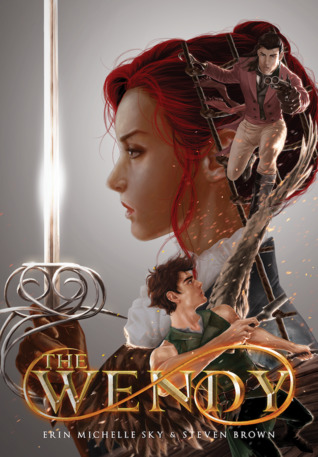
Book: “The Wendy” by Erin Michelle Sky and Steven Brown
Publishing Info: Trash Dogs Media, January 2018
Where Did I Get this Book: NetGalley
Book Description:London. 1789. More than anything in the world, Wendy Darling wants to be the captain of a ship, but women aren’t allowed in the Royal Navy. When she learns the Home Office is accepting a handful of women into its ranks, she jumps at the chance, joining the fight against the most formidable threat England has ever faced. Magic.
But the secret service isn’t exactly what she hoped. Accompanied by a reimagined cast of the original Peter Pan, Wendy soon discovers that her dreams are as far away as ever, that choosing sides isn’t as simple as she thought, and that the only man who isn’t blinded by her gender might be the worst friend anyone could ask for.
Anyone, that is, except Wendy Darling.
Review: I’m never one to turn down a re-telling. And while I haven’t had super good luck with “Peter Pan” retellings in the past, this one seemed far enough from the original story to have a better chance of success. For one thing, the focus is on Wendy’s own story, not Peter’s. And for another, she wants to become a ship’s captain?? So some strange mixture of Peter’s, Wendy’s, and, somehow, Hook’s story? Count me in!
Wending Darling does want to grow up. But she wants to grow up to be a very specific thing: a ship’s captain. And, luckily enough, once she is older, it turns out that a limited number of women are being accepted into the service. Seems perfect! But once there, Wendy quickly discovers that being accepted on paper is not the same thing as being accepted by the men around her, especially not in her dreamed-of leadership role as the captain. Struggling to find her own place, Wendy quickly finds herself caught up in new challenges and adventures, surrounded by a familiar sounding cast of characters, including a certain Captain Hook and a man-child named Peter.
This was a really fun read. One of the reasons I think it’s a success compared to other “Peter Pan” retellings I’ve read is the fact that, while it does a familiar cast of characters, it’s not trying to retell the original story really at all. For one thing, this is Wendy’s story through and through. Sure, Peter plays an important role, but she is front and center the entire time. It is her dreams and adventures the story follows, and her challenges the story prioritizes.
Part of this, of course, is a focus on the gender inequality of the time. The fact that she’s allowed to sign on to the secret service at all is a huge departure from history, but the authors don’t make it any easier for her other than that. She’s constantly having to challenge the perceptions and dismissals of those around her. And, when she does find someone who can see past her gender, it’s not necessarily the best advocate one could ask for. There were a few moments where the “messaging,” for lack of a better word, around this theme came across as a little heavy handed. But luckily the story had enough going for it that the action could quickly take over again and right the ship, so to say.
I also really liked the various takes on familiar characters. John and Michael, for example, are transformed from Wendy’s literal brothers to her brothers-in-arms. Michael, however, could be a bit much at times and too often came across in a pretty annoying manner. He improved as the story went a long and was given opportunities to make up for some of his shortcomings, but he was probably, overall, my least favorite character in the story.
Probably my biggest complaint for the story was the overabundance of love interests presented for Wendy. Sigh. Love triangles are not my thing (pretty well established), and I’m even less excited when we move past triangles to squares and pentagons. I want to settle into my romance and see it slowly develop. Not feel tossed here and there wondering what direction the main character go. Beyond that, multiple love interests is really hard to sell, simply on the believability spectrum, and this one wasn’t any different.
This was a pretty fun romp of a book. It’s not blowing away any literary awards or anything, but if you like fairytale retellings and “Peter Pan” especially, it’s definitely one worth checking out. A sequel came out fairly recently, so I’ll probably get around to reading that one, too, sooner or later.
Rating 8: A bit preachy at times and with too many love interests, but other than that, a jolly good time.
Book: “The Princess Will Save You” by Sarah Henning
Publishing Info: Tor Teen, July 2020
Where Did I Get this Book: NetGalley!
Book Description: When her warrior father, King Sendoa, mysteriously dies, Princess Amarande of Ardenia is given what would hardly be considered a choice: Marry a stranger at sixteen or lose control of her family’s crown.
But Amarande was raised to be a warrior—not a sacrifice.
In an attempt to force her choice, a neighboring kingdom kidnaps her true love, stable boy Luca. With her kingdom on the brink of civil war and no one to trust, she’ll need all her skill to save him, her future, and her kingdom.
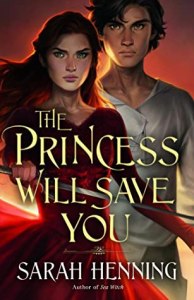
Review: I’ll be honest, I first requested this book based purely on how much I love this cover. Even now, looking at it above, I’m swayed to feel more positive about this book just by the lovely depiction of its main characters on the cover. But, when I dug deeper, I realized that it is also being promoted as a gender-swapped retelling of “The Princess Bride,” so, of course, I was even more excited to check it out! While I did enjoy it overall, it sadly didn’t quite live up to the promise of the gorgeous cover or the intrigue of the unique concept.
After the sudden and unexpected death of her father, the king, Princess Amarande quickly discovers how few options she has. Seemingly, no one else is concerned about potential assassination, and instead, her entire council is moving full steam ahead to marry her off to the most politically advantageous match they can find, regardless of Amarande’s own wishes. When her best friend, Luca, is kidnapped by one such potential match in an attempt to force her hand, Amarande takes matters into her own hands. Her quest is simple: save her true love, save her kingdom.
This is a tough one for me to rate and review. On one hand, it was enjoyable enough, and I was able to blaze through it in only a few days. The writing was solid. The characters were interesting. And the world-building did enough to paint a picture that I felt grouned. And yet…it was lacking something.
For one thing, I don’t think it did this book any favors to have it marketed as a gender-swapped “Princess Bride.” Sure, I can see how it follows similar plot points and winks and nods at some of the key phrases used in that book. But, on one hand, if I had not had that put in my head and thus wasn’t looking for these elements specifically, I’m not sure I would have made these connections. And, conversely, when I was looking and did spot them, they often detracted more from the story than they added. For one thing, the first half of the story doesn’t feel like a re-telling at all, whereas the last half really goes all in. It’s an uncomfortable balance.
Beyond that, I think I was also set up to expect more of a humorous fantasy story. Obviously, “The Prinicess Bride” is comedy through and through. Here, not so much. Not only is it clearly not going for the same parody tone that its inspiration had, it also just seemed to lack much humor at all? I think this, truly, is where my main contention point came for the story. It checks all the marks for a good fantasy adventure, but there is something decidedly dry in the tone and its telling. It didn’t have to be back-to-back laughs, but as I was reading through, I realized more and more that there simply were no laughs whatsoever. So, while the characters, romance, and adventure were compelling enough, they also felt strangely two dimensional and flat. It was too bad.
It looks like a sequel is planned, so I’ll most likely check it out. There were some interesting developments towards the end of the story. And perhaps the second will be served better by being more thoroughly detached from the “Princess Bride” read-alike label. Just add some humor to the story, and it could be great!
Rating 7: Sadly a bit flat in its telling, but a fast enough fantasy adventure.


 Book: “The Silvered Serpents” by Roshani Chokshi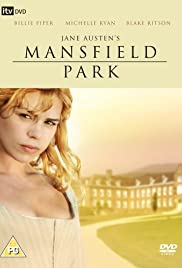
 Book: “A Deadly Education” by Naomi Novik
 Book: “The Ikessar Falkcon” by by K. S. Villoso
 Book: “The Ikessar Falkcon” by by K. S. Villoso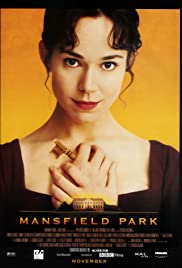

 Book: “A Dance with Fate” by Juliet Marillier
 Book: “The Wendy” by Erin Michelle Sky and Steven Brown
 Book: “The Princess Will Save You” by Sarah Henning
 The Library Ladies