Serena’s Review: “A River in the Sky”

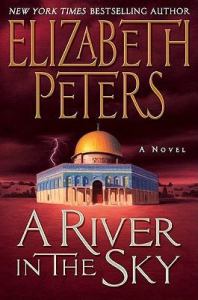
Book: “A River in the Sky” by Elizabeth Peters

Publishing Info: Harper Collins, April 2010

Where Did I Get this Book: audiobook from the library!

Book Description: August 1910. Banned from the Valley of the Kings, Amelia Peabody and husband Emerson are persuaded to follow would-be archaeologist Major George Morley on an expedition to Palestine. Somewhere in this province of the corrupt, crumbling Ottoman Empire—the Holy Land of three religions—Morley is determined to unearth the legendary Ark of the Covenant.

At the request of British Intelligence, Emerson will be keeping an eye on the seemingly inept Morley, believed to be an agent of the Kaiser sent to stir up trouble in this politically volatile land. Amelia hopes to prevent a catastrophically unprofessional excavation from destroying priceless historical finds and sparking an armed protest by infuriated Christians, Jews, and Muslims. Meanwhile, Amelia’s headstrong son, Ramses, working on a dig at Samaria, encounters an unusual party of travelers and makes a startling discovery—information that he must pass along to his parents in Jerusalem…if he can get there alive.

Previously Reviewed: “The Crocodile on the Sandbank” and “The Curse of the Pharaohs” and “The Mummy Case” and “Lion in the Valley” and “Deeds of the Disturber” and “The Last Camel Died at Noon” and “The Snake, the Crocodile, and the Dog.” and “The Hippopotamus Pool” and “The Ape Who Guards the Balance” and “Guardian of the Horizon”

Review: It’s been quite a while since I’ve returned to my beloved Amelia Peabody series. Not from any lack of continued interest, just the continuous growth of my TBR which shames me into reading more current books more often than not. But I felt like it was high time to return to a comforting favorite, so here we are! What adventures will Amelia and her family get up to this time?

The season ahead looks bleak for Amelia and Emerson. They are forbidden from working in their beloved location in the Valley of the Kings and have no fruitful prospects before them. But, sure enough, adventure arrives on their doorway in the form of spy craft and intrigue. This time they are sent by the British government to follow the activities of a would-be archeologist whom the intelligence community suspects of being an agent of disruption sent by the Kaiser to sew chaos in Palestine. But Amelia and Emerson are archeologists at their hearts and can’t help getting caught up in the man’s mad quest to uncover the Ark of the Covenant (and prevent the man from blundering up the entire affair to boot!)

Following what seems to be a bit of a trend, this book largely sees our party split up, with Amelia and Emerson working their own case, and Ramses off on his own (with some other friends) doing his own thing. The story intertwine in a creative way, but I think, overall, I’m always a bit disheartened by the books that playout like this. So much of what makes these stories so good is the interaction between its very charismatic cast of characters. Other than perhaps Amelia herself, I’ve never felt like any of the other cast can really stand well on their own. I think this book is making a case for Ramses being more of his own character, and perhaps that will just be the way later books go and he will begin to flesh out more as we move forward. But for now, I still miss the amusing parental/grown-child interactions that we see from this family unit when they’re all together.

For whatever reason, I also struggled a bit more with the mystery in this book. Some of this could just be due to the chopped-up nature of my reading experience, only listening to chunks here and there when I could catch a minute. But I had a hard time keeping track of the cast of characters, especially between the discoveries we learn from Ramses’ plotline and those we were discovering with Amelia and Emerson. I did like, however, that the general flow of both of these sections felt very different. Amelia and Emerson’s plotline largely felt familiar, with the pair travelling to an excavation site and finding their trip and work constantly interrupted by baffling experiences. Ramses, however, followed a much more action-packed story that was less a mystery than it was a thriller. The combination of both tones made for an interesting reading experience. It was just a bit tough reacclimating when we switched from one to the other.

I also really liked the new setting. The last book saw the crew return to the Lost Oasis, and that was a breath of fresh air from the usual Egyptian setting. But here we had an entirely new location, one we had never visited previously. This is where I wish our family group had been together more of the time, and the story could have devoted more of its page time to exploring the ins and outs of this region. As it was, we only had Amelia and Emerson’s chapters to really dive into Jerusalem and its political/cultural/religious quagmire.

I really enjoyed returning to this series. I do think that my piece-meal approach to reading these later books is hurting my experience a bit, though. I can see that the author is really trying to grow Ramses into a fully fledged lead character in his own right, but because I have such long gaps in my reading experience, he always is the least interesting to me, something that may become more of a problem going forward. Hopefully I can get to the next one more quickly and start to become more invested in him in his own right. But fans of the series are sure to be pleased with this one, especially if you’re already more onboard the Ramses train.

Rating 8: A fun new adventure that mixes the traditional mystery with a more action-packed thriller style of storyline.

Reader’s Advisory:

“A River in the Sky” is on these Goodreads lists: Novels That Let You Travel in Retro Style and Historical Mysteries and Thrillers Featuring Women.

Find “A River in the Sky” at your library using WorldCat!

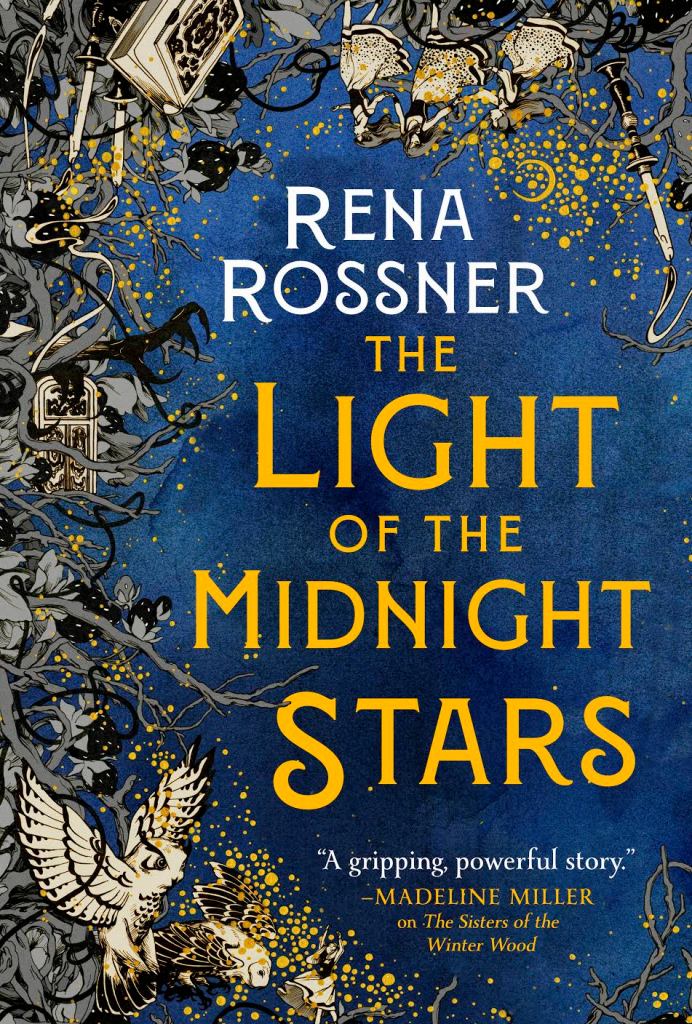
Serena’s Review: “The Light of the Midnight Stars”

Book: “The Light of Midnight Stars” by Rena Rossner

Publishing Info: Redhook, April 2021

Where Did I Get this Book: from the publisher!

Book Description: Deep in the Hungarian woods, the sacred magic of King Solomon lives on in his descendants. Gathering under the midnight stars, they pray, sing and perform small miracles – and none are more gifted than the great Rabbi Isaac and his three daughters. Each one is blessed with a unique talent – whether it be coaxing plants to grow, or predicting the future by reading the path of the stars.

When a fateful decision to help an outsider ends in an accusation of witchcraft, fire blazes through their village. Rabbi Isaac and his family are forced to flee, to abandon their magic and settle into a new way of life. But a dark fog is making its way across Europe and will, in the end, reach even those who thought they could run from it. Each of the sisters will have to make a choice – and change the future of their family forever.

Review: I really enjoyed the first book by this author I read. It was a similar tale of sisterhood, fairytale-like magic, all couched around the persecution the Jewish people have faced throughout history. On the surface, this book looks like it could be almost the exact same story, only add one more sister to the bunch. Am I complaining about that? Heck no!

Each possessed of their own natural, magical talent, three sisters have grown up performing minor miracles beneath the night skies of their forest home deep in Hungary. While wonderous and fantastical, not all view the abilities of the Solomandar sisters as signs of goodness. Instead, their faith and their practices attract dark forces to their once peaceful home. Each must contend with these evil workings intruding on their lives, and each must come to their own path forward, living in a world that is not as good as the believe it can or should be.

There are many things to like about this book. First, as I mentioned, there are a lot of similarities in themes and style of storytelling between this and the first book, so if you enjoyed that story, you probably don’t need to read much further in this review before picking this book up. But this is not a series, and this book does stand on its own with its own unique characters and arcs.

With three sisters’ stories now to tell, I was a bit concerned that I would find myself gravitating towards one more than other, thus rending large chunks of the story as less-interesting. Indeed, even with the ‘The Sisters of the Winter Wood,” I found myself becoming more invested in Liba’s story over Laya’s. Here, I think the author has improved on that and made each of the three sisters compelling in her own right. Each travelled very distinct paths and had to overcome their own specific challenges and experience their own growth. I could probably still pick a favorite if you forced it out of me, but as I don’t have to, I wont!

I also really liked the tone of this book. Last month, I wrote a post on “literary fantasy” and how hard a sub-genre that is to categorize and/or even find to read. But I think this book is a perfect example of a multi-faceted fantasy title that spans genres. Not only would I consider it a “literary fantasy” novel, but it could also be shelved under historical fantasy and fairytale fantasy. These are a lot of subgenres to balance, and I applaud the author for managing all three so well! I particularly enjoyed the intersections of historical events and the fairytale-like style of writing. The author includes an excellent note at the end detailing the various pieces of folklore she pulled from when writing this book. And it’s truly impressive how neatly she has lain these fantasy elements on top of a time and place in real history.

I continue to really enjoy books by this author. Fans of historical fiction who also enjoy a good fairytale are sure to enjoy it. The story is full of magic and wonder, all overlain across a darkly-real threat. It is sure to pull at your heartstrings.

If you’re interested in reading this book, don’t forget to check out the giveaway I’m hosting for an ARC copy!

Rating 8: Dark and beautiful, the woods and starlight feel almost real in and of themselves.

Reader’s Advisory:

“The Light of the Midnight Stars” is on these Goodreads lists: Midnight and Historical Fiction 2021.

Find “The Light of the Midnight Stars” at your library using WorldCat!

Giveaway: “The Light of Midnight Stars”

Book: “The Light of Midnight Stars” by Rena Rossner

Publishing Info: Redhook, April 2021

Book Description: Deep in the Hungarian woods, the sacred magic of King Solomon lives on in his descendants. Gathering under the midnight stars, they pray, sing and perform small miracles – and none are more gifted than the great Rabbi Isaac and his three daughters. Each one is blessed with a unique talent – whether it be coaxing plants to grow, or predicting the future by reading the path of the stars.

When a fateful decision to help an outsider ends in an accusation of witchcraft, fire blazes through their village. Rabbi Isaac and his family are forced to flee, to abandon their magic and settle into a new way of life. But a dark fog is making its way across Europe and will, in the end, reach even those who thought they could run from it. Each of the sisters will have to make a choice – and change the future of their family forever.

I really enjoyed Rena Rossner’s first book, “The Sisters of the Winter Wood”, when I read it in 2018. It was a lovely, fairytale-like story featuring two sisters, so pretty much right up my alley! The author also experimented with her style of writing, alternating between the more traditional prose for one sister, and a lyrical, poetic form for the other. Not only did this make the reading experience feel varied and alive, but the choice of each style of writing matched the aspects of each sister: the solid, grounded prose for the sister who can turn into a bear, and the more whimsical, flighty poems for the sister who can turn into a swan.

With that incredible first outing, I was excited to see that the author had another book coming out this spring. And even more excited when I received an ARC in the mail! In many ways this book sounds similar: a Jewish fairytale featuring sisters, this time three. Is this too similar to the first one? Or just more to like? I’ll post my full review this coming Friday. In the meantime, enter to win a copy! This giveaway is open to U.S. residents only and ends on April 28, 2021.

Enter to win!

Serena’s Review: “A Desolation Called Peace”

Book: “A Desolation Called Peace” by Arkady Martine

Publishing Info: Tor Books, March 2021

Where Did I Get this Book: from the publisher and Edelweiss+!

Book Description: An alien armada lurks on the edges of Teixcalaanli space. No one can communicate with it, no one can destroy it, and Fleet Captain Nine Hibiscus is running out of options.

In a desperate attempt at diplomacy with the mysterious invaders, the fleet captain has sent for a diplomatic envoy. Now Mahit Dzmare and Three Seagrass—still reeling from the recent upheaval in the Empire—face the impossible task of trying to communicate with a hostile entity.

Whether they succeed or fail could change the fate of Teixcalaan forever.

Previously Reviewed: “A Memory Called Empire”

Review: I made the mistake of waiting over a year after “A Memory Called Empire” was published before reading it. Not this time! The second I saw the sequel pop up on Edelweiss I requested it. And then I had to diligently wait to read it so that I could cover more recent books in a timely fashion. That took some self-control, let me tell you. But the time finally came, and the payoff was definitely worth it! I think I may have enjoyed this book even more than the first.

The war that Mahit started to save her station has begun. Back home at Lsel Station, however, she thinks her part in this story is over, even with the reminder of what she’s done flying past in the form of Teixcalaan war ships. But soon enough, she’s called back into action. Three Seagrass arrives with a request: join her in making first contact with these strange aliens. With no coherent language and the mysterious ability to appear suddenly, these creatures are nothing like the Teixcalaan Empire has faced before. Maybe a barbarian is the only one who will understand them?

In the way of good second novels, “A Desolation Called Peace” is bigger than “A Memory Called Empire” in pretty much every way. Not only does the story expand outwards from the single city/planet that it was localize within in the first book, but the narrative itself expands to encompass not only Mahit’s storyline, but also Three Seagrass’s and several other new (and familiar) characters. These efforts to broaden the scope of the story result in an expansion that feels leaps and bounds ahead of the first book. And this is particularly impressive given how detailed and precise the world-building was there, already.

The culture, language, history, etc., of Teixcalaan felt fully realized in all of the little ways one doesn’t think about but that stand-out when you really step back to appreciate an author’s work. From its emphasis on poetry and literature in its speech and protocol, to the cloudhook technology that seems a natural extension from where our own smartphones are headed. And here, Martine takes that strong foundation, and blows it up to add not only a more detailed look at Mahit’s home, Lsel Station, but adds in an entire new species/culture of the aliens our main characters are interacting with. All while still exploring the ins and outs of the Empire itself, with a closer look at the different religions within it and at the inner workings (both technological and political) of Teixcalaan’s powerful military. Frankly, it’s incredible.

The expansion of character POVs was also really impactful. I loved Mahit in the first book, but in this one, she was probably the least interesting character. Now, don’t read that wrong! I still loved her and her arc, it’s more to say that the additional characters were just that interesting that the more familiar Mahit faded a bit into the background in comparison. I particularly enjoyed getting to see into Three Seagrass’s mind. She was a huge character in the first book, so getting to see finally through her eyes was amazing. Beyond her own interesting story, I was particularly impressed by the duel views that Mahit and Three Seagrass brought to similar issues. Three Seagrass is clearly not a malicious character, but being in her head was a great opportunity to witness a character recognizing and confronting their own privilege and biases.

Beyond Three Seagrass, we also had chapters from the leader of the military front, a powerful, female general, and from Three Antidote, the young partial clone of the previous emperor who we met in the first book. I won’t go into much regarding either of their stories as there are some spoilers there, but, needless to say at this point, I really loved them both. Perhaps, particularly, Three Antidote’s chapters were impressive for how well they capture the thinking of a young boy approaching maturity but still a child at heart. With all the complicated, fleshed out adults, it can be hard to write a compelling child character alongside them, but Martine perfectly captured the thinking and actions of a kid in Three Antidote’s unique position. Again, incredible.

I also really loved the twisty way the story unfurled, with pieces that you didn’t even realize were pieces falling together in the end to resolve many mysteries all at once and illuminate themes you thought were only brought up as passing anecdotes. This review is already long, but if I let myself, I could probably go on and on. Fans of the first book are sure to love this one, too, and any sci-fi reader who hasn’t jumped on board this train, really needs to!

Rating 10: A masterpiece of a space opera! All the more impressive for expanding so effortlessly from the highs of the first novel.

Reader’s Advisory:

“A Desolation Called Peace” is on these Goodreads lists: Adult Sci-Fi/Fantasy of 2021 and 2020/21 Space Opera.

Find “A Desolation Called Peace” at your library using WorldCat!
Serena’s Review: “The Bright and the Pale”

Book: “The Bright and the Pale” by Jessica Rubinkowski

Publishing Info: Quill Tree Books, March 2021

Where Did I Get this Book: Edelweiss+

Book Description: Seventeen-year-old Valeria is one of the only survivors of the freeze, a dark magical hold Knnot Mountain unleashed over her village. Everyone, including her family, is trapped in an unbreakable sheet of ice. Ever since, she’s been on the run from the Czar, who is determined to imprison any who managed to escape. Valeria finds refuge with the Thieves Guild, doing odd jobs with her best friend Alik, the only piece of home she has left.

That is, until he is brutally murdered.

A year later, she discovers Alik is alive and being held against his will. To buy his freedom, she must lead a group of cutthroats and thieves on a perilous expedition to the very mountain that claimed her family. Only something sinister slumbers in the heart of Knnot.

And it has waited years for release.

Review: Of course this new YA fantasy was marketed as similar to Leigh Bardugo’s work. If it’s not the Grisha series, it’s “Six of Crows. This nonsense has gotten completely out of hand. At this point, that comparison has been used so often (and so poorly) that it’s essentially meaningless. But, alongside the Leigh Bardugo comparison, this book was blurbed as being for fans of Katherine Arden’s “Winternight” trilogy, an all-time favorite series of mine recently. So that did the trick in getting me to pick this one up. Unfortunately, the book really doesn’t deserve either comparison…unless we’re back to the meaninglessness of the Leigh Bardugo spin where all it really signifies is that the book you’re about to pick up is a YA fantasy, which, then, yes.

To this point, Valeria’s life has been nothing but loss. First she lost her home and everyone she loved to a deep freeze. And later, after finding refuge in the Thieves Guild, she loses her best friend Alik to a brutal death. But she is also a survivor, eking out an existence beneath the very nose of the Czar who is out to silence anyone who has survived the freeze. Her life takes a turn, however, when she discovers that Alik is alive. Alive, but changed. To save him, she must venture back to the very place she fears most, the mountain that claimed her town to its cold power.

To get it out of the way from the start, this wasn’t a favorite read of mine. But the one thing I did enjoy, overall, was the world-building involved. Most especially, perhaps, the gods called the Bright and the Pale were very interesting. I liked the idea that neither is inherently good or bad, therefore choosing to follow one over the other doesn’t necessarily speak to any overall world-view or intent on an individual’s part. I also enjoyed the general world-building. It was easy to picture the frozen landscape and the ominous presence of the mountains and the magic that lurked there. The atmosphere itself worked very well for what the story was trying to accomplish.

However, I struggled to enjoy this book. The pacing was difficult, with a slow start that took quite a while to become engaging. This beginning was also hindered by a style of writing that too often veered into telling rather than showing, with information feeling squeezed into dialogue and in the narration in ways that felt unnatural and ponderous. The writing itself was rather clunky, and it took me several chapters to realize that part of the reason I was struggling with the book was the fact that I needed to re-read several sentences to try to piece together what the author was actually getting at. Hopefully, as I was reading an e-ARC, some of this will be cleaned up in edits (there were words missing from sentences even, though the sheer number of times this seemed to happen makes me think it might have just been a very poor writing style choice??).

Valeria was also not a character to write home about. There was nothing obviously wrong with her, and the attempts at giving her a dark back story with the loss of her home suited well enough. However, she still simply felt like every other YA heroine with “a past.” There wasn’t enough distinction to her voice or character to make her stand out from the increasingly crowded set of leading ladies in YA fantasy.

I also didn’t care for the romance or some of the twists in the story. I felt like most of the reveals were telegraphed way too early and too obviously to provide any sort of weight when they finally landed. And the romance struggled against some of the unlikable aspects of Alik’s character. There was too much time spent on him saying horrible things and then later apologizing for those same horrible things. From there, it just followed the typical YA romance arc without adding much or creating any real sizzle between these two.

Fans of Russian-inspired fairytales may enjoy this read, but I do think it has enough marks against it to not earn a strong recommendation. It definitely wasn’t for me, and I think there are likely better examples of similar works to read if one is looking for books like this. Katherine Arden’s “Winternight” series, for sure, and Naomi Novik’s “Spinning Silver,” come to mind.

Rating 6: A disappointing read that had promise but seemed to lack some of the writing proficiency needed to really pully it off.

Reader’s Advisory:

“The Bright and the Pale” are on these Goodreads lists: Monsters and Magic Society and 2021 Young Adult Debuts.

Find “The Bright and the Pale” at your library using WorldCat!
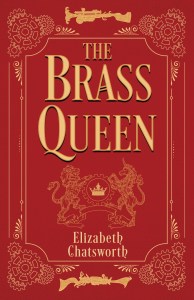
Serena’s Review: “The Brass Queen”

Book: “The Brass Queen” by Elizabeth Chatsworth

Publishing Info: CamCat Books, January 2021

Where Did I Get this Book: Edelweiss+

Book Description: In 1897, a fiery British aristocrat and an inept US spy search for a stolen invisibility serum that could spark a global war.

Miss Constance Haltwhistle is the last in a line of blue-blooded rogue inventors. Selling exotic firearms under her alias, the ‘Brass Queen,’ has kept her baronial estate’s coffers full. But when US spy, Trusdale, saves her from assassins, she’s pulled into a search for a scientist with an invisibility serum. As royal foes create an invisible army to start a global war, Constance and Trusdale must learn to trust each other. If they don’t, the world they know will literally disappear before their eyes.

Review: I haven’t reviewed a lot of them, but that’s because I don’t really see them around that much, but I do really enjoy a good steampunk fantasy when I can find it. It’s a neat, little quirky subgenre in fantasy fiction that is kind of bizarre in the specific elements that are seemingly expected from the genre: must involve steam-powered machine, often set in the Victorian period or some historical-feeling setting, has a decent overlap with Manners period pieces, etc. Those are all things I typically enjoy, so combine them well, and you’ve probably got a winner for me! Ah, but combining them well….

Constance must marry. Her family home is in danger, and with an absent father and no other recourse before her, the marriage market is her only way forward. Of course, she must find a husband who can either ignore or not see the other identity that Constance keeps under tight wraps: her position as the “Brass Queen,” a well-respected, underground weapons dealer. All is going exactly not to plan when her debut ball is interrupted by thieves. She quickly finds herself caught up in an elaborate plot that extends past Britain’s own borders. Not only that, she’s paired up a ridiculous U.S. spy whom she’s not sure she can even trust. What could go wrong next?

Like I said, I generally enjoy steampunk fantasy stories, and this one in particular had some interesting things going for it, like our heroine’s secret life as the Brass Queen. I also liked the way the author explored the idea of this imagined version of England with its machines and mechanized creations. The very first scene sees Constance opening a ball in a room overseen by towering animatronic suits that can be piloted by riders within. Constance’s own alternate identity gives the reader a direct line into the ins and outs of how this type of weaponization has and could be used. There was a lot of creativity here and elements to pique one’s interest.

But other than these aspects of the world-building, I struggled with this story. Constance, for one thing, was a walking, talking contradiction whom I could never quite understand or believe in as a living, breathing person. On one hand, she’s this weapons dealer who works with great power players all of the time. And yet in the very first scene, we’re supposed to believe that she’s been bumbling around the ball room this entire time and is about to fall to pieces over a simple speech? Someone who runs an underground weapons dealership would surely have a firm hand on proper decorum and behavior and much experience talking to strangers, likely to even more important people and with greater stakes at play. This contradiction continued throughout the book. I just had a hard time buying a lot of Constance’s actions when set against the idea that she was supposed to be this powerful, underground operator (as many characters remind us).

I also felt like the romance was a bit off the entire time. I’m not sure if this was because I was constantly distracted by Constance, or what exactly the problem was. I think part of it was Trusdale had a very “American cowboy in Britain” thing going on that I also had a hard time taking seriously. The book was clearly trying to incorporate a good amount of humor, and some the bantering between these two was actually quite good. But the balance was just slightly off and some of the humorous moments early on made it hard for me to take either of these characters too seriously or care overly much about their romance as a whole.

I also struggled with the writing in general. I had a hard time picturing some of the elements of the story, never a good thing for a fantasy book. And the story sometimes had jarring jumps between one scene and another. The formatting on my Kindle e-galley didn’t help with this. Hopefully the finalized version will have better page breaks to distinguish these scenes a bit better.

Overall, I had a fairly middling response to this book. There was nothing that I really disliked, but I also didn’t care about the story that much. The writing wasn’t quite strong enough to support some of the more fantastical elements, and the characters weren’t complicated enough to add any weight to the action. If you really enjoy steampunk fantasy stories, this might be worth checking out, but it wasn’t quite all I had hoped it would be.

Rating 7: Fun enough at times, but not all I had hoped it could be.

Reader’s Advisory:

“The Brass Queen” is on these Goodreads lists: Gaslamp Fantasy and 2021 Swoony Awards.

Find “The Brass Queen” at your library using WorldCat!

Serena’s Review: “Dustborn”

Book: “Dustborn” by Erin Bowman

Publication Info: HMH Books for Young Readers, April 2021

Where Did I Get this Book: Edelweiss+

Book Description: Delta of Dead River has always been told to hide her back, where a map is branded on her skin to a rumored paradise called the Verdant. In a wasteland plagued by dust squalls, geomagnetic storms, and solar flares, many would kill for it—even if no one can read it. So when raiders sent by a man known as the General attack her village, Delta suspects he is searching for her. 

Delta sets out to rescue her family but quickly learns that in the Wastes no one can be trusted—perhaps not even her childhood friend, Asher, who has been missing for nearly a decade. If Delta can trust Asher, she just might decode the map and trade evidence of the Verdant to the General for her family. What Delta doesn’t count on is what waits at the Verdant: a long-forgotten secret that will shake the foundation of her entire world.

Review: This book was marketed as appealing to fans of “Mad Max.” That was probably enough for me right there. The cover also worked perfectly for this description, luring me in even further. It is super unique, kind of creepy, and sets a perfect tone for the type of brutal, wasteland existence the book’s description references. I hadn’t read anything else by this author, which is also exciting. And it all worked out perfectly for me here, as I ended enjoying the heck out of this book.

Delta has always been distrustful. On her back she carries a deadly secret, one that she’s been warned to always hide. But luckily for her, this distrust of strangers is not a great weight to carry as there are so few strangers in the first place. Her pack is barely surviving on the barren wastelands, anxiously watching their only water supply slow shrink back. When Delta returns from a brief mission away to find her home destroyed and her pack abducted by a powerful man calling himself the “General,” she knows she was and the secret she carries were the likely target. Now she must venture out into the wasteland to decrypt this ancient secret before it’s too late for those she loves.

Like I said, I really enjoyed this story. For one thing, the world-building is very strong. I was immediately able to picture the wasteland that Delta lives in and the powerful storms that plague it instantly felt like a viable and fearful threat. The story touches on many of the small elements of life that would be challenging living under these circumstances that the reader might not immediately think of. It made the entire thing feel very lived in and tangible. The ever-present dust, the constant underlying fear of running out of water, the emptiness stretching out in every direction. Too afraid to move, but unable to stay where you are. Delta’s descriptions of this all are matter-of-fact and blunt, occurring organically as the story rolls out.

Delta herself was very sympathetic, partly for just how hardened and rough she was with those around her. She’s definitely a product of the life she’s been raised into, one full of difficulty but with the added layer of fear surrounding the secret map on her back. Her story is one of learning to trust, sometimes against reason. It’s also one of faith, how one can lose it and how sometimes hope and faith are needed even in the face of terrible odds. I really liked Delta’s ponderings on truth and faith, and her attempts to strike the appropriate balance between the two.

I also really enjoyed the side characters. Asher was a fairly predictable love interest, without a lot that made him stand out from the pack. But there were a bunch of surprise side characters that the general description doesn’t even mention who play, arguably, even a bigger role than Asher does in Delta’s journey, both her physical trek across the waste and her personal journey of self-discovery. I don’t want to spoil any of the elements of the book, since these characters continue to pop up throughout the book, even fairly late into the story and each surprise is as good as the last.

Speaking of surprises, while I can definitely see the comparisons to “Mad Max” and I think that is an apt sum-up of the story, this is book is definitely its own thing. There was a really big surprise towards the end that I didn’t see coming at all. I always love when I come across books that can truly shock me with a twist like this. You don’t even realize how many elements have been laid down pointing towards this reveal until it suddenly comes.

Overall, I had a blast reading this book. It was action-packed, fresh, and had a tough-as-grits heroine to lead us through the story. It strikes the perfect balance between post-apocalyptic and country western, varying between its themes of hope in the face of terrible odds and the go-get ’em attitude of our leading lady. Fans of “Mad Max” and post-apocalyptic stories are sure to enjoy this one!

Rating 9: Dive into the dusty landscape and make sure to have a glass of water on hand. Not only will it help with the prevalent worry over water throughout the book, but you may not be able to put down this page-turner for quite a while!

Reader’s Advisory:

“Dustborn” is on these Goodreads lists: [ATY 2021] – Related to Past, Present, Future – FUTURE and Best Traveling Vicariously.

Find “Dustborn” at your library using WorldCat!

Monthly Marillier: “Heir to Sevenwaters”

“Monthly Marillier” is a review series that is, essentially, an excuse for me to go back and re-read one of my favorite author’s back catalog. Ever since I first discovered her work over fifteen years ago, Juliet Marillier has been one of my favorite authors. Her stories are the perfect mixture of so many things I love: strong heroines, beautiful romances, fairytale-like magic, and whimsical writing. Even better, Marillier is a prolific author and has regularly put out new books almost once a year since I began following her. I own almost all of them, and most of those I’ve read several times. Tor began re-releasing her original Sevenwaters trilogy, so that’s all the excuse I needed to begin a new series in which I indulge myself in a massive re-read of her books. I’ll be posting a new entry in this series on the first Friday of every month.

Book: “Heir to Sevenwaters” by Juliet Marillier

Publishing Info: Roc, November 2008

Where Did I Get this Book: own it!

Book Description: The chieftains of Sevenwaters have long been custodians of a vast and mysterious forest. Human and Otherworld dwellers have existed there side by side, sharing a wary trust. Until the spring when Lady Aisling of Sevenwaters finds herself expecting another child? A new heir to Sevenwaters. Then the family’s joy turns to despair when the baby is taken from his room and something…unnatural is left in his place. To reclaim her newborn brother, Clodagh must enter the shadowy Otherworld and confront the powerful prince who rules there.

Review: Marillier wrote several other books between her first three “Sevenwaters” entries and this, the first of a second set of three. I’ll get to many of those books later, but I thought it might be nice to review all of the “Sevenwaters” books straight out in order. Reading this the first time, I remember being concerned that Marillier was returning to a world and story that had largely felt contained and completed in the first trilogy. But this was a strong outing for the second set and started this next trilogy out on the right foot.

Set during the same generation as Fainne from “Child of the Prophesy,” this second trilogy shifts its focus to the Lord of Sevenwaters, Sean’s, children. The well-ordered life of Sevenwaters is disrupted in the best way with the birth of the first boy in the family, Finbar. But this joyous arrival is soon cut short when Finbar is stolen away. Only Clodagh recognizes that something magical is afoot, seeing the sticks-and-stones baby that was left behind as a living, breathing magical infant and not simply the cruel, inanimate doll the others all see. She sets out on a dangerous mission to exchange this magical creature for the return of her baby brother. With her travels Cathal, a young man with his own mysteries and a distinctly rude take on Clodagh and her life, but who has his own connections to the Fae world and could help her rescue baby Finbar before his loss tears Clodagh’s family and world apart.

There’s a lot to love about this return to the Sevenwaters world. But there were also elements of this story that began to frustrate me in their similarity to hiccups I had with the previous books. But we’ll start with the pros, as always!

Marillier’s writing and creativity with the magical elements of the story are as strong as ever. She has a beautiful way of painting scenes on the page that feel just as real as they do magical and whimsical. In this story, Clodagh and the reader travel into the wonderous world of the Fae themselves, and here Marillier’s masterful portrayal of magic with an underlying sense of danger was on point. As beautiful and mystical as this world and its beings are, it is also clear that it is a distinctly inhuman place and the rules and dangers are not of the sort that are immediately clear or rational to a human mind.

I particularly loved description of the Fae infant that is left behind in Finbar’s place. The bond that grows between this baby and Clodagh was beautiful and heart-breaking. Frankly, I was almost more invested in this relationship than I was in the building romance between Clodagh and Cathal. But man, reading this book as a mother now made some elements of it very difficult to get through. There was more ugly crying than I care to admit.

I also enjoyed Clodagh as a main character. However, she was also very similar to some of the leading ladies we’ve seen in the past, particularly Liadan. They are both described as very domestic and happiest at home. But when faced with challenges and the obstinance of their families, each chooses to make their own choices and way in the world. So while I like Clodagh, just as I liked Liadan before her, I wish there had been a bit more variety to her characterization that would make her stand out as distinct in her own right.

I also struggled to connect to Cathal. While there are several interesting reveals to his character later in the story, and the eventual romance is very sweet, he comes across as a bit too rude and harsh in the beginning. I enjoy a good enemies-to-lovers romance as much as the next person, but it’s a delicate balance to strike, and I think Cathal veered a bit too far in the rude direction initially (and for too long) to fully recover in my opinion as the story went on.

The book also takes quite a while to really get going. This is also a standard feature of Marillier’s works and something that only bothers me now and then. I think if the main character and tertiary characters are strong enough, I don’t notice the slow starts. But this one had weaker characters in Clodagh and Cathal, so I felt myself beginning to become impatient that we get this show on the road. This wasn’t helped by my incredible frustration with the entire Sevenwaters clan other than Clodagh herself.

In “Son of Shadows,” we see the Sevenwaters family’s awful treatment of Niamh. The explanations that come later don’t do much to rectify this treatment of a beloved daughter. And then here, again, we see Clodagh, a young woman who, to this point, had been completely trusted and relied upon, suddenly dismissed as crazy and irrational when she draws attention to the Fae characteristics at play in Finbar’s disappearance. She’s spoken to quite badly at points. It’s pretty shocking treatment towards a young woman who’s given no prior indications to being prone to flights of fancy. And shocking to have it come from a family who has more experience with magical beings and enchantments than most could say. Something is definitely wrong with this family and its treatment of supposedly “beloved” daughters.

Overall, however, I enjoyed this return to Sevenwaters. The magical elements, in particular, felt unique and interesting. The main character is endearing, if familiar, and her bond with the Fae baby is quite lovely. Fans of Marillier’s work and the previous Sevenwaters trilogy are sure to like this book.

Rating 8: A return to a familiar world brings some new magical elements, but also a few familiar tropes.

Reader’s Advisory:

“Heir to Sevenwaters” is on these Goodreads lists: Best Australian Fantasy Reads and The Best Books about Elves or Faeries.

Find “Heir to Sevenwaters” at your library using WorldCat!

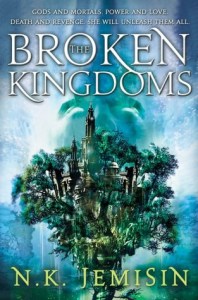
Serena’s Review: “The Broken Kingdoms”

Book: “The Broken Kingdoms” by N.K. Jemisin

Publishing Info: Orbit, November 2010

Where Did I Get this Book: audiobook from the library!

Book Description: In the city of Shadow, beneath the World Tree, alleyways shimmer with magic and godlings live hidden among mortal kind. Oree Shoth, a blind artist, takes in a homeless man who glows like a living sun to her strange sight. This act of kindness engulfs Oree in a nightmarish conspiracy. Someone, somehow, is murdering godlings, leaving their desecrated bodies all over the city.

Oree’s peculiar guest is at the heart of it, his presence putting her in mortal danger — but is it him the killers want, or Oree? And is the earthly power of the Arameri king their ultimate goal, or have they set their sights on the Lord of Night himself?

Previously Reviewed: “The Hundred Thousand Kingdoms”

Review: Having re-familiarized myself with Jemisin’s first novel and after discovering the joy that is the audiobook version, it was a quick hop and skip over to the library website to check out the next book in the series. I wasn’t quite sure what to expect, as I didn’t read a book description beforehand and it had seemed as if the first book wrapped up fairly neatly. But I’m pleased to report that while telling a wholly unique story focused on a new cast of characters, this sequel is just as wonderful as the first book.

Set several years after the events of the first book, Oree’s world looks very different than the one that existed before. Godlings walk among humans, a gigantic tree grows at the heart of what once was the most powerful city in the land, and dark new forces grow with the rumors that a new god, a new lady, has joined the pantheon. But for Oree, life is made up of small moments as she tries to lead a peaceful life selling her artwork. For, even without eyesight, able only to see magic and its users, Oree creates wonderous works that draw the eyes of many. But this simple life is interrupted when she finds herself drawn into a dark mystery: godlings are being murdered and Oree and her strange house guest, a man who shines bright as the sun, but only at dawn, are suspected as being behind it all.

“The Broken Kingdoms” is both a quieter novel and a more complex one. In many ways, it feels like Jemisin came more into her own in this second outing. While the first one was lovely and I might have preferred it as an overall reading experience, I think this was the stronger book. All of the little glimpses into this fantastical world that were laid down in the first story seemed to blossom and weave themselves into an interlocking tapestry here in the second. The history of the gods and godlings, the politics and cultures that have warred and formed alliances throughout history, and the smaller lives of those just trying to get by while cosmic battles wage around them. Oree’s story is very much that, the story of a young woman who quickly finds herself caught up in something stronger than she is…or so she believes.

As a character, Oree has the quiet strength and inner will of iron that I find so appealing in a leading lady. She has no grand desires and spends much of the book fighting against her own involvement in the mystery surrounding the godlings and her strange houseguest whom she has dubbed “Shiny.” Readers of the first book will be quick to identify this character, and I was pleased to see that Jemisin didn’t draw out the suspense too long for Oree, as well. As fun as it is to be in the know against the main character in a book, it’s a short-lived joy and one that can also end up working against itself very quickly if drawn out too long. The main character can often be left looking unnecessarily foolish or slow to pick up on clues that seem obvious to the better-informed reader. But here, Oree learns the truth in a timely manner, and, what’s more, her reaction to this discovery adds a new layer of interest to the story and the friendship building between these two.

I was also pleased with how Jemisin used this character. From the first book, it was easy to have strong opinions of him from the start. And Jemisin doesn’t undermine those, but she also develops layers beneath this surface version that draw a picture of a complicated, flawed individual who is none the less a worthy companion for our Oree.

I also really enjoyed the expanded world building and exploration of magic and the godlings. The world has certainly changed since the events of the first book, and it is interesting to see the many small and large effects that those events have inspired. The villains, in particular, were very interesting and appropriately threatening. What makes them all the more scary is how understandable some of their motivations are. The world has changed drastically and quickly, and everyone’s reactions to that sort of upheaval would be very different.

My only ding against the book was perhaps the ending. But this is a largely personal evaluation, and I think, narratively, it works quite well. I had my own hopes for how things would go, and the ending took me by surprise, both in a good way and, a bit, in a disappointing one as well. I’m curious to see if any of these events are revisited in the third and final book!

Rating 9: While I had more fun with the first book, this might be the stronger work of the two.

Reader’s Advisory:

“The Broken Kingdoms” is on these Goodreads lists: Speculative Fiction by Authors of Color and Non-Caucasian Protagonists in Science Fiction, Fantasy, Horror, and Paranormal Romance.

Find “The Broken Kingdoms” at your library using WorldCat!

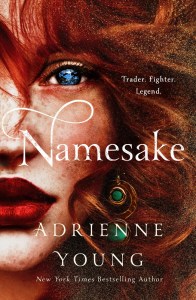
Serena’s Review: “Namesake”

Book: “Namesake” by Adrienne Young

Publishing Info: Wednesday Books, March 2021

Where Did I Get this Book: Edelweiss+

Book Description: Trader. Fighter. Survivor.

With the Marigold ship free of her father, Fable and its crew were set to start over. That freedom is short-lived when she becomes a pawn in a notorious thug’s scheme. In order to get to her intended destination she must help him to secure a partnership with Holland, a powerful gem trader who is more than she seems.

As Fable descends deeper into a world of betrayal and deception she learns that her mother was keeping secrets, and those secrets are now putting the people Fable cares about in danger. If Fable is going to save them then she must risk everything, including the boy she loves and the home she has finally found.

Previously Reviewed: “Fable”

Review: I’ve really liked some books from Adrienne Young in the past, but I think “Fable” might have been my favorite in a while. For one thing, I always enjoy a good pirate/sea-faring story, and they’re fairly hard to come by, making the stand-out ones all the better when you find them. While the first book wasn’t perfect, it was definitely a solid start to the duology and the cruel cliff-hanger did its work: I picked up this one as soon as possible when it became available!

Shortly after thinking she’d finally found a place and family of her own in the Marigold and its crew, Fable is abducted and finds herself caught up in the scheming of several powerful players. Unbeknownst to her, Fable might be the clue to unlocking one of the rarest finds in the sea. And soon, Fable must risk it all to make a future for herself and her crew. But to do so, she must delve into the secrets of her family, especially her mother, a woman Fable had thought she knew up until now.

I wasn’t quite sure where this book was going to be headed when I got to the cliffhanger at the end of the first book. In many ways, most of Fable’s arcs had already been completed. She’d confronted the father who abandoned her. Found a crew. Made her fortune in a risky treasure hunt. And found love with the captain of the Marigold. And then she was abducted, with very little fanfare or clues as to why. This could have gone two ways, of course. It could have felt like a last-minute addition by an author/publisher who insisted they’d wring a sequel out of this thing come hell or highwater. Or it could be a thoughtful addition to Fable’s story that felt organic and natural in its own right. I’m glad to report that it is the second.

While much of the first book dealt with Fable’s complicated relationship with a father who refused to acknowledge her as his daughter publicly, this book dives into Fable’s relationship and understanding of her mother and her mother’s family. From the first book, Isolde is made out to be the prototypical perfect mother figure. She was everything Fable wanted to be and looked up to, while also a comforting, loving mother to Fable as a child. But this book tackles the idea that we never really know our parents, as much as we may love them and want to emulate them. Isolde, like the sea she loved, had depths and currents to her that very few understood, and it was exciting watching Fable navigate the twists and turns uncovered in her own family history through Isolde’s lingering relatives.

There were several points in this story, particularly with regards to the Isolde storyline, that could have felt very predictable. I had a number of suspicions regarding the direction the story seemed to be headed. Luckily, only one of those really played out (though that one in particular still frustrates me to no end, as I felt like at least part of it should have been more obvious to Fable and her crew). Instead, we see new layers to many characters. Villains come and go. Motivations wax and wane. It’s always a bit unclear as to who is doing what and why.

And at the heart of it, Fable is a steady, sympathetic character. The revelations about her family that rock her own understanding of herself and history, while shocking, don’t dislodge her core purpose and understanding of her place in the world. Her values, her love for her family, both found and blood, remain true even when tested by power, suspicion, and deception.

I also liked that we got to see a bit more backstory for a few of the other crew members. In the first book, many of them felt like token characters with only one or two traits to really distinguish them from each other. Here, we get a bit more history for a few of them that grounds their stories in ways that make you care about more than just Fable herself.

I still found the romance to be a bit dull. But in this different circumstance, the second book versus the first, I was almost glad for that dullness. More than anything, I hate it when authors add drama to their established romances as if that’s the only way to maintain the reader’s interest in it. If your romance can’t hold up to its characters being together, it wasn’t great to start with. I’ve said it before and I’ll keep saying probably forever.

Overall, I was very pleased with this sequel. It explored new areas of the duology’s central theme, that of family, while also staying true to the main character and foundations of the story that were laid down in the first book. Fans of “Fable” are sure to enjoy this second high-seas adventure!

Rating 8: Exciting but poignant, “Namesake” continues to build on the excellent foundation laid down in the first book.

Reader’s Advisory:

“Namesake” is on these Goodreads lists: OE Fiction, Fantasies & Epics Book Club and Ginger woman: Redheaded Heroine in Romance.

Find “Namesake” at your library using WorldCat!