Kate’s Review: “White Ivy”

Book: “White Ivy” by Susie Yang

Publishing Info: Simon & Schuster, November 2020

Where Did I Get This Book: I won an ARC in a Goodreads giveaway.

Book Description: A dazzling debut novel about a young woman’s dark obsession with her privileged classmate and the lengths she’ll go to win his love.

Ivy Lin is a thief and a liar—but you’d never know it by looking at her. Raised outside of Boston, she is taught how to pilfer items from yard sales and second-hand shops by her immigrant grandmother. Thieving allows Ivy to accumulate the trappings of a suburban teen—and, most importantly, to attract the attention of Gideon Speyer, the golden boy of a wealthy political family. But when Ivy’s mother discovers her trespasses, punishment is swift and Ivy is sent to China, where her dream instantly evaporates.

Years later, Ivy has grown into a poised yet restless young woman, haunted by her conflicting feelings about her upbringing and her family. Back in Boston, when she bumps into Sylvia Speyer, Gideon’s sister, a reconnection with Gideon seems not only inevitable—it feels like fate.

Slowly, Ivy sinks her claws into Gideon and the entire Speyer clan by attending fancy dinners and weekend getaways to the Cape. But just as Ivy is about to have everything she’s ever wanted, a ghost from her past resurfaces, threatening the nearly perfect life she’s worked so hard to build.

Filled with surprising twists and offering sharp insights into the immigrant experience, White Ivy is both a love triangle and a coming-of-age story, as well as a glimpse into the dark side of a woman who yearns for success at any cost.

Review: Thank you to Goodreads for sending me an ARC of this novel as part of a giveaway!

Me and my kiddo were sitting in the front yard one day, when a UPS guy pulled up and had what was clearly a book shaped parcel in his hands. I thanked him from afar and after he left I wondered if I had ordered a book that I’d forgotten about. But when I opened it up and saw that it was “White Ivy” by Susie Yang, it occurred to me that I had won a Goodreads giveaway! Which rarely happens! I had seen a bit of buzz online about this book, being described as a thriller much like “The Luckiest Girl in the World”, which is about a social climbing schemer with a dark past. That book was entertaining enough, so I figured “White Ivy” would be similar. Which it is…. and it isn’t.

“White Ivy” is certainly about a social climbing schemer. Ivy Lin is our protagonist, and after being raised in a lower class and strict Chinese immigrant household, she has dreams of rising above. It’s true that she from the get go sets her sights on a rich former classmate, and it’s true that she has every intention of doing anything to be with him. But the issue is that “White Ivy” reads less like a thriller, and more like a character study of a damaged person who, being put in certain boxes because of her gender, culture, and race, wants to succeed in the world she has deemed ‘perfect’. Sort of a twist on the ‘immigrant experience’ story that is seen in literature. In some ways Ivy is conniving, but I felt that Yang wrote her with empathy and not really with that much judgement, at least not as much as the summary implies. Does Ivy do questionable/admittedly bad things to get ahead? Absolutely. But I felt that she came off more as an anti-heroine than anything else. And I liked that Yang wrote her that way. We get to see white male antiheroes in books all the time. Seeing a Chinese-American woman fit into this part is something that I don’t encounter nearly as much. Yang touches on the culture clash between Ivy and her parents and grandmother, as while Ivy was born in China, she has grown up in the U.S. (outside of being sent back for awhile after she was caught misbehaving). I thought that while Ivy’s parents definitely contributed to her problems, Yang also afforded them some grace as well, not painting them as just another antagonizing factor, but as complicated people.

Character study aside, outside of Ivy’s deeply fascinating characterization “White Ivy” follows a somewhat predictable route. Ivy finds herself caught between Gideon, a man who represents the ideal life and future she wants, and Roux, a bad boy from her past who stirs up passion, albeit a toxic kind. Following this escalating love triangle to dangerous places isn’t exactly new territory, and this is the only element where the ‘thriller’ aspect of the story comes into play. It has a slow build and escalation to be sure, but there weren’t any surprises that came out of it. I think that had Ivy not been such a good character with all the complexities and depths that she had, I would have been a little less forgiving of this. Her two lovers don’t really move outside of their tropes, Gideon being boring but dependable, and Roux being exciting but dangerous and violent. It also doesn’t read as much like a thriller as buzz and descriptions have promoted. There was one area of suspense for me, but I feel like you need more than one to be an actual ‘thriller’ novel.

Overall, I enjoyed “White Ivy” mostly because of Ivy herself. I think that if you go into it looking at it as a character study as opposed to a full on thriller, you’ll like it. I am intrigued by what Yang will do next.

Rating 7: A dark and fascinating character study and a twist on the ‘immigrant experience’ trope, “White Ivy” is a page turner with an anti-heroine you will probably root for despite your moral misgivings.

Reader’s Advisory:

“White Ivy” is included on the Goodreads lists “Anticipated Literary Reads for Readers of Color 2020”, and “Romance Books with Asian Love Interests” (this may be a stretch but I think it applies).

Find “White Ivy” at your library using WorldCat, or a local independent bookstore using IndieBound!
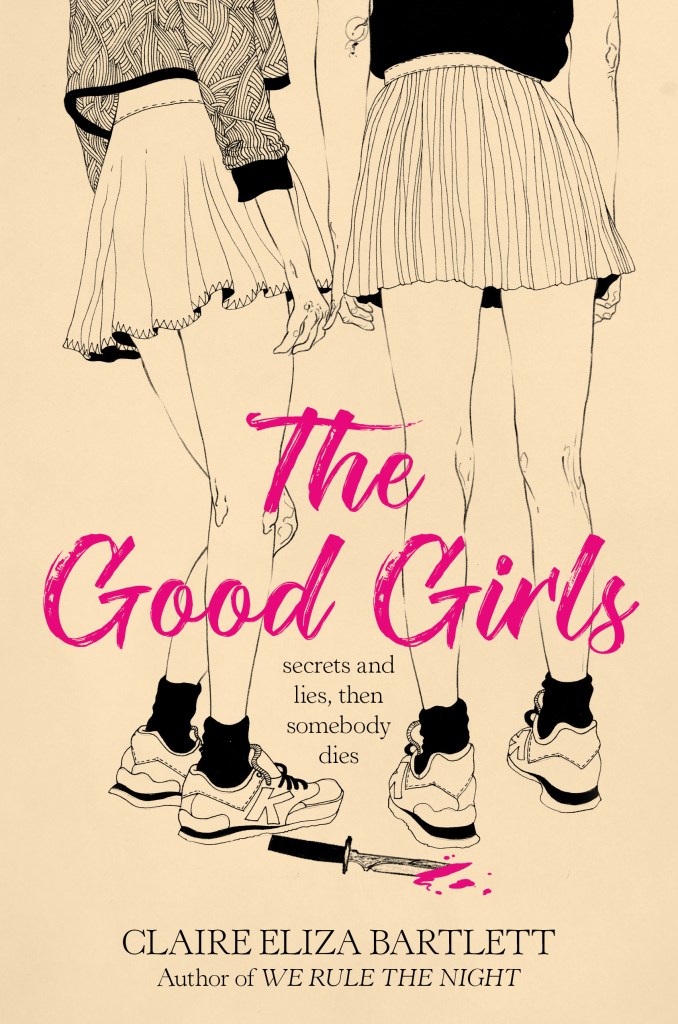
Kate’s Review: “The Haunting of Beatrix Greene”

Book: “The Haunting of Beatrix Greene” by Rachel Hawkins, Ash Parsons, and Vicky Alvear Shecter.

Publishing Info: Serial Box, October 2020/January 2021 (this is expanded upon in the review)

Where Did I Get This Book: I received an eARC from NetGalley.

Book Description: Beatrix Greene has made a name for herself in Victorian England as a reputable spiritual medium, but she’s a fraud: even she knows ghosts aren’t real. But when she’s offered a lucrative job by James Walker—a scientist notorious for discrediting pretenders like her—Beatrix takes the risk of a lifetime. If her séance at the infamously haunted Ashbury Manor fools him, she will finally have true financial freedom. If she fails, her secret will become her public shame.

But James has his own dark secrets, and he believes only a true medium can put them to rest. When Beatrix’s séance awakens her real gift—and with it, a vengeful spirit—James finds that the answers he seeks are more dangerous than he could have imagined. Together, with a group of supernatural sleuths, Beatrix and James race to settle the ghost’s unrest before it strikes— or else they might not make it out of the haunted manor alive.

New York Times bestselling author Rachel Hawkins, along with Ash Parsons and Vicky Alvear Shecter, weaves darkness, death, and a hint of desire into this suspenseful mystery for fans of Sherlock Holmes and Crimson Peak.

Review: Thank you to NetGalley for providing me with an eARC of this novel!

We are wrapping up our Horrorpalooza reads, and Halloween is this weekend. First and foremost, Happy Halloween everyone! What better way to end the spooky reading season than with a good old fashioned haunted house story? “The Haunting of Beatrix Greene” is that, but with some modern lens tweaks and a unique storytelling style that I’m still kind of trying to wrap my head around. But if a fraudulent medium and an old manor on the English moors are involved, I’m going to be on board regardless of stylistic choices.

Would I do that? Can’t be sure. Would I READ about it? Every time. (source)

Since I’ve been noting the format, that’s the aspect of the story I’ll address first. “The Haunting of Beatrix Greene” is published by Serial Box, an organization that releases books and audiobooks in weekly episodes, each episode written by different authors. Our authors for this book are Rachel Hawkins, Ash Parsons, and Vicky Alvear Shecter. It feels like it’s a Round Robin writing exercise, which is definitely unique and not something that I’ve really encountered outside of fan fiction. I think that when you are experiencing it in this way, that is in weekly episodes like a TV show or podcast, that is a pretty cool thing. But in this format where it’s just a book that collects them all together but still calls them episodes as opposed to chapters, it feels a little strange. That is a bit exacerbated by the fact that the actual complete book isn’t going to be coming out until January, but the episodes have started dropping on Serial Box now, something that I wasn’t totally aware of when I requested this book. I think that this is confusing, frankly, and the ‘one chapter a week’ format may not appeal to all. If you want to do the whole book in one go, January will be when your time comes, according to Amazon.

But, there was a lot that I liked about this story in terms of the bare bones of the haunted house theme. The biggest stand out for me is Beatrix herself, a woman who is making a life as a medium during the time in England when Spiritualism was having its first big boom. Beatrix doesn’t actually believe in ghosts, and uses the kinds of tricks and strategies that many of those charlatan spiritualists used, like cold reading and ringers. But we also get to see that Beatrix isn’t doing this because she’s conniving or sociopathic. Rather, she’s trying to survive as a single woman during a time where options are limited. When she is invited by skeptical scientist (and charlatan exposer) James Walker to conduct a seance at an old manor called Ashbury Hall, she feels a need to prove herself to a seemingly arrogant scientist, and to protect her reputation so she can keep making a living. I loved Beatrix, and felt that she was nuanced and complicated. James, too, had some complexities and nuance to his character, and didn’t just serve as an antagonist foil who is ultimately going to be a love interest to Beatrix. He has his own personal stake in wanting to have her come to Ashbury Manor.

And yes, there is a romance between them, and yes, it feels a little unrealistic given that this story takes place in such a short time AND they find themselves in a very haunted and dangerous house. But the chemistry and banter between Beatrix and James sizzles, so I was very easy to forgive it. Along with the romance, of course, is a ghost story, and I thought that that part of it was also pretty well done. We have some fun nods to the genre, with believers and unbelievers getting in way too deep, and a house with a tragic history that goes back far beyond the time that the first brick was laid. The horror aspects have some moments of genuine scares and a little bit of gore, but I would also say that this is a friendlier read for horror lite people who may not want to be SUPER scared. A lot is crammed into this short tale (clocking in at less than two hundred pages), but I feel like Hawkins, Parsons, and Shecter are able to pull it all together and never make it feel rushed or haphazard. And going back to the format for just a moment, even though the chapters alternate between different authors, their styles meld together well enough that it always felt like a unified narrative, which isn’t always easy to do.

“The Haunting of Beatrix Greene” is fun and just a little bit spooky, and a nice addition to the many other ghostly Gothic tales that came before it.

And that wraps up Horrorpalooza 2020! I hope that you all have a safe and happy Halloween!

Rating 7: A spooky and entertaining Gothic tale of (semi)terror, “The Haunting of Beatrix Greene” has some good scares and some good characters, but the format seems unnecessary and the way it’s released may be confusing to some people.

Reader’s Advisory:

“The Haunting of Beatrix Greene” is new and not included on any Goodreads lists yet, but it would fit in on “Haunted Houses”, and “Historical Ghost Fiction”.

Find “The Haunting of Beatrix Greene” at Serial Box. In January, find it at your local library using WorldCat, or a local independent bookstore using IndieBound!
Kate’s Review: “Night of the Mannequins”

49246963Book: “Night of the Mannequins” by Stephen Graham Jones

Publishing Info: Tor.Com, September 2020

Where Did I Get This Book: I received an eARC from NetGalley.

Book Description: Stephen Graham Jones returns with Night of the Mannequins, a contemporary horror story where a teen prank goes very wrong and all hell breaks loose: is there a supernatural cause, a psychopath on the loose, or both?

Review: Thank you to NetGalley for providing me with an eARC of this novella!

While the “Scary Stories To Tell in the Dark” books had many stories that messed me up, the one that scarred me the most was that of “Harold”, in which two farmers create a scarecrow to be a joke of a friend, which then comes to life and wreaks havoc. The idea that an inanimate but human looking object could come to life and kill you really scared me. So doing some research into “Night of the Mannequins” by Stephen Graham Jones (beyond the appropriately vague description) got me pretty hyped for the idea of a mannequin coming to life and killing teens in a friend group. After all, mannequins are a bit creepy enough on their own, right?

giphy-3
And we can buiiiiild this thing together, staaanding strong forever… (source)

Now, it is admittedly going to be hard to talk about this novella in detail without potentially treading towards spoiler territory, and I REALLY don’t want to spoil anything for those who don’t want to be spoiled. So just be warned…. there may be hints of spoilers in this review.

Our protagonist/first person narrator is Sawyer, a teenage boy in a group of friends who like to pull pranks on each other, and who at one time found a department store mannequin that they decided to make into their mascot. They called him Manny, and brought him along on all kinds of adventures. As they grew up, Manny was left behind, but as they are nearing the end of high school Sawyer thinks that one more prank with Manny could be fun. And it is… until Sawyer sees Manny stand up and walk away. What comes next is a story that reads like a slasher movie, with a lot of weird deranged action, a very funny narrative voice, and a lot of ambiguity as to what exactly is happening to Sawyer and his friends, and whether or not a mannequin has come to life with a taste for revenge. There isn’t much dread to be found here, but what you do have is a lot of splatterpunk gore descriptions, action that reads like a movie, and a twisted up perception of what is real and what isn’t.

Sawyer is both incredibly funny to follow as well as authentic in his frenzied teenage voice, his ruminations and planning clearly leaving some logic out of his plans in his hopes to save people from Manny the Mannequin. I found myself laughing out loud, even at moments where it probably wasn’t appropriate to be doing so, but like in a slasher film, part of the entertainment is seeing the crazed and over the top kill scenes. Jones sprinkles a little bit of interesting pathos in every once in awhile, be it hints as to Sawyer’s family life or the lives of his friends, as well the fear of losing your childhood and what comes next. I also have to say that Jones does a really good job of making the reader question almost everything in terms of reliability and reality. By the time I got towards the end I thought that I had everything clear in my mind, but then Jones managed to pull the rug out from under me again! His stories have a bit of a brutality to them, but there is always a bit of wryness to go with it, and I really like that.

“Night of the Mannequins” is strange and filled with splatterpunk themes, but it definitely has some inner machinations that are intriguing to find and explore. Plus, it’s a quick read, the perfect one for a season-appropriate afternoon of horror leisure reading. Discover Stephen Graham Jones if you haven’t, and you could totally start here.

Rating 8: A weird and disturbing (but also fun) slasher kinda story. It’s a hoot as well as a trip, and it’s exactly the kind of entertainment a slasher kinda story should be!

Reader’s Advisory:

“Night of the Mannequins” isn’t on any Goodreads lists yet, but I think that it would fit in on “Haunted Dolls”, and “Indigenous Fiction Books”.

Find “Night of the Mannequins” at your library using WorldCat, or at a local independent bookstore using IndieBound!

Kate’s Review: “The Silence of the Lambs”

Book: “The Silence of the Lambs” by Thomas Harris

Publishing Info: St. Martin’s Press, July 1988

Where Did I Get This Book: I own it.

Book Description: A serial murderer known only by a grotesquely apt nickname—Buffalo Bill—is stalking women. He has a purpose, but no one can fathom it, for the bodies are discovered in different states. Clarice Starling, a young trainee at the FBI Academy, is surprised to be summoned by Jack Crawford, chief of the Bureau’s Behavioral Science section. Her assignment: to interview Dr. Hannibal Lecter—Hannibal the Cannibal—who is kept under close watch in the Baltimore State Hospital for the Criminally Insane.

Dr. Lecter is a former psychiatrist with a grisly history, unusual tastes, and an intense curiosity about the darker corners of the mind. His intimate understanding of the killer and of Clarice herself form the core of The Silence of the Lambs—an ingenious, masterfully written book and an unforgettable classic of suspense fiction.

Review: I first read “The Silence of the Lambs” when I was a freshman in high school. My mom and I were at a local drug store and they had the mass market paperback for sale, and she was kind enough to purchase it for me because she never censored what I wanted to read (even if she probably sighed to herself about her daughter’s morbid curiosities). I read it very quickly, completely immersed in the story. I saw the film shortly thereafter, and both are now very high on my lists in terms of favorite books and films. There has been a debate lately between film fans on Twitter as to whether “The Silence of the Lambs” is horror or not. Given that I watch it ever Halloween Season and my friends and I did a Netflix Party of it on one of our weekly Terror Tuesdays, I can see the argument for it being within the horror genre (though I myself flip flop between yes and no). Because of this, I decided that it was time to revisit the story in book form, and that I would include it in this year’s Horrorpalooza. And picking it up again felt like I was visiting an old friend.

But not one that I’m planning on having for dinner or anything… (source)

This book is still so good. While I think that I PROBABLY like the movie better, that is only because the movie is so perfect at bringing all of these three dimensional and amazing characters to life. Hannibal Lecter is a literary villain who stands above so many, but this book is 100% Clarice Starling’s. Harris created a ‘badass female protagonist’ who feels so real, so relatable, and so nuanced that I’m continually shocked that a man wrote her (given that sometimes male authors can miss the mark when it comes to writing lady characters). You feel Clarice’s ambition, her frustration, her smarts and her anxiety and her need to solve the Buffalo Bill case, and you completely understand why she would go to the lengths she does… like getting close to Hannibal, even though he is incredibly manipulative and dangerous. I also really appreciated the moments of misogyny and sexism that she has to endure, as for 1988 for a guy to put those in, and to make them sting and hurt without feeling overdone or corny, that’s impressive. Clarice is such an important and formative feminist icon for me, and I was worried that revisiting her might not hold up as well. But it did. Hannibal, too, is a fascinating character, and while he doesn’t have the same amount of page time as Clarice (which is just fine), his insidiousness and his charm makes him very creepy, as well as vastly entertaining. But for me, it’s all about Clarice.

I had also forgotten how well Harris slowly builds to the Buffalo Bill mystery that is the true heart of “The Silence of the Lambs”. You get small references to it here and there, but it takes awhile to realize that this story is the one that Clarice is going head first into. Seeing her slowly gather her evidence, be it through talking with Lecter or going into a storage container to find evidence, or going to an autopsy and finding a bug, we get to go along with Clarice, see the pathology unfold, and then see Bill in action. And Harris really knows how to write a suspenseful scene. Even though I have read the book before and seen the movie countless times, I found myself getting nervous and anxious during some of the action moments. Especially during the Buffalo Bill kidnapping we get to witness on the page.

I will say that Buffalo Bill, while a really well done villain (and completely under appreciated in the movie. Ted Levine is GOD TIER and gets overshadowed by Hopkins. I get why, but my GOD, every time I watch Levine just blows me away), feels problematic now given that Bill is clearly dealing with some kind of gender dysphoria. I do know that Bill is based on a whole smorgasbord of serial killers, and that Jerry Brudos is almost assuredly the one who manifests in Bill’s obsession with womanhood (as during one of his attacks he was dressed like a woman, would dress up in his victims clothing, and had a huge thing about womens shoes). But while it’s stated that Bill isn’t ‘actually transsexual’ (paraphrasing from the text here) in the book, it still feels like there are shades of transphobia with the character. I think it says more about the time it was written than much else, but it’s definitely something to think about, and stands out for all the wrong reasons today.

Overall, “The Silence of the Lambs” is still a gripping, scary, and masterful classic that blurs the lines between thriller and horror. Re-reading was a joy, and I am glad I jumped back into it.

Rating 10: An enduring thriller classic that touches on real life horrors and (mostly) holds up.

Reader’s Advisory:

“The Silence of the Lambs” is included on the Goodreads lists “I Like Serial Killers”, and “Best Female Lead Characters”.

Find “The Silence of the Lambs” at your library using WorldCat, or a local independent bookstore using IndieBound!

Kate’s Review: “Plain Bad Heroines”

Book: “Plain Bad Heroines” by emily m. danforth

Publishing Info: William Morrow, October 2020

Where Did I Get This Book: I received an eARC from NetGalley.

Book Description: The award-winning author of The Miseducation of Cameron Post makes her adult debut with this highly imaginative and original horror-comedy centered around a cursed New England boarding school for girls—a wickedly whimsical celebration of the art of storytelling, sapphic love, and the rebellious female spirit.

Our story begins in 1902, at The Brookhants School for Girls. Flo and Clara, two impressionable students, are obsessed with each other and with a daring young writer named Mary MacLane, the author of a scandalous bestselling memoir. To show their devotion to Mary, the girls establish their own private club and call it The Plain Bad Heroine Society. They meet in secret in a nearby apple orchard, the setting of their wildest happiness and, ultimately, of their macabre deaths. This is where their bodies are later discovered with a copy of Mary’s book splayed beside them, the victims of a swarm of stinging, angry yellow jackets. Less than five years later, The Brookhants School for Girls closes its doors forever—but not before three more people mysteriously die on the property, each in a most troubling way.

Over a century later, the now abandoned and crumbling Brookhants is back in the news when wunderkind writer, Merritt Emmons, publishes a breakout book celebrating the queer, feminist history surrounding the “haunted and cursed” Gilded-Age institution. Her bestselling book inspires a controversial horror film adaptation starring celebrity actor and lesbian it girl Harper Harper playing the ill-fated heroine Flo, opposite B-list actress and former child star Audrey Wells as Clara. But as Brookhants opens its gates once again, and our three modern heroines arrive on set to begin filming, past and present become grimly entangled—or perhaps just grimly exploited—and soon it’s impossible to tell where the curse leaves off and Hollywood begins.

A story within a story within a story and featuring black-and-white period illustrations, Plain Bad Heroines is a devilishly haunting, modern masterwork of metafiction that manages to combine the ghostly sensibility of Sarah Waters with the dark imagination of Marisha Pessl and the sharp humor and incisive social commentary of Curtis Sittenfeld into one laugh-out-loud funny, spellbinding, and wonderfully luxuriant read.

Review: Thank you to NetGalley for providing me with an eARC of this novel!

A few years ago I picked up the YA book “The Miseducation of Cameron Post” by emily m. danforth, as it had been put on a Pride display at the library I was working at at the time. I read it and liked it, and saw the movie and liked that as well. I told myself that I would be on the lookout for more books by danforth, but admittedly didn’t really pay too close attention to her publications. When I saw the book “Plain Bad Heroines” on NetGalley and read the description, it caught my eye enough that I requested it and got a copy… and then when I put two and two together that this, too, was by danforth, I was even more excited to read it!

“Plain Bad Heroines” is a mixed bag of genres, perspectives, themes, and narratives. It definitely has a horror story within its pages, but it also has some romance, some historical high strangeness, and some cheeky tongue in cheek humor, with a number of wry citations thrown in by a humorous narrator. The crux of this story is a former school estate called Brookhants, where at the turn of the 20th century a number of gruesome deaths occurred. We get to see the timeline of these deaths, and see the mysteries surrounding them, but we also get to see a modern narrative involving a movie set and crew that is trying to make a horror movie based upon a book written about the mysterious deaths and the supposedly haunted and/or cursed grounds. The past story has a focus on Libbie and Alex, two lovers who are running the school where a number of girls, who were also involved in various sapphic relationships and were obsessed with a book with lesbian themes, died in horrific ways. The modern tale focuses on three women involved in the production of a new horror movie about the school: Merritt, who wrote the book about Brookhants and framed it as a queer feminist history; Harper Harper, the superstar actress who champions her own queerness; and Audrey, a former child actress who is hoping to reinvent herself. The two timelines are interspersed together and unfold with tragedy, humor, longing, and Gothic horror.

But even with suspense, romantic drama, Hollywood nonsense, and some actual horror moments that set me on edge, “Plain Bad Heroines” is also a very earnest, charming, and funny tale. The narrative jumps between timelines but connects with a humorous and ever nudging Narrator, with citations, side comments, and the occasional period appropriate illustration ever at hand. It works so well, and while I was worried that it may take away from the ghost story (and the body horror elements, SO MANY BODY HORROR ELEMENTS), it never did. While I mostly liked the modern story more, I did like getting the background and context of the haunted school and seeing how the curse and its fallout was affecting Harper, Audrey, and Merritt in the modern day. Fair warning: if you have a thing about yellow jackets, content warnings ABOUND in this book. danforth hits many a horror moment, which was great to see and something I didn’t necessarily expect from her given her other book. Yet she does it with ease, and pulls off lots of unsettling moments.

But it’s really the characters that propelled the story for me, both the ones from the past and in the present. Libbie, Alex, and the other characters in the past storyline were well described and grounded in historical truths that are very sad when it comes to lesbian relationships during that time period. You know that societal constraints are driving many things out of their control, and the sadness of the complications, and the doom you know is coming, made these characters very sympathetic, even when they were making decisions and choices that may have been damaging and hurtful. But (once again) it’s the modern women who really stood out, all of their complexities and nuances on display and perfectly drawn out. While Harper and Merritt have a lot of great moments of goodness and badness, it was Audrey who really captivated me, her desperation to move on from her old life and to find something new incredibly palpable. I loved watching all of them interact, and how danforth put the power of womens’ relationships, be they romantic or platonic, at the forefront.

I really enjoyed “Plain Bad Heroines”. danforth is such a dynamic writer, and if you want something spooky this season that isn’t too scary, this will surely captivate you as it did me.

Rating 9: A complex, wry, and genuinely creepy book about Gothic mysteries, untimely deaths, sapphic romance, and a whole lot of yellow jackets, “Plain Bad Heroines” is a pleasant surprise from danforth and a fun Halloween read!

Reader’s Advisory:

“Plain Bad Heroines” isn’t included on many Goodreads lists as of yet, but I think it would fit in on “Sapphic Book Lists”.

Find “Plain Bad Heroines” at your library using WorldCat, or at a local independent bookstore using IndieBound!

Kate’s Review: “Clown in a Cornfield”

Book: “Clown in a Cornfield” by Adam Cesare

Publishing Info: HarperTeen, August 2020

Where Did I Get This Book: I own it.

Book Description: Quinn Maybrook just wants to make it until graduation. She might not make it to morning.

Quinn and her father moved to tiny, boring Kettle Springs to find a fresh start. But ever since the Baypen Corn Syrup Factory shut down, Kettle Springs has cracked in half. On one side are the adults, who are desperate to make Kettle Springs great again, and on the other are the kids, who want to have fun, make prank videos, and get out of Kettle Springs as quick as they can.

Kettle Springs is caught in a battle between old and new, tradition and progress. It’s a fight that looks like it will destroy the town. Until Frendo, the Baypen mascot, a creepy clown in a pork-pie hat, goes homicidal and decides that the only way for Kettle Springs to grow back is to cull the rotten crop of kids who live there now.

Review: I am not afraid of clowns. I have friends who are, but I myself don’t really have much beef with them outside of sometimes finding them a little pointless. Even the likes of Pennywise of John Wayne Gacy’s Pogo just don’t really make me tap into my inner coulrophobic. But I do like a book that reads like a slasher story, and reading the description of “Clown in a Cornfield” by Adam Cesare felt like exactly that. Throw in some Millennial resentment towards older generations that don’t quite get the road we’ve had to travel, and I was eager to dive in and see what Cesare was going to do with all of it.

“Clown in a Cornfield” is a bit of a slasher story, a bit of small town secrets story, and some ‘okay, Boomer’ memes all mixed together to create a YA horror tale. On a few levels, this works out pretty well and makes for fun reading. The very concept of a bunch of teens being slaughtered by someone wearing a clown mask is great horror fodder, but “Clown in a Cornfield” takes it a few steps further than that and works through some generational angst that is playing out in the real world. The town of Kettle Springs, the setting of this book, is having a bit of a reckoning when it comes to the older people in town versus the teenagers. The older people want Kettle Springs to stay the same, living off of good family values, hard work, and the corn syrup factory that has given the town jobs and prosperity, until recently, that is. The younger generation, specifically the teens, just want to live their lives and then move on. Cesare takes a pretty realistic conflict and pumps it full of blood and guts, and it works pretty well, with those with traditional values blaming inevitable changes in values for all the ills within the town. It could have been heavy handed, but Cesare keeps his tongue planted in cheek firmly enough that it’s a rather effective satire. I also liked a few of our main characters, namely Quinn, the new girl in town who is trying to fit in. Quinn has enough tragic backstory to give her a little bit of pathos, but also stands on her own two feet well enough that she is likable and endearing.

But that said, some of the executions of the plot points didn’t work as well for me. Besides Quinn and a couple other characters, we don’t really get to know enough about a number of the people we’re following so that it doesn’t feel like the stakes are too high when the clown Frendo (“No Country for Old Men” reference?) comes a knocking with weaponry and murderous intent. I don’t really care too much when a slasher film just has a bunch of stereotypes to act as machete fodder for a masked killer, but I think that on the page you have a little more wiggle room to give us some insight into your characters, even if it’s just a little bit. Along with that, the pacing was a little off at times, feeling a bit rushed in some places but kind of draggy in others. I bought the plot overall, as it really is just a slasher story and I know what I’m getting into there. But I think that had there been a little more focus on fleshing out some other characters and less on making super cool kills happen, it probably would have worked a little better. Especially since the satire was pretty well thought out.

Inevitable progress to traditionalists everywhere. (source)

“Clown in a Cornfield” is a pretty fun read. I think that it would have worked better as a gory limited series, but Cesare left room for a sequel, and it was good enough that I would definitely read it. If you don’t like clowns, maybe skip it? But if you’re like me, this could be a fun read for this time of year.

Rating 6: A sly premise and some fun characters keep this story afloat, though the plot is a little hasty at times and the scares feel like they’d work better on screen than on the page.

Reader’s Advisory:

“Clown in a Cornfield” isn’t included on many relevant Goodreads lists, but it would fit in on “Clown Horror”. Obviously.

Find “Clown in a Cornfield” at your library using WorldCat, or a local independent bookstore using IndieBound!

Kate’s Review: “Ring Shout”

49247242Book: “Ring Shout” by P. Djèlí Clark

Publishing Info: Tor.com, October 2020

Where Did I Get This Book: I received an eARC from NetGalley.

Book Description: Nebula, Locus, and Alex Award-winner P. Djèlí Clark returns with Ring Shout, a dark fantasy historical novella that gives a supernatural twist to the Ku Klux Klan’s reign of terror.

D. W. Griffith is a sorcerer, and The Birth of a Nation is a spell that drew upon the darkest thoughts and wishes from the heart of America. Now, rising in power and prominence, the Klan has a plot to unleash Hell on Earth.

Luckily, Maryse Boudreaux has a magic sword and a head full of tales. When she’s not running bootleg whiskey through Prohibition Georgia, she’s fighting monsters she calls “Ku Kluxes.” She’s damn good at it, too. But to confront this ongoing evil, she must journey between worlds to face nightmares made flesh–and her own demons. Together with a foul-mouthed sharpshooter and a Harlem Hellfighter, Maryse sets out to save a world from the hate that would consume it.

Review: Thanks to NetGalley for providing me with an eARC of this novella!

I have said it many a time, the horror genre can be so effective at symbolism and social commentary wrapped up in a creepy and spooky tale. You’ve seen it with such films as “Night of the Living Dead”, “Get Out”, “Candyman”, “Dawn of the Dead”, the list goes on and on and on. Books, too, do this very well, with recent titles like “Lovecraft Country” and “The Devil in Silver” being two that come to mind for me. I always love some horror that has more to say about society than just ghosts and ghouls, and “Ring Shout” by P. Djèlí Clark is a new title that scratches that itch. Sure, it looks like it’s a book about demons, demon hunters, and black magic. But it’s also a story of the very real horrors of American Racism.

I am usually nervous when I’m about to start a novella that seems like it has a lot of distance to cover and a lot of complicated themes, as it’s hard to fit all of that into limited pages. But even though “Ring Shout” clocks in at less than two hundred pages, Clark does a great job of developing his characters, building an alternative American history with mystical themes, and hitting the metaphors out of the park with biting satire and, in some cases, dark humor. We follow Marys, Sadie, and Chef, three Black women who, in post WWI America, are fighting against demons summoned by dark sorcerer D.W. Griffith that have fed upon white people’s racism and led to a resurgence of the KKK. There are Klans, who are white racists whose hate for Black (and other non-white groups) has been amplified, and Ku Kluxes, actual demons disguised under the robes. Maryse, Sadie, and Chef, with the help from a Gulluh woman with magic and insight and other freedom fighters, are hoping to stop the end of the world fueled by racism, and Maryse may hold the key to it all. What I liked best about this story was that the three main characters are Black women, and they are given a whole lot of agency, motivation, and unique characterizations that make them all very enjoyable and fun. Maryse especially has a lot of complexity, her anger and determination pushing her forward. Clark gives all of them unique voices, but Maryse’s in particular stands out.

The social commentary has a lot to work with her. While it could have been easy to just say ‘demons are the problems behind the racism in the Jim Crow South’ (something you kind of saw in “Abraham Lincoln: Vampire Hunter” with vampires and chattel slavery), Clark doesn’t let racist white people off the hook here. While it’s true that the demons are part of it, those who are influenced already had hate in their hearts. That hate was just used to help the demons gain power. There is also a less obvious but just as powerful metaphor in this story through the magical system regarding these demons that Clark puts in. The only people who can see the demons in their true forms are people from marginalized groups (this is mostly Black people, but there is a Jewish character in the group fighting against the Ku Kluxes that can see them as well); white people cannot. It’s a clever way to call out white people’s ‘I don’t see color’ hypocrisy, as well as a metaphor for the microaggressions that have a blind eye turned to them even when marginalized groups who are affected by them say that they are, indeed, there. I greatly enjoyed that part of the mythos.

And Clark pulls all of this together in a cohesive and engaging story in less than two hundred pages! With some pretty gnarly Lovecraftian imagery and body horror thrown in for good measure (there’s also a nod to this extremely problematic horror icon in this story, which was super fun to see). It made for a bite sized horror treat that I was able to read and enjoy in one sitting, the perfect quick tale for this Halloween season!

“Ring Shout” is a new social commentary horror classic in the making! Treat yourself to something a little more complex this ghostly season, you won’t be disappointed.

Rating 8: Steeped in sharp and biting satire and commentary, “Ring Shout” is a story of demons, heroines, and American racism.

Reader’s Advisory:

“Ring Shout” is included on the Goodreads lists “Beyond Butler: Spec Fic by Authors of Color”, and “ATY 2020 – About Racism and Race Relations”.

Find “Ring Shout” at your library using WorldCat, or at a local independent bookstore using IndieBound!

Kate’s Review: “The Dollhouse Family”

51233715Book: “The Dollhouse Family” by Mike Carey, Peter Gross (Ill.), and Vince Locke (Ill.)

Publishing Info: DC Black Label, September 2020

Where Did I Get This Book: I received an eARC from NetGalley.

Book Description: Alice loves to talk to her dolls, and her dolls and dollhouse love to talk back.

When Alice is six, she is given a beautiful antique dollhouse. When things in her life get scary, Alice turns to her dolls and dollhouse for comfort. One day, they invite her to come play inside with them. As Alice’s life is turned upside down in the “big” world, she is always welcomed home to the little world inside the dollhouse; the house will even grant her a wish if she agrees to live with them!

Follow Alice through the door of the dollhouse and into the demon’s den.

Review: Thank you to NetGalley for providing me with an eARC of this graphic novel!

Let it be said that Hill House Comics has gotten some pretty legitimate authors on board of their imprint! It’s not that surprising, as Joe Hill seems like a cool guy who knows talent when he sees it. “Basketful of Heads” was an awesome first experience for me in regards to this imprint, and when I saw that M.R. Carey was getting in on the action with “The Dollhouse Family” (though writing under his usual comic name Mike Carey) I was pleased. When Carey does straight up horror, like “Someone Like Me”, I am fully on board with his works. So I’m definitely all in to see what he can do with a creepy dollhouse!

“The Dollhouse Family” is a generation spanning family saga that wraps itself in a dark fantasy horror story, and for the most part I felt like it worked pretty well. We have a couple of paths that we’re following, and while the way they connect isn’t completely apparent at first, Carey does a really good job of building upon then until we do reach that connecting point. The first is of Alice, a young girl who inherits an old dollhouse from an estranged relative. Alice’s father is abusive and her mother is passive, and Alice finds solace in the dollhouse… especially when the dolls start talking to her, and she finds out that she can shrink down to join them inside. The other path is in the past, as a man named Joseph, while doing survey work, finds himself in a cave, and comes face to face with a mysterious woman, and a sleeping giant.

As mentioned, it isn’t totally clear how these two stories relate, but they are both interesting enough in their own rights that you will want to see how they do. After Alice makes a decision that completely shifts her life’s path, due to a suggestion by a mysterious being in the dollhouse called The Black Room, she ultimately ends up with a daughter of her own, and a fear of the dollhouse that just keeps showing up. I really liked Alice, and while the unfolding of the other timeline wasn’t as interesting to me, the world building and mythology building that Carey did with it definitely laid a foundation that made sense for where Alice and daughter Una end up. I liked the build up and the horror elements of demons, as well as cosmic/Lovecraftian body horror that gave me a serious case of the squicks.

But where this book ultimately fumbles is that for all the world building and build up, the ending is incredibly abrupt. I was reading this on my computer, and when I saw that I only had tenish pages left I was convinced that the file I had was cut off prematurely, as there was no WAY that it could all be wrapped up in ten pages. And yet, it was, and because of that it all felt SUPER rushed and unsatisfying. For all that background and foundation, the climax was way too quick, and the let down after the climax was even quicker.

The art style, though, was a good match for the tone. It felt a bit old school in its design, but the details were intricate, as intricate as that on the strange dollhouse within the story itself.

dollhouse-family-comic-characters
(source)

Overall, I think that “The Dollhouse Family” is probably worth it for horror comics fans just because of the things that do work. But I do wish that Carey had taken a little more time to wrap things up.

Rating 7: A creepy and well planned out horror fantasy, “The Dollhouse Family” is an entertaining comic, but resolves itself a little too quickly.

Reader’s Advisory:

“The Dollhouse Family” is included on the Goodreads list “Haunted Dolls”.

Find “The Dollhouse Family” at your library using WorldCat, or a local independent bookstore using IndieBound!

Kate’s Review: “Dracula’s Child”

49991647._sx318_sy475_Book: “Dracula’s Child” by J.S. Barnes

Publishing Info: Titan Books, September 2020

Where Did I Get This Book: I received an eARC from NetGalley.

Book Description: Dracula returns…

It has been some years since Jonathan and Mina Harker survived their ordeal in Transylvania and, vanquishing Count Dracula, returned to England to try and live ordinary lives. But shadows linger long in this world of blood feud and superstition – and, the older their son Quincy gets, the deeper the shadows that lengthen at the heart of the Harkers’ marriage. Jonathan has turned back to drink; Mina finds herself isolated inside the confines of her own family; Quincy himself struggles to live up to a family of such high renown. And when a gathering of old friends leads to unexpected tragedy, the very particular wounds in the heart of the Harkers’ marriage are about to be exposed…

There is darkness both within the marriage and without – for, while Jonathan and Mina wrestle with the right way to raise a child while still recovering from the trauma of their past lives, new evil is arising on the Continent. A naturalist is bringing a new species of bat back to London; two English gentlemen, on their separate tours of the continent, find a strange quixotic love for each other, and stumble into a calamity far worse than either has imagined; and the vestiges of something thought long-ago forgotten is, finally, beginning to stir…

Review: Thank you to NetGalley for sending me an eARC of this novel!

I have a very special place in my heart for Bram Stoker’s classic vampire novel “Dracula”. One, I do love a good vampire story in which a vampire is the predatory menace that it ought to be. But the bigger and more personal reason is because I first read it in college in my favorite class of all time, “Monsters, Robots, and Cyborgs in Literature”. The content was great, but it was my professor, Andy, who really made the class. We read many stories, “Dracula” being one, and I wrote a paper about the feminist icon that is Mina Harker. Andy and I kept in touch after my time in that class, and sadly he passed away a few years ago. I will always associate this book with him. So taking on this new ‘unofficial’ sequel, “Dracula’s Child” by J.S. Barnes was a risk. One I was willing to take because of the solid premise, but a risk nonetheless.

The structure of “Dracula’s Child” is similar to “Dracula” in that it is epistolary in nature. The plot unfolds through letters, diary entries, telegrams, and newspaper articles, and the tone and writing style is very well matched to the tone of the original. Barnes clearly worked very hard to reproduce that device, and it really does sound like the original in a lot of ways. I felt like he pretty much captured the voices of the original characters, and that he also expanded upon some of them to give them a little more complexity. We also had a fair number of threads to attend to, from the original characters to new ones whose connections to Dracula are seemingly tenuous at first, that all start to converge in a well paced and well thought out way. This made for a slow burn of a tale that is expansive, and really does hype up that if Dracula is coming back for his revenge, he’s going to be thinking BIG PICTURE. The reveals are also slowly paced, such as Mina and Jonathan’s son Quincey’s connection to The Count. And no, there was no addition of a romance between Dracula and Mina to be found in these pages. Which is probably for the best, but man, for something that went WAY off course of the original content I LOVED the chemistry between Winona Ryder and Gary Oldman in “Bram Stoker’s Dracula”.

73797d5d086a1e54cd067645ebde30ce
Part of me was hoping for this, and I’m not (too) ashamed. (source)

So really, Barnes achieves what he was setting out to do in regards to making you feel like this could, in fact, be a direct sequel to the original story. And for that, I really have to give him props. That couldn’t have been easy to do, and he did it. And yes, there are some really well done scares in here, from suspense to body horror to the dread of a vampire on the hunt.

But the thing that basically derailed this story from being the awesome thing that I thought it was going to be was that for the last third of the book, Mina Harker, whose presence had been strong and fierce and at the forefront, was sidelined and then made incredibly passive. Certainly by today’s standards, Mina may not seem like much of a ‘strong female character’, and I’m definitely not saying that Stoker was some progressive when it came to gender politics in the original. But for Mina as a character to have perspective chapters, to be using her wits and her shorthand to try and figure out how best to fight off Dracula, for her to be with Jonathan, Seward, Arthur, Quincey, and Van Helsing during their journey? That was huge! So in a book coming out in 2020 I had hoped that she would be doing more so as to reflect her critical role in the original as a warrior against Dracula… And while for part of this book she seemed to be, for her to be sidelined in this way was very disappointing.  It was already frustrating that most other woman characters were sacrificed for man pain or to be tragic plot devices. But to do something similar, though admittedly not as final, to Mina? UNACCEPTABLE.

giphy-2
(source)

Mina frustration aside, “Dracula’s Child” does a pretty good job of feeling like a true follow up to “Dracula”. I’m not sure if the purists would agree, but for this person who has such a personal and protective connection to the original work, it mostly succeeds in what its trying to do.

Rating 7: With a well reproduced tone and a slow burn of a creepy story, “Dracula’s Child” is a fun sequel to a classic, but doesn’t give certain characters the credit or stories they deserve.

Reader’s Advisory:

“Dracula’s Child” is new and not on many Goodreads lists as of yet, but I think that it would fit in on “Epistolary Fiction”, and “Vampires That DON’T Sparkle” (snide title, but really it’s just a list without vampire romance).

Find “Dracula’s Child” at your library using WorldCat, or a local independent bookstore using IndieBound!

Kate’s Review: “Wonderland”

52210985Book: “Wonderland” by Zoje Stage

Publishing Info: Mulholland Books, July 2020

Where Did I Get This Book: I received an eARC from NetGalley.

Book Description: If Shirley Jackson wrote The Shining, it might look like this deliciously unsettling horror novel from the acclaimed author of Baby Teeth.

A mother must protect her family from the unnatural forces threatening their new and improved life in a rural farmhouse.

The Bennett family – artist parents and two precocious children – are leaving their familiar urban surroundings for a new home in far upstate New York. They’re an hour from the nearest city, a mile from the nearest house, and everyone has their own room for the very first time. Shaw, the father, even gets his own painting studio, now that he and his wife Orla, a retired dancer, have agreed that it’s his turn to pursue his passion.

But none of the Bennetts expect what lies waiting in the lovely woods, where secrets run dark and deep. Orla must finally find a way to communicate with – not just resist – this unknown entity that is coming to her family, calling to them from the land, in the earth, beneath the trees… and in their minds.

Review: Thank you to NetGalley for providing me with an eARC of this novel!

While usually I am perfectly fine with the winter months (even in Minnesota!), this year I am dreading it. I can handle the cold and the nutty weather, but the thought of having to be cut off from family due to COVID-19 and the inability to comfortably or safely gather outside is going to be very hard. Winter in Minnesota is already isolating in a lot of ways, and this winter it’s going to be incredibly demoralizing. But I tell myself that it could be worse. I could be totally trapped and cut off from the rest of society, and stalked by a mysterious being that wants me and my family for untoward purposes. So I guess that “Wonderland” by Zoje Stage puts some things into perspective! Seems fitting to kick off this year’s Horrorpalooza with a horror story that makes me count my blessings.

Well, horror story may be a little generous for this Gothic dark fantasy, though I do see the elements of it in there glimmering through at least a little bit. For Orla and Shaw Bennett, this new home in a remote cabin in the woods is supposed to be Shaw’s writing haven. Living in Manhattan for years before to support Orla’s dancing career has shifted now to a living situation that Shaw prefers, and his entitlement to his moment in the sun is just the first shade of something being wrong. There are definite shades of “The Shining” with Shaw and his need to stay in this place to get his career going again, even when strange things, like foot upon foot of unseasonable snow showers down and strands them with little supplies and no way out. And as their situation deteriorates, Orla is determined to save her family from whatever it is…. even as her daughter Eleanor Queen is getting closer and closer to the entity that wants them to stay. There are definite pulse pounding dramatics to be had and genuine moments of high stakes and suspense, but honestly “Wonderland” never quite got to the levels of horror or terror that I tend to associate with horror novels (outside of one moment with a bear…. and that’s all I’m going to say). I would classify “Wonderland” as more of a dark fantasy tale than horror, which means that my expectations being dashed soured me a bit to the story.

But genre aside, what really did work about “Wonderland” was both Orla and Eleanor Queen, and the mother-daughter relationship that is highlighted within its pages. Orla has put her family first from the get go, leaving her career behind to support Shaw’s aspirations and to help her children transition to a new, very different, life. Orla has strength within herself, and Eleanor Queen, too, is approaching their situation with her own inner strength. The two of them work together to try and save the family from the dark being that is holding them hostage, and even as they feel like they are losing everything, they always have each other to lean on. Eleanor Queen has a unique insight into what is going on, and she and Orla have a really powerful and touching relationship is just one aspect of this positive representation of the power of ‘female’ driven approaches. Another that really struck me was that once we do find out what exactly is going on, the origin of the conflict is unique in that Orla and Eleanor Queen have grace and empathy that we don’t usually see in stories like this. A lot of the time when supernatural entities are at play, there is some kind of vengeance motivation. “Wonderland” has a different angle. And once again, that is all I’m going to say. Regardless, it works and made the story feel more outside the box. Again, not horror. But dark fantasy to be certain.

“Wonderland” is claustrophobic and engaging, even if it isn’t too scary. But then, isolation is scaring me right now. So maybe I’m not giving it enough horror credit. Regardless, Horrorpalooza has begun, folks. Let’s make it a good one!

Rating 7: A Gothic tale that feels less horror and more mother-daughter examination, “Wonderland” has some interesting moments of dark fantasy…. but not too many scares.

Reader’s Advisory:

“Wonderland” is included on the Goodreads lists “Horror Novels Written by Women”, and “2020 Horror to Scream For”.

Find “Wonderland” at your library using WorldCat, or at a local independent bookstore using IndieBound!