Kate’s Review: “Welcome to Night Vale”

25270656Book: “Welcome to Night Vale” by Joseph Fink and Jeffrey Cranor

Publishing Info: HarperAudio, October 2015

Where Did I Get This Book: Audiobook from the library!

Description: Night Vale is a small desert town where all the conspiracy theories you’ve ever heard are actually true. It is here that the lives of two women, with two mysteries, will converge. Nineteen-year-old Night Vale pawn shop owner Jackie Fierro is given a paper marked ‘KING CITY’ by a mysterious man in a tan jacket. She can’t seem to get the paper to leave her hand, and no one who meets this man can remember anything about him. Jackie is determined to uncover the mystery of King City before she herself unravels. Diane Crayton’s son, Josh, is moody and also a shape shifter. And lately Diane’s started to see her son’s father everywhere she goes, looking the same as the day he left years earlier. Josh, looking different every time Diane sees him, shows a stronger and stronger interest in his estranged father, leading to a disaster Diane can see coming, even as she is helpless to prevent it. Diane’s search to reconnect with her son and Jackie’s search for her former routine life collide as they find themselves coming back to two words: ‘KING CITY’. It is King City that holds the key to both of their mysteries, and their futures …if they can ever find it.

Review: In the summer of 2013 I discovered a quirky and strange little podcast called “Welcome to Night Vale”. This is going to sound incredibly hipster of me, but I got into it right before it exploded in popularity on the Internet and across geek fandoms everywhere. I followed it for awhile, as it really is my kind of story. It’s kind of like “Lake Wobegon” meets “Twin Peaks” meets “X-Files” meets “Parks and Rec”. The premise is that it’s a radio show of community updates run by a man named Cecil Palmer, and the community has black helicopters, monsters for librarians, floating cats, and hooded figures congregating in the local dog park, which may or may not transport you to another dimension. So it’s weird. Like, VERY weird. But it also has a lot of heart. I kind of lost interest after the StrexCorp storyline wrapped up, but I do still have a fondness for the universe and decided to give the book a try. I initially got it in print from the library…. But after perusing it, I was like ‘oh… Maybe not’.

giphy
My thoughts: “Oh God, was it always like this? Was it always this aggressively quirky? Did I LIKE this?!” (source)

After having a crisis of faith in a podcast I had fond memories of, I returned the book and vowed never to speak of it again. But then I saw, months later, that the audiobook was available to download, and that Cecil Baldwin, the voice actor for Cecil Palmer and main voice of the show, was reading the book. So I decided to give it a try that way. And THAT, my friends, made ALL the difference.

So yeah, “Welcome to Night Vale” is weird, and is aggressively quirky, and yeah, it probably has a smug sense of satisfaction about itself and how clever it is. But Cecil Baldwin as Cecil Palmer just makes it so damn charming and makes the town so damn lovable that he really, REALLY saves the story. And he does the same for the book when he reads it. I think that as a book this kind of set up just doesn’t really totally work, so it makes sense to give it the pacing that an audiobook can provide because this is it’s home format. You need to listen to “Welcome to Night Vale”, just like you listen to the podcast. I can’t explain why. But you just do.

“Welcome to Night Vale” also happens to have a lot of heart buried in it’s creepy and strange and uncanny-esque premise, and the book has the same thing going for it. Though it isn’t in community radio format (sadly, though Cecil and his boyfriend Carlos DO make appearances), it does have strange anecdotes and oddities in a narrative sense. In the book we follow two women, Jackie and Diane. Jackie is perpetually nineteen, but she is also trying to find herself just like many nineteen year olds are. Her struggles are both strange, as she has a piece of paper permanently attached to her hand, but she wants to know who she is, as she cannot seem to remember. And then there’s Diane, whose son in a shapeshifter, sure. But their relationship is so damn spot on in it’s portrayal of a single mother dealing with a teenage son who is growing up and apart from her. It is the very parts of these characters that make them human that make the aggressive quirkiness easy to swallow. Even if “Welcome to Night Vale” is goofy and very, very strange, if you look past that, the characters are people with very real, touching problems. And I also really liked the relationship between Jackie and Diane, who are united in their need to know what King City is, but are still very different and aren’t always going to get along because of that.

But buyer beware. I think that unless you have a working knowledge of this podcast and the world that it has set up, this book will be very confusing and probably maddening to you. It’s working on the premise that you know what the scoop is with Night Vale, and it doesn’t hold the reader’s hand in the strangeness. It just leaps into the narrative full throttle. The podcast was always weird, but kind of gradually worked it’s way to where the story is now, and the book just goes into it. Which kind of makes me have to ask this question, if you jumped in and were surprised or indignant that it didn’t make sense to you:

giphy1
(source)

That would be like me jumping in the middle of a “Halo” novelization series and wondering why it was that I don’t understand what was happening. Those books aren’t written for me because I am not a “Halo” fan, and sadly, this book isn’t written for you because you are not a “Night Vale” fan. This book can’t stand alone, guys. It just can’t. You need to know this mythology. Which isn’t exactly a great thing for this book, in all honesty. The point, I would imagine, was to try and branch out to other people outside of the built in listener base. And this book probably won’t do that.

I thought it was fun enough. I’m not necessarily clamoring back to the podcast in a game of catch up, but I do still love Cecil Palmer the character and Cecil Baldwin the voice. “Welcome To Night Vale”, if listened to, should be a fun little bonus for the podcast. But a stand alone book it is not.

Rating 7: This will probably be fun for fans of the podcast, but I don’t think that there is any way that a layman could enjoy this book. If you haven’t listened to the show, this is NOT for you. Either jump into the podcast, or leave it be. Also, it only worked for me when I listened to it.

Reader’s Advisory:

“Welcome to Night Vale” isn’t featured on any Goodreads lists as of now. I’m not surprised. So instead, here is a link to a blog that has some read-alikes, and hell, here is the damn podcast. You really should start here.

Find “Welcome to Night Vale” at your library using WorldCat!


Kate’s Review: “I Know What You Did Last Summer”

47763Book: “I Know What You Did Last Summer” by Lois Duncan
Publishing Info: Laurel Leaf, April 1999 (first published October 1973 by Little Brown)

Where Did I Get This Book: The library!

Book Description: It was only an accident — but it would change their lives forever. Last summer, four terrified friends made a desperate pact to conceal a shocking secret. But some secrets don’t stay buried, and someone has learned the truth. Someone bent on revenge. This summer, the horror is only beginning….

Review: Last month, the literary world lost a great YA thriller legend. Lois Duncan passed away at age 82, and I felt a deep, serious sadness. I’m sure I wasn’t the only one. Duncan was considered the queen of YA horror and thriller stories, and won numerous awards for the books that she wrote, including the Margaret A. Edwards Award, which honors an author who has contributed significantly to YA literature. While she has written numerous books, perhaps her most famous is “I Know What You Did Last Summer”. Most people probably think of the movie version that came out in 1997. After the success of “Scream”, Kevin Williamson wrote a new teen slasher flick based on Duncan’s book, which proved to be another hit with audiences. Hey, I will fully admit that the only reason I read this book for the first time in seventh grade was because my parents wouldn’t let me see the movie. But here’s the thing: Duncan hated the movie and what it did with her source material. Fact is, Duncan’s daughter was murdered when she was eighteen, so taking her book about personal responsibility and morality and turning it into a flick where teens are brutally killed by a guy with a hook? Didn’t sit too well. And while the film version is okay (if not a bit disrespectful), it’s a true shame because the book is phenomenal.

For the unfamiliar, “I Know What You Did Last Summer” follows four teens: Julie, Ray, Barry, and Helen. The summer after Barry and Ray’s senior year, the four went on a picnic in the mountains to celebrate the boys graduation. But on the way back, they accidentally hit a young boy on his bike. Barry, the driver, sped away from the scene, and after a vote of 3-1 (Julie being the dissenting vote) they decided not to go back, but to leave an anonymous tip on a pay phone. When they found out that the boy died en route to the hospital, Julie cut herself off from all of them…. Until the next summer, when she gets a strange anonymous note. All it says is ‘I know what you did last summer’. So she seeks out Helen (a local tv celebrity now somehow. It was the 70s.), Barry (a big man on campus and still a douche), and Ray (back from California and pining for her) so they can try and solve who is stalking them. There are no hooks. There are no twists about the man they hit actually surviving and having previously murdered someone. These are four kids who killed a child, and ran from the responsibility of it all.

Pretty heavy stuff for teens to read, and pretty dark for 1973 as well! But that is one of the many reasons that this book is far more compelling then the movie that was made of it. Our four protagonists (with the exception of Barry, I would argue) are all young adults that are, at the heart of them, okay people who made a terrible mistake, and Duncan writes them as such. The book is less focused on them being stalked, and more on the horrible thing that they did. True, there are some pretty creepy things that their stalker is doing in this book, and the big reveal is one of the best twists that I have ever seen in YA literature (and really can only work in book form). But at it’s heart, “I Know What You Did Last Summer” is less about chills and thrills, and more about doing the right thing, no matter how hard and scary that it is. Unlike in the movie, where the characters are arguably pretty much objects that have terrible things happen to them, Duncan has written some very complex characters that you do fear for and care about. I think that Helen is probably the greatest accomplishment in characterization. Even though she is constantly praised for her beauty, and even though she is a local celebrity because of her TV status at the news station, her self esteem is crippled because of her past body issues and being treated like crap by Barry. She starts out as someone who is easily manipulated by him and wounded by his cruelty, but as the book goes on and she finds herself the victim of someone who is potentially worse than he is, she realizes that she deserves better and is a much better person than Barry makes her out to be. I love Helen. I love that Helen figures out that she is strong, strong enough to move on from him, and strong enough to face the consequences of her past actions. Duncan knew how to write well rounded female characters, even in 1973.

The one sad thing about recent editions of this book, and other Duncan books, is that she updated them to be in present day. I don’t know if that was her own decision, or the publishing company’s decision, but it just feeds into that so untrue myth that teens can only empathize and relate to characters who are just like them and the society they live in. It’s really unfortunate, as Duncan’s books, while a tiny bit dated, ultimately stand the test of time without the unnecessary time and technology changes. I just regret that I lost my copy of “I Know What You Did Last Summer” from my middle school years, and now you can only really find the new, updated versions. And this saddens me.

I am going to miss Lois Duncan and everything she brought to the YA literature world. If you haven’t read “I Know What You Did Last Summer”, you should definitely do so. While it’s not necessary to find an old copy, I strongly suggest that you do over the new editions. But regardless, just read it.

Rating 10: One of my favorite teen thrillers that many teen thrillers owe a serious debt to.

Reader’s Advisory:

“I Know What You Did Last Summer” is included on these Goodreads lists: “Teen Sceams”, and “Bring On the Creepy!”.

Find “I Know What You Did Last Summer” at your library using WorldCat!

Kate’s Review: “The Loney”

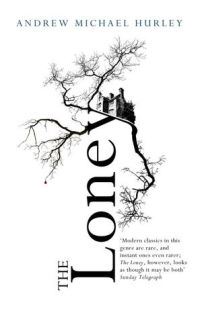
25458371Book: “The Loney” by Andrew Michael Hurley
Publishing Info: John Murray, August 2015 (first published September, 2014)

Where Did I Get This Book: The library!

Book Description: If it had another name, I never knew, but the locals called it the Loney – that strange nowhere between the Wyre and the Lune where Hanny and I went every Easter time with Mummer, Farther, Mr and Mrs Belderboss and Father Wilfred, the parish priest.

It was impossible to truly know the place. It changed with each influx and retreat, and the neap tides would reveal the skeletons of those who thought they could escape its insidious currents. No one ever went near the water. No one apart from us, that is.

I suppose I always knew that what happened there wouldn’t stay hidden for ever, no matter how much I wanted it to. No matter how hard I tried to forget…

Review: Gothic horror is a genre that has been making something of a comeback in recent years. The themes of isolation and madness and the inability to trust what you are seeing are all very upsetting, and in a time when manor homes and country life has changed and dwindled these themes have evolved to fit even the urban life. So perhaps our recent fears of losing touch with each other in spite of being so connected have paved the way for this comeback. “The Loney” by Andrew Michael Hurley goes back to the basics of the gothic horror novel, setting it in an earlier time and yet making it feel even earlier. Though it takes place in the 1970s in England, sometimes I felt like it was the turn of the century given the superstitions and moralities that ruled in this book.

It concerns Smith, a man who in present days hears of a news story of a child’s remains, found in the area where his family took a Catholic Pilgrimmage in the 1970s when he was a boy. He takes the reader back in time to this long forgotten and repressed weekend. His older brother, Hanny, can’t talk, and their mother Mummer, zealously Catholic and desperate to cure him, thinks that a ritual in this area will cure him. Her strict and dogmatic approach to Catholicism is in stark contrast to that of the new Priest, Father Bernard, who is far more meditative and lenient when it comes to Christ’s teachings. The Old Ways versus Reform is one of the many themes in this book, as change is both sought out but also feared. Mummer doesn’t believe that medicine can cure Hanny, but also thinks that this new Priest isn’t devout enough, in spite of the fact he very well may be representative of changing times and ideals. Mummer is putting her faith into Father Bernard, but has no actual faith in him because he doesn’t line up with what she thinks faith should be. The priest who better lines up with her was Father Wilfred, a tyranical and steadfast priest who passed away shortly before their trip, a death surrounded by strange rumors of it’s circumstances.

And then there are the locals, which consist of two groups. The first is a man and woman couple, and a pregnant teenager that Hanny is especially taken by. Smith and Hanny don’t get much concrete information about the girl, why she is here, and who the father of her child is. Just that this may not necessarily be her first time at the birthing rodeo. Then there are the strange men who wander through the countryside with their dog, and in and out of the pilgrims’ path. I couldn’t help but get some serious “Wicker Man” (the original, not the terrible remake) vibes whenever they came into play, their own beliefs in stark contrast to those of Mummer and Father Bernard (and the newly deceased Father Wilfred). They too have their own rituals and beliefs, and their own zealotry. I can’t say that the way that they were mysterious and threatening in their weird ways was a new concept, but it did serve an interesting purpose in this book when contrasted with Mummer’s beliefs. Mummer may be faithful and righteous, but she is cruel and cold to her children, especially Hanny. And then you have the strange and threatening locals who have their own anti-Christian beliefs, but who ultimately get shit done in their own ways, even if it is also pretty terrible. And given that this book takes place in Lancashire, the area that has a history of witch trials and witch burnings, the locals and their motives and powers are all the more relevant and creepy. It became clear by the end that “The Loney” was a meditation of faith, religion, and true belief at the expense of others. Even if true belief does work in some cases, there is always going to be some kind of cost.

I say that this is horror because the setting is classic to the genre. The characters wander around misty and dank moors, surrounded by coastline, marsh, and ruins. Smith feels alone in his own fears and skepticism of how this pilgrimage will go, but his love for his older brother makes him desperate to believe that all is well, even when it’s clear that it most certainly isn’t. But while the themes were spot on in this book, in gothic tone and religious reflection, I think that my biggest problem with this book was that it wasn’t particularly scary. At least not to me. I had gone in expecting some kind of slow burn creepiness that would unsettle me through and through, but instead I was just sort of ‘oh. okay’ by the end of it. The themes are interesting, and I liked the comparison and contrasting between the Catholic beliefs and the beliefs and strange, Nativity-esque ritual that the locals were doing (and whose grim climax fittingly happens during Easter weekend). The metaphor and symbolism weren’t lost on me. But I wish that it had been scarier.

For those looking for a scary book, “The Loney” may not be for you. But for those looking for an examination of deep and unyielding faith and the awful things it can reap, you may want to check it out.

Rating 7: A story with fascinating themes on religion and zealous faith, but not as scary as I had hoped it would be.

Reader’s Advisory:

“The Loney” is included on these Goodreads lists: “Folk Horror and Mystery”, and “Best of Little Known Authors”.

Find “The Loney” at your library using WorldCat!


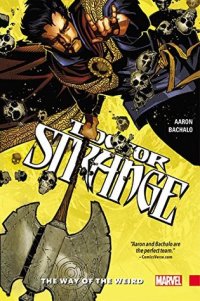
Kate’s Review: “Doctor Strange (Vol.1): The Way of the Weird”

26030872Book: “Doctor Strange (Vol.1): The Way of the Weird”

Publishing Info: Marvel Comics, May 2016

Where Did I Get This Book: The library!

Description: Only Doctor Strange can protect our world from the darkness beyond — now, witness the full toll that constant struggle takes on Earth’s Sorcerer Supreme! Every spell cast comes at a cost, but what happens when Strange falls behind on his tab? Find out as the good doctor wakes up somewhere very odd, nearly naked — with no spell books, no weapons and no memory of how he got there…or why all the monsters are chasing him! And as a new visitor to Strange’s Sanctum Sanctorum learns one wrong door can lead to oblivion, a magic circle of Strange’s friends and allies are about to face their greatest threat. Dark forces are destroying everything mystical in the multiverse, and their sights are set on this dimension. Magic’s days are numbered, and Doctor Strange is not ready!

Review: Okay, listen up, nerds. I’ve said it before, but I’m saying it again. I am very solidly a DC girl when it comes to my comic book stuff and movies (Deadpool and X-Men being exceptions). I have dabbled in multiple Marvel comics, but ultimately (besides Deadpool) I haven’t found many Marvel stories that resonate with me, or that I feel a desperate need to continue. But I have always been vaguely intrigued by Doctor Strange. For one thing, the very premise of his character is right up my alley. I mean, sorcerers are awesome and I will always get behind that kind of thing. But the bigger reason is that on one of my favorite TV shows, “The Venture Bros”, there is a character named Doctor Orpheus who is based upon Doctor Strange. And I love me some Doctor Orpheus. Now Doctor Strange is no Doctor Orpheus, but I actually enjoyed this comic all the same.

What I liked about this comic is that Doctor Strange has found himself at a place where using his magic has caused him to play a very high price when it comes to his existence. He’s incredibly powerful and can help others with his magic, but all of that comes with consequences to himself. He lives in a very haunted and paranormally active house, known as the Sanctum Sanctorum. He can only eat food that is so far out there and filled with magic because regular food no longer sustains him, and even hurts him. He has few friends and few contacts outside of his housekeeper/cook/martial arts teacher/confidant, Wong. And while he thinks that he is fine in this existence, when magic itself starts to disappear from his home and his life, he has to come to terms with how far gone he is and how much he relies on it. And it’s cost to him. He is no longer able to do whatever he needs to do in terms of magical acts and powers. There are now consequences to his magic, and that makes him no longer the all powerful being that Doctor Strange has kind of been up until this point. It’s pretty dark in theme, but the tone never feels brooding or morose. It always treads the line pretty finitely.

This book also introduces us to a new character named Zelma Stanton, a librarian from the Bronx who is the perfect foil for our sorcerer. We get a human who is unfamiliar with this magic to fill in for the reader, who needs things explained to her the way that we do. But it’s done in a way that never feels over-done or exposition heavy. In fact, Zelma is a very fun and witty character who, I think, is going to be fun to follow. Also, HELLO, she’s a librarian! That alone was enough to make me love her immediately. I also do have to give some serious props to Marvel when it comes to how they handle adding new characters of different backgrounds, races, orientations, and histories. It’s always great seeing more diversity in comic books, so welcome Zelma and I hope you stick around!

The overarching mystery of where the magic is going has been put into motion, as other Sorcerer Supremes like Strange have been murdered. But it’s no where near being fully explained. I wasn’t as interested in this mystery as I was interested in Zelma, or Doctor Strange’s background and his present troubles. I know that some of his troubles are derived from this arc, but I would have been perfectly fine if this was just a character study of a person who can no longer function without an outside force there to keep them going. So I guess I kind of wish that this was going to be more like “Sandman” and less like other superhero comics. The good news is that it still has my attention. While I’ve looked at other Marvel comics and said ‘oh yeah, I’ll go on eventually’, only to not go on at all or to be disappointed by where they eventually went, I am looking forward to seeing where Doctor Strange is going next. Not enough to get me to go buy the comic books themselves, mind you, but still. I want to keep going. That’s pretty impressive in and of itself.

Rating 7: I wish that this was more like a Gaiman-exploring mythology a la “Sandman”, but “Doctor Strange: The Way of the Weird” entertains. Strange and Zelma are a good team.

Reader’s Advisory:

“Doctor Strange (Vol.1): The Way of the Weird” isn’t on many lists yet. But I would recommend it if you like “Sandman” for sure, and the newer Marvel comics.

Find “Doctor Strange (Vol.1): The Way of the Weird”at your library using World Cat!


Kate’s Review: “Lovecraft Country”

25109947Book: “Lovecraft Country” by Matt Ruff

Publishing Info: Harper, February 2016

Where Did I Get This Book: The Library!

Book Description: The critically acclaimed cult novelist makes visceral the terrors of life in Jim Crow America and its lingering effects in this brilliant and wondrous work of the imagination that melds historical fiction, pulp noir, and Lovecraftian horror and fantasy

Chicago, 1954. When his father Montrose goes missing, twenty-two year old Army veteran Atticus Turner embarks on a road trip to New England to find him, accompanied by his Uncle George—publisher of The Safe Negro Travel Guide—and his childhood friend Letitia. On their journey to the manor of Mr. Braithwhite—heir to the estate that owned Atticus’s great grandmother—they encounter both mundane terrors of white America and malevolent spirits that seem straight out of the weird tales George devours.

At the manor, Atticus discovers his father in chains, held prisoner by a secret cabal named the Order of the Ancient Dawn—led by Samuel Braithwhite and his son Caleb—which has gathered to orchestrate a ritual that shockingly centers on Atticus. And his one hope of salvation may be the seed of his—and the whole Turner clan’s—destruction.

A chimerical blend of magic, power, hope, and freedom that stretches across time, touching diverse members of one black family, Lovecraft Country is a devastating kaleidoscopic portrait of racism—the terrifying specter that continues to haunt us today.

Review: As a fan of horror literature, it’s no surprise that I do have a fondness for the works of H.P. Lovecraft. Last year my husband got me the complete annotated Lovecraft for our anniversary, and it sits on my shelf in it’s huge and daunting glory. Cthulhu is also one of the most badass literary monsters out there. But here is the thing about Lovecraft: He was an unrepentant racist and white supremacist. People can trot out the ‘man of his time’ argument, but that doesn’t matter at the end of the day. I don’t think that there is a problem enjoying his works and his writing, but to deny that other side of him is inherently dishonest and problematic.

And that brings us to “Lovecraft Country” by Matt Ruff. Ruff takes the works of Lovecraft and pays homage to them while simultaneously exploring and exposing American racism. He splits this book into multiple parts that all have their own little twists on Lovecraft stories or Lovecraft themes, and while they could probably stand alone, they all combine into an overarching narrative. While all of these stories have magical elements, from a haunted house to a magical cult of sorcerers to a magic elixir, all of these elements are connected to race. The haunted house does house a ghost, but the creaks and bumps in the night may also be the neighbors who are angry that a black woman has moved in. The sorcerer cult hopes to use Atticus as a vessel, as his ancestor was a slave who was raped by her master and started his recent familial line. The magical elixir gives a black woman the ability to turn white when it would be beneficial to her. They all reek of Lovecraft, but are so much more.

Our protagonists, led by Atticus Turner, are all members of an African American family in Jim Crow Era America, but their hardship and experiences of violent racism are by no means limited to the Deep South. Atticus has his uncle’s “Safe Negro Travel Guide” (based on “The Green Book”) to tell him what areas are or aren’t safe for him and George to be in, but that doesn’t keep him immune or safe from non-magical threats such as racist cops and locals who threaten or even give chase to them. It was pretty clear from the get go that the greatest threats in this book were not going to be Cthulhus or ancient ones, but White America and the hatred and bigotry that it stewed in during the time period of the novel. On the cover of this book, designed to look like a pulp novel, there are a number of things that show you just what you’re getting into. The blurb that sticks out says ‘America’s Demons Exposed!’, and right below it there are images of ghostly figures that look a whole lot like the Klan. This book is less about Lovecrafts works, and more about Lovecrafts thoughts, thoughts that were shared by people in all parts of America. And I think that Ruff did a great job of using this theme to talk about the ugliness that still haunts us today, even though we as a country are so uncomfortable thinking and facing that. America’s demons indeed.

And plus there were definitely some really creepy parts in this book. My favorite section was that of the Haunted House, “Dreams of the Which House” (a play on Lovecraft’s “Dreams in a Witch House” in both title and theme). The story concerns Letitia, Atticus’ childhood friend who had accompanied him on his road trip. She is looking to buy a house, and the one that Letitia settles on is in an all white neighborhood. It’s also very cheap because it’s haunted. So when Letitia is spending time in this house, there are strange and scary things that the ghost does. But then, there is an even bigger threat from the neighbors, who have started to harass Letitia just as much as a ghost might. I liked this one the best because I liked Letitia, I liked how she interacted with the ghost, and I liked how she made a stand in her house against ghost and Klan alike. Ruff also did a very good job of addressing racism in housing and property rights in this chapter, and microaggressions faced in day to day living (with Letitia and Atticus both being assumed to be ‘the help’ in her own home by white characters).

And I should say that while I think that Ruff did a good job, my perspective is that of a white woman, so if there are issues that POC have with this interpretation of racial oppression and bigotry, please do let me know.

“Lovecraft Country” is a book that I hope Lovecraft fans will read. I hope that many people will read it, as it explores themes that we simply can’t ignore.

Rating 8: A very well done horror story on both supernatural and realistic levels.

Reader’s Advisory: 

“Lovecraft Country” is included on these Goodreads lists: “Quality Dark Fiction”, and “Best Weird Fiction Books”.

Find “Lovecraft Country” at your library using WorldCat!


Kate’s Review: “The Vampire Lestat”

43814Book: “The Vampire Lestat” by Anne Rice

Publishing Info: Knopf, 1985

Where Did I Get This Book: The Library!

Book Description from Goodreads: Once an aristocrat in the heady days of pre-revolutionary France, now Lestat is a rockstar in the demonic, shimmering 1980s. He rushes through the centuries in search of others like him, seeking answers to the mystery of his terrifying exsitence. His story, the second volume in Anne Rice’s best-selling Vampire Chronicles, is mesmerizing, passionate, and thrilling.

Review: When I was in high school, like many teenage girls who didn’t feel like they fit in anywhere, I went through a few identity explorations. I was a hippie, I was a rocker, I was a punk, and I was, mostly at the heart of myself, a goth. Black lipstick, black nail polish, dog collar, I had all of that and a sullen attitude and an obsession with the macabre. Though not as extreme, I was kind of Molly Shannon’s character from the “Goth Talk” Saturday Night Live skit.

960x540
Though my best friend was more of a flannel and Minnesota Wild merchandise kind of guy. (source)

I also had a serious love for vampires. This was before “Twilight”, so my objects of obsession were “Buffy the Vampire Slayer”, and Anne Rice’s “Vampire Chronicles”. I read “Interview with the Vampire”, “The Vampire Lestat”, and “Queen of the Damned”, but quit the series once I figured out that it was super different from the movie “Queen of the Damned”, which was probably where my true heart was in regards to that that universe. But that should come as no surprise to anyone who knows me, as that movie was all about vampire bad boy goth rocker Lestat and his swagger.

f1de26026296cbb10412cbaef70f9265
I’m not sorry. (source)

So one night my husband and I decided to watch “Queen of the Damned”, and the next day I decided to pick up “The Vampire Lestat” at work. Call me inspired. It wasn’t long after starting, though, that I realized just how much that movie bastardized the book, the characters, most everything from the Anne Rice stories. I guess I’d blocked that out.

Picking up after “Interview with The Vampire”, “The Vampire Lestat” is the origin story of that book’s antagonist, Lestat de Lioncourt. We knew he was a snarky snippy bad boy in “Interview”, so now we get his side of the story in “The Vampire Lestat”. Unlike “Interview”, “The Vampire Lestat” is a book about a vampire who has few to no regrets about who he is at the end of the day. What I had forgotten from my high school years is that Lestat is not only a brat and an egoist, he also probably has too many emotions and feelings about those around him and those he cares about, which ultimately screws him over again and again. I like that Rice gave him the same problems as other angsty vampires of that trope, but instead of being gloomy and sulky, he turns it into armor. Lestat is definitely a cruel and destructive character by the end of this book, but seeing why he is that way is the kind of story I am a huge, huge sucker for. I especially liked his relationship with his friend and lover Nicky, a sensitive soul who isn’t cut out for the vampire life. It lays groundwork for why Lestat is so drawn to Louis, in spite of their clear differences. The descriptions of the decadent life of pre-Revolutionary France were sumptuous and rich, and Rice took me to every single place that she wanted to. While her writing can tread into the melodramatic at times, I love how she can really transport the reader into her world.

I also like the brass balls that Rice had in writing an openly bisexual character (knowing some of his love interests down the line I say bisexual instead of gay) to be her protagonist. While I’m sure in the 80s it could have been written off as ‘he’s a vampire and therefore some kind of twisted creature’, the love that Lestat has for Nicky and Louis both is never portrayed as anything other than real and all encompassing. True, they aren’t the most healthy of relationships (at all), but in the subtlety and banter and tenderness of these characters, Rice wrote up a story far more romantic than the movie version of “Queen of the Damned” did when they forced Lestat into a monogamous and hetero relationship with Jessie (not that I’m not a fan of that too, because I am, but it seems so sanitized compared to this book. And that came out in 2002! This book was written in 1985 for God’s sake!). And tragic. So very tragic. Lestat has vulnerability in this book that I had completely forgotten about, but it doesn’t compromise how ruthless he is. If anything the fact that he can love so much and be so cruel and vicious makes him all the more intriguing to me.

But then there are the not as good things. This book suffers from serious  fantasy bloat, as while it is supposed to be Lestat’s story we also get some background for other characters that doesn’t feel like it fits. I love Marius and I like Armand, but I wasn’t here for their stories, I was here for Lestat’s. Unfortunately, these backgrounds were shoehorned in, and I found myself skimming those parts, which is too bad because that mythology is definitely interesting. I just didn’t feel that it fit in this story. There was also the uncomfortable relationship that Lestat had with Gabrielle, his first vampire fledgling who also happens to be his mother. While nothing was explicit and while Lestat was more preoccupied with Nicky, the weird erotic undertones between these two were a bit off putting. I want to like Gabrielle, because there is a lot of depth there. She has her place as a woman during the 1700s, so becoming a vampire gives her a new freedom that she never could have experienced when she was alive. So it’s really unfortunate that her presence was a bit more uncomfortable than it should have been given the potential that was there.

Overall, re-reading “The Vampire Lestat” was a fun endeavor if only because I appreciated it a bit more this time around. I will probably re-visit “Queen of the Damned” (the book) at some point, but for now I’m content with the bastardized movie and thinking about Lestat, Louis, and Nicky.

Rating 7: I love Lestat to death and his voice is snarky, bitchy, and dark. His story, however, is a bit convoluted and sometimes loses him as the main character.

Reader’s Advisory:

“The Vampire Lestat” is included on these Goodreads Lists: “Rooting for the Bad Guy”, and “Best Gay Vampires” (you knew this was coming. Lestat and Louis FOREVER!).

Find “The Vampire Lestat” at your library using WorldCat!


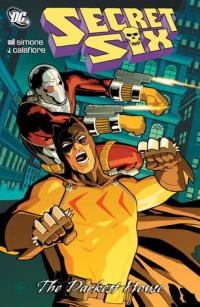
Kate’s Review: “Secret Six (Vol.6): The Darkest House”

12138927Book: “Secret Six (Vol.6): The Darkest House” by Gail Simone and Jim Calafiore (Ill.).
Publishing Info: DC Comics, January 2012

Where Did I Get This: The library!

Book Description from Goodreads: As a member of the Secret Six is determined to bring back a loved one from the Gates of Hell using a ‘Get Out of Hell Free’ card stolen back in the first arc of the series. Meanwhile Bane must face his inner demons and make some crucial decisions regarding his future with the Secret Six!

Review: And here we are. We have reached the end of The Secret Six arc, pre- New 52. I wasn’t ready to say goodbye, really. I put it off as long as I could. But the time has come to say goodbye to my favorite mercenary super villains (who are not really all that villainous). Which sucks all the more because it was a very indefinite goodbye, with little closure for really any of the characters I have come to love. In their final arc we go back to the beginning, bringing back the much fought over ‘Get Out of Hell Free’ card that was so coveted in Volume 1. I’m sure you can probably guess who wants to use this card. After all, Scandal Savage hasn’t really gotten over Knockout, even though she’s dating the very lovely Liana. But when she decides to use it, she finds that someone has backstabbed her and taken the card for themselves. Our next arc involves a Hail Mary attempt for the Six, with Bane deciding that it is time to try and take out his long held enemies once and for all.

I don’t know how I feel about the end of this. It was annoying that there was one last bit of backstabbing. I thought we were past this, guys. So much about this storyline left me feeling a bit cold. For one thing, Scandal, darling, you have a lovely, LOVELY companion in Liana. So why are you deciding NOW that you need to go get Knockout back from hell? I had thought that she had moved on and was very happy with her and Liana, as I feel that Liana is far more interesting than Knockout is. It didn’t help that Liana was put in a very precarious situation and Scandal was too busy trying to get her old lover back to really assist her until it was almost too late. THIS DID NOT SIT WELL WITH ME. It just felt weird to bring Knockout back right at the end of things. And maybe they didn’t know it was the end. But it feels needless.

I also am frustrated that Bane just decides that they are going to take out Batman’s allies, which in turn leads to their downfall as a team. This also felt like a weird plot choice to me! Especially since I thought that he was doing pretty well with this group of people, and was possibly done with this Batman obsession. But what do I know? I guess they just needed to end it somehow and so WHY NOT END IT WITH THE GODDAMN JUSTICE LEAGUE TAKING THESE POOR LOSERS OUT? I was pleased that Huntress was there to critique and criticize the whole concept of heroes and what makes a hero. Because let’s be honest, the thing that I like about Secret Six is that they are kind of ambiguous, and could be good if they really wanted to be. And not only could they be good, they are so inept at being totally bad (outside of MAYBE Bane) that there was no way they stood any kind of chance.

All of this said, there were things in this that I liked. More sweet moments between Jeanette and Deadshot (and her being very dominant when kissing him just made me grin from ear to ear) and a sweet scene between an isolated Ragdoll and Scandal were great, and when they were in Hell I was especially satisfied by what Catman got to see, given that his father was such a horrible person and has, indeed, ended up in this awful, torturous place. My favorite arc, however, was a date that Bane went on with Liana’s friend and fellow dancer Spencer. He took her to a carnival, guys. A CARNIVAL.

bane2
(source)

This was everything I ever wanted.

So, while I was ultimately disappointed with the end of the series, I still loved “Secret Six” as a whole. I loved all of these characters. I loved Simone’s writing. I wish that there was more. I may have to see how the New 52 Secret Six are. But I feel like the originals will always hold the key to my heart.

Rating 7: A somewhat weak end, but Bane going on a date is so good. I’ll miss the Six.

Reader’s Advisory:

“Secret Six (Vol.6): The Darkest House” is included on these Goodreads lists: “Diverse Heroes in Comics/Graphic Novels”, and “Greatest Graphic Novels”.

Find “Secret Six (Vol.6): The Darkest House” at your library using WorldCat!

Previous reviews of “Secret Six”: “Villains United”,  “Unhinged“, “Depths”, “Danse Macabre”, “Cats in the Cradle”, and “The Reptile Brain”.

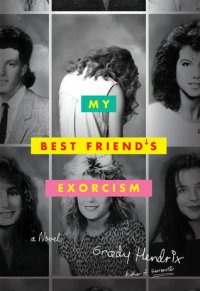
Kate’s Review: “My Best Friend’s Exorcism”

26118005Book: “My Best Friend’s Exorcism” by Grady Hendrix

Publishing Info: Quirk Books, May 2016

Where Did I Get This Book: I own it.

Book Description from Goodreads: Abby and Gretchen have been best friends since fifth grade, when they bonded over a shared love of E.T., roller-skating parties, and scratch-and-sniff stickers. But when they arrive at high school, things change. Gretchen begins to act…different. And as the strange coincidences and bizarre behavior start to pile up, Abby realizes there’s only one possible explanation: Gretchen, her favorite person in the world, has a demon living inside her. And Abby is not about to let anyone or anything come between her and her best friend. With help from some unlikely allies, Abby embarks on a quest to save Gretchen. But is their friendship powerful enough to beat the devil?

Review: As a child who was born in 1984, I have vague memories of the 1980s and the cultural amazements that this decade had to offer. Much of my pop culture influences from my early years were solidly 1980s fodder, as my favorite childhood movies were “Ghostbusters” and “Bill and Ted”, I have memories of my nanny subsisting on a soundtrack of Madonna and Prince, and definitely remember a lot of shades of neon in the wardrobes of those around me. I also remember washing my Mom’s car in our driveway using a rag with Reagan’s face on it, because ‘we like wiping mud onto Reagan’s face’, as my Dad put it one day. So I have enough awareness of the decade to have at least a little bit of nostalgia for it. This means, of course, that when I heard about “My Best Friend’s Exorcism” I practically jumped out of my skin in pure, unadulterated excitement. A horror novel that drips of 1980s nostalgia?

giphy1
All this needs for maximum excitement is some Ecto-Cooler and some push pops! (source)

True, sometimes the 80s factor was laid on pretty thick, but the good news is that our protagonists, Abby and Gretchen, stand well enough on their own that they aren’t 80s stereotypes walking around on the pages. Hendrix did a really good job of creating a believable and complex girl friendship, so well that I was kind of surprised by it. Not to say that a guy can’t write this kind of thing, but it felt pretty true to life, ups and downs and all, without feeling like it was pandering to the audience. Abby is a girl from a lower income family (during a time when greed was so good) who is desperate to live the upper class life that Gretchen has, even if it’s vicariously and even if Gretchen’s parents are pretty wretched people most of the time. Gretchen’s family life is very representative of this egomaniacal Reagan’s America, and the setting of Charleston, South Carolina adds the racist and sexist and repressive attitudes of Dixie into this already gross recipe. The tension of the hierarchical culture is always present, as Abby is at a prestigious private school on scholarship, surrounded by rich kids (and administrators) who act like friends, but always see Abby as The Other because of her family income. The privilege reeks off of the kids in this school, and Hendrix brings it up through various situations and scenes that not only show the monetary privilege, but racial privilege as well. This is not an idyllic Charleston by any stretch of the imagination, as racism, misogyny, and Satanic Panic are always beneath the surface.

To me I was incredibly fascinated with Gretchen’s possession, and the ways that it manifested. For one, Gretchen’s place in society is one that a stereotypical exorcism story may not place her in. Instead of the daughter of a single parent whoring around actress a la “The Exorcist”, Gretchen’s parents are no doubt the kind of people that William Peter Blatty thought to be the ideal parents. They are conservative, they are religious, and they are strict to be sure that Gretchen has no improper influences in their home. One scene that stuck out in my mind was when Abby and Gretchen were caught listening to Madonna, and when Gretchen’s mother catches them she beats her daughter pretty violently with a hairbrush. A very, very interesting choice of family for a demon to target, in my opinion. It was as if Hendrix took that old chestnut exorcism story theme of ‘if you accept God and Jesus into your life, bad things won’t happen to you’, and spits in it’s face. Bold move, Hendrix, and I feel like it paid off. It was also a cool choice to make Abby, the girl whose family isn’t religious and doesn’t necessarily believe in this stuff, the person to cling hard to the possession theory. Satanic Panic was prevalent in the late 80s and early 90s, where lots of otherwise rational people believed that Satanists were conspiring against the country, so Abby was a good representation of that. I also liked that I was left questioning just what was going on in this story. Hendrix threw enough red herrings and misdirections in there that I was questioning what was the product of a demonic possession, and what was the product of trauma, or really just the fallout of mean girls doing mean things to each other.

And since it wouldn’t be a horror story without some horrific moments, I am happy to report that there are a fair number of decent scares in “My Best Friend’s Exorcism”. Hendrix is pretty solid and taking a concept that could be seen as light hearted and tongue in cheek, and then make it into something very unsettling and disturbing. While I’m not really one to be scared by possession stories in general, there were some moments in here that had me on the edge of my seat, just as there were moments that really grossed me out. One moment in particular. I won’t give it away, but let’s just say that a certain fad diet urban legend was used to the most disgusting degree as a means of demonic torment towards a frenemy of Gretchen’s and Abby’s….

giphy2
What has been read can never be un-read…. (source)

There were some things about this book that made me a bit uncomfortable. I understand that Hendrix was setting a place and time and doing so with certain attitudes. But some of the casually thrown about racist and sexist and homophobic things thrown around, while no doubt prevalent to 1988 in Charleston, made my modern sensibilities very uncomfortable. I get what he was trying to do, but I also think that it sometimes fell flat and came off as tone deaf. I cringed a bit more than I wanted to at times.

Overall, however, I tore through “My Best Friend’s Exorcism” and greatly enjoyed the ride. It isn’t for the squeamish at times, but those with an affection for the 1980s and strong girl friendships may want to give it a try. Just…. you know, prepare yourself.

Rating 8: A fun and scary book that puts a very complex and real girl friendship at the center. Sometimes it felt a bit fumbling when it came to social issues, but overall it was a good read.

Reader’s Advisory:

“My Best Friend’s Exorcism” is included on these Goodreads lists: “Upcoming Books of Note: Horror”, and “Book Titles That Give You No Choice But To Check Out The Books”. I would also say that if you liked this, give “The Exorcist” a try if you haven’t already. Lots of influence comes from it, obviously.

Find “My Best Friend’s Exorcism” at your library using WorldCat!

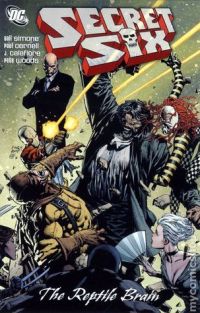
Kate’s Review: “Secret Six (Vol.5): The Reptile Brain”

10241987Book: “Secret Six (Vol.5): The Reptile Brain” by Gail Simone, Paul Cornell, Jim Calafiore (Ill.), and Pete Woods (Ill.)

Publishing Info: DC Comics, May 2011

Where Did I Get This Book: The Library!

My Summary: The Secret Six have split up, with Bane and Jeanette on their own and Scandal, Catman, Deadshot, Ragdoll, and Black Alice remaining. But they soon find themselves on the opposing sides in a mission. Bane’s team is supposed to annex a lost world called Skartaris for the government, while Scandal’s team is hired by Mockingbird to kill them before they can. It’s Six vs Six, and not everyone may make it out alive.

Review: I hate it when teammates fight. This is one of the reasons that I was lukewarm on “Captain America: Civil War”, and had a hard time watching parts of “Batman Vs Superman”. I just want my favorite characters who are friends to remain friends and not hate each other. So when we got to this story arc of The Secret Six, I knew that I was going to a rough spot for me as a reader. Bane and Jeanette have their own team now, which would be fine if Scandal’s Six weren’t trying to kill them as ordered by Mockingbird. I knew that this was going to happen sooner or later, but that didn’t make it any less upsetting.

The pros of this story are that it gave Black Alice a lot more to do this time around outside of angsting. I also liked seeing King Shark make his Secret Six full debut, as he is so damn funny and obnoxious. It was also really neat that Simone decided to address some deeper themes in this arc, specifically that of annexation and colonialism. Black Alice has a lovely monologue about how using the people of Skartaris for their own agendas is wrong, and how they should be left to live their own lives and not ‘civilized’. It treaded towards a bit clunky in it’s execution, but it never quite got there because Black Alice is an earnest teenage girl and it works for her. Had it come from anyone else it might not have worked as well. There was also the watershed moment between Bane and Scandal, who have been at odds and butting heads for quite awhile now. They needed that moment, and I love their very loving, father-daughter relationship.

Speaking of father-daughter relationships, Vandal Savage comes back in this collection, and that was far less interesting to me. I didn’t really need a re-hash of Scandal going against her father’s wishes because she’s a lesbian. Make no mistake, I like that Simone was addressing the complications of this relationship because of who Scandal is (and why her father can’t or won’t accept it), and I really love that Scandal is uncompromising in her sexuality. Given the recent pattern in TV where lesbians have been dropping like flies, I like that in 2011 Scandal was here, being herself, standing up for herself, and not backing down or being thrown aside (though I should note that Scandal’s life isn’t totally immune to the bury your gays trope, as her lover Knockout died heroically and tragically). It just solidified what a creep Vandal is when it comes to his child, even though he does seem to deeply care for her. Complicated? Sure. Interesting? Not as much as it was the first time we addressed this wedge between them. The only benefit is that it gave Scandal more to do, and I am always for that.

We also got a great moment where Deadshot called Jeanette “Sweetie-Pie Cookie Puss”. Those two are just the best.

“The Reptile Brain” was a step down from “Cat’s in the Cradle”, but it was still a good volume. And soon I will be at the end of my “Secret Six” run, as the next volume, “The Darkest House”, is the end of the line.

tumblr_ni4qvgaeep1tx8y2qo1_1280
(source)

Rating 7: A dip from “Cat’s in the Cradle”, but some touching moments between Scandal and Bane, plus more Scandal character exploration, kept the heart firmly beating in this series.

Reader’s Advisory:

“Secret Six (Vol.5): The Reptile Brain” is included on these Goodreads lists: “Diverse Heroes in Comics/Graphic Novels”, and “Greatest Graphic Novels”.

Find “Secret Six (Vol.5): The Reptile Brain” at your library using WorldCat!

Previous reviews of “Secret Six”: “Villains United”,  “Unhinged“, “Depths”, “Danse Macabre”, “Cats in the Cradle”.

Kate’s Review: “HEX”

25533076Book: “HEX” by Thomas Olde Heuvelt

Publishing Info: Tom Doherty Associates, April 2016; Original Dutch edition published in April, 2013.

Where Did I Get This Book: I own it.

Book Description from Goodreads: Whoever is born here, is doomed to stay ’til death. Whoever settles, never leaves.

Welcome to Black Spring, the seemingly picturesque Hudson Valley town haunted by the Black Rock Witch, a 17th century woman whose eyes and mouth are sewn shut. Muzzled, she walks the streets and enters your homes at will. She stands next to your bed for nights on end. Everybody knows that her eyes may never be opened.

The elders of Black Spring have virtually quarantined the town by using high-tech surveillance to prevent their curse from spreading. Frustrated with being kept in lockdown, the town’s teenagers decide to break their strict regulations and go viral with the haunting, but in so doing send the town spiraling into the dark, medieval practices of the past.

Review: It takes a heck of a lot to scare me, guys. I’ve been watching suspense films like “Rear Window” and “Vertigo” since I was a kid, I started watching slasher films when I was in middle school, and my first venture into horror movies in the theater was when a chaperone took me and a friend to “The Blair Witch Project”the summer before freshman year of high school. Suffice to say, I’m a veteran at the horror rodeo, and it now means that the subject of horror I’m consuming needs to really pull out all the stops in very specific ways before I am affected by it. It’s good in that I’m not kept up late at night jumping at every sound, but bad in that I like being scared for funsies every once in awhile.

But “HEX”? “HEX” kept me up at night.

giphy
I don’t know why I thought reading it before bed was a good idea. (source)

I think that it was a combination of multiple things that made “HEX” such a scary read for me. The first is that Katherine van Wyler (aka the Black Rock Witch) just sounds like a really scary entity. She walks in silence, towers over people, just stands in place for hours on end, and has her eyes and mouth sewn shut. I mean jeeze, this is the stuff that my nightmares are made of. While the people in Black Spring are used to her, and while they pretty much know how to handle her, that isn’t to say that they aren’t living every day in fear of her and what she could do, and has done in the past. You do get Katherine’s backstory, but Heuvelt saves that for a little later. The book itself just opens with our protagonist family, Steve, Jocelyn, Tyler, and Matt Grant, going about their business as Katherine stands and blindly stares in their living room. I closed the book after the first chapter and just sat there for a moment, wondering what exactly it was I was getting myself into. There are scenes with her that took my breath away because I was so tense, and scenes where I was nearly shaking. She is absolutely terrifying. But Katherine is tragic as well. She has cursed this town for what it did to her back when Black Spring was still run by Dutch settlers, and as you find out more about what that is, the more sympathy you feel for this creature that everyone lives in fear of. Not to say that the reader isn’t still in fear of her as the book progresses. I mean, the description alone is just scary as hell, and there were moments of characters tromping through the woods at night that took me back to that summer before freshman year when I was practically pissing myself watching “The Blair Witch Project”. That is to say I had to nope the hell out and stop reading.

tumblr_mzvq6a4myn1reitwwo6_r1_250
Something about witches, man. (source)

But something that sets this book aside from other genre horror is that it is not The Black Rock Witch who should be most feared. The town of Black Spring has evolved in such a way because of this curse that they have turned into something far more unsettling. While I didn’t have as big of a problem with the HEX Group (the surveillance group that keeps tabs on Katherine’s whereabouts through surveillance and the vigilance of the townspeople reporting in on their phones), I most certainly had a problem with the Town Council. Led by a zealous old man named Cotton Mathers, the elders of the Town Council are determined to make sure that everyone in Black Spring keeps this life and Katherine a secret from the outside world, and anyone who goes against those rules are subject to unspeakable punishments. Black Spring is still stuck in an age that is very reminiscent of the Puritans, and their religious fervor and practices of atonement and groupthink were by far the most upsetting moments in this book. The way that the town gets whipped up into a frenzy out of fear of Katherine just reeked of the scariest parts of history, and while I sometimes had to put the book down because of the witch-related suspense, I was far more upset by the absolutist violence and terror that the humans in this book doled out, to their own citizenry and to Katherine alike.

The characters were also very well written. The members of the Grant Family were the main protagonists, with Steve and Tyler at the forefront. Steve and Jocelyn were unlucky enough to move to Black Spring from the outside and realize that they couldn’t leave for longer than a couple weeks, but Steve has since adapted to the ways of the town and believes in keeping the status quo as a way to protect his family. Steve loves his family to a fault, but most of his love is for his oldest, Tyler. Steve really just wants everyone to be safe, and is acquiescent to the life that they have found themselves in, even if that means that they are ultimately prisoners.

Tyler, on the other hand, has grown up in Black Spring, but has also had the Internet his whole life and has seen the outside world, and wants to live in it. Their conflicting views provide the main conflict at the heart of this book: the old ways being pushed against by the younger generation. Tyler is the one who wants to expose the Black Rock Witch Haunting to the world via his website and blog, thinking that if outsiders knew it may break the curse, while the elders of the town think that it would just spread it. I understood both sides of the argument, and what I liked best about it was that neither side was completely right, or wrong. Tyler has a hard lesson to learn in who to trust for such good intentioned (though ultimately selfish) sentiments, as one could argue it’s one of his friends, Jaydon, who sets of the events of this book. Jaydon has his own personal vendetta against Katherine, and that in combination with a childhood of abuse and rage set off a lot of very upsetting events and violence directed at Katherine that made me, as a woman, a bit sick to my stomach to read. Again, it’s the people of Black Spring that are the biggest villains of all in this book.

I also greatly enjoyed the character of Robert Grim, the head of the HEX Group and main tracker of Katherine’s movements. He’s brash and he’s sarcastic, but he’s also one of the few voices of reason in Black Spring. He’s a realist living in a town filled with superstition and fear, and he is noble to a fault when it comes to trying to protect the community he doesn’t really fit into, not at the heart of his being. It would have been so simple to make him just another antagonist, but Grim is quite possibly the most righteous of characters in Black Spring.

“HEX” was a fabulous, very scary read. Fans of horror really need to pick this one up, because it has everything you could ever want. But maybe don’t read it at night. And if you live by a wooded area like me, definitely try not to think about that either…

Rating 9: This book scared the dickens out of me. Definitely recommended but maybe not for those easily scared.

Reader’s Advisory:

“HEX” is pretty new and not on many Goodreads Lists as of yet, but I would put it on “Best Books Featuring Witches”, and “Boil Boil Toil and Trouble”.

Find “HEX” at your library using WorldCat!