Diving Into Sub-Genres: Werewolf Horror

This post may contain affiliate links for books we recommend.  Read the full disclosure here .

We each have our own preferred genres of choice. Kate loves horrors and thrillers, really anything that will keep her up at night! And Serena enjoys escaping through hidden doors into realms of magic and adventure. We also read mysteries, historical fiction, graphic novels, etc. etc. And that’s not even counting the multitude of sub-genres contained within each greater genre. In this series, one of us will present a list of our favorites from within a given sub-genre of one of our greater preferred genres.

This past year I read a few werewolf horror novels. As I was reading them it occurred to me that I really haven’t read THAT MANY werewolf books over the years, probably because I’ve always been more of a vampire girl (what can I say? I’m basic). But when it was my turn to take on another sub-genre deep dive, I decided that I should take a look at werewolf horror. Because it’s not really a sub-genre in horror that gets as much attention as other monster tales.

Werewolf and shapeshifter mythology has been around for hundreds and hundreds of years. Whether it’s the story of Romulus and Remus being raised by a she wolf, or medieval trials of supposed werewolves being prosecuted and executed, or pre-Christian belief systems speaking of people who could turn into wolves, the werewolf has been with various cultures since the dawn of modern time. I’m far more familiar with werewolf movies than books, with films like “The Wolfman”, “The Howling”, “An American Werewolf in Paris”, and “Ginger Snaps” all being well loved by the horror movie community. And now I shift my attention to books, to promote the sub-genre of a monster who needs a little bit more attention! Vampires can’t have all the fun.

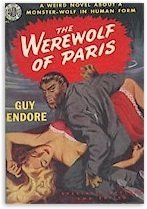
“The Werewolf of Paris” by Guy Endore

As mentioned above, Guy Endore’s “The Werewolf of Paris” is considered to be the “Dracula” of werewolf novels. It centers on Bertrand Caillet, a soldier during the Franco-Prussian War whose journal is found by a researcher years later, detailing his existence as a werewolf. It details his early life as a werewolf born into a werewolf family, and follows him through his adolescence and into his time in the military, where his violent urges could be used in a more constructive manner… until he is discovered. Told in a similar epistolary style as “Dracula” through journal and confession entries, “The Werewolf of Paris” hasn’t had the same staying power in the mainstream as the Count. But it’s still considered the start of the modern werewolf tale.

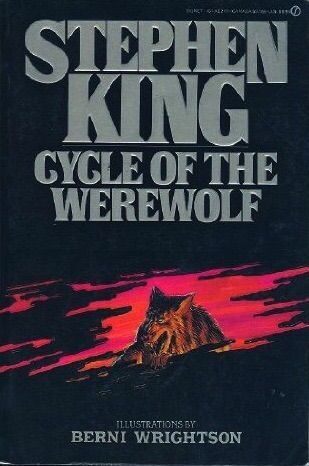
“Cycle of the Werewolf” by Stephen King

You know my boy Stephen was going to make this list. His novella “Cycle of the Werewolf” was a short but effective werewolf story about a small town being terrorized over the course of nine months by a mysterious wild animal, and a kid who is trying to solve what is going on. King loves having kid protagonists who are trying to solve a mystery, and he’s quite good at it, and “Cycle of the Werewolf” has Marty at the center, a disabled boy in a wheelchair who is on the hunt for the werewolf over the nine months of murders and fear, trying to figure out who in town has to be the lycanthrope menace. It was adapted into a movie called “Silver Bullet”, starring Corey Haim as Marty (may his memory be a blessing), Megan Follows as his sister (the best Anne Shirley), and Gary Busey as the wild and crazy Uncle Al (uh…. life imitates art I guess?). It’s a quick werewolf read that’s pretty straightforward, and it has the King flavor behind it.

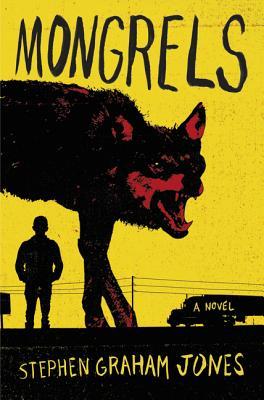
“Mongrels” by Stephen Graham Jones

I love Stephen Graham Jones, and while it wasn’t my first read of his, it was the first one I heard of due to a friend really enjoying it. And Jones has such a unique perspective and voice in his horror stories that it’s no shock that his werewolf tale “Mongrels” is on this list. It follows an Indigenous family of werewolves that have had to stay ahead of their pasts and had to stay incognito as best they can, but the youngest member of the family is about to hit the age where they will be able to tell if he has inherited the wolf aspect of the family line. It’s part werewolf tale, part family drama, part coming of age, and Jones combines the themes to make a heartfelt and eerie tale of family and identity. But he also has some really interesting and sometimes fun werewolf lore, creating a fun mythology in a way that only Jones can.

“Such Sharp Teeth” by Rachel Harrison

I love Rachel Harrison and basically every take on a supernatural foe that she has (look for my review of her latest novel “Play Nice” during Horrorpalooza!), and her werewolf book “Such Sharp Teeth” is so on brand for her feminist and somewhat cozy horror style. “Such Sharp Teeth” follows Rory, a somewhat aimless woman who has reluctantly returned to her hometown to support her pregnant twin sister Scarlett. While there she is attacked by an unknown creature, and then as she approaches the full moon her body goes through some changes. This werewolf story does have the body horror that we come to expect from the sub-genre, but Harrison brings her personal touch to it by also exploring feminine rage, the lack of control over a body going through strange and unhinged changes, and the way that trauma can make a festering monster in all of us that will eventually have to come out.

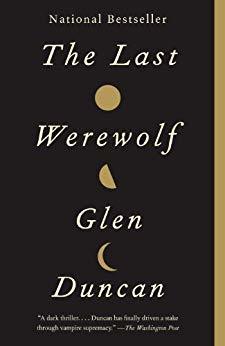
“The Last Werewolf” by Glen Duncan

This is probably one of the more literary books on this list, and I remember when it was a pretty hot commodity at my library, being checked out a lot. I know that it is also a bit of a polarizing read, as some people thought that it was TOO literary. But I think that while we shouldn’t turn our noses up at genre fiction, it’s also cool to see a more literary authors take on more genre associated themes, so I say good on you, “The Last Werewolf”! Jake has been wandering the Earth in solitude for centuries, a werewolf with no pack, no connections, and a terrible affliction that he wishes to be rid of. While he plans his suicide, he suddenly gets pulled into the orbit of a person that he could actually find himself connecting with… Oh, and also a murder. I actually haven’t read this one, but I have read other books by Duncan (using another name) and I’m sure he did a lot of interesting stuff with it!

“The Devourers” by Indra Das

I’m ending the list with what is, to me, the most unique werewolf story on the list, taking from Indian mythology and folklore and creating a historical and present day werewolf story. A modern day college professor named Alok is living in Kolkata, India, and one night he is approached by a strange person who has quite the story to tell, and who is desperate to tell it, cobbled together from ancient parchments, notebooks, and even skins. As Alok hears the tale of a woman who is raped and impregnated by a shapeshifter from another place, and as she searches for answers and for retribution, she finds a world of monsters, shapeshifters, different cultures and societies. Alok takes down the story for the stranger, and learns of things he never thought could be true. It takes from mythologies that many Western readers may not be familiar with, and it’s relentless, gory, and unapologetic with how it tackles werewolves and shifters.

What werewolf books have you enjoyed over the years? Let us know in the comments!
Diving Into Sub-Genres: Romantic Fantasy


This post may contain affiliate links for books we recommend.  
Read the full disclosure here.

We each have our own preferred genres of choice. Kate loves horrors and thrillers, really anything that will keep her up at night! And Serena enjoys escaping through hidden doors into realms of magic and adventure. We also read mysteries, historical fiction, graphic novels, etc. etc. And that’s not even counting the multitude of sub-genres contained within each greater genre. In this series, one of us will present a list of our favorites from within a given sub-genre of one of our greater preferred genres.

There is a near constant debate going on right now about the definitions and delineations between what constitutes “romantasy” and what should be categorized as fantasy romance. Part of the problem, I think, comes down to simple word order and what it says about the type of book you’re picking up. As readers will have noticed following this series of posts about subgenres, or about these terms in general, is that the primary genre is always the last word, preceded by some sort of descriptor that gives additional detail into the specifics of the subgenre. So, for fantasy, you have things like urban fantasy or gothic fantasy. Further, for subgenres within romance you see things like dark romance or historical romance. Descriptor followed by primary genre.

Now, if you break apart the term “romantasy” you would get “romantic fantasy,” seeming to indicate that you are reading a fantasy book first and foremost with a dash of romance added in. It should meet all fantasy expectations with more free reign on how the romance is dealt with, as it is the “sub” of the greater “genre.” Unfortunately, this is NOT what “romantasy” means. Instead, it’s the opposite, a subgenre of the romance genre with all the requirements for the romance genre coming in first consideration, with fantasy used only as a support frame for the love story.

This all leaves it very confusing for the readers who are truly looking for the “romance” subgenre of fantasy, instead of the “fantasy” subgenre of romance that is so often being marketed to them. To make matters worse, more and more people are saying that this former option should be called “fantasy romance.” Which, as I just laid out, reads as completely opposite of the way that readers understand and approach genres and subgenres! To those not in the know, “fantasy romance” should be shelved right next to “historical romance” in the romance section; it only makes sense!

As you can see, I’ve labeled this post “romantic fantasy” and I truly think we should push this as the term used for this subgenre. “Romantasy” is so established as a term on its own at this point that I don’t think there would be any confusion regarding the fact that it was originally a combination of these two words. Instead, by using “romantic fantasy” instead of “fantasy romance” we’d be following the traditional rules of categorizing subgenres, thus making it easier for fantasy readers to find their preferred subgenre within this greater whole.

So, all of that said. Here are some “romantic fantasy” books that I think represent the subgenre well. I’ve intentionally tried to pick books that can be seen as the fantasy counterbalance to many of the popular “romantasy” tropes being put out today. Unlike those, these books follow fantasy genre conventions first and foremost, with the romance coming in second fiddle. Per the usual with fantasy, several of these are series, and as such, the romance plays out as slow-burn throughout, with love stories moving only incrementally (if at all!) in some books.

Wildwood Dancing” by Julier Marillier

Fairie/Fae Romance – Faerie romances are by far one of the most popular sub-subgenres seen in “romantasy” currently. There’s no denying the power of Maas and her influence in this area. On the other side, Marillier is a go-to for any fantasy reader looking for the romance subgenre within. I’m pretty sure every single one of her books would fit within this category. But this one is the closest to the sort of faerie romance that we typically see in “romantasy.” Unlike those, the romantic interest isn’t actually Fae, but much of the story still revolves around faerie, their wonder and danger. A couple other great examples for this with actual Fae romantic interests would be “Emily Wilde’s Encyclopaedia of Faerie” by Heather Fawcett and “Spinning Silver” by Naomi Novik. I highly recommend both of those as well, but I’m using another book by Novik below and I reviewed the latest “Emily Wilde” book just last week!

Kushiel’s Legacy” trilogy by Jacqueline Carey

Dark Romance/Enemies-to-Lovers – While I don’t read much of it, I know that “dark romance” is another very popular version of “romantasy” currently making the rounds. And it goes without saying that “enemies to lovers” is the current GOAT of tropes. The romantic fantasy comparable option for this one is a no brainer! “Kushiel’s Dart” goes into undeniably dark directions, both in its exploration of lust and sexuality and in the violence of this world. But there is also one of my favorite love stories at the heart of this trilogy as well! Beyond that, it’s political fantasy novel first and foremost, with detailed world-building and a strong focus on the political manipulations and strategizing of the characters that make up the story. Phedre is probably one of my Top 10 favorite fantasy heroines of all time, and that’s saying something considering just how many great ones there are out there!

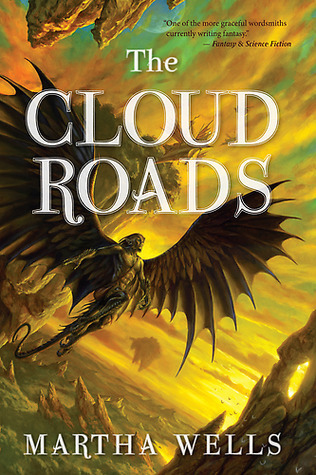
“The Books of the Raksura” by Martha Wells

Monster Romance – Ruby Dixon and her “Ice Planet Barbarians” is probably one of the most popular examples of this in “romantasy.” There are less human/monster love stories in fantasy (other than the typical urban fantasy fare with vampires and werewolves, but at this point, those barely count as monsters, as bizarre as that is!). But this was a perfect excuse to shine a light on one of Wells’ most over-looked trilogies! The story follows Moon, a shapeshifter who finds out he has a great destiny. As you can see from the cover art on this and the other books, Wells’ characters are wholly unique species with only small nods to humanistic traits. There is a ton of action and adventure to be found in this trilogy, but also a sweet romance at its heart. I’m hopeful that now that Wells’ other back catalog titles are getting re-prints that we’ll see new editions of these soon!

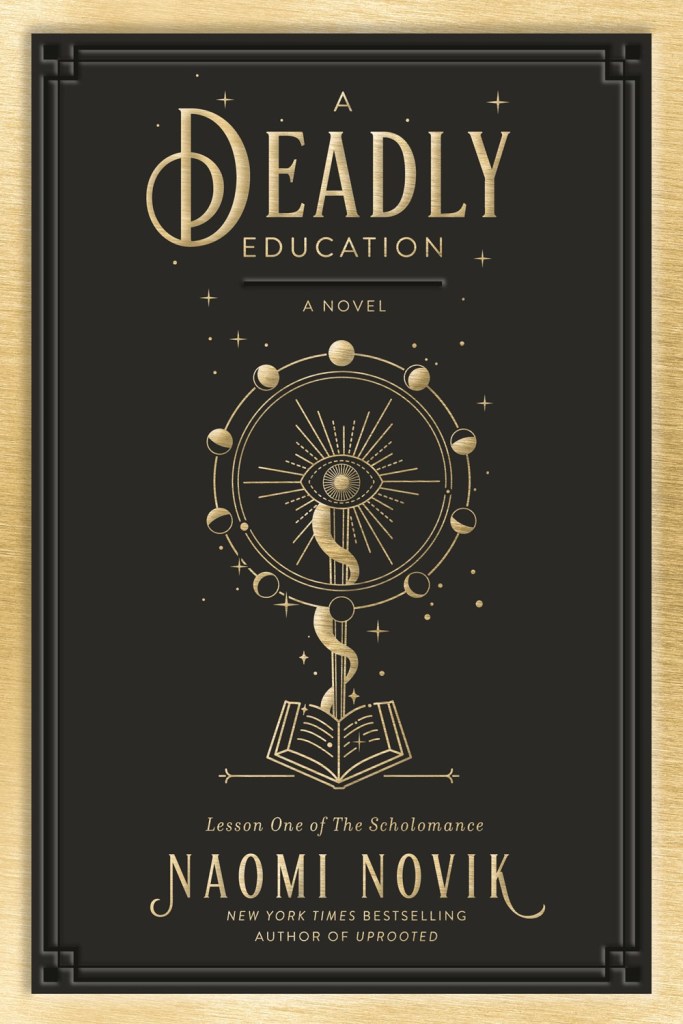
“Scholomance” trilogy by Naomi Novik

Dark Academia/Rivals-to-Lovers – I’ve already mentioned Naomi Novik on this list, as she has several others books that would easily fit within this subgenre (“Uprooted” is another great example that falls more on the fairytale re-telling side of things). But I wanted to highlight this trilogy as comparable titles to the dark academia trend seen a lot in “romantasy.” I love everything about this trilogy, but the stand-out feature is probably the narrator, El, who has one of the strongest voices as a narrator that I can think of. She’s also prickly and stand-off-ish, and her awkward stumble into the central romance is incredibly endearing.

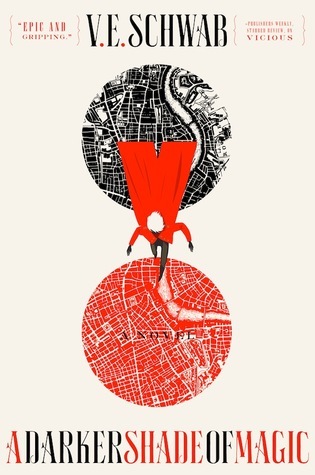
“A Darker Shade of Magic” trilogy by V. E. Schwab

Multi-POVs/Multi-Romances – To be fair, multi-POV books are by far more common in the fantasy genre than in the romance genre. But as I couldn’t really think of any comparable options for why-choose/throuple romances, here we are. There are two lovely romances in this one, but true to the fact that they are fantasy novels first and foremost, neither love story really starts up until the second book. The central one follows Kel and Lila, the main characters of the story. And the second is a M/M romance that kind of came out of nowhere, but turned out to be heart-wrenching all on its own. Beyond that, the trilogy as a whole is so perfectly crafted that I think it’s one of those rare series where each book individually would warrant a “10” rating.

“The Rook and the Rose” trilogy by M. A. Carrik

Slow Burn – I have to say, it’s hard to think of a true slow burn in “romantasy.” But, as I’ve talked about extensively now, as a subgenre of the romance genre, it’s a bit hard to work a slow burn love story into a true HEA romance novel. But slow burns are a staple of romantic fantasy. As many of the above books highlight as well, the love stories often don’t even get truly started until the second book in. So too with this one. Instead, the focus is more on the intricate world-building, various hidden identities, and the careful balance who know s which of the numerous secrets floating around. The first book barely hints at the central romance, but it really blossoms in the second one!

What romantic fantasy books are your favorites? Let us know in the comments!

Diving Into Sub-Genres: Post-Apocalyptic


This post may contain affiliate links for books we recommend.  
Read the full disclosure here.

We each have our own preferred genres of choice. Kate loves horrors and thrillers, really anything that will keep her up at night! And Serena enjoys escaping through hidden doors into realms of magic and adventure. We also read mysteries, historical fiction, graphic novels, etc. etc. And that’s not even counting the multitude of sub-genres contained within each greater genre. In this series, one of us will present a list of our favorites from within a given sub-genre of one of our greater preferred genres.

Back at the height of the COVID pandemic I was having a hard time even THINKING about post-apocalyptic books because it kind of felt like we were teetering towards such a thing. Now I’m kind of whistling past the graveyard a bit, with the election behind us and all of my anxieties about what it all means in the coming months and years, as the sub-genre that REALLY stood out in my mind for this entry in our ongoing series was ‘end of the world’!!!!

I really enjoy a post-apocalyptic story, and as a sub-genre it can branch across multiple genres and still pack a punch. And it’s a theme that has been prevalent in literature for millennia, with stories like “The Epic of Gilgamesh”, “Dharmasastra”, “Völuspá”, and “The Book of Revelations” being of a more ancient time. The 1800s brought stories like “The War of the Worlds” by H.G. Wells, “Darkness” by Lord Byron, and “The Last Man” by Mary Shelley. The 20th Century really expanded on the sub-genre with lots of branches off within the sub-genre itself, be it due to disease, climate disaster, supernatural means, or manmade problems. It’s a dark sub-genre to be sure, but there is also an ever present theme of humanity finding pockets of banding together to find community and perseverance and connection during the darkest and most challenging of times. While my list is merely scratching the surface, these are the titles that sprung to mind when I was thinking about this sub-genre and how it still keeps going, even if it changes.

Book: “The Stand” by Stephen King

Probably considered one of the heaviest of hitters of the modern post-apocalyptic sub-genre, “The Stand” is one of my very favorite books, and there is a reason it has stuck around since it was published in the 1970s. This was my first Stephen King book and it set the stage for my entire reading journey from thirteen year old me up til now. “The Stand” is an apocalyptic tale about a manmade bioweapon called Captain Tripps, a superflu that has a 100% mortality rate, which is let loose in a lab accident and then set free by a fleeing soldier, ravaging the world population. Random survivors, who have immunity based on chance, soon find themselves being called to two different places. The first is in Colorado, with a kindly woman named Mother Abigail. The second is in Las Vegas, with the malevolent and mysterious Randall Flagg building an army to take control and wreak havoc. As the two bands of survivors rebuild their lives, and start to encroach on each other the groups will face off in a final stand of good versus evil. In true King fashion it’s not only the horror elements of this book, be they due to illness or terrible humans, but also the very well thought out characterizations of many characters, that make this story an absolute favorite of mine.

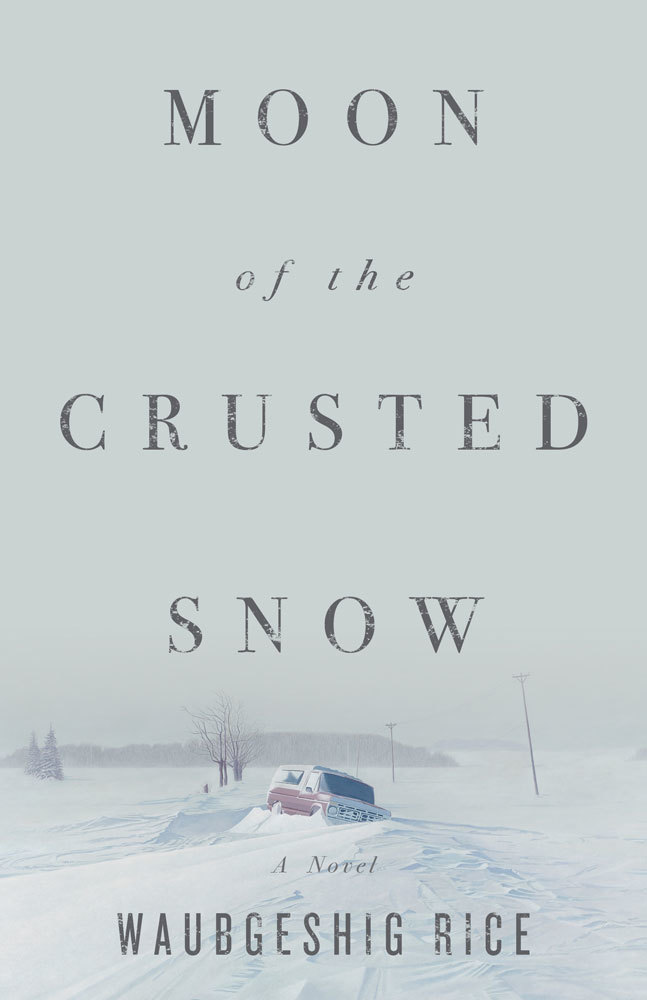
Book: “Moon of the Crusted Snow” by Waubgeshing Rice

Unlike “The Stand”, and many other apocalyptic/post-apocalyptic novels, “Moon of the Crusted Snow” is an end of the world tale that is a bit ambiguous about how society collapsed and the world as it was known ended. We approach it through the eyes of an isolated Anishinaabe community high up north, which has low communication with the outside world except in certain circumstances. So when they realize that something HAS happened, they aren’t wholly sure as to what ‘it’ was, and now have to figure out how to survive through the winter to rebuild their own community in the spring. But that’s less the point of this novel, as the focus is more on the fact that 1) Indigenous communities already experienced an apocalyptic event when white colonizers entered their lives, and 2) the end of something means the beginning of something else. We also see how cycles repeat as well, as the community lets a white survivor into their community as an act of good faith in hopes of helping him, and then he starts to throw his weight around and endangers everyone through his actions. This one is a slow burn thriller with a bit more of a quiet voice, but a strong and effective one as well. And a sequel came out last year!

Book: “Zone One” by Colson Whitehead

Zombie tales have kind of cycled out as of late, though for awhile they were VERY popular in the horror world. There are a whole plethora of zombie apocalypse stories to pick from, but I decided to highlight “Zone One” by Colson Whitehead, as it is a unique entry into the zombie apocalypse theme. We follow Mark Spitz, a man who is a survivor, or ‘sweeper’ in a post zombie apocalypse New York. He patrols and takes out zombies to try and make New York livable once more, and as we follow Mark over a few days of this job we learn about how the zombie apocalypse unfolded, how Mark survived it, and how people are trying to rebuild society and remove all of the straggling zombies who are still roaming about. Whitehead applies a very literary lens to the zombie sub-genre, and in it we see a slice of life character study as well as a post-apocalyptic tale of resilience and rebuilding.

Book: “Parable of the Sower” by Octavia Butler

This is, for me, perhaps the most disturbing book on this list, if only because it feels a little too real in how it approaches the end of the world through societal disparity and climate change. Doesn’t really help that it starts in 2024. OH WELL! Octavia Butler’s “Parable of the Sower” follows Lauren, a teenage girl living in an America that is at a boiling point, with the haves living in high gated communities and the have nots being locked out and subjected to a dying planet and violence, poverty, and death. When Lauren’s community is eventually overrun, she escapes into the wilds, and starts to not only band together with other survivors, but also starts to create and devise a belief system called Earthseed that will not only bring community back to its followers, but also will get them off a dying planet and to spread humanity across other planets. We read this in book club a couple years ago, and I remember loving it but also being absolutely terrified by how close it was to the reality we are living in at the moment. Butler is a force, and I highly recommend this book, even if it scares the living daylights out of me. Especially now.

Book: “The Fireman” by Joe Hill

And now for some lighter fare! And for Joe Hill, Stephen King’s son who also decided to dabble in an end of the world epic with “The Fireman”! A mysterious illness called Dragonscale has started manifesting in people, where a person develops weird skin lesions, then starts to smoke, burn up, and spontaneously combust. Harper is a nurse who is trying to remain positive throughout, though when she finds out she is pregnant AND develops Dragonscale, her husband Jakob rejects her, and she flees before he gets violent as society starts to crumble. Soon she meets a group of infected people who worship Dragonscale, and believe that they can use it as a blessing and have found a way to keep it under control. Within the group is referred to as The Fireman, as while he keeps his distance from the group for the most part, he has learned to control and manipulate his Dragonscale ‘powers’. But Harper soon realizes that this community may not be the safe haven for her and her baby. I really loved this book, finding it to be jarring as well as incredibly hopeful.

Book: “Station Eleven” by Emily St. John Mandel

I am ending this selection with a book that has really cemented itself not only as a modern end of the world classic, but also as one that focuses on the things that I am trying to focus on at the moment when things are so bleak and uncertain. “Station Eleven” by Emily St. John Mandel is, much like “The Stand”, and apocalypse story about an illness that sweeps the globe and kills millions of people, leading to the collapse of society. But while we do get flashbacks into how the world ended, and into the different characters who persevered, made a mark, or succumbed to it, the main crux of this story is humanity moving forward with community, hope, art, and love. We follow Kirsten and her troupe of fellow artists and performers as they travel the now ravaged U.S., performing for other survivors and keeping art and culture alive while providing hope and community for their audiences. But when they run afoul a maniacal self proclaimed prophet and his dangerous cult, they have to keep themselves and others safe from this group. What strikes me the most about this one, and why it’s my last pick for this list, is that while things are dark, and hard, and dangerous, Kirsten and her community are strong, supporting each other and finding joy even in the hardest times, while actively resisting against chaos, hate, and violence of those who wish to tear it all down. It’s truly a book for our times.

What post-apocalyptic books are your favorites? Let us know in the comments!

Diving Into Sub-Genres: Sherlock/Watson Mysteries

This post may contain affiliate links for books we recommend.  Read the full disclosure here.

We each have our own preferred genres of choice. Kate loves horrors and thrillers, really anything that will keep her up at night! And Serena enjoys escaping through hidden doors into realms of magic and adventure. We also read mysteries, historical fiction, graphic novels, etc. etc. And that’s not even counting the multitude of sub-genres contained within each greater genre. In this series, one of us will present a list of our favorites from within a given sub-genre of one of our greater preferred genres.

There is an entirely different subgenre of mystery fiction that is focused on detectives more broadly and then gets more nuanced from there (hardboiled, noir, etc.). But I’m an unabashed Sherlock Holmes fan, so I’m just skipping over all of those (to potentially be covered later) and just going straight to my favorite version of the genre: Sherlock/Watson re-tellings or re-imagings.

At a certain point, Holmes has become such the quintessential mold of what a mystery book detectives look like that all clever detectives start to look like him. But while Holmes himself is an excellent character, I think the true appeal of the original stories was the dynamic created between both Holmes and Watson. That being the case, I’m going to focus on stories that more directly re-tell or recreate this relationship. There are tons of examples out there, but I’m going to draw from a few of my personal favorites, as well as some of the more creative takes on this famous duo!

Book: “The Beekeeper’s Apprentice” by Laurie R. King

I believe this was my first exposure to a re-telling of Sherlock Holmes! It’s also one of those crazily impressive series where I remember picking up the first book when I was in high school and yet there are still new books coming out today! Admittedly, I’m very behind on the series as a whole, but this still remains high on my list of recommendations for readers looking for a new version of the classic duo. It is also one of the more-closely-tied series to to the original, serving more as a sequel to the classics than as a re-imagining overall with the story starting out on a Sherlock Holmes who has been long retired. He goes on to meet the main character of the story, Mary Russell, who becomes his apprentice and, fairly early in the series, his wife. However, the romantic relationship is very, very far down the list of focal points of the series, with the stories more often centering around the partnership of equals that forms between Russell and Holmes. As it is a long running series, there are definite highs and lows to be found, but the first 8-10 books were all solid entries from my memory!

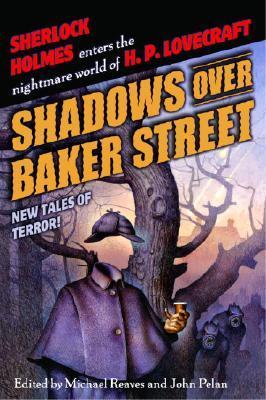
Book: “Shadows Over Baker Street” edited by Micahel Reaves and John Pelan

While I haven’t read this entire collection, the short story version of “A Study in Emerald” (which we read for bookclub a few months ago) is included within. Like that story, the collection mashes together classic Sherlock characters and plots alongside aspects of H.P. Lovecraft’s horror worlds. It’s such a strange concept, but sometimes the more odd the mash-up, the more exciting the creative result is in the end! If you’re looking for a more wild take on the classic detective, than this might be a collection worth checking out!

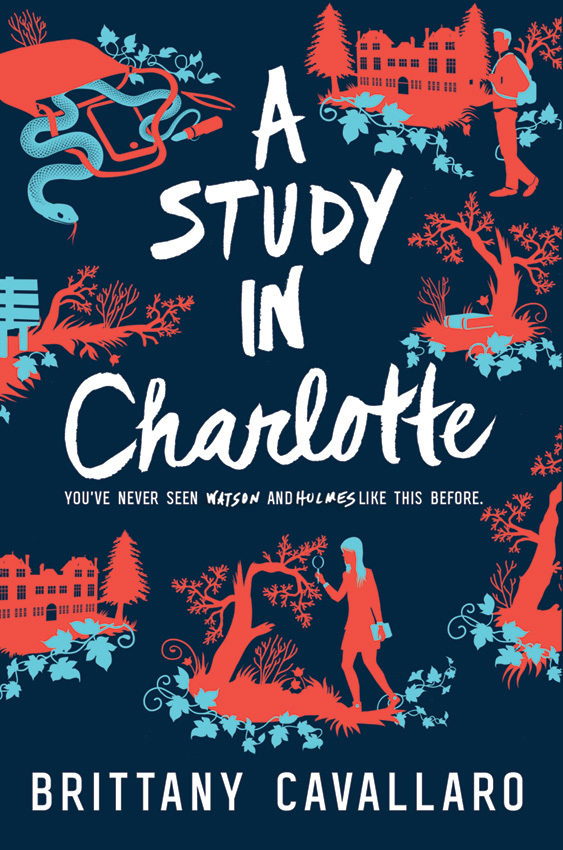
Book: “A Study in Charlotte” by Brittany Cavallaro

This YA book plays around with several aspects of the original. Instead of following the original characters, the story jumps forward several generations, taking place in a contemporary setting and following Jamie Watson as he is thrown into the path of Charlotte Holmes, the great-great-great granddaughter of the original Holmes. Of course, it must contain a mystery at its heart, and this time the duo must not only solve a murder, but also clear their own names, for they are the primary suspects! This is a great introduction to the world of Sherlock Holmes, especially for younger readers who may feel more comfortable picking up a story set in the modern era.

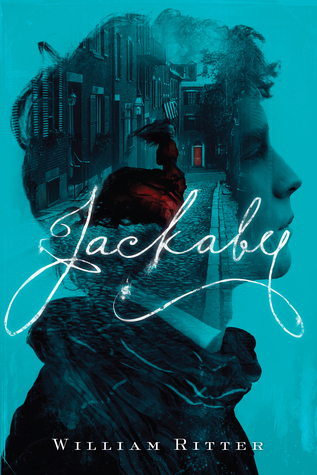
Book: “Jackaby” by William Ritter

This is probably the furthest removed from the original story as any of the books. I could probably create an entirely separate list that is just mystery novels with duos who read as Sherlock and Watson without being directly tied to that series in any way. This is one of those examples. The story takes place in a fantasy world, and the famous detective in this version is a man named Jackaby. However, the book follows the “Watson-like” character, a young woman named Abigail Rook who becomes his assistant as they investigate the supernatural. There are several books in this series, and I very much enjoyed the ones I read. This is definitely a good read for those looking for “Sherlock” vibes, but who are willing to follow the story into brand new territory!

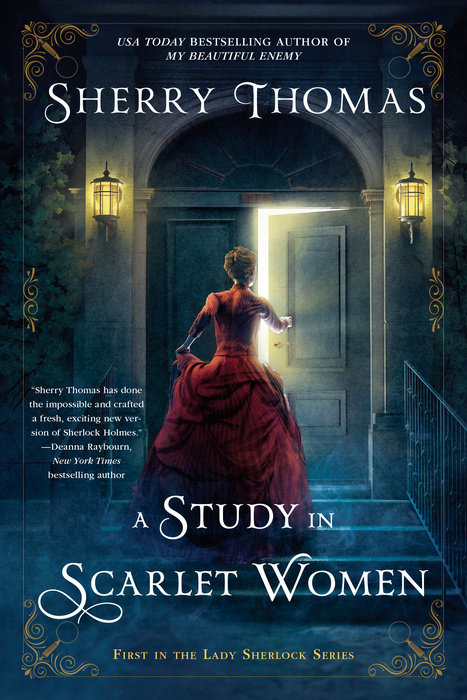
Book: “A Study in Scarlet Women” by Sherry Thomas

No one who reads this blog will be surprised to see this one here! I’ve read a bunch of Sherlock Holmes stories (including everything on this list), and this one is definitely my favorite! Thomas masterfully captures the tone, setting, and style of mysteries that is found in the originals. But she also manages to re-imagine many of the characters into gender-swapped versions of themselves, all while remaining true to the core concepts of their identities. Charlotte Holmes is very much her own character, but at the same time, she is also immediately identifiable as much like the original Holmes. Similarly, the gender-swapped Watson is also fantastic. I can’t say enough good things about this series. And if any readers have been delaying reading it for fear of how much the gender-swapping would impact the characters, do yourself a favor and check it out immediately! I think it will surprise you!

Book: “Dust and Shadow: An Account of the Ripper Killings by Dr. John H. Watson” by Lyndsay Faye

To now go full circle, we will round off the list with a book that follows the original characters largely written as they were first introduced. The twist, of course, is that they are now solving the Jack the Ripper killings. There is much to like about this book, but one of my favorite aspects it the way that Faye returned to the style of Watson recounting the events of the plot itself. This book is also great for how much attention and detail went into the historical aspects of the story. It’s a great read for both fans of Sherlock Holmes as well as those who enjoy Jack the Ripper stories, with an emphasis on historical accuracy.

What are some of your favorite Sherlock/Watson stories ? Let us know in the comments!

Diving Into Sub-Genres: Folk Horror

This post may contain affiliate links for books we recommend.  Read the full disclosure here.

We each have our own preferred genres of choice. Kate loves horrors and thrillers, really anything that will keep her up at night! And Serena enjoys escaping through hidden doors into realms of magic and adventure. We also read mysteries, historical fiction, graphic novels, etc. etc. And that’s not even counting the multitude of sub-genres contained within each greater genre. In this series, one of us will present a list of our favorites from within a given sub-genre of one of our greater preferred genres.

Interestingly enough, while I have decided to focus on the sub-genre of Folk Horror for this edition of ‘Diving Into Sub-Genres’, it’s a sub-genre that I tend to have complicated feelings about. That isn’t to say that I dislike folk horror; on the contrary, if I love a piece of folk horror, I REALLY love a piece of folk horror. The perfect example of this is the film “The Wicker Man”, one of the earlier examples in the sub-genre in which a Scottish policeman goes to the strange and pagan island of Summerisle in search of a missing girl, and finds a community of odd, quirky, and ultimately devious townsfolk who mess with the outsider before pulling one of the greatest twists in horror history. It’s one of my favorite horror films, and my Terror Tuesday friends and I have watched it about three times in our years of movies. There’s also “The Witch”, which brings a Puritan family to the unforgiving wilderness as a witch lurks in the woods tormenting them, though the bigger threat may be the way the family Others their daughter Thomasin. This is a favorite movie of mine, period. But for every “Wicker Man” and “The Witch” there are probably five or so “Midsommar”s, in which I find the final product lacking, underwhelming, or overly pretentious (sacrilege I know, but I really hated “Midsommar”). But it’s absolutely a sub-genre that has a lot of teeth and a lot of potential, so I wanted to highlight some of the stories within.

Folk Horror is generally a kind of horror tale that involves an outsider finding themselves caught up in an unfamiliar place that has ties to folklore or ‘old ways’, and finds themselves in danger at the hands of the people or things they encounter. Superstition, ritualistic practices, nature and the dangers that come with it, and people with hidden motives are usually involved. And while there are occasionally some supernatural elements to be had, usually involving creatures from folklore and Pagan religions, it’s more likely the the threat is going to just be people in one way or another. In terms of books, one of the earlier examples is the novel “Harvest Home”, where a family movies into an isolated rural/agricultural community that adheres to some old timey superstitions about how to make their crops grow. The list I put together has some newer titles, and are mostly books that I’ve enjoyed. Or at least appreciated.

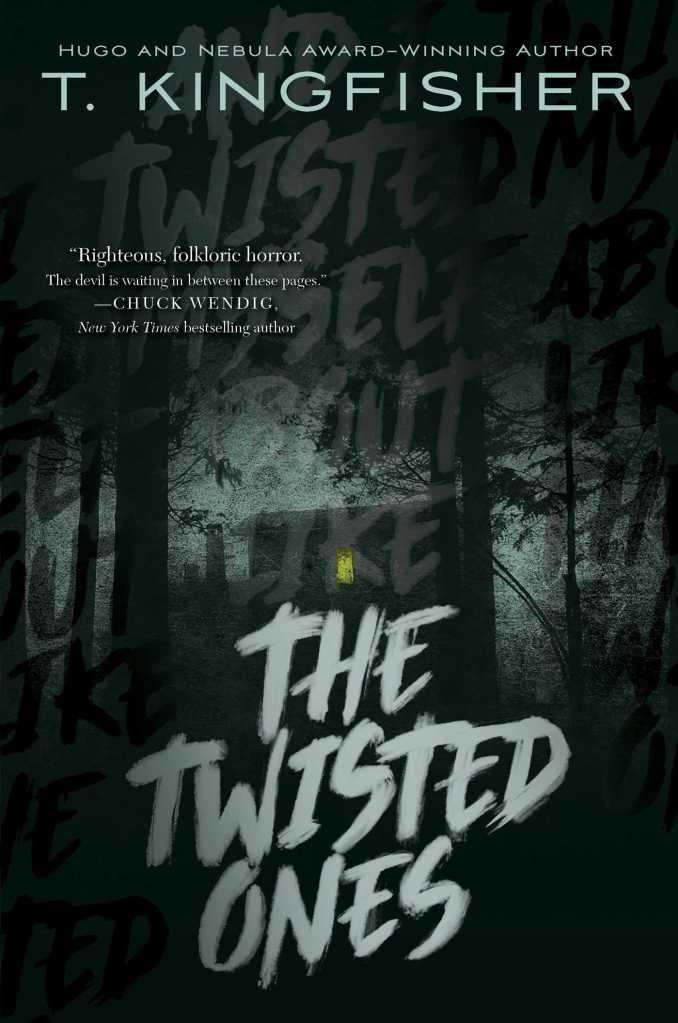
Book: “The Twisted Ones” by T. Kingfisher

I’m starting with a T. Kingfisher book because I really like the easy breezy and sometimes ‘cozy’ horror tone she brings to her novels, and that same tone comes with “The Twisted Ones”. When a woman named Mouse has to clean out her deceased grandmother’s cabin in the wooded wilderness in North Carolina, she thinks it will be a time consuming, but generally easy task. But she soon hears strange noises at night, and sees glimpses of odd beings through the corners of her eyes in the clearing around the cabin. And she soon finds diary entries her stepgrandfather left, describing strange and terrifying beings that stalk the woods, and a mysterious man named Ambrose. As Mouse starts to dig deeper into the mysteries and the strange things she’s encountering, she finds things that are beyond imagination. Kingfisher is always a fun read, and this one has some weird folksy scares to go along with her affable main character.

Book: “The Ritual” by Adam Nevill

This one is a bit more of a straight up folk horror nightmare, and “The Ritual” had enough cinematic horror elements to it that it did get adapted into a film a few years ago, which I found to be fun and creepy as hell. It definitely solidified my fears of camping, I can tell you that much, and the book beforehand had a similar effect. Four old friends are hoping to reconnect their bond that time and shifting priorities has eroded away, and go for a camping trip in the north of Sweden, in a wooded area nestled in the Arctic Circle. When they start to get discombobulated and lost, tensions start to reach a new high. But it’s when they stumble upon an old seemingly abandoned house, which has odd altars, scattered bones, and Pagan symbols, they realize that they aren’t really alone in these woods. There’s a nice build of tension with this one, and some interesting modernization of outsiders meeting old world sensibilities.

Book: “The Loney” by Andrew Michael Hurley

Folk horror doesn’t always have to be in your face with its action and themes while still achieving an overarching sense of dread, and I think that “The Loney” is a good example of this BECAUSE of how quiet it is, until it has you in a stranglehold in the last few moments. This one was a bit of a slow read for awhile, but then when it sped up MAN did it speed up and create an atmopsheric Gothic oddity. In the 1970s a family consisting of a deeply Catholic mother and her two sons, one of whom is developmentally disabled, take a week long retreat to a remote seaside hamlet, with the mother hoping that fervent prayer and visitation to a local shrine can create a miracle to cure her son. During one of these trips, the younger brother Smith, our narrator, encounters a genial but odd group, consisting of some adults and a heavily pregnant teenage girl, as well as hostile locals who don’t adhere to the Catholic dogma that the visitors do. This one not only has the clash of new sensibilities vs old (though a bit subverted as Smith’s mother is VERY antagonistic in her faith), it also has a really twisted conclusion.

Book: “The Hunger” by Alma Katsu

Feel like combining some historical fiction in with your folk horror? Alma Katsu has you covered with her Donner Party horror story “The Hunger”. Because what could make an already true story about getting trapped in the wilderness in the dead of winter and resorting to cannibalism MORE horrifying? BRING IN SOME SUPERNATURAL TERRORS ALSO MAKING PROBLEMS. As the Donner Party moves west in hopes of finding a new life out west, they go on a bad route and get stuck in the Sierras right when winter is about to hit. As their survival becomes less and less likely and they have to start eating the dead to survive, something else and otherworldly is watching and waiting from the unforgiving wilderness. This folk horror trope is definitely along the lines of outsiders moving into an area unfamiliar to them and finding something terrible and unexpected, but it’s also an interesting meditation on the hubris of men, and the way that manifest destiny made settlers think that they were deserving of a new life, when in actuality they had NO idea what they were getting into.

Book: “Pet Sematary” by Stephen King

This is probably the least obvious of folk horror novels on this list, but thinking about it really made me think about the broad swath that folk horror can reach. And “Pet Sematary” TOTALLY has folk horror elements! It follows the Creed family as they move into a new small town and new house near a forest, leaving big city life behind. When the family cat is hit by a car on the busy road, Dr. Louis Creed is led to a backwoods ‘pet cemetery’ by his neighbor Judd, who says that you can bury an animal there and it comes back to life… Though admittedly a little wrong. It works for the cat, though yes, it’s not the same cat it once was. And when horrific tragedy strikes the family, Louis decides to use the burial spot one more time out of desperation and grief. I’m sure you can imagine how it goes. This one is very much in the realm of ‘unrelenting mysteries and horrors of nature’ trope that is found in the sub-genre, as we don’t know WHY the ground can bring things back to life, or why they always come back wrong. It’s a terrifying story not only because of the reanimation, but also the ambiguity.

Book: “Slewfoot” by Brom

This was a favorite read of mine from a couple years ago, and I still find myself going back and skimming through different parts of it. And MAN, does it really fit a folk horror mold, specifically if your kind of folk horror is very much “The Witch” (which, as we all know, is the case for me). After all, Puritans clashing with a supposedly malevolent force in the forest is always going to be up my alley, and in this book nature and forest spirts play a HUGE role in all of it. Abitha is a reluctant Puritan widow who is trying to keep her farm away from her vicious brother in law now that her husband has passed away. When she meets a strange demonic figure in the forest she calls Slewfoot, who has no memory of his past life but has guidance from forest spirits about his role as a vengeful being, they slowly grow a friendship as outsiders. And when the Puritans start to target Abitha, they don’t realize that messing with her is messing with him. I LOVE THIS BOOK, and it combines nature, zealousness, outsiders, and folklore to create a fantastic addition to this list.

What folk horror novels are your favorites? Let us know in the comments!

Diving Into Sub-Genres: Vampire Fantasy

This post may contain affiliate links for books we recommend.  Read the full disclosure here.

We each have our own preferred genres of choice. Kate loves horrors and thrillers, really anything that will keep her up at night! And Serena enjoys escaping through hidden doors into realms of magic and adventure. We also read mysteries, historical fiction, graphic novels, etc. etc. And that’s not even counting the multitude of sub-genres contained within each greater genre. In this series, one of us will present a list of our favorites from within a given sub-genre of one of our greater preferred genres.

The canny reader might do a double-take when seeing this post. “Wait, didn’t these guys already do a ‘Sub-Genres’ post focused on vampires?” Well, tricky tricky, yes and no! Kate featured Vampire Horror as one of her picks a few years ago, but vampires are such a popular supernatural being that they make their way across all sorts of genres, including tons of fantasy, so here we are!

When attempting to differentiate between horror and fantasy vampires, I think its important to consider the overall tone and objective of the story. Is it meant to inspire fear as its primary goal, create and build tension and dread? Or are the vampires more incidental to story more focused on its fantasy or romance elements? What themes is the book exploring and how well do they align with the themes generally found in fantasy vs. horror? Beyond this, how exactly are the vampires themselves presented and what roles are they playing in the story?

While the horrific side of vampires is obvious, the fantasy side often takes on a few different dimensions. Yes, they are “fantasy creatures” like werewolves or ghosts, both of which show up in horror, the latter all the time! But sometimes these creatures stray outside the realm of serving as points of fear, horror, dread, and overt warning to society about various ills or tendencies. Instead, they become the heroes themselves, or, in the case of vampires, more often than not, love interests! It’s pretty easy to see why this latter is the case. The act of drinking another’s blood is clearly intimate, wrapping two beings up in one another about as closely as one can be. And, obviously, it’s one, albeit big and rather horrific, step away from kissing.

But vampires also pop up as the leading characters themselves, often exploring themes regarding isolation, estrangement, and the act of violence for survival. There is also an entire subgenre of paranormal fantasy fiction and urban fantasy that always seems to include societies made up of various supernatural communities all co-existing, and vampires (and often werewolves as their natural enemies) are almost always an included group. They have tons of lore and are an easy group of characters to slot into a story who can serve as both menaces as well as powerful allies.

Recently, we’ve seen a resurgence of vampires popping up in all sorts of fantasy stories. Romantasy, of course, is an easy place to spot this, but vampires have also been showing up more and more in adult and YA fantasies. A few examples include a “Tempest of Tea,” “A Multitude of Dreams,” and “Masters of Death.” Obviously, there are tons of books out there, and I’d argue that “Interview with a Vampire” and the other books in that series which Kate included in her list could also be included here. But I tried to cover a variety of examples in this list of how vampires have been used in fantasy fiction.

Book: “Twilight” by Stephenie Meyer

Let’s just get this one out of the way, as it’s probably one of the first books to come to most people’s minds when they think of vampires in fantasy stories. And it also likely holds the strange position of being both one of the most massively popular vampire stories out there and the reason that we’re only now, around fifteen years later, finally seeing vampires show up again in YA fiction. It was beloved, and then it became such a joke that I think YA publisher were immediately binning any pitches that even hinted at vampires. But it still deserves its spot on this for the massive popularity at the time! Meyer definitely brought her own version of vampires to the world, and if it’s one that is largely laughed out now, there’s no denying the success of this series. We also see in this series both vampires as a romantic interest as well as Bella’s own experiences as a vampire herself. Would I recommend this series nowadays to readers looking for vampire stories? No. But, again, you can’t honestly create a list like this and not include this book, so there ya go!

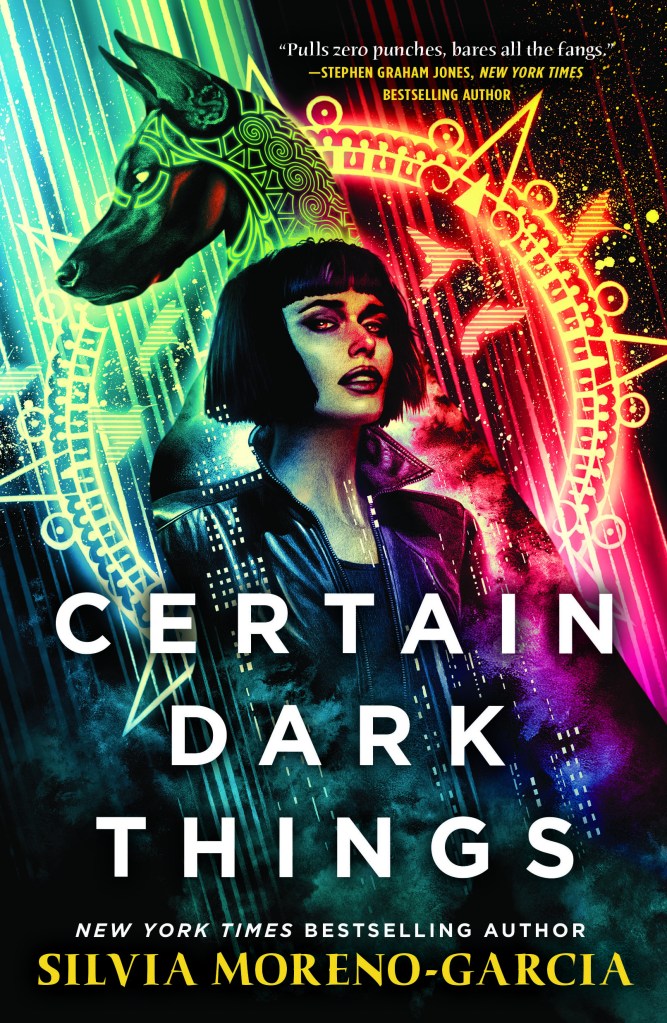
Book: “Certain Dark Things” by Silvia Moreno-Garcia

Silvia Moreno-Garcia is one of those authors who perfectly straddles the line between fantasy and horror, with many of her books teetering right on the edge where they could fall easily into either category. But “Certain Dark Things,” while definitely creepy at times, very much also reads like an urban fantasy at its finest. One of the main characters, Atl, is a vampire who is on-the-run from a rival vampire gang, and over the course of the book she befriends a street kid named Domingo. This book has some of the more creative and interesting versions (yes, plural!) of vampires that I can ever remember reading! And Moreno-Garcia does an excellent job of weaving this lore throughout the story while also exploring the history of Mexico and telling a fast-paced, dangerous story of an unlikely friendship. It’s definitely one to check out if you’re looking for a fresh take on vampires.

Book: “A Discovery of Witches” by Deborah Harness

While I personally didn’t love this story (I struggled with a few of the early aspects of the romance), it’s a massively popular series and a nice example of a fantasy story that includes a world peopled by a variety of supernatural beings. The main character is a descendent from a long line of witches (shocker, I know, given the title!) and during her research at Oxford, she strays across an ancient manuscript that opens up an whole can of worms with many different groups all fighting for access, including a mysterious vampire. This trilogy is several years old at this point, but I think it’s probably due for a resurgence of interest given the popularity of “dark academia” currently, a sub-genre that this would definitely fall in as well.

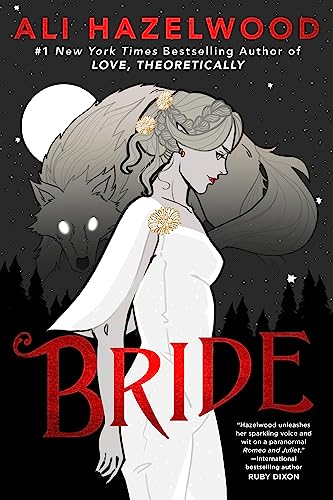
Book: “Bride” by Ali Hazelwood

This is a very recent addition to the subgenre, but I think it’s important to include for one very unique reason: it’s a romance, but the woman is the vampire instead of the male love interest! There are four books on this list that include prominent romances, and in three out of the four, it’s the man who is the vampire. And even there, I think this 75% mark is probably low for the average of male vs. female as vampires in romance. So yes, “Bride” stands out in that it is told from the POV of Misery, a vampire, who finds herself in an arranged marriage with the leader of her people’s mortal enemies, the werewolves. This is another staple of urban fantasies in general, the vampires vs. werewolves mythology. This book follows that typical script fairly closely, but the romance at its heart is clearly the priority of the book, and it was fun reading a story like this from the perspective of a female vampire, rather than the other way around.

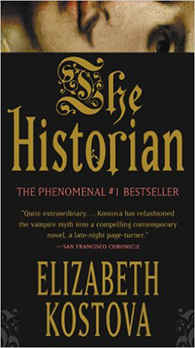
Book: “The Historian” by Elizabeth Kostova

I would say that the primary genre for this one would be historical fiction, with either “horror” or “fantasy” coming second, as the vampires are very much in the background of much of the book. Instead, most of the story follows characters as they travel across Europe trying to piece together the mystery of Vlad the Impaler (the real-world ruler who is said to be the inspiration for Dracula). I absolutely love this book. It’s one that I read years and years ago now, but that always comes to mind when people are looking for recommendations. It’s the kind of story that I feel like almost any kind of reader will enjoy in some way!

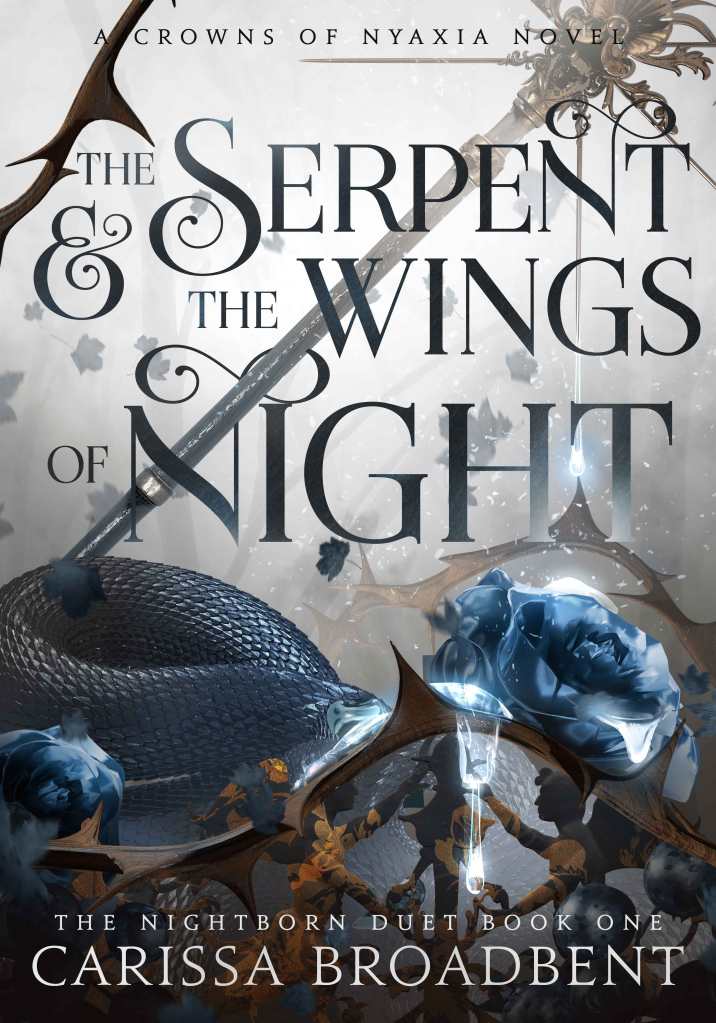
Book: “The Serpent and the Wings of Night” by Carissa Broadbent

Most of the books on this list exist in our real world (with some obvious magical additions!), but this book serves as a great example of a secondary world vampire story! The society that makes up this world is comprised of two different sects of vampires with the relatively powerless human species caught between them. It’s a romantasy story, however, that follows one such human woman’s attempts to gain some power in a world set against her. And, of course, the vampire she falls in love with along the way! This one really took me by surprise with how much I enjoyed it! It’s a great example of a romantasy book that doesn’t skimp on the world-building and fantasy elements of the story, while still have a great love story at its heart.

What are some of your favorite historical thrillers? Let us know in the comments!

Diving Into Sub-Genres: Historical Thrillers

This post may contain affiliate links for books we recommend.  Read the full disclosure here.

We each have our own preferred genres of choice. Kate loves horrors and thrillers, really anything that will keep her up at night! And Serena enjoys escaping through hidden doors into realms of magic and adventure. We also read mysteries, historical fiction, graphic novels, etc. etc. And that’s not even counting the multitude of sub-genres contained within each greater genre. In this series, one of us will present a list of our favorites from within a given sub-genre of one of our greater preferred genres.

As I was going back through my previous “Diving Into Sub-genres” posts, it occurred to me that I hadn’t yet posted any Thriller lists. And when I tried to unpack that reality, I kind of realized that I felt a bit daunted trying to disentangle the ins and outs of the sub-genres of thrillers because I tend to focus so much on very specific sub-genres without branching out too much. You are far more likely to find me deep into psychological thrillers, but spy thrillers? Legal thrillers? Military thrillers? Religious thrillers? Not so much! But I did realize that I have gone past psychological thrillers and have also really enjoyed historical thrillers. Which isn’t REALLY surprising because I do love historical fiction! Therefore it’s no shock that I love a historical story with thriller elements.

Historical thrillers are pretty straightforward, definition wise. They are thrillers (of any type really) that take place in a historical setting. Usually the time and place is imperative to the plot and the circumstances, and the action within has to exist within that vacuum (though, admittedly, a couple of my choices are going to be a little loosey goosey with that concept). This list is a collection of some that I’ve really enjoyed, as well as what I want to be a varied swath of different time periods and sometimes cultures that serve as a backdrop to the thrillers at hand.

Book: “11/22/63” by Stephen King

Already with the loosey goosey titles, as this Stephen King story is also very much a Sci-Fi tale with the time travel elements. But the overall meat of the story is very much a historical thriller, as a man from the early 21st Century is sent back to the middle of the 20th to try and stop the Kennedy Assassination. Jake Epping is a high school teacher who stumbles upon the opportunity to go back in time to prevent President Kennedy from being assassinated. Starting years before the murder, Jake plants himself as a regular man from the time, trying to keep tabs on Lee Harvey Oswald and trying to find a way to stop the tragedy, and perhaps others as well. But while he is there, he meets soft spoken and kind school teacher Sadie, and falls in love with her, revealing much of his heart… but also putting his original mission in danger. Stephen King creates a highly suspenseful thriller involving secrets, espionage, love, and the hope for a better reality, while examining not only the culture of 1950s and 1960s America, but also how time travel could potentially interact with this world.

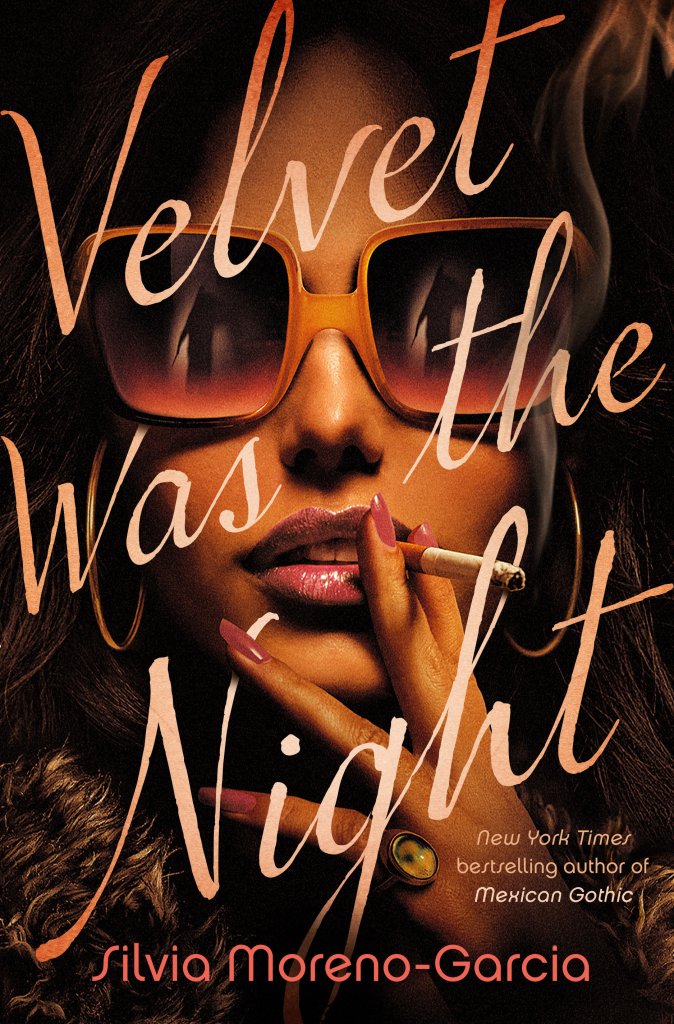
Book: “Velvet Was the Night” by Silvia Moreno-Garcia

We have sang the praises of Silvia Moreno-Garcia on this blog many times, and we have reviewed nearly all of her works, including “Velvet is the Night”. I put this one on the list because of the way that Moreno-Garcia explores the corruption, dangers, and shades of idealism of 1970s Mexico City. Maite is a receptionist who has romanticized ideas of love thanks to her love of pulp novels. When she finds herself entangled in the case of a missing acquaintance named Leonora, she is suddenly swept up in a world of gangsters, missing activists, and a petty criminal named Elvis who loves rock and roll and is assigned to seek Maite out before she finds out too much about Leonora. Moreno-Garcia once again brings out her talent for complex characters and well conceived settings, with the suspense running high as Maite and Elvis set on a crash course for danger.

Book: “Mademoiselle Revolution” by Zoe Sivak

The French Revolution has always had a certain allure about it, with rolling heads and promises of societal upheaval, ultimately leading to a brutal Empire led by Napoleon Bonaparte. But what I love about Zoe Sivak’s “Mademoiselle Revolution” is that she tells the story from the eyes of a formally upper class Black woman from Haiti who escaped the Haitian revolution only to find herself in the midst of Robespierre’s. Sylvie, the biracial daughter of a white plantation owner, escapes to Paris after most of her family is killed during the Haitian Revolution. Feeling guilty for her complacency in her former home’s racist structures, she is immediately taken with charismatic Robespierre, who speaks of revolution in France. At first Sylvie is swept up in the idealism. But then things start to spiral out of control. I love Sylvie as a character and how she fits into actual historical events and social circles, and I love how Sivak frames it all through the eyes of a Black woman.

Book: “From Hell” by Alan Moore

I know that he’s a bit of a controversial figure in comics and graphic novels, but I really love Alan Moore. I find so many of his works absolutely phenomenal, but one that really stands out for me is “From Hell”, his graphic novel about the Jack the Ripper Whitechapel Murders and the failed investigation that came after (perhaps because of a royal conspiracy). While the investigation is the main plot, Moore takes it to interesting heights by making the focus not on who Jack the Ripper was (his identity in this is clear almost from the start), but on how a culture that is driven by violence, corruption, and misogyny, all to keep a Royal Family scandal under wraps, is just as complicit in the deaths as the murderer himself. I love how dark and enigmatic this book is, and how it gathers so much from years and years of Ripperology (yes that’s a thing) to create a narrative that indicts Victorian England as a whole.

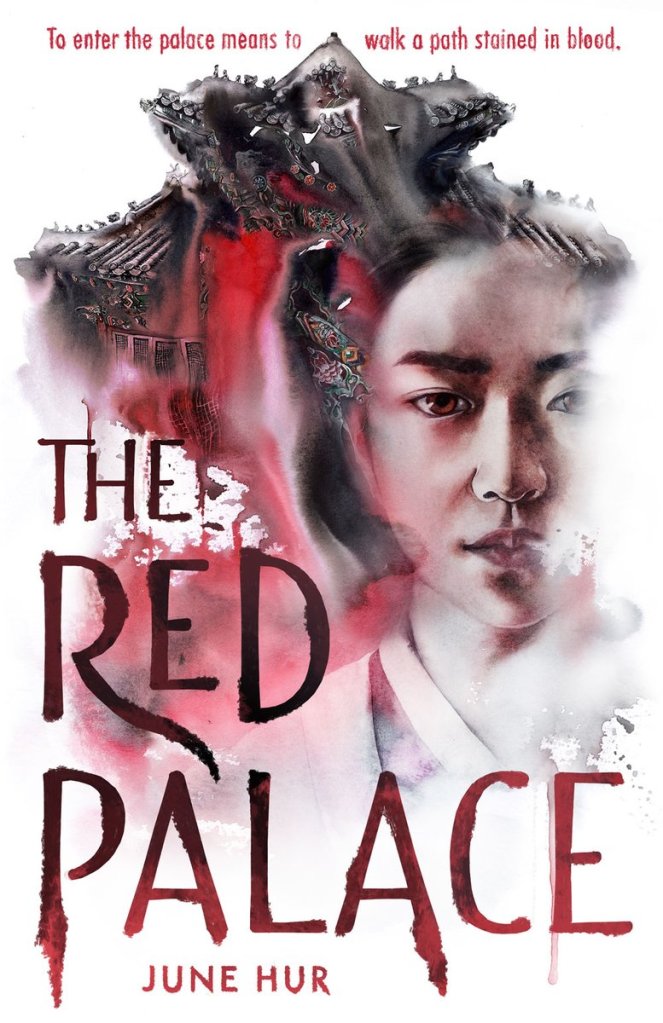
Book: “The Red Palace” by June Hur

Now we switch things up a whole lot, and travel to 17th Century Korea, seeking out a murder mystery involving a palace nurse, an intrepid police inspector, and a potentially violent prince. And to make it all the more interesting, June Hur’s “The Red Palae” is partially inspired by a true story from this time period in Korea (back then known as Joseon). Hyeon is an illegitimate teenage girl, and has few options because of this, so when she has the opportunity to become a palace nurse she takes it. But then her mentor is accused of murdering four women in one night, she has to team up with police inspector Eojin, who is also determined to find the real killer. The problem? Their investigations point towards the crown prince himself as the culprit. This is a setting I haven’t seen as much in historical thrillers, and I really love how June Hur captures the time and the people to create a riveting story of political intrigue and danger.

Book: “The Lost Apothecary” by Sarah Penner

And we have our other loosey goosey title with Sarah Penner’s “The Lost Apothecary”, as it has dual timelines between the present day and the 18th century in Londan, England. In the present, Caroline is visiting London on what should have been an anniversary trip, but became a solo vacation when she discovered her husband was cheating on her. While exploring the city she stumbles upon a mysterious vial, her interest in researching its origins is piqued. Little does she know at first that it’s connected to a string of murders in the late 1700s, as a woman named Nella had a back alleys apothecary where she would sell herbs, remedies…. as well as poisons to help women be rid of violent men whom they couldn’t escape otherwise. I loved the dual timelines of this story as Caroline searches for answers, and as Nella hopes to stay hidden, and how it draws parallels between life back then and life now.

What are some of your favorite historical thrillers? Let us know in the comments!
Diving Into Sub-Genres: Military Science Fiction

This post may contain affiliate links for books we recommend.  Read the full disclosure here.

We each have our own preferred genres of choice. Kate loves horrors and thrillers, really anything that will keep her up at night! And Serena enjoys escaping through hidden doors into realms of magic and adventure. We also read mysteries, historical fiction, graphic novels, etc. etc. And that’s not even counting the multitude of sub-genres contained within each greater genre. In this series, one of us will present a list of our favorites from within a given sub-genre of one of our greater preferred genres.

There is a “military” sub-genre of most larger genres. I might go as far as covering military fantasy novels in one of these posts in the future. It’s simple enough to see why this would be the case. Military science fiction, like the other military sub-genres, often includes books that are very action-packed, can take place on a grand scale with large battle scenes or focus down to the individual experiences of soldiers, and often tackle very complex moral issues of right and wrong, offense and defense, and the immense cost of warfare in general. Some will glorify battle. Others will strongly critique it.

Often readers of military science fiction are looking for another way to look at human nature and human history. Through the lens of an imaginary science fiction landscape, it’s possible to relitigate and re-explore the events of our own past across a theoretical future conflict. By doing this, authors avoid getting bogged down into the facts (or debated facts) of our own history, while still getting at the meat of the issue behind some of the motivations in our own historical wars.

On a character level, many readers of military science fiction are also interested in the various arcs and emotional pathways that those involved heavily in battle face. Obviously, this is hugely relevant to any/all readers who have their own connections to or are current soldiers or veterans. Themes such as grief, brother/sisterhood, honor, regret, PTSD, bravery and many more can be covered in grand, narrative fashion.

Other stories are more focused on the larger movements and conflicts of nations, entire species (humanity vs. some alien group), and the tactical decisions that go on in these large scale battle scenes. There can be detailed depictions regarding movements of space fleets, the inner workings of deciding which conflicts to engage in and which to avoid, etc. And, of course, this being science fiction, these will often include lots of future technology, from the ships and weapons used, to various biotronic enhancements and the like to the human soldiers.

I’ve tried to include a broad range of military science fiction that includes both the types of books that focus more on the character’s story and the types that go into more depth with grand scale battles.

Book: “Ender’s Game” by Orson Scott Card

“Ender’s Game” straddles both the “soldier focused” and the “battle focused” sides of military science fiction. The story follow a young boy, Ender, a military genius who is essentially forcibly recruited and very soon burdened with the task of essentially saving the world through his tactical brilliance. Much of the story follows his own journey through this type of pressure while also exploring the terrible decisions the adults around him are in the process of making. Throughout the book, we see Ender’s own journey as well as many larger battles, both in the military school where he is trained and later in his role as a commander. The book also introduces a lot of complicated themes regarding responsibility, what makes an enemy, and the role of the individual in a greater war.

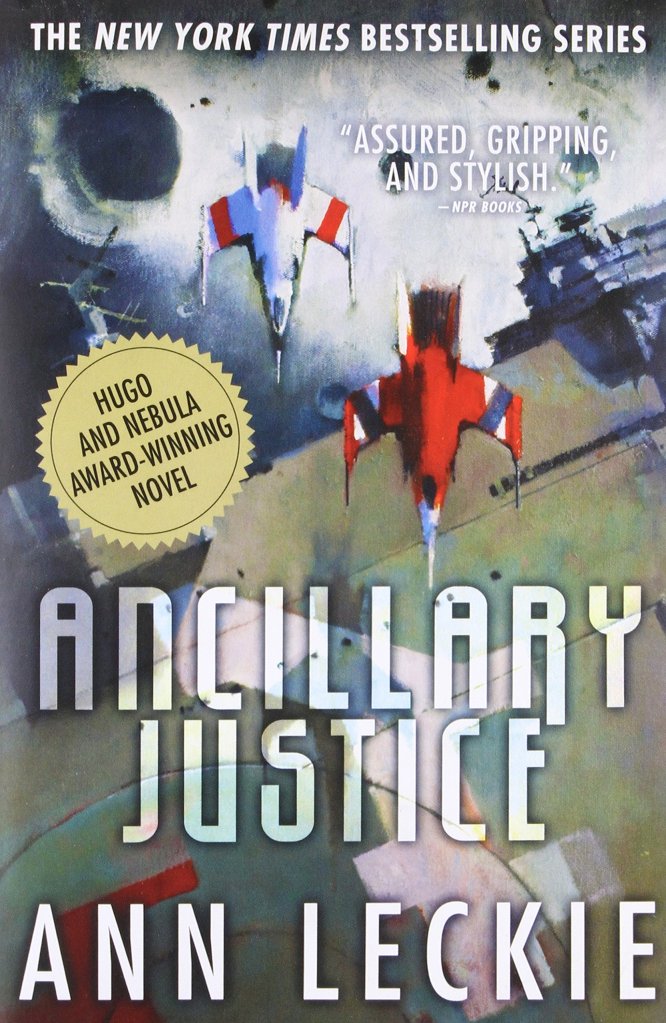
Book: “Ancillary Justice” by Ann Leckie

I also featured this book in my space opera list. Like most sub-genres, military science fiction can quite easily weave in and out of and blend in alongside other sub-genres of the larger science fiction genre as a whole. Books like this one fit neatly into both categories. It has the grand, wide-spanning storyline that is often found in space operas, but it also has a main character who is the AI system of a massive warship, now placed in the limited body of a human. As such, the story has a lot to say about the role of leadership, sisterhood, and the way that an individual experiences the broader impacts of war. There are also a lot of really cool space battles, especially in the flashbacks to when the main character was still embodied in the actual ship.

Book: “Old Man’s War” by Jon Scalzi

Kate and I both read this one a year or so ago for bookclub. And it’s an obvious pick for this list, following the story of a man who, through technological advances, joins in humanity’s ongoing intergalactic war at the advanced age of 80. So with that premise, of course the book has a lot to say on the way that one would approach a life as a soldier after already living a full life before, how the outlook of age could affect one’s choices and beliefs. The book also tackles larger themes of colonialization and pre-emptive warfare. Beyond that, Scalzi is just a fun writer, so the numerous battle scenes are action-packed and a fun read, even if still gruesome at times.

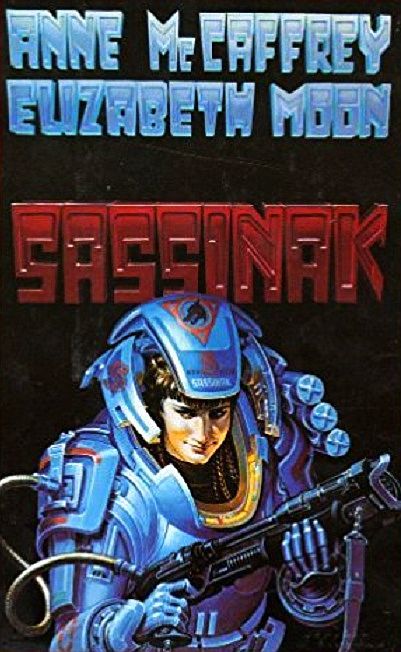
Book: “Sassinak” by Anne McCaffrey/Elizabeth Moon

While Anne McCaffery is better know for her fantasy/science fiction involving dragons, Elizabeth Moon is a powerhouse of military fiction. Not only that, she comes from a military background herself, having served in the United States Marines as a lieutenant. So, here we have a book written by two incredible women that also follows the story of a woman who escapes to become a Fleet Captain who then chases down pirates across the universe. This is definitely a character-driven story, following Sassy’s exploits through several mini stories that make up the book. And as it’s a shorter book on the hole, this can lead to perhaps a bit of a disjointed read. But I still think it well earns its place on this list, especially the first half of the story that established the main character as an incredibly empathetic and clever individual.

Book: “All You Need is Kill” by Hiroshi Sakurazaka

Many of you will be more familiar with this story by the name of the movie adaptation helmed by Tom Cruise, “Edge of Tomorrow.” Unlike the other books featured on this list so far, this one takes place on Earth as humanity attempts to save itself from invasion. The story follows a soldier who inexplicably finds himself reliving the same battle over and over again, dying only to start the day and fight once again. It’s like a grim version of “Groundhog’s Day.” There’s an instant appeal to the premise itself, but the close look at how the same day can play out in so many ways really emphasizes the chaos of warfare.

Book: “All Systems Red” by Martha Wells

Like “Ancillary Justice,” the protagonist of this book isn’t exactly…human. Instead, this book and the ongoing series follows the exploits of Murderbot, a security bot that is part of a larger Company that essentially controls the galaxy. As such, this book isn’t the classic military fiction with its focus on warfare and soldiers, but its focus on a security bot grappling with large, existential questions regarding violence and its role in conflict makes it a perfect pick to round out the variety of fiction that can be found within this subgenre.

What military science fiction books have you enjoyed? Let us know in the comments!
Diving Into Sub-Genres: High Control Group Escape Memoirs

This post may contain affiliate links for books we recommend.  Read the full disclosure here.

We each have our own preferred genres of choice. Kate loves horrors and thrillers, really anything that will keep her up at night! And Serena enjoys escaping through hidden doors into realms of magic and adventure. We also read mysteries, historical fiction, graphic novels, etc. etc. And that’s not even counting the multitude of sub-genres contained within each greater genre. In this series, one of us will present a list of our favorites from within a given sub-genre of one of our greater preferred genres.

I could probably just call this “Cult Escape Memoirs”, though I think some people would come after me were I to refer to some of these groups as ‘cults’. That and some are less about groups and more about toxic family dynamics which are run like a cult, but aren’t technically cults. So High Control Group it is! I’ve always been super fascinated by groups that close ranks, isolate members, put leaders on a firm pedestal, and build and build up abuses and corruption and use intimidation, coercion, and violence against those within, and all the brainwashing that comes with it. I also love harrowing memoirs of people who have been a part of such groups, and how they ultimately break away no matter the personal cost and sacrifice (and it is usually a lot).

There are a lot of different cults and high control groups that have functioned over the years, so this is merely a smattering of the various groups. But all of the stories are harrowing, enraging, heartbreaking, and hopeful, and it shows the resilience of those who have escaped when they never should have had to go through their trauma in the first place. These are all admittedly difficult reads with lots of content warnings, but I’ve found them to be fascinating and engaging reads.

Book: “A Billion Years: My Escape From A Life in the Highest Ranks of Scientology” by Mike Rinder

Scientology has been pretty heavily scrutinized in the past decade or so, and a lot of voices leading the way are those who jumped ship and lost so, so much by doing so. Leah Remini is a very clear example of this, but her celebrity insulated her a bit from the fallout, which is why I decided on “A Billion Years” by Mike Rinder. Rinder used to be a very high ranking member under L. Ron Hubbard, but once Hubbard died and David Miscavige took over, the toxicity and abuse ramped up to the point where Rinder no longer felt he could stay. Leaving his family behind (they are still alienated from him) and everything he knew, he is now a whistleblower and a very outspoken critic. This memoir is a really good look at his time in the organization, and gives insight as to what it’s like for those inside who aren’t powerful celebrities. I really love that Rinder is trying to repent for his past complicity, and this memoir is honest and very harrowing.

Book: “Unspeakable: Surviving My Childhood and Finding My Voice” by Jessica Willis Fisher

This is the first of two memoirs that isn’t about a specific larger group, but more about the influence of an extremist fundamentalist family and its leader, and this one is a really, really hard read (it’s actually the read that gave me the idea for this list). Jessica Willis Fisher was initially known as the oldest of the Willis Clan, a Fundamentalist Christian family that performed in a band together and had its own reality show following their lives. What viewers and fans didn’t know was that the patriarch, Toby, was verbally, physically, and sexually abusive to his wife and children, Jessica herself one of his rape victims and ultimately the family scapegoat. Her memoir speaks to her childhood, her relationships with her family members, her love of music, and how she eventually started to push back against her father, and how that cut her off from her siblings and mother, but also pushed her towards people who did support her and help her come to terms with her traumatic childhood, and help her eventually turn her father in. Willis Fisher is so incredibly brave, her memoir so well written, and it has hope in darkness and love and empathy.

Book: “Breaking Free: How I Escaped Polygamy, the FLDS Cult, and My Father, Warren Jeffs” by Rachel Jeffs

I have read so many books about the Fundamentalist Latter Day Saints as run by Warren Jeffs/Rulon Jeffs and the compound in Short Creek, but if I had to pick one that encompasses the horrors of the compound and the abuses of the people who lived there, I would go with Rachel Jeffs’s memoir. They are all harrowing, but Rachel is one of Warren Jeffs’s many children, and her experience shows that his sadistic abuses and violence towards others was also very much a part of his family life as opposed to the non-related members of the community. Rachel is brutally honest about the things that she went through, and it gives a deeply personal connection to the Warren Jeffs years of the FLDS. It’s also a good look into the FLDS culture as a whole, and doesn’t mince words about how abusive, violent, and oppressive it is for those who live in it, especially the women. And it’s especially disturbing seeing how Jeffs treated his own children, his abuses and cruelty being doled out to them as much as it was to others in the community. Rachel is incredibly brave for getting out, and I’m glad she was able to push back in her own words.

Book: “In The Shadow of the Moons: My Life in the Reverend Sun Sun Myung Moon’s Family” by Nansook Hong

Of all the cults and high control groups that have fascinated me over the years, I actually didn’t know much about the Unification Church, a religious cult based in South Korea run by Sun Myung Moon. This memoir was written by his daughter in law Nansook Hong, whose marriage to his oldest son was wrought with discord and abuse. The Moonies, as they are known, present themselves as an ideal group of Divine Christianity, and Moon himself placed himself as a messiah-like figure and hoped to have influence across countries and political positions and leaders. But this memoir exposes the hypocrisy and corruption within the group and how Moon abused his power, and hid the violence and troubles within his own family. After years in an unhappy marriage that had abuse and addiction issues, Hong escaped one of the Moonie compounds and divorced Hyo Jin Moon, the eldest and heir apparent to the Unification Church. The Moonies kind of go under the radar these days when it comes to cults and high control groups, and this memoir has some really interesting context and has the story of a brave woman who left.

Book: “Member of the Family: My Story of Charles Manson, Life Inside His Cult, and the Darkness That Ended the Sixties” by Dianne Lake

There are so many notorious cults out there, but the Manson Family is the one that really shattered the American consciousness in the late 1960s when they carried about the multiple murders of Sharon Tate and her guests, as well of those of the LaBianca Family. While many of Manson’s ‘girls’ are remembered because of the huge court case (or in Squeaky Fromme’s case, when she tried to assassinate President Ford because that would help Charlie, somehow?), Dianne Lake was one of the few that got out, though not unscathed. Lake joined up as a teenager after her family went all in on a nomadic lifestyle, and pretty much just let her go off with Manson and his group, and soon she as deeply under his spell and living on Spahn Ranch. This memoir is about that time, as well as the childhood that led up to it, and then when she turned against him and the others after the Tate/LaBianca murders. I really like this one because it doesn’t only show how a group can manipulate and control vulnerable people, but how people end up in groups like that in the first place if they were not born into it.

Book: “Educated” by Tara Westover

Much like “Unspeakable”, “Educated” is less about a specific group and more about a family that has been overtaken by a zealous patriarch that imposes fundamentalist rules and abuses on his loved ones. But “Educated” is such an amazing book that I really wanted to have it here. Tara Westover grew up in an isolated, off the grid existence with her family, her father forbidding any contact with public education or healthcare and her mother working as an herbalist and midwife to other off the grid people. As Tara gets older, she finds herself wanting to learn and read anything she can get her hands on, and wonders what else is out there to learn beyond her family’s grip. And when one of her brothers becomes more and more violent, and Tara becomes the target of his escalating violence, her yearning to get into the world isn’t just about wanting to learn, but wanting to save herself from a dangerous and isolated family situation. This memoir very well written, incredibly inspirational, and there is a reason it was so well received when it came out.

What escape memoirs have you enjoyed? Let us know in the comments!
Diving Into Sub-Genres: Portal Fantasy

This post may contain affiliate links for books we recommend.  Read the full disclosure here.

We each have our own preferred genres of choice. Kate loves horrors and thrillers, really anything that will keep her up at night! And Serena enjoys escaping through hidden doors into realms of magic and adventure. We also read mysteries, historical fiction, graphic novels, etc. etc. And that’s not even counting the multitude of sub-genres contained within each greater genre. In this series, one of us will present a list of our favorites from within a given sub-genre of one of our greater preferred genres.

Portal family is probably the largest and most popular sub-genre in fantasy fiction. I know that second part is a pretty hefty claim, but even among the most picky of fantasy readers, those who hardly ever read the genre as a whole, there’s a decent chance they hold a special place for some portal fantasy novel or another. It’s unavoidable when some of the biggest titles in fantasy fiction fall under this subgenre; even more so when many of those titles (“Harry Potter,” “The Wizard of Oz”) are also children’s and middle grade fiction, works that many readers will enjoy as kids even if they go on as adults to read very little in the fantasy genre as a whole.

Portal fantasy is also a wide, sprawling sub-genre on its own. It’s definition is simple: it’s a story that involves characters travelling through a “portal” (wardrobe/train platform/tornado/etc.) from our real world into some magical, fantasy realm. Already you can see the huge potential and likely list off a good number of titles that would fall under this category. What’s more, a broad interpretation of this subgenre would just be characters travelling from world to world, none of which need include our real world. For example, the “His Dark Materials” trilogy utilizes both of these options. We have characters travelling from our world to new worlds, like Will in the second book, “The Subtle Knife.” But there are also several characters, like Lord Asriel, who never travel to “our world” at all, but only between different, unique worlds.

The definition of “portal” can also vary. Some would say there needs to be an actual passage way from one distinct world to another unique world; others would count the Daevabad trilogy as a portal fantasy, simply due to the hidden nature of the city itself, unseen and inaccessible by humanity. Portal fantasy is also one of the oldest subgenres of fantasy. Some of Shakespeare’s plays would likely count (“A Midsummer Night’s Dream”) and, of course, there is Mark Twain’s “A Connecticut Yankee in King Arthur’s Court.” Between all of these definitions, and the fact that portal fantasy is a popular subgenre in fantasy fiction for all ages (probably the most popular by far in children’s fantasy), there are a million options to choose from, but here are a few that I particularly enjoy and I think represent the subgenre well.

“The Chronicles of Narnia” by C. S. Lewis

This is probably one of the first books/series that comes to most people’s minds when they think of “portal fantasy.” Not only is it a supremely popular children’s series, but the portal itself holds much of its appeal simply by how ubiquitous it is: what child hasn’t crawled into a closet or wardrobe and wished there was a door way to another world to be found at the end? The titular wardrobe in the first book, “The Lion, the Witch, and the Wardrobe” is the most well-known of the portals found in this story. But if you continue reading, you’ll also find children swept away through a painting and simply by the winds felt on a cliffside.

“Wayward Children” series by Seanan McGuire

Seanan McGuire has created a series that not only features portal fantasies as the primary premise of all of her books, but each book does a deep dive into the types of people who walk through these magical doors. The types of people who look for them, and those who don’t. And she paints a world that holds so many doorways to so many unique worlds that she’s even made a sort of flowchart to diagram the sorts of worlds her characters may come from and travel to. Where does each world fall on a scale of chaos or order? Good or evil? These novellas are all incredibly unique and highlight a lot of the appeal that the portal fantasy subgenre holds for the many readers who enjoy it and wish they, too, could find their door to another world.

“The Fionavar Tapestry” series by Guy Gavriel Kay

This is one of the first adult portal fantasy series that I remember reading as a teenager. Up to that point, for me, portal fantasy was something found in children’s and young adult fiction, but not so much in the stuffy works that made up adult fantasy. The story follows five men and women who find themselves pulled into a fantasy world where they each have important roles to play. And this is definitely adult portal fantasy all around, as Kay dives into some pretty dark themes throughout the series. I remember really enjoying it, but also being rather shocked as a teenage reader by certain scenes. It’s one of those fantasy series that has stuck with me throughout the years, but also one that I need to return to soon as I haven’t ever re-read it.

“The Invisible Library” by Genevieve Cogman

This eight book long series wrapped up recently, back in 2021 and was massively popular during its run. It’s a fairly standard portal fantasy, with its main character, Irene, travelling from realm to realm in her work for a Library that collects fiction from these various worlds. Throughout the series she gathers a group of friends around her and encounters all sorts of wild worlds, including time travel. These are really lovely books, all the more appealing for featuring a heroic librarian as their heroine!

“In Other Lands” by Sarah Rees Brennan

This is another fairly straight-forward portal fantasy, but its quirky take on not only the the magical world and the beings that populate it but on its protagonist make it stand out as a great, modern story. The word “deconstruction” has been used when describing this book’s take on its central trope, but it does so in an interesting and hilarious way, rather than the usual, more pretentious sort of deconstruction. The hero is also a young teenage boy who is just as snotty and irreverent as you’d expect from a boy of that age. And yet you can’t help rooting for him anyway!

“Shades of Magic” trilogy by V.E. Schwab

Lastly, I’m including one of my favorite portal fantasies of all time. This is also a nice mixture of the two definitions of portal fantasy in that one of our main characters travels in the traditional direction (from our world and into a magical one), but our other main character is from the magical world and travels not only to our world, but also to other, unique worlds beyond. This trilogy not only has unique worlds (varying Londons each with different levels of magic), but I really enjoyed the way the magic system and travel between these works worked. Fans of portal fantasies should definitely check this trilogy out if you haven’t already!

What portal fantasy books are your favorites? Let us know in the comments!