Diving Into Sub-Genres: Gothic Horror

We each have our own preferred genres of choice. Kate loves horrors and thrillers, really anything that will keep her up at night! And Serena enjoys escaping through hidden doors into realms of magic and adventure. We also read mysteries, historical fiction, graphic novels, etc. etc. And that’s not even counting the multitude of sub-genres contained within each greater genre. In this series, one of us with present a list of our favorites from within a given sub-genre of one of our greater preferred genres.

The term “Gothic” can range across a swath of things. While there are certainly scary Gothic stories out there, it’s not limited to that. I mean, “Wuthering Heights” is absolutely a Gothic novel, but it’s not really horror (though Heathcliffe is scary in other ways). The same can be said about “Jane Eyre”. But for this post I want to focus on the horror side of the genre, with tales that send chills down your spine along with the isolation aspect.

Gothic horror, for me, has to have a few elements. The first is, like any good Gothic novel, general isolation or isolated feelings. I want a protagonist to be in a situation that has them cut off for whatever reason, be it physically or emotionally, or sometimes both! I also want a lingering foreboding threat that is unseen or unknown to the protagonist. Sure, let the mystery of whatever the threat is unfold as the story plays out, but let it be a question. Sweeping romanticism isn’t a must, but it can be fun to spice things up. And for me, while the threat doesn’t always have to be supernatural, it’s kind of a plus! There are plenty of examples in horror literature, from the old school like “Frankenstein” and “The Count of Otranto”, to newer stories like “The Little Stranger” for the 21st century and “The Woman in Black” for the 20th. The choices on this list are some of my personal favorites. They usually deal with an isolated setting, a protagonist that has no idea what they’re getting into/finds themselves struggling with their emotions/mental health/reality, there is some kind of supernatural threat, and there are enough moments of utter dread that unsettled me beyond my time reading it.
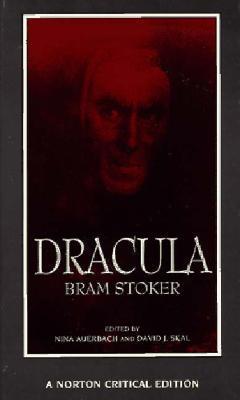
Book: “Dracula” by Bram Stoker

I have to start with a classic. Bram Stoker’s “Dracula” is the Godfather of modern vampire lore, its mark stamped firmly not only on vampire stories, but on the horror genre as a whole. While a lot of it takes place in London (as Count Dracula makes his way to England and starts sinking his teeth into the trouble he can get into there), our first moments involve Jonathan Harker going to an isolated Castle in Eastern Europe, only to be held prisoner in this lonely setting by the Count. Along with that, the unknown threat of the Count slowly starts to seep into our group in London, as he preys upon Lucy Westenra in a manor house, torments those around her on the estate with his lurking presence, and has influence over his servant Renfield, who is imprisoned in an insane asylum. This all ends with a showdown in the desolate mountains of Transylvania, the West meets the East. This remains one of my favorite horror novels of all time, and it just oozes Gothic sensibilities.
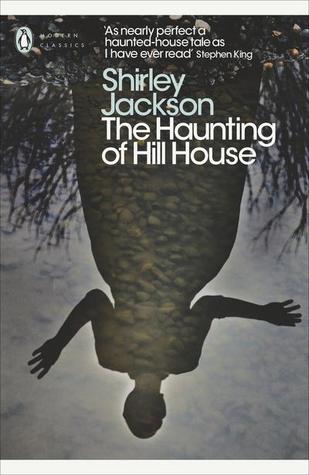
Book: “The Haunting of Hill House” by Shirley Jackson

Ghosts tend to have a big part to play in Gothic horror, as the haunted house story goes hand in hand with the themes in the sub-genre. One of my favorite traditional haunted house stories is “The Haunting of Hill House” by Shirley Jackson. Four people decide to investigate the notorious Hill House, an isolated mansion that has rumors of ghostly activity and a tragic past. As they stay at and spend their time in the house, strange things begin to happen, and they find themselves affected in different ways. For Nell, a woman with sensitivity and a fragile spirit, she starts to lose her grip in reality, and starts to feel connected to the house, and whatever is living there. Bumps in the night, unreliable characters, a little bit of melodrama, and the theme of decay, be it of an old house or one’s sanity, are abound in this book! Maybe don’t read it late at night. Or maybe DO read it late at night.
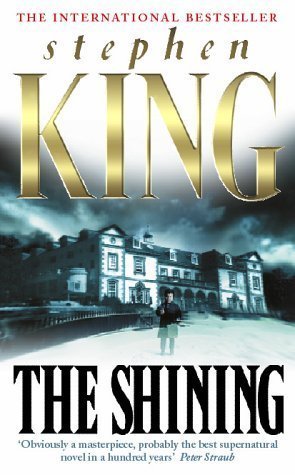
Book: “The Shining” by Stephen King

Being the huge Stephen King fan that I am, of course he was going to end up on this list one way or another. But darn it, “The Shining” is absolutely a Gothic horror novel! The Torrance family goes up into the mountains to serve as winter caretakers at an old hotel, knowing that once the snows come they won’t be leaving. That’s your isolation. The father, Jack, is struggling with addiction and anger issues, as well as the fact that he has been violent towards his loved ones in the past. That’s your tenuous grip on keeping it together. Oh, and the place also happens to be haunted by spirits of those who have died there, and the hotel itself may be an evil force hoping to corrupt not only Jack, but psychic little boy Danny. SUPERNATURAL ELEMENTS! And given that this book has so many damn scares, it hits all of my sub-genre points check list. “The Shining” is considered one of King’s masterworks, and the Gothic elements just pump the dread up even more. How do you escape from a homicidal patriarch when you’re snowed in?

Book: “Mexican Gothic” by Silvia Moreno-Garcia

I think that it’s important to think outside the sub-genre box a little bit, and that is what Silvia Moreno-Garcia set out to do with her horror novel “Mexican Gothic”. After all, Gothic horror, and the Gothic milieu in general, has been pretty White and Western centric since its inception. But Moreno-Garcia was ready to push the boundaries, and created a Gothic gem in a setting some may not think of for the genre: 1950s Mexico. Noemí is a young woman living a fun party life in Mexico City, but when her newly wed cousin sends her an urgent letter, she rushes to be with her in an isolated mansion in the countryside. The family that lives there is English in origin and runs a mine, and they are both mysterious and alluring. When Noemí decides to stay to see what’s up, she starts to dream of threats, doom, and blood, as if the house itself is an ominous presence. The secrets of the family, the strange atmosphere, and the plucky heroine in over her head all make for a great Gothic tale of terror!

Book: “House of Leaves” by Mark Z. Danielewski

“House of Leaves” is a book that I read probably about ten years ago, and fully intend to revisit at some point. But only when I am willing to take on a huge commitment that is filled with complicated mind fucks, and stories within stories. The book has multiple narratives stacked into each other, with footnotes, deliberate design choices, and imagery to tell a huge and sprawling tale. But at the heart of it is the story of a family that buys a house that is impossibly larger than the blueprints and floorplan would imply. As the family tries to figure out what is going on, the house changes, and things become more and more sinister as they are seemingly unable to escape. But on top of that, there is someone who has stumbled upon the story of this family, who then in turn becomes mentally isolated and completely obsessed with the story. We have layers of isolation and creepiness here, folks, and while I’m not QUITE ready to revisit it, when I do I know it will suck me right back in.
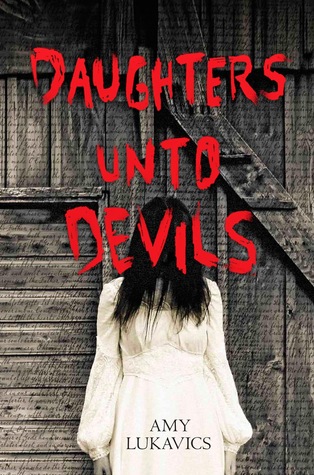
Book: “Daughters Unto Devils” by Amy Lukavics

For a lot of people, the traditional Gothic setting is usually a house or castle in a European moor or forest or something along those lines. And while those are absolutely Gothic, how many people have thought about the vastness of the American prairie? I give you “Daughters Unto Devils”, one of the scariest YA horror novels I’ve read in my entire life. Teenager Amanda Verner and her family move from their home in the mountains to a new abandoned cabin in the prairie (which was completely covered in blood on the walls when they arrived, foreboding to the nth degree). The setting is new, the family has endured recent hardship, and Amanda is hiding the secret that she is pregnant. It slowly becomes clear that something is outside their cabin, something that has been stalking Amanda even before their move. Family secrets? Check. New setting that has cut them off from the rest of the world? Check! A woman coming into her own identity who is starting to question her sanity? Check and mate, my friends. “Daughters Unto Devils” messed me up pretty good, and the Gothic elements in a unique setting really make the book.

What horror books would you categorize as Gothic horror? What are some of your favorites? Share in the comments below!

Diving into Sub-Genres: Literary Fantasy

We each have our own preferred genres of choice. Kate loves horrors and thrillers, really anything that will keep her up at night! And Serena enjoys escaping through hidden doors into realms of magic and adventure. We also read mysteries, historical fiction, graphic novels, etc. etc. And that’s not even counting the multitude of sub-genres contained within each greater genre. In this series, one of us with present a list of our favorites from within a given sub-genre of one of our greater preferred genres.

Literary fantasy is a hard sub-genre to even wrap your head around. Many of the other sub-genres of fantasy (portal fantasy, epic fantasy, steampunk, urban) have very distinct elements that are easily recognizable even from a short blurb about the book. Literary fantasy…not so much. It’s tempting to say that literary fantasy is simply contemporary fantasy where the story is simply light on fantasy altogether. But this writes off historical works which would also fit this category. So perhaps it is simply the light fantastical elements? But even that I don’t think is correct (you’ll see that a couple of books I’ve included here have fairly extensive magical elements).

Instead, I think it’s largely contained in a certain style of writing that is often found in these books. Literary fantasy is often just as focused on a beautiful turn of phrase as it is on describing a magical spell’s effects. There’s often an elegance to the writing, a compulsion to appreciate the words themselves rather than fully immerse oneself in the book to the point that the reader forgets they’re reading. Indeed, knowing that one is reading is half of the joy of these types of books, with more focus given to descriptions and omniscient narrator musings than action-packed set pieces. In many ways, I’m essentially describing “literary fiction” but with some fantastical element involved. However, I think that “literary fiction” typically includes other notable elements that don’t necessarily rely on a style of writing as strongly as literary fantasy does (often tragic, more experimentation with word-play and style of writing).

So with that in mind, here are a few examples of favorite books of mine that I would file under literary fantasy.

“The Invisible Life of Addie LaRue”

This was actually the book that inspired this entire review series, after one of our readers commented on my labeling it as “literary fantasy” and asked about other titles that would fit in that sub-genre. So here we are! This story, that of a young woman who strikes a deal to live forever but to never be remembered by anyone she meets, fits the criteria in a few ways. It definitely has fantasy elements, what with the main character living forever and all, but the themes of the book are much more focused on identity, one’s own history, and what it means to exist in a world made up of so many other people living out their own journeys. There’s also a big focus on art and how it expresses the lives of both the artist and the subject of art. Between these themes, much of the story taking place in a standard contemporary/historical setting with very little magic involved, and the beautiful style of writing, it definitely meets the criteria for literary fantasy.

“The Starless Sea” by Erin Morgenstern

If “The Invisible Lie of Addi LaRue” was the inspiration for this post, “The Starless Sea” was my immediate answer to the question posed by our blog reader for another example of literary fantasy. I could also include Morgenstern’s first novel, “The Night Circus,” under this category, but as this is the one I’ve read and loved most recently, I’ll include it here. It’s also an example of a book I would classify as literary fantasy but one that includes many, many fantasy elements. If anything, it walks right up to the line of what I would classify as fairytale fantasy or portal fantasy. The story is a winding affair of exploration and mystery throughout time and space, all held together by a mysterious library that exists right through a doorway, if one is only brave enough to open it. There’s much reflection on love and passion, but half of the magic is the sheer whimsy of the entire thing. Behind every door is a new wonder, and the writing seems to wrap you up in a warm blanket of delight and you’re left wondering if you perhaps travelled to this magical world after all, simply through the process of reading this book. It is this lovely style of writing and the effortless feel of the magical elements involved that classifies it as literary fantasy.

“Deathless” by Catherynne M. Valente

This book walks even closer to the line of fairytale fantasy than the last, in that it’s largely inspired by Russian myth and the Russian folklore character, Kuschei the Deathless. But again, it’s all in the style of writing. I debated including one of Valente’s “Fairyland” stories, which I think skirt this sub-genre fairly well themselves. But I think “Deathless” hits the mark a bit better with its supposition of fantastical creatures and myths over almost all of the important events of the 20th century in Russia. Of course, knowing even a little of Russia’s history during that time period, it’s a safe guess that the story, while beautiful, has its fair share of tragic moments, as well. Valente expertly wields her magical elements in such a way as to shine new light and new insights into some of the better (and lesser) known parts of the country’s history. Anyone who has read a book by her before can also testify to the unique and beautiful style of her writing. She’s definitely an author whose stylized sentences and combinations of thoughts often makes the reader stop and re-read certain sections just to revel in her use of words.

“The Golem and the Jinni” by Helene Wecker

This is another literary fantasy novel that is at least as much concerned with delving into its real-life, historical themes as it is in exploring the two magical creatures who are the story’s main characters. Yes, our two leads are the titular golem and jinni, but their story is much more than that. Instead, in many ways, the book is more concerned at looking at the experience of immigrants in the early 1900s and life in New York City during this time period, in general. Not only are both of our characters origins not of the United States, but each, of course, is even more “other” in that they aren’t human. But at the same time, each has such core human traits that define them, that their experiences and struggles feel almost amplified for it. This is a long book, and one that definitely takes its time carefully depicting the details of the place and time as much as it does the history of the golem and jinni. It’s the kind of book that could fairly easily be recommended to straight-up historical fiction fans as well as fantasy readers.

“Tigana” by Guy Gavriel Kay

Guy Gavriel Kay is another author who’s entire catalog of books would likely fit in this sub-genre. My favorite books by him, “The Fionavar Tapestry” quartet, definitely meet the criteria for style of writing, but they fall closer to portal fantasy, in my opinion. But I could have easily put “The Lions of Al-Rassan” or “Children of Earth and Sky” or many others on this list. I selected “Tigana,” however, because it’s probably, universally, one of his most beloved and well-regarded novels. Gavriel Kay’s books are also unique to this category in the fact that they are entirely set in alternative worlds. The settings and events are often inspired by real-life countries and events, but the worlds are still entirely fantasy-based, ultimately. This story touches on themes of war, love, and the tangle that politics makes of it all. It is expansive and marvelous, and, too many, set a higher bar for what readers can expect from fantasy fiction and specifically literary fantasy.

“The Bear and the Nightingale” by Katherine Arden

Lastly, I wanted to include the first book in a trilogy of books that would all fit well in this category. Like some of the others, “The Bear and the Nightingale” has a definite fairytale vibe to the story. But the slow build of the story, the attention spent on developing atmosphere, and the beautiful, lyrical style of writing all fit perfectly for literary fantasy. The sharply beautiful description of the Russian winter landscape are particularly poignant, and the themes regarding religion, magic, and one young woman’s journey to carve out a place for herself in a world that doesn’t have a place for women who don’t fit a certain type of mold. What starts out on a fairly small scale expands across the three books until Vasilisa’s story starts to encompass the entirety of Russia itself. I loved this entire tirlogy and would recommend all three (though they can’t be read separately, other than the first one, perhaps) to fans of literary fantasy.

What fantasy books would you categorize as literary fantasy? What are some of your favorites? Share in the comments below!