Kate’s Review: “Indian Burial Ground”


This post may contain affiliate links for books we recommend.  
Read the full disclosure here.

Book: “Indian Burial Ground” by Nick Medina

Publishing Info: Berkley, April 2024

Where Did I Get This Book: I received an eARC from NetGalley.

Where You Can Get This Book: WorldCat.0rg | Amazon | Indiebound

Book Description: All Noemi Broussard wanted was a fresh start. With a new boyfriend who actually treats her right and a plan to move from the reservation she grew up on—just like her beloved Uncle Louie before her—things are finally looking up for her. Until the news of her boyfriend’s apparent suicide brings her world crumbling down. But the facts about Roddy’s death just don’t add up, and Noemi isn’t the only one who suspects something menacing might be lurking within their tribal lands.

After more than a decade away, Uncle Louie has returned to the reservation, bringing with him a past full of secrets and horror and what might be the key to determining Roddy’s true cause of death. Together, Noemi and Louie set out to find answers…but as they get closer to the truth, Noemi begins to question whether it might be best for some secrets to remain buried.

Review: Thank you to NetGalley for providing me with an eARC of this novel!

Last year I read and reviewed Nick Medina’s “Sisters of a Lost Nation”, a horror novel that had its scariest moments not in the supernatural bits (though those were also great), but in the way it addressed the Missing and Murdered Indigenous Women epidemic. It was such a visceral read that I knew I needed to see what Medina was going to write next, and so when “Indian Burial Ground” ended up on my radar I was ACHING to read it. NetGalley came through, and it ended up on my Kindle. I knew that I needed to carve out some time, because it was going to take up my literary focus once I started. And lo and behold my prediction came true. “Indian Burial Ground” had my full attention.

Like in “Sisters of a Lost Nation”, we return to the fictional Takoda Reservation in Louisiana, and not only do we get a revisit to this setting, but also so some of its side characters (I love it when authors do this, honestly, so that was a bit of a treat from the jump). “Indian Burial Ground” is told in two separate timelines. The first is in the modern day, where we mostly follow Noemi, whose boyfriend Roddy was just killed after being hit by a car, the death officially called a suicide. Noemi just can’t believe that Roddy would do that, and starts to think that something else is at play, just as her uncle Louie returns home after being away from the reservation for years. The next is in the summer of 1986, where Louie has been balancing trying to take care of his toddler niece to help out his teenage sister Lula, as well as trying to keep the family above water as their mother sinks deeper and deeper into alcoholism. During this time, strange deaths start to happen on the Takoda Reservation, as well as some desecrations at the tribal cemetary where bones are being stolen. As Louie starts piecing together rumors, histories, and seemingly supernatural clues, he starts to panic over protecting his niece. Medina effortlessly pulls these two timelines together, switching between the perspectives of Noemi and Louie, and shows an undercurrent of unrest on the Takoda Reservation that is still affecting the people who live, or lived, there. The two stories are both compelling in their own ways, one of which being supernatural and eerie, and the other more of a mystery about a tragedy and whether or not the official explanation is the actual one. And then bringing them together to tell a bigger story with realistic truths couched in supernatural horrors.

And the horrors, supernatural or not, are ample, twisted, and deeply emotional. or the more fantastical scares, I enjoyed the folklore inspirations that Medina created for the Takoda characters, with morality tales that are perhaps playing out in real time as members of the community start diverting from the path that is promoted in their culture and identity, and how that is possibly causing the destruction and deaths in the community in the summer of 1986. There were so many bits of unnerving creepiness, and it is clear to me that Medina is very talented at the slow build scary story. Whether it’s a coyote eating from a corpse in a brazen way, or a dead body suddenly rising up as if alive, I was creeped out many times during my read. But it’s also the real life horrors that Medina delves into in this book that pack a serious punch, with themes of addiction, mental illness, systemic racism, poverty, and many other tragic circumstances of the Takoda people living on the reservation. It could be teenage Louie being parentified to care for his cousin and another child in the community, or his and Lula’s mother being in the throes of alcoholism to the point where she isn’t caring for her children anymore, or the possible mental illness that Noemi just can’t accept as a very real truth in Roddy’s life. It were these moments that really got to me because they were all so emotional and frank about living as an Indigenous person on a reservation in America, and the lack of societal supports given.

“Indian Burial Ground” is dark and unrelenting, and it is another triumph from a fresh new voice in horror writing. Definitely recommended.

Rating 8: A deeply disturbing and heart wrenching horror novel that takes its scares from folklore inspiration, as well as the all too real horrors of being Indigenous in America.

Reader’s Advisory:

“Indian Burial Ground” is included on the Goodreads lists “Indigenous Fiction 2024”, and “Horror to Look Forward to in 2024”.

Another Take: Spring 2024

This post may contain affiliate links for books we recommend.  Read the full disclosure here.

Don’t just take it from us, other readers like these books, too! And we have decided that we would like to showcase other reviewers and bloggers that have their own thoughts and feelings about books that we have loved. Here are a few of the books we’ve enjoyed recently and what other bloggers have to say about them.

Book: “The Reformatory” by Tananarive Due

Book Description: Gracetown, Florida. June 1950

Twelve-year-old Robbie Stephens, Jr., is sentenced to six months at the Gracetown School for Boys, a reformatory, for kicking the son of the largest landowner in town in defense of his older sister, Gloria. So begins Robbie’s journey further into the terrors of the Jim Crow South and the very real horror of the school they call The Reformatory.

Robbie has a talent for seeing ghosts, or haints. But what was once a comfort to him after the loss of his mother has become a window to the truth of what happens at the reformatory. Boys forced to work to remediate their so-called crimes have gone missing, but the haints Robbie sees hint at worse things. Through his friends Redbone and Blue, Robbie is learning not just the rules but how to survive. Meanwhile, Gloria is rallying every family member and connection in Florida to find a way to get Robbie out before it’s too late.

The Reformatory is a haunting work of historical fiction written as only American Book Award–winning author Tananarive Due could, by piecing together the life of the relative her family never spoke of and bringing his tragedy and those of so many others at the infamous Dozier School for Boys to the light in this riveting novel.

Kate’s Review (10 Rating)

Punk Ass Book Jockey

Horror World (5/5 Stars)

Bonnie Reads and Writes (5 Stars)

Book:”Holly” by Stephen King

Book Description: Stephen King’s Holly marks the triumphant return of beloved King character Holly Gibney. Readers have witnessed Holly’s gradual transformation from a shy (but also brave and ethical) recluse in Mr. Mercedes to Bill Hodges’s partner in Finders Keepers to a full-fledged, smart, and occasionally tough private detective in The Outsider. In King’s new novel, Holly is on her own, and up against a pair of unimaginably depraved and brilliantly disguised adversaries.

When Penny Dahl calls the Finders Keepers detective agency hoping for help locating her missing daughter, Holly is reluctant to accept the case. Her partner, Pete, has Covid. Her (very complicated) mother has just died. And Holly is meant to be on leave. But something in Penny Dahl’s desperate voice makes it impossible for Holly to turn her down.

Mere blocks from where Bonnie Dahl disappeared live Professors Rodney and Emily Harris. They are the picture of bourgeois respectability: married octogenarians, devoted to each other, and semi-retired lifelong academics. But they are harboring an unholy secret in the basement of their well-kept, book-lined home, one that may be related to Bonnie’s disappearance. And it will prove nearly impossible to discover what they are up to: they are savvy, they are patient, and they are ruthless.

Holly must summon all her formidable talents to outthink and outmaneuver the shockingly twisted professors in this chilling new masterwork from Stephen King.

Kate’s Review (Rating 10)

Happy Goat Horror

Emma Young Writes

Book Chatter

Book: “The Angel of Indian Lake” by Stephen Graham Jones

Book Description: The final installment in the most lauded trilogy in the history of horror novels picks up four years after Don’t Fear the Reaper as Jade returns to Proofrock, Idaho, to build a life after the years of sacrifice—only to find the Lake Witch is waiting for her in New York Times bestselling author Stephen Graham Jones’s finale.

It’s been four years in prison since Jade Daniels last saw her hometown of Proofrock, Idaho, the day she took the fall, protecting her friend Letha and her family from incrimination. Since then, her reputation, and the town, have changed dramatically. There’s a lot of unfinished business in Proofrock, from serial killer cultists to the rich trying to buy Western authenticity. But there’s one aspect of Proofrock no one wants to confront…until Jade comes back to town. The curse of the Lake Witch is waiting, and now is the time for the final stand.

New York Times bestselling author Stephen Graham Jones has crafted an epic horror trilogy of generational trauma from the Indigenous to the townies rooted in the mountains of Idaho. It is a story of the American west written in blood.

Kate’s Review (9 Rating)

Books, Bones, & Buffy. (4.5 Stars)

Grimdark Dad

MegsBookRack (5 Stars)

Book: “The Tainted Cup” by Robert Jackson Bennett

Book Description: In Daretana’s most opulent mansion, a high Imperial officer lies dead—killed, to all appearances, when a tree spontaneously erupted from his body. Even in this canton at the borders of the Empire, where contagions abound and the blood of the Leviathans works strange magical changes, it’s a death at once terrifying and impossible.

Called in to investigate this mystery is Ana Dolabra, an investigator whose reputation for brilliance is matched only by her eccentricities.

At her side is her new assistant, Dinios Kol. Din is an engraver, magically altered to possess a perfect memory. His job is to observe and report, and act as his superior’s eyes and ears–quite literally, in this case, as among Ana’s quirks are her insistence on wearing a blindfold at all times, and her refusal to step outside the walls of her home.

Din is most perplexed by Ana’s ravenous appetite for information and her mind’s frenzied leaps—not to mention her cheerful disregard for propriety and the apparent joy she takes in scandalizing her young counterpart. Yet as the case unfolds and Ana makes one startling deduction after the next, he finds it hard to deny that she is, indeed, the Empire’s greatest detective.

As the two close in on a mastermind and uncover a scheme that threatens the safety of the Empire itself, Din realizes he’s barely begun to assemble the puzzle that is Ana Dolabra—and wonders how long he’ll be able to keep his own secrets safe from her piercing intellect.

Serena’s Review (9 Rating)

Snow White Hates Apples (5 Stars)

Fantasy Book Critic

Tar Vol (17/20 Rating)

Book: “A Feather So Black” by Lyra Selene

Book Description: In a kingdom where magic has been lost, Fia is a rare changeling, left behind by the wicked Fair Folk when they stole the High Queen’s daughter and retreated behind the locked gates of Tír na nÓg.

Most despise Fia’s fae blood. But the queen raises her as a daughter and trains her to be a spy. Meanwhile, the real princess Eala is bound to Tír na nÓg, cursed to become a swan by day and only returning to her true form at night.

When a hidden gate to the realm is discovered, Fia is tasked by the queen to retrieve the princess and break her curse. But she doesn’t go with her is prince Rogan, Fia’s dearest childhood friend—and Eala’s betrothed.

As they journey through the forests of the Folk, where magic winds through the roots of the trees and beauty can be a deadly illusion, Fia’s mission is complicated by her feelings for the prince…and her unexpected attraction to the dark-hearted fae lord holding Eala captive. Irian might be more monster than man, but he seems to understand Fia in a way no one ever has.

Soon, Fia begins to question the truth of her mission. But time is running out to break her sister’s curse. And unraveling the secrets of the past might destroy everything she has come to love.

Serena’s Review (9 Rating)

Cosmic Circus (9 Rating)

Lore of the Books (4 Stars)

Sheaf and Link (4 Stars)

Book: “The Familiar” by Leigh Bardugo

Book Description: In a shabby house, on a shabby street, in the new capital of Madrid, Luzia Cotado uses scraps of magic to get through her days of endless toil as a scullion. But when her scheming mistress discovers the lump of a servant cowering in the kitchen is actually hiding a talent for little miracles, she demands Luzia use those gifts to better the family’s social position.

What begins as simple amusement for the bored nobility takes a perilous turn when Luzia garners the notice of Antonio Pérez, the disgraced secretary to Spain’s king. Still reeling from the defeat of his armada, the king is desperate for any advantage in the war against England’s heretic queen—and Pérez will stop at nothing to regain the king’s favor.

Determined to seize this one chance to better her fortunes, Luzia plunges into a world of seers and alchemists, holy men and hucksters, where the line between magic, science, and fraud is never certain. But as her notoriety grows, so does the danger that her Jewish blood will doom her to the Inquisition’s wrath. She will have to use every bit of her wit and will to survive—even if that means enlisting the help of Guillén Santangel, an embittered immortal familiar whose own secrets could prove deadly for them both.

Serena’s Review (10 Rating)

Courtney Reads Romance (4 Stars)

Before We Go Blog

Book Brows (5 Stars)

Serena’s Review: “To Gaze Upon Wicked Gods”

This post may contain affiliate links for books we recommend.  Read the full disclosure here.

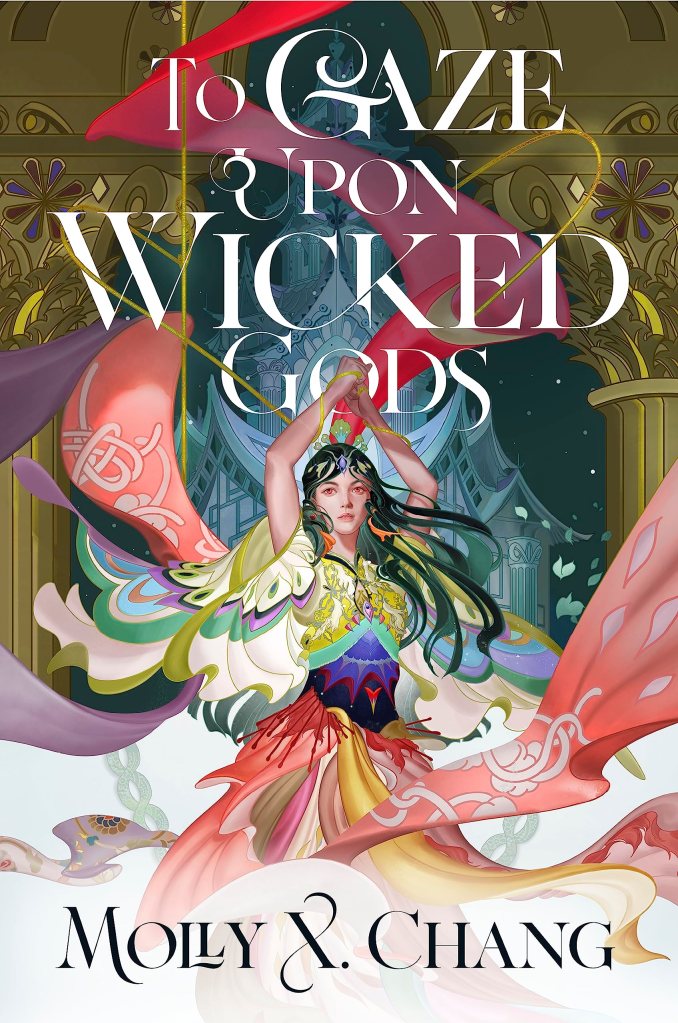
Book: “To Gaze Upon Wicked Gods” by Molly X. Chang

Publishing Info: Del Rey, April 2024

Where Did I Get this Book: NetGalley!

Where Can You Get this Book: WorldCat.org | Amazon | IndieBound

Book Description: She has power over death. He has power over her. When two enemies strike a dangerous bargain, will they end a war . . . or ignite one?

Heroes die, cowards live. Daughter of a conquered world, Ruying hates the invaders who descended from the heavens long before she was born and defeated the magic of her people with technologies unlike anything her world had ever seen.

Blessed by Death, born with the ability to pull the life right out of mortal bodies, Ruying shouldn’t have to fear these foreign invaders, but she does. Especially because she wants to keep herself and her family safe.

When Ruying’s Gift is discovered by an enemy prince, he offers her an impossible deal: If she becomes his private assassin and eliminates his political rivals—whose deaths he swears would be for the good of both their worlds and would protect her people from further brutalization—her family will never starve or suffer harm again. But to accept this bargain, she must use the powers she has always feared, powers that will shave years off her own existence.

Can Ruying trust this prince, whose promises of a better world make her heart ache and whose smiles make her pulse beat faster? Are the evils of this agreement really in the service of a much greater good? Or will she betray her entire nation by protecting those she loves the most?

Review: I’m going to review this one in a rather unconventional manner, but when thinking about this read and trying to organize my thoughts into my typical review style, I simply found it all to be too jumbled and all over the place. Moreover, many of my thoughts and feelings have to do with very specific aspects of the books and less to do with overall structure and form of the book.

I’ll give a quick overview here, however: I did not like this book. I thought the writing was incredibly choppy and stilted with broken up sentences galore, the characters largely unlikable and melodramatic to the extreme, and the plotting muddled, leaving readers unsure of what was going on in basic aspects of the world and how they were meant to interpret the actions and feelings of its characters. It simply failed to be a good read for me in almost every way. That said, as always, there are plenty of readers who may enjoy this more! Specifically, readers who focus less on world-building will likely not be as hung up as I was with much of this story. And those who really enjoy Asian fantasy (as I typically do!) might also want to read this. Now, for the rest of this, I’m simply going to label each section with the struggle point I’m going to focus on. First up:

The Author’s Note/Historical Inspiration

This author’s note was included at the beginning of the book, so it’s clear that the author and publisher intended for it to be read before the story itself. In it, the author writes beautifully of listening to her grandfather recount his memories of Unit 731, a unit of the Japanese Army in late 1930s, early 1940s, that committed horrific war crime experiments on the Manchurian people. Now, I always appreciate when author’s include information like this when they are writing a book inspired by true events, but in this case, it only raised more questions with regards to the decision by the author to name the colonizing force “Rome.” To draw attention to the atrocities of the past by creating a fictional version of the tale for modern audiences is a tried and true practice, and like renaming Manchuria “Pangu,” the Japanese forces could have similarly been given a fictional name. And with the inclusion of this author’s note, it would have been clear to everyone what was being discussed.

But to instead take a specific historical event like this that was enacted by one nationality and then write a book and attribute those actions to a completely different real-world country/people is pretty icky. I can’t imagine this choice going over well if something similar had been done with different historical events/groups. For example, writing a book about a colonizing group giving indigenous people blankets covered in disease but then naming that colonizing group, say, Brazil. Nope! Not great! It was also such an easy fix, since Manchuria/ancient China had already been given the fictional name of “Pangu.” Simply do the same and come up with some other fictional name! Not only would this have avoided the “ick” factor we have here, but it also would have made the reading experience more pleasant as a whole. The name “Rome” invokes a very specific picture in most readers’ minds, so to then write a book in which the Romans are zipping around on helicopters and whipping out guns all the time reads as strange. It’s distracting, at best. This lead’s me to my next point, which also starts in the author’s note but than moves into the narrative itself:

“Magic Vs. Science”

There were also some bizarre claims in the author’s note about “science” that really had me raising my eye brows. At one point, the author is reflecting on the past, about how Manchuria/China fought its Western invaders’ bullets with bows and arrows. Now…I’m honestly just confused by this. The note started off talking about Unit 731, so obviously references to bows and arrows make no sense in this context, not even getting to the fact that I don’t believe we’d call the Japanese forces “Western.” But if at this point in the note she’s instead been talking about an earlier point of history (there is no indication that this is the case, however, because the very next sentence is again referencing her grandfather), I’m not sure it’s much better! China was significantly more advanced in science and technology than the West for pretty much all of history. I really don’t know how to interpret what the author was trying to say. Maybe I’m missing something, and if so, I’m happy to be corrected, but as it stands this was bizarre to the extreme.

Unfortunately, this continued into the story itself. Ruying, in her overly melodramatic style, goes on and on throughout this book of the impossible power of Rome’s “science” and how Pangu has struggled against it for decades. Aside from the fact that just referring to this over and over again as “science” (“they came at us with science”) makes for a clunky reading experience, it’s also a strange choice. Don’t you mean technology? Saying that Pangu had no sense of “science” is like saying they have no understanding of gravity or of how the stars move through the sky. It makes Pangu and its people sound incredibly stupid, and I know that’s not what the author was trying to say! Beyond this, again, to write a fictional world that is based off ancient China and frame it in a way that makes the Chinese stand-ins repeatedly said to have no understanding of “science” is to downgrade China’s own history of actually being incredibly scientifically advanced.

Beyond this, from a fictional stand-point, we are told that the Romans invaded several decades ago. Again, unless we are to seriously devalue the people of Pangu, it belies belief that they would not be able to begin adapting and replicating some of the technology that the invaders brought with them. It’s simply hard to buy from a story front, and I was repeatedly thrown out of the story whenever this discussion of the “Romans and their science” came up.

The Romance

I don’t typically read many reviews of a book before writing down my own thoughts, but I did here because of all of the confusion re: “Rome” and “science” that I discussed above. And when I was going through the Goodreads reviews, I began to notice something strange. This book was continually being referenced as a “colonizer romance” with many readers enraged about the love story between Ruying and her Roman love interest, Antony. What makes this most interesting to me, however, is the fact that here is a real-time example of how either the times have changed or something else went wrong in the marketing of the book.

Readers of this blog will know that long ago I had a very bad “break up” with the “Shadow and Bone” trilogy, and this largely had to do with my dislike of the massive fangirling over the Darkling as a love interest. I was bewildered and put off by how so many fans of that series seemed to think that the Darkling, a literal psychopath and mass murderer, was a legitimate option as a love interest, to be held up right along side the heroic best friend, Mal. Well, low and behold, I think we have the exact same set up in this book, but for whatever reason (changing of the times, the type of fantasy novel this is with the focus on colonization), the pendulum has swung completely the other direction, with fans up in arms that this pretty terrible guy, Antony, is given so much time as a love interest at all! What is missing from many of these reviews is that this book, too, includes a very “Mal-like” character, the best-friend that, by the end of the book, seems to be fully brought forward as the true love interest. Frankly, I felt like the story was fairly clear about all of this. But if you just read the reviews, you won’t see this. For some reason, poor (not really) Antony didn’t see any of the Darkling love that a pretty similar character received in another YA fantasy story just like it!

Now, to be fair to many reviewers, I think there is a major disconnect from the story this book is actually telling and the type of book it is being marketed as. We’ve seen a heavy push by the publisher to label this as an “enemies to lovers” style romance. This would obviously set the reader up to expect Ruying’s primary romance to be with Antony, and indeed, much of the actual “romance,” such that it is, is focused between these two characters. But by the end, we see Ruying forced to grapple with the reality of Antony’s choices and who he is, much like we see Alina become horrified by the Darkling in book one and turn to Mal. I don’t think the marketers or publishers did this one any favors with the way they presented it to readers, and the confused Goodreads reviews prove my point.

All of that said, leaving the confused reviews aside, I did not enjoy this love story. Ruying was incredibly annoying through much of it, melodramatically info-dumping her way through what could have been compelling scenes. For a girl with the power of “Death,” we see practically no assassinations. And from a character that we’ve been warned by the author (again in the bewildering author’s note) to not judge the character harshly for her actions, all we see is a girl who judges others, doesn’t really kill anyone on page, and then the one time she does she breaks down about it. This is not the “morally grey” character I was promised. Instead, that morally grey character seems to be the best friend love interest who, low and behold, Ruying herself spends much of her time “judging for his actions.”

This has gotten incredibly long, so thank you for everyone who stuck with me through this messy, rambling rant of a review! I obviously had a lot of thoughts and feelings on this one, but unfortunately, none of it was positive. I don’t recommend you read this book, however, it’s also one of the more highly anticipated titles for the spring, so if you want to get in on the action, I guess give it a shot!

Rating 3: As a story it fails with poor writing, weak characterization, and a muddled plot. But on top of this, we had some really strange choices about how to re-imagine historical events in a fantasy novel that I think not only landed badly, but crashed and burned.

Reader’s Advisory:

“To Gaze Upon Wicked Gods” can be found on these Goodreads lists: Around The World 2024 – Asia Continent and The Most Beautiful Covers of 2024.

Serena’s Review: “Draw Down the Moon”

This post may contain affiliate links for books we recommend.  Read the full disclosure here.

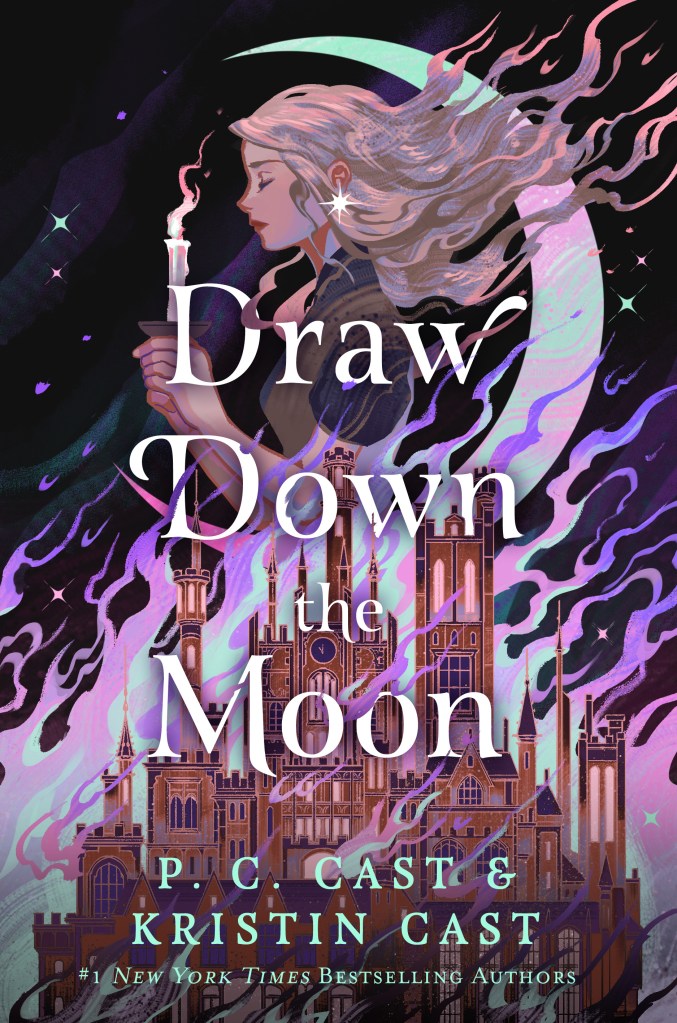
Book: “Draw Down the Moon” by P. C. Cast & Kristin Cast

Publishing Info: Wednesday Books, April 2024

Where Did I Get this Book: NetGalley!

Where Can You Get this Book: WorldCat.org | Amazon | IndieBound

Book Description: Wren Nightingale isn’t supposed to have any powers. Born of magickal parents but not under a moon sign, she was destined for life as a Mundane—right up until she starts glowing on her eighteenth birthday. In a heartbeat, Wren’s life is turned upside down, and she’s suddenly leaving her home for the mystical Academia de la Luna—a secret magickal school on a hidden island off the Seattle coast.

Lee Young has always known about his future at the Academia. He has one goal: pass the trials, impress the Moon Council, and uphold his family’s reputation. But he wasn’t expecting to be attending alongside the girl he’s been secretly in love with for as long as he can remember.

As Wren and Lee are thrown into the Academie’s gruelling trials, they quickly learn there’s something different–and dangerous–about the school this year. Wren will have to navigate a web of secrets, prophecies–and murder. And Lee will have to decide who to protect–his family’s legacy, or the girl he loves.

Review: I’ll be honest, I was drawn into this one mostly because of its whimsical cover! And then I read the description which focuses on a magical school and academia, and I knew this was one I’d like to check out. I haven’t read anything by either of these authors before either, so I went in with very few expectations. Unfortunately, this one didn’t quite work for me.

But let’s start with some of the pros first, as always. I really enjoyed the magical school and the fantasy components of this world. The idea of characters gaining certain powers based on the lunar cycle is very intriguing and not something I’d come across before. I also liked that the concept, while new feeling, wasn’t overly complicated, but felt approachable, especially for younger readers. And this is where part of my problems come in, I believe. When stepping back from my reading experience, I would say much of the reason I didn’t enjoy this one was because it seems to be the type of book best suited towards one fairly specific audience: middle school to young teen readers who are fairly unfamiliar to the fantasy genre and its conventions. For these readers, much of what is being done here may hold more interest, but for older readers, or those who read a lot of fantasy, much of it feels standard to the point of banality.

Further, this book is a perfect example of the YA “genre” being a bit to broad, or perhaps the marketers/publishers getting it wrong when promoting this book. The characters are meant to be 18, but throughout the entire story they read much, much younger. This shows itself in the dialogue, but even more so in the rather simplistic approaches to life that they incorporate, as well as some of the more ridiculous decisions they make. I believe even older teenagers would struggle to really connect to these characters without growing quickly frustrated by their storylines, let alone the many adult readers of YA fantasy fiction.

As far as fantasy concepts go, the story also follows a fairly tried and true “chosen one” plot line, very rarely veering into any territory that truly feels original. And, again, while I think the simplicity of the magic system can also be a pro, it can work against the story as well, coming across as overly basic at times, with very little room for growth, depth, or context. The romance, too, struggles in much the same way. There is nothing overtly wrong with this aspect of the story, but it never felt like it was ever taking any risks or swerving in any way that might surprise readers.

Ultimately, this book could be a success for younger readers looking for an entry point into fantasy fiction. But older readers, even just older teens, and those well-versed in fantasy stories will likely find themselves bored for much of this read and would do better to look elsewhere. For these readers, I’d likely rate this a 6, but I’ll bump it up since so much of this rating comes down to this disconnect between reader and book, more so than any distinct failures on the book’s part.

Rating 7: Perhaps a story that will work for middle grade readers looking to first dip their toes into fantasy fiction, but there’s not enough in this book to truly appeal to general fantasy readers.

Reader’s Advisory:

“Draw Down the Moon” can be found on this Goodreads list: Cover Illustrated by Afterblossom (Kelly Chong)

Kate’s Review: “You Know What You Did”

This post may contain affiliate links for books we recommend.  Read the full disclosure here.

Book: “You Know What You Did” by K.T. Nguyen

Publishing Info: Dutton, April 2024

Where Did I Get This Book: I received an eARC from NetGalley.

Where You Can Get This Book: WorldCat.org | Amazon | Indiebound

Book Description: In this heart-pounding debut thriller for fans of Lisa Jewell and Celeste Ng, a first-generation Vietnamese American artist must confront nightmares past and present…

Annie “Anh Le” Shaw grew up poor but seems to have it all now: a dream career, a stunning home, and a devoted husband and daughter. When Annie’s mother, a Vietnam War refugee, dies suddenly one night, Annie’s carefully curated life begins to unravel. Her obsessive-compulsive disorder, which she thought she’d vanquished years ago, comes roaring back—but this time, the disturbing fixations swirling around in Annie’s brain might actually be coming true.

A prominent art patron disappears, and the investigation zeroes in on Annie. Spiraling with self-doubt, she distances herself from her family and friends, only to wake up in a hotel room—naked, next to a lifeless body. The police have more questions, but with her mind increasingly fractured, Annie doesn’t have answers. All she knows is this: She will do anything to protect her daughter—even if it means losing herself.

With dizzying twists, You Know What You Did is both a harrowing thriller and a heartfelt exploration of the refugee experience, the legacies we leave for our children, and the unbreakable bonds between mothers and daughters.

Review: Thank you to NetGalley for providing me with an eARC of this novel!

It’s been a little bit since I’ve tackled a straight unreliable narrator thriller on the blog, though that isn’t super surprising because of all the tantalizing horror novels that have been coming out this Spring. But we are finally firmly back in this genre, and this time with a debut that caught my eye awhile back! “You Know What You Did” by K.T. Nguyen has been patiently sitting on my NetGalley for awhile now, and like I almost always do with my NetGalley books this was because I wanted to read it closer to the release date. By the time I came to it it had been kind of simmering on my book back burner, and I was eager to dive in.

As far as a thriller and as a mystery, I generally enjoyed this one. It has a unique hook and a unique voice, as we follow Annie, the daughter of a Vietnamese refugee who has tried to maintain a complete control over her life and identity in the face of a difficult upbringing and OCD diagnosis. After her mother dies, Annie starts having a potential relapse of her disgust driven OCD, and starts to question her reality and the things that she is, or maybe isn’t, doing. It’s a pretty solid device that is meant to deepen the mystery of what is going on with Annie (more on that below), as well as what involvement she may or may not have when one of her clients goes missing, and her erratic behaviors ramp up. In terms of the straight up mystery of Annie’s role in the combustion of her sanity and her potential propensity towards violence that she can’t recall, I had a pretty good guess from the jump as to what was going on. That isn’t to say that Nguyen didn’t have a well thought out mystery, as she did. The puzzle pieces were placed very well and it all came together seamlessly. The suspense about Annie’s mental state was also well done, as I was definitely worried about her. But if you look past the various red herrings, the truth of it all was fairly easy to predict.

And while I am generally apt to kind of side eye thrillers that have mental illness as a plot device to propel the conflict, I thought that “You Know What You Did” did a VERY good job with these themes. It almost certainly helps that Nguyen has an author’s note about her own experiences with OCD, and how that helps contextualize the symptoms and the thought processes that Annie has which intrude upon her every day thinking, and adds to her unreliability. Her OCD makes her fixate on things and makes it so she has a hard time potentially knowing what is real and what isn’t, and as strange and at times violent things happen in her vicinity, it makes for questions about how much is due to her own actions, even if she doesn’t realize it. But it also never paints it as a grotesque caricature of the condition, which can be a trap when various mental illnesses are used to drive the conflict of a thriller. I also appreciated that this doesn’t just apply to Annie, but also as we peel back the layers of her emotionally distant and abusive mother. When we start learning about Annie’s mother, we see a woman who is a hoarder, who does little more but insult her daughter, and who has decimated her self worth to make her dependent on her and within her control. But we also explore what made her this way, by learning about the trauma and loss as a refugee in the years after the Vietnam War. It doesn’t make excuses, but shows how generational trauma and untreated mental illness can have far reaching consequences, and how we don’t always know the full picture of things, be it a person or a thriller novel.

I am definitely eager to see what K.T. Nguyen brings next, because “You Know What You Did” was entertaining as hell.

Rating 7: A unique and well plotted thriller that succeeds in using mental illness as a plot device without being exploitative, this mystery is entertaining, though perhaps easier to untangle than I was expecting.

Reader’s Advisory:

“You Know What You Did” is included on the Goodreads lists “Mystery & Thriller 2024”, and “Female Psychological Thrillers/Suspense Written by Women”.

Serena’s Review: “Dragonfruit”

This post may contain affiliate links for books we recommend.  Read the full disclosure here.

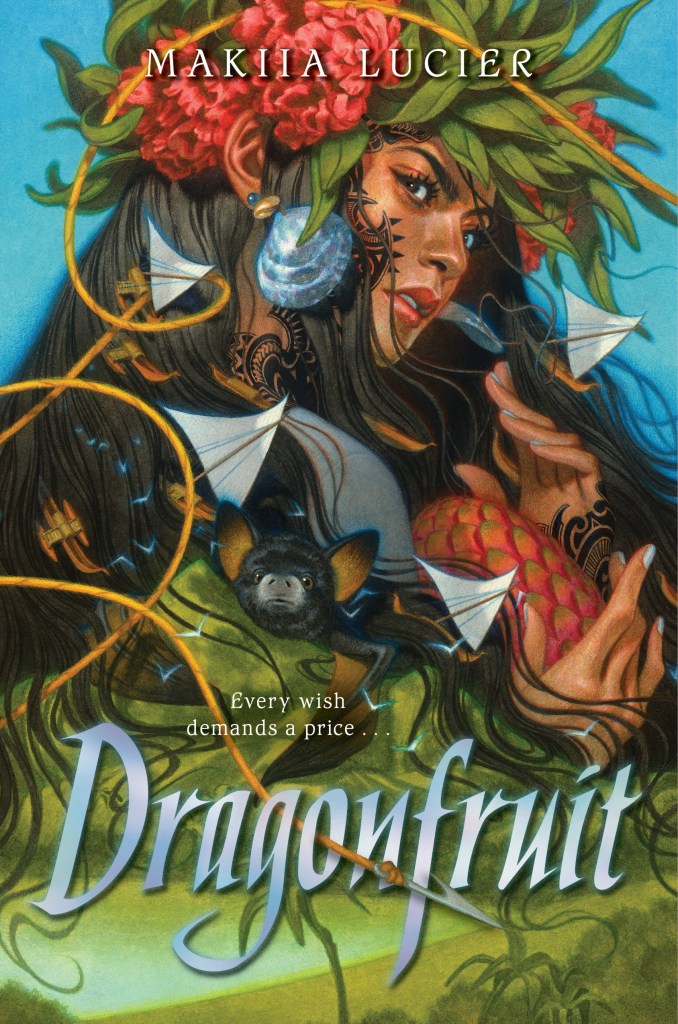
Book: “Dragonfruit” by Makiia Lucier

Publishing Info: Clarion Books, April 2024

Where Did I Get this Book: from the publisher!

Where Can You Get this Book: WorldCat.org | Amazon | IndieBound

Book Description: In the old tales, it is written that the egg of a seadragon, dragonfruit, holds within it the power to undo a person’s greatest sorrow. An unwanted marriage, a painful illness, and unpaid debt … gone. But as with all things that promise the moon and the stars and offer hope when hope has gone, the tale comes with a warning.

Every wish demands a price.

Hanalei of Tamarind is the cherished daughter of an old island family. But when her father steals a seadragon egg meant for an ailing princess, she is forced into a life of exile. In the years that follow, Hanalei finds solace in studying the majestic seadragons that roam the Nominomi Sea. Until, one day, an encounter with a female dragon offers her what she desires most. A chance to return home, and to right a terrible wrong.

Samahtitamahenele, Sam, is the last remaining prince of Tamarind. But he can never inherit the throne, for Tamarind is a matriarchal society. With his mother ill and his grandmother nearing the end of her reign. Sam is left with two to marry, or to find a cure for the sickness that has plagued his mother for ten long years. When a childhood companion returns from exile, she brings with her something he has not felt in a very long time – hope.

But Hanalei and Sam are not the only ones searching for the dragonfruit. And as they battle enemies both near and far, there is another danger they cannot escape…that of the dragonfruit itself.  

Review: I always am interested in a book about dragons! But while I’ve read a million and one (still love them though) stories about European-style dragons, I’ve read fewer based on Eastern cultures. And I was particularly intrigued that this story was drawing from Pacific Island mythology, of which I know very little. Plus, the colorful, vibrant cover is very distinct from the other YA fantasy stories out there! I always appreciate it when publishers buck trends in cover art and produced unique covers that actually fit the specific story within!

I really enjoyed this book! Right from the start, the story begins with a bang and never really slows down for the entirety of the story. The world-building, with its history of dragon hunters, dragons, and the magical and rare dragonfruit they produce is all neatly divvied out whenever there’s a break in the action. We quickly learn about our main character Hanalei and the way in which dragonfruit has shaped her life to this point. She was both saved by it, but also estranged from her home country and branded a traitor, losing family, friends, and home all in one swoop. However, as the story continues, we see that Hanalei’s past is not viewed the same by those around her, and when she finally makes her way back home, these old ties come back in surprising ways. I enjoyed the general arch of her character, especially the contradictory feelings she has towards dragons and dragonfruit. More than most others, she understands not only the magic of the dragonfruit, but also the costly price. Even more importantly, she sees what many do not, that this cost is not only born by the humans touched by a curse, but by the dragons themselves, hunted for their young.

This in particular stood out to me, the way in which the dragons were handled. They were very much presented as majestic, wild animals, with that coming all of the beauty and horror of nature. They are wonderous, yes, but they also hunt people, and the book doesn’t shy away from the human cost that exists in a world with natural predators as mighty as these dragons. There is also a strange balance of tone that this brings to the story. As far as as Hanalei and Sam’s story goes, this book can read as a very cozy YA fantasy, with their romance coming across as very sweet and innocent. But on the other hand, there is so much tragedy with the dragons. If you’re bothered by violence towards animals, this one might be a struggle. I do think it was important that the book put to the page some of these scenes, to properly highlight the challenging choices faced by our characters, but there’s also just a lot of it. I definitely shed tears more than once.

I will say that by the end I was left wanting a bit more, especially with regards to the morality of dragonfruit. I appreciated that the author simply laid out these scenes before the reader and trusted that they could come to the correct judgement about the horror of using dragonfruit for wishes, but I wish there had been a bit more acknowledgement of this situation spoken about on the page between the characters. By the end, the reader has a good understanding of things, and you feel that the characters do, too, but there still seemed to be at least one or two important conversations needed to make it feel well-rounded.

On the same note, some of the cozy vibes of this story (which I very much appreciated on the whole!) seemed to coincide with a few almost cartoonish depictions of the books’ villains. There were a few characters, especially in the beginning, who were of the sort where you simply love to hate them. And that is all well and good, but, again, by the end of the story, I was left wanting a bit more depth to all of these characters. I will say that one of these did end up having an interesting arc, though I also felt this was fairly predictable past a certain point.

Overall, however, I very much enjoyed this book! It was a fast read, and I completed it in two sittings. The main characters, especially, were incredibly relatable and I loved their heart-warming romance. I also really loved the dragons of this world, they were an integral part to the story and they did not let me down! If you’re looking for a breath of fresh air in the YA dragon books arena, definitely give this one a shot! Just have some tissues on hand!

Rating 8: Full of heart and tragedy, this is a YA dragon book for all those looking for a fresh entry into a tried-and-true subgenre!

Reader’s Advisory:

“Dragonfruit” can be found on these Goodreads lists: Obscure Books Worth Considering and YA Novels of 2024.

Kate’s Review: “Immortal Pleasures”

This post may contain affiliate links for books we recommend.  Read the full disclosure here.

Book: “Immortal Pleasures” by V. Castro

Publishing Info: Del Rey, April 2024

Where Did I Get This Book: I received an eARC from NetGalley.

Where You Can Get This Book: WorldCat.org | Amazon | Indiebound

Book Description: An ancient Aztec vampire roams the modern world in search of vengeance and love in this seductive dark fantasy from the author of The Haunting of Alejandra.

Hundreds of years ago, she was known as La Malinche: a Nahua woman who translated for the conquistador Cortés. In the centuries since, her name has gone down in infamy as a traitor. But no one ever found out what happened to La Malinche after Cortés destroyed her people.

In the ashes of the empire, she was reborn as Malinalli, an immortal vampire. And she has become an avenger of conquered peoples, traveling the world to reclaim their stolen artifacts and return them to their homelands. But she has also been in search of something more, for this ancient vampire still has deeply human longings for pleasure and for love.

When she arrives in Dublin in search of a pair of Aztec skulls—artifacts intimately connected to her own dark history—she finds something else: two men who satisfy her cravings in very different ways.

For the first time she meets a mortal man—a horror novelist—who is not repelled by her strange condition but attracted by it. But there is also another man, an immortal like herself, who shares the darkness in her heart. Now Malinalli is on the most perilous adventure of all: a journey into her own desires.

Review: Thank you to NetGalley for providing me with an eARC of this novel!

V. Castro is one of my favorite horror authors, and I had been waiting patiently (maybe not so patiently) for her to take on a vampire story. So when I saw the announcement for “Immortal Pleasures” and that it not only was going to be a vampire story that centers on La Malinche, but that the cover looked like a full on “From Dusk Til Dawn” aesthetic, I rejoiced. Of all of the V. Castro books I’ve looked forward to, this was up there with “The Haunting of Alejandra” (which I also loved). So I dove into “Immortal Pleasures”, eager and filled with anticipation.

So, first thing’s first. I am absolutely going to praise the praiseworthy things about this book, and there are lots of things that I really, really liked. For starters, the concept of the woman who was La Malinche being turned into a vampire with the name Malinalli, and using her immortality to reappropriate the items and objects from the Nahua culture back from Western clutches is PHENOMENAL (especially since Cortés is ALSO a vampire now and they are on a path to run afoul each other again). I am so thrilled that there has been more discussion about the Spanish conquest/invasion in Central and South America in fiction as of late, as I’ve seen this in multiple horror novels in the past couple of years, and what a neat idea to take the figure of La Malinche, the Nahua woman who worked as a translator and advisor for Hernán Cortés during his bloodthirsty mission, and to give her a voice and to give her something of a redemption arc when as of late she has been vilified for her role in advising and enabling Cortés (if you want some background on La Malinche, take a look HERE). Castro is game to dive into the themes of the colonial violence and genocide that the Spanish committed during their invasion and conquest, and to show La Malinche, now Malinalli, as a victim who wants to atone for the role she played, even if it was a role forced upon her as an enslaved woman. So yes, I absolutely love her as a reborn vampire who is traveling the Western world to bring pre-Columbian Meso- American cultures’ artifacts back from museums, universities, and collectors. It makes her powerful, it makes her redemptive, and it makes her complex. I also really like that she is finally in charge of her own sexuality, as when she was alive she was absolutely a victim of rape and sex trafficking as an enslaved woman forced into the role of Cortés’s accomplice. As Malinalli she is able to have agency in her sexuality. And given that there are many sex scenes in this book between her and a horror writer, as well as her and another vampire (whose twist of an identity made me SCREAM with both glee and also confusion but in a good way, I assure you), she takes control of her sexual narrative repeatedly. Also, very explicitly.

But here are the roadblocks that made this book a harder read for me, and it’s mostly a narrative choice in how the story is told. This is not only a first person narrative, with Malinalli telling the reader her story both in past and in present, but it is also done in a way that makes it feel very matter of fact and conversational, which means that the flow is almost ALL telling and very little showing. It felt to me like Castro was going for an Anne Rice “Interview with the Vampire” vibe, which I absolutely appreciate because that’s iconic. But I think that the problem was that it just made for a less interesting narration because again, it was more telling and less showing. I also didn’t feel nearly as much connection to the modern story of Malinalli trying to retrieve two skulls in the United Kingdom as I did to the historical story of her as La Malinche and her start as a vampire. I almost wonder if it’s because her modern story has the meandering paths of her relationship with Colin, the aforementioned horror writer, and the many many sex scenes she has with him. Some bordering on the ludicrous. I like to think that I’m not a prude in any way shape or form, and again, I LOVE giving Malinalli the agency she has in her sex life. But man, there were a LOT of sex scenes that felt superfluous. And oddly written. And Colin himself just wasn’t super interesting to me, and I couldn’t figure out why she was interested in him to begin with. Though that said, she drops him like a hot potato REALLY fast once she meets fellow vampire Alex, but that also felt rushed and hastily resolved. It just felt like a pacing issue, or indecisiveness on what to focus on.

So, overall, “Immortal Pleasures” wasn’t what I wanted it to be. There were aspects I liked, but it felt like a rare stumble from V. Castro in a lot of ways.

Rating 6: The themes and ideas of this book worked so well for me, but the narrative voice and the choices that came with it were a bit too stilted for me.

Reader’s Advisory:

“Immortal Pleasures” is included on the Goodreads list “Horror to Look Forward to in 2024”.

Joint Review: “Ghost Station”

This post may contain affiliate links for books we recommend.  Read the full disclosure here.

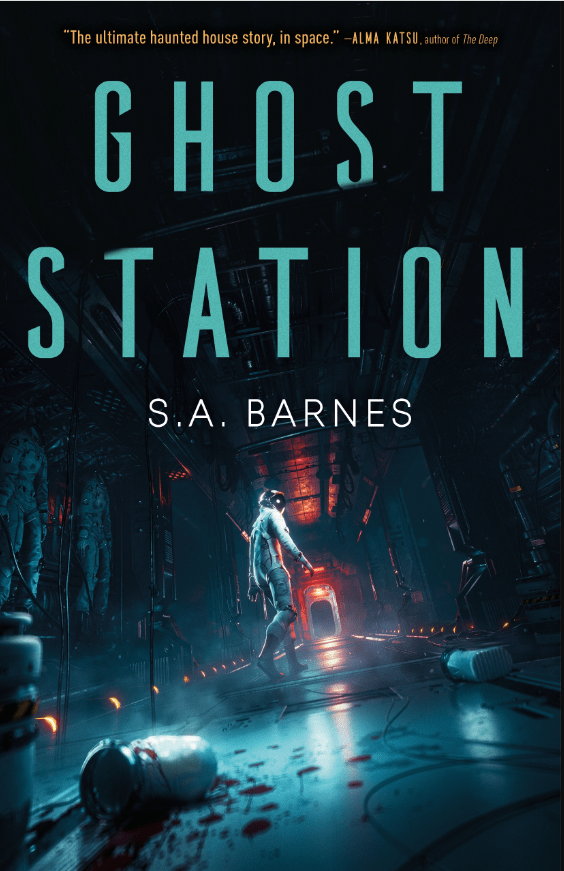
Book: “Ghost Station” by S.A. Barnes

Publishing Info: Tor Nightfire, April 2024

Where Did We Get This Book: NetGalley;

Where You Can Get This Book: WorldCat.org | Amazon | Indiebound

Book Description: A crew must try to survive on an ancient, abandoned planet in the latest space horror novel from S.A. Barnes, acclaimed author of Dead Silence.

Space exploration can be lonely and isolating.

Psychologist Dr. Ophelia Bray has dedicated her life to the study and prevention of ERS—a space-based condition most famous for a case that resulted in the brutal murders of twenty-nine people. When she’s assigned to a small exploration crew, she’s eager to make a difference. But as they begin to establish residency on an abandoned planet, it becomes clear that crew is hiding something.

While Ophelia focuses on her new role, her crewmates are far more interested in investigating the eerie, ancient planet and unraveling the mystery behind the previous colonizer’s hasty departure than opening up to her.

That is, until their pilot is discovered gruesomely murdered. Is this Ophelia’s worst nightmare starting—a wave of violence and mental deterioration from ERS? Or is it something more sinister?

Terrified that history will repeat itself, Ophelia and the crew must work together to figure out what’s happening. But trust is hard to come by… and the crew isn’t the only one keeping secrets.

Kate’s Thoughts

When Serena approached me asking if I’d be interested in doing another Joint Review of an S.A. Barnes book, I was game. I liked getting both our perspectives on “Dead Silence”, as it is both Sci-Fi and Space horror, and therefore in both our wheelhouses. I enjoyed “Dead Silence”, and reading up on “Ghost Station” was just as intriguing to me based on the description.

If I was mentally comparing “Dead Silence” to “Aliens” and “Event Horizon”, “Ghost Station” read like the sci-fi horror film “Prometheus” to me, with a crew getting in way over their head on a mysterious planet that has sinister secrets. In terms of the things I liked, I really enjoyed Ophelia as our protagonist, as she is both unreliable in a number of ways, but is also very driven for very personal reasons in connection to a dangerous mental disorder known as ERS. I liked not really knowing what her deal was beyond one straight forward incident, and an anxiety and shame about being a part of a notorious corporate family with immense wealth and unscrupulous morals. We slowly get to peel back her layers, and as she and the crew find themselves in a situation that keeps getting more tense and more dangerous, her secrets and their secrets combine to make for a good deal of suspense and mysteries revealed. There is also some nice space horror bits here, and some beats that really unsettled me. Particularly the way that Barnes shows a slow decay of various crew members sanity, for reasons that may not be as obvious as Ophelia would like it to be.

But all that said, this one felt like it was a bit heavier on the Sci-Fi elements this time around, and even though I enjoy Space Horror as a Sci-Fi sub-genre, if you tread a bit too far into the Sci-Fi, my brain just shuts off (this actually happened with “Prometheus” as well). There is no question that this book does have a lot of suspenseful and scary moments in it that worked for me, but they felt a little few and far between. This isn’t to be a criticism of this book because I imagine that this will work very well for the target audience of Sci-Fi aficionados (let’s see what Serena says!), but it just got into the Sci-Fi weeds a bit too much for me as a person who isn’t a fan of that genre.

“Ghost Station” will probably satisfy Sci-Fi fans who like space horror, but for this horror fan who doesn’t usually mess with that genre, it didn’t hit as hard as I’d hoped it would.

Serena’s Thoughts

While I liked this one more than Kate did (probably no surprise, as science fiction is a much-loved genre of mine on its own right, and the horror side of things was the more experimental thing), I also agree with many of her criticisms. For the most part, I enjoyed the science fiction elements we had here. Many of them are fairly standard fair as far as futuristic technology goes, but I thought they were presented and used in interesting ways.

I also thought the horror elements were good. There was definitely the slow build up of dread as Ophelia and the other members of the crew explore and piece together the mystery of what had happened before them. There were some legitimately creepy moments, but not enough to make the book unapproachable to more casual horror readers. That said, I think the horror aspects of the first by this author that we joint read, “Dead Silence,” hit me harder, some even popping up in my head at inconvenient times days later. Whereas with this book, moments were a bit freaky, but it didn’t stay with me in the same way.

I also struggled a bit with the pacing and character development in this one. While I think the slower nature of the building dread worked well on the spooky front, the pace overall seemed to drag, especially in the beginning. I kept wanting to rush ahead for things to start happening, and it seemed to take quite a long time to get to anything substantial. And, while I enjoyed discovering more about Ophelia, who she was and why she made the decisions she did, I also found myself more frustrated by some of her decisions and inner monologues than I did with the lead character in “Dead Silence.”

Overall, I thought this was was a serviceable science fiction horror story, though I don’t think it quite lived up to the high that was the author’s previous work.

Kate’s Rating 6: There are definitely solid horror moments, but this was a little too heavy on the Sci-Fi for me.

Serena’s Rating 7: A bit slow with regards to pacing, but an approachable book overall, especially for the more casual horror/science fiction readers.

Reader’s Advisory

“Ghost Station” is included on the Goodreads lists “Horror to Look Forward to in 2024”, and “Can’t Wait Sci-Fi/Fantasy of 2024”.

Kate’s Review: “The House on Biscayne Bay”

This post may contain affiliate links for books we recommend.  Read the full disclosure here.

Book: “The House on Biscayne Bay” by Chanel Cleeton

Publishing Info: Berkley, April 2024

Where Did I Get This Book: I received an eARC from NetGalley.

Where You Can Get This Book: WorldCat.org | Amazon | Indiebound

Book Description: As death stalks a gothic mansion in Miami, the lives of two women intertwine as the past and present collide in New York Times bestselling author Chanel Cleeton’s atmospheric new novel.

With the Great War finally behind them, thousands of civilians and business moguls alike flock to South Florida with their sights set on making a fortune. When wealthy industrialist Robert Barnes and his wife, Anna, build Marbrisa, a glamorous estate on Biscayne Bay, they become the toast of the newly burgeoning society. Anna and Robert appear to have it all, but in a town like Miami, appearances can be deceiving, and one scandal can change everything.

Years later following the tragic death of her parents in Havana, Carmen Acosta journeys to Marbrisa, the grand home of her estranged older sister, Carolina, and her husband, Asher Wyatt. On the surface, the gilded estate looks like paradise, but Carmen quickly learns that nothing at Marbrisa is as it seems. The house has a treacherous legacy, and Carmen’s own life is soon in jeopardy . . . unless she can unravel the secrets buried beneath the mansion’s facade and stop history from repeating itself.

Review: Thank you to NetGalley for providing me with and eARC of this book!

At the beginning of the month my family and I went to Florida so that my four year old could experience the joy and chaos that is Disney World, and the nostalgia factor for me (outside of being burnt out to hell by the end of all of it) was ample. Being back in the Sunshine State reminded me of my family trips there when I was little, specifically to, yes, Disney, but also to visit my family in Miami. While Florida is a state that I have a lot of opinions about, I do have a place in my heart for Miami thanks to the time spent there as a kid (as well as a trip in 2017 for my cousin’s wedding celebration). Because of this nostalgia, I was very interested in “The House on Biscayne Bay” by Chanel Cleeton. Not only was it touted as a Gothic mystery, it also had the setting of first half 20th Century Miami. What a combination! I went in with high expectations. And was somewhat disappointed.

First, of course, the things I did like. I absolutely adored the time and place in this book, as well as the descriptions of Marbrisa itself. I so rarely read stories set during the time period that is during or adjacent to World War I, so when it is a timeframe in a book I’m already interested because of the opportunities it opens. In spite of my family connections to Miami, my knowledge of its history is pretty limited, and I really liked the descriptions that Cleeton had about the town as it was growing and the challenges that presented the culture shock, the isolation, the alligators!). And when looking at the timeline that Carmen, Carolina, and Asher are in, I liked the way that the house had changed and transformed and had built up a reputation throughout Miami, and how that was affecting those living there. I also did enjoy our two protagonists across these two timelines we are following, Anna and Carmen. For Anna, I liked that she is a high society woman and wife of a New York businessman, Robert Barnes, and how she is expected to be grateful and thrilled about him building her this house, but instead finds herself trapped and stifled because of being plucked from her comfortable life and plunked down into a whole new community. Without any say. Seeing her have to grapple with this, as well as suspicions about her husband after a death happens at their estate, was really interesting. And for Carmen I liked the perspective of yet another woman being plucked from all she knows (this time her home in Havana after her parents die unexpectedly) and put in a whole new setting with sister Carolina, whom she has a contentious relationship with, and brother in law Asher, who is practically a stranger. And then when Carolina is murdered, she is suddenly alone with strangers in a strange house, possibly with a killer. I really enjoyed Carmen’s resilience and her verve.

But while I did like the melodrama and the way that both Anna and Carmen were maneuvering in their presents in Marbrisa, the two mysteries in both their timelines didn’t grab me the way I had hoped they would. For Anna, the death of a woman named Leonora at their first (and only) lavish party to show off the house has led her to wonder if the drowning was accidental, or something more sinister. For Carmen, there is not only the sudden death of her sister Carolina, but also the lingering question about what happened to Anna, who disappeared years prior. I wasn’t totally swept into the mysteries because, in the case of Leonora, I had a pretty good idea as to what happened from the jump, and in the case of Carolina, while the twists and surprises were well done, I just wasn’t invested in that outcome because I wasn’t as invested in Carolina. I WAS invested in Carmen and worried about her, but that would have been the case even without the mystery. I DID like the Anna Barnes mystery, but one out of three isn’t a resounding average.

“The House on Biscayne Bay” had some really well done historical beats and felt Gothic in all the right ways, but it wasn’t as thrilling as I had hoped it would be. That said, for historical fiction I will be looking into more Chanel Cleeton!

Rating 6: I liked the historical drama and I liked our two protagonists, but for whatever reason the mysteries at hand didn’t capture my attention.

Reader’s Advisory:

“The House on Biscayne Bay” is included on the Goodreads lists “Anticipated Literary Reads for Reader’s of Color 2024”, and “Mystery and Thriller 2024”.

Serena’s Review: “The Hemlock Queen”

This post may contain affiliate links for books we recommend.  Read the full disclosure here.

Book: “The Hemlock Queen” by Hannah Whitten

Publishing Info: Orbit, April 2024

Where Did I Get this Book: ARC from the publisher

Where Can You Get this Book: WorldCat.org | Amazon | IndieBound

Book Description: The corrupt king August is dead. Prince Bastian has seized the throne and raised Lore—a necromancer and former smuggler—to his right hand side. Together they plan to cut out the rot from the heart of the sainted court and help the people of Dellaire. But not everyone is happy with the changes. The nobles are sowing dissent, the Kyrithean Empire is beating down their door, and Lore’s old allies are pulling away. Even Prince Bastian’s changed. No longer the hopeful, rakish, charismatic man Lore knows and loves, instead he’s reckless, domineering and cold. 

And something’s been whispering in her ear. A voice, dark and haunting, that’s telling her there’s more to the story than she knows and more to her power than she can even imagine. A truth buried deep that could change everything. 

With Bastian’s coronation fast approaching and enemies whispering on all sides, Lore must figure out how to protect herself, her prince, and her country before they all come crumbling down and whatever dark power has been creeping through the catacombs is unleashed.

Previously Reviewed: “The Foxglove King”

Review: While “The Foxglove King” wasn’t a perfect read for me, it did solidly set up the series in all of the ways that mattered. The world seemed interesting. The characters drew me in. The ending set up a bigger conflict to come. And, best of all, I wasn’t completely turned off by the love triangle being set up (truly a rare thing). On top of that, Whitten has yet to truly let me down with any of her books, even if I’ve liked some more than others. So it was with great eagerness that I finally got to this book when going through my TBR pile!

This was an incredibly interesting second book in this series. On one hand, I do think it’s the kind of sequel that asks its readers to put a lot of trust in the author and the over-arching plot of the trilogy as a whole. Its’ definitely a middle book, setting up a lot of moving pieces that will not see a conclusion in this story. As well, in the first third to even half of the book, several of the characters read very differently from how they appeared in the first book. Lore, our feisty survivor, spends much of the beginning of this story in a very passive, reactive role. So much so, that we see her willfully sticking her head in the sand about what is going on around her and becoming distrusted to reliably act by those close to her. But, as the story progresses, I really enjoyed the character reflection that this brought about. In the first book, we see a Lore who will fight to survive. But much of survival is also endurance and remaining out of the way in dangerous situations, and in this book we see a Lore who knows how to adapt quickly to whatever circumstances she finds herself in, prioritizing her day-to-day existence over radically challenging anything around her. This is a much less sexy side of survival, but I think there’s a case to be made that this trait is even more important than “fighting.”

I also enjoyed the nice parallels between Lore’s awakening to the reality of her own situation alongside the stirrings of the old gods themselves. We get so much great information and backstory for these gods and the story twisted and turned in many exciting ways. There were tons of reveals, but by the end, I still felt like I had barely scratched the surface of what is currently going on with the gods and what had happened between them in the past.

Returning to the “trusting the author” theme, Bastian, too, was a character who read very different at times in this book than he had in the first. Here, I feel like the explanation/understanding of what was going on was fairly easy to predict early on, thus assuaging any fears of fans. But I have still seen several disappointing Goodreads reviews where readers essentially DNF’d this early saying that Bastian had gotten the “Tamlin treatment” from ACOTAR. This book just goes to show how readers need to give stories a chance to develop before jumping to conclusions and potentially missing out on an excellent story.

As for the third member of our group, we see a lot less of Gabe in this book than in the first, which was my biggest disappointment. I did like the scenes we had with him, but he very much felt like a background character for much of the story. This makes sense as far as the story goes, especially with Lore’s own character arc of slowly accepting the truth about their situation, but it does leave him with a much-reduced plot from what we saw in the first.

As far as the romance goes, I feel like the author has to be setting up more of a throuple situation at this point than a true love triangle. If anything, I found Lore’s repetitive thoughts about “why can’t I have both” to be a bit too on the nose, especially given how often she reflected on this point. Now, I don’t love throuple stories personally, but I will say, this is by far the best variation on this type of romance that I’ve read. While it’s not my preference, Whitten has laid down excellent groundwork building up strong relationships between all three characters. There’s also the very real possibility that this will all end in tears. Who knows!

Overall, I thought this was an incredibly successful sequel. The story is slow to start and asks the readers to trust that the characters will work through their challenges, but once it gets going, boy does it move! There is a ton of world-building included in this one, and I also enjoyed the greater scope of the political situation, with other countries now nipping at the heels of a seemingly weakened new King. The story also ends on a fairly massive cliffhanger, so readers beware as far as that goes! But, if you enjoyed the first book this series, definitely check this one out!

Rating 8: A sense of dread slowly simmers to build to a climatic crescendo that will leave readers aching for the next book in the series!

Reader’s Advisory:

“The Hemlock Queen” can be found on these Goodreads lists: Most Anticipated Adult Romances of 2024 and Epic High Fantasy/Romance/Mythology in 2024