Kate’s Review: “The Return”

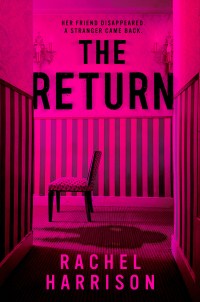
46354144Book: “The Return” by Rachel Harrison

Publishing Info: Berkley, March 2020

Where Did I Get This Book: I received an eARC from the publisher through NetGalley.

Book Description: A group of friends reunite after one of them has returned from a mysterious two-year disappearance in this edgy and haunting debut.

Julie is missing, and the missing don’t often return. But Elise knows Julie better than anyone, and she feels in her bones that her best friend is out there, and that one day she’ll come back. She’s right. Two years to the day that Julie went missing, she reappears with no memory of where she’s been or what happened to her.

Along with Molly and Mae, their two close friends from college, the women decide to reunite at a remote inn. But the second Elise sees Julie, she knows something is wrong—she’s emaciated, with sallow skin and odd appetites. And as the weekend unfurls, it becomes impossible to deny that the Julie who vanished two years ago is not the same Julie who came back. But then who—or what—is she?

Review: Thank you very much to Berkley and NetGalley for providing me with an eARC of this novel!

I cannot tell you how excited I was when Berkley emailed me a link to the eARC of “The Return” by Rachel Harrison. I had been waiting and searching NetGalley to see if a request for this book would go up, eager to read a book that was being called a mash up of “The Shining” and “Girls”.

giphy-5
So… like this???? (source)

In my mind this meant super disturbing horror AND soapy catty girl fights (though a serious lack of Adam Driver, the only redeeming feature of that dreadful show in my mind). It took a fair amount of willpower to save it for a later date, and honestly I dove in a lot earlier than I normally do with eARCs that I get. I clearly had high hopes. And they were met. And HOW.

From the get go “The Return” sucks you in and lets you know the kind of story and people you’re going to be dealing with.  Julie has disappeared, and her best friend Elise doesn’t want to believe that this is anything more than a histrionic call for attention. Julie has a history of this, after all, so when mutual friends Molly and Mae are concerned Elise refuses to be. Until Julie doesn’t come back and is declared dead, with a funeral and everything. So when she returns two years later claiming no memory, the reader knows that something is amiss, both in Julie’s story AND the relationship she has with her best friend. Therefore, isolating the four friends in a strange hotel and letting them slowly realize that Julie isn’t ‘the same’ is the perfect slow burn horror that especially resonates with anyone who has had a friendship that has potentially run its course. The horror elements are on point, from the descriptions of Julie’s emaciated look to the quirks and strange changes at the hotel that may or may not be Elise’s imagination to the imagery of dark beings in the corners of vision. There were numerous moments where I found myself incredibly unsettled, or had to set the book down for a bit and regroup. There is one especially suspenseful scene near the end the effectively lets the scene build up from everything being okay, to minor unease, to outright terror, so the reader experiences everything that the character is going through within the moment as you read it. I loved it, even if it deeply upset me and really put me off going exploring in our nation’s national parks by myself… And some of the descriptions of Julie’s physical transformation were absolutely disgusting, really amping the body horror aspect up to sit alongside the Gothic themes of an isolated location, as bad weather rolls in and people start disappearing…

But the other theme that struck me about this book is how well it captures the last dying gasps of a friendship on the skids. Elise, Julie, Molly, and Mae were all close back in the day, but now have drifted apart geographically and emotionally. With the four of them scattered across the country, some of them settling down, others making poor romantic choices, and others are stagnating and refusing the see it. Seeing the four of them try to force a reunion in the wake of Julie’s remarkable reappearance is something you could see in a tawdry drama, and the story would work even if you pulled the horror elements out. You especially see the tumultuous friendship between Elise and Julie, told through references to the past and seen in interactions in the present, as Julie has come back very much not herself. But then, I couldn’t help but think that it’s all a very well done metaphor for when you don’t know a person anymore, even without the strange body horror aspects, or the rotting teeth, or the fact that bodies may be piling up. Elise and Julie are codependent on each other’s friendship, no matter how damaging it could be for both of them.

“The Return” blends an effective Gothic and body horror tale with the deterioration of a long standing friendship. It’s a horror story that was worth the wait and the anticipation, and one that may be more relatable than you would think.

Rating 9: A sudsy and creepy horror story that not only brings the scares, but examines tough realities about friendships that start to fade away.

Reader’s Advisory:

“The Return” is included on the Goodreads list “2020 Horror to Scream For”.

Find “The Return” at your library using WorldCat!


Hunkering Down: Book Series For The Long Haul

So, given that a good majority of people may be staying at home and away from crowds for awhile (or even in quarantine), we here at Library Ladies thought that we’d recommend some books that could help pass the time. Because the thing about these recommendations is that they are multi-book series! Here are some of our favorites that will keep you busy and engaged for a long while. See if your local bookstore will deliver an order to you, or if you can find them as downloadable content from your local library! But please don’t physically go to your library if it’s open. And remember everyone: be mindful, practice social distancing (or just stay home), check in on your loved ones, and wash wash wash your hands!

27861730._sx318_

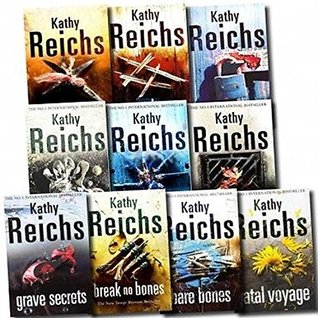
Series: “The Temperance Brennan” Series by Kathy Reichs

For fans of the TV show “Bones”, did you know that it started as a book series? Well, kind of. Temperance from the TV show is very different from Temperance from the novels, but if you are in it for the forensic anthropology based mystery of it all, this series is for you! Temperance is a forensic anthropologist who works in both North Carolina and Quebec, hoping to help identify the remains of people who may not be identifiable otherwise. And she also gets into some pretty hot water, and finds herself solving dark and engaging mysteries. I love Tempe and the crimes she tackles, and while sometimes her personal life can be exhausting, she is incredibly charming as a character. Plus, given that Reichs herself is a forensic anthropologist, there are a lot of great science-y tidbits within these books!

244ehli-600x461-1

Series: “The Dark Tower” by Stephen King

We all know that Stephen King is the king of horror, but he’s also dabbled in fantasy. His best known fantasy series is “The Dark Tower”, a dark fantasy about a gunslinger, a man in black, and multiple universes that are all potentially in danger. Roland Deschain is a member of an important order of knight like beings called Gunslingers, and his world seems to be falling apart. He hopes that if he can find a place called “The Dark Tower”, as it may be the key to saving not only his world, but also all the worlds in all dimensions. But, of course, there is a man who thrives on the chaos and violence of these universes, and a showdown between Roland and The Man in Black (aka RANDALL FLAGG!!) seems almost inevitable. This is what I like to call a ‘commitment’, as many of the books in this series are looooooong. Therefore, they will take up a lot of that time we will all need to kill while we wait out our social distancing measures.

75235137f3e426515a6671606e309610

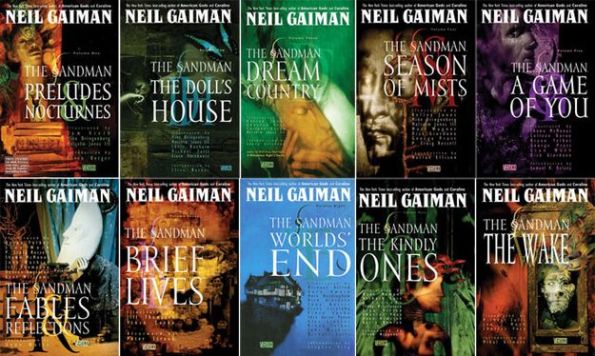
Series: “The Sandman” by Neil Gaiman

If you haven’t read anything by Neil Gaiman, a wonderful place to start would be with his epic comic fantasy opus “Sandman”. This epic fantasy series deals with Dream, or Morpheus, the being that controls sleep and dreaming and stories. This series is about him and his siblings, The Endless, and how they control and represent many powers of the universe. Part fantasy, part horror, part mythology, “Sandman” is one of the greatest comic series of all time, being  one of Vertigo’s first titles and beloved by many fantasy and comics fans to this day. It’s hard to really describe this series, in it’s eerie, ephemeral and philosophical leanings. But it’s captivating and lovely, and will no doubt take you to a world you never expected, and may not want to leave.

wheel-of-time-1025739

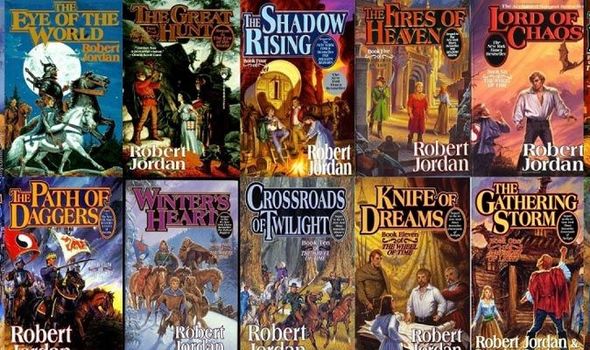
Series: “Wheel of Time” by Robert Jordan

Any epic fantasy fan is at least passingly familiar with Robert Jordan’s mammoth “Wheel of Time” series. In fact, Jordan was the OG Geore RR Martin when it came to complaining about an author not finishing their series. And in Jordan’s case, fans’ worst fears were realized when he passed away before finishing the 14 book series. Luckily, Brandon Sanderson, another beloved fantasy author, was able to pick up the notes that remained and bring a conclusion to this sprawling story. Not only are there 14 books, however, each book is also hundreds and hundreds of pages long. So if you like fantasy (especially of the high fantasy variety with swords, staffs, and unique world-building), this series should have you set for quite some time. Amazon is also currently working on developing a TV series for these books, so now is a good time to get a head start before it is released!

octoberdaye-series-sweeps

Series: “October Daye” by Seanan McQuire

If epic fantasy isn’t your jam, there are a bunch of long-running urban fantasy series to check out. I’ve reviewed the “Mercy Thompson” and “Kate Daniels” series on this blog, so if you haven’t read those, they are also good options. But I wanted to shine light on another great series that I’ve been making my way through (though haven’t reviewed yet.) Like the two others, this series focuses on a young woman with connections to a secretive supernatural world. October Daye has one foot in the realm of fae and one in the human world. With her experience in both worlds, and as a knight with a liege in a fairy court, October solves mysteries and goes on adventures throughout this 13+ book series. However, while the story does eventually build towards a romance, it is much less heavily featured (at least right off the bat) than the central romances in the “Thompson” or “Daniels” series.

91-amo6abjl

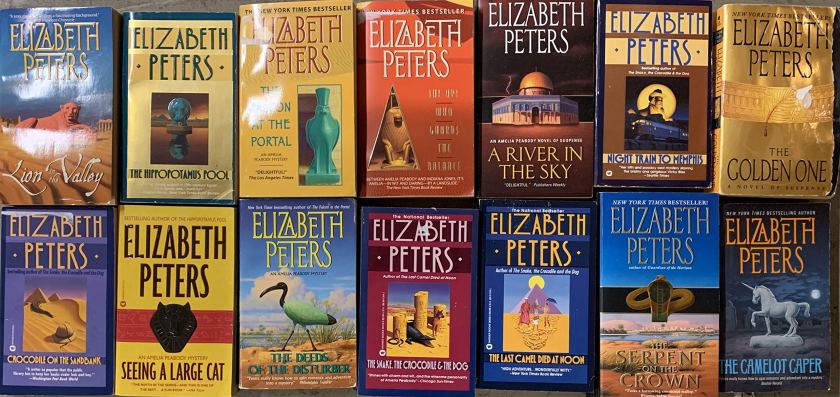
Series: “Amelia Peabody” by Elizabeth Peters

Of course, no list featuring long book series could be complete without a nod to my beloved “Amelia Peabody” series. Fantasy lends itself well to long-running stories, so it’s a bit more challenging to find long series that don’t feature magical elements. But for those who enjoy mysteries and historical fiction, Amelia Peabody is the best of the best. Taking place largely in Egypt, Amelia and her family solve a range of mysteries and murders. But what makes this series really stand out is the hilarious narration of our leading lading herself! I’ve listened to a bunch of these on audiobook as well, so I recommend that option as well. Bonus, if your library has digital audiobooks available, you can listen to a bunch of these without ever leaving your house!

What are you planning on reading while spending time at home? Let us know in the comments!

Serena’s Review: “A Broken Queen”

45046564Book: “A Broken Queen” by Sarah Kozloff

Publishing Info: Tor Books, March 2020

Where Did I Get this Book: from the publisher!

Book Description: Barely surviving her ordeal in Oromondo and scarred by its Fire Spirit, Cerulia is taken to a recovery house in Wyeland to heal from the trauma. In a ward with others who are all bound to serve each other, she discovers that not all scars are visible, and dying can be done with grace and acceptance.

While she would like to stay in this place of healing, will she ever be able to leave the peace she has found to re-take the throne?

Previously Reviewed: “A Queen in Hiding” and “The Queen of Raiders”

Review: And we’re back with the third book already! Man, I’m really loving being able to read an entire series like this. In the “My Year with Jane Austen” series I’m writing, I’m getting near to reviewing the 1995 mini series version of “Pride and Prejudice.” It’s excellent for many reasons, but I’ll be honest, a large part of my love for it is simply that it’s nearly six hours long, meaning I can sink into one world with one set of characters for an extended period of time all once. It’s been a similar experience with this series.

Cerulia is badly injured, both physically by the scars left on her body by the flames, but also internally, unsure of her own role as a leader and queen going forward. In the quiet and peace of the healing ward where she is recovering, she is badly tempted to give up her quest of regaining her throne. The path has been harder than she ever thought, but she comes to see her responsibility to her people is greater than her own insecurities and fears. But without an army and with her sister poised to marry the son of her great enemy, Cerulia must work hard to remain free and in a position to challenge Matwyck for her throne.

I actually ended up liking this third book a bit more even than the first two, especially portions in the first half of the book while Cerulia is struggling to find her way again. For an individual who has been in exile for so long, jumping from one place to another, one entire identity to another, it’s no wonder that questions would arise about whether it is worth it and who she really is beneath all of the disguises. Through these reflections, she’s forced to confront her own insecurities and fears. She also come across the tried and true “with great responsibility” way of thinking, recognizing that her own struggles are ultimately not about what she has lost as a princess/queen forced from her home, but in the service of a greater duty to the country that’s been left behind. All of the people who don’t have the option to flee and re-create lives for themselves with the help of magical abilities and a grand heritage.

After this period of reflection, the action picks up again with Cerulia returning home, reuniting with her foster family, and facing the stark reality of the challenges ahead of her on her journey to the throne. There are also some interesting discussions regarding the necessity of a queen at all. It was fun seeing Cerulia go full circle and finally return to her home and her foster family, and it’s a great set-up for the final conflict to come in the last book.

But, with the increased interest I had in Cerulia’s story, I found myself feeling more disconnected from the other characters’ portions of the story. While there have been some moments where these other characters’ perspectives have added strength and context to the story, at this point, as we near the end of the series, their portions felt like more of a distraction than anything. I was always eager to return to Cerulia’s story and found myself more and more impatient with any breaks in the momentum of her plot line.

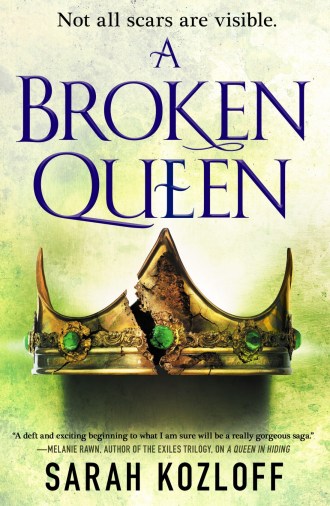
Lastly, I want to throw out a brief kudos to the cover art for this series! I always like covers that don’t include models, so that was a great start. But mostly I think the understated changes to the crown and how it reflects the action of each story was very clever. The first cover had a crown that was literally hidden behind vines. In the second, we see a crown being consumed by flames, a direct nod to Cerulia’s own perilous experience with fire. And here we have the broken remains of that ordeal, cracked but not destroyed. The final cover, of course, finally brings the crown to it’s completed state: regal and whole, free of damage or concealment. It’s a very simple little theme, but I think it works perfectly for this story.

Only one more month to go until we wrap this all up! In the meantime, make sure to enter the giveaway for a finished copy of “A Broken Queen.”

Rating 8: Poignant reflections on the responsibility of privilege and the definitions of self set a solid foundation for the final book to come.

Reader’s Advisory:

“A Broken Queen” is a newer title so it isn’t on many Goodreads lists, but it is on “Upcoming 2020 SFF with female leads or co-leads.”

Find “A Broken Queen” at your library using WorldCat!

Kate’s Review: “Poison Ivy: Cycle of Life and Death”

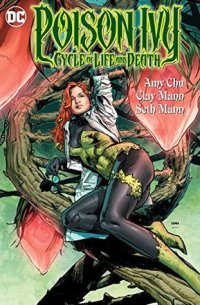
29429567._sy475_Book: “Poison Ivy: Cycle of Life and Death” by Amy Chu, Clay Mann (Ill.), & Seth Mann (Ill.)

Publishing Info: DC Comics, September 2016

Where Did I Get This Book: The library!

Book Description: Poison Ivy blossoms into her first solo adventure! There are animals. There are vegetables. And there is somewhere in between. That’s where Dr. Pamela Isley, a.k.a. Poison Ivy, finds herself. Instead of battling the Dark Knight, she is now a researcher at the Gotham Botanical Gardens, studying the possibility of creating plant-human hybrids. But when her fellow scientists start turning up dead, she’s both the natural leading suspect and the only person (or plant) who can crack the case. To solve the mystery, Poison Ivy must team up or throw down with her oldest friends and closest frenemies, from Harley Quinn to Catwoman to the Swamp Thing. Can she keep things under control, or will she be responsible for a deadly new harvest? Sprouting from the brains of the up-and-coming creative team of writer Amy Chu and artist Clay Mann, it s a mean, green murder mystery starring one of Batman’s greatest rogues!

Review: I will admit that my love for Poison Ivy was late blooming (HAHAHA) in all my years of Batman worship. I don’t know if it was because “Batman and Robin” (though Uma Thurman is a goddess and I now appreciate her characterization in spite of everything), or my disinterest in plants in general, but it took far too long for me to love Dr. Pamela Isley. It didn’t happen until I was looking for a cosplay outfit that wouldn’t require a wig, and I dove heart and soul into making a Poison Ivy costume. And it turned out AWESOME, if I do say so myself.

poisonivy
And to hide my prematurely white hair I dyed my roots green, because ROOTS!

So now that my love for Ivy is here to stay and all encompassing, I was totally tickled when I saw “Poison Ivy: Cycle of Life and Death” during a weeding project at work. I wanted to give this book a stay of execution and wanted to see what author Amy Chu had done with my girl.

There were two, maybe three, really strong aspects to this book. The first is that we get to see Pamela back in her research role, and we get to see how awesome she is at it. While we are used to seeing her as an eco-terrorist or just a general baddie that Batman has to take on, it’s sometimes easy to forget that she is a brilliant scientist, and seeing her passionate and stupendous at her work was heartening as hell. Chu shows that Pamela is in her element, and even throws in some really satisfying moments of fighting back against sexism and misogyny in STEM. True, it’s with violence, but it’s a power fantasy so that’s just fine. The second aspect I enjoyed (a mild spoiler alert here) was the exploration of Poison Ivy as not only a scientific creator, but as a mother as well. She creates human plant hybrids that she raises as her daughters, and I thought that showing motherhood and nurturing sides of Poison Ivy while still letting her maintain her strength and power. Too often these more feminine themes are thrown aside as if they aren’t strengths in superhero stories, so to see it here was great. And the third aspect was seeing some other DC lady favorites like Harley Quinn and Selina Kyle show up and help Ivy when needed, as well as a cameo from another DC character that I’m going to keep under wraps.

Those aspects aside, “Poison Ivy: Cycle of Life and Death” didn’t have the oomph that I wanted from it. While I liked Ivy as a mother figure, her relationship with her three ‘daughters’ Rose, Hazel, and Thorn didn’t get enough deep dive attention. The affection was there, sure, but we didn’t really get to see it build and transform, as a time jump to speed up the plot deprived us of the actual character and relationship development. Another quibble I had was that the relationship between Ivy and Harley Quinn wasn’t nearly sapphic enough. There was something of a hint towards them perhaps being an item if you knew to look for it, but there was a bit more attention towards Ivy’s scientist colleague Darshan and the sexual tension there. To Chu’s credit, while Darshan is a nice addition to the story, his relationship with Ivy doesn’t really go anywhere. But the fact that even the hint of her being with a guy got more attention than the long standing undertones of the Ivy/Harley relationship made me even more frustrated.

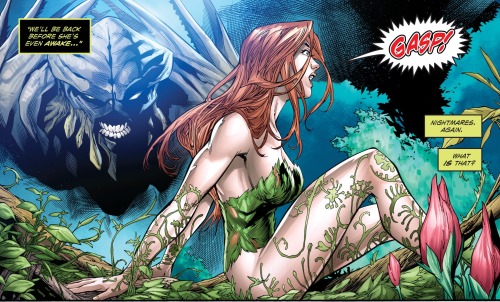
And finally, I didn’t really care for the artwork. The reason for this is that while this story really is great in that it puts Ivy at the front and gives her agency and a lot of cool things to do, the character design was definitely still through the male gaze.

tumblr_o8b3y5wt6i1r7hjkqo1_500
What is going on with these proportions?! (source)
pivybnner
And what is the point of this may I ask? (source)

It just doesn’t fit with the tone of the story.

I’m glad that Poison Ivy got her own story where she could show off her strengths, and there were certainly good things about “Poison Ivy: Cycle of Life and Death”. I just wish that we had gotten more. But if you like Poison Ivy, you will find things to like here.

Rating 6: A perfectly fine adventure starring one of my favorite anti-heroines, but I really wanted more from it.

Reader’s Advisory:

“Poison Ivy: Cycle of Life and Death” is included on the Goodreads lists “Biologically Interesting Sci-Fi”, and “Ladies of DC”.

Find “Poison Ivy: Cycle of Life and Death” at your library using WorldCat!

Giveaway: “A Broken Queen”

45046564Book: “A Broken Queen” by Sarah Kozloff

Publishing Info: Tor Books, March 2020

Where Did I Get this Book: from the publisher!

Book Description: Barely surviving her ordeal in Oromondo and scarred by its Fire Spirit, Cerulia is taken to a recovery house in Wyeland to heal from the trauma. In a ward with others who are all bound to serve each other, she discovers that not all scars are visible, and dying can be done with grace and acceptance.

While she would like to stay in this place of healing, will she ever be able to leave the peace she has found to re-take the throne?


Previously Reviewed: “A Queen in Hiding” and “The Queen of Raiders”

Giveaway Details: In partnership with the publisher, I’m happy to be able to offer an ongoing giveaway for each book in this series as they come out! I’ve reviewed the first two in the series and am excited to see what come in the third book! There was a bit of a cliffhanger at the end of the last, but luckily, due to the quick publishing schedule for this series, I haven’t had to wait long to find out! My review for “A Broken Queen” comes out this Friday.

If you, too, have been speeding through this series and can’t wait to find out what next, here’s your opportunity to win a finished copy of the third book in the series! And don’t forget to check back in April when we host a giveaway for the fourth and final book. This giveaway is open to U.S. residents only and ends on March 25.

Enter to win!

Kate’s Review: “Darling Rose Gold”

49223060._sy475_Book: “Darling Rose Gold” by Stephanie Wrobel

Publishing Info: Berkley, March 2020

Where Did I Get This Book: I received a print ARC from the publisher.

Book Description: Sharp Objects meets My Lovely Wife in this tightly drawn debut that peels back the layers of the most complicated of mother-daughter relationships…

For the first eighteen years of her life, Rose Gold Watts believed she was seriously ill. She was allergic to everything, used a wheelchair and practically lived at the hospital. Neighbors did all they could, holding fundraisers and offering shoulders to cry on, but no matter how many doctors, tests, or surgeries, no one could figure out what was wrong with Rose Gold.

Turns out her mom, Patty Watts, was just a really good liar.

After serving five years in prison, Patty gets out with nowhere to go and begs her daughter to take her in. The entire community is shocked when Rose Gold says yes.

Patty insists all she wants is to reconcile their differences. She says she’s forgiven Rose Gold for turning her in and testifying against her. But Rose Gold knows her mother. Patty Watts always settles a score.

Unfortunately for Patty, Rose Gold is no longer her weak little darling…

And she’s waited such a long time for her mother to come home.

Review: Thanks to Berkley for sending me a print ARC of this novel!

In college my undergrad was a Psychology BA with a focus in Abnormal Psychology. Because of this, I have a vague (if not probably outdated) working knowledge of various mental disorders, so when I first heard about the case of Gypsy Rose and Dee Dee Blanchard, the mother daughter duo that ended with Gypsy Rose murdering her mother Dee Dee, my mind immediately went to Munchausen By Proxy. For the unaware, Munchausen By Proxy is when a caregiver deliberately makes their charge (usually their child) ill, or hurts them in other ways. Given that Dee Dee had convinced many people that Gypsy Rose was sick in hopes of getting money and attention, and also poisoned Gypsy Rose and broke her down, making her completely dependent on her, she fits the bill to a T. When “Darling Rose Gold” by Stephanie Wrobel both ended up in my hands in print form, and in my email box as well, I was very interested to read what I assumed was going to basically be a novelization of the Dee Dee and Gypsy Rose storym, which felt a little salacious, though honestly kinda fun too. But Wrobel has managed to create a thriller novel that definitely takes elements from that case, as well as other Munchausen By Proxy cases, without making it feel exploitative.

“Darling Rose Gold” has two differing perspectives. The first is of Patty Watts, a woman who is just getting out of prison for abusing her daughter Rose Gold. Patty convinced Rose Gold that she had a number of health issues and that she needed to be confined to a wheelchair, when it reality she was making her sick by dosing her with ipecac and only feeding her half the calories her body needed. Rose Gold testified against her, and Patty is simultaneously holding a grudge, but also desperate to be near her daughter again. Rose Gold, on the other hand, has far murkier motivations. When you have Patty who is constantly twisting the truth, and Rose Gold hiding it, it makes for two unreliable narrators and an unknown path that we are taking with them. We know that Rose Gold is up to something, but we don’t really know what. I thought that Wrobel was excellent at capturing the voice of Patty, a narcissistic sociopath, and thought that her thought processes were spot on in terms of constantly victimizing herself and incapable of believing that she could be at fault for anything. She is very much a stand in for Dee Dee Blanchard, whose toxic and abusive personality came out after her death and the facade of perfect caring mother was shattered. I was far more worried about how Rose Gold would be portrayed, as to me the ultimate victim in the case this is taking inspiration from was Gypsy Rose. If Patty is an obvious stand in for Dee Dee, Rose Gold is far different from Gypsy Rose. Which is probably a good thing. As I mentioned before, you don’t know what her plan is. But as her side of the story and motivations slowly come to light, you get a complex character who is damaged, and a little twisted. Just how twisted is the question that remains to be seen when we dive in.

The mystery is definitely about what Rose Gold is planning. You get pieces from Patty’s POV, but you also kind of have to wonder if what she is experiencing is ACTUALLY something she’s experiencing, or if her own guilt and paranoia is messing with her head. The pieces that Rose Gold gives us are built up over time, as we look at her life directly after her mother was convicted, up until her mother’s release. Wrobel, as I mentioned before, carefully shows just what kind of person this abuse has turned her into. She never paints with broad strokes when it comes to Rose Gold. She can both be a victim and also an abuser, and she can be both sympathetic and quite unsettling. I really didn’t know what she was up to for a long while, and even when I started to piece it together on my own I wasn’t completely on point with the big reveal. It’s well plotted, it’s addicting to read, and it sticks the landing for a satisfactory end without stepping into arguably controversial territory when measuring it against the real life crime that occurred. While it didn’t really blow me away, I can safely say that I was happy with how everything sussed out, and Wrobel makes a notorious story very original and new feeling.

“Darling Rose Gold” is a creepy and addictive thriller. I really enjoyed my time with it, and think that anyone who was captivated by the Dee Dee Blanchard Murder, or Munchausen By Proxy in general, would find it to be a scintilating read.

Rating 8: A frothy and unsettling thriller with inspiration from real life horrors, “Darling Rose Gold” was perhaps a little predictable, but the journey to the end was VERY fun.

Reader’s Advisory:

“Darling Rose Gold” is included on the Goodreads lists “Psychological Suspense for 2020 (U.S. Publications Jan-July 2020)”, and would fit in on “Munchausens and Munchausens By Proxy”.

Find “Darling Rose Gold” at your library using WorldCat!

Book Club Review: “Almost American Girl”

40030311._sy475_We are part of a group of librarian friends who have had an ongoing bookclub running for the last several years. Each “season” (we’re nerds) we pick a theme and each of us chooses a book within that theme for us all to read. Our current theme is “American Girl Readalikes”, in which we each pick an American Girl book and a book that can be connected to it, however tenuous as it may be.

For this blog, we will post a joint review of each book we read for book club. We’ll also post the next book coming up in book club. So feel free to read along with us or use our book selections and questions in your own book club!

Book: “Almost American Girl” by Robin Ha

Publishing Info: Balzer + Bray, January 2020

Where Did We Get This Book: The library!

American Girl Book: “Felicity Saves the Day” by Valerie Tripp

Book Description: A powerful and timely teen graphic novel memoir—perfect for fans of American Born Chinese and Hey, Kiddo—about a Korean-born, non-English-speaking girl who is abruptly transplanted from Seoul to Huntsville, Alabama, and struggles with extreme culture shock and isolation, until she discovers her passion for comic arts.

For as long as she can remember, it’s been Robin and her mom against the world. Growing up in the 1990s as the only child of a single mother in Seoul, Korea, wasn’t always easy, but it has bonded them fiercely together.

So when a vacation to visit friends in Huntsville, Alabama, unexpectedly becomes a permanent relocation—following her mother’s announcement that she’s getting married—Robin is devastated. Overnight, her life changes. She is dropped into a new school where she doesn’t understand the language and struggles to keep up. She is completely cut off from her friends at home and has no access to her beloved comics. At home, she doesn’t fit in with her new stepfamily. And worst of all, she is furious with the one person she is closest to—her mother.

Then one day Robin’s mother enrolls her in a local comic drawing class, which opens the window to a future Robin could never have imagined.

Kate’s Thoughts

I had not heard of this book before it was picked for our book club session in March, and therefore going into it was a bit of a blind dive in. I had heard of Robin Ha’s previous book, “Cook Korean! A Comic Book with Recipes” but I knew that this was going to be a bit different. I figured I’d read “Almost American Girl” over the course of a few days, but then I ended up devouring it in nearly one sitting. I loved it that much.

The first thing that struck me about this book was how gorgeous and unique the art was. The colors are a watercolor-esque aesthetic, and it had both a calming effect as well as really evoking the emotions that were coming off the page. Robin’s transition from her life in Korea to her sudden shift to America was emotional and very difficult, and Ha used the imagery in both the pictures themselves and the color schemes to portray all of the ups and downs of Robin’s feelings during that time. From stark reds or darkness during difficult times, or almost glowing and bright colors in times of happiness, Ha uses the artwork to her advantage in her storytelling, and I really liked it.

The story, too, was compelling and very readable. While I was absolutely interested in Robin’s story as a girl who has to completely shift from one culture to another, Ha also makes a point to show the point of view of her mother, who made the decision to take her daughter from her life in South Korea and move them to Alabama without any hint or forewarning. I thought that at first I was going to have a hard time with her mother (while still trying to recognize the cultural differences between my experience and hers), but, like Serena mentions below, Ha was very deliberate in wanting to give a full picture as to how hard she had it and why she would take such a huge risk. And, on a personal note, I think that now that I’m a mother to a daughter (who is still just a baby, mind you) I was especially moved by their relationship, through the good times and the bad.

Ha also did a very good job of showing the straddling of traditional cultural expectations, and the different expectations that the children of immigrants may have. Ha’s step family was a mixed bag of those who thought that Robin and her mother should be adhering to the traditional roles they would have had back in South Korea (even though Robin’s mother didn’t feel like she had a place in that society as an opinionated single mother), and those who wanted to just fit in in American society. That was a theme that I wasn’t really expecting from this story, and I thought Ha was very careful in making sure not to say whether these expectations were right or wrong. Well, except in the case of her step-cousin. That girl was just mean. But we also got to see Ha make connections to other Korean-American kids her age as time goes on, and how once you do find that place in a community that ‘gets it’ it can make a world of difference in one’s life.

“Almost American Girl” was a moving and wonderful graphic memoir. I am so, so glad that we read it.

Serena’s Thoughts

As I’ve said many times before, a big part of my appreciation for bookclub is how it challenges me to read outside of my typical genres. Unlike Kate, I rarely get around to graphic novels, even though I tend to enjoy them when I do  read them. I was excited, then, when I saw that we’d be reading this book next!

This book had a lot of great things going for it, from the excellent looks into a girl’s experience as an immigrant coming to the U.S., to the exploration of her mother’s life and choices, to the beautiful use of the artwork to display the myriad of emotions that Robin experiences as she adjust to her new life. I’ve read a handful of other “immigrant experience” novels and they have all had something unique to offer as no “experience” will be the same, obviously. One thing that I think this story really highlighted were the challenges of language for Robin and the impact this had on her adjustment to life in the U.S. The use of the graphic novel format was cleverly used in this instance to replace speech bubbles with nonsense jargon to highlight how difficult it was for Robin to follow along in conversations, especially when the speaker was talking quickly.

I also really liked the inclusion of the mother’s story. From the beginning, seen through Robin’s eyes, it is challenging to understand the choices Robin’s mother has made that has lead to the complete upheaval of their lives. But as the story continues, we learn more and more about Robin’s mother’s past, the challenges she faced living in Korea as a single mother, and the values she saw in coming to raise her daughter in a completely foreign and new country. And even after that one major choice was made, we see the struggle and the myriad of choices, both good and bad, that Robin’s mother faces in the U.S. while trying to make a new life here.

Lastly, I really enjoyed the last portion of the story that shows Robin briefly returning to Seoul when she’s in college and finding that she no longer fits there either. It’s an interesting look again at the differences between Korean and American culture, and touches on a side of the immigrant experience that is often skipped over. How, on returning to one’s nation of origin, many can find that they no longer fit in within that culture either.

I really enjoyed this book. I think the artwork was beautiful, and I loved the story itself. I highly recommend it to pretty much everyone!

Kate’s Rating 9: An emotional and personal memoir that tackles culture, the immigrant experience, identity, and the importance of community, “Almost American Girl” was a heartfelt and moving read.

Serena’s Rating 9: Through beautiful artwork, “Almost American Girl” presents a moving story of the immigrant experience full of challenges, sorrows, and joys

Book Club Questions

  1. How does “Almost American Girl” compare to other “immigrant experience” novels that you have read?
  2. What did you think of the artwork in this book? Was there anything in particular that stood out to you?
  3. How did you react to Robin’s mother’s parts of this book? Did you feel like you understood the choices that she made?
  4. How did you find Robin’s step family and the way that they treated her and her mother?
  5. Do you think that today Robin would have had the same experience when coming to a completely new culture and country? Why or why not?
  6. How did you feel about where she ended the story in terms of where she was in her life at the time? Did that seem like a good way to wrap the story up?

Reader’s Advisory

“Almost American Girl” is included on the Goodreads list “Great Graphic Novels Released in 2020”, and would fit in on “Books and Boba Reading List”.

Find “Almost American Girl” at your library using WorldCat!

Next Book Club Book: “This Place: 150 Years Retold” by  Kateri Akiwenzie-Damm, Sonny Assu, et al.

My Year with Jane Austen: “Pride and Prejudice” Part II

1886._sy475_Book: “Pride and Prejudice”

Publication Year: 1813

Book Description: The romantic clash between the opinionated Elizabeth and her proud beau, Mr. Darcy, is a splendid performance of civilized sparring. And Jane Austen’s radiant wit sparkles as her characters dance a delicate quadrille of flirtation and intrigue, making this book the most superb comedy of manners of Regency England.

Part II – Chapters 35 – 61

Story – “The person, be it gentleman or lady, who has not pleasure in a good novel, must be intolerably stupid.”

While out walking the morning after the disastrous proposal, Elizabeth runs into Mr. Darcy once again who quickly passes off a letter to her and leaves. She reads it and discovers some shocking news. First, while she was correct about Darcy separating Jane and Mr. Bingley, she gets a better insight into his evaluation of her family’s behavior. He points to instances where all of her family, her father, mother, and three younger sisters behaved badly in public. He excludes Jane and Elizabeth, noting that they have always been perfectly proper and charming. Elizabeth is angry, but also recognizes the truth in what he says. He also points out Jane’s calm demeanor as misleading him into thinking she didn’t care much for Mr. Bingley. Again, Elizabeth is angry, but then reflects back on what Charlotte had advised months ago about Jane’s needing to show more of what she feels and concedes that perhaps for those who don’t know her, Jane might be hard to interpret.

But then the more shocking tale comes out, that of Darcy’s history with Wickham. While the first half of Wickham’s story is true, Darcy alludes to poor behavior in Wickham’s lifestyle almost from the moment of his reaching adulthood. And once Darcy’s father passed away, Wickham asked for money instead of the living. This was given and Wickham went his own way. But then when the living became vacant, he returned, presumably much in debt, and demanded the living be given to him anyways. This was refused. Later, Wickham went on to pursue Georgiana, only sixteen at the time, when she was staying with a governess and convinced her to elope with him. It was only Darcy’s surprise visit and Geogiana’s love for her brother that prevented her from not sharing the truth that prevented the elopement from happening. Darcy suspected that while Georgiana’s fortune was part of Wickham’s goal, revenge on Darcy was also part of it. He also writes that Colonel Fitzwilliam is also Georgiana’s care taker and thus knows all of these details if Elizabeth is so suspecting of him as to need to double check the truth.

Elizabeth is horrified, not only be the truth of these claims which she quickly realizes can’t be lies (it’s close to Wickham’s story, no brother would make up a story like that about his sister, and, of course, he’d not suggest she check with Fitzwilliam if it were untrue) but by her own lack of solid information to justify her prior opinions. Thinking back, she realizes that Wickham’s behavior has always been odd, sharing this information with her in the first place, having only known her for a day. And his avoidance of Darcy at the ball and the fact that once Darcy was gone from the neighborhood, suddenly the story was everywhere, even though Wickham had first claimed he’d never share it, for his supposed love of Darcy’s father. Elizabeth is miserable and is secretly relieved when she returns to the Collins’ and learns she’s missed Darcy’s leave-taking of the neighborhood.

Elizabeth heads back home. On the way, she stops in London to meet up with Jane and travel the rest of the way back with her. Jane is still obviously upset about Bingley, but Elizabeth distracts her with news of Darcy’s proposal and Wickham’s true history. Jane desperately tried to create a situation where they’re both good people, but Elizabeth claims that she now believes all goodness to be only Darcy’s. Back home, the hear that the regiment is scheduled to leave their town. Elizabeth is relieved. However, Lydia is soon asked to be the special companion of the wife of the colonel of the regiment and accompany them. Elizabeth warns her father about the evils of Lydia continuing to run about as a wild flirt, that it hurts not only Lydia’s own future respectability but she also harms her sisters by proxy. Mr. Bennett essentially pats Elizabeth on the head and says that peace will only be had at home if Lydia is allowed go. And so she does.

Elizabeth’s travels continue as she joins her Uncle and Aunt Gardner on a tour of the countryside. They eventually come into the neighborhood of Pemberley and the Gardner’s express an interest in seeing it. After learning Darcy is not at home, Elizabeth agrees. However, while they’re their, Darcy unexpectedly returns catching Elizabeth by surprise. Much awkwardness ensues, but Darcy is quick to put on the most social and friendly face that Elizabeth has ever seen from him. He is kind to her aunt and uncle and expresses a wish to introduce his sister to Elizabeth while she’s in the neighborhood. He’s so intent on this goal that he brings his sister to visit the very next day, the same day she arrives home. With her comes Mr. Bingley who fishes around for information about Jane.

The next day Elizabeth and her aunt call on Georgiana while at home. While there, Caroline needles Elizabeth about the militia leaving her town, clearing hinting about Wickham, much to Georgiana’s dismay. Later, once the guests have gone, Caroline once again begins negatively evaluating Elizabeth. She finally goads Darcy into speaking only to hear him proclaim that he thinks Elizabeth is one of the most handsome women he knows.

The next day still Elizabeth finally hears from Jane. She writes of terrible news, that Lydia has eloped to London. Worse, they’re not sure the marriage has taken place and she begs for Elizabeth and co. to return. Darcy comes upon Elizabeth right after she finishes the letter and she confesses all of it to him. He comforts her, but leaves fairly quickly; she imagines this is the last she’ll see of him given this new shame on her family.

Once home, Mr. Gardner quickly goes to London to meet up with Mr. Bennett who is already there. Eventually, however, Mr. Bennett has to return after not accomplishing much. Soon enough, though, they hear news from Mr. Gardner that Wickham and Lydia have been found, they are to married, and there will be some money leftover after it all. Mr. Bennett sees this for what it is: Wickham has been paid off handsomely to persuade him to marry Lydia, likely by Mr. Gardner himself. Mrs. Bennett insists they invite the new Wickhams to visit and they do. While there, Mr. Wickham once again starts up conversations with Elizabeth about his wrongs at the hands of Mr. Darcy. She hints enough about knowing the truth that he quickly shuts up.

While visiting, Lydia lets it slip that Mr. Darcy was at their wedding. Elizabeth quickly writes to her Aunt Gardener to get to the truth of the matter. Her aunt writes back saying Darcy did everything: located Wickham and Lydia, arranged all matters, and paid off Wickham to marry Lydia. Darcy claimed responsibility for Wickham’s bad reputation not being known and thus Lydia falling into his clutches. Her aunt also hints that they were OK with him taking such a lead because he obviously has an interest in the family…if Elizabeth knows what she means.

Shortly after Wickham and Lydia leave, Mr. Bingley unexpectedly comes back to the area, bring Mr. Darcy with him. On their visit, Mr. Bingley clearly remains interested in Jane, but Darcy in stand-off-ish. Soon enough, Mr. Bingley finally proposes to Jane. Everyone is overjoyed, but Elizabeth is worried to hear Darcy has gone back to town before she is able to thank him for what he did for her family. Not long later, Lady Catherine makes a sudden appearance. She demands a private audience with Elizabeth and proceeds to inform her that she’s heard that Elizabeth is soon to be engaged to Mr. Darcy; Lady Catherine is not pleased. The two argue, with Lady Catherine insisting that Elizabeth promise never to do such a thing and Elizabeth adamantly refusing to agree to such a ridiculous request. Lady Catherine leaves, unsatisfied.

Soon after, Mr. Darcy returns. On a walk with Elizabeth, while Jane and Bingley  wander behind them, Elizabeth finally manages to thank him for his help with Lydia. He protests and says he did it for her and again asks her to marry him. This time she agrees.

The book concludes with some shorter scenes describing Elizabeth breaking the news to her mother, writing a joyous letter to her aunt, and sharing her happiness with her sister. After the wedding, we learn that she forms a good friendship with Georgiana, and that after a year living close to the Bennett family, Jane and Bingley break down and move close to Pemberley themselves. All is well, and Mrs. Bennett ends with not one, not two, but three daughters married (though no one really wants to talk about the one…)

Heroines – “I hate to hear you talk about all women as if they were fine ladies instead of rational creatures.”

Oh, Elizabeth, our beloved Austen heroine. Many people point to her as the most approachable heroine for modern readers due to her wit and independence. Alongside her, Emma is often also named, another witty, independent lady. But do you know what else both of these favorites have in common? Both of their stories revolve largely around their own personal growth. Each starts out feeling very comfortable with themselves, but over the course of the story, they both realize they have some pretty big flaws that have misled them and hurt people. And then they go on to do the personal work to improve themselves. What’s more, this personal work is directly responsible for bringing about their own happy endings. Elizabeth wouldn’t have ended up with Darcy if she didn’t acknowledge her own role in their previous bad relationship. Emma wouldn’t have ended up with Mr. Knightley if she didn’t realize that she shouldn’t play games with other people. This is what I think truly makes these two heroines people’s favorites. There’s nothing more sympathetic to a reader than a character who reflects ourselves, flaws and all. One who highlights that these flaws can be overcome, past wrongs can be made right (or at least avoided in the future), and maybe this effort will be rewarded with some hot, rich dude falling in love with you! Cuz it’s still a wish-fulfillment book, let’s be real.

For me, personally, the other big appeal of Elizabeth is her smart conversation. Particularly her come-backs to the attacks from Lady Catherine. I’m definitely one of those people who spends too much time in the shower thinking up all the smart responses I should have said in the midst of some argument. I’ve pretty much given up hope of every having the perfect response come off my tongue at the right time. But Elizabeth, she’s a master. Lady Catherine says something rude. Boom! Elizabeth has the perfect zinger in reply. One after another. It’s all very cathartic.

Poor Jane, on the other hand. First she’s in London having to endure the harsh realization that Caroline Bingley is kind of a b. Then she ends up being home without Elizabeth, her other source of sanity, when all of the Lydia nonsense first goes down. And even in the end, with her happy ending in hand, there’s a line about how the Wickhams would often over stay their welcome with the Bingleys. Ah well, there’s the price of too much niceness! It’s all well and good, but Elizabeth had several wise points about there being a line between reason and foolish goodwill. At least they eventually moved away from Netherfield and at least go some semblance of distance from the more immediate Bennett drama.

Heroes – “What are men to rocks and mountains?”

In many ways, the reader experiences a similar sense of surprise and shock as Elizabeth does by Mr. Darcy’s about face at Pemberley. What’s more, we have even more insights into his changed behavior as we see his interactions with Caroline Bingley later. But what makes these changes feel real, and not just a facade put on to please a woman who has called him out (like perhaps the relationship between Fanny and Henry Crawford in “Mansfield Park”) are all the smaller moments they are paired with.

Elizabeth and her aunt and uncle rightly recognize the weight of the praise that comes from the housekeeper. And Mr. Bingley’s good opinion begins to reassert itself as an important testament to Darcy’s long-standing goodness, even if it was shrouded in pride before. We also see enough evidence of Darcy remaining the same in many ways, if better behaved overall. Elizabeth notes that Mr. Bingley likely got something like permission/a blessing from Darcy before pursuing Jane again. Darcy is still removed and distant in large groups. And, of course, the secrecy and rather forceful (if still good) insistence on doing everything himself with regards to Wickham.

Whenever I re-read this book, I always find myself falling into a similar camp as Elizabeth does early on with regards to Mr. Bingley: any man who can be talked out of his love for a woman based on his friends’ criticisms of her is not worth having. But then we get the letter that highlights, in particular, the fact that Bingley was convinced by others that Jane didn’t actually care for him. And then as the book continues, and as we come across Mr. Bingley again at Pemberley, all the smaller character moments for him begin to settle in again and it becomes easy to understand and forgive. From very early moments in the book, we see how, while confident in general, Mr. Bingley does look to Darcy as a source of sound judgement. We also see a lot of reminders of Bingley’s humble nature (of the extreme sort, similar to Jane) that would make him even more prone to not trusting his own opinion with regards to Jane’s feelings for him.

Villains – “I do not want people to be very agreeable, as it saves me the trouble of liking them a great deal.” 

Wickham is by far the most famous of Austen’s villains, and for good reason. While Willoughby was potentially worse (unlike Wickham who probably did intend to marry Georgiana for her fortune and his revenge on Darcy, Willoughby seduces Brandon’s ward for nothing and then ends up abandoning her to her ruin),  we see a lot more of Wickham in this book, both before and after his character is known. But like Elizabeth, it is easy to be taken in by him at first. There are a few clues sprinkled here and there that reveal his true character, but they are of the sort that only become glaring after Darcy’s history is provided and Elizabeth reflects back.

But the letter itself is condemning in all of the worst ways. It’s impossible not to feel for Elizabeth as months-worth of preconceptions come crashing down around her, revealing unflattering aspects of her own self she hadn’t been aware of. But what is even worse is the sheer sense of sliminess that exudes from even the mention of Wickham from there on out. Lydia, on first meeting back up with Elizabeth, crows about how Wickham is freed from having to marry the unpleasantly-freckled Miss King. But Elizabeth sees this for what it was: yet another botched, mercenary attempt by Wickham to pursue a vulnerable young woman.

And, of course, his coup de gras, the elopement with Lydia. But in this re-read, what really stood out was Wickham’s behavior when he and Lydia return to the Bennett household. First off, the sheer ballsiness of returning at all! This is a family whose daughter he recently whisked away and who knows he had planned to simply abandon at a moments notice had he not been paid off! There has to be something off in the head of a person who could walk back through that door, apparently without any shame or remorse. And then, to go a step further, and start up a conversation with Elizabeth again about his past. If it ever needed to be made more clear that Wickham never truly respected or cared for Elizabeth, this conversation confirms it. If he had had any true respect for her, she would have been the one to avoid the most, let alone start up a conversation about lies that he must have suspected she already had begun to question. Even without that, any respect for her or understanding of her character would have a made it clear to him that she would not forgive and forget, even if the more silly members of the rest of her family would. This all makes it clear that his friendship with her was based on nothing more than his enjoyment in basking in her attention and growing esteem without sharing any similar respect for her.

The other villain pales in comparison to Wickham, but I have to think Lady Catherine belongs in this category. That her efforts had no effect on one party and actually encouraged the other is beside the point; her intentions were clearly villainous. Though I will say that this is one of the instances of having a “villain” who you love to hate. I’m pretty sure one of my high school friends, Hallie, loved this book almost purely for this last scene between Elizabeth and Lady Catherine.

Romance – “A lady’s imagination is very rapid: it jumps from admiration to love, from love to matrimony in a moment.”

I think it’s fairly undisputed that the romance between Darcy and Elizabeth is one of literature’s greatest love stories. Of course, many lovers of romance stories enjoy the “enemies to lovers” tropes and this is one of the early examples of it. And it still holds up as one of the best examples of it, in my opinion. Mostly because Austen wasn’t lazy about it. Both of these “enemies” had to reconcile within themselves their own failings that lead them to being enemies in the first place. And from there, we see each have to make concrete steps to self-betterment and have the grace to accept what the other is offering. Darcy makes a concentrated effort to be welcoming to the Gardners (two people he had previously scoffed at, if only in theory). And Elizabeth makes her own efforts to re-start their relationship, being open to the revised histories that she’s now hearing of him (from the housekeeper and from Georgiana). All of this leg work that is done in the middle of their romance is the part that is all too often left out of modern “enemies to lovers” stories. There, we often see two characters “hate” each other (usually for no real reason), then realize how super hot the other one is, make out for a bit, and then suddenly be in TRU LUV 4EVER. The middle section is completely skipped over. They literally go directly from enemies to lovers. It’s not only unbelievable, but nowhere near as compelling as the very human changes we see Darcy and Elizabeth go through. Not to mention, we all love that scene where Darcy shuts down Caroline with the line about Elizabeth being one of the most handsome women in his acquaintance.

All of this presents a stark departure from the romances we saw in “Sense and Sensibility.” Like the first half of the book, we have brief moments where we see our heroes experiences (the Caroline/Darcy moment that I mentioned just a bit ago). And we also see the lead up to, the actual engagement itself, and even several scenes after the fact. This is a lot more payoff than we saw between either Elinor/Edward or Marianne/Brandon.

Comedy – “For what do we live, but to make sport for our neighbors, and laugh at them in our turn?”

There’s really not a whole lot of comedy in this second half. The serious nature regarding Wickham’s past and the even more serious real time events with regards to him and Lydia overwhelm many of the comedic characters. Mrs. Bennett is still ridiculous, but beneath that is a mother who is truly worried about a lost daughter. And her nerves, in the past a largely harmless quirk, become an active burden upon a family who has more than enough on their plate without having to devote extra care to a needlessly bedridden woman. It is also harder to laugh at her nonsense when that nonsense includes the complete 180 back to adoring both Lydia and Wickham, with her fawning over the two of them during their visit, all past harms forgotten. And for her part, Lydia is so obnoxious that it’s hard to not feel viscerally uncomfortable whenever she or Wickham are on page.

Mr. Collins, too, is mostly represented in this half by the truly awful letter he writes to the Bennetts while Lydia is lost, saying that it would be better for her to be dead than their current situation. Sure, there are elements of the comedic here, but again, it’s overwhelmed by the terrible things he’s saying to those who are his family. Also, one can only imagine that he also joined in with Lady Catherine’s toxic assessment of Elizabeth’s failings as a potential Mrs. Darcy.

Favorite quotes – “What did she say? Just what she ought, of course. A lady always does.”

There a bunch of popular quotes from this book, but I want to focus on a few that aren’t always seen on mugs and the like. Not that I don’t love those, too.

“Angry people are not always wise.”

This one is pretty self-explanatory. Very true, very insightful, and should in fact be on a mug.

“If gratitude and esteem are good foundations of affection, Elizabeth’s change of sentiment will be neither improbable nor faulty. But if otherwise – if regard springing from such sources is unreasonable or unnatural, in comparison of what is so often described as arising on a first interview with its object, and even before two words have been exchanged, noting can be said in her defense, except that she had given somewhat of a trial to the latter method in her partiality for Wickham, and that its ill success might, perhaps, authorize her to see the other less interesting mode of attachment.”

This is a very thoughtful little paragraph towards the end of the book. And it’s especially interesting after having just read “Sense and Sensibility.” Between that entire book’s theme and this paragraph, I think we can definitively say that Austen was skeptical to the highest degree of the romantic, sentimental “love at first sight” attitude. I suspect that had Austen been alive today, she’d be writing novels, “Northanger Abbey-like,” in response to the YA trend about ten years ago of over-the-top love at first sight found in books like “Twilight” and its ilk.

“Are the shades of Pemberley to be thus polluted?”

This line makes me laugh out loud every time. It’s so ridiculous and hyperbolic that in one fell swoop Lady Catherine shows all her cards as far as her poor manners and character go.

Final thoughts – “I declare after all there is no enjoyment like reading!”

This was my first favorite Jane Austen novel, as it is for many fans, I think. As I’ve re-read all of Austen’s books and gotten older, others have risen, and I’d probably have a hard time now picking an all-time favorite. But it’s easy to see the general appeal of this story. Elizabeth is by far the easiest Austen heroine to immediately love. She’s smart, independent, charming: pretty much everything every woman wants to be! And on top of it all, she has flaws that keep her grounded as a believable character, flaws of the sort that many of us likely catch ourselves struggling with every now and then.

It has a whole host of great comedic characters, with Mrs. Bennett and Mr. Collins likely vying for the best comedy throughout all of Austen’s works (though “Emma” does have a good number of great ones, too). The other supporting characters all offer interesting insights into the story as it goes, with Jane’s goodness (sometimes to the point of blindness) and Charlotte’s sense of practicality (sometimes to the point of foolishness).

And, of course, the romance is of the sort that still greatly appeals to people today. The “enemies to lovers” trope is everywhere and anywhere to be found. But Austen does it best! By grounding both our hero and heroine on solid foundations, their original conflicts are believable and the slow process of their growing to understand and appreciate each other is not rushed. They aren’t even on the same time line with this process, making it all the more realistic. But I think a lot of it comes down to the simple fact that many of us whole-heartedly agree with this sentiment:

“It was gratifying to have inspired unconsciously so strong an affection.”

In two weeks, I’ll review the 1995 version of “Pride and Prejudice.”

Kate’s Review: “My Dark Vanessa”

44890081Book: “My Dark Vanessa” by Kate Elizabeth Russell
Publishing Info: William Morrow, March 2020

Where Did I Get This Book: I received a print ARC from the publisher.

Book Description: Exploring the psychological dynamics of the relationship between a precocious yet naïve teenage girl and her magnetic and manipulative teacher, a brilliant, all-consuming read that marks the explosive debut of an extraordinary new writer.

2000. Bright, ambitious, and yearning for adulthood, fifteen-year-old Vanessa Wye becomes entangled in an affair with Jacob Strane, her magnetic and guileful forty-two-year-old English teacher.

2017. Amid the rising wave of allegations against powerful men, a reckoning is coming due. Strane has been accused of sexual abuse by a former student, who reaches out to Vanessa, and now Vanessa suddenly finds herself facing an impossible choice: remain silent, firm in the belief that her teenage self willingly engaged in this relationship, or redefine herself and the events of her past. But how can Vanessa reject her first love, the man who fundamentally transformed her and has been a persistent presence in her life? Is it possible that the man she loved as a teenager—and who professed to worship only her—may be far different from what she has always believed?

Alternating between Vanessa’s present and her past, My Dark Vanessa juxtaposes memory and trauma with the breathless excitement of a teenage girl discovering the power her own body can wield. Thought-provoking and impossible to put down, this is a masterful portrayal of troubled adolescence and its repercussions that raises vital questions about agency, consent, complicity, and victimhood. Written with the haunting intimacy of The Girls and the creeping intensity of Room, My Dark Vanessa is an era-defining novel that brilliantly captures and reflects the shifting cultural mores transforming our relationships and society itself.

Review: Thank you to William Morrow for sending me a print ARC of this novel!

I will admit that when Serena handed me the print ARC of “My Dark Vanessa” by Kate Elizabeth Russell and said it arrived for the blog and that it sounded more in my genres, at first glance I agreed. I mean, Stephen King’s blurb was on the cover, so clearly it had to be, right? But then when I read the description of the book, I was suddenly nervous. For one, it sounded more literary than horror or thriller. But hey, I can go outside my usual genres if a book really interests me, right? The bigger issue was what the plot sounded like: a woman has to contend with the fact that her illicit affair with her English teacher when she was fifteen was, in fact, abusive. Heavy stuff to be sure. But I was still very interested, especially as time went on and more buzz began to build around the novel. So I steeled myself, and finally dove in. It’s definitely not a book I’d say is within my usual genres. But I’m still glad that I read it.

“My Dark Vanessa” is a complex and very uncomfortable and upsetting novel about abuse, grooming, rape culture, and coming of age in very hard ways. It’s told through two timelines, both from the perspective of a woman named Vanessa. In 2017 she’s a woman who works at a hotel in hospitality, and is seeing her former teacher, Strane, being swept up in accusations of sexual misconduct with his female students. Vanessa, who was in an illicit relationship (I hate using that term here but am at a loss as to how else to describe it) with him that started at age fifteen, has to contend with the fallout of his downfall, and how that trauma of their ‘relationship’ has affected her after all these years. The other timeline is seeing Vanessa during the time that Strane began grooming her, and seeing how their relationship progressed. Russell is frank and unflinching in how she shows the realities of the sexual abuse that Vanessa experienced at the hands of her teacher, but is also very honest about how Vanessa herself cannot seem to view it as abuse as time goes on, even as other women are coming forward with their experiences with him. I greatly appreciated that Russell was also inclined to explore the very complex feelings that a survivor like Vanessa could feel, being groomed and manipulated for so long and therein not comfortable with seeing herself as a victim, and not wanting to expose herself in such a way. A subplot within the story is that a journalist starts pressuring Vanessa to tell her her story so that it can be put in an article, and heavily implies that Vanessa has an obligation to do so for victims everywhere. I think that it’s VERY important to make that point that victims of sexual abuse have NO obligation to open up about their experiences, and they are allowed to unpack and deal with said experiences in the way that they are most comfortable with.

(This kind of segues into some of the controversy that surrounded “My Dark Vanessa” for a hot minute before its release. HERE is a good article that sums it up. My two cents: I think that there are absolutely important questions to be asked about the publishing industry, and what stories get huge cash advances while other ones get left aside and not as promoted. But I think that it’s really gross that the discourse rose to the point where a survivor felt that the only way to move forward was to out herself as a victim of sexual abuse when she really didn’t want to. And unfortunately, abuse like this is probably more prevalent than we think, and the MOs of the abusers are probably pretty similar. Can we say that it must be plagiarism if it’s an experience that is, unfortunately, more commonplace than we’re comfortable admitting? I really don’t think so.)

I did find this book a little bit bogged down by the narrative as it went on, however, and more just in the sense that it felt longer than it probably needed to be and had some repetitive moments that could have been shaved, or at least tightened. I read it in a timely manner, but it did lag a bit at times, and I would put it down less because of the really hard content but more because of how it kind of felt like it was dragging.

And finally, content warnings abound for this book. There are scenes of rape, scenes of grooming and sexual harassment, and some really heavy and hard themes. This is not a book I would say that I ‘enjoyed’, as it’s greatly upsetting and unsettling, but I do think that Russell has crafted a story that is well done and filled with things that we should be thinking about as a society that has issues with misogyny and rape culture.

“My Dark Vanessa” was a hard read. But it’s one that I think has a lot of important points to make.

Rating 7: A deeply unsettling but engrossing novel, “My Dark Vanessa” tackles some seriously difficult themes but sometimes gets a bit bogged down within the narrative.

Reader’s Advisory:

“My Dark Vanessa” isn’t on any Goodreads lists that I feel really do it justice (“Hot For Teacher”? Seriously?), but I think that it would fit in on “#MeToo”, and “Sexual Assault Awareness Month”.

Find “My Dark Vanessa” at your library using WorldCat!

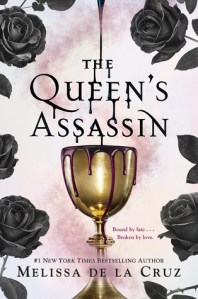
Serena’s Review: “The Queen’s Assassin”

39334176._sy475_Book: “The Queen’s Assassin” by Melissa de la Cruz

Publishing Info: G. P. Putnam’s Sons, February 2020

Where Did I Get this Book: Edelweiss+

Book Description: Caledon Holt is the Kingdom of Renovia’s deadliest weapon. No one alive can best him in brawn or brains, which is why he’s the Guild’s most dangerous member and the Queen’s one and only assassin. He’s also bound to the Queen by an impossible vow–to find the missing Deian Scrolls, the fount of all magical history and knowledge, stolen years ago by a nefarious sect called the Aphrasians.

Shadow has been training all her life to follow in the footsteps of her mother and aunts–to become skilled enough to join the ranks of the Guild. Though magic has been forbidden since the Aphrasian uprising, Shadow has been learning to control her powers in secret, hoping that one day she’ll become an assassin as feared and revered as Caledon Holt.

When a surprise attack brings Shadow and Cal together, they’re forced to team up as assassin and apprentice to hunt down a new sinister threat to Renovia. But as Cal and Shadow grow closer, they’ll uncover a shocking web of lies and secrets that may destroy everything they hold dear. With war on the horizon and true love at risk, they’ll stop at nothing to protect each other and their kingdom in this stunning first novel in the Queen’s Secret series.

Review: Something, something, quippy and non-spoilery intro. *Sigh* But frankly, this book didn’t make any effort to be good or original, so why should I! Yes, holding myself to the standard of books that I hated is the writing goal I want to set for myself and this blog! This was a whim book request for me, even though the synopsis didn’t seem particularly inspiring. I’ve had some great results from reading random books I haven’t heard a bunch about before (see “The Bones Houses”), but it does seem that it really goes one of two ways: I’m either blown away, the surprise only adding to the fun, or I absolutely hate the book and wonder why I ever risk it. Obviously, this was the latter.

I’m not going to even bother re-summarzing this book. The book blurb does a decent enough job and as the story is so predictable, there’s nothing new I could add to my summary of the story that isn’t an out-right spoiler. So let’s jump right into it! Usually I would start with the things I liked, but I have to be honest, there was really nothing I liked about this book. Often, if I don’t like the story itself, the writing is still good. If the writing is bad, there’s a character I can enjoy. Not so, here. The best I can say was that perhaps this book missed a publishing window where it wouldn’t have been quite so bad. I still wouldn’t have enjoyed it, but perhaps some of its most trope-y plot points wouldn’t have felt quite so egregious had this been released five years ago. It sure does read like a book that has completely missed the fact that everything it is doing has been beaten into the ground already over the last several years of YA fantasy publishing. So, good points: maybe passable if existed in an alternate reality where it came out in 2015.

The plot is incredibly predictable. Read the summary again. Make a few predictions. Spoiler alert! They’re all right. The book takes itself way too seriously with these supposed surprises as well. When I wasn’t simply exhausted by the pretense of it all, I was flabbergasted that anyone, anywhere, would ever think that these “reveals” could be read in a serious light. Shadow’s (there you go, another thing to hate! That name…) entire history is obvious to any one who has even a passing familiarity with these stories. The one aspect of her tale that could even be a surprise didn’t work in the book’s favor as it then retroactively undermined much of Shadow’s own narration throughout the book. Her story is told in first person. There are certain rules to first person narration, and this “surprise” threw all those rules in a dumpster fire in pursuit of “surprises.”

Speaking of first person narration, the writing was fairly bad in this book. Mostly this was due to the choice to alternate POVs between Shadow and Caledon and, inexplicably, to switch between first and third person narration for these two characters. This type of switch is always jarring and rarely justifiable. The only books I can think of that pulled off something similar were N. K. Jemisin’s “Broken Earth” trilogy titles, and those books were award winners, so you know they’re already a rarity. The choice here is not only bizarre but exists for no clear reason. If the author can’t differentiate between these two characters’ voices without switching writing tenses, that speaks to a whole new problem. If it was meant to represent some greater distinction between these two, I couldn’t spot it. And in the end, all it did was interrupt any flow or rhythm that the story was trying to establish.

Even without this, the pace of this story was all over the place. In the first few chapters, a million things seemed to happen one after another, leaving the reader confused and unable to connect to anything of these events. Worst of all, Shadow’s motivations behind these actions were never clear or explained. She just did things, so that things would happen, so that she could react to those things. And then the story took a jarring halt for a good chunk, and then again with the manic pacing. This, finally, was unpredictable but in the worst way.

The romance was also cringe-worthy and full of unnecessary angst and drama. At one point, the two go undercover…as siblings. Why? Because now there can be all of this increased awkwardness when others discover them being romantic! Angst! Drama! The author’s fingerprints were all over this, and each smudgy, forced moment just made me, again, cringe. To offset this, for a book with the name “assassin” in the title, there are next to no actual assassinations. It’s just yet another example of playing to the supposed YA fantasy crowd. People like books with the word “queen” in the title. And they like assassins…so.

Like I said before, the best I can say for this book is that some of the surprises, had they come in a book published five to ten years ago, could  have maybe worked. But the poor writing with the swaps in tenses and fast/slow pacing would remain. The poor characterization would remain. The romance, such as it is, would remain. And you’d still have to take a character named “Shadow” (get it? cuz she wants to be an assassin?) seriously for an entire book. I really can’t recommend this book to anyone. The author has several other books, so perhaps her die-hard fans will enjoy this. But for everyone else, there are better things out there. My usual recommendation for those looking for a good assassination book is “Skullsworn” so check that out instead.

Rating 2: I didn’t like anything about this book. The characters and plot were tired re-hashes of things we’ve seen a million times before in YA fantasy fiction. And the writing was poor, to really put the last nail in the coffin (a coffin that was not necessary to the plot as, again, no assassinations.)

Reader’s Advisory:

This book isn’t good. You shouldn’t look for ones like it. But here’s a generic Goodreads list that it’s on: “Queen in Title.”

Find“The Queen’s Assassin” at your library using Worldcat! If you must…