My Year with Jane Austen: “Northanger Abbey” [2007]

Movie: “Northanger Abbey”

Release Year: 2007

Actors: Catherine Morland – Felicity Jones

Mr. Tilney – JJ Field

Isabella Thorpe – Carey Mulligan

John Thorpe – William Beck

Comparison – “Indulge your imagination in every possible flight.”

I really like this adaptation of “Northanger Abbey.” To be fair, I haven’t seen any others, so there isn’t much of a comparison to be had. But in comparison to the book itself, I feel like it hits all the right points. The characters are all perfectly cast. The tone is just right, landing somewhere happily between romance and comedy. And it manages to use a clever device of dream sequences to capture Austen’s satiric intent with Catherine’s preoccupation with gothic novels and the fanciful thoughts they can bring about.

The dream sequences are probably the most notable point out of those three. They’re handily sprinkled throughout the movie, so from the very beginning, we have a clear idea of Catherine’s own head space. The movie also cleverly uses the same actors in many of the fanciful imagings, highlighting how Catherine herself is casting those around her. Henry, of course gets to be the hero, while John Thorpe and Captain Tilney are villains. Isabella, before Catherine wakes up to her true character, is a helpless victim of Captain Tilney’s.

There are a few bigger changes towards the end of the movie with the order of operations between Henry discovering Catherine’s suspicions about his family and her being turned out of the house. It does lose some of the gallantry of Henry, but probably makes for a more dramatic move overall. The audience, like Catherine, is left in suspense of his thoughts and feelings. And, what’s more, we’re given a red herring explanation for why she is suddenly thrown out by General Tilney.

The movie also makes good use of the narrator. The voice, meant to be Jane Austen I believe, only really picks up at the beginning and the ending of the movie. But it does a nice job of bookending the story and, again, giving it that meta sense that the book itself had with regards to stories: stories talking about stories, heroines inspiring heroines, and so on.

Heroines – “I hate to hear you talk about all women as if they were fine ladies instead of rational creatures.”

Felicity Jones is pitch perfect for Catherine. She’s an excellent balance of youthful naivete and earnest goodwill. Catherine could easily come across as silly, what with her dramatic and rather silly mental dramas. But Jones manages to reign that in, leaving Catherine seeming simply young, but at her heart, good-natured. Her wide-eyed depiction of the character also makes it easy to understand why Catherine is so easily forgiven and taken in by the more level-headed characters around her.

She also does a good job portraying the balancing act that Catherine undertakes initially, between the silly vivacity that her first friends, the Thorpes, are encouraging, and her own wishes to be esteemed by the more polished Tilney siblings. At the same time, Jones’ Catherine is never overshadowed by the larger-than-life characters around her, and she has excellent chemistry with JJ Field.

Heroes – “What are men to rocks and mountains?”

For his part, JJ Field also fits the role of Henry Tilney perfectly. He’s affable, charming, and wholesome. As I mentioned in my review of the book, Tilney stands out as the most approachable and easy of all of Austen’s main heroes. He doesn’t have any angst to speak of and his road to romance is the most straight forward. Field has great delivery with many of the Tilney’s comedic lines, teasing Catherine and being teased back himself. There’s a joyousness to his portrayal that is very appealing.

Of course, he also has a bit harder of a sell towards the end, in that unlike the book, he’s not given the chance to fulfill Tilney’s most romantic overture: the immediate forgiveness of Catherine for her silliness and all the effort put out afterwards to make her feel secure again. Instead, he has to do all the lifting in the final scene that includes the explanation of his father’s behavior, his feelings towards Catherine despite her imaginings, and the proposal itself. It’s all handled neatly, and I think is a testament to all the goodwill that has already been built up for the character. Even if we don’t see him immediately forgive Catherine, it’s easy to believe that that was the case. He even admits that his own teasing of Catherine early on, mentioning a certain sort of vampirism at Northanger Abbey, makes him at least partly responsible for her wild theories.

Villains – “I do not want people to be very agreeable, as it saves me the trouble of liking them a great deal.” 

The villainous characters are all also well-cast. We can see the appeal of Isabella to Catherine, but the viewer is never quite as taken in as she is. Isabella’s obvious disappointment in the lack of wealthy coming her way through her engagement to James is pretty telling. And from there, it’s just a skip and a hop to talking to Catherine about how Captain Tilney is the heir of the family. Of course, the movie goes a much more dire route with this entire affair, having Captain Tilney actually seduce Isabella into his bed, a much bigger transgression than the book presents.

The book does hint that he must have given Isabella some strong signals for her to give up her engagement in pursuit of him, but I don’t think it really meant that things had went as far as the movie portrays. For one thing, it makes Captain Tilney into quite the villain himself. In the book, he’s fairly disagreeable and obviously pursues Isabella inappropriately. We know he means to marry well. But that’s about it. Here, he’s cast with characters such as Wickham and Willoughby, the blackest scoundrels of Austen’s villains, in following their footsteps in ruining young women.

General Tilney is also presented in a fairly foreboding light from the start. The book does a lot of work talking about how thickly he lays on the charm for Catherine, but how oppressive his presence still is overall. That comes through very clear here, it perhaps not too clear. He’s fairly off-putting from the very beginning, and the few lines he gets hint fairly heavily to his confusion about Catherine’s coming wealth from the Allens. The movie is even more strict with his comeuppance, however, as it does away with the bargaining aspect of Eleanor Tilney’s engagement. Instead, it implies that both Eleanor and Henry marry against their father’s wishes leaving him lonely and angry at the gloomy Northanger Abbey.

Romance – “A lady’s imagination is very rapid: it jumps from admiration to love, from love to matrimony in a moment.”

The romance is also very sweet in this movie. Like I said early, the chemistry between Jones and Fields is great, making all the flirty dialogue ring true and their mutual teasing is very cute. I like the effort that is put into building this relationship, not only at Bath but at Northanger Abbey itself. There, we see Henry and Catherine going on walks, with Catherine quizzing him on his feelings about marrying not to great wealth. There are also nice smaller moments of them and Eleanor roasting food by the fire. The movie also replaces the entire family’s visit to Henry’s estate with a horseback ride taken by just Henry and Catherine.

I also really like the final scene with the proposal. Most of Austen’s other stories all are still attempting to resolve misunderstandings or greater dramas by the time the proposal comes along. So it’s often a bit more of a serious situation. Here, that’s not so much the case. Yes, there are misunderstandings that are cleared up. But here the entire thing is played with a much lighter feeling and the semi-awkward fumblings of two youngish people declaring their feelings for each other. The movie then goes straight into them having a baby to round out the story, which, from a modern perspective, feels very strange given said young-ness, but you know, such were the times.

Comedy – “For what do we live, but to make sport for our neighbors, and laugh at them in our turn?”

I really liked the comedy in this movie, too. Obviously, as I’ve mentioned, Tilney is the most comedic hero we see in Austen’s books, so it’s important that they hit that right with the casting and with the script. But they also did good work with the Allens, giving them almost more of a presence than they had in the book. We see less of Mrs. Allen’s insipidity, but she retains her preoccupation with clothes, even mentioning Tilney’s good eye for muslin and a recommendation for him still even after the bewildering events that lead to Catherine’s being sent home alone.

John Thorpe is also pretty funny in just how intolerable he is. He perfectly captures the brash, loud, uncouth character that Austen describes. And his attempts at hinting around to Catherine about a second wedding after the engagement between Isabella and James is pretty funny. It’s clear to the audience what is happing, but Catherine is so obviously clueless, and even John doesn’t seem to really want to clue her in on what he’s getting at.

I think one of the funniest little bits comes towards the very end of the movie. Henry Tilney is visiting the Morlands and suggests Catherine show him the way to the Allens’ so he can pay his respects. And then one of the younger sisters points out that you can see their house from the window before being quickly cut-off by her mother, who knows what’s what. The actress who plays Mrs. Morland doesn’t have tons of screen time, but she nails this little moment, and it’s pretty funny.

Fun facts – “Life seems but a quick succession of busy nothings.”

There weren’t too many fun facts that I could find, other than costume-related things. But the one costume thing did stand out: that Mr. Tilney wears the same green coat and tan pants as Mr. Darcy does in the 1995 film.

Best Movie Gif/Meme: “I dearly love a laugh.”

Just some good, ole reaction comedy here:
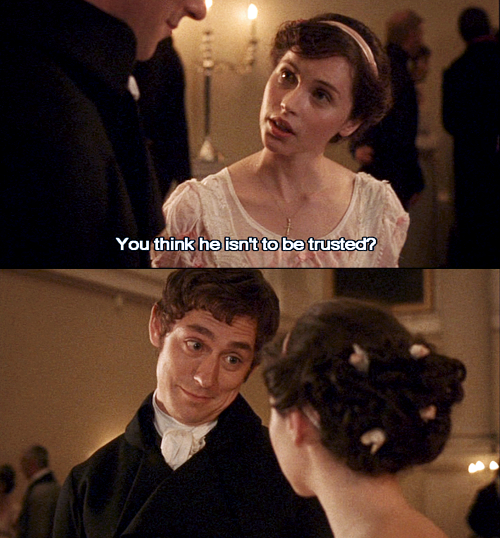
I also like this one:

In two weeks, I’ll review the first half of “Persuasion.”
Kate’s Review: “The Silence of the Lambs”

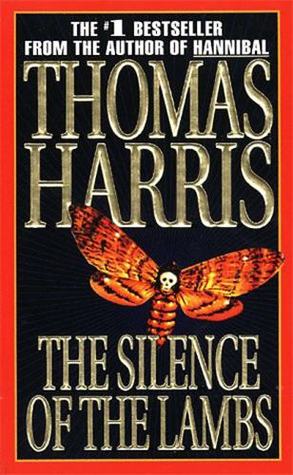
Book: “The Silence of the Lambs” by Thomas Harris

Publishing Info: St. Martin’s Press, July 1988

Where Did I Get This Book: I own it.

Book Description: A serial murderer known only by a grotesquely apt nickname—Buffalo Bill—is stalking women. He has a purpose, but no one can fathom it, for the bodies are discovered in different states. Clarice Starling, a young trainee at the FBI Academy, is surprised to be summoned by Jack Crawford, chief of the Bureau’s Behavioral Science section. Her assignment: to interview Dr. Hannibal Lecter—Hannibal the Cannibal—who is kept under close watch in the Baltimore State Hospital for the Criminally Insane.

Dr. Lecter is a former psychiatrist with a grisly history, unusual tastes, and an intense curiosity about the darker corners of the mind. His intimate understanding of the killer and of Clarice herself form the core of The Silence of the Lambs—an ingenious, masterfully written book and an unforgettable classic of suspense fiction.

Review: I first read “The Silence of the Lambs” when I was a freshman in high school. My mom and I were at a local drug store and they had the mass market paperback for sale, and she was kind enough to purchase it for me because she never censored what I wanted to read (even if she probably sighed to herself about her daughter’s morbid curiosities). I read it very quickly, completely immersed in the story. I saw the film shortly thereafter, and both are now very high on my lists in terms of favorite books and films. There has been a debate lately between film fans on Twitter as to whether “The Silence of the Lambs” is horror or not. Given that I watch it ever Halloween Season and my friends and I did a Netflix Party of it on one of our weekly Terror Tuesdays, I can see the argument for it being within the horror genre (though I myself flip flop between yes and no). Because of this, I decided that it was time to revisit the story in book form, and that I would include it in this year’s Horrorpalooza. And picking it up again felt like I was visiting an old friend.

But not one that I’m planning on having for dinner or anything… (source)

This book is still so good. While I think that I PROBABLY like the movie better, that is only because the movie is so perfect at bringing all of these three dimensional and amazing characters to life. Hannibal Lecter is a literary villain who stands above so many, but this book is 100% Clarice Starling’s. Harris created a ‘badass female protagonist’ who feels so real, so relatable, and so nuanced that I’m continually shocked that a man wrote her (given that sometimes male authors can miss the mark when it comes to writing lady characters). You feel Clarice’s ambition, her frustration, her smarts and her anxiety and her need to solve the Buffalo Bill case, and you completely understand why she would go to the lengths she does… like getting close to Hannibal, even though he is incredibly manipulative and dangerous. I also really appreciated the moments of misogyny and sexism that she has to endure, as for 1988 for a guy to put those in, and to make them sting and hurt without feeling overdone or corny, that’s impressive. Clarice is such an important and formative feminist icon for me, and I was worried that revisiting her might not hold up as well. But it did. Hannibal, too, is a fascinating character, and while he doesn’t have the same amount of page time as Clarice (which is just fine), his insidiousness and his charm makes him very creepy, as well as vastly entertaining. But for me, it’s all about Clarice.

I had also forgotten how well Harris slowly builds to the Buffalo Bill mystery that is the true heart of “The Silence of the Lambs”. You get small references to it here and there, but it takes awhile to realize that this story is the one that Clarice is going head first into. Seeing her slowly gather her evidence, be it through talking with Lecter or going into a storage container to find evidence, or going to an autopsy and finding a bug, we get to go along with Clarice, see the pathology unfold, and then see Bill in action. And Harris really knows how to write a suspenseful scene. Even though I have read the book before and seen the movie countless times, I found myself getting nervous and anxious during some of the action moments. Especially during the Buffalo Bill kidnapping we get to witness on the page.

I will say that Buffalo Bill, while a really well done villain (and completely under appreciated in the movie. Ted Levine is GOD TIER and gets overshadowed by Hopkins. I get why, but my GOD, every time I watch Levine just blows me away), feels problematic now given that Bill is clearly dealing with some kind of gender dysphoria. I do know that Bill is based on a whole smorgasbord of serial killers, and that Jerry Brudos is almost assuredly the one who manifests in Bill’s obsession with womanhood (as during one of his attacks he was dressed like a woman, would dress up in his victims clothing, and had a huge thing about womens shoes). But while it’s stated that Bill isn’t ‘actually transsexual’ (paraphrasing from the text here) in the book, it still feels like there are shades of transphobia with the character. I think it says more about the time it was written than much else, but it’s definitely something to think about, and stands out for all the wrong reasons today.

Overall, “The Silence of the Lambs” is still a gripping, scary, and masterful classic that blurs the lines between thriller and horror. Re-reading was a joy, and I am glad I jumped back into it.

Rating 10: An enduring thriller classic that touches on real life horrors and (mostly) holds up.

Reader’s Advisory:

“The Silence of the Lambs” is included on the Goodreads lists “I Like Serial Killers”, and “Best Female Lead Characters”.

Find “The Silence of the Lambs” at your library using WorldCat, or a local independent bookstore using IndieBound!

Serena’s Review: “The Invisible Life of Addie LaRue”

50623864

Book: “The Invisible Life of Addie LaRue” by V.E. Schwab

Publishing Info: Tor Books, October 2020

Where Did I Get this Book: NetGalley

Book Description: France, 1714: in a moment of desperation, a young woman makes a Faustian bargain to live forever and is cursed to be forgotten by everyone she meets.

Thus begins the extraordinary life of Addie LaRue, and a dazzling adventure that will play out across centuries and continents, across history and art, as a young woman learns how far she will go to leave her mark on the world.

But everything changes when, after nearly 300 years, Addie stumbles across a young man in a hidden bookstore and he remembers her name. 

Review: I’ve been a fan of V.E. Schwab’s work for a while now, so whenever her books pop up, they’re instant requests for me. This one was all the more intriguing for the very unique-sounding description. A gift that turns out to be a curse. Time travel. Deep explorations of the meaning of self and what it is to exist in the world. Sign me up!

For a young woman growing up in the 1700s in a small village in France, the concept of “the world” is a small thing. Much if not all of her life will be lead in the same place, walking the same streets, meeting with the same people. But this isn’t enough for Addie LaRue, and in her desperation she makes a desperate bargain that turns her life on its head. Yes, she can now travel the world, free from the fear of death. But no one will remember her name, her face, her at all. A life like this comes with all kinds of challenges, but in the present year, we meet an Addie who has largely come to accept her transient existence only partly of the world she walks. That is until she meets a strange young man who sees her…and remembers.

I was completely right in my initial impression of this book: it was unlike anything I had read before! The story alternates between Addie’s past, as she makes her original deal and then checking in on her state at various point in the ensuing centuries, and Addie’s present in New York City. I think this was a really clever way of highlighting just how complicated her blessing/curse is. On one hand, it seems simple enough, and Addie herself clearly thought so when making it. But as the story travels through time, we see both the very large problems facing Addie as well as the small, daily challenges that come with not being remembered.

It’s not just romanticism and emotional consequences. What happens when you pay for a room in a hotel but five minutes after the clerk looks away, they forget you’ve paid for it? And that’s assuming Addie even has any money! I really liked the way the story was willing to fully engage with the harsh and sometimes brutal reality of what a life like this would look like, especially for a woman in the 1700s and through many of the following centuries.

The story in the present isn’t any less interesting. My one point of nervousness going into this story was that the young man who ultimately is able to remember Addie would just be some type of fluky, special snowflake type love interest where his ability is never really explored or explained. Not so! Instead, we get a good number of chapters from his perspective and his story was full of surprises, both leading up to his first meeting with Addie and going on well past it. The romance between the two was a bit on the aggressively quirky side at times, but overall, I think it was balanced out by the more weighty topics that were tackled in the rest of the story.

I’m not really into much of the art scene myself, but I did really enjoy this theme throughout the book and how Schwab used Addie’s curse to highlight the role that artwork and artists place in society. It’s much more than just creating pretty, fanciful pieces. It’s about a broader, grander conversation that is ongoing across centuries’ worth of individuals all speaking back and forth to one another.

And, of course, Schwab’s writing is solid and engaging throughout, and her mastercraft at creating deep characterization is on full display here. If you’re a fan of her past work, this is definitely worth checking out. And those new to her writing, this is a great an entry point as anyone could ask for!

Rating 9: Beautiful and heart-wrenching, I couldn’t put it down!

Reader’s Advisory:

“The Invisible Life of Addie LaRue” is on these Goodreads lists: “Heart Stopping Books” and “Best Books Set in New York City.”

Find “The Invisible Life of Addie LaRue” at your library using WorldCat!

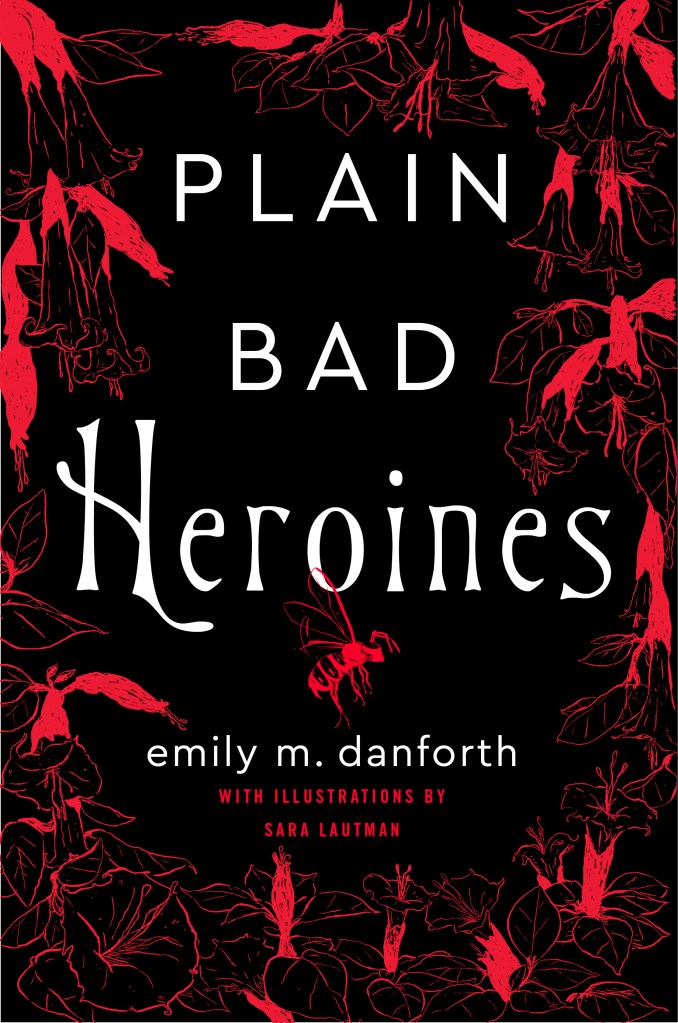
Kate’s Review: “Plain Bad Heroines”

Book: “Plain Bad Heroines” by emily m. danforth

Publishing Info: William Morrow, October 2020

Where Did I Get This Book: I received an eARC from NetGalley.

Book Description: The award-winning author of The Miseducation of Cameron Post makes her adult debut with this highly imaginative and original horror-comedy centered around a cursed New England boarding school for girls—a wickedly whimsical celebration of the art of storytelling, sapphic love, and the rebellious female spirit.

Our story begins in 1902, at The Brookhants School for Girls. Flo and Clara, two impressionable students, are obsessed with each other and with a daring young writer named Mary MacLane, the author of a scandalous bestselling memoir. To show their devotion to Mary, the girls establish their own private club and call it The Plain Bad Heroine Society. They meet in secret in a nearby apple orchard, the setting of their wildest happiness and, ultimately, of their macabre deaths. This is where their bodies are later discovered with a copy of Mary’s book splayed beside them, the victims of a swarm of stinging, angry yellow jackets. Less than five years later, The Brookhants School for Girls closes its doors forever—but not before three more people mysteriously die on the property, each in a most troubling way.

Over a century later, the now abandoned and crumbling Brookhants is back in the news when wunderkind writer, Merritt Emmons, publishes a breakout book celebrating the queer, feminist history surrounding the “haunted and cursed” Gilded-Age institution. Her bestselling book inspires a controversial horror film adaptation starring celebrity actor and lesbian it girl Harper Harper playing the ill-fated heroine Flo, opposite B-list actress and former child star Audrey Wells as Clara. But as Brookhants opens its gates once again, and our three modern heroines arrive on set to begin filming, past and present become grimly entangled—or perhaps just grimly exploited—and soon it’s impossible to tell where the curse leaves off and Hollywood begins.

A story within a story within a story and featuring black-and-white period illustrations, Plain Bad Heroines is a devilishly haunting, modern masterwork of metafiction that manages to combine the ghostly sensibility of Sarah Waters with the dark imagination of Marisha Pessl and the sharp humor and incisive social commentary of Curtis Sittenfeld into one laugh-out-loud funny, spellbinding, and wonderfully luxuriant read.

Review: Thank you to NetGalley for providing me with an eARC of this novel!

A few years ago I picked up the YA book “The Miseducation of Cameron Post” by emily m. danforth, as it had been put on a Pride display at the library I was working at at the time. I read it and liked it, and saw the movie and liked that as well. I told myself that I would be on the lookout for more books by danforth, but admittedly didn’t really pay too close attention to her publications. When I saw the book “Plain Bad Heroines” on NetGalley and read the description, it caught my eye enough that I requested it and got a copy… and then when I put two and two together that this, too, was by danforth, I was even more excited to read it!

“Plain Bad Heroines” is a mixed bag of genres, perspectives, themes, and narratives. It definitely has a horror story within its pages, but it also has some romance, some historical high strangeness, and some cheeky tongue in cheek humor, with a number of wry citations thrown in by a humorous narrator. The crux of this story is a former school estate called Brookhants, where at the turn of the 20th century a number of gruesome deaths occurred. We get to see the timeline of these deaths, and see the mysteries surrounding them, but we also get to see a modern narrative involving a movie set and crew that is trying to make a horror movie based upon a book written about the mysterious deaths and the supposedly haunted and/or cursed grounds. The past story has a focus on Libbie and Alex, two lovers who are running the school where a number of girls, who were also involved in various sapphic relationships and were obsessed with a book with lesbian themes, died in horrific ways. The modern tale focuses on three women involved in the production of a new horror movie about the school: Merritt, who wrote the book about Brookhants and framed it as a queer feminist history; Harper Harper, the superstar actress who champions her own queerness; and Audrey, a former child actress who is hoping to reinvent herself. The two timelines are interspersed together and unfold with tragedy, humor, longing, and Gothic horror.

But even with suspense, romantic drama, Hollywood nonsense, and some actual horror moments that set me on edge, “Plain Bad Heroines” is also a very earnest, charming, and funny tale. The narrative jumps between timelines but connects with a humorous and ever nudging Narrator, with citations, side comments, and the occasional period appropriate illustration ever at hand. It works so well, and while I was worried that it may take away from the ghost story (and the body horror elements, SO MANY BODY HORROR ELEMENTS), it never did. While I mostly liked the modern story more, I did like getting the background and context of the haunted school and seeing how the curse and its fallout was affecting Harper, Audrey, and Merritt in the modern day. Fair warning: if you have a thing about yellow jackets, content warnings ABOUND in this book. danforth hits many a horror moment, which was great to see and something I didn’t necessarily expect from her given her other book. Yet she does it with ease, and pulls off lots of unsettling moments.

But it’s really the characters that propelled the story for me, both the ones from the past and in the present. Libbie, Alex, and the other characters in the past storyline were well described and grounded in historical truths that are very sad when it comes to lesbian relationships during that time period. You know that societal constraints are driving many things out of their control, and the sadness of the complications, and the doom you know is coming, made these characters very sympathetic, even when they were making decisions and choices that may have been damaging and hurtful. But (once again) it’s the modern women who really stood out, all of their complexities and nuances on display and perfectly drawn out. While Harper and Merritt have a lot of great moments of goodness and badness, it was Audrey who really captivated me, her desperation to move on from her old life and to find something new incredibly palpable. I loved watching all of them interact, and how danforth put the power of womens’ relationships, be they romantic or platonic, at the forefront.

I really enjoyed “Plain Bad Heroines”. danforth is such a dynamic writer, and if you want something spooky this season that isn’t too scary, this will surely captivate you as it did me.

Rating 9: A complex, wry, and genuinely creepy book about Gothic mysteries, untimely deaths, sapphic romance, and a whole lot of yellow jackets, “Plain Bad Heroines” is a pleasant surprise from danforth and a fun Halloween read!

Reader’s Advisory:

“Plain Bad Heroines” isn’t included on many Goodreads lists as of yet, but I think it would fit in on “Sapphic Book Lists”.

Find “Plain Bad Heroines” at your library using WorldCat, or at a local independent bookstore using IndieBound!

Monster Mash: Books Featuring Cool Monsters

Happy early Halloween! Like everything this year, COVID is affecting everyone’s usual holiday traditions. But, while Halloween itself may not look the same as what we’re used to, there is still good ole reading holding down the fort as a prime socially distanced activity. So while you might be able to get out to the costume parties, you can still hunker down with a bowl of candy all to yourself and a few good books featuring the creepy crawlies! Here’s a list to give you some ideas!

Book: “The Beast is an Animal” by Peternelle van Arsdale

I mean, the cover speaks for itself, right? Even having read it and knowing the story and ending, looking at the cover still gives me the creeps. This is the story of Alys, a girl growing up in a village near the woods. In the woods lurks the soul eaters as well as the Beast, each as powerful and mysterious as the other. For her part, Alys knows too much, making her an object of fear by her neighbors as well. Try and hide as she might, Alys and her secrets are dragged into the light, and she soon finds herself deep in the woods itself. There she will discover not just the Beast, but the beast within herself.

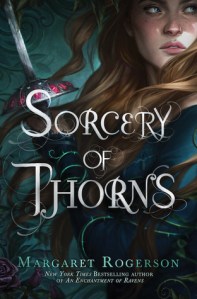
Book: “Sorcery of Thorns” by Margaret Rogerson

This book definitely falls more firmly in the “fantasy” category than “horror.” But I wanted to included it for those of you (coughmecough) who are often a bit wary about wandering too deep into the scary stuff. Plus, it features some really neat monsters that are born from evil books, which is pretty unique as far as monsters go. Elisabeth has grown up in one of the Great Libraries, the massive fortresses built to not only house books, but to protect the populous from the books. Grimoires are powerful, and if not carefully warded, can burst forth into powerful monsters that can wreak havoc. But when disaster strikes and one makes its way free of the Great Library, Elisabeth is suspected and thrust out into the greater world to fend for herself. Soon she discovers that there may be more to the libraries, books, and magic altogether than she had thought.

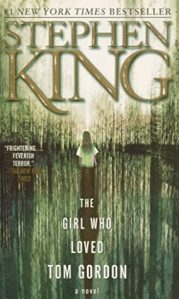
Book: “The Girl Who Loved Tom Gordon” by Stephen King

Of course a Stephen King book was going to make this list! Unlike Kate, I haven’t read as many of his books, but I did read this one as a teenager. I think the fact that it is equal parts a woodsy survival story as it is a horror novel is what initially drew me. The story features a 9-year-old girl, Trisha, who gets lost in the woods. But as if surviving alone in the wilderness while trying to find home isn’t hard enough, Trisha soon begins to suspect that she’s not completely alone. Something is out there. Something more than just wildlife. Following the good old horror trick of keeping the monster off the page for most of the book, this story will definitely raise the hairs on your arms!

Short Story: “The Damned Thing” by Ambrose Bierce

Though this is a short story as opposed to a full on novel, “The Damned Thing” is too good to be left off such a list. I read it in high school for my English class, and I was completely taken with the build of dread and partial epistolary narrative (I remember me and my friend Blake being like ‘what the HECK’ after reading it). After a man named Morgan ends up dead on a hunting and fishing trip with a friend, an inquest is called in. His companion says that he and Morgan kept hearing things, but not seeing anything, and Morgan kept referring to ‘that damned thing’ before being attacked by some invisible force. Then diary entries are produced, which chronicle Morgan’s final days as he has started to hunt a creature that cannot be seen. It’s so strange and unique, especially for the time it was written (the 1800s), and not really knowing what is going on just adds to it.

Book: “Mongrels” by Stephen Graham Jones

I just recently discovered Stephen Graham Jones and am kicking myself for not looking into his works before. So a book added to my list is his novel “Mongrels”. One might think ‘ah, a typical werewolf story’, but I have the feeling that this is probably so much more than that. Sure, it DOES have to do with a boy who is potentially going to age into his lycanthropy, but it also has a coming of age story at its very center. A boy who lives with his Aunt and Uncle has been on and off the road for his entire life, the group moving on when they’ve needed to to stay ahead of the law and suspicion. But now things are starting to catch up to them, and the boy starts to sort out his identity. Jones is known to bring in some really good social commentary into his stories, and issues of identity, poverty, and family are sure to come together in powerful ways. All while dealing with werewolves!

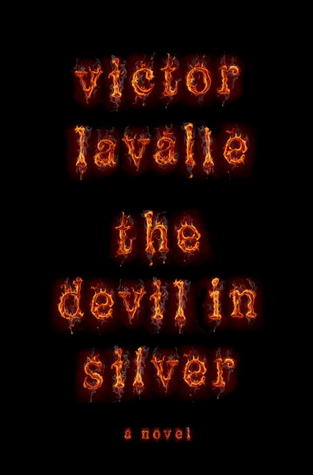
Book: “The Devil In Silver” by Victor LaValle

If the setting in a run down and underfunded mental institution isn’t enough to give you the creeps, why not throw in being held there against your will AND a monster with a bison head terrorizing the patients? If that sounds up your alley, “The Devil in Silver” should definitely be a monster book on your list. When Pepper is thrown into the psychiatric ward at New Hyde Hospital, he knows he doesn’t belong there as he doesn’t have a mental illness. He doesn’t remember what he did to get committed, however. And it becomes clear that being involuntarily committed is the least of his problems, as a monster with a bison head is running around at night, scaring people nearly do death. Pepper recruits a few other patients to try and help him fight the monster, and to hold the hospital accountable for its misdeeds. Super weird, and definitely unsettling as well as scary.

What monster books do you like? Let us know in the comments!

Serena’s Review: “The Court of Miracles”

Book: “The Court of Miracles” by Kester Grant

Publishing Info: Knopf Children’s, June 2020

Where Did I Get this Book: Edelweiss+

Book Description: In the violent urban jungle of an alternate 1828 Paris, the French Revolution has failed and the city is divided between merciless royalty and nine underworld criminal guilds, known as the Court of Miracles. Eponine (Nina) Thénardier is a talented cat burglar and member of the Thieves Guild. Nina’s life is midnight robberies, avoiding her father’s fists, and watching over her naïve adopted sister, Cosette (Ettie).

When Ettie attracts the eye of the Tiger–the ruthless lord of the Guild of Flesh–Nina is caught in a desperate race to keep the younger girl safe. Her vow takes her from the city’s dark underbelly to the glittering court of Louis XVII. And it also forces Nina to make a terrible choice–protect Ettie and set off a brutal war between the guilds, or forever lose her sister to the Tiger.

Review: Like every YA fantasy that has came out in the last couple of years or so, this book was marketed for fans of “Six of Crows.” Now, typically, that’s almost a warning off sign for me these days, as it seems this strategy almost always leads to disappointment when the book either turns out to be nothing like that one or, perhaps worse, way too similar. But this was also listed as an alternative history of the French Revolution and a retelling of “Les Miserables,” so I thought it was worth checking out.

After the failure of the French Revolution, the divide between the nobility and commoners has only gotten worse. In in the wake of much disorder, new points of power have risen in the form of nine crim guilds. Nina, a talented thief, works for the Thieves Guild, scraping together a life for herself and her adopted sister. But no one can stay hidden forever, even a master thief, and soon enough Nina finds herself thrust out of the comforts of her criminal underworld life and instead in a glittering and even more dangerous royal court.

Just to get it out of the way right away, I didn’t enjoy this book. I’m sure there are readers who will, but for me, it failed to deliver on any of the promises it set out for itself: It had no connection to “Six of Crows” that I could identify (other than ridiculously broad strokes in that they both deal with criminal underworlds); As a retelling of “Les Mirables” it pick and chose to such an extent that I’m not sure I would have made the connection between the two stories on my own; And as an alternative history, I found it to be wildly anachronistic and shallow in its world-building. So, yeah.

These were all issues on their own, of course, but the book isn’t helped by weak characterization and chopping storytelling. Many of the characters who were pulled from “Les Miserables” can be reduced to one trait descriptions that seem to serve as the entire foundation for their character. We’re given very little more than “This person is a revolutionary!” “This person is a thief!” Readers are either supposed to be satisfied with these bare minimums or superimpose more characterization onto these individuals from their comparative characters in the original story.

And the story itself is very choppy and includes several large time jumps. And during those time jumps, you guessed it, all the necessary character development has already occurred! Readers are just informed of the improvements in main characters without seeing any progression or natural development for themselves. Motivations are laid down in a clinical, info-dumping manner, and the story continues on.

Lastly, I really hated the “romance” in this book. I add the quotes because tehre really is no actual romance laid out. But there are so many possibilities of it that it began to feel ridiculous. I counted at least three love interests that were introduced over the course of this book. And while Nina didn’t devote any crazy amount of time towards any of them, it was still pretty annoying to be given the impression that everyone/anyone who came into contact with her was immediately attracted to her and has the potential of becoming a more serious love interest in the future. I’m so tired of this trope, and while it does seem to be slowing down in general, I’m always still disappointed when I see it pop up again.

I’m unclear who to really recommend this book to. It’s not like it was absolutely abysmal, but I also don’t think that it’s the kind of book that would appeal to the people it most seems to be trying to attract. Super fans of “Les Miserables” for sure will be disappointed. And fans of “Six of Crows” at this point know to be wary of most books that promote themselves as readalikes. I guess if you’re at all intrigued by the alternative history angle and have a fairly flexible approach to what history means, this may be worth checking out?

Rating 5: Not for me. It fails to live up to its own promotional tactics and fell into the trap of introducing too many love interests all at once.

Reader’s Advisory:

“The Court of Miracles” is on these Goodreads lists: 2020 YA Historical Fiction and Glittering Glamorous Fantasies.

Find “The Court of Miracles” at your library using WorldCat!

Kate’s Review: “Clown in a Cornfield”

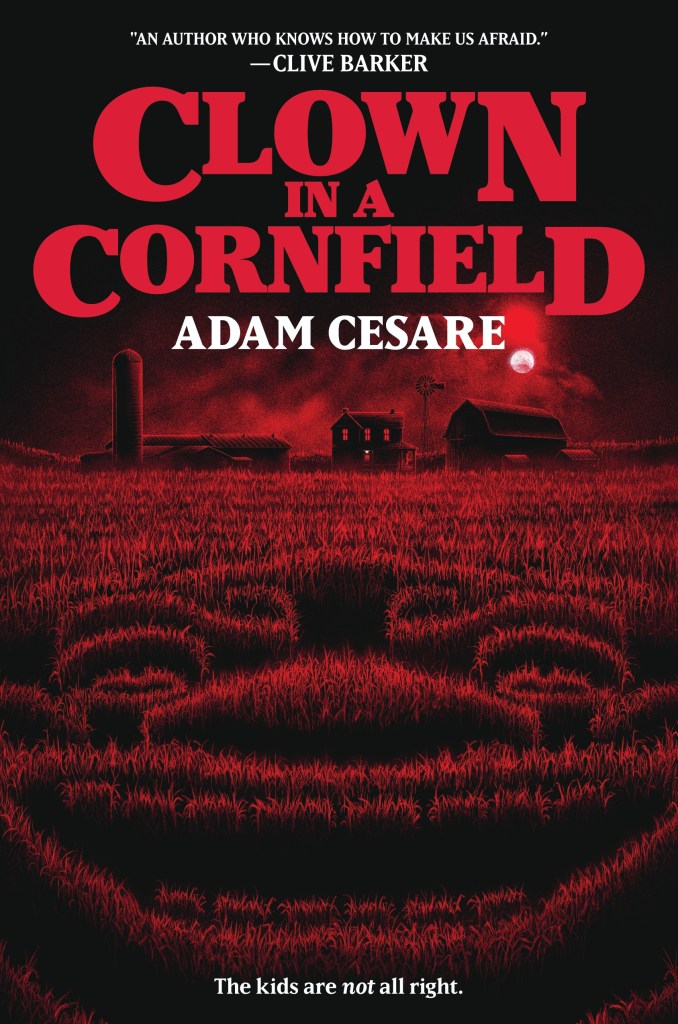
Book: “Clown in a Cornfield” by Adam Cesare

Publishing Info: HarperTeen, August 2020

Where Did I Get This Book: I own it.

Book Description: Quinn Maybrook just wants to make it until graduation. She might not make it to morning.

Quinn and her father moved to tiny, boring Kettle Springs to find a fresh start. But ever since the Baypen Corn Syrup Factory shut down, Kettle Springs has cracked in half. On one side are the adults, who are desperate to make Kettle Springs great again, and on the other are the kids, who want to have fun, make prank videos, and get out of Kettle Springs as quick as they can.

Kettle Springs is caught in a battle between old and new, tradition and progress. It’s a fight that looks like it will destroy the town. Until Frendo, the Baypen mascot, a creepy clown in a pork-pie hat, goes homicidal and decides that the only way for Kettle Springs to grow back is to cull the rotten crop of kids who live there now.

Review: I am not afraid of clowns. I have friends who are, but I myself don’t really have much beef with them outside of sometimes finding them a little pointless. Even the likes of Pennywise of John Wayne Gacy’s Pogo just don’t really make me tap into my inner coulrophobic. But I do like a book that reads like a slasher story, and reading the description of “Clown in a Cornfield” by Adam Cesare felt like exactly that. Throw in some Millennial resentment towards older generations that don’t quite get the road we’ve had to travel, and I was eager to dive in and see what Cesare was going to do with all of it.

“Clown in a Cornfield” is a bit of a slasher story, a bit of small town secrets story, and some ‘okay, Boomer’ memes all mixed together to create a YA horror tale. On a few levels, this works out pretty well and makes for fun reading. The very concept of a bunch of teens being slaughtered by someone wearing a clown mask is great horror fodder, but “Clown in a Cornfield” takes it a few steps further than that and works through some generational angst that is playing out in the real world. The town of Kettle Springs, the setting of this book, is having a bit of a reckoning when it comes to the older people in town versus the teenagers. The older people want Kettle Springs to stay the same, living off of good family values, hard work, and the corn syrup factory that has given the town jobs and prosperity, until recently, that is. The younger generation, specifically the teens, just want to live their lives and then move on. Cesare takes a pretty realistic conflict and pumps it full of blood and guts, and it works pretty well, with those with traditional values blaming inevitable changes in values for all the ills within the town. It could have been heavy handed, but Cesare keeps his tongue planted in cheek firmly enough that it’s a rather effective satire. I also liked a few of our main characters, namely Quinn, the new girl in town who is trying to fit in. Quinn has enough tragic backstory to give her a little bit of pathos, but also stands on her own two feet well enough that she is likable and endearing.

But that said, some of the executions of the plot points didn’t work as well for me. Besides Quinn and a couple other characters, we don’t really get to know enough about a number of the people we’re following so that it doesn’t feel like the stakes are too high when the clown Frendo (“No Country for Old Men” reference?) comes a knocking with weaponry and murderous intent. I don’t really care too much when a slasher film just has a bunch of stereotypes to act as machete fodder for a masked killer, but I think that on the page you have a little more wiggle room to give us some insight into your characters, even if it’s just a little bit. Along with that, the pacing was a little off at times, feeling a bit rushed in some places but kind of draggy in others. I bought the plot overall, as it really is just a slasher story and I know what I’m getting into there. But I think that had there been a little more focus on fleshing out some other characters and less on making super cool kills happen, it probably would have worked a little better. Especially since the satire was pretty well thought out.

Inevitable progress to traditionalists everywhere. (source)

“Clown in a Cornfield” is a pretty fun read. I think that it would have worked better as a gory limited series, but Cesare left room for a sequel, and it was good enough that I would definitely read it. If you don’t like clowns, maybe skip it? But if you’re like me, this could be a fun read for this time of year.

Rating 6: A sly premise and some fun characters keep this story afloat, though the plot is a little hasty at times and the scares feel like they’d work better on screen than on the page.

Reader’s Advisory:

“Clown in a Cornfield” isn’t included on many relevant Goodreads lists, but it would fit in on “Clown Horror”. Obviously.

Find “Clown in a Cornfield” at your library using WorldCat, or a local independent bookstore using IndieBound!

Serena’s Review: “Murder on Cold Street”

36510444

Book: “Murder on Cold Street” by Sherry Thomas

Publishing Info: Berkley, October 2020

Where Did I get this Book: Edelweiss+

Book Description: Inspector Treadles, Charlotte Holmes’s friend and collaborator, has been found locked in a room with two dead men, both of whom worked with his wife at the great manufacturing enterprise she has recently inherited.

Rumors fly. Had Inspector Treadles killed the men because they had opposed his wife’s initiatives at every turn? Had he killed in a fit of jealous rage, because he suspected Mrs. Treadles of harboring deeper feelings for one of the men? To make matters worse, he refuses to speak on his own behalf, despite the overwhelming evidence against him.

Charlotte finds herself in a case strewn with lies and secrets. But which lies are to cover up small sins, and which secrets would flay open a past better left forgotten? Not to mention, how can she concentrate on these murders, when Lord Ingram, her oldest friend and sometime lover, at last dangles before her the one thing she has always wanted?

Previously Reviewed: “A Study in Scarlet Women” and “A Conspiracy in Belgravia” and “The Hollow of Fear” and “The Art of Theft”

Review: Overall, I’ve been enjoying Sherry Thomas’s “Lady Sherlock” series. I’ve found all of the mysteries to be appropriately complicated, and I’ve really liked the swaps and changes to staple characters that Thomas has added in. I have had some growing questions, however, as the series has continued, mostly having to do with the very slow burn romance, the use of Moriarty, and the role of Charlotte Holmes’s sister. So those were all elements I had on my eye on this go around. Kind of a mixed bag as far as results go, but I did enjoy this book quite a bit and more than the previous one, so that’s always good.

After returning from their last mystery, Charlotte Holmes and company are immediately set upon by a distraught Mrs. Treadles. Her husband, the inspector, has been arrested for a double homicide. Charlotte takes on the case, of course, but considering the locked room that Mr. Treadles is found in along with the two dead bodies, the mystery posed is quite a stumper. As she wades through the various clues, more and more questions arise with regards to the Treadles themselves, as well as with the family company over which Mrs. Treadles has recently taken operation.

To start out with the basic things I review, this book was successful in all the ways its predecessors were. The mystery itself is complicated with a wide assortment of red herrings, false clues, and various suspects, all with their own motives. Each time I thought I was beginning to piece together where things were going, I’d be pulled in a different direction and realize I’d been heading down the completely wrong path. The various motives and suspects that are introduced are all plausible, and many of them aren’t even directly laid out, leaving it to the reader to begin to piece together their own theories, never quite knowing what is going on in Charlotte Holmes’s mind.

The writing also continues to be solid and engaging. I’ve read quite a few of Thomas’s books over the years (I just finished one of her romances, which is the genre she started out in), and her writing style has always clearly unique to her and solid throughout a wide variety of genres. She has a way of writing that always seems to pull me in. It somehow manages to be completely engrossing and pull the story along quickly, even when the sentences themselves are often not incredibly action-packed and more often read in a more dry, lofty tone.

As for the concerns that have slowly been building as the series progressed, I’m happy to report that on at least one count things seem to be moving along. The romance between Charlotte and Lord Ingram seems to have finally turned a new bend. Things are obviously not resolved on this front, but I was pleased to see that the relationship itself was evolving, with Charlotte now being the one to confront her own role in this burgeoning relationship, what it has been in the past and what she wants it to be in the future. It was a nice change of pace to have Lord Ingram, for once, the more confident and secure in his decisions of the two. I’m curious to see where things will go from here!

On the other hand, however, my other two questions, those regarding the of Livia Holmes and Moriarty, were less satisfactory. Frankly, I would have preferred Livia Holmes to have been completely absent from this book. She only has a handful of chapters as it is, and her story felt wholly unconnected from the mystery and goings-on of the other characters. I think the character would be better served to show up when/if the story call for it, as, here, she felt shoe-horned in in a way that disrupted the flow of the greater plot line altogether.

In some ways, I have the same complaint/suggestion regarding Moriarty. I’d been starting to feel that the ties to Moriarty in every single mystery thus far were beginning to feel like a bit much. It’s maybe a bit of a spoiler, but the character once again is connected here, though in a very small, sideways manner. So small and so sideways, even, that I really questioned the necessity of involving him at all. It seems to be meant to continue building the tension between the inevitable clash between Charlotte and Moriarty, but honestly, here, it just felt tacked on and unnecessary. Most fans of this series are likely already fans of the original Holmes and need very little manipulation to become quickly invested in this rivalry. It also just begins to feel implausible that all of these mysteries that seem to randomly fall on Charlotte’s plate are also connected to this shadowy other character.

Overall, however, I really enjoyed this book. I thought the mystery itself was much more compelling than what we had in the previous book, and I was excited to see some movement on the romance front. Now, alas, another year or so until the next entry. Luckily, I’ve found a YA fantasy series also written by Thomas, so that’s probably on the schedule for this winter.

Rating 9: Another great entry in the “Lady Sherlock” series, though, bizarrely, I wish for a little less Moriarty.

Reader’s Advisory:

“Murder on Cold Street” is on these Goodreads lists: “Best Sherlock Holmes Fiction (Pastiches)” and “Historical Mysteries and Thrillers Featuring Women.”

Find “Murder on Cold Street” at your library using WorldCat!

Kate’s Review: “Ring Shout”

49247242Book: “Ring Shout” by P. Djèlí Clark

Publishing Info: Tor.com, October 2020

Where Did I Get This Book: I received an eARC from NetGalley.

Book Description: Nebula, Locus, and Alex Award-winner P. Djèlí Clark returns with Ring Shout, a dark fantasy historical novella that gives a supernatural twist to the Ku Klux Klan’s reign of terror.

D. W. Griffith is a sorcerer, and The Birth of a Nation is a spell that drew upon the darkest thoughts and wishes from the heart of America. Now, rising in power and prominence, the Klan has a plot to unleash Hell on Earth.

Luckily, Maryse Boudreaux has a magic sword and a head full of tales. When she’s not running bootleg whiskey through Prohibition Georgia, she’s fighting monsters she calls “Ku Kluxes.” She’s damn good at it, too. But to confront this ongoing evil, she must journey between worlds to face nightmares made flesh–and her own demons. Together with a foul-mouthed sharpshooter and a Harlem Hellfighter, Maryse sets out to save a world from the hate that would consume it.

Review: Thanks to NetGalley for providing me with an eARC of this novella!

I have said it many a time, the horror genre can be so effective at symbolism and social commentary wrapped up in a creepy and spooky tale. You’ve seen it with such films as “Night of the Living Dead”, “Get Out”, “Candyman”, “Dawn of the Dead”, the list goes on and on and on. Books, too, do this very well, with recent titles like “Lovecraft Country” and “The Devil in Silver” being two that come to mind for me. I always love some horror that has more to say about society than just ghosts and ghouls, and “Ring Shout” by P. Djèlí Clark is a new title that scratches that itch. Sure, it looks like it’s a book about demons, demon hunters, and black magic. But it’s also a story of the very real horrors of American Racism.

I am usually nervous when I’m about to start a novella that seems like it has a lot of distance to cover and a lot of complicated themes, as it’s hard to fit all of that into limited pages. But even though “Ring Shout” clocks in at less than two hundred pages, Clark does a great job of developing his characters, building an alternative American history with mystical themes, and hitting the metaphors out of the park with biting satire and, in some cases, dark humor. We follow Marys, Sadie, and Chef, three Black women who, in post WWI America, are fighting against demons summoned by dark sorcerer D.W. Griffith that have fed upon white people’s racism and led to a resurgence of the KKK. There are Klans, who are white racists whose hate for Black (and other non-white groups) has been amplified, and Ku Kluxes, actual demons disguised under the robes. Maryse, Sadie, and Chef, with the help from a Gulluh woman with magic and insight and other freedom fighters, are hoping to stop the end of the world fueled by racism, and Maryse may hold the key to it all. What I liked best about this story was that the three main characters are Black women, and they are given a whole lot of agency, motivation, and unique characterizations that make them all very enjoyable and fun. Maryse especially has a lot of complexity, her anger and determination pushing her forward. Clark gives all of them unique voices, but Maryse’s in particular stands out.

The social commentary has a lot to work with her. While it could have been easy to just say ‘demons are the problems behind the racism in the Jim Crow South’ (something you kind of saw in “Abraham Lincoln: Vampire Hunter” with vampires and chattel slavery), Clark doesn’t let racist white people off the hook here. While it’s true that the demons are part of it, those who are influenced already had hate in their hearts. That hate was just used to help the demons gain power. There is also a less obvious but just as powerful metaphor in this story through the magical system regarding these demons that Clark puts in. The only people who can see the demons in their true forms are people from marginalized groups (this is mostly Black people, but there is a Jewish character in the group fighting against the Ku Kluxes that can see them as well); white people cannot. It’s a clever way to call out white people’s ‘I don’t see color’ hypocrisy, as well as a metaphor for the microaggressions that have a blind eye turned to them even when marginalized groups who are affected by them say that they are, indeed, there. I greatly enjoyed that part of the mythos.

And Clark pulls all of this together in a cohesive and engaging story in less than two hundred pages! With some pretty gnarly Lovecraftian imagery and body horror thrown in for good measure (there’s also a nod to this extremely problematic horror icon in this story, which was super fun to see). It made for a bite sized horror treat that I was able to read and enjoy in one sitting, the perfect quick tale for this Halloween season!

“Ring Shout” is a new social commentary horror classic in the making! Treat yourself to something a little more complex this ghostly season, you won’t be disappointed.

Rating 8: Steeped in sharp and biting satire and commentary, “Ring Shout” is a story of demons, heroines, and American racism.

Reader’s Advisory:

“Ring Shout” is included on the Goodreads lists “Beyond Butler: Spec Fic by Authors of Color”, and “ATY 2020 – About Racism and Race Relations”.

Find “Ring Shout” at your library using WorldCat, or at a local independent bookstore using IndieBound!

Book Club Review: “The BreakBeat Poets Vol. 4: LatiNext”

We are part of a group of librarian friends who have had an ongoing bookclub running for the last several years. Each “season” (we’re nerds) we pick a theme and each of us chooses a book within that theme for us all to read. Our current theme is “Around the World”, in which we each picked a continent and had to match a book that takes place there and/or is written by an author from that continent or of that continent’s descent.

For this blog, we will post a joint review of each book we read for book club. We’ll also post the next book coming up in book club. So feel free to read along with us or use our book selections and questions in your own book club!

Book: “The BreakBeat Poets Vol. 4: LatiNext” by Felicia Rose Chavez (Ed.), José Olivarez (Ed.), and Willie Perdomo (Ed.)

Publishing Info: Haymarket Books, April 2020

Where Did We Get This Book: The library!

Continent: North America

Book Description: In the dynamic tradition of the BreakBeat Poets anthology, The BreakBeat Poets Vol. 4: LatiNEXT celebrates the embodied narratives of Latinidad. Poets speak from an array of nationalities, genders, sexualities, races, and writing styles, staking a claim to our cultural and civic space. Like Hip-Hop, we honor what was, what is, and what’s next.

Kate’s Thoughts

So in the song “The Great Imposter”, there is the (much condensed down and cherry picked) line ‘Poetry, so sweet…..’. And reader, I do not feel this way towards poetry. There are a few flickers of poetry that I’ve enjoyed over the years. I love me some Poe, and Dickinson, and the poem “The Second Coming” by Yeats, as well as the occasional book in verse (Jason Reynolds in particular is a favorite of mine). But as a rule it’s really not my cup of tea. So when book club decided to do poetry with “The BreakBeat Poets Vol.4: LatiNext”, I was hesitant. I also, however, like to be game for whatever my dear friends may pick so I got it and dove in. I’m happy to report that I did not hate it, not even a little bit. This may sound like a back handed compliment, but I assure you, it’s not.

There were actually a number of poems from this collection that I greatly enjoyed. If you look at the commonalities between the various poems and poets that I cited above, if you give me something dark, I will probably be more into it, so the poems that really struck a chord with me in this book were those that addressed hard topics, like death, sadness, and despair. I wholeheartedly admit that the optics of that are not very good within the context of this collection, but at least I can say that that’s generally what’s going to get me on board with poetry. All that said, I really liked the mission of this collection, highlighting Latinx voices within the American and Latinidad experiences. These range from the political to the tongue in cheek to the joyful to the sorrowful, and I think that it does a great job of introducing new ideas of what poetry is and what it can be for different people.

But, at the end of the day, it’s still poetry. Serena will expand on this a bit more, but I do think that it went on a bit long. This may be because the way that it was sectioned, as the darker things were all at the front of the collection as opposed to spaced out. I didn’t mind the structure, as I like things being themed and categorized, but for someone like me who has ideas as to what kind of poetry she does and doesn’t like, it made me skim more and more the further along we got. I can’t really say if this is a failing in the poets, as they probably weren’t going to resonate with me because it’s poetry, but I do think that it suffered from some bloat. I totally get why bloat would happen here, wanting to give voice and representation to so many different possibilities. But it’s still a bit bloated.

All in all, there were some things here that I really liked. I don’t think that I will look into more of the collections that The BreakBeat Poets have done, but if you do like the genre, check it out. It may resonate more with you than it did with me.

Serena’s Thoughts

Back in college, oh so long ago, it was a close call when choosing majors between English Literature or English Writing (yes, there are multiple options for important topics like English!). The main case for the English Writing route was my love for the poetry classes and professors. I ended up going the Literature route, but was one of those “loves school a bit too much” dummies who still signed up to take the Capstone course for both routes. You know, why not take the highest level course for a education route you’re not even majoring in?? Anyways, long story short, I took that class because I loved reading and writing poetry that much. All of this to say, I’m a bit of a poetry snob, and it’s not really something I’m proud of, but there it is.

With that background, I often find reading poetry for fun rather challenging. I really, really enjoy great poetry, but I’m also extremely picky about what I think constitutes great poetry. For me, it’s the culmination of topics, language choice, and some simple beauty that is hard to describe but comes across like a great painting in that you know it but have a hard time saying why it’s great. After reading this book, I’d say there were a good handful of poems that really worked for me with these criteria. But there were also a good number that didn’t.

The challenge of this collection is both its strength and what I think ultimately got in the way of its being truly great. It’s so important to highlight diverse poetry and poets, and there’s a wealth of history, stories, and experiences that the Latinx community brings to the table. Some of my favorite poems spoke to some of the expected topics like immigration challenges as well as some of the smaller experiences that we might not immediately think of, like how the continued mispronunciation of one’s name can impact one’s life.

The other side of this coin, however, is that there is JUST SO MUCH to cover. Latinx covers a huge swath of cultures and countries, some speaking to their experiences in their native lands, others speaking to their experiences as Americans with Latinx heritage. There’s a lot of ground to cover, and it’s pretty clear that the editors were overwhelmed by trying to cover all their bases. It’s an impossible task to start out with, and one that I think ultimately bogged down this collection. There were a number of poems that just didn’t work for me. They weren’t bad, per se, but I also felt that they weren’t as powerful as some of the others. And in a collection that begins to feel bloated at around the 50% marker, weaker poems do more damage in hiding the truly good ones than any value they add on their own.

That said, I still really like the general approach of these poetry collections and am curious to look into the ones that came before this.

Kate’s Rating 6: A unique and at times quite powerful collection of voices not seen as much in poetry. But it’s still poetry, nonetheless, and therefore not really my jam.

Serena’s Rating 6: Some really great poems highlighting lesser known experiences and topics were at times hidden in a collection that was a bit over-sized.

Book Club Questions

  1. What did you think of the section structure of this collection?
  2. Did you have a favorite poem? What about it stood out to you?
  3. What topics did you feel were well addressed in this collection, and what topics did you want to have more focus?
  4. How did this poetry collection compare to other collections you have read in the past?
  5. What do you think the next BreakBeats Poetry Collection will be?

Reader’s Advisory

“The BreakBeat Poets Vol. 4: LatiNext” is included on the Goodreads lists “2020 Poetry Books By Authors of Color”, and “Stephen’s Multicultural and Anti-Racist Reading List”.

Find “The BreakBeat Poets Vol.4: LatiNext” at your library using WorldCat, or a local independent bookstore using IndieBound!

Next Book Club Book: “Sorcerer to the Crown” by Zen Cho