
This post may contain affiliate links for books we recommend. Read the full disclosure here.
It’s been eighteen years since Suzanne Collins wrote “The Hunger Games”, the smash hit literary sensation that continues to feel relevant and capture the attention of readers. This ongoing series will be a review series of both the Suzanne Collins books, as well as the film adaptations of the novels. I will post my review on the last Thursday of the month as we revisit the totalitarian world of Panem and the hope of the Mockingjay.
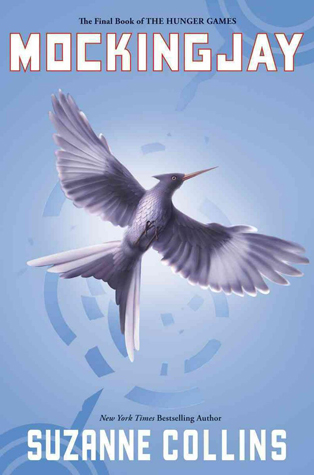
Book: “Mockingjay” by Suzanne Collins
Publishing Info: Scholastic Press, August 2010
Where Did I Get This Book: I own it
Where You Can Get This Book: WorldCat.org | Amazon | Indiebound
Book Description: My name is Katniss Everdeen. Why am I not dead? I should be dead.
Katniss Everdeen, girl on fire, has survived, even though her home has been destroyed. Gale has escaped. Katniss’s family is safe. Peeta has been captured by the Capitol. District 13 really does exist. There are rebels. There are new leaders. A revolution is unfolding.
It is by design that Katniss was rescued from the arena in the cruel and haunting Quarter Quell, and it is by design that she has long been part of the revolution without knowing it. District 13 has come out of the shadows and is plotting to overthrow the Capitol. Everyone, it seems, has had a hand in the carefully laid plans—except Katniss.
The success of the rebellion hinges on Katniss’s willingness to be a pawn, to accept responsibility for countless lives, and to change the course of the future of Panem. To do this, she must put aside her feelings of anger and distrust. She must become the rebels’ Mockingjay—no matter what the personal cost.
Review: We are now coming to the end of the initial “Hunger Games” Trilogy, and I finally took on the final book in the series “Mockingjay”. Much like “Catching Fire”, I skipped this book in my initial read because I was told that it wasn’t very good. Nay, I was told that it was boring. BORING. After finishing “Catching Fire” and really liking it, I knew that I would probably have a similar experience with this one. Little did I know that I would actually end up ranking it almost as high as the first book. Yeah, I loved “Mockingjay”. It destroyed me (probably thanks in part to listening to Tatiana Maslaney read it, God she was good). As we follow Katniss into her final arc of this saga, I was moved and on edge, even though I knew what was coming thanks to the movies. Suzanne Collins always has something to say. And this time, as we rejoin Katniss, newly whisked away from the wreckage and chaos of the destroyed arena, she is already so damaged and alone, with Peeta captured and Haymitch revealed as hiding the rebellion he helped force her into. Collins’s message this time: War is Hell, and no one comes out unchanged.
We get some new insight to some previous characters, and also meet new characters who become power players for the last book in the series. The biggest stand out for previous characters for me is Plutarch Heavensbee, the game maker for the Quarter Quell who was actually part of the rebellion the entire time. I love Plutarch, not because he’s a good guy (he’s not, really), but because I appreciate his goal of trying to overthrow Snow and the Capitol and think he’s very interesting because he is ruthless and willing to do a lot of bad to achieve his goals. We are also introduced to Alma Coin, the President of District 13, a long forgotten District that has been biding its time underground waiting for a spark of revolution so she can swoop in and help overthrow the Capitol. As Katniss worries about Peeta, who has been captured by the Capitol and is now being used in propaganda as the uprising turns into all out war, she is thrown into the role of being the Mockingjay leading a rebellion when she doesn’t know how to be a leader. It’s just a new situation where a teenage girl is being used by ambitious and power hungry adults for their own ends, and her mental health and PTSD is tossed aside as she is constantly pushed to the brink. Is she a bit more of a passive player in this one? Sure. But while that was used as a criticism by those around me, I actually think it makes complete sense. Katniss never wanted this and is still a child. Her struggles may seem repetitive but she is riddled with trauma. To portray it as anything other than messy and complicated would be unrealistic and, frankly, irresponsible.
I was also struck by how Collins makes it pretty clear from the jump that the Rebellion’s alliance with District 13 is a complicated, possibly even dangerous, one. Katniss is thrown into the depths of District 13’s underground bunker with its highly authoritarian society, finding out that it has been there the entire time living off the grid after striking a deal with the Capitol to be able to walk away in exchange for not using nuclear weapons against Snow’s regime (the absolute gall). We will talk more about the portrayal of 13 in the movies when we get to the film reviews, but in the book? I was immediately put off by President Coin and her government and its brutal ways, both towards its supporters and towards the people who have been pulled in from the rebellion as allies. Hell, EVERYTHING about 13 feels like its own nightmare, with no dissent allowed, dehumanization of anyone seen as collaborators (one instance with Katniss’s Prep Team, who feel like fish a barrel being shot for funsies, really disturbed me), and a very officious and scary power structure that Katniss is suspicious of while her closest friend Gale becomes more and more indoctrinated and into the totalitarian ethos that Coin is feeding him.
And I love that Collins was more than willing to portray that way that a war being fought can have horrific tactics from both sides, even the side that is ultimately more ‘in the right’, and this book really hits it home in the most devastating ways as Katniss has to be the face of a rebellion and to try and keep herself safe from Coin, who clearly wants her gone so she can take over and become the person with the power going forward. She is used as a tool by Coin and Heavensbee (I love the guy and his moral grey character, but man he’s a dick), only a means to an end because they know that Coin won’t cut it, and she is repeatedly victimized in hopes that she can just keep Peeta and Prim safe…and we all know what happens to Prim. Prim and the children of the Capitol, who all become targets of the ‘righteous’ side and are slaughtered to finally put down Snow’s regime in one final bombing… and it is sickening. Collins isn’t going to let the ‘correct’ side off, not only having Katniss’s side commit war crimes that are similar to her enemies, but also murder the person that she sacrificed everything for, almost making all of her suffering and purpose moot. GOD it’s so, so sad. It’s such a harsh truth that people forget all the time, that war, as a whole, is BAD, and ANYONE participating can do MONSTROUS things (even if they are on the side that is OBJECTIVELY more moral) because that is war at its heart. “Mockingjay” tells this truth by spilling more child blood, done by the side that the reader wants to succeed. Fuck Coin. But fuck Gale more. And Katniss is left to pick up the pieces. Again, war. Is. Hell.
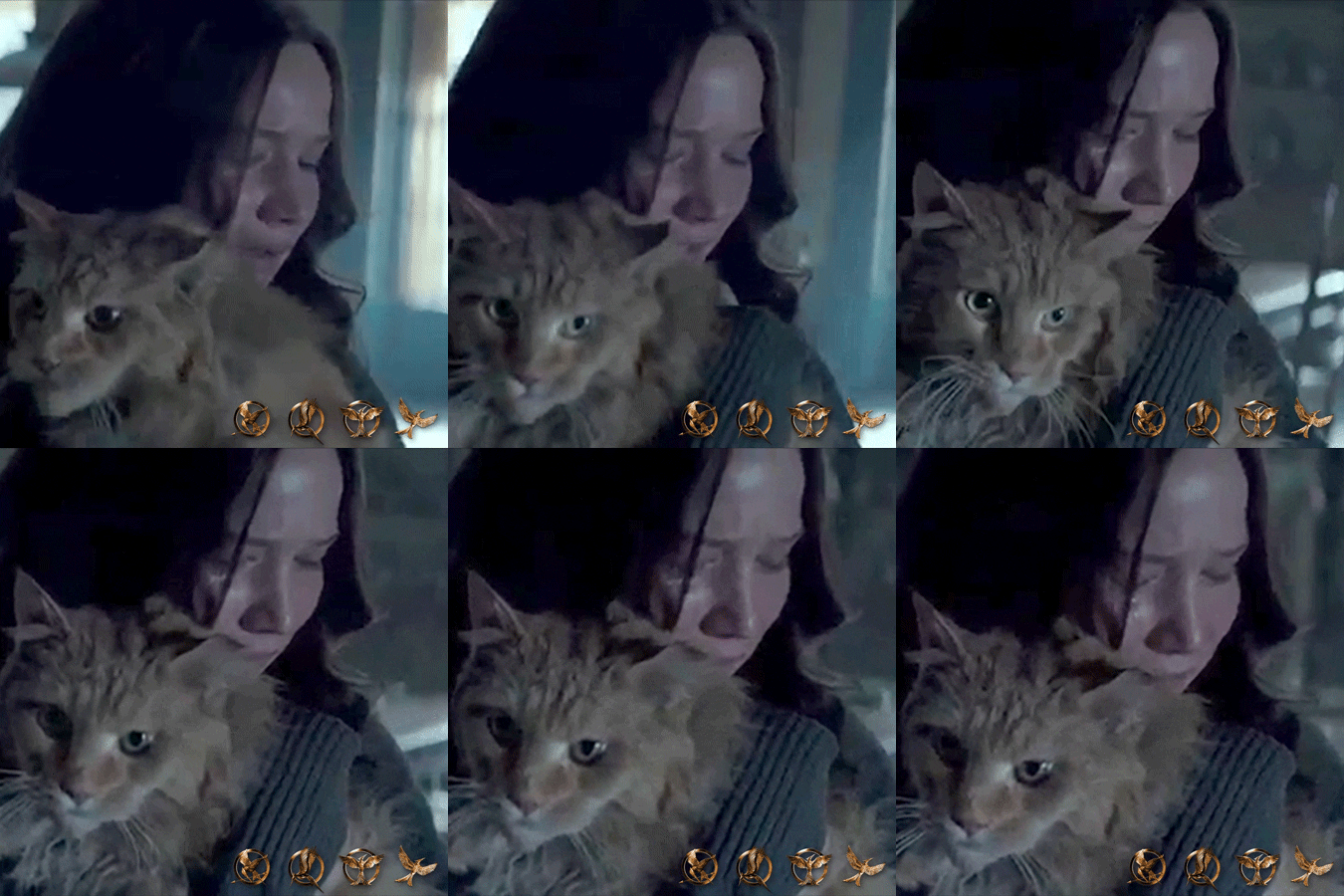
But then there is the rebirth. Because Katniss has to keep going. And Peeta has to keep going. The book ends with Panem starting a new path, and it feels hopeful, but tenuous. But for Katniss and Peeta, they have to keep moving forward, and rebuild, and the gentle aftermath of them slowly starting to do so is bittersweet to say the least. But it felt correct and satisfying. Collins doesn’t pretty it up. They are forever changed. They are forever haunted. Katniss and Peeta don’t get better just because they are free and their goals are achieved. But they keep going and find hope and happiness with each other. I know that there are people who hate that Katniss has kids in the future, thinking that it betrays her character because of her refusal to have kids in the first book. But to that I say, her and Peeta having kids is actually the best way to end it, because it shows that Katniss finally, FINALLY, can feel safe enough to live her life because the oppressive society she grew up in and helped overthrow is truly gone. It’s lovely.
I loved “Mockingjay”. It wasn’t flashy and it wasn’t cheerful. But it feels realistic to me in how it portrays trauma, war, and trying to start over after having experienced so much grief, and finding love and peace in spite of it. Next up I will review the first prequel, “The Ballad of Songbirds and Snakes”, where we go back to one of the first Hunger Games, and see the origins of President Coriolanus Snow.
Rating 9: A heavy and bittersweet conclusion to a series that still feels resonant, “Mockingjay” focuses on the hell that is war, the lingering affects of trauma, and picking up the pieces even in the wake of victory that may not feel wholly victorious.
Reader’s Advisory:
“Mockingjay” is included on the Goodreads lists “Best Survival Stories”, and “YA Dystopia Novels”.
 The Library Ladies