
This post may contain affiliate links for books we recommend. Read the full disclosure here.
We each have our own preferred genres of choice. Kate loves horrors and thrillers, really anything that will keep her up at night! And Serena enjoys escaping through hidden doors into realms of magic and adventure. We also read mysteries, historical fiction, graphic novels, etc. etc. And that’s not even counting the multitude of sub-genres contained within each greater genre. In this series, one of us will present a list of our favorites from within a given sub-genre of one of our greater preferred genres.
There is a “military” sub-genre of most larger genres. I might go as far as covering military fantasy novels in one of these posts in the future. It’s simple enough to see why this would be the case. Military science fiction, like the other military sub-genres, often includes books that are very action-packed, can take place on a grand scale with large battle scenes or focus down to the individual experiences of soldiers, and often tackle very complex moral issues of right and wrong, offense and defense, and the immense cost of warfare in general. Some will glorify battle. Others will strongly critique it.
Often readers of military science fiction are looking for another way to look at human nature and human history. Through the lens of an imaginary science fiction landscape, it’s possible to relitigate and re-explore the events of our own past across a theoretical future conflict. By doing this, authors avoid getting bogged down into the facts (or debated facts) of our own history, while still getting at the meat of the issue behind some of the motivations in our own historical wars.
On a character level, many readers of military science fiction are also interested in the various arcs and emotional pathways that those involved heavily in battle face. Obviously, this is hugely relevant to any/all readers who have their own connections to or are current soldiers or veterans. Themes such as grief, brother/sisterhood, honor, regret, PTSD, bravery and many more can be covered in grand, narrative fashion.
Other stories are more focused on the larger movements and conflicts of nations, entire species (humanity vs. some alien group), and the tactical decisions that go on in these large scale battle scenes. There can be detailed depictions regarding movements of space fleets, the inner workings of deciding which conflicts to engage in and which to avoid, etc. And, of course, this being science fiction, these will often include lots of future technology, from the ships and weapons used, to various biotronic enhancements and the like to the human soldiers.
I’ve tried to include a broad range of military science fiction that includes both the types of books that focus more on the character’s story and the types that go into more depth with grand scale battles.

Book: “Ender’s Game” by Orson Scott Card
“Ender’s Game” straddles both the “soldier focused” and the “battle focused” sides of military science fiction. The story follow a young boy, Ender, a military genius who is essentially forcibly recruited and very soon burdened with the task of essentially saving the world through his tactical brilliance. Much of the story follows his own journey through this type of pressure while also exploring the terrible decisions the adults around him are in the process of making. Throughout the book, we see Ender’s own journey as well as many larger battles, both in the military school where he is trained and later in his role as a commander. The book also introduces a lot of complicated themes regarding responsibility, what makes an enemy, and the role of the individual in a greater war.
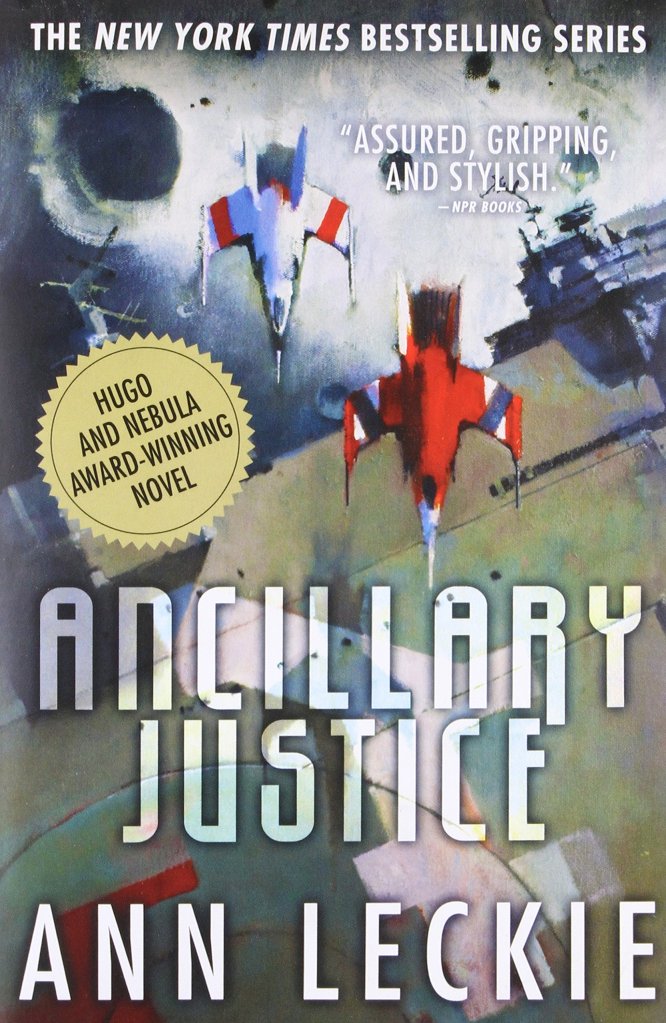
Book: “Ancillary Justice” by Ann Leckie
I also featured this book in my space opera list. Like most sub-genres, military science fiction can quite easily weave in and out of and blend in alongside other sub-genres of the larger science fiction genre as a whole. Books like this one fit neatly into both categories. It has the grand, wide-spanning storyline that is often found in space operas, but it also has a main character who is the AI system of a massive warship, now placed in the limited body of a human. As such, the story has a lot to say about the role of leadership, sisterhood, and the way that an individual experiences the broader impacts of war. There are also a lot of really cool space battles, especially in the flashbacks to when the main character was still embodied in the actual ship.

Book: “Old Man’s War” by Jon Scalzi
Kate and I both read this one a year or so ago for bookclub. And it’s an obvious pick for this list, following the story of a man who, through technological advances, joins in humanity’s ongoing intergalactic war at the advanced age of 80. So with that premise, of course the book has a lot to say on the way that one would approach a life as a soldier after already living a full life before, how the outlook of age could affect one’s choices and beliefs. The book also tackles larger themes of colonialization and pre-emptive warfare. Beyond that, Scalzi is just a fun writer, so the numerous battle scenes are action-packed and a fun read, even if still gruesome at times.
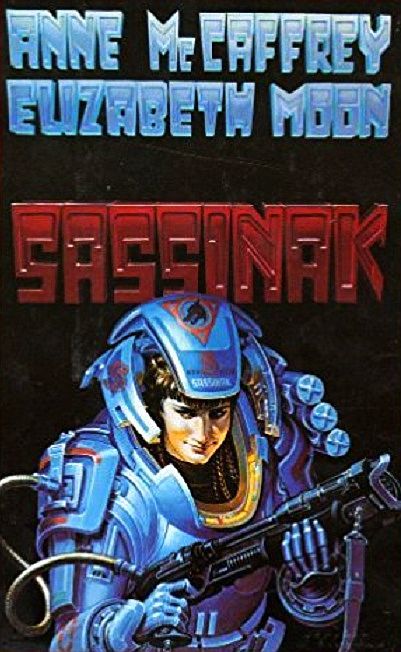
Book: “Sassinak” by Anne McCaffrey/Elizabeth Moon
While Anne McCaffery is better know for her fantasy/science fiction involving dragons, Elizabeth Moon is a powerhouse of military fiction. Not only that, she comes from a military background herself, having served in the United States Marines as a lieutenant. So, here we have a book written by two incredible women that also follows the story of a woman who escapes to become a Fleet Captain who then chases down pirates across the universe. This is definitely a character-driven story, following Sassy’s exploits through several mini stories that make up the book. And as it’s a shorter book on the hole, this can lead to perhaps a bit of a disjointed read. But I still think it well earns its place on this list, especially the first half of the story that established the main character as an incredibly empathetic and clever individual.
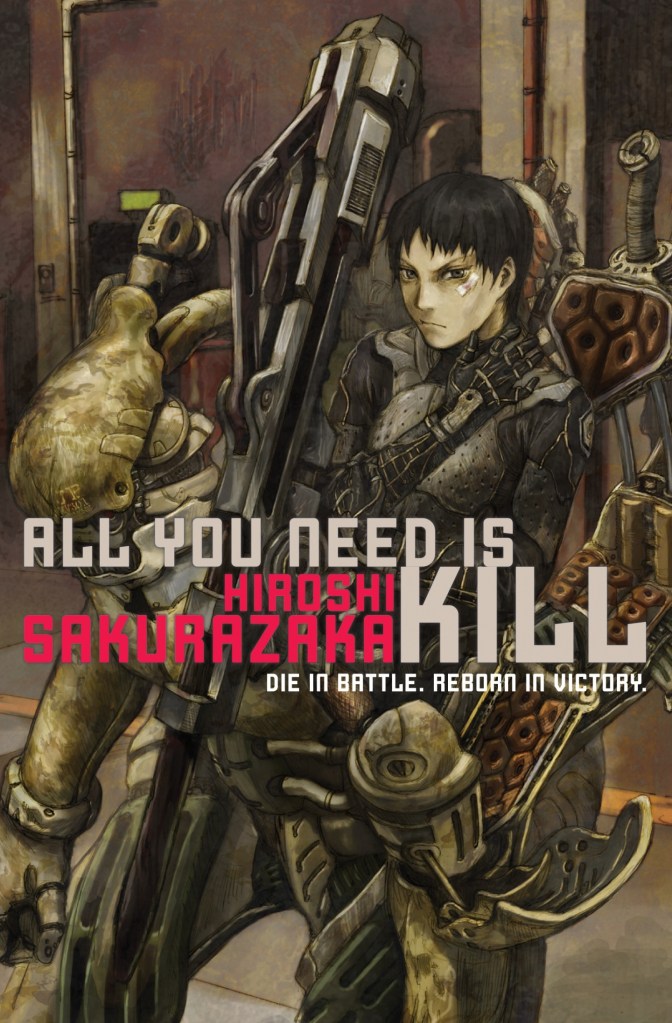
Book: “All You Need is Kill” by Hiroshi Sakurazaka
Many of you will be more familiar with this story by the name of the movie adaptation helmed by Tom Cruise, “Edge of Tomorrow.” Unlike the other books featured on this list so far, this one takes place on Earth as humanity attempts to save itself from invasion. The story follows a soldier who inexplicably finds himself reliving the same battle over and over again, dying only to start the day and fight once again. It’s like a grim version of “Groundhog’s Day.” There’s an instant appeal to the premise itself, but the close look at how the same day can play out in so many ways really emphasizes the chaos of warfare.

Book: “All Systems Red” by Martha Wells
Like “Ancillary Justice,” the protagonist of this book isn’t exactly…human. Instead, this book and the ongoing series follows the exploits of Murderbot, a security bot that is part of a larger Company that essentially controls the galaxy. As such, this book isn’t the classic military fiction with its focus on warfare and soldiers, but its focus on a security bot grappling with large, existential questions regarding violence and its role in conflict makes it a perfect pick to round out the variety of fiction that can be found within this subgenre.
What military science fiction books have you enjoyed? Let us know in the comments!
 The Library Ladies
The world-building is so vivid that it feels like stepping into a parallel universe.
LikeLike