Kate’s Review: “Fear the Drowning Deep”

23924355Book: “Fear the Drowning Deep” by Sarah Glenn Marsh

Publishing Info: Sky Pony Press, October 2016

Where Did I Get This Book: The library!

Book Description: Witch’s apprentice Bridey Corkill has hated the ocean ever since she watched her granddad dive in and drown with a smile on his face. So when a dead girl rolls in with the tide in the summer of 1913, sixteen-year-old Bridey suspects that whatever compelled her granddad to leap into the sea has made its return to the Isle of Man.

Soon, villagers are vanishing in the night, but no one shares Bridey’s suspicions about the sea. No one but the island’s witch, who isn’t as frightening as she first appears, and the handsome dark-haired lad Bridey rescues from a grim and watery fate. The cause of the deep gashes in Fynn’s stomach and his lost memories are, like the recent disappearances, a mystery well-guarded by the sea. In exchange for saving his life, Fynn teaches Bridey to master her fear of the water — stealing her heart in the process.

Now, Bridey must work with the Isle’s eccentric witch and the boy she isn’t sure she can trust — because if she can’t uncover the truth about the ancient evil in the water, everyone she loves will walk into the sea, never to return.

Review: So look, on paper this, to me, sounded like a straight up thriller with a supernatural twist to it. That’s why I’m reviewing this book that is, in actuality, pretty much just a straight up fantasy. Sorry, Serena, this is my genre today! That being said, there are definitely a number of strange and creepy things that really added to the potential of “Fear the Drowning Deep”. A witch’s apprentice? Murdered girls? ANCIENT EVIL IN THE WATER?

giphy3
Sign me up, I’m there! (source)’

But sadly, while I was all in and totally stoked, when I got to it, it didn’t quite live up to what I hoped it would. I think that what tripped this book up for me were a couple of things. One, my expectations were not met, and while that’s not the book’s fault, it nonetheless made it so I was setting myself up for a fall. The second thing is that it fell into too many traps of the fantasy romance YA genre, which I have become less and less forgiving of as time has gone on. You combine these two things, and then throw in a description that really played up more of a horror thriller angle than it was, and well, we’re bound to have some problems.

But hey, let’s start off with the things that I DID like about this story before we get into the negatives. First of all, I enjoyed the setting of this book, taking place on the Isle of Man in 1913. I don’t know much about the Isle of Man outside of the fact that the Bee Gees were from there, so seeing it in a historical setting with some of the mythology from the area were fun themes to explore. Bridey was an alright protagonist. I liked that she was a responsible teenager of her time, and while sometimes her aspirations kind of treaded towards the less pragmatic and more fanciful, by 1913 I think this is a more acceptable mentality for a teenage girl to have. I also really liked the storyline involving her and Morag, the island ‘witch’ whom Bridley apprentices for, just as her mother did when she was a girl. The parts of the story where Bridley was learning how to find ingredients for medicine, charms, and protection, were very intriguing to me, and I liked Morag’s role in the story as the misunderstood outsider. True, it got a bit aggravating when Bridey would dismiss Morag’s advice or warnings as superstitions or useless, because she has spent her whole life believing her to be some kind of witch! I have a hard time believing that she’d be so dense or haughty that she’d just toss this woman’s opinions out the window! It didn’t feel like it matched Bridey’s character, and that got a bit annoying.

I also liked the take and portrayals of various mythological creatures that you may not see as much in fantasy stories. Sure, we’ve all seen our fair share of dragons, vampires, and ghosts, but in this book we get sea serpents, Little Fellas, and fossegrims. Marsh has taken some long neglected mythologies and has given them a fresh perspective, and I think that this book could easily encourage interested parties to take a gander at these stories when they may not have otherwise.

However, a big strike against this book, for me, is that once again, we are met with the Dreaded Love Triangle. THIS time it’s between Bridey, her childhood friend Lugh, and the mysterious visitor Fynn, who washes up on shore one day with no memory of who he is or how he got there. Boy, a girl is torn between her true blue best friend and a strange and enigmatic newcomer. I sure haven’t read anything like THAT before.

giphy4
(source)

This is only compounded by the fact that a day before Fynn showed up, Bridey had been kissed by Lugh, and she had really quite liked it. But the moment that Fynn arrives, Lugh is completely out of her thoughts. It’s one thing if she was always a bit ambivalent about her feelings for him. It’s tired and worn out, but at least it’s realistic. Because MAN did she shift on a dime without any second thoughts. Plus, we got a ridiculous scene in which Finn and Lugh start fighting each other over her, and everyone felt a bit out of character all just for the drama. Lugh just didn’t feel like a character who even needed to be there, in all honesty. There was plenty of dramatics without Bridey having to be in the middle of a fight between the two stereotypes of romantic entanglements.

This book definitely had some things going for it, but overall “Fear the Drowning Deep” found itself in a couple of ruts that it never really pulled itself from. I really enjoyed the mythology aspect and the witch aspect, but there were too many well worn ideas that weren’t really reinvented to make it a complete stand out. Come for the mythos, try and tolerate the repetitiveness.

Rating 6: Though original in some ways, “Fear the Drowning Deep” wasn’t what I had hoped it would be, and fell into too many YA traps.

Reader’s Advisory:

“Fear the Drowning Deep” can be found on the following Goodreads lists: “Sea Creatures”, and “All Things Celtic”.

Find “Fear the Drowning Deep” at your library using WorldCat!
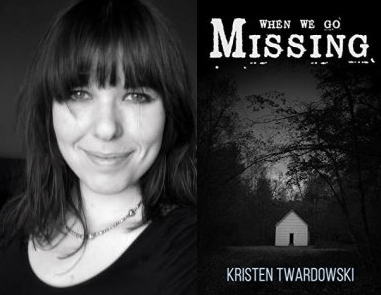
Guest Author: Kristen Twardowski

As a special treat this week, we have a guest post from blogger and author, Kristen Twardowski. Kristen wrote the book “When We Go Missing”, and has put together a post ruminating on reading, writing, her personal inspiration, and advice for aspiring authors. We are very lucky that she is willing to share these insights with us, and send her thanks and gratitude.

Welcome Kristen!

1-17-2017-5-48-15-pm

I’ve long suspected that books, the ones we love as well as the ones we’ll never see, haunt both readers. Many of us read because we are searching for something. Maybe it is as simple as entertainment, but more often we want to find a book that makes us feel a certain way or one that tells us something about ourselves or our world.

For me, writing deals with those same issues. I write because I am looking for the answers to questions that I don’t always know I’m asking. This quest has followed me throughout my life. I like knowing things and have found there are many different ways to learn them.

History will always be my first love. I studied it in undergrad, and during my graduate work I focused on gender, particularly different iterations of masculinity in Imperial Germany. I have also worked with a wolf research and education center where we studied animal behavior and held various tours and seminars for the public. My professional life has also always revolved around sharing knowledge. I worked in academic libraries before I transitioned into the academic publishing industry where I have worked in books editorial and journals sales and marketing departments. I currently am in a role where I perform data analysis and promote books and journals. Though I never envisioned myself as a numbers person, my job is a rewarding one that ensures that readers have access to different perspectives of the world.

I recently delved into one of those alternate viewpoints in my debut novel When We Go Missing, which was released in December 2016. The novel is a psychological thriller that follows the story of Alex Gardinier, a woman who believes that her ex-husband is a serial killer and who can do nothing to stop him from her room in a psychiatric ward. When I began to write the book, I was looking to explore several themes: how people get away with murder in the United States and how the various victims of violent crimes respond to trauma. In particular, I delved into the ways that the justice system underserves poor communities, immigrants, and minority populations.

I struggled with several different aspects of writing When We Go Missing. At the most basic level, the book was on a quicker timetable than I prefer. When left to my own devices, I stew over manuscripts for long enough too ruin them. In the summer of 2016, I decided to try and overcome this roadblock by committing to publishing When We Go Missing before the start of 2017. I also found myself battling against the urge to write a nonfiction study of crime in the United States. Academia nursed me at its bosom, so the temptation to simply analyze the world was always there. I did manage to restrain myself and did not fill the novel with footnotes and citations. (The struggle was a real one.)

Now that When We Go Missing has been released into the world I have several other manuscripts that I am currently working on. The first of them is work that I like to call a modern mythology and is loosely inspired by Old Norse legends. The second manuscript is a coming of age story, which is not a subject that I ever anticipated writing about. I simply woke up one day and needed to put ideas to paper. I will very likely pursue publishing the modern mythology, but the future of the coming of age tale remains unclear.

In some ways, writing a modern mythology is returning to my roots. I am a fantasy lover at heart because those stories often distill truths about life even when surrounded by absurd and magical things. (But aren’t those things true in their own ways as well? Life is a little absurd and a little magical after all.) My favorite authors include folks like Diana Wynne Jones, Peter S. Beagle, Jan Siegel, and Melanie Rawn because they manage to portray existence in all of its beauty, and complexity, and wonder, and sadness. I always hope that that tangled web of emotion bleeds into my writing.

I encourage all aspiring writers to spend a little time on self-reflection and determine what stories they want to tell. Not everyone has to have the existential wonderings that I wander into, but writing is about more than simply putting words together. It is also about knowing what you want to say, knowing what you don’t know, and trying to draw the reader into that emotional and intellectual space. As I said before, we read to find meaning. Writers should acknowledge if only to themselves what truth they are trying to find.

Visit Kristen at https://kristentwardowski.wordpress.com/

And check out Kate’s review of her book “When We Go Missing”

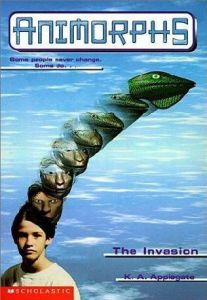
The Great Animorphs Re-Read: #1 “The Invasion”

776877Animorphs #1: “The Invasion”

Publishing Info: Scholastic Paperbacks, June 1996

Where Did I Get this Book: own it!

Book Description: Sometimes weird things happen to people. Ask Jake. He may tell you about the night he and his friends saw the strange light in the sky. He may even tell you about what happened when they realized the “light” was only a plane — from another planet. Here’s where Jake’s story gets a little weird. It’s where they’re told that the human race is under attack — and given the chance to fight back.

Now Jake, Rachel, Cassie, Tobias, and Marco have the power to morph into any animal they choose. And they must use that power to outsmart an evil that is greater than anything the world has ever seen…

Narrator: Jake

Plot: This book has so much going on, guys! It’s like some strange feat of magic that Applegate somehow fits this all in one, tiny book. We have the introductions to the gang, the introductions to the intergalactic war, the Andalites, the Yeerks, the “discover your powers” moment, two wacky mini adventures, and then finally, the climatic final arc.

Basically, 5 teens meet and then decide (very poor decision #1) to wander through a deserted construction site at night. Like you do.They then proceed to stumble across a UFO and a dying alien who identifies himself as Elfangor, an Andalite, whose species is in an intergalactic war with the Yeerks, evil alien slugs, essentially, that take over the life forms of other aliens and who are intent on seizing Earth as their next conquest. Elfangor explains how the Yeerks could be anyone, how they control the body and mind of their hosts by crawling in the ear and attaching to the brain, and how the Andalites are losing the war. The only hope is if he gives these kids a weapon to fight back while they wait for the Andalites to return with reinforcements some years in the future. And this weapon is the ability to turn into any animal whose DNA they acquire through touch. The catch being that if they stay in this morph for over 2 hours, they will be trapped forever as this animal (no terrible foreshadowing here or anything!).

They then meet the enemy: Visser Three, the only Yeerk with an Andalite body as a host (and thus the ability to also morph) who is just like a Bond villain with his villainy spelled with a capital “V.”  There are also other Yeerk-controlled minions made up of Taxxons, disgusting worm creatures with too many teeth, and the Hork-Bajir, the muscle of the group, huge aliens covered with razors. 

Seriously, there is so much plot I’m already overwhelmed trying to re-cap it! The Animorphs get their powers, learn to use them, discover that Jake’s brother Tom is a Controller (all the sads), figure out that this creepy, cult-like youth group called The Sharing is a Yeerk front to recruit new Controllers, and infiltrate the Yeerk pool (where the Yeerks must go every 3 days to feed), barely escaping Visser Three once again and really pretty much failing completely at their first mission. Also, Tobias gets stuck as a hawk. The end!

(I promise this section will be shorter in the future, when there’s less set up to get through, too!)

Our Fearless Leader: This is Jake’s story so we get a lot from him. We learn that he is best friends with Marco, cousin to Rachel, has a crush on Cassie, and saved Tobias from a close-call with a toilet and some bullies. All of this goes to say that Jake is a pretty good guy who naturally falls into the leadership role of this group, much to his own dismay. His relationship with Tom, his older brother, is central to this story and saving Tom from the Controllers becomes his main motivation for continuing this battle. In this book he morphs his own dog, a gecko, and acquires his battle morph: a tiger.

Xena, Warriar Princess: This is Rachel, Jake’s cousin. Our intro to her is rather minimal, but we find out that she is model-level beautiful (but, ew, gross, she’s Jake’s cousin!), but is also the most natural fighter of the group. I had forgotten about her wacky relationship with Marco, but their quipping back and forth was one of my favorite parts of this book. Her battle morph is an elephant, though I’m pretty sure this changes later on as even here this proves problematic. She can’t fit up the tunnel to escape the Yeerk pool and has to demorph as she runs. How she survives, no one knows. Or…you know, author’s prerogative!

A Hawk’s Life: What a bummer this section title even is! Tobias’s life is rough. Terrible home like (no parents, shunted from one relative to another), bully-filled school life, and now, stuck as a hawk cuz he essentially felt more comfortable as a bird than a boy. Some people read his arc in this story as one pointing towards him wanting to become a hawk full-time, but to me, this was a boy who was trying to escape his life, but didn’t mean to fall in this trap. Obviously his battle morph is now himself as a hawk. *sniff*

Peace, Love, and Animals: Cassie doesn’t have a whole lot going on in this book. It’s notable that she, along with Tobias, note that Rachel is acting strangely after her first mission into the house.

The Comic Relief: Oh, Marco! How I love thee! Marco is Jake’s best friend, and at first comes off as the stereotypical funny guy of the group. But Marco is also the smartest, I’m pretty sure, being the first to pick up on the “Tom’s a Controller!” and “The Sharing sounds like a front!” vibes. Marco, too, has tragic home life with the recent loss of his mother. This being the case, he’s also one of the more unwilling members in the fight, not wanting to burden his grieving father with another loss. His battle morph is a gorilla.

Best (?) Body Horror Moment: These books contain way more body horror than I remembered as a kid! So each review will feature this lovely section where you all get to enjoy the revulsion with me! In this book, we have not only Jake eating a spider while in morph (with all the talk about feeling it move in his stomach later included) but also losing his tail after being stepped on and seeing it wriggle around on the ground behind him.

Couples Watch!: Ahh, teen love! Our couples are already laid out for us in this book, which was another surprise as I thought these hints came later. But Jake discusses how he maybe, kind of, ok really, thinks Cassie is pretty awesome. And Tobias tends to land on Rachel’s shoulder, for some unknown reason that poor, delusional cousin Jake wonders about. So cute!

If Only Visser Three had  Mustache to Twirl: Visser Three makes two appearances in the book, and in both he is established as a big bad with a penchant for show-boating. He boasts and talks himself up at every possible moment! He also has a fondness for tigers, it seems, admiring Jake’s morph while trying to fire blast him as the Animorphs escape.

Adult Ugly Crying at a Middle Grade Book: A tie between Jake’s older brother Tom fighting so hard to get out of the Yeerk pool only for Jake to see him at breakfast the next morning knowing that the Yeerks captured him and he is once again under their control and Tobias. Just everything about him.

What  a Terrible Plan, Guys!: There are a lot of truly awful plans in these books, from what I remember. For this book, it’s pretty much the whole plan to infiltrate the Yeerk pool all together. No recognizance. Half of the people don’t have appropriate morphs (Cassie can only morph a horse! A HORSE!). And several things go wrong right off the bat (Tobias already in morph, cutting his time short. Cassie’s missing.) that should have served as enough warnings to maybe spend a bit more time on this whole idea.

Favorite Quote:  This quote illustrates perfectly why Marco is a favorite character of mine and why I, too, tend to get exasperated with Cassie.

“Don’t be so sure,’ Cassie said. ‘We’re fighting for Mother Earth. She has some tricks up her sleeves.’
‘Good grief,’ Marco said. ‘Let’s all buy Birkenstocks and go hug some trees.”

Scorecard: Yeerks 1, Animorphs 0

This one goes to the Yeerks, since the Animorphs’ biggest accomplishment was escaping with their lives, and even then it was a loss considering the whole Tobias situation.

Rating: Awesome start that is still fun today, full of adventure, danger, and more sadness than is acceptable!

Note: I’m not going to rate these books since I can’t be objective at all! But I’ll give a one sentence conclusion and you can take from that what you will!


Kate’s Review: “American Heiress”

28007903Book: “American Heiress: The Wild Saga of the Kidnapping, Crimes, and Trial of Patty Hearst” by Jeffrey Toobin
Publishing Info: Doubleday, August 2016

Where Did I Get This Book: The library!

Book Description: From New Yorker staff writer and bestselling author Jeffrey Toobin, the definitive account of the kidnapping and trial that defined an insane era in American history

On February 4, 1974, Patty Hearst, a senior in college and heiress to the Hearst family fortune, was kidnapped by a ragtag group of self-styled revolutionaries calling itself the Symbionese Liberation Army. The already sensational story took the first of many incredible twists on April 3, when the group released a tape of Patty saying she had joined the SLA and had adopted the nom de guerre “Tania.”

The weird turns of the tale are truly astonishing — the Hearst family trying to secure Patty’s release by feeding all the people of Oakland and San Francisco for free; the photographs capturing “Tania” wielding a machine gun during a bank robbery; a cast of characters including everyone from Bill Walton to the Black Panthers to Ronald Reagan to F. Lee Bailey; the largest police shoot-out in American history; the first breaking news event to be broadcast live on television stations across the country; Patty’s year on the lam, running from authorities; and her circuslike trial, filled with theatrical courtroom confrontations and a dramatic last-minute reversal, after which the phrase “Stockholm syndrome” entered the lexicon.

The saga of Patty Hearst highlighted a decade in which America seemed to be suffering a collective nervous breakdown. Based on more than a hundred interviews and thousands of previously secret documents, American Heiress thrillingly recounts the craziness of the times (there were an average of 1500 terrorist bombings a year in the early 1970s). Toobin portrays the lunacy of the half-baked radicals of the SLA and the toxic mix of sex, politics, and violence that swept up Patty Hearst; and recreates her melodramatic trial. American Heiress examines the life of a young woman who suffered an unimaginable trauma and then made the stunning decision to join her captors’ crusade. Or did she?

Review: I grew up in an upper middle class neighborhood in St. Paul, Minnesota, and my usual stomping grounds were also in upper middle class areas. One of those neighborhoods was one that I could bike to, to hit the local Barnes and Noble, get a Starbucks mocha, and maybe go see a movie. This neighborhood also happened to be the same neighborhood that Sara Jane Olson, aka Kathy Soliah of the Symbionese Liberation Army, was found in after decades on the lam. My parents, both former anti-war protestors and pinko liberals of the 1960s and 70s, were pretty stunned, and when they explained who Soliah and the SLA were, I was stunned too. It was around this time that I was first introduced to the story of Patty Hearst, the heiress to the Hearst Fortune who was kidnapped by the SLA, only to join up with them. Sure, Hearst has kind of entered the pop cultural zeitgeist after all these years, that famous ‘Tania Picture’ pretty recognizable to even those who don’t necessarily know the significance of it. Hell, I had this picture on my bedroom door in high school (in vague protest of local gun legislation, but I digress). But outside of knowing the very basics of the case, I knew very little about Patty Hearst outside of this photograph. So when “American Heiress” ended up at my library, I decided it was time to learn more.

Toobin, a writer for the New Yorker, tells a comprehensive and detailed story not only about Patty and her kidnapping, but the crimes that the SLA committed before, during, and after, the trials and scrutiny that Patty faced, and the social and political climate of the United States in the 1970s. Gone were the idealistic days of the 1960s, and the 1970s was a time of much anger and frustration, as well as uncertainty. Nixon had recently been exposed for his corruption with the Watergate Scandal, gas prices were astronomical, and tensions were high. The Symbionese Liberation Army fancied itself a revolutionary group, but was less akin to peaceful protest and discourse, and more interested in bombs and murder (including the assassination of school superintendent Marcus Foster). Toobin does a great job of profiling our main players in the SLA, and his profiles are expansive and in depth. He also does a very good job of profiling Patty and her life pre-kidnapping. She was a student at Berkeley, engaged to an older man, and already feeling a little bit unappreciated and approaching a stagnancy. His descriptions of all these factors, as well as explanations of various societal events and views, all mix together to bring the reader right into this setting. I could almost feel the tension in the air.

What I also liked was that Toobin was pretty good at presenting a lot of this neutrally and seemingly without a conclusion he wanted the reader to draw. That may be in part to the fact that Patty Hearst didn’t have anything to do with this book, and declined to work with him on it. Because of that, Toobin has to work with other sources. He still managed to present a well thought out analysis of many factors within this crime. One of the biggest turns of the crime was the fact that Patty ‘joined’ her captors and began to commit crimes with them, releasing propaganda images and films denouncing her former life. She was eventually tried and convicted, in spite of the defense’s arguments that she was suffering from Stolkholm Syndrome. Eventually she was pardoned by President Carter. Toobin has really set out just to tell the story as it was, and how the SLA could have influenced her choices to cooperate. While the SLA didn’t have the competence to actually systematically brainwash her, it was, in a way, their short sightedness in their plan that may have led to her cooperation. They kidnapped her with no plan, and were constantly threatening her life and waffling with what to do with her. Because of this, through a need to survive and adapt, it could be argued that Hearst decided that to save herself, be it consciously or not, she needed to become one of them. But not once does Toobin go so far as to suggest that there is no responsibility there. After all, he also points out that she was angry with her parents for how they seemingly handled her kidnapping, and felt that they had turned their back on her. And by the end, I don’t really know where I fall in the argument. I jumped between ‘If she wasn’t a Hearst, or a white woman, or rich, she would have been in prison for far longer than eighteen months’, and ‘this poor girl was a complete victim and was completely railroaded!’. I still don’t really know where I stand, but I appreciate that. It shows that Toobin knows that it’s almost too complex for any solid answers to come out of it, especially after all this time. Honestly, it’s a combination of all those things. She was certainly a victim. But many victims don’t get the luxury of being seen as one.

The book is a little dense, so I hard a slower time getting through it, but in it’s density we get a whole lot of really interesting facts. I had no idea that so many familiar names were involved in this case. This runs the gamut from perhaps obvious people, like Ronald Reagan who was the Governor of California of the time (who said some pretty wretched things about poor minorities in relation to this case, surprise surprise), to the less obvious like Desi Arnaz (who was a family friend of Patty’s parents and whisked them away on a vacation to help them take their mind off of things). While sometimes this book could get a little off track with these things, I found it all pretty engrossing.

I think that true crime fans would like this book, but so would history buffs, and possibly even people interested in psychology and sociology. Patty Hearst is still around, making public appearances here and there, be it at the Westminster Dog Show or on TV. I don’t think anyone can really know everything about her outside of her, and she isn’t going to address it anytime soon. Nor should she have to. That said, Jeffrey Toobin does a great job of postulating and assessing various factors in her kidnapping fairly and in an insightful way. “American Heiress” was a good read, and I’m happy I know more about the poor girl whose chilling photo was on my bedroom door.

Rating 8: An in depth and interesting book about a notorious crime that never goes for sensation or salaciousness, “American Heiress” looks at the Patty Hearst Kidnapping through many lenses.

Reader’s Advisory:

“American Heiress” has not been out long, and isn’t on many relevant Goodreads lists. It can be found on “Fresh Air 2016”, but I think it would also fit in on “California True Crime”.

Find “American Heiress” at your library using WorldCat!

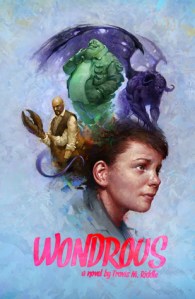
Serena’s Review: “Wondrous”

32578571Book: “Wondrous” by Travis M. Riddle

Publishing Info: January 17, 2017

Where Did I Get this Book: ARC

Book Description: Miles went to sleep tucked tightly in bed in his Austin apartment and woke up in the middle of a damp, dark forest in the kingdom of Rompu, a land being torn apart by a civil war between its king and queen.

Miles has few companions in this vast kingdom, which is filled with fantastical animals and flora yet sprinkled with familiar items like digital clocks and vinyl records. As he searches for a way to return home, he discovers that certain memories trigger magical abilities: he can shoot fireballs from his palms, heal with nothing but a touch, and more. But as he struggles to make sense of this new world, his thoughts are punctuated by painful memories of his sick grandmother, quarreling parents, and an icy school therapist.

When Miles learns that a monstrous entity flying through the countryside and killing for sport was summoned from a portal to another realm, he believes this creature is the key to learning how to open another rift and return home. Tracking down this beast and mastering his newfound magical abilities may be the only way for Miles to help save Rompu and get back to his family in Texas.

Review:  I received an ARC for this book from the author, and after checking out the plot synopsis, it sounded like a book that might be up my alley! I always love an “other world” story where our hero is plopped down with as much confusion as we the readers have, and I was intrigued by the idea of the protagonist being such a young boy.

The story doesn’t waste any time getting started. I was a bit concerned after reading the first chapter and having Miles so suddenly transported to this new land with very little explanation for how/why he was transported and no backstory to support the reader’s interest in Miles story. While I still wish there had been a bit more set up to Miles’ trip to this new world, I was pleased to discover the clever way the author provided this backstory and connected Miles’ real life problems to his own burgeoning powers in this new world.

The magic system was rather simple, but the way Riddle connected the use of the power to Miles’ memories of his home life and the emotions that these memories inspired was an interesting take. I appreciated the inclusion of these aspects of Miles’ life. It would have been all too easy to simply write a fun, adventurous romp for this character. But instead, through Miles, Riddle addresses many aspects of childhood that are challenging, such as parental conflict, the death of aged relatives, and struggles with school.

I wavered back and forth with regards to my opinion of Miles himself. In many ways, he was a very likeable, young boy. But at other times, perhaps realistically, he came off as a spoiled brat and it became hard to understand the patience with which the adult beings in this new world had for him when they were in the midst of a very trying war. My other struggle with Miles was his age. Nine years old is very young, and at times it was hard to buy-in to Miles’ inner voice and thought process that sometimes verged into what felt like an older child’s range, perhaps 12 or so. Ultimately, I still did enjoy Miles when I could get past these few distractions.

As for these side character, they also had varying mileage. The species we meet are creative, but there were a few stylistic choices that sat oddly, like a frog-like species called Rompun speaking French. But these choices may work better for young readers.

Speaking of young readers, some of these concerns, simple world-building, a lack of depth to certain narrative choices like Miles trip to this land and the relationships between the different species that make up this world, could be explained by the target audience of this book. Though it isn’t explicitly stated anywhere in the book description, I’m guessing that this book is aimed towards middle grade readers. In this case, some of these choices make more sense (in particular, in the end there were a few rather implausible, narrow escapes for our supporting cast) if Riddle was wanting to keep the tone of the book more light. However, I would also suggest that middle grade fiction should still be held to a similar high standard with regards to some of these choices. It is possible to add depth to a fantasy world and create positive, but more believable, outcomes to dangerous situations that is still approachable to middle grade readers.

All in all, I had a fun time reading this book, but feel that it is an example of middle grade fiction that might be received better by its intended age range, rather than adult readers. If you have a middle grader who likes escapists fantasy, this might be the book for them!

Rating 6: A fun story, but had frustrating moments for me as an adult reader.

Reader’s Advisory:

“Wondrous” has just been published, so it isn’t included on any Goodreads lists yet. However, an obvious similar book would be “A Wrinkle in Time.” Both feature young protagonists thrust into new worlds with new alien beings.


Kate’s Review: “When We Go Missing”

33382556Book: “When We Go Missing” by Kristen Twardowski
Publishing Info: CreateSpace Independent Publishing Platform, December 2016

Where Did I Get This Book: An ARC was provided by the author in exchange for an honest review.

Book Description: Once, Alex Gardinier was a successful physical therapist and a happy wife. Now she is trapped in a crumbling hospital room. Seven years ago Alex’s ex-husband, Nathan, was convicted of murdering five girls, and he has been rotting in prison ever since. Except the doctors say that Nathan isn’t in prison. In fact, they don’t believe that he is a criminal at all. According to them, Nathan is a devoted husband who visits her every week. But Alex can’t recall ever seeing him at the hospital, and the last time they met he was holding her hostage on a boat.

Maybe the doctors are right – maybe these memories of his crimes are her own personal delusions – but if they are wrong, then Nathan somehow escaped from prison. If they are wrong, he has trapped Alex in a psychiatric ward.

If they are wrong, he is hunting her sister.

Review: During my time studying psychology in my high school and college careers, there were a number of case studies that freaked me out. Be it because of ethical problems (The Milgram Experiment), animal cruelty (Harlow Monkey Experiment), or just flat out human terribleness (The Stanford Prison Experiment), many studies have told us a lot, but have ridiculous messed up connotations. But one that seems perfect for a horror story is the Rosenhan Experiment, where non-mentally ill people faked symptoms to get inside mental institutions… and then found it pretty near impossible to get out, even when they stopped reporting symptoms. So when “When We Go Missing” ended up in the blog email box, and seemed to touch on exactly that, I thought “Oh yes. This could work.” And on top of that, it was written by fellow book and literature blogger Kristen Twardowski! So of course I gotta give a shout out of solidarity to her!

giphy2
(source)

And there may be mild spoilers here, but I promise that I won’t give too much away, nor will I give away anything that I don’t think isn’t established pretty early on, and therefore fair game.

Though the description makes it sound like it’s going to be mostly from Alex’s point of view, “When We Go Missing” actually follows the experiences and points of view of a number of women, all of whom are connected to Alex in one way or another. All of them have their own unique perspectives and experiences, and I appreciated the pieces of the larger, overarching puzzle that they provided. I do think that the description may be a little misleading in some ways, as I feel that through these multiple perspectives we find out quite early that Alex is not necessarily crazy, and that Nathan has somehow gotten away with sticking her into a Portuguese mental institution after he escaped from prison. But this still works, because now the mystery is how did he do this, how is Alex going to escape when she has been diagnosed as insane, and is Nathan going to get away with it. I am far more interested in figuring this out as opposed to ‘is Alex an unreliable narrator?’, a trope that I am pretty much well and over at this point.

Besides Alex’s story, be it before her time in the asylum or during it, we get the stories of Carolyn, Sandra, and Lucia. Carolyn is Alex’s sister, a woman who has never felt comfortable or trusting around Nathan, but doesn’t know how to say so. I really appreciated how her character progressed, and I totally believed her choices when it came to her sister and her sister’s marriage. While some may wonder how Carolyn couldn’t tell Alex her reservations, I found it to be pretty realistic that she may not feel it her place, or that she doesn’t have a leg to stand on. I’m someone who isn’t terribly close to her sister, and while the girl has a great head on her shoulders and has yet to make a terrible decision in regards to her personal life, I wonder if I’d have the courage to say if she had. So that resonated with me. Another character, Sandra, is actually the character I was most intrigued by, and found to be the most tragic. Sandra’s daughter disappeared, and she is trying to make sense of what happened to her. This journey takes her to the realization that a lot of women, many whom society may not miss, have gone missing, and that they may be connected. Her story was the one that I most looked forward to in terms of plotting, as it was definitely the saddest and the one that made me feel the most of all of the threads. And finally there was Lucia, a nurse at the asylum that Alex was being held in. She was another very interesting device for the story, acting as detective for the reader as we followed the hospital storyline through her eyes as well as Alex’s. I liked seeing Lucia try to figure out if the woman being detained in room 203 is insane, or if there is a larger conspiracy going on around her, and just how high up it goes. Because really, while the Rosenhan Experiment was upsetting in how it exposed the ineptitude of psychiatric hospitals diagnostic practices, wouldn’t it have been so much worse if it had all been one big conspiracy to keep the ‘patients’ in? And THAT is the thing about this book that freaked me out the most.

giphy1
No drinking fountains in sight to throw through a window either. (source)

There was a fair amount of jumping around in this book, timeline wise, which was a little confusing at first. Once I got the hang out it, however, it went a lot smoother, and I didn’t feel as lost as when I started. I think that it’s just a matter of getting used to the pacing and the jumping, which took a little bit of patience from me, a girl with ADD and a need for instant gratification.

“When We Go Missing” was an entertaining read that kept me guessing in a number of ways up through the last pages. It definitely hits a number of original themes and plot points, and I think that it would appeal to those of us who want something fresh from our psychological thrillers.

And be sure to come back here on Monday, January 23rd! Because the author of this book, Kristen Twardowski, is publishing a guest post here about writing, inspiration, and the creative process!

Rating 8: An entertaining and suspenseful book with a lot of well fleshed out characters, “When We Go Missing” was a very unsettling and tense novel with twist, turns, and a solid mystery!

Reader’s Advisory:

“When We Go Missing” can be found on the following Goodreads lists: “Fancy a Debut Psychological Thriller Author?”, and “Female Psychological Thrillers/Suspense”.

“When We Go Missing” is not available on WorldCat yet, but it can be found in paperback and ebook form at amazon.com.

Lift Every Voice And Sing: Books About The Civil Rights Movement

Happy Martin Luther King Jr. Day, everyone! Given that today is a celebration and remembrance of one of the most important voices in American History, we thought that we would share with you all some books about the Civil Rights Movement. Some may be familiar, others may not be as well known, but all of them give a voice to this movement, the people within it, and the importance of the ideals at it’s heart.

29844341Book: The “March” Trilogy by John Lewis, Andrew Aydin, and Nate Powell (Ill.)

Publishing Info: Top Shelf Productions, August 2013 (Book 1), January 2015 (Book 2), and August 2016 (Book 3).

Kate has talked about this book before on this blog, and it has a clear place on this list. John Lewis, one of the key people in the Civil Rights Movement, decided that he wanted to tell his story, and he did it in graphic novel form. These books talk about his early days as an activist, the Sit Ins, The March on Washington, Freedom Summer, and Selma, amongst many other key moments in the movement. Lewis is honest and candid about his time during this movement, and this book shows the horror, the sadness, the determination, and the hope.

5201814Book: “Claudette Colvin: Twice Towards Justice” by Phillip M. Hoose
Publishing Info: Farrar, Strauss, and Giroux, January 2009

Though many people have heard of Rosa Parks, they may not have heard of Claudette Colvin. Colvin also refused to give up her spot on a segregated bus in Montgomery, Alabama, months before Rosa Parks did the same thing and became a Civil Rights Icon. Colvin, unlike Parks, was not only largely forgotten by history, she also was shunned for her actions and mostly ignored by community leaders. But she then became an figure in the Browder v. Gayle case, a court case that challenged Jim Crow laws in Montgomery. This book tells her story within the context of the Montgomery Bus Boycott, and Montgomery itself.

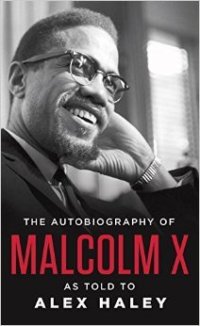
92057Book: “The Autobiography of Malcolm X” by Malcolm X, Alex Haley

Publishing Info: Ballantine Books, 1965

Both a celebrated and controversial figure, Malcolm X was an important force and speaker within the Civil Rights Movement. This book is his story, as told to Alex Haley (the author of “Roots”), and it covers his early time as a hustler and goes all the way through his conversion to Islam, his position during the Civil Rights movement, and his stances on how to gain freedom within a racist society. Haley eventually added a section to the book after X’s assassination. Malcolm X is still considered a polarizing figure to this day, but to have his story in his own words is invaluable, and continues to serve as inspiration and education about the fight for Civil Rights.

824499Book: “A Wreath For Emmett Till” by Marilyn Nelson, Phillip Lardy (Ill.)
Publishing Info: HMH Books for Young Readers, January 2005

Though Emmett Till’s murder happened in 1955, it is considered to be one of the moments in history that helped set off the Civil Rights Movement. Emmett Till was a fourteen year old boy who was murdered for whistling at a white woman, and his death and the aftermath his told in poem form in this award winning picture book. The poetry is beautiful, told in a crown of sonnets, and it both captures the horrific nature of the crime, the injustice of the court ruling, and the despair and sadness of a child who was murdered with no consequence.

How are you guys celebrating and remembering Martin Luther King Jr.’s Birthday? Let us know in the comments!

Brief History and Introduction of the Great Animorphs Re-Read

57d47ba9fda568c6c4e116765cf305a8

2016 was the year I entered my 30th year of life. And with this milestone comes the right to now wax nostalgic about my own childhood. (Don’t ask who made up the rules! *coughmecough*). For me, book nostalgia cannot be discussed with out talking about K. A. Applegate’s series “The Animorphs.” It is also fitting that 2016 was the 20th anniversary of the first book’s publication in 1996. So with these justifications backing me up, I introduce the Great Animorphs Re-Read where, every other Friday, I will review each book in this long, long series. Be ready, people.

A little background about this series: “The Animorphs” was a middle grade science fiction series that was released monthly between the years 1996 and 2001. You do the math on that one! Needless to say, there are a lot of these books, including several branch-off books that serve as back stories and accompaniments to the regular run of books. To keep with this schedule, Applegate co-wrote the series with her husband Michael Grant (a young adult author in his own right), and, later in the series’ run, many of the books were ghost written (to their detriment, as I remember).

Each book is told from first person perspective from one of the Animorphs, 6 teens whose age we never really discover, though I’m guessing they start off at around 13. The series is cleverly set up in  a way that allows kid readers to imagine the story taking place in their own hometown, USA, with no direct references to town names or even the full names of the kids themselves. The five kids, and later their teen alien buddy, are given the power to change into any animal for 2 hours. With this ability, they are tasked with saving the world from a group of evil, alien parasites called Yeerks who take over the body of other lifeforms in their ongoing campaign to, essentially, conquer the universe. And Earth is next! Dun dun dun.

The series was released in what I would call the “pre Harry Potter” era of children’s publishing when it was thought that young readers would not be willing to read longer novels. Like its contemporaries, (“Goosebumps,” “Baby Sitters Club,” “Fear Street,” etc.), each book was only given around 150 pages with which to work. Unlike many of these series, however, “The Animorphs” did contain many serialized elements that encouraged, if not required, readers to read the books in order.

“The Animorphs” reached a peak in popularity in 1998 when it was picked up by Nickelodeon for a short-lived television series. It was pretty awful, if my memory serves. We will see how engrossed I become in this re-read to determine whether I want to subject myself to experiencing those episodes again!

As each book is so short, I won’t be doing a traditional review for each book. Instead, I’ll include a brief plot synopsis and then break up my review into sections based on some of the re-occurring themes of the books or just whatever amuses me! (Think section titles like “Couples Watch” where I will focus on all the tween romance found in these books! Or “Body Horror” where I come to realize how truly disgusting some of these descriptions are that I didn’t remember at all!)

These books were my all-time favorite series up until the release of Harry Potter, and I loyally saved up my allowance every month to purchase the $5 copy at my local bookstore. So, yes, I do still own all of them, though they now live in a box in storage rather than taking up so, so many shelves on my book shelf at home. But now it seems it is time to pull them out, dust them off, and see how these books hold up in the harsh light of 2017 and supposed adulthood! Look for my first post where I review #1 “The Invasion” next Friday, and then the remaining books on alternating Fridays going forward!


Kate’s Review: “Moonshot (Vol.1): The Indigenous Comics Collection”

25823323Book: “Moonshot (Vol.1): The Indigenous Comics Collection” by Hope Nicholson (Editor)
Publishing Info: Alternate History Comics, 2015

Where Did I Get This Book: The library!

Book Description: Produced by AH Comics Inc. (Titan: An Alternate History, Delta, Hobson’s Gate, Jewish Comix Anthology) and edited by Hope Nicholson (Brok Windsor, Lost Heroes, Nelvana of the Northern Lights), MOONSHOT brings together dozens of creators from across North America to contribute comic book stories showcasing the rich heritage and identity of indigenous storytelling.

From traditional stories to exciting new visions of the future, this collection presents some of the finest comic book and graphic novel work in North America. The traditional stories presented in the book are with the permission from the elders in their respective communities, making this a truly genuine, never-before-seen publication. MOONSHOT is an incredible collection that is sure to amaze, intrigue and entertain!

Review: I had another impulsive moment at work recently, where I went to our New Books Wall and took a look at what there was to offer. Since these books don’t go to the usual request list, sometimes you can get really lucky and find something that’s in demand or brand new. I was immediately taken in by the gorgeous cover on a new graphic novel collection. I mean, DAMN, look at the cover for “Moonshot (Vol.1)”! Is it not staggering and beautiful!?

giphy
Absolutely blown away, no lie (source)

I gave it some time on the wall, because I had a big stack at home and wanted to give the patrons a chance to snatch it up. But after waiting awhile I just had to have it. And I am so glad that I was entranced by the cover, because “Moonshot” as a whole was an entrancing collection!

The first thing to know about “Moonshot” is that it is a collection of one shot stories that are written by people from Indigenous Nations across North America, as are the artists. The second thing to know is that it is a collection filled with stunning variety because of all of these differing perspectives. I wasn’t sure of what to expect from this collection, but whatever my expectations may have been they were blown out of the water by what I found. While there are a number of stories in this book, a few of them really stood out to me, so I will focus my attention on them. That isn’t to say that the others aren’t as good, however. These are the ones that left the biggest impression because of story or artwork.

“The Qallupiluk: Forgiven” by Sean and Rachel Qitsualik-Tinsley, and menton3 (Ill.).

This story is from the Arctic regions, and concerns themes of death and forgiveness. This was also the one story in the collection that had minimal artwork, as it was mostly text with a few large pieces that stood out for the most important parts of the story. I liked a couple of things about this story. The first was that it was creepy as all get out, as the Qallupiluk is a creature that hides beneath the ice and takes unsuspecting victims under the water and kill them. This story is about a Qallupiluk that takes on the form of one of it’s victims in hopes of stealing away a child, until a dog calls it out. I liked the personal journey that the Qallupiluk took, as odd as that sounds, and has to confront the concept of forgiveness. The art, as I said, was scattered, but the images that were there were absolutely breathtaking and visceral. As someone who loves creepy imagery, this one was a true treat.

“Siku” by Tony Romito, and Jeremy D. Mohler (Ill.)

Another story from the Arctic region, and another one that involves malevolent forces and scary imagery. This one is about a hunter who witnesses a conflict between two otherworldly beings, one of which is a demon. Boy do I love the demon stories. This book definitely was more set up like a comic, with panels, bubbles, the works. It felt like an old school horror comic, and like something that I would pick up at the comic book shop when looking for something twisted. And the end, WAHH, so unsettling. The art didn’t stand out as much in this one, but that didn’t matter because the story really kept me interested. I don’t want to spoil anything, so I won’t go into much detail, but it kind of cut to the quick in that it definitely touched on one of my bigger freak out factors in horror.

“Coyote and the Pebbles” by Dayton Edmonds, and Micah Farritor (Ill.)

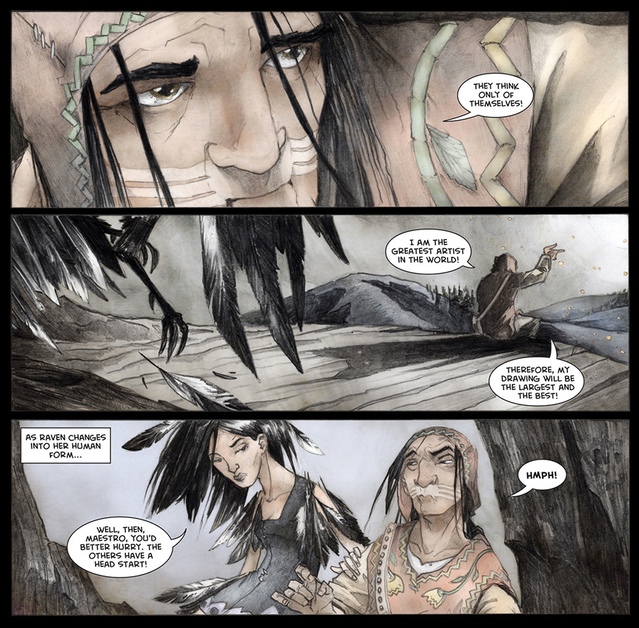
I’ve grown up hearing many iterations of the Coyote myth, as Coyote is a very prominent character in many Indigenous narratives and mythologies. This one sounded familiar, but Edwards really made it his own. I’ve always liked Coyote, be he a troublemaker or sympathetic, and in this story I really liked how he was portrayed as somewhere in the middle (but being me, I still felt for him). It concerns the nocturnal animals of the world hoping to see more at night when the sun is down, and thinking that they should draw portraits of themselves to light the way. And Coyote thinks that he is the best artist of them all. This story is a straight up ‘how this came to be’ myth, but I really liked it. This was also my favorite art style in the collection, with animals shifting between animal form and human form, but even in human form still evoking their animal identity. Farritor has a real skill for pulling animal characteristics from his drawings, be they animals or not.

e5a2865273415b875ddf4ff9d3c53e4a_original
Coyote and Raven discuss his artistic prowess (source).

This story was lovely and melancholy, and I really, really enjoyed it.

“Moonshot (Vol.1)” is a collection that was so fun, and breathtaking in a lot of ways, and I seriously cannot wait for Volume 2 to come out (YES, there is going to be a Volume 2, isn’t that great?!). I think that it’s also a very important work, especially since Indigenous representation is one of the lowest in Children’s and YA Literature. I cannot recommend this book enough to comics enthusiasts, and I think that everyone should consider picking it up. If the cover alone doesn’t get you, the stories inside certainly will.

Rating 8: With gorgeous and varied artwork and sweeping stories, “Moonshot (Vol.1)” is an important collection with talented writers and artists at the helm.

Reader’s Advisory:

“Moonshot (Vol.1)” can be found on the following Goodreads lists: “Graphic Novels & Comics by the Aboriginal, Indigenous, and Native People’s of the World”,  and “Canadian Graphic Novels & Comic Books”.

Find “Moonshot (Vol.1)” at your library using WorldCat!

Serena’s Review: “Scarlet”

11983940Book: “Scarlet” by A. C. Caughen

Publishing Info: Walker Childrens, February 2012

Where Did I Get this Book: bought it from the library’s weeding cart!

Book Description: Will Scarlet is good at two things: stealing from the rich and keeping secrets – skills that are in high demand in Robin Hood’s band of thieves, who protect the people of Nottingham from the evil sheriff. Scarlet’s biggest secret of all is one only Robin and his men know…that she is posing as a thief; that the slip of a boy who is fast with sharp knives is really a girl.

The terrible events in her past that led Scarlet to hide her real identity are in danger of being exposed when the thief taker Lord Gisbourne arrives in town to rid Nottingham of the Hood and his men once and for all. As Gisbourne closes in a put innocent lives at risk, Scarlet must decide how much the people of Nottingham mean to her, especially John Little, a flirtatious fellow outlaw, and Robin, whose quick smiles have the rare power to unsettle her. There is real honor among these thieves and so much more – making this a fight worth dying for.

Review: I found this one on the weeded cart at my local library and snatched it up right quick! I love Robin Hood re-tellings, and this one has gotten quite a bit of positive attention in the last few years. (I only discovered after finishing it that it is the first in a trilogy. *Sigh* Sometimes, just sometimes, it would be nice to find a nice, simple stand-alone novel in YA fiction!) The book description gives a good summary for the book and didn’t lead me astray, both with the positive aspects of the book (a female Will Scarlet!) and the negative aspects (a love triangle!).

In the positive arena, Scarlet is a strong protagonist for the story. The book is written from her perspective and the author made an interesting choice to word Scarlet’s narrative using the unique dialect in which Scarlet talks. I can’t speak to how historically accurate it may be, but it did align with what we traditionally think of as a “British commoner” dialect, substituting “were” for “was” and other, similar changes. At first I was put off by this, even quickly skimming further in the book to see if ever changed, but after discovering that it did not and reading on for a few more chapters, I found that I actually appreciated the added layer this writing style gave the story. Readers’ mileage may vary on this point, as it still was a bit jarring to get used to.

Further, towards the back half of the book, I did have a few questions about the authenticity of this choice given Scarlet’s own history. Some of this history was fairly easy to guess and I’m sure many readers will be looking for this outcome from the start, but there were a few added elements to the tale that added some unexpected twists to what was, largely, an expected reveal.

From the get go, I appreciated Scarlet’s spunk and often brass approach to life as an outlaw. She doesn’t let herself be pushed around by the men in her life, and from the very beginning, we are shown that she has the skills to backup her talk. Further, Scarlet discusses the challenges she went through to gain those skills as well, referencing her scarred hands that came from learning to wield her knives. Too often in YA lit readers are simply told that the heroine is a badass, but given very little evidence to back up this claim. Further, any attributes that they do have seem to just appear from nowhere ala “maybe she was born with it!” Not so with Scarlet.

Alas, there were also negatives to this story, both a few that were expected and a few unexpected. Firstly, yes, there is a love triangle between Scalet, John Little, and Rob and it is just as unfortunate as it sounds. As with many love triangles, the “true pairing” is projected from the beginning of the story, there is some event that pushes the heroine to fall into the arms of the second best option during a moment of weakness, “true pairing” dude finds out, much angst ensues, but in the end, in a complete and utter shocker to all, heroine ends up with “true pairing” guy anyways. There was absolutely nothing new in this set up.

The more unexpected negatives had to do with Rob himself. For the first half or so of the book, I really liked Rob, the author’s take on his history, and the relationship he had with his men and Scarlet. Then the love-triangle-angst-moment happened, he discovered Scarlet’s hidden past, and he went crazy saying horrible things and calling her a “whore” at one point. The whole scene and his reaction is so completely blown out of proportion that I had a hard time every getting back on board with him as a character. Love triangle confusion aside, Scarlet’s decision to keep her past a secret was completely her own to make and one that has been keeping her alive for years. She didn’t owe those around her anything more than she felt comfortable giving. His reaction to this choice is deplorable, as is the use of the word “whore.” Later in the book, he attempts to explain his maltreatment of Scarlet in these moments by saying something along the lines of “Don’t you understand? Hurting you was the best way to hurt myself!” Unpacking all the craziness in that statement is not worth my time. But all of this did add up to a very weak reaction on my part to Scarlet and Rob’s inevitable pairing at the end.

I have very mixed feelings about this book. I loved Scarlet herself, and the added twists at the end of the story makes me curious to read more. However, I’m very much not on board with the current direction of her relationship with Rob, and, call me crazy, but not loving the Robin Hood character in a Robin Hood re-telling series seems like a recipe for disappointment as a reader.

Rating 5: A strong leading lady, but a predictable love triangle and rather horrid Robin Hood character.

Reader’s Advisory:

“Scarlet” is included on these Goodreads lists: “Fictional Robin Hood” and “Kingdoms and heroines.”

Find “Scarlet” at your library using Worldcat!