Publishing Info: Katherine Tegan Books, January 2017
Where Did I Get This Book: I own it!
Book Description:Mary B. Addison killed a baby.
Allegedly. She didn’t say much in that first interview with detectives, and the media filled in the only blanks that mattered: A white baby had died while under the care of a church-going black woman and her nine-year-old daughter. The public convicted Mary and the jury made it official. But did she do it? She wouldn’t say.
Mary survived six years in baby jail before being dumped in a group home. The house isn’t really “home”—no place where you fear for your life can be considered a home. Home is Ted, who she meets on assignment at a nursing home.
There wasn’t a point to setting the record straight before, but now she’s got Ted—and their unborn child—to think about. When the state threatens to take her baby, Mary must find the voice to fight her past. And her fate lies in the hands of the one person she distrusts the most: her Momma. No one knows the real Momma. But who really knows the real Mary?
In this gritty and haunting debut, Tiffany D. Jackson explores the grey areas in our understanding of justice, family, and truth, and acknowledges the light and darkness alive in all of us.
Review: Back in January I was in Miami, Florida for a wedding celebration. This also happened to be the same weekend that some crazy and awful shit was going down in this country constitution wise (though this could really mean anything at this point, so I’m specifically referring to the travel ban). During one of the days my husband and I were cooling our heels after family time, I was getting ramped up in an anxiety spiral, so he suggested that we try and find a book store so that I could calm my nerves a bit. We found one in walking distance from our hotel, and I went on a spree. One of the books I picked up was “Allegedly”, as I’d heard some buzz on it and was solidly intrigued by the concept. As bleak and dark as it may be. So I took it on the plane with me and tore threw a lot of it in one sitting.
I liked how unflinchingly honest and real this book was about a great deal of things. Jackson pulls no punches when describing how our criminal justice system treats those who are inside of it, and how it is especially biased against POC offenders. Mary was accused of and convicted of killing a baby, which is, yes, absolutely horrible. But it is made pretty clear from the get go that the attention and rage that is directed at her is based on a deep seated racism in our society. Mary is black, and baby Alyssa was white. Reading about crowds mobbing a NINE YEAR OLD outside a courthouse, demanding the death penalty was gut wrenching, and I was glad that it was put forth multiple times that had the races been reversed between perpetrator and victim, the media wouldn’t have caused such a storm around it. And there on Mary, a child herself, was from then on treated like an adult, an thrown into a legal system that especially punishes people who look like her. I had no doubt that Jackson is taking influence from real life instances, from a nine year old girl being held in solitary to the absolutely abysmal conditions at the group home Mary ends up at.
Not only did I feel that the portrayal of the criminal justice system was accurate, I really liked how Jackson tried to be accurate and fair to portrayals of mental illness in this book. Mary is pretty clearly suffering from some form of PTSD, as her time in prison/solitary confinement as a child has done irreparable damage to her psyche. Instead of going the route of stereotypical symptoms like flashbacks or uncontrollable rage, Mary is skittish, quick to anxiety attacks, and has a heightened sense of flight instead of fight. It’s a side of PTSD that not many people may know about, and I really appreciated that Jackson took such care in her portrayal of it. So, too, is Mary’s Momma portrayed in a pretty realistic way, as a narcissist who may be suffering from bi-polar disorder. We only get to see Momma through Mary’s eyes, but the hints and clues are there that there is definitely something off about her.
Mary herself is a wonderfully created and portrayed narrator (side note: I gotta shout out to the sly aside that one of Mary’s nicknames was Mary Bell… who was also a notorious child aged murderer in England). This book is in the first person, and since Mary has so clearly been stunted from her time in prison there are lots of bits of information that we don’t quite get. The mystery slowly starts to unfold, but you always kind of know that there are things that you are never really going to know about Mary, or her Momma, or the things that happened between them before, after, and even on the night that Alyssa died. You only get to see the various clues to this and the things going on with Ted and at the group home through this lens of a very unreliable narrator. While a lot of the time I think that sometimes this makes some things kind of obvious when it comes to twists, that by hiding certain things you make it obvious that these things are there, Jackson actually surprised me when it really counted. True, I was able to figure out a couple of things, but I feel like it was all one big magic trick that distracted me from the actual solution, so when the actual answers came I was totally knocked off my seat. To the point where I actually said “WAIT….. WHAT?!”
“Allegedly” is a fabulous book that I cannot recommend enough, both for the societal themes and for the well crafted mystery. Fans of YA should definitely read it, but I think that this is a GREAT example of how YA shouldn’t be dismissed. Go and get your hands on it ASAP.
Rating 9: A tense and VERY upsetting book about the modern justice system, mental illness, and attempted redemption. Though it’s definitely a hard read, “Allegedly” is an important one.
But the fun doesn’t stop there! You could have your own copy of this book, as I am hosting a give-away for a hardcover copy! You know you want it. The giveaway will run until March 2nd, 2017. Please see the Terms and Conditions for more details.
Book: “The Prom Queen” (Fear Street #15) by R.L. Stine
Publishing Info: Simon Pulse, May 1992
Where Did I Get This Book: An Ebook from the Library!
Book Description:Dance of death…
A spring night…soft moonlight…five beautiful Prom Queen candidates…dancing couples at the Shadyside High prom—these should be the ingredients for romance.
But stir in one brutal murder—then another, and another—and the recipe quickly turns to horror.
Lizzie McVay realizes that someone is murdering the five Prom Queen candidates one by one—and that she may be next on the list! Can she stop the murderer before the dance is over—for good?
Had I Read This Before: No
The Plot: Like I said last time during my review of “The New Girl”, I’m jumping forward just because “The Prom Queen” was available right away and I was itching to read something else from the “Fear Street” catalog. So keep in mind that this one is a bit more seasoned, as Stine kind of got into his groove more on how he was going to tackle this series.
Lizzy, Rachel, and Dawn are in the gym locker room right before the school assembly to announce the Prom Queen nominees. They are talking about a girl named Stacy whose body was found in Fear Street Woods. Lizzy, our first person protagonist, gives us insight into her friends personalities as they all gossip about the dead girl (Rachel is poor and lives on Fear Street, so she’s pretty shaken; Dawn couldn’t care less about the dead girl and wishes more attention was on her). They also talk about how Stacy’s death is similar to a girl named Tina who was killed out of town not too long ago, but no matter because it’s Prom Queen announcement time! At the assembly Lizzy, Rachel, and Dawn are all called as nominees, and rounding out the group are Simone, a vain drama nerd, and Elana, a smart and incredibly wealthy girl. They all go to pizza to celebrate, but Simone leaves pretty quickly when she sees her boyfriend Justin flirting with another girl. After she’s gone to give the lout what for, Dawn confesses that she’s going on a date with Justin behind Simone’s back. Oh that Dawn! Of course, then Rachel, who also has a boyfriend (Gideon) confesses that she too went out with Justin. So much for the bonds of sisterhood.
That night at play rehearsal, Simone doesn’t show up. Lizzy goes looking, but cannot find her. So Lizzy goes to Simone’s house, and instead of finding Simone, she finds a trashed bedroom and a puddle of blood!!! And sees a man in a baseball jacket running into the night!
The cops question Lizzy and her friends the next day, but everyone had an alibi, so they are all free to go. Lizzy then runs afoul the neighborhood Creepazoid, a boy named Lucas who legitimately sounds like every stereotypical school shooter post-Columbine, in dress and manner. He used to date Simone (she used him to get to Justin, as they are both on the baseball team), but now he seems to have his wormy little sights on Lizzy. Lizzy declines and leaves him be.
Then time passes and no one is really thinking about Simone anymore. Besides Lizzy. But not enough to stop from going Prom shopping with Dawn and Rachel, especially since Lucas asked her to the Prom. She said no, because she DOES have a boyfriend, thank you very much, but even if she didn’t, Lucas is a creep. Kevin, her boyfriend, is an army brat and has moved away to Alabama. Lizzy holds out hope that he’ll be able to come back for Prom. So while they are at the mall, they see that Justin is on a date with yet another girl. He’s sure moving on from Simone fast! While at the movie Dawn is attacked by a strange man, getting punched and left on the floor. Dawn, ever the trooper, brushes it off, though now is a bit more concerned now that SHE could be in danger.
That night Lizzy gets a frantic call from Rachel, and Lizzy, thinking she’s in danger, speeds over to Rachel’s house on Fear Street. Turns out Rachel is upset because Gideon dumped her for Elana. Ouch. Lizzy comforts her as best she can, then returns home. There is good news at home, as a man thought to be the murderer has been caught!… Except a few moments later, a cop shows up on the doorstep to inform them that Rachel has been killed.
So a week later everyone is on edge, sort of, and Dawn is convinced that someone is trying to kill all the Prom Queen candidates. Lizzy wonders if maybe it’s Gideon who is murdering the Prom Queens, hoping to seduce Elana and then assure that she gets the $3000 scholarship for winning. That theory is shot when Elana not only says she isn’t going with Gideon, but also when Elana ends up dead from a fall. And in her hand is a maroon scrap of cloth, much like the ones the baseball team wears. Lucas? NOPE, Lizzy’s new theory is that it’s been JUSTIN THIS WHOLE TIME!
Well, Justin shows up at Lizzy’s house pretty late that night, but she manages to get him out the door when her father comes downstairs and finds them in the kitchen. She isn’t even safe as school, however, as Justin corners her again… But holy red herring, Batman, turns out the whole time he was just wanting to ask her to the Prom! Not without some shots and a clean bill of health, buddy. Lizzy says thanks but nah, and goes about her business….. until Dawn is attacked and stabbed by a guy in a baseball jacket.
EXCEPT IT’S NOT A GUY. IT’S SIMONE!!!!!! She’s killing her friends because Justin kept asking them out on dates!!!!!!
After confessing, Simone tries to kill Lizzy, but LIzzy manages to pull a rope and drop a sandbag on her ass. Dawn, not dead, helps subdue her, and with the help of a conveniently placed janitor they get an ambulance to come take a look at Dawn and MAYBE help Simone, who’s been beaten up and possibly fatally stabbed? It’s unclear.
The book ends with Lizzy and Kevin at the Prom, Dawn surrounded by adoring boys, and a memorial scholarship set up for Elana and Rachel, may they rest in peace. Yay. Happy times, Stine.
Body Count: Stacy, Tina, Rachel, and Elana for sure. We don’t really know if Simone survived or not. So 4, maybe 5. That’s about average for “Fear Street”.
Romance Rating: 2. Kevin is MIA until the last chapter, and everyone else’s significant others are cheating on each other within the friend circle. Plus Lucas is sexually harassing Lizzy in every single interaction.
Bonkers Rating: 6. Honestly, it could have been crazier. Sure, Simone being the culprit was a little nuts, but kind of obvious.
Fear Street Relevance: Very little of the actual action takes place on Fear Street in this book. Rachel lives there, a body was discovered off page in the woods, and Prom happens at a refurbished mansion house in said woods. But it’s rather peripheral. So 5.
Silliest End of Chapter Cliffhanger:
“That bump. That horrifying bump. I knew that I had just run over someone.”
…. And then it turns out to be a raccoon. Puh-lease.
That’s So Dated! Moments: OH MAN, there were a few in this one because it’s one of the original printings. When Dawn is being showboat-y while trying on Prom dresses, Lizzy says “Okay, Madonna.” The dress she’s wearing is described as black spaghetti straps with a plunging neckline, pretty standard early 90s fare. But the best was when they were in line for the movie they were going to see, and the girl in front of them says
“‘I mean just think,’ Suki gushed. ‘A new Christian Slater movie. Wow.'”
“‘I was excited when we were first nominated. Now it looks like we’ve been nominated to- to DIE!'”
That’s courtesy of Dawn. The other one, however, is a bit more subtle.
“They buried her in the new section of the Fear Street Cemetery.”
Do you want to know why they have to have a new section at Fear Street Cemetery? BECAUSE EVERYONE IN THIS TOWN IS GETTING MURDERED.
“The Prom Queen” is a good example of what the “Fear Street” series kind of turned into as it kept going: more about murder, sex, and paranoia. And not necessarily any direct ties to the street known as Fear itself. Not as off the rails as “The New Girl” in it’s revelations, but still pretty out there.
Next up is “The Surprise Party”, Fear Street #2. I’m pretty certain this was one that I read as a kid, so I’m sure that the perspective will no doubt be RIVETING.
We are part of a group of librarian friends who have had an ongoing bookclub running for the several years. Each “season” (we’re nerds) we pick a theme and each of us chooses a book within that theme for us all to read. Our current theme is “Book Challenge!” theme. This book comes from a “Pick a book that has been translated from a different language” challenge.
For this blog, we will post a joint review of each book we read for bookclub. We’ll also post the next book coming up in bookclub. So feel free to read along with us or use our book selections and questions in your own bookclub!
Book: “The Neverending Story” by Michael Ende
Publishing Info: Thienemann Verlag, 1979
Where Did We Get This Book: Kate owns it,
Book Description:This epic work of the imagination has captured the hearts of millions of readers worldwide since it was first published more than a decade ago. Its special story within a story is an irresistible invitation for readers to become part of the book itself. And now this modern classic and bibliophile’s dream is available in hardcover again.
The story begins with a lonely boy named Bastian and the strange book that draws him into the beautiful but doomed world of Fantastica. Only a human can save this enchanted place–by giving its ruler, the Childlike Empress, a new name. But the journey to her tower leads through lands of dragons, giants, monsters, and magic–and once Bastian begins his quest, he may never return. As he is drawn deeper into Fantastica, he must find the courage to face unspeakable foes and the mysteries of his own heart.
Readers, too, can travel to the wondrous, unforgettable world of Fantastica if they will just turn the page….
Kate’s Thoughts
We are finally back to our book club, which means that we are finally back to our book club posts! This time around, the theme was pretty fun; we each came up with two themes that we put into a hat, and then whichever suggestions you drew, you had to pick what theme you wanted to do. One of the suggestions I got was “A book translated from another language.” It was in that moment that I knew exactly what I wanted to do: “The Neverending Story.” I had grown up watching the movie (and its first sequel, “Neverending Story 2”), and I’m pretty sure that I wore out the video cassette of it that we had. What can I say, eight year old Kate had a pretty serious thing for the movie’s version of Atreyu.
But it took me awhile to actually read the book. The first time was when I was in middle school. I’ve re-read it a few times since then, but it had been awhile. And I knew that going into it I would probably expose myself to criticism and having to rethink one of my favorite books from childhood. But that was actually good for me, in the end.
There are a number of themes that can be found in this book. Sure, there is the usual ‘hero’s cycle’ theme that both Atreyu the warrior and Bastian Balthazar Bux go through. But along with that we get the themes of childhood, broken innocence, grief, and imagination. The book is split into two distinct parts: the first is Bastian acting as a (not actually) passive part of a fantasy story at hand, where the world of Fantastica is falling apart because their leader, the Childlike Empress, is dying. But it’s also because The Nothing is tearing apart the very fabric of its world. But then the second half is about how Bastian, seen as the savior of Fantastica, is taken to a world that is not his own, and is corrupted by the power he is given to save it. While they could easily read as two distinct books, as far as Bastian’s journey goes it comes full circle. I had forgotten that Bastian was such a little punk for the second half of the book, as most of my fond memories come from Atreyu’s journey. But I think that it was a very interesting choice for Ende to make the hero we’re meant to relate to and root for from the get go the one that we’re rooting against by the end. But along with that theme is the ever permeating spectre of grief that haunts the story. Fantastica is falling apart and losing itself, many of its inhabitants dying (including Atreyu’s faithful horse Artax, and don’t even think of telling me that this isn’t one of the saddest moments in movie history, jerks!). But along with that is the fact that Bastian’s mother has recently passed away, leaving Bastian feeling empty and his father lost in his own sadness, and unable to care for his child. Of course Bastian wants to run away from his life; a land of luck dragons and magic and Childlike Empresses has got to be better than the reality he’s living. Even if that land is hard and imperfect as we soon realize it is. Bastian learns that the strongest thing that a person can have is not power, but love, and that his love is needed in his own world, no matter how hard that world is. And Ende created a wonderful cast of characters to help the reader explore these themes, from the brave and loyal Atreyu to the kind and optimistic Falkor the Luck Dragon. God I love Falkor.
There are, of course, some things that left me feeling a bit cringy as I read it. As much as I really, really do love Atreyu, and think that he’s a great character and a wonderful hero for the first half of the book, it complete smacks of European cluelessness that he is clearly based on American Indian Indigenous cultures and merely in a superficial way. While he is himself a complex and well rounded character, the only things we really know about his people and culture is that 1) they hunt buffalo, and 2) they have mystical rights of passage that involve hunting these buffalo, as well as spiritual dreams/connections to said buffalo. It reeked of the ‘Indian as mystic’ trope that is far too prevalent in popular culture and literature. It’s also pretty disconcerting that there are very few women in this book, and the ones that are there are not terribly fleshed out. The Childlike Empress is wise and mysterious, but we know little about her outside of her purity and goodness. The various females Atreyu meets on his journey are just there to give him some info or advice. And then there’s Xayide. She is literally an evil sorceress who is just there to fuck things up for Bastian and turn him against his friends. Not exactly empowering.
All that said, however, I still really enjoyed going back and reading “The Neverending Story.” I think that as an old school fantasy novel it still holds up pretty well, the characters still very beloved and the story still entertaining and wondrous.
Serena’s Thoughts
I was excited when Kate picked this book as her bookclub choice. I feel like my experience of this story is the same as Kate’s which is the same as many girls our age: it all began with a strong crush on Atreyu from the movie. I mean, c’mon, let’s admit that we all loved him!
However, I never made it past the movie version of the story (though I, too, wore out my VHS copy of the film). I did know that the movie only focused on the first half of the book and while I did watch the sequel film once (I remember that they re-cast Atreyu and I’m pretty sure kid!Serena saw that as an unforgivable crime and never looked back), I have no memory of the story. So I was especially curious to get the second half of the book.
But let’s start with the first half! Right off that bat I was horrified…by the fact that the magical land is called “Fantastica” and I’ve known it as “Fantasia” all along! What is this change?? Cuz now I’m all mixed up about it since I’ve known it as “Fantasia” my whole life only now to discover that this was a change from the original! This was a major internal conflict for me throughout the book. But on a more serious note, I very much enjoyed this first half and how true to the book the movie really did stay in this part. There were changes here and there, some that I preferred in the movie (I think the tension was greater in the movie with the First Gate sphynxs than the way they were described to work in the book) and some that I preferred in the book (man, somehow Artax’s death CAN be even more traumatic!)
I very much the extra insight (though its still very minimal) with regards to the relationship between the Childlike Empress and the land of Fantasia itself. While still confusing and never fully explained, I felt like the connection between her, The Nothing, and the land of Fantasia (I just now realized that I’ve been typing Fantasia instead of Fantastica this whole time! See?! It’s hard!) is a better lain out in the book. I also really liked the character of Atreyu. He was heroic in the movie, but here we see even more how impossible his task was when it was given to him and how brave he would have to be to move forward with so little hope of success.
Bastian on the other hand…Look, I never really liked him in the movie and I didn’t really like him here. Though, I will say that I liked him better in the first half of the book than I did in the movie that covered this portion. Here he’s a bit bumbling, but he picks up on what is going on in a more willing way. Maybe it was just the kid actor in the movie, but I never really liked Bastian there. Kid-me always got very annoyed by the way he reacted to the realization that he was in the book. He got angry instead of inspired, and as a kid who always wanted to live in a book, too, I was never impressed by him.
But then we get to the second half and now I feel completely justified in my initial dislike of him as a kid. Maybe that actor was just channeling this portion of the character all along and was simply done a diservice by only portraying the first half’s version who is supposed to be the more sympathetic of the two. I had a harder time with this portion and I can see why the movie stuck to the first half of the book. It’s just always going to be a bit of a hard sell when you main character turns into a real brat. As Kate mentioned, there are some lovely themes of grief and love throughout this all, but I’m still a bit biased towards the first half. Though this is honestly probably due to the movie’s lasting influence on me. Oh well!
Kate already covered a few of the problematic issues of the book, so I won’t go into them myself. They were distracting, but I wouldn’t say anything was overly offensive to a point that it affected my reading of the story. Just a bit unfortunate, ultimately.
All told, I very much enjoyed this book! While I enjoyed the first half more than the second, it was an interesting read altogether. I imagine especially for the time the “metaness” of the story itself was particularly interesting, and, even now when this approach has been explored in other books (“The Princess Bride” comes to mind a bit), it still has some fresh takes on a story-within-a-story.
Kate’s Rating 9: Though it is certainly not perfect and has some flaws that I had a hard time overlooking, “The Neverending Story” is still a fun and wondrous fantasy book with lots of deep and meaningful themes and lovely characters.
Serena’s Rating 8: I second what Kate said! One point lower for me as I did find myself struggling a bit at times with my increasing dislike of Bastian, but still a thoroughly enjoyable read!
Book Club Questions:
1) What do you think about the world of Fantastica and how it’s influenced by our world? Is the thought of readers having influence on stories a theme that you enjoyed?
2)Ende clearly took some influence from American Indian cultures/stereotypes when he created the character of Atreyu. How do you feel about him as a character throughout this story? What do you think of his portrayal?
3)Bastian starts out the story as a passive character who is merely reading a book, but finds out that he has the ability to influence the world of Fantastica. What did you think of his journey from the beginning of the story to the end?
4)In this book there is the constant spectre of devastation, grief, and loss, be it the destruction of Fantastica by the Nothing to the loss of Bastian’s mother. What do you think Ende was trying to say about these feelings of despair and grief within human nature?
5)There are many instances within this book where Ende would hint at other stories and adventures of certain characters, but would say ‘but that’s another story and shall be told another time’. Which of these stories would you most want to learn about?
Publishing Info: Algonquin Young Readers, September 2014
Where Did I Get this Book: the library!
Book Description:Newly arrived in New Fiddleham, New England, 1892, and in need of a job, Abigail Rook meets R. F. Jackaby, an investigator of the unexplained with a keen eye for the extraordinary–including the ability to see supernatural beings. Abigail has a gift for noticing ordinary but important details, which makes her perfect for the position of Jackaby’s assistant. On her first day, Abigail finds herself in the midst of a thrilling case: A serial killer is on the loose. The police are convinced it’s an ordinary villain, but Jackaby is certain it’s a nonhuman creature, whose existence the police–with the exception of a handsome young detective named Charlie Cane–deny.
Review: This was actually a book club book that I read a few years ago, but I wanted to review it here on the blog since I’m currently reading the sequel and I’m a librarian, so I’m naturally a completionist! Gotta have em all!
When this book showed up on our bookclub list, I was very excited. It was marketed as “Doctor Who” meets Sherlock Holmes, and while I’m not a complete nut for “Doctor Who” all told, I do love its wacky take on fantasy and science fiction. So combining that with “Sherlock Holmes” (my love of which has been well documented), seemed like it should be something that would be right up my alley! Ultimately, while I did like it, it was a bit more on the “meh” end of things than I would have liked.
Abigail Rook, fresh off the boat with dashed dreams of being an archaeologist like her father in hand, falls into a strange apprenticeship with an even stranger man: Jackaby, a paranormal investigator. Story aside (I’ll get to that a bit later on), this book lives and dies on these two main characters and right here is where we get into the general feeling of indifference.
Abigail herself is a likable character. Her personality, drive, and ability to make her way, even as ineptly as she does here, did feel a bit out of character for the time period. Yes, we’re on the cusp of the turn of the century, but there would still be some harsh realities facing her as a young woman alone in a new country. There’s nothing egregious going on as far as anachronisms or anything, but Abigail did feel a bit out of place for the time. That aside, I did enjoy her as a protagonist. She serves as our eyes into this new world, and her confusion is our confusion. As the story progresses, it becomes clear what role she will play as the Watson to Jackaby’s Holmes. Jackaby is nothing if not dense when it comes to social clues, and here is where Abigail fits in this puzzle. It’s not a super creative take, but it works for the story and she plays her part well.
I especially enjoyed the way Ritter approaches the small amount of romance in this story. Even that sentence is misleading as any romance that is seen here is strictly in the foreshadowing category. But what is most relieving is the fact that it is clear that this romantic angle will decidedly NOT focus on Abigail/Jackaby. I had definite concerns that this was going to be the romantic couple of the series, or *shudders* one corner of a love triangle. But, thankfully, we are introduced to a new character outside of the primary duo who seems to be set up to play this role going forward.
Jackaby himself was…ok? Honestly, I think some of my problems with the book had to do with him as a character. He was a bit too “preciously wacky,” if that makes sense? He’s obviously a creation based on both Holmes and the Doctor, but the portrayal definitely falls more closely to the latter. It’s simply not unique enough. Jackaby could practically BE the Doctor, and it starts to feel derivative rather quickly.
To end on a good note, the world-building and the paranormal elements that were included were interesting and more unique. The villain character and several of the other beings were not the ones we’re used to seeing in this type of story, and I enjoyed diving into some of the history of these creatures. The supporting cast is also interesting, including the previously mentioned love interest who turns out to be more than he seems, as well as Jackaby’s current roommates, a ghost woman with unfinished business, and Jackaby’s previous apprentice who now lives an unfortunate, if still scholarly, life as a duck.
There were definitely strengths of the book, but it’s always going to be a struggle if the title character doesn’t live up to expectations. That said, if you enjoy “Doctor Who” and Sherlock Holmes this still might be a fun book to check out. Stay tuned for my upcoming review of the sequel “Beastly Bones.”
Rating 6: If I could, I’d give it a solid 6.5. Better than average, but rather underwhelming.
Book: “The FitzOsbornes in Exile” by Michelle Cooper
Publishing Info: Random House Australia, April 2010
Where Did I Get this Book: audiobook from the library!
Book Description:Forced to leave their island kingdom, Sophie FitzOsborne and her eccentric family take shelter in England. Sophie’s dreams of making her debut in shimmering ballgowns are finally coming true, but how can she enjoy her new life when they have all lost so much?
Aunt Charlotte is ruthless in her quest to see Sophie and Veronica married off by the end of the Season, Toby is as charming and lazy as ever, Henry is driving her governess to the brink of madness, and the battle of wills between Simon and Veronica continues. Can Sophie keep her family together, when everything seems to be falling apart?
An enticing glimpse into high society, the cut and thrust of politics as nations scramble to avert world war, and the hidden depths of a family in exile, struggling to find their place in the world.
Review: Kate and I read the first book in this young adult trilogy, “A Brief History of Montemaray,” for bookclub and as I was more enamored by it than she was, I decided to continue with the trilogy. Especially since the ending of the last book left a large, lingering question mark over the future of the FitzOsborne family and their small, island kingdom.
Driven away from their remote home, this book refocuses the story on more typical, historical fare: debutantes, dinner parties, and their poor Aunt Charlotte’s ever-long struggle to marry off her young charges. But, sprinkled within these more frivolous aspects, was a running commentary on the dramatic, and often tragic, historical happenings of the time.
While the first book took place over a few short months, was limited by its location, and was told from the perspective of a much younger character, this story expands itself in every way. The book takes place over the course of 2-3 years, leaving us with an 18-year-old Sophie by the end of it. Throughout the time, we see her mature as a narrator, and, even more interestingly, watch the slow shifts that went on throughout the world during this tumultuous time period.
Without going into a political rant, I was particularly fascinated by the slow, steady evolution of these events. As a reader, we know how these things turn out and have the perspective of time to influence our opinions. Through this book, we see how small concessions and small moments of willfully turning a blind eye to the plight of those we (as a country or as a smaller group) deem disconnected from us can lead to very negative events. There was also a particularly fascinating bit where Sophie and Simon discuss the appeal of these types of populists leaders, how their message can be so easily tuned to the wishes and prejudices of each specific audience group, and how broad promises and the creations of “others” to blame can have massive appeal when people are desperate.
Beyond the political and historical aspects of the story, I enjoyed watching these characters change and grow throughout the story. The first book gives us such a brief glimpse into their lives, that, while I loved many of them, it was also easy for each to fall into stereotypes (even if I loved some of those stereotypes like bookworm!Veronica). But here, we see how Toby’s struggles with school more broadly reflect his confusion with his place in his family and the world. How Veronica’s political and historical interests stand up against the onslaught of British high society. How Sophie learns to see the strengths in her own, more quiet, personality.
I also loved the introduction of a few new characters. Aunt Charlotte was brilliant. Similar to the Dowager Countess from Downton Abbey, she is a character that is written in a way that while she spouts some rather unfeeling, aristocratic nonsense, she does it in such a comical way that the reader ends up loving her for it.
There is also the introduction of Julia’s brother, Rupert, who seems to be set up as a potential love interest for Sophie. And, as he spends large portions of the book carrying around an injured doormouse in his pocket and feeding the squirrels, he seems quite suitably sweet for our lovely main character.
I very much enjoyed “The FitzOsbornes in Exile.” In fact, I would say that it was even better than the first, benefiting from a more extended timeline, a closer connection to historical happenings, and more mature characters.
Rating 9: An excellent, young adult historical fiction piece. Definitely recommended for fans of the WWII era who are interested in the quieter side and effects of the build up to the war.
Book: “The X-Files Origins: Devil’s Advocate” by Jonathan Maberry
Publishing Info: Imprint, January 2017
Where Did I Get This Book: The library!
Book Description:How did Fox Mulder become a believer? How did Dana Scully become a skeptic? The X-Files Origins has the answers in this young adult origin story.
The X-Files Origins: Devil’s Advocate will explore the teen years of Dana Scully, the beloved character depicted in the cult-favorite TV show The X-Files. Her story is set in the spring of 1979, when serial murder, the occult, and government conspiracy were highlighted in the news.
The book will follow Scully as she experiences life-changing events that set her on the path to becoming an FBI agent.
Review: Who is one of my very favorite TV queens? Who is one of the TV characters that I love for her inspirational strength, her smarts, her snark, and her perseverance? Who is up there in my personal hall of fame of badass ladies on the small screen?
So the very moment that I discovered that both Mulder and Scully of “The X-Files” fame got their own origin stories, I knew that I’d save Scully for second. I wanted to savor her. I wanted to bask in her story and her background. Jonathan Maberry had a huge character to take on, and I really wanted him to do her justice. And it took me a little while, but eventually I decided that Maberry did.
This story, since again we don’t get much background in the description, finds Dana as a fifteen year old adjusting to a new life in Maryland. She’s close with her sister Melissa, and trying to fit in in school, even though she knows she’s more introverted and reserved than her sister and her peers. And she’s also been having dreams, visions of violence and carnage. She’s seeing an ‘angel’ in her dreams, an angel who is killing. As teenagers in the area keep dying in accidents, Scully can’t shake the feeling that they are connected to the dreams that she doesn’t understand. What she doesn’t know is that she may be in a more dangerous situation than she realizes.
So this book takes the “Scully is a psychic’ theory and totally runs with it. There have been hints at her intuitive abilities throughout the series (in “Beyond the Sea” she sees a vision of her father right before his death; “Irresistible” finds Scully kidnapped, and she sees her kidnapper’s face shifting into different iterations of evil), but it was never truly confirmed. But I liked that Maberry decided to take this theory and give it a lot of life in her background. I was kind of wondering how he would make it believable that she could have psychic visions in her youth, and then have such a skeptical foundation in the series when it starts. Without spoiling anything, I can tell you that he pulls it off, and that I really liked how he did it. And seeing Dana react and manage these very scary visions was fascinating to watch. I think that she is still very much within her character, even as a fifteen year old. She feels younger and perhaps less secure in herself, but still feels like Dana Scully, even when in a situation that is so not something you’d think she’d be in. I sort of liked the mystery that she had to solve, because it’s foundation was a good harkening to her faith, her abilities, and her ultimate road to skepticism. I had a feeling I knew what was going on from the get go, so it wasn’t terribly surprising in it’s completion. But it wasn’t about the mystery itself for me. It was about how Dana was going to solve it with her strengths and wits.
I really enjoyed seeing the Scully family as well. In the series you get to know a few of her family members, specifically her sister Melissa and her mother Margaret, though you also get some solid and touching insight into Dana’s relationship with her Dad. You know that she was close to him in a lot of ways, from her reaction to his death in Season 1, to their nicknames for each other (Ahab and Starbuck!), to her seeing him in other visions as the series went on. In “Devil’s Advocate” we see how that close relationship is also a bit strained, and that Captain Scully was a bit more closed off from his family than maybe we realized. There were many moments between Dana and Captain Scully that made me misty eyed, as well as a wonderful scene with them reading from their favorite book “Moby Dick”. Whenever he called her Starbuck, I practically began to cry. I also loved seeing Dana and Melissa close and partners in crime, because their relationship on the show, while loving, was a bit contentious because they were so different. Having Melissa and Dana go to a New Age coffee shop and store for yoga and advice from local New Age practitioners just tickled me completely. Maberry also made an interesting choice of taking one of the Men in Black from the original series (the Red Haired Man), and gave him a role in a side plot. This was kind of a weaker part of this book for me, just because it took away from the main plot. In the Mulder book the surveillance parts involving X and Cigarette Smoking Man felt like a foregone conclusion; Mulder’s life had been intertwined with Cigarette Smoking Man since the beginning. Scully having this surveillance stuff in her life just felt… odd. Yes, later in life that aspect was there. I just had a harder time swallowing it in her youth.
I generally liked the new characters that Maberry created to interact with Scully, be it Corinda the New Age guru (her shop also makes an appearance in the Mulder book “Agent of Chaos”), or Scully’s love interest Ethan. Like in “Agent of Chaos” I was skeptical that a love interest had to happen in this book, since we know that he’s not going to be around ultimately, but Ethan was an okay addition. He was really there to give Scully some support from someone who was more like her, which I appreciated. Her relationship with him was also a good platform to show some of the casual sexism that Dana, as a fifteen year old girl in the late 1970s, could run into, even from someone who really does care about her. Seeing her push back against that was very gratifying, and seeing Ethan try to learn from it was refreshing and a good message to modern teens who may read this. While Ethan wasn’t as strong of an original character as Phoebe was in “Agent of Chaos”, I liked having him there for Dana to bounce more down to Earth ideas off of and help her find her voice. I liked that their partnership was it’s own thing, not just a predecessor to her eventual partnership with Mulder.
“The X-Files Origins: Devil’s Advocate”, showcased my girl Scully. I know that we probably won’t get anymore teen books about Scully and Mulder, just because it would feel a bit absurd to take it too far with their backgrounds, but I really enjoyed how Scully was showcased in this one. It did a good job of speculating how she became the person she was when “The X-Files” started.
Rating 8: While the mystery itself wasn’t as entertaining as it could have been, the character study of Dana Scully as a questioning teenager was incredibly effective, and very well done.
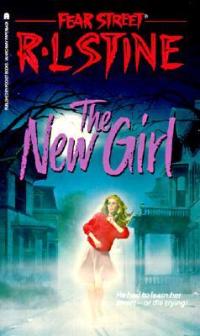
Book: “The New Girl” (Fear Street #1) by R.L. Stine
Publishing Info: Simon Pulse, August 1989
Where Did I Get This Book: Ebook from the library!
Book Description:Welcome to Fear Street.
Don’t listen to the stories they tell you about Fear Street. Wouldn’t you rather explore it yourself…and see if its dark terrors and unexplained mysteries are true? You’re not afraid, are you?
Dying for a Kiss
She’s pale as a ghost, blond, and eerily beautiful—and she seems to need him as much as he wants her. Cory Brooks hungers for Anna Corwin’s kisses, drowns in her light blue eyes. He can’t get her out of his mind. And the trouble has only begun: Shadyside High’s star gymnast is losing sleep, skipping practice, and acting weird. All the guys have noticed, but only Cory’s friend Lisa knows the truth: Anna Corwin is dead and living on Fear Street. Now Cory must explore its menacing darkness to discover the truth. He has already been warned: come to Fear Street and you’re dead!
Had I Read This Before: No
The Plot: Sweet baby Jesus, jumping back into this series right at the beginning and I have learned that it didn’t slowly turn into a batshit bananasfest, it was ALWAYS this way. We first visit Fear Street because of high school gymnast and lovesick puppy Cory, a boy who sees a beautiful new girl in the cafeteria one day and just has to find out who she is. He’s oblivious to the fact that his best friend Lisa is in love with him, and would rather cuddle up next to this blonde who ‘haunts’ him and practically ‘floats’ down the hallway. All Lisa knows is that girl is named Anna Corwin. After asking around and getting a phone operator complicit in his stalking (she gives him Anna’s address even though she isn’t supposed to, because he ‘seems nice enough’ and ‘it’s [her] last night anyway’), Cory calls the number only to be told there is no Anna there.
Not to be deterred in his obsession, Cory asks Anna if the number he has is right, to which she says yes. But when he calls, a woman answers and says that Anna isn’t there, despite the fact he can hear her screeching in the background. So, deciding that this is obviously a messed up situation, he ventures off to Fear Street, the street that Anna lives on. And this is where it starts to get crazy. A man answers the door and tells Cory that Anna isn’t there, because Anna is DEAD!!!!!!
Still undeterred, Cory refuses to believe that she’s dead in spite of the fact that he’s presented with newspaper articles, testimony, and an obituary that Anna Corwin is dead and buried. By all accounts, she’s no more, ceased to be, etc. He even breaks some pretty serious privacy ethics when he looks for her file in school and cannot find one for her. Signs are pointing to ghost. So how come whenever he kisses her (and boy does Anna REALLY like to kiss him, like all the time), she feels alive, warm, and supple? And why is it that she’s always asking him to save her and take her away and be with her FOREVER AND EVER AND EVER? Nothing fishy about that. Everything must be on the up and up.
Well, after a few too many meetings, Cory finds out that Anna’s brother Brad wants to keep him away from her, so much so that she’s taken out of school for a bit. Though Cory continues to pine, when Lisa asks him to the Turnaround Dance, he accepts, only to find out that Anna has returned, saw the whole exchange, and also wants to go with him. By complete coincidence, Lisa later opens her locker to find that someone has thrown a dead and gutted cat inside of it, with a note that says she is up next for the killing. Cory is convinced that it MUST be Brad, Anna’s deranged brother!
Come the night of the dance, Cory goes with Lisa even though he really wishes he was there with Anna, and then Brad shows up and shoves Lisa down some steps, though he claims it’s a mistake. But, mistake or not, dude, that’s uncool. Luckily Lisa gets away with just a swollen ankle. The harassing phone calls up until this point seem like cake now.
Cory eventually confronts Anna about her crazy brother over pizza, and Anna tells him that she and Brad had a sister named Willa, who fell down the basement stairs. It broke the Mom, and Brad as well, and now they moved to Shadyside as a family to start over. Anna says that Brad, sad about Willa and dealing with a recently dead girlfriend named Emily (who died in a plane crash, what the HELL?!), got the names mixed up when he sent the obit to the newspaper. Hence why everyone thinks Anna is dead. It’s not Anna, it’s Willa who’s dead. Because of course. Not strange at all. But then Brad is outside the pizza parlor, staring in at them, Anna runs off.
SO WE ARE BACK AT THE CORWIN HOUSE, and Cory comes to take Anna away with him to keep her safe from Brad. But as he’s confronting Brad, suddenly Anna starts to turn exceedingly violent with a letter opener. She takes a few swings at Brad, and then turns on Cory when he tells her to maybe knock it off. And it is then (after an asinine moment with a window) that we find out that Anna is NOT Anna, she is WILLA. Willa, jealous of Anna, killed her sister, and Brad covered up for her, but never got her the help she needed, thinking he could keep her safe. Good one, Dr. Frasier Crane.
Our story concludes with Willa possibly getting the help she needs, and Cory and Lisa finally coming together as a man and his silver medal. And that, guys, is how the very first “Fear Street” book ends.
Body Count: One, being Anna before the events of the actual story. Well, and a cat. So I guess two. Poor cat. A pretty low number for a Fear Street book, really.
Romance Rating: 5. Anna was far too creepy from the beginning and Cory was so heartless to/oblivious about Lisa until basically the end. But ultimately I was happy that Lisa was happy because she was pretty decent.
Bonkers Rating: A solid 9. I expected this kind of craziness from later books, but apparently it was there from the get go.
Fear Street Relevance: This book introduced Fear Street as a concept and a lot of the important plot points took place on it, so I will give it a 9 in this category as well.
Silliest End of Chapter Cliffhanger:
“The passenger door swung open. He started to scream.”
….. And then we find out it’s just Anna opening the car door. Stine is known for these kinds of things. Sometimes you gotta improvise when every chapter needs to end with suspense!
That’s So Dated! Moments: So the copy I found of this book was actually an updated version, trying to make “Fear Street” hip and relevant to the youth of the early 2000s. But it was done in an incredibly lazy way, such as replacing a Walkman with an iPod and Phil Collins songs with Missy Elliott songs (I did my research), and yet leaving in references to video stores, records, and actual human phone operators. PET PEEVE! Will be looking for the originals from now on.
Best Quote:
“Go get more paper towels,” Lisa said. “Ucccch, I think I’m going to be sick. It’s a good thing I hate cats.”
That’s Lisa after she finds the dead cat in her locker. I swear, they’re all psychos in Shadyside .
So “The New Girl” really gets things going with the Revisit to Fear Street! Next up is “The Prom Queen”, Fear Street #15 (I’m jumping ahead just this once because I had access to that one right away, I’ll be trying to go in order after that).
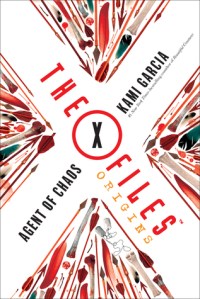
Book: “The X-Files Origins: Agent of Chaos” by Kami Garcia
Publishing Info: Imprint, January 2017
Where Did I Get This Book: The library!
Book Description:How did Fox Mulder become a believer? How did Dana Scully become a skeptic? The X-Files Origins has the answers.
The X-Files Origins: Agent of Chaos explores the teen years of Fox Mulder, the beloved character depicted in the cult-favorite TV show The X-Files. His story is set in the spring of 1979, when serial murder, the occult, and government conspiracy were highlighted in the news.
The book will follow Mulder as he experiences life-changing events that set him on the path to becoming an FBI agent.
Review: When I was growing up, my family had three different Family TV nights as time went on. The first one was “Lois and Clark”. The last one, up until the end of high school, was “Buffy the Vampire Slayer”. And the middle one, the one that I have the fondest memories of, was “The X-Files”. I started watching “The X-Files” with my Dad when I was in fifth grade. I was both terrified and enthralled by it, and I loved both Fox Mulder and Dana Scully as they investigated the weird and unexplained happenings of potential supernatural malarky and/or government conspiracies with aliens. The revival last year was enough to keep me sated for a bit, though I was definitely left wanting more. And since it looked to be awhile before we were going to get more, imagine my delight when I found out that two books about teenaged Mulder and Scully were coming out. I started with the one about Mulder, “Agent of Chaos”, which was written by YA heavyweight Kami Garcia. I started with this one because while I’m probably more like Mulder, I have a deep, deep love for Scully, and want to savor her and save her for last. So off we go into teenage Mulder in 1979. It’s like “That 70s Show”, but far more insidious.
To give a bit more description than the one above: Fox Mulder, a seventeen year old living in Washington D.C., is still feeling the pain of his sister Samantha’s abduction from a few years prior. His family has been shattered, and he is trying to adjust to his new life with his Dad, as his Mom is still back on Martha’s Vineyard. His best friend Phoebe is back on the island, but he’s made a new friend in Gimble, the nerdy son of an unbalanced former Air Force Major. When children in the area start disappearing, Mulder is reminded of Samantha’s abduction, and decides that he and his friends need to try and solve this case. This was so wonderfully Mulder, convinced so deeply of something and so entrenched in his belief of it, that he would throw everything he has into trying to figure it out. I also appreciated that this harkened back to the greatest tragedy of Mulder’s life, the disappearance of his younger sister. Though we all know now what did end up happening to her (and while this truth is touched upon in this book ever so briefly), the sadness and pain revived right away, and quite effectively (side note: anyone who thinks that “Closure” is a sappy episode of “The X-Files” can seriously bite me). It was a pretty obvious idea to make Mulder’s story about Samantha at it’s heart, but at the same time Garcia did it in such a delicate way that it was masterful and touching.
We got to see some old favorites in this tale otuside of Mulder. While I kind of had a feeling that The Cigarette Smoking Man was going to make an appearance, because how could he not, I was very pleasantly surprised to see X, a ‘man in black’ and FBI operative from the series, play a fairly large role in this story as well. But along with these old characters, Garcia created some very fun new characters to act as foils for Mulder. The first is Gimble, Mulder’s best friend in D.C. who is a D & D playing Trekkie. Gimble served us some very appreciated, if not sometimes awkward, comic relief. But even he has a bit more tragedy to him, as his father is a mentally unbalanced man who believes in all kinds of conspiracy theories due to his former involvement with the Government. The Major, as he calls himself, was the weakest part for me in this book, as it seemed a bit too on the nose to have Mulder bond with a man who is both brilliant, and yet bogged down by lunacy and paranoia. Plus, it was just hard to watch The Major interact with Gimble, because MAN that has to be a hard way to grow up. Granted, the government conspiracy stuff was always my least favorite part about the show, so to have it kind of leak in here, while totally understandable, wasn’t really for me. But by far my favorite new character was Phoebe, Mulder’s best friend and sort of love interest. So sure, it’s clear that Mulder and Phoebe are not at all end game, given that his real true love is Scully. But I liked that Garcia took a risk and put a capable, smart, supportive yet no nonsense girl into this for Mulder to have as a foil. Because why couldn’t Mulder have two great loves of his life? Phoebe is the anchor that Mulder has always needed in his life, serving the Scully role and keeping him in check. Plus, her love of all things geek made her very relatable, and kind of refreshing. The girl’s first appearance has her hair done up in Princess Leia buns for God’s sake!
Overall this was a fun origin story that I think did justice to Fox Mulder. I can’t say if hardcore “X-Files” fans will like it, but this pretty big fan quite enjoyed the journey it took me on. I really can’t wait to read the one about teenage Dana Scully now.
Rating 8: A fun little origin story to give one of my favorite TV characters. Though I sometimes felt that parts of it were a bit too over the top, seeing Mulder, X, and The Cigarette Smoking Man doing things again was a delight, and reliving the sadness of Samantha Mulder was tragically beautiful.
Call me inspired or call me unoriginal, but when Serena said that she was going to do a re-read of the “Animorphs” series, I began thinking about my own favorite childhood books. As you may recall in our “Childhood Favorites” post, the “Fear Street” series was one of the most influential reads of my girlhood. I have the fondest of memories of being in fourth grade and reading these books in our classroom during free time before the school bell rang to send us all home.
Now let me tell you, on and off I’ve been hunting for copies of these books, as mine have either disappeared into my parents’ attic never to be found again, or were long given to Half Price Books or thrown in the trash by my Mom. And now that I’ve fully embraced the goodness of eBooks and InterLibrary Loans, I can finally go back and re-read this series that meant so much to me when I was a girl, and no doubt helped kick off my lifelong obsession with the horror genre. Not long after I outgrew these books was I moving on to Stephen King.
So for the uninitiated, “Fear Street” was a series that R.L. Stine wrote in the late 80s and early 90s, which takes place in the small town of Shadyside. Within Shadyside is a street known as Fear Street, a neighborhood that is said to be cursed. There is a cemetery, a burnt out manor (that originally belonged to wealthy resident Simon Fear), and a creepy old woods. The stories in this series don’t necessarily all take place on Fear Street, but there is almost always something that will bring the revolving characters back there for one reason or another. There were many spin off series from “Fear Street”, but I mainly stuck to the original series outside of an occasional “Super Chiller”, and the first book in the “Cheerleaders” spin off series, called “The First Evil”. The plots usually revolve around a first person protagonist, a series of murders, teenage hormones, and a mystery that will almost always be twisted and looney, supernatural elements or not.
After the initial run and success (over 80 Million copies are in print, guys), Stine took some time off from “Fear Street” until 2014. Until then, he’d been under the impression that no one wanted books like these anymore. After all, these books were at their most popular when publishers thought that kids and teens couldn’t handle more than 100some pages, and needed a tried and true formula they could keep coming back to. And we all know what changedthat perception. But then St. Martin’s Press asked him to revive it. So now teens have a whole new generation of “Fear Street” they can enjoy, though the new books have been lengthened and made more violent and sexier to better match the sensibilities of modern YA fiction. And I guess there is talk of a potential movie adaptation of the series, which both intrigues and worries me. I just don’t think that any movie adaptation could capture as much of the heart of these books as the covers already have.
So here is my plan. I am going to try and re-read as many of the original “Fear Street” books (and perhaps the occasional “Super-Chiller”) that I can get my hands on, and then review them here, much like Serena is doing with “Animorphs.” There will be snark. There won’t be much critical thinking or deconstruction, though hey, if something tickles my fancy in that regard, I’ll give it a whirl. And I will definitely be pointing out the funnier things, as well as the quirks that really jump out at me. Starting in February, these will be alternating on Tuesdays every other week, until I run out of “Fear Street” books (be it by finishing or unavailability), or my sanity snaps. Whichever comes first!
So join me if you will, and let’s take a walk down that one street in Shadyside that has all the kids talking. Revisiting “Fear Street” could be fun for everyone.
Book: “The Bear and the Nightingale” by Katherine Arden
Publishing Info: Del Rey, January 2917
Where Did I Get this Book: ARC
Book Description:At the edge of the Russian wilderness, winter lasts most of the year and the snowdrifts grow taller than houses. But Vasilisa doesn’t mind—she spends the winter nights huddled around the embers of a fire with her beloved siblings, listening to her nurse’s fairy tales. Above all, she loves the chilling story of Frost, the blue-eyed winter demon, who appears in the frigid night to claim unwary souls. Wise Russians fear him, her nurse says, and honor the spirits of house and yard and forest that protect their homes from evil.
After Vasilisa’s mother dies, her father goes to Moscow and brings home a new wife. Fiercely devout, city-bred, Vasilisa’s new stepmother forbids her family from honoring the household spirits. The family acquiesces, but Vasilisa is frightened, sensing that more hinges upon their rituals than anyone knows.
And indeed, crops begin to fail, evil creatures of the forest creep nearer, and misfortune stalks the village. All the while, Vasilisa’s stepmother grows ever harsher in her determination to groom her rebellious stepdaughter for either marriage or confinement in a convent.
As danger circles, Vasilisa must defy even the people she loves and call on dangerous gifts she has long concealed—this, in order to protect her family from a threat that seems to have stepped from her nurse’s most frightening tales.
Review: I received an ARC of this book and was so excited when it arrived on my doorstep. Of course, we all know that I love a good fairytale type fantasy novel. Further, Russian fairytales are a bit in vogue currently it seems. This probably started a few years ago with the “Shadow and Bone” series, but is still going strong today it seems. Only a few months ago I read yet another Russian fairytale, “Vassa in the Night,” which I had middling feelings about. So, I’ve been waiting, waiting for the good one to arrive. And here it is!
This book is a perfect example of when the cover art can in fact speak to the actual story. Looking at this cover, with the deep, dark cold blues of a winter night and the cloud of brightness and warmth blossoming in its center, beckoning the shadow of a young woman in from the dark, just so perfectly fits the mood, tone, and feel of this story. The feeling of winter, with its beauty, its power, and its danger pervades every moment in this story. The land itself is a character, and the changing of the seasons, its voice. But this world is home to Vasilisa and her family. They accept its challenges, just as they relish the unique joys that come with living far away in a deep dark woods.
What is so lovely about this story is the very “fairytale-ness” of it. There is no one fairytale that it is retelling, and, in many ways, it could also just be any old, winter fantasy novel in the hands of a less gifted author. But Arden nails that indescribable element that somehow transforms a story into a folktale. I’m not quite sure even what it is. Some combination of lyricism, philosophy, beautifully rendered characters, and a respect for the beauty that can be found in the whole process of storytelling, not just the destination. Juliet Marillier is one of my all time favorite authors due to her ability to capture what feels like the essence of folktales into her novels, and here, Arden, too, seems to embody this same quality.
While this is Vasalisa’s story, in many ways, I loved how Arden didn’t short shift the characters that surrounded her. More and more, recently, I have found many young adult female protagonists seems to be written in a void. They are the only developed characters in their world, and that then leads to they themselves not being fully developed due to a lack of support and framework from which to interact. Here, we have Vasalisa’s father, her brothers, the priest who comes to their small village, the nurse, and the step mother. All fully realized, all with motives, all with unique perspectives and strengths and weaknesses. Not a single character is all good or all bad. Vasalisa’s father, so supportive much of the time, struggles with one of his son’s choices. The step mother, who is in many ways the villain of the story, has chapters that introduce her as a completely sympathetic individual. And even as we see her behave atrociously, we can understand how her world has shrunk, how she has been betrayed and manipulated by everyone around her, and how her every decisions operates from a place of stark terror.
This is a slow-moving story. The first fifty percent of it is setting up this world and these characters. I completely enjoyed this section as well, but it may seem slow to others who are looking for more fantasy action. But the second half completely delivers on this point, as well. There are many truly creepy and horrific moments, and plenty of other developments that simply left a smile on my face. The ending, too, was perfect. Bittersweet, poignant, and left open to interpretation. I can’t rave enough about this book! Another story that I’m sure will make my Top 10 for 2017! Apparently this is the first book in a trilogy, so I’m very excited to revisit this world and these characters going forward!
Rating 10: A perfect read for a snowy evening and a wonderful book all around.
And, even better, you can enjoy this book, too! I’m hosting a give-away for the ARC of this book (cuz, let’s be honest, I’m going out to buy my own hardback any day now!). The giveaway will run until Feb. 1, 2017. Please see the Terms & Conditions for more details!

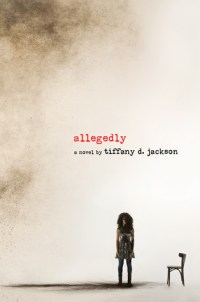 Book: “Allegedly” by Tiffany D. Jackson
 Book: “The Prom Queen” (Fear Street #15) by R.L. Stine


 We are part of a group of librarian friends who have had an ongoing bookclub running for the several years. Each “season” (we’re nerds) we pick a theme and each of us chooses a book within that theme for us all to read. Our current theme is “Book Challenge!” theme. This book comes from a “Pick a book that has been translated from a different language” challenge.

 Book: “Jackaby” by William Ritter
 Book: “The FitzOsbornes in Exile” by Michelle Cooper
 Book: “The X-Files Origins: Devil’s Advocate” by Jonathan Maberry
 Book: “The New Girl” (Fear Street #1) by R.L. Stine

 Book: “The X-Files Origins: Agent of Chaos” by Kami Garcia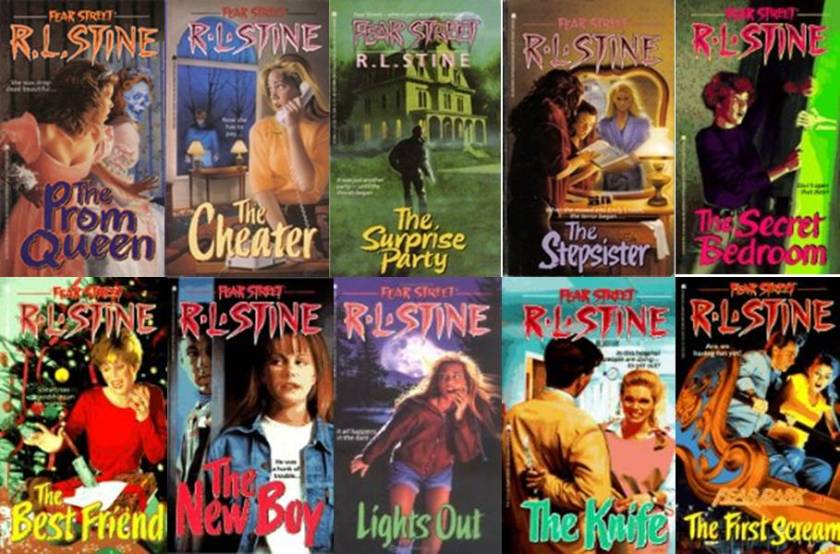

 Book: “The Bear and the Nightingale” by Katherine Arden
 The Library Ladies